On Deadly Ground: A Review by Nate Hill

  
I tend to actively avoid Steven Seagal films like the plague, and realize intermittently that I do in fact enjoy certain ones from back in the day. He’s made a ton of trash, no doubt, but the clouds part every now and again, for select occasions like Under Siege, The Glimmer Man, Above The Law, Fire Down Below and the snowbound On Deadly Ground. The main marvel in this one is an incredibly hammy Michael Caine as the mustache twirling villain, a Big Oil maniac who has his amoral sights set on sacred land belonging to Inuit tribesman. Seagal plays yet another martial arts trained badass who takes it upon himself to bring down Caine, his nefarious capitalist plans and the violent mercenaries he has hired to wipe the land of indigenous natives. It’s as silly as silly can be, right down to him falling in love with a beautiful Inuit girl (Joan Chen, actually Chinese), but enjoyable on its own terms when you look at the solid choreography, stunts and impressive location work. Also, the roster of villains is too good to pass up, starting with Caine’s outright, wanton psychopath. We’re also treated to the Sergeant himself, R. Lee Ermey as a merc with a particularly salty attitude, John C. McGinley over-playing one of his patented schoolyard bullies, and even Billy Bob Thornton shows up, adding to the sleaze factor. Watch for cameos from Mike Starr, Michael Jai White and an unbilled Louise Fletcher as well. Seagal directed this himself, so it’s essentially one big vanity piece where he gets to play Dances With Wolves for a couple hours, but the trick is to see the unintentional comedy in that and enjoy it. Seagal is one of those goofs who I am not a ashamed to say I am laughing at, not with. Caine is the real prize here, and his merry band of assholes. An action flick is only as good as it’s antagonist, and this guy is bad to the bone in hilariously over the top ways. A big dumb flick, nothing more, nothing le- well maybe a little less in places, but fun in other spots nonetheless.

Larry Fessenden’s The Last Winter: A Review by Nate Hill 

Nature fights back in Larry Fessenden’s The Last Winter, a vaguely supernatural cautionary tale of of environmentalists and oil workers besieged by some unseen forces in the great north. Fessenden also brought us Wendigo back in the day, another snowbound chiller, and a keen sense of the eerie corners of the natural world and it’s unexplored areas comes built in with his skill set. Ron Perlman doggedly plays Ed, the headstrong leader of a research party scouting arctic land for Big Oil to plant an ice road and pipeline. Connie Britton is his second in command and former flame, now shacking up with wildlife journalist James Legros. When the dead, naked body of a team member is found near their camp, natural gas emissions from the ground are suspected (so logical, guys). Yet, people continue to die, and some ominous presence gathers in the night just outside the perimeter of the station, inciting rising dread and distrust among the team and claiming victims with gathering speed. It’s fun to watch Perlman slowly come unraveled, his grim sense of control slipping away as quickly as his rational explanations for what is happening. We never get a good look at whatever is out there, which is the smart way to go about your horror. The snow boils, strange sounds are heard and the natural world itself almost seems to be taking on angry life of it’s own. It’s obviously meant as a metaphor, but works just as well as a literal creature feature thanks to the sleek direction and well placed moments of chilly terror. Shades of The Thing, infused with this theme of the earth lashing out at the arrogance of human industrialization is a delicious flavour indeed. 

Assault On Precinct 13: A Review by Nate Hill 

Assault On Precinct 13 is less of a remake of John Carpenter’s balls out, guerilla action treatise and more of a branch off into timeless, near western archetypes, as well as the good old siege thriller format. It’s also one of the meanest, grittiest cop films of the last few decades, deserving a higher rung on the ladder of adoration than it has so far ascended to. Dark, merciless and full of yuletide gallows humour, it’s a searing blast of gunfire and snowbound pulp starring a roster of fired up talent, starting with an intense Ethan Hawke and an unpredictable, predatory Laurence Fishburne. Fishburne is Marion Bishop, a legendary criminal kingpin wrapped tight in police custody and shipped off to a remote precinct on New Years eve with a busload of fellow prisoner transports. The station is run by a few relaxed cops, all preparing to punch that clock and get the New Year’s festivities underway. Unfortunately, a gang of corrupt detectives have other ideas, descending upon the ill guarded outpost with the fury and firepower of animals set loose, determined to murder everyone inside and level the place to the ground in order to cover up their actions. Hawke is the veteran cop with a dodgy undercover past, blessed with the grit and gristle necessary to rally the troupes and self preserve til the morning light. Drea De Matteo, who’s awesome and welcome in anything, is a tough female sergeant, Maria Bello the sharp police psychiatrist caught in the middle, Brian Dennehy the salty old dog, and a laundrey list of rabid felons who pitch in to save their own asses, including Ja Rule, Aisha Hinds, Currie Graham and a wired up John Leguizamo. Together they all make a veritable wild bunch to hold down the fort, but the forces they’re up against are tactical and terrifying. The opposition is headed up by a dangerously quiet Gabriel Byrne as deeply a corrupt Police Captain, doing a coiled viper rendition of a Christopher Walken villain, his work one of the strongest aspects of the film. Watch for Matt Craven and Kim Coates in brief cameos as well. The action is a ballistic blitzkrieg of firefights, standoffs and ditch efforts, scarcely giving the audience time to breathe, let alone tally up the casualties, of which there are many. This ain’t no cakewalk, in terms of action films. It’s down, dirty and has no time for quips, smart mouths or villains that monologue. Everyone involved in a caged animal prepared to go to extremes at the drop of a hat in order to achieve their goals, with kneejerk reactions and off the cuff violence that feels real, and cuts deep. If you are serious about your action films, and enjoy ruthless, non patronizing narratives that get as cold as the snow drifts surrounding the precinct and as casually indifferent as the bullets that ventilate it, this is your ticket. 

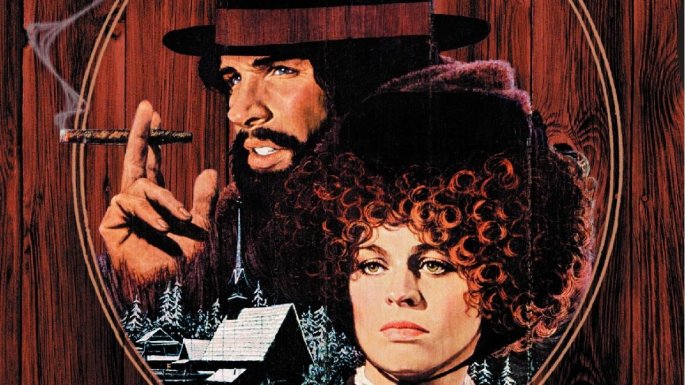
MCCABE AND MRS. MILLER (1971) – A REVIEW BY RYAN MARSHALL

vlcsnap-2016-12-04-11h04m09s156.png

Surely a seasoned connoisseur of the silver screen can relate the experience of watching a film to emotional responses which seem to transcend the medium all-together. For instance, certain films may have a distinctive smell; others might even allow one to taste something either delectable or truly putrid on the tip of their tongue. Robert Altman’s MCCABE AND MRS. MILLER, a whiskey-soaked indictment of American idealism filtered through the abstracted gaze of a hazy opium den, truly has the best of both worlds – the film smells strongly of musk and is bitter to the taste but nonetheless warm once it’s in you. It has the benefit of seamlessly evoking homeliness and absolute desolation in equal measures; not once is one allowed to truly sit back and take in the spectacle on a base level, but if that’s not somehow oddly ingenious in its own right, then I’ll be damned.

John McCabe (Warren Beaty) arrives in Presbyterian Church, Washington as a stranger, but soon establishes himself as a legend of his own distinct variety. A gambling man with a detrimental love affair with the bottle, McCabe is immediately met with suspicion on the part of the townspeople, who suspect he’s really a gunslinger that shot one of their own over a card game some time ago. Nevertheless, it’s his reputation – coupled with his intense personality – that allows McCabe to be seen as a leader among loners and losers in this quiet little Northwest town. It is here that he aspires to establish a brothel, the first step in doing so being the acquisition of three women from one of the neighboring towns.

vlcsnap-2016-12-04-11h00m37s494.png

This, of course, will hardly be substantial in the long run. Along comes another stranger, Constance Miller (Julie Christie), who proposes that the two become business partners. It’s an offer that McCabe simply can’t refuse, and they’re all the better for it; it’s not long before three girls turns into about a dozen and the establishment is doubling as a bathhouse. As rewarding as this venture appears to be, the attempted intervention on the part of a nearby mining company indicates there may be trouble ahead for both business and personal pleasure alike.

Only a select few films have a kind of palpable density that the viewer feels right in the gut, and as it turns out Altman has made quite a few of them. Throughout the course of just two hours, man himself is challenged (the tragedy of masculinity suppressing all which stands in its path), and everything – land and life alike – has a dollar value. For instance, when McCabe continually refuses the offers from the mining company’s shady representatives, they send over a trio of bounty hunters to seal the deal. Afraid for his life but unwilling to leave the town and business he helped start, McCabe turns to his lawyer for advice, but is instead treated to a spiel that basically amounts to the company’s safety being favored over McCabe’s. The poor bastard’s response is genuinely haunting: “Well I just, uh…didn’t want to get killed.”
vlcsnap-2016-12-04-11h01m11s299.png

This is a film that soars, perhaps even more-so than the average Western (MCCABE is revisionist). Altman’s uncanny genius can be traced back to his modesty, quite an appealing quality in any artist, though given the sense of scale and impeccable attention to detail present in his work it’s almost a bit amusing. And yet, even though there are moments of genuine humor, no doubt provided by McCabe himself, the character remains a tragic one; one whose deepest flaws would appear to be almost entirely of his own making. The man is an enigma and a half to the naked eye. And Mrs. Miller, who as it turns out has a bit of an opium habit, is essentially the product of an unnecessarily harsh world dominated by the opposite sex, a world in which her expertise doesn’t seem welcome. And thus, the romanticism of the genre is stripped from Altman’s warped worldview, and in its place a new kind of grandeur emerges.

It goes without saying at this point, forty-something years after the fact, that Vilmos Zsigmond’s cinematography is absolutely note-perfect. The world in which the tortured, titular souls occupy is one largely confined to dark rooms and dusty bars; and the town’s exteriors couldn’t possibly be any rougher. There’s an inherent bleakness to it, and yet when there is any semblance of light shining bright at the end of the tunnel, it does not go unnoticed. Not only does this feel absolutely distinctive in terms of its genre, Altman and Zsigmond go the extra mile to find beauty in even the most deliberately obscured of images. Form is no longer so well-defined and the rules no longer apply in the same way that they used to.

vlcsnap-2016-12-04-11h02m07s361.png

Altman’s films tend to have rich, multi-dimensional soundscapes in which the abstraction of sonic perception gives way to a new language of its own. Here, no spoken word is free of the director’s unique grasp. Conversations are always overlapping to the point where the subject becomes more important to the viewer than the content, which is ultimately an effective method of conjuring up such an off-kilter atmosphere. Lou Lombardo’s editing is equally as inventive – time feels almost nonexistent in this town after we’ve spent a considerable amount of time there. The focus shifts between characters both integral to the central relationship and generally insignificant, adding to their collective mystique. Altman challenges us to embrace this very quality head-on, to return to a sort of exhilarating ambiguity that audiences of today have all but shunned.

The frontier unveils new angles from which to exquisitely immortalize it and the frontiersmen themselves remain largely the same. The cinema of transcendence is alive and well, drinking bourbon by the fireside, mumbling incoherently under its bearded breath. The lovely, brooding songs of Leonard Cohen allow it – and us – to drift off into a state of near unconsciousness; a state from which we’d hardly like to return. MCCABE AND MRS. MILLER is a subtly colossal achievement, especially in the positively brilliant final twenty minutes, a film of dreamy, universal resonance. It’s a world you could settle into for twice – perhaps even triple – the length we’re provided with. “I know that kind of man, it’s hard to hold the hand of anyone who is reaching for the sky just to surrender. And then sweeping up the jokers that he left behind, you find he did not leave you very much, not even laughter.”
vlcsnap-2016-12-04-11h02m46s213.png

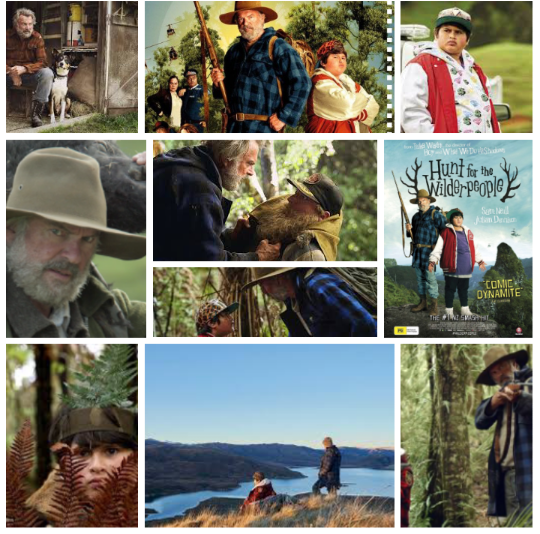
Taika Waititi’s Hunt For The Wilderpeople: A Review by Nate Hill 

Taika Waititi’s Hunt For The Wilderpeople speaks to the lost boy in all of us, tweaks our sense of humour with subtle doses in all the right places, taking what could have been a familiar feeling story and sending it miles down the road less traveled, in terms of emotion, comedy, script and pacing. This film has the largest scope of any he has made so far, but it’s purely for atmosphere; he remains steadfast in his need to explore what fascinates him the most: people. Their fears, desires, eccentricities and idiosyncrasies laid out bare and blunt, with none of the trademark gloss or cookie cutter cue card normalcy that so much writing has these days, clouding the potential for characters to feel geniune. They feel just that here though, and inhabit a world of harsh realities, unpredictable outcomes and organic, unforced interaction. Hell, even when his protagonists are vampires, they still feel far more lifelike than many a human character in film these days. The story is benign, until slowly kindled by all the elements I have just outlined. Child services, in the form of a tyrannical bitch (Rachel House), bring wayward boy Ricky (Julien Dennison, a wicked new talent) to stay with his new foster parents on a remote farm in rural New Zealand. The couple (Rima Ti Wiata and the legendary Sam Neill) couldn’t be more different than the young lad. He’s a hoodie wearing, rap rhetoric spewing, pop culture paintball gun of colloquial gibberish and big city malarkey. They are a withdrawn, earthy, isolated type of folk, content with farm life and each other’s company. Ricky is a disruption which they both need, creating a mini culture clash that provides countless moments of amusement as we wade our way into the story. The aforementioned unpredictability strikes when Neill’s wife passes away without buildup or ceremony, leaving him and a kid he barely knows, let alone likes, alone in the world. What follows is a touching, picturesque and endlessly funny glimpse at two people who are thrown into the thick of it together. These people are both lost in different ways; Ricky has never known a real family, tethered to nothing and set adrift among a sea of cyber role models and unreliable elders. Neil has just spent the majority of his life in a rock steady routine with his farmer’s wife and clockwork existence, suddenly unmoored and left with not a clue how to proceed. The two are hilarious together, providing each other with bushels of character development and scene after scene of purely inspired, bona fide human interaction that feels so utterly, blessedly unforced. They’re set among a slide show of breathtaking scenery, lively supporting work and attention to detail that adds up to quite the unforgettable package. If Waititi’s latest is any indication of what’s to come, lay down that red carpet runway post haste, because he’ll continue to take us by storm.

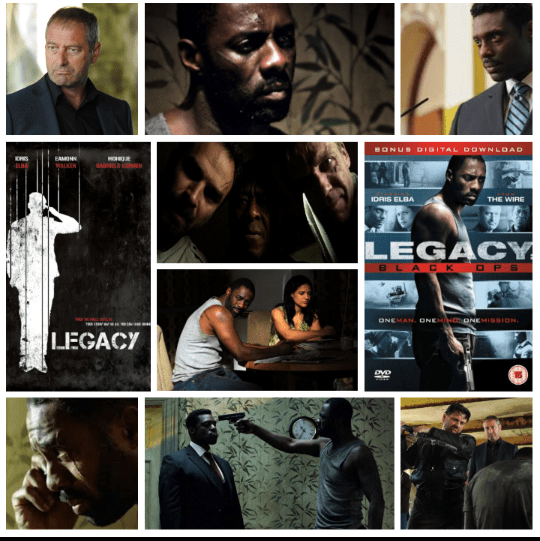
Legacy: Black Ops – A Review by Nate Hill 

Legacy: Black Ops is a good one. Like so many indie products, it has been marketed to look like an action flick for dvd, but the truth is something more akin to a psycho – political thriller. Clearly influenced by both the Bourne films and Jonathan Demme’s The Manchurian Candidate, it reins the intrigue in somewhat for an intimate, starkly paced look at one man who is on the brink of losing both his mind and memories in the wake of a special ops mission gone awry. Idris Elba gives a mini powerhouse as Malcolm Grey, a battle scarred veteran who has isolated himself in a drab motel room, ruminating on a calamitous outing with his fellow squad members to find and take out eastern European extremist Salenko (Julian Wadham). Whatever went wrong sent a chain reaction down the ranks and left them divided in years to come, but we are only treated to unreliable fragments of these events, reflected through the prism of Malcom’s broken mind. He receives visits from his squad mates, but are they really there, or yet another illusion dreamt up to avert his gaze from the truth? Character actor Richard Brake is O’Keefe, his longtime friend and second in command, providing sympathy and solid support during the mission we see unfold in hectic flashbacks. Adjacent to this plot is the political rise of Malcom’s brother Darnell (Eamonn Walker) riding the wave of an election that will put him in a seat of immense power, but one wonders how he’s connected to Malcolm and his past? How indeed. It’s confusing to say the least, but never trips over its own ambitions, sewing threads of concise cause and effect throughout it’s story, which is emotionally downbeat and melancholic in nature, a stylistic choice that really works in the film’s favour. If you’re willing to sit, absorb and meditate on a slow burner of a tale that feeds you pieces of the puzzle bit by bit, with almost zero action to be found, have at ‘er. I enjoyed it immensely. 

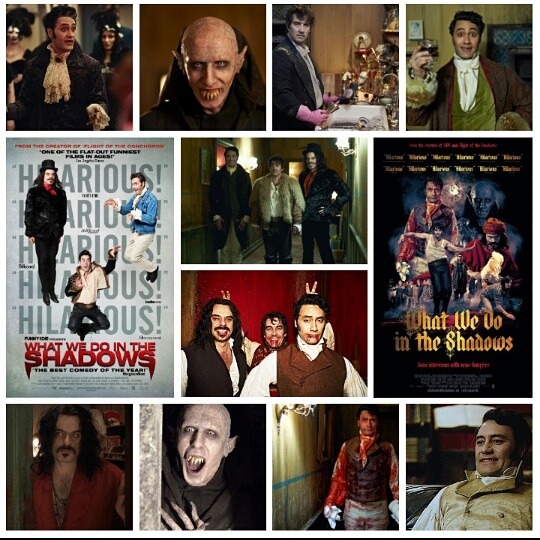
Taika Watiti’s What We Do In The Shadows: A Review by Nate Hill 

I don’t remember laughing as hard at a film in years as I did at What We Do In The Shadows the other night. It’s pure comedic bliss from front to back, and makes the often tedious chore of making an audience laugh seem effortless. It’s part horror comedy, part mockumentary with a dash of buddy camaraderie and and depth of wit and character all it’s own, thanks to New Zealand filmmaker Taika Watiti, who is fast becoming one of my favorite new voices in the independent field. A master at finding the humour in little moments and dry subtlety, his cameras spend a couple hours documenting pratfalls, squabbles and zany encounters wirh quartet of vampires living in Wellington, New Zealand, each one simultaneously a different caricature of bloodsuckers from previous lore, as well as a completely unique, hilarious individual. Jermaine Clement is the closest thing you’ll find to a household name amongst the cast as Vladislav, a Dracula esque, baroque vamp. Jonny Brugh is Viago, the musically inclined, Ann Rice incarnation, and Ben Fransham, plays Peter, a spooky eight thousand year old Nosferatu clone. It’s Watiti himself who steals the show though, as Deacon, a dandy of a Germanic royal who gets all the best lines and relishes them with adorable deadpan delivery every chance he gets. The film comes nowhere near the classification of horror, and in fact these four resemble a bumbling, lovable frat house, their vampiric nature treated lightly as they cavort about their everyday life like rambunctious nocturnal teddy bears. They navigate household chores, nightlife, inter species relations (there’s a few priceless encounters with a rival pack of werewolves), pesky humans, and have a ball the whole time through. What makes the film so special is the goldmine of comic skill and talent that both director and cast have tapped into. The relationships are unforced, full of idiosyncratic nonsense and always feel utterly organic. For a group of undead fellows, they truly are the life of the party. The documentary style never feels intrusive or irritating, seamlessly taking refuge behind the forceful and side splitting antics which take center stage for the entire film. Comedy is the hardest genre to produce fruitful results in, with horror a close second. What it takes to make you laugh can often be a rare gift, wielded by few and far between, those writers, directors and actors who have that elusive midas touch on our funnybones, combining just the right elements of script, improv and intuition to  get us laughing ourselves silly. This one achieves that and then some.

Taika Watiti’s What We Do In The Shadows: A Review by Nate Hill 

I don’t remember laughing as hard at a film in years as I did at What We Do In The Shadows the other night. It’s pure comedic bliss from front to back, and makes the often tedious chore of making an audience laugh seem effortless. It’s part horror comedy, part mockumentary with a dash of buddy camaraderie and and depth of wit and character all it’s own, thanks to New Zealand filmmaker Taika Watiti, who is fast becoming one of my favorite new voices in the independent field. A master at finding the humour in little moments and dry subtlety, his cameras spend a couple hours documenting pratfalls, squabbles and zany encounters wirh quartet of vampires living in Wellington, New Zealand, each one simultaneously a different caricature of bloodsuckers from previous lore, as well as a completely unique, hilarious individual. Jermaine Clement is the closest thing you’ll find to a household name amongst the cast as Vladislav, a Dracula esque, baroque vamp. Jonny Brugh is Viago, the musically inclined, Ann Rice incarnation, and Ben Fransham, plays Peter, a spooky eight thousand year old Nosferatu clone. It’s Watiti himself who steals the show though, as Deacon, a dandy of a Germanic royal who gets all the best lines and relishes them with adorable deadpan delivery every chance he gets. The film comes nowhere near the classification of horror, and in fact these four resemble a bumbling, lovable frat house, their vampiric nature treated lightly as they cavort about their everyday life like rambunctious nocturnal teddy bears. They navigate household chores, nightlife, inter species relations (there’s a few priceless encounters with a rival pack of werewolves), pesky humans, and have a ball the whole time through. What makes the film so special is the goldmine of comic skill and talent that both director and cast have tapped into. The relationships are unforced, full of idiosyncratic nonsense and always feel utterly organic. For a group of undead fellows, they truly are the life of the party. The documentary style never feels intrusive or irritating, seamlessly taking refuge behind the forceful and side splitting antics which take center stage for the entire film. Comedy is the hardest genre to produce fruitful results in, with horror a close second. What it takes to make you laugh can often be a rare gift, wielded by few and far between, those writers, directors and actors who have that elusive midas touch on our funnybones, combining just the right elements of script, improv and intuition to  get us laughing ourselves silly. This one achieves that and then some. 

Bad Santa 2: A Review by Nate Hill


The holiday season’s best role model for children and adults alike makes a triumphantly sleazy comeback in Bad Santa 2, and I can honestly say this is one of those rare anomalous occurrences where the sequel outdoes its predecessor in almost every way. Where the first film was scummy, this one is scummier, the profanity nearly tripled and all manner of disgusting debauchery and deplorable behaviour dialled way past what we’re used to. Now a lot of folks will claim overkill, but honestly what’s the point in making a film like this if you don’t go for broke and puke up every last little cuss word and anal joke that comes to mind, particularly when it’s the sequel we’re talking about here. Billy Bob Thornton reprises what feels like his signature role, a piss poor excuse for a human named Willie Stoke, lowlife alcoholic dirtbag safecracker who masquerades as a department store Santa to rob malls blind, along with his flippant midget partner Marcus (ebony Oompa Loompa Tony Cox). This year they’ve taken a pickaxe to rock bottom and sunk even lower, aiming for a children’s charity reputed to rake in the Yuletide dough. Willie gets a surprise visit from his Ma though, an equally bitter, reprehensible diesel dyke piece of work played by Kathy Bates. You gotta hand it to the Bates-ter; this could have easily been a glorified cameo amped up just for trailers, but no, she goes all in and the extra mile to create a truly rotten bitch who almost…almost makes Willie the slightest bit sympathetic. This is one dirty, dirty film, one that milks it’s R rating like a two dollar hooker’s teat, so much so that it garnered the coveted 18a rating here in Canadian theatres, a medal not given out too lightly these days by our alarmingly lenient government. Nothing is sacred here, and I wouldn’t have it any other way in a film called Bad Santa. Christina Hendricks shits all over her classy image as the head of the charity, a slut in prudes clothing who just can’t help but play it dirty with Willie. The aptly named Thurman Murman (Vancouver’s own Brett Kelly) also makes a return, his stairs even farther away from the attic as he gets older. Replace holiday cheer with delightfully deviant black comedy, and loads of it, and you get a nasty, hedonistic little stocking stuffer like this. Just tread lightly if you can’t handle this type of humour, because it will tear you a new one.

Indie Gems with Nate: Phantom

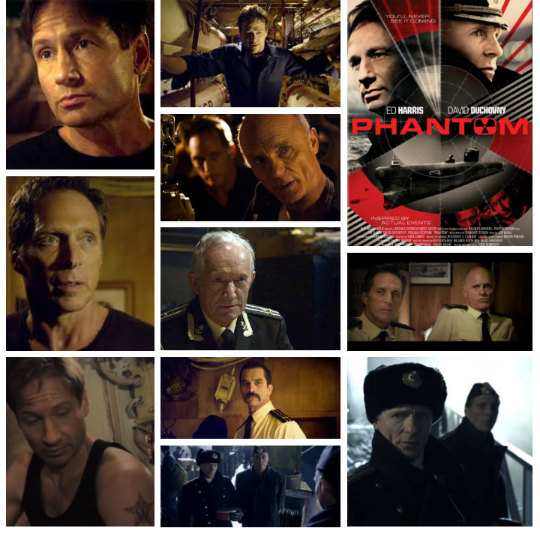
The submarine film seems to have died off a little bit since semi recent entries like Kathryn Bigelow’s K-19 and Tony Scott’s Crimson Tide, which is why it’s nice to see an effort like Phantom come along. Spare, streamlined and straight to the point, it chronicles the fate of a Soviet submarine crew tasked with transporting a deadly nuclear missile during the Cold War, and the dangerous KGB stowaway who will stop at nothing to gain control of the ship and hijack the warhead. Now, this is one of those films set in Russia but with an all American, English speaking cast, so as long as you can get past that without whining, you’ll enjoy it. What a cast it is though!! Ed Harris brings grizzled nobility to the role of the captain, handpicked for this mission by unseen forces who know of his disgraced past and are betting on him to fail. David Duchovny has always had a bit of slimy, subversive danger to his aura, and he’s in full blown wrecking ball mode as the ruthless rogue agent bent on seizing the vessel and no doubt causing all kinds of global problems in the process. William Fichtner is a supporting standout (when is he not?) as Harris’s resilient second in command, and the crew is populated recognizable faces including Jason Beghe, Jonathan Schaech, Dagmara Dominzyck, Kip Pardee and Sean Patrick Flanery. Throw in an intense cameo from Lance Henriksen and you’ve got one hell of a lineup of heavy hitters onscreen. The intrigue is somewhat cloaked, and the mutiny goes both ways, accented by plenty of palm sweating scenes of suspense, a mandatory staple in any submarine film. Lower budget, yes, but centered on story and character as opposed to action, and notable for a surprisingly esoteric end sequence that I did not expect. Recommended.