Veronica Guerin: A Review by Nate Hill 

I can remember seeing Joel Schumacher’s Veronica Guerin when I was first allowed to start checking out R rated, more intense fare. Being far more impressionable that the desensitized veteran you see before you today, I had a royal emotional gut punch coming that I wasn’t even prepared for. I didn’t know what it was about or what I would see, all I knew was I loved watching movies and I was going to devour each and every one I could get my hands on. Well, it tells the true and very tragic story of Veronica Guerin, an incredibly fearless Irish journalist who almost singlehandedly waged war on the drug trade back in 1996. It’s a suicidal mission that involves hassling very dangerous people, putting her and her family’s lives in jeopardy and overturning stones that lead to nothing but trouble. But she won’t back down for a second, and Blanchett finds the noble belligerence in her. Now anyone who knows the story also knows that later in life she was assassinated, by order of the very same drug lord she was trying to take down, John Gilligan (Gerard McSorley). I feel like it isn’t really a spoiler and should be spoken of in a review, as it’s a huge beat and the essential part of the film. Poke the hornet’s nest and you’re liable to get stung, it’s just a shame that no one on her side could have done more to protect her and prevent the outcome, but when you have one woman crusading against both evil and casually corrupt indifference then I suppose she’s on her own anyway. “” is a chilling monster, an absolute sociopathic maniac who will go to any lengths of cruelty and darkness to keep his empire, and McSorley will give you shudders with his portrayal. Ciaran Hinds is great as sleazy and slightly conflicted John Traynor, an underworld informant who fed Veronica information and played a big part in her story. Colin Farrell shows up in an odd and completely random cameo, and watch for Brenda Fricker too. The end of the film and the events surrounding her death are intoned with a haunting musical montage, and I dare you not to burst into to tears or be swept away and deeply affected by Schumacher’s tender direction, the cast’s work and the sheer tragedy of it all. There’s another film about Guerin called When The Sky Falls with Joan Allen, and it’s worth a look, but this is the real deal, going to great pains to show the personal nature of Veronica’s quest, how much it meant to her, the sickness of a nation infected with drug addiction and corruption, and the game changing power which one human being can have over it all, even if they must sacrifice their life for it. Powerful stuff.

B Movie Glory with Nate: The Prophecy II 

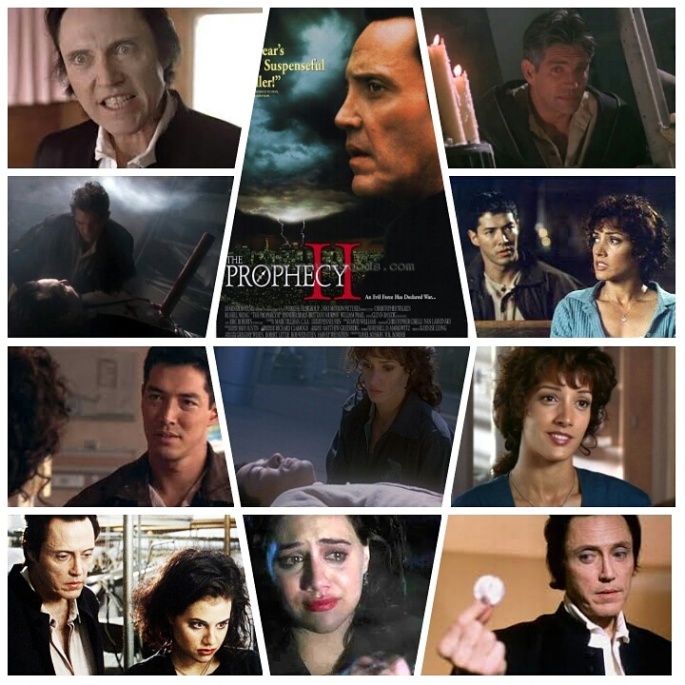
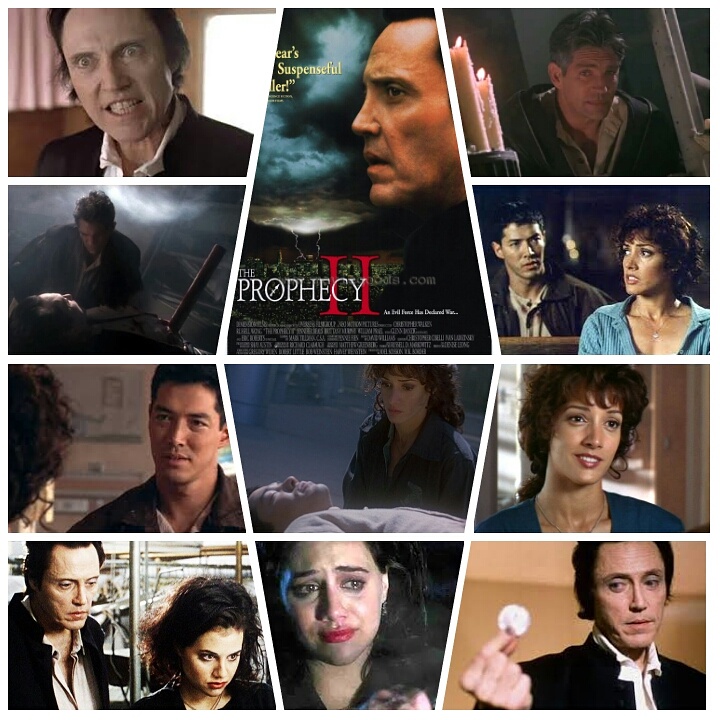
The Prophecy II continues around the same time the first entry left off, and while it’s not the same haunting, unique genre poem they managed with their first crack at it, it’s still got a few terrific things going for it, namely Christopher Walken. The guy is just charisma incarnate, and the implosive work he puts in as an angry, bitter Angel Gabriel in this franchise is some of the best I’ve ever seen from him. Gabriel is once again out to harm the humans, or ‘monkeys’ as he dryly puts it. The story is as murky as any self respecting Dimension films horror sequel should be, but from what I remember, an innocent human woman (Jennifer Beals) is impregnated by some sort of demi-angel named Danyael (Russell Wong), and the resulting birth will give humanity a kind of savior. Naturally, Walken tries to put a stop to this by hunting her down in appropriately scary fashion, and all sorts of schlocky supernatural hijinks ensue. It ain’t intellectual hour, but it’s held up very nicely by Walken, who clearly loves playing this character, and an eventual confrontation with Archangel Michael, played by Eric Roberts in what is delightfully inspired casting. The two of them have a quiet, focused exchange that elevates the material to near celestial heights which the film scarcely deserves. “How many world’s must burn before you’re satisfied?” Roberts inquires. “Just one. This one.” Walken purrs back. It’s a great scene and to this date the only time these two titans of the craft have shared the screen, and I’m thankful for it. Theres an amusing bit with Brittney Murphy, and a cameo by musician Glenn Danzig as well. The rest of the film is so so, but whenever Walken is there, baby it crackles. 

The Beatnicks: A Review by Nate Hill 

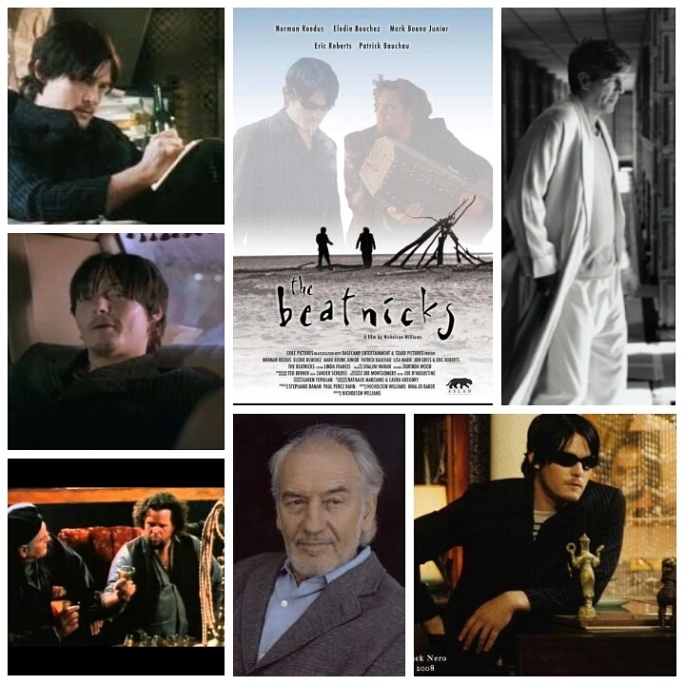
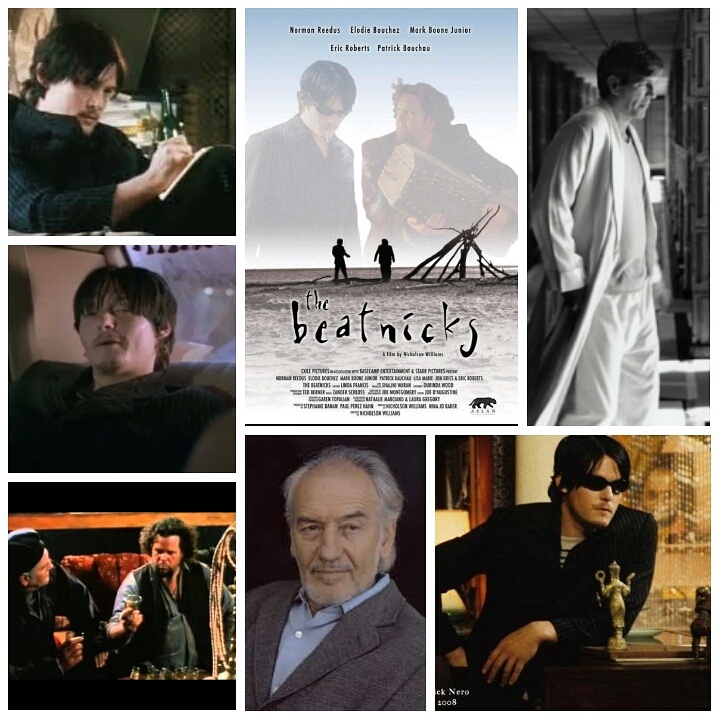
The Beatnicks is an kooky, shambling little indie that I can’t really say whether or not I liked, because not much of anything happens the whole time. The filmmakers have obviously tried hard to capture the quaint feeling of the beat generation, whether or not they succeeded though isn’t for me to say, I kind of avoid stuff in that style, never appealed to me. It’s a strange little story concerning Nick Nero (Norman Reedus) and Nick Beat (Mark Boone Jr), two aimless wandering performers who are down on their luck and desperate for a gig. Most of the film is just them wandering around, pontificating on life and art and not much else. Reedus clashes with mysterious night club owner Mack Drake (a slick Eric Roberts) over the affections of his moll-esque girlfriend (Elodie Bouchez), whilst Boone gets handed a series of arbitrary, cryptic tasks by enigmatic stranger Hank (the underrated Patrick Bachau). And that’s it. There are pockets of the film filled with nothing but air, places where they’ve tried to stretch ‘not much’ into ‘a whole lot’ and have caused their creative well to run dry. In a film about beat poets who I imagine spend most of their time filling up time and space with constant stream of consciousness output, dead air isn’t a good thing to have lingering around in your story. An odd duck of a film that didn’t really chime with me, but some may find it worth a gander.  

B Movie Glory With Nate: The Immortals


The Immortals is one of those brilliant little action crime flicks that seemed to slip through the cracks and disappear soon after it aired on TV. That wouldn’t be a problem if it was one of the many intolerable embarrassments that speckle Eric Robert’s career like goose shit on a manicured lawn. But it’s actually a really great time, with a bunch of actors who are super into what the script has them do, and geniunly fascinating story to tell us, which it does so at a breakneck pace. Roberts plays Jack, a silver tongued nightclub owner with ties to some dangerous underworld players. One night he calls a meeting with eight different petty thieves from all walks of life, announcing that he’s planning to orchestrate a heist against criminal kingpin Dominic (screen legend Tony Curtis in one of his final roles), and proceeds to send them off to perform risky jobs all over town, rapidly gaining Dominics attention and hostility. During an extended face off between his forces and Jack’s merry band of miscreants, they discover that Jack has a very specific and secretive reason for selecting them all for this venture, and nothing is what it seems. William Forsythe is a kicker as Tim, the loose cannon of the bunch, a rowdy psycho who smartens up during the finale, which gives him terrific dialogue to chow on. Chris Rock is the fast talking dude among them, Tia Carrere is sexy and stunt savvy as always, Clarence Williams III does his bug eyed weirdo shtick to the hilt, and Joe Pantoliano never misses a beat either. Roberts is the ringmaster of this chaotic little circus though, failing up that southern prince charm and flashing the mile wide million dollar grin whenever he gets the chance. There’s a lived in, easy breezy feel to this, like these characters are really getting to know each other, bonds are formed and tested amidst a haughty atmosphere and a lethal situation. Twists, turns and somersaults punctuate the narrative, and they’re super fun to try and sniff out as you watch the fireworks blow up the screen. A B movie, yes, but an extremely well made one that gives it it’s all and comes out a grinning winner.

Sam Raimi’s The Gift: A Review by Nate Hill 

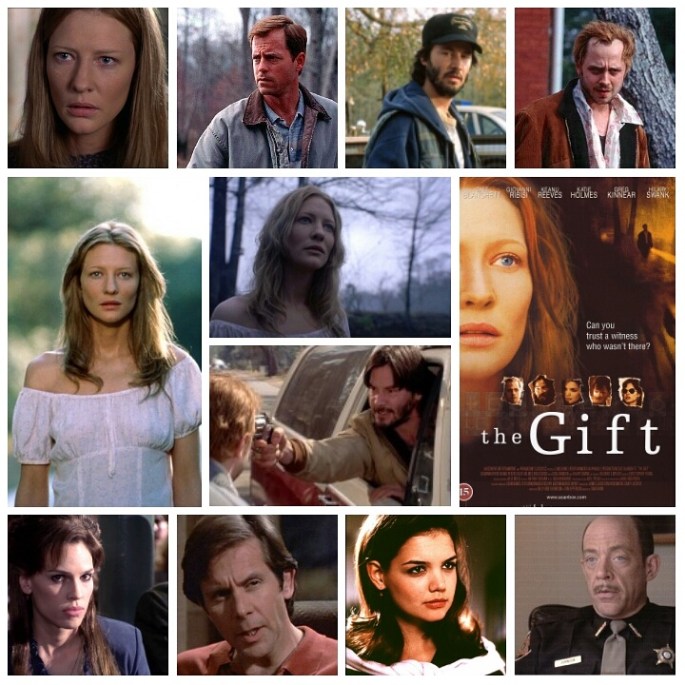
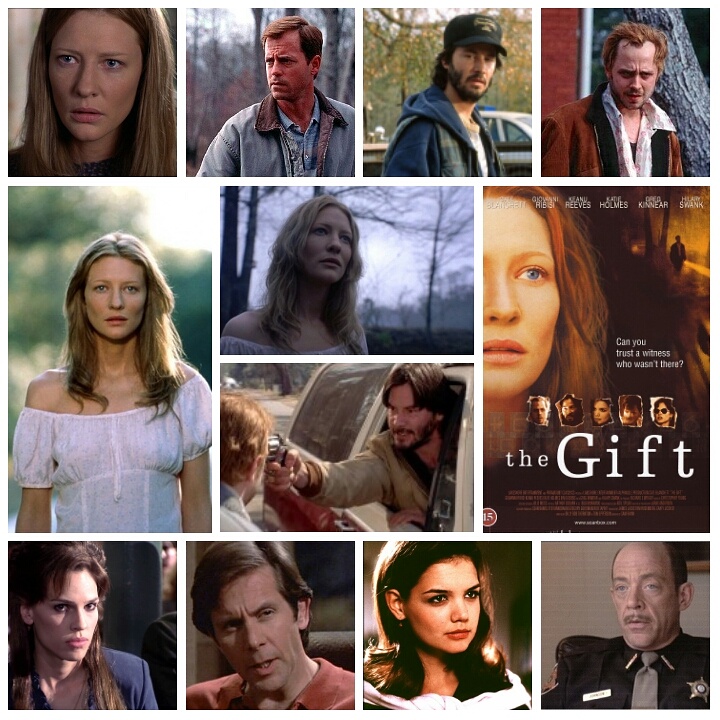
Anyone who loves a good slice of southern gothic murder mystery should check out Sam Raimi’s The Gift, one of several films in the eclectic scoundrel’s ouvre which made a departure from his usual brand of chaotic horror. Cate Blanchett stars as Annabelle, a single mother with a very perceptive telepathic ability, which in rural USA is greeted without any skepticism by the locals. She is renowned for her gift, and often approached by people in need. The story sees her trying to locate young Jessica (Katie Holmes), who has gone missing, and discovering some nasty secrets about the people around her in the process, people she thought she knew better. Jessica’s fiance (Greg Kinnear) is desperate but clearly knows something he’s not saying. Also involved is battered housewife Valerie (Hilary Swank), her terrifying abusive boyfriend Donnie (Keanu Reeves), a local mechanic (Giovanni Ribisi) who befriends Annabelle,  and others. It’s an ugly tale contrasted by Blanchett’s striking beauty, which the cameras capture in all the right instances. She could be rearranging a bookshelf and still be compelling and elegant, and always is in whichever role she takes on. Reeves is a scary tornado of pent up rage and sickness, cast way against type and loving every rage fuelled second. As if the main cast wasn’t packed enough with talent, we also get stellar work from Gary Cole, Michael Jeter, Kim Dickens, Rosemary Harris, a random cameo from Danny Elfman and a sly turn from J.K. Simmons as the county sheriff. What a cast, eh? Raimi puts them to good use, and each one gets their moment to shine. I’ve never seen a film by the director I haven’t loved; the guy just makes super fun, accessible genre treats that are irresistibly likable. Pair that with the evocative southern tone and Blanchett’s winning presence and you’ve got one hell of a little package. Very overlooked stuff. 

UNDER THE TUSCAN SUN – A REVIEW BY J.D. LAFRANCE

under-the-tuscan-sun

From her screenplay for The Truth About Cats and Dogs (1996) to her directorial debut with Guinevere (1999), Audrey Wells has created films with strong female protagonists. She continues this thematic preoccupation with Under the Tuscan Sun (2003) featuring a main character that goes on a journey of self-discovery in Italy. Based on the bestselling 1996 memoir of the same name by Frances Mayes, the film is a warm and inviting romantic comedy that attempts to deviate from some of the conventions of the genre.

Frances Mayes (Diane Lane) is a professor of literature living in San Francisco with her husband. Her bad reviews of other people’s books comes back to haunt her when a writer harboring a grudge hints that her husband has been having an affair. During the messy divorce, and understandably upset over his betrayal, she sells her half of their house rather than pay up via alimony. Frances moves into a noisy apartment building and tries to figure out what to do with her life. She suffers from writer’s block — not just with her book, but with her life. Patty (Sandra Oh), her best friend and support group, is unable to go on a ten-day trip to Tuscany because of her upcoming pregnancy. So, she gets Frances to go in the hopes that a change of pace and scenery will provide her with a fresh start.

Before she knows it, Frances is on a bus full of gay people in Italy with the tour guide telling everyone her life story. She spots a charming little villa on the tour and decides to get off the bus. She becomes enchanted with the place, meets the owner and decides to buy it. To say that the house is fix-it-upper opportunity is a mild understatement but Frances plugs away, renovating the house and, in the process, her life.

Under the Tuscan Sun was a nice change of pace for Diane Lane, fresh from her role in the dark, erotic thriller, Unfaithful (2002). She is quite good as a newly independent woman trying to start her life over. The gorgeous Lane looks absolutely radiant and brings a lot of charm to the role. She shows a real knack for light comedy as well and is not afraid to look silly or vulnerable.

It also doesn’t hurt that director Audrey Wells surrounds the stunning Lane with a picturesque, postcard perfect Italian countryside. Every frame is filled with resplendent scenery and everyone eats delicious looking food. It is a shameless love letter to Italy. A more cynical person might say that this film is just one long ad for the tourism board of the country. It works. Under the Tuscan Sun really makes you want to go there, discover your very own villa and escape from it all.

Under the Tuscan Sun is reminiscent of Enchanted April (1992) in that it also features women getting away from dreary past lives and moving to Italy to gain their independence and start their lives anew. In terms of plotting and dialogue, Tuscan Sun is pretty standard fare but it is quite entertaining, features a winning performance by Diane Lane and is handsomely photographed.

THE LOOKOUT – A REVIEW BY J.D. LAFRANCE

josephgl_1227304014

With his adaptation of Elmore Leonard’s novel, Out of Sight, Scott Frank demonstrated a knack for crime thrillers with plenty of plot twists and double crosses. He finally got the chance to direct his own film and the result was The Lookout (2007), a neo-noir that evokes other crime movies like Charley Varrick (1973) and Fargo (1996).

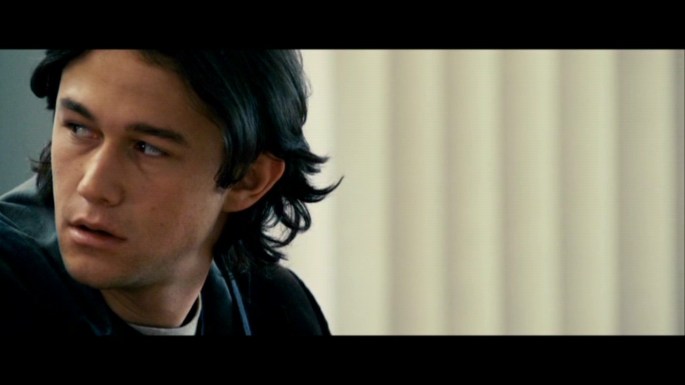
Chris Pratt (Joseph Gordon-Levitt) is a young hockey player with a promising career that is snuffed out in an instant thanks to a car accident that he caused. Four years later, he’s working as a night janitor at a local Midwestern bank located out in the middle of nowhere and dealing with a head injury from the accident. He has to write down everything that he does to get ready every day. His old life is gone and his new one is one mundane day after another. Chris now lives with Lewis (Jeff Daniels), his blind roommate who helps the young man out with things around their apartment.

Chris meets Gary (Matthew Goode) at a bar one night. He’s a genial guy who befriends the young man over beers. Chris also meets a beautiful young woman named Luvlee (Isla Fisher) who is friends with Gary. They quickly go to work on Chris, Gary appealing to his brain and Luvlee to his heart. They make him feel like he belongs, which is important to him because his family doesn’t know how to relate to him anymore. Pretty soon Gary tells Chris about a bank heist he plans to pull with his buddies. The bank that they are targeting just happens to be the one that Chris works at. Gary dangles the proverbial carrot in front of Chris with the promise of money and the power that comes with it. He is very persuasive and knows exactly which buttons to push. Like most heist films, things do not go according to plan and the rest of the film deals with the aftershocks.

Joseph Gordon-Levitt continues his knack for offbeat roles. He does a great job portraying someone with neurological damage and the frustration that comes from not being able to do simple things like opening a can of food or remembering someone’s name. He also conveys the guilt his character feels over the car accident that cost two of his friends their lives and robbed him of a promising future. We see how he tries to hide his disorder and the frustration of not being able to do basic things. It’s a performance grounded in realism that is in contrast to this stylized noir world. It doesn’t hurt that he is surrounded by cold, detached characters, and this makes him very sympathetic as well.

Jeff Daniels steals pretty much every scene he’s in as Chris’ genial roommate. The actor displays a dry sense of humor that is very funny to see in action. He and Gordon-Levitt’s character make for very unlikely roommates to say the least but the two actors make it work thanks to the excellent chemistry they have together. Along with The Squid in the Whale (2005) and Good Night, and Good Luck (2005), Daniels is turning out to be quite an excellent character actor appearing in several well-made independent films.

Frank has a keen visual sense, adopting a predominantly dark color scheme in keeping with the neo-noir tradition. He has crafted a clever little thriller with a fascinating protagonist at its center. What could have easily been a forgettable film is anchored by yet another riveting performance by Gordon-Levitt.

VIVA (2007): A Review by Ryan Marshall

pressbook_outside

An homage, when executed with the most shallow of intentions (that is, to pay tribute without any sort of recognizable personal stamp), can potentially be a deeply disastrous affair. Truth be told, just about anyone can spread their fanaticism far and wide, but it takes a particularly gifted individual to balance immeasurable admiration with a more comprehensive understanding of his/her obsessions. Anna Biller’s VIVA belongs to a long line of exploitation throwbacks that have turned up in recent years – a candy colored excursion back to a time when the idea of corrupted innocence was genuinely invigorating – and immediately it looks to be the kind of extra-cutesy affair that you either love or hate depending on your own tolerance for the kind of material it seeks to evoke. In spite of whatever complicated feelings one might have, there’s an undeniable hook from the first frame onwards, which is that Biller’s at the very least got the “look” and “feel” down to a tee; unmistakably the result of countless years spent thrifting, crate digging, and existing almost entirely in her own world.

I’m the kind of guy who appreciates a true sense of craftsmanship when it comes to production design in film (and even more-so with an intended period piece), so Biller’s commitment to recreating the sleaze and cheese of 1960’s/70’s sexploitation is an immediately imposing quality. Every last aspect of sound and sight, from the pictures hanging on the walls to the occasional (and only slightly jarring) continuity error, exists for the sole purpose of total immersion. Taking a closer look at her filmography thus far, the writer/director (plus costume designer, editor, actress, producer, animator, musical contributor, etc.) seems to have a very unique (and so far successful) brand which seeks to revisit the kind of lucid technicolor dreamscapes that once graced the silver screen with their distinctive phantasmagoria, but with an added intellectual twist which allows the material to be studied under the microscopic lens of today’s comparatively tame social-political landscape.

“This is a story about a housewife during the sexual revolution. The time is 1972, the place is Los Angeles, and the people are ORDINARY.” The situation at large: Barbi (Biller) enjoys, or rather submits to a stay-at-home life with her husband in and out on various business trips and the neighbors, Mark and Sheila, serving as a constant reminder of the mundanity of her sexuality as of late. But one day, Barbi ventures far outside of her comfort zone, pursuing a career in modeling, which leads to an unlikely encounter with a vivacious hair stylist that prompts her man to walk out on her. Instead of confronting the crippling emptiness she experiences in light of his absence, Barbi goes out on the town with Sheila (whose husband has also left her) where they take up new lives as call girls. Nudist hippie camps, flamboyant art snobs, the allure of showbiz, and crazy drug-fueled orgies – there’s truly something for everyone out there.

085_2048x1152

But of course, this exhilarating new world is not quite all it’s cracked up to be; the girls are of the belief that they are escaping the constricted roles of the household through all the glitter and glam, when in fact the men of this so-called “high life” are no less intolerant and negligent than their respective spouses. Where their husbands merely laughed until their faces were red or extended their skiing vacations an extra full month, these savage beasts are content to buy and sell them out or worse yet, take their abusive tendencies to more regrettably hands-on territory. Yet, Barbi proves time and time again that she is much stronger than she appears; the toxic cycle seems never-ending and the web of overbearing masculinity is a powerful obstacle, but what this tale ultimately suggests is that progress is not an all-together impossible dream.

Speaking strictly of surface-level pleasures, this covers just about anything that could be found on the unofficial sexploitation checklist, which is a modest achievement in its own right – but brewing beneath is something far more interesting and – ultimately – important. This is indubitably a feminist film, and one which is refreshingly fearless in how it pronounces itself as such; a simple but poignant story of a woman breaking free of both internal and external boundaries and learning to exist as her own separate entity. Aesthetically, Biller crafts a language that is entirely her own, in spite of her many prominent influences; if this can be compared to anything, it’s the early works of John Waters (FEMALE TROUBLE and DESPERATE LIVING, especially). Much of it is gleefully over-the-top, often hysterical, but whilst wallowing in the filth, Biller gracefully unearths honest, ugly truths when it comes to female representation both on and off the screen, though it’s her auteurist touch – her fetishistic attention to detail and supernatural gifts as a visual artist – that really allows the bigger, more progressive ideas to shine.

But most importantly, it’s just great entertainment. At two hours, there are brief moments when one feels the narrative meandering ever so slightly, although it’s safe to assume this is simply by design – either way, the film is never anything less than effortlessly engaging. Spectacular musical numbers, a vibrant color palette, the casual celebration of excess (a surplus of sex, drugs, and mood music can be found here for those inquiring) and even a mind-bending animated sequence (designed by Biller herself, to the surprise of, well, absolutely no one) ensure that it keeps finding new ways to surprise the viewer at every turn, and the cast deserves a special mention as well for keeping the material consistently amusing without overstepping into grotesque self-parody. The scene with the hair stylist, in particular, is of a (hilarious) nature that would make the aforementioned Waters green with envy; it’s positively absurd, and gleefully filthy, without abandoning the heart of the picture. Impressively, it’s one of many things that remains perfectly in-tact throughout.

VIVA is about as cool, collected and smart as feature debuts get – signifying all at once a compelling introduction to a singular obsessive cinematic conscience and a passionate call to action for those interested in the sexual politics of yesteryear and yesterday, and how from them we can derive lessons to be applied to contemporary values. It’s fresh, endearing and poetic in its artful trashiness – it’s very much the movie I needed at this particular time in my life. If ever there was further proof of the values inherent in actively searching for hidden gems within the grimiest and most effectively transgressive crevices of cinema, it can be found here, deep within the pulsating portal of pop-art progressiveness that is Anna Biller’s beautifully bat-shit psyche.

Eternal Sunshine Of The Spotless Mind: A Review by Nate Hill 

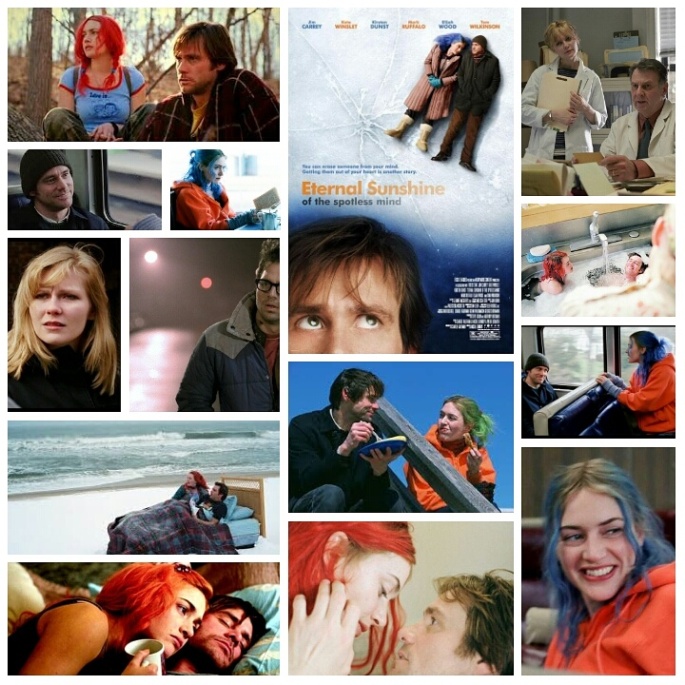
Films like Eternal Sunshine Of The Spotless Mind come around once in a lifetime, if we’re lucky. I watched it when I was too young to fully grasp much, and it flew over my head. In the last few years I had a revisit and was knocked flat. Few stories out there have the power to mine deep within the human psyche and search for the complexities, contradictions and puzzling flaws that lie in the beautiful disasters we call human beings. A contemplative yet fast paced meditation on relationships, love, heartbreak and reconciliation doesn’t even begin to paint a picture of what you’re in for with this uniquely told and one in a million film. Sagely ragamuffin Michel Gondry, not one for the easy way out, has truly outdone himself, as has screenwriter Charlie Kaufman, who is never short on wild ideas with emotional heft that sneaks up and blindsides you. Joel Barrish (Jim Carrey) ditches work on a whim one morning, and hops a train out to snowy Montauk. Through fate’s mysterious grasp, he meets free spirited Clementine (Kate Winslet), and the two hit it off immediately. He’s reserved, cautious and calculated, and she’s an impulsive wild card. They couldn’t be more different, but somehow they work. Until they don’t. Joel is devastated to learn one day of a radical brain alteration technique that effectively removes the memory of an ex from your mind, and Clementine has taken the plunge. Joel is confused and lost, and while the iron is still hot in his beating heart, he decides to undergo the procedure as well. Then the film really turns your world upside down. Whilst the staff of the Institute (Mark Ruffalo, Elijah Wood and Kirsten Dunst) go to work on his mind in his sleep, he has a change of heart. With the memories of Clementine radidly disintegrating, he races through the internal landscape of his mind in order to find and save her, hiding her in obscure corners of his data log where she won’t be found. It’s a genius way to tell the story, taking a delightful turn for the surreal as both of them find themselves catapulted headlong into various moments of his life. On the outside, a tragic subplot unfolds involving Dunst and the the head doctor at the program (Tom Wilkinson). Kirsten and Tom have never been better, treating an often used trope with dignity and gentleness. For all its tricks and psychological whathaveya, the film is first and foremost about love. It isn’t interested in showing us any generic or clichéd depiction of it either, like most of the pandering fluff that gets passed off as romance these days. It strives to show love in all its brutal and painful glory, the fights, the hurt, the time spent alone, the resentment and the willingness to batter your way through all that, against better judgment and logic, if it’s worth it. Is love a force of its own, a measurable influence that can transcend a procedure like that? Is it it’s own element, or simply always a part of us? Carrey and Winslet (and, to a lesser extent, Wilkinson and Dunst) tenderly search for the answers to these difficult questions in what are the roles of a lifetime for both. Carrey has never been so vulnerable, so open, and despite his brilliant comedic work elsewhere, his performance here is a direct window into the soul, and his best work to date. Although the film is quite labyrinthine and jumps around quite a lot, it never, ever jumps the track or misses a beat. It’s always concise, deliberate and crystal clear, if you have the patience and dedication to watch it a few times in order to let all the beautiful images, words and ideas sink in. Movies are first and foremost for entertainment. You give the man your nickel, he fires up the projector and you watch the lone ranger chase down down a speeding locomotive. Every once in a while you get one like this, one that challenges and inspires deep thought, intangible feelings and teaches you something, maybe even about yourself. Every once in a while, you get one that alters your life, and that is what is so important about that little spinning machine that opens up worlds upon a simple flat white canvas where before there was nothing. A masterpiece.

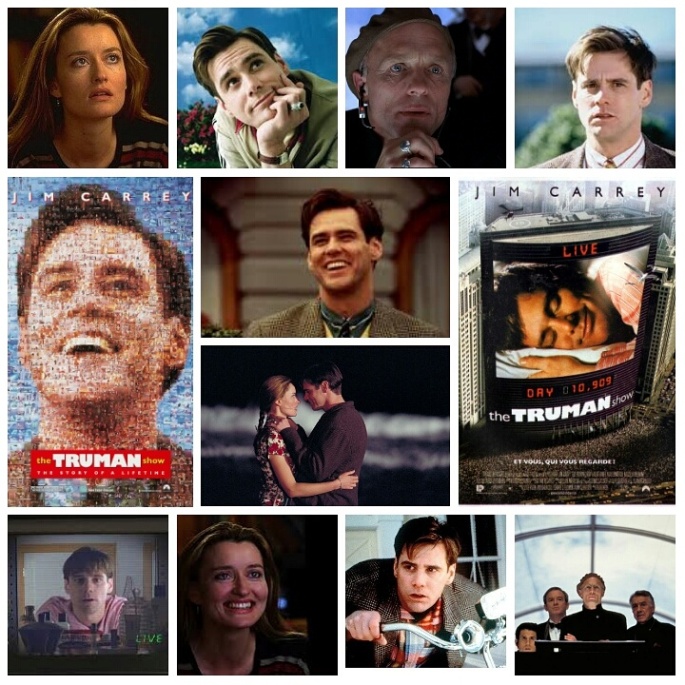
The Truman Show: A Review by Nate Hill 

Everyone at some point in their lives has been bothered by the notion that their surroundings are all an elaborate prank, that somehow every single human being but them is in on some giant impossible joke, watching their every move for strange and unthinkable purposes. What if my life isn’t real? What if all my friends and family members aren’t who they say they are, and I’m just part of some ungodly social experiment? What if my life as I’ve known it just isn’t.. real? For Truman Burbank (Jim Carrey) these concerns are very pressing, as he discovers throughout one of the most thoughtful, touching, creative and insightful films ever made. Director Peter Weir works with a script by Andrew Niccol to bring us this now timeless tale of a man existing in a patented pastel world that was never his own and always destined for him. Truman is the unwitting star of his own television show, inducted into its gargantuan studio set since the day of his birth, and conditioned to believe all his life that the people, places and events around him are in fact his real life. Cruel? Perhaps, but the film never takes sides, instead favoring wonder over analytical dissection, a wise move. Even the conductor of this whole absurd symphony, a prolific filmmaker played by Ed Harris, gets his moment of sympathy which can be read as preening ego or the desire to connect with his leading actor beyond the pixelated jumbo-tron he sits behind, depending on how you view the situation. Truman has a lovely wife (Laura Linney), a salt of the earth best friend (Noah Emmerich) and the perfect little white picket fence life. But none of it is real, or at least organic in the sense that every person deserves out of the womb. Truman is a rat in a very elaborate maze, but like anyone who’s had the wool pulled over their eyes, eventually he begins to see lights of authenticity piercing the seams. Gradually he begins to sniff out the ruse, like a child losing their innocence, and questions the eerily idyllic life he has been given. The people, or rather, actors in his life react in different ways. Some panic, others stick to the script, and Harris sorrowfully watches his controversial creation awaken beyond his control. Carrey is a starry eyed revelation as Truman, in one of the most overlooked performances of the century. His arc is the stuff of dreams, spanning the lengths of naivete trapped in a bubble that bursts into affecting, starry eyed realization and wonder. Every moment is owned by him, every beat is resoundingly hit in flawless fashion. When a mysterious and beautiful defector (the luminous Natasha Mcelhone) enters his life to play the part of whistle-blower, it’s the first geniune and non-puppeteered interaction he’s had with a human being. Sparks fly high enough to reach the heavens, and it’s the catalyst for a journey to find the self, the reason for his predicament, a world beyond the Lego brick suburbia he has known and the next step in his impossibly unique life. There’s a piece of Truman embedded in every viewer beholding, and I believe that’s why the film has held up for so long, and been beloved by so many. Every human being has insecurities as large as the fake sound stage that raised him from a pup. Every one of us has at one point felt the alienation he must have gone through upon realizing the truth. In a story so larger than life, we find the answers, or at least a modicum of such, to what it means being a person in this world. Carrey’s Truman is an achingly relatable avatar of this and a direct conduit into the essential. Couldn’t have picked a better actor to bring all of this to life. Couldn’t have made a better film about it. A classic. Good morning, and in case I don’t see you: good afternoon, good evening and goodnight.