Doom: A Review by Nate Hill 

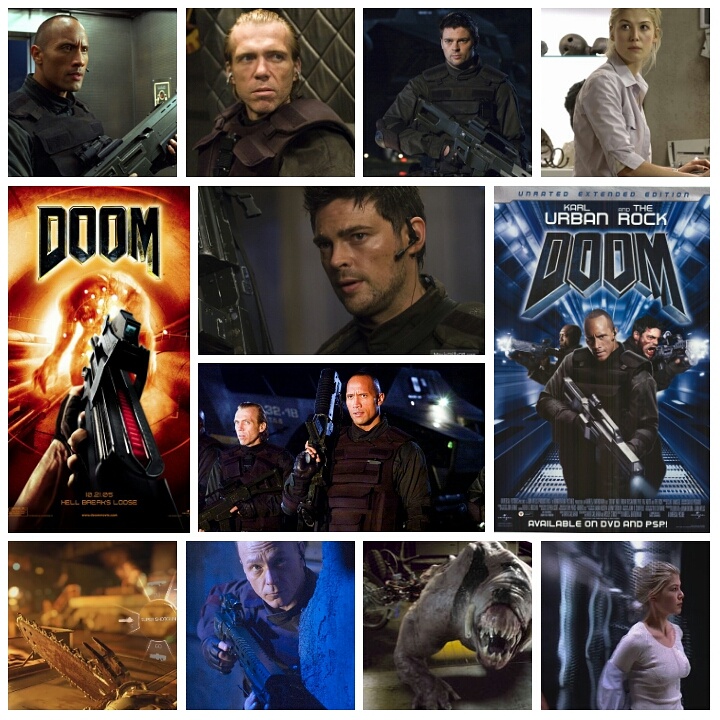
Despite not having a whole lot to do with the video games, Doom is still a rush of schlock and awe silliness, getting more fun and ridiculous in equal amounts near it’s nonsensical ending. Karl Urban and The Rock are the tough guys for the job when it comes to scoping out a Martian research base that’s accidentally opened up a portal to hell, unleashing all kinds of lovely things. Rock is Sarge, stoic commander of this unit, and Urban is John Grimm (he lives up to his last name) a battle scarred badass who has personal stake in fighting these monsters. His sister (Rosamund Pike) is a scientist on the base, and is now in a great deal of danger. After a neat Google Earth type zoom in on the Martian surface (ironically the only shot in the film that suggests they’re even on the red planet), it’s off to dank corridors, vast bunkers and beeping control panels, an Aliens-esgue siege on horrors of the dark that quickly goes sideways on them. It’s run of the mill stuff save for one stroke of brilliance: a pulse racing first person shooter sequence that showcases a POV of Urban shooting, slashing and chain-sawing his way through alien flesh. It’s a bold move that pays off immensely and is quite fun. The rest of their team is forgettable except for Richard Brake as Portman, the loudmouth A Hole of the bunch, a refreshingly animated performance in a roomful of muted, grim characters. The monster from the game shows up, a hulking hell pig nicknamed Pinky that tirades it’s way through everything until Urban gives it what for. This ain’t no great flick, but as far as video game movies go, you could do way worse. There’s definitely enough gore for the hounds, and it’s adequately stylish in presentation. 

THE BOURNE IDENTITY – A REVIEW BY J.D. LAFRANCE

bourne1

When The Bourne Identity (2002) debuted in theaters, audiences were hungry for a new kind of spy film. The James Bond movies adhered to a tried and true formula and it had gotten old. Mission: Impossible II (2000) collapsed under John Woo’s stylistic excesses and a boring love story with no chemistry between Tom Cruise and his love interest played by Thandie Newton. The world had changed dramatically since the events of 9/11 and a new international espionage action thriller would have to acknowledge this new reality. Along came The Bourne Identity, a very loose adaptation of Robert Ludlum’s novel of the same name and it connected with audiences even if most critics hated it.

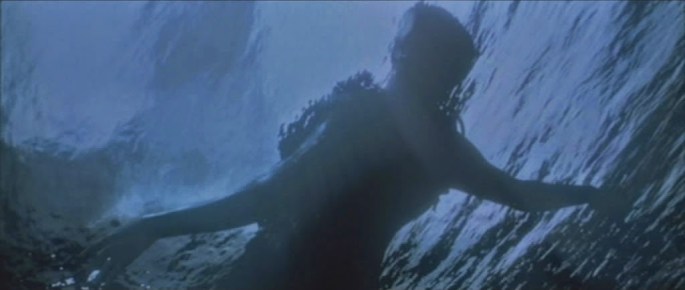
A mysterious, unconscious body is found floating out at sea by a boatload of fishermen. Two bullets in his back and a device that stores a Swiss bank account are found embedded in his hip. He wakes up with amnesia and one of the men onboard fixes him up. It isn’t until almost five minutes in that the first bit of understandable dialogue is uttered. Up to that point director Doug Liman drops us into this strange world without any set up so that we are disoriented, much like the film’s protagonist and therefore we identify and empathize with him almost instantly. These first few scenes establish the film’s style – constantly moving camerawork often with jarring, jerky movements that mimic our hero’s disorientation.

After two weeks at sea, he makes his way to land and begins a quest to uncover his identity. Over time, he discovers skills he didn’t know he had but that come out instinctively, like the ability to disable two armed police officers with his bare hands in Switzerland. He checks out his Swiss bank account and discovers that his name is Jason Bourne (Matt Damon). The safety deposit box contains money, passports for several different countries, and a gun. It becomes obvious that Bourne assembled this stash of supplies in case of a situation like the one he’s currently experiencing.

After a daring escape from the United States embassy, Bourne pays a young German woman named Marie (Franka Potente) to drive him to Paris where he apparently lives. It turns out that he’s some kind of lethal, CIA-trained assassin who has something to do with a top-secret operation known as Treadstone and he should be dead. It seems that the United States government is trying to silence an exiled Nigerian dictator by the name of Nykwana Wombosi (Adewale Akinnuoye-Aghaje) now living in Paris. He wants the CIA to put him back in power in six months or he’ll blow the whistle on their attempt to assassinate him. The man in charge of Treadstone – Alexander Conklin (Chris Cooper) – wants to make sure Bourne is dead because he was supposed to kill Wombosi when something went wrong. He sends three other assassins after Bourne and Marie.

Because Bourne suffers from amnesia and is being hunted by a secret branch of the CIA, we sympathize with his plight. It doesn’t hurt that he’s portrayed by Matt Damon who comes across as instantly likable and empathetic. Before The Bourne Identity, he was not regarded as an action star and so his capacity for sudden bursts of ruthlessly efficient violence and the ability to escape from several dangerous situations was a revelation. Damon pulls it off and more importantly is convincing as a deadly assassin with no memory. He is nothing short of a revelation as Bourne and the actor does an excellent job of not only gaining our sympathy early on, but also maintaining it throughout as we root for Bourne to figure out who he is.

When Bourne breaks out his martial arts for the first time in the film we are as surprised as he is and not just because it’s the first time we’ve seen him do so, but at the time Damon had never done a film like this before and it was his debut as a man of action. To his credit, he looks very adept and comfortable in the fight scenes and doing the stunts. The first substantial fight sequence where Bourne is attacked by a fellow Treadstone assassin is a visceral set piece as he uses everyday objects like a pen to defend himself. This is not the clean, polished style of Bond movies, but down and dirty fighting that looks bloody and painful. It has a personal vibe to it as the fight takes place up close and personal in an apartment. I like that the film shows Marie’s reaction to what has just happened. She is genuinely shocked and upset at the sudden outburst of violence she witnessed. As she and Bourne flee the scene she even throws up as a reaction to being in real danger.

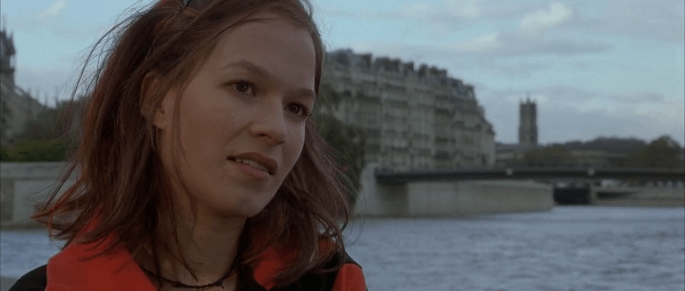
The casting of Franka Potente as Bourne’s love interest is an intriguing choice. She doesn’t have the supermodel looks associated with the Bond girls. She’s beautiful with a nice smile and an easy-going charm. She’s relatable and grounded – part of the film’s realistic aesthetic. Marie is an everyday person thrust into extraordinary circumstances once she encounters Bourne. Potente also brings a certain amount of international cinema cache thanks to her breakout performance in Run Lola Run (1998). As a result, she doesn’t come across as some damsel in distress, but a proactive foil for Bourne. They quickly develop an easy rapport as he finds her constant, nervous talking comforting. Damon and Potente play well off each other in these early scenes as her character humanizes Bourne so that he’s not just some inhuman killing machine.

Chris Cooper is ideally cast as the no-nonsense bureaucrat Conklin who knows more than Bourne and yet is always one step behind in finding and catching the elusive assassin. He isn’t given much to do, but makes the most of his limited screen-time as he orchestrates the search for Bourne with considerable technological resources at his disposal. Cooper exudes just the right amount of uptight malevolence that we’ve come to expect from a Republican-controlled government. A young Clive Owen shows up as a Treadstone assassin who methodically tracks and then kills his targets. His showdown with Bourne in a field of tall grass is a tension-filled sequence as our hero uses misdirection to get the drop on the assassin, neutralizing him, but not before he imparts crucial information about Bourne’s past.

One of the reasons that The Bourne Identity was such a game changer for the spy movie genre came as a result of taking the hi-tech surveillance used in movies like Enemy of the State (1998) and updated it on a global scale as Conklin and his room full of I.T. specialists (including character actor extraordinaire Walton Goggins in a small role) track Bourne’s movements in Europe. Everyone leaves electronic footprints be it through credit card use or being picked up on security cameras and this was even more prevalent after 9/11. This heightened sense of surveillance has become a part of our daily lives. There is a certain delicious irony at work as Liman crosscuts between Conklin and his staff using sophisticated technology to find two people who are doing their best to stay off the grid, which results in them taking refuge in a house in the French countryside.

I like that Liman shows Bourne and Marie actually trying figure out his identity by doing the legwork involved as they call potential leads on the phone, visit key locations and talk to people as they try to put together the jigsaw puzzle that is his past. There’s a nice sequence where Bourne walks Marie through a task that he needs her to do for him. As she makes her way through a hotel lobby his words play through her head and we hear them over the soundtrack in voiceover narration.
bourn2.pngAt the time of its release, much was made of the chaotic production that pitted indie director Doug Liman and against Universal Pictures. Their dirty laundry was aired in the mainstream press and there was speculation that The Bourne Identity was going to be a box office failure. After the critical and commercial success of Go (1999), Liman decided to pursue his passion project – an adaptation of Robert Ludlum’s The Bourne Identity, a book he loved while growing up. It had been published in 1980 and featured an ex-foreign-service officer on the CIA’s hit list. Liman read it again while making Swingers (1996) and found that the characters still engaged him. He inquired about the film rights and found that Warner Bros. controlled them. Over time, the rights expired and Liman met Ludlum at his home in Montana, securing the rights. In 2000, Liman asked screenwriter Tony Gilroy if he would rewrite the screenplay he had for The Bourne Identity. After the success of The Devil’s Advocate (1997), Gilroy had gotten a reputation for saving damaged scripts.

Gilroy was not thrilled with the source material: “Those works were never meant to be filmed. They weren’t about human behavior. They were about running to airports.” Liman persuaded Gilroy to read the script, which he realized was “awful,” but they met and the latter asked the former why he wanted to make this film. Gilroy declined Liman’s offer, but when pressed gave him a suggestion: toss the novel and keep the idea of an assassin with amnesia. “You only have one way to find out … What do I know how to do? I guess your movie should be about a guy who finds the only thing he knows how to do is kill people.”

Liman eventually wore Gilroy down and he agreed to work on the script. While the first five minutes of the film comes from Ludlum’s book everything after Bourne gets off the boat was created by Gilroy. At the time, Matt Damon wanted to “try an action movie … exactly the way I’d love to do it, with someone who was thinking outside the box. Doug being Doug, this would be an interesting movie.” He agreed to do the film after meeting Liman and reading Gilroy’s script.

Liman took the project to Universal Pictures in the first place because “it was just as important to them as it was to me to make this a character-driven movie and not just a generic action movie.” By his own admission, the director was mistrustful of studio decisions like their suggestion that he shoot in Montreal instead of Paris to keep costs down. He argued that the Canadian city didn’t look like the City of Lights and the studio relented. Liman applied his often chaotic, unpredictable style of filmmaking to a big budget studio film with mixed results, often angering the producers. For example, once in Paris, he hired a crew that didn’t speak English (so he could practice his French).

When Damon arrived he didn’t like the changes made to the script after the one that made him sign on in the first place. Liman had brought in David Self (Thirteen Days) to fix what he felt was a problematic third act when Gilroy left to write Proof of Life (2000). Some of the character-driven material had been removed in favor of bigger action sequences. According to Damon, Self “went to the book and did a page-one rewrite. Every few pages, something blew up … It was not the movie I agreed to do.” Editor Saar Klein remembers, “We went into production with a script that was just a mess.” Liman agreed and Gilroy came back after finishing Proof of Life to write new scenes and fax them from New York City to Paris.

Producer Richard Gladstein left the production because his wife was going through a difficult pregnancy. Universal did not want Liman filming unsupervised in Europe and brought in veteran producer Frank Marshall who had known the director since he was a child. The studio felt that Liman’s approach was unorganized and unnecessarily costly. He responded by saying, “I like to keep my options open. I’m known for changing my mind.” The studio also felt that he lacked maturity. For example, one night Liman paid the crew overtime to light a forest for him to play paintball. Liman claimed that the studio hated him and they tried to shut him down: “The producers were the bad guys.”

It got so bad between Liman and the studio that they rejected anything he said. The director ended up using Damon as his surrogate, but this only worked for a short time. One day, Liman realized he’d missed a shot and asked the producers if he could redo the scene. They said no and so he loaded four minutes of film in a camera and reshot the scene himself, which infuriated the producers. This resulted in a giant screaming match on the set. At one point, Liman even toyed with auctioning off his director’s credit on eBay. Despite all the friction between Liman and the studio the end result speaks for itself. The Bourne Identity was a commercial hit, but the studio had not surprisingly soured on Liman and banned him from directing the sequels. “I lost my baby,” he said.

The Bourne Identity was shown to a test audience who liked it, but wanted more action at the end. After much debate with the studio, Liman and Gilroy devised a new action sequence. The screenwriter did not enjoy the experience of working with Liman finding that the director “didn’t have any sense of story, or cause and effect.” Liman found Gilroy “arrogant” and at one point attempted to hire a new screenwriter until Damon threatened to quit if his script wasn’t used. Gilroy saw a rough cut during post-production and was worried that the film wasn’t going to be good. It had come out a year late and went through four rounds of reshoots. He tried to take his credit off the film and arbitrated against himself. He wanted to share credit (and blame) with someone else. After all the dust had settled the film went over budget by $8 million and two weeks over schedule. This forced Universal to move the original release date of September 2001 to February 2002 only to push it back again to May 31 and finally settling on June 14.

What separates The Bourne Identity from the Bond films at the time is that it took the international espionage thriller and personalized it. For the most part, the adventures that Bond had in his movies never affected him personally (the notable exception being License to Kill and now the Daniel Craig films) while in The Bourne Identity it is very personal, but without sacrificing all the things we’ve come to expect from a spy movie: exotic locales, exciting car chases, lethal bad guys, and intense fight scenes. What made the film such a breath of fresh air was how it tweaked these tried and true conventions.

bourne3At its heart, The Bourne Identity is a mystery as Bourne tries to figure out who he is and why there are people trying to kill him. This gives Liman the opportunity to ratchet up the tension as Bourne is constantly looking over his shoulder, never able to rest for too long and unable to trust anyone except for Marie. Known previously for character-driven independent films Swingers and Go, Liman showed his adeptness at working in multiple genres by bringing his trademark loose, almost improvisational approach that breathed new life into the spy genre. It had become safe and predictable and it took an outsider like Liman and casting against type with Damon to shake things up. Without The Bourne Identity, Casino Royale (2006) would have been a very different film and the subsequent Daniel Craig Bond films wouldn’t be as gritty and substantial as they are.
Priest: A Review by Nate Hill 

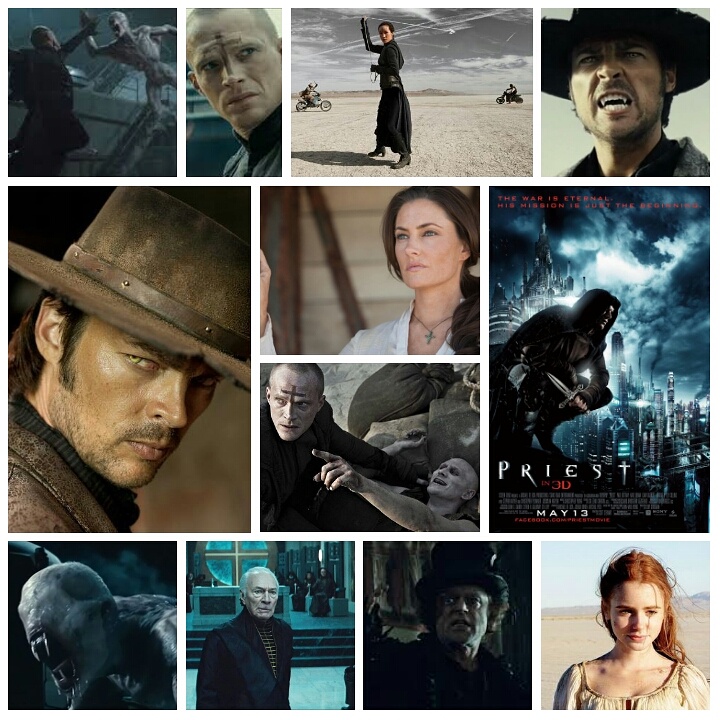
Priest is one of those flashy missed opportunities, a visually stimulating comic book flick that just couldn’t amp the substance metre up enough til it’s flush with style, and ultimately feels somewhat hollow. It’s still a gorgeous Blu Ray that will give your system a workout though, with some neat vampires and a great cast. Sometime in a murky post apocalyptic future, humanity lives in a giant gloomy city on the edge of oblivion, walled in for fear of vampires who have preyed upon them in the past. An order of warrior priests protects citizens and keeps order, until one rogue from their sect (Paul Bettany) discovers that the creatures may be back when an outsider couple (Stephen Moyer and Madchen Amick) have their daughter (Lily Collins) kidnapped from their desert dwelling outside the city. They come to Bettany for help, but the leader of his priesthood (a smug Christopher Plummer) is an obstinate son of a bitch and refuses to act. Bettany goes renegade along with Priestess (Maggie Q) and ventures into the wasteland to rescue Collins and fight these baddies. It’s frustrating because the look and design of this world is brilliant, like a dark opulant jewel that clearly has some thought put into it. But then… the dialogue and story are so numbingly pedestrian, straying not a kilometer into uncharted narrative waters to give us something even a little bit exciting or unpredictable. Quality jumps with Karl Urban’s dapper villain Black Hat, a vampire cowboy outlaw who oddly resembles what I’d imagine Stephen King’s Roland Deschain would look like if the powers that be took their heads out of their ass and recasted Idris Elba. But I digress. Like I said, terrific cast; Brad Dourif has a great cameo as a snide hustler peddling trinkets to superstitious townsfolk, and watch for  the great Alan Dale too. Bettany always makes for a solid action hero, he just has a bit of trouble finding the right projects (have you seen that turd Legion? Good lord) that deserve bis talents. This one falls just short. It could have really used a few rounds of defibrillation from another screenwriter, and perhaps a hard R rating to take advantage of the horror aspects. Still, the vampires are creepy enough (echoes of Blade II are always welcome), the actors keep it going and there’s no shortage of style. 

Riddick: A Review by Nate Hill 

Being a huge fan of the two previous Riddick films, I was overjoyed to hear that Vin Diesel would be raiding his own couch for change to save up in order to make this R rated follow up, still helmed by David Twohy. It’s reassuring that in a franchise with more than a few haters, Diesel has the passion and ambition for his character to go out of his way in bringing this to fans. Not to mention what a kick ass, gnarly little space yarn it turned out to be. Pitch Black was a claustrophobic horror fest set on a single harsh world, and The Chronicles Of Riddick opened up into a vast galactic space opera. This one reigns it in closer again (partly because of budget, I would imagine) and gets back to the roots established in Pitch Black. After defeating the Necromongers and becoming their King, Riddick is betrayed and sent into exile by the treacherous Lord Vaako (Karl Urban in a brief but memorable reprisal). Cast out into the stars with a ship running low on fuel, he finds himself marooned on a small, deadly planet that’s more challenging than any other he has found himself on (and if you remember, he has been to some hellish little nooks in the past). This world is a dry, acrid rock where every form of wildlife seems to be incredibly lethal, and out to get him. The first half of the film is pure genius, and consists of Riddick playing Survivorman with his environment, battling aliens and elements and befriending a small hell-pup type doggo that grows up into a teeth and claw ridden killing machine that is at one point referred to as a ‘dingo dango thing’. This is where it’s at for the film, and as soon as the more generic second half arrives, the air gets a bit stale, but it’s still heaps of fun. After mastering the terrain and ingeniously dispatching a snakelike alien that seems to have wandered right in from Wolfgang Petersen’s Enemy Mine (practical effects POWER), he encounters trouble of the human variety, in the form of bounty hunters. Two teams of outlaws have arrived to claim him: the stern Boss Johns (Matt Nable) who has an old bone to pick with Riddick, and the psychotic A-hole Santana (Jordi Molla, who I think of as the Latin Gary Oldman). They bicker a whole bunch on who gets the prize, unknowingly being infiltrated and messed up by the guy before they’ve barely landed. Katee Sackhoff is nutso awesome as Dahl, a lesbo tough chick who legit has the line “I don’t fuck guys, but occasionally I fuck them up.” Soon there’s more charming wildlife, this time in droves of shrieking reptilian predators who intend to see each of them, Riddick included, dead. This forces an amusingly unstable team-up from all forces to battle the uglies and escape this godforsaken place. It’s giddy sci-fi pulp good times, and benefits from its hard R rating, something which the other two films never had on their side. Diesel was born to play Riddick, the growling teddy bear, and I hope he gets to continue wearing the goggles for more of these movies, indefinitely if possible. A hell of a great time. 

Broken Lizard’s The Slammin Salmon: A Review by Nate Hill 

The hype surrounding comedy troupe Broken Lizard quieted down somewhat after the hullabaloo of both Super Troopers and Beerfest, but that didn’t mean they halted their output. In 2009 they released the insanely funny screwball romp The Slammin Salmon, which nobody seems to have seen and garnered nowhere near as much buzz as their previous films. It’s just as much of a riot, this time landing the gang into a Miami seafood restaurant, after their jaunts in rural law enforcement and extreme competitive alcohol consumption. The restaurant they all ‘work’ at is owned by a hulking bull in a china shop named Cleon ‘Slammin’ Salmon, a gigantic ex pro boxer played by the late great Michael Clarke Duncan in one of his last, and best, appearances. Cleon runs the restaurant with an obnoxious iron fist, a giant petulant brat with a penchant for beating up his staff and the social skills of a grizzly bear. On a busy night he announces to his staff that they must sell enough deceased marine life on plates to come up with a ten grand debt he owes to the Asian mob. This sets off a chain of reliably hilarious shenanigans involving the whole Broken Lizard crew, and a few cameos from salty hollywood veterans, a welcome trend that is commonplace among their films. The pushover manager Rich (Kevin Hefferman) attempts to keep the order. The lunatic head chef (Paul Soter) and his dimbulb busboy brother (also Soter) create trouble for everyone. Douchey waiter Guy (Eric Stolhanske) plays dirty to boost his sales. Ditzy server Mia (April Bowlby) dolls up her smile and smart one Tara (Cobie Smulders) plays it crafty to get ahead. Funniest by far is Jay Chandrasekhar as Nuts, a weirdo whose alter ego Zongo makes insane appearances whenever he forgets to take his meds. Clarke Duncan is the bellowing life of the party though, in an untethered romp through the comedic corn that clearly has been improvised a lot and shows the actor having some of the most fun I’ve ever seen onscreen. It’s a chaotic flick that captures the mania of restaurant life perfectly, with nods to everything from Monty Python to Blake Edward’s The Party, while still retaining a contemporary personality of it’s own. Broken Lizard has a knack for making every joke land in their films, and it’s laugh city all the way through this one. From engagement rings in fecal matter, third degree burns from scalding soup, endless situational fisacos and satirical characters, it’s just wild. Watch for Lance Henriksen, Carla Gallo, Olivia Munn, Jim Gaffigan, Sendhil Ramamurthy, Morgan Fairchild, Vivica A. Fox as a pop star named Nutella (lol) and a priceless Will Forte. On par with Troopers and Beerfest, funny in spades and so damn re-watchable. An essential for comedy fans. 

Dredd: A Review By Nate Hill


After the floundering absurdity that was 1995’s Judge Dredd left a nasty taste in the collective mouths of fans, all wen quiet on the cinematic front of Dredd for nearly two decades (I call it the Batman & Robin effect). The clouds parted though, and we finally got one streamlined masterpiece of a flick with 2013’s Dredd. Not only is it achingly faithful to the comics right down to Dredd never removing his helmet, but it stands as one of the ballsiest and well made action pictures in recent years. It’s never overstuffed or busy, takes the violence seriously, has genuine suspense, a bone deep and super tough performance from a grizzled Karl Urban, a sexy, no nonsense villain and the best original score of 2013 by a country mile. Not too mention it’s atmospherics, which are helped by said score of course, to create a sonic mood board of post apocalyptic ruin and urban rot. Dredd is part of an elite department called the Judges, who roam the smoky desolation of Mega City One and act as judge, jury and executioner wherever they see fit. Dredd is a trigger happy juggernaut with no use for scum or criminals and has not a qualm with taking them out like the trash they are, often in brutal, bloody and uncompromising ways. On day he’s partnered up with judge in training Cassandra (Olivia Thirlby, perfect), a rookie with blossoming telepathic abilities. A routine call leads them to a gargantuan Mega Block tower called Peach Trees, a sting irony once we see the rampant squalor inside. This tower happens to be controlled by the fiercest criminal overlord in town, Ma Ma, played by a purring, lethal and altogether terrifying Lena Headey. Her tactics go beyond barbaric and she’s sitting on the manufacturing of a drug called Slo Mo, which makes the users feel like time is passing at one percent it’s normal rate (a gold mine for setting up a scene visually). Ma Ma locks down the tower as the two judges arrive, and decrees that she wants them dead. Now it’s a visceral fight for survival against her armies of thugs and miscreants, and a slow ascent towards her penthouse lair, for Dredd to finish her off. The whole film takes place in Peach Trees, so it’s a self contained, one location affair, and a goddamn knockout of a movie. There are R rated films that dabble in violence a bit and barely earn their stripes, and then there are R rated films that leap at the chance to show people dying six ways to Sunday. Dredd absolutely decimates Ma Ma’s armies in high style and often in super slow motion as they face him while they’re high. The slo mo never feels tacky, but has a tactile richness and fluidity that makes the inflicted carnage so satisfying as it unfolds. The score by Paul Leonard Morgan is an uproarious rallying call that drives forward constantly, charging out of the gate in the opening minute as Dredd pursues a van down the highway on his thundering motorbike, and pummelling each scene with heart stopping force until it mellows out for an eerie passage called ‘Ma Ma’s Requiem’ which is my favourite piece in the film and can be listened to on repeat. Pure genius. Thirlby is the voice of reason and the eyes of the audience, experiencing for the first time how ugly this crime fighting business is, and holding her own wickedly. There’s a dark sense of danger to the whole thing, a frank and outright lawlessness to the villains, as it’s just another day on the job for them. No overacting, no histrionics. Just mellowed out murder and meanness all round. This is the Dredd film that we’ve been waiting for, and have long deserved after that other mess. Low box office returns means we may never see a sequel (wtf is wrong with people, like, who didn’t go see this??), but we’ll always have this little blitzkrieg of a flick to re watch time and again. I know I will.

THE COLOR OF MONEY – A REVIEW BY J.D. LAFRANCE

color-of-money

The 1970s saw the rise of the Movie Brats, a collection of filmmakers that had grown up watching and studying films. They made challenging films that reflected the times in which they were made and were revered by cineastes as much as some of the actors appearing in them. Directors like William Friedkin, Francis Ford Coppola, Hal Ashby and Martin Scorsese made intensely personal films that blended a European sensibility with American genre films. However, the one-two punch of Jaws (1975) and Star Wars (1977) and the failure of expensive passion projects like New York, New York (1977) and Heaven’s Gate (1980) ended these directors’ influence and saw the rise of producers like Joel Silver, Don Simpson and Jerry Bruckheimer, and movie star-driven blockbusters in the 1980s and beyond. It got harder and harder for the Movie Brats to get their personal projects made. Most of them went the independent route, making films for smaller companies like Orion and doing the occasional paycheck gig with a Hollywood studio.

For years, Scorsese had been trying to fund a personal project of his own – an adaptation of The Last Temptation of Christ. It was a tough sell and he ended up making After Hours (1985) and The Color of Money (1986) as a way of keeping busy while he tried to get Last Temptation made. At the time of The Color of Money much was made of it being Scorsese’s first movie star-driven film and some critics and fans of the director felt that he was selling out. It would not only be promoted as a film starring Paul Newman and Tom Cruise (and not as a Scorsese film), but was a sequel (something that the director was never fond of doing) of sorts. Newman had been interested in reprising his famous role of “Fast” Eddie Felson from The Hustler (1961) for some time but he had never met the right person for the job – that is, until he met Scorsese.

The Color of Money begins twenty-five years after the events depicted in The Hustler and we find that Eddie (Newman) is enjoying a comfortable existence as a savvy liquor salesman with his bar owner girlfriend Janelle (Helen Shaver) and occasionally fronting a pool hustler. His current investment, a cocaine addict named Julian (played with just the right amount of sleazy arrogance by John Turturro), is getting roundly beaten by a young turk named Vincent (Tom Cruise) who catches Eddie’s attention with his “sledgehammer break.” He becomes fascinated watching Vincent play and his cocky behavior between shots, like how he works the table. Eddie also watches the dynamic between Vincent and his girlfriend Carmen (Mary Elizabeth Mastrantonio). What really catches his attention is not just Vincent’s raw talent but also his passion for the game. He’s even willing to play Julian after he’s won all of the guy’s money because he just wants his “best game.”

There’s a nice bit where Eddie tests Carmen’s skill as Vincent’s manager, exposing her lack of experience and schooling her on the basics of pool hustling in a beautifully written monologue by Richard Price that Newman nails with the ease of a seasoned pro. We get another healthy dose of Price’s authentic streetwise dialogue in the next scene where Eddie takes Vincent and Carmen out for dinner and continues to school his potential protégés: “If you got an area of excellence, you’re good at something, you’re the best at something, anything, then rich can be arranged. I mean rich can come fairly easy.” The scene is also nicely acted as Tom Cruise plays the cocky upstart with just the right amount of arrogant naiveté without being a typical goofball. As Eddie puts it, “You are a natural character. You’re an incredible flake,” but tells him that he can use that to hustle other players. The ex-pool player lays it all out for the young man: “Pool excellence is not about excellent pool. It’s about becoming something … You gotta be a student of human moves.” And in a nice bit he proves it by making a bet with them that he’ll leave with a woman at the bar. Of course, he knows her but it certainly proves his point. This is a wonderful scene that begins to flesh out Vincent and establish how much he and Carmen have to learn and how much Eddie has since The Hustler.

The young man is a real piece of work – brash, directionless but with raw talent. It is clear that Eddie sees much of his younger self in Vincent and decides to take the young man under his wing and teach him “pool excellence” by taking him and Carmen on the road. It’s an opportunity to make some money while also getting back Eddie’s passion for playing pool. The Color of Money proceeds to show the three of them on the road for six weeks, getting ready for an upcoming nine-ball tournament in Atlantic City. Of course, there are the predictable bumps in the road as Vincent’s impulsive knack for showing off costs them money and Eddie feels like the young man’s not listening to him. It’s a formula we’ve seen used in countless films but Scorsese does everything he can visually to keep things interesting, especially in the dynamic way he depicts the numerous games of pool, the use of music (for example, one game is scored to “Werewolves of London” by Warren Zevon) and the actors that play some of the opponents along the way, like a young Forest Whitaker as a skilled player that manages to hustle and beat Eddie at pool.

However, it is the camerawork by veteran cinematographer Michael Ballhaus that impresses the most. He and Scorsese depict each game differently, employing a variety of techniques, like quick snap zooms in and out, and floating the camera gracefully over the pool table or gliding around it. He even has the camera right on the pool table following the balls around. The camera movement and editing rhythm of each game is dictated by the mood and intensity of each match, like the grandiose techniques employed when Vincent shows off during a game of pool. As he revels in his own showboating moves, the camera spins around him as if intoxicated by his bravado. However, much like the chaotic pool hall brawl in Mean Streets (1973), the camera movement goes nowhere symbolizing the futility of Vincent’s actions. Sure, he beat the top guy at that pool hall but in doing so scared off an older player that had much more money.

While The Color of Money was made fairly early on in Tom Cruise’s career, his relative inexperience actually suits his character. His youthful energy mirrors Vincent’s. It is his job to come across as an arrogant flake of a human being, which he does quite well (too well for some who were unimpressed with his performance). Cruise has always been an actor that performs better surrounded by more talented and experienced people and with the likes of Paul Newman acting opposite him and Scorsese directing, it forces the young actor to raise his game. One imagines he learned a lot on the job much like Vincent does in the film. Scorsese knew exactly what he was doing when he cast Cruise and got a solid performance out of him. In the late ‘80s, Mary Elizabeth Mastrantonio acted in a series of high profile roles like The Abyss (1989), The January Man (1989) and this film. She’s given the thankless job of the girlfriend role but manages to make the most of it. One gets the feeling that Carmen is a fast learner and smarter than Vincent. She is much like Eddie in understanding the business side of pool hustling.

Color-of-Money-Tom-Cruise

Naturally, Newman owns the film, slipping effortlessly back into Eddie’s skin after more than 20 years and it’s like he never left. The scenes between him and Cruise are excellent as the headstrong Vincent bounces off of the world-weary Eddie. Over the course of the film something happens to the elder pool player. As he tells Vincent at one point, “I’m hungry again and you bled that back into me.” We see that youthful spark fire up in Eddie again after so many years dormant and Newman does a fantastic job conveying that. While many felt that his Academy Award for the performance he gives in The Color of Money was really a consolation prize for a career of brilliant performances, this does a disservice to just how good he is in this film and how enjoyable it is to watch him get to work with someone like Cruise and Scorsese, watching how their contrasting philosophies towards acting and filmmaking co-exist in this film. There is an energy and vitality that Cruise brings and Newman feeds off of it and Scorsese captures it like lightning in a bottle.

When Paul Newman read Walter Tevis’ sequel to The Hustler it made him wonder what “Fast” Eddie Felson would be doing now and wanted to revisit the character. He had seen Raging Bull (1980) and was so impressed by it that he wrote a letter to Scorsese complimenting him on such a fine piece of work. The director was just coming off of After Hours and was attached to several projects, including Dick Tracy, with Warren Beatty, a fantasy film entitled Winter’s Tale, Gershwin, with a screenplay written by Paul Schrader, and Wise Guy, a book about the New York mafia written by Nicholas Pileggi. However, they all took a backseat when Newman invited him to direct a sequel to The Hustler. The actor had been working on it for a year with a writer. Scorsese was interested but didn’t like the script Newman showed him because it was “a literal sequel. It was based on at least some familiarity with the original.” Scorsese felt like he couldn’t be involved with the project if he didn’t have some input on the original idea of the script.

Scorsese wanted to go in a different direction and brought in a new screenwriter, novelist Richard Price who had written The Wanderers and also a script for the director based on the film Night and the City (1950). Scorsese liked the script because it had “very good street sense and wonderful dialogue.” For The Color of Money, Price and Scorsese’s concept was basically what became the film, exploring the director’s preoccupation with redemption but with what Newman saw as “recapturing excellence, having been absent from it, and then witnessing it in somebody else.” Newman liked it and Price and Scorsese came up with an outline and began rewriting the script. Price studied pool players and wrote 80 pages of a script. They took it to Newman and got his input. By the end of nine months, Price and Scorsese decided to make the film with Newman.

For Scorsese this was the first time he had ever worked with a star of Newman’s magnitude. “I would go in and I’d see a thousand different movies in his face, images I had seen on that big screen when I was twelve years old. It makes an impression.” As a result, Scorsese and Price made the mistake of writing for themselves when they should have tailored the script to suit Newman and his image, or as Scorsese later said, “we were making a star vehicle movie.” The actor wanted to explore aging and the fear of losing his “pool excellence.” He also wanted the character of Minnesota Fats, played so memorably by Jackie Gleason in The Hustler, to return but Price couldn’t get the character to fit into the script. He and Scorsese even presented a version of the script with Fats in it to Gleason but he “felt it was an afterthought,” said Scorsese.

It was Newman that suggested Cruise for the role of Vincent to Scorsese. The young actor had met Newman before when auditioning to play his son in Harry & Son (1984). Scorsese cast Cruise before Top Gun (1986) had come out but he was a rising movie star thanks to Risky Business (1983). He had seen the young actor in All the Right Moves (1983) and liked him. The project was initially at 20th Century Fox but they didn’t like Price’s script and didn’t want to make it even with Cruise and Newman attached. Eventually, it went to Touchstone Pictures.

Newman was not fond of improvising on the set and suggested two weeks of rehearsals before filming. Scorsese wasn’t crazy about this and found them “aggravating. You are afraid that you are going to say ridiculous things, and the actors feel that way too.” However, he agreed to it and brought in Price so that he could make changes to the script. Fortunately, everyone felt secure in character and with each other. Price and Scorsese didn’t have the film’s ending resolved and felt that they had written themselves into a corner. The studio wanted them to shoot the film in Toronto but Scorsese felt that it was too clean and chose Chicago instead. Both Cruise and Newman did all their own pool playing with the former being taught how to do specific shots that he played in the film with the exception of one, which would have taken two additional days to learn and Scorsese didn’t want to spend the time. Cruise had dedicated himself to learning how to play pool: “All I had in my apartment was a bed and a pool table.” He worked with his trainer and the film’s pool consultant Mike Sigel for months before shooting started.

Some Scorsese fans marginalize The Color of Money as one of his paycheck films – the first he did for the money – and while it may not have the personal feel of a film like Taxi Driver (1976), it still has its merits, a strong picture that fits well into the man’s body of work. I would argue that it is one of his strongest films stylistically with some truly beautiful, often breathtaking camerawork capturing all the nuances of playing pool: the energy and vitality of the game is there without sacrificing any of the story or the characters. This film also shows how a director like Scorsese can take a hired gun project and make it his own. It looks, sounds and, most importantly, feels like one of his films and not a commercial studio picture. Others must have agreed as the film not only became Scorsese’s most financially successful film at the time but a critical hit as well.

ColorOfMoney_Rolex2

The director proved to the studios that he could deliver the goods at the box office while to himself he was still able to invest the film with some of his own personal touches. Ultimately, The Color of Money is about Eddie’s redemption and rekindling the spark he had in The Hustler before the screws were put to him. As with many sports movies, the story builds towards the climactic big game or, in the case of this film, the big tournament but Price’s script offers a slight twist in that Eddie’s victory is a hollow one and the real one is at the very end when his love for playing pool has finally come back completely. He is reinvigorated and excited about where his life and game will go from here and this is summed up beautiful in the film’s last line – “I’m back.”

Tony Scott’s Man On Fire: A Review by Nate Hill 

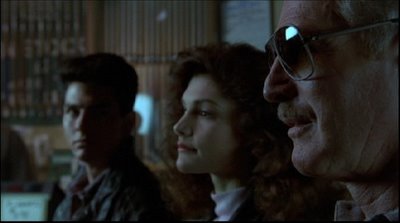
Tony Scott’s Man On Fire is one of those films I can watch time and time again and never tire of, a magnificently melancholy tale of South of the border justice, criminal intrigue and a tequila shot of pulpy, blood soaked style that gets me every time. It’s loosely based on a 1987 film of the same name starring Scott Glenn, Jonathan Pryce, Danny Aiello and Joe Pecshi (there’s a random lineup, no?), but Scott intrepidly branches off into his own territory, and thank god for his vision. This was the first film in which he really explored his sketchy smokehouse of an aesthetic that he would later take to angelic heights with Domino. Colors blur and saturate, editing rockets by with the force of a bullet in a storm, subtitles appear arbitrarily and seemingly of their own volition. It’s a jarring tool set that he employs, and many abhor it. I’m as in love with it as he was though, and whether to throw us right into the protagonist’s psyche or simply because he felt the need to paint his pictures this way, the rest of the films in his remaining career carried the DNA, in varying doses. Fire is the key word for this film, in many of it’s forms. There’s a smoldering ember in Denzel Washington’s John Creasy that is fed by the winds of corruption as the film progresses, erupting into a blazing inferno of violence and fury. Creasy is a broken man, haunted by the questionable, never fully revealed actions of his military past. “Do you think God will ever forgive us for what we’ve done” he grimly asks his old war buddy Rayburn (a scene stealing Christopher Walken). “No” Rayburn ushers back curtly. It’s at this heavy nadir we join Creasy, lost in a sea of alcohol and guilt, an unmooored ship with a shattered hull looking for both anchorage and repair. Rayburn hooks him up with a bodyguard gig in Mexico City, keeping the young daughter of a rich businessman (Marc Anthony, terrific) safe from the very real threat of kidnapping. Dakota Fanning is compassionate, precocious and endearing as young Pita, who spies the wounded animal in Creasy right off the bat and tries to make friends. Creasy draws back in reluctance, but eventually warms up. I love the pace of this film to bits. It spends nearly half of its hefty running time simply getting to know these two characters, forging a bond between them before the inciting incident even looms on the horizon. And when the kidnapping occurs, as it must, the stakes are high as can be and our investment level in the situation is paramount. Setting up character is so key, and Scott nails it with scene after scene of quiet and careful interaction. Then he yanks the lid off the pot, as Pita is snatched in broad daylight, Creasy is injured and the kidnappers vanish into thin air. Pita’s mother (a soulful Radha Mitchell) works with the dodgy Mexican authorities and her husband’s lawyer Jordan (a sleazy Mickey Rourke). Creasy has other plans. Once healed, he embarks on a mission of fury and vengeance, knocking down doors, removing body parts, inflicting gratuitous bodily harm and using every technique in his training (believe me, there are some interesting ones) to track down those responsible and get Pita back. Washington does all this with a calm and cool exterior, letting the heat emanate from every calculated syllable and intense glare. The descent into Mexico City’s poverty stricken criminal underworld is a grisly affair, and all sorts of ugliness is exposed, shredded through the caffeinated prism of Scott’s lens. Two cops do what they can to help Creasy, idealistic Guerrero (Rachel Ticotin) and battle hardened Manzano (the always awesome Giancarlo Gianninni). It’s Creasy’s show though, and he blasts through it like a righteous hurricane of blood and bullets. Scott’s films have a knack for ending in over the top, Mexican standoff style shootouts, but the man subverts that here, going for something far more sorrowful and atmospheric, ending an intense tale on notes of sadness and resolute calm, gilded by the aching tones of songstress Lisa Gerrard and composer Harry Gregson Williams. Walken provides both comfort and catharsis, the only beacon of hope for Creasy other than Pita. Unlike John, Rayburn has moved on from the horrors of their past, but one still sees the trauma in his soul when he looks John in the eye and gets hit with what is reflected back. Tough stuff to get right, but hey, it’s Walken we’re looking at here, and he’s brilliant. Rourke has little more than an extended cameo, but his flavor is always appreciated, and he’s great too. I had no idea Anthony had the chops he exhibits here, but I loved his arc as well as his performance and he holds his own in a blistering scene with Washington. Washington is an elemental beast, shadowing what’s left of his humanity under a cloak of booze and brooding contemplation, until he’s coaxed out by the life saver Pita. Then he’s a lion, riding guns out into a ferocious swan song of a sunset that may just hold rays of redemption for him. This is Scott at his best, his unique brand of storytelling at its height, his creative juices a canister of lighter fluid set aflame with genius and innovation. A masterpiece.

Tony Scott’s Crimson Tide: A Review by Nate Hill 

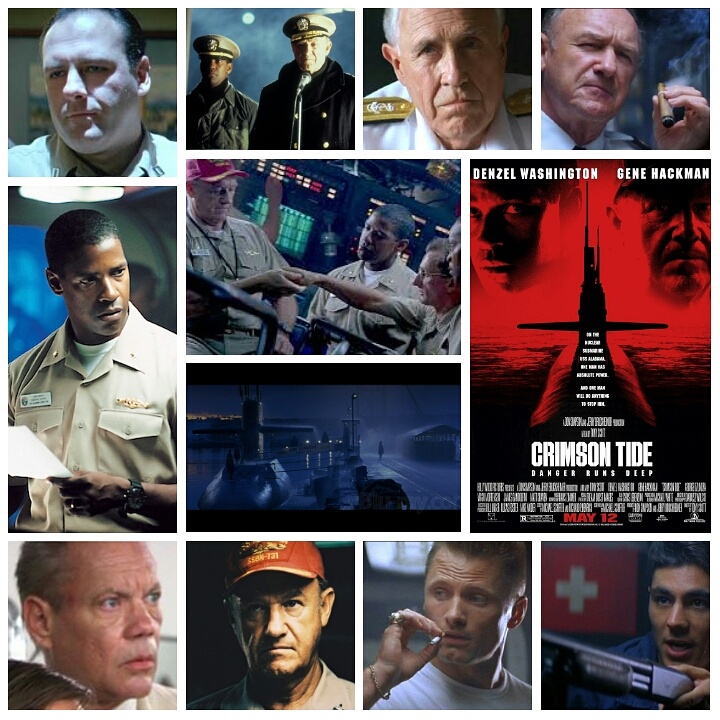
In terms of submarine movies, nothing will light your fire or get your pulse racing quite like Tony Scott’s Crimson Tide (well maybe Das Boot, but that’s another story). Scott just has this way with hyper kinetic tension and a knack for causing whirlwinds of propulsive energy in his work, and even when the material is more melancholy there is still a rousing climate to every frame. Pair his visual skill with Quentin Tarantino’s sterling (and uncredited) ear for dialogue and you’ve got one simmering package. Not too mention the actors and the blood stirring score from Hans Zimmer which is one of the composer’s best and richly orchestrated works. This is the second time Tarantino and Scott have done the writer director duo, albeit the lesser of the two films, it’s still a stunner. When lunatic Russian extremist Vladimir Radchenko (Daniel Von Bargen, RIP) goes off in a huff and threatens nuclear warfare, the Yanks get nervous and send in an ace in the hole submarine loaded with warheads of it’s own, cause, you know, ‘just in case.’ The vessel is captained by an intense and corrosive Gene Hackman, backed by a more reserved and introverted Denzel Washington. The two clash right off the bat and its obvious that fireworks of conflict will erupt between them once the shit hits the propeller. It soon does, in the form of a command order that is partly lost in translation. It could mean go ahead and fire the nukes on Radchenko. It also could not. Hackman, that spitfire, wants to engage and eradicate any chance of action on the extremist’s part. Washington insists on holding back, terrified by uncertainty. This troublesome personal disagreement eventually leads to flat out mutiny amongst the crew, in more ways than one. The crew has no concrete leader to direct their devotion to, and that’s a dangerous thing aboard a military vessel. Hackman and Washington are pure electricity as opposite sides of the same coin, facing off in a claustrophobic arena where one wrong move could end up in cataclysm. Along with internal disruption concerning the crew, there’s also the fact that they’re on a submarine miles below the surface to contend with, and it’s one whopper of a suspense cocktail. Viggo Mortensen is terrific in a conflicted supporting role, and watch for solid turns from Danny Nucci, George Dzunda, Matt Craven, Ryan Phillipe, Steve Zahn, Chris Ellis and a fiery James Gandolfini. Ooo and Jason Robards in an uncredited cameo, which he’s also done for Scott in Enemy Of The State. It’s pure movie bliss, but what can you expect from Scott other than the cream of the crop? The guy gave us pure gold for decades, bless his soul, and this is one of his best.

Antoine Fuqua’s Training Day: A Review by Nate Hill 

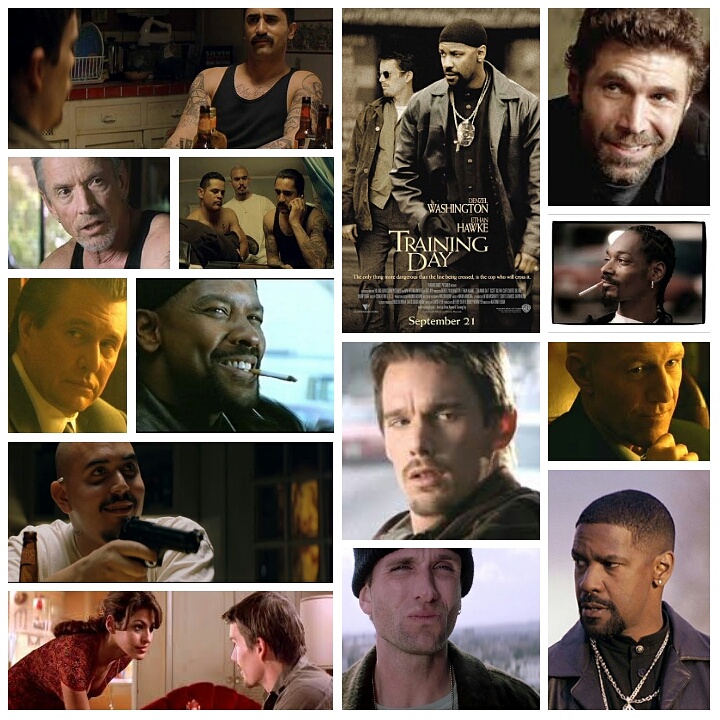
“To protect the sheep, you gotta catch the wolf, and it takes a wolf to catch a wolf.” This questionable sentiment is how rogue LAPD detective Alonzo Harris (Denzel Washington) justifies a heavy laundry list of dirty deeds, scary volatility, sociopathic backstabbing and a complete disregard for the badge that he wears on a chain like dog tags. And indeed, inner city Los Angeles can seem like a war zone, but its like he’s in fact more part of the problem than the dark angel of justice he sees in himself. Antoine Fuqua’s combustible crime drama Training Day rightly won Washington an Oscar for his unsettling runaway train of a performance, and he owns it down to the last maniacal mannerism and manipulative tactic. The film takes place over one smoggy L.A. day (hence the title) that feels like an eternity for its two leads, as well as all the colorful and often terrifying people they meet along the yellow brick road that’s paved with used needles and shell casings. Harris is tasked with showing rookie cop Jake Hoyt (Ethan Hawke) the ropes in his neighborhood, in the hopes that he’ll pass the test and achieve Narc status. Jake is prepared for a run of the mill crash course, but as soon as he’s treated to a verbal beatdown from Harris in the diner they meet at, he has a feeling it ain’t gonna be anywhere close to a normal day. This is just another day for Harris though, as he drags Hoyt by the scruff through drug busts, gang warfare, the worst neighborhood in town and pulls him deeper into his very dangerous world. Fuqua has a knack for getting the atmosphere of his settings just pitch perfect, and the feverish nightmare of the inner city comes alive, seemingly possessing the characters themselves until the atrocities just seem like a way of life. The trouble really starts when they run across Harris’s old drug lord buddy Roger (a wicked Scott Glenn in a role originally intended for Mickey Rourke), who proves a valuable asset later, though not in the way you might think. Harris introduces Jake to his equally crooked and scary team, including Peter Greene, Nick Chinlund and Dr. Dre who struggles in the acting department, especially in a room full of such heavy hitters. Jake is aghast at the horrors he sees and cannot believe the streets are like this. Harris devilishly assures him that this is the job, mutilating the symbol of his badge even more by justifying such behaviour as necessary. Tension reaches unbearable heights during a visit to a Latino gang household run by Cliff Curtis, Raymond Cruz and the eternally scary Noel Gugliemi. This is the heart of darkness fpr the film, a story beat from which there is seemingly no escape, until it becomes clear that Jake has somehow evolved a step up the food chain as far as LA goes, and is now ready to put down the dog who taught him, a dog who has long been  rabid. People complain that the final act degenerates into a routine action sequence. Couldn’t disagree more. With a setup so primed with explosive conflict, it can’t end up anywhere else but an all out man to man scrap, which when followed by no flat out action sequences earlier in the film, hits hard. Their inevitable confrontation is a powerhouse, especially from Washington, who finally loses his composure and yowls like a trapped coyote, his actions caught up to him. In a role originally intended for Tom Sizemore (who would have rocked it in his own way) I’m glad Denzel got a crack at it, for he’s absolute dynamite. Watch for Harris Yulin, Raymond J. Barry and Tom Berenger as the three senior LAPD dick heads, Eva Mendes as Alonzo’s girlfriend, Macy Gray as a screeching banshee of a ghetto whore and Snoop Dogg as your friendly neighborhood wheelchair bound crack dealer. Fuqua keeps attention rooted on the dynamic between Washington and Hawke, who is excellent in as role that could have easily been swallowed up by Washington’s monster of of a performance. Hawke holds his own, and the film is really about how two very different guys view a difficult area of town, how it changes them both, and ultimately how their moral compasses end up on a collision course. One of the best crime framas out there, and quickly becoming timeless.