MIDNIGHT RUN – A REVIEW BY J.D. LAFRANCE

midnightrun-3

One of the most popular trends in the 1980s cinema was the buddy-action film. The best ones to come out of this period were 48 HRS. (1982), Beverly Hills Cop (1984), Lethal Weapon (1987), and Midnight Run (1988), which spawned numerous imitators and sequels. Along with Lethal Weapon, Midnight Run is arguably the genre’s last gasp before slipping into formulaic predictability and self-parody (see Rush Hour, Blue Streak, et al). What makes Midnight Run so good, even after all these years, is the unbeatable combination of an excellent cast, a witty script and solid direction.

Jack Walsh (Robert De Niro) is a bounty hunter hired by his bail bondsman Eddie Moscone (Joe Pantoliano) to find and transport to Los Angeles, one Jonathan Mardukas (Charles Grodin) — a.k.a. “The Duke,” an accountant who stole $15 million from Las Vegas gangster Jimmy Serrano (Dennis Farina). What is initially a simple “midnight run” from New York City to Los Angeles, turns into the road trip from hell as Walsh and Mardukas are pursued across the country via plane, train, and automobile by dim-witted gangsters, frustrated FBI agents led by Alonzo Mosely (Yaphet Kotto), and a rival bounty hunter named Marvin Dorfler (John Ashton).

While this film may be a comedy, Brest lets us know right from the get-go that it’s going to have a slightly unpredictable edge to it as Walsh is almost killed by a deadbeat he’s supposed to bring in. If that wasn’t bad enough, his guy is almost snatched away from him by Dorfler. I like that Brest takes the time to show Walsh doing his job and that he’s good at it. The bounty hunter is able to track down and find Mardukas where the Feds and the Mob were unable.

Brest wastes no time introducing the film’s various antagonists starting with Mosely who approaches Walsh on the street. The bounty hunter quickly finds himself surrounded by four FBI agents. Walsh knows what they want and gives them nothing but smartass replies to their questions. Yaphet Kotto doesn’t play Mosely as an inept bumbler but instead brings an impressive intensity to the role that makes his character something of an intimidating figure which, of course, makes his kind of incompetent lackeys that much funnier the more frustrated he gets when they are repeatedly unable to catch Walsh and Markdukas. For example, there’s the withering glare Mosely gives one of his flunkies when he states the painfully obvious – that Walsh has his identification.

Midnight Run
adheres to the basic formula of the buddy-action film with two diametrically opposed characters teaming up to fight the bad guys. Inevitably, humorous situations arise from constant bickering while the duo shoots, punches, and fights their way out of action-packed set pieces. Ultimately, what makes Midnight Run work so well is how it messes around with the formula. Instead of having one funny guy and one straight man, you have two straight men with De Niro and Grodin. And yet it works, due in large part to the skill of the two leads who complement each other perfectly — De Niro plays Walsh as a gruff, foul-mouthed guy constantly annoyed by Grodin’s clean-cut accountant, armed with a seemingly endless supply of personal questions to ask his traveling companion. Their scenes together seem very spontaneous and real as they annoy the hell out of each other.

Fresh from his scene-stealing appearance in The Untouchables (1987), Robert De Niro was eager to try something different. He wanted to do a comedy and to this end, pursued the lead role in Penny Marshall’s film, Big (1988). Marshall was interested but the studio was not and thankfully the role went to Tom Hanks. Martin Brest, who directed Beverly Hills Cop, had found another script by George Gallo in the same vein — one that blended elements of comedy and action. He sent it to De Niro and was very up front with the actor: Midnight Run was a commercial film, not an in-depth character study. Regardless, De Niro researched his role by working with real-life bounty hunters and police officers.

Paramount was originally interested in backing Midnight Run but they wanted a big name star opposite De Niro in order to improve the film’s chances at the box office. Their production executives suggested that the Mardukas character be changed to a woman and wanted Cher for the role in the hopes that she would provide some “sexual overtones.” Brest wisely rejected the idea and so Paramount suggested teaming De Niro up with Robin Williams. Williams was a big star in his own right and eager to get the role. He even offered to do an audition for Brest — a rarity for the comedian whose name alone could green light projects. However, Brest was impressed by Charles Grodin’s audition with De Niro. The director felt that there was a real chemistry between the two actors. As a result, Paramount backed out and the studio’s president Ned Tanen claimed that the budget became too high and decided that “it wasn’t worth it.” Universal Pictures became interested in the project. It is to Brest’s credit that he supported Grodin down the line and refused to change his decision despite studio pressure.

Brest brought Grodin aboard with the understanding that the actor would have the opportunity to improvise. Grodin was very much open to De Niro’s improvisational technique. He remembered that De Niro “was all about ‘work,’ plain and simple, and being with him felt like breathing pure oxygen.” Some of their best scenes feel like the screenplay was just thrown out and that they simply riffed off one another. For example, the night boxcar scene where Walsh and Mardukas bond, after illegally stowing away on a train, was improvised entirely.

Much of Midnight Run’s humor comes from these moments as they constantly antagonize each other. This relationship is believable because the film takes the time to develop it with many scenes where the two men just talk, and this allows us to get to know them. Most buddy films spend only the bare minimum amount of time on character development and instead cram as many action set pieces and explosions in as possible. As a result, we do not become attached to the characters. Midnight Run does not fall into this trap.

For all of its commercial elements, George Gallo’s script has very strong, three-dimensional characters that transcend their stereotypes. It was the script that first drew Grodin to the project. He said in an interview that “the script had dimension beyond what I’m used to seeing. The dimension of character. It looked like a good action-adventure genre picture with strong character evolution.” De Niro, being the consummate actor that he is, still manages to inject little touches and details, like a habit of constantly checking his faulty watch, or the nice bit of comedy when he checks out Mosely’s identification that he pickpocketed during their first meeting. De Niro walks away from the camera only to quickly turn around and flash the stolen ID in an amusing parody of an FBI agent. It is these little bits of business that provide insights into his character. Brest commented in an interview that, “sometimes I’d let the camera run after finishing a scene to see if he did any bits, and invariably he did.”

From the two leads to the rest of the supporting cast, each character is given a moment or two to say or do something that makes them distinctive and funny. For example, there is John Ashton as Dorfler, a rival bounty hunter who falls for the same stupid trick every time. Dorfler is not just some generic bounty hunter. Ashton transforms him into a self-absorbed idiot who is completely oblivious to the big picture. Even though Dorfler is always on the receiving end of many jokes, he gets his chances to prevail. However, you know that, ultimately, he is destined to fail. Dorfler has a distinctive personality instead of being merely a cardboard cutout.

Joe Pantoliano is so good as the increasingly exasperated bail bondsman. His opening exchange with De Niro early on in the film is so well played. In a matter of moments De Niro and Pantoliano suggest a long history between their two characters in the way they act towards each other. Eddie is a consummate bullshit artist but Walsh sees right through that. I like the nice little detail that Brest throws into this scene where Eddie pays Walsh by taking out a wad of cash stashed in his pink and white socks. It is details like this that say so much about a character. Eddie cares only about money and his reputation. These characters could have been presented as clichéd stereotypes but Brest wisely casts veteran character actors like Ashton and Pantoliano in these roles.

Many of the supporting characters appear constantly throughout the film in a series of recurring gags, like Mosely running into people who’ve encountered Walsh posing as him, or Mardukas’ never-ending questions about Walsh’s personal life (“Why were you so unpopular with the Chicago Police Department?”), or Dorfler getting fooled by the same trick time and time again. Then there’s Joey (Robert Miranda) and Tony (Richard Foronjy), two dumb Vegas wiseguys that work for Serrano. Tony’s the slightly smarter one but not by much. The give and take between these two minor characters is really funny and the script gives them a moment of actual competency which makes them more than just one-dimensional thugs. It helps that the two actors playing them do such a good job bringing these characters to life.

Much like Yaphet Kotto does with Agent Mosely, Dennis Farina plays his character as if he were in a drama and not a comedy. Unlike his goofier mobsters in Get Shorty (1995) and Snatch (2000), the actor transforms Jimmy Serrano into an imposing figure best illustrated in the scene where he confronts Mardukas and tells him that he’s going to die. For a brief moment, Midnight Run stops being a comedy and there’s a real sense of danger thanks to Farina’s chilling presence in this scene. He’s also quite funny in the scenes where he threatens his underlings with all sorts over-the-top violent acts if they don’t do his bidding.

Nowadays, it’s hard to remember when De Niro doing a comedy was something of an anomaly. Sure, he had done The King of Comedy (1983) but by and large he was known at the time as a dramatic actor. So, teaming him up with veteran comedic actor Charles Grodin in an action comedy must’ve seemed like a risky prospect to the studio. But this would be tempered with director Brest behind the camera. This was years before Gigli (2003) when he was still enjoying the good will from the smash hit Beverly Hills Cop. If anybody could make De Niro funny while still retaining his trademark intensity, it was Brest.

Now, there is a whole generation of filmgoers that only knows De Niro from comedies like Meet the Parents (2000) and Analyze That (2002). Charles Grodin has, for the most part, shunned the limelight. He had a short-lived talk show but has, unfortunately, not done anything on par with his work in Midnight Run. In fact, he hasn’t acted much since 1994 and said in a recent interview that he has quit acting altogether. By the late 1980s, early 1990s, the buddy-action film had become a tired and hackneyed cliché. Screenwriter Shane Black offered a brief breath of fresh air with Lethal Weapon (1987) and The Last Boy Scout (1991) but generic time-wasters, like De Niro’s own Showtime (2002), Serving Sara (2002), which blatantly rips off Midnight Run, or the more recent The Bounty Hunter (2010), are still cranked out with predictable regularity by the studios. Back in 1988, Brest delivered the goods in a big way, serving up an R-rated film that mixed exciting car chases and shoot-outs with hilarious recurring gags and assortment of colorful characters.


Brown’s Requiem: A Review by Nate Hill

image

Brown’s Requiem is a neat little slice of Los Angeles film noir in the tradition of L.A. Confidential and Mulholland Falls. It’s based on a book of the same name that’s written by James Ellroy, who actually wrote L.A. Confidential as well, so the crime vibe here is thick, rich and geniune. Michael Rooker is flat out fantastic as Fritz Brown, a world weary, hard bitten private investigator who is hired by a rotund caddie named Fat Dog (Will Sasso) to find his kid sister (Selma Blair) a wayward girl who has apparantly run off with a her sugar daddy, and may be in danger. Brown noses around and before he knows it he’s neck deep in police corruption, violence and murder. It’s convoluted, but film noir always is, and when the plot is left to bake in the California sun, it’s going to be nicely sinewy and labyrinthine to please all the filmgoers put there who fancy themselves gumshoes and like to decipher the happenings along with the protagonist. The trail leads Brown to sinister police captain Cathcart (the late Brion James), brutal thug Richard Ralston (Jack Conley) and many other bottom dwelling nasties. This is a rare lead role for Rooker and he’s riveting, fitting this genre protagonist like a glove. His innate menace and gruff whisper of a voice are put to good use as the hangdog tough guy takes care of business in style. Watch out for Kevin Corrigan, Tobin Bell, Christopher Meloni and a brief but darkly funny cameo from Brad Dourif. Where L.A. Confidential hid it’s grit beneath a sheen of glamour, Brown’s Requiem wears it proudly on its seedy sleeve, a scrappy little cousin to Confidential, and a sturdy little noir mystery boosted by Rooker’s work.

Barry Levinson’s What Just Happened: A Review by Nate Hill


Barry Levinson’s What Just Happened is an unfairly overlooked little Hollywood satire, a little less bombastic than his excellent Wag The Dog, but no less biting. It’s like Entourage on Zanax, a surprisingly laid back entry into an oeuvre that is usually foaming at the mouth with frenzy. Robert De Niro plays Ben, a very stressed out movie producer who is dealing with a zillion different things at once, most of which are going wrong. The character is based partly on real life Hollywood producer Art Linson, and his book. Ben has a lead actor (Bruce Willis playing Bruce Willis) who refuses to shave his bushy beard for a film. Anyone who remembers the film The Edge with Alec Baldwin and how big his beard was in that, well, that’s where the idea came from. That’s just a taste of how many weird things that both Hollywood and his personal life toss at Ben. He’s also in post production on a Sean Penn film (Penn also plays himself) with a very stubborn and flamboyant director named Jeremy (Michael Wincott) who refuses to cut the film in accordance with the studio’s wishes (here manifested by an icy Catherine Keener). Ben’s daughter (a weepy Kristen Stewart) is going through personal crisis, he’s also got a bitter rivalry with an obnoxious writer (Stanley Tucci) and has to babysit an anxiety ridden agent (John Turturro). It’s all a lot for him to handle and we begin to see the turmoil start to boil under Ben’s cool exterior. The cast is beyond ridiculous, with additional work from Moon Bloodgood, Peter Jacobson, Lily Rabe and Robin Wright as Ben’s estranged wife. Standouts include Michael Wincott who is a comic gem and gives the film it’s life with his pissy, enraged and altogether charming performance. Willis is also priceless as he ruthlessly parodies himself to the hilt. It’s slight, it’s never too much and is probably a bit too laid back for its own good, but I had a lot of fun with it, and it’s always cool to see meta movies about the inner workings of Hollywood. 

The Devil Wears Prada: A Review by Nate Hill

  
The Devil Wears Prada is an interesting one. It’s one part sincerity, two parts cynicism and possesses a certain love for each and every character within its narrative that it’s reluctant to admit to at times, perhaps jut to keep a low profile with its realism. I’ve never read the book, but the film starts off going one way and seems like it will tidy itself up in a nice little resolution, and abandons it’s comfort zone two thirds of the way through for something that cuts cuts a bit deeper. Anna Hathaway starts her arc in the adorable zone and progresses through confidence and finally arrives at in a jaded daze at a tough life lesson. She plays Andrea Sachs, a would be journalist who decides to take a detour and work as second personal assistant to Miranda Priestly (Meryl Streep) the editor and slave driver at Runway magazine, in hopes that doors will eventually open for her in her field. Not quite the breezy excursion she hoped for, as Priestly turns out to be a full on nightmare. Streep blusters into the film like an acy tornado, steady at the reigns of her character and completely owning every syllable of her delicious dialogue. Streep plays her as the ultimate boss from hell, and then cleverly shows us the woman beneath in one key scene that resonates nicely. Most of the time her personality resembles that of my fifth grade schoolteacher on a bad day, and it’s utterly hilarious to see Streep, a god amongst progessionals, go for it like a praying mantis. Andrea also comes under the scrutiny of prim Emily (Emily Blunt, excellent), Miranda’s first assistant who is aghast at her decision to hire this walking fashion disaster. Andrea quickly catches on though, holding her own with this difficult job at the expense of her relationship with her boyfriend (Adrian Grenier of Entourage). Stanley Tucci is equal parts snazzy and snooty as Nigel, Miranda’s associate and eventual mentor figure for Andrea, superb as always. Simon Baker also shows up as a hotshot who tries just a little too hard to sweep Andi off her feet. Like I said before, the film tricks you with fluff and banter and eventually ends up somewhere more serious, with a painful look at what it takes to cut it in the business world, and the allegiences which sometimes get slashed and burned in favour of covering your own ass. Ugly stuff, for sure, but necessary and honest, a decision that helps the film greatly. Plus, it’s pretty damn funny most of the time. Great stuff.

BEST SELLER – A REVIEW BY J.D. LAFRANCE

best_seller_03

Best Seller (1987) is an example of an odd convergence of talent with a screenplay penned by B-movie schlockmeister Larry (It’s Alive) Cohen, directed by journeyman crime film director John (Rolling Thunder) Flynn, and starring A-list talent like James Woods and Brian Dennehy. The key to enjoying this film is if you can swallow Cohen’s pulpy B-movie nonsense: a slick, corporate hitman convinces a hard-boiled police detective, and sometimes author, to write his memoirs. Once you get past this rather odd premise, Best Seller is quite enjoyable to watch, especially the interplay between the two lead actors who do their best to sell the film’s set-up.

Flynn’s no-nonsense, self-assured direction quickly establishes itself in the film’s prologue set in Los Angeles circa 1972 with an ill-fated bank heist. There are some nice touches in this sequence, like the lone bum sleeping on the steps of the building that is about to be robbed, and all of the crooks wearing Richard Nixon masks (anticipating the Ex-Presidents in Point Break). A cop named Dennis Meechum (Brian Dennehy) barely survives the heist (although, a couple of his fellow officers aren’t so lucky) and goes on to write a best-selling book about the incident.

Fifteen years later, Meechum has graduated to undercover work, despite being a high-profile author in his spare time (?!), busting bad guys. During one case he’s almost killed if not for the last minute intervention by an enigmatic stranger. We are given a little insight into this cop. He’s a widower raising a teenage daughter (Allison Balson), facing lots of unpaid bills, and has missed the last four deadlines on his latest book. He’s not quite the burn-out cop that Nick Nolte was known for playing in the 1980s but he’s stuck in a rut.

Meechum finally meets the mystery man known as Cleve (James Woods) who proceeds to pitch an idea for a new book about his life and the dirty work he did for tycoon David Madlock (David Shenar) and his company Kappa International. During one of their meetings, Cleve lays it all out for a skeptical Meechum: “Corporations deal in two things, period: assets and liabilities. I removed the liabilities and I provided some assets.” It turns out that Cleve was in on the bank heist back in ’72 and helped Madlock get his start. However, he’s had a falling out with the businessman and wants to expose his corrupt enterprise with Meechum’s help. And so, Cleve and Meechum form an uneasy partnership that is volatile at best as the hitman attempts to back-up his wild claims to the understandably wary cop.

James Woods had quite a run in the ‘80s with intense performances in films like Salvador (1986), Cop (1987) and True Believer (1989). He’s in fine form here as an ultra-confident killer. His best moments are when he tries to convince Brian Dennehy’s cop of some of the people he murdered for Kappa International. Woods brings his customary intensity to these scenes and a certain reptilian charm as a corporate assassin. Cleve really isn’t a nice guy – in fact’s he’s an arrogant prick – but Woods manages to get us to like him anyways because the actor is so charismatic in his own right.

Woods plays well off of Dennehy’s variation of the cop he portrayed in F/X (1986). He’s not as rumpled and still has his issues but there’s the same sharp intellect. Meechum plans to string Cleve along until he gives him enough evidence to bust him and get some much deserved payback for the ’72 bank job. While Woods is all wiry intensity, Dennehy is a solid, imposing figure with his stocky figure. Most of the film’s best scenes involve watching these two top notch actors bounce off each other.

This is evident in a scene where Cleve tries to pick up a woman at a bar and gets into it with her date only for the guy to be put in his place by Meechum. Just one look by Dennehy makes the man back down. I know I wouldn’t want to mess with someone like Dennehy. Cleve demonstrates his considerable willpower (and threshold for pain) and, in doing so, reveals a part of his past that sets off Meechum. The tension between the two characters in this scene is tangible and ups the ante in their relationship.

Cleve’s crusade against his former corporate handlers is Larry Cohen’s blatant attack on corporate greed so prevalent in the “Greed is good” decade. Cohen wrote the screenplay, reportedly based loosely on Los Angeles cop Joseph Wambaugh, who tried to remain on the police force after several of his novels became best-sellers, in 1981 for Columbia Pictures but it was stuck in development hell due to a change in management. Orion Pictures eventually picked it up. Flynn rewrote Cohen’s script but was unable to get credit because he failed to prove to the Writers Guild of America that he had written 51% of it. The film was originally called Hard Cover but was changed to Best Seller in post-production as the former title didn’t test well with preview audiences. At the time of the film’s release, Cohen said, “I think the idea of being a killer for a major corporation was a little bizarre seven years ago. But time has caught up with the story when we’re reading all these stories about corruption in big business and corruption in Wall Street and the craziness in Washington.” Cleve’s ruthless tactics for Kappa International are meant to show just how far corporations are willing to go to exert their influence and power. It is this commentary that elevates Best Seller above your typical crime thriller – that, and the performances of Woods and Dennehy.

Best Seller
was backed by Orion, an independent studio that pushed through all sorts of fascinating cinematic gems in the ‘80s, from efforts by auteurs like Woody Allen, to genre fare like RoboCop (1987). None of the major studios would’ve touched pulpy material like this and it’s a shame because a film like this has become scarce in the 2000s. The film does a good job delivering the requisite genre conventions under John Flynn’s workman-like direction and the television cop show production values only add to the tawdry B-movie vibe. Best Seller is certainly no masterpiece but it is a solid piece of entertainment and one of those underappreciated gems from the ‘80s waiting to be rediscovered.

Renny Harlin’s Cliffhanger: A Review by Nate Hill

image

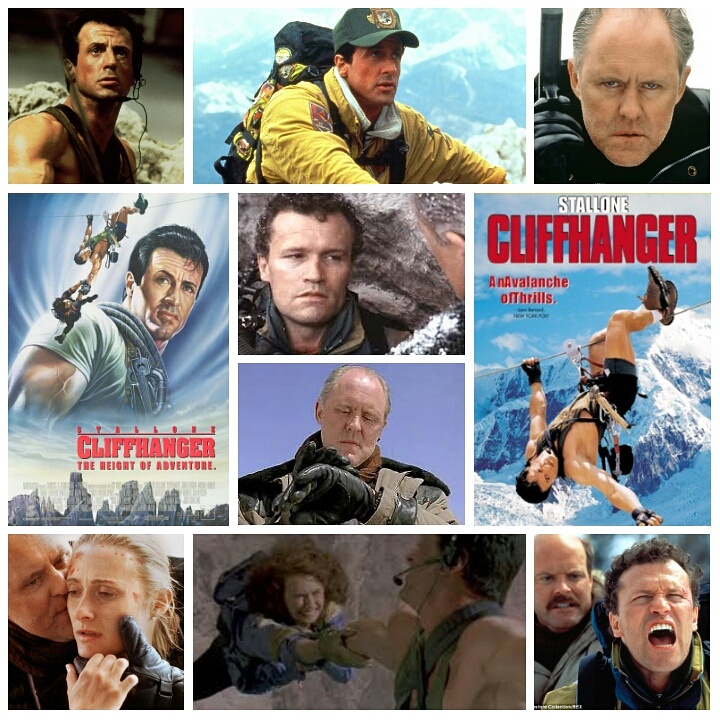
Renny Harlin’s Cliffhanger is to this day one the best and most exhilarating action films of the 1990’s. It’s big, bold and full of protein for lovers oft the genre. From the lively villain to the unbelievable stunts to the set pieces, it’s a tough package to beat. A stunning, vertigo inducing opener set high atop a snowy peak that ends in tragedy. A breathtaking airial heist carried out between two planes via cable wire. A whopper of a helicopter crash. Countless bone snapping, visceral hand to hand combat scenes. The list goes on. Sylvester Stallone puts his physique to great use as Gabe Walker, a rock climbing mountaineer guide who is accidentally responsible for the falling death of his best friend’s girlfriend. His buddy Hal (Michael Rooker) blames him no end, and he leaves in personal disgrace. Elsewhere, ruthless backstabbing psychopath Eric Qualen,  (John Lithgow) leads a team of dangerous mercenaries through aforementioned heist, plundering millions from a US treasury department plane and disappearing into the snowy desolation. Soon they come across Hal and a group of people touring the region, who are soon hostages. Word somehow gets out to Stallone and he’s back in business, out for redemption and then chance to brutally dispatch this gang of snow pirates. The action, refreshingly absent of digital gimmicks, packs one hell of a punch. Every fight scene feels breathless, dangerous and desperate. Every blow is thunderously felt, courtesy of director Harlin’s commitment to his work and the efforts of a stellar stunt team. Stallone isna beast and I forget that every time I haven’t seen him in a while. He’s almost as big as the mountains he scales here and each and every bad guy damn well finds this out. Rooker is as intense as he always is, love the guy. Lithgow is a freaking villain for the ages, in a role intended first for David Bowie, then Christopher Walken. I’m glad the ball ended up in his court, because he subsequently knocks it back out of the park with his cold blooded, deliciously evil performance. He makes Qualen so scary and merciless that even his own people get the jitters around him. There’s also work from Rex Linn, Caroline Goodall, Craig Fairbrass, Max Perlich, Paul Winfield, Ralph Waite, Don S. Davis, Bruce McGill and Janine Turner. This is just one of the finest action movies to ever swing into theatres or onto dvd. Brutal, scenic, adventurous, exciting, violent, snowy, just plain kick ass. If you don’t like this movie, you don’t like ice cream.

Margin Call: A Review by Nate Hill

image

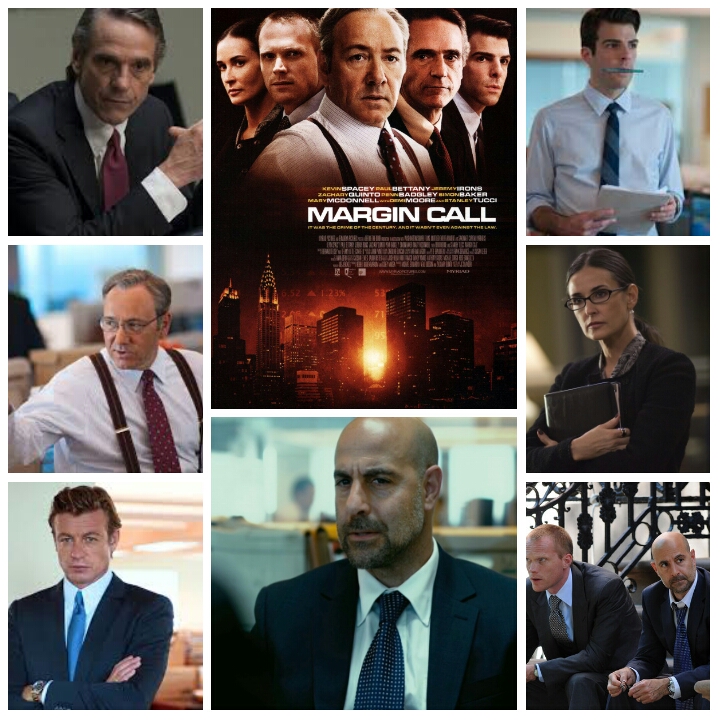
J.C. Chandor’s Margin Call sustains a laser focused, wilfully meticulous look at the days leading up to the 2008 financial crash, showing us life within one wall street office building during a nervy period which now no doubt is remembered as the calm before the storm. Various characters in different positions of the hierarchy anxiously brace themselves as the jobs begin to get cut and the dread looms towards them like the inevitable rising sun at dawn. It’s set all in one afternoon and night, compacting a far reaching event which spanned years into the microcosm of a single 24 hour window, a tactic which sits through the larger world implications and brings it in for something a little more intimate. Zachary Quinto plays a young trader who discovers a rip in the lining of the economic infrastructure, a precursor to the eventual disaste. I’m not being purposefully vague and cryptic with that, I just don’t personally understand all the exact ins and outs of what went wrong back then, and having not the slightest knowledge of wall street jargon, that’s the best I can do. He brings this knowledge to his superiors who react in varying ways. Kevin Spacey is a disillusioned big shot who sees his life going off the rails alongside the country’s market, and mopes in his swanky office. Paul Bettany is a cocky young upstart who uses casual indifference to shade the bruises he’s got from knowing what will happen. Demi Moore is a company head who looks out for herself while others in the company. Jeremy Irons provides scant moments of humour as a bigwig fixer who arrives on a chopper to set things straight, or at least assess the damage. The best work of the film comes from Stanley Tucci (surprise, surprise) as a jilted employee who has been laid off in the confusion, and is seething about it. His melancholic monologue about what it takes to propel America’s industry and economy forward resonates with a humanity that cuts deep. The film ticks along with a pace that’s both measured and swift, with little time for introspect, yet showing it to us anyway amid the chaos. Watch for appearances from Penn Badgley, Al Sapienza, Simon Baker and Mary McDonnell as well. Chandor let’s the proceedings thrum with an inevitability that hangs in the air as the promise of the impending crisis, a feeling that serves to impart not why it happened, not how it happened, but the fact that it did happen, to each and every individual person who was affected, as opposed to the country as a whole.
 

B Movie Glory with Nate: The Box

image

The Box is a moody little crime drama thriller starring James Russo, whose appropriately brooding persona lends itself to grim neo noir films such as these. He’s an actor who has almost entirely worked in B movies for a long time, and while you have to watch out for most as they are usually geniune piles of dog shit, this one is a jewel amongst the rubbish. Russo plays Frank Miles here, an ex con trying to go straight, sticking with the dead end job his P.O. has given him to stay out of trouble. Soon he meets beautiful waitress Dora (Theresa Russell) who falls in love with. The two of them try to start a new life together, but as we all know sometimes it’s very hard to run from your past, and soon enough trouble comes looking for them. Frank tries to get some money owing to him from his sleazebag of an ex-associate Michael Dickerson (a detestable Jon Polito) and things go wrong. Violence ensues, and Frank finds himself in the possession of a mysterious box which he can’t open and hasn’t a clue about. Dora has a scumbag boyfriend in club owner Jake Ragna (a terrifying Steve Railsbac) who I’d dangerous, volatile and obsessive about her. Soon, an evil corrupt Police Detective named Stafford (Michael Rooker) makes their lives hell as he searches for the box. Frank and Dora take refuge at the home of Stan (Brad Dourif, excellent), Frank’s former cell mate,  friend who is now a weed dealer. Even this may not be enough to keep them safe, as the long arm of the crooked law probes, and Stafford gets closer and closer. It’s a depressing situation forged by bad decision and the perhaps inescapable knack for trouble that some people tend to have, whether it’s coincidence or a measurable character flaw is eternally up for debate. The pair try so hard to fix their lives and still seem to be headed for a tragic dead end. Russo has sadness in his eyes in every role, as well as a boiling anger to match it, he fills out his protagonist very well. Rooker and Railsback make scary work of the two villains, especially Rooker who uses the kind of blatant brutality and abuse of power that are essential ingrediants in very dangerous men. Dourif is Dourif, which is never not mesmerizing, and Russell does the wounded angel thing down to the bone. A sad story, with a dream cast (for me, at least), a downbeat reflection on lives gone down the wrong path, a diamond in the rough noir thriller of the best kind.

Moscow Zero: A Review by Nate Hill

image

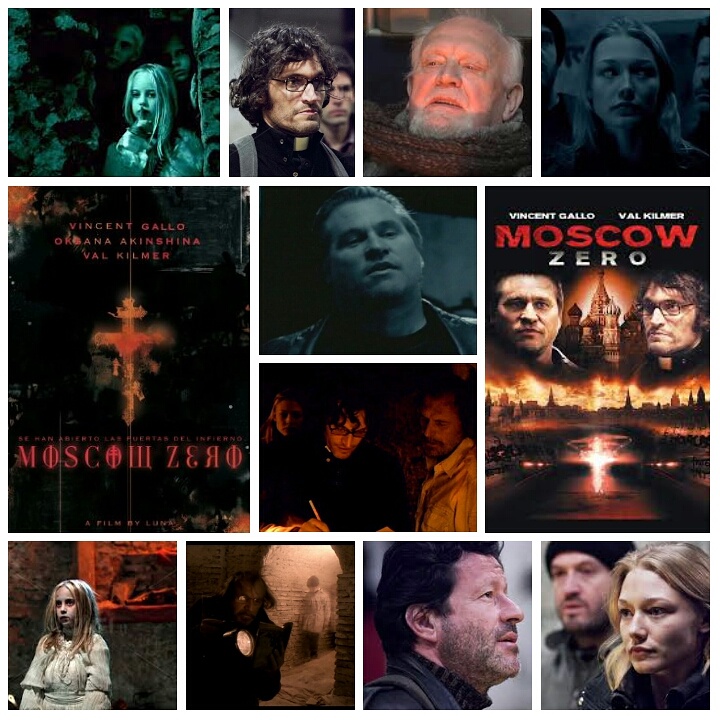
Moscow Zero is a chilly little subterranean ghost story, and a favourite for me. It god critically shredded by the few people who did see it, and quickly forgotten. I think this may be because of odd marketing,and the cultural rifts in different areas of both the world, and cinema. It was marketed in North America as a supernatural shocker starring Val Kilmer, which was a cheap shot to fans and in fact false advertising. Kilmer is in it, for maybe ten minutes, and is very good, but the story isn’t his. It’s also supernatural, but in a far more subtle, ambiguous and inaccessible way that the ADHD-ridden audiences over here just aren’t used to. In short, it’s very European, and they just seem to have a better handle on the intuition it takes to make an atmospheric chiller than anyone else, also seeming to be more connected with ghost lore and the spirit realm. The story concerns a priest named Father Owen (hollywood’s resident alien Vincent Gallo, playing it dead straight here). He has traveled to Moscow I hopes of finding his friend Professor Sergey (Rade Serbedzija), who has descended into ancient catacombs and endless tunnels below the surface of the city in hopes of finding a lost artifact hidden during wartime. He joins up with a group of guides and Moscow natives including the beautiful Lubya  (Oksana Akinshina) and a tracker named Yuri (Joaquim De Almeida) to traverse the underside of the city and find his friend. There are long, eerie scenes of Sergey wandering around the dimly lit labyrinth, pursuing his scholarly goal and talking to himself as strange shadows and far away whispers follow him around, gradually letting the viewer know that he’s not alone. Owen and his team rendezvous with Tolstoy (Joss Ackland) the elderly leader of a tribe of tunnel dwellers who won’t go below a certain level of the catacombs, who provides a map. Then they go deeper. Kilmer plays Andrey, a Russian dude who runs a gang that are in control of opening and closing a deep fissure gate that is said to lead to a hell like place. He’s relaxed, in both demeanor and the Russian accent, but he’s clearly having fun in one of his more character type roles. The catacombs have a haunted feel to them, and indeed there are ghosts, but not presented in the way you might think. The way the human characters see them is quite different from how they see themselves, and how the audience sees them, which is a nice touch. The story keeps itself mysterious, right up until it’s puzzling, creepy conclusion, buy I prefer that open ended, almost experimental style over desperate attempts to scare us. It’s atmospheric, strange, unique, thick with ideas and altogether a bit of brilliance. Definitely an aquire taste, though.

Antoine Fuqua’s The Replacement Killers: A Review by Nate Hill


Antoine Fuqua’s The Replacement Killers is one of the most stylish and visually synergistic action flicks ever made. It’s like John Woo meets John Wick, and seriously has some cool to it. Chow Yun Fat, that effortless, laid back badass, plays lethal hitman John Lee, who suffers a crisis of conscience at the worst professional crossroads. When Detective Stan Zedkov (Michael Rooker adds to the noirish feel) kills the son of powerful Chinese crime boss Terence Wei (Kenneth Tsang), he and his family are marked for death by the syndicate. Lee is employed to take out his young son, but holds back in the last moment, making a split second decision to defy Wei, take a rogue’s path and create a huge problem for everyone involved. Now, Wei has replacement killer after not only Lee, but Zedkov again and anyone unlucky enough to get in the way. Lee teams up with sexy identity forger Meg Coburn (love me some Mira Sorvino) and the two evade bullets, bombs and multiple murderous assassins all in the highest of style. Chow is the perfect action hero, with a mournful like ability and stoic streak that’s never too serious and always punctuated by his baleful sense of humour. Plus the guy can make bloody magic with two handguns in a career of epic stunt work that is almost as big a feat as that of the characters he plays. Sorvino also has a downbeat energy, adorable self deprecation and tough chick sarcasm that she masquerades with to hide the bruised girl beneath. They are a wonderful team, and I like that the film never outright forced any romance, but rather let the performances subtly suggest it via the absence in the script. Rooker holds up his end with endearing toughness, especially when forced to work alongside Lee and Meg to save their asses, a perfect character arc that he really sells.Jurgen Prochnow is deadly and devilish as Michael Kogan, the only German mercenary I know of that works for a Chinese crime syndicate lol. Danny Trejo and Til Schweiger are hilariously over the top as two silent monster assassins, leather clad death angels hired by Wei to hunt our heroes. The action really steps it up into comic book mode when they show up. Keep any eye out for Frank Medrano, Patrick Kilpatrick and a young Clifton Collins Jr as a street vato named ‘Loco’. Epic cast, unmatched visual style, an action gold mine.