Clay Pigeons: A Review by Nate Hill

image

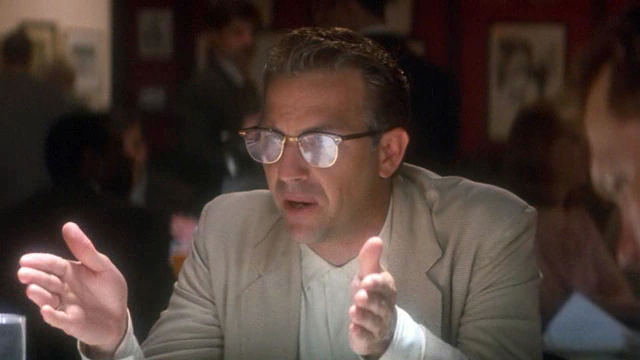
Clay Pigeons is one of the odder films floating around out there, but it’s a damn good time at the movies. It fits into a subgenre that I have lovingly dub as ‘desert noir’, other prime examples being Oliver Stone’s U Turn and John Dahl’s Red Rock West. Intrigue and murder abound under a sun soaked, parchment dry landscape in these types of films, always with a healthy helping of dark humour and unsettling, psychopathic characters running around, perpetually up to no good. Joaquin Phoenix (adding to the U Turn vibe) plays Clay, a good guy who seems to have a real problem with bad luck. He finds out his friend has killed himself, which seems to be the first swirl in a spooky spiral of trouble that veers towards him like a dust devil. Soon nosy FBI agent Dale Shelby (reliably perky Janeane Garofalo) comes to town, turning her attention towards him. Dan Mooney (ever great Scott Wilson stealing scenes with perched stealth) is Clay’s friend and the town Sheriff, also on the lookout for clues. These two are the least of his worries though, as the worst is yet to come with the arrival of charming serial killer Lester Long (Vince Vaughn). This is my favourite Vince Vaughn performance because he shows his versatility with the brittle, lightning quick turns of personality injected into Lester. One minute he’s your best buddy and a lovable loudmouth, the next a coiled viper with untold violence beneath the jovial exterior. They always say serial killers are charmers, and Vince Vaughn takes that sentiment, dances around you in circles with it and then proceeds to strangle you with it when you least expect it. So yeah. The bodies pile up and no one seems to be able to tie them to anyone. Lester treats everyone like his best friend until they’re too comfortable to see the blind side coming, and poor Phoenix wanders around looking disshvelled and stressed out. It’s good fun all the way through, doing a nice see-saw rhythm between quaint, cartoonish antics and a grim, scary turn of events. Underrated and more than worth your time.

JFK – A REVIEW BY J.D. LAFRANCE

JFK5

The assassination of American President John F. Kennedy is a watershed event in American history and one that has provoked people to question their own beliefs and those of their government. Yet, for such a highly publicized affair there are still many uncertainties that surround the actual incident. Countless works of fiction and non-fiction have been created concerning the subject, but have done little in aiding our understanding of the assassination and the events surrounding it. Oliver Stone’s film, JFK (1991) depicts the events leading up to and after the assassination like a densely constructed puzzle complete with jump cuts and multiple perspectives. Stone’s film presents the assassination as a powerful event constructed by its conspirators to create confusion with its contradictory evidence, to then bury this evidence in the Warren Commission Report, which in turn manifests multiple interpretations of key figures like Lee Harvey Oswald. JFK offers a more structured examination of the conspiracy from one person’s point of view where everything fits together to reveal a larger, more frightening picture implicating the most powerful people in the United States government.

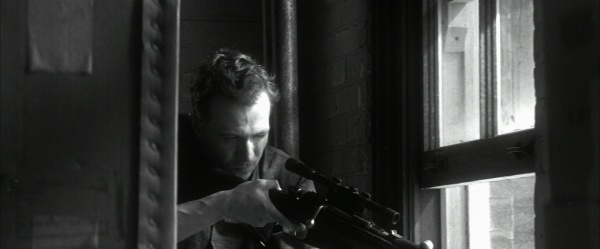
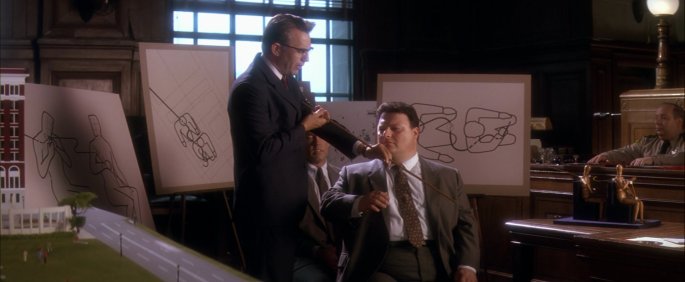
JFK presents the assassination of Kennedy as a powerful event constructed by its conspirators to create confusion with its contradictory evidence and then theorizes that the evidence was buried deep in the Warren Commission Report. Stone’s film filters a structured examination of two conspiracies, one to kill the President and one to cover it up, from one person’s point of view — Jim Garrison (Kevin Costner) — who then assembles all of the evidence at his disposal to reveal a larger, more frightening picture that implicates the most powerful people in the United States government. Stone saw his movie consisting of several separate films: Garrison in New Orleans against Clay Shaw (Tommy Lee Jones), Oswald’s (Gary Oldman) backstory, the recreation of Dealey Plaza, and the deep background in Washington, D.C.

While attending the Latin American Film Festival in Havana, Cuba, Stone met Sheridan Square Press publisher Ellen Ray on an elevator. She had published Jim Garrison’s book On the Trail of the Assassins. Ray had gone to New Orleans and worked with Garrison in 1967. She gave Stone a copy of Garrison’s book and told him to read it. He did and quickly bought the film rights with his own money. The Kennedy assassination had always had a profound effect on his life and eventually met Garrison, grilling him with a variety of questions for three hours. The man stood up to Stone’s questioning and then got up and left. His hubris impressed the director.

Stone was not interested in making a film about Garrison’s life but rather the story behind the conspiracy to kill Kennedy. To this end, he also bought the film rights to Crossfire: The Plot That Killed Kennedy by Jim Marrs. When Stone set out to write the screenplay, he asked Sklar to co-write it with him and distill the Garrison book, the Marrs book and all the research he and others conducted into a script that would resemble what he called “a great detective movie.” Stone told Sklar his vision of the movie: “I see the models as Z (1969) and Rashomon (1950), I see the event in Dealey Plaza taking place in the first reel, and again in the eighth reel, and again later, and each time we’re going to see it differently and with more illumination.”

Sklar worked on the Garrison side of the story while Stone added the Oswald story, the events at Dealey Plaza and the “Mr. X” character. To tell as much of the story as they could, Stone and Sklar used composite characters, a technique that would be criticized in the press, most notably the “Mr. X” character played by Donald Sutherland and who was a mix of several witnesses and retired Air Force colonel L. Fletcher Prouty, an adviser for the film.

600px-JFK_017

Stone ambitiously wanted to recreate the Kennedy assassination in Dealey Plaza and his producers had to pay the Dallas City Council a substantial amount of money to hire police to reroute traffic and close streets for three weeks. He only had ten days to shoot all of the footage. Getting permission to shoot in the Texas School Book Depository was more difficult. They had to pay $50,000 to put someone in the window that Lee Harvey Oswald was supposed to have shot Kennedy from. They were allowed to film in that location only between certain hours with only five people on the floor at one time: the camera crew, an actor, and Stone. Co-producer Clayton Townsend has said that the hardest part was getting the permission to restore the building to the way it looked back in 1963. It took five months of negotiation.

Filming was going smoothly until several attacks on the film and Stone began to surface in the mainstream media including the Chicago Tribune, published while the film was only in its first weeks of shooting. Five days later, the Washington Post ran a scathing article by national security correspondent George Lardner entitled, “On the Set: Dallas in Wonderland” that used the first draft of the JFK screenplay to blast it for “the absurdities and palpable untruths in Garrison’s book and Stone’s rendition of it.” The article pointed out that Garrison lost his case against Clay Shaw and claimed that he inflated his case by trying to use Shaw’s homosexual relationships to prove guilt by association. Other attacks in the media soon followed. However, the Lardner Post piece stung the most because he had stolen a copy of the script. Stone recalls, “He had the first draft, and I went through probably six or seven drafts.”

The film depicts the events leading up to and after the assassination as a densely constructed story complete with jump cuts, multiple perspectives, a variety of film stocks and the blending of actual archival footage with staged scenes dramatized by a stellar cast of actors. This blurring of reality and fiction by mixing real footage with staged footage makes it difficult to discern what really happened and what is merely speculation. Stone does this in order to create what he calls “a countermyth to the myth of the Warren Commission because a lot of the original facts were lost in a very shoddy investigation” and simulate the confusing quagmire of events as they are depicted in The Warren Commission Report. Stone creates different points of views or “layers” through the extensive use of flashbacks within flashbacks. Stone has said that he “wanted to the film on two or three levels — sound and picture would take us back, and we’d go from one flashback to another, and then that flashback would go inside another flashback . . . I wanted multiple layers because reading the Warren Commission Report is like drowning.” This technique conveys the notion of confusion and conflict within evidence.

Kevin Costner acts as the perfect mouthpiece for Stone’s theories. The auteur’s infamously forceful directorial approach to his actors pays off here as he reins in the actor’s usual tics and mannerisms. Stone was no dummy — he knew that by populating his film with many famous faces, he could make the potentially bitter pill that was his film, that much more palatable to the mainstream movie-going public. The rest of the cast is phenomenal. Gary Oldman’s delivers an eerily authentic portrayal of the enigmatic Lee Harvey Oswald. Tommy Lee Jones is note-perfect as the refined, self-confident businessman, Clay Shaw. Even minor roles are filled by such name actors as Vincent D’Onofrio, Kevin Bacon, Jack Lemmon, and Walter Matthau.

The film throws many characters at us and it is easier to keep track of them by identifying them with the famous person that portrays them. Stone was evidently inspired by the casting model of a documentary epic he had admired as a child: “Darryl Zanuck’s The Longest Day (1962) was one of my favorite films as a kid. It was realistic, but it had a lot of stars…the supporting cast provides a map of the American psyche: familiar, comfortable faces that walk you through a winding path in the dark woods.” Future biopics with sprawling casts, like The Insider (1999), and Good Night, and Good Luck (2005), and The Good Shepherd (2006) would use this same approach.

Seeing JFK now, one is reminded that first and foremost, it is a top notch thriller. There are so many fantastic scenes of sheer exposition that would normally come across as dry and boring but are transformed into riveting scenes in the hands of this talented cast. For example, the famous scene between Garrison and X (Sutherland) where the mysterious man lays out all the reasons why Kennedy was killed and how is not only a marvel of writing but also of acting as the veteran actor gets to deliver what is surely one of the best monologues ever committed to film.

capture91

JFK is an important film in the sense that it accurately portrays the assassination of Kennedy as a complex public event surrounded by chaos and confusion. It presents a main protagonist who exposes the conspiracy to be an intricately constructed coup d’état. Stone paints his canvas with broad brushstrokes and powerful images. JFK takes a larger, confrontational stance by boldly implicating the government in the conspiracy and the mainstream media in conspiring to cover it up. Stone is using the persuasive power of film to reach the largest number of people he can in order to wake them up and to reveal how they have been deceived by higher powers. There is no mistaking the importance of the assassination of Kennedy in American culture. Based on the excitement that surrounded Stone’s film, the American public is still greatly interested in the event with more and more people believing in a plot to kill Kennedy.

SIDEWAYS – A REVIEW BY J.D. LAFRANCE

MCDSIDE FE018
SIDEWAYS, Sandra Oh, Thomas Haden Church, Paul Giamatti, Virginia Madsen, 2004, (c) Fox Searchlight

Alexander Payne is part of an exciting wave of filmmakers who grew up during the 1970s and were subsequently influenced by the films from that era. His contemporaries include the likes of Wes Anderson, Paul Thomas Anderson, and David O. Russell to name but a few. And like his fellow filmmakers, Payne eschews the Hollywood trend of placing an emphasis on special effects and trendy actors in favor of character-driven, comedy-drama hybrids populated with character actors like Laura Dern, Matthew Broderick and Kathy Bates.

Payne’s About Schmidt (2002) continued his fascination with American cinema in the ‘70s by featuring one its biggest (and most prolific) stars, Jack Nicholson. His next film, Sideways (2004), continued the road movie motif from Schmidt and combined it with the buddy film. Jack Cole (Thomas Haden Church) is a failed actor about to be married. He decides to go on one last week of uninhibited fun with his best friend, Miles Raymond (Paul Giamatti), a grade school teacher and struggling author. They go on a wine-tasting tour through California’s Central Coast and squeeze in a bit of golfing as well.

Miles is an avid (nay-elitist) wine aficionado while Jack is completely ignorant of wine beyond what tastes good to him and what doesn’t. Miles is trying to get his book published with little success and he’s grown cynical and defeated as a result. Initially, he comes off as an unlikable loser not above stealing money from his mother. Jack counters Miles’ repressed nature by coming off as something of an instinctive kind of person who indulges in his raging id. He was on a hit television show… 11 years ago and is now relegated to doing voiceovers for commercials. Along the way, Jack and Miles meet Maya (Virginia Madsen), a beautiful waitress who Miles knows from way back when, and Stephanie (Sandra Oh), who works at a winery and catches Jack’s eye.

Jack and Miles are complete messes as human beings. They lack direction and are hypocrites. Miles says he’s an author but his book is going nowhere, while Jack is getting married but hits on anything in a dress. They are hardly a sympathetic pair. And yet Payne is able to get a lot of comedic mileage from them. Miles is a wine snob who rambles on about the taste, color, and so on, only to have Jack sum up his opinion simply, “I like it,” which comically deflates Miles’ pontificating. They have an intriguing dynamic. While they lie to others – Miles to Jack’s friends about the status of his novel and Jack being nice to Miles’ mother when he clearly wants to get back on the road – they are no pretenses between each other. These guys are getting to the stage in their lives where they’re looking back as opposed to looking ahead. Jack sees marriage as an institution that will stifle his freedom while Miles has a very negative outlook on life, finding any excuse not to ask Maya out despite obviously liking her because he assumes that it will go nowhere.

An interesting thing happens during the course of the film. At first, Miles starts off as an unsympathetic character while we warm up to Jack’s funny repartee as the charming rogue. Halfway through the film they flip roles and it’s Jack who is exposed as a pathetic womanizer and Miles becomes more sympathetic thanks to Maya’s influence. She humanizes him and is easily his intellectual equal. She knows her wine and this clearly impresses Miles. She’s smart and beautiful so why is she even wasting her time with a sad sack like Miles? She gets to know him beyond his looks and liquefies the pretension of his character. Maya pierces his wine-speak armor that he throws up all the time with her easy-going nature and Miles realizes that he doesn’t need to constantly impress her. There is a nice scene where they get to know each other and it is great to see two skilled actors getting a chance to act and really delve into their characters. In this scene, we finally see someone thaw out Miles and get him to open up, stop worrying and thinking so negatively. They use their mutual love for wine as a way to share their passions and aspirations with each other. It’s a beautifully realized scene because you are seeing two people starting to fall in love with each other. Like a fine wine, Maya allows Miles to breathe and he gets better as time goes on. She’s a romantic who is able to cut through his cynicism and soften his hard edges.

Fresh off the success of American Splendor (2003), Paul Giamatti is one of those actors who make it look effortless as he inhabits the characters he plays so completely. Miles is a neurotic mess; a depressed cynic who is definitely a half glass empty kind of guy. Giamatti is able to tap into his character’s deep reservoir of pain and anger. In a couple of shots early in the film, Payne hints at Miles’ past when he looks at old photographs in his mom’s room. They evoke happier times with his father (now out of the picture) and wife (now divorced). Giamatti’s sad expression in this moment conveys more than any words could. During the course of the film, we find out more about why Miles is so miserable and a lot of it has to do with self-loathing, which explains why he tries to sabotage things with Maya. In some ways, Miles is a variation of Giamatti’s take on the equally acerbic Harvey Pekar in Splendor.

Ever since the short-lived television sitcom Ned and Stacy, Thomas Haden Church has been an untapped resource and with Sideways he was given the role of his career. As Miles’ crass, philandering best friend, he plays Jack as a middle-aged frat boy who still calls women, “chicks.” Haden Church has never been afraid to play abrasive, bordering on unlikeable, characters and he expertly does the same here as a guy who presents a jovial façade but underneath lurks a lot of pain and an insensitive mean streak. Haden Church’s dead-panned delivery of smart-ass lines works well against Giamatti’s uptight straight man. Together, they make an excellent team. After years of playing supporting character roles, it’s great to see Haden Church and Giamatti starring in a film. They play so well off each other that you’d swear they’d acted together before. Haden Church and Giamatti are very believable as long-time friends from the way they interact with each other.

For years, Virginia Madsen has been biding her time in direct-to-video hell and so it is great to see her in a high profile role like this one. From The Hot Spot (1990) to Candyman (1992), she’s always been an interesting actress to watch and with Sideways, Madsen is given strong material to sink her teeth into and she delivers a nuanced performance. Sandra Oh has been quietly building a nice body of work over the years and was unfairly overlooked in the numerous awards that have been lavished on this film. Granted, of the four main cast members, she has the least amount of screen time but she makes every moment she has count.

Producer Michael London was a former Los Angeles Times journalist and studio executive who had become frustrated by the studio development process of shepherding a film from script to screen. He bought the rights to the unpublished semi-autobiographical novel Sideways by Rex Pickett with his own money and gave it to Alexander Payne to read in 1999 while the filmmaker was promoting Election. Payne found himself drawn to “the humanity of the characters” and how it tapped into his desire to make films about “people with flaws,” and “unfulfilled desires.” He was not a wine expert but always liked it and thought that the subculture would be fun to explore and act as a backdrop to the relationship between Jack and Miles. However, he was committed to making About Schmidt next and so he and London kept optioning the book over the years. Then, he and his long-time writing partner, Jim Taylor, wrote the screenplay for free. Payne and London drew up a budget and financed pre-production themselves thereby allowing themselves the kind of creative control they wanted. They only began approaching movie studios once they had the script, budget and a preferred cast in place. Four studios were interested with Fox Searchlight winning out.

Based on the reputation of his previous films, several big name actors campaigned for roles in Payne’s film. Both Brad Pitt and George Clooney were eager to play the role of Jack and met with the filmmaker but it ultimately came down to Thomas Haden Church and Matt Dillon. Edward Norton expressed an interest in playing Miles and Payne seriously considered him for the role. With the exception of Sandra Oh, his wife at the time, all the actors auditioned for Payne and London. Haden Church had auditioned for both Election and About Schmidt (narrowly losing out to Dermot Mulroney on the latter) and even though Payne did not cast him in those films, he had been impressed with the actor. When it came to Sideways, Payne felt that Haden Church “kind of is that character,” and cast him as Jack. At the time, he had moved away from acting and when he read the script in May 2003, thought to himself, “I have no shot at this whatsoever, but I have to answer the call of duty. If I get a chance, then I gotta take it.” When Paul Giamatti auditioned for the film, he had not read the whole script, just an excerpt – the scene where Miles talks about his love of Pinot Noir wine to Maya. The actor found Miles’ obsession with the wine to be “an interesting theme for this guy” who was constantly “striving for transcendence through the wine and the wine milieu, and it just keeps collapsing in on the guy because he’s such a wreck.” After casting Giamatti and Haden Church, Payne insisted that they spend some time together before filming, hanging out and practicing their dialogue so that characters’ friendship would be believable.

The setting of the story was very important to Payne as he brought a documentary sensibility to capturing the people that inhabit the area. Before shooting, he spent four months living in the wine country of California, taking notes so that it would be accurately depicted in his film. The actors spent two weeks of rehearsals with Payne, “shooting the shit and indulging in good food and wine,” according to Giamatti. With a budget in the range of $16-17 million, Sideways was shot over 54 days in the Santa Barbara area. For the look of the film, he drew inspiration from the photographic style of Hal Ashby’s The Landlord (1970), screening it for his director of photography, Phedon Papamichael (Moonlight Mile), in order to study the softness of colors and the lack of sharp, vivid lighting that he wanted in his own film.

Payne’s film harkens to Bob Rafelson’s classic character-driven films from the ‘70s, like Five Easy Pieces (1970) and The King of Marvin Gardens (1972), featuring prickly protagonists. Payne rejects traditional mainstream tastes in favor of presenting unsympathetic characters and a conclusion that refuses to wrap things up neatly. He even employs multiple split-screen montages and snap zooms, which were very much en vogue during the ‘70s. Miles is the voice of reason while Jack is the voice of fun in Sideways. However, Miles understands who he is and is honest with himself and his lot in life unlike Jack who continues to live a lie, or rather play a role. Jack lives in a bubble and they always break. Miles doesn’t have to worry about that because he bursts his bubble on a daily basis. These men are idiots and it is the women who are smart and truthful. The men lie, cheat and are forced to face the repercussions of their actions. This provides them with a chance at redemption as embodied in Miles who learns to loosen up and finally let someone new into his heart.

B Movie Glory With Nate: Oblivion

  
“It’s high noon at the far end of the universe”, the dvd poster of Oblivion states. Years before the underrated Cowboys & Aliens came out, Oblivion came along, and it’s definitely gives the concept a better, and quirkier run for its money. Granted it’s essentially a B movie, and it’s meagre budget shows to the point where it looks like a grade school play. But therein lies it’s charm. It’s got a cast of supremely wacky old west stereotypes played by some surprising, familiar genre faces who you’d never thought to be seen rough housing together in the same flick. It also has some lovingly crafted, creaky stop motion animation that calls Harryhausen to mind and brings to life some super weird alien hybrid thingies that look almost Henson-esque as well. When a lone spaceship lands on the outskirts of an intergalactic desert town, it’s occupant brings trouble along with him. He’s a nasty, one eyed reptilian alien gunslinger named RedEye, played by the inimitable Andrew Divoff. He growling, bad tempered son of a bitch, and his first order of business is to ruthlessly slay the town’s sheriff, and claim it for himself. What he doesn’t count on is the Sheriff’s son (Richard Joseph Paul), a prospector who soon returns to Oblivion looking for answers, along with his Native friend Buteo (the late great Jimmie F. Skaggs). All kinds of townsfolk end up in the crossfire, including drunken Doc Valentine (a priceless George Takei), slinky brothel owner Miss Kitty (Julie Newmar), a cyborg police deputy (Meg Foster), a pawnbroker (Isaac Hayes) and the town’s elegant undertaker, played by Carol Struckyen who some may remember as the giant from Twin Peaks. RedEye has a smoking hot henchwoman and girlfriend named Lash, played by B movie scream queen Musetta Vander, who gets the vibe they’re going for here and sinks her teeth into the material with admirable abandon. The film sticks to its guns despite being obviously silly and somewhat falling apart in a climax that oddly is too darkly shot to make out properly. What it lacks in resources it makes up for in imagination, which it has in spades. Alien scorpions, cyborg deputies, leather clad babes are but a few of the genre mashing treats to be found here. Great stuff. Oh and check out the sequel as well, called Oblivion 2: Backlash, it’s a nice companion piece. 

Denis Villeneuve’s Enemy: A Review By Nate Hill

  
Denis Villeneuve’s Enemy is one of the most unsettling film experiences you will ever sit through, and the damn thing is only 90 minutes. It’s disconcerting, ambiguous and seems to exist simply to spin the viewer’s anxiety reflex into a storm and make our stomach turn loops. It’s a trim entry into the psychological upset sub genre, and puts a frazzled looking Jake Gyllenhaal through a wringer as he pursues a mysterious doppelgänger through the streets of Toronto, a bustling city that feels oddly desolate as glanced upon by Villeneuve’s camera, adding to the themes of paranoia and mental unrest. Gyllenhaal plays a twitchy college professor who is stuck in a closed loop routine: he gives lectures at the local university, drives home to his emotionally inaccessible girlfriend (Melanie Laurant), rinse and repeat. A chink appears in the chain when he becomes aware of another man in the city who appears to be his identical twin. The other man is a small time actor with a pregnant wife (Sarah Gadon) and a decidedly more nasty approach to the situation than the professor. The two of the, circle each other in a disturbing game of not so much cat and mouse, but Jake and Jake, both of them having not a clue as to what is going on, the edges of madness inching closer to both of their perception. Are they twins? Are there even two? Is it just one of them, losing their mind? There’s very freaky dream sequences with the constant imagery of spiders, both large and small, and what do they mean? Who’s to tell? Denis has stated in interviews that there is both rhyme and reason to his creation here, but whether he will ever divulge them remains to be seen. Perhaps it’s better left illusory, a formula for entrancing audiences that has already proved to work well for David Lynch. The moment that the man behind the curtain reveals the conscious meaning of his very subconscious efforts, the spell is no doubt broken. In any case, it’s a very hard film to process or focus on, our nerves jittering constantly and sabotaging any modicum of rational though that we might employ in deciphering the piece. This may be called style and atmosphere over substance by some, but even in not comprehending what’s going on, we feel deeply that there is some sort of cryptic cohesion if we are able to feel between the lines, maybe coming up empty handed ultimately, but knowing within us that we’ve attained wealth to our soul simply by bearing witness. I can’t say it’s a film that I love, or that I would watch again, but it’s certainly one that won’t leave my memories any time soon, and that is an achievement no matter how you look at it. It’s also got one of the scariest and most unexpected endings to any film I’ve ever seen, taking you so off guard that you feel like you’re going to have a coronary. It’s filmed in sickening piss yellow saturation which adds to the overall disconcerting nature, and quite the striking colour choice as well. I can see why this one was released with little fanfare or marketing, despite the presence of heavyweights Villeneuve and Gylenhaal. It’s difficult stuff, a movie that frustratingly soars above your head, onward towards its intensely personal and psychological destination. It’s up to us to jump, grasp and attempt to reach as high as the piece in order to get what we will out of it. Good luck. 

Victor Nunoz’s Coastlines: A Review by Nate Hill


Victor Nunoz’s Coastlines is a nice small town drama with some top players all giving fine work, causing me to wonder why more people haven’t heard of it, and how come it didn’t get a wider release. In any case, it’s low key and really captures the quaint rural vibe of less densely populated areas in the states. The cast is absolutely to die for, consisting mainly of very distinct, frequently garish actors who all play it dead straight and relaxed, which is a huge switch up for most of them. Timothy Olyphant plays Sonny Mann, an ex convict recently released from prison, quietly arriving back to his Florida hometown, and the dregs of the life he left behind. His Pa (the ever awesome Scott Wilson) is conflicted by long simmering resentment, and the love for his son buried just beneath. Sonny reconnects with his best friend Dave Lockhart (Josh Brolin), who has become the town’s sheriff in the years gone by. Sparks fly between Dave’s wife (Sarah Wynter) and Sonny, creating a rift between the two and illustrating Sonny’s unavoidable knack for creating trouble for himself, and those around him. Further tension comes along when the town’s local crime lord Fred Vance (William Forsythe at his most genial and sedated) tries to strong-arm Sonny into assisting with nefarious deeds, using his younger brother Eddie (Josh Lucas) to convince him. Even when tragedy strikes and these characters go head to head, it’s in the most relaxed, laconic way that permeates southern life. Robert Wisdom has a nice bit, Angela Bettis shows up as a girl with a thing for bad boys, and watch for the late great Daniel Von Bargen as the local Sheriff. This one fits nicely into a niche that leans heavily on small town drama, dips its toes ever so slightly into thriller territory, and is a charming little piece that’s worth a look to see these actors on an acting sabbatical.  

Girl, Interrupted: A Review by Nate Hill

image

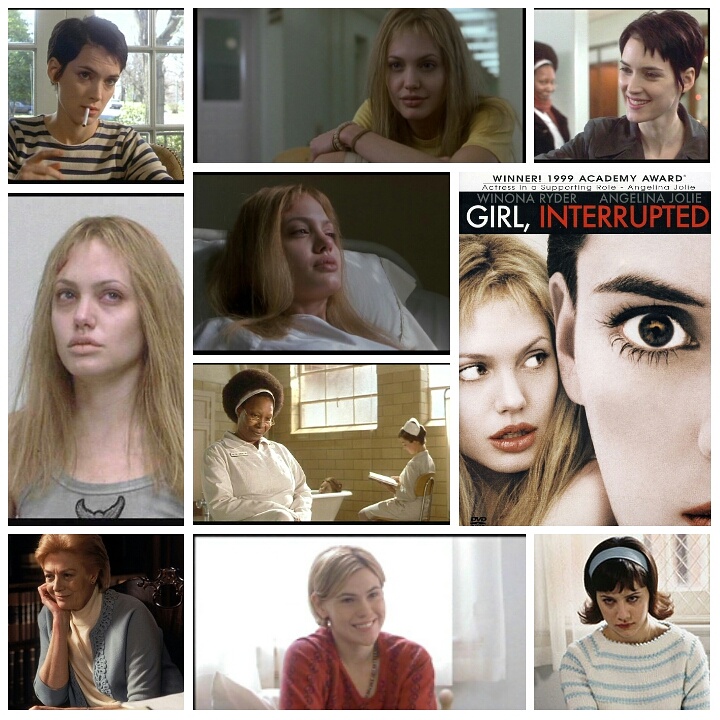
James Mangold is a director who takes nothing but top shelf scripts and spins them into gold, and Girl Interrupted is a shining example of this. It’s based on a book by Susannah Kayson in which she outlines an 18 month stay at a mental ward sometime during the 60’s. Mangold adapts her book for the screen, gathers an excellent cast of talented gals and a couple guys, and makes a film that holds up today like it was still it’s release week in 1999. Winona Ryder plays Susanna, a reckless girl who is labeled wayward and unstable by her parents, committed to a facility by her stern psychiatrist (Red Forman himself, Kurtwood Smith). She’s a little rough around the edges, but one senses the innate sensibility to her that perhaps has been buried under turbulent behaviour not by anything within her, but by the constricting nature of the time period she has been born into. In any case, she finds herself thrown into an environment she didn’t expect, with many other girls, some of which she clashes with, some of which she ends up befriending, and one that.. well, defies classification, really. The girl in question is Lisa, played by a fantastically fired up Angelina Jolie who nearly combusts upon herself in her furious performance. Lisa has been dubbed nearly unable to treat, yet simply has the kind of soul that doesn’t fit into a box, let alone lend itself to scholarly dissection. Ice cool one moment, a raging typhoon the next, and holding a dense riot shield over any trace of her true emotions every second, she’s an enigmatic, elemental wild card. It’s the best work I’ve ever seen from Jolie, getting her a well earned oscar nod. She teaches Susanna some lessons that only people on that side of the glass can comprehend, confounding the facility’s head doctor (Vanessa Redgrave) and puzzling a kind orderly (Whoopi Goldberg), two rational people who simply can’t understand the kind resolution and companionship that often comes out of irrational, unconventional interaction that almost always is seen as ‘unstable’. Ryder is pitch perfect and carries her share of the load, but despite being the protagonist, it’s Jolie’s show all the way. She’s unbelievably good and will break the heart of both first time viewers and veterans who put the dvd in every so often for a tearful revisit. The late Brittany Murphy is great as Daisy, another complicated girl, and Clea Duvall scores points as Georgina, the shy and reserved one. There’s also work from Jared Leto Elizabeth Moss, Angela Bettis, Bruce Altman, Mary Kay Place, Kadee Strickland, Misha Collins and Jeffrey Tambor. Tender, patient and non judgmental are qualities which are essential in films of this subject matter, as well as empathy from both viewer and filmmaker, to take a look at these girls and even though we may not understand what is going on with them or their beaviour, to simply bear witness, and be there for them. Mangold knows this and acts accordingly, leading to a beautiful film of the highest order. Viewers are sure to do the same, completing the artistic ring full circle.

Conviction: A Review By Nate Hill


Tony Goldwyn’s Conviction is a searing dramatic tale that’s heavily based on true events, and is essentially the underdog story boiled down to its most effective elements, with inspiration running throughout its truly remarkable storyline. Hilary Swank can be a force of nature in her work, and she’s dynamite here as Betty Anne Waters, a small town girl who is very close with her rambunctious sibling Kenny (Sam Rockwell), who grows up as the troublemaker of the two, running afoul of a nasty local police officer (Melissa Leo). When his next door neighbour is found stabbed to death, Leo sees it as her opportunity to get rid him for good, and tampers with evidence, until he is convicted. Guilty until proven innocent is the mantra with this difficult tale, and because it’s based on a true story that happened in real life, it unfolds at a snails pace of tragic events in which a satisfying outcome sometimes just seems out of reach. With Kenny in wrongfully convicted and rotting in prison while his wife and daughters edge towards moving on, Betty does the unthinkable: with no previous experience in college, let alone law, she decides to study for the bar exam, in order to eventually represent Kenny in court, and prove his innocence. It seems like something from a movie, and here we see it, but this is something that really, really happened, which to me is extraordinary and essential to make known. She persists through many obstacles both great and small, and with the help of a dapper senior colleague (Peter Gallagher), and a perky fellow law student (Minnie Driver) she passes the exam and sets out to defend her brother. It’s a rocky road, beset with the decayed and deliberately lost memories of years before, and the police officer’s longstanding belligerence. Unreliable witnesses, uncooperative testimonials and all sorts of stuff get in her way, but Betty ain’t a girl to quit or back down, a character trait which Swank seems to have been born to play, and is the lighthouse which guides this fantastic film along its track. Rockwell exudes burrowing frustration as a man in a position of incomprehensible sadness, hopeful yet resigned to his fate which has been orchestrated by evil, targeting him in wanton cruelty. Painful is the word for him here, and when Rockwell sets out for a mood in his work, you damn well feel it. Juliette Lewis briefly rears her head as a dimbulb witness who plays a part in Betty’s quest, as does Clea Duvall very briefly as another witness who seems to have no idea what she actually saw. Melissa Leo is an actress who is utterly and totally convincing whether she’s on the good or the evil side of the coin, holding the audience in rapturous awe with seemingly little effort. Here she’s so nasty it radiates off the screen, providing a core incentive for Betty’s struggle, whether or not the events actually played out like that. Director Tony Goldwyn is an actor himself and uses that experience to forge a film with respect and sympathy for its two leads. One of the more underrated films of 2010.

The Jungle Book: A Review by Nate Hill

image

Prepare your eyes for maximum bogglement, work out your abs so you don’t bust a gut laughing, and most importantly, dust off that childlike sense of wonder before going to see Rudyard Kipling’s The Jungle Book, boldly and lovingly retold by Jon Favreau in what is the most flat out exciting, adventurous film of the year thus far. The director pulls  off a balancing act between palpable tension, character interactions that come straight from the heart and land squarely in ours, and some of the most believable, jaw dropping CGI I have ever seen on screen. The animals look so impressive and lifelike that after seeing them I shelved away some of my inherent reservations about computer generated effects as a dominant force in a piece, and simply gave in. The atmosphere is lush, intoxicating and deeply detailed, with a naturalistic feel and tone. Young Neel Sethi is tasked with being the only fully human component, and is perfect. His interactions seem real and rehearsed, immersing the viewer further into the visuals. Mowgli is a young man cub, found on the edge of the jungle by the panther Bagheera (stately, compassionate Ben Kingsley) and given to a wolf pack to be raised by alpha Akela (Giancarlo Esposito) and Raksha (Lupita Nyong’o). Not all in the animal kingdom are receiving of this man cub, especially a terrifying Bengal tiger called Shere Khan, given the rumbling tones of Idris Elba, inspiring fear in animals and audience alike. He has a rocky relationship with man, and wants Mowgli dead. Bagheera takes him far into the jungle, where they are separated and Mowgli’s adventure truly begins. He wanders into the path of Kaa (a slithery Scarlett Johansson) a monstrous, seductive python, and is taken under the wing of Baloo, an adult Winnie the poo voiced by Bill Murray. Murray is one of the film’s great delights, and as soon as he shows up we forget about all the menace and threat which preceded his arrival, and are swept up into his affable, lounging lifestyle and brightly colored neck of the woods. Murray clearly ad libbed a lot of Baloo’s dialogue, and anything he didn’t he still gives that unmistakable, winking ‘Murray’ twinge that I so love. Mowgli’s adventure continues, as he stays one step ahead of Shere Khan and is visited by the king of the monkeys, a twenty foot tall, lumbering orangutan named Louie, voiced with demented, pithy glee by Christopher Walken. As soon as he showed up the laughs erupted from within me, and reached a manic peak as he belts out the ‘Oobie Doo’ song in priceless Walken fashion, his monkey mannerisms uncannily starting to resemble Walken’s own distinct visage. Many of the animals serve as differing parental figures to Mowgli, representing elemental factions of raising one’s young. Bagheera is cautious, doubting and skeptical. Baloo is the fun loving, lenient one. Even Shere Khan has a curdled paternal feel to him, like the brutal stepfather who is damaging to his offspring. Raksha is the unconditional mother, and that devotion comes out wonderfully in Nyong’o’s souful performance. The vocal performances are aided by the stunning effects; the CGI of facial features allow the actors work to truly extend into the realm of what’s visible, with real emotions displayed by the creatures, and not a single rendering that’s anything short of lifelike. The film evokes true wonder and primal excitement, escapism that takes itself seriously yet knows when and how to play, a dazzling technical marvel, a timeless story well told, all in one cinematic package that is not to be missed. Oh, and stick around for the credits, instead of Walken out of the theatre and missing a final musical treat.

THE LAST DETAIL – A REVIEW BY J.D. LAFRANCE

ld-one

Hal Ashby directed some of the best films to come out of the 1970s, exploding out of the gates with four motion pictures over five years. They were all quirky comedy-drama hybrids that, in terms of subject matter, couldn’t be more different and yet are united in the sense that they all feature offbeat protagonists. They focus on outsiders that exist on the margins of mainstream society, like the death-obsessed young man who falls in love an unflappable, optimistic septuagenarian in Harold and Maude (1971). In its own way, The Last Detail (1973) is a comedy tinged with drama and one that features marginalized protagonists in the form of two veteran United States Navy petty officers that have to transport a young sailor from Virginia to New Hampshire and end up learning something about themselves and each other along the way.

At the time, Ashby was coming off the commercial and critical failure of Harold and Maude when Jack Nicholson told him about The Last Detail. Then up-and-coming screenwriter Robert Towne had adapted Darryl Ponicsan’s novel of the same name with the actor (they were close friends) in mind. Nicholson was on an incredible run of classic film roles that started with Easy Rider (1969) and continued with two Bob Rafelson films – Five Easy Pieces (1970) and The King of Marvin Gardens (1972). His role in The Last Detail would yet again demonstrate his power and versatility as an actor, resulting in him being crowned Best Actor at the 1974 Cannes Film Festival.

Billy “Badass” Buddusky (Nicholson) and Richard “Mule” Mulhall (Otis Young) are assigned “chasers” duty, which involves taking a young sailor by the name of Larry Meadows (Randy Quaid) to Portsmouth Naval Prison. He’s been sentenced to eight years for trying to steal $40 from the Commanding Officer’s wife’s pet charity project. They have a week to do it, but Buddusky proposes that they can pocket more of the per diem and spend it on the way home if they get Meadows there as fast as possible. I like how the film settles into a character-driven groove with a series of colorful encounters that provide insight into these guys after efficiently setting up the premise.

Meadows is just a scared kid that did something stupid and pissed off the wrong person as a result. Meadows has hardly had any life experiences and will be denied the possibility of them for eight long years unless Buddusky and Mulhall do something about it. Not surprisingly, Buddusky’s original plan goes out the window as he and Mulhall bond with Meadows by getting him drunk, stoned and laid in one last hurrah before eight years of imprisonment.

The Last Detail continued Jack Nicholson’s fascination with angry outsiders that live on the margins. It was the start of a great run of like-minded characters, beginning with Easy Rider. It is interesting to watch the choices he makes as an actor in this role, from the way Buddusky seems to sarcastically chew his gum to the way he wears his sailor’s cap. Nicholson is equally adept at showing the anger that simmers under his character’s façade and the explosion of rage that occurs when provoked, like the famous scene where a bartender refuses to serve the three sailors, which is reminiscent of the even more well-known diner scene in Five Easy Pieces. Later on, there’s a nice moment where Buddusky explains why he gets so angry and how liberating he finds it to wail on someone that ticks him off. He even tries to pick a fight with Meadows. It gives us some valuable insight into Buddusky’s volatile nature. Nicholson also shows us moments where his character is a consummate bullshit artist, like when he, Mulhall and Meadows get invited to a party in New York City and he tries to impress a young woman (Nancy Allen) by romanticizing life in the Navy. He’s stoned and getting nowhere with this girl who looks like she’d rather be anywhere else. Nicholson effortlessly inhabits the role in a way that seemed to disappear through the late 1980s and beyond when he relied more and more on his movie star persona.

Fresh-faced Randy Quaid does a nice job of conveying his character’s clueless naiveté. He plays Meadows as a pathetic mess of a human being. With his young, soft face, the actor projects a kind of innocence, but his actions sometimes say otherwise. For example, on the train he tries to make a break for it and when caught breaks down crying. Quaid achieves just the right mix of awkwardness and an occasional sympathetic side to keep us interested in this bundle of contractions all the while holding his own against a flashy actor like Nicholson. Quaid exhibits character behavior that is intriguing to watch – so much so that we want to know more about Meadows. Why did he try to steal the money? Over the course of the film, Buddusky and Mulhall try to find out what motivates this kid. As they get closer to prison, Quaid shows how the inevitable weighs more and more on Meadows’ mind by facial expressions, which oscillate between contemplative and anxious.

Otis Young has the least flashiest role, but it is a crucial one as he provides the stable, calming voice of reason, trying to keep everyone on track. When Buddusky comes up with some wild idea or wants to diverge from their mission, Mulhall is the sober realist and this sometimes causes friction between him and Buddusky, but when they are presented with an outside threat they quickly close ranks.

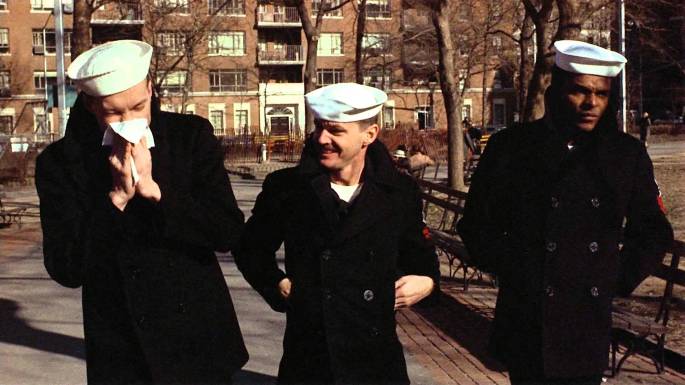
Robert Towne’s script hits us up with salty language right from the get-go, but it never feels false or forced because it rolls off the tongue so easily off someone like Nicholson who curses as naturally as breathing. I also like how the film is set during the winter months and you can tell that they actually shot it during that time by how you can see the actors’ breath in outdoor scenes. It looks so cold that it is almost tangible, most notably in a scene towards the end when the three sailors decide to have a makeshift picnic out in a snowbound park. They stand around freezing their asses off while trying to start a fire to cook hotdogs.

Producer Gerry Ayres had bought the rights to Darryl Ponicsan’s novel The Last Detail in 1969, but had difficulty getting it made because the studio was concerned about all of the bad language in Robert Towne’s screenplay, asking him to reduce the number of curse words. Towne told them, “This is the way people talk when they’re powerless to act; they bitch.” The screenwriter had refused to tone down the language and the project remained in limbo until Jack Nicholson, who was by then a bankable movie star, got involved. Towne, who was good friends with Nicholson, had written the role of Buddusky with the actor in mind.

Director Hal Ashby was in pre-production on Three Cornered Circle at MGM when Nicholson told him about The Last Detail, his upcoming project at Columbia Pictures. Ashby had actually been sent the script in the fall of 1971, but the reader’s report called it, “lengthy and unimaginative.” After looking at it again, he had warmed up to it. Ashby wanted to do it, but the project conflicted with his schedule for Three Cornered Circle. However, he pulled out of his deal, impressed by Nicholson’s loyalty, with MGM and took Nicholson’s suggestion that they work together on The Last Detail.

Ashby and Ayres read Navy publications and interviewed current and ex-servicemen who helped them correct minor errors in the script. During pre-production, Ashby worked with Towne on polishing the script and with Nicholson on his character. Ashby wanted to shoot on location at the naval base in Norfolk, Virginia and the brig at Portsmouth, New Hampshire, but was unable to get permission from the U.S. Navy. However, the Canadian Navy was willing to cooperate and in mid-August 1972, Ashby and his casting director, Lynn Stalmaster, traveled to Toronto to look at a naval base and meet with actors. The base suited their needs and Ashby met actress Carol Kane whom he would cast in a small, but significant role.

Nicholson was set to play Buddusky and so the casting of The Last Detail focused mainly on the roles of Mulhall and Meadows. Nicholson and Towne were friends with Rupert Crosse and felt that he would be perfect as Mulhall. Bud Cort, who had worked with Ashby on Harold and Maude, begged the director to play Meadows, but he felt that the actor was not right for the role. Stalmaster gave Ashby a final selection of actors and the two that stood out were Randy Quaid and John Travolta. Quaid had the offbeat and vulnerable qualities that Ashby wanted.

Shortly before principal photography was to begin, Crosse discovered that he had terminal cancer and Ashby delayed production a week so that Crosse could come to terms with the news and decide if he still wanted to do the film. However, a day before filming was to begin, Crosse had to pull out and Ashby and Stalmaster scrambled to find a replacement, quickly casting Otis Young as Mulhall. Ashby had tried to get Haskell Wexler, Nester Almendros and Gordon Willis as the film’s director of photography, but when none of them were available, he promoted Michael Chapman, his camera operator on The Landlord (1970). Ashby and Chapman worked together to create a specific look for the film that involved using natural lighting to create a realistic, documentary style.

Ashby decided to shoot The Last Detail chronologically in order to help the inexperienced Quaid and the recently cast Young ease into their characters. Quaid was indeed very nervous and wanted to make a good impression. Ashby kept a close eye on the actor, but allowed him to grow into the role. With the exception of Toronto doubling as Norfolk, the production shot on location, making the same journey as the three main characters.

The day after principal photography was completed; Ashby had his editor send what he had cut together up to that point. The director was shocked at the results and fired the editor. The director was afraid that he’d have to edit the film himself. Ayres recommended brining in Robert C. Jones, one of the fastest editors in the business and who had been nominated for an Academy Award for Guess Who’s Coming to Dinner (1967). Jones put the film back into rushes and six weeks later had a first cut ready that ran four hours. Ashby was very impressed with Jones’ abilities and trusted him completely.

However, the studio was not happy with the length of time it was taking to edit The Last Detail as well as the amount of bad language in it. Columbia was in major financial trouble and needed a commercial hit. Jones called Ashby while he was in London meeting with Peter Sellers about doing Being There (1979), telling him that Columbia was fed up. The head of the editing department called to tell Ashby that a studio representative was coming to take the film away. However, Jones refused to give up the film and Ashby called the studio and managed to smooth things over with them.

By August 1973, the final cut of The Last Detail was completed and submitted to the MPAA, which gave it an R rating. Columbia was still not happy with the film and asked for 26 lines with the word “fuck” in them to be cut. Ashby convinced the studio to let him preview the film as it was to see how the public would react. The film was shown in San Francisco and the screening was a success. Columbia decided to give the film a limited release to qualify for Oscar consideration with a wide release in the spring of 1974. Both Nicholson and Quaid were nominated for Academy Awards for Best Actor and Best Supporting Actor respectively.

For all of their fun and wild times – including picking a fight with some army soldiers in a train station washroom – Meadows’ fate hangs over them like an ominous storm cloud that occasionally makes itself known. While Mulhall wants to take Meadows straight to prison, Buddusky wants to show the kid a good time because it will be the last one he’ll have for eight years. Even though, by the end of The Last Detail, Buddusky and Mulhall do their job, you can tell that Meadows got to them, past their hardened Navy lifer exteriors. For them, Meadows represents how fucked up the system is – that someone could get punished so severely for such a minor crime. It’s not right, but there is nothing they can do about it, which ends things on a rather melancholic note of resignation that is refreshing for a film that started off as a comedy.

The Last Detail performed well at the box office and it has gone to become an influential film, representing one of Nicholson’s finest performances of the ‘70s. It was an excellent early role for Quaid and was also part of a fine run of films during this decade for the character actor. And finally, for Ashby it marked another great effort in a decade chock full of classics as he would go on to make, including Shampoo (1975), Coming Home (1978), and Being There.