
Michael Apted’s Enough

I’ve always liked Michael Apted’s Enough, a slick, scary girl-power flick that’s given heart and personality by Jennifer Lopez, who brightens and classes up anything she headlines. It’s also got a subtly eclectic supporting cast of ice cool character actors/actresses and uses them to great potential too. Despite being predictable (a story like this usually will be in Big Hollywood), the motions it goes through somehow just feel fresh and engaging in ways that not all films like this might be able to whip up. J-Lo plays Slim here, a battered housewife who has the misfortune of being married to Billy Campbell’s Mitch, a terrifying sociopath who beats her senseless. Worse still, he’s a rich and powerful dude with a lot of high profile connections, which makes escaping his tyrannical dominance a tad tricky. She’s got a young daughter (Tessa Allen) who’s caught in the crossfire, and for Slim, enough has become enough. On the run, changing her name and decking herself out with some gnarly hand to hand combat skills are all part of a journey to both freedom and empowerment, an arc that Jennifer makes us believe with her soulful conviction and bruised spirit. Juliette Lewis is a low key scene stealer as her good friend who aids in the escape. Fred Ward does a quietly anarchic turn as her somewhat neglectful father Jupiter, who is clearly not the most compassionate fellow but does his best to right the wrongs of yesteryear with his considerable wealth and resources too. Noah Wyle does a charming scumbag shtick as a dirty cop in Campbell’s pocket who hunts her like a wolf, Jeff Kober is cheerfully menacing as one of his gung ho faux FBI Agent lieutenants, and watch for work from Dan Futterman, Brent Sexton, Michael P. Byrne, Bruce A. Young and Bill Cobbs too. The training J-Lo uses is Krav Maga, a viscerally intense martial art that’s taught to Israeli special forces, and it’s a rush to see her beat the absolute fucking shit out of her shitty asshole husband with it in some close quarters, emotionally charged bone breaking and appliance slamming beatdowns. Her and Campbell have some warped, freaky chemistry too, he’s like some demon who’s been imprisoning her and her the dark angel who strikes back fiercely. Great flick.

-Nate Hill
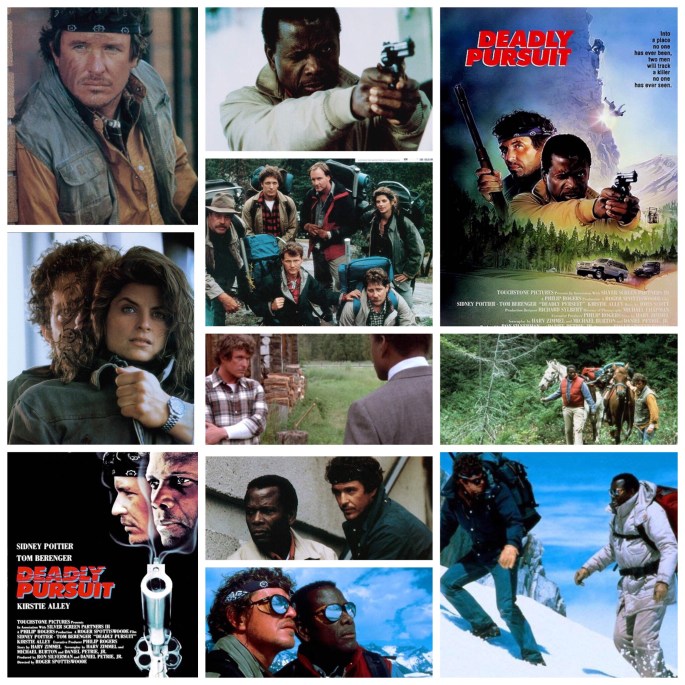
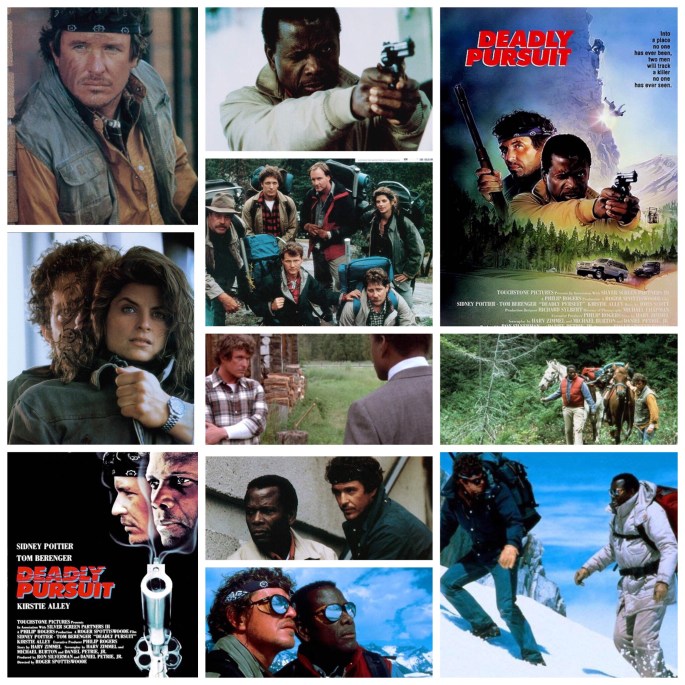
Shoot To Kill aka Deadly Pursuit

Shoot To Kill (aka Deadly Pursuit) is a spectacularly suspenseful, beautifully scenic thriller that knows how to stage action set pieces like nobody’s business. It’s also famous for the return of Sydney Poitier to acting after a near decade long hiatus, but that aside it’s just a crackling great film on its own. Part adventure, part chase flick, part psycho thriller, it could even serve as a nature documentary for all the breathtaking shots of Canadian Pacific Northwest wilderness. Poitier plays a big city cop who is on the trail of a homicidal, hellbent jewel thief who has covered his tracks by disappearing amongst a team of hikers venturing out into the mountains. Poitier is obligated to use the services of expert mountain man Tom Berenger to find the party before things inevitably get violent, and take down the maniac for good. He has his own stake in it as his girlfriend (Kirstie Alley) is the group’s guide. It’s a tense guessing game to see which one of the hikers eventually reveals himself as the killer, and since they’re all played by hard-cases like Richard Masur, Clancy Brown and Andy Robinson, it’s a gleeful toss up. Poitier and Berenger naturally butt heads, and it’s funny to see the straight city slicker and gruff outdoorsman archetypes clash. They pursue the killer up the Oregon belt and into the Cascade Mountains, eventually arriving in my hometown of Vancouver which actually gets to play itself for once instead of doubling for some yankee burg. This one holds up great and hasn’t lost a bit of its edge in the years since it came out. Tough, rugged, brutal but gorgeous piece of large scale thriller cinema.

-Nate Hill

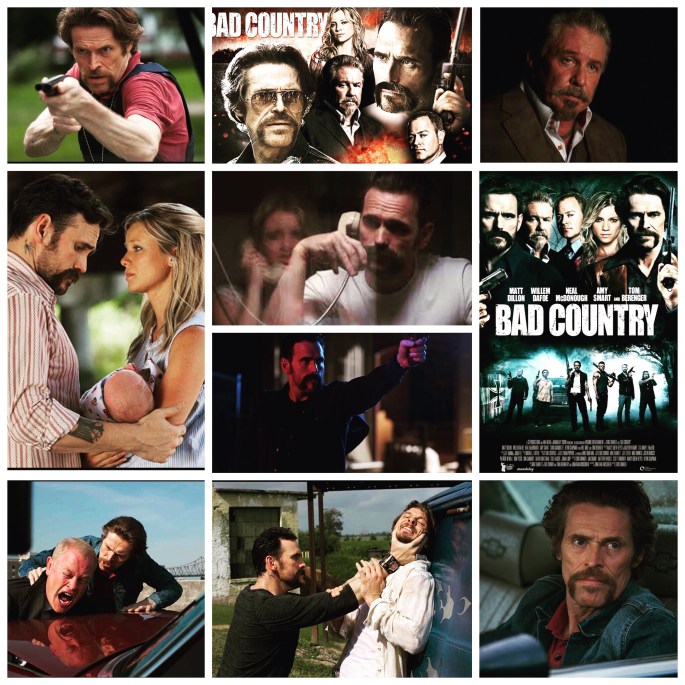
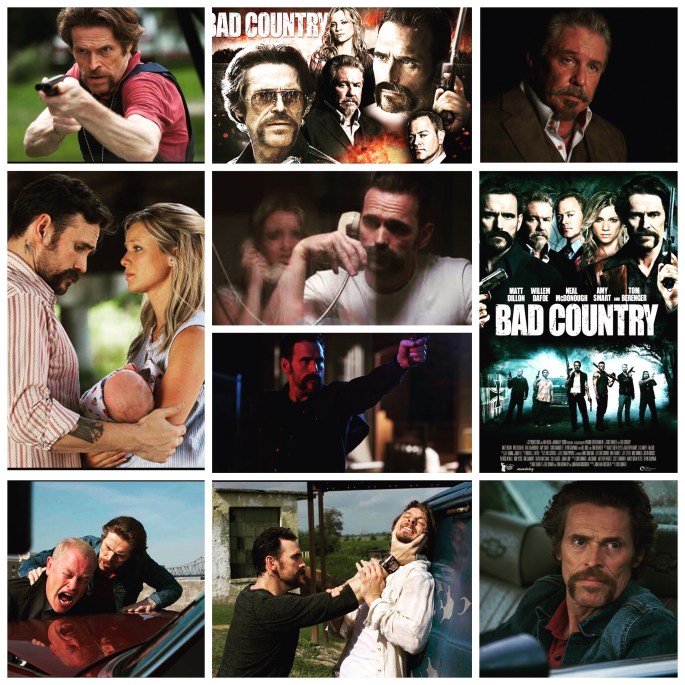
Bad Country

Bad Country is a fairly low budget, bayou set noir/crime flick, and while it doesn’t have the resources to pull of something intricate and mythic like The Departed or something, it succeeds with what it has in being a brutal, downbeat crime thriller with a heavy blanket of gloom over it and some brooding tough guys engaged in gang warfare in deepest Louisiana. It’s sort of like the type of extreme crime films you’d see in the 70’s, where every character has an anger and a violence to them and there’s no good guys or sweet resolution. Willem Dafoe is aces as gruff police detective Bud Carter, a rule breaking loose cannon who arrests mob contract killer Jesse Weiland (a scary Matt Dillon) in hopes of using him as leverage to take down Lutín (Tom Berenger, looking like an evil, Nazi Colonel Sanders), Louisiana’s fearsome underworld kingpin. This involves betrayals, shoot outs, lots and lots of swearing, sweaty bayou sex, tattoos, tragedy, depravity and many other hard boiled tropes, all done really well. I especially enjoyed Dillon’s character and his arc; he’s a man who has spent most of his life being a heinous villain, and is trying to turn it around in the eleventh hour by protecting his wife (Amy Smart, soulful and excellent) and infant child from Berenger and his hordes. But is it enough, after a lifetime of atrocities? The deep set sadness and hulking brutality is conveyed wonderfully by Dillon and it’s some of the best work he’s ever done. Berenger is monstrous and just a tad campy as the big boss, playing with his swamp drawl accent hilariously and having fun being cheerfully mean. The great Neal McDonough shows up as his crooked mob lawyer too. This one pulls no punches and gets about as dark and violent as you can, not to mention having one of those gutsy endings where nothing ends up fine and these characters are worse off than they started, a powerful choice especially in the haunting choice of resolution for Dillon’s character. Oh, and it’s fun seeing Dafoe and Berenger have a bloody, man to man smack-down brawl as well because it calls back fond memories of Platoon, and the two acting titans butting heads back then too.

-Nate Hill

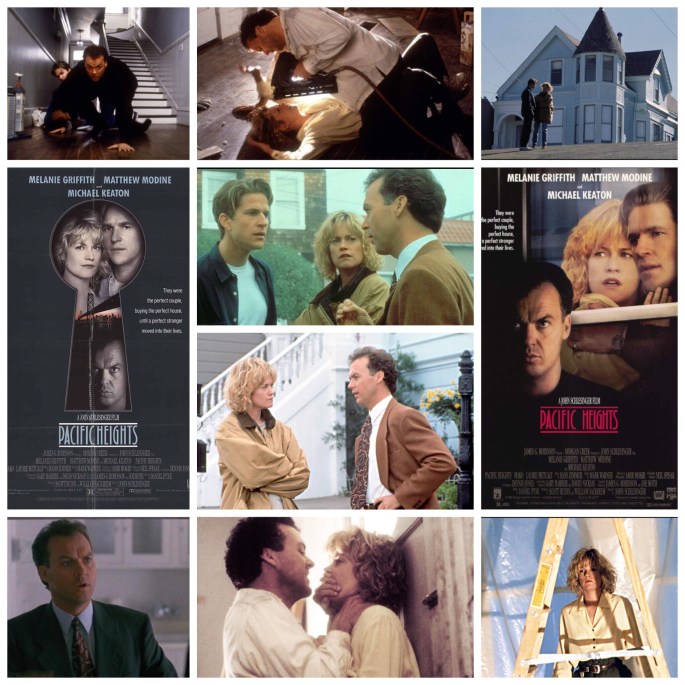
Pacific Heights

Pacific Heights is one of those 90’s ‘yuppie thrillers’, in the best possible way. See stuff like Malice with Nicole Kidman or Disclosure with Demi Moore for reference and a jumping point for research into this time capsule of a sub genre. Heights is a wicked little domestic thriller, and the penultimate ‘tenant from hell’ film (barring Danny Devito’s Duplex, which wouldn’t be released for another decade or so). Matthew Modine and Melanie Griffith are the proud owners of a gorgeous San Francisco urban estate here, proud of their purchase, poised to dive into renovation and on the market for a tenant. It just so happens that affable, seemingly nice guy Michael Keaton is on the market for tenancy, and a few other nefarious things while he’s at it. This isn’t quite a psycho thriller though, it’s more like the moment he’s moved in, their lives turn into a waking nightmare full of noise issues, unauthorized self renovations, scams, thefts and all sorts of scumbag shit. The hilarious thing is, he somehow does all of this just inside the boundaries of the law so that Modine and Griffith are pretty much powerless to kick him out or take action. How do you deal with a scheming cockroach like that? Well you’ll see, but it’s great entertainment, and one of Keaton’s best villain roles because of how stoic and vague he is, it’s like this is all business to him and he’s just showing up at his 9 to 5 job that happens to be robbing landlords blind. Hans Zimmer does some of his best unconventional work here too, with a restless, jangly opening theme that introduces hilly San Fran and suggests the impending havoc Keaton is about to wreak on this poor young couple. A forgotten gem.

-Nate Hill

Mamma Mia: Here We Go Again

Mamma Mia: Here We Go Again is a blast of serotonin in cinematic form, a pure ‘happy’ movie that may be even more fun than the first. I’ll level with you though: to enjoy it you’ll need to a) love the music of Abba, and b) not be one of those stiffly stiffersons who puckers their sphincter at the very mention of the word ‘musical.’ Both those boxes are heartily checked off for me, so it’s nothing but a glowing review on this end. Sunny Mediterranean skies, an unbelievable all star cast clearly having some of the most fun of their careers, all the glorious Abba music you want and a heartbreaking poignancy that both blindsides you and wasn’t quite all the way there the first time around, what’s not to love? Sure, it’s gimmicky, ditzy, silly beyond compare, but like Mrs. Mia Wallace would say, don’t be a 🔲. Staged as both sequel and prequel, this one zooms back to the raucous 70’s to show us just how Meryl Streep’s Donna found her way to that idyllic Greek island and stumbled into the hotel business. She’s played by Lily James here who is a true find, a charismatic beauty with a singing voice that could clear a cloudy day right out. The amazing, uncanny thing here is how they’ve managed find young actors who really do emulate their older selves, in the case of the three famous potential fathers she meets, and her two hilarious best friends, played again in the present by scene stealing Christine Baranski and Julie ‘Mrs. Weasley’ Walters. Amanda Seyfried has really come into her own as an actress, I’m always looking forward to whatever she does next because I know she’ll do it with grace and gravity, and her character blooms here as a strong pillar of the story as opposed to the fresh faced bride role she got in the first. Colin Firth, Pierce Brosnan and Stellan Skarsgard return and give the film a shot of humour and warmth, while Andy Garcia charms everyone in a role which ties into a hit Abba song later in a way that’s so funny you don’t know whether to clap or roll your eyes. And yes, Cher is in it, her voice is still a powerhouse but she must have had so much work done that she’s more synthetic that organic these days, she’s gotta be in her early 70’s and looks like she just got done recording like her second album, it’s slightly terrifying. If you’re a true Abba buff you’ll appreciate two wicked cameos from founding members cleverly added. The film is fluff and sunshine for the most part, with emotion being relayed by the not always deep or resonant lyrics of Abba, let’s face it, they were a playful disco band. Curiously, there’s one song that really plumbs depths and reaches the most grounded and emotionally truthful height from both actors and audiences that these films have ever ascended to, and, not surprisingly, it’s the one song we get from Meryl Streep, who sadly has no more than a hyped up cameo, but five minutes of Meryl is enough to turn anything gold, really. This seems like an unreleased Abba song, one from mother to daughter sung to Seyfried, and anchors the film right into lucid pathos that I didn’t think was possible with a jumping bean of a flick like this. Like I said before, it’s love it or hate it. I grew up listening to Abba on vinyl, and these songs are a part of me. Every actor in the cast is someone I love to see, it’s set in one of the most beautiful locations in the world, uses the power of music to literally give nutrients to the soul, and is the perfect recipe for summer escapism.

-Nate Hill

Francis Ford Coppola’s Twixt

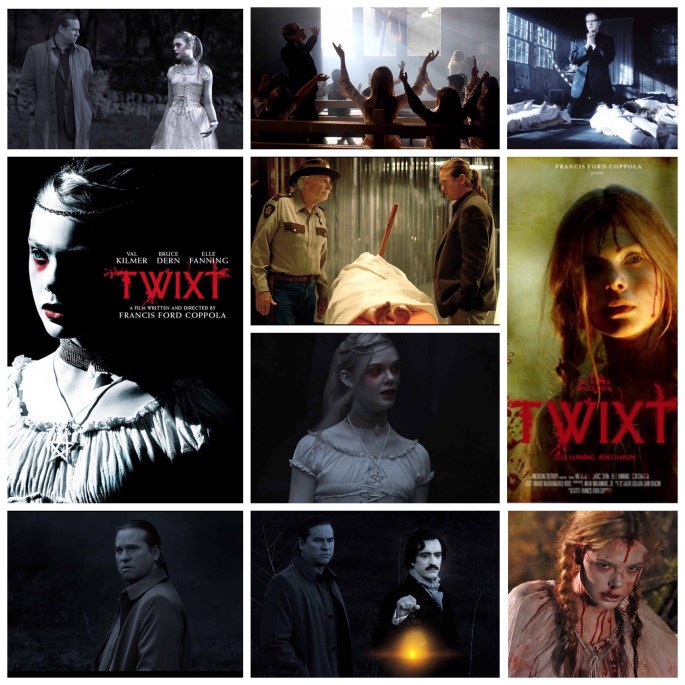
How to even approach Francis Ford Coppola’s Twixt. For a guy whose career has spanned decades from golden age Hollywood to contemporary and etched out a few mile markers that have practically defined the medium, this is definitely both the odd duck and black sheep of the man’s career. There’s no way around it either so I’ll be blunt: it’s kind of a mess. But it’s an intermittently breathtaking mess, like someone spilt a can of turgid motor oil in their garage, but a few gold and silver flakes of airbrush paint snuck into the oozing puddle. There’s a noticeable Stephen King vibe here, with flippant Val Kilmer as horror novelist Hall Baltimore, struck with writer’s block and hiding out in a creepy Midwest town to try and get the creative juices flowing. There’s murder afoot there, in more ways than one, and soon he’s visited by the ghost of a girl (Elle Fanning, darkly ethereal) who guides him along a chain of memories that recall missing children from the past. The town’s gruff, obnoxious Sheriff (Bruce Dern) doesn’t appreciate Hall nosing around his neck of the woods and harasses him at every turn. There’s Skype seasons with his wife (Joanne Whalley, Killer’s real life ex) that feel suspiciously improvised, an appearance by Edgar Allen Poe himself (Ben Chaplin) and creaky narration from none other than Tom Waits. Ultimately it doesn’t really connect, and feels so fascinated by itself that it fails to coherently tell us the tale in a way that sticks. What does take hold, however, are some truly gorgeous and striking visuals, lit by stark silver moonlight, accented by crimson blood and brought to unholy life by tactile, riveting slow motion, like a dream sequence in which Kilmer observes a group of ghost children frolicking on an eerie riverbank. Much of it feels subconscious and free form or lifted out of an Evanescence music video, but it’s beautiful nonetheless. It just needs the focus of the script to properly come across as a whole story, which, sadly, it mostly doesn’t have. Fanning makes the biggest impression as the ghostly waif, peering off the film’s poster and promising a poetic spook show, which… we kind of get. This has been seen as a shrill blast of emptiness by many critics, but there’s some fun to be had, and plenty of gothic eye candy to feast on, even if the brain goes hungry.

-Nate Hill

Renny Harlin’s 5 Days Of War

I won’t pretend to be familiar with the details of the Russian/Georgian war or anything that goes on in that region, but I’m pretty sure Renny Harlin’s 5 Days Of War is skewed in favour of special effects and kinetic commotion, as opposed to dutifully telling a story. It’s disjointed and has no idea which characters to focus on primarily and as such feels like a film out of time and space, cobbled together with loose strands and spare action sequences. Half the name actors are casted in throwaway roles too, which is disorienting. In a hectic prologue, Heather Graham plays the girlfriend of a war photographer (Rupert Friend), but she’s killed in a blast literally seconds after meeting her character, which seems arbitrary even to call her agent for a booking. The films sees Friend, a Georgian native (Emmanuelle Chriqui) and others stranded in a region on fire, torn apart by combat and cut off from communication. The details of this conflict are swept up in a near constant stream of action sequences, near misses and explosions, and much of the film is simply people running through bombed out villages in desperation. Croatian actor Rade Serbdzija (Boris The Blade from Snatch) makes good use of a Russian general role, somewhat of a villain but the film actually pauses later to give him a modicum of an ad, which he handles nicely. Val Kilmer and his Aslan mane of hair show up too in a sly, over advertised cameo as another photographer who helps them out briefly, and then disappears from the film. Elsewhere Andy Garcia laments the situation as the Russian president, grilled by the press about his actions, or lack thereof, in the struggle. In terms of story and narrative cohesion it’s all over the place. One aspect it handles well though is keeping the kinetic energy alive during the war scenes, they are extremely well shot and designed on a big scale to raise pulses. Average flick that could have done with a bit more structure and thought put into the script.

-Nate Hill

Mercury Rising

If you really think about it, pretty much everything about Mercury Rising is really, really ridiculous. The plot is one of those overcooked potboilers that’s jumped out and simmers on the stove, the government agencies here are all heinously corrupt and run by arch villains who employ comic book assassins, going out of their way to literally murder a young autistic kid (Miko Hughes, poor guy barely escaped Freddy Krueger before they put him through this nightmare) who has cracked the NSA’s most top secret code. The director of the NSA would have to be a convincing enough asshole to even vaguely pull off something so out there, but they got lucky in hiring King Asshole Alec Baldwin, who is simply hilarious in the role, justifying his sociopathic actions with delusions of unilateral national security as only the best, most self respecting villains do. It’s up to disgraced, incorruptible FBI agent Bruce Willis to shepherd the poor kid through a minefield of contract killers, attempts on his life and bodies that pile up along the way. As absolutely postal as it is in terms of a realistic plot, it does still work as a solid thriller thanks to Willis’s charisma, Baldwin’s devious charm n’ smarm, some decent action set pieces, Miko Hughes’s convincing portrayal of his character’s condition and a well rounded supporting cast. Standouts include Kim Dickens as a kindly girl who helps them out, Peter Stormare as a mute terminator style thug dispatched to hunt them as well as John Carroll Lynch, Kevin Conway, Chi McBride and Jack Conley. Made with a reliable big budget and all the fireworks in play, it’s serviceable stuff but for its hysterical premise. A group of maximum security convicts takes over an aircraft?

Okay. Terrorists with nerve gas take Alcatraz hostage? I’ll buy that. Drilling a hole, planting a nuke and blowing a deadly asteroid in half? Sure, why not. It’s just something about the director of the NSA coherently sanctioning the death of a child and putting so much effort into it that has me chuckling. Baldwin sells it I guess, in his greased hair, gravel voiced, Draconian way. Watch for his eventual confrontation with Willis in a wine cellar, it’s the warped highlight of the film.

-Nate Hill

Florent-Emil Siri’s Hostage

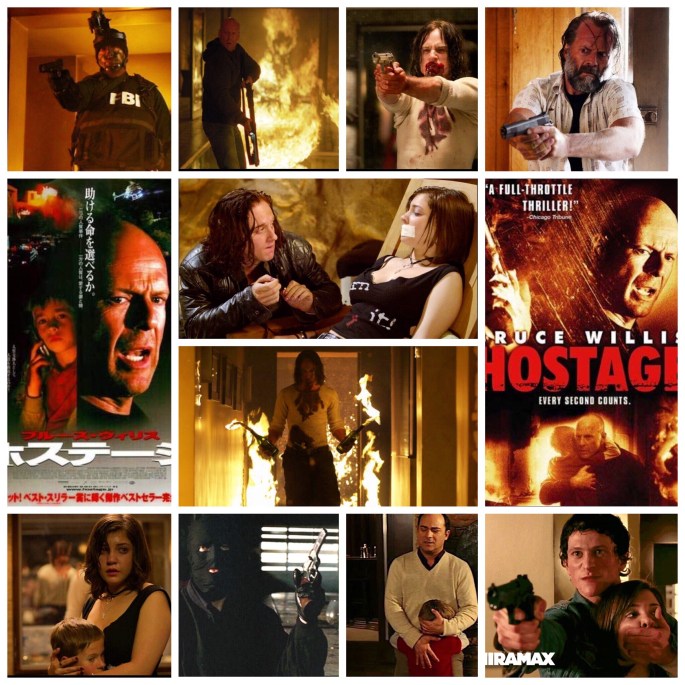
Hostage isn’t just another Bruce Willis action movie. It is that, but a lot more and told in a unique, frightening way that evokes both horror films, impressionistic art and a European style of filmmaking. It’s frequently more intense than your usual Willis shoot em up too, the violence has a much more horrific impact and happens on a smaller, more intimate scale while the explosions take a backseat. Willis plays hostage negotiator Jeff Talley, a man who is haunted by a hair raising incident with a situation he failed to diffuse, as we see in a bleak, visceral prologue that lets us know exactly how grim and bereft of one liners the rest of the film will be. Relocated to small town California with his wife (Serena Scott Thomas) and daughter (Rumer Willis, Bruce’s own daughter with Demi Moore), he seeks the quiet life, but naturally trouble begins to follow him in a spiralling set of dark turns and unfortunate events that lead to the case of his career and the night from hell. On a routine B&E call, Talley discovers that three white trash punks have taken over the home of businessman Kevin Pollak and his two children. Two of them are twitchy petty thieves (Marshall Allman and the reliably intense Jonathan Tucker) and are just out for valuables, but the third (Ben Foster, scary as fucking shit) is a sociopathic monster capable of terrible things, and the situation escalates from there. Little does anyone know, Pollak is involved in something far more dangerous than any of this, and soon a shadowy covert boogeyman called The Watchmen (Kim Coates, managing to still be terrifying behind a ski mask the whole time) has kidnaped Talley’s family as brutal leverage. It’s an intricate web of danger, heroics and violence that erupts like a flash-bang grenade and hits hard. Willis has never been better, you can see the open wounds in his soul bared through his eyes, and feel the weight of the situation crushing him as he races to find a solution. Pollak’s mansion feels like a labyrinthine death trap as the world’s most elaborate security system descends on those inside and shuts them in. Michelle Horn and Jimmy Bennett are terrific as Pollak’s resourceful kids, dealing with Foster’s unpredictable psychopath as best they can. The mood here is dour, savage and dark, with Willis’s fallen saint of a cop anchoring it all, it’s really some his finest work. There’s an austere score by Alexandre Desplat that accents the action with thumping passages in great sweeping master shots, and spikes the scenes of claustrophobia inside the house with uncomfortable rhythms. Director Florent-Emil Siri plays with an unconventional, surprisingly artistic palette and makes what could have been another routine action film seems somehow special, in all the right ways. One of my top Willis flicks, both in terms of his work and the overall film.

-Nate Hill

Steven Soderbergh’s Ocean’s Twelve

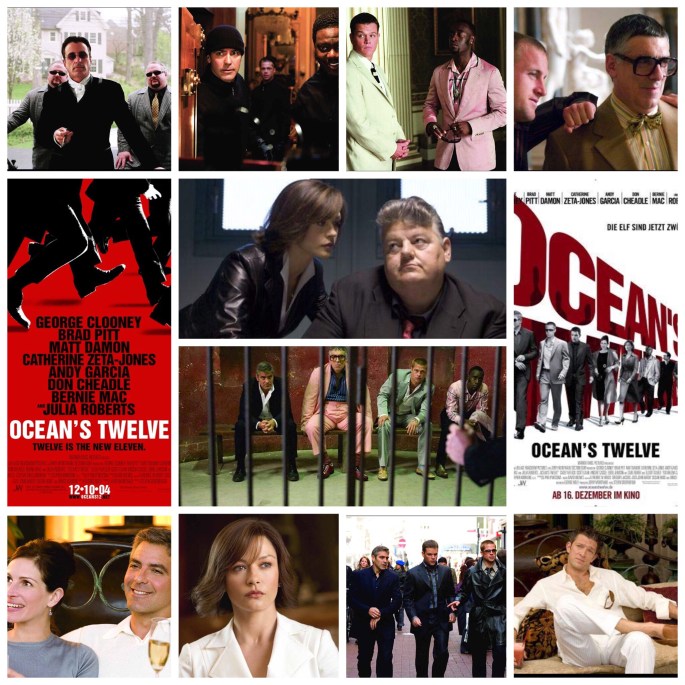
I enjoy Steven Soderbergh’s Ocean’s Twelve for a number of reasons, chief among them how decidedly different it is from Eleven. It’s like they not only chose to set it in Europe, but also to stylistically change the glib, cavalier Vegas aesthetic for an oddball, impenetrable Euro vibe that’s a lot weirder and more dense this time, and as such we have fun in a new fashion than the first. There’s also not just the laser focus of one singular, do or die heist but rather a string of robberies, betrayals and loose subplots flung around like diamonds, as well as a few cameos buried like Faberge Easter eggs. Good old Terry Benedict (Andy Garcia) has tracked down Danny Ocean (George Clooney), Tess (Julia Roberts), Rusty (Brad Pitt) and their merry band of thieves across the pond to Europe, and he wants his money back from their epic Bellagio/Mirage/MGM Grand heist. This sets in motion an impossibility intricate, knowingly convoluted series of mad dash heists and classy encounters with the finest arch burglars Europe has to offer, including legendary thief the Night Fox (Vincent Cassel) and hilarious fence Eddie Izzard in full fussy mode. Everyone from Danny’s original team returns, from the scene stealing, cigar devouring Elliott Gould to the bickering brothers Casey Affleck and Scott Caan. Hell, even Topher Grace as himself is back, and that gigantic Vegas tough guy that fake brawled with Clooney the first time turns up for a spell. There’s fresh faces abound too, including sultry Catherine Zeta Jones as a cunning Interpol agent who’s on to their trail, no thanks to Pitt who happens to be dating her. Oh, and how about the surprise cameo which I won’t spoil except to say it’s tied into another pseudo cameo that’s so ingenious it can’t be explained, you just gotta see it. To be honest, the whole heist plot is one fabulously befuddled bag of nonsense, tomfoolery and monkeyshines, made no clearer with flashbacks, gimmicks, ulterior motives and cinematic trickery until we’re left wondering what in the fuck exactly happened. More so in Twelve though it’s about the journey, and not the destination, whereas Eleven made it clear that sights were set on completing that heist with dedicated tunnel vision. Here one is reminded of a bunch of Italians sitting around having coffee and chatting amongst themselves while they’re late for a meeting; they’ll get there eventually, but right now all that matters is how good the conversation and camaraderie is. Speaking of sitting around and talking, my favourite scene of the film is with Danny, Rusty, Matt Damon’s Linus and Robbie ‘Hagrid’ Coltrane, who plays an underworld contact. They’re sat in a Paris cafe talking, and they use nothing but a nonsense gibberish vernacular that seems to make sense to them all but Damon, but probably doesn’t to any of them, but the key is that they all remain cool, bluff each other out and have fun. That sums up the film in one aspect, a breezy blast of silliness that shouldn’t be examined too hard, but rather enjoyed at a hazy distance with a glass of fine wine. Good fun all round.

-Nate Hill