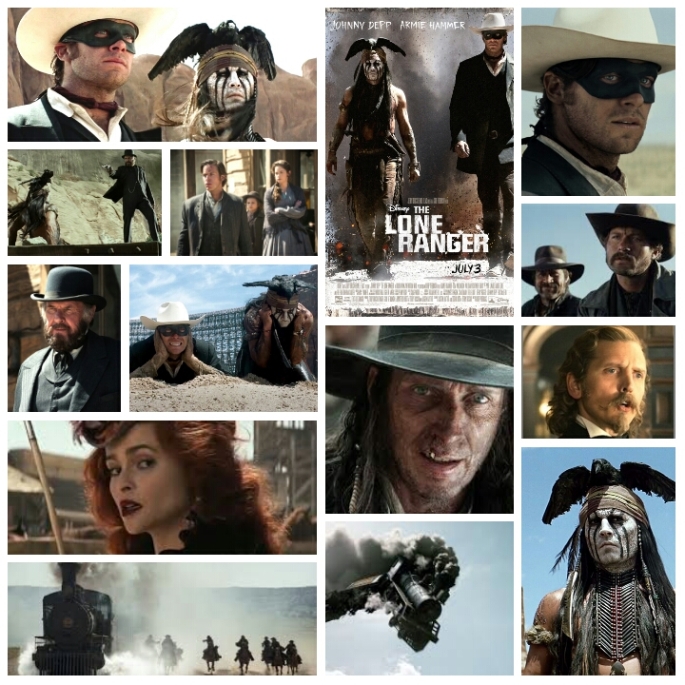
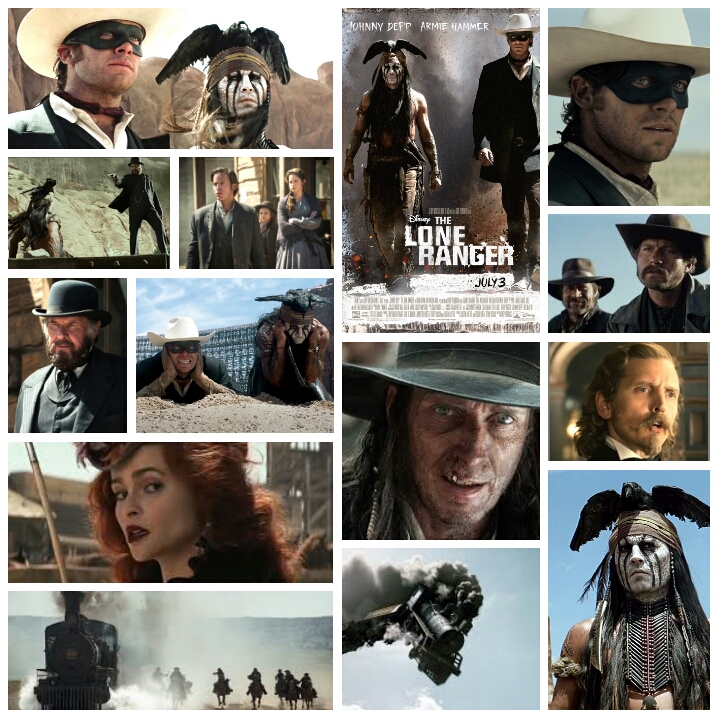
There’s always those films that get buried under a landslide of terrible reviews upon release, prompting me to avoid seeing them, and to wait a while down the line, sometimes years, to take a peek. I was so excited for Disney’s The Lone Ranger, being a die hard fan of both Gore Verbinski and Johnny Depp’s monolithic work on Pirates Of The Caribbean, and just a lover of all this western, as well as the old television serial. The film came out, was met with an uproar of negative buzz, I went “well, shit”, and swiftly forgot it even existed. The other day I give it a watch, and would now like to pull a Jay and Silent Bob, save up cash for flights and tour the continent beating up every critic I can find in the phone book. I was whisked away like it was the first Pirates film all over again, the swash, buckle and spectacle needed for a rousing adventure picture all firmly present and hurtling along like the numerous speeding locomotives populating the action set pieces. Obviously the material has been vividly revamped from the fairly benign black and white stories of the tv show, especially when you have a circus ringmaster like Verbinski at the reigns, the guy just loves to throw everything he has into the action, packed with dense choreography and fluid camerawork that never ceases to amaze. Johnny Depp loves to steal the show with theatrical prancing and garish, peacock like costumes, and he kind of takes center stage as Tonto, the loyal sidekick to the Lone Ranger, who is given a decidedly roguish, unstable and altogether eccentric edge that the series never had, but I consider it a welcome addition to a character who always seemed one note in the past. Armie Hammer has a rock solid visage with two electric blue eyes peeking out of that iconic leather strap mask. It’s an origin story of sorts, chronicling Reid’s journey to visit his legendary lawman brother (James Badge Dale) and family in the small town West. Also arriving, however, is ruthless butcher and psychopathic outlaw Butch Cavendish (William Fichtner) at the behest of opportunistic railroad tycoon Latham Cole (Tom Wilkinson). Tempers flare and violence erupts, and before you know it Reid is without a family, left for dead in the desert and befriended by Tonto, who himself is a tragic loner in a way. Revenge is on the minds of both, as they venture on a journey to find Cavendish and his men, discover what slimy Cole is up to and bring order to the west, one silver bullet at a time (actually there’s only one silver bullet used in the entire film, but let’s not get technical). Now, I’ll admit that the middle of the film meanders and drags quite a bit, half losing my interest until the intrigue steps up a notch. A sequence where the pair visit a circus brothel run by a take no shit Helena Bonham Carter seems like unnecessary dead weight and could have been heavily trimmed, as could other scenes in that area that just aren’t needed and might have been excised to make the film more streamlined. It’s no matter though, because soon we are back in the saddle for a jaw dropping third act full of gunfights, train destruction and unreal stunts that seem like the sister story to Pirates, some of the action often directly mimicing parts from those films. Depp is like fifty, and still scampers around like a squirrel, it’s a sight to see. Fichtner is a world class act, his mouth permanently gashed into a gruesome snarl, the threat of violence oozing from his pores and following him like a cloud. Wilkinson can take on any role, period, and he’s in full on asshole mode, Cole is a solid gold prick and a villain of the highest order. Barry Pepper has a nice bit as a cavalry honcho who never seems to quite know what’s going on (it’s perpetual chaos), watch for Stephen Root and Ruth Wilson as Reid’s sister in law who ends up… well you’ll see. It’s fairly dark and bloody for a Disney film as well, there’s a grisly Temple Of Doom style moment and attention is paid towards America’s very dark past with the indigenous people, which is strong stuff indeed for a kid orientated film. Nothing compares to the flat out blissful adrenaline during the final action sequence though. That classic William Tell overture thunders up alongside two careening trains and your tv will struggle to keep up with such spectacle, it’s really the most fun the film has and a dizzyingly crowd pleasing sequence. All of this is told by an elderly Tonto in a museum exhibit, to a young boy who dreams of the west. A ghost from the past, part comic relief and part noble warrior, Tonto is a strange character indeed, and the old version of him has a glassy eyed reverence for his adventures before, the last one alive to remember. Many a review will tell you how bad this film is, but not mine. I found myself in pure enjoyment for the better part of it, and would gladly watch again.
Tag: films
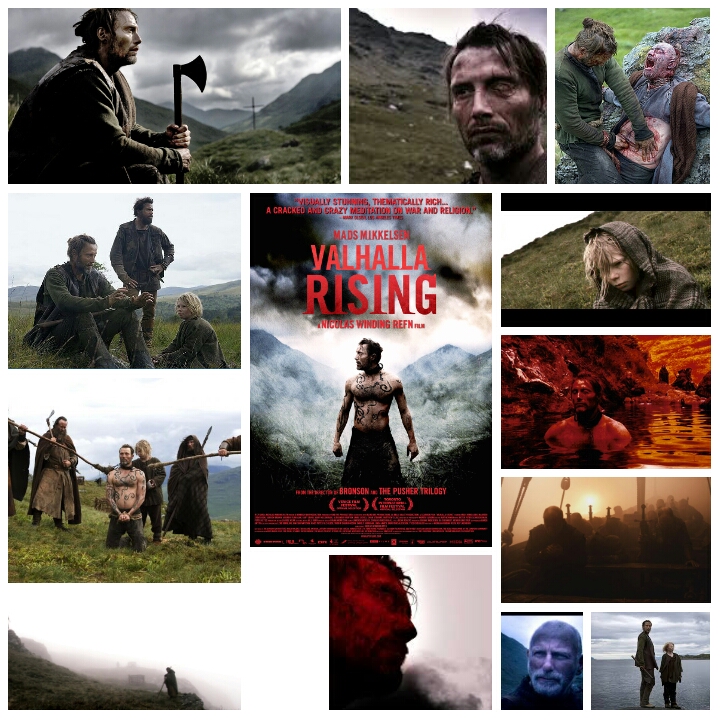
Nicolas Winding Refn’s Valhalla Rising: A Review by Nate Hill
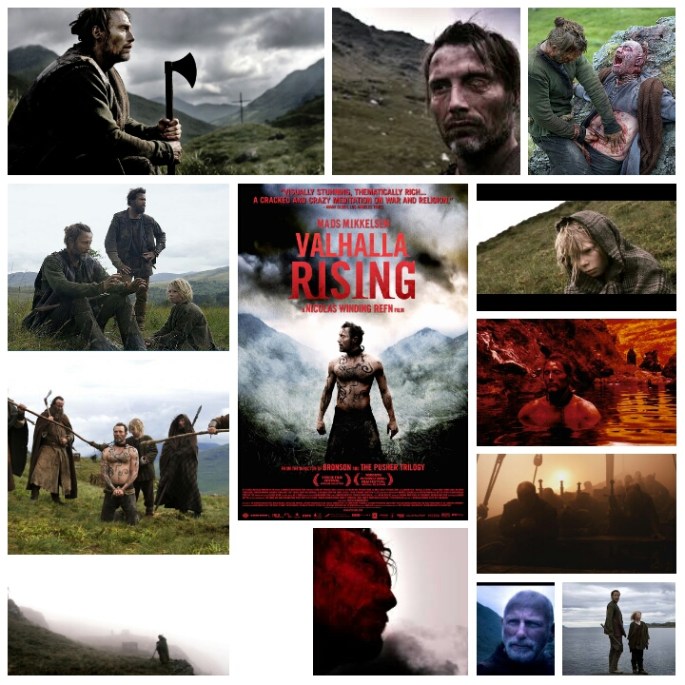
I would hazard a statement and say that Valhalla Rising is Nicolas Winding Refn’s most inaccessible film, to wider audiences. Despite the bleak, impenetrable horror of Fear X and the repulsive, Freudian filth of Only God Forgives, there’s just something so bare and primordial about Valhalla, a skeletal narrative that serves as a haunted shell for a story that is essentially the ‘anti story’, an acrid, backwards battle poem existing in a vacuum of space where genre tropes should be at play, and are mournfully absent. A lot of films set in ancient times just feel the need to give the proceedings a modern flourish, adding humour, bravery and many elements we identify with and are used to seeing. The reality is those times were probably not like that at all, and resembled a level of anthropological alienation that would confuse us. Refn casts exactly that kind of cloak over his film here, bringing us a dark, hollow world where primitive despair swirls about in the mists of the British Isles and the ocean far beyond. Refn is first and foremost concerned with his protagonists, striving to make them unique and challenging. The meek, confused griever playing detective (John Turturro in Fear X), the lonely, pent up vigilante (Ryan Gosling in Drive) and the bawdy, childish, anarchic brawling bull in a China shop (Tom Hardy in Bronson) were endlessly fascinating, but here he takes it a step further into the overgrown netherworld of the human psyhe. His outlet of exploration is a mute, feral Scandinavian warrior, simply called One Eye (Mads Mikkelsen), who is ready to inflict throat ripping, bone snapping carnage at the drop of a hat. This isn’t someone who kills for his own gain or goals though, and it’s in that characteristic that One Eye is different from every other lead in Refn’s tales. All the rest were forceful, extremely aware beings who were out to achieve clear cut goals, even if one of them was just to create as much self destructive chaos as possible. One Eye is a slave, someone’s property, and lays down the carnage hammer only when instructed to by his Saxon owners. This unfolds in a jarring opening act that you’ll need a strong stomach to fight through. The violence is scarily realistic and lands with the same sickening thud that skulls make when Mikkelsen bashes them on the jagged outcroppings of rocks which populate this austere terrain. As two warring clans squabble about who deserves sovereignty over One Eye’s terrifying talents, circumstances lead to his departure from the moors of Britain, on a boat captained by a Scottish warlord (the exceptional Gary Lewis) and with the companionship of a mysterious young boy (Maarten Stevenson). The boat drifts in a lilting trance for miles on end, seemingly headed nowhere, and it’s here that Refn let’s both his characters and audience off the leash and sends us headlong into the crushing blackness of a narrative that is maddeningly impossible to decipher. To try and think it out is to fail right off the bat; One must let this type of story wash over you and discern it’s meaning using the unconscious modes of thought that human beings have sadly forgotten amidst a flurry of science, reason and technology. The voyage across this sea is one out of time, out of mind and beyond rationality, and the land that lays at the far end of the crimson sunrise is one even more foreboding and secretive than the rocks they left behind. Encounters with a strange tribe, moody passages of time where One Eye seems to drift between dimensions of thought and animalistic contemplation, dimly perceived exchanges of dialogue that seem lost and misplaced among the pressing gloom, it all flows by like the fog on the water, making sense as an element existing in it’s place in nature, but unable to be reconciled by our minds, which always need to have the safety net of a “why” to break the great fall of the unknown. Sometimes there’s no explaining, no categorizing, because to do so is arrogant. Sometimes it’s just naked perception and acceptance, if you can bring yourself to that place. Refn can, and what’s more, he can create such feelings, which is what makes him so important as an artist. He understands the uncharted places on the territory of human experience, waiting to be mapped out like the strange new world One Eye and the boy visit, a world which may as well be a different planet to their eyes. It’s in this inaccessibility that he gives us what, although is certainly not his most enjoyable or commercially viable film, is definitely the one that says the most, if you possess and are willing to use the tools necessary to experience it. Difficult. Psychological. Troubling. Hypnotic. Beautiful. Masterpiece.
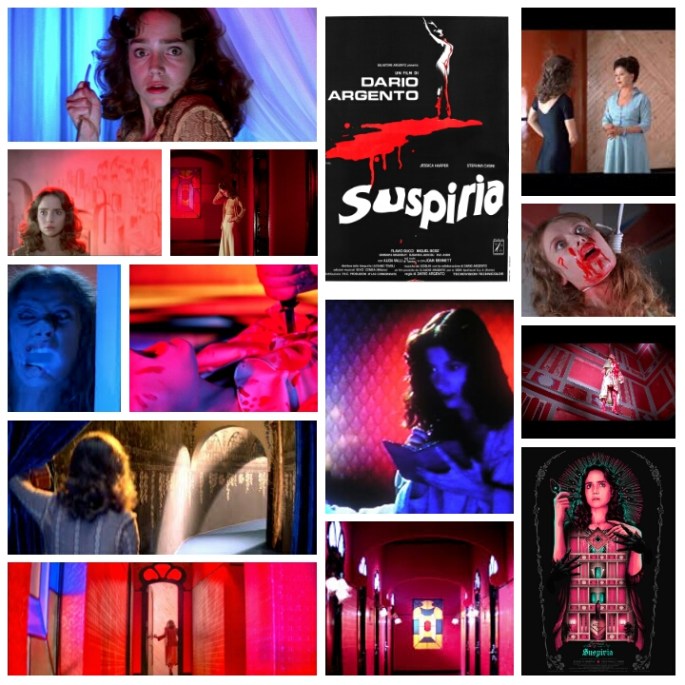
Dario Argento’s Suspiria: A Review by Nate Hill
How to describe Dario Argento’s Suspiria. A psychedelic, multicolored mood piece. Free from the bonds of rationality. Surreal and incoherent, using dream logic to disorient the viewer and lull us into a subconscious fugue state, swept away by the color and light, all shot through a prism of dazzling underworld enchantment, a fairy tale designed to shock and shake, and all the while presided over by Goblin’s rhythmic, haunting score, bewitching the proceedings even further and pushing the atmosphere of the film to elemental heights. No other horror film I’ve ever seen has had quite the same unique, spellbinding effect on me as this masterpiece. The opener still stuns, a kaleidoscope of stained glass splattered in blood, a jarring murder scene that is as beautiful as it is grotesque, setting the stage for the madness yet in store. You know those dreams where you’re making your way through some corridor, drenched in fear and awaiting some doom that’s just up around the bend, but suddenly you get there and nothing seems to make sense, circumstances are now different and all attempts to extricate yourself seem hopeless? That’s the kind of nightmare that young American ballet student Suzy Banyon (Jessica Harper) finds herself in. Arriving in Germany to a prestigious dance academy, she gets a fleeting look at some poor girl running from… something, far off in the woods. That being her introduction to the school isn’t a good sign, and it doesn’t get any better. The stern headmistress (Allida Valli would give Miss Trunchbull the creeps) is overbearing and nasty, the rest of the occupants strange and withdrawn, and something seems to live inside the walls, watching Suzy from unseen perches, with evil intent in store. Maggots, a possessed dog, witches, a serial murderer and homicidal German cooks don’t even begin to describe the gauntlet of terror she fights through. Well, they do, but the film really isn’t about those things, they’re just the walls of the gingerbread house, plain, right angled and sensibly threatening. The real horror and unease comes from atmosphere, the icing, sprinkles and decorative splendour on said house. Argento has always given more effort towards atmosphere and ambience, in favor of things like acting, story or editing. It can be silly sometimes, but in Suspiria’s case it really doesn’t matter much, because the hellish haunted house he fashions is worth every second of your attention. There seems to be a starkly colored hue pouring in through every window and behind every door, the academy itself is an ornate and impossibly detailed dark gem of architecture and artistry, the sets put together like a dizzying labyrinth funhouse of brightly lit orifices and shadowed alcoves where nothing seems to be in it’s rightful place, disorder and abstraction reigning supreme. And then there’s the score. Now one of the most iconic janglers in the horror genre, the trancelike nocturnal lullaby by Goblin is a riff that instantly stands your hairs up and sucks you right into each frame, accenting the colours, shapes and hallways with organic precision, as if the dark forces inside the academy were somehow generating this music of their own accord. I also note another track by the group that makes an appearance, a wheezy death cry called ‘Sighs’, signalling that witches are nearby and consequently upping the unease factor a few more notches. This is a film that seems to come straight from the unconscious mind, a technicolor patchwork quilt stitched together with bizarre ideas, supernatural mysteries and otherworldly hysteria, with only the briefest threads of logic woven in, almost as if to further throw us off balance, to tease us with a scenario that seems like it will play out ‘normally’, only to toss us right back into the deep end, back into bizarro world with Suzy and all the forces of the night, clamoring to get her. This is unquestionably Argento’s best, and most complete film, a maniacal masterpiece of gorgeous sights and sounds, a trip to atnother realm via our world, and a horror piece unlike any other.
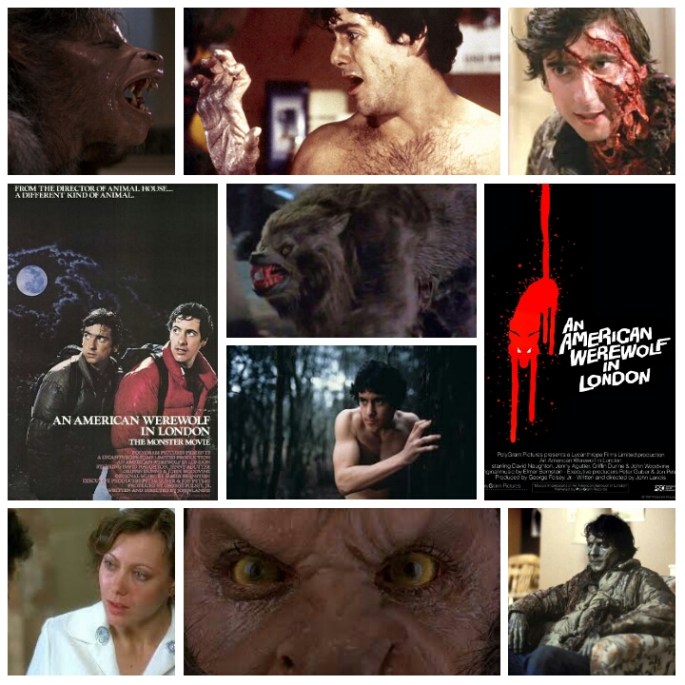
An American Werewolf In London: A Review by Nate Hill
John Landis’s An American Werewolf In London has what is the most impressive human to wolf transformation sequence I’ve ever seen. You can dump your wallets out and buy all the CGI effects at hand, and none of them will ever match the tactile weight that practical effects have, the combination of hair, putty and latex that assures you there is *something real* on screen, and not the hollow timbre of computer driven wizardry. Everything in the film builds up to this shock and awe moment, and up until then it’s a fairly low key, atmospheric affair in which you never quite see the beast that kicks off the inciting incident. Griffin Dunne and David Naughton play the two American backpackers who find themselves wandering the moors of northern England, positive there is some kind of creature hunting them. The crusty locals avidly deny any such presence, but aren’t convincing and furtively shift their gaze, clearly not being honest. Sure enough, Naughton is attacked and bit one night, and he begins to exhibit those good old symptoms. The change happens all at once and is quite startling; this isn’t a sleek, aesthetic werewolf either, it’s a lumbering behemoth, all fur fangs and fury, storming about the cobbled streets of London like a coked out grizzly bear out running zookeepers. We only get to see him in London for a brief and chaotic end scene, but it’s worth it, taking the slow, misty nocturnal buildup and switching to broad daylight, revealing what was unseen before and bringing it jarringly down to earth. I can’t speak for the sequel, as I’ve never seen it, but this one remains one of the most well crafted, fun werewolf films you can find, and my personal favorite.
The Changeling: A Review by Nate Hill
I love a good old fashioned creaky haunted house story, and HBO’s The Changeling is one of the best, and most under appreciated spooky tales out there. Like I say time and time again (no doubt sounding like a broken record at this point), real effective horror lies in atmosphere and the buildup of tension, chilling our spines instead of bombarding us with tasteless dismemberment. The Changeling takes its time in establishing cozy atmosphere and engulfs us in a gigantic New England mansion (actually Shaughnessy for anyone who can tell), inhabited by the lonely, desperate ghost of a young boy who met a tragic fate there many decades earlier. George C. Scott is the musical composer who moves in all by himself, seeking solitude as he nurses the grief of losing both his wife and daughter in a car accident. He’s barely there one night when strange things begin to happen; rhythmic banging from some far off room, eerie crying noises, doors opening and closing of their own accord and a mysterious toy bouncing ball that ominously follows him around. Saddled with an already troubled mind, he sets out to learn the origins of the ghost and resolve the situation, putting it to rest. The story is smart and succinct, involving ancestral deception and an elderly US Congressman (Melvyn Douglas, stealing every scene) with ties to the past. It’s never too complicated or busy, always keeping it’s cool and reigning in the frightening moments in a minimal fashion that pays off greatly. The lush, overgrown Vancouver locale makes a great setting, almost Stephen King like, and the house itself is a towering cluster of dusty hallways and wide open ceilings that shield ancient secrets and watch over anyone who sets foot inside with an unseen eye. I never thought a bouncy ball and a small children’s wheelchair could raise such goosebumps, but when used as well as they are here, in scenes which set up the creep factor wonderfully, they’ll get to you big time. Scott is weary and wary, but has a strong sense of compassion for the restless spirit that shows in his baleful, ice blue eyes and gives him the charisma a horror protagonist needs. HBO original films are almost always hidden gems of humble craftsmanship and breezy, effortless skill, whatever the genre. Here they’ve tried their hand at the ghostly fright flick, and wrought one of the best I’ve ever seen.
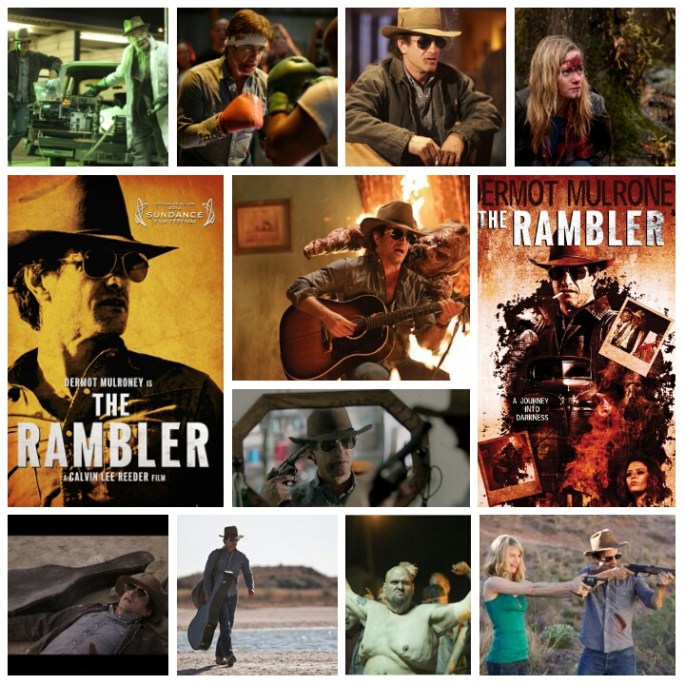
Calvin Reeder’s The Rambler: A Review by Nate Hill
I can’t picture a single festival screening of Calvin Reeder’s The Rambler that wouldn’t result in at least half the crowd walking out in revulsion. There’s just no way to put it lightly when describing the alienating, severely soul-disturbing kind of sickly atmosphere that hangs over the entire film like a radioactive blanket of surreal dread. The dvd cover barely suggests the beyond Lynchian, out to lunch, bugfuck nuts events which unfold, and instead hints toward a western with vaguely horror themed aspects. Couldn’t be more different than that. The conventional elements like plot and the theme of Western are dimly present, shaky railroad tracks for a train that careens straight into the subconscious of bizarro world, some of what we see even too messed up and disassociate for the hardiest of cultist buffs. Few films are able to capture the purely illogical and disjointed feeling of a dream, but this one nails it scarily well. Sentences don’t match responses, human behaviour is terrifyingly devoid of inhibitions, events repeat and come out of nowhere, and we really and truly feel lost, removed and detached from any kind of rational thought or action. Now the film doesn’t outright announce that it’s all a dream, save for a few hints embedded in the story, but it sure felt like one long nightmare to me, evoking psychological feelings which words really can’t describe. Dermot Mulroney does a ‘Man with no name routine’ as a vacant ex con who is released from prison and blows back into his one horse trailer park town. He does indeed have no name, now that I think of it, and is only ever referred to as The Rambler. Upon returning, he finds his volatile girlfriend (Natasha Lyonne) has taken up with another man, and no one seems to want him around anymore. Time to hit the road, he figures, sauntering out into the acrid desolation of the southwest in a dead cool opening credits scene set to Terry Allen’s Red Bird, one of my favourite twangy tunes. From there it gets hard to describe, comprehend and stomach. He’s off in some John Waters style twilight zone of very unsettling characters, saying and doing things that make little sense and get increasingly shocking and vulgar. A mysterious girl (Lindsay Pulsipher) weaves in and out of the story and seems to be the only one besides him who is remotely coherent. A crackpot doctor (James Cady) shows him an extremely defective device that is supposed to look into people’s dreams. There’s ugly, misanthropic fiends running all about with nothing to say other than loosely strung together verbal diarrhea, and a constant nauseating film of unease over everything. I’ve read reviews wailing about how this film has less than nothing to say, and should have shut it’s mouth. But that’s the point to a nightmare; it doesn’t teach, enlighten or otherwise change us in any way other than to give our sense of dread a workout and provoke a cold sweat. Similarly, the film simply is there to scare, to induce the gag reflex and doesn’t strive for anything else, and in that sense it’s pure, primal and honest about it’s intentions. The very definition of not for everyone, this will even put off bands of counter culture cinephiles who scoff at anything mainstream. Deliberatly vile, constantly off its rocker and so far beyond the event horizon where bizarre ends and something truly indescribable begins, The Rambler will shake the shit out of anyone who claims to have seen it all. You have been warned.
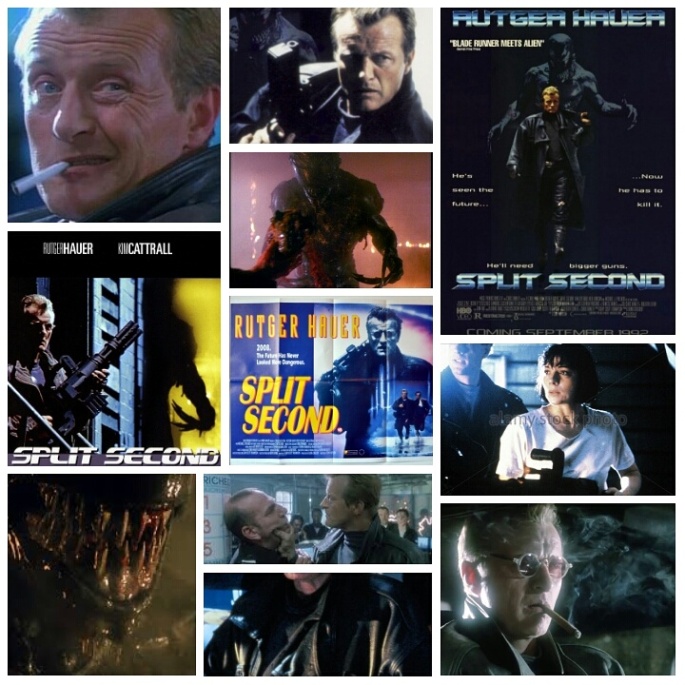
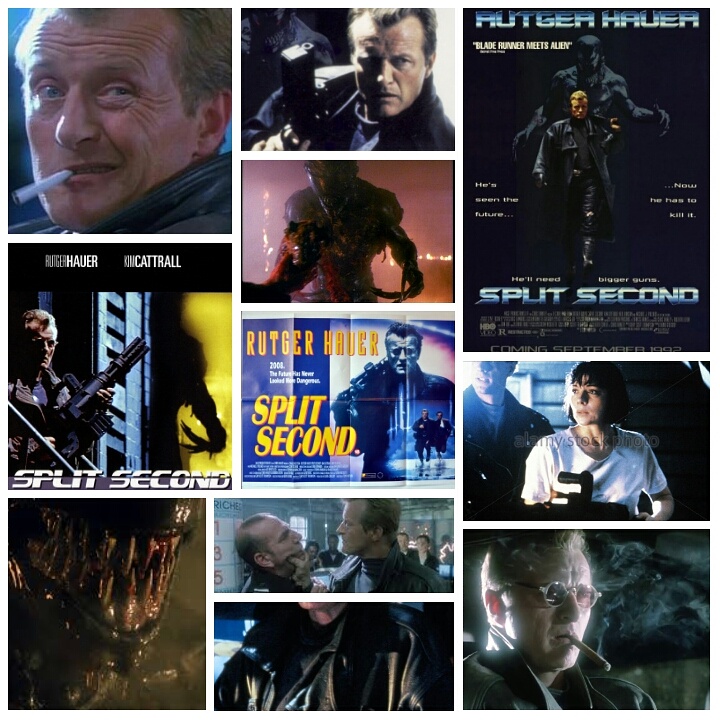
B Movie Glory with Nate: Split Second
One of the better entries in a long and tedious career of B movies that Rutger Hauer has inexplicably slaved in, Split Second is actually a solid, enjoyable little flick with terrific action, atmosphere to rival any of the big budget films he did and a stoically deadpan performance from the legendary badass. The year is 2008 (lol the future), the place is London, and the sea levels have been rising fpr years, causing a few feet of water everywhere, leading to a stall in infrastructure growth. Hauer plays police detective Harley Stone, a gruff, take no prisoners shit kicker with a big gun who is searching the dank streets and shadowy clubs of London, looking for a killer who dispatched his poor partner a few years before. Only thing is, this ‘killer’ isn’t actually human, as Stone finds out in a series of well staged, murky shootouts in which the muzzle flares and smoke machines combine efforts (with hidden help from the low budget) to ensure we never get a good look at this beast until the bloody finale. Hauer is the perfect lone hero, a physically imposing presence with the laconic wit and unshakable charisma to match it. His Stone is world weary, laid back but dogged, and not without a bleak sense of humour. “I’m a cop” he sarcastically barbs, flashing his badge to a nightclub guard dog who wouldn’t know it from a hole in the ground. Kim Cattrall plays the female counterpart to the fight, and watch for Pete Postlethwaite in an early role as a pesky bureaucratic swine who gets in Stone’s way a few times. If you picture the hard hitting brutality of Predator, combined with the smoky ambience of Blade Runner you’ll have some idea. Admittedly it’s on a far lower budget and as such has to make do with it’s resources, but it does that just fine. Memorable little action creature feature.
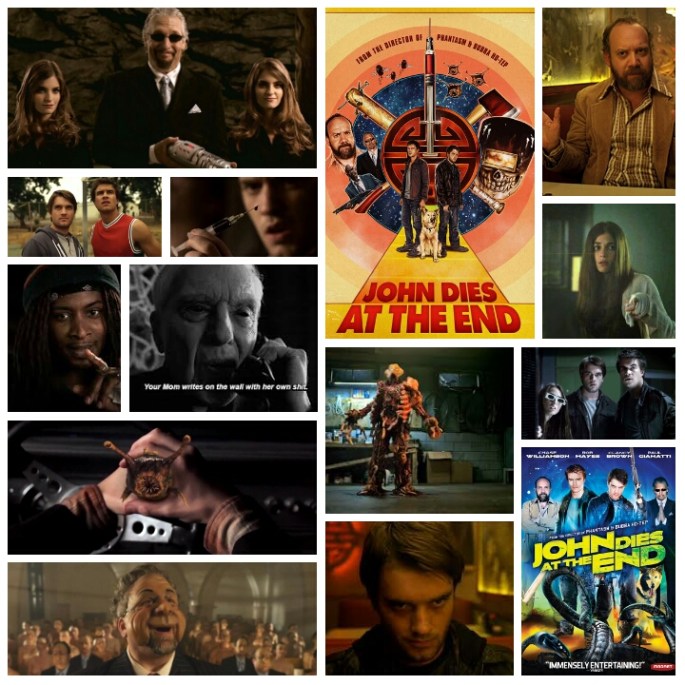
Don Coscarelli’s John Dies At The End: A Review by Nate Hill
It’s almost impossible for me to describe Don Coscarelli’s John Dies At The End without either giving too much away, sounding ridiculous or just confusing the reader. It is a ridiculous film, in the sense that Buckaroo Banzai or Bill & Ted are, a completely batshit, near stream of consciousness horror hoot that somehow just makes sense on its own terms and in it’s own world. It all kicks off when best buds Dave (Chase Williamson) and trouble magnet John (Rob Mayes, pretty much a late 20’s version of Rob Lowe) decide to try a dubious wonder-drug amusingly nicknamed ‘soy sauce’, a narcotic known for its space/time/dimension altering powers, and pretty much a surefire way to descend into hellish but very funny chaos where nothing makes sense and the story takes a dime store turn into bizarre schlock worthy of a Troma special. Among the delightful surprises in store for them are time travel, a meat monster, an ominous rastafarian stranger named Robert Marley (think they’re so clever, don’t they), aliens, dildos that materialize out of nowhere and all kinds of weirdness exploding from a seemingly endless grab bag of retro looking special effects. Poor Dave rushes to find John before they’re hopelessly cornered by the forces of….. whatever lol, aided by his adorable amputee girlfriend (Fabienne Theresse) and a cop named “Detective Morgan Freeman”, who isn’t played by Morgan Freeman, before you ask. Somehow the film finds time for a brief appearance by Clancy Brown, playing some sort of super sonic Ghostbuster crossed with David Blaine (he’s actually great) and an overarching subplot in which Dave recounts all this hullabaloo to a skeptical journalist, played by none other than Paul Giamatti, whose reactions upon eventually coming face to face with the results of soy sauce are priceless. Did I do a good job describing it? Who knows.. I’m not even sure the film itself does a good job of describing it, but it sure has fun trying and I sure did watching it too. If Mystery Science Theatre tried to put on an X Files episode while loaded up on whatever William Hurt took in Altered States, it might look something like this. Director Coscarelli is most famous for Phantasm and Bubba Ho Tep (a personal favorite), so if you’ve seen those then you’ll have some kind of diving board of an idea as to what this one’s all about. Only, here he flips the diving board upside down, throws it into space and abandons any usual drawing board for something that gets pretty off the wall, even for him. I say bring it on.
Malevolence: Bereavment- A Review by Nate Hill
Back in 2003, director Steven Mena made an ultra low budget slasher effort called Malevolence, chronicling the brutal crimes of a kidnapped child named Martin Bristol, who grew up watching his abductor commit heinous murders in front of him, and as such became a monster himself. The torch of evil was passed, but we never got to see those early years and the inciting incident which led to such madness. Cue a prequel, entitled ‘Malevolence: Bereavment’, a detailed, suffocating and very, very disturbing account of Martin’s childhood initiation into the life of a serial killer, under the wing and at the hands of a madman named Graham Sutter (Brett Rickaby, a walking nightmare). He snatches 6 year old Martin (Spencer List) from a backyard swing, with designs on naming him as both protégé and acting as mentor, kidnapping locals in the area and subjecting them to unspeakable acts of violence and psychological experimentation, all in the name of some illusory philosophy that only makes sense in his diseased psyche. Meanwhile, a young girl (early work from Alexandra Daddario) moves into town to stay with her estranged uncle (Michael Biehn) and his family. While she tries to wade through a romantic coming of age story involving a local boy, events surrounding the killer’s actions get perilously close to everyone, and erupt into one of the most stressful, harrowing chain of events I’ve ever seen in a horror film. Biehn is Hollywood’s resident badass, but the genius in casting him here is that not even he is a match for Sutter’s tedious reign of terror, and it’s in such contrast that the film strikes despair right down to the bones. Sutter is barely human, with ninety percent of his dialogue spent on indecipherable rambling, making us feel all the more alienated by the fact that the only other human being around to soak up this toxic output is poor young Martin, on a clear path to mental destruction. These scenes are as lonesome and depressing as the acrid rural vista in which this all unfolds, and while we’re thankful for atmosphere and setting, we can’t wait to get out and breathe fresh air by barely the halfway mark, lest we choke on such overpowering despair. Keep an eye out for genre legend John Savage in a crotchety cameo, providing the film’s single iota of comic relief. As much of a vicious little sleeper as the first film is, nothing quite compares to the sheer bleakness and soul dampening evil they achieved this time around. Don’t go onto this one in a bad mood, it’ll mess you up.
Stephen King’s The Night Flier: A Review by Nate Hill
Stephen King, the master of deliriously high concept horror, strikes again with The Night Flier, a gruesome, clever and painfully overlooked HBO midnite movie, starring everyone’s favourite grouchy pants, Miguel Ferrer, or Albert Rosenfield to any good Twin Peaks fans out there. Via a creepy take on tabloid journalism and the insidious obsession it breeds, King and Co. take a look at the way words get twisted from fact to bombastic fiction, the jaded reality one arrives at after working too long in such a field, and the hilarious possibility that such ridiculous, “made up” horrors one fabricates might in fact be a reality. Acid tongued Ferrer plays Richard Dees, a bitter and depressingly cynical trash reporter who is one drink away from the gutter and two lousy stories away from retirement, an acrid soul who lives by the mantra “Don’t believe what you publish, and don’t publish what you believe” (a pearl of wisdom that I imagine is rattling around King’s own skull, when we look at the sacrilege being wrought upon his magnum opus The Dark Tower in its cinematic emergence, particularly in regards to the casting of Roland the Gunslinger). Dees is on the hunt for en elusive serial killer who pilots an unnamed Cessna across the Midwest, slaughtering people in and around remote airports before vanishing into the night. Vampiric in origin and very hard to track down, this fiend uses the dark as his ally and seems to slip uncannily across America’s airspace, leaving a wake of bloody murder in his path that gives any old tabloid yarn a run for its money. Jaded Dees gets more than his usual brand of hoaxes and pranks, and seems oddly, morbidly drawn to this spree of horrific crimes, eerily willing to follow the Night Flier into the very jaws of Cerberus himself, if only to find exodus from his pointless, roundabout existence. All of King’s beloved qualities are at play here; grotesque practical effects, gnawing existential calamity, a light at the end of a tunnel that seems to crush our protagonist before they can reach it, and clever morality plays buried like demonic Easter eggs amidst the corn syrup and latex. An overlooked treat.