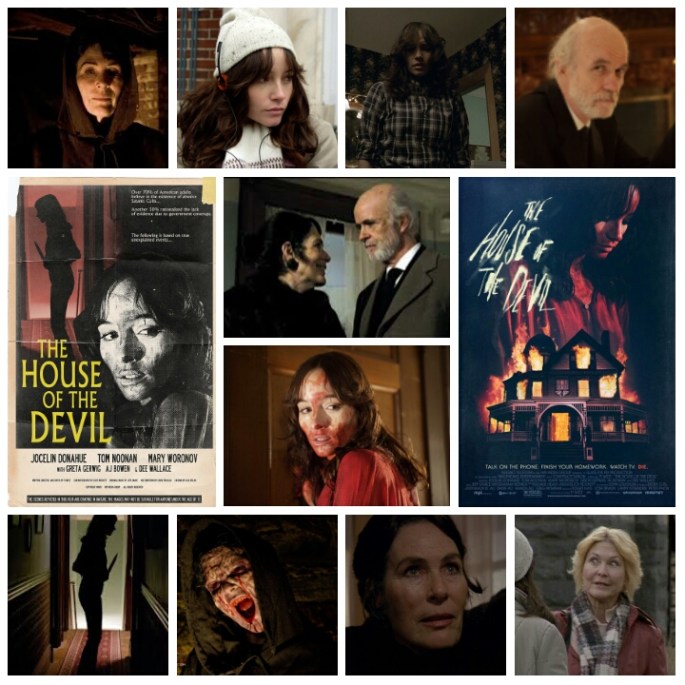
Throwbacks to horror films of the 70’s and 80’s either work or they don’t. The filmmakers are either able to replicate that specific tonal aesthetic and look from back then, or they aren’t. It’s not easy to do, but writer director Ti West makes it seem like a walk in the park with his near flawless House Of The Devil, a gorgeous love note to the satanic works of yester-year that so adeptly recreates that time and place until we really believe we’re watching a film that was made then. From the nostalgic hand drawn poster that beckons with atmosphere of a bygone era, to the use of full on, lovingly lettered credits ahead of the film, it’s pure vintage bliss, like that one perfect vinyl you find in the second hand shop. It starts out like many of these horrors do, with a young teenage girl (Jocelin Donahue) innocently wandering into a situation that leads down an inevitable path of gruesome terror. In this case it’s a seemingly innocuous babysitting job posted on her college notice board, by a cheery enough landlady (horror veteran Dee Wallace). Arriving at a creepy, ornate old manor, she meets Mr. and Mrs. Ullman, two gaunt, old world looking weirdos played by soft spoken yet disconcerting Tom Noonan, and genre legend Mary Woronov. They seem kind yet just kind of…off, explaining to her that the kiddies are alseep already upstairs, assuring an easy night for her. They depart and she’s left alone in the vast empty halls, or so she thinks. She’s been chosen for a bizarre, bloody ritual and soon is plagued by nightly terrors, a ghastly witch, the Ullmans themselves and all sorts of devilish deeds. Noonan could stand there and order a large double double with a honey dip and still make you uncomfortable, the guy is just perfect for horror, and makes a purring gargoyle of a villain for our our young heroine to go up against, backed up by Woronov’s nasty Morticia vibe. Eventually it gets quite graphic and startling, but the slow, solemn lead up is the key in making the horror shock us all the more. Nothing happens for an agonizing first half, filled with silent apprehension, and when all hell finally breaks loose, our nerves are already taut strings waiting to snap, like the ones in the shrill, ragged violin score. That’s how you pace a horror film, and many artists today should take note of this one’s pace, soundscape, mood board and production design, because it’s all about as good as it gets for this type of thing. Essential horror viewing, and I’d love to see a grainy VHS edition complete with box art, if that’s something they even do these days.
Tag: films
James Gunn’s Slither: A Review by Nate Hill
Slimy, icky, yucky and gooey don’t even begin to cover James Gunn’s Slither, a corrosively funny low budget schlock-fest that took the genre by storm a decade ago, charmed horror fans all over and put him squarely on the map. A throwback to many mindless low budget creature features of yore, but still with enough brains in its head (and some splattering the wall) to have decently written characters and a monster that doesn’t feel lame or copied and pasted. When a strange asteroid lands in the forests outside small town USA, it’s only a matter of time before someone stumbles across whatever it contains and becomes infected. That someone happens to be Michael Rooker, here playing the deftly named Grant Grant, local bigwig and proud husband to trophy wife Elizabeth Banks. There’s a deadly parasite with the rock, one that takes him over, turns him into a giant disgusting inbred octopus, and has apocalyptic plans for our planet. Nathan Fillion, who is in literally every Gunn film, does a sly and charming turn as the local Sheriff, never losing his cool long enough to let up with the attitude, and backed up by his trusty deputy (the lovely Jennifer Copping). Gregg Henry, another Gunn veteran, steals the show as the town’s sleazy, foul mouthed mayor who laments “I’ve never seen anything like this before, and I watch Animal Planet all the fuckin time!!!”. Rooker is a champ for sitting through all the makeup, as most of his scenes are him whipping around tentacles that chop people up and covered in a deluge of slimy deformations. There’s slug like parasites that’ll make you suirm (careful getting in that bathtub), morbid obesity to hilarious lengths, gore galore and a tongue in cheek attitude that’s irresistible. What more do you need from a horror comedy?
The Fourth Kind: A Review by Nate Hill

One should go into The Fourth Kind aware of a single important fact: Despite claiming to be based on a true story, and featuring numerous realistically creepy candid accounts, it’s essentially entirely made up stuff. People seemed to have a huge bee in their bonnet about that, but curiously weren’t bothered by it in The Blair Witch Project, another film guilty of the same gimmicks. Cinema is make believe anyways, and if the story works, then what does it matter. This is one of the scariest films I’ve ever seen, thanks to a few well orchestrated and very bizarre moments that transcend what usually gets passed off as horror these days. It tells the alleged story of several incidents and encounters with paranormal beings in and around Nome, Alaska, from the perspective of psychologist Abigail Tyler, played by Milla Jovovich in elaborate, atmospheric reenactments, and by Charlotte Milchard in terrifying newsreel testimonials. Something has come to Nome, and is causing not only disappearances but very, very weird behaviour among the townsfolk, and a general aura of poisonous unease. Abigail does her best to work with patients and locate the source ofnthe trauma without losing her mind or having an encounter herself. Her patients babble and rave, but there’s consistency to their claims, prompting her further belief and summoning of other experts, including a language specialist (Hakeem Kae Kazim) and an old colleague (Elias Koteas), who are equally as stumped. The town sheriff (Will Patton) believes her to be a complete whacko and does everything to hinder her efforts at every turn. Patton starred in another film that’s very similar to this, Mark Pellington’s The Mothman Prophecies, and his grave presence only perpetuates the same kind of eerie supernatural vibe, albeit far closer to outright horror than Mothman. The way the film shows the ‘real’ Abigail sometime following the events chilled me to the bone. She’s broken, haunted and speaks as if there’s a stain on her soul from some otherworldly force. The film knows what gives people that creeping, cold dread fear that we seek so desperatly in the genre, and gave me a fair helping of it. Whether or not the story is even remotely true is trivial; they’ve made a gruesomly scary tale out of it, and that’s what’s important. Also, you’ll never look at owls quite the same way after seeing this. Top shelf horror.
Wes Craven’s New Nightmare: A Review by Nate Hill
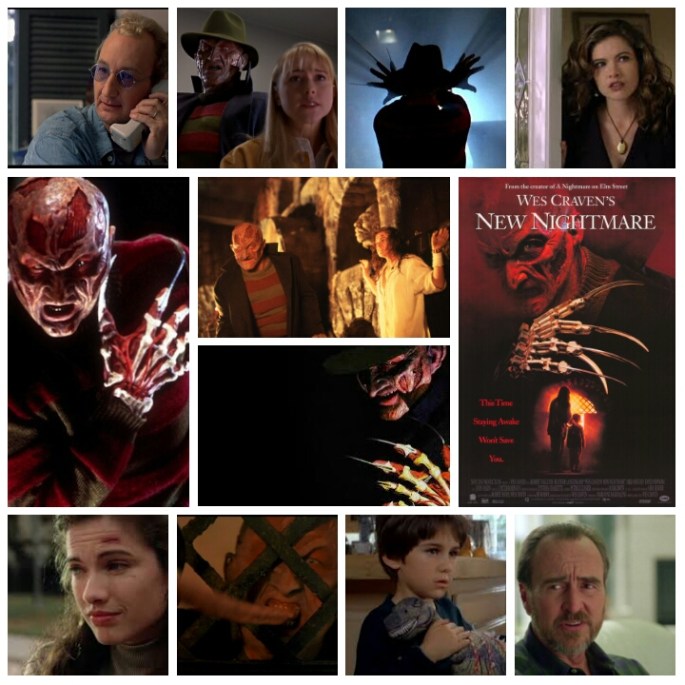
Sleek, frightening update on a sagging franchise. Brilliant use of a meta concept that could have easily taken the silly route. Imaginitive, jaw dropping practical effects. A darker, less flamboyant take on the iconic character Freddy Krueger. Wes Craven’s New Nightmare was the best Freddy flick to come along since Dream Warriors, the third installment. After the stale and awkward sixth film, Freddy’s Dead: The Final Nightmare (my ass final), there really needed to be a game changer, something fresh and solid that would shake up a routine that had been getting fairly silly for some time. Who better to facilitate that than the man who kicked the entire legacy off back in 84′, Wes Craven himself? Back with a vengeance and a whole grab bag of new ideas, Crane brought forth a new, remodeled version of the Freddy lore, with some innovative twists. This one takes place in the real world, where Heather Langenkamp is Heather Langenkamp and not Nancy, Robert Englund is actually Englund and not Freddy. Heather has a young son (Miko Hughes, the go to little tyke of the 90’s), Englund is relaxing and trying out the artist’s life, and Craven, also playing himself, has big bold ideas for the Nightmare franchise. The meta doesn’t stop there though; Whatever Craven is cooking up has somehow awoken a very real, very serious and very scary version of Freddy who is now trying to break free from dreams and into our world, using young Hughes as a conduit, and wreaking havoc left right and center. Heather knows the only way to put a stop to the evil is to face Freddy, as Nancy, one last epic time. I love the high concept, I love that Craven conceived of this and got it made, it’s one of the most inventive horrors ofnthe decade. When Freddy does show up, he’s dead straight serious without a quip or wisecrack in sight. His design and attitude are way darker too, he’s a suitable real world dream demon that makes the Englund of past outings look like Big Bird. The special effects crafted for the netherworld Heather ventures into are a confusing labyrinth of body horror, ornate production design and impressive imagination. A complete vision of the Elm Street legacy that does what few horror franchises attempt, let alone succeed at: It reaches beyond the tropes that have got it to where it is and pleased audiences so far, breaks new ground and reinvents the legend.
Sam Raimi’s Army Of Darkness: A Review by Nate Hill
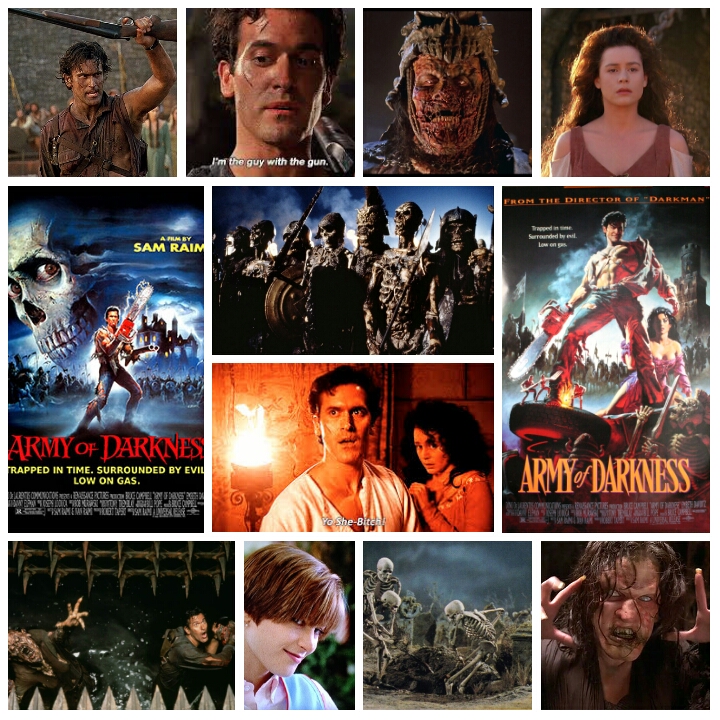
Sam Raimi’s Army Of Darkness completes his demented Evil Dead trilogy in high style, and with way more off the wall humour than the first two, which made you laugh while simultaneously going straight for the jugular with gore. Slapstick seems to be the theme here, as Ash and his trusty accessories of destruction find themselves catapulted straight into the heart of the Middle Ages, where the denizens of the Necronomicon have somehow once again found him. Joining forces with a medieval King, and hopping into bed with a shapely princess (Embeth Davidz), Ash uses his modern day know-how and sassy disposition to battle hordes of skeletal beasties and flying deadites, with occasional breaks for absurd humour and near surreal set pieces. My personal favorite is when he finds himself under attack from numerous pint sized versions of himself after setting off an ancient spell in the nearby dark forests. “Ramming speed” they chirp as they jab him in the ass with a metal fork and giggle like demonic Borrowers. Only in these movies, man. The change of setting from a cabin in the woods to a castle allows for a much larger scale of action, involving entire armies and much more moving parts. The deadite horde has a satisfyingly creaky, Harryhausen-esque way of moving, and look great when blown to bits by the ol’ boomstick as well. They also inherit the silliness and near constant mischief of the demons from the first two films too. Whether it’s trees, deer heads, zombies or skeletons, anything that materializes as a result of that book just seems to have a flair for bizarre and childish shenanigans, kind of like their trademark mode of behaviour. That too is what makes these films so distinct; they’re horror comedies, yes, but not in the sense that Scary Movie or Young Frankenstein is. They’re like a clown with ADHD prancing about the place and destroying things in their own special and unhinged way. Different from the other films in the series, no doubt, but a welcome and very successful departure.
Stephen King’s Silver Bullet: A Review by Nate Hill
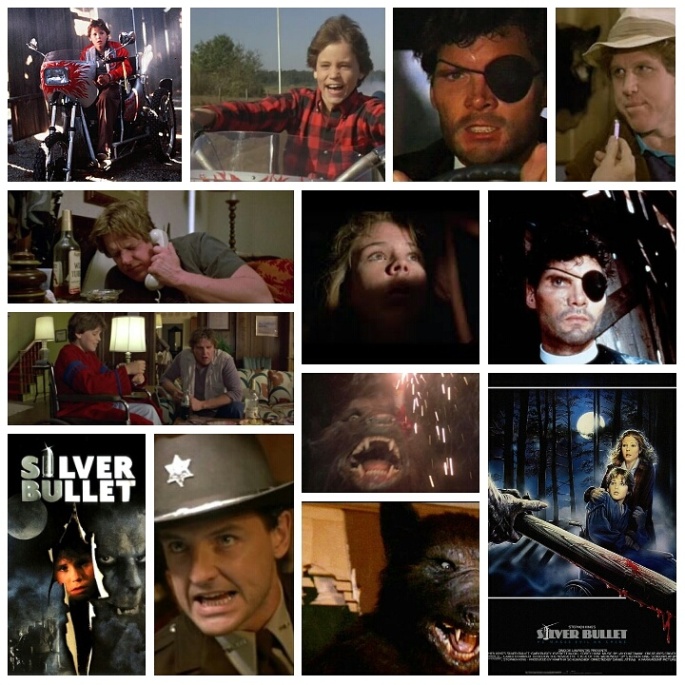
Stephen King’s Silver Bullet is one of the most charming werewolf flicks in the stable, one that combines adult orientated, gory horror with the fable-esque, childlike sensibility that seems to permeate King’s work. It’s also quite funny, thanks to the presence of a boisterous, rotund and quite young Gary Busey. Young Marty (Corey Haim) lives in a sleepy little town where not much of anything happens, until a rash of brutal murders occur in the area. Attributed to a serial killer by townsfolk, Marty has other ideas, specifically that a werewolf has taken up residence among them, and is snatching victims in the night. Taken seriously only by his sister (Megan Follows) and kindly Uncle Red (Busey) he bravely stalks suspect number one, who happens to be the creepy town priest (an intimidating Everett Mcgill). Things escalate into a series of gooey, effects driven set pieces that drip with wonderful 80’s schlock and awe, as of course is the tradition with anything based on King’s work. Other notables include Terry O Quinn, Bill Smitrovitch, Lawrence Tierney, King’s own son Joe Wright, and late great character actor James Gammon in an opening sequence cameo. It’s not all that scary, but more about the beloved tropes of such stories as these, the timeless monsters that inhabit them, as well the the intrepid young heroes whose lives growing up and finding themselves equally as important and high stakes as the horror elements.
Eduardo Sanchez’s Lovely Molly: A Review by Nate Hill
Eduardo Sanchez is a name you may or may not know, but title the title of the film which put him on the map you will most definitely remember. The Blair Witch Project was the little horror indie that caught the snowball effect and went on to become one of the most legendary fright flicks ever made, as well as unfortunately spawning the found footage sub genre. So the question was, how would a filmmaker who accidentally captured lightning in a bottle top such an achievement? Well, by not trying to recreate said lightning, that’s how. By branching off, by breaking new ground, and by giving us a terrifying little character study of a horror like Lovely Molly, which has unsettled me like no other in the past couple years since I’ve seen it. It’s a character study in the sense that the horror comes mostly from a psychological place, with the slightest suggestion of external and paranormal torment, a subtlety that goes a long way in scaring the pants off us. The story focuses on Molly (Gretchen Lodge, superb), and her husband Tim (Johnny Lewis, or halfsack for anyone who watches Sons Of Anarchy). They are a young newlywed couple just starting life together, until some restless demons from Molly’s past come back to haunt her. Tim is gone for extended periods of time with his trucking job, leaving Molly alone in their secluded house, a sitting duck for supernatural and psychological forces to hunt her. Raw, disconcerting terror sets in as we witness a tragic downward spiral of disturbing sexual behaviour, unseen phantoms and unending torment befall the poor girl. Scarier still is Sanchez’s blatant refusal to spell out in bold fonts just exactly what is happening to her. Is this just extreme mental illness cauded by residual trauma leftover from an abusive childhood that is hinted at? Are there actually percievable paranormal entities at work? It’s the murky deliberation to not draw lines or give solid answers that makes the film work so well, right up until a climax from darkest nightmares. Lodge is beyond capable with the role, taking Molly’s mania and sickness to levels beyond comprehension or reprieve, truly gone to a place of boiling internal horror. This is a different kind of horror for Sanchez, and he proves to be just as adept with the slow cooker style as he was in frenzied found footage. Don’t go expecting any clear cut answers here though, this is the realm of feverish ambiguity. Some people take issue with that and need a breadcrumb trail laid out for them. I for one love not knowing, just increases the intrigue and the creep factor. A horror gem.
Jim Mickle’s Stake Land: A Review by Nate Hill
Jim Mickle’s Stake Land is one of my favourite vampire films of the last twenty years, ousted only by 30 Days Of Night, but that one is tough to compete with in anyone’s book. The vampire movie and all it’s trimmings has been done to death a million times over, under every stylistic filter and narrative tweak you could imagine, so this one can’t really break too much new ground simply by default, but what it does do is show us a bleak, lived in and worn out world, a world that has been under attack from vampires for a long time, and as such is starting to fray at the seams. These aren’t quiet, regal, brooding vamps either, they’re quick, feral nasties who actually pose a threat and cause a lot of damage, as our young hero Martin (Connor Paolo) finds out in an arresting opening sequence set in a farmhouse. Left without a family in a world he not ready for, he’s taken under the wing of gruff and rugged Mister (Nick Damici, also the brilliantly talented writer behind Mickle’s films), and the two set off on an increasingly tragic, Cormac Mccarthy esque trek across a broken world, finding lost souls and ravenous monsters at every turn. One thing that seems to escape many vampire films is an emotional core, something to latch onto amidst the cold and clinical happenings, but this one finds that in several key places, including the father son dynamic between Mister and Martin, as well as an encounter with a wounded pregnant girl (Danielle Harris in what is probably her best work so far). It’s sad, downbeat stuff though, without much hope or solace for anyone involved. Kelly McGillis of all people has a brief appearance you can keep your eyes peeled for. Grungy, desolate, tragic, extremely well made, touching and unique in the vampire subgenre. Highly recommended.
The Witch: A Review by Nate Hill
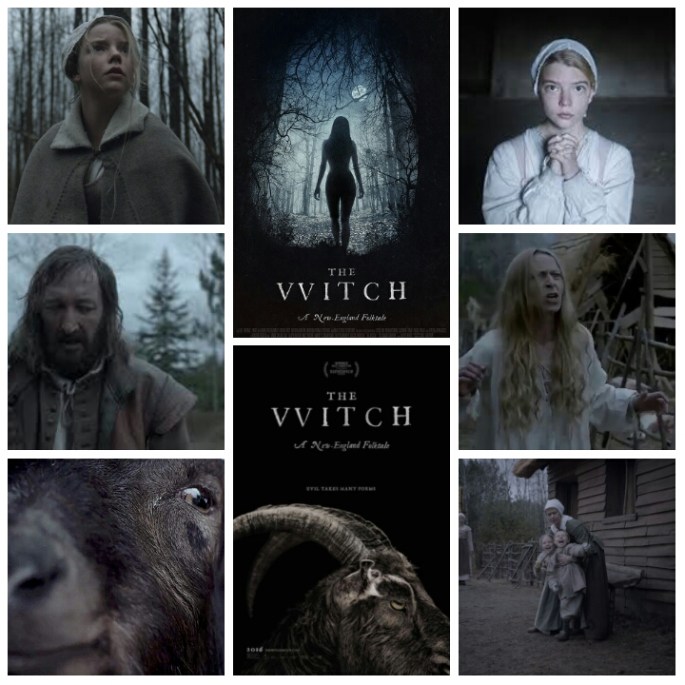
The Witch offers up an oppresively freaky folktale that still manages to go for broke with demented and disturbing stuff, whilst still keeping it moody and reigned in in equal measure, walking an admirable tightrope with style on one side, substance on the other. The substance lies in the interpersonal relationships between a hapless New England pioneer family trying to hack it alone in the land, living next to a deep dark forest that serves home to the titular cretin, plaguing their existence at every turn. The style lies in that forest, as well as a musical score that kwill shake your bones up and then some, accenting a tale of religious dread, insidious distrust and primal paranoia in a time before reason had grasped humanity, it seems. Plus there’s a big scary fucking goat called Black Philip who seems sentient, which was enough to give me the creepin willies. The family is booted from a plantation for some vague religious politics involving the haughty patriarch (Ralph Ineson is excellently fervent and riled up). Tryon to start a homestead on their own proves to be one nightmare after another out there though, especially when virginal daughter Thomasin (Anya Taylor Joy, a striking beauty) loses the young baby during a split second game of peekaboo on the outskirts of the forest. Things go depressingly downhill from there as the collective sanity of this clan starts to evaporate into feverish mania, while the woods and the witch constantly loom over everything. The dialogue is all period specific which helps with authenticity, and as far as atmosphere goes, you practically drown in it, quite an achievement really. I took quite a long time in getting to see this, and I didn’t quite expect then level of literal horror on display. I was thinking it’d be more unseen, metaphorical, slow paced. It really does mean witch though, as well as that nasty damn goat. You’ll watch your back at the petting zoo after sitting through this one. Well done.
Peter Berg’s Deepwater Horizon: A Review by Nate Hill
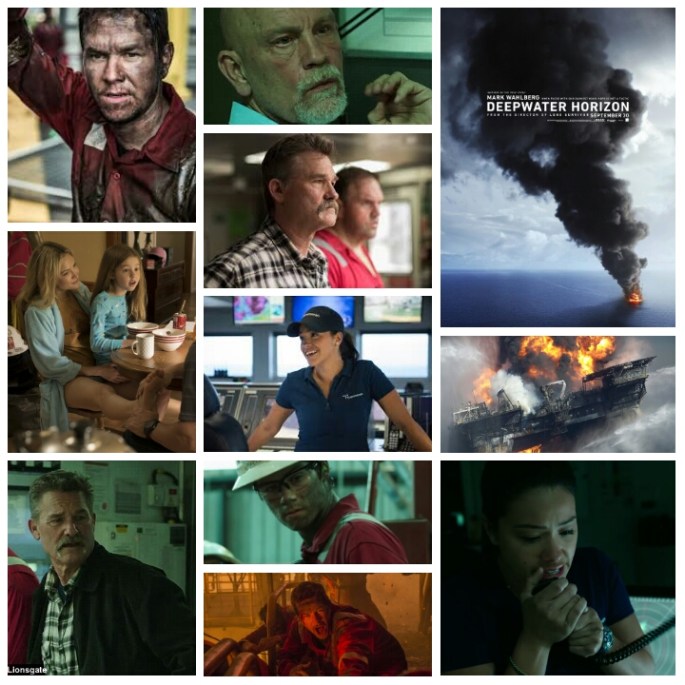
Peter Berg’s Deepwater Horizon floored me. Combining stirring heroics, meticulous procedural reconstruction, thundering big style special effects and a rock steady, salt of the earth cast who fire on all cylinders, Berg and team have successfully sent one of, if not the best films this year down the pipe (oily pun intended). The 2010 disaster aboard the mammoth Deepwater Horizon oil rig was a tragic, foolish and achingly avoidable event that was the product of carelessness, stupidity and resulted in the unnecessary death of eleven souls. Berg clearly weeps for the loss, and every frame of his film is filled with empathy and compassion, a reluctant condemnation of the Big Oil company men whose actions led to life lost, a rock jawed testamenr to the blue collar heroes who gave shot rays of hope through the darkest day with their brave deeds, and a celebration of the rip roaring set pieces possible in telling this story. Mark Whalberg has never, ever been better, playing the engineering honcho of te Deepwater, madly in love with his wife (Kate Hudson) and daughter (Stella Allen) The early scenes build their relationship with near effortless interactions and a thoughtful, compassionate eye. From the minute his chopper touches down on the rig and it becomes clear that safety protocol has been grossly neglected, he is a bundle of nerves and fears for every life on board above his own. Kurt Russell is right alongside him as a dogged senior operative with a short rope and no time for the headstrong, greedy and unprofessional actions of Big Oil honcho John Malkovich, giving his best, and insipid work in years as a guy who plainly and simply doesn’t care, putting everyone in harm’s way in the process. The best and most surprising performance of the film comes from Gina Rodriguez though, an actress who has mostly swam under my radar up until this point. Playing another senior engineer, her raw terror and naked uncertainty in the face of looming calamity and possible death is rough to watch, uterly convincing and made me want to just give her a big hug. If her work here is any indication of where she’s headed, make way folks, because we’re in for great things. The cast also extends into terrific further work from Ethan Suplee, J.D. Evermore, James Dumont, Dylan O Brien, Berg himself in a quick cameo, and many more. 2010Berg wisely wraps the story up not with one final action sequence, but with a hair raising emotional gut punch that tallies the loss of life and psychological damage of such an event with the care required. There is one final action beat to then story, but it’s swift, necessary and sensible, never feeling overblown. The story is kept wisely focused on the people trapped aboard this explosion waiting to happen, their struggles and efforts in the forefront. When the fireworks do show up, they’re not to shock and awe the audience, or for cheap thrills, they serve only to illustrate such an event in a minimal fashion, which is still a deafening roar. My kind of disaster/procedural story, and one of the best so far this year.