Richard Stanley’s The Colour Out Of Space

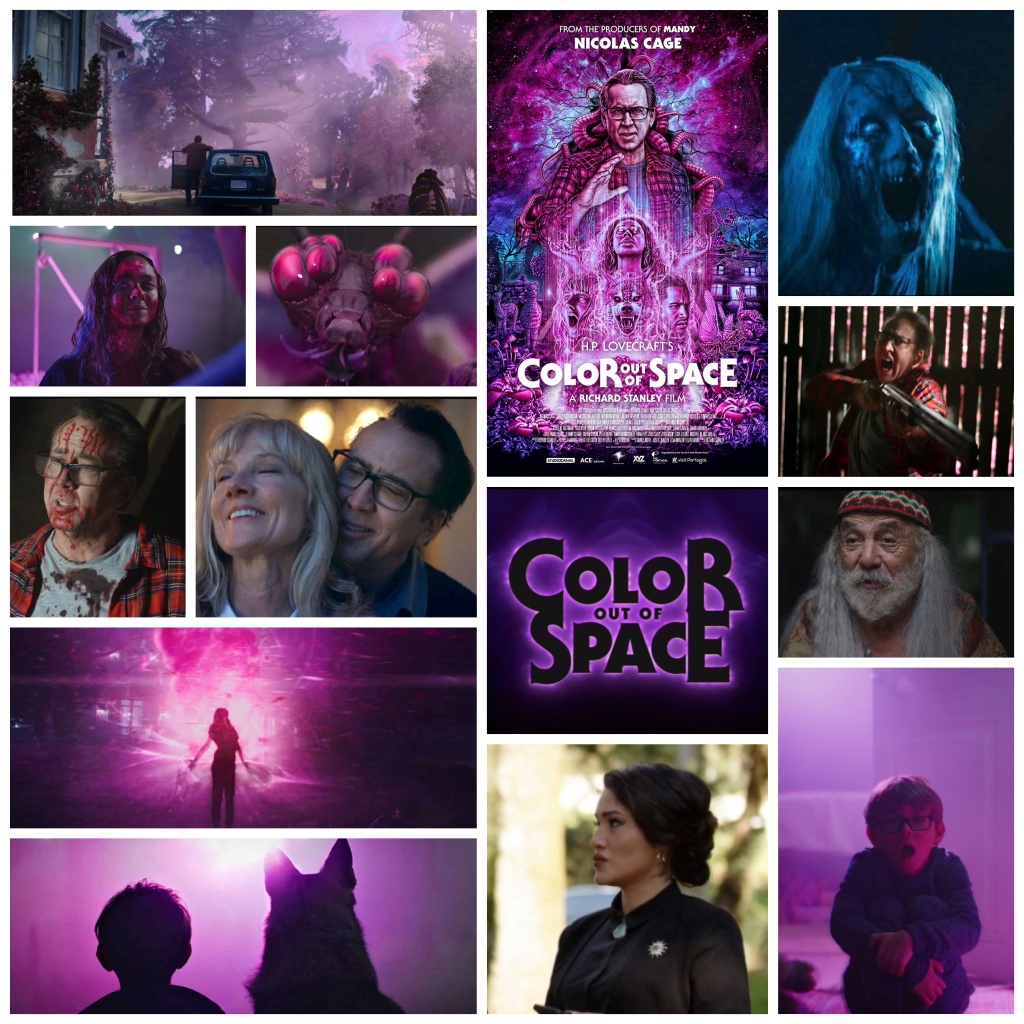
I missed out on Richard Stanley’s Colour Out Of Space last year but I’m glad I caught up because wow what a trip into earthbound cosmic madness as only the mind of H.P. Lovecraft could dream up. When a weird meteor thing plummets into the backyard of Nic Cage and his average, slightly hippie family, things start to get strange in the surrounding area as a mysterious ‘colour’ from another part of the universe begins to transform everything around it into something else, sometimes just odd, sometimes beautiful and eventually downright terrifying. I love the idea of a meteor falling and being the setup for a horror film because there’s so much you can do with that concept in the realms of imagination. This film reminded me of Alex Garland’s Annihilation in a sense, but whereas the entity that came from a meteor in that used the genetic codes and biological structures of our planet to create something new, this Colour thing just shows up and begins fucking around with things on its own shocking, illogical terms, like any self respecting Lovecraft monster should. It’s a hoot watching this family slowly start to lose it, starting with Cage in one of his patented full on neurotic meltdowns filled to the brim with maniacal rants, grotesque physicality and pitch black humour. His wife is played by Joely Richardson who I haven’t seen in a while, since Girl With The Dragon Tattoo at least but I always love seeing her turn up. The cast is pretty darn eclectic too and includes the lovely Q’orianka Kilcher as the world’s bitchiest small town mayor and beloved Tommy Chong as a forest dwelling oddball with a cat he calls ‘G-Spot’ (*snicker*). The main draw for me here is the otherworldly, mystical horror elements and director Stanley pulls out all the stops in terms of atmosphere, visuals and things just going berserk. Everything turns pinky purple, the family loses their sense of coherence and time and eventually they begin to transform, and there’s one sequence in particular that is fucking miles beyond how horrific I thought they were gonna go with this film and is disturbing to the core. Great film.

-Nate Hill
Chad Faust’s Girl

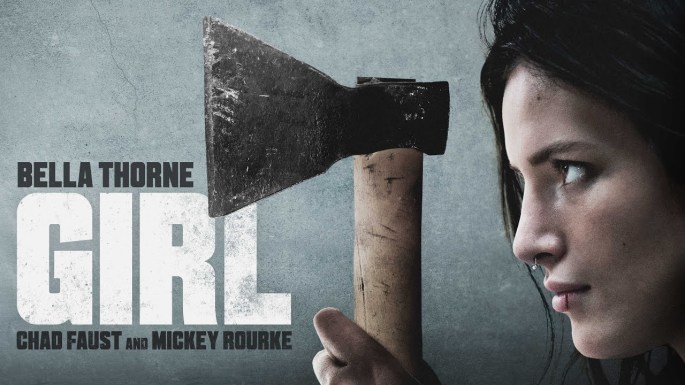
What if you returned to your hometown after decades away with plans on killing an abusive parent, only to find out that someone had already beaten you to the punch? Problem solved, right? Not quite, at least for troubled, angry teen Bella Thorne in Chad Faust’s Girl, a bleak modern western about a no-horse town and the Girl who blusters into it looking for answers and revenge. She’s come for her estranged daddy, who was volcanically abusive to her and her mother years before, and she intends to settle the score with him, for good. When she finds that someone has already killed him, instead of calling it a day and packing off home, she noses around the derelict backwater enclaves that were no doubt once a half prosperous township, and finds more trouble than she bargained for. Mickey Rourke has a good sized, scenery chewing role here as the dodgy county sheriff who, you guessed it, also moonlights as the local crime lord. I think in these deeply corrupt little slices of rural hell its just a job prerequisite for any sheriff to also be a vice kingpin, I mean taking on the two most powerful jobs on the roster is just killing two birds with one stone, no? Rourke is a leathery, hulking presence these days and makes this guy every inch the evil, murderous son of a bitch you’d hope from the role. Faust is a first time director and does a pretty damn good job considering, despite a few bloated passages of dialogue and choppy editing that could have used a bit of tough love. He also takes on one of the acting roles which he does with eccentricity and freakish exuberance. This is the first time I’ve seen Bella Thorne in anything and hadn’t even heard of her before this film, she’s pretty limited in terms of emotional range and line delivery and could use some work on her acting, but she’s got good presence, brooding in a faded hoodie and glaring out from behind a windswept mane of hair. Plus her weapon of choice is a hatchet, which she wields with startling lethality. The film’s strongest quality is atmosphere, and tons of it. IMDb doesn’t list any filming locations yet but wherever it is, it’s a place the rest of the world forgot. Boarded up buildings along the main drag, muttering drunks lining the lonely streets and pickling in a shabby dive run by an eternally pessimistic barkeep (Glenn Gould) and grey, washed out inland wilderness. It might be the most depressing place on the continent, but serves as quite the backdrop for this gnarly little tale to run its course. There’s also a wonderful, haunting original score by Dylan Baldassero that combines eerie lyrics and strange, unconventional instrumentals to great effect, as well as some very well orchestrated plot twists that spice up the narrative. Solid film.

-Nate Hill

Chris Peckover’s Better Watch Out

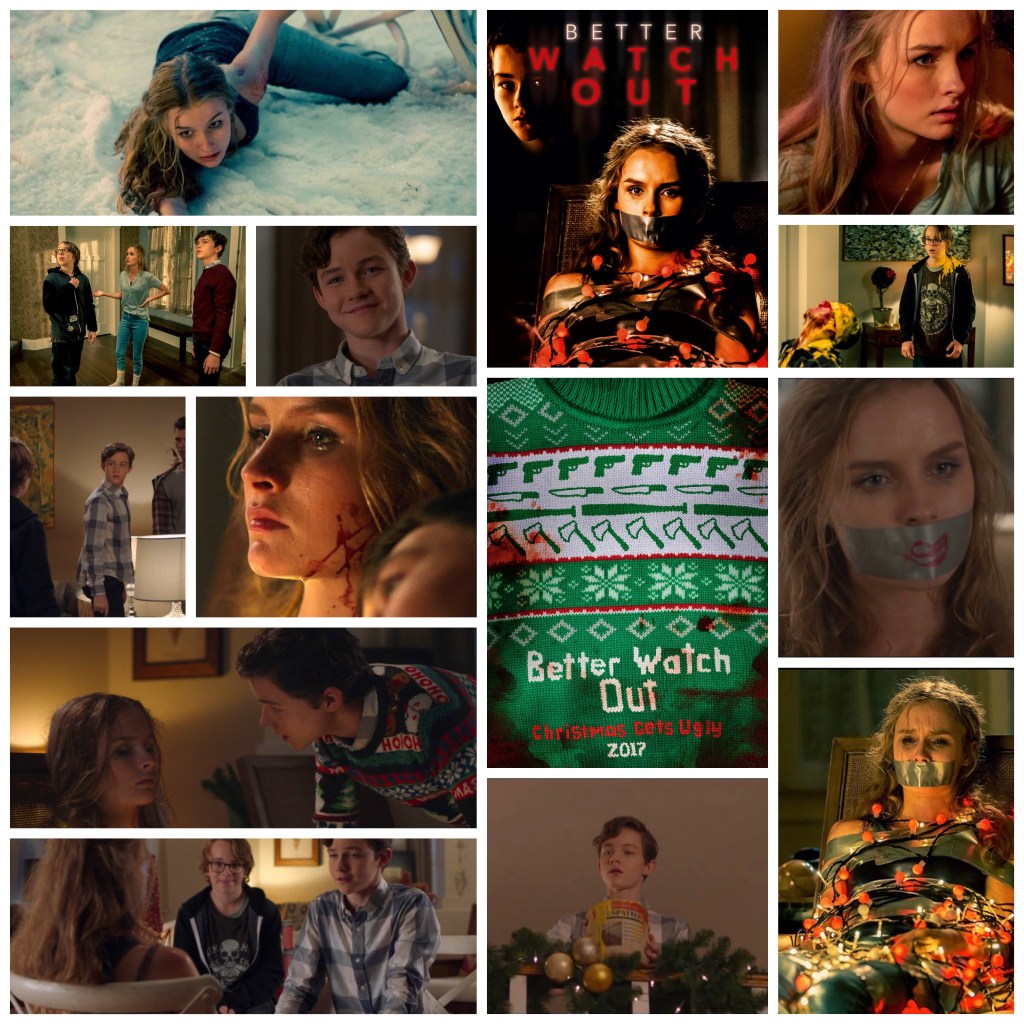
It’s fitting when a film like this lives up to its title, and you really Better Watch Out for this ugly, pointless, infuriating, uncomfortable, sexist piece of wanton trash disguised as a Yuletide black comedy. It’s basically a home invasion fake-out where two sociopathic little brats, one a drooling simpleton (Ed Oxenbould) and the other a cold hearted monster (Levi Miller), kidnap their own babysitter (Olivia DeJonge) and subject her to humiliation, torture and intimidation for no other reason than they’re fucked in their little pea brained adolescent heads. There is no point to setting this film at Christmas time, the delicious irony found in other contradictory Christmas films about violence and misanthropy in a festive context (see The Ice Harvest, Black Christmas and The Ref for successful examples) lands with an ill favoured thud here and we’re left with an agonizing ninety minutes of pointless, anxiety inducing exploitative scumbaggery passing itself off as a movie. The one saving grace is Billy Hargrove from Stranger Things in an inspired cameo of comedic improv to himself in a rear-view mirror that is absolutely hilarious. Other than that, this is a bottom feeding piece of work. Even Patrick Warburton and Virginia Madsen look like they want to run for the hills and spend most of the film away from the action. There’s a scene that takes the paint can sequence from Home Alone to brutally realistic new heights and thinks it’s oh so clever and playful when really it’s unnecessary and sadistic. Miller does his best but the character is just such a horrific little snot-fuck I wanted to jump through the tv and cave his head in on the marble countertop, such is the level of mental distress, terrorization and abuse he inflicts on the babysitter it goes beyond gratuitous. Then there’s the ending. Don’t even get me started on how badly this movie cheats the viewer of an absolutely cathartic final resolution by being a cheeky shit and holding out on a finale it desperately needed to follow through on if it hoped to earn anything resembling redemption. It doesn’t seem to care about its characters, audience, story or the universe in general. Perhaps I’m being far too harsh and it just hit me the wrong way but whatever, every now and then I gotta have a ‘Roger Ebert emphatic intense rant review’ if something irks me and this one made me feel like shit all night after. Bah. Fucking. Humbug.

-Nate Hill

Alejandro Gonzalez Inarritu’s 21 Grams

Alejandro Gonzales Inarritu has always had an affinity for telling dark, difficult, unconventional stories in his work and while there are certain more prolific films he’s made I think that 21 Grams might be his most challenging, emotionally galvanizing and unconventionally rewarding piece to date. Using his patented ‘mosaic’ storytelling motif, we see a series of increasingly distressing and unrelentingly bleak events unfold involving a woman (Naomi Watts) whose family was killed in a hit and run, the troubled ex con (Benicio Del Toro) who ran them over and the terminally ill man (Sean Penn) who is intrinsically tied to both their lives. The film asks us to cast an unblinking eye on grief, tragedy and ponderous moral morass as these three souls collide in heated encounters, violent confrontations and darkly cathartic resolution. Penn is as implosive as ever and his was the one performance of the three I didn’t fully connect with but to be fair character’s situation is nearly impossible for the viewer to put themselves in, and in any case he is terrific. Watts is a sorrowful quarry of devastation, turning to substances and nearly succumbing to despair in her grieving process while seeking retribution for her family. Del Toro gives the best performance of the film as a self loathing, hard-luck, emotionally stunted fellow who uses starch evangelism as both a weapon against his own family and a tool to convince himself of something perhaps only he sees, or hopes for in his own nature. The supporting cast are all excellent and given their own individual moments to shine including the criminally underrated Melissa Leo as Benicio’s destructively pragmatic wife, Eddie Marsan, Danny Huston, Charlotte Gainsbourg, Dennis O’Hare, Stephen Bridgewater, Paul Calderon, Kevin Chapman, Lew Temple and more. The great Clea Duvall also shows up in a heartbreaking key supporting part and trust an intuitive guy like Inarritu to direct cameras slowly away from Watts as a core scene plays out and gradually move in on Clea for a distilled, gut wrenching closeup, I appreciated the focus and attention momentarily being given to a fantastic actress who has spent most of her career in Hollywood on the supporting sidelines but gets to powerfully emote big time here, if only for a few blessed frames. This is an emotionally devastating experience on all fronts and although it may not flow quite as organically as Alejandro’s debut stunner Amores Perros, there is no denying the raw, elemental potency of the drama, the stark vulnerability of the performances or the beauty of a fragmented, jigsaw puzzle narrative which serves to remind us how memory and time can shape the way we act, perceive and relate to one another in life. Masterful film.

-Nate Hill

Janusz Kaminski’s Lost Souls

The rise of Satanic Panic in the 1990’s always seemed to permeate into Hollywood, as the collective fears of a decade often do. Devilish cinematic efforts ranged from excellent (End Of Days, Fallen, The Devil’s Advocate) to lukewarm (Stigmata, The Order) to mediocre (The Ninth Gate) but I can now say that the only one I would consider an absolutely terrible film is Janusz Kaminski’s Lost Souls. This thing is one of the murkiest, muddiest, laziest, most bizarre pieces of celluloid I’ve ever sat through shaking my head at and I found myself wondering how it got past the pitch phase with such a paper thin script like that. Here’s the ‘plot’ and the only reason I know is because I IMDb’d a synopsis, there’s no telling what’s going on by watching the actual film itself: a catholic school teacher (Winona Ryder) with an apparent personal history of demon possession is recruited by her former priest (John Hurt) and his associates to find the human avatar for the Antichrist, who will soon take earthly form. This particular human is a bumbling atheist true crime author (Ben Chaplin) who is more than a little confused at these implications. There’s also an inexplicable subplot involving a serial killer making media headlines, another rogue preacher (Phillip Baker Hall) and other dimly lit gobbledygook that makes little to no sense. Ryder is listless and meandering, Chaplin never makes a huge impression anyways. Hurt barely registers beyond looking vaguely worried and you know your film is in serious trouble when even usual scene stealer Elias Koteas is cast in an inconsequential bit part with no lasting impression. Director Kaminski is a well renowned cinematographer who has shot all kinds of prolific stuff but he probably should have stepped out of the director’s chair back into a DoP position because this looks like it was shot through a burlap sack filter. Mucky browns, grainy greys and tinny blues abound and not in a good way. The score sounds like an amplifier being dropped onto a marble floor (not in a good way either I might add) and every actor in this thing either looks like they have no grasp on the flow of the story (which is almost nonexistent) or would simply rather be somewhere else. How this thing ever got released is beyond me.

-Nate Hill

Carlos Brooks’s Burning Bright

Remember that poem ‘Tiger Tiger’ by William Blake? I always loved that one in school and Burning Bright, horror film that combines several high concepts for an odd but entertaining mix, isn’t quite as poetic enough to live up to the Blake piece but works well as a kind of low grade Grindhouse SyFy deal. How do you make your chamber piece/creature feature more scary these days, or any thriller at all for that matter? Set it during a hurricane, of course. I think I saw like three movies this year alone set during a typhoon and revolving around every other central threat you can think of from bank robberies to alligators to street gangs. Here it’s obviously a tiger and the hurricane only serves to delineate that the lead characters can’t simply leave the house to escape it. This is an especially vicious and ‘evil’ tiger, or so we’re informed early on by hammy circus boss Meat Loaf as he pawns it off to no-good stepfather and ‘safari ranch’ entrepreneur Garrett Dillahunt, a perennially sinister fellow who looks like he could be Will Forte’s evil twin. His stepdaughter (Briana Evigan) and autistic stepson (Charlie Tahan, so young here!) find themselves boarded up in the family home alone with this tiger while the hurricane rages on outside. How did this happen? I won’t spoil it but you can sorta kinda sus it out from what I’ve said already. This allows for a sweaty, impressively suspenseful battle of wills against the animal, as the daughter tries to protect both of them and shelter the boy because he doesn’t quite… grasp what’s going on. This is a fun, solid film that doesn’t take its premise too far into WTF-ville or overstay it’s welcome, and although a tad aloof and awkward in spots, the scenes in the house where they face off agains the tiger are very well done, thanks to use of actual tigers over CGI. The film almost doesn’t deserve a title based on property like Blake when the story overall is so… just regular. I’d have almost preferred a surreal, dark film that just started with the kids already stuck in the house with the tiger and no setup, hurricane or sidebars, a simplistic, dreamy art piece based on the single concept. What we got is decent enough, but man the title is so much more evocative.

-Nate Hill

Emma Tammi’s The Wind

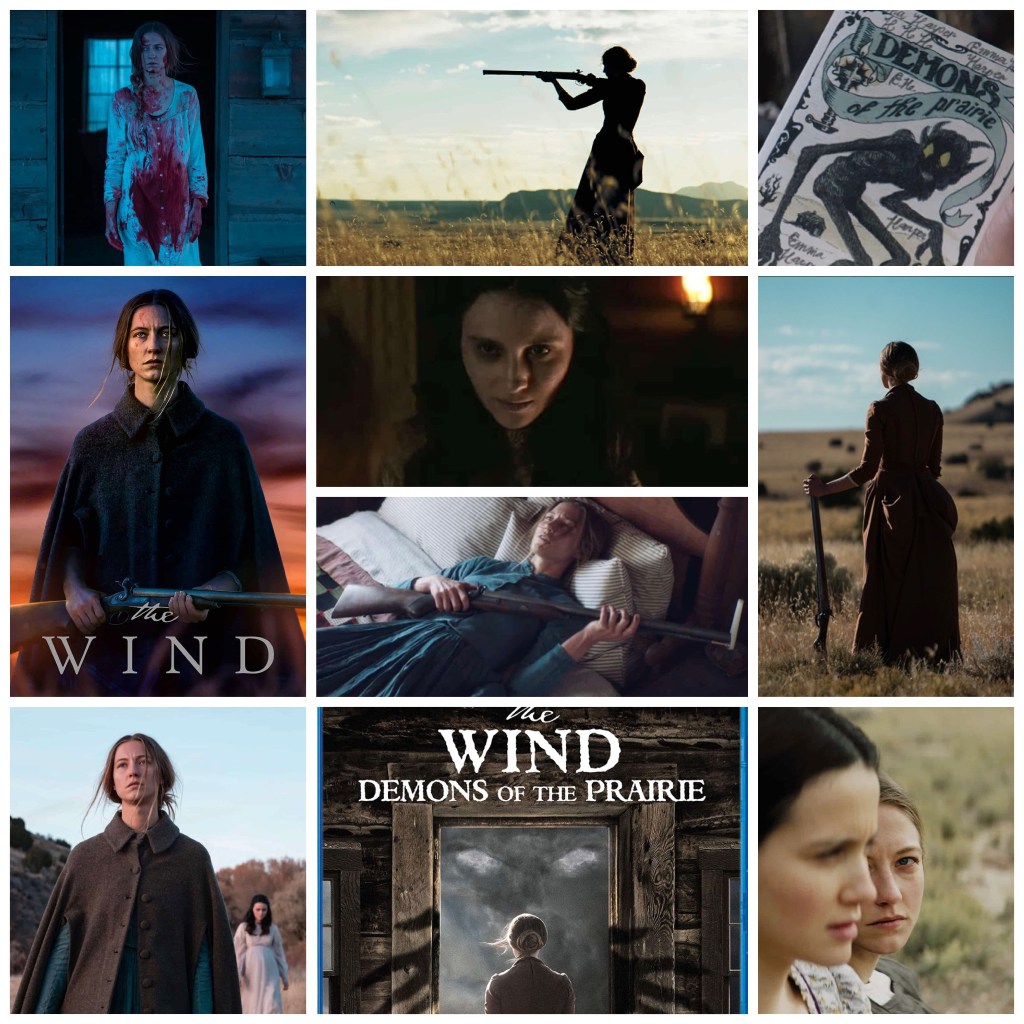
Emma Tammi’s The Wind, which could also be called Little House Of Horrors On The Prairie, is a nicely atmospheric, sometimes effective but ultimately muddled and frustrating horror western (my fave sub genre!) that I really wanted to be a winner. Somewhere out there in all that desolation a homesteader couple (Caitlin Gerard & Ashley Zuckerman) are doing the best they can to survive off the land, when another couple (Julia Goldani Telles & Julian McTee) take up their own property an acre or two away, making them default neighbours, and this is where the trouble begins, or maybe it does, it’s hard to tell what’s happening when because the film jump as around in time a *lot* to the point where it feels needlessly discombobulating. Both girls seemingly have miscarriages and are traumatized by it, and in one timeline Gerard’s character is stuck alone in her cabin as a sinister supernatural presence menaces her. Or does it? Attempts at subtlety and misdirection unfortunately only added to the confusion, for my part. See the thing is, life out there on the plains is so distilled into simple form that the elaborate structure of flashback/flash-forward feels unwieldy and too tangled when it could have been a linear, crystalline tale. There are some genuinely spooky moments that are very well directed, acted and shot involving Gerard dealing with the malevolent forces surrounding her, garnished with a deliciously shrill violin score by Ben Lovett, a composition that frequently feels like it’s stabbing you in the ribs with quick, jarring strings cues. Credit where credit is due and all that but this choice to tell the story in fragmented, back and forth form cripples the ambience and isn’t done confidently or fluidly, as is the twist ending that when looked back upon, definitely raises some sagebrush eyebrows. An almost.

-Nate Hill

David Fincher’s Mank

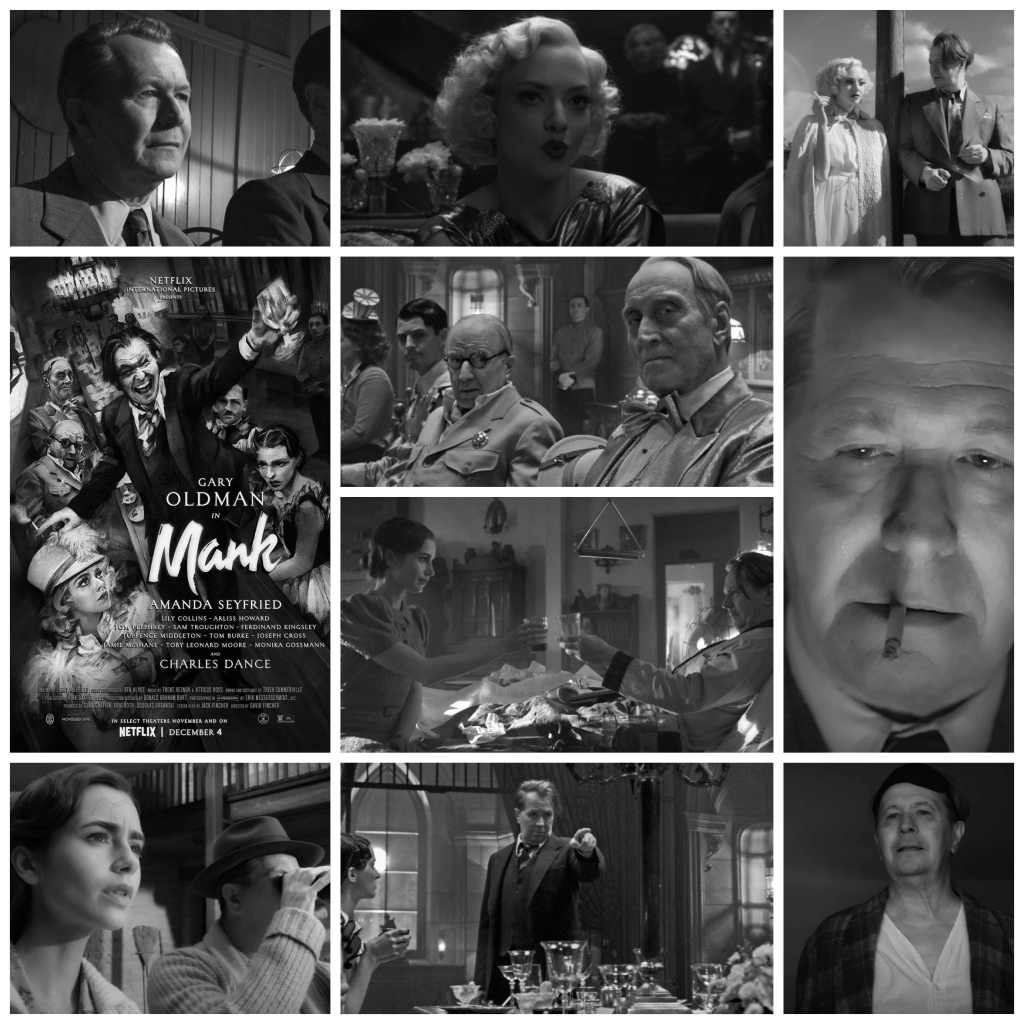
Gary Oldman is one of my favourite actors working in the business by far and just when I think I’ve seen it all from him, experienced the most varied, gonzo, dedicated and balls out work from a master of his craft… along comes David Fincher’s Mank, an absolute showstopper of a motion picture in every sense of the word and a new benchmark for my boy Gary. In the role of hard drinking, chain smoking, socialite, diva, contrarian scoundrel n’ scallywag supreme, Hollywood screenwriter Herman J. Mankiewicz, Oldman not only nails the manic, often self destructive groove of the writer as an artist but cultivates and bellows out a cathartic “Fuck You” to the studio heads and political arbiters that often have more creative control over motion pictures than the artists themselves do. Set during the writing process of legendary Citizen Kane, Mank is deliberately sequestered at a bungalow in the Mojave where he begins to craft his script, bedridden after a vicious car accident and assisted by long suffering typeface guru Rita (Lily Collins) and nurse Frieda (Monika Grossman). This hypnotic setting is the home-base, the lynchpin from which we careen wildly back into the typhoon of Mank’s pickled memories of various characters and events which inspired him to write Kane including his tempestuous relationship with William Randolph Hearst (Charles Dance), his platonic courtship of Hearst’s ingenue starlet mistress Marion (Amanda Seyfried) and his cacophonously discordant professional life in Hollywood as he clashes with MGM honcho Louis Mayer (Arliss Howard), racks up gambling debt with studio CEO’s and tests the patience of his loving wife Sara (Tuppence Middleton). The film is less about the actual writing process of Citizen Kane and more about certain things from Mank’s past that he remembers, both fondly or otherwise, and how he incorporates those into his writing, sometimes subtly, sometimes with the force of a pile driver and sometimes in ways that only he understands and aren’t meant for us. Oldman is something else here, chewing on dialogue like sinewy jerky, slurring his words in drunken tirades and letting no one off the hook from the devilish wit he exudes, himself included. There are some stretches of subplot dedicated to an important election in California’s past and I’m not well informed on history enough to ‘get’ all the ins, outs and clashing opinions surrounding it but it was pretty clear to me that Mank stood on his own against the tide when everyone else compromised, and put the same sort of brittle, salt-in-the-wound intelligence and kamikaze spirit into his crafting of Kane as he did his own private and professional life. The script is by Fincher’s own father Jack in his one and only writing credit, which is staggering when you consider the levels of rich, deep, scintillating dialogue and sly drama on display here. I enjoyed this because David Fincher’s work is usually macabre, morbid and fatalistic, the guy just like to play on the dark side in his work but this is by far the most playful, lighthearted and ‘fun’ thing he’s ever done, uniting with Oldman at his best to bring his father’s brilliantly funny, deftly sentimental, somehow simultaneously dense and light-footed screenplay to breathtaking Black & White life. A treasure of a film.

-Nate Hill

Orson Welles’ Citizen Kane

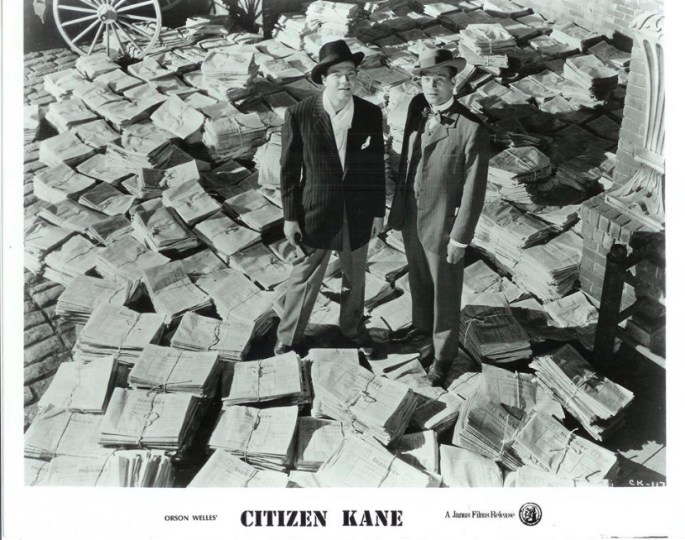
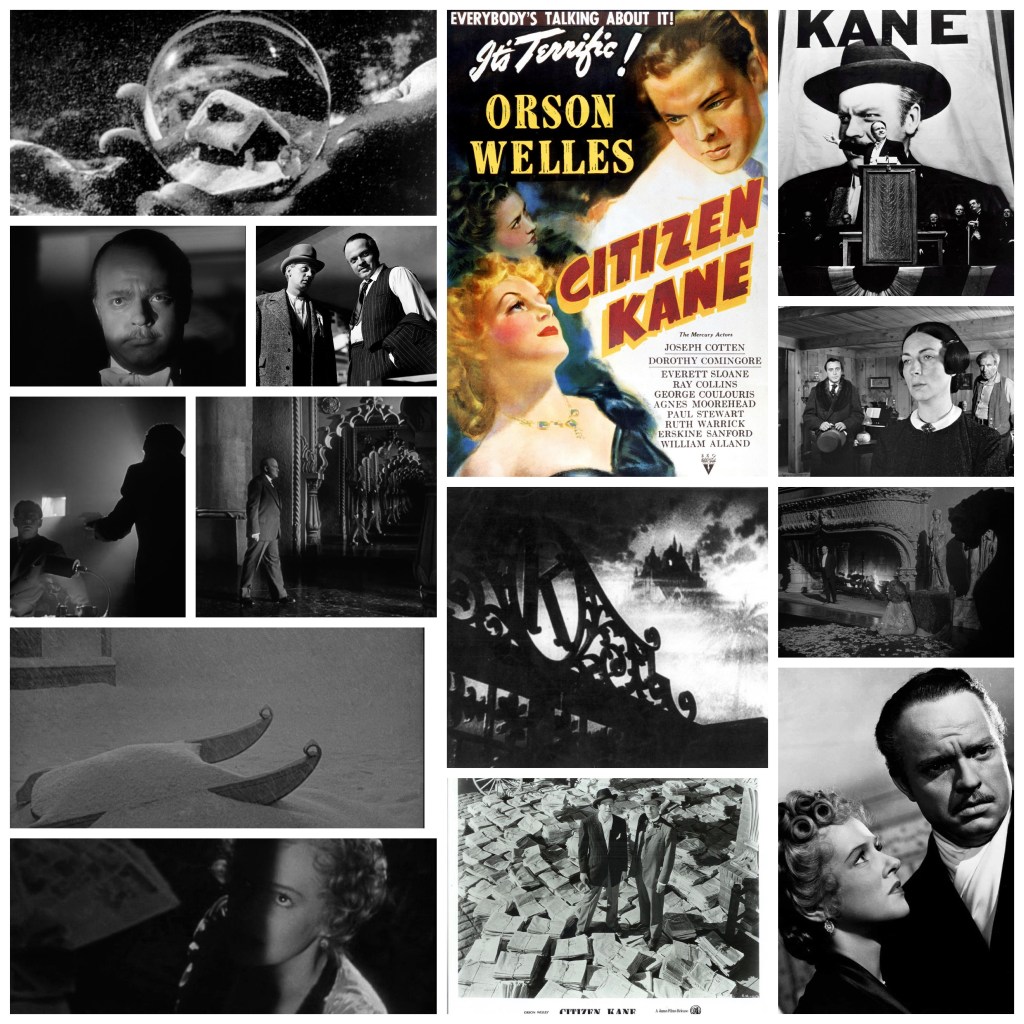
I feel like one of the reasons that Orson Welles’ Citizen Kane has endured as one of the greatest films ever made is the beautiful ambiguity that leads every viewer into making their own sense, reason and emotional clarity out of how it ends. This is a wonderful film that would still turn heads, stir hearts and haunt perceptions even if it was released today and considering both how much time has passed since its 1941 release and how many other films have been made and influenced by it since it’s a test to the imagination and inspiration of its creators how much power it still has. On the surface it’s about a splintered, conveyer belt ride of memories tied to newspaper publishing tycoon Charles Foster Kane, a character based loosely and, it now seems, rather dubiously on real life magnate William Randolph Hearst by writer Herman Mankiewicz. Maybe the reason I held out so long in seeing this film was that the description above, in itself, doesn’t sound like the most riveting film on earth. The life of a newspaper publishing giant? I mean.. thing is, that’s not what the film is actually *about*, in the elemental, essential way that matters and makes a lasting impression. Welles himself plays Kane at various stages of his life from blustery young idealist to confident middle aged man with fervent political ambition to disillusioned old codger with a ramshackle marriage, busted dreams and a giant hollow mansion atop an impossible hill where he haunts himself, saturated in a kaleidoscopic fever of memory. His final words before he dies are “Rosebud,” uttered from a twisted mask of anguish, regret and… something else, something intangible I couldn’t quite read from his expression and tone, but it’s there and it sticks with you. His final moments are tied to a core memory he has of being a young boy in the wintry country with is family, maybe the last truly carefree and idyllic recollection he has? In any case this film isn’t just a hazy biopic, character study or historical treatise, it’s something that lingers in a way I couldn’t possibly describe here, a theme and hallowed undercurrent that goes beyond the language of narrative drama. Rosebud meant something deep and personal to Kane, and the beauty of it is it will mean something different to each viewer. Great film.

-Nate Hill
Hallmark’s The Love Letter

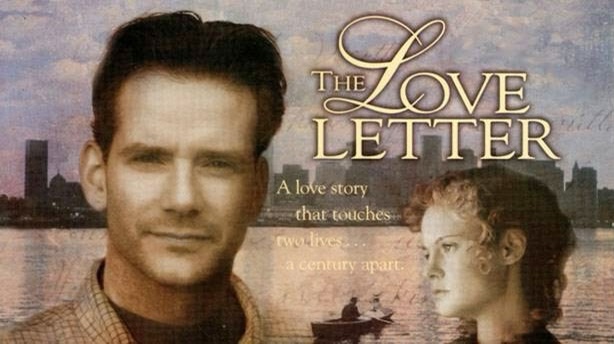
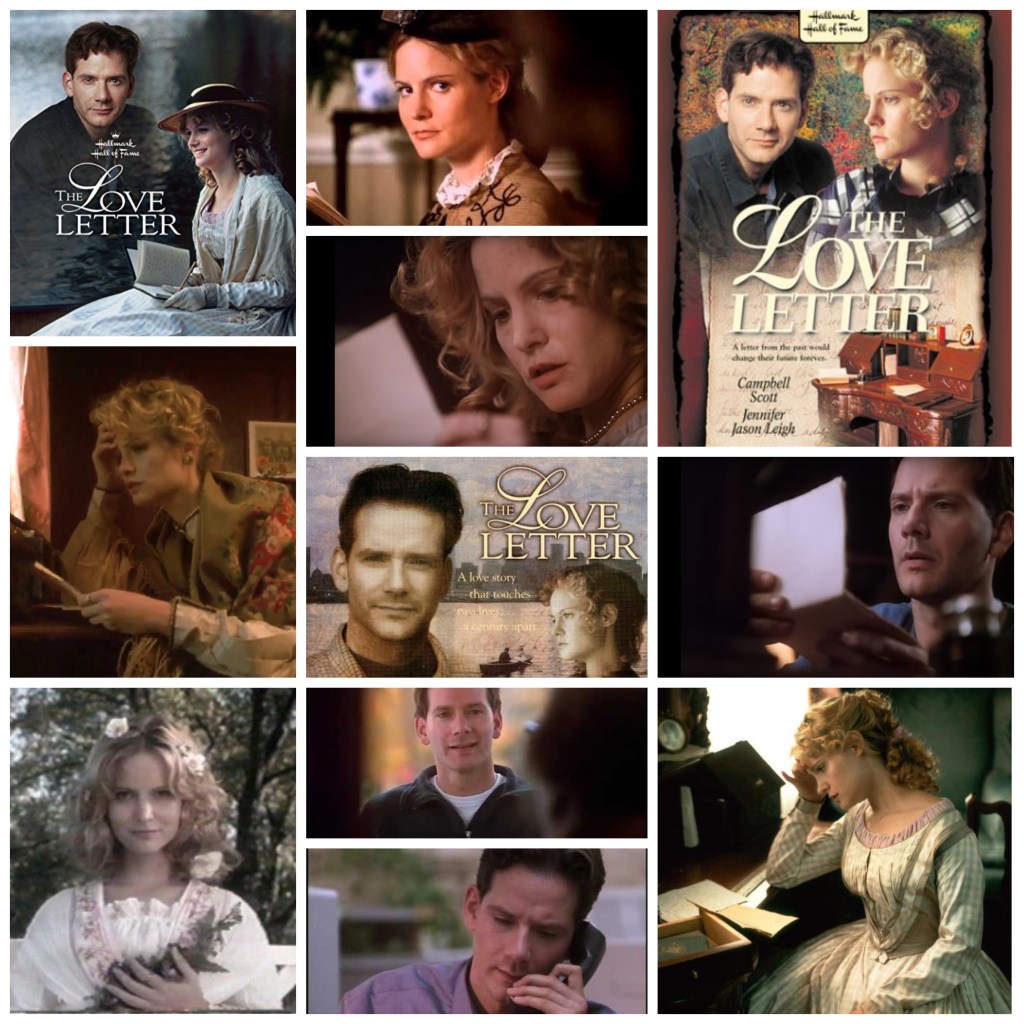
I like a Hallmark film once in a while, provided it has some actors I love and it’s not too vanilla or syrupy. The Love Letter is a reasonably sweet, endearing little time travel romance fantasy thing that benefits greatly from its two leads Campbell Scott and Jennifer Jason Leigh, who both hail from arenas far off from usual territory like this but for whatever reason they signed on. Remember that film The Lake House with Keanu Reeves and Sandra Bullock? Where they send letters to each other decades apart through a magic mailbox? Well I’m pretty sure whoever made that one saw this and almost totally ripped it off because they’re uncannily similar. Instead of a mailbox it’s a mahogany writing desk, owned by Leigh’s Elizabeth Whitcomb, a civil war era girl about to be forced into marriage by her father to some dude she hates. Scott is a present day dude who is engaged to another girl (Daphne Ashbrook) until he purchases the desk at an antique store and discovers that he can communicate with Leigh across the gulf of time simply by posting letters through the inside panel, and the two begin exchanging love letters in what can only be described as the ultimate long distance relationship. Now the issue with any film like this is, how would these two ever end up together for real? The film already plays around with the laws of physics and reality but it would have to completely rewrite them to unite these two as they are literally alive in different centuries. The script’s solution? Well you’ll see, I didn’t altogether buy it but it’s an admirable effort. Scott is simple, grounded and earnest as ever, Leigh is her usual sweet yet somehow edgy self, always a captivating actress to watch. The only chemistry they really have is vocal as they read these letter and briefly in some sort of.. well, you’ll see. I’m a Leigh completist so I’ve been keeping an eye out for years and finally scored a DVD at a used book shop near me. Sweet, low key, whimsical and filmed in picturesque Virginia during the fall, worth a look for its leads, Leigh especially, and a cheeky last minute ending that will either have you rolling your eyes or feeling warm and fuzzy. Bit of both for me.

-Nate Hill