“Why did you try to kill me?” A review of Hereditary – by Josh Hains

I do not hate, or dislike, Hereditary. I do not like it either, though I do avidly admire it. To clarify, it is difficult for me to say I like a movie that is so atmospherically dour, so tonally bleak, and so disturbingly grotesque, that makes me feel like I need to bathe in molten lava to burn away the residue of it. However, it’s easy for me to say I admire nearly everything about it.

The same can be said for similarly dark and bleak cinematic ventures like Sicario, You Were Never Really Here (my current vote for the best film of 2018), and Annihilation, to name a trio. Hereditary is as joyless an experience as they come, which makes it inherently difficult to for me recommend to friends of mine whose humongous appetites for horror are in desperate need of some quenching. This isn’t your archetypal, audience friendly and accessible popcorn horror flick one could take a date to and enjoy being scared from, complete with ample cheap or earned jump scares (such as The Conjuring), or heaps of deliciously over the top gory carnage (like in The Cabin in the Woods). I don’t find Hereditary scary per se, just unsettling and disturbing, much like iconic but hollow The Shining.

It is however, the kind of intricate, meticulously crafted psychological horror movie that uptight horror cinema snobs are constantly reminding the rest of us that Hollywood so rarely constructs and releases these days. Nearly every facet of the movie, from the performances (Toni Collette is truly Oscar worthy with her passionately raw performance of a fractured soul) to the cinematography to the editing to the eerie sound design, is handled with top notch laser guided precision worthy of the heaps of praise it’s received for months now since its premiere at the Sundance Film Festival on January 21st. It might not be the best horror movie of the year (which is easily A Quiet Place by miles), or the best movie of the year for that matter (that’d be a huge stretch, considering that honour should most definitely be bestowed upon You Were Never Really Here), but it’s certainly a great little horror picture in its own right.

As great as those and other elements are, the movie becomes dreadfully problematic in the script department after the initial 45 minutes or so. Initially, the movie has absolutely no problem both setting and maintaining a particular psychological horror aura, which is rather sadly, gradually pushed to the side after a major event in the first half hour of the movie, in favour of typical paranormal horror elements. This leads to an ending (that will go unspoiled here), that despite being set-up right from scene one onward, and makes sense to the overarching narrative that’s been told leading up to that point, feels ported over from The Witch (another horror release by the same studio that produced Hereditary, A24), and that doesn’t match the tone of everything that’s come beforehand, and requires one too many suspensions of disbelief in the laughably ludicrous twists. Aside from the tonality issues derived from an unnatural shift in the tone at the midway point in the movie, and a nearly unforgivably ridiculous tacked on ending that doesn’t gel with the rest of the movie, Hereditary is a masterful psychological horror movie bound for the glory of classic horror movie status, though those tonality and ending issues will likely haunt it for decades to come.

As I observed in an article I can’t recall the source of a couple of days ago regarding Hereditary, it’s the “other kind” of horror film, the meticulously crafted, bleak, and unrewarding kind, a rare find these days. The film studio A24 (whom released Hereditary, The Witch, and It Comes At Night), along with Paramount (who’ve also had divided reaction with mother, Annihilation, and the Cloverfield series) and others, seem passionately keen on continuing to churn out these more obscure and psychologically perplexing and taxing horror movies.

I don’t blame them for wanting to.
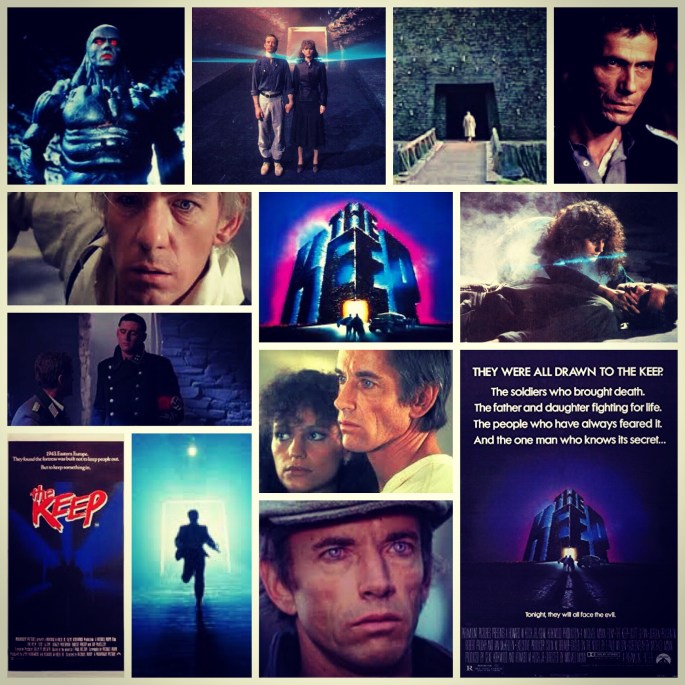
Hoping for resurrection: Michael Mann’s The Keep

It’s a shame that Michael Mann feels the way he does about The Keep, and although I can’t really blame him after the Leatherface worthy hack job the studio inflicted on his original three plus hour cut, it’s a heartbreak and a half that we may never see a director’s version because what is left is still one of the most haunting, beautifully done Lovecraftian horror fever dreams one can find in VHS-land. Based on a brilliant novel by F. Paul Wilson, Mann employs a legion of smoke machines, a troupe of eclectic character actors all cast against type and giving marvellous work, and a drop dead gorgeous original score from Tangerine Dream that remains in my top OST’s to this day. Somewhere deep in the Romanian mountains, a squadron of German soldiers led by weary Captain Woerman (Jurgen Pröchnow) comes a across a tiny hidden village that harbours a dark secret: just beyond the township is a looming, mysterious structure built to keep something locked inside, and has lain dormant for centuries. Their gravest mistake is setting up camp in this unholy basilica, for soon they’ve awoken whatever resides within, and it really wants out. Cue the arrival of sadistic SS officer Kaempffer (a very young Gabriel Byrne) and his Nazi bastard crew, as well as a professor of ancient languages (Ian Mckellan) with his daughter (the late Alberta Watson). Elsewhere in Europe, otherworldly stranger Glaecken (the great Scott Glenn) is stirred by the happenings at the Keep and treks across the war torn continent towards an unknown end. What follows is an entrancing supernatural fusion mixup of old school prosthetic effects, genocide metaphors, lovingly creaky production design and synth music that will scorch your soul. Glenn plays the shadowy warrior better than ever here, with a paranormal gleam in his eyes and the stone-faced, gravel voiced resolve to see his strange quest through to a brutal conclusion. McKellen emotes fiercely both in and out of some well done old age makeup, sometimes almost unrecognizable but always spirited and present. Pröchnow rarely gets non villain roles with depth but this might be his best ever, early in his career too. He turns the Captain into a sorrowful picture of regret and compassion that one doesn’t often see in Hollywood based German army roles from WWII. Watson is a doe eyed beauty whose loss of innocence and discovery of love is portrayed wonderfully by the actress, who sadly passed away long before her time. Byrne is evil incarnate, with a startling cropped haircut that would be right at home in this day and age it seems. Mann favourite Robert Prosky also shows up as a local priest with knowledge of The Keep. Somewhere out there in someone’s garage there lies a full cut of this film, just waiting for an extended Blu Ray transfer, complete with tweaks on sound design (its fuzzy commotion at times), special features and the redemptive treatment that a sterling genre addition like this deserves. There’s so much quality to be found in it, from the alluring atmosphere that’s so thick it finds its way into your dreams after, to the aforementioned Tangerine Dream soundtrack that haunts the film’s visual landscape like an auditory phantasm to the silver and purple hued neon production design, resplendent in its tactile, tangible glory, it stands as a flawed classic with the potential to be so much more, if Mann mans up and makes the effort to give one of his very best efforts that care and time it deserves to rise from the void and soar again. If only. Oh and one more thing: there’s one more scene before the credits that isn’t in the actual cut, but go find it on YouTube because it’s really worth it and adds a lot to the story.

-Nate Hill

Stigmata

Stigmata is one of those thrillers with religious undertones that seems to avoid pesky, eye roll preaching by simply sticking to the horror aspects and providing a solid genre flick, without getting up in our faces with it’s message or feeling lame (see Roman Polanski’s The Ninth Gate and Peter Hyams End Of Days for other ones that achieve this). This one is religious in the sense that it has to be for it’s plot to move along (just look at the title) but essentially it’s part atmospheric spook-fest and part chase film, both of which it does fairly well. Patricia Arquette, in full damsel in distress mode, plays Frankie, a girl whose last priority in life is religion, but suddenly finds herself afflicted with the stigmata, mysterious self-manifesting crucifixion wounds that show up without warning, ruining bedsheets and couches alike. The Vatican soon gets wind of this and dispatches priest investigator Kiernan (Gabriel Byrne) to debunk or research her case. Something about her her soon has shattering implications for not just Catholicism but faith as a whole, and suddenly they’re on the run from a nasty villain priest (Jonathan Pryce) whose ideology is seriously cornered by these new revelations. When Pryce plays a bad guy in your film (see Ronin and The Brothers Grimm) you know he’s going to go all out, arch it up and be a grandiose piss-ant of an antagonist, his ‘priest’ here is so vibrantly evil he seems to have walked over from a Dario Argento flick. There’s a more compassionate man of faith too (Rade Serbedzija) who has a better grasp on the new theology, which he lays down in expository patience so the audience has an inkling of what’s at stake. Byrne and Arquette actually have some terrific chemistry and romantic yearnings, but sucks for them with him being a priest and all. You can do far far worse with thrillers like this, it really sets up a hellish urban atmosphere neatly and diligently tells a pretty cool story.

-Nate Hill

David Cronenberg’s Spider 


David Cronenberg’s Spider is a prickly, unsettling plunge into the frays of mental illness with all the subtleties of a bad dream whose source is hard to pin down. As a disoriented, emotionally shellshocked Ralph Fiennes shambles into a residency at a halfway house in London, he’s reminded of the past, and begins to brush away layers of cobwebs that hide more than a few nasty secrets from his upbringing. Raised by his wayward father (Gabriel Byrne) and haughty mother (Miranda Richardson, also showing up in a dual role), Spider, as she nicknamed him, began to lose his grip on reality at a very young age, resulting in an eerie tragedy. Or did it? That’s the key to Cronenberg’s vision here, the kind of blood chilling uncertainty that one sees a mentally ill person struggle through. Spider’s grip on the past, and his own present coherency is as tenuous as the lingering webs that gild both his memory, as well as the shrouded nooks and crannies of the desolate borough of London he aimlessly shuffles through, the empty rooms and lived-in corridors of his childhood home practically mirroring those of his mind. Fiennes is scarily good in the role, abandoning any researched mimicry to full on effortlessly sink into the psyche of this poor disturbed man, organic and believable. Byrne is solemn and somber as ever, just as complicated as his progeny yet burdened with the also torturous yoke of sanity, while Richardson is electric in both her roles. Stage stalwart John Neville babbles his way through a turn as a fellow resident of the halfway house, while Lynn Redgrave plays it’s stern matron. Dank, destitute and lost is the tone they’ve gone for here, with no Hollywood safety net to rescue both viewer and protagonist from the scintillating curves of a narrative that has no light at the end of it’s tunnel, a brave choice by Cronenberg, and stunning work from everyone who brings the tale to life, such as it is. Be ready to put on a Disney flick after sitting through the nail biting gloom of this one. 

-Nate Hill

The Making of: A Conversation with Robert Meyer Burnett by Kent Hill

I love behind the scenes documentaries – always have. What began as 60 minute specials and from there graduating to EPKs (or Electronic Press Kits) have become full-blown features, at times several hours long. And the longer the better I say.

20479747_1996498947235998_6110516415750134827_n

Robert Burnett has been that guy. The guy behind the scenes. Armed with light-weight equipment and a small crew, he has captured the people who make the magic and the war it is to bring a dream to life on film.

He has been there to witness the making of the multi-Oscar winning Lord of the Rings trilogy. He has seen what it took to orchestrate Superman’s return. He has ventured back in time and brought us wonderful retrospective looks at films like Disney’s cult classic Tron.

But Robert is also a passionate filmmaker in his own right. Having made his own film Free Enterprise, directing episodes of the TV series Femme Fatales along with short films as well. He is a prolific producer having shepherded films like The Hills Run Red and Agent Cody Banks 2. And, just when you’re about to say, “Stop it Rob, you’re just too talented,” he is also an experienced editor; often times chopping his own work, whether it be for DVD special features content or the films he has worked on.

Beneath all of his success, Robert is a massive film lover, citing The Right Stuff, All That Jazz and The Godfather among the countless films he adores.

It was a real pleasure to chat with him about all he has seen behind the scenes, but more so to simply chat movies with a man who knows his stuff. Turns out he loved his time here in the great southern land (Australia), along with our beer and music. It is my hope Rob finds his way back so that I might take him up on my invitation to share a cold VB (Victoria Bitter) and talk movies…

…but until then, enjoy our chat.

20525784_1996498933902666_691227589830810364_n

Assault On Precinct 13: A Review by Nate Hill 

Assault On Precinct 13 is less of a remake of John Carpenter’s balls out, guerilla action treatise and more of a branch off into timeless, near western archetypes, as well as the good old siege thriller format. It’s also one of the meanest, grittiest cop films of the last few decades, deserving a higher rung on the ladder of adoration than it has so far ascended to. Dark, merciless and full of yuletide gallows humour, it’s a searing blast of gunfire and snowbound pulp starring a roster of fired up talent, starting with an intense Ethan Hawke and an unpredictable, predatory Laurence Fishburne. Fishburne is Marion Bishop, a legendary criminal kingpin wrapped tight in police custody and shipped off to a remote precinct on New Years eve with a busload of fellow prisoner transports. The station is run by a few relaxed cops, all preparing to punch that clock and get the New Year’s festivities underway. Unfortunately, a gang of corrupt detectives have other ideas, descending upon the ill guarded outpost with the fury and firepower of animals set loose, determined to murder everyone inside and level the place to the ground in order to cover up their actions. Hawke is the veteran cop with a dodgy undercover past, blessed with the grit and gristle necessary to rally the troupes and self preserve til the morning light. Drea De Matteo, who’s awesome and welcome in anything, is a tough female sergeant, Maria Bello the sharp police psychiatrist caught in the middle, Brian Dennehy the salty old dog, and a laundrey list of rabid felons who pitch in to save their own asses, including Ja Rule, Aisha Hinds, Currie Graham and a wired up John Leguizamo. Together they all make a veritable wild bunch to hold down the fort, but the forces they’re up against are tactical and terrifying. The opposition is headed up by a dangerously quiet Gabriel Byrne as deeply a corrupt Police Captain, doing a coiled viper rendition of a Christopher Walken villain, his work one of the strongest aspects of the film. Watch for Matt Craven and Kim Coates in brief cameos as well. The action is a ballistic blitzkrieg of firefights, standoffs and ditch efforts, scarcely giving the audience time to breathe, let alone tally up the casualties, of which there are many. This ain’t no cakewalk, in terms of action films. It’s down, dirty and has no time for quips, smart mouths or villains that monologue. Everyone involved in a caged animal prepared to go to extremes at the drop of a hat in order to achieve their goals, with kneejerk reactions and off the cuff violence that feels real, and cuts deep. If you are serious about your action films, and enjoy ruthless, non patronizing narratives that get as cold as the snow drifts surrounding the precinct and as casually indifferent as the bullets that ventilate it, this is your ticket. 

The Usual Suspects: A Review by Nate Hill 

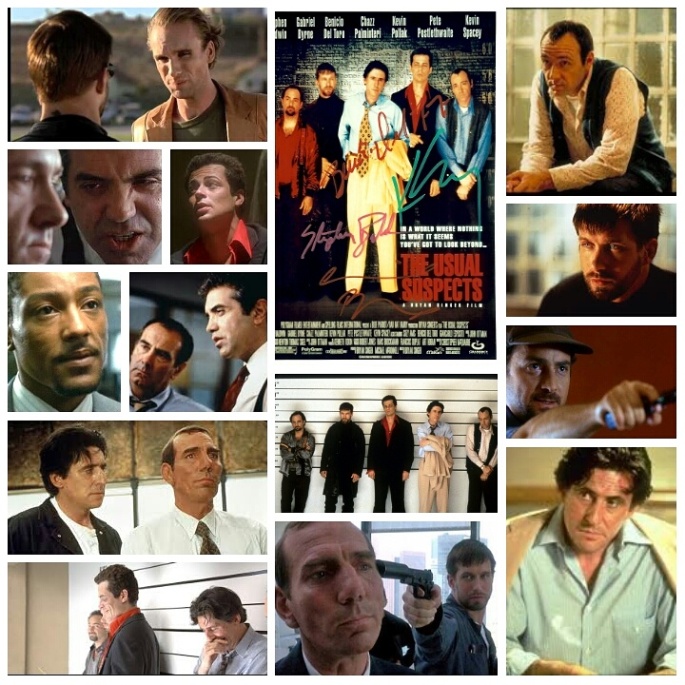
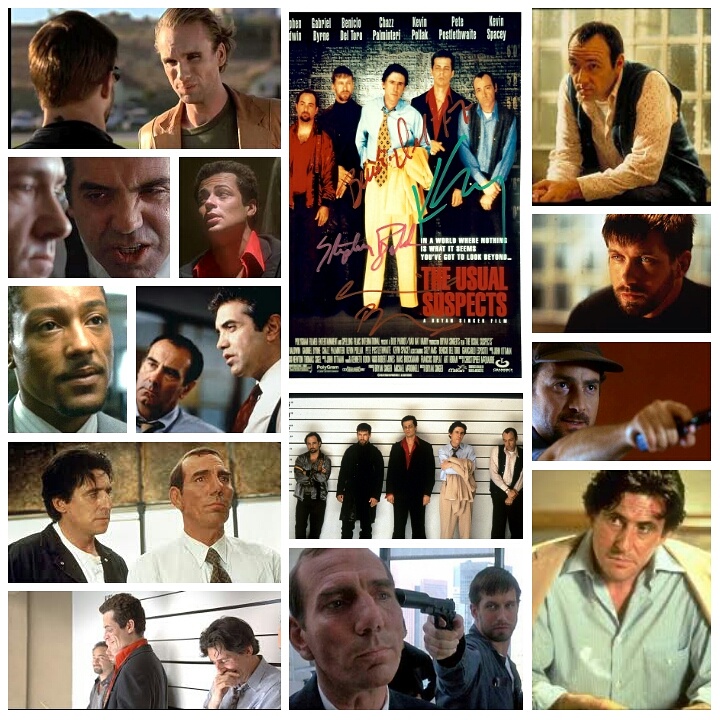
No matter how many times I watch The Usual Suspects, and believe me it’s been many, I still get the same diabolical thrill, the same rapturous excitement and the same rush of storytelling and dramatic payoff as I did the very first time I saw it. Every performance from the vast and diverse cast is a devilish creation packed with red herrings, juicy dialogue and bushels of menace, every scene piles on the mysticism of the criminal underworld beat by beat, until the characters begin to pick it apart and the whole thing unravels like a great serpent coiling forth bit by bit, scale by scale, swerving toward the shocking, disarming third act that has since become as legendary as it’s elusive and terrifying antagonist. In the crime/mystery corner of cinema, there’s no arguing that this delicious piece of hard boiled intrigue reigns supreme, and it’s easy to see why. In a seemingly random police lineup, five career criminals are harassed by an unseen hand, pushed into carrying out dangerous heists and violent manouvers by a shadowy campfire tale among the world of organized crime, a Boogeyman called Keyser Soze, if he even exists at all. Slick and sleazy ex cop Dean Keaton (Gabriel Byrne) heads up this dysfunctional crew of vagabonds which includes hothead McManus (Stephen Baldwin in a role originally intended for Michael Biehn, which kills me to this day), weirdo Fenster (Benicio Del Toro, using an indecipherable mishmash of an accent that would be the first of many), spitfire Hockney (Kevin Pollak) and Verbal Kint (Kevin Spacey) the runt of the litter. The lot of them are intimidated into performing risky enterprises by lawyer Kobayashi (Pete Postlethwaite) until the climate of their actions reaches a boiling point and answers emerge from the darkness. This is all told in retrospect by Spacey, to a rabid customs agent (Chazz Palminteri) who has designs on ensnaring Soze. Spacey scored Oscar gold for his heavy work here, spinning a tale whose layers interweave and pull the wool over our eyes time and time again before offering any glimpses of truth. Byrne is a fiercely guarded storm as Keaton, a man with secrets so deep even he doesn’t know who he is anymore, letting the anger set and smoulder in those glacial eyes of his. The supporting cast adds to the class and confusion terrifically, with fine work pouring in from Dan Hedeya, Suzy Amis, Giancarlo Esposito and a wicked cameo from Peter Greene, who provides a moment of inspired improv. The score of the film rarely relies on dips and swells until all is said and done, keeping a tight lid on the orchestra and feeding us nervous little riffs of anxious portent that keeps tension on a tightrope and anticipation on call. A mystery this tantalizing is irrisistable the first time around, but the trick is to make your story rewatchable, and I’ve seen this thing over a dozen times. Every viewing provides some new angle to the story I didn’t see before, or I notice a subtle interaction in the very naturalistic and funny dialogue which escaped me in the past. My favourite thing to do is watch films with someone who hasn’t seen them before, observe their reactions and opinions on every little story beat and cinematic flourish, it’s almost more fun for me than the actual film itself. The Usual Suspects is a showcase piece for that activity, because you get to see this very complex revelation unfold through new eyes as you watch them experience the revelations. Whether your first viewing or your fiftieth, it never loses its power, and the spell it casts just doesn’t dim. Masterpiece.

Into The West: A Review by Nate Hill


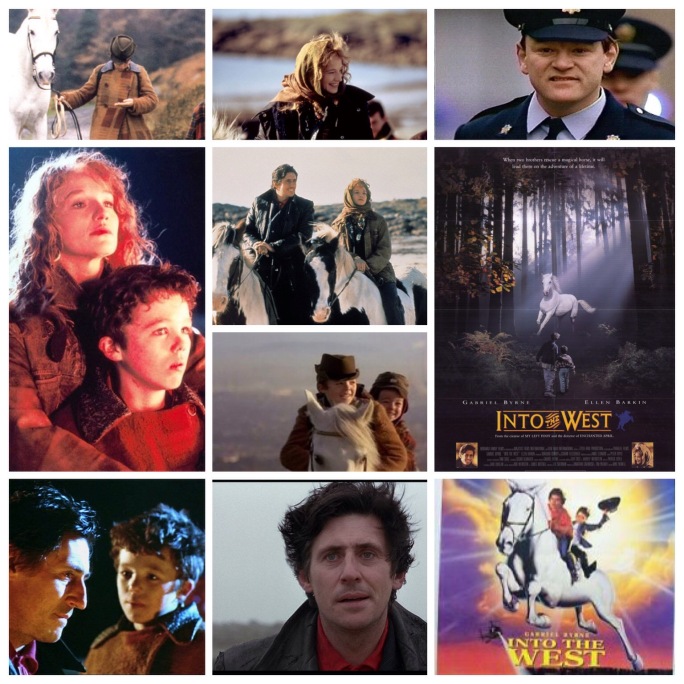
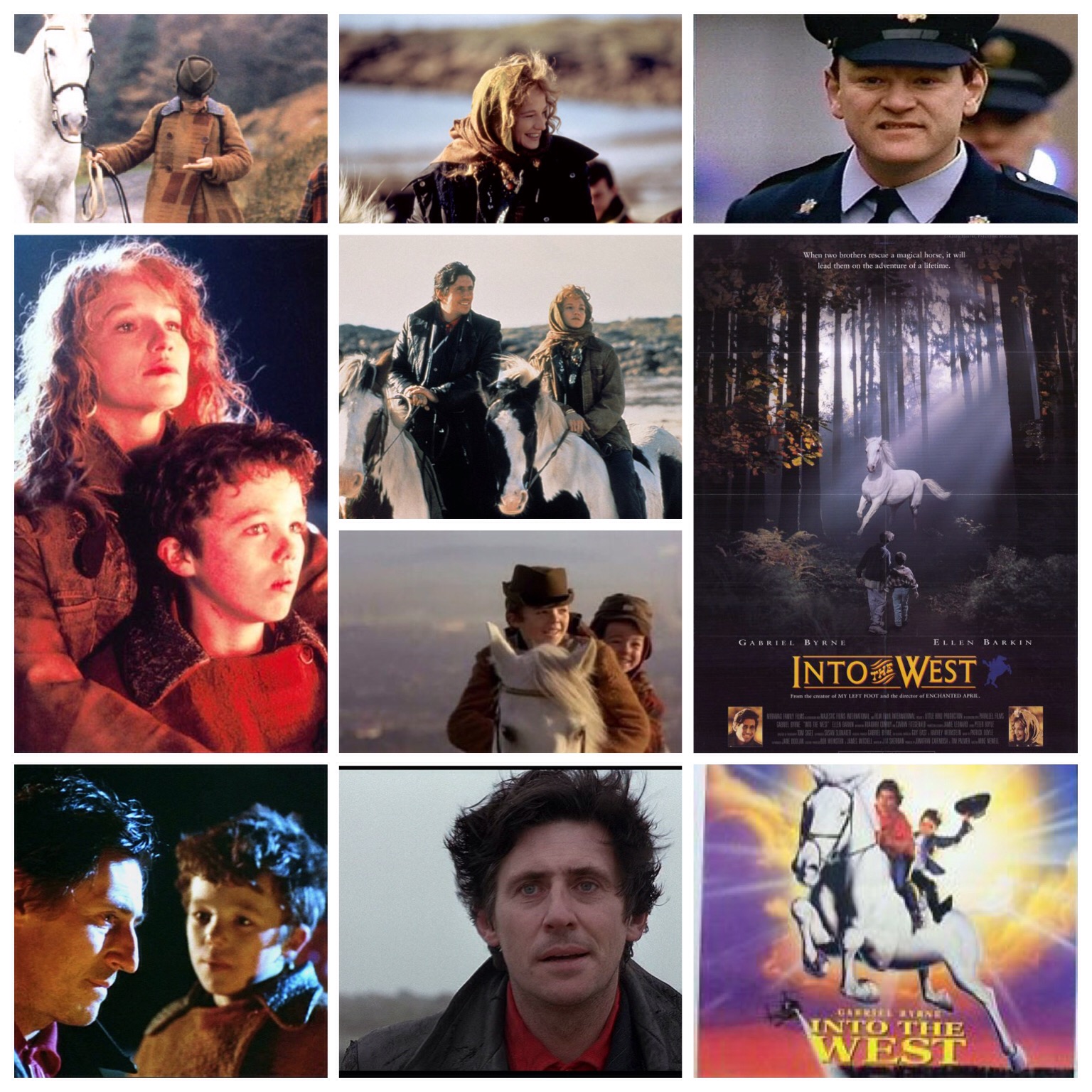
Into The West is a charming Irish folktale with two excellent lead performances from Gabriel Byrne and Ellen Barkin, who have been married in the past and therefore have a natural, easygoing chemistry. The film takes place in rustic Ireland, where two young boys are given a magnificent and mysterious white stallion by their gypsy grandfather (David Kelly). They come from a poor neighbourhood, somewhat left to their own devices by their downbeat alcoholic father (Byrne), who lost his wife and their mother years before. The horse seems to have some type of sixth sense related directly to their family history. The two boys are in that state of wonder where fables and magic still exist, and follow the horse wherever it leads. Byrne desperately pursues his sons to whatever end, helped by a fellow Traveller and old flame (Ellen Barkin, excellent and passing quite well as an Irishwoman). The horse seems to know his past and leads him to places which have sentimental value to him, leading him one step closer to his kids, while teaching him an esoteric lesson along the way. Great stuff, kid orientated but still has an eerie and mature atmosphere. Watch for early appearances from Brendan Gleeson and Liam Cunningham. Beautiful film. 

Perrier’s Bounty: A Review by Nate Hill

image

Perrier’s Bounty tries hard to be as pithy and witily profound as In Bruges, but doesn’t quite manage the task. To be fair, Bruges is a masterpiece and a Goliath of a script to aspire too, but this one has its own brand of scrappy crime fun, full of enough beans to keep the viewer jumping for its slight running time. Few films can boast narration provided by the Grim Reaper, and fewer still can say that said Reaper is voiced by Gabriel Byrne. But indeed, Byrne beckons us into this violent fable with his patented tone, both baleful and quaint. The fable in question concerns Michael McCrea (Cillian Murphy) an irresponsible young Irish lad who is seriously bereft of both luck and common sense. He lives in a small town in northern Ireland and owes a hefty loan to local crime lord Darren Perrier  (Brendan Gleeson). Because of how tiny the town is, it’s pretty easy for Perrier’s goons to find and engage him in a road runner goose chase all about the area, forcing him to scoop up his on and off girlfriend (Jodie Whittaker), and head for the hills. He’s also joined by his uber eccentric father (Jim Broadbent) who believes that the Grim Reaper has visited him at night and given him the alarming prognosis that he will die the next time he falls asleep. Broadbent is a solid gold asset to any film he’s in, and practically spews perfectly timed comic banter non stop. Michael thinks he has a way out of trouble with local petty thief The Mutt (Liam Cunningham, aka Ser Davos Seaworth, also a comedic treasure here), which turns out to be another notch in the belt of bad judgment. Meanwhile, Perrier’s crew reels after one of their slain thugs (at Michael’s hand) turns out to have been involved in a love affair with another, who now has the wrath of vengeance in his eyes. There’s a scene where Gleeson  comforts the bereaved hoodlum and seems deeply wounded at the couple’s reluctance to tell him of their love. Gleeson assures them he has no issue with homosexuality and wishes they would have shared with him. In the context of hardened criminals out for blood, this kind of exchange is priceless and brings rigid archetypes right down to earth, for maximum hilarity and well earned pathos. The film meanders a bit, but never out ran my attention span, following through with it’s story in ways both welcomingly bloody and predictably quirky. It doesn’t add up to anything life altering when all is said and done, but damn if the things which are said and are done along the way aren’t just pure genre entertainment, inducing chuckles, thrills and nostalgia for other films withing the niche. In the troupe of writers who look up to Guy Ritchie, Quentin Tarantino and  Martin McDonough, this scribe is on to something. Keep an eye out for Lord Varys, Roose Bolton and a young Domhall Gleeson too.

Cool World: A Review by Nate Hill

image

Cool World is known, by those few who may be aware of its existence, as the ‘other’ film in which live action characters inhabit the same realm as cartoons. The more famous one of course is Who Framed Roger Rabbit, a glorious gem of a film that gets the acclaim, notoriety and long lasting attention, as it well should. (We won’t speak of a third one involving a certain moose and squirrel that really does earn it’s bad rap). Cool World is somewhat maligned as the black sheep of the two, and in some people’s eyes (Ebert laid a stern smackdown on it) downright hated on. It’s no doubt very different from Roger Rabbit, which is admittedly the better film and the easier one to like and relate to. But this one is brilliant in its own right, at least for me. I love the way it uses a sombre tone with its human creations to throw a unique light on them as soon as the Toons show up. It’s quaint and wonderfully inaccessible, with some scenes existing purely of a need to showcase a stream of consciousness type style that doesn’t so much halt the proceedings, as give them their own surreal flavor. Brad Pitt is Frank Harris, victim of a jarring post war tragedy and thrown headlong into the cartoon world, eventually finding himself a Detective in their realm. Outside in our world, lonely cartoonist Jack Deebs (Gabriel Byrne is a sly choice for the role) falls in love with one of his creations, a blonde bombshell named Holli Would (voiced and later played in the flesh by Kim Basinger). Holli is as devious as she is gorgeous, and works to use Jack’s attraction to her as a conduit to escape into our world. Pretty soon a deafening cacophany of cartoon creatures in all shapes, sizes and colours floods out of their dimension and into ours, creating quite the cosmic mess for Pitt to clean up. It’s fun without being too zany, the overblown fuss of the Toons contrasted by a glum human world, reeling from the war and unexpecting of such an event to unfold. Granted, the meshing of the two dimensions isn’t given the precise, big budget fanfare and cutting edge methods of Roger Rabbit, but the world building and special effects here are still pure enchantment and offer a dazzling level of entertainment. Pitt is stoic with flinty sparks of boyish charm, Byrne hilariously plays it dead straight, and Basinger is dead friggin sexy. She steals the show especially as Holli in human form, having a ball with the bubbly bimbo trying to keep a straight face in the real world. The Toons in general really are a diverse bunch, ranging from animals to inanimate objects to tiny little formless cutesy blobs and everything in between, filling their frames with a chaotic, detailed miasma worthy of Studio Ghibli. Lot of hate floating around for this one. You won’t find any from me, I love the film, and accept it for the adult friendly,  experimental oddity it is. Great stuff.