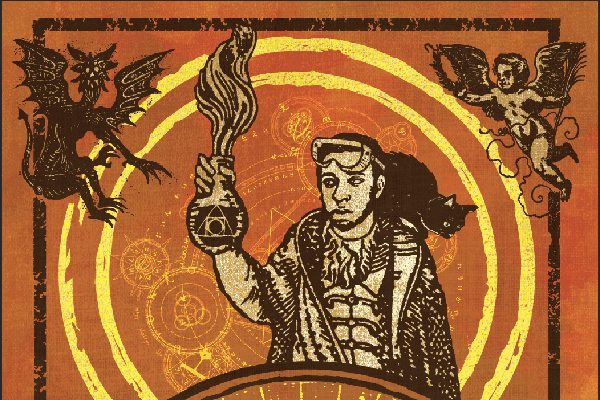
THE ALCHEMIST COOKBOOK (2016) – A REVIEW BY RYAN MARSHALL

vlcsnap-2016-11-08-20h01m33s296.png

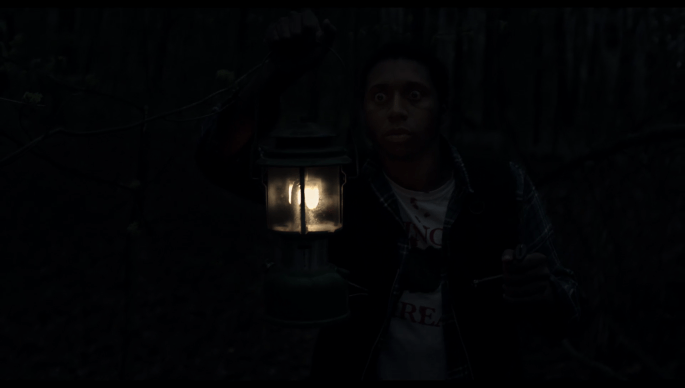
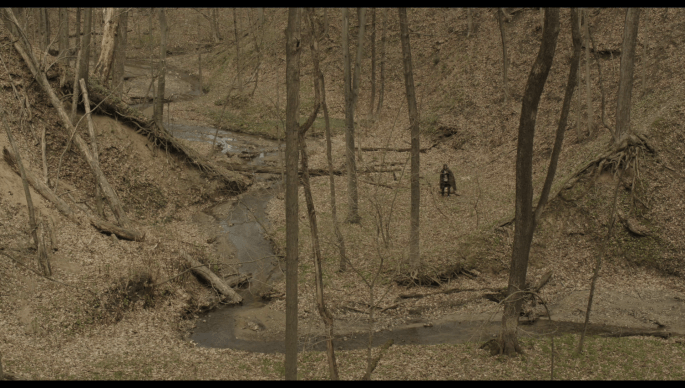
The forest has always been an essential breeding ground for cinematic insanity, and it’s not hard to imagine why; after all, the things closest to us but which we have really have only begun to understand are among the most terrifying. Writer/Director Joel Potrykus uses the woodlands to summon a consistent air of dread in his latest genre-defying curio, THE ALCHEMIST COOKBOOK, though it’s hardly the sole location herein whose deep-seeded hallucinatory horrors are so cleverly uprooted throughout the film’s tight, disconcerting narrative.

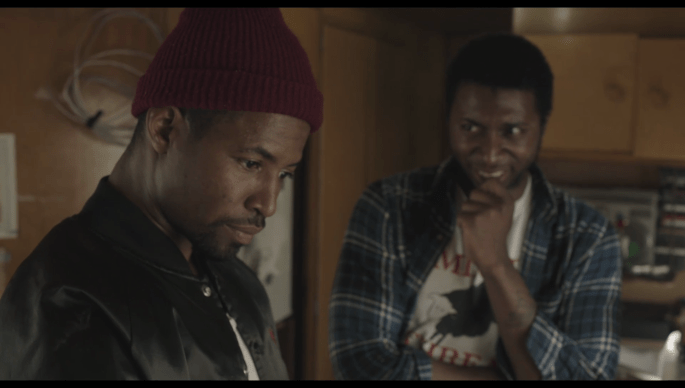
Ty Hickson, a relative newcomer with only a few credits to his name, stars as Sean, a mentally unstable young man who lives in a trailer somewhere in the woods where he can be alone with only himself and his cat Kaspar to practice alchemy as a means of acquiring a fortune. It’s clear that Sean’s pill-popping may be the source of his wild ambition, but at the very least he’s committed, and his friend Cortez (a hilarious Amari Cheatom) visits often to ensure that he’s got plenty of food, tools, and has his prescription refilled to boot. As good of a friend as Cortez is, he is far from perfect, and one day he forgets to bring the meds.

vlcsnap-2016-11-08-19h52m34s710.png

Before we can even begin to settle down within the pitch-perfect representation of Sean’s unbalanced psyche, he’s dabbling in black magic as a means of speeding up his process; which of course could potentially be the final nail in the coffin for our tragically delusional friend. It’s at this point that the mood shifts from that of a breezy and often hilarious hang-out pic (in which one of the two people involved only sometimes shows up) with subtle macabre flourishes to a genuinely disturbing body horror film, and it’s the seemingly effortless way in which the narrative alternates between the two – and others as well – that makes it so unforgettable.

The Michigan-based Potrykus prefers to work with restrained budgets and unhinged characters, challenges and limitations which seem to have worked in his favor thus far (this is his third feature, after 2012’s APE and 2014’s BUZZARD). The simplicity of the build-up benefits the lasting ambience of the truly haunting payoff; it’s ultimately more effectively horrifying than the majority of straight genre efforts. In Sean’s phantasmagorical fantasy world, the forest is very much alive with beastly bellowing, low growls, and big splashes (in the wetland areas). No animal, not even a seemingly innocent possum, can be trusted other than the faithful feline, who should be commended for the magnitude of the madness he puts up with here. Everything with any semblance of purity is reduced to savage animalism in the end, and perhaps that is what the film is really about – going backwards through forced progress. Sometimes, we must let nature take its course, for it works in mysterious ways.
vlcsnap-2016-11-08-20h01m22s551.png

Potrykus dares to find beauty in Sean’s plight, and the fact that he does so in spades is no easy feat. The character’s misery is entirely of his own making, though the implication seems to be that there’s still time for Sean to redeem himself. There’s also a great deal of humor to be wrought from Sean and Cortez’s interactions, with one scene in particular involving the consumption of cat food being a prime example of pure, thoroughly awkward observational comedy. Absurdism runs through this whole strange exercise, though there’s an honest sadness in Sean’s eventual transformation. We’ve been so up close and personal with the unlikely protagonist leading up to this point that there’s absolutely no reason why we shouldn’t be made to witness his ultimate decline on a similarly intimate scale. We grow to like the guy – a lot – in spite of his flaws, though luckily this feels more like fate than outright punishment.

Empathy is the key and love is the spirit. THE ALCHEMIST COOKBOOK is certainly a strange one by any conventional standards, but it’s just not that simple. There is real humanity here, both in its passionate ode to the benefits of solitude itself and its singular tale of a man running out of nature and losing himself to what’s left of it. Its commitment to staying well within the boundaries of its protagonist’s headspace brings to mind the similar triumphs of John Hancock’s LET’S SCARE JESSICA TO DEATH, the effects of which are genuinely devastating. Potrykus is more than just one of the most singular minds in contemporary American independent cinema; here, he’s solidified himself even further as one of the most important voices for the outcasts of the silver screen and the damned spaces they occupy. His latest is akin to a waking nightmare – of a similar essence to the abandoned dinghy in the middle of the pond that just begs to be investigated further – and yet it brings such profound joy.
vlcsnap-2016-11-08-20h02m14s483

Dario Argento’s Suspiria: A Review by Nate Hill 

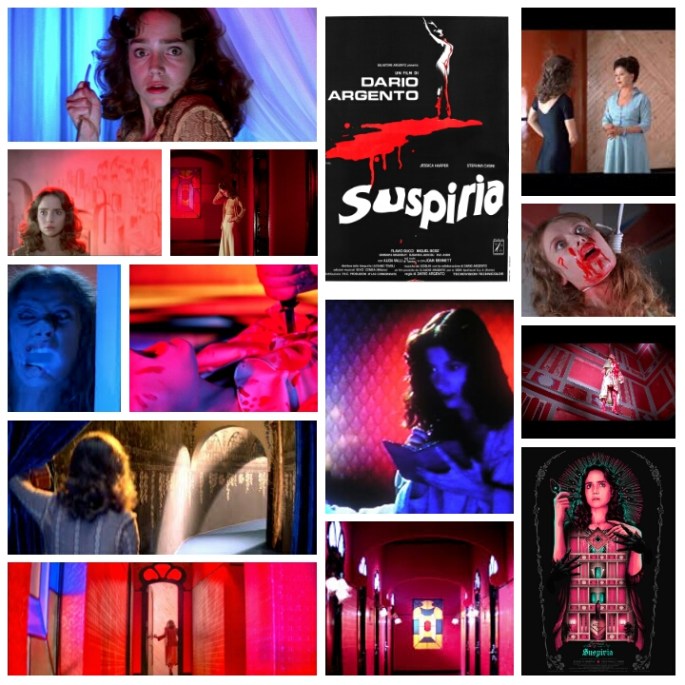
How to describe Dario Argento’s Suspiria. A psychedelic, multicolored mood piece. Free from the bonds of rationality. Surreal and incoherent, using dream logic to disorient the viewer and lull us into a subconscious fugue state, swept away by the color and light, all shot through a prism of dazzling underworld enchantment, a fairy tale designed to shock and shake, and all the while presided over by Goblin’s rhythmic, haunting score, bewitching the proceedings even further and pushing the atmosphere of the film to elemental heights. No other horror film I’ve ever seen has had quite the same unique, spellbinding effect on me as this masterpiece. The opener still stuns, a kaleidoscope of stained glass splattered in blood, a jarring murder scene that is as beautiful as it is grotesque, setting the stage for the madness yet in store. You know those dreams where you’re making your way through some corridor, drenched in fear and awaiting some doom that’s just up around the bend, but suddenly you get there and nothing seems to make sense, circumstances are now different and all attempts to extricate yourself seem hopeless? That’s the kind of nightmare that young American ballet student Suzy Banyon (Jessica Harper) finds herself in. Arriving in Germany to a prestigious dance academy, she gets a fleeting look at some poor girl running from… something, far off in the woods. That being her introduction to the school isn’t a good sign, and it doesn’t get any better. The stern headmistress (Allida Valli would give Miss Trunchbull the creeps) is overbearing and nasty, the rest of the occupants strange and withdrawn, and something seems to live inside the walls, watching Suzy from unseen perches, with evil intent in store. Maggots, a possessed dog, witches, a serial murderer and homicidal German cooks don’t even begin to describe the gauntlet of terror she fights through. Well, they do, but the film really isn’t about those things, they’re just the walls of the gingerbread house, plain, right angled and sensibly threatening. The real horror and unease comes from atmosphere, the icing, sprinkles and decorative splendour on said house. Argento has always given more effort towards atmosphere and ambience, in favor of things like acting, story or editing. It can be silly sometimes, but in Suspiria’s case it really doesn’t matter much, because the hellish haunted house he fashions is worth every second of your attention. There seems to be a starkly colored hue pouring in through every window and behind every door, the academy itself is an ornate and impossibly detailed dark gem of architecture and artistry, the sets put together like a dizzying labyrinth funhouse of brightly lit orifices and shadowed alcoves where nothing seems to be in it’s rightful place, disorder and abstraction reigning supreme. And then there’s the score. Now one of the most iconic janglers in the horror genre, the trancelike nocturnal lullaby by Goblin is a riff that instantly stands your hairs up and sucks you right into each frame, accenting the colours, shapes and hallways with organic precision, as if the dark forces inside the academy were somehow generating this music of their own accord. I also note another track by the group that makes an appearance, a wheezy death cry called ‘Sighs’, signalling that witches are nearby and consequently upping the unease factor a few more notches. This is a film that seems to come straight from the unconscious mind, a technicolor patchwork quilt stitched together with bizarre ideas, supernatural mysteries and otherworldly hysteria, with only the briefest threads of logic woven in, almost as if to further throw us off balance, to tease us with a scenario that seems like it will play out ‘normally’, only to toss us right back into the deep end, back into bizarro world with Suzy and all the forces of the night, clamoring to get her. This is unquestionably Argento’s best, and most complete film, a maniacal masterpiece of gorgeous sights and sounds, a trip to atnother realm via our world, and a horror piece unlike any other.

An American Werewolf In London: A Review by Nate Hill 

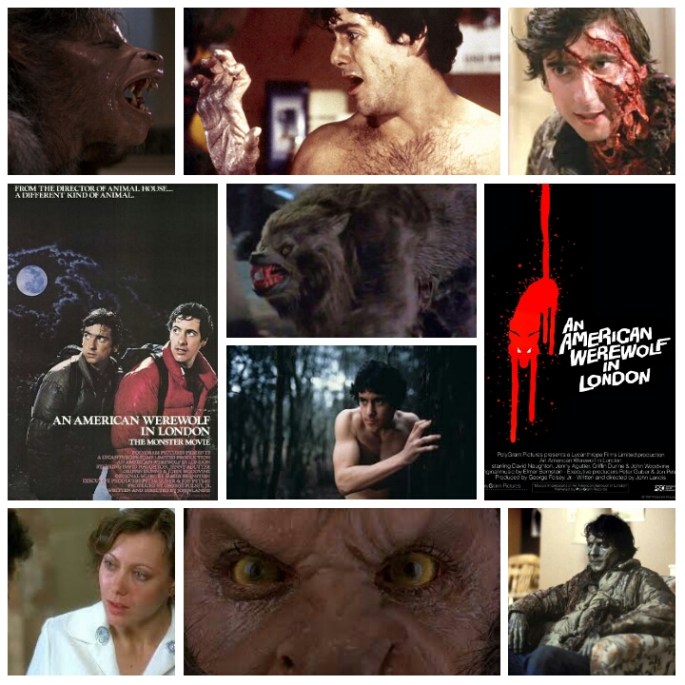
John Landis’s An American Werewolf In London has what is the most impressive human to wolf transformation sequence I’ve ever seen. You can dump your wallets out and buy all the CGI effects at hand, and none of them will ever match the tactile weight that practical effects have, the combination of hair, putty and latex that assures you there is *something real* on screen, and not the hollow timbre of computer driven wizardry. Everything in the film builds up to this shock and awe moment, and up until then it’s a fairly low key, atmospheric affair in which you never quite see the beast that kicks off the inciting incident. Griffin Dunne and David Naughton play the two American backpackers who find themselves wandering the moors of northern England, positive there is some kind of creature hunting them. The crusty locals avidly deny any such presence, but aren’t convincing and furtively shift their gaze, clearly not being honest. Sure enough, Naughton is attacked and bit one night, and he begins to exhibit those good old symptoms. The change happens all at once and is quite startling; this isn’t a sleek, aesthetic werewolf either, it’s a lumbering behemoth, all fur fangs and fury, storming about the cobbled streets of London like a coked out grizzly bear out running zookeepers. We only get to see him in London for a brief and chaotic end scene, but it’s worth it, taking the slow, misty nocturnal buildup and switching to broad daylight, revealing what was unseen before and bringing it jarringly down to earth. I can’t speak for the sequel, as I’ve never seen it, but this one remains one of the most well crafted, fun werewolf films you can find, and my personal favorite. 

The Changeling: A Review by Nate Hill 

I love a good old fashioned creaky haunted house story, and HBO’s The Changeling is one of the best, and most under appreciated spooky tales out there. Like I say time and time again (no doubt sounding like a broken record at this point), real effective horror lies in atmosphere and the buildup of tension, chilling our spines instead of bombarding us with tasteless dismemberment. The Changeling takes its time in establishing cozy atmosphere and engulfs us in a gigantic New England mansion (actually Shaughnessy for anyone who can tell), inhabited by the lonely, desperate ghost of a young boy who met a tragic fate there many decades earlier. George C. Scott is the musical composer who moves in all by himself, seeking solitude as he nurses the grief of losing both his wife and daughter in a car accident. He’s barely there one night when strange things begin to happen; rhythmic banging from some far off room, eerie crying noises, doors opening and closing of their own accord and a mysterious toy bouncing ball that ominously follows him around. Saddled with an already troubled mind, he sets out to learn the origins of the ghost and resolve the situation, putting it to rest. The story is smart and succinct, involving ancestral deception and an elderly US Congressman (Melvyn Douglas, stealing every scene) with ties to the past. It’s never too complicated or busy, always keeping it’s cool and reigning in the frightening moments in a minimal fashion that pays off greatly. The lush, overgrown Vancouver locale makes a great setting, almost Stephen King like, and the house itself is a towering cluster of dusty hallways and wide open ceilings that shield ancient secrets and watch over anyone who sets foot inside with an unseen eye. I never thought a bouncy ball and a small children’s wheelchair could raise such goosebumps, but when used as well as they are here, in scenes which set up the creep factor wonderfully, they’ll get to you big time. Scott is weary and wary, but has a strong sense of compassion for the restless spirit that shows in his baleful, ice blue eyes and gives him the charisma a horror protagonist needs. HBO original films are almost always hidden gems of humble craftsmanship and breezy, effortless skill, whatever the genre. Here they’ve tried their hand at the ghostly fright flick, and wrought one of the best I’ve ever seen. 

Calvin Reeder’s The Rambler: A Review by Nate Hill 

I can’t picture a single festival screening of Calvin Reeder’s The Rambler that wouldn’t result in at least half the crowd walking out in revulsion. There’s just no way to put it lightly when describing the alienating, severely soul-disturbing kind of sickly atmosphere that hangs over the entire film like a radioactive blanket of surreal dread. The dvd cover barely suggests the beyond Lynchian, out to lunch, bugfuck nuts events which unfold, and instead hints toward a western with vaguely horror themed aspects. Couldn’t be more different than that. The conventional elements like plot and the theme of Western are dimly present, shaky railroad tracks for a train that careens straight into the subconscious of bizarro world, some of what we see even too messed up and disassociate for the hardiest of cultist buffs. Few films are able to capture the purely illogical and disjointed feeling of a dream, but this one nails it scarily well. Sentences don’t match responses, human behaviour is terrifyingly devoid of inhibitions, events repeat and come out of nowhere, and we really and truly feel lost, removed and detached from any kind of rational thought or action. Now the film doesn’t outright announce that it’s all a dream, save for a few hints embedded in the story, but it sure felt like one long nightmare to me, evoking psychological feelings which words really can’t describe. Dermot Mulroney does a ‘Man with no name routine’ as a vacant ex con who is released from prison and blows back into his one horse trailer park town. He does indeed have no name, now that I think of it, and is only ever referred to as The Rambler. Upon returning, he finds his volatile girlfriend (Natasha Lyonne) has taken up with another man, and no one seems to want him around anymore. Time to hit the road, he figures, sauntering out into the acrid desolation of the southwest in a dead cool opening credits scene set to Terry Allen’s Red Bird, one of my favourite twangy tunes. From there it gets hard to describe, comprehend and stomach. He’s off in some John Waters style twilight zone of very unsettling characters, saying and doing things that make little sense and get increasingly shocking and vulgar. A mysterious girl (Lindsay Pulsipher) weaves in and out of the story and seems to be the only one besides him who is remotely coherent. A crackpot doctor (James Cady) shows him an extremely defective device that is supposed to look into people’s dreams. There’s ugly, misanthropic fiends running all about with nothing to say other than loosely strung together verbal diarrhea, and a constant nauseating film of unease over everything. I’ve read reviews wailing about how this film has less than nothing to say, and should have shut it’s mouth. But that’s the point to a nightmare; it doesn’t teach, enlighten or otherwise change us in any way other than to give our sense of dread a workout and provoke a cold sweat. Similarly, the film simply is there to scare, to induce the gag reflex and doesn’t strive for anything else, and in that sense it’s pure, primal and honest about it’s intentions. The very definition of not for everyone, this will even put off bands of counter culture cinephiles who scoff at anything mainstream. Deliberatly vile, constantly off its rocker and so far beyond the event horizon where bizarre ends and something truly indescribable begins, The Rambler will shake the shit out of anyone who claims to have seen it all. You have been warned. 

B Movie Glory with Nate: Split Second

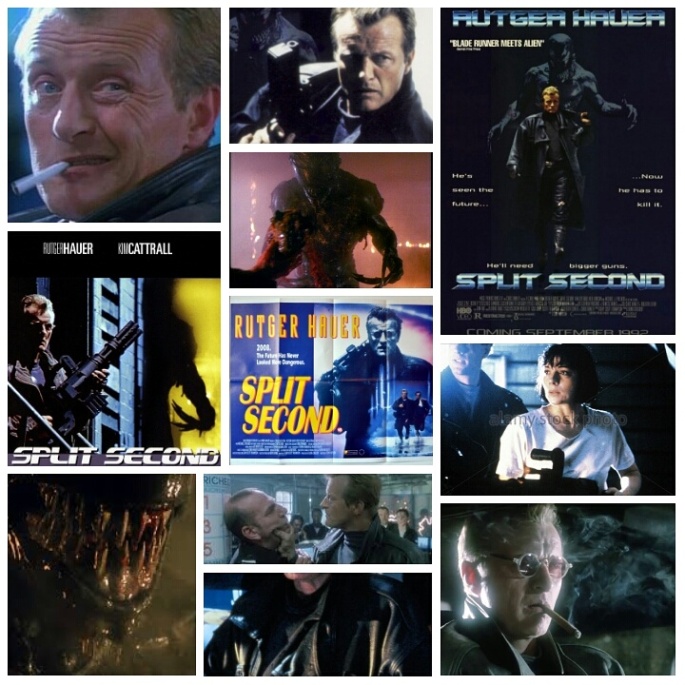
One of the better entries in a long and tedious career of B movies that Rutger Hauer has inexplicably slaved in, Split Second is actually a solid, enjoyable little flick with terrific action, atmosphere to rival any of the big budget films he did and a stoically deadpan performance from the legendary badass. The year is 2008 (lol the future), the place is London, and the sea levels have been rising fpr years, causing a few feet of water everywhere, leading to a stall in infrastructure growth. Hauer plays police detective Harley Stone, a gruff, take no prisoners shit kicker with a big gun who is searching the dank streets and shadowy clubs of London, looking for a killer who dispatched his poor partner a few years before. Only thing is, this ‘killer’ isn’t actually human, as Stone finds out in a series of well staged, murky shootouts in which the muzzle flares and smoke machines combine efforts (with hidden help from the low budget) to ensure we never get a good look at this beast until the bloody finale. Hauer is the perfect lone hero, a physically imposing presence with the laconic wit and unshakable charisma to match it. His Stone is world weary, laid back but dogged, and not without a bleak sense of humour. “I’m a cop” he sarcastically barbs, flashing his badge to a nightclub guard dog who wouldn’t know it from a hole in the ground. Kim Cattrall plays the female counterpart to the fight, and watch for Pete Postlethwaite in an early role as a pesky bureaucratic swine who gets in Stone’s way a few times. If you picture the hard hitting brutality of Predator, combined with the smoky ambience of Blade Runner you’ll have some idea. Admittedly it’s on a far lower budget and as such has to make do with it’s resources, but it does that just fine. Memorable little action creature feature. 

MESSIAH OF EVIL (1973) – A REVIEW BY RYAN MARSHALL

The true poetry of the macabre requires the thorough perusing of a far out cosmic language, a séance to effectively make contact with the phantasms inherent in our reality that have over time inspired the ones we see in literature or on the screen. Horror films often make for the most compelling alchemic excursions because they dance so closely with such demons, unafraid to create friction in order to exorcise them. These are our nightmares. They don’t always make sense, and they don’t only come at night. Yet, they are undoubtedly a significant part of what makes up our very being. A man devoid of fear – especially that which he does not openly discuss in some fashion – is not one worth trusting.

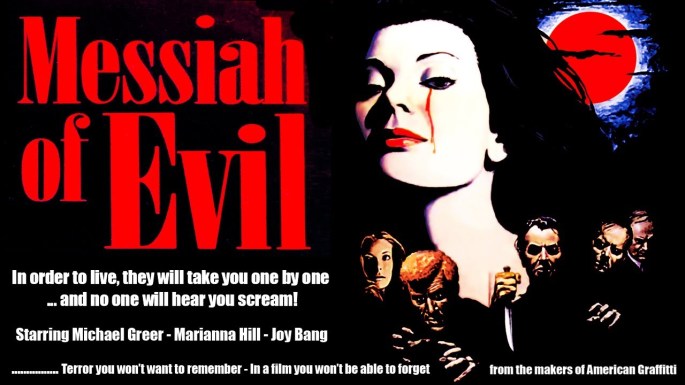
Some of the most subtextually rich and socially redemptive genre cinema can be exhumed from the 1970’s – a time when the aftermath of the Vietnam War left our world at large, and more specifically America, with spectacularly apocalyptic imagery – and one of the most coveted gems to rise from that particular pile of ashes is MESSIAH OF EVIL, a truly terrifying take on the undead from the scribes behind INDIANA JONES AND THE TEMPLE OF DOOM and AMERICAN GRAFFITI (among others), Willard Huyck and Gloria Katz. This is the kind of stuff you might put on for “easy late night viewing” but will soon regret doing so as there’s nothing “easy” about the film’s approach to otherworldly dread.

messiah-of-evil

Beautiful, young Arletty (Marianna Hill) arrives at the coastal resort town of Point Dune in search of her father Joseph Lang (Royal Dano), an artist with whom she has lost contact over the years. Although he is nowhere to be found when she arrives, his house – its walls adorned with paintings of strange shadow people – is open and Arletty decides to continue her search the next morning. This leads her to a trio of drifters shacking up in one of the local motels who are listening intently to an old boozer (Elisha Cook Jr.) babbling on about some mad local tale when she finds them, and who appear to be dysfunctional company to say the least.

The three nevertheless follow Arletty back to her father’s estate and make themselves at home, with their suave male leader Thom (Michael Greer) seducing her soon after, to the disapproval of his female companions. Only when Laura (Anitra Ford) splits and heads into town – where she is picked up by a creepy albino man in a red truck with a penchant for eating live beach rats – is the sinister nature of Point Dune made somewhat clear. Without spoiling too much, lack of hospitality is hardly scratching the surface. It would be in one’s best interest to not wait around too long for all of the answers; some simply don’t come.

messiah-3

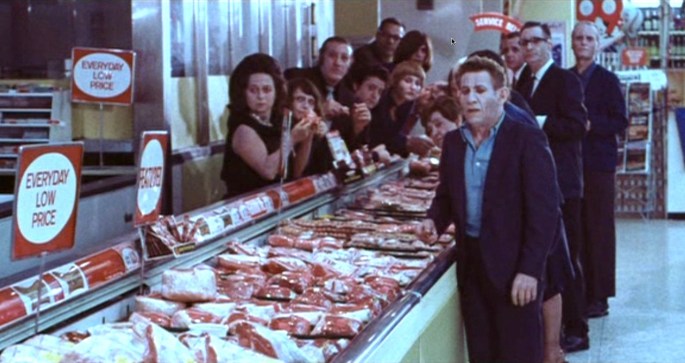
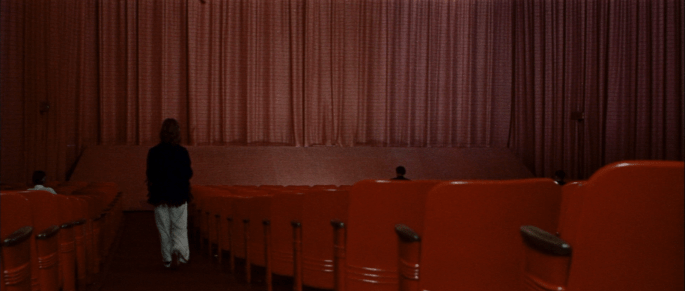
What follows after a spectacular sequence set in a mostly desolate supermarket is a series of individually compelling moments, such as a clever riff on Hitchcock’s THE BIRDS involving Thom’s other companion Toni (Joy Bang) in a movie theater and another where Arletty’s father returns only to attack her. The townspeople are seen gathering at the beach during the witching hour to stand by campfire, staring up at the moon, and the first sign of warning when Arletty first arrives in town is an attendant at a gas station shooting off into the night at some unseen entity(his response is truly spine-chilling: “Dogs…stray dogs. Has to be. Has to be dogs.”); from the get-go, there’s something not quite right about Point Dune, and everyone seems to be harboring some kind of secret. How else would one sustain such a sparse – though in this context, rather convenient – narrative?

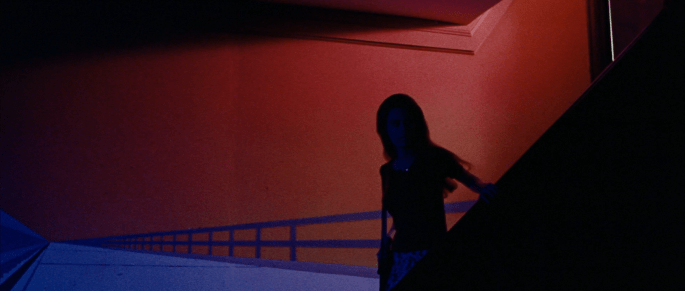
Huyck and Katz took more than few pages from a certain Howard Philips Lovecraft’s book for their very own cinematic creation, which comes off kind of like the late author’s THE SHADOW OVER INNSMOUTH on acid. Joseph Lang’s bizarre diaries, in which he speaks of a strange affliction that has befallen him as of late, and will soon begin to affect Arletty as well, may explain what’s going on along the coast; it’s an effective device that is unfortunately posited alongside by Arletty’s own voiceovers, which for the most part don’t benefit the storytelling. Nevertheless, the soundscape is consistently intriguing – for the most part, this feels like it was scored and lensed in another dimension entirely. Then there’s the cinematography from Gloria’s brother, Stephen Katz, who went on to lens a little movie called THE BLUES BROTHERS; absolutely spellbinding stuff, and arguably what makes the film. Both scribes were fresh out of film school when they made their demented debut, and as such, they were more inspired by European art-house than anything else; and it shows. The colorful widescreen compositions bring to mind the likes of Mario Bava, and even Hammer’s own Terence Fisher, with touches of Godard and Antonioni.

messiahofevil2

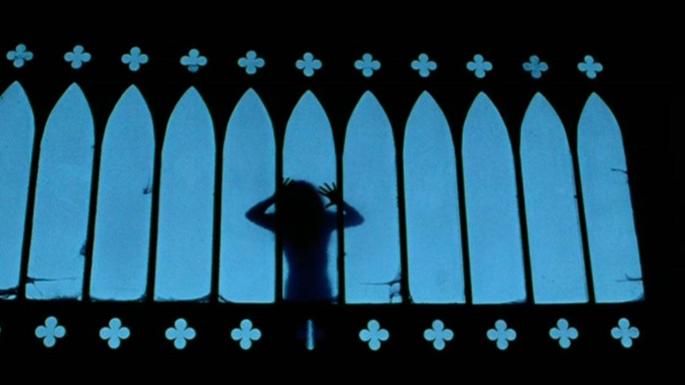
The filmmakers utilize the disturbing paintings inside Joseph Long’s house well, with the silhouettes always hanging over the various characters as they occupy its many hallways and bedrooms, giving off the impression that nowhere is truly safe.  It may be one of the most visually ravishing of all American horror films. Willard, interviewed in Stephen Thrower’s great book NIGHTMARE USA, has gone on record saying that MESSIAH OF EVIL was intended to be his vision of Los Angeles as he saw it after hours. In this case, it’s a rather bleak but no less phantasmagorical one; not a land of opportunity but one that carries with it the putrid stench of death, one that is (for lack of better word) haunted. Many of the undead extras were unemployed aerospace workers at the time and as members of a tightly-knit community they seem to wander around tragically, aimless – but no less capable of acting on their carnal, cannibalistic urges.

Ultimately, this is genuinely exquisite, though imperfect; there’s room for improvement in the casting department, with some dialogue coming off as rather stilted and less than subtle, the edges are overall kind of rough in spite of the sheer grandeur which they contain, and the electronic score – while mostly in service of the weird atmosphere – is often distracting during key scenes which could have benefited from a little more silence. Still, this is one of the most consistently creepy, thoroughly intoxicating and rewarding genre outings of its time; Lovecraft adaptations are admittedly a mixed bag, but by evoking shades rather than drawing directly from the author, Huyck and Katz have made (somewhat unintentionally) one of the best in the lot. It’s like entering another world entirely. Surrender is essential, adoration is an option; they’re coming here, they’re waiting at the edge of the city, they’re peering into windows at night, and they’re waiting. No one will hear you scream.

messiahofevilc1c

Malevolence: Bereavment- A Review by Nate Hill 

Back in 2003, director Steven Mena made an ultra low budget slasher effort called Malevolence, chronicling the brutal crimes of a kidnapped child named Martin Bristol, who grew up watching his abductor commit heinous murders in front of him, and as such became a monster himself. The torch of evil was passed, but we never got to see those early years and the inciting incident which led to such madness. Cue a prequel, entitled ‘Malevolence: Bereavment’, a detailed, suffocating and very, very disturbing account of Martin’s childhood initiation into the life of a serial killer, under the wing and at the hands of a madman named Graham Sutter (Brett Rickaby, a walking nightmare). He snatches 6 year old Martin (Spencer List) from a backyard swing, with designs on naming him as both protégé and acting as mentor, kidnapping locals in the area and subjecting them to unspeakable acts of violence and psychological experimentation, all in the name of some illusory philosophy that only makes sense in his diseased psyche. Meanwhile, a young girl (early work from Alexandra Daddario) moves into town to stay with her estranged uncle (Michael Biehn) and his family. While she tries to wade through a romantic coming of age story involving a local boy, events surrounding the killer’s actions get perilously close to everyone, and erupt into one of the most stressful, harrowing chain of events I’ve ever seen in a horror film. Biehn is Hollywood’s resident badass, but the genius in casting him here is that not even he is a match for Sutter’s tedious reign of terror, and it’s in such contrast that the film strikes despair right down to the bones. Sutter is barely human, with ninety percent of his dialogue spent on indecipherable rambling, making us feel all the more alienated by the fact that the only other human being around to soak up this toxic output is poor young Martin, on a clear path to mental destruction. These scenes are as lonesome and depressing as the acrid rural vista in which this all unfolds, and while we’re thankful for atmosphere and setting, we can’t wait to get out and breathe fresh air by barely the halfway mark, lest we choke on such overpowering despair. Keep an eye out for genre legend John Savage in a crotchety cameo, providing the film’s single iota of comic relief. As much of a vicious little sleeper as the first film is, nothing quite compares to the sheer bleakness and soul dampening evil they achieved this time around. Don’t go onto this one in a bad mood, it’ll mess you up. 

Stephen King’s The Night Flier: A Review by Nate Hill


Stephen King, the master of deliriously high concept horror, strikes again with The Night Flier, a gruesome, clever and painfully overlooked HBO midnite movie, starring everyone’s favourite grouchy pants, Miguel Ferrer, or Albert Rosenfield to any good Twin Peaks fans out there. Via a creepy take on tabloid journalism and the insidious obsession it breeds, King and Co. take a look at the way words get twisted from fact to bombastic fiction, the jaded reality one arrives at after working too long in such a field, and the hilarious possibility that such ridiculous, “made up” horrors one fabricates might in fact be a reality. Acid tongued Ferrer plays Richard Dees, a bitter and depressingly cynical trash reporter who is one drink away from the gutter and two lousy stories away from retirement, an acrid soul who lives by the mantra “Don’t believe what you publish, and don’t publish what you believe” (a pearl of wisdom that I imagine is rattling around King’s own skull, when we look at the sacrilege being wrought upon his magnum opus The Dark Tower in its cinematic emergence, particularly in regards to the casting of Roland the Gunslinger). Dees is on the hunt for en elusive serial killer who pilots an unnamed Cessna across the Midwest, slaughtering people in and around remote airports before vanishing into the night. Vampiric in origin and very hard to track down, this fiend uses the dark as his ally and seems to slip uncannily across America’s airspace, leaving a wake of bloody murder in his path that gives any old tabloid yarn a run for its money. Jaded Dees gets more than his usual brand of hoaxes and pranks, and seems oddly, morbidly drawn to this spree of horrific crimes, eerily willing to follow the Night Flier into the very jaws of Cerberus himself, if only to find exodus from his pointless, roundabout existence. All of King’s beloved qualities are at play here; grotesque practical effects, gnawing existential calamity, a light at the end of a tunnel that seems to crush our protagonist before they can reach it, and clever morality plays buried like demonic Easter eggs amidst the corn syrup and latex. An overlooked treat. 

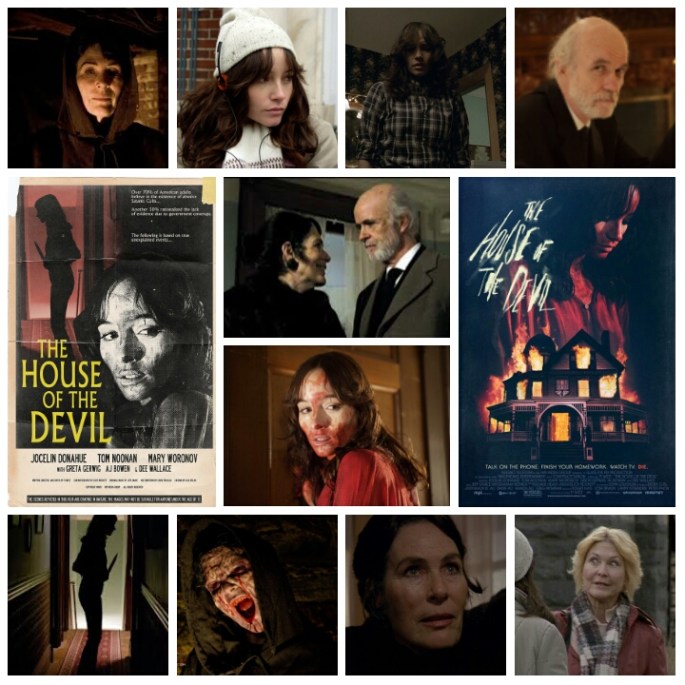
Ti West’s House Of The Devil: A Review by Nate Hill 

Throwbacks to horror films of the 70’s and 80’s either work or they don’t. The filmmakers are either able to replicate that specific tonal aesthetic and look from back then, or they aren’t. It’s not easy to do, but writer director Ti West makes it seem like a walk in the park with his near flawless House Of The Devil, a gorgeous love note to the satanic works of yester-year that so adeptly recreates that time and place until we really believe we’re watching a film that was made then. From the nostalgic hand drawn poster that beckons with atmosphere of a bygone era, to the use of full on, lovingly lettered credits ahead of the film, it’s pure vintage bliss, like that one perfect vinyl you find in the second hand shop. It starts out like many of these horrors do, with a young teenage girl (Jocelin Donahue) innocently wandering into a situation that leads down an inevitable path of gruesome terror. In this case it’s a seemingly innocuous babysitting job posted on her college notice board, by a cheery enough landlady (horror veteran Dee Wallace). Arriving at a creepy, ornate old manor, she meets Mr. and Mrs. Ullman, two gaunt, old world looking weirdos played by soft spoken yet disconcerting Tom Noonan, and genre legend Mary Woronov. They seem kind yet just kind of…off, explaining to her that the kiddies are alseep already upstairs, assuring an easy night for her. They depart and she’s left alone in the vast empty halls, or so she thinks. She’s been chosen for a bizarre, bloody ritual and soon is plagued by nightly terrors, a ghastly witch, the Ullmans themselves and all sorts of devilish deeds. Noonan could stand there and order a large double double with a honey dip and still make you uncomfortable, the guy is just perfect for horror, and makes a purring gargoyle of a villain for our our young heroine to go up against, backed up by Woronov’s nasty Morticia vibe. Eventually it gets quite graphic and startling, but the slow, solemn lead up is the key in making the horror shock us all the more. Nothing happens for an agonizing first half, filled with silent apprehension, and when all hell finally breaks loose, our nerves are already taut strings waiting to snap, like the ones in the shrill, ragged violin score. That’s how you pace a horror film, and many artists today should take note of this one’s pace, soundscape, mood board and production design, because it’s all about as good as it gets for this type of thing. Essential horror viewing, and I’d love to see a grainy VHS edition complete with box art, if that’s something they even do these days.