Being Hal: An Interview with Amy Scott by Kent Hill

Other-Films-Our-Lives-Hal-Amy-Scott-Talkhouse-Film-02

There is no denying that a good percentage of the films we count today as iconic, came from the 70’s. With the birth of the easy riders and raging bulls, it would be the first and last time filmmakers would enjoy true creative freedom, as well as being able to present personalized films to the movie-loving audience at large.

Now. When we think of the 70’s, the new Hollywood, there are the usual suspects that come to mind. But, there is a name that, for whatever reason, has been absent from the list when it leaks from the tongues of cineastes the world over. That name is the name of Hal Ashby. One of the great individualists to come out of his era, Ashby’s cinema is at once quietly profound and intensely calm. He was an artist that saw the world for what is was – in its entire obnoxious, absurdist best, Ashby captured the beautiful frailty of the moment, no matter how strange, or violent, or sensual, or funny.

MV5BOGEwZjEyOTYtYmM1MS00ZGVlLWE5ODEtOWUwNmM0MTQ2YWNlXkEyXkFqcGdeQXVyMjQ0NzcxNjM@._V1_

Still, with all the freedom they enjoyed, the filmmakers of the 70’s were far from immune from the ‘tampering of the suits’. Ashby, like his contemporaries, raged against the ludicrous interference and mindless nitpicking of the powers that control the content that comes to a cinema near you. And, in fighting for his vision, he was labelled troublesome, rendered weary and eventually would succumb to a career that watched him bravely, and perhaps at times foolishly, burn the candle at both ends.

Amy Scott has produced, at last, the grand portrait of a man who made some of the defining films of his generation – or any generation from that matter. With the blessing of Ashby’s estate she as unearthed a veritable trove of Ashby gold, from letters to recordings of the man himself – telling it like it is, or was, or perhaps someday will be.

Hal is a documentary that has been on the road to find out. I for one can’t wait for you to see it – I for one, am just glad it’s out…

WOULD YOU LIKE TO KNOW MORE:

http://hal.oscilloscope.net/

https://www.facebook.com/halashbymovie/

PHILLIP NOYCE: An Interview with Kent Hill

534074_2

One of the great things Phil told me – aside from passing through my hometown to play footy in his youth – was that Queensland had a big part to play in convincing the studio powers that Blind Fury (my personal favorite of Phil’s pictures) could be a hit.

After a regime change – as often is the way in Hollywood – the new brass didn’t have much faith in a film the previous caretakers saw fit to green-light. Phil knew he had a good picture and thus persuaded the powers to let him take it to the far side of the world and release it in the Sunshine State, where, with the help of a publicist, they sold the heck out of Blind Fury and brought in $500,000 buckaroos.

So Phil went back to the blokes in suits and told them if the movie can do that kind of business 7,510 miles from Hollywood, I think we have a shot. See that’s the Phil Noyce touch ladies and gentlemen, remaining Dead Calm in the face of Clear and Present Danger. If you believe that there is even a Sliver of a chance your movie can Catch a Fire, you can’t just sit there like The Quiet American and take it with a grain of Salt. You need to fix your courage to the sticking place, follow the Rabbit Proof Fence all the way home and for your hard work they’ll call you The Saint for being the The Giver of great cinematic entertainment. You can play Patriot Games till the cows come home, but if you attack them on the Newsfront then you’ll be The Bone Collector and bring home the receipts.

I’ve watched many a great interview and read many a great book about the life and career of Phillip Noyce – never thinking that one day I might catch a moment’s grace and be able to have a chat with him. I have to thank (again) a top bloke by the name of Nick Clement for putting in a good word for me – without Nick I’d still be dreamin’.

https://youtu.be/rgnlJ38ntQw

Phillip Noyce is a marvelous chap of the old school and the maker of some truly wondrous pictures. He really needs no introduction from me for his reputation speaks for itself. Without further adieu . . . the master . . . Phillip Noyce.

Emerging from the river of wind: Remembering Slipstream with Tony Kayden by Kent Hill

maxresdefault

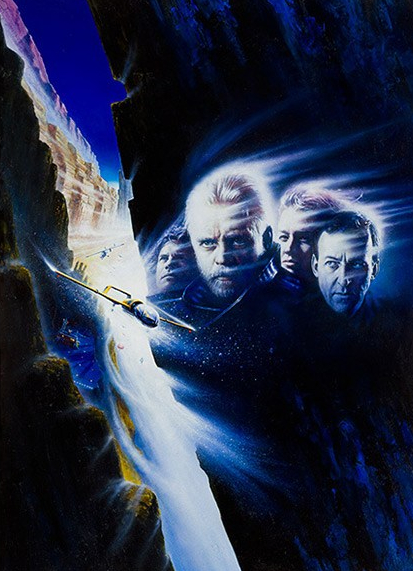
Slipstream was alluring from the moment I saw the poster in the front window of my local theater. From the producer of STAR WARS and the director of TRON was the proclamation, and I was sold. The film, even then, delivered, as far as I am concerned. It offered a different world, an intriguing premise, great performances and . . . yes, I’ll admit a disjointed viewing experience. Still, I love the movie and have always been curious as to the production and what elements combined to bring this fascinating story to the screen.

At length, I finally made contact with Tony Kayden, a veteran screenwriter and the credited scribe of the film (as well as a man with his own amazing set of adventures in the screen trade). And it didn’t take long to learn that the narrative irregularities of Slipstream were the result of no one really knowing what kind of film they wanted to make.

slipstream

With the money in escrow, the movie was being made, that was definite. The script that Tony was brought on to rework was, at its heart, a stock-standard Star Wars rehash. Enter producer Gary Kurtz. After enjoying success serving alongside George Lucas and Jim Henson on the Dark Crystal, Kurtz came to the project seeing another unique film on a grand scale and an adventure born in the wind. The director tapped to steer the ship was Tron director Steve Lisberger. His work on Tron was extraordinary, original, and one could only imagine what he might do with a larger canvas combined with thrilling aerial action, accompanying a compelling human story. But then then problems began. The Producers wanted action and more sexual interaction where possible. Kurtz wanted something cleaner, no graphic violence and something more Star Wars. Lastly there was Lisberger, having just become a father, and wanting to make something for kids.

Then you have the poor writer. Only hired for four weeks, Tony ended up residing in England for three months, trying in vain to mix this maelstrom of indecisiveness into a cohesive plot. Kayden saw the movie as a kind of post-apocalyptic version of the The Last Detail. You can see the surviving elements of this in the interactions between Bill Paxton and Bob Peck’s characters of Matt and Byron. One a fugitive being taken in for the reward, the other an opportunist looking to make a quick buck. But, ultimately they become friends and seek to merely flow with the slipstream they are, for better or worse, traveling along.

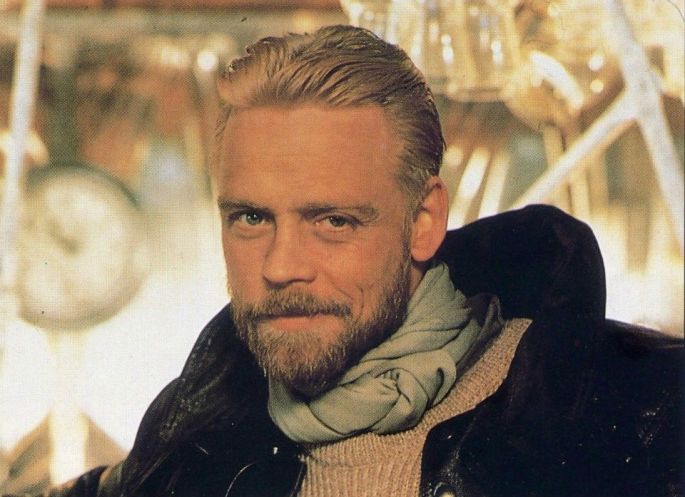
These two are chased by Tasker, Mark Hamill, in a platinum performance as the mustache-twisting law man whose faith has been replaced by devotion to duty and routine whilst maintaining order here in this desolate society. He harbors a Javert/Valijean type relationship with Peck’s curiously, emotionally-distant accused killer – who just so happens to be an android.

The journey down the stream brings Matt and Bryon into contact with fellow adventurers/survivors Sir Ben Kingsley (who after a chat about the script in the commissary with Tony, sought out a part in the movie), and eventually, another Oscar winner in the person of F. Murray Abraham, the caretaker of one of the last sanctuaries – a literal museum to the past, complete with all its folly and decadence.

But the movie ends in tragedy and triumph. While the evil pursuer is vanquished, Bryon’s hopes for happiness are dashed. He is forced to leave his new found friend and seek out his own kind, wherever they may be.

That all might come across as a little confusing? Like I said before, the film is disjointed. This doesn’t prevent it, however, from being fun. The the actors give solid performances, the photography is brilliant, the locations amazing, Elmer Bernstein’s score magnificent – it is just a shame that the powers behind this movie couldn’t seem to agree.

As Tony told me, “the writer often takes the blame.” Though that is not the case here. If anything he should be commended for fighting the good fight in a losing battle.

Still, my fondness for Slipstream endures. In part for what it is, but also for the possibility of what it might have been. Like I said to Tony, in the age of the reboot, there might be a second life yet for Slipstream. Now all we need to do is get Dwayne Johnson on board…

“Do we really suck, or is this guy really that good?” : An Interview with Michael Davis by Kent Hill (PART 1)

michael-davis-1465395106

I really love this gig. I really do. I’ve had the distinction of being able to converse with many a hero and much admired artist over my time at PTS. There have though, been a few surprises along the way – and this was one of them.


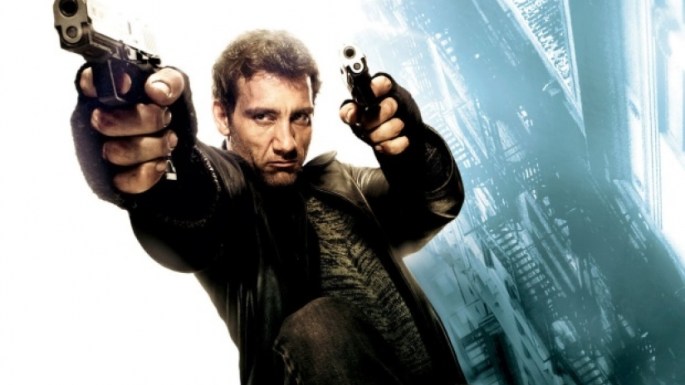
I have long wanted to chat with Michael Davis. Part of it, and I’m sure you’ll agree having seen his films, that here is a man who went from making 100 Women to writing and directing the most-excellent, ballet of bullets that is Shoot ‘em Up. And you just need a few minutes of talking with Michael to understand how this was possible.

They say Scorsese has a machine-gun-mouth. Well listening to Michael is like standing next to Jesse Ventura firing Ol’ Painless. And – WOW – what a delight, the frenetic and passionate electricity that this man generates in infectious.


Michael’s initial overview of the birth of his career is one of the most entertaining I’ve ever heard. From his beginnings as a storyboard artist, to various writing assignments (don’t say Double Dragon out loud), to his eventual directorial debut; it’s a madcap movie marathon coming at you – at high speed!


Our conversation was so enthralling, so engaging, that I would be doing my guest a severe injustice to cut even a moment of it. So I shall be presenting it to you as a trilogy. Each section I promise is as entertaining as the last. So, don’t touch that dial, and prepare yourself to experience the filmmaking personification of the perfect storm that is . . . Michael Davis . . . . . . PART 1.

shoot-em-up-8


The Making of: A Conversation with Robert Meyer Burnett by Kent Hill

I love behind the scenes documentaries – always have. What began as 60 minute specials and from there graduating to EPKs (or Electronic Press Kits) have become full-blown features, at times several hours long. And the longer the better I say.

20479747_1996498947235998_6110516415750134827_n

Robert Burnett has been that guy. The guy behind the scenes. Armed with light-weight equipment and a small crew, he has captured the people who make the magic and the war it is to bring a dream to life on film.

He has been there to witness the making of the multi-Oscar winning Lord of the Rings trilogy. He has seen what it took to orchestrate Superman’s return. He has ventured back in time and brought us wonderful retrospective looks at films like Disney’s cult classic Tron.

But Robert is also a passionate filmmaker in his own right. Having made his own film Free Enterprise, directing episodes of the TV series Femme Fatales along with short films as well. He is a prolific producer having shepherded films like The Hills Run Red and Agent Cody Banks 2. And, just when you’re about to say, “Stop it Rob, you’re just too talented,” he is also an experienced editor; often times chopping his own work, whether it be for DVD special features content or the films he has worked on.

Beneath all of his success, Robert is a massive film lover, citing The Right Stuff, All That Jazz and The Godfather among the countless films he adores.

It was a real pleasure to chat with him about all he has seen behind the scenes, but more so to simply chat movies with a man who knows his stuff. Turns out he loved his time here in the great southern land (Australia), along with our beer and music. It is my hope Rob finds his way back so that I might take him up on my invitation to share a cold VB (Victoria Bitter) and talk movies…

…but until then, enjoy our chat.

20525784_1996498933902666_691227589830810364_n

Conceptually Speaking: An Interview with Sylvain Despretz by Kent Hill


Sylvain Despretz really is the personification of honnête homme. And he has been a man of the world since an early age. Travel was a part of his life; the other constant being his love of the cinema.

He is an artist of great style and skill and after his schooling he worked as an art director for a top Madison Avenue agency then moved on to illustrating Graphic Novels in California under the mentoring of the internationally famed artist Moebius. From there he would set out upon what would become and astonishing career as a story board artist and conceptual designer.


This slideshow requires JavaScript.

His work you’ll have seen, gracing the screen in a myriad of films in a variety of genres. Movies like Gladiator, Alien Resurrection, Panic Room, The Fountain, (Tim Burton’s) Planet of the Apes and The Fifth Element. These including work on Don’t tell Mom the Babysitter’s Dead and the coming Luc Besson sci-fi extravaganza: Valerian. He has worked with  and on films directed by the true masters of the screen including Ridley Scott, Stanley Kubrick, David Fincher and Jean-Pierre Jeunet.

But, as you will hear, Sylvain has become disenchanted by the current repetitive nature of Hollywood’s cookie-cutter output. He is now driven by the notion that the only way to usher in change, is to be part of a creative revolution that places an emphasis on original voices instead of corporate responsibility.


This slideshow requires JavaScript.

To this end he is now embarking on a journey that will see him stepping away from the drawing board and moving behind the camera; bringing his own visions to life using that mysterious blending of industrial light and storytelling magic.

He is a learned Hollywood veteran who has seen the Dream Factory from the inside, and his stories and wealth of knowledge and experience was and is fascinating to experience.

The designer behind the scenes and the future man in the director’s chair, proud am I ladies and gentlemen to present this interview with the one and only, Sylvain Despretz.

VISIT SYLVAIN’S OFFICIAL SITE:

http://www.metaprogram.net/

K Pax


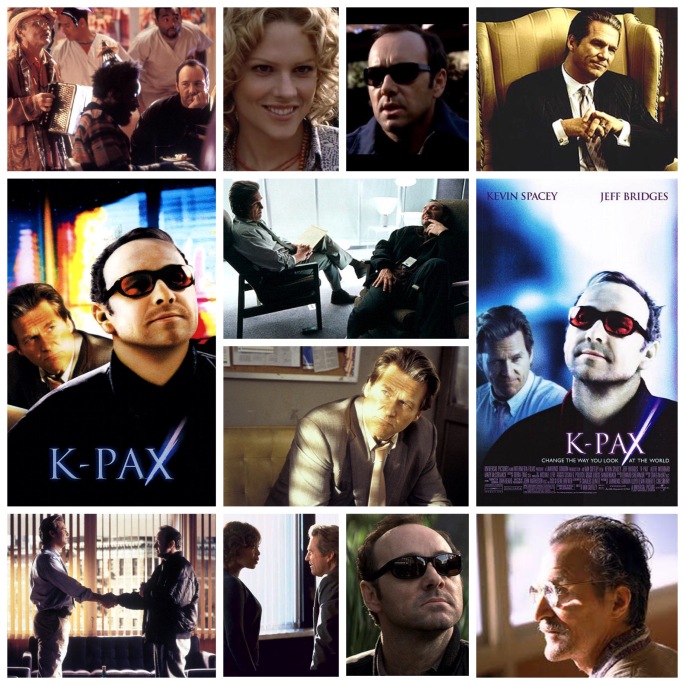
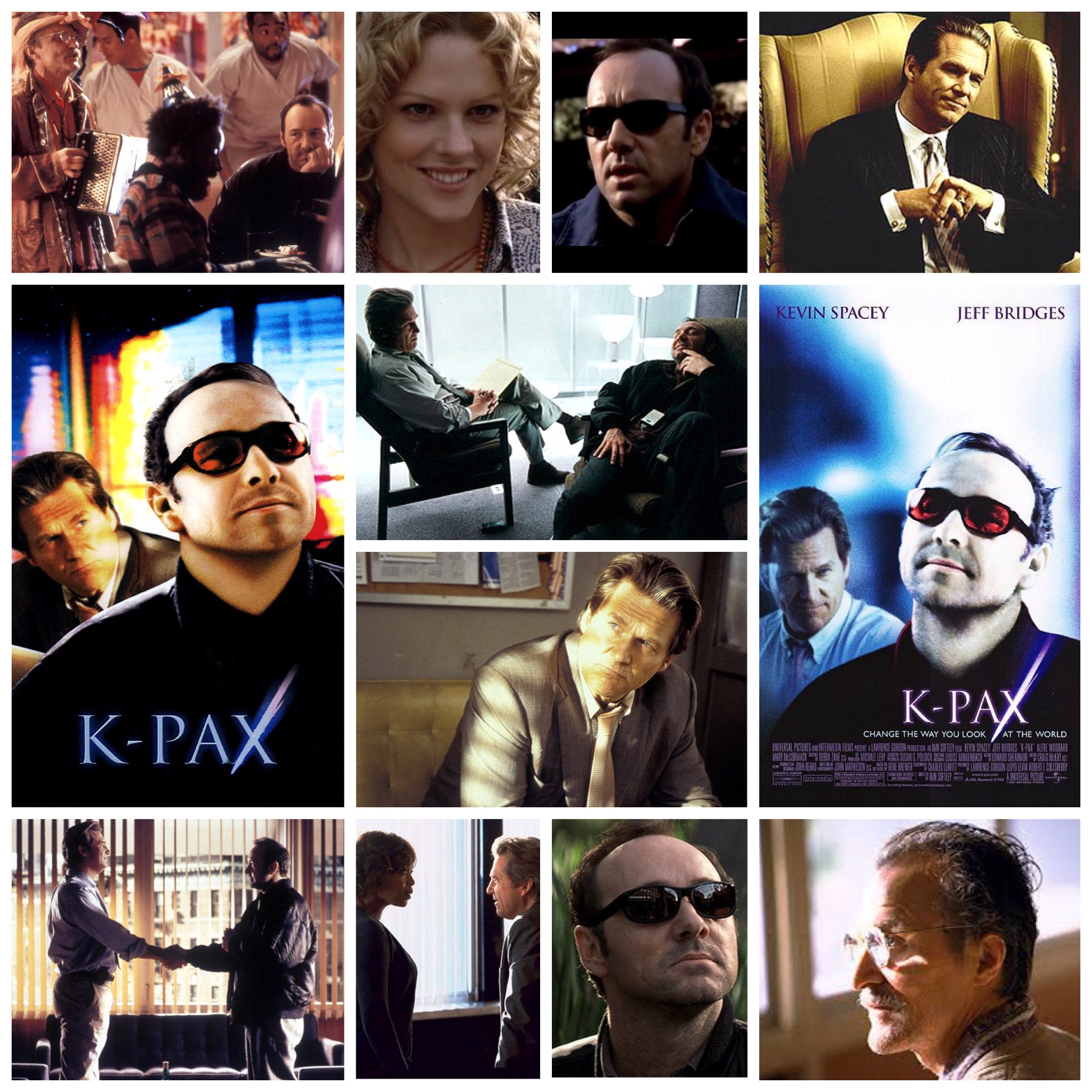
K-Pax is a beautifully told, warmhearted film that despite being mildly frustrating in it’s persistent ambiguity, is no doubt a better film for never really drawing a line and stepping to one side of it. Kevin Spacey is charming and sad as a mysterious man called Prot. Prot lives in a psychiatric ward and claims to be from a distant planet (named K Pax, naturally) in a faraway galaxy. Jeff Bridges plays the kindly therapist assigned to take care of him and eventually coach him out of his delusions. But are they delusions? Prot boasts uncanny, impossible knowledge of the solar systems and beyond, and won’t budge on a single detail of his story, which is not characteristic of someone suffering mental illness. Is Prot really who he says he is, or simply a man with a past so deeply traumatic that he’s spun this web of science fiction around his pain and nestled into it like a cosmic comfort blanket? This is where the film refuses to delineate or choose, which is either it’s one fallacy or it’s strongest, bravest creative quality, I haven’t decided yet. It’s interesting that they’ve casted Bridges because there’s a noticeable vibe akin to John Carpenter’s Starman here, which he starred in. Spacey and him are pure magic, navigating their scenes of dialogue like a dance of light, showing kindness and compassion in a situation that breeds confusion and fear. The supporting cast is peppered with talent including David Patrick Kelly, Mary McCormack, Aaron Paul, Alfre Woodward and Bill Lucking, but it’s Bridges and Spacey’s show all the way, and they turn the script they’re given into spun gold. Not to mention the crisp, brilliantly lit cinematography courtesy of John Mathieson as well. It’s one thing to come across intelligent science fiction, but when a film has the emotional heft to back up the tech and brains, you get the whole package, and this one delivers. 

-Nate Hill

Writing with Fire: An Interview with Matthew Greenberg by Kent Hill

Chatting with Matt felt like getting together with a buddy you’d been out of touch with for too long. He is an explosion of wit and joy; even though he works in a town that can at times be a realm of foreboding dread.

“I failed at everything else,” he said, when I asked him how he came to be an adventurer in the screen trade. Matt has felt the highs and the lows – he has climbed up the mountain that is the film industry, slipped, and started climbing again. Yet, even with broken fingernails, he has managed to pen a wild array of movies. They’ve a little of everything in them that a growing boy needs as part of his complete breakfast: from faceless killers to fire-belching dragons to spooky hotel rooms. They may in part be “significantly different” from the scripts he turned in, but if you listen to Matt, that same exuberance and enthusiasm he carries for his work manages to make the final cut.

He came to Hollywood with enough money to buy a plane ticket (that got him there) and a car. Since then he has made it – in place where momentum is everything and the decisions handed down from the hierarchy don’t always make sense. From that place where all the leaves are brown and skies are grey, Matt showered me with tales of his journey through the savage land known as Hollywood and how with a genteel parlance, you may perhaps survive.

Ladies and gentlemen, I give you, Matthew Greenberg…


TRON: LEGACY – A REVIEW BY J.D. LAFRANCE

tronlegacybdcap2_original

It has been over 30 years since Tron (1982) was released in theaters. Made on the cusp of the home computer revolution, the film was a simple good vs. evil parable that saw a disgraced computer programmer hack into the network of the corporation that fired him only to be zapped into cyberspace where he got to see how the other half lived. Tron was a modest success at the box office and resoundly trashed by critics. It seemed destined to become merely a footnote in cinematic history as one of the earliest examples of computer graphics in a Hollywood film. Over the years, it developed a decent cult following who dreamed of a sequel some day. That time finally came.

Hoping for a lucrative franchise that doesn’t involve pirates, Disney ponied up a considerable amount of money so that the filmmakers of Tron: Legacy (2010) were able to utilize the same kind of 3D digital cameras that were used to make Avatar (2009) and the CGI technology used to age Brad Pitt in The Curious Case of Benjamin Button (2008). And, in keeping with the original filmmakers hiring cutting edge composer Wendy Carlos, Tron: Legacy features an atmospheric score by hip electronica music duo Daft Punk. The end result is a stunning assault on the senses.

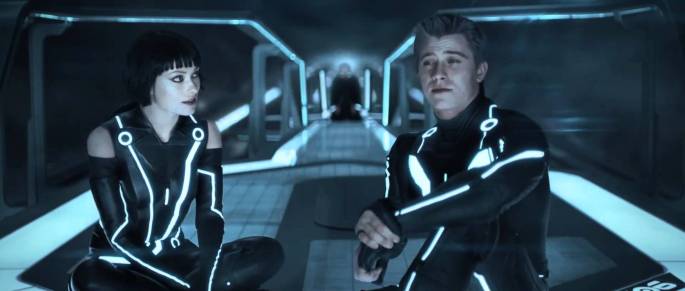
In 1989, hotshot programmer and CEO of Encom Kevin Flynn (Jeff Bridges) disappeared, leaving his young son Sam with his grandparents and no indication as to why he left. Since the death of his wife four years before, Flynn’s behavior had become increasingly erratic and he had become obsessed about a brave new world, a digital frontier that he had experienced in Tron. Sam (Garrett Hedlund) grows up to become a rebellious chip off the old block as he breaks into Encom just so he can publicly embarrass the company’s current CEO. Since Flynn’s absence, Encom has returned to its old, soulless ways much to the chagrin of his long-time friend and current board member Alan Bradley (Bruce Boxleitner). He informs Sam that he got a page from his father at the office in his old arcade.

Long shuttered and collecting dust, it is a cemetery for classic arcade games. Sam uncovers his father’s personal computer and before he knows it, he’s zapped into the computer world. Flynn’s prized program Clu (also Bridges) has taken over and rules the computer world with a fascist, iron fist. Flynn has become a fugitive and it’s up to Sam, with the help of a program named Quorra (Olivia Wilde), to make things right again.

Rather fittingly, the real world footage is shot in 2D but once we enter cyberspace, the film comes vividly to life with cutting edge 3D technology. Much of the iconography from the first film is present – the disc battle, light cycles, etc. – but amped up with The Matrix-like action sequences and three-dimensionalized. If there was ever a film would that begged to be given the 3D treatment it is this one. However, these effects aren’t that apparent or as frequent as one would hope which begs the question why even do it in the first place? Short answer: money. The filmmakers have basically taken the imagery of Tron and cranked it up to 11 – pure, unadulterated eye candy with things like dialogue and characterization taking a backseat. The attention paid to production and art design is phenomenal with all kinds of neon-drenched landscapes full of ambient sounds that will keep architecture buffs busy for years. That being said, the CG to recreate a younger version of Jeff Bridges, circa 1982, is distracting with its waxy, stiff look and dead, lifeless eyes, which, I guess, is appropriate for what is basically an evil clone of the real deal within the film.

Say what you will about the original Tron and its flaws but at least it was anchored by a playful and charismatic performance by Jeff Bridges who acted as the audience surrogate into a strange, new world. This time around, Garrett Hedlund takes on that role with limited success. The uninspired screenplay doesn’t do him any favors and so he does the best with what he was to work with, which admittedly isn’t all that much. Bridges plays a grizzled, burnt out version of his original character and with his beard and long hair it almost seems like the Dude from The Big Lebowski (1998) was zapped into the computer world. As if sensing this, Bridges even lets out a few Dudeisms at certain key moments in the film, which at least livens up the forgettable script.

Noted British actor Michael Sheen even shows up channeling David Bowie’s Ziggy Stardust persona as Castor, a preening, flamboyant host of a nightclub where Daft Punk have a cameo as DJs. Using these musicians to do the score for Tron: Legacy was a masterstroke and they seem like the logical evolutionary step from Wendy Carlos. However, those fans expecting them to recreate their trademark dance music might be disappointed as they opt for a more orchestral score that at times is reminiscent of early 1980s John Carpenter, in particular Escape from New York (1981), while also referencing Vangelis, Maurice Jarre and Hans Zimmer’s score for The Dark Knight (2008). Their finest moment comes during a battle at Castor’s club where Daft Punk gets to really show off their musical chops as they segue from ambient music to pulsating dance music to bombastic beats that accompany with the action. Along with Trent Reznor and Atticus Ross’ score for The Social Network (2010), theirs was one of the best soundtracks of that year.
maxresdefaultTron: Legacy replaces the “information just wants to be free” message of its predecessor with a “sins of the father” theme as Flynn attempts to stop Clu, his Frankensteinian creation, and repair the damage done between him and Sam. Tron: Legacy manages to make this world and its characters accessible to those not familiar with the first film by basically rehashing its plot, blow-by-blow, which may disappoint fans. However, it does feel like a continuation of the first film with all kinds of references to things that happened in it. There is also a rather nifty cameo by a notable character actor that hints at a possible villain for the next film, if this one makes enough money. Of course, there is the usual criticism that the dialogue is weak, the story is formulaic and there is a real lack of characterization – all issues critics had with the original film. Tron: Legacy certainly lacks in these areas also, but like the first film, the visuals are so impressive, so captivating in the way they immerse you in the computer world, that you tend to ignore the flaws, relax and enjoy the ride.
Hell Or Highwater: A Review by Nate Hill 

Hell Or Highwater is an acrid, mournful little tumbleweed lullaby sung at the American southwest, a tale of hard times and desperate men infused with the laconic nature of the area and given the spare yet hard hitting writing skills of Taylor Sheridan, who also penned the equally bleak Sicario. I wasn’t quite sure what time period he was going for here until Jeff Bridges’s salty Texas Ranger brandishes a smartphone, signifying the present. I imagined an 80’s throwback, but I suppose the vacuous dereliction hanging about the rural West has only gathered with time, in a place where time has curiously seemed to halt dead in a financial sinkhole where not much of anything in the way of hard earned success can flourish. Chris Pine and Ben Foster play brothers and partners in crime, in the thick of a statewide bank robbing spree which gets progressivly more dangerous, all to save a piece of property from the big banks threatening to foreclose. They’re not evil men, they’re not even bad men because Sheridan’s script doesn’t allow such stark delineation. They are men forced to make decisions, just like any other, yet in times like these one’s decisions are often of an extreme nature, out of self preservation or desire to protect one’s family. Pine is the introverted one, and the actor disappears into the role with ease and scruffy calm that contrasts his usal golden boy charm. Foster is the live wire, a man who functions on mostly instinct alone, lives in the moment and reacts like an animal from situation to situation. Quite the actor he is, and hasn’t been let completely off the chain since 2004’s Hostage. Here he fills the screen with intensity and much needed humour. The two have love for each other that occasionally peeks through the cloud of trouble they’re flying in, the film adament in showing us their damaged humanity through the desperation of their actions. Bridges is crusty and jaded, the badge and gun serving as his only family other than the uneasy camaraderie he has with his younger partner (Gil Birmingham), a man he berates solely because he seems incapable of proper human interaction, no doubt a result of decades on the job, wandering through the desolation of the desert hunting men who have broken their lives and wishing he ever had one of his own to begin with. There’s an emptiness to this tale, a lonely ambience punctuated by many a beautiful song from both Nick Cave, T Bone Burnett and more, whose downbeat lyrics only pile on the mood thicker. The film wants to examine the need to go to extreme measures in times of strife, but holds us in our seat long after the deed is done to show us the ramifications, both negative and positive, of such actions. The result isn’t pretty, but it’s damn well beautiful and one of the best films I’ve seen so far this year.