The Multi-talented Man of Action: An Interview with Jino Kang by Kent Hill

Error
This video doesn’t exist

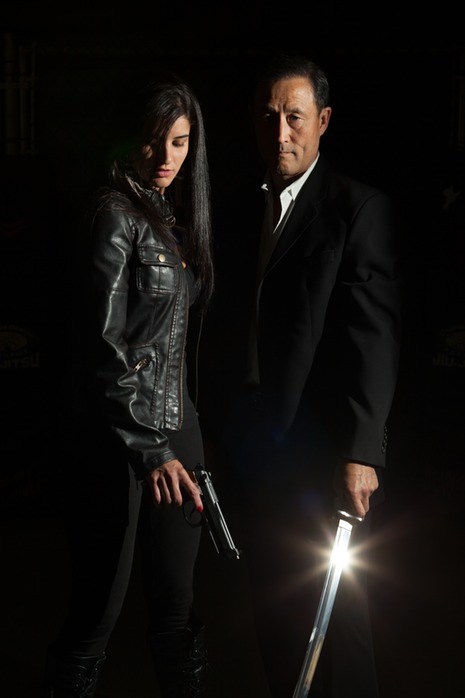
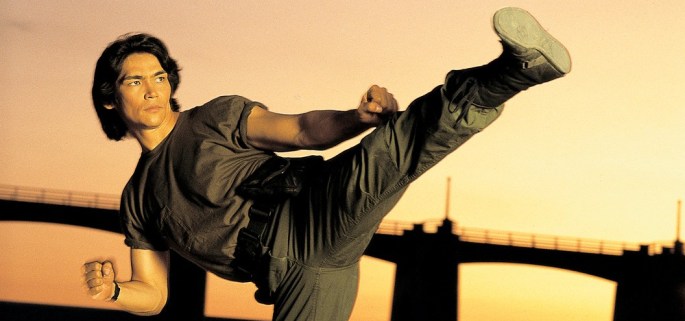
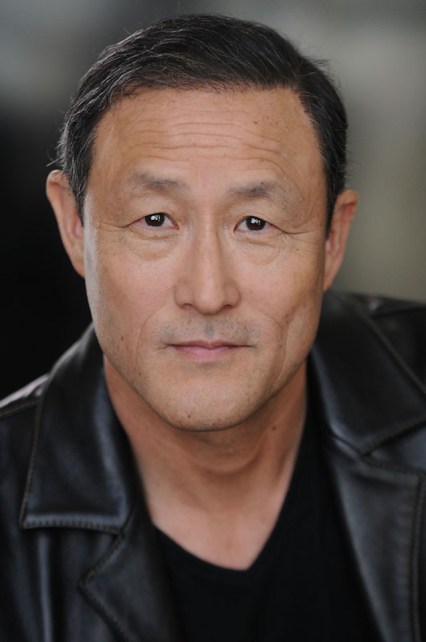
Jino Kang, the gentle-spoken son of a Hapkido Grand Master, grew up in South Korea during the 60’s, a time when the influence of the Western world was just beginning to emerge. The Kang family immigrated to California in 70’s.

lck_0466_med_hr

Jino adapted quickly to a new language and culture, all the while following the traditions of his father. He opened his Martial Arts school in the 80’s (http://hapkidousa.com/http://hapkidousa.com/). Jino holds a seventh degree black belt in Hapkido and continues to teach in San Francisco.  He was inducted in to Master’s Hall of Fame in 2009.

Although Martial Arts is in Jino’s blood, he had another passion – filmmaking. He began by making movies with his friends in Junior High School, his early screen heroes were Kurosawa and his frequent leading man Toshiro Mifune. Studying at the College of Marin, Jino elevated his skills and appreciation for the craft of making movies.

2012-09-08_weapon-shoot_med-2

In 90’s, Jino starred in, directed and produced his first feature film, “Blade Warrior”, shot in glorious 16mm. Jino has since shot, produced, and acted in Fist 2 Fist aka Hand 2 Hand.  Fist 2 Fist won numerous awards and critically acclaimed as “belongs in the top end of the scale of Martial Arts films”. His new film, Fist 2 Fist 2: Weapon of Choice won “Action Film of the Year” at Action on Film International Film Festival in 2014. He is currently at work on new films including a short subject action series, Kid Fury, starring one of his pupils Timothy Mah.

His balletic style and approach to action cinema set him apart from the multitude of entries in the genre. I believe should he continue to embrace this as he grows in his ambition, we shall someday soon no doubt witness an action/martial arts spectacle the likes of which this world has never seen.

Enter “The Dragon”: An Interview with Don Wilson by Kent Hill

When you used to decide to hit the video store (back in the day) and roam the aisles in search of hidden gems, you’d discover a great many things. Sometimes it was the films in total – other times it was a star you seemed to have an unending body of work.

donthedragonwilson-filmfestival-4

That was my first impression of Don “The Dragon” Wilson. There always seemed to be more and more movies that he had been in. So, being the completest I am, I sought out each, any and every film he was in.

Don “The Dragon” Wilson is a world champion kickboxer, a European Martial Arts Hall of Famer and an action film actor. He has been called “Perhaps the greatest kickboxer in American history.”

Some (and I stress the word SOME) movies to his credit include: Futurekick, Bloodfist 1-8, Ring of Fire 1, 2 & 3, Out for Blood, Operation Cobra, Blackbelt, Cyber Tracker 1 & 2, Terminal Rush, Redemption, Say Anything, Capitol Conspiracy and Batman Forever as the leader of the Neon Gang. You can judge the scale of a film’s budget by the quality of the craft services. In the case of is brief but memorable appearance in Batman Forever, there would be no mere fold-out table with ice mochas and Doritos. No, Don found  the whereabouts of a catering trailer in which stood a chef, ready to cook him whatever he desired.

But back to the movies – Don’s career has been motoring along for decades – and he shows no sign of slowing down. With films like The Martial Arts Kid and Paying Mr. McGetty along with several others waiting in the wings, Don “The Dragon” Wilson is still as vital and explosive as ever. I for one can’t wait to see where journey goes from here.

https://www.youtube.com/watch?v=C7DTnJSX0WQ

https://www.youtube.com/watch?v=JaqZ3iH54lY

John Carpenter’s The Ward


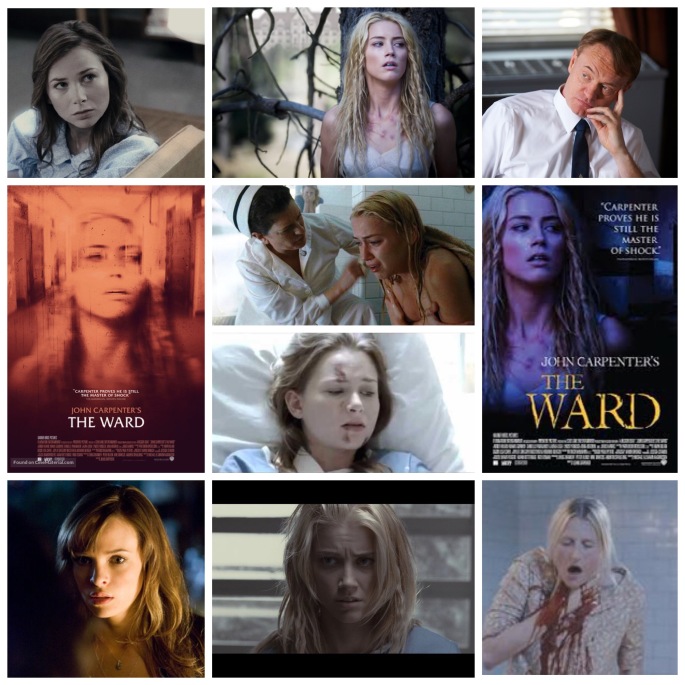
John Carpenter’s The Ward isn’t a particularly remarkable film, and it’s certainly not a very scary one, but there are aspects that I really enjoyed, one of which being the excellent original score, which Carpenter actually didn’t compose himself, for once. The film gets off to a great eerie start with opening credits that are the most evocative sequence of the whole thing, leading into the tale of one seriously disturbed chick (Amber Heard) who finds herself in a whacko mental institution, plagued by the ghost of a restless former patient. A befuddled Doctor (Jared Harris) knows more than he let’s on, of course, and her fellow patients are similarly tormented by the phantom. Here’s the thing: it’s well plotted, acted and executed, save for one thing: it’s never scary. Not once do the hairs on the back of your neck stand to attention, and a horror film should have that. I loved the psychological sudoku of an ending, but even there there was no creep factor to be found. Her fellow patients all have parts to play, including Danielle Panabaker, Laura Leigh Claire, Mamie Gummer and a standout Mika Boorem who steals the show from Heard right in the final act. Works as a thriller, padded with atmosphere here and there, but could have done with a better dose of chills to sweeten the deal. 

-Nate Hill

John Carpenter’s Prince Of Darkness

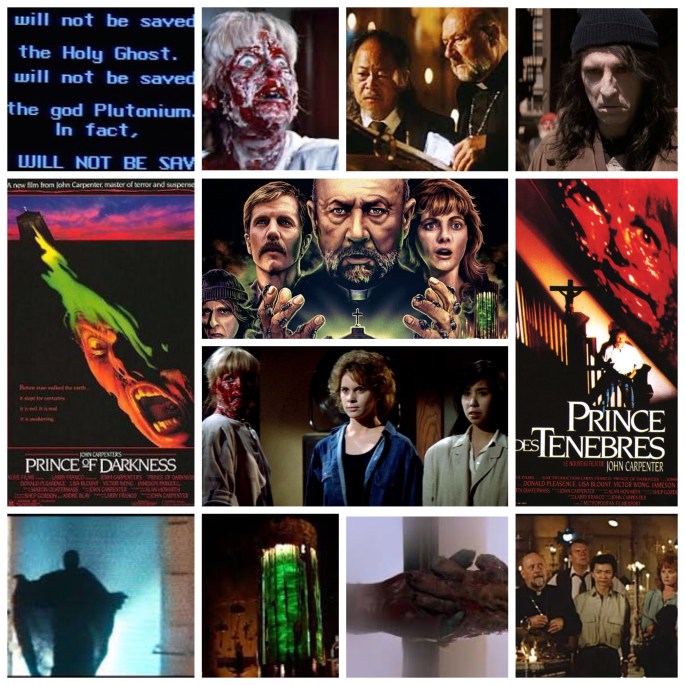
Trust John Carpenter to constantly subvert expectations, aim for innovation and simply just please the crowds throughout his career. Prince Of Darkness is, at first glance, a creaky ol’ fright fest, and it is that, but there’s also a cheeky little irreverent streak to it as well, a borderline atheist flourish that you wouldn’t normally find in a flick about summoning up the devil. Carpenter lays the atmosphere on thick, especially with a reliably spooky electronic score and a pace that burns slow and steady. Deep in the crypt of a church there lies a large glass vial containing swirling green matter, a pseudo scientific/spiritual cocktail that contains the “anti god”, a denizen composed of backward atoms that wants to break out and raise a little hell. Grim faced priest Donald Pleasence will prevent this at any cost, and hires a team of underpaid undergrads led by a crusty professor (Victor Wong) to research it, camping out in the church for kicks. You can imagine how this goes, and there’s a refreshingly old school ‘Body Snatchers’ vibe as various characters fall victim to the creeping dark forces. There’s also mind-stimulating, sci-fi ideas at work too though, including an intriguing time travel prospect and a deft little jab at religion via the story’s trickier elements. Carpenter, although hailed as a master of horror, is no simpleton when it comes to ideas, and he flexes his cerebral muscles nicely here. Ambient, gooey, smart, provocative, a terrific little fright fest that leaves you wanting more. 

-Nate Hill

Kurt Russell Week: Top Ten Performances

Leading up to one of the year’s most anticipated films Marvel’s Guardian’s of the Galaxy Vol. 2, which by and large promises another great performance from Kurt Russell, let’s take a look back at the ten best performances from one of cinema’s last standing movie stars.
Author’s note: There are so many performances of his to choose from and after spending more time than I probably should have narrowed down the list, here’s what I came up with.

10. Breakdown

In Jonathan Mostow’s 1997 thriller, Russell finds himself in a familiar Hitchcockian trope, the everyman put in an extraordinary situation. He’s not a cowboy or a guy trained in special forces, he is simply a regular man who’s wife gets snatched by a truck driver and is completely on his own finding her.

9. Bone Tomahawk

The gruesome horror western hybrid was anchored by Russell in a seminal turn as a lawman of the old west. Sporting a tamer version of his glorious facial hair that was the hallmark to his character in The Hateful Eight, here Russell plays the very stoic and calculated Sheriff Franklin Hunt who embarks with a small posse on a suicide mission into the heart of darkness. Sure, we’ve seen a character like this on screen before but what makes this performance so unique is that the familiar genre character is pushed beyond his limits with facing the primal humanoid tribe that has kidnapped a townsman’s wife.

8. The Deadly Tower

In Russell’s first major post-Disney role he took on the true story of Charles Whitman, who after killing his wife and mother buys a bounty of rifles and goes to the top of the tower at the University of Texas in Austin and begins to shoot random people. The film, but more importantly Russell’s performance, tackles the issue of mental illness decades before there was any emphasis put on treating it by our society.

7. The Hateful Eight

In Russell’s second collaboration with Quentin Tarantino, he is featured as a dopey, under-educated hangman with outlandish facial hair and a larger than life personality. In the film, Russell purposefully does the best John Wayne impression that we have ever seen on screen, and gives us a character who we’re not quite sure if he is supposed to be likable or not. Regardless of the nobility of John ‘The Hangman’ Ruth, Russell is an absolute joy to watch as he hams his way through Tarantino’s colorful dialogue and twisty narrative.

6. Escape from New York

The collaboration between filmmaker John Carpenter and Kurt Russell is one of the best actor/director pairings in cinema history. It ranks up there with John Ford and John Wayne, Martin Scorsese and Robert De Niro/Harvey Keitel, and any other pairing that you can think of. In 1981 the two of them made the greatest b movie ever with Escape from New York, a film that birthed one of our favorite antiheroes of all time, Snake Plissken. Kurt Russell smoothly navigates a post-apocalyptic New York City with his dry humor, gravely voice, and arctic camo pants. Truly a performance and character for the ages.

5. Tombstone

In the early 90s, there were two Wyatt Earp films in production. The smart money was on Lawrence Kasdan’s Wyatt Earp starring Kevin Costner, Gene Hackman, and Dennis Quaid in a life spanning epic that underperformed at the box office. Parallel to that film, Tombstone quietly finished production with Kurt Russell in an uncredited role taking directorial duties over for original director George P. Cosmatos. In this film, Russell gives one of his staple performances as the retired lawman forced to pick up his six-shooter and gold star to stop Powers Boothe and his evil gang of red-sashed cowboys.

4. Big Trouble in Little China

In 1986 Carpenter and Russell reunited for a film that was a critical and commercial bomb, but over time the picture has reached an unbelievable cult following that is constantly championed by its fans. Present day, the film is universally loved with an abundant amount of quotable dialogue. Here, Russell gives a charming yet intentionally clumsy performance as the “everyman” put in an unheard of situation. Donning an amazing mullet and driving his big rig, the Porkchop Express, Russell gives one of his most iconic performances in an already crowded filmography.

3. Dark Blue

In 2002 director Ron Shelton, writer James Elroy and screenwriter David Ayer brought to the screen Kurt Russell’s most undervalued performance as a corrupt and racist cop navigating through his professional and personal life as it self-destructs while the entire country is waiting for a verdict on the Rodney King beating. Russell’s turn as Detective Eldon Perry is hands-down one of his best performances as he embodies a character who is cool on the outside but is being torn apart on the inside over his morality and emotional pain. Russell has never been one to make a political statement in the press or through his films, but Dark Blue tackles an important aspect of our society well before it was brought to national attention.

2. The Thing

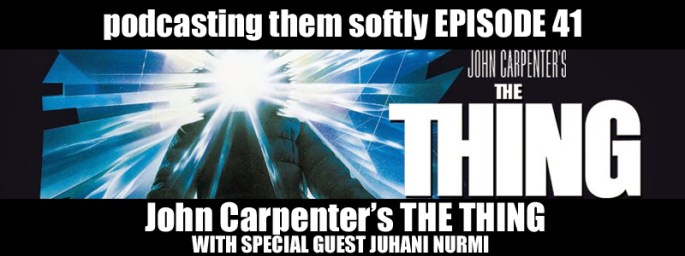
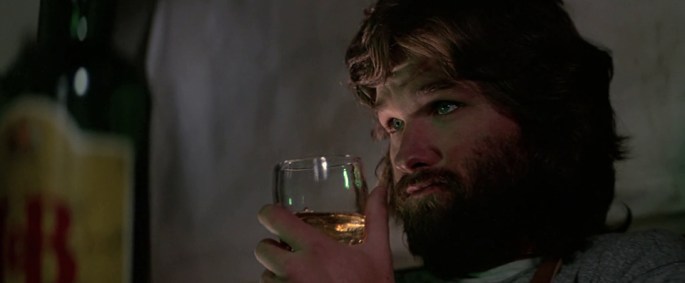
John Carpenter’s The Thing is one of the best science fiction films ever made. It’s isolation, iciness, and the impending doom of a score by Ennio Morricone lays an incredible foundation of terror. Russell is forced to deal with an extreme threat, a space monster that can shape-shift and remain unnoticed as it slowly picks off each member of the small research outpost in Antarctica. Russell adds a ton of dimension to the apathetic helicopter pilot who lives by himself up in his outpost drinking J&B and playing chess on his computer.

1. Death Proof

While Death Proof remains Quentin Tarantino’s “worst film” (and if this is your worst film, you’re doing pretty terrific as a filmmaker), there is still a lot to love and admire about it. Particularly Russell’s villainous turn as Stuntman Mike. In this film, Russell is as evil as it gets yet he plays on his career’s worth of cinematic charm and affability so we not only accept Stuntman Mike, but we can’t wait to see what he does next. This film marks Russell’s first pairing with Quentin Tarantino along with a career resurgence that reminded us that after all this time that Kurt Russell is a cinematic treasure.

THEY LIVE – A REVIEW BY J.D. LAFRANCE

“I’m disgusted by what we’ve become in America. I truly believe there is brain death in this country.” — John Carpenter

they_live_23

Filmmaker John Carpenter has always considered himself as an outsider in Hollywood. Like Sam Fuller before him, Carpenter makes genre films that are usually regarded by critics as simple thrill rides. However, underneath the surface lurks a strong, often savage social commentary on what Carpenter believes to be the problems that plague the United States. This approach is readily apparent in They Live (1988), an angry film born out of his disgust with the greed and materialism of the Ronald Regan era during the 1980s. What’s interesting is how its scathing critique of homelessness, rampant unemployment and corporate greed has become relevant yet again. Sadly, these problems never really went away, they’ve just become more prevalent because of the current global economic reality.

Nada (Roddy Piper) is a drifter, an amiable blue collar guy looking for steady work in Los Angeles. He arrives in town like the lone gunman in a western, completely with an accompanying soundtrack that even features a lonely harmonica like something out of an Ennio Morricone spaghetti western score (perhaps a nod to Once Upon a Time in the West). Carpenter shows all kinds of homeless people populating the city. Nada is told that there are simply no jobs available by a clearly indifferent government social worker. He wanders by a blind African American preacher (Raymond St. Jacques) who rants about being oppressed, the corruption of the American spirit and tells everyone that it’s time to wake up just before two police officers arrive to deal with him. Nada passes by a store with televisions in the window that present all sorts of cliché images of Americana: Mount Rushmore, the bald eagle, an American Indian dancing, a cowboy riding a wild horse, and a group of guys playing sports together. These are images of propaganda designed to keep us sedated and complacent.

Nada eventually finds a job and befriends a fellow worker named Frank (Keith David), a man who is clearly tired of Capitalism as he says bitterly tells him, “The golden rule: he who has the gold, makes the rules. They close one more factory we should take a sledgehammer to one of their fuckin’ fancy foreign cars.” Nada tells him to be patient but Frank has clearly run out of that particular commodity. He proceeds to lay it all out in a nicely written speech that sums up the American dream in a nutshell: “The whole deal is like some kind of crazy game. They put you at the starting line and the name of the game is ‘make it through life.’ Only everyone’s out for themselves and lookin’ to do you in at the same time. Okay, man, here we are. Now you do what you can, but remember, I’m gonna do my best to blow your ass away.” These sentiments eerily anticipate the anti-materialistic message of Fight Club (1999) by several years. Nada is more optimistic. He believes in playing by the rules as he tells Frank, “I deliver a hard day’s work for my money, I just want the chance. It’ll come. I believe in America. I follow the rules.” But this faith in the system begins to change when the squatter’s camp the men are staying at is suddenly bulldozed by the police one night. At first, there seems to be no reason for this unprovoked attack but over the course of the film Carpenter does an excellent job of gradually revealing what is really going on.

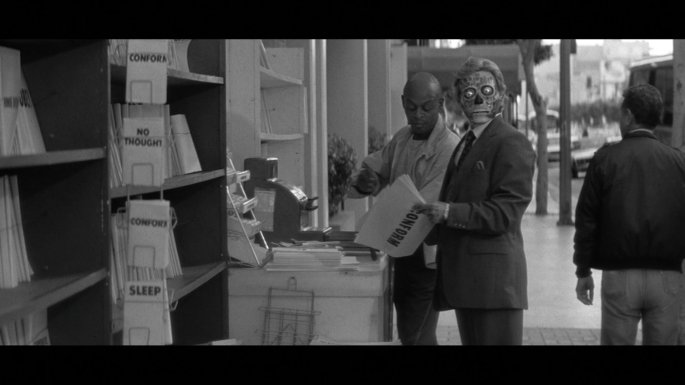
One day, while rummaging through some garbage, Nada comes across a pair of sunglasses that allow him to see things as they really are: the world is seen in black and white. The color facade disappears and billboards reveal their true messages: “OBEY,” “MARRY AND REPRODUCE,” and “SLEEP,” money is merely pieces of paper with the words, “THIS IS YOUR GOD,” written on them. Most shockingly is that with the glasses on, certain people turn out to be aliens in disguise. The glasses are a clever play on the notion of subliminal advertising and capitalism as the root of all evil. Once Nada wakes up, Carpenter has fun with the character, like when he enters a bank armed to the teeth, spots some aliens and says the memorable line, “I have come here to chew bubblegum and kick some ass. And I’m all out of bubblegum.” Or, when Nada confirms the truth of the alien’s existence to Frank when he tells him simply, “Life’s a bitch and she’s back in heat.” From this point, They Live’s pace rarely slackens as Nada and Frank form an uneasy alliance in an attempt to stop this secret alien invasion as if Marshall McLuhan suddenly took over scriptwriting duties and decided to rewrite Invasion of the Body Snatchers (1956) with a dash of Noam Chomsky for good measure.

The idea for They Live came from two sources: a futuristic story, involving an alien invasion, called “Nada” from a comic entitled Alien Encounters. This story was actually inspired from a short story called “Eight O’Clock in the Morning” by Ray Nelson that was originally published in The Magazine of Fantasy and Science Fiction in the 1960s. Carpenter describes it as “a D.O.A. type of story. A fellow is put in a trance by a stage hypnotist. When he awakens, he realizes that the entire human race has been hypnotized. Amongst us are alien creatures that are controlling our lives. He has only until eight o’clock in the morning to solve the problem.” Carpenter acquired the film rights to both the comic book and the short story and wrote the screenplay using Nelson’s story as a basis for the film’s structure.

The more political elements came from Carpenter’s growing distaste with the ever-increasing commercialization of popular culture and politics at the time. As he once remarked in an interview, “I began watching T.V. again. I quickly realized that everything we see is designed to sell us something…It’s all about wanting us to buy something. The only thing they want to do is take our money.” To this end, Carpenter thought of sunglasses as being the tool to seeing the truth, which “is seen in black and white. It’s as if the aliens have colorized us. That means, of course, that Ted Turner is really a monster from outer space.” In regards to the alien threat depicted in the film, the director said, “They want to own all our businesses. A Universal executive asked me, ‘Where’s the threat in that? We all sell out every day.’ I ended up using that line in the film.”

Since the screenplay was the product of so many sources: a short story, a comic book, and input from cast and crew, Carpenter decided to use the pseudonym, “Frank Armitage,” which was a subtle allusion to one of the filmmaker’s favorite writers, H.P. Lovecraft. Frank Armitage is in fact a character in Lovecraft’s “The Dunwich Horror.” Carpenter has always felt a close kinship with Lovecraft’s worldview and his influence can be felt in other films — most notably, The Thing (1982) and In The Mouth of Madness (1995). According to Carpenter, “Lovecraft wrote about the hidden world, the world underneath. His stories were about gods who are repressed, who were once on Earth and are now coming back. The world underneath has a great deal to do with They Live.”

After a budget of around three million dollars was established, Carpenter began casting his film. For the crucial role of Nada, the filmmaker surprisingly cast wrestler “Rowdy” Roddy Piper whom he had met at Wrestlemania III. For Carpenter it was an easy choice: “Unlike most Hollywood actors, Roddy has life written all over him.” Carpenter’s gamble pays off as Piper does a fine job playing an everyman-type hero who, at first plays by the rules, but once he realizes that it’s all a sham, decides to fight back. Piper’s performance is not going to win any acting awards but he does a solid job and brings the physical presence necessary for the role while also conveying a blue collar vibe.

Carpenter was impressed with Keith David’s performance in The Thing and needed someone “who wouldn’t be a traditional sidekick, but could hold his own.” To this end, Carpenter wrote the role of Frank specifically for the underrated actor. David does a great job as the perfect foil for Piper. The two men have this intense relationship that oscillates between outright distrust and grudging respect. This rather volatile alliance reaches critical mass in a wild, fist fight between the two men over a pair of the special sunglasses that lasts for several minutes. The brawl starts off seriously but eventually transforms into an absurd free-for-all. Carpenter remembers that the fight took three weeks to rehearse. “It was an incredibly brutal and funny fight, along the lines of the slugfest between John Wayne and Victor McLaglen in The Quiet Man.”

One of the reasons why They Live works so well is the film’s pacing. It starts off like the original Invasion of the Body Snatchers with the threat of alien invasion being implicit at first. Everything seems normal enough but after a half hour into the film, the threat suddenly becomes shockingly explicit when Nada puts on the sunglasses. From there, the film’s pacing speeds up and They Live begins to incorporate action film sequences into its science fiction premise. And yet, throughout the film, there is always thought-provoking commentary. This is represented by the pirate television broadcasts which, initially, seem like some lone conspiracy nut but eventually his ravings are revealed to be right on the money. His presence is the first sign that something is amiss. The television is presented as an electronic sedative in They Live. It’s a drug to the masses. When the T.V. pirate appears, the mind-numbing routine is broken and people get headaches as a result.

large_they_live_blu-ray_8Carpenter sees the commercial failure of his film as a result of “people who go to the movies in vast numbers these days [who] don’t want to be enlightened.” It’s a shame because They Live is far from being an overtly preachy film. On the contrary, it is always exciting and entertaining first, and a scathingly social satire second. However, the director sees the real tragedy to be the lack of humanity in society. “The real threat is that we lose our humanity. We don’t care anymore about the homeless. We don’t care about anything, as long as we make money.” If They Live is about anything, it’s a strong indictment against the capitalist greed that was so fashionable in the 1980s. It’s sentiment that still exists. This makes Carpenter’s film just as relevant today as it was back in 1988.

BIG TROUBLE IN LITTLE CHINA – A REVIEW BY J.D. LAFRANCE

big trubs born ready

“What I’d like to do today is get your version of what happened,” says a mild-mannered, middle-aged attorney. “Oh? You mean the truth,” replies a rather small, aging Chinese man who identifies himself as bus driver, Egg Shen (Victor Wong). The attorney remains skeptical as his potential client calmly describes his belief in Chinese black magic, and other supernatural phenomenon. As if to prove his point, the man holds up his hands so that they are parallel to one another. Suddenly, small bolts of blue electricity begin to flow from each palm, much to the attorney’s amazement and Shen’s bemusement. “That was nothing,” Shen states. “But that’s how it always begins. Very small.” And with this intriguing, tell-me-a-scary-story teaser, John Carpenter’s film, Big Trouble in Little China (1986), takes us on a ride into the heart of ancient Chinese lore and mythology.

Carpenter, always the maverick director with a knack for exploring offbeat subject matter (see They Live and In the Mouth of Madness), created a film that simultaneously parodies and pays homage to the kung-fu film. This often-maligned genre is given a new level of respectability that is rarely seen in Hollywood. Gone are the ethnic slurs, the insulting stereotypes and that annoying quasi-Chinese music that always seems to accompany representations of Asians in past mainstream features. Big Trouble takes great care in presenting funny and intelligent characters without caring whether they are Chinese or not. What is of paramount importance to Carpenter is telling a good story. He has created an entertaining piece of fantasy that manipulates the conventions of the action film with often-comical results.

From the engaging prologue, Big Trouble takes us back to the beginning of our story with the first appearance of truck driver Jack Burton (Kurt Russell), a good-natured, fast-talking legend in his own mind. When he and his buddy, Wang Chi (Dennis Dun), go to the airport to pick up the latter’s future bride arriving from China, a mix-up occurs. Wang’s bride-to-be is kidnapped by The Lords of Death, a local gang of Chinese punks, and the duo quickly find themselves immersed in the middle of an ancient battle of good vs. evil with immortality hanging in the balance. This struggle takes place deep in the heart of the Little China neighborhood of San Francisco with Burton and Wang Chi taking on David Lo Pan (James Hong), “The Godfather of Little China.” Even Egg Shen appears to help our heroes and provide them with the means to stop the evil that threatens not only Little China, but of course, the whole world.

Big Trouble in Little China was originally written as a period Western set in the 1880s with Jack Burton as a cowboy who rides into town. Producer Paul Monash bought Gary Goldman and David Weinstein’s screenplay but after a reading he found that it was virtually unfilmable due to the bizarre mix of Chinese mythology and the Wild West setting. He had the two first-time screenwriters do a rewrite, but Monash still didn’t like it. “The problems came largely from the fact it was set in turn-of-the-century San Francisco, which affected everything — style, dialogue, action.” The producer decided against having Goldman and Weinstein do additional rewrites because they didn’t want to upgrade the story to a contemporary setting and felt that they had done their best.

Keith Barish and Monash brought in W.D. Richter, a veteran script doctor (and director of cult film, The Adventures of Buckaroo Banzai) to extensively rewrite the script. Almost everything in the original screenplay was discarded except for Lo Pan’s story. “I realized what it needed wasn’t a rewrite but a complete overhaul. It was a dreadful screenplay. This happens often when scripts are bought and there’s no intention that the original writers will stay on.” Richter’s template for his draft was Rosemary’s Baby (1968). “I believed if, like in Rosemary’s Baby, you presented the foreground story in a familiar context — rather than San Francisco at the turn-of-the-century, which distances the audience immediately — and just have one simple remove, the world underground, you have a much better chance of making direct contact with the audience.” Richter was having a hard time getting his own scripts made into movies so he tried sneaking in his own eccentric ideas into other people’s projects. “It’s often easier to take an idea that they bring to you and try to pass it through your sensibility. If you’re honest up front, you get license to work with material you wouldn’t get them to look at if it was your own story.”

John Carpenter had wanted to do a film like Big Trouble in Little China for some time. Even though it contains elements of an action / adventure / comedy / mystery / ghost story / monster movie, it is, in the filmmaker’s eyes, a kung-fu film. “I have dug the genre ever since I first saw Five Fingers of Death in 1973. I always wanted to make my own kung-fu film, and Big Trouble finally gave me the excuse to do just that.” Barish and Monash offered Carpenter the movie in July of 1985. He had read the Goldman/Weinstein script and deemed it “outrageously unreadable though it had many interesting elements.” After reading Richter’s script he decided to direct. Carpenter loved the off-the-wall style of Richter’s writing and coupled with his love of kung-fu films, it is easy to see why he jumped at the opportunity to make Big Trouble.

The two filmmakers had crossed paths before when Carpenter rewrote Richter’s screenplay, The Ninja, a big-budget martial arts epic, for 20th Century Fox. In fact, Richter and Carpenter had both attended University of Southern California Film School from 1968 to 1971. “Rick and I went through all three production classes together. We each had our own crews, so we never actually collaborated on a film.” Carpenter made his own additions to Richter’s screenplay, which included strengthening Gracie Law’s role and linking her to Chinatown, removing a few action sequences (due to budgetary restrictions), and eliminating material deemed offensive to Chinese Americans. Carpenter was disappointed that Richter didn’t receive a proper screenwriting credit on the movie for all of his hard work. A ruling by the Writer’s Guild of America gave Goldman and Weinstein sole credit.

Problems began to arise when Carpenter learned that the next Eddie Murphy vehicle, The Golden Child (1986), featured a similar theme and was going to be released near the same time as Big Trouble. Ironically, Carpenter was asked by Paramount to direct The Golden Child. “They aren’t really similar. Originally, Golden Child was a serious Chinese, mystical, very sweet, very nice film. But now they don’t know whether to make it funny or serious.” However, as both films went into production, Carpenter’s views of the rival production became increasingly bitter. “Golden Child is basically the same movie as Big Trouble. How many adventure pictures dealing with Chinese mysticism have been released by the major studios in the past 20 years? For two of them to come along at the exact same time is more than mere coincidence.” To avoid being wiped out by the bigger star’s film, Carpenter began shooting Big Trouble in October 1985 so that 20th Century Fox could open the film in July 1986 — a full five months before Golden Child’s release. This forced the filmmaker to shoot the film in 15 weeks with a $25 million budget.

To achieve the efficiency that he would need for such a shoot, Carpenter surrounded himself with a seasoned crew from his previous films. He reunited with three long-time collaborators, line producer Larry J. Franco (Starman), production designer John Lloyd (The Thing), and cinematographer Dean Cundey. The cameraman had worked with Carpenter on his most memorable features: Halloween (1978), Escape from New York (1981), and The Thing (1982). The director wanted as many familiar faces on board because “the size and complexity are so vast, that without it being in dependable, professional hands, it could have gone crazy…So I went back to the guys who had been with me in the trenches before on difficult projects.”

Carpenter and Cundey had parted company before Starman due to “attitude problems.” Cundey says it was due to scheduling conflicts, but Carpenter has said that they had problems while working on The Thing. However, when Big Trouble came along, Carpenter met Cundey in Santa Barbara one weekend. “His attitude about survival in the [movie] business coincided with my own. We had a really good time, so we decided to work together again.”

Big Trouble also saw Carpenter re-team with his old friend, actor Kurt Russell who has appeared in several of the director’s films, most notably Escape From New York and The Thing. At first, Carpenter didn’t see Russell as Jack Burton. He wanted to cast a big star like Clint Eastwood or Jack Nicholson to compete with Golden Child‘s casting of Eddie Murphy. However, both Eastwood and Nicholson were busy and Fox suggested Russell because they felt that he was an up-and-coming star. The actor remembered reading the script and thinking that it “was fun, but I was soft on the character. I wasn’t clear how to play it. There were a number of different ways to approach Jack, but I didn’t know if there was a way that would be interesting enough for this movie.” After Carpenter and Russell began to go over the script, the character started to take shape. The role was a nice change for Russell as Carpenter remembers, “Kurt was enthusiastic about doing an action part again, after playing so many roles opposite ladies recently. So off we went.”

After watching Big Trouble it’s impossible to see anybody else as Jack Burton. Russell perfectly nails the macho swagger of his character: he’s a blowhard who’s all talk, totally inept when it comes to any kind of action and yet is still a likable guy. It is the right mix of bravado and buffoonery, a parody of the John Wayne action hero much in the same way Russell made Escape From New York’s Snake Plissken a twisted homage to Clint Eastwood. Russell said, at the time, that he “never played a hero who has so many faults. Jack is and isn’t the hero. He falls on his ass as much as he comes through. This guy is a real blowhard. He’s a lot of hot air, very self-assured, a screw-up. He thinks he knows how to handle situations and then gets into situations he can’t handle but some how blunders his way through anyhow.” Russell showcases untapped comedic potential that ranges from physical pratfalls to excellent comic timing in the delivery of his dialogue. One only has to look at his scene with Wang and the elderly Lo Pan to see Russell’s wonderful comic timing. No one before or since Big Trouble has been able to tap into Russell’s comedic potential as well as Carpenter does in this movie.

By many of the actors’ accounts, Carpenter is a director open to suggestions and input from everyone involved. Dennis Dun’s character starts off as the sidekick of Big Trouble and ends up accomplishing most of the film’s heroic tasks while the initial hero, Jack Burton, becomes the comic relief. Prior to Big Trouble, Dun’s only other film role was a small part in Michael Cimino’s Year of the Dragon (1985) but he was a veteran of more than twenty plays. Carpenter liked the actor in Cimino’s film and met with him twice before casting him in Big Trouble. Even though shooting began only a few days after Dun was cast, the action sequences weren’t hard for the actor who had “dabbled” in martial arts training as a kid and done Chinese opera as an adult.

Dun enjoyed the freedom he had on the set. “John gave me a great deal of leeway to develop my character and pretty much let me do what I wanted. He just encouraged me to be as strong as I could. He gave me a lot of freedom.” This freedom results in a very strong performance from Dun who holds his own against a veteran actor like Russell. Dun remembers that he and Russell shared the same approach to acting. “We never really talked about the scenes. We would come in that day to shoot a scene, and we would just do it. A large part of it was working off each other, just looking in each other’s eyes and taking each other’s energy and running with it.” The chemistry between the two characters is one of the many endearing qualities of Big Trouble as evident from numerous scenes, most notably the one where Wang Chi bets Jack that he can split a beer bottle in half and the scene where the two men attempt to break into Lo Pan’s building to rescue Wang’s fiancée.

The studio pressured Carpenter to cast a rock star in the role of Gracie Law, Jack Burton’s love interest and constant source of aggravation. For Carpenter there was no question, he wanted Kim Cattrall. The studio wasn’t crazy about the idea because at the time Cattrall was primarily known for raunchy comedies like Porky’s (1981) and Police Academy (1984). “I told them we needed an actress, and I enjoyed the way Kim wanted to play the character. She blended in well with the film’s style.” Cattrall plays Gracie as a pushy, talkative lawyer who acts as the perfect foil for deflating Burton’s macho ego at every opportunity.

Big Trouble’s script cleverly avoids the trap of reducing her role to a screaming prop by having Gracie take an aggressive part in the action. “Actually,” Cattrall said in an interview, “I’m a very serious character in this movie. I’m not screaming for help the whole time. I think humor comes out of the situations and my relationship with Jack Burton. I’m the brains and he’s the brawn.” There’s a great give and take between her and Russell. Their characters make for an entertaining screwball comedy couple: he’s always on the make while she constantly fends off his obvious advances. This was Carpenter’s intention. He saw the characters in Big Trouble like the ones “in Bringing Up Baby or His Girl Friday. These are very 1930s, Howard Hawks people.” Listen to how Jack and Gracie talk to each other — it’s a very rapid-fire delivery of dialogue that is reminiscent of Hawks’ comedies.

Production designer John Lloyd designed the elaborate underground sets and re-created Chinatown with three-story buildings, roads, streetlights, sewers and so on. This was necessary for the staging of complicated special effects and kung-fu fight sequences that would have been very hard to do on location. For the film’s many fight scenes Carpenter “worked with my martial arts choreographer, James Lew, who literally planned out every move in advance. I used every cheap gag – trampolines, wires, reverse movements and upside down sets. It was much like photographing a dance.”

Another refreshing aspect of Big Trouble is the way it is immersed in authentic Chinese myths and legends. Carpenter explains: “for example, our major villain, Lo Pan, is a famous legend in Chinese history. He was a ‘shadow emperor,’ appointed by the first sovereign emperor, Chan Che Wong. Lo Pan was put on the throne as an impersonator, because Chan Che Wong was frightened of being assassinated. Then, Lo Pan tried to usurp the throne, and Chan Che Wong cursed him to exist without flesh for 2,000 years, until he can marry a green-eyed girl.” Big Trouble could have easily made light of Chinese culture, but instead mixes respect with a good dose of fun.

Big Trouble also places Asian actors in several prominent roles, including Victor Wong and Dennis Dun who is the real hero of the story, as opposed to Kurt Russell’s character who is a constant source of comedy. “I’ve never seen this type of role for an Asian in an American film,” Dun commented in an interview, “I’m Chinese in the movie, but the way it’s written, I could be anybody.” Big Trouble crushes the rather derogatory Charlie Chan stereotype by presenting interesting characters that just happen to be Chinese. Carpenter also wanted to avoid the usual cliché soundtrack. “The other scores for American movies about Chinese characters are basically rinky tink, chop suey music. I didn’t want that for Big Trouble. I wanted a synthesizer score with some rock ‘n’ roll.”

As if sensing the rough commercial road that the film would face, Russell felt that it would be a hard one to market. “This is a difficult picture to sell because it’s hard to explain. It’s a mixture of the real history of Chinatown in San Francisco blended with Chinese legend and lore. It’s bizarre stuff. There are only a handful of non-Asian actors in the cast.” Unfortunately, mainstream critics and audiences did not care about this radical reworking of the kung-fu film. Opening in 1,053 theaters on July 4, 1986, Big Trouble in Little China grossed $2.7 million in its opening weekend and went on to gross $11.1 million in North America, well below its estimated budget of $25 million.

Big Trouble came out before the rise in popularity of Hong Kong action stars like Jackie Chan, Jet Li and Chow Yun-Fat, and filmmakers like John Woo and Wong Kar-Wai. Mainstream audiences weren’t ready for this kind of movie. Despite being promoted rather heavily by 20th Century Fox, Big Trouble disappeared quickly from theaters. Bitter from having yet another movie of his snubbed by critics and ignored by audiences, Carpenter swore off the big studios. He learned the hard way that working with them meant compromising his art in order to advance his career. Carpenter laid it all out in an interview a year later: “everybody in the business faces one truth all the time — if your movie doesn’t perform immediately, the exhibitors want to get rid of it. The exhibitors only want product in their theaters which makes money. Quality has nothing to do with it.” Years later, he said, “The experience [of Big Trouble] was the reason I stopped making movies for the Hollywood studios. I won’t work for them again. I think Big Trouble is a wonderful film, and I’m very proud of it. But the reception it received, and the reasons for that reception, were too much for me to deal with. I’m too old for that sort of bullshit.”

Big Trouble in Little China has stood the test of time. It was rediscovered on home video where it has become a celebrated cult film with a dedicated audience. It has since become one of the most beloved films in John Carpenter’s career and with good reason. It is a fun, clever movie that still holds up today and remains one of the finest examples of cinema as pure entertainment.

John Carpenter’s Halloween: A Review By Nate Hill

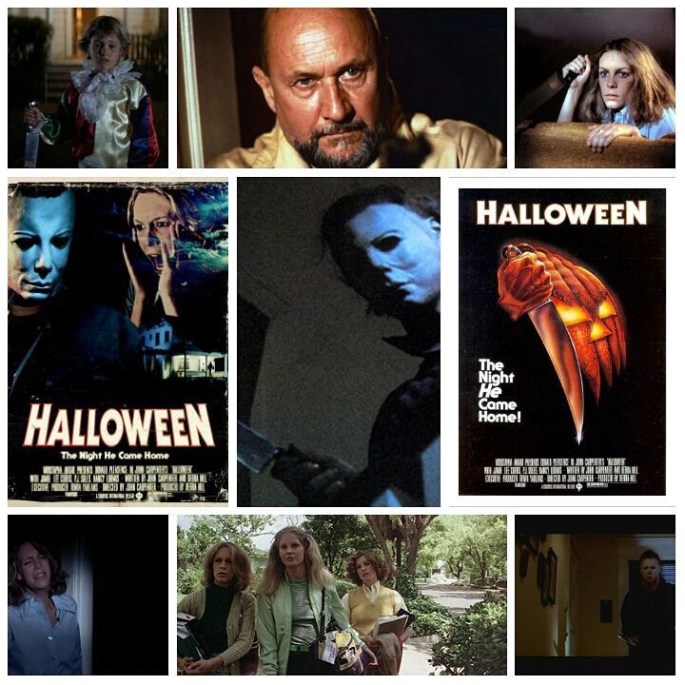
Here it is, kids. The third corner of the slasher triangle that’s essential viewing for any horror fan. John Carpenter made a no budget, streamlined little horror flick back in 1978, one that would start an eight film legacy of mania and legendary prolofic culture in the horror genre. The eternally relentless boogeyman Michael Myers has become an iconic movie monster, and my personal favourite of the slasher stable. From the moment that Carpenter’s nerve jangling, haunting synth score kicks in, framing a half lit jack o lantern as the main credits start, we’re lulled into a hypnotic, ambient atmosphere of sometimes unbearable tension and razor sharp sound design. The film opens as young Michael Myers snaps, grabs a kitchen knife and murders his teenage sister upstairs. Flash to fifteen years later, mute adult Mikey escapes from the sanitarium he’s spent the last decade and a half in, much to the frantic dismay of his bug eyed psychiatrist Dr. Loomis (Donald Pleasence). Pleasence took the role and ran with it, and is at times even crazier than Michael himself, and just as iconic. Jamie Lee Curtis plays sheltered Laurie Strode, living in Michael’s sleepy hometown of Haddonfield, Illinois and a prime target of the boogeyman. Carpenter wisely saves the chases and violence for the latter third of the film, and choosing to make Michael an almost unseen presence, lurking in shadowy corners of the unassuming suburbia he makes his playground out of, a vaguely threatening gust of unease in the fringes of the character’s awareness. When the chases and kills do come later on, we’re so wound up from the tenuous waiting, watching and wondering that the shock hits us harder at its sheer arrival. It’s that mounting tension and reverence paid to the sickening anticipation of the horror as opposed to the horror itself that makes the film so special, influential and timeless. It’s like a bad dream where something is inevitably, slowly waiting to get you. A horror classic, (hell a classic in itself), the king of slasher flicks and one of the most atmospheric movies ever crafted.