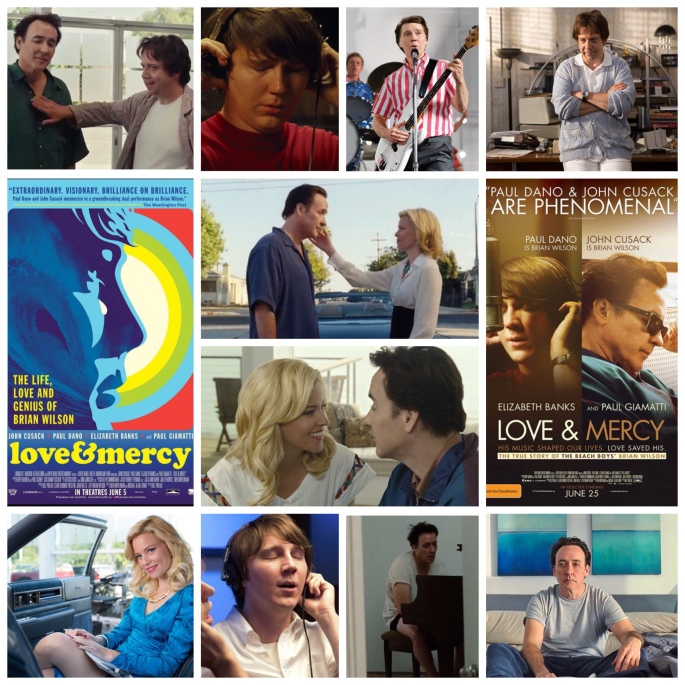
Bill Pohlad’s Love & Mercy

I’m not what’d you’d call a Beach Boys fanatic other than loving their most recognizable hits since I’ve listened to music, but Bill Pohlad’s Love & Mercy tells a story that just needs to be told and could grip anyone with its love, suffering, perseverance and genius, genius in the form of the band’s troubled but brilliant lead singer Brian Wilson, played here in a duo of encore performances by Paul Dano and John Cusack, both giving what may be the finest work of their careers. For those who are unaware (like myself before watching this), Wilson suffered a lengthy psychotic break that ran alongside a good portion of his career, brought on by many things including stress, fame and the ongoing psychological/physical abuse from his father (Bill Camp here), who did double duties as the group’s manager. Getting fully acquainted with rock bottom and finding himself alone later on in life, he was thrown from the frying pan into the fire when he went under the care of unconventional, deranged psychiatrist Gene Landy (Paul Giamatti, terrifying), and found himself victim not only to his own demons, but a new external one trying to take advantage of him. By chance he met kind Cadillac salesgirl Melinda Ledbetter (Elizabeth Banks), the two seem to have fallen in love almost instantly, and it took her kindness, patience and determination to save him from almost certain death in Landry’s nefarious hands. I’m going on the assumption that what we see here in the film is as close to the true story as possible, because the events are too specific and jarring to have been made up. Early scenes show Dano as a young, vibrant Wilson, hard at work on an experimental opus project that would eventually drive somewhat of a wedge between him and his band mates. The later segments with Cusack, interspersed via meticulous editing, are both a love story and a horror story, as we witness Melinda and him fall for each other, while lecherous Landy does everything he can to keep them apart. Giamatti plays the guy full tilt crazy, a dangerously obsessed scumbag whose actions are so damaging to Wilson that you want to cave his head in with a rock. Cusack is wonderful, putting quiet soul into the work and keeping the heartbreak and hurt of his former years on a dimmer so we don’t forget, but see a new, brave soul try to rise from the ashes. If this might be their best work, it’s certainly the case for Banks, I’ve never felt more connected to a piece of her work. She’s attentive, playful, compassionate and low key brilliant as Melinda, Brian’s rock, guardian angel and eventual love of his life. There are gaps in the story, as many of the no doubt horrific times are either left to our imagination or only suggested at, but that gives this unbelievable, all too true story all the more power. It’s inspiring, to see someone go through all that heartache and strife and come out of it still kicking. It’s also one of the most intelligent and empathetic movies to address the subject of mental illness in some time, using a compassionate, frankly implemented lens to tell Brian’s story and illustrate his complicated condition. Along with the obvious inclusion of many Beach Boys hits, some mid-composition, there’s a gorgeous original score by Atticus Ross that accents the emotional scenes between Brian and Melinda perfectly. One for the biopic books, and a story worth taking the time to listen to.

-Nate Hill

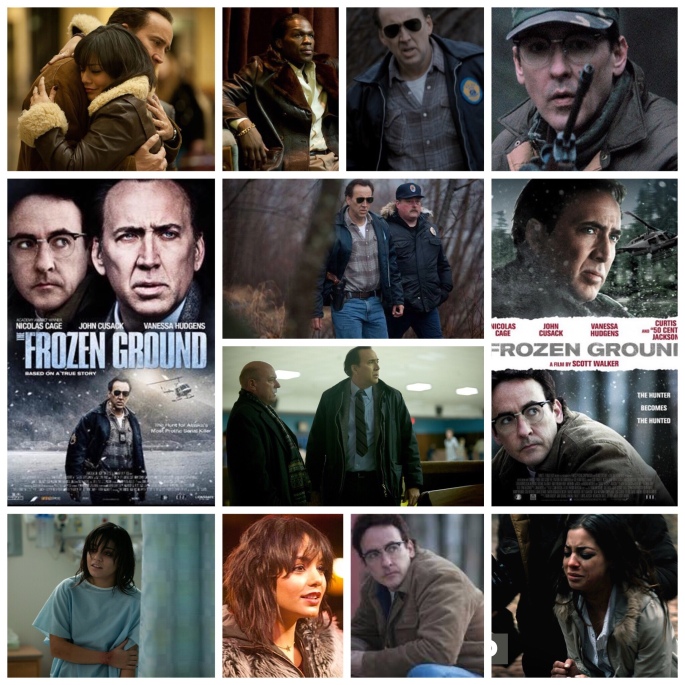
Scott Walker’s The Frozen Ground

Nicolas Cage has been on a seemingly never-ending rampage of starring roles in some… odd flicks post mid 2000’s, and it can seem like kind of a quagmire to navigate through them without landing yourself a turd (one day I’ll do a comprehensive flow chart so everyone knows which ones to avoid). There are some pretty great films scattered throughout though, and Scott Walkers’s The Frozen Ground is one I’ve always enjoyed and wish it got a little more hype. Cage ditches the crazy and seems down to earth here in a stone cold, somber tale based on the hunt and capture of Alaska serial killer Robert Hansen, here played by John Cusack in his nastiest, most skin crawling role. Cage is Robert Halcombe, a real life state trooper who bonded with a teenage sex worker (Vanessa Hudgens) who once escaped Hansen’s clutches and tries to track the guy down, as well as prove that he’s the monster killing girls out there on the tundra. What ensues is a gritty, episodic police procedural that earns the 1970’s cop thriller vibe it’s going for, showcases stunning and eerie Alaskan photography and tells a powerful, suspenseful and at times repellant story. Cage is earnest and relatable,

Cusack is despicable without getting campy or going over the top, an everyday monster whose laid back facade make the darkness just below even scarier when we’re forced to be privy to his crimes, filmed with raw frankness. Most impressive though is Vanessa Hudgens, who I didn’t pay much attention to until this, but gives a visceral portrait of fear and determination, believable every step of the way. There’s a galaxy of supporting work from Dean Norris, Brad William Henke, Michael McGrady, Kevin Dunn, Jodi Lyn O’Keefe, Matt Gerald, Radha Mitchell and 50 Cent as a pimp with a mullet (lol). It works as a moody thriller, a docudrama and mutual character study of Cage and Hudgen’s roles, as well as being scary in the right places.

-Nate Hill

Hollywood’s best-kept Secret: An Interview with Scott Windhauser by Kent Hill

40485_460984635750_8149153_n.jpg

Scott Windhauser might seem to have simply fallen out of the clear blue sky recently. Truth is, he has been in the game for quite some time. He worked his way up through the ranks, paying his dues, making connections – but all the while, working quietly on his own scripts.

The turning point came when he wrote a screenplay. You know the one, the kind of script that gets you noticed, that gets them to return your phone calls, that’s peaks the interest of the movie gods. Now I’m not going to spoil it here, you’ll have to have a listen, but the premise was really cool stuff.

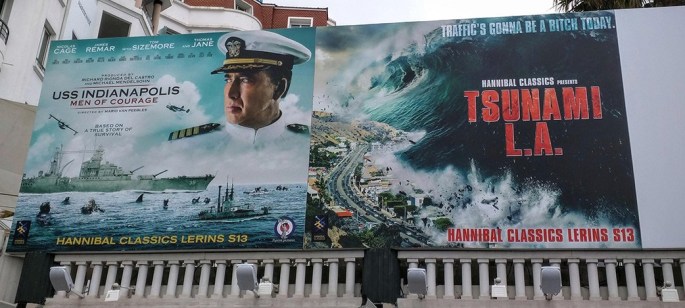
Tsunami-LA

But, as things often happen in Hollywood, another picture, that took place in a similar setting, came out around the same time and the backers started backing away. It’s times like these that separate the men from boys. It’s like Michael Douglas’s line in The Ghost and The Darkness, “Everyone has a plan until they’ve been hit. Well my friend, you’ve just been hit. The getting up is up to you.”

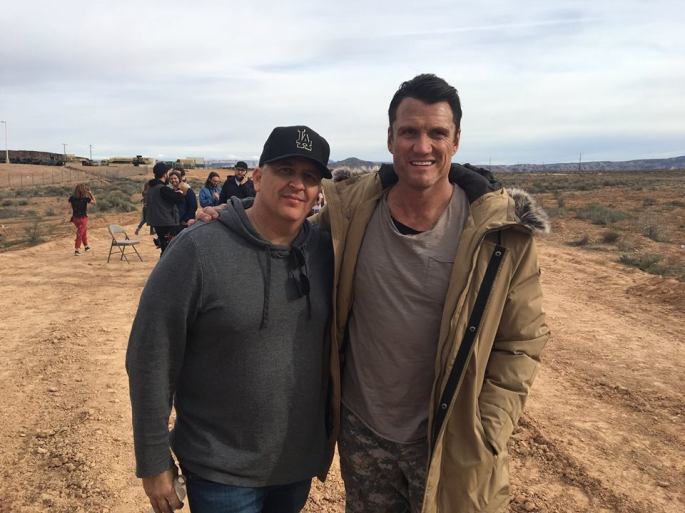
17103771_10154862063580751_5664093707011040784_n

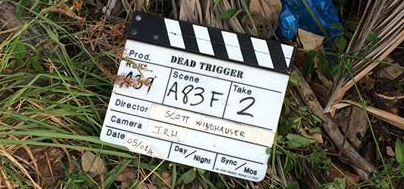
Scott did a little better than just getting back on his feet. He went back to the forge and starting producing a veritable war chest of material, most of which is on its way to release as we speak. There’s some that Scott has also directed like Dead Trigger starring Dolph Lundgren as well as Cops and Robbers with Tom Berenger and Michael Jai White. Then there’s the Rob Cohen(The Fast and The Furious, XXX) directed Hurricane Heist (or Category 5 as some of the advertising is calling it) and Tsunami L.A., along with numerous other projects big and small in the works as well as on the way either this or next year.

Scott Windhauser folks. His is a name you may not have heard, but the times they are a changin’. He fought his way through the minefields of La La Land, he’s given a script a ‘Nic-polish’ (have a listen, all shall be revealed), he has even bumped into John Williams, the man who wrote the cinematic themes of our youth.

13124999_10153956773200751_1985102907925933838_n

This all adds up to a great interview folks, so please, press play and learn about the man who is quickly becoming a name to take notice of.

Ladies and Gentlemen . . . Scott Windhauser.

(The Password to watch ‘DEAD TRIGGER’ trailer below is: zombie)

Disney’s The Journey Of Natty Gann


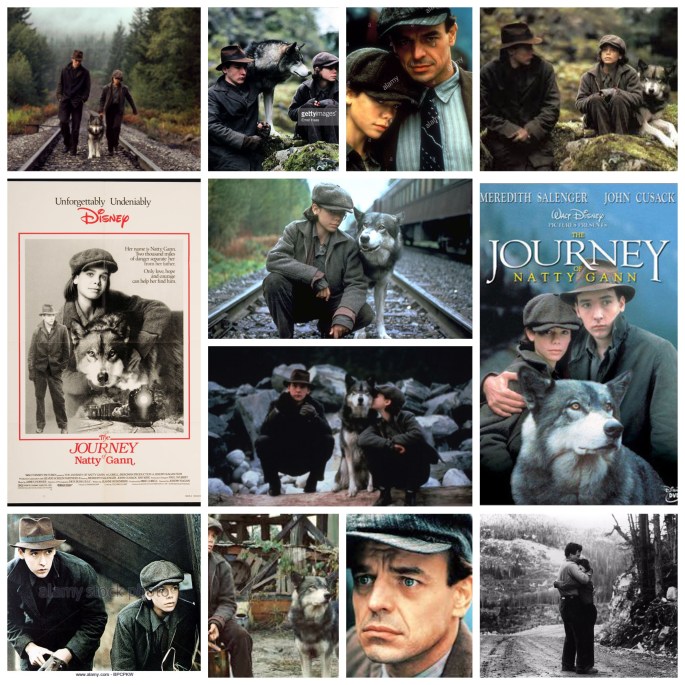
It’s neat to think that Disney would take a chance on something as grim and risky as The Journey Of Natty Gann, but they green-lit it and allowed a wonderful story to come alive. Set during the Great Depression and focusing on themes of abandonment and loss, it’s hardly the studio’s milieu, but they’ve proudly stamped their seal on it and I consider it to be one of the best amongst their live action output to date. Starring a terrific Meredith Salenger, it tells the tale of a young girl who’s separated from her father (Ray Wise, brilliant as ever) after he takes off to a logging job elsewhere in the country. Faced with life as an orphan or worse, Natty makes an epic trek across the dilapidated, economically gutted states to find him. It’s got all the trappings of a syrupy, run of the mill Disney outing: dog/wolf cross sidekick etc, but it really manages to find the danger, fear and loneliness she faces in a country that has gone to all hell everywhere she looks, and let the pathos come naturally out of how she fights her way through each new situation. John Cusack is great as a train hopping rambler who joins her here and there, his mopey doglike visage fitting right into the 30’s hobo shtick uncannily well. Salenger is a strong and fierce leading lady, the strife she sees around her echoed in her haunted face, emblazoned also with hope for the future. Filmed entirely in my home province of British Columbia, the film is beyond gorgeous to look at, the sooty grime of a looming industrial wave accented by the burnished greens and crystal waters of the region. This is sort of a forgotten Disney film, it wouldn’t be right up there on someone’s collection shelf or sitting near the front of the rental queue online, but it’s more than worth checking out, and considered a classic by me. 

-Nate Hill

Writing with Fire: An Interview with Matthew Greenberg by Kent Hill

Chatting with Matt felt like getting together with a buddy you’d been out of touch with for too long. He is an explosion of wit and joy; even though he works in a town that can at times be a realm of foreboding dread.

“I failed at everything else,” he said, when I asked him how he came to be an adventurer in the screen trade. Matt has felt the highs and the lows – he has climbed up the mountain that is the film industry, slipped, and started climbing again. Yet, even with broken fingernails, he has managed to pen a wild array of movies. They’ve a little of everything in them that a growing boy needs as part of his complete breakfast: from faceless killers to fire-belching dragons to spooky hotel rooms. They may in part be “significantly different” from the scripts he turned in, but if you listen to Matt, that same exuberance and enthusiasm he carries for his work manages to make the final cut.

He came to Hollywood with enough money to buy a plane ticket (that got him there) and a car. Since then he has made it – in place where momentum is everything and the decisions handed down from the hierarchy don’t always make sense. From that place where all the leaves are brown and skies are grey, Matt showered me with tales of his journey through the savage land known as Hollywood and how with a genteel parlance, you may perhaps survive.

Ladies and gentlemen, I give you, Matthew Greenberg…


HIGH FIDELITY – A REVIEW BY J.D. LAFRANCE

highfidelity

Have you ever spent hours organizing your record collection in chronological order and by genre? Have you ever had heated debates with your friends about the merits of a band who lost one of its founding members? Or argued about your top five favorite B-sides? If so, chances are you will love High Fidelity (2000), a film for and about characters obsessed with their favorite bands and music. What Free Enterprise (1999) did for film geeks; High Fidelity does for music geeks. Based on the British novel of the same name by Nick Hornby, it is a film made by and for the kind of people who collect vintage vinyl and read musician and band biographies in their spare time yet is still accessible to people who like smart, witty romantic comedies.

Rob Gordon (John Cusack) is an obsessed music junkie who owns a record store called Championship Vinyl. He has just broken up with Laura (Iben Hjejle), a long-time girlfriend and the latest in a countless string of failed relationships. Rob addresses the audience directly throughout the film (just like Woody Allen did in his 1977 film, Annie Hall) about this latest break-up and how his top five break-ups of all-time inform his most recent one. It’s a great way for Rob to try and come to terms with his shortcomings and the reasons why his past relationships did not work out. He is talking directly to us and in doing so we relate to him and his dilemma a lot easier. And so, he goes on a quest to find out why, as he puts it, “is doomed to be left, doomed to be rejected,” by revisiting his worst break-ups. The purpose of this trip down memory lane is an attempt to understand his most recent falling out with Laura.

Along the way we meet a colorful assortment of characters, from his past girlfriends (that includes the diverse likes of Lili Taylor and Catherine Zeta-Jones) to his co-workers at Championship Vinyl (Jack Black and Todd Louiso). They really flesh out the film to such a degree that I felt like I was seeing aspects of my friends and myself in these characters. Being a self-confessed obsessive type when it comes to film and music, I could easily relate to these people and their problems. And that’s why High Fidelity works so well for me. The extremely funny and wryly observant script by D.V. DeVincentis, Steve Pink, and John Cusack (the same team behind the excellent Grosse Pointe Blank) not only zeroes in on what it is to love something so passionately but why other things (like relationships) often take a backseat as a result. A girlfriend might not always be there for you, but your favorite album or film will. A song will never judge you or walk out on you and there is a kind of comfort in that.

The screenplay also makes some fantastic observations on how men view love and relationships. Throughout the film Cusack’s character delivers several monologues to us about his thoughts on past love affairs, one of my favorite being the top five things he liked about Laura. It’s a touching, hopelessly romantic speech that reminded me a lot of Woody Allen’s list of things to live for in Manhattan (1979). Usually, this technique almost never works (see Kuffs) because it often comes across as being too cute and self-aware for its own good but in High Fidelity it works because Cusack uses it as a kind of confessional as Rob sorts out his feelings for Laura and sorts through past relationships and how they led him to her.

The screenplay works so well because not only is it well written but it is brought to life by a solid ensemble cast. The role of Rob Gordon is clearly tailor-made for John Cusack. Rob contains all the trademarks of the kinds of characters the actor is known for: the cynical, self-deprecating humor, the love of 1980s music, and the inability to commit to the woman of his dreams. Even though High Fidelity is not directed by Cusack, like Grosse Pointe Blank, it is clearly his film, right down to the casting of friends in front of and behind the camera (i.e. actors Tim Robbins, Lili Taylor, his sister Joan, and screenwriters, D.V. DeVincentis and Steve Pink). Along with Say Anything (1989), this is Cusack’s finest performance. I like that he isn’t afraid to play Rob as a hurtful jerk afraid of commitment despite being surrounded by strong women, like his mother who chastises him for breaking up Laura, and his sister Liz (Joan Cusack) who is supportive at first until she finds out why he and Laura really broke up. Rob had an affair with someone else while Laura was pregnant and as a result she got an abortion. This horrible act runs the risk of alienating Rob from the audience but Cusack’s natural charisma keeps us hanging in there to see if Rob can redeem himself.

All of the scenes that take place in the record store are some of the most entertaining and funniest moments in the film, from Rob listing off his top five side one, track ones, to Barry schooling an Echo and the Bunnymen fan on The Jesus and Mary Chain, to Rob fantasizing about beating the shit out of Laura’s new boyfriend Ian (Tim Robbins) when he shows up one day to clear the air. These scenes showcase the excellent comic timing of Cusack and his co-stars, Jack Black and Todd Louiso. The interplay between their characters instantly conveys that they’ve known each other for years by the way they banter and bicker.

Louiso’s Dick is a shy, introverted guy that you can imagine listening to Belle and Sebastian religiously, while Black’s Barry is a rude, annoying blowhard who says everything you wish you could actually say in public. It’s a flashy, scene-stealing role that Black does to perfection, whether it is discussing the merits of Evil Dead II’s soundtrack with Rob or doing a spot-on cover of Marvin Gaye’s “Let’s Get It On” for the launch of Rob’s record label. And yet, Barry isn’t overused and only appears at the right moments and for maximum comic effect. His sparing usage in High Fidelity made me want to see more of him, which is why he works so well. However, Louiso, with his quiet, bashful take on Dick, is the film’s secret weapon. The scene where he tells a customer (Sara Gilbert) about Green Day’s two primary influences which is a nice example of the understatement he brings to the role.

The casting of Danish actress Iben Hjejle is an atypical choice but one that works because she brings an emotional strength and an intelligence to a character that is largely absent from a lot of female romantic leads. She’s not traditionally beautiful, like Catherine Zeta-Jones, who plays one of Rob’s ex-girlfriends, Charlie Nicholson. Sure, Charlie is drop-dead gorgeous but her personality is so off-putting that any kind of deep, meaningful relationship would be impossible. Laura is so much more than that. While Rob refuses to change and to think about the future, Laura is more adaptable, changing jobs to one that she actually enjoys doing even if it means she can’t have her hair dyed some exotic color. Laura is easily Rob’s intellectual equal, if not smarter, and the voice of reason as well as having no problem calling him on his shit.

Nick Hornby’s book was optioned by Disney’s Touchstone division in 1995 where it went into development for the next three years. Disney boss Joe Roth had a conversation with recording executive Kathy Nelson who recommended John Cusack (whom she had worked with on Grosse Pointe Blank) and his screenwriting and producing partners D.V. DeVincentis and Steve Pink adapt the book. They wrote a treatment that was immediately green-lit by Roth. In adapting the book into a screenplay, Cusack found that the greatest challenge was pulling off Rob’s frequent breaking of the fourth wall and talking directly to the audience. They did this to convey Rob’s inner confessional thoughts and were influenced by a similar technique in Alfie (1966). However, Cusack initially rejected this approach because he thought, “there’d just be too much of me.” Once director Stephen Frears came on board, he suggested utilizing this approach and Cusack and his writing partners decided to go for it.

The writers decided to change the book’s setting from London to Chicago because they were more familiar with the city and it also had a “great alternative music scene,” said Pink. Not to mention, both he and Cusack were from the city. I like how they shot so much of the film on location, making the city like another character and even including visual references to local record labels like Touch & Go and Wax Trax! Another challenge they faced was figuring out which songs would go where in High Fidelity because Rob, Dick and Barry “are such musical snobs.” Cusack, DeVincentis and Pink listened to 2,000 songs and picked a staggering 70 cues for the film. DeVincentis was the record-collection obsessive among the writers with 1,000 vinyl records in his collection and thousands of CDs and cassettes. They also thought of the idea to have Rob have a conversation with Bruce Springsteen in his head, never thinking they’d actually get him to be in the film but that putting him in the script would get the studio excited about it. They were inspired by a reference in Hornby’s book where the narrator wishes he could handle his past girlfriends as well as Springsteen does in the song, “Bobby Jean” on Born in the USA. Cusack knew the Boss socially, called the musician and pitched the idea. Springsteen asked for a copy of the script and after reading it, agreed to do the film.

High Fidelity is now a historical document thanks to the rise of iTunes and the subsequent demise of brick and mortar record stores. The film is a tribute to these places where one could spend hours sifting through bins of vinyl records and used CDs, looking for that forgotten gem or a rare deal on something you were looking for. I’m not talking about places like Tower Records or Virgin Megastore but those cool, local stores that catered to obsessive collectors. This film is a love letter and a eulogy to these stores. It’s scary to think that it’s only been more than ten years since High Fidelity came out and indie record stores are almost an extinct breed, except for the ones hanging on in big cities. Even though the world and the characters in High Fidelity are unashamedly of a rarified type: the obsessive music geek or elitist, which some people may have trouble relating to, the film’s conclusion suggests that there is much more to life than one’s all-consuming passion for these things. It also helps to be passionate about someone. And that message is delivered in a refreshingly honest and cliché-free fashion as it provides what is ultimately the humanist core of High Fidelity.