Margin Call: A Review by Nate Hill

image

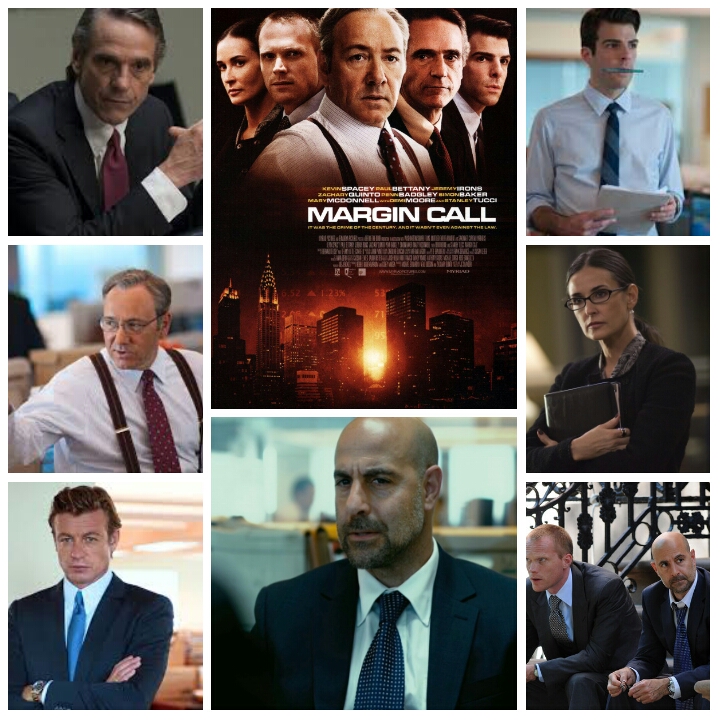
J.C. Chandor’s Margin Call sustains a laser focused, wilfully meticulous look at the days leading up to the 2008 financial crash, showing us life within one wall street office building during a nervy period which now no doubt is remembered as the calm before the storm. Various characters in different positions of the hierarchy anxiously brace themselves as the jobs begin to get cut and the dread looms towards them like the inevitable rising sun at dawn. It’s set all in one afternoon and night, compacting a far reaching event which spanned years into the microcosm of a single 24 hour window, a tactic which sits through the larger world implications and brings it in for something a little more intimate. Zachary Quinto plays a young trader who discovers a rip in the lining of the economic infrastructure, a precursor to the eventual disaste. I’m not being purposefully vague and cryptic with that, I just don’t personally understand all the exact ins and outs of what went wrong back then, and having not the slightest knowledge of wall street jargon, that’s the best I can do. He brings this knowledge to his superiors who react in varying ways. Kevin Spacey is a disillusioned big shot who sees his life going off the rails alongside the country’s market, and mopes in his swanky office. Paul Bettany is a cocky young upstart who uses casual indifference to shade the bruises he’s got from knowing what will happen. Demi Moore is a company head who looks out for herself while others in the company. Jeremy Irons provides scant moments of humour as a bigwig fixer who arrives on a chopper to set things straight, or at least assess the damage. The best work of the film comes from Stanley Tucci (surprise, surprise) as a jilted employee who has been laid off in the confusion, and is seething about it. His melancholic monologue about what it takes to propel America’s industry and economy forward resonates with a humanity that cuts deep. The film ticks along with a pace that’s both measured and swift, with little time for introspect, yet showing it to us anyway amid the chaos. Watch for appearances from Penn Badgley, Al Sapienza, Simon Baker and Mary McDonnell as well. Chandor let’s the proceedings thrum with an inevitability that hangs in the air as the promise of the impending crisis, a feeling that serves to impart not why it happened, not how it happened, but the fact that it did happen, to each and every individual person who was affected, as opposed to the country as a whole.
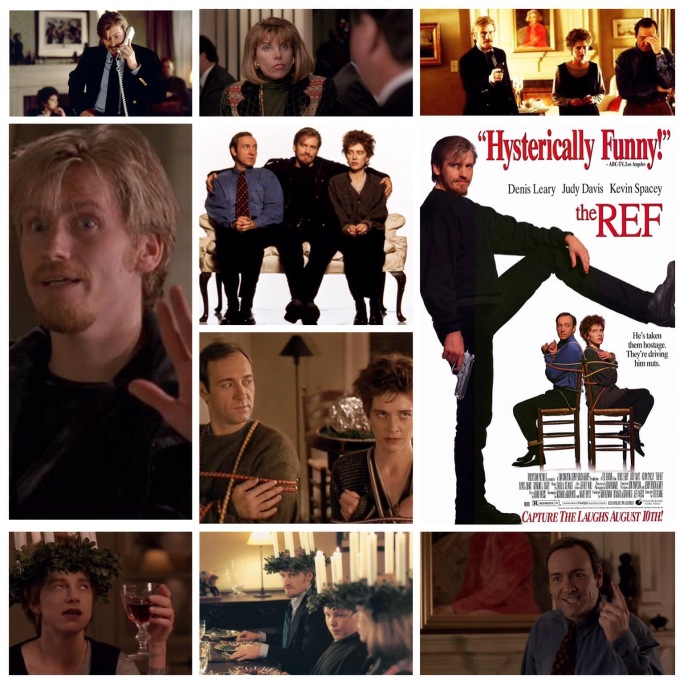
 

Ted Demme’s The Ref: A Review By Nate Hill

Ted Demme’s The Ref is one of my favourite holiday comedies of all time, one I re watch every and never tire of. It’s the most cheerful black comedy I can think of, while at the same time being one of the most cynical, acid tongued Christmas movies on record. In spite of this pissy tone, however, it still manages to elicit warm fuzzy feelings and make you care for its loveable, curmudgeonly characters. It’s also got a spitfire of a script, given wildly funny life by its star, the one and only Denis Leary. Leary, every the motor mouthed, nicotine fuelled teddy bear, is an actor who’s work is very dear to me. Many times when I was younger and wasn’t in the best place in my head, I’d watch various films of his, and his standup and he always put me in a better place. Here he plays short tempered cat burglar Gus, who is forced to lay low in a small town on Christmas Eve after being busted and nearly caught by a state of the art alarm system. He takes a middle aged couple hostage to hide out at their house, and goes from the proverbial frying pan into the fire. Kevin Spacey and Judy Davis play the couple, who bicker endlessly and drive Gus up the wall by constantly being at each other’s throats and never shutting up. Spacey never comes up short in intense performances, whether dramatic or funny, and he owns the role, meeting Leary and Davis’s manic energy with his own verve. Davis, an underrated actress, pulls out all the stops an delivers like she always does as well. The three of them are left in the house to hash out their issues, criticize each other, fight, make constant jabs at character and all that other lovely Christmas-y stuff. The hilarity peaks when Spacey’s insufferable brother and his family show up for the most awkward Christmas dinner in history, as the trio tries to disguise the fact that they’re harbouring a criminal from the dimwitted clan, and Spacey’s tyrannical bitch of a mother (Glynis Johns). There’s balance to the stressful vibe, though, as Leary’s presence elevates every emotion from the couple and eventually turns things around, all expertly played by the actors for laughs both obvious and subtle. The excellent Raymond J. Barry is crusty delight as the mean spirited Sheriff, and there’s great work from J.K. Simmons, Christine Baranski, Arthur Nascarella, Vincent Pastore, Richard Bright, Adam LeFevre and B.D. Wong. A Christmas classic for me, for a number of reasons, and one of the funniest, overlooked holiday flicks out there.

DUNCAN JONES’ MOON — A REVIEW BY NICK CLEMENT

1

Duncan Jones’ smashing directorial debut Moon, which he co-wrote with Nathan Parker, is exactly my type of science fiction film — thoughtful, stylish, mind-bending, narratively challenging, and totally consuming on both an emotional and aesthetic level. Sam Rockwell, easily one of our finest working actors, delivered what amounts to likely the top performance of his sterling career, portraying a worker-bee situated on the far side of the Moon, working to harvest a helium-based energy source which is being sent back to Earth to be used by its inhabitants as the planet is suffering from an oil crisis. But when something truly life-changing happens to Rockwell during his three-year stint all alone in space, the film takes on a sinister sense of misdirection, enveloping the audience in a story of a man losing his grip on his own sanity, with detours into cosmic introspection as well as the expected genre based thrills that have been slyly upended in most instances. Kevin Spacey’s creepy and dry voice work as Rockwell’s “trusted” robot companion GERTY was certainly indebted to the HAL character in 2001: A Space Odyssey, but Jones was too smart to attempt any sort of rip-off; his mechanical creation is certainly its own thing and the final act contains more than one surprise which I’d never reveal in a review. Following it’s premiere at the 2009 Sundance film festival, Moon received a very limited theatrical release before becoming an immediate cult item on DVD and Blu-ray, and it’s easy to see why — it’s the type of film that’s more interested in brainy ideas than empty, flashy action, with notions about identity and humanity and loneliness on full display, while fusing together an exciting, beat-the-clock scenario that plays out with escalating tension while never sacrificing anything in the intelligence department. The fact that this film only cost $5 million is staggering; massive kudos to production designer Tony Noble and cinematographer Gary Shaw for crafting a film that looks 10X bigger and fancier than its actual budget. Clint Mansell’s riveting score is also a major plus; he’s easily one of the finest film composers currently crafting music.

2

DAVID FINCHER’S SEVEN — 20TH ANNIVERSARY REVIEW — BY NICK CLEMENT

1

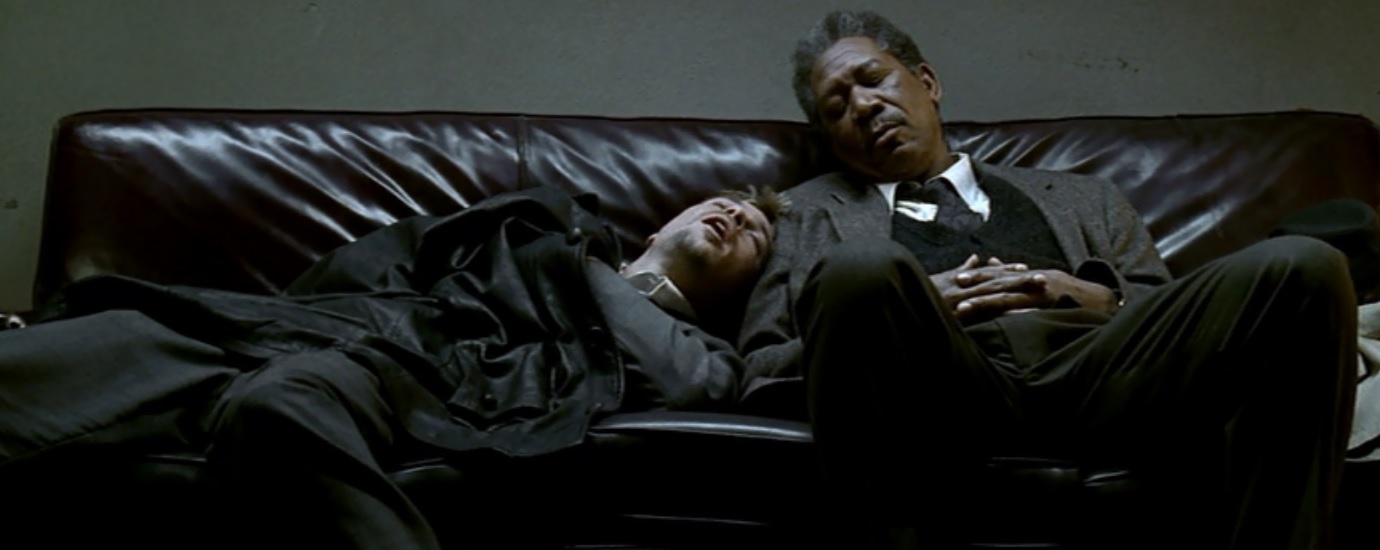
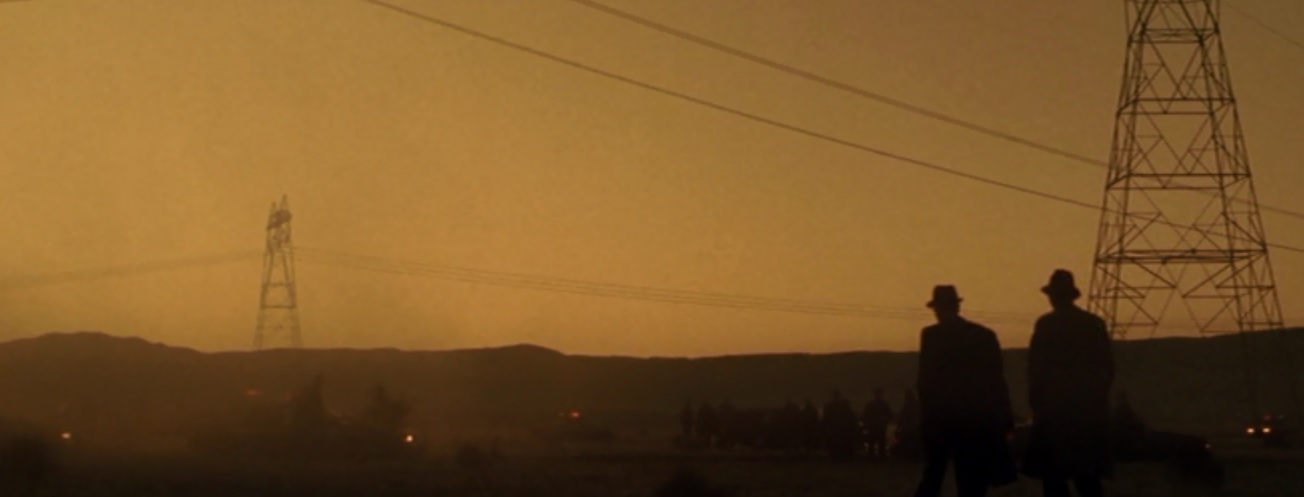
20 years ago, New Line cinema dropped a dark hearted cinematic wake up call in the form of David Fincher’s immortal serial killer thriller Seven. It made a legitimate star out of Brad Pitt, giving a nervously twitchy and playfully cocky performance as a young cop who thinks he knows what he’s getting himself into, and it further cemented Morgan Freeman’s status as a premiere acting force, giving him the chance to riff on the sage, retiring detective character made famous by so many genre offerings. And rather importantly, Seven boldly announced Fincher as a serious directorial talent to contend with, affording him the chance to take material that was directly up his casually cruel cinematic alley, and put his own distinct and rigorous aesthetic stamp all over it. To this day, the film remains frightening and startling to watch, as the twists and turns still feel fresh and diabolical, even when you know how it’ll all finish up. I vividly remember seeing this film on opening night in the theater, at the age of 15, on the same weekend that Showgirls opened, and I can still feel the unease that settled in over the sold-out crowd during those final moments, when we all realized what exactly was in that box out in that field.

2

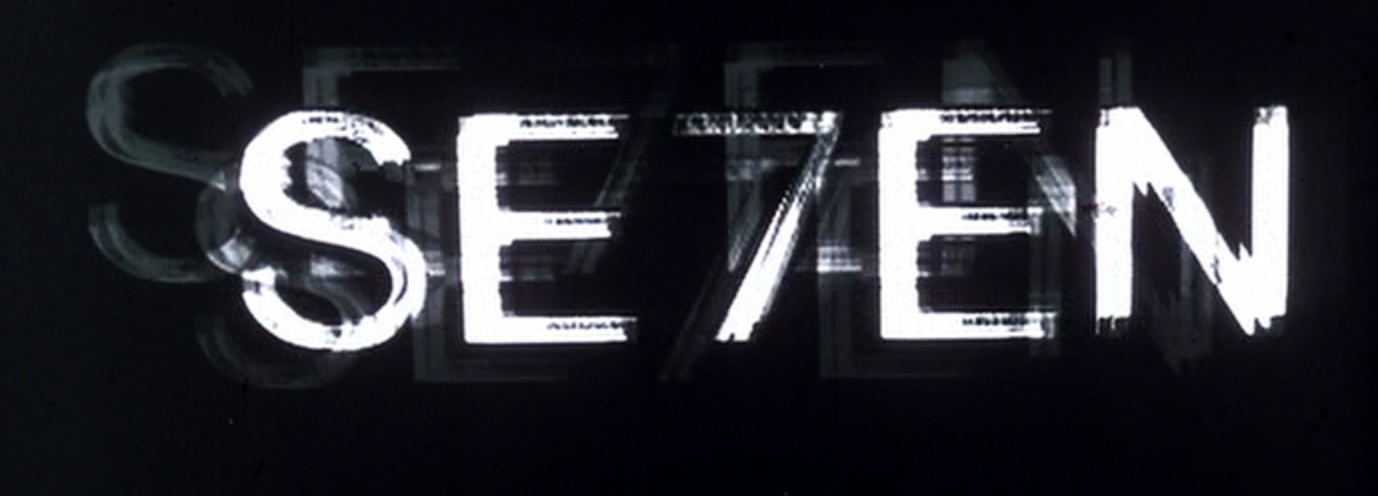
Screenwriter Andrew Kevin Walker’s brilliantly constructed screenplay withstands the utmost scrutiny, and demands total respect; this is a perfect cinematic onion, revealing layer upon layer of themes and narrative implications as each section is peeled off and removed. One of the most fascinating aspects of the entire film is that while it’s a crisply plotted procedural, the psychological undercurrents were never glossed over, with the film exploring the true root of evil, with explanations that feel scarily honest and all too believable. And the fact that the ending remained in tact, after much deliberation and wrangling and ultimatums, is still one of those “Thank The Cinema Gods” moments where the money people and the creative entities could all come to terms with exactly how they knew a film should finish. Darius Khondji’s elegantly nightmarish cinematography is the stuff of legend, each shot museum worthy, while also displaying a sense of grit and atmospheric dread and danger that immediately pulls the viewer into this hellish world on display (wisely, the exact city in the narrative is never explicitly mentioned). Arthur Max’s haunting production design evoked urban decay in ways that few modern films have ever done; this movie feels like it’s rotting at the core. The exacting editing by Richard Francis-Bruce knew exactly how to accentuate each and every scene for maximum impact, while the unnerving score by Howard Shore filled the background, never overpowering, always accentuating. And it goes without saying that the opening credits sequence is one of the most dynamic and influential bits of title design ever put on screen (this is an area that Fincher has always excelled at in all of his incredibly stylish feature films).

3

When Kevin Spacey shows up at the top of the final act the movie somehow gets even more sinister than it had already demonstrated, and the way he needles both Pitt and Freeman during that infamous car ride is a full-on demonstration of how Spacey knows exactly how to own a scene with total command. While attending California State University at Northridge, I had the insane opportunity to view Seven on a frame-by-frame basis, and studying how Fincher controlled his filmmaking was more than eye opening. Close to 98% of the film is shot with a stationary camera, only going hand-held in a few key instances (the hall-way shoot-out near John Doe’s apartment; portions of those climactic moments out in the field), and it was thrilling to see how Fincher and his team were able to heighten fear and suspense more with camera set-ups and pacing than anything else. Seven leaves more up to your imagination than it was credited for doing, as way too many people complained of excessive violence, which, to be honest, just isn’t there on the screen. Yes, clearly, there are more than a few gruesome sights on display, but in comparison to some other genre entries, Seven feels carefully and intelligently restrained in every single area, while always allowing for the idea of horrific human behavior to be lurking in every corner. This is a great and influential piece of filmmaking that ages like a fine wine.

PTS Presents The Gary Young Special Episode 2: CHINATOWN, LA CONFIDENTIAL and TRUE DETECTIVE

For our second episode in the Gary Young Series, we sat down and discussed Roman Polanski’s CHINATOWN, Curtis Hanson’s LA CONFIDENTIAL and both of those films influences on the second season of TRUE DETECTIVE.  We had a blast, hope you guys enjoy!