Derek Wayne Johnson’s JOHN G. AVILDSEN KING OF THE UNDERDOGS

JGA Underdogs


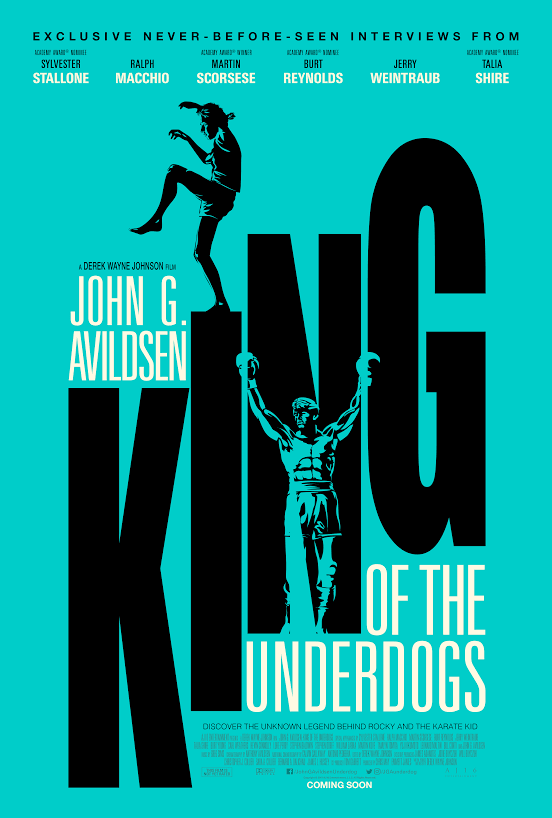
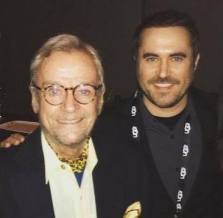
19225757_10102471107188568_2867561815267919866_nJoining Frank is filmmaker Derek Wayne Johnson whose film JOHN G. AVILDSEN KING OF THE UNDERDOGS premiered in February at the 32nd Santa Barbara International Film Festival. It is a fantastic film, chalked full of interviews with Sylvester Stallone, Martin Scorsese, Talia Shire, Ralph Macchio, Burt Young, Carl Weathers, Burt Reynolds, Bill Conti, and John Avildsen himself. Derek is currently going into production on his next two films, STALLONE: FRANK THAT IS and 40 YEARS OF ROCKY: THE BIRTH OF A CLASSIC. For those who tuned into our SBIFF podcast, you should remember my red carpet interview with Derek. 

The film hits theatres, blu ray, DVD, and VOD on August first. Please, pre-order the film at Chassy.

To order on iTunes, please click here.

Martin Scorsese’s Shutter Island 


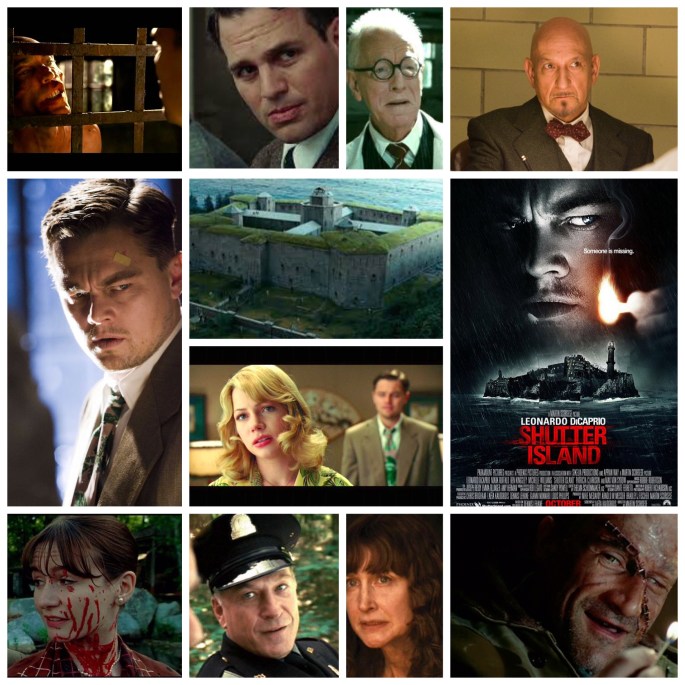
Shutter Island is my favourite film by Martin Scorsese. Now, keep in mind that I still have yet to see heralded classics like Goodfellas and Raging Bull, but that being said I still feel like this clammy psychological opus would remain at the top of the charts. I’m a genre guy at heart, and as such gravitate towards that when watching any director’s work, I just feel more at home wading into fictitious, stylized thrillers than I do with earnest biopics or urban crime dramas, which aren’t always my thing to begin with. Shutter is a brilliant piece, a deliberately dense and serpentine mystery that unfolds step by delicious step, a gift to anyone who loves a good twist and plenty of clues to keep them engaged along the way. Not to mention it’s wonderfully acted, cleverly written and primed with emotional trauma to keep us invested in the puzzle beyond base curiosity. Leonardo DiCaprio is best when portraying intense, tormented people, and his US Marshal Teddy Daniels here is no exception, a haunted man who feels like a caged animal as he investigates the disappearance of a mental patient from a secluded island sanitarium, a place that just doesn’t seem right, with a mood in the air so oppressive you can almost feel the fog, both mental and meteorological, weighing you down. The patient, Rachel Solando (Emily Mortimer will send shivers up and down your spine) seems to have vaporized into thin air, and Teddy’s investigation leads to closed doors, uncooperative staff and a heightened level of dread that lurks beneath every hushed exchange of dialogue and fleeting glimpse at things he, and we, aren’t even sure he really saw. The head doctor (Ben Kingsley, excellent) is clearly hiding something, as is the austere asylum director (Max Von Sydow). The freaky Warden (terrific cameo from Ted Levine, who gets to deliver the film’s best written and most perplexing dialogue) babbles to Teddy in biblical platitudes, and the patients have run amok following a storm that compromised security. Needless to say the plot is deviantly constructed to constantly mess with the audience until the third act revelations, which come as less of a melodramatic thunderclap and more like a quiet, burning sorrow of realization, a tonal choice from Scorsese that hits you way harder. Scorsese has assembled a cast for the ages here, and besides who I’ve mentioned so far we also have Michelle Williams in disconcerting flashbacks as Teddy’s wife, so perfectly played I wish she got a nomination, creepy Elias Koteas as another phantasm from his past, John Carrol Lynch, Mark Ruffalo, Jackie Earle Haley, Robin Bartlett and Patricia Clarkson. The score is a doom soaked death rattle courtesy of Robbie Robertson, not without it’s emotional interludes but thoroughly grievous. There’s also a beautifully slowed down version of ‘Cry’ by Johnnie Ray that accompanies the horrifying dream sequences within the film, adding to the already thick atmosphere nicely. This is a film built to last, both for dutiful rewatches from adoring veterans and discovery by lucky newcomers who get to experience it’s affecting story for the first time. All these boxer biopics, big city mafia ballads and heady stuff seems to have rolled off of me as far as Scorsese goes, I enjoy them, don’t get me wrong, but they’re a one-off as far as how many times I’ll watch them. Give me a well spun, emotionally rich psychological murder mystery with no shortage of style, character and tantalizing thriller elements, however, and I’ll pop that sucker back into the DVD player time and time again. Scorsese’s best effort by far. 

-Nate Hill

THE COLOR OF MONEY – A REVIEW BY J.D. LAFRANCE

color-of-money

The 1970s saw the rise of the Movie Brats, a collection of filmmakers that had grown up watching and studying films. They made challenging films that reflected the times in which they were made and were revered by cineastes as much as some of the actors appearing in them. Directors like William Friedkin, Francis Ford Coppola, Hal Ashby and Martin Scorsese made intensely personal films that blended a European sensibility with American genre films. However, the one-two punch of Jaws (1975) and Star Wars (1977) and the failure of expensive passion projects like New York, New York (1977) and Heaven’s Gate (1980) ended these directors’ influence and saw the rise of producers like Joel Silver, Don Simpson and Jerry Bruckheimer, and movie star-driven blockbusters in the 1980s and beyond. It got harder and harder for the Movie Brats to get their personal projects made. Most of them went the independent route, making films for smaller companies like Orion and doing the occasional paycheck gig with a Hollywood studio.

For years, Scorsese had been trying to fund a personal project of his own – an adaptation of The Last Temptation of Christ. It was a tough sell and he ended up making After Hours (1985) and The Color of Money (1986) as a way of keeping busy while he tried to get Last Temptation made. At the time of The Color of Money much was made of it being Scorsese’s first movie star-driven film and some critics and fans of the director felt that he was selling out. It would not only be promoted as a film starring Paul Newman and Tom Cruise (and not as a Scorsese film), but was a sequel (something that the director was never fond of doing) of sorts. Newman had been interested in reprising his famous role of “Fast” Eddie Felson from The Hustler (1961) for some time but he had never met the right person for the job – that is, until he met Scorsese.

The Color of Money begins twenty-five years after the events depicted in The Hustler and we find that Eddie (Newman) is enjoying a comfortable existence as a savvy liquor salesman with his bar owner girlfriend Janelle (Helen Shaver) and occasionally fronting a pool hustler. His current investment, a cocaine addict named Julian (played with just the right amount of sleazy arrogance by John Turturro), is getting roundly beaten by a young turk named Vincent (Tom Cruise) who catches Eddie’s attention with his “sledgehammer break.” He becomes fascinated watching Vincent play and his cocky behavior between shots, like how he works the table. Eddie also watches the dynamic between Vincent and his girlfriend Carmen (Mary Elizabeth Mastrantonio). What really catches his attention is not just Vincent’s raw talent but also his passion for the game. He’s even willing to play Julian after he’s won all of the guy’s money because he just wants his “best game.”

There’s a nice bit where Eddie tests Carmen’s skill as Vincent’s manager, exposing her lack of experience and schooling her on the basics of pool hustling in a beautifully written monologue by Richard Price that Newman nails with the ease of a seasoned pro. We get another healthy dose of Price’s authentic streetwise dialogue in the next scene where Eddie takes Vincent and Carmen out for dinner and continues to school his potential protégés: “If you got an area of excellence, you’re good at something, you’re the best at something, anything, then rich can be arranged. I mean rich can come fairly easy.” The scene is also nicely acted as Tom Cruise plays the cocky upstart with just the right amount of arrogant naiveté without being a typical goofball. As Eddie puts it, “You are a natural character. You’re an incredible flake,” but tells him that he can use that to hustle other players. The ex-pool player lays it all out for the young man: “Pool excellence is not about excellent pool. It’s about becoming something … You gotta be a student of human moves.” And in a nice bit he proves it by making a bet with them that he’ll leave with a woman at the bar. Of course, he knows her but it certainly proves his point. This is a wonderful scene that begins to flesh out Vincent and establish how much he and Carmen have to learn and how much Eddie has since The Hustler.

The young man is a real piece of work – brash, directionless but with raw talent. It is clear that Eddie sees much of his younger self in Vincent and decides to take the young man under his wing and teach him “pool excellence” by taking him and Carmen on the road. It’s an opportunity to make some money while also getting back Eddie’s passion for playing pool. The Color of Money proceeds to show the three of them on the road for six weeks, getting ready for an upcoming nine-ball tournament in Atlantic City. Of course, there are the predictable bumps in the road as Vincent’s impulsive knack for showing off costs them money and Eddie feels like the young man’s not listening to him. It’s a formula we’ve seen used in countless films but Scorsese does everything he can visually to keep things interesting, especially in the dynamic way he depicts the numerous games of pool, the use of music (for example, one game is scored to “Werewolves of London” by Warren Zevon) and the actors that play some of the opponents along the way, like a young Forest Whitaker as a skilled player that manages to hustle and beat Eddie at pool.

However, it is the camerawork by veteran cinematographer Michael Ballhaus that impresses the most. He and Scorsese depict each game differently, employing a variety of techniques, like quick snap zooms in and out, and floating the camera gracefully over the pool table or gliding around it. He even has the camera right on the pool table following the balls around. The camera movement and editing rhythm of each game is dictated by the mood and intensity of each match, like the grandiose techniques employed when Vincent shows off during a game of pool. As he revels in his own showboating moves, the camera spins around him as if intoxicated by his bravado. However, much like the chaotic pool hall brawl in Mean Streets (1973), the camera movement goes nowhere symbolizing the futility of Vincent’s actions. Sure, he beat the top guy at that pool hall but in doing so scared off an older player that had much more money.

While The Color of Money was made fairly early on in Tom Cruise’s career, his relative inexperience actually suits his character. His youthful energy mirrors Vincent’s. It is his job to come across as an arrogant flake of a human being, which he does quite well (too well for some who were unimpressed with his performance). Cruise has always been an actor that performs better surrounded by more talented and experienced people and with the likes of Paul Newman acting opposite him and Scorsese directing, it forces the young actor to raise his game. One imagines he learned a lot on the job much like Vincent does in the film. Scorsese knew exactly what he was doing when he cast Cruise and got a solid performance out of him. In the late ‘80s, Mary Elizabeth Mastrantonio acted in a series of high profile roles like The Abyss (1989), The January Man (1989) and this film. She’s given the thankless job of the girlfriend role but manages to make the most of it. One gets the feeling that Carmen is a fast learner and smarter than Vincent. She is much like Eddie in understanding the business side of pool hustling.

Color-of-Money-Tom-Cruise

Naturally, Newman owns the film, slipping effortlessly back into Eddie’s skin after more than 20 years and it’s like he never left. The scenes between him and Cruise are excellent as the headstrong Vincent bounces off of the world-weary Eddie. Over the course of the film something happens to the elder pool player. As he tells Vincent at one point, “I’m hungry again and you bled that back into me.” We see that youthful spark fire up in Eddie again after so many years dormant and Newman does a fantastic job conveying that. While many felt that his Academy Award for the performance he gives in The Color of Money was really a consolation prize for a career of brilliant performances, this does a disservice to just how good he is in this film and how enjoyable it is to watch him get to work with someone like Cruise and Scorsese, watching how their contrasting philosophies towards acting and filmmaking co-exist in this film. There is an energy and vitality that Cruise brings and Newman feeds off of it and Scorsese captures it like lightning in a bottle.

When Paul Newman read Walter Tevis’ sequel to The Hustler it made him wonder what “Fast” Eddie Felson would be doing now and wanted to revisit the character. He had seen Raging Bull (1980) and was so impressed by it that he wrote a letter to Scorsese complimenting him on such a fine piece of work. The director was just coming off of After Hours and was attached to several projects, including Dick Tracy, with Warren Beatty, a fantasy film entitled Winter’s Tale, Gershwin, with a screenplay written by Paul Schrader, and Wise Guy, a book about the New York mafia written by Nicholas Pileggi. However, they all took a backseat when Newman invited him to direct a sequel to The Hustler. The actor had been working on it for a year with a writer. Scorsese was interested but didn’t like the script Newman showed him because it was “a literal sequel. It was based on at least some familiarity with the original.” Scorsese felt like he couldn’t be involved with the project if he didn’t have some input on the original idea of the script.

Scorsese wanted to go in a different direction and brought in a new screenwriter, novelist Richard Price who had written The Wanderers and also a script for the director based on the film Night and the City (1950). Scorsese liked the script because it had “very good street sense and wonderful dialogue.” For The Color of Money, Price and Scorsese’s concept was basically what became the film, exploring the director’s preoccupation with redemption but with what Newman saw as “recapturing excellence, having been absent from it, and then witnessing it in somebody else.” Newman liked it and Price and Scorsese came up with an outline and began rewriting the script. Price studied pool players and wrote 80 pages of a script. They took it to Newman and got his input. By the end of nine months, Price and Scorsese decided to make the film with Newman.

For Scorsese this was the first time he had ever worked with a star of Newman’s magnitude. “I would go in and I’d see a thousand different movies in his face, images I had seen on that big screen when I was twelve years old. It makes an impression.” As a result, Scorsese and Price made the mistake of writing for themselves when they should have tailored the script to suit Newman and his image, or as Scorsese later said, “we were making a star vehicle movie.” The actor wanted to explore aging and the fear of losing his “pool excellence.” He also wanted the character of Minnesota Fats, played so memorably by Jackie Gleason in The Hustler, to return but Price couldn’t get the character to fit into the script. He and Scorsese even presented a version of the script with Fats in it to Gleason but he “felt it was an afterthought,” said Scorsese.

It was Newman that suggested Cruise for the role of Vincent to Scorsese. The young actor had met Newman before when auditioning to play his son in Harry & Son (1984). Scorsese cast Cruise before Top Gun (1986) had come out but he was a rising movie star thanks to Risky Business (1983). He had seen the young actor in All the Right Moves (1983) and liked him. The project was initially at 20th Century Fox but they didn’t like Price’s script and didn’t want to make it even with Cruise and Newman attached. Eventually, it went to Touchstone Pictures.

Newman was not fond of improvising on the set and suggested two weeks of rehearsals before filming. Scorsese wasn’t crazy about this and found them “aggravating. You are afraid that you are going to say ridiculous things, and the actors feel that way too.” However, he agreed to it and brought in Price so that he could make changes to the script. Fortunately, everyone felt secure in character and with each other. Price and Scorsese didn’t have the film’s ending resolved and felt that they had written themselves into a corner. The studio wanted them to shoot the film in Toronto but Scorsese felt that it was too clean and chose Chicago instead. Both Cruise and Newman did all their own pool playing with the former being taught how to do specific shots that he played in the film with the exception of one, which would have taken two additional days to learn and Scorsese didn’t want to spend the time. Cruise had dedicated himself to learning how to play pool: “All I had in my apartment was a bed and a pool table.” He worked with his trainer and the film’s pool consultant Mike Sigel for months before shooting started.

Some Scorsese fans marginalize The Color of Money as one of his paycheck films – the first he did for the money – and while it may not have the personal feel of a film like Taxi Driver (1976), it still has its merits, a strong picture that fits well into the man’s body of work. I would argue that it is one of his strongest films stylistically with some truly beautiful, often breathtaking camerawork capturing all the nuances of playing pool: the energy and vitality of the game is there without sacrificing any of the story or the characters. This film also shows how a director like Scorsese can take a hired gun project and make it his own. It looks, sounds and, most importantly, feels like one of his films and not a commercial studio picture. Others must have agreed as the film not only became Scorsese’s most financially successful film at the time but a critical hit as well.

ColorOfMoney_Rolex2

The director proved to the studios that he could deliver the goods at the box office while to himself he was still able to invest the film with some of his own personal touches. Ultimately, The Color of Money is about Eddie’s redemption and rekindling the spark he had in The Hustler before the screws were put to him. As with many sports movies, the story builds towards the climactic big game or, in the case of this film, the big tournament but Price’s script offers a slight twist in that Eddie’s victory is a hollow one and the real one is at the very end when his love for playing pool has finally come back completely. He is reinvigorated and excited about where his life and game will go from here and this is summed up beautiful in the film’s last line – “I’m back.”
Top Ten Harvey Keitel

Harvey Keitel is one of cinema’s most valued actors.  His brand: tough alpha male, career criminal, and the all-around bad motherfucker.  His filmography is unique; he has been a mainstay in the works of Martin Scorsese, Quentin Tarantino, James Toback, Abel Ferrara, and most recently Wes Anderson.  While his hallmark is the tough guy, he’s been able to transform that archetype into colorful dimensional characters that only he could have portrayed on film.  Whether he’s in a crime film, a big budget opus, or an incredibly small independent film, Keitel is always on the mark and he is always fascinating to watch.

ALICE DOESN’T LIVE HERE ANYMORE 1974 Dir. Martin Scorsese

HK ADLHA

In his third collaboration with his friend Martin Scorsese, Keitel gives a dual layer performance.  He starts out being the affable and charming suitor of Ellen Burstyn’s Alice – until he isn’t.  He’s the all too real sociopath that is able to cover his anger and inner frustration with his charm.  Keitel is frightening in this film, the way he’s able to camouflage the character’s actual motivations and drive is unique to the range he has as an actor.

BAD LIEUTENANT 1992 Dir. Abel Ferrara

HK BAD LT

There has never been a performance like Keitel’s turn in BAD LIEUTENANT.  It is as pulverizing as it is soul bearing.  He removes the audience from their comfort zone, and takes them into the heart of darkness, watching a man spiral out of control.  He’s a killer, a gambler, a junkie, a cop – yet he accidentally finds a reason to live through redemption.  While the Bad Lieutenant is incredibly vile, the subtle vulnerability that Keitel graces makes this performance all that more tragic.  Aside from being one of Keitel’s finest performances, this remains one of the best performances in cinema history.

DANGEROUS GAME 1993 Dir. Abel Ferrara

HK DG


Off the heels of BAD LIEUTENANT, the seminal trio of Abel Ferrara, Harvey Keitel, and cinematographer Ken Kelsch embarked on one of the most daring and transgressive pseudo autobiographical films, DANGEROUS GAME.  Like Fosse’s ALL THAT JAZZ or Felini’s 8 ½ Abel Ferrara uses his actor as a vessel to tell his own story on film.  Keitel completely shakes his gangster vibe but leaves his darkness and intensity completely intact to play filmmaker Eddie Israel in a movie within a movie.

FINDING GRACELAND 1998 Dir. David Winkler

HK FG

In the vastly underseen FINDING GRACELAND, Keitel plays a quietly broken drifter who claims to be Elvis Presley.  While on the road to Graceland, he gives his most quietly heartfelt performance with an incredible amount of soul and reach.  We’ve seen characters like this before in cinema, but seeing Keitel playing a man claiming to be Elvis, along with singing SUSPICIOUS MINDS, is a one of a kind performance.  Yes.  Harvey Keitel sings Elvis.  That’s worth watching it on its own.

FINGERS 1978 Dir. James Toback

HK FINGERS

Somewhere there needs to be a theatre showing a double bill of FIVE EASY PIECES and FINGERS.  This is a key performance from Keitel, where he plays the gangster and the intellectual.  He’s a brutal enforcer for his father, yet doubles as a piano prodigy.  Both sides of himself have one thing in common: sexual addiction.  FINGERS is Toback’s finest hour as a filmmaker, and is yet another performance of Keitel’s that is chalked up in the underseen category.

THE LAST TEMPTATION OF CHRIST 1988 Dir. Martin Scorsese

HK TLTOC

Martin Scorsese’s most seminal film, THE LAST TEMPTATION OF CHRIST is controversial and monumental for a variety of reasons.  One of the most enamoring aspects is Keitel’s reinvention of Judas.  He’s an insurgent warrior, he’s the loyal follower, and then he becomes the voice of reason while Jesus is being guided through his final temptation.  Keitel’s turn earned him a Razzie nomination, and that is completely off base.  Keitel is brutish and forceful; purposely directed to speak with an overt Brooklyn accent with a new take on the Biblical character.

MEAN STREETS 1973 Dir. Martin Scorsese

HK MEAN STREETS

MEAN STREETS is often mentioned as the film that birthed the brilliant collaboration of Scorsese and De Niro, but the film is much more than that.  Keitel takes the lead, as the morally conflicted Charlie who is set to take over for his gangster Uncle, yet having to constantly juggle his wild card best friend Johnny Boy (brilliantly played by De Niro).  De Niro has the flashy role, but Keitel is the foundation of the film.  He’s Scorsese’s alter ego; he is struggling with his faith, his family, and his identity.  Keitel gives an incredibly soft and vulnerable performance as a man who is stuck in his own quagmire, having no way out.

RESERVOIR DOGS 1992 Dir. Quentin Tarantino

HK RD

This is the performance where everything Keitel has done before comes to a perfect culmination.  There isn’t an actor who has delivered Tarantino’s dialogue with as much weight as Keitel.  Keitel walks Tarantino’s walk, and in particular talks his talk.  There is a Shakespearean quality to Keitel’s performance in this film.  From the start of the film, we know he’s heading for impending doom, and he does it all with gravitas and honor.

TAXI DRIVER 1976 Dir. Martin Scorsese

HK Taxi Driver

Originally, Scorsese wanted Keitel to play the campaign staffer Tom (the role Albert Brooks knocks out of the park), but instead Keitel wanted to play the pimp who had only a few lines of dialogue in the original screenplay.  Keitel transforms into a smooth and funny character, yet in his private encounter with Iris (Jodie Foster) we see what a master of manipulation and control he is in a creepy and quiet way.

SMOKE 1995 Dir. Wayne Wang

HK SMOKE

SMOKE is another one of those quietly underseen gems of independent cinema.  In a very low key way, we see Keitel in a new light. He’s himself, in a certain regard, a brash New Yorker who smokes, runs a tobacco shop, yet he has an undying pension for art.  In this film’s case, he’s a photographer, who has taken the same photograph in the same intersection every day for the past twenty years.  This is a very touching film, and Keitel gives one of his sweetest performances.

YOUTH 2015 Dir. Paolo Sorrentino

HK YOUTH

In a character that is fusion of Charles Bukowski and John Cassavetes, Keitel plays writer/director Mick Boyle who is on his annual holiday in the Swiss Alps with his best friend, Michael Caine.  This was a role that Keitel was born to play.  He’s the artist that is overflowing with creativity and inner torment.  He’s being torn apart by his own emotions and ego, and he gives is a bittersweet showboat of a performance of what it is truly like to be an artist.

Honorable mentions: BAD TIMING, BLUE COLLAR, BUGSY, CITY OF INDUSTRY, COP LAND, FROM DUSK TILL DAWN, THE PIANO 

MEAN STREETS – A REVIEW BY J.D. LAFRANCE

Mean Streetts 4

Martin Scorsese’s truly great films have all had a personal touch to them. One only has to look at films like Mean Streets (1973), Taxi Driver (1976) and Raging Bull (1980) to see a real vitality and energy to the action on-screen. It is these early films that convey a real sense of someone intensely in love with film — which may be due in part to the fact that Scorsese and his cast and crew were just starting out. Mean Streets, in particular, is a visceral, intimate experience that is just potent today as it was when it first came out.

Mean Streets
takes the notion of the American success story and reduces it to almost nothing. The characters that inhabit this film are small-time hustlers and punks with no real direction in life and no future. Set in the “Little Italy” neighborhood of New York City, we are introduced to most of the main characters in the opening moments of the film. Each one is given his own little scene in order to showcase his distinct character-defining obsession. We first meet Tony (David Proval), the order-obsessed owner of a local bar, as he throws out a junkie and then chastises his bouncer for his lack of initiative. Next, is Michael (Richard Romanus), a serious looking loan shark who ineptly tries to sell a man a shipment of German lenses only to be told by the customer that they are actually Japanese adapters. This is followed by the explosive Johnny Boy (Robert De Niro), a happy-go-lucky punk who gleefully blows up a mailbox and then runs off. Finally, we meet the film’s protagonist, Charlie (Harvey Keitel), an ambitious young man who is embroiled in conflict — both personal and external.

Charlie is torn between two worlds: the static isolation of his uncle’s environment and the constricting chaos of Johnny Boy’s lifestyle. He must make a choice between the two, while trying to exist in both. Conflict occurs when these two worlds inevitably collide and Charlie is left to pick up the pieces. This revisionist approach is in stark contrast to the traditional gangster film which almost always follows a curve that traces the criminal’s rise and eventual fall. However, Scorsese disrupts this notion by having no rise and leaving the fall unresolved. The only thing that is truly alive and vital in the film is Scorsese’s camera which dollies and tracks all over the place with incredible energy and enthusiasm which is truly infectious.

The source of this intensity stems from Scorsese’s personal identification with the material. At the time, the young filmmaker was writing the screenplay for Mean Streets (then known as Season of the Witch) and he had just finished wrapping up Boxcar Bertha (1972) for B-Movie guru, Roger Corman. Scorsese showed the rough cut of the latter to famous actor/director John Cassavetes who told him, “you just spent a year of your life making a piece of shit. You’re better than that stuff, you don’t do that again.” Cassavetes asked Scorsese if he was working on something that he really wanted to do. He showed him the Season of the Witch script and Cassavetes urged Scorsese to work on his own material and not on others.

So, the aspiring auteur began to seek financial backing for his script which initially began as a continuation of the characters in his first film, Who’s That Knocking At My Door? (1968). Scorsese changed the title to Mean Streets, a reference to famous pulp writer Raymond Chandler, and sent the script to Corman who agreed to back the film if all the characters were black. Scorsese was so anxious to make the film that he actually considered this option, but fortunately actress Verna Bloom arranged a meeting with potential financial backer, Jonathan Taplin, who was the road manager for the musical group, The Band. Taplin liked the script and was willing to raise the $300,000 budget that Scorsese wanted if Corman promised, in writing, to distribute the film.

According to Scorsese, the first draft of Mean Streets focused on the religious conflict within Charlie and how it affected his worldview. “See, the whole idea was to make a story of a modern saint, a saint in his own society, but his society happens to be gangsters.” Along with fellow writer Mardik Martin, Scorsese wrote the whole script while driving around “Little Italy” in Martin’s car. They would find a spot in the neighborhood to park and begin writing, all the while immersed in the sights, sounds, and smells of what would eventually appear on-screen. Mean Streets, for them, was a response to the epic grandeur of The Godfather novel. “To us, it was bullshit,” Martin remembers, “It didn’t seem to be about the gangsters we knew, the petty ones you see around. We wanted to tell the story about real gangsters.” It is this rejection of the often pretentious and operatic approach of The Godfather films that really makes Mean Streets distinctive. It was one of the few gangster films, at the time, to use a personal, almost home-movie view of its subjects. The settings and situations are so intimate and personal that you almost feel embarrassed, as if you are intruding on someone’s actual life.

Once the financing was in place, Scorsese began to recruit his cast. Robert De Niro had met the director in 1972 and liked what he had seen in Who’s That Knocking. De Niro was impressed with how the film had so accurately captured life in “Little Italy” where he had also grown up. Scorsese offered the actor four different roles, but he could not decide which one he wanted to portray — they all had interesting aspects to them. After another actor dropped out of the project, Scorsese cast Harvey Keitel in the pivotal role of Charlie. Keitel’s first film was also Scorsese’s debut with Who’s That Knocking and as a result, the two already had a rapport. This may explain why the director ignored the fact that the actor had little experience, and instead opted for a certain amount of rawness and a familiarity with the subject matter that Keitel possessed. Scorsese’s gamble paid off and Keitel’s strong performance is one of the many highlights of Mean Streets. He manages to convey the inner turmoil that threatens to consume Charlie’s character as he struggles to save everyone around him and ends up saving no one.

Keitel was also responsible for convincing De Niro to play Johnny Boy. “I didn’t see myself as Johnny Boy as written, but we improvised in rehearsal and the part evolved.” This improvisation also resulted in some of the most memorable scenes in the film, including the back room conversation between their two characters where Johnny Boy explains to Charlie, in a rather humorous fashion, why he has no money to pay off his debt to Michael. It is also incredible to see how much energy De Niro instills in Johnny Boy — the embodiment of the film’s frenetic force. He is the unpredictable element in Charlie’s otherwise, structured world. Whenever Johnny Boy is on-screen the camera mimics his furious pace that absolutely bristles with intensity. Scorsese reinforces this energy in an early scene where Johnny Boy enters Tony’s bar to the strains of “Jumpin’ Jack Flash” by the Rolling Stones. Even though the entrance is captured in a slow motion tracking shot, De Niro’s character is so energetic that not even this technique can slow him down.

The whole cast was prone to improvising dialogue and Scorsese only encouraged them more by creating a very collaborative atmosphere to the whole shoot. This provided actors like Keitel room to grow and learn their craft. “Mine was a gut, root, raw experience of trying to express myself, and express the character of Charlie in Mean Streets, and trying to discover what it meant to express yourself in a character. I was learning my technique, learning how to apply it. Marty and I always discussed a scene, and usually he trusted me to do what I had in my mind to do.” This trust resulted in a great performance from not only Keitel but the whole cast who transformed into their characters effortlessly.

Keitel was not the only actor who felt like he could make his character his own, the whole cast was encouraged to personalize their roles. Richard Romanus, who played Michael in the film, remembers that Scorsese “allowed you to flesh out the character. Even if you were in the middle of a scene and something came up that was organic, he wouldn’t dismiss it. He would respond to it, and he would probably include it. To me, that is his great gift. He’s an actor’s director.” This approach created a fun environment for the cast and crew to work in and allowed them more opportunity to be creative. As a result, Scorsese, as he put it, “kept pushing the limits of the budget and drove everybody crazy. But that was the only thing we could do because the more we got down there, the more fun we had and the more we realized the atmosphere we wanted to get.” To his credit, Scorsese and his crew achieve this effect with smoky, dimly-lit bars for his characters to inhabit and an amazing classic rock soundtrack to compliment the proceedings. There are several moments in the film where the actors are laughing at something and it seems like they are genuinely enjoying the moment and the experience of making this film which only enhances the enjoyment of watching it.

One of the real joys of Mean Streets is the way Scorsese’s camera captures the action. The camera is restless and frantic as it moves in tight, narrow spaces that lead to dead ends. This is done to convey the destiny of the characters. They are full of energy, but are going nowhere in life. In Mean Streets, Scorsese also used a hand-held camera to create a jerky, off-balance effect that conveys the sensation of disorientation. There is no center of power. No other scene demonstrates this effect more than the famous pool hall brawl where Johnny Boy, Charlie, and Tony go to collect some money from the owner. A fight breaks out when Johnny Boy’s bravado insults the owner. Scorsese uses a hand-held camera to convey the constant confusion of the fight. The camera darts and weaves all over the place, following one fight for a while before shifting to another brawl in an indiscriminate fashion. This effect raises the fight to a frightening level as the audience is drawn right into the middle of the pool hall melee.

We are in as much danger as the characters and this adds an element of realism not seen in traditional gangster films. The combatants in Mean Streets are not easily identified and separated, but instead everything is mixed up and obscured to duplicate the spontaneity of the ensuing chaos that constitutes a real brawl. The violence has no meaning or nobility and no one becomes a hero or succeeds as a result of using excessive force. After the pool hall fight is broken up, the conversation continues as if it never happened. The fight served no purpose and achieved no real end, except to enliven the characters’ mundane existence for a few minutes. Mean Streets excels in its realistic portrayal of violence that goes so far as to implicate the viewer in the spectacle, as the pool hall fight scene illustrates. The camera, and by extension, the viewer enters the fracas, which creates a sense of danger not only for the characters but for the audience as well.

Mean Streets
opened at the New York Film Festival to good reviews and good business. It did so well that Scorsese wanted to show it in Los Angeles where, despite favorable reviews, it promptly flopped. However, it began to gradually find an audience and has since become an influential and much imitated film amongst up-and-coming independent filmmakers who identify with the low-budget exuberance of Scorsese’s film. Even Scorsese himself returned to the same neighborhood, only with greater command of his craft and on a bigger scale with Goodfellas (1990). One only has to look at indie films like Laws of Gravity (1992), A Bronx Tale (1993), and Federal Hill (1995) to see that Mean Streets still continues to inspire filmmakers more than twenty years after its release.

Psychology Of Film Episode 2~Paramedic Fever Dreams: Martin Scorsese’s Bringing Out The Dead

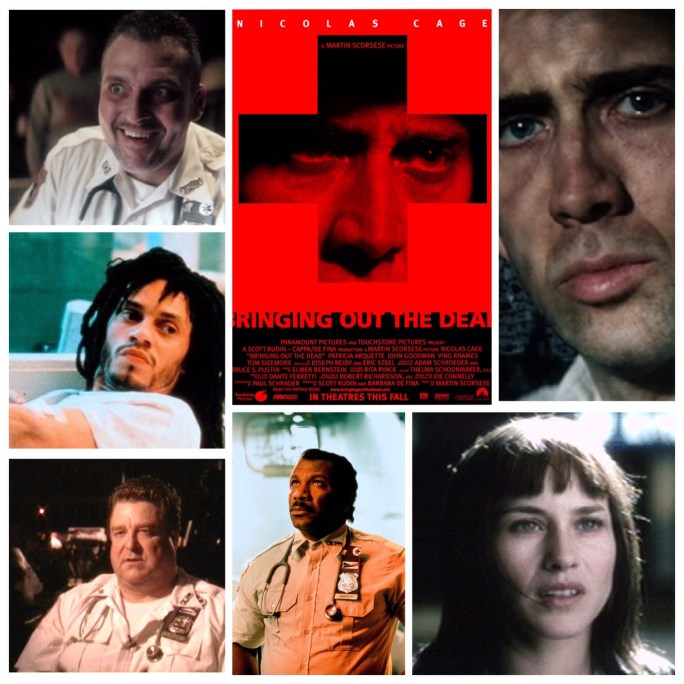
Recently myself and a good friend of mine, Mo Barrett, have begun to craft special ‘interactive’ video summaries of some of our favourite darker, more challenging films. This installmeant sees us look at Martin Scorsese’s Bringing Out The Dead, a terrific. Option picture which we both have a mutual love for. Please click the link below and enjoy!

Bringing Out The Dead
Created By Mo Barrett and Nate Hill, with thanks to the support of Frank Mengarelli and Nick Clement of Podcasting Them Softly.

A chat with actor Peter Onorati

Pleased to bring you my latest interview, with veteran actor Peter Onorati. Peter has appeared in many films including Martin Scorsese’s Goodfellas, Rocketman, Shelter, The Last Ride, Postcards From The Edge, Blood Deep, The Last Ride and more. He’s also acted in Television shows including Sex And The City, Tales From The Crypt, CSI, NCIS, Monk, Crossing Jordan, ER, Batman Beyond, The Wild Thornberries, The Outer Limits, 24, Blue Bloods, Sons Of Anarchy, Castle and many more. Enjoy!
Nate: You have done quite a bit in life, before and besides acting, including playing football. When did you know you wanted to be an actor, and knew it would be something you would enjoy doing indefinitely?
Peter: I really never thought about acting until I was challenged to take a 1-night stand class in comedy in NYC, which turned out to be a class in Improvisation. At the time, I had my MBA and I was the Director of Marketing and Research for 3 of McCall’s magazines and dating a childhood crush who was the Art Director of one of the magazines. After the 1-night class I was asked to join an Improv group in NYC that ended up being called Port Authority Theatre Ensemble or Pate (pronounced Pattay like the French word). The Group was named so because NONE of us were in the acting business and we came together from as far as Boonton N.J. (me) and Queens and the boroughs. We were indeed very much like a Pate. We played all he shit-holes in NYC for a few years and competed in the Improvisation Olympics in Chicago at Second City. I met a starving actress in the group named Jeanette Collins who was classically trained in Improv and who had moved to NYC from California. When my childhood crush broke up with me Jeanette took pity on me and dated me. Soon after I had some of my research published in Advertising Age and was being sought after by some big package good firms like P&G. I let my boss at McCall’s know and she decided that I wasn’t worth keeping so she made my life miserable for a few months. During that time Jeanette said “I think you could be an actor” to which I replied “Yeah, so I can have 4 jobs and starve like you?” When I subsequently removed the ice-pack from my eye, I decided to try acting. I walked into McCall’s and quit and within 2 weeks was on hold for a national beer commercial. Within about 2 years I had made more money as a commercial actor than I did as a Marketing Exec and I got my first break in TV on the last season of Kate and Allie. From there you can check my resume cause there’s too much to type.
 Nate: Who are some actors/filmmakers whose work you enjoy and maybe have inspired you in your own work? 
Peter: Actors who inspire me: DeNiro (whom I worked with in my first big movie Goodfellas) Robert Duvall, John Casales, Christian Bale, John Garfield, James Gagney, Spencer Tracey (too many to type) – Filmakers/Actors – Redford, Stallone, Clooney. Barry Levinson, Scorsese (again too numerous to type)
Nate:  You have a very rambunctious, energetic nature to your work; many of your characters have a vitality that lights up the screen and commands attention. Is this something you consciously have done with practice and training, or do you think it comes out of your own personality?
Peter: Most of what I do comes from me. I have no real formal training as an actor so I have nothing to draw upon except my own life experience. For better or worse, there is always a huge piece of me or somebody I loved or hated in what I do. Let’s face it, I have no other resources.
Nate: 24: how was you experience working on this show? 
Peter: My experience on 24 was GREAT and would have lasted longer except for the way this stupid business works. I am an acquaintance of Jon Cassar the Exec Prod (he has subsequently climbed on board with a script I co-wrote to be the Exec Prod.) They offered me that role and that doesn’t happen too much to actors at my level. However they did not make it a “Regular Role” and lock me in. (probably because they didn’t want to pay me). So in the middle I was offered a 4 episode arc on Desperate Housewives and took the guarantee over the possibility of more episodes of ‘24’. So as most of the stories of this business go, ‘24’ called me for more eps but I committed to Desperate Housewives so I did no more.
Nate: You have done a fair amount of voice work in your career. How did that come about, do you enjoy it, and how does it compare to acting in front of a camera in live action? 
Peter: As one who got kicked out of Catholic School in 5th grade for mimicking the Nuns and Priests, I never thought I’d make money doing exactly what I did wrong so long ago.
Nate: I remember a little film you did called Shelter, with Kurtwood Smith and Costas Mandylor, who played your brother. You stole the show as the hyperactive Greek mafia boss. Any memories from that one, and how was the experience? 
Peter: One of the best experiences of my career. Not only did I get to sit across from the great Charles Durning but I got to do something actors at my level NEVER get to do. Unless you’re Dustin Hoffman or Christian Bale, you never get to do maladies or accents. The writer/producer and the director let me speak in Greek and do the Greek/American accent at my suggestion for the character. This is unheard of for us guys at the lower levels.
Nate: Any upcoming projects you are excited for and would like to mention? 


Peter: Nothing in acting right now. I have had some success writing and have put together some strong and interesting packages for my work. Actually I am writing something right now with my wife ( in 30 years together we haven’t done this) She is part of a writing team Collins an Friedman and has been everything from Exec to Co-Exec producer on shows since we moved to California.
Nate: Some of your favorite roles you have played over the course of your career so far?
Peter: I love ALL of my own series. They gave me a sense of security and a long term approach to finding my characters. I specifically loved doing a show that my agents and managers kept me from doing for a while as it was not “the thing to do”. The show was Walker Texas Ranger and I had a BLAST and Chuck was incredibly congenial and respectful of my ideas for my character. I can’t mention all the special jobs that stretched my chops like “Harry’s Law” and the joy and fatigue that accompanied the work. I guess that when I’m not working like most actors I feel unaccomplished. When you come to this town it’s all about the trophies and the P.R. but when you’ve been here as long as I have, you realized it’s a major accomplishment just to raise a family, put your sons through college and stay in your house. So I guess I made out ok.

MARTIN SCORSESE’S RAGING BULL — A REVIEW BY NICK CLEMENT

2

Raging Bull features one of the greatest performances that the screen has ever contained. It also happens to be a definitive American masterpiece, the sort of film that is unimpeachable in terms of overall quality and its standing in the pantheon of great cinema. This is a pulverizing film – emotionally, aesthetically, and narratively – and it leaves bruises, intentionally, while frequently stirring the soul. Martin Scorsese’s showy, studied, and totally commanding direction is a text book example of cinematic showmanship.  Paul Schrader and Mardik Martin’s intimate screenplay allowed for any number of moments – both big and small – to become immediate cinematic touchstones. Robert De Niro’s work as Jake La Motta will be rightfully revered until the final days of this planet; it’s a force of nature piece of acting in a film that makes the ground under your feet feel as if it’s moving. The stellar ensemble cast all gracefully dance around the edges of this tremendous motion picture, with Joe Pesci and Cathy Moriarty providing blistering support, with a stacked roster of faces and character actors coming and going, providing the film with a terrific sense of place and atmosphere. The combination of Michael Chapman’s electrifying black and white cinematography, which was stylistically heightened to suggest the intense speed and ferocity of the bouts in the ring, and Thelma Schoonmaker’s dynamic and propulsive editing, went a long way in providing the movie with such an urgent sense of violence, both during the numerous bloody bouts and the verbally explosive fights between La Motta and all of the people within his personal orbit. What more, at this point, can be said about Raging Bull that hasn’t been said? It’s one of those timeless classics that ages like a fine wine, and a true reminder of the galvanic force that De Niro possessed during his remarkable run in the vintage years.

4

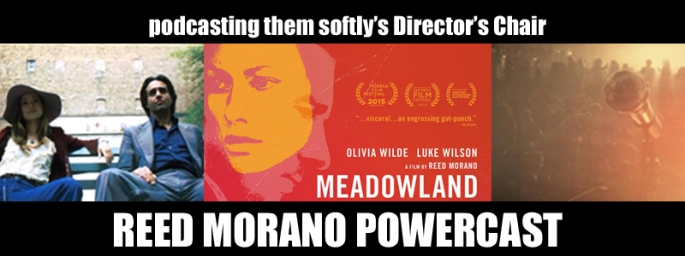
PTS Presents DIRECTOR’S CHAIR with REED MORANO

MORANO POWERCAST

unnamed (1)Podcasting Them Softly is extremely excited to present our conversation with critically acclaimed filmmaker Reed Morano. Reed got her start as a cinematographer, having lensed the acclaimed indies Frozen River, Kill Your Darlings, The Skeleton Twins, and Little Birds, as well as shooting a number of episodes of the edgy and groundbreaking HBO series Looking. Currently, her emotionally powerful and visually stunning feature directorial debut, Meadowland, which stars Olivia Wilde, Luke Wilson, Elizabeth Moss, Kevin Corrigan, and John Leguizamo, can be seen in theaters in select cities and on various streaming platforms including ITunes. In January 2016, her director of photography skills will be seen yet again on the small screen, with the explosive looking new HBO series Vinyl, from executive producers Martin Scorsese, Terrence Winter, and Mick Jagger. And in the spring of 2016, Reed will begin production on her next feature, the contemporary war drama Lioness, with star Ellen Page. Reed‘s work is always stylish, personal, and incredibly cinematic, and we were honored to get a chance to speak with her! We hope you enjoy this terrific chat!
MARTIN SCORSESE’S CASINO — 20th ANNIVERSARY REVIEW BY NICK CLEMENT

6

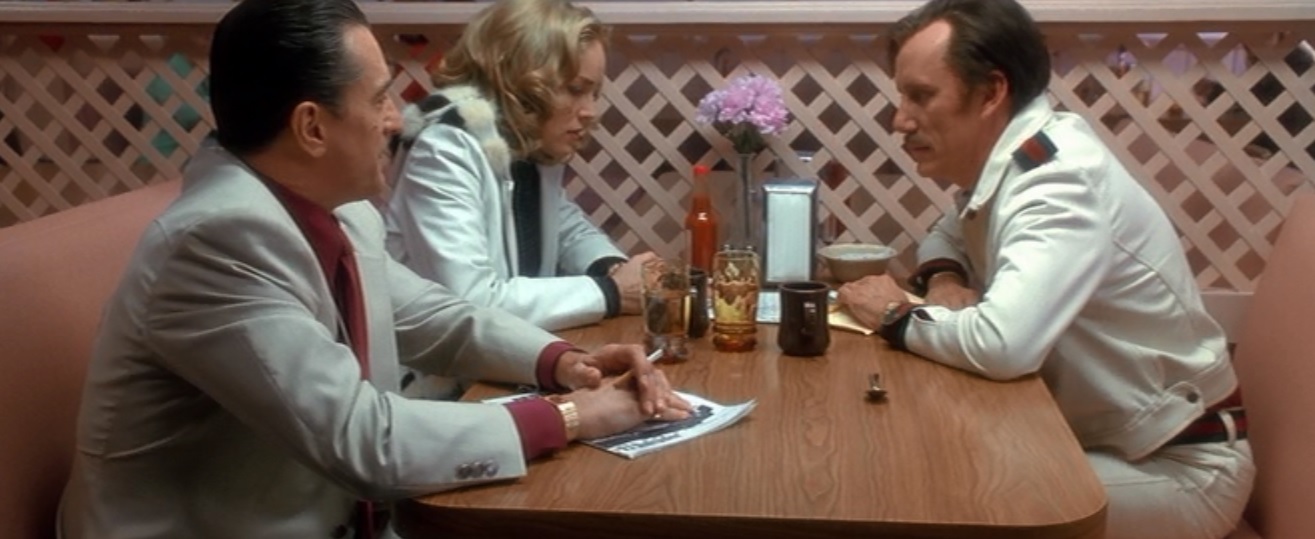
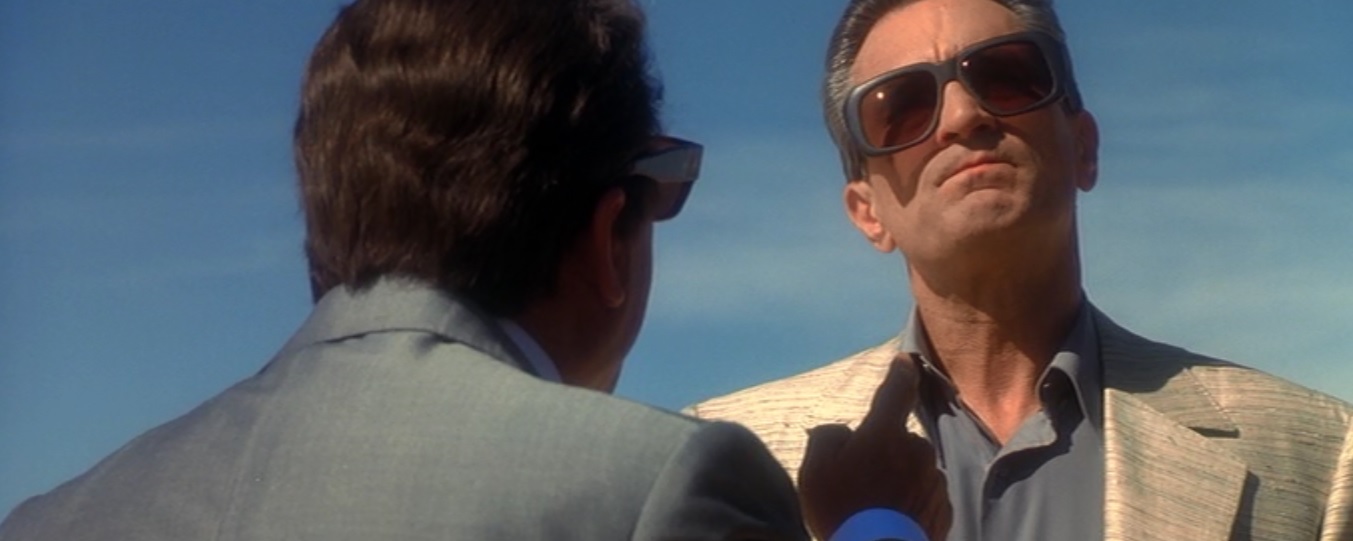
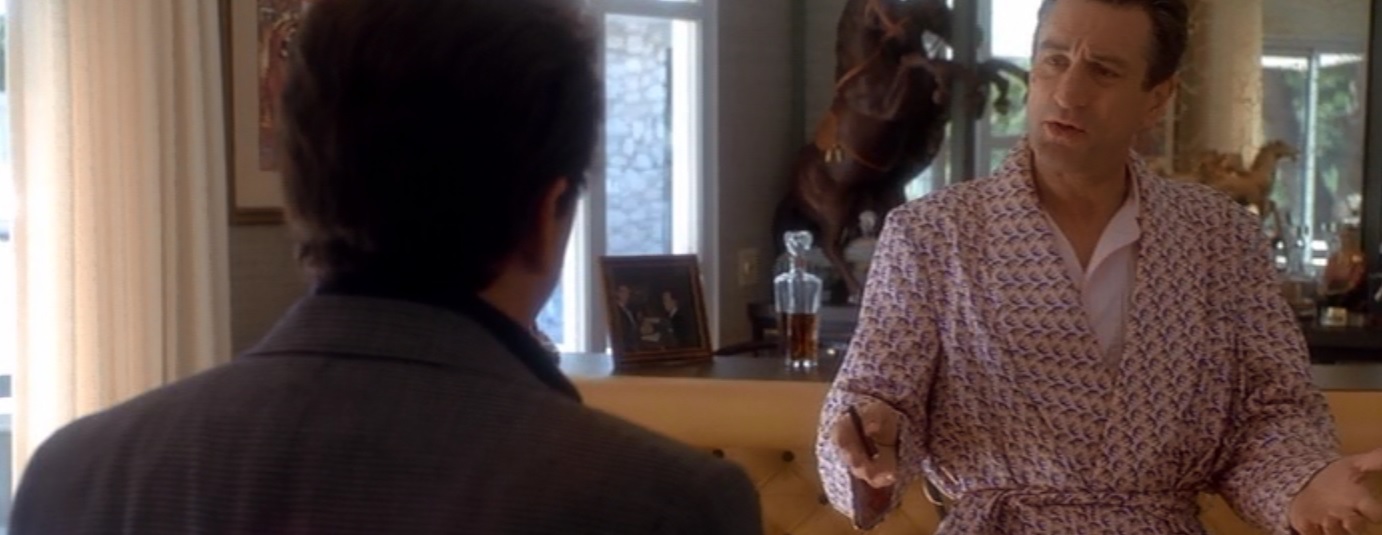
It’s crazy to think that later this month, Casino will be turning 20 years old. I’ve seen this film roughly 5,380 times and I’ll likely see it another 5,380 times more. It’s a fabulously engrossing saga of Las Vegas sin and sleaze from the very first masterful frame all the way until the last. Some have called it Goodfellas Gone West, and that’s not far off, but stylistically, the two films are very different, while of course sharing some similar traits. Casino is epic, where Goodfellas stressed the intimate, and it’s the smart way that Scorsese and his writers pulled all of the small and big pieces together that they were able to concoct a packed narrative that still remained coherent. Cinematographer Robert Richardson was in full-on flamboyant mode here, with massive crane shots, huge camera-arm movements, with as dynamic of a sense of how to shoot in widescreen that can possibly be referenced. The film is truly massive in both visual scope and story structure, with one element complimenting the other, as Scorsese ladled on the blood, profanity, and gangster tropes that everyone would expect from the master of this particular milieu.

2

There’s a journalistic sweep that encompasses much of Casino, with Richardson’s always-searching camera gliding over the action, covering the various back-room deals and violent confrontations with extreme, flashy style. Scorsese was obsessive in the details both large and small during Casino, which allowed Richardson the chance to gaze his camera upon the glitz and glamour that Las Vegas exudes. There’s a mind-boggling amount of three to five minute long stedicam shots in this film, which gives off an observational quality from moment to moment. It’s sort of ridiculous to be honest. Richardson lit Sharon Stone like a goddess in this film, always showing off her eclectic wardrobe and sexy make-up to maximum effect; do you think she had 10,000 costume changes? Everyone in the cast was just perfect, with De Niro and Pesci doing their best “one-two” with each other, while Richardson and Scorsese caught all of the sly moments from these two supreme actors which helps make this film what it is – an obsessive study of excess and greed and power. There’s even a Smothers Brother in this film!

87

There’s a level of verisimilitude that Richardson and his crew brought to this film, from the practical locations to the fully decked out sets to all of the character actors and “faces around the tables” that help to produce a tableaux effect – it’s a perfect distillation of a bygone era. And then there’s also the freewheeling sense of visual flamboyance (this is Vegas after all!) that Casino possesses, which separates it from other genre entries, and it felt like the next logical step for Scorsese in terms of his fascination with this subject matter. This was one of those movies that blew the doors off my cinema-mind 20 years ago, an example of what I’d like to call bravura filmmaking. Casino is akin to an out of control but still somehow in control locomotive that just never wants to stop moving. “An equal amount of blueberries in each muffin” POWER.

3