The Wedding Singer: A Review by Nate Hill 

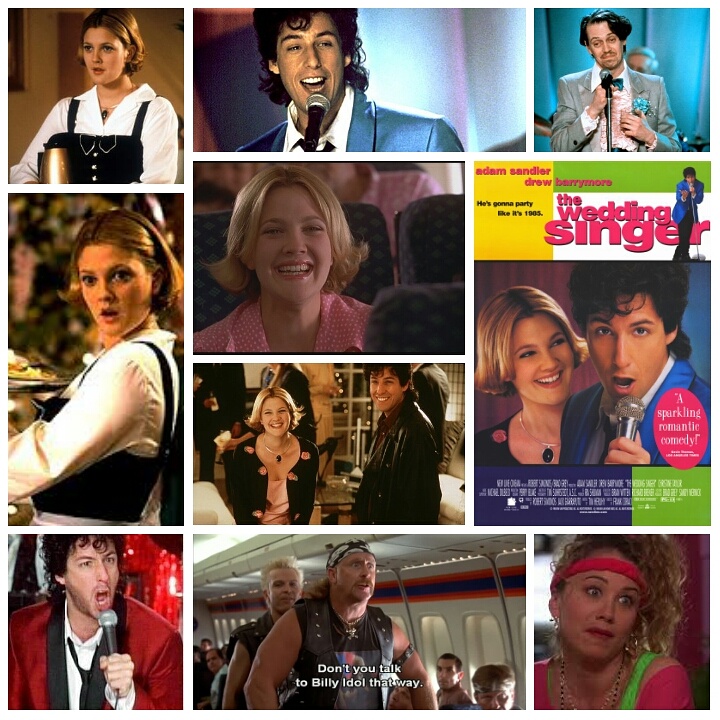
I’m not usually very stoked on Adam Sandler movies, I’ll say that right off the bat. I mean, there’s a lucky select few that are either geniunly funny or have nostalgic value (Happy Gilmore, Big Daddy and the absurdly fascinating Little Nicky come to mind), but he’s just such a ball of cancer onscreen it’s hard to actively see his stuff. The Wedding Singer, however, is a really sweet little movie, and works well thanks to an impressive 80’s soundtrack and the presence of Drew Barrymore, who frequently hangs around in Sandler’s stuff. He plays Robbie Hart here, a singer who belts out the hits of the 1980’s at weddings, parties, you name it. After being left at the alter by his fiance, he spots waitress Julia (Barrymore), who uncannily seems to be working every event she is. The two form a bond, but she is engaged to another dude (Matthew Glave), who quickly is revealed to be kind of a jerkoff, prompting Robbie to go to great lengths to prove, and win Julia’s heart. The film makes the absolute most of its setting, as any period piece should. The music is a delight, right down to the amusing dawn of the ‘CD’, and a great little cameo from a rock legend aboard an airline. Some of the usual troupe of Sandler disciples pop up here, including Christine Taylor, Allen Covert, Kevin Nealon, Peter Dante, Jon Lovitz and Steve Buscemi, who can be counted on to appear in pretty much any Adam flick you can think of. Sandler and Barrymore handle the comedic romance well and have decent chemistry (perhaps while theyre always paired). It’s light, sweet, carried on by the rockin soundtrack and detailed production design. 
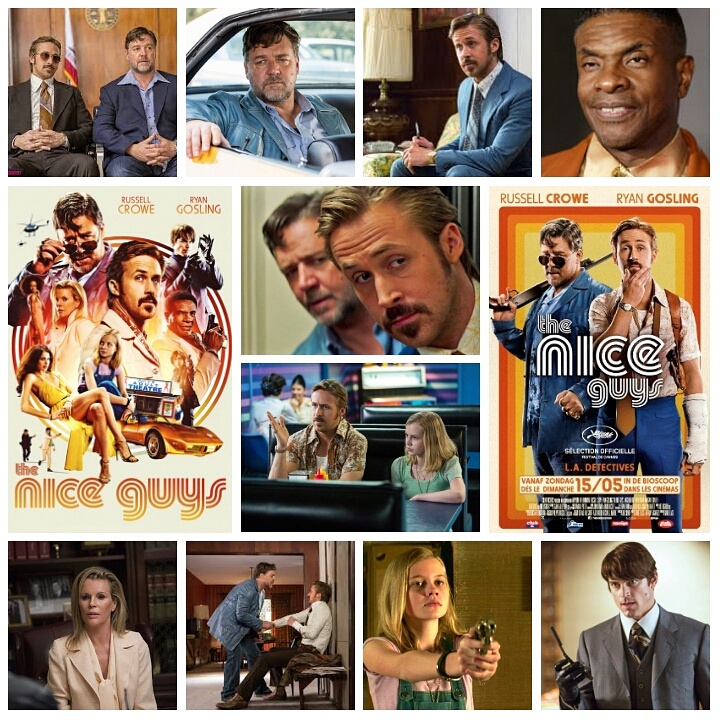
The Nice Guys: A Review by Nate Hill 

The Nice Guys is a torrential downpour of laughs, prat falls and lovable idiocracy, a formula which director Shane Black perfected with his super underrated Kiss Kiss Bang Bang. This one is no doubt it’s sister film, and while it has comedy in spades, top tier performances all round and luscious 1970’s production design, it’s just a we bit under-plotted. Having said that, that’s my one and only complaint about it. It’s the funniest film of the year by far, thanks to the rough and tumble pairing of Russell Crowe and Ryan Gosling. Crowe is Jackson Healy, a mopey hired thug who will put the hurt on anyone if the dollar is right. This occupation has him cross the path of Holland March (Gosling) an ex cop PI who, according to his daughter (Angourie Rice), is the world’s worst detective. He’s certainly a buffoon, a trait which forms one half of their comedic shtick, the other being Healy’s laid back exasperation everytime March gets them into trouble, which is pretty much throughout the entire film. The two of them unwittingly stumble into a dangerous turn events involving the justice department, murder, the apparant suicide of a porn star (Margaret Qualley), a very scary assassi  (Matt Bomer) and one angry goon played by an afro’d out Keith David. It’s tough to make heads or tails of what’s really going on, but like Kiss Kiss Bang Bang it’s not about the plot or the outcome, it’s more about watching the characters trip over each other in style as they get there. Crowe is terrific, a bear of a dude who’s in way over both his head, IQ and pay grade, aghast at Gosling’s antics at every turn. Gosling’s character belongs to that special class of stupid that is so clumsy that he circumnavigates his own ineptitude and ends up falling right into clues, without a clue how he got there. After a string of recent stoic introvert roles, he’s the most animated character of the film and is clearly having a ball. None of what the duo do would be possible without March’s precocious 13 year old daughter, played with uncanny ability by Rice, whose star is going to be solidly on the rise, I’d wager. A reunion of sorts occurs with the arrival of Kim Basinger as the head of the justice department, joining Crowe again after their work in L.A. Confidential. Basinger isn’t given much to do ultimately, but her presence is a welcome addition to the vibe. Black deserves kudos for his gorgeous recreation of L.A. in the 70’s, right down to the sickening lampshades pastel suits and souped up cars it’s a treat to see. The energy from Crowe and Gosling is where it’s at with this one, and they both eagerly tuck in to the dialogue, making this one groovy, delirious riot of a flick.  

Mr. Right: A Review by Nate Hill 

As I was watching Mr. Right, I started thinking to myself, this is stupid. It’s absurd and silly. So why does it work so well? The premise isn’t unique or original. Girl meets boy. Girl falls in love with boy. Boy turns out to be hitman/secret agent. Boy drags girl on mad escapade against some dastardly villains, the bond between them getting stronger in the process. It’s an ages old formula. It sorta kinda worked with Tom Cruise and Cameron Diaz, and elsewhere failed miserably with Katherine Heigl and Ashton Kutcher. So why then does it work so well with Sam Rockwell and Anna Kendrick? Well, exactly that: It’s Sam Rockwell and Anna Kendrick. The two are so suited for each other it’s adorable. The both of them are quirky, awkward, unconventionally attractive and very unpredictable in their work. Neither are what you’d call traditional romantic leads or action stars, and it’s in that sense that the film finds its groove. I’ve heard other critics bash on Max Landis’s script for being to busy or too stoked on itself, but in a studio system that tosses us garbage like the Kutcher/Heigl version, I’ll take anything I can get that puts in an admirable effort, flaws and all. Anna plays a jilted girl who is on a speeding rebound train that has a chance run in with Mr. Right (Sam Rockwell). He’s charming, super into her and the chemistry they have is obvious right off the bat. Soon they’re being appallingly cute and pretty much dating… that’s where the trouble begins. Rockwell is an infamous assassin on the run from several baddies including his former agency mentor (Tim Roth has even more fun with accents here than he did in The Hateful Eight) who has lost his marbles, and a trio of mafia brats played by a volatile Anson Mount, a hammy James Ransone and a wicked Michael Eklund as that nastiest of the bunch. The film tries hard to balance the two tones, and fpr the most part succeeds, blending them with the helpful notes of craziness from everyone. The violence is brutal, stylized and often darkly comical, the romance is sweet but never gushy with just a hint of mental instability from both parties (sounds weird, I know… it works). Rockwell adds shades of his off the rails work in Seven Psychopaths, albeit with less psychosis. Kendrick is endlessly cute, and endearingly klutzy. Throw in RZA as a hapless killer who can’t decide what side of the fence he’s on, and you’ve got a diverse little cast with enough collective and individual talent to make this a good time. It won’t be for everyone; I can picture many people I know big annoyed, or simply finding themselves unable to buy into it. But for fans of Rockwell and Kendrick (even if you’re not, there’s no scoffing at both their skills) it’s a charming blast of fun. 

Confessions Of A Dangerous Mind: A Review By Nate Hill


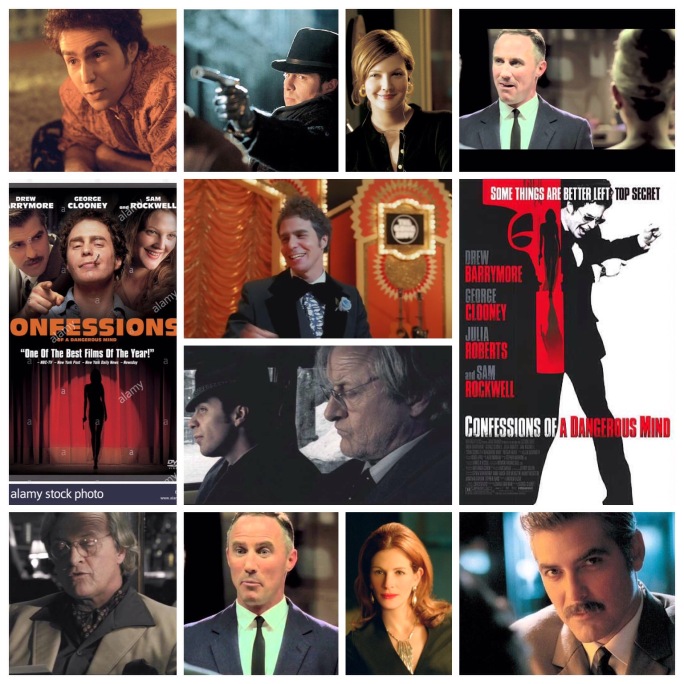
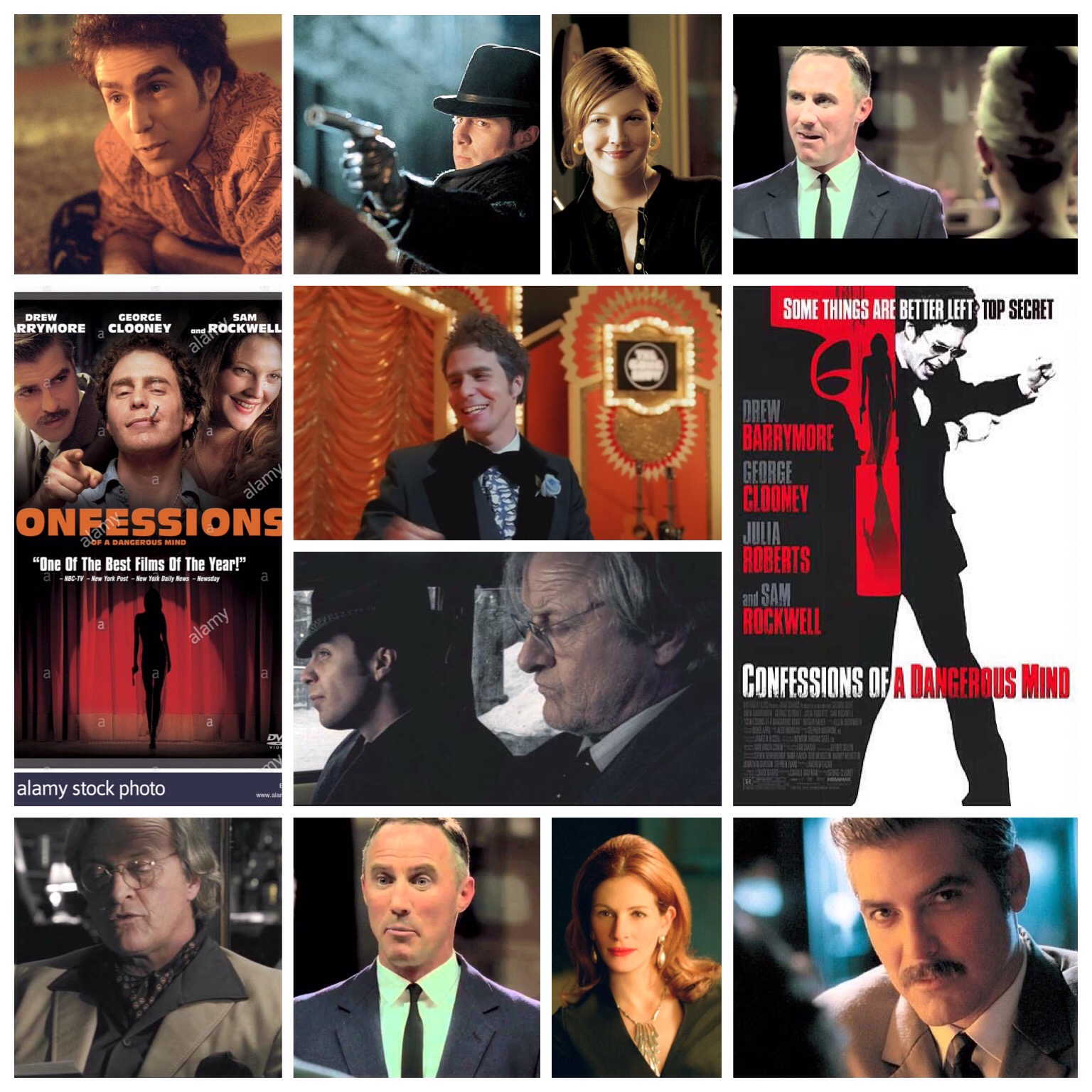
As soon as George Clooney built up enough clout and reputation in the industry to a point where he could make his own projects, he started to send some unique and refreshing stuff down an assembly line that needed some shaking up. Confessions Of A Dangerous Mind is such a curiosity, but it’s so specific and idiosyncratic that I can barely say what makes it so special. I can go over the plot, performances etc. and give the reader a general idea, but to get it you had to be there. I suppose that’s the case with all movies, this one just sort of has its own frequency that you have to be tuned into. For a square jawed leading man, Clooney sure busted the box open with this directorial effort, as well as a few others, all just as distinctive. A screenplay by Mr. Abstract himself, Charlie Kaufman, helps with making an impression as well. Sam Rockwell, who continues to prove himself as one of the best actors of his generation, plays Chuck Barris. Chuck was the brain child behind numerous gaudy television game shows in the 60’s, including the infamous ‘Dating Game’. Flippant creative output was his brand, but there was another side to him as well, a darker period in which he claimed to be recruited by the CIA to carry out cloak and dagger assassinations. Whether or not this was ever a factual part of his life is murky, but he certainly believes it to be true and has written extensively about it in the novel which Clooney based this on. The film deftly intersperses his life at the television network and the genesis of the programs with his training and eventual missions for the Company. It’s an odd contrast, but when you’re treated with Clooney’s dutiful storytelling and an extremely committed turn from Rockwell, it’s hard not to be drawn into it. Not to mention the supporting cast. Julia Roberts is cast against type as a lethal, sociopathic femme fatale who crosses paths with Barris more than a few times. Rutger Hauer mopes about as a loveable alcoholic operative who covers Barris’s back on a few assignments. Drew Barrymore spruces things up as a ditzy love interest, Michael Cera plays Chuck as a young’in, Clooney himself underplays his CIA handler, letting an epic moustache do the talking, and there’s cameos from Maggie Gyllenhaal, Brad Pitt and Matt Damon. At one point the film stops dead in its tracks for the funniest performance which hijacks a scene briefly, in the form of Robert John Burke as a maniacal censorship board hyena. Burke pulls the ripcord and delivers roughly 40 seconds of pure comedic genius that I could watch on loop, and is the only moment of its kind in the film. You’d think it’d offset tone, but in a film this organic and quirky, it simply serves as a garnish of hilarity. The whole thing has a Soderbergh feel to it (perhaps due to Clooney), a sharp, crystalline precision to the burnished cinematography from Newton Thomas Sigel, who previously wowed us with similar work on Blood & Wine, The Usual Suspects and Gregory Hoblit’s Fallen. His lens captures the melancholy accompanying Barris’s very strange path path in life with moodily lit frames, and pauses for the brilliant moments of absurd black comedy which seem to follow him around like the spooks he was always running from. A film with dual aspects that never tries to prove or disprove Chuck’s claims, but loyally tells the story the way he told it, guided by Clooney all the while. A little stroke of genius. 

Triangle: A Review by Nate Hill 

  
Structured like a labyrinthine video game. Packed with loads of paranoid suspense and style. Tuned with the hazy thick atmosphere of a bad dream. A diabolical guessing game from scene to scene. Triangle is one of the most enjoyable mind benders out there, a funhouse of a thriller that sails into murky metaphysical water and doesn’t let either it’s protagonist or its audience off with a cheap resolution. Imagine Dead Calm crossed with Memento and you’ll begin to have some notion as to where this film will take you. It’s a freaky voyage, as star Melissa George finds out after a yachting expedition with friends hits a nasty patch of storm weather. Soon a massive, deserted ocean liner crosses their path, and they are forced to board it after the typhoon wreaks their smaller craft. The rest of her crew just seemed puzzled by the derelict vessel, but Melissa has an eerie, gnawing feeling that she’s been on this boat before, a feeling that something is very wrong. Suddenly there’s a mystery person hunting and killing them, and if I just made it sound like a run of the mill slasher flick, please be assured that it’s anything but. What I’ve described happens in what is maybe the first quarter of the film, and everything after that point is a trip into a dizzy, seafaring twilight zone of psychological mystery and reality warping uncertainty that makes George unsure if anything, including her own perception of reality, can be trusted. Events repeat themselves, characters dart in and out of the wormhole of a narrative arbitrarily yet with a hidden purpouse that managed to scarily elude me for much of the film. It’s scary in the way that ducks usual horror trends. There’s violence and even some ghastly gore, but the real fear here lies in the unknown, the idea that forces beyond what we perceive as reality are messing around with us, and indeed they do mess around with her and then some, right up until the last frame of an ending that’s commendable, haunting and difficult to process. George makes great work of the confusion that morphs into terror and then outright existential panic, keeping us on our toes with the way she handles her character arc. Keep an eye out for a young Liam Hemsworth too. For psychological thrillers, it don’t get much better than this, and it’s off the radar enough that you’ll be able to recommend it to your friends who chances are, haven’t even heard of it.

Titan AE: A Review by Nate Hill 

Titan AE is one of the best 2D animation ventures out there that isn’t Disney. Science Fiction and animation just seem to inherently go hand in hand (affirming my belief that Treasure Planet is the best one that Disney ever churned out, but that’s another story), perhaps because of the dazzling possibilities in a form of creation like that, tools which make the visual patterns of the artist’s dreams and beautiful renditions of the cosmos a reality. This one nails the visual aspect, but it was story that hooked me ultimately. Along with the artwork there is a boundless creative surge, a very human plotline that’s relatable to anyone who’s ever felt lost or like they don’t fit in. In the year 3028 A.D., a marauding race of aliens called the Drej decide that us humans are a threat, and obliterate earth, leaving few survivors. Dark way to kick off an animated movie, amirite? That’s another great thing about it, it’s not exactly for kids and reaches for themes that are a little more than your standard animated flick, getting fairly intense in the process. One of the few human survivors is young Cale (later played by Matt Damon), whose scientist father (Ron Perlman) was working on an idea that could have greatly advanced our civilization. In the years following the destruction, Cale has been left to wander the galaxy with the sparse, impoverished remains of the human race, now looked down upon by other alien tribes for essentially being homeless. When human Captain Joseph Korso (Bill Pullman) comes to him telling of a mysterious device created by his father long ago, Cale is reluctant, resenting his him for disappearing on the Titan ship so many years before. Soon it becomes clear that Perlman’s device is the key to creating a new earth, and reuniting humanity. Thus begins an epic race across the universe to find it before the Drej do. Drew Barrymore lends her sassy voice talents to Akima, Korso’s tough lieutenant, and there’s also work from John Leguizamo, Nathan Lane, Janeane Garofalo, Charles Rocket, Alex D. Linz and rapper Tone Loc who has a perfect voice for this kind of thing, playing a kindly alien mentor named Tek. This one is timeless, feeling fresh and vital with each passing decade it’s allowed to age through. A celebration of imagination and the creative force of will that lies inside each and every one of us humans, no matter how dire our situation. Classic stuff. 

Batman Forever: A Review by Nate Hill 

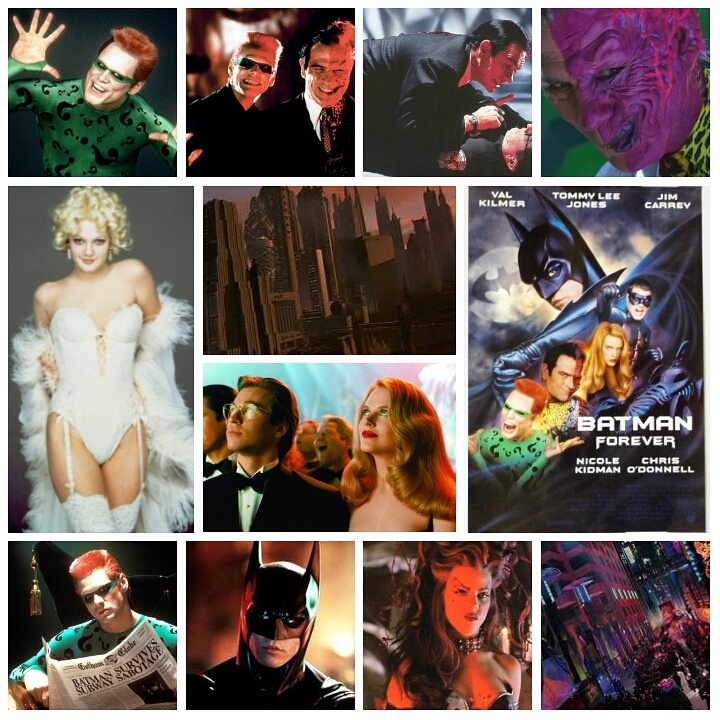
It’s true, Batman Forever is a silly, overblown, cartoonish riot of buffoonry.  But so what? It’s also awesome in it’s own way, and inhabits a certain corner of the Batman culture, the side of things that is rooted in camp and unhinged wonderment. Now, there’s an important and discernable difference between taking things far and taking things too far. That difference is delineated on one side by a willingness to be goofy, colorful and not take this superhero stuff too seriously. The other side of that of course is a disregard for limits, throwing every ridiculous line, costume and awkward scene into it you can imagine. I’m referring to Joel Schumacher’s followup to this, Batman & Robin. Everything that is weird, wonderful and extravagant about Forever just revved up to much in Robin, resulting in a piss poor typhoon of mania and over acting. Not to say that Forever doesn’t have over acting. Ohhhh boy is there over acting. Between Tommy Lee Jones and Jim Carrey, the thing is liable to give you epilipsy. But it somehow works despite its madness, a lucky stroke that Robin couldn’t have cared less about adhering to. Val Kilmer is the sedating antidote to Jones and Carrey, a remakably laid back Bats and a pretty solid casting choice, both as Brooding Bruce and Buttkicking Bats. Eternally broken up about the death of his patents, Bruce fights off Harvey Two Face Dent (Jones) in a garish, disarming Gotham City that resembles Mardi Gras in Dr. Seuss land. Jones’s Two Face is so far over the top, so rabid that it’s a wonder he didn’t give himself a bloody heart attack in the first take. Anyone who’s interested can read up on his performance, and how he pushed himself right to the heights of bombast in order to try and out-Carrey the Jim. Carrey, playing the Riddler, is a ball of twisted nerves himself, set loose on the wacky sets and basically given free reign to.. well.. go fucking nuts. It’s one of his most physical performances too, prancing around like a loon in green spandex that leaves nothing to the imagination. Aaron Eckhart’s Two Face may have had the edge for grit, but Jones has the rollicking clown version, and runs away to kookoo land with mannerisms that even call to mind The Joker in some scenes. The only thing I’ve seen him more hopped up in is Natural Born Killers, but shit man its hard to top his work in that. The story is all over the place, involving a nonsensical subplot with a mind control device, multiple elaborate set pieces, endless scenery chewing and the eventual arrival of Robin, played by Chris O’Donnell who is like the cinematic Buzz Killington. Michael Gough and Pat Hingle dutifully tag along as Alfred and Commissioner Gordon, both looking tired at this point. Debi Mazar and Drew Barrymore have amusing dual cameos as Two Face’s twin vixens, and Nicole Kidman does the slinky love interest shtick for Bruce as a sexy psychologist. Watch for an uncredited Ed Begley Jr. Too. There’s no denying the silliness, but one has to admit that the achievment in costume, production design and artistry are clear off the charts with this one, and visually it should be a legend in the franchise. Say what you will about it, I love the thing. 

Stephen King’s Firestarter: A Review by Nate Hill 

Film versions of Stephen King novels can be a tricky thing. Often they’re half assed,  clunky miniseries (ever tried to sit down and watch The Langoliers??), and when they’re given the lofty cinema treatment, he has famously turned his nose in the face of Kubrick’s might. I feel like Firestarter escaped unscathed, and still holds to this day, if a bit achingly retro now. It’s a thriller perceived in a childlike manner by its young protagonist, Charlie Mcgee (Drew Barrymore). Charlie can start fires with her mind, and certain shadowy agencies just can’t wait to get their hands on her. Her father (David Keith) once participated in some scary drug testing related to telekinesis back in the day, and some of whatever altered his DNA has been passed on to her. He will do anything to protect her, as the two frantically race across the country to safety, pursued by forces working for Hollister (Martin Sheen), a spook with too much power and nasty ideas about what to do with it. Also on their trail is pseudo spiritual whacko John Rainbird, who wants to absorb Charlie’s abilities, man what a freak. Rainbird is a native American in King’s novel, so white haired yankee boy Scott is an odd choice, but he does a fine job all the same. Two things are what makes this one really stand out in a special way. Tangerine Dream provides yet another ultrasonic, elemental synth score that has since become legendary. It accents the story in an almost fairy tale like way, gilding the danger with a fable style sound, but never stamping out the real menace. Barrymore is the other leg of the table, giving one hell of a fierce and vulnerable performance for such a young girl, her childlike honesty a prism for the audience to see the evil around her through innocent eyes. It’s great stuff, and one of the most solid King adaptations out there. Now there is a sequel (not sure if the man wrote a second book?) called Firestarter 2: Rekindled, which pales in comparison and runs about 45 minutes too long (!), but it’s worth a look for the casting of Marguerite Moreau as a grown up Charlie, Malcolm McDowell taking over from Scott as Rainbird, and Dennis Hopper as well. 

Best Men: A Review by Nate Hill 


Best Men is the most charming, dainty and innocuous movie about bank robbing that you’ll ever see. It’s premise revolves around a wedding party that unwittingly gets roped into a heist, but they’re all solid folks, including the perpetrator, and all just want the best for the happy couple they are celebrating for. Therein lies both the comedic and the touching moments, of which there are many, supplied by a diverse and very capable cast. A troupe of best men accompany a groom (Luke Wilson) on the way to his matrimonial bliss. One among them is a hotheaded adrenaline junkie named Billy (Sean Patrick Flanery, never more adorable). Billy has knack for robbing banks whilst reciting Shakespeare. Demands, commands, profanities. All in the Bard’s tongue. He brazenly holds up a rural branch and drags his friends in, including two others, an ex military stud (Dean Cain) and a squirrelly, pussy whipped Andy Dick. They soon find themselves trapped in the bank with law enforcement prepping a siege outside their front door and Wilson’s determined Bridezilla (a feisty Drew Barrymore) marching straight into the crime scene to furiously give her fiancé what for. Billy also has severe daddy issues, which probably led to him lashing out in such a theatrical fashion in the first place. Coincidentally, the local sheriff (Fred Ward) happens to be his Poppa, and the two face off in scenes which undermine the lighter tone and dig for pathos that’s worth pausing for. They’re threatened by a gung ho FBI agent (Raymond J. Barry) who wants to blow them to kingdom come so he can go to lunch. They also find themselves sequestered in the bank with a sketchy Viet nam vet played by a wicked funny Brad Dourif in quite the commanding little supporting turn. Amid the screwball roughhousing, him and Cain find a few aching moments of truth relating to Cain’s sexual orientation, and his shame regarding it. I love a light, harebrained comedy, but I love em even more when they take deep breaths between fits of lunacy to gift their characters with some gravity that makes you feel something besides your sides splitting. This ones sadly forgotten, and you should all give it a go, it’s a gem. 

Finding Dory: A Review by Nate Hill 

While Finding Dory is not the same magic that Nemo was back in 2004 (it’s hard to catch that kind of lightning in a bottle twice), it’s safe to say it’s it’s own awesome little movie, and as far as a sequel goes, passes with flying colors. It’s more or less structured the same way as the first in terms of plot, adding it’s own twists, new characters and a core message that relates to previous themes while intrepidly covering new ground. My only complaint is I wish it were longer. It seemed to be over in a flash, even for a reliably slim Pixar running time. It would have been nice to have an extra 15 or 20 minutes to flesh out a few scenes, and elaborate a bit more on one particular character. Even so, what we get is completely charming and inspired. It starts off pretty much where we left off, with Nemo, Marlin and Dory living happily on the reef, intercut with scenes featuring an infant Dory who is most likely the cutest little thing to ever be seen in a Pixar movie. It’s revealed that a long time ago she was separated from her parents (Eugene Levy and Diane Keaton), and has grown up lost, adrift and afflicted by her relentless memory disorder. When an interaction triggers memories of them, she sets off with Marlin and Nemo in tow, on a merry quest across the ocean to connect with her roots. A great deal of this one is spent in a Sea World like habitat, which is another change and leaves room for many more new jokes and creatures. An octopus named Hank (Ed O Neil) begrudgingly helps her out, as well as a nearsighted whale shark (Kaitlyn Olsen), and as beluga (Ty Burrell) whose echo location is busted, providing one of the best jokes. There’s also a couple of exuberant seals played by Idris Elba and Dominic West, a few returning familiar faces and an epic cameo by a huge star, dead panning the voice of the aquarium tourist announcer in classic Pixar good humour. The film stresses the importance of acceptance and resilience, putting forth the idea that someone with a debilitating condition can in fact find their own unique method of coping, and achieving their goals despite the symptoms of their ailment. Trust Pixar time and time again to take mature, lofty themes and mold them into totally relatable fables that never preach, and are distilled to a point where the little ones can absorb them right alongside their parents. Like I said before, the film needs a bit more padding in its narrative to feel complete, which may materialize in an extended dvd version. What we have here is brilliant enough though, and didn’t disappoint.