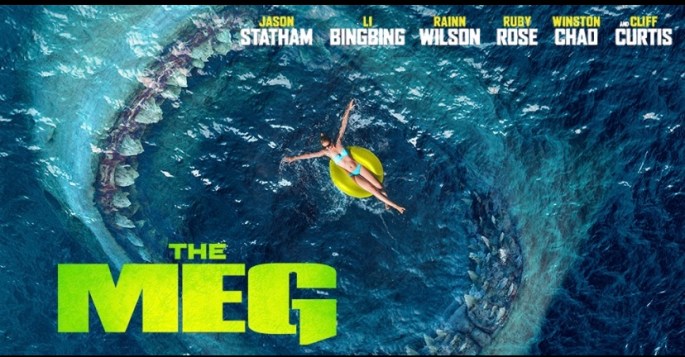
For a movie about a giant shark, given a giant budget, Jon Turtletaub’s The Meg is just kinda underwhelming. First off it’s PG-13, which is just not gonna do your shark attack flick any favours, I mean people wanna see sharks fucking people up and rating constraints will put a damper on that. Secondly, they just don’t do much with the infamous prehistoric megalodon other than have it jump around a bit, swallow a few people whole and arrive at a densely populated beach that looks like it was conceived by Wes Anderson’s production designer. What does work? Much of the interaction between some engaging human characters is funny, genuine and likeable. Jason Statham is great as a legendary deep sea diver who would rather just crush beers in his Thailand shanty. Robert ‘Longmire’ Taylor, Olafur Darri Olafsson, stoic Cliff Curtis, unbelievably sexy Ruby Rose, Bingbing Li and a smarmy Rainn Wilson are fun. There’s a welcome tribal feel to the group dynamic and enthusiastic cheesiness that somehow reminded me of Stephen Sommers’ Deep Rising, a much more fun ocean set creature feature. But the shark action is lifeless and just not exciting, and if the lynchpin of your film doesn’t hold the thing together all you have is what works, in this case a fun group of folks played by varied actors running around impressive sets. The rest? Boring as hell dude. There’s one cool moment when a little girl sees The Meg slowly swim up to a giant glass window underwater and lunge for her but Netflix put that as the little teaser video on the film’s main menu so it’s spoiled before you even start the thing. I’ll still take Deep Blue Sea over this tide-pool detritus any day.
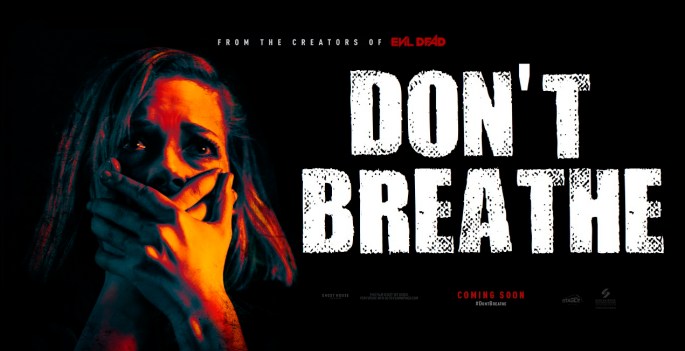
Don’t rob an old blind dude in Detroit, especially if the dude is Stephen Lang with an angry Rottweiler backing him up. Seriously don’t though, you don’t wanna know the consequences involving a turkey baster, a pair of scissors and a jam jar full of… I won’t spoil it but it’s fucking grim. Don’t Breathe is a pretty damn effective shocker from director Fede Alvarez, who did that Evil Dead remake that had the nerve to be way better than it should have been. In an especially derelict Detroit neighbourhood, three hapless street kids (Jane Levy, Dylan Minette and Daniel Zovatto) unwisely decide to burglarize the home of gulf war veterans Lang, who reportedly has a nice wad of cash stashed in his basement. Well.. he’s got more than that down there, let me tell you. Once he gets wind of their presence, his lithe warrior reflexes, keen hunter instincts and heightened sense of hearing make their experience between his walls a living nightmare, not to mention… other things he gets up to. Lang is the perfect actor for this because before he got super jacked for Avatar he was a pretty lanky guy, so you have this sinewy frame with sizeable muscle mass packed on, not the body type you want to be trapped in a narrow hallway with. Plus he’s just a terrific actor and plays this guy like a feral beast with touches of sorrow curdled into madness. Alvarez makes great use of his cameras here, doing long sweeping takes that utilize hallways, door frames and wide rooms, evoking David Fincher’s Panic Room just enough to garnish his own style. The acting aside from Lang is just ok; Levy does the wide eyed, tomboy Final Girl thing well, Minette is just not a naturally gifted actor and it shows, while Zovatto is saddled with horribly written lines from the Hollywood ‘this is what street punks act like’ typewriter bot and is just cartoonish. Still though, it’s a highly suspenseful effort that benefits greatly from Lang’s presence. As for the turkey baster, I’m not sure the film needed such a stark, sickening set piece (Fincher himself would squirm) but I won’t soon forget it, which I suppose is half the point. Tense stuff.
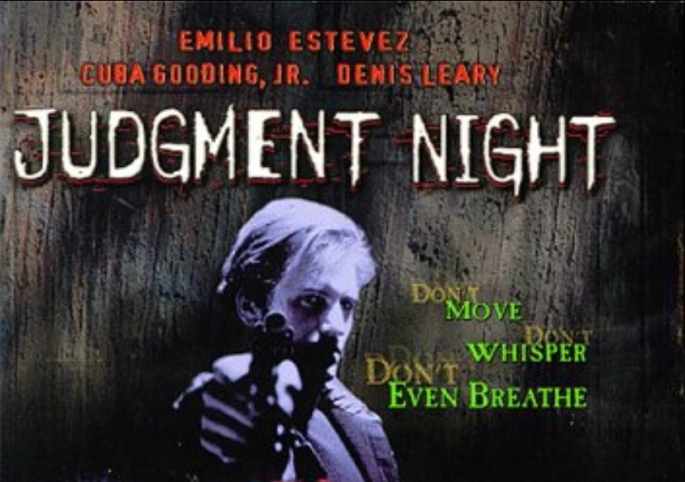
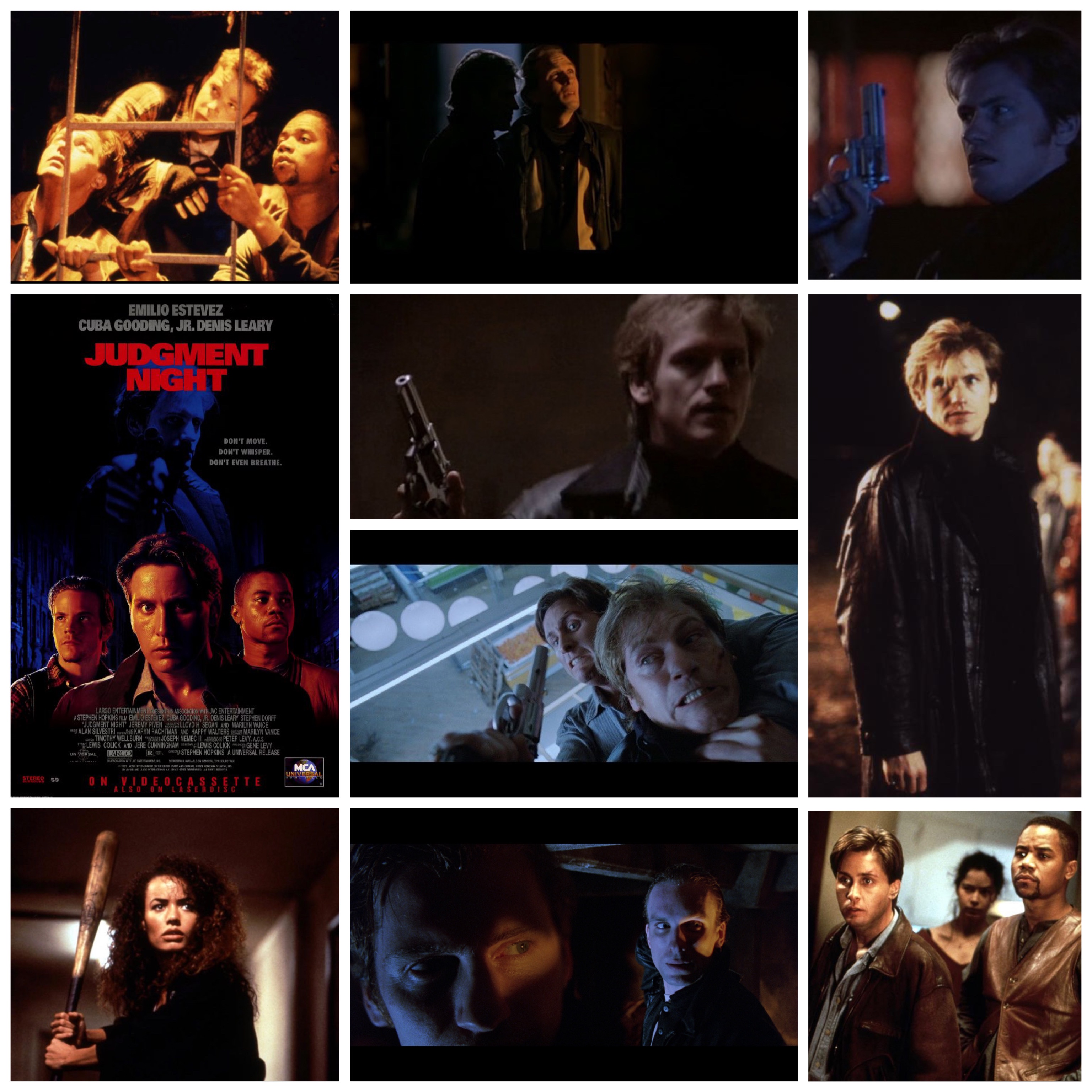
Who remembers Judgment Night? I do, and I’m only randomly bringing it up because I had a dream about it last night where I was a character in the movie, and if you’ve seen this thing you’ll know just how nerve wracking any dream about it would be. It’s one of those greasy 90’s ‘all in one urban night from hell’ thrillers that’s pulpy, over the top, formulaic yet absolutely captivating, in this case because of the villains. So basically there’s four dysfunctional yuppie bros headed from the burbs into darkest downtown Chicago for the basketball game. They’re played by Cuba Gooding Jr, Emilio Estevez, Jeremy Piven and Stephen Dorff, four varied and interesting personalities who clash even before conflict finds them. On their way home through an especially gross part of town they accidentally witness a gang of criminals full on execute a disloyal homie, and from there the thugs make like jackals and hunt our boys through the nightmarish urban jungle with plans on slaughtering them one by one. Now, the top dog thug is played by Denis Leary, who is a solid choice because even when he’s playing good guys you still get the sense you can’t really trust him. He’s a verbose, sociopathic animal here and he’s backed up by perennial badass Peter Greene as his second in command, the two of them making genuinely memorable villains. Director Stephen Hopkins (The Ghost & The Darkness, Predator 2, A Nightmare On Elm Street 3) has real talent in evoking thick, tangible atmosphere be it jungle, urban sprawl or dreamscape and he makes the slums of Chicago look like a fiery vision of hellish alienation and hidden danger around any cluttered, garbage strewn alley or rooftop. The script mostly follows the breathless, brutal pursuit motif but there’s also some clever bits of social satire thrown in, particularly in Leary’s scenery chewing dialogue and rants. The fun lies in watching him and Greene stalk, terrorize and try to kill the four bros though, and it’s all executed very well. Good times.
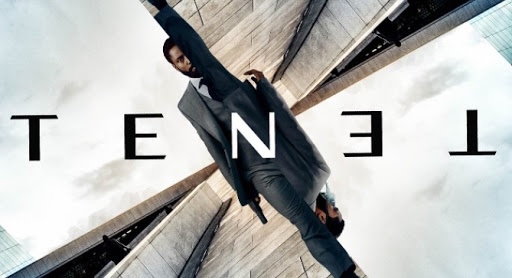
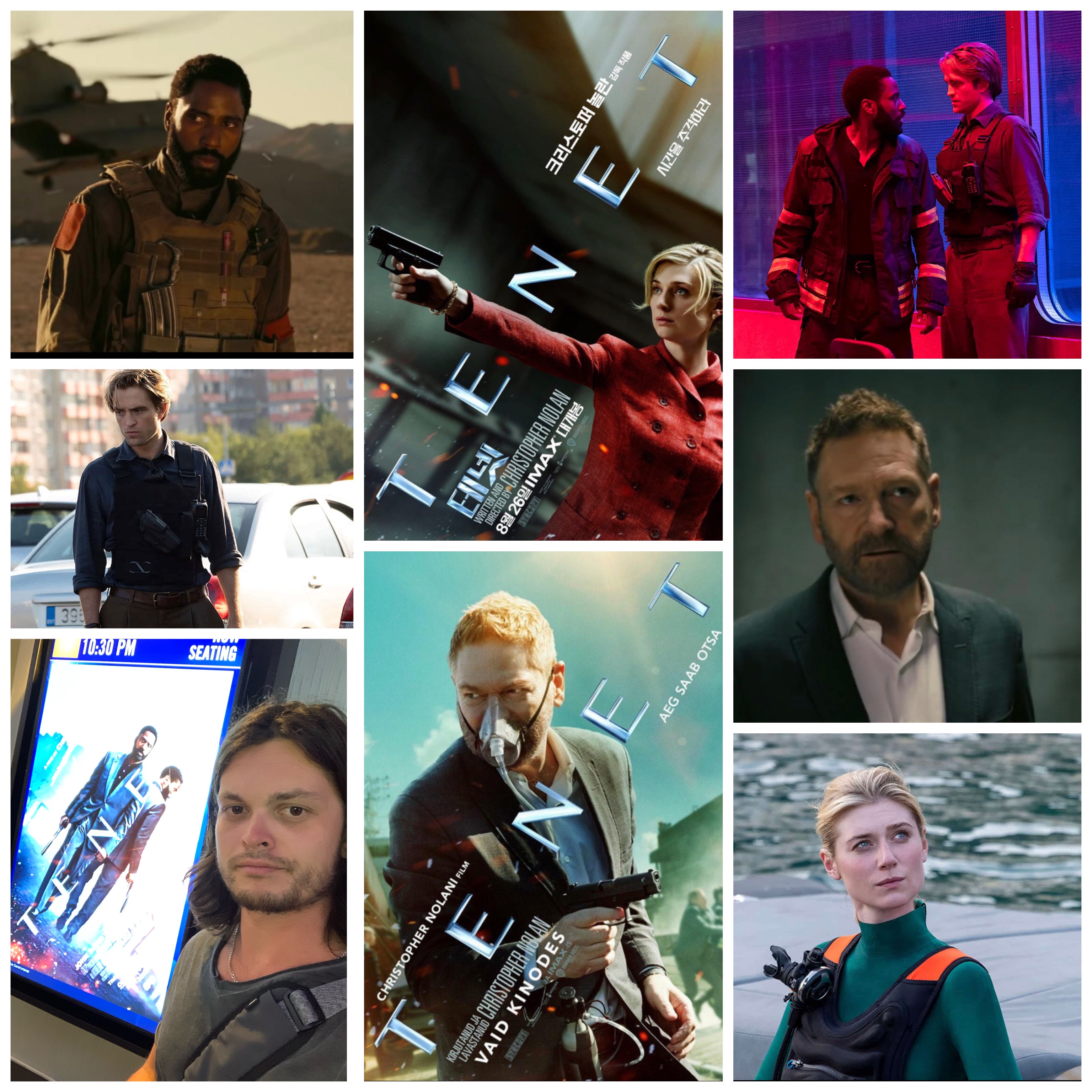
I never thought I’d say I was even slightly underwhelmed by a latter day Christopher Nolan film, but such is the case with Tenet, a new pseudoscience mind bending espionage barnstormer from the filmmaker that didn’t so much blow my mind as tie it’s proverbial shoelaces in a knot. That’s not to say I didn’t enjoy it, there’s plenty to get excited by here, but swaths of the narrative feel dry and uninvolved, the central premise that should be rich and tantalizing is painfully underdeveloped and the main character is less a character than a blank game piece scooting around a chessboard of intrigue and action. He’s ‘The Protagonist’, given the ironically opaque title and played by John David Washington in a performance that is sadly devoid of much life or expression. Tasked with playing a vital part in an incoming Cold War whose implications reach beyond science and physics, he’s teamed up with 007-esque operative Neil, played by Robert Pattinson in a turn that’s blessedly engaging, subtle and picks up Washington’s slack. I don’t want to give too much away because the film’s secrets are pretty fun, as they race all over Europe smoking out vague intel, having fierce gun battles and car chases and trying to prevent… what, exactly? There’s a spectacularly nasty Bond villain played by Kenneth Branagh who is a genuinely scary, fascinating piece of work, and I greatly enjoyed his arc and that of his long suffering wife (Elizabeth Debicki, solid) as well as some well mounted, intricate action set pieces. There’s a quick Michael Caine cameo that exists purely so Nolan can seat him at a table for all of two minutes to deliver clipped exposition, and appearances from Martin Donovan, Fiona Dourif, Aaron Tyler Johnson and Clemence Poesy. Nolan makes his paradoxical concept so dense and intricate that by the time the scintillating finale rolls around, parts of it are so much in the clouds that you just raise your arms in defeat and go “ok bro” and trust that he knows what he’s doing, because I sure didn’t, yet perhaps will with some more viewings a lá Inception. That isn’t the bone to pick here though, it’s mainly the fact that the narrative feels rushed, staccato, unnatural in places and doesn’t possess the fluidity, grace, cohesion or focus of his earlier works. Half the time the dialogue and editing during interaction scenes is so brisk, so chopped up and so hurried that its tough to really be drawn in, before you’re off to the races in a flurry without a proper roadmap to prep you for the fun. There are some very exciting sequences involving the premise which I won’t spoil, some terrific character work courtesy of Branagh, Debicki and Pattinson. But man, Washington is just not a dynamic actor and can’t carry the weight expected of him, while much of the film’s setup isn’t strong enough for payoff later on that isn’t strong enough either. I loved the super sonic, unconventional score by Ludwig Göransson, the action is neatly photographed and intensely realized when its good, and somewhat incomprehensible when it falters, especially in a hectic third act paramilitary incursion that I’m sure made sense to Nolan on the drawing board, but comes across as pandemonium on film. There’s a lot to enjoy here, but I have to be real and say this could have been so much more, especially for an artist as accomplished as Nolan.
Amanda Iswan has always dreamt about making movies. While she isn’t Robinson Crusoe when it comes to such an ambition, it is often fascinating to me how such a common dream defies all the boundaries the world sets before us, and how, even in a massive city like Jakarta, Indonesia, her light is burning bright, her journey to the big screen is upon us. Having traveled extensively in the country and enjoyed numerous local films, like Amanda told me, genre cinema, especially local genre cinema – you have to be a bit of a rebel to butt heads against the dramatic norms. American movies dominate the globe, so when you try mounting films that aren’t just people talking about life, love and the human condition, (even here in Australia) the finance is not there. You are forced to go rogue, go guerilla-style, and with ZETA, Miss Iswan has brought a dash of depth and difference to what isn’t your garden-variety flesh-eating extravaganza.
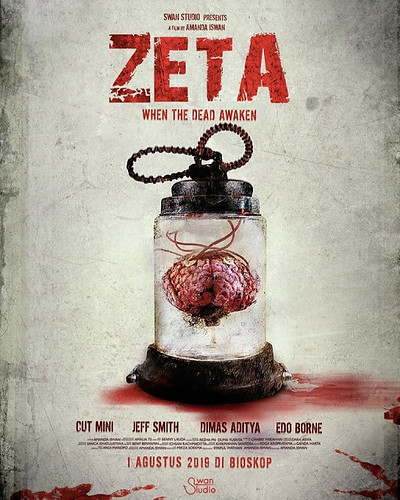
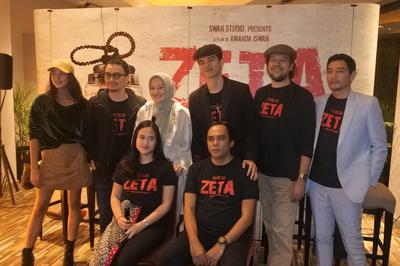
Film Regions International (FRI) is announcing the release of “ZETA” a new foreign language horror film that the company has licensed for video-on-demand both in the United States and United Kingdom. The cast includes Indonesian actors Cut Mini, Dimas Aditya andJeff Smith. The film is subtitled in English for the U.S. and U.K. territories.
“ZETA” tells the story about Deon, a student in Jakarta, Indonesia who witnesses a strange incident at his school when a friend bites a nurse’s neck and becomes a raging cannibalistic flesh eater. Suddenly, he realizes the entire city has become ravaged by a zombie apocalypse caused by an amoeba Naegleria-Zeta parasite. Deon, along with his mother Isma, who is suffering early signs of Alzheimer’s, are forced to quarantine in their sky rise apartment and eventually team up with a rebel gang to get the best combat strategies against the zombie horde.
The film is currently available for rental or purchase on Amazon Prime Video and subsequent VOD platforms will follow soon.
Here I give you, dear listeners, a success story in close proximity to me. A few hours east of the old ranch lives a screenwriter who has recently exploded on the scene as part of an exciting batch of cinema, emanating from a dynamic producing duo with a lucrative business model who have created a haven from bold genre movies.
Adrian, like most of us born with the creative itch (further exacerbated once bitten by the movie bug) knows, all too well, that the road from script to screen can be perilous. Anxious waiting, exhaustive rewrites, all part and parcel of this business we’re in. All the turmoil, all the hours of doubt and disharmony can however, be washed away in the instant the house lights fade into darkness and those long nights of many words come alive on screen. The journey at an end, and the audience entertained.
He traveled from the old empire, through Asia, till at last coming to settle here in the colonies. And it was here, in the sun-burnt land of Down Under that the distant stars and the bright lights of Hollywood glisten in the eyes of the dreamers, their twinkling transformed into a siren song, biding the likes of Adrian (and the rest of us) to take his place among them.
But it is no longer a mere wish upon a star for Mr Milnes. His hard work, determination and dedication to learning how the tricks of the trade blend with the troupes of the industry. All artists chiefly need a patron, and if you put yourself where the lightning strikes, as Adrian has, you might find yourself with green light and a go-picture.
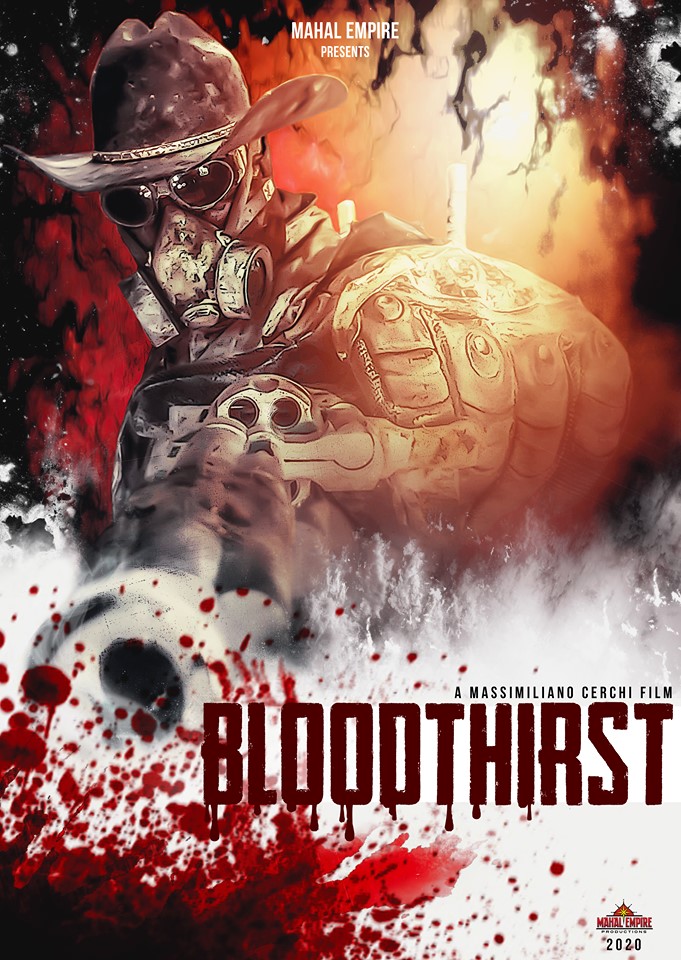
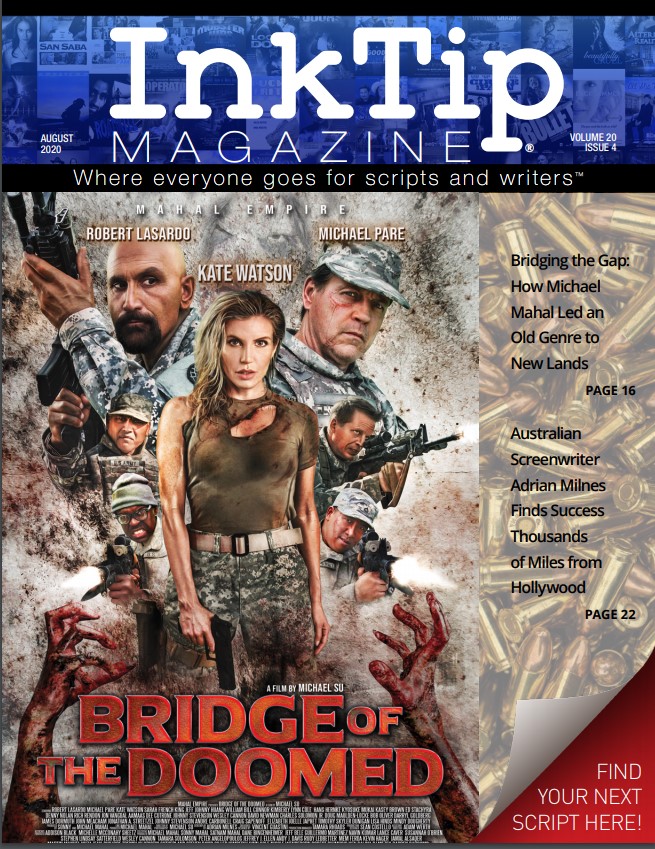
Due to a recent technical misadventure, unfortunately, my recording of our chat was lost. Thankfully Adrian has been a good sport and we have the interview to present in the written form below. The tale of the local lad who made good with his BRIDGE OF THE DOOMED, and the currently in post, BLOODTHIRST. The world is about to receive a healthy dose of the cinematic musings of the man who never gave up, turning what can potentially be a road to doom into victory lane.
KH: Tell us a little about your love of cinema that has endured and seen you pursue this dream to write for the screen?
AM: I’ve always watched any movie I could find. When I was a kid in England the BBC used to show lots of old movies, and I watched as many as I could . The first movie that truly terrified me was an old Basil Rathbone movie, The Pearl Of Death. I was only nine, but I can still remember Rondo Hatton’s scenes. Later on, living in Hong Kong I developed a love for 90s Hong Kong movies. A lot of them were very small scale stories that could have happened two streets over, and you would never have known about it. The more you live in Hong Kong, the more you see and hear about things that most people don’t notice. A friend of mine was married to a Police Officer, and she really opened my eyes to a lot of things that happened there.
KH: Did you learn (undertake academic study) or was it picked up piecemeal as you progressed in your quest to master the screenplay?
AM: I just taught myself. I made a lot of mistakes in the early days that a course would have steered me away from.
KH: There are significantly more avenues today for emerging screenwriters to parade their talent; can you tell us about your early experiences in attempting to showcase your work?
AM: There are plenty of opportunities now for screenwriters, but they all cost money, and a lot of them aren’t worth it. There are so many competitions, coverage services and hosting sites, not all of them reputable. Ink Tip obviously worked out for me. It also allows you to post loglines for short scripts, which is a great way for new screenwriters to start. Sending out emails to producers can occasionally work, but they’re deluged with emails, and if you’ve got no credits it can be hard to stand out.
KH: You are two movies in as a scribe for the rapidly expansive might of the Mahal Empire, a radically successful crowd funded production company. Tell us about Bridge of the Doomed, the evolution of the screenplay and working with this dynamic producing duo?
AM:Michael Mahalread my script on Ink Tip, and straight away knew he could make it. Most producers option a script for a year, and see if they can get any interest from a director, then actors, and finally investors. He was so confident he bought the script outright, and the audition call went out a couple of weeks later. He was right to be confident, as straight away there was an incredible amount of interest from investors. When they had raised enough money Michael suggested starting the story earlier at the army camp, and having Robert LaSardo as the General. Later on they were able to afford Michael Pare as well. My original script had eight speaking parts, and we ended up with over sixty. Naturally this meant a lot of rewriting, but it was worth it. I never would have written it like this, as the budget would have been way too high for most indie producers.
KH: They say the more you write makes you a better writer; what has your journey leading up to this break, and since then having written through two successful productions now altered what you thought you knew about screenwriting?
AM: I started off writing Science Fiction, then later moved on to Crime Fiction. I sold a few short stories then gave up. At that point I really didn’t think I could write movies, it just seemed so far out of reach. Having written a lot of screenplays I can now instinctively get things like pacing and structure correct. I re-read my first ever screenplay recently, thinking I might be able to tidy it up and sell it. Of course it was dreadful.
KH: Even guys who have been at this game at the highest levels say it never gets easier; has this jump into the professional ranks made it easier (in your opinion) to present specs to potential elements to possibly mount production?
AM: Once again I’ve been lucky. Since Bloodthirst, I’ve written four scripts forMassimiliano Cerchi, the originator of that movie. The first of them is going to be filmed in October with Louis Mandylor, Michael Pare and Robert LaSardo. Having that first credit definitely helps in being considered, but it’s still no guarantee. There are plenty of professional writers with huge gaps in their IMDb listing. They’ve probably sold scripts in that time that didn’t get made, but it gives an indication of what it’s like.
KH: A young guy approaches you and tells you he wants to be a screenwriter. What do you tell him?
AM: Plan your life as though you’ll never make a cent from writing. Most writers don’t sell anything, and those that do rarely make enough to live off. The middle of the market has been contracting for a long time, it’s mostly $100 million or micro budget movies now. Even if they do sell a script, it might only be for $1k. All the good things I’ve achieved in my life came through working as an electronics technician. Every writer needs to know what producers are looking for, the market is constantly changing. Right now the big thing is having scripts that can be filmed in a Covid safe way, and producers are always looking for single location scripts with just a few characters. Those types of stories are really hard to do well, but it’s great training just to try.
KH: A major Hollywood studio, out of the blue, calls you up and says they are going to spend whatever it takes to produce your next screenplay….but it has to be a remake?
AM: Some classics shouldn’t be remade, but there are plenty of near-forgotten movies that are ripe for a remake. Truth is though, if there was a lot of money involved, I wouldn’t turn anything down.
There you have it folks. Hollywood dreams are more than attainable, you just have to want it more than the next person, be willing to fail, be willing to fight, but most importantly be adventurous, and ready to write…
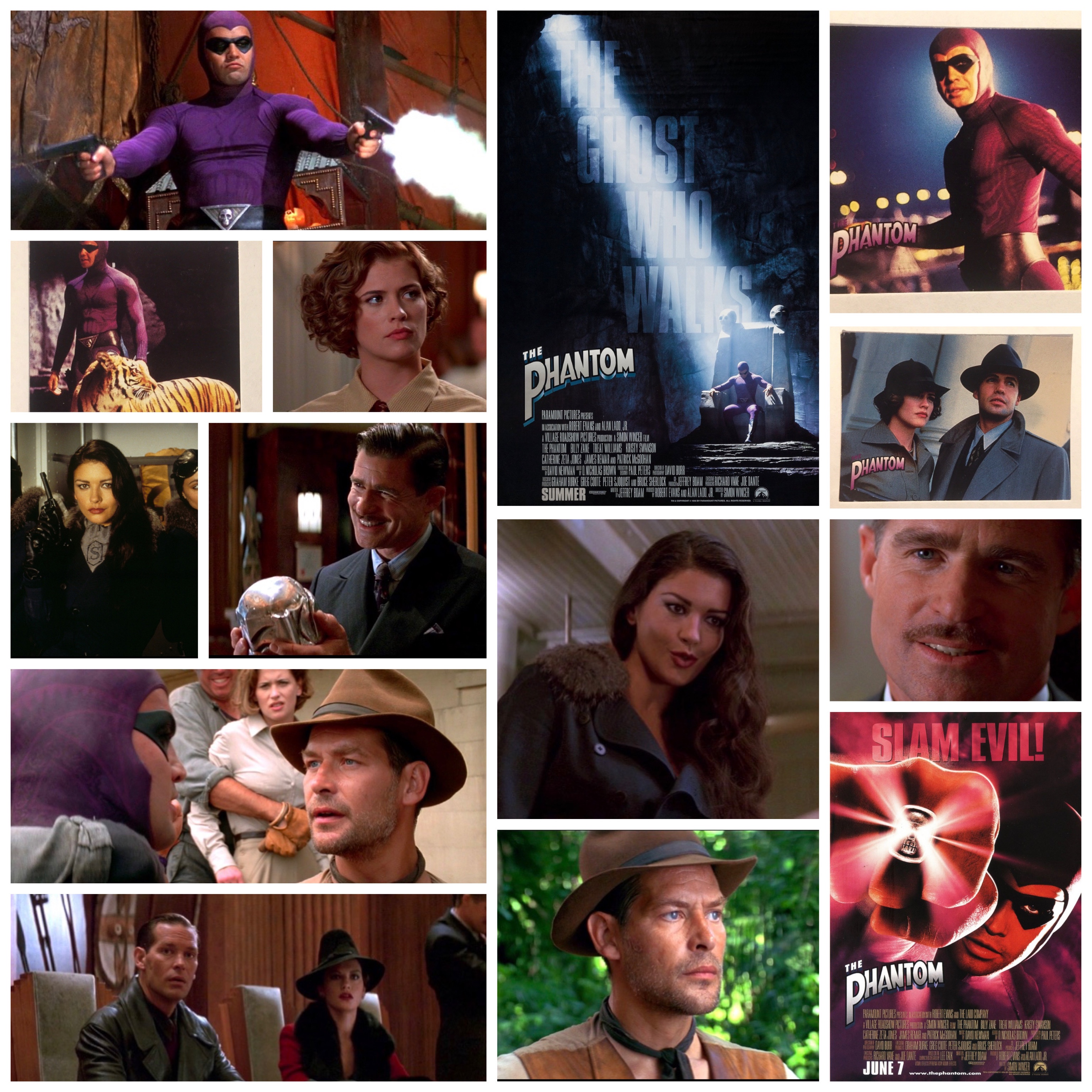
I love big, bold, colourful feature film updates of vintage 1930’s pulp comic books or radio plays and Simon Wincer’s The Phantom is just an absolute blast of escapism that’ll put a smile on your face no matter what. These days Billy Zane has become kind of a forgotten comedic totem but people forget what genuine charisma and star power he once had, and he rocks it here as Kit Walker aka The Phantom, a jungle born superhero descended from a long line of Phantoms before him, thus creating the reputation of being immortal, at least in his enemy’s eyes. Clad in a swanky purple suit with dual colt pistols and joined by a horse and a trusty wolf named ‘Devil’ at his side, he’s probably one of the most aesthetic superheroes I’ve ever seen in a film and I wish this led to sequels. Here he must protect three sacred skulls with supernatural power from power mad, psychopathic NYC tycoon Xander Drax (Treat Williams), fighting side by side with intrepid reporter Diana Palmer (Kristy Swanson) through a series of exciting adventure set pieces in incredibly exotic, gorgeous locations around the world. Zane is terrific and gives The Phantom just the right mixture of cavalier attitude, genuine empathy and swashbuckling magnetism, plus he rocks that suit solidly, which given this suit, not all actors could do and be taken seriously at it. Williams is a hammy hoot as Drax but his thunder is ever so slightly stolen by two terrific secondary villains: James Remar as Quill, a sort of evil doppelgänger version of Indiana Jones and Catherine Zeta Jones as Sala, an impossibly bad tempered femme fatale who has the hots for the Phantom and goes through a hilariously conflicted meltdown mid-film. The supporting roster is excellent and includes Bill Smitrovitch, Cary Hiroyuki-Tagawa, Leon Russom, Jon Tenney, David Proval, John Capodice and the great Patrick McGoohan as the ghost of Phantom’s father who appears to him as voice of counsel and occasionally wingman. I thought this was just a brilliant good time, a solid, beautifully retro old school adventure flick and I was disappointed to read that it was a box office flop. It’s like the Lone Rangers, the Indiana Joenses, The Rocketeers, the Sky Captains, just this rollicking old world American pulp hero aesthetic that translates so well into action adventure in cinema. Oh and watch for a sly reference to William Friedkin’s Sorcerer. Great film.
The Cat In The Hat is one of those movies that probably shouldn’t have been made, but it did get made and, well, it just kind of sits there nursing incisively negative reviews, nonexistent box office attention and quietly fading into obscurity. The problem is simply that Dr. Seuss’s material is so singularly, specifically eccentric that any attempts to adapt it into a faithful and successful film fail by default, like trying to accurately describe a dream in non-abstract terms hours after you’ve woken from it. The vernacular, the drawings, the poetry, it’s just not made for cinema other than the incredibly literal animated shorts they did narrated by Boris Karloff (The Grinch has one that imparted eons more in like ten minutes than the feature length Jim Carrey version could). It’s like your Roald Dahls, your Maurice Sendaks, your E.B. Whites etc.. Big Hollywood can just never seem to nail the transition. Mike Meyers hasn’t had the best luck in character work outside Austin Powers and Wayne’s World and unfortunately he strikes out here, mugging, contorting, quipping, creeping, crawling as the famed feline home invader, to little effect. The fleeting, surreal whimsy of Seuss’s book is lost on a Fisher Price phantasmagoria of admittedly elaborate and impressive yet ultimately hollow and cornea splitting production design. Dakota Fanning and Spencer Breslin try their best as the two kids but just kind of come across as awkward in a story that’s reduced from a quick, lighthearted parable into a cacophonous jumble of hijinks that posses neither rhyme nor reason, dual qualities that were abundant in Seuss’s volumes. Alec Baldwin is there for some reason, debasing himself as an oafish slob. I’m only really reviewing this for Kelly Preston and she’s lovely as the kid’s mom, but not in it nearly enough and forced to share most of her scenes with the tone deaf, excruciating Sean Hayes. I don’t want to shred Dr. Seuss Hollywood adaptations too viciously because they don’t all miss the mark completely (check out The Lorax for one that’s actually half decent) but the magic from his books will never be recreated onscreen, it’s just not a tangible, realistic alchemy. And I gotta say, this one has to be bottom of the barrel in terms of them all, it’s an embarrassment to the book.
It still amazes me that Kevin McDonald’s How I Live Now didn’t endure to become a more widely known or appreciated film, because it’s one of my favourites and in my mind one of the strongest, most affecting pieces of work in recent decades. I guess it kind of comes across as this Young Adult Book adaptation if you check out the cover and trailer but the film therein is extremely honest, disarmingly disturbing and very, very brutally frank about how widespread disaster may hit any region and those who live within it. It’s not without poetry, authentic romance, beauty or hope though and there’s this beautiful, life affirming balance between light and dark that makes for the perfect mixture.
The always exceptional Saoirse Ronan stars as Daisy, an American girl who suffers from severe anxiety and feelings of alienation, sent overseas to rural UK to live with an aunt and a whole pile of cousins she’s never even met. Slowly, bit by bit she comes out of her shell and warms up to this family, especially local boy Eddie (George MacKay) who she begins to fall in love with. Gradually the place she’s in and the people she’s with start to feel like home… until something unspeakable happens. Hundreds of miles away in London, a nuclear bomb goes off, cataclysm sets in and oppressive foreign forces slowly invade across the land. Her Aunt is gone doing humanitarian crisis work and so herself and Eddie, the closest thing the family has to leaders, must embark on a cross country odyssey fraught with dread, misery, peril and bleakness everywhere they turn.
This film hits me hard because of how real the danger and horrific aspects feel, how potent and believable the acting and relationships are and how brisk yet dense, heavy yet wistful and dark yet light the story ultimately feels. This is not a children’s film and it is most definitely *not* one geared solely towards teenagers either, there’s scenes of abject horror (it’s got an R rating that it more than earns), children thrown into impossibly complex and harrowing situations beyond their comprehension and is steeped in the harsh reality that in life things can go horribly wrong and if you find something anywhere near a happy ending you’re incredibly lucky rather than owed one by a pandering narrative. Ronan and MacKay are incredibly heartfelt and genuine, their romance and resilience anchoring the whole family as well as the film. Few films with children and young adults in the forefront have the bravery and honesty to show that the world can be just as harsh to them as to any adult protagonist, and show in the same token how said youngsters can have a tremendous amount of survivalism, intuition, spirit and courage to overcome adversity and do the best in an unforgiving world. This film is light and dark to me; the womb-like, sun dappled meadows and rivers of the English countryside where these children play and begin to grow up and then the blackened, nuclear poisoned land they venture out into and must find their way back to the light from. Light and dark. The blossoming romance between Daisy and Eddie, a force of great light in the face of encroaching evil and callous destruction approaching them, and the decision to use that love as a weapon in order to get them through, no matter how it might change either of them. In this film, the light wins and I watch it whenever I need a reminder of that. Masterpiece.
I don’t know what I can say about Ennio Morricone that the maestro hasn’t already said with his unique, extraordinary and altogether legendary career in music composition, direction and innovation. He’s likely in my top five film composers of all time and the tactile, eccentric, melodious, often experimental and unmistakably singular presence he brought to the industry will never be forgotten. Ennio has passed this month but his work will live on immortal, and here are my personal top ten musical scores he crafted:
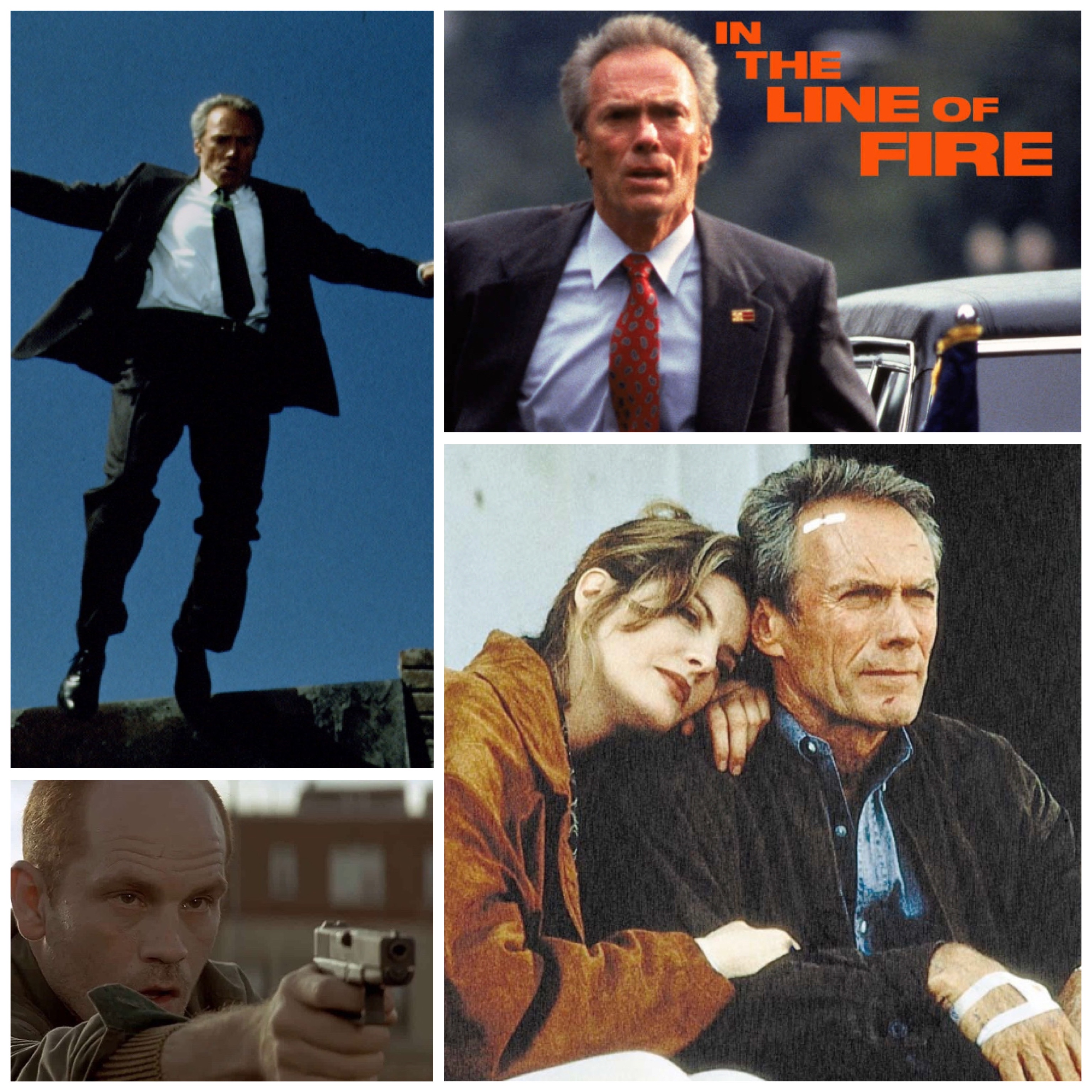
10. Wolfgang Petersen’s In The Line Of Fire
Tension and suspense are what this terrific assassination thriller is all about, and Ennio rises to the occasion for a nerve jangling yet quite beautiful piece of work. Favourite track: ‘Taking the bullet’, a propulsive entry that highlights secret service Frank Horrigan (Clint Eastwood) and the penultimate beat of his character arc.
9. Phil Joanou’s State Of Grace
This gritty neo noir sees Irish mobsters clashing in 1990’s New York City and Morricone perfectly captures the moody, smoky street aesthetic while still heavily maintaining his melodic tendencies. Favourite track: Hell’s Kitchen, a mournful urban lullaby that highlights character and setting wonderfully.
8. Sergio Leone’s For A Few Dollars More
The holy trinity of spaghetti westerns sees Ennio pack this middle chapter with iconic passages of his gorgeously eccentric, trademark composition. Favourite track: the main title, which makes full use of boings and twangs while that trademark whistle carries on in harmony.
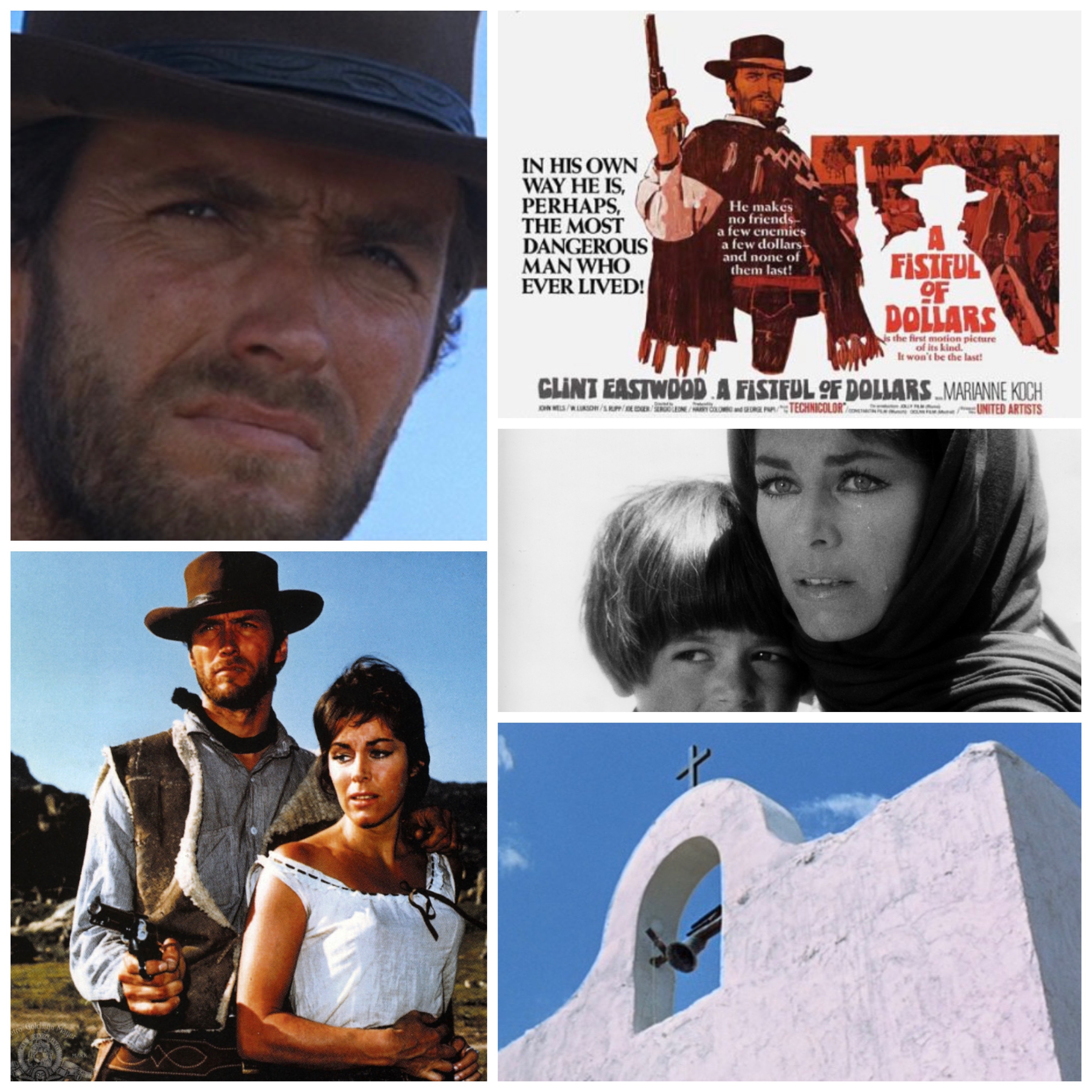
7. Sergio Leone’s A Fistful Of Dollars
The opener and introduction to Clint Eastwood’s legendary Man With No Name, with some of the Maestro’s most recognizable work. Favourite track: Finali, with fluttery flutes and whip cracks to prove once again that our man could sample any sound under the sun and integrate it seamlessly into his work.
6. Roland Joffé’s The Mission
A period piece sees Spanish priests protecting an indigenous village from Portuguese tyranny and Ennio composed an utterly holy piece of orchestral bliss that at times sounds like an angel’s choir and soars on high. Favourite track: ‘On Earth as it is in Heaven’, one of the most moving pieces he’s ever done.
5. Sergio Corbucci’s Navajo Joe
I’ll be honest I only watched this film once and it’s a decent if severely brutal and scrappy Burt Reynolds spaghetti vehicle. The main reason I’ve included it here is because Quentin Tarantino samples much of Ennio’s work on it for Kill Bill Volume 2, which to me is an iconic film. It’s epic, bold, bleeding heart melodrama put to music. Favourite track: The Confrontation, a war cry of a finale piece that plays during crucial scenes of both Joe and Bill.
4. Sergio Leone’s The Good, The Bad & The Ugly
The big daddy of the Man With No Name trilogy and some of Morricone’s most prolific, well recognized work. Favourite track: The Ecstasy Of Gold, a lilting, airy composition that accents landscape and character awesomely.
3. John Carpenter’s The Thing
He goes frozen, paranoid, lonely and sketched out for this low key yet deeply unnerving piece. It’s like No Frills Ennio in the best way possible, a somewhat counterintuitive undertaking based on what he was known for, but one of the most effective, chilling horror film scores ever crafted. Favourite track: Humanity Part 2, a driving, propulsive examination of the inevitably creeping horror making itself known in the story.
2. Sergio Leone’s Once Upon A Time In The West
This western epic has some of his most achingly beautiful work ever, from the melancholy main theme to the eerie Harmonica strains to the booming, impossibly epic final showdown. Favourite track: Farewell To Cheyanne, a resolute, hauntingly downbeat exodus piece for Jason Robards’s character that meanders along beautifully and always sticks in my memory when I revisit the film, which is oh so often.
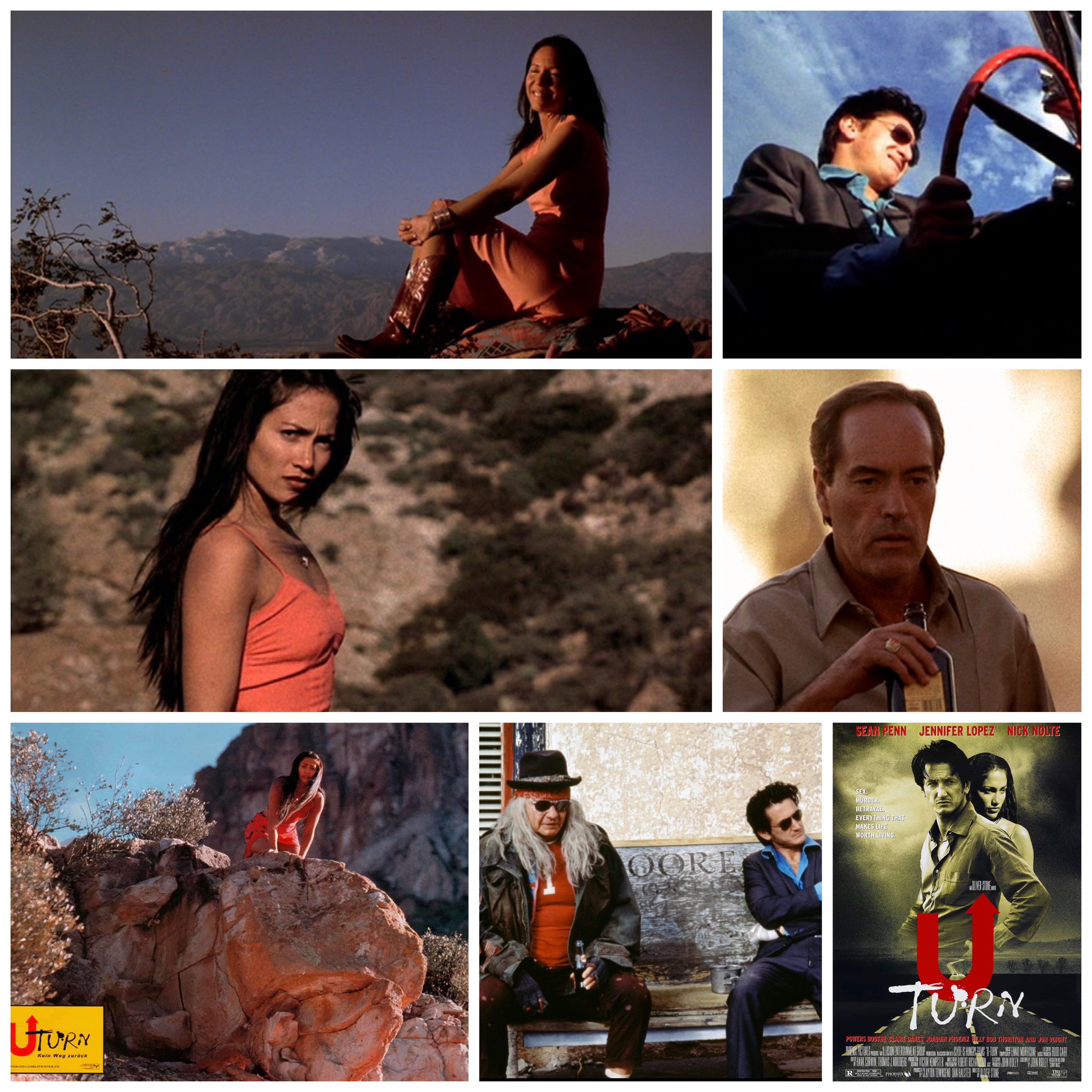
1. Oliver Stone’s U Turn
I know, I know, what a choice for number one. This film means a lot to me though, it’s incredibly underrated as a breathtaking piece of avant-garde, cheerfully fatalistic noir nihilism. A sunny Arizona set neo-noir with heaps of both black comedy and deeply buried tragic pathos seems like a tall order for any composer, but Ennio could quite literally rise to any challenge. Portions of his work here are bonkers, playful, full of hyperactive zips, zooms, boings and twangs and later he brings a haunting, echoey resonance to the storied Arizona landscape and suggests layers beneath the initial set up that turn the film from surface level nihilism into something more deep, profound and thoughtful. It’s ironic that this is my favourite work he’s done because you can’t find this anywhere unless you watch the film, and I *literally* mean anywhere. YouTube, iTunes, Spotify, nada man, it’s like the ghost score that everyone forgot. Check the film out though because his work is beyond beautiful here and brings me to tears every time I view Stone’s unheralded masterpiece. Favourite track: ‘Grace’, an evocative, quietly unsettling yet gorgeous piece that echoes off the canyon walls and provides so much atmosphere you feel like you’re right there.














 Podcasting Them Softly