Christopher Coppola’s Deadfall


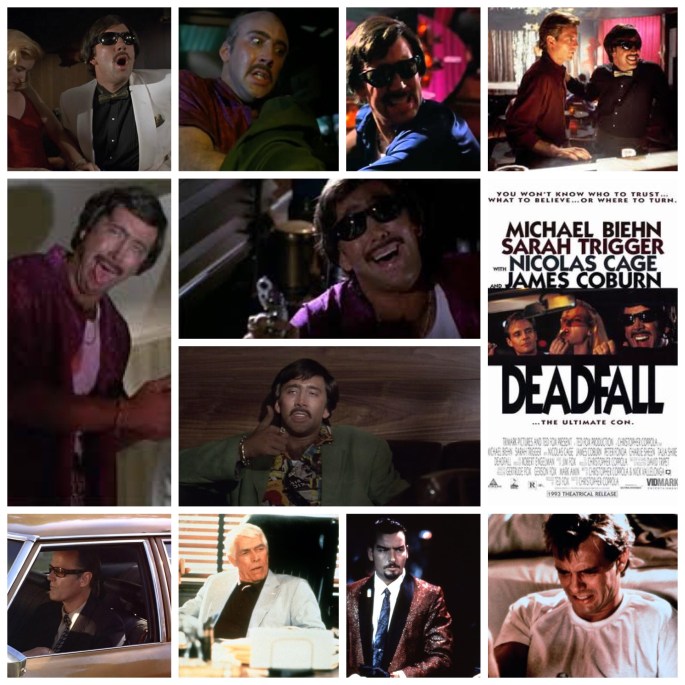
I hear a lot of talk about how weird Nicolas Cage can get in films, and I’m always seeing top ten craziest Cage compilations on YouTube and such, but people often seem to neglect the veritable cherry on top, the big cheese of nutso Cagery, a terrible conmen flick from back when called Deadfall. This is a film directed by a member of the Coppola family, and anyone who’s done their base research knows that Cage is a member of the brood, which is the only reason he ever broke into the industry in the first place. Now as to why and how he was allowed to give the unapologetically certifiable ‘performance’ we see here, well that remains a mystery. Needless to say, this is Cage unchained, off the leash and out of the Cage, an unnecessarily clownish banshee cry of a turn that derails the entire film, eclipses every other actor and puts a big dark stain on everyone’s career. The protagonist here is Michael Biehn as a shit-outta-luck hustler who accidentally kills his own father (James Coburn, who also does double duties to play the man’s brother), and ends up in the criminal doghouse, reprimanded by his boss (Peter Fonda) and left to flounder in small time stings. Enter Eddie (The Cage) another small-potatoes loser who clashes with anyone and everyone around him, a true lunatic of a character whose left empty of any sort of engaging qualities or charisma thanks to Nic’s utterly bombastic histrionics and lunatic ravings. If I sound like I’m overselling just how fucked up his performance is or making mountains out of molehills, please feel free to jaunt on over to YouTube, type in ‘Nic Cage Deadfall’ and see for yourself. If bad performances were represented as train wrecks, this would be the infamous explosion escape scene from The Fugitive, and even that doesn’t do it justice. This is a giant schoolyard tantrum, an inexcusable, near fourth wall busting bag of uncomfortable verbal utterances and bodily contortions that make you want to call an exorcist for the poor spastic, I really don’t know how the film ever got released with such fuckery on display. Anywho, all that just drowns out literally *everything* else about the film, and when one of your actors acts out so much that they smother work from heavy hitters like Biehn and Coburn, you know your filmmaking process is handicapped beyond repair. As such, brief appearances from Michael Constantine, Talia Shire and Charlie Sheen are subsequently lost to the abyss of Cage’s deafening orbit. A mediocre film without him as it is, but add what he does to the mix and you have a true stinker, the cinematic equivalent of a spittoon filled feces. Don’t bother. 

-Nate Hill

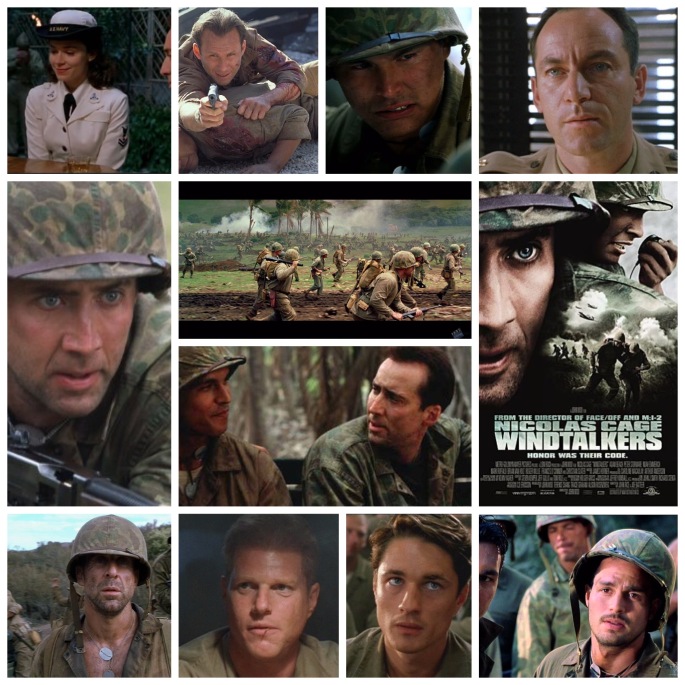
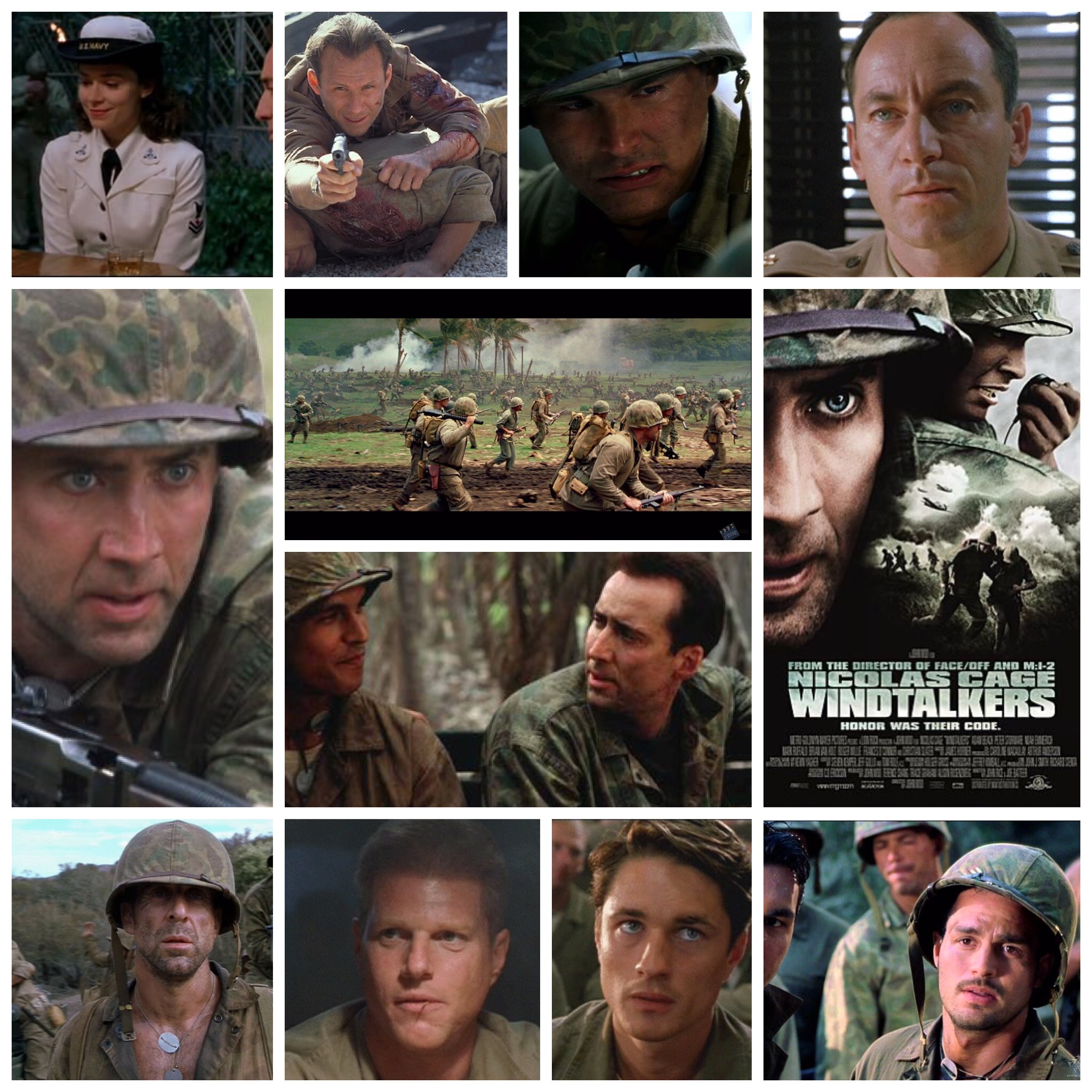
John Woo’s Windtalkers


John Woo’s Windtalkers is a brutal, somber, joyless affair, a muddy and hopeless war picture that contains little of the ethereal poise of stuff like The Thin Red Line or heroic muscle such as Saving Private Ryan. As long as you can adjust and tune into it’s frequency it’s a well made, sorrowful look at the American effort against Japan, particularly a mission involving a regiment whose task is to protect Native Navajo code breakers that can detect messages fired off by the enemy. A mopey Nicolas Cage is their shell shocked leader, pressing his men onward into territory that no doubt contains the same horrors he witnessed before the film begins. We find him in a trauma ward initially, cared for by a kindly nurse (Frances O’Connor), until Jason Isaacs cameos as the recruitment officer who spurs him back into action. His troupe is composed solely of excellent, distinct acting talent and they help the film considerably. The Navajo are played by Adam Beach and Roger Willie, giving grace and nobility to two men who are out of their depth and terrified. Peter Stormare, Christian Slater, Noah Emmerich, Mark Ruffalo, Brian Van Holt and a standout Martin Henderson are the rest of the troops, each getting their moment to shine within the unit’s cohesive arc. Woo is an odd choice for a war picture, and his stylized flair for bullet ridden action is nowhere to be found in these bleak, bloodied trenches, trading in suits and duel wielded glocks for faded camo and muted rifle fire. The action is neither cathartic nor poetic, simply a concussive cacophony of combat that offers little aesthetic pleasure, forcing you to find the value in empathy towards these men, and as long as you can do that, you’ll get something out of it. 

-Nate Hill

EPISODE 33: DOG EAT DOG with SPECIAL GUEST MATTHEW WILDER

dog-eat-dog-podcast

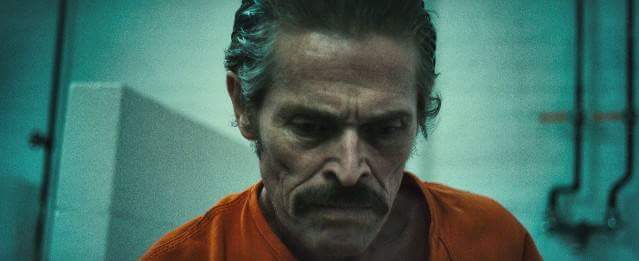
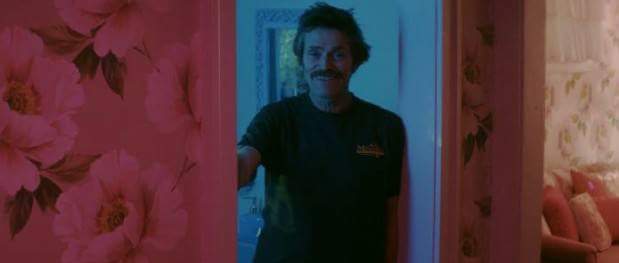
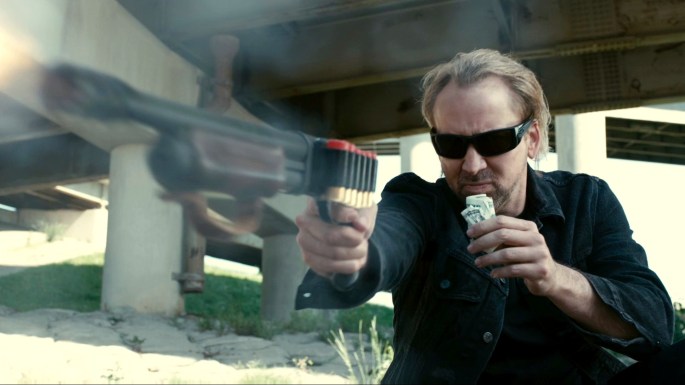
Podcasting Them Softly is honored to be joined with returning guest, Matthew Wilder, to talk about his latest film, DOG EAT DOG starring Nicolas Cage, Christopher Matthew Cook, and Willem Dafoe.  Matthew adapted Edward Bunker’s novel of the same name, and the film was directed by legendary filmmaker Paul Schrader.  Matthew is currently in pre-production on his next film; MORNING HAS BROKEN starring Lydia Hearst and Peter Bogdanovich.  Matthew is currently writing BAD COMPANY: THE COTTON CLUB MURDERS.  DOG EAT DOG is currently avalible to rent and purchase on VOD with a blu ray being released on December 27th.

Paul Schrader’s DOG EAT DOG – A Review by Frank Mengarelli

​DOG EAT DOG is akin to noir films of the 1950’s and 1940’s like KILLING THEM SOFTLY is akin to noir of the 1970’s and 1960’s.  The kinship doesn’t stop there; DOG is a film that not only is absurdly funny and brutally violent, but it is also an examination of the economy, the justice system, and the blue collar working class.

Filmmaker Paul Schrader is at his best when he dabbles in quasi topical films.  Matthew Wilder (who has a voice cameo on the phone during the opening scene) pens a sharply chaotic and humorous script adapted from Edward Bunker’s novel. 
Nicolas Cage, Willem Dafoe, and Christopher Matthew Cook headline the film as a trio of career criminals who for an extended period of time have been removed from society and spent time in prison and are now simultaneously readjusting to society while struggling to survive.  Their plights are real, as they fight to live in a society that has cast them out and turned it’s back on them.

Cage and Dafoe are on fire.  Cage has never been so good.  A complete return to his zany and almost abstract form.  Willem Dafoe is cinematic treasure.  I can’t think of another actor who is a staple in the works of Lars von Trier, Paul Schrader, Abel Ferrara; yet is a viable mainstream draw, showing up in the upcoming JUSTICE LEAGUE.  
Much like KILLING THEM SOFTLY; DOG EAT DOG is not a film for the masses (or critics for that matter).  For as fun and as topical the film is, it is proud at how perversely humorous and transgressive it is as a whole.  DOG EAT DOG is the cinematic answer to the turbulence and dilapidation of contemporary America. 

DOG EAT DOG is available on VOD and is now playing theatrically in select cities.

DRIVE ANGRY – A REVIEW BY J.D. LAFRANCE

fhd011DRA_Nicolas_Cage_003

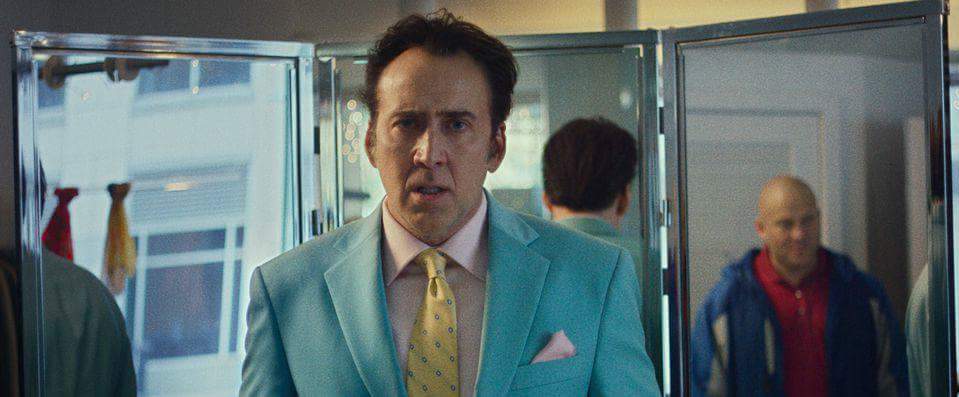
Continuing his string of paycheck movies, Drive Angry (2011) is actually closer to the gonzo Nicolas Cage of old than the diluted actor we’ve come to expect in films like Next (2007) and Knowing (2009). With Drive Angry, he’s made a full-on, balls-out cult film that flopped spectacularly at the box office and was trashed by the critics. It has all the necessary ingredients of cult status: loads of ultraviolence, nudity, lots of cussing, and all kinds of character actors chewing up the scenery. The film is the brainchild of Patrick Lussier and Todd Farmer, the former, a B-horror director responsible for efforts like Dracula III: Legacy (2005) and My Bloody Valentine 3D (2009). While the latter film was an unnecessary remake of the 1980’s Canadian slasher film of the same name, it did hint at the garish excesses Lussier was capable of and has finally delivered with Drive Angry.

The film begins with John Milton (Nicolas Cage) literally escaping from hell in a badass muscle car. He is trying to avenge his daughter’s murder and rescue her kidnapped baby from Jonah King (Billy Burke), the sadistic leader of a satanic cult. In the first five minutes, Milton totals a pick-up truck with three flunkies in a way that is so gloriously and stylishly over-the-top that it would make Robert Rodriguez green with envy. While his film Machete (2010) paid homage to exploitation films, Drive Angry is one, only with A-list talent. Milton crosses paths with Piper (Amber Heard), a tough ex-waitress who has recently broken up with her deadbeat boyfriend (Todd Farmer in a cameo). Hot on their trail is a man known only as the Accountant (William Fichtner), a dapper minion from Hell come to bring Milton back.

Inspired by another cartoonish action film, Shoot ‘Em Up (2007), Drive Angry also features a gun battle while the protagonist is having sex only captured in slow motion and cheekily scored to “You Want the Candy” by the Raveonettes. While excessively violent and gory, the action sequences are all so overtly stylish that they can’t be taken too seriously. This film is akin to a blood-drenched, R-rated cartoon. The violence isn’t cruel and mean-spirited like in a torture porn horror film, but rather gleefully petulant like the guys who orchestrated all of this mayhem grew up reading Fangoria in the ‘80s.

Surrounded by all of this garish style and crazed violence, Nicolas Cage wisely underplays his role, going for the calm, collected man of action. He’s matched up perfectly with the always watchable William Fichtner who seems to be channeling Christopher Walken with his wonderfully eccentric performance. He looks to be having an absolute blast with this role and steals every scene he’s in with his unfailingly polite yet very lethal character. Billy Burke is suitably sinister as a religious fanatic and the beautiful Amber Heard holds her own as a two-fisted, curse-like-a-sailor sidekick to Cage’s undead avenger. David Morse even shows up using his considerable skill as an actor to make a chunk of exposition dialogue palatable.

Drive Angry has everything you could want from a trashy action film: cool muscle cars, over-the-top shoot-outs, larger than life baddies, and a cool good guy with a mission. All of this is handled ably by Lussier in what is easily his most accomplished film to date. He gleefully sticks a middle finger in the face of political correctness with a film that is more entertaining than it had any right to be. Cage needs to do more films like this and Bad Lieutenant: Port of Call New Orleans (2009), which harken back to the eccentric characters he played early on in his career.

Leaving Las Vegas: A Review by Nate Hill

image

Upon my first ever viewing (I know) of Mike Figgis’s Leaving Las Vegas last night, I discovered that it’s not the film I thought it was all these years. I had an image of a quirky, star crossed lovers tale with a modicum of sweetness. What I got wasn’t insanely far off the mark, but I have to say I was disarmed and deeply affected by the sense of decaying bitterness which prevails throughout the story and hangs over it like the sour, neon stained moon over a feverish, perpetually nocturnal Vegas. Every character besides the two leads sort of flits dimly in and out of the story, never having any impact further than they need to service the plot with. This leaves Nicolas Cage and Elizabeth Shue eerily alienated and gives the movie a hypnotic flair. Even though these two abide in a bustling setting, it oddly seems at times that they are the only two human beings in existence. That also most likely stems from the film’s willingness to take the time to get to know them, lingering on every glance, murmur and mannerism, be it mundane or essential, to try and get a feel for these two completely broken souls. Cage is Ben, a failing Hollywood screenwriter who is quite literally drowning in alcoholism, plagued by some tragic past of which we never learn about. He is fired and splits for Vegas to hole up in a motel and deliberatly drink himself to death. There he meets Sera (Shue) a hooker with a heart of gold (Shue torches the cliche bravely). They are immediately attracted, and begin a relationship.  She continues to see Johns, after being freed of her sadistic Latvian pimp (Julian Sands, terrifying). He makes her promise to not attempt to stop his drinking. Their romance is born out of the primal lonliness that each human being feels to a certain extent, that instinctual urge to reach out and grab for anything, anyone to put out the pain. Cage is everything in the role: pathetic, charming, sad, manic, desperate and deeply, scarily committed to his lethal quest of inebriation. The scenes of liquor consumption in this film go beyond excess and make Denzel in Flight look like a high schooler. It will make many uncomfortable, but looking away for our own peace of mind takes away from the urgency and dark poetry of Cage’s situation. Booze is a low burn, but it’s still suicide, and an agonizing method for anyone to behold in action: the person has an extended period of time to rethink, reevaluate, and if they don’t, then their resolve is extended and far more disturbing than a split second decision. Cage displays this in harrowing form in a career highlight. Elizabeth Shue is heartbreaking as the girl who loves him but can’t quite say why, a girl who has spent years in loveless copulation, confused and torn upon feeling it for the first time. Her character goes through some truly hellish things here. You will cry for her, fall in love with her alongside Cage and swell with admiration at her steely resilience in the face of some of the ugliest things life has to offer her. Each member of the supporting cast is like a star in the desert sky, a moment of flickering purpouse before fading into the background again to let Cage and Shue continue their dance of the damned. Graham Beckel as a shaken bartender, Xander Berkeley as a cynical cab driver, Valeria Golino as as a Barfly and R. Lee Ermey as a taken aback conventioneer are all perfect. Director Mike Figgis composed the score himself, a moody blues melody that clings to your perception after the film like a dream that won’t let go. Just to make the film more haunting, it’s based on a novel by a severely alcoholic writer who took his own life two weeks after production was underway, furthering the disconcerting vibe to a saturation point. This one is a tough watch, and you’ll be forced to see two human beings at the absolute end of the road, miles past rock bottom with seemingly no hope in sight. And yet, if you are patient and try to empathize, you will see the kind of flickering positivity and briefly life -affirming intimacy and light that humans cling to even in the darkest of times. Cage and Shue beautifully paint a bittersweet portrait of this through their work. It’s overbearing with the better, but that makes the sweet all the more precious and lasting. Just watch something happy after.

WILD AT HEART – A REVIEW BY J.D. LAFRANCE

12f6e7965cb2fbac31c874eb42335413By 1990, David Lynch was at the peak of his popularity and enjoying the most productive period of his career. His television show Twin Peaks had captivated American audiences and he was directing a number of commercials and performance art pieces (Industrial Symphony No. 1). This all culminated with Wild at Heart (1990), an adaptation of Barry Gifford’s novel, which went on to win the coveted Palme d’Or at that year’s Cannes Film Festival. It also helped establish Lynch as America’s premier cinematic surrealist. At its core, the film is a touching love story between two people whose love for each other remains constant despite all of the obstacles that life throws at them, including an overly-protective mother, a dentally-challenged psychopath, and a grizzled rocket scientist. This film is, oddly enough, Lynch at his most romantic, a rock ‘n’ roll opera with vibrant, fiery imagery.

Sailor Ripley (Nicolas Cage) and Lula Pace Fortune (Laura Dern) are young lovers on the run from her crazed and over-protective mother, Marietta (Diane Ladd). Sailor has jumped parole after serving time for manslaughter and takes off with Lula for sunny California. This doesn’t sit too well with Lula’s mom who sends her boyfriend and private investigator Johnny Farragut (Harry Dean Stanton), and, unbeknownst to him, her lover and ruthless gangster Marcellos Santos (J.E. Freeman) on the trail of the young lovers.

As he would do with the opening scene in Twin Peaks: Fire Walk With Me (1992), Lynch kicks things off with a shockingly brutal act of violence that establishes a confrontational tone – this is a violent world where Sailor is prepared to kill a man with his bare hands in order to protect the woman he loves. The first image is the striking of a match followed by images of flames announcing the color scheme that would be prevalent throughout the film. This is continued in the love scenes between Sailor and Lula that are bathed in red, yellow and orange – all representing their burning love for each other. During the course of the film there are countless shots of cigarettes being lit, matches being struck, an exploding car, and a house on fire. This film is vibrantly alive and energized more than anything Lynch had done before or has done since.

In the summer of 1989, Lynch had finished up the pilot for Twin Peaks and tried to rescue two of his projects – Ronnie Rocket and One Saliva Bubble – that were owned by Dino de Laurentiis when his company went bankrupt. Independent production company Propaganda Films commissioned Lynch to develop an updated noir screenplay based on a 1940s crime novel while a filmmaking friend of his by the name of Monty Montgomery optioned Barry Gifford’s book, Wild at Heart: The Story of Sailor and Lula in pre-published galley form. Montgomery gave him Gifford’s book and asked Lynch if he would executive produce a film adaptation that he would direct. Lynch remembers telling him, “That’s great Monty, but what if I read it and fall in love with it and want to do it myself?” And this is exactly what happened as Lynch recalls, “It was just exactly the right thing at the right time. The book and the violence in America merged in my mind and many different things happened.” Lynch was drawn to what he saw as “a really modern romance in a violent world – a picture about finding love in hell.” He was also attracted to “a certain amount of fear in the picture, as well as things to dream about. So it seems truthful in some way.”

Once Lynch got the okay from Propaganda to switch projects, he wrote a draft in a week. Within four months, he began filming with a budget of $10 million. Lynch did not like the ending in Gifford’s book where Sailor and Lula split up for good. For Lynch, “it honestly didn’t seem real, considering the way they felt about each other. It didn’t seem one bit real! It had a certain coolness, but I couldn’t see it.” Samuel Goldwyn, who ended up distributing the film, read an early draft of the screenplay and didn’t like Gifford’s ending either so Lynch changed it. However, the director was worried that this change made the film too commercial, “much more commercial to make a happy ending yet, if I had not changed it, so that people wouldn’t say I was trying to be commercial, I would have been untrue to what the material was saying.”

When Lynch read Gifford’s novel, he immediately wanted Nicolas Cage to play Sailor and Laura Dern to play Lula. The actor said that he was “always attracted to those passionate, almost unbridled romantic characters, and Sailor had that more than any other role I’d played.” In Dern’s case, this was the first opportunity she had “to play not only a very sexual person, but also someone who also was, in her own way, incredibly comfortable with herself.” During rehearsals, Lynch talked about Elvis Presley and Marilyn Monroe with Cage and Dern. Around this time, Lynch bought a copy of Elvis’ Golden Hits and, after listening to it, called Cage and told him that he had to sing two songs, “Love Me” and “Love Me Tender.” The actor, a big Elvis fan, agreed and recorded each song so that he could lip-sync to them on the set.

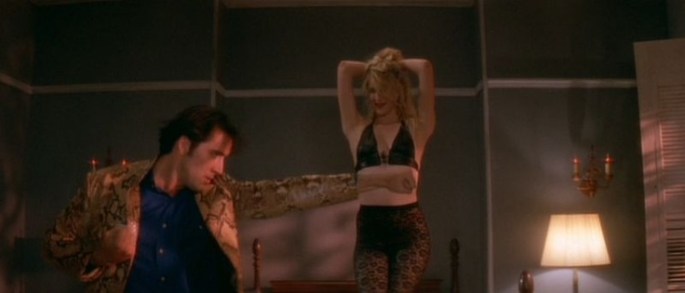
Before filming started, Lynch suggested that Dern and Cage go on a weekend road trip to Las Vegas in order to bond. Dern remembers, “We agreed that Sailor and Lula needed to be one person, one character, and we would each share it. I got the sexual, wild, Marilyn, gum-chewing fantasy, female side; Nick’s got the snakeskin, Elvis, raw, combustible, masculine side.”

Lynch’s two leads are also on the same page in this respect, especially Cage who affects an Elvis Presley-like drawl and sings two songs made famous by the King. Sailor, like many of the characters in this film, is larger than life with his snakeskin jacket credo, his unorthodox style of dancing (involving martial arts kicks and punches) and his habit of singing Elvis songs to Lula in public. There is a show-stopping moment where he instructs Powermad, a speed metal band, to back him on a note perfect rendition of “Love Me” while the women in the audience scream in adoration in surreal slow motion like something out of a dream. Cage plays Sailor as an instantly iconic figure, where pointing an accusing finger at Marietta is akin to a declaration of war.

Dern plays Lula to gum-chewing perfection, delivering a completely uninhibited performance as Lula. She exudes a captivating sensuality in the way she carries herself and makes a line like, “You got me hotter’n Georgia asphalt,” sound like an enticing come-on. Lula is a young woman full of energy and vitality as is evident in the scene where she and Sailor dance to the music of Powermad. There is genuine chemistry and heat between her and Cage — rather appropriate for a film dominated by images of fire. However, as the film progresses and the tone becomes darker, Lula’s optimism is chipped away and this culminates in a terrifying scene where Bobby Peru (Willem Dafoe) verbally rapes her in a way that echoes a similar scene in Blue Velvet (1986).

Amidst all of this madness and brutality is a touching tenderness between Sailor and Lula, like the way he softly kisses her after a passionate bout of sex, or a moment where he places her hand over his heart without a word. Nothing needs to be said between them because they understand each other intimately. As she tells him at one point, “You mark me the deepest.” And Lynch takes the time to show a series of conversations between Sailor and Lula where they talk about their respective childhoods (“I didn’t have much parental guidance.” Sailor tells her, not surprisingly.), their dreams, random thoughts, and past relationships. This allows us to get to know and care about them while also taking the occasional breather from all of the weirdness that Lynch throws our way.

Diane Ladd is fantastic as the wicked witch cum mother-from-hell, gleefully chewing up the scenery as evident even in the way she vigorously drinks from her martini glass and the way she delivers threats to Sailor with venomous gusto. Also prevalent is Lynch’s trademark fascination with the dark underbelly of America as personified by the character of Bobby Peru, one of Lynch’s most disturbing psychopaths (right behind Blue Velvet’s Frank Booth). With his horrible teeth and all-black attire (to match his pitch black heart), Peru sets his sights on Sailor and Lula with the intention of killing the former and seducing the latter.

Lynch juxtaposes this darkness with his trademark absurdist humor in the guise of the various oddballs Sailor and Lula meet along the way, like the man at a bar (Freddie Jones) who talks about “pigeon-spread diseases” in a goofy, high-pitched, sped-up voice. Or, Lula’s wildly eccentric cousin, Jingle Dell (Crispin Glover in a memorably bizarre cameo), who believes aliens are after him, enjoys placing cockroaches in his underwear and exhibits odd, nocturnal behavior (“I’m making my lunch!”). There is also a memorable scene that introduces Bobby Peru and his friends, including Lynch regular, Jack Nance in a scene-stealing role as Boozy Spool, a dazed and confused rocket scientist who may have been sampling his own rocket fuel. He delivers a brilliantly surreal monologue that is amongst some of the best moments in any Lynch film and reminiscent of the joyride interlude at Ben’s in Blue Velvet.

Wild at Heart
also features stunning cinematography by Frederick Elmes (who also worked with Lynch on Eraserhead and Blue Velvet). In particular, there is a scene where Lula and Sailor pull over to the side of the road as she is upset and disgusted with all of the terrible news that she’s heard on the radio. He finds Powermad on a station and they get out of the car and dance before embracing passionately. Lynch cuts to a long shot and pans away to a gorgeous shot of a sunset that captures the poetic beauty of this moment perfectly.

Wild at Heart
is a film rich in emotion and feeling as everything is heightened to an operatic level. Surreal is an adjective always used to describe Lynch but he is also a very romantic filmmaker. There is the Douglas Sirkian melodrama of Blue Velvet, the emotional journey Alvin Straight takes in order to reconnect with his brother in The Straight Story (1999), and the town of Twin Peaks dealing with the grief over the death of Laura Palmer. Perhaps the most emotional scene in Wild at Heart is when Sailor and Lula drive along a deserted stretch of highway late and night and while an instrumental version of “Wicked Game” by Chris Isaak plays on the soundtrack, he tells her about how he knew her dead father. The reaction she gives is so heartbreaking, like a daughter who realizes that her father isn’t perfect.

Sailor, in some ways, is a father figure to her. He makes her feel protected and she even comments on how some of his physical features resemble her dad’s. This scene represents the first seed of doubt in their relationship. It is the first step off the yellow brick road and this is reinforced by Lula’s nightmarish vision of her mother as the Wicked Witch. And then they come across a horrible car accident and find one person still alive – a woman (Sherilyn Fenn) walking around in shock from a head wound. She eventually dies in Sailor and Lula’s arms. It is a tragic moment accentuated beautifully by Angelo Badalamenti’s moving score. This scene is a crucial turning point in the film as it descends into much darker territory as Sailor and Lula make a series of bad decisions, most notably getting involved with Bobby Peru.

Lynch loved The Wizard of Oz and put a lot of references to it in his own film. Boozy Spool talks about his dog, comparing it to Dorothy’s pooch Toto; Marietta’s picture disappears at the end of the film just like the Wicked Witch; there’s Lula’s vision of her mother as the Wicked Witch of the East; Sailor has a vision of the Good Witch (Sheryl Lee) at the end of the film, who convinces him not give up on love; and Lula clicking the heels of her shoes together after the terrifying encounter with Bobby Peru.

Early test screenings for the film did not go well with the intense violence in some scenes being too much. Lynch estimated that between 100-120 people walked out. The scene in question was the torture and killing of Johnny Farragut. “I didn’t think I’d pushed it to the point where people would turn on the picture. But, looking back, I think it was pretty close. But that was part of what Wild at Heart was about: really insane and sick and twisted stuff going on.” Lynch decided not to edit anything from the film and at the second screening another one hundred people walked out during the same scene. Lynch remembers, “By then, I knew the scene was killing the film. So I cut it to the degree that it was powerful but didn´t send people running from the theatre.”

The film was completed one day before its premiere at the 1990 Cannes Film Festival. Its first screening was in the 2,400-seat Grand Auditorium and afterwards it received “wild cheering” from the audience. Barry Gifford remembers that there was a prevailing mood among the media that hoped Lynch would fail. “All kinds of journalists were trying to cause controversy and have me say something like ‘This is nothing like the book’ or ‘He ruined my book.’ I think everybody from Time magazine to What’s On In London was disappointed when I said ‘This is fantastic. This is wonderful. It’s like a big, dark, musical comedy.’” When Jury President Bernardo Bertolucci announced Wild at Heart as the Palme d’Or winner at the awards ceremony, the boos almost drowned out the cheers with film critic Roger Ebert leading the vocal detractors.

Wild at Heart
perfectly illustrates Lynch’s love-hate relationship with America. The film is filled with beautifully shot iconography of Americana, like big convertible automobiles from the ‘50s and rock ‘n’ roll music from the period. Sailor and Lula are loving (albeit tweaked) homages to Elvis Presley and Marilyn Monroe. It is also something of an underrated film that is often ignored in favor of Lynch’s more well-known work, like Blue Velvet or Mulholland Drive (2001). One can see the film’s influence in a film like True Romance (1993), with its Elvis-obsessed protagonist and his gum-chewing white trash girlfriend as they are pursued by psychotic gangsters, or Natural Born Killers (1994) with its white trash lovers on the run, or even U-Turn (1997) with its town full of eccentric weirdoes. But no one can pull this stuff off quite like Lynch and his film is a true original that deserves to be re-discovered and re-evaluated.
The Cotton Club: A Review by Nate Hill

image

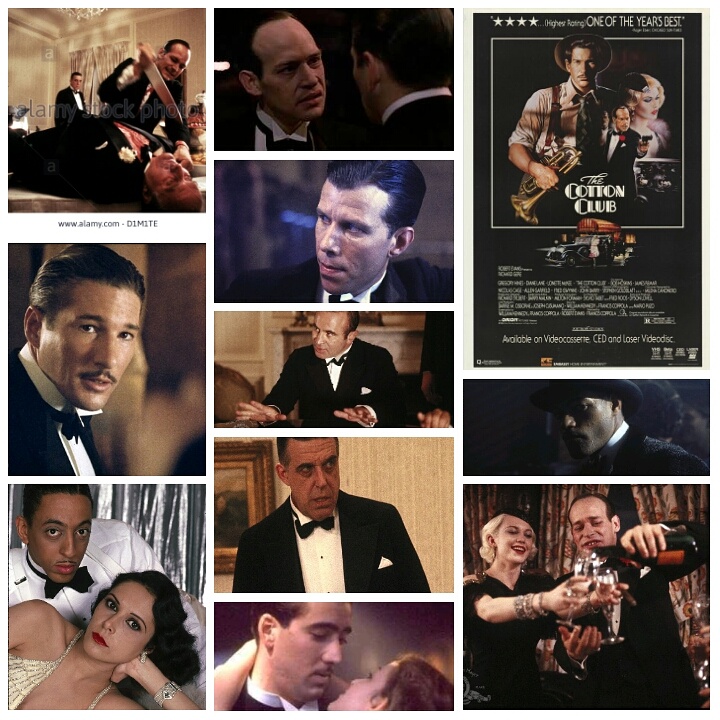
Francis Ford Coppola’s The Cotton Club is every bit as dazzling, chaotic and decadent as one might imagine the roaring twenties would have been. it’s set in and revolves around the titular jazz club, conducting a boisterous, kaleidoscope study of the various dames, dapper gents, hoodlums, harlots and musicians who called it home. Among them are would be gangster Dixie Dwyer (a slick Richard Gere), Sandman Williams (Gregory Hines), a young Bumpy Johnson (Laurence Fishburne) and renowned psychopathic mobster Dutch Schultz (a ferocious James Remar). Coppola wisely ducks a routine plot line in favor of a helter skelter, raucous cascade of delirious partying, violence and steamy romance, a stylistic choice almost reminiscent of Robert Altman. Characters come and go, fight and feud, drink and dance and generally keep up the kind of manic  energy and pizazz that only the 20’s could sustain. The cast is positively stacked, so watch for appearances from Nicolas Case, Bob Hoskins, Diane Lane, John P. Ryan, James Russo, Fred Gwynne, Allen Garfield, Ed O Ross, Diane Venora, Woody Strode, Giancarlo Esposito, Bill Cobbs, Sofia Coppola and singer Tom Waits as Irving Stark, the club’s owner. It’s a messily woven tapestry of crime and excess held together by brief encounters, hot blooded conflict and that ever present jazz music which fuels the characters along with the perpetual haze of booze and cigarette smoke. Good times.

Psychology Of Film Episode 2~Paramedic Fever Dreams: Martin Scorsese’s Bringing Out The Dead

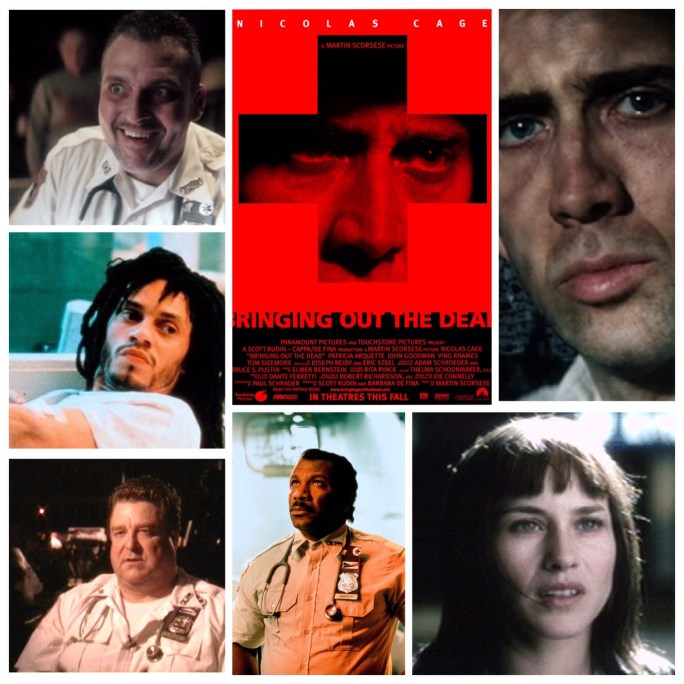
Recently myself and a good friend of mine, Mo Barrett, have begun to craft special ‘interactive’ video summaries of some of our favourite darker, more challenging films. This installmeant sees us look at Martin Scorsese’s Bringing Out The Dead, a terrific. Option picture which we both have a mutual love for. Please click the link below and enjoy!

Bringing Out The Dead
Created By Mo Barrett and Nate Hill, with thanks to the support of Frank Mengarelli and Nick Clement of Podcasting Them Softly.

PTS PRESENTS: 15 QUESTIONS WITH COSTUME DESIGNER ELLEN MIROJNICK

ELLEN

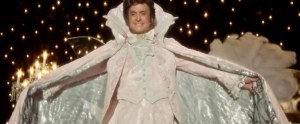
Award winning costume designer Ellen Mirojnick has been a part of some of the biggest, most exciting films and TV programs over the last 30 years. With work stretching various genres and styles, she’s collaborated with some of the industry’s true heavyweights, including Steven Soderbergh, Ridley Scott, Adrian Lyne, Paul Verhoeven, John Woo, Richard Attenborough, Renny Harlin, Mark Rydell, Angelina Jolie, and the late Tony Scott, to name only a bunch. An Emmy and Costume Designer Guild Award winner for her spectacular work on the HBO film Behind the Candelabra, Ellen continually applies her love and passion for the arts to each project she takes on, with results that are always eye-catching and wholly appropriate to the material. Podcasting Them Softly is proud to present an interview with Ellen, as she discusses her inspirations, some of the key films on her resume, her dynamic work on The Knick, and what she has in store for the future. We hope you enjoy!

knick mixer

  1. How did you get your start with costume design and what are some memories from your first job?

FQ

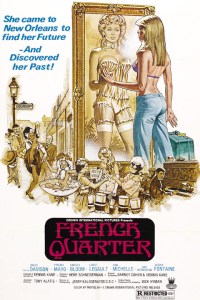
I was designing junior sportswear in NY. My husband was working on a film in New Orleans called French Quarter. The film didn’t have a costume designer. I was visiting, they offered me the job, and I was hooked! I did everything from designing the costumes through full wardrobe on set, including sewing. And I can’t sew! So I had holes in my fingers and had to continually wipe blood off the clothes!

  1. Who were some of your inspirations when you were starting out, and growing up, what were some of your favorite films, or the films that spoke to you the most?

Auntie_Mame_Poster

Well of course Edith Head. But my favorite film was Auntie Mame, so I couldn’t get enough of Orry-Kelly’s work. I’ve always loved movies! As a kid and while growing up, I went all the time to the cinema. The only films I didn’t see were scary ones. I loved all of Audrey Hepburn’s films, Auntie Mame as I said, and Some Like It Hot was a favorite. I really responded to film noir, the French New Wave, and I just really loved sitting in the movie theater dreaming in the dark.

  1. What was your first “big break” in the industry?

fatal_attraction_xlg

I had a few big breaks. I was given a film to design and was immediately a Costume Designer. I would say my career as we know it began with Fatal Attraction.

  1. You have worked with some absolutely legendary filmmakers – Ridley Scott, Adrian Lyne (multiple times), Oliver Stone (multiple times), John Woo, Kathryn Bigelow, Steven Soderbergh (multiple times), Paul Verhoeven, and Tony Scott, just to name a few. Has there been one filmmaker, on this list or not, who you feel you’ve been especially “in tune” with?

NEW YORK, NY - DECEMBER 05: American film director Steven Soderbergh attends

I was in tune with all of the above when we worked together, all were momentous experiences! But the legendary filmmaker who I love working with and would say I’ve been “in tune with” the most is Steven Soderbergh. I call him The Grand Master.

  1. Which currently working filmmakers would you love to collaborate with?

nolan

I would love to collaborate with Steve McQueen, or somebody brand new, who is passionate about telling stories. Christopher Nolan, I love how he is fascinated by alternate or parallel universes. Marty Scorsese would be the ultimate New York State of Mind, and I’d still love to work again with everyone I’ve previously collaborated with.

  1. After working with Soderbergh on the fantastic Behind the Candelabra which won you an Emmy, he brought you on to his revolutionary new TV show The Knick. What’s it been like working on that show?

knick_ver20_xlg

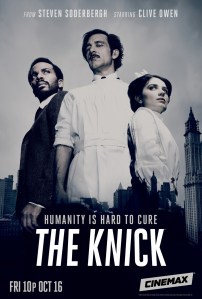
There aren’t enough words to describe working with Steven. I feel blessed to be a member of this amazing team. We were all tremendously excited to do something as adventurous as The Knick. 10 hours of storytelling, the complexity of the characters, a true time in history with the early 1900’s, and yet strangely, it still feels very much like today. It was absolutely ELECTRIC putting the pieces together. We built a hospital and a city through a lens we hadn’t seen before. It doesn’t get much better, needless to say, when watching great actors exploring the unknown! Steven has an idea and we get to explore it. He is very trusting with his crew, and he allows us great freedom interpreting the material. He doesn’t micro manage! The goal, as it’s been said by others, is that the actors come onto the set and you know everything works when he picks up the camera and begins to shoot, it’s time for action! The show has been a magnificent challenge, and my joy comes from meeting the various challenges every day, and working with my team, especially with Production Designer extraordinaire Howard Cummings.

  1. The Knick feels like cinema turned into TV. How has this show differed from other TV programs you’ve worked on?2The Knick doesn’t compare with anything. When you are involved with a project that breaks the rules, the rebel in me, as with all the members of the team, rises far and beyond anyone’s wildest dreams! I have only done the occasional TV pilot, all of which have sold and went on to become successful series. And one other TV film, Cinderella, which was lots of fun. But the Knick is great storytelling, chapter by chapter, with great actors loving their characters and their challenges. We shoot it like you shoot a film and I don’t know anyone else that can shoot 560 pages in 73 days! Steven can and does!
  1. This fall sees the release of Angelina Jolie’s By the Sea, which looks emotionally draining and very much a throwback to 70’s filmmaking. What was it like working with her and Brad Pitt on this seemingly quite personal looking film?

by_the_sea_xlg

Working with Angelina and Brad was great! I didn’t know what to expect but they were great collaborators. It’s a difficult film that was very demanding and an intense assignment, but rewarding none the less.

  1. John Woo’s Face/Off is one of the greatest American action pictures ever made, and the stylish costumes, especially the suits, were a big component of that film’s overall sense of visual flair. What can you remember about working on that bullet fest?

CAGE

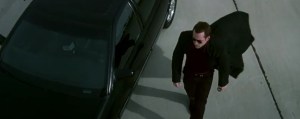
I was thrilled to work with John Woo. I was a great fan of all his Hong Kong films. I loved that I always liked his bad guy! Face/Off was originally going to take place in the near future. I came along and suggested that at the core of the film lived the same man, both sides of him, good and bad, just like the work John does best. They changed the film’s time frame to present day and the characters just spoke to me. John had an idea that when Nic Cage   walked across the tarmac, his coat would fly open as in Lawrence of Arabia. We were able to achieve it with the aid of wind machines! Everyone thought it was a spectacular leather coat and it went on to inspire many future iconic film characters. It wasn’t leather, but rather, it was a polyester priest robe!

  1. Strange Days is one of the most ambitious science fiction films ever made, and everything about the look and feel of that film is tremendous, especially the distinct wardrobe worn by every scuzzy character. What can you remember about working with Kathryn Bigelow on this masterpiece of cinema?

strange_days_ver2

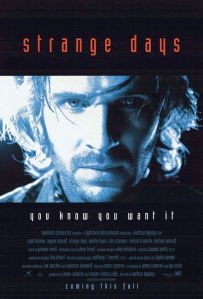
Working with Kathryn was quite fulfilling. The film took place at the turn of the decade, the year 2000. It was 1994 if I remember correctly when we were shooting, and 2000 wasn’t that far into the future. I helped to create a world that was a hyper mix, with various ethnicities, different time periods, rock ‘n roll, etc. It was divine ecology with nothing being wasted; the rich were rich, the poor were desperate. I remember wanting it to be decadent and sexy. I think it was ahead of its time for sure…

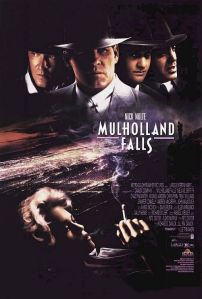
  1. One of the most underrated films on your resume is Lee Tamahori’s Mulholland Falls, aka, “The Hat Movie.” That film has an extraordinary sense of style, and the costume work was nothing short of brilliant. What was it like doing a full blown period noir and getting a chance to work with that incredible male ensemble, all of whom looked beyond snazzy in their outfits?

mulholland_falls

I’m so happy you feel that way about this film as I loved working on it! I love designing for men, it’s pretty clear. I had trouble being thought of as one to design period films, so when I was asked to do this film I felt like I had finally gotten a chance. It was my first period film since Chaplin, and I went into it full on. Nick Nolte, Chazz Palminteri, Michael Madsen, the late Chris Penn, John Malkovich, Melanie Griffith, Jennifer Connelly, and all the supporting players, including Rob Lowe – what a fabulous cast to work with! I loved working on the colors of the suits, and we found original fabrics for all the guys, and all the hats were handmade for the picture. I had a great time, but the story no one knows is that the real life detectives all wore white suits and cruised the strip in a white convertible! The producers thought the studio would be expecting “Men in White”, but after meeting with Frank Mancuso, the head of the studio at that time, he told us we had made the right choice.

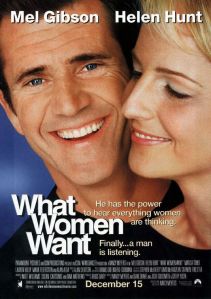
  1. Nancy Meyers is a filmmaker who has a very specific style of storytelling and set decoration. What was it like working with her on What Women Want, which is one of the more thoughtful entries on her resume of entertaining comedies?

what_women_want

Nancy and I have very similar tastes in most areas, which made for a really good collaboration. It’s always a pleasurable working experience when your taste aligns with that of the filmmaker.

  1. Is there a genre you’d like to work in that you previously haven’t?

DOUGLAS

I’d love to do a musical or a fantasy, maybe a nitty-gritty thriller or something definitely not pretty. Actually, anything with a great story and an inspired storyteller – that’s what I’m looking for in new projects.

  1. Who are some of the other current costume designers who inspire you to continuously do great work?

knick_ver11

There are so many great designers working today and I don’t want to leave anyone out!

  1. If you’re able to divulge any information, what projects do you have coming out in the near future, and what are you currently working on?

father

I’m currently in Cambodia, about to shoot Angelina Jolie’s next directorial project. It’s adapted from the book by Loung Ung called “First They Killed My Father: A Daughter Remembers.”

Mirojnick Banner

(This interview was conducted via email in November 2015, and was edited by Nick Clement.)