The Puppet Master: An Interview with Kevin McTurk by Kent Hill

Error
This video doesn’t exist

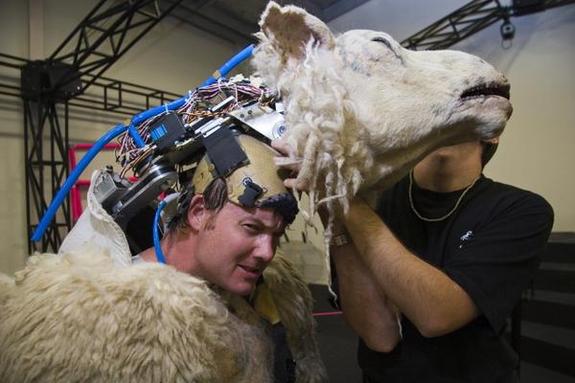
They say in the film business, never work with children or animals. Of course you may find yourself working with dinosaurs, aliens, lions, beast-people, scrunts, kothogas, ghosts, morlocks, Batman, Spiderman, Hellboy, kaijus, wolfmen, clones, cliffhangers, vampires, giant crocodiles, homicidal maniacs, killer sheep, Predators, cowboys and mysterious brides out to Kill Bill.

Sounds ominous, doesn’t it? But that’s just some of the astounding creations and magnificent beasts that Kevin McTurk has encountered in his eclectic career in the realms of special effects.

Kevin_McTurk_2014_800px

Working under the banners of legends like Stan Winston, Jim Henson and the new titans like Weta Workshop, Kevin has had his hand in erecting and simulating everything from the real world as he has from empires extraordinary. And, while I could have spent the entirety of our chat talking about his adventures working on the countless films, which are favourites of mine, he has in his CV, his impressive effects background is only part of the story.

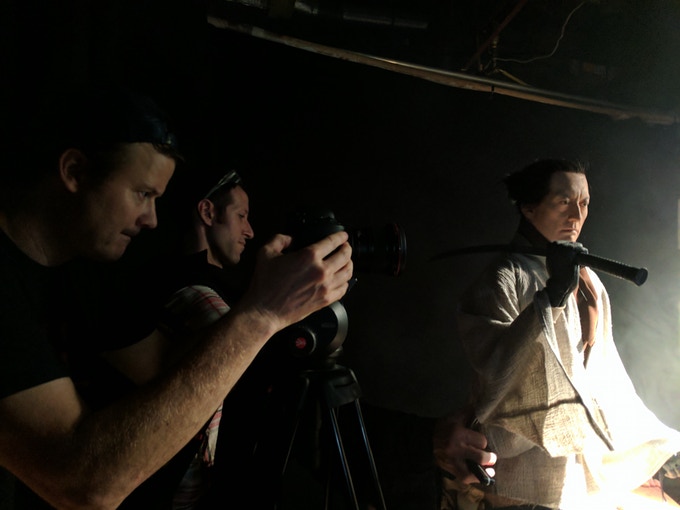
For Kevin McTurk is a bold and visionary filmmaker in his own right. His puppet films, The Narrative of Victor Karloch, The Mill at Calder’s End and now The (forthcoming) Haunted Swordsman are exercises in capturing a style from a bygone era with modern filmmaking techniques. The results are beautiful, not only in their aesthetic quality, but in the level of excellence from the many different disciplines on display.

There is still time for you to join Kevin in his latest cinematic offering (https://www.kickstarter.com/projects/935772123/the-haunted-swordsman-a-ghost-story-puppet-film), and to listen in now to the man himself talk about his movies, influences and career.

I give you the talented Mr. McTurk.

Visit Kevin’s website for more: http://www.thespiritcabinet.com/
content_l

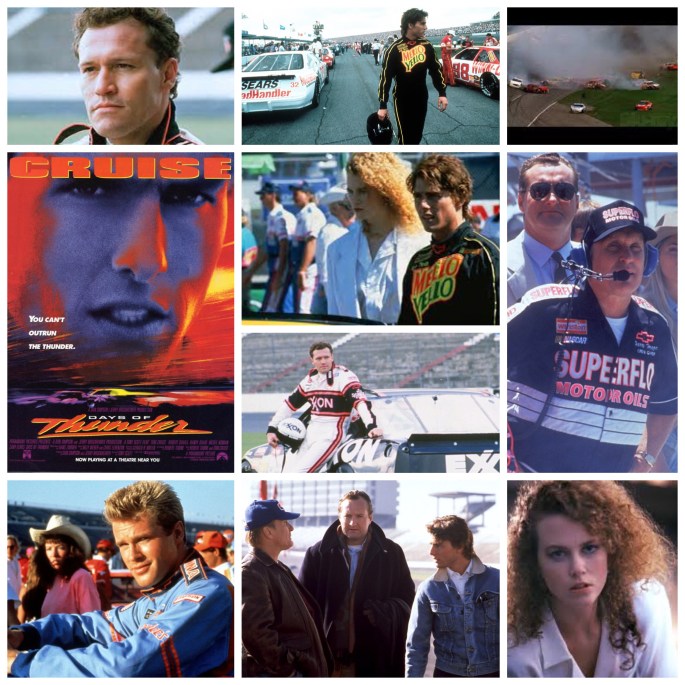
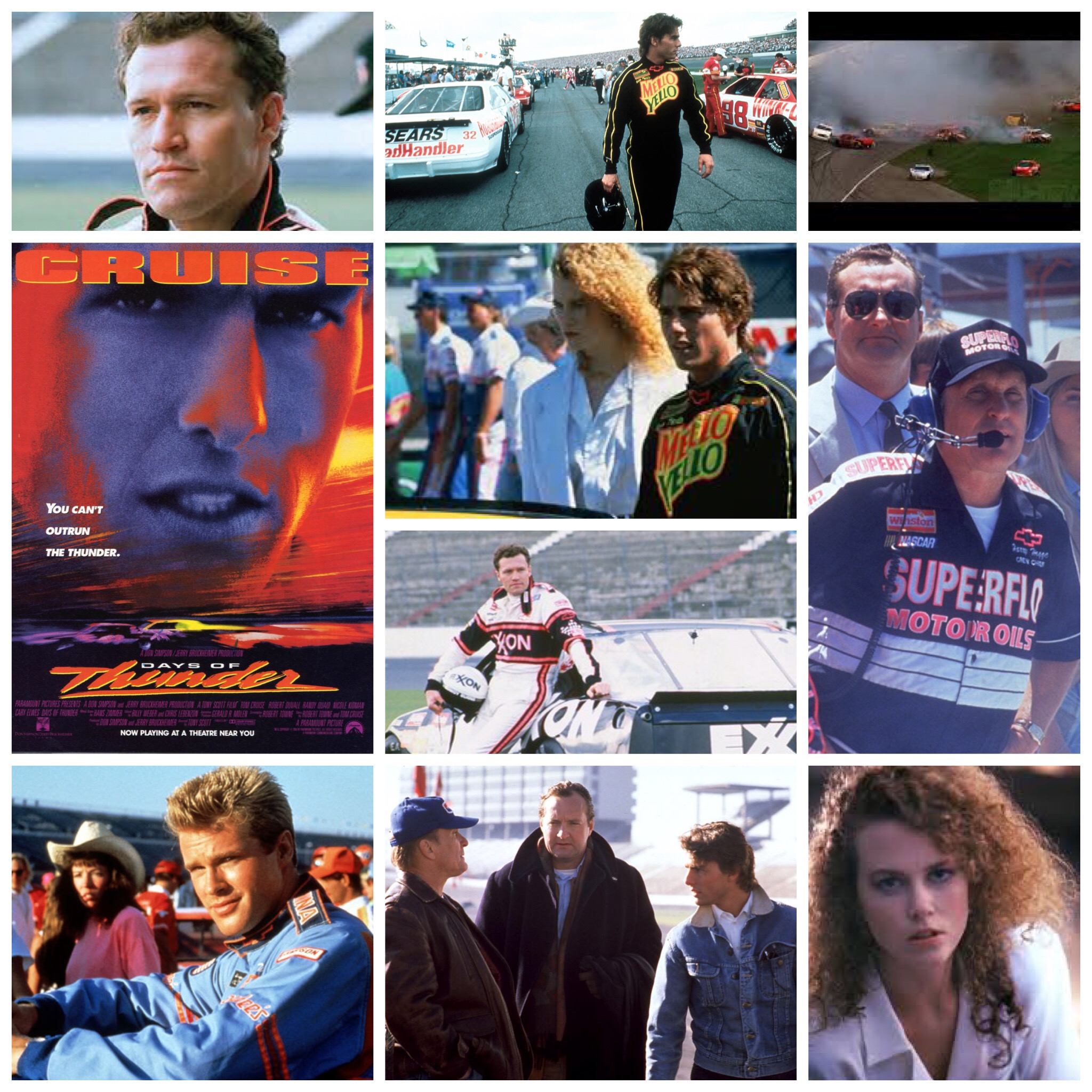
Tony Scott’s Days Of Thunder 


The first ten minutes or so of Tony Scott’s Days Of Thunder should be used to demonstrate the power of any new home theatre/speaker/sound system freshly harvested from Best Buy. As it opens on a piping hot stock car race-track in the midst of noonday sun festivities and preparations for the day’s events, Hans Zimmer’s explosive, patriotic thunderbolt of a score kicks in and you feel that mad rush of adrenaline reserved for only the most combustible, rabidly entertaining movie magic. It’s just too bad that the rest of the film can’t keep up with the level of energy on display in that whopper of a prologue, despite doing it’s very best. An obvious sister film and coattail hugger of Scott’s other ‘loud noises’ film Top Gun, there ain’t much to it other than screaming race cars and a daredevil Cole Trickle (Tom Cruise) trying to prove his sporting worth to various folks including the romantic interest, a doctor played by sexy Nicole Kidman and the sagely Yoda of stock car lore (Robert Duvall). He also has quite a few homoerotic run-ins with rival/partner Rowdy Burns (Michael Rooker is certainly someone I’d tag with the adjective rowdy), and of course races a whole bunch of race cars as well as crashes a few. You gotta hand it to cinematographer Ward Russell, as it can’t be an easy task to do crisply capture those vehicular torpedoes as they careen by at a zillion miles per hour, let alone immortalize the afternoon sun glancing off the Wonderbread sponsor logos so beautifully. Like I said, after that initial banger of an opening credits sequence, its run of the mill in terms of story, albeit dynamite in terms of stunts. Watch for work from Randy Quaid, Cary Elwes, Fred Dalton Thompson, John C. Reilly and mega-producer Don Simpson in a neat extended cameo. The real magic happens with Zimmer’s score though, go check it out on YouTube, as iTunes only has some weak retread by some philharmonic orchestra schmucks. Quite possibly one of the maestro’s best works. 

-Nate Hill

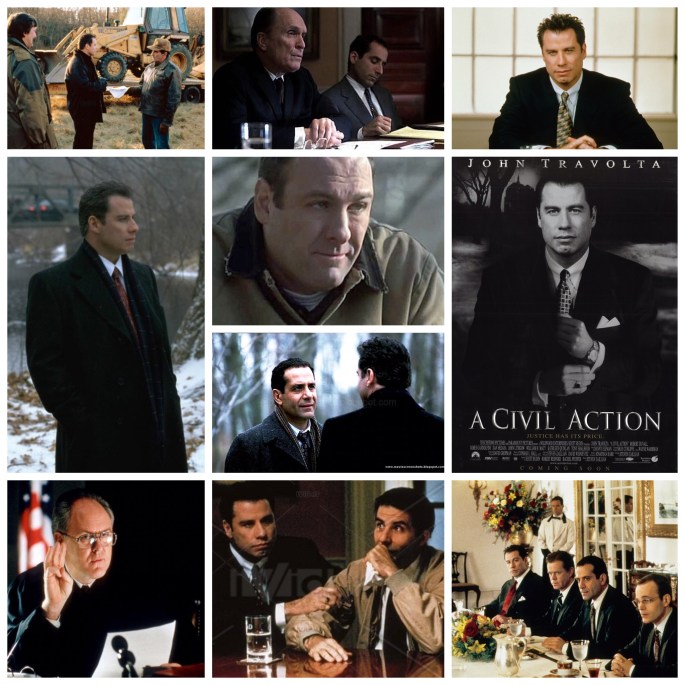
A Civil Action


A Civil Action is a quiet, sobering tale of gross corporate evils and one lawyer with the stones to stand up to it all. John Travolta can be the skeeviest slimeball, the most affable Everyman, terrifying arch villain or unwavering hero in his work, he’s just that adaptable. His character here is a small time lawyer in a four partner firm that can barely afford a collective pot to piss in, and are in dire need of a case. In a local county, there’s suspicion of a factory dumping lethal toxic waste into the nearby rivers, causing the death, illness and birth defects among many children. Problem is, it’s a ruthlessly expensive case that could bankrupt their entire firm, and the rival lawyer (Robert Duvall) is an Ivy League bigwig who could bury them. Travolta is steadfast though, calmly and methodically tackling one obstacle at a time with compassion for the victims, determination to smoke out the corruption and a reserved charm that puts the film in a relaxed yet pressing groove. The cast here is absolutely unreal as well. Standouts include James Gandolfini and David Thornton in heartbreaking turns as blue collar workers affected by these misdeeds, Dan Hedaya as a malicious perpetrator, William H. Macy and Tony Shaloub as Travolta’s firm partners, Daniel Von Bargen as a belligerent witness, as well as further work from John Lithgow, Harry Dean Stanton, Zelijko Ivanek, Mary Mara, Sydney Pollack, Stephen Fry, Paul Ben Victor, Michael P. Byrne, Josh Pais and more. It’s never too hectic though, despite having so many characters and being a courtroom drama, a sub genre usually steeped in fire and brimstone melodrama. There’s a sad, quiet aura to the proceedings here. The damage is done, and all these people are looking for is a little recognition, compassion and a settlement to ease the strife thrown at them by a very callous and uncaring bunch of people. Travolta is the harbinger of catharsis, a warmhearted man who gets invested in so deep that it isn’t about the money anymore for him, it’s about helping those in need. Powerful, understated stuff. 

-Nate Hill

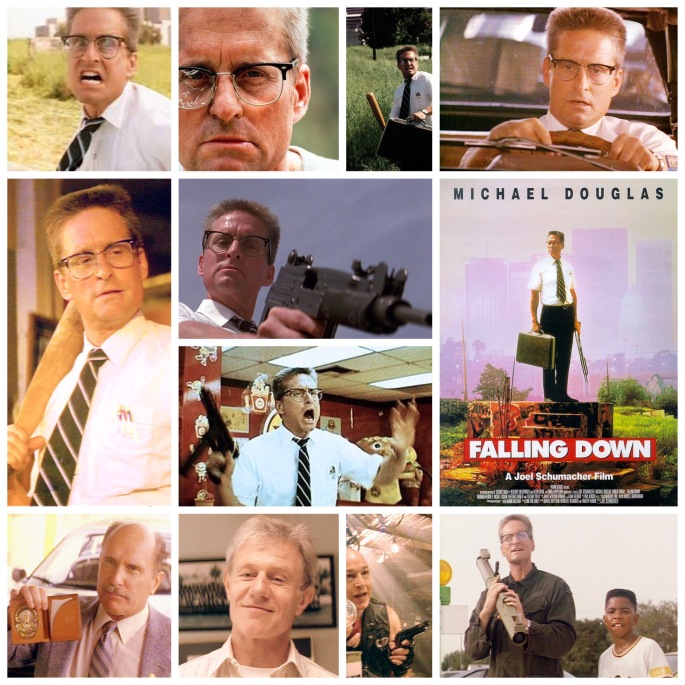
Joel Schumacher’s Falling Down


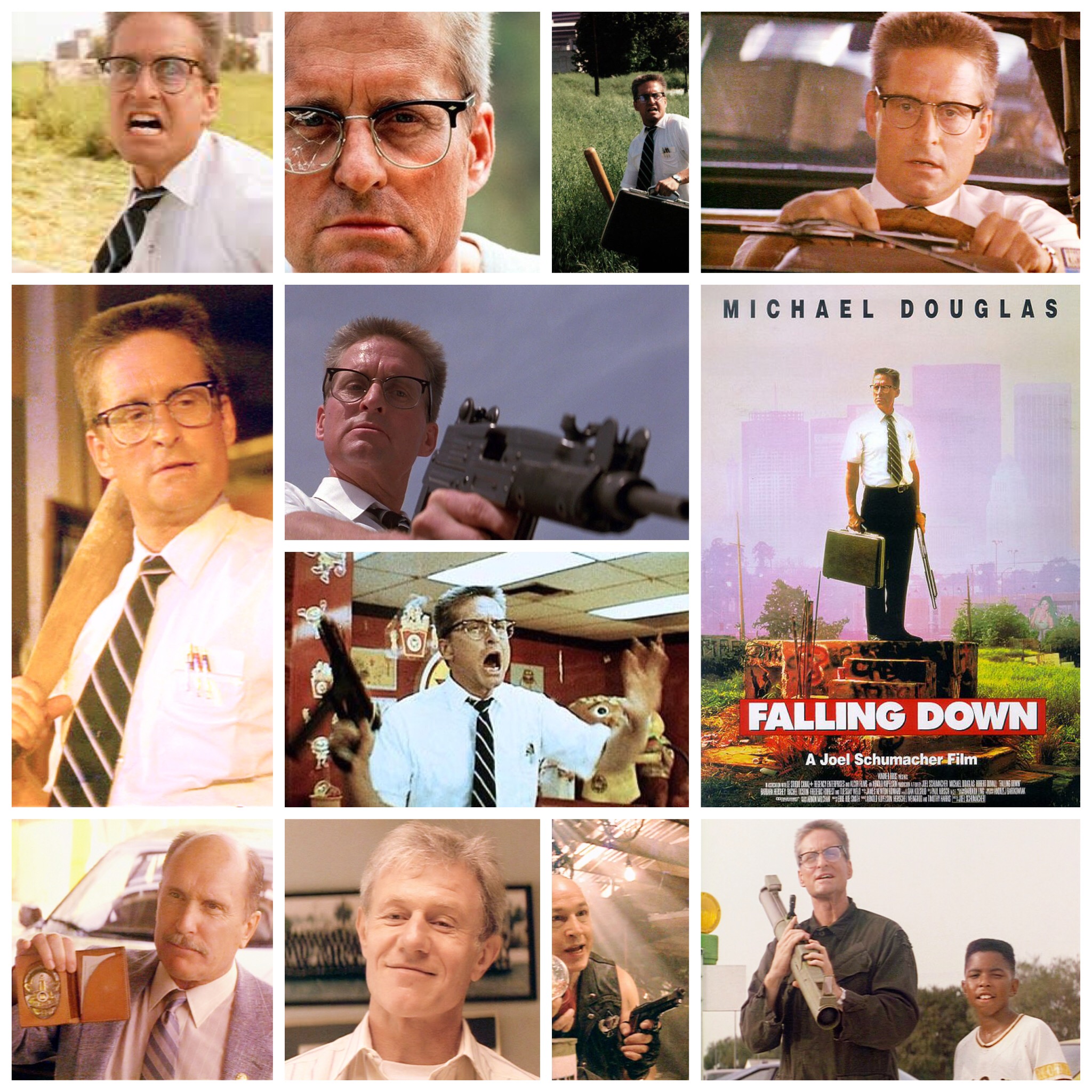
Everyone’s had the moment where they’re at the absolute end of their rope and feel like taking drastic or violent action against whatever is grinding your gears. Whether it’s a hot day in horrendous rush hour traffic, a particularly irritating lineup at Starbucks or an especially dense customer service worker, you just feel like saying ‘fuck it’, and decimating the place with anything you can lay your hands on. In Joel Schumacher’s Falling Down, Michael Douglas does just that on a sweltering LA summer day. His character, who remains nameless save for the moniker ‘D-Fens’, is a business man on his way home who just… snaps. Throwing a tantrum on the LA overpass, he quickly loses it, arms himself with a high velocity shotgun and proceeds to vet out every mundane annoyance, pet peeve and irksome scenario he can find. Whether it’s brutal catharsis he’s looking for, a cure for the doldrums of daily life or simply raging against that emptiness we all feel deep down, he keeps his reasons to himself, and let’s every other aspect of his character run wild. Holding up a fast food joint because they stopped serving breakfast five minutes too early, massacring homeless punks who foolishly harass him, his crusade sprawls across the valley and beyond, a righteous purge of monotonous, infuriating trivial concerns that soon has the attention of LA’s finest in the form of veteran Detective Robert Duvall and his crass, obnoxious lieutenant (Raymond J. Barry). It’s also revealed that Douglas’s personal life leading up to his break was rocky at best, with a job going downhill and hints of violence towards his wife and daughter. Quite drastic is the meltdown though, but it’s not quite a character study, he’s almost used more to pick away at the decays in society, a tool for exposing tears in the cloth we take for granted every day. His story is kind of like when you load up Grand Theft Auto on your console and completely ignore the missions in favour of a personalized war on anything that moves. His war happens to be against those little nagging inconveniences that seem like no biggie until they add up and you just go postal. It’s darkly funny stuff, but quite harrowing when you look at the big picture and the actual damage he’s doing to the city. Douglas is courageous here, it takes reckless abandon to go for a role like this, and he owns it in crew cut, well dressed fashion, a costume choice that absurdly clashes with the big metal cannon he totes. The film never takes sides either, recognizing both the bizarre consumerist nightmare we wade through everyday and it’s ability to dampen your spirit as well as the sickening extremes he goes to, challenging you to walk a line and look at both sides. Hard hitting stuff. 

-Nate Hill

The 6th Day: A Review by Nate Hill

image

The 6th Day is a brash, in your face sci fi actioner with some deft scientific notions that it plays around with in near satirical fashion. It chooses to shoot most of its scenes in my hometown of Vancouver, including a set piece atop the spiral shaped Vancouver Public Library tat sends sparks raining down into the streets and choppers spinning wildly to their demise. I love when films shoot here, because it gives my city an exciting chance to be a part of escapism, and it’s amusing to watch them digitally maim all sorts of landmarks and then chuckle as I see them intact on my way to work the next day. Schwarzenegger, in one of his last great flicks before his deliberate hiatus (we shall not speak of the abomination that is Collateral Damage), plays Adam Gibson, a helicopter tour guide who has a strange blackout in mid flight while transporting the CEO of a swanky scientific corporation (slick Tony Goldwyn). He arrives back home to find a clone of himself living with his family, and things only get weirder from there. He has stumbled into the inner workings of extremely illegal experiments involving human replication, and Goldwyn & Co. are none too pleased about it. Goldwyn has secretly made human cloning an everyday thing for the company, hidden from the aging eyes of the moral upright doctor who founded the company (Robert Duvall). This is all enforced by a ruthless corporate thug for hire (Michael Rooker) and his foxy assistant (Sarah Wynter). Schwarzenegger is faced with the daunting task of taking down this un-sanctioned empire, reclaiming his family and blowing up some stuff along the way. It’s a terrific flick, and Arnie gets to say the best line he’s ever spoken, directed at Goldwyn, which I won’t spoil here but it’s pure gold. Goldwyn is hateable and malicious, the horrific third act prosthetics fitting him like a slimy glove. Duvall strikes a noble chord and almost seems to have wandered in from a more serious film. Rooker is intense, evil and scene stealing as always. Watch for Wendy Crewson, Michael Rapaport and Terry Crews as well. In a movie so committed to the trademark Ahnuld fireworks, it’s cool to get a whiff of actual thought provoking, Asimov-esque intrigue with the cloning, a concept which is fully utilized and really a lot of fun here.

Robert Atman’s The Gingerbread Man: A Review by Nate Hill


Robert Altman’s The Gingerbread Man isn’t the director’s best, but it’s worth a looky-loo just to see this solid cast cavort around in a sweltering Georgia atmosphere and play out a narrative that’s part sultry seduction thriller and part hard boiled whodunit. I remember watching it and going ‘meh, I’ve seen this type of thing a thousand times and this one didn’t raise the bar at all.’ I’m thinking now that perhaps my mindset was in the wrong space, and that Altman set out to simply bring us the romantic murder mystery in its purest form, without deviation or higher ambitions. In that case he’s made a neat little potboiler with a suitably ludicrous ending, some truly effective red herrings and a really great troupe of actors, so,e going nicely against type. The multitalented Kenneth Branagh plays suave Georgia lawyer Rick MacGruder, who finds himself in deep trouble when he has an affair with sexy, slinky and shady Mallory Doss (the very underrated Embeth Davidz). She’s a good enough girl, but she has a backwoods nutcase of a father named Dixon (Robert Duvall being uber strange and loving every second of it) who is stalking and threatening her. Dixon is a bedraggled, cult-leading swamp rat and Duvall plays him to the frenzied hilt of uncomfortable ticks and unkempt theatrics. MacGruder, being smitten with Mallory, is of course compelled to use his legal and personal power to help her, and concocts a convoluted scheme involving a subpoena to Mallory’s belligerent ex husband Pete Randle (a cranky Tom Berenger blusters about in the third act). This of course sets off all kinds of back door motivations and sweaty double crosses that are hard to keep track of until all is revealed in the final act, prompting a collective audience reaction of “huh??”. It’s all in good fun though and at times it seems like Altman is deliberately dipping into B movie territory just to shirk his high art mantle and spice up this gumbo with some trashy, lowbrow flavour. I say bring it, that’s exactly the way to my heart. Writing this review I’m now realizing I probably like this film way more than my ending statement might suggest, but sometimes we need to hash it all out on paper (or in this case a cramped iPad keyboard) to reevaluate our perception of a certain piece. The cast gets juicier, with Robert Downey Jr. doing a quick bit as Macgruder’s slick buddy who works as a private investigator for the law office, Daryl Hannah and Famke Janssen as Rick’s jilted wife as well. It’s based on a John Grisham novel, and Altman seems to be the first director to adapt his work with a ramped up style and personal flair that goes beyond the academic thrills on the page. This one feels heightened, sultry and oh so sweaty in the way that only a southern set thriller can be. Cool stuff. 

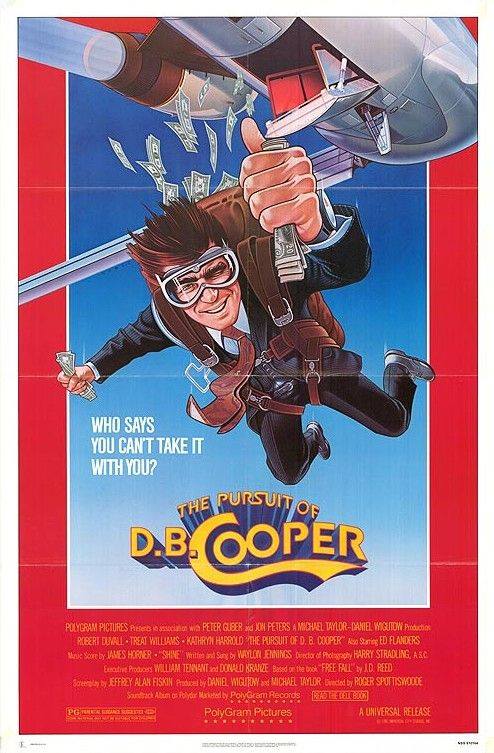
ROGER SPOTTISWOODE’S THE PURSUIT OF D.B. COOPER — A REVIEW BY NICK CLEMENT

1

Being a product of the 1980’s, there are more than a few under the radar gems that always made me smile (for one reason or another) or that kept me entertained. Based on the novel Free Fall by J.D. Reed, The Pursuit of D.B. Cooper was one of those titles that I found myself watching on cable (or was it HBO?) repeatedly, never truly understanding it, but enjoying it nonetheless. It’s always been on the back on my mind to revisit, so I sought it out, and low and behold, it’s nearly impossible to find. So I recently purchased a Hungarian Region B DVD for the film (no American disc release has ever occurred, to my knowledge), and despite the fact that the movie was lensed 1.85:1 and then presented in the 1.33:1 aspect ratio (thus losing visual information), I had to check it out again. The disc transfer looks to have been processed in bowls of urine, which is a shame, because the image looked overly yellow in numerous spots and the cinematography, in general, is consistently eye-catching. As for the movie, it’s exactly as I remembered it being – a raucous, wild, totally crazy little action adventure that took a real man and real situation and turned the entire thing into the equivalent of story you’d tell at a campfire, or an urban legend that takes on a mind of its own.

Released in 1981, the film centers on wild-man aircraft hijacker D. B. Cooper (Treat Williams in a unique role), who made off with $200,000 in 1971 after leaping from the back of a plane over the Pacific Northwest. The script imagines what it would have been like for Cooper to hide out and attempt to evade capture by law enforcement. Jeffrey Alan Fiskin’s incident packed screenplay fictionalized most of what happened during Cooper’s escape, but that doesn’t prevent this offbeat item from being undervalued if a tad obscure; Fiskin’s other scripting credits include Cutter’s Way and Tony Scott’s pulpy thriller Revenge. John Frankenheimer was the film’s original director, and would later denounce the entire production. He was replaced by TV journeyman Buzz Kulik just before shooting began. Then, after the movie was well into production, Kulik was fired, and replaced by final collaborator Roger Spottiswoode, who would be the only director to receive an onscreen credit. The film has an interesting, sort of ramshackle visual aesthetic, heightened by a jaunty, honky-tonk-ish score by James Horner. A sort of lark that would never get made today, the performances by Robert Duvall (as an insurance investigator) and Williams anchor the film with a level of class and conviction, Kathryn Harrold was a total knock-out, and while the overall lightheartedness of the entire endeavor is apparent from frame one, the various action scenes are briskly shot, cut, and executed, especially the opening sequence complete with a real sky-dive done before the era of CGI laziness kicked in.