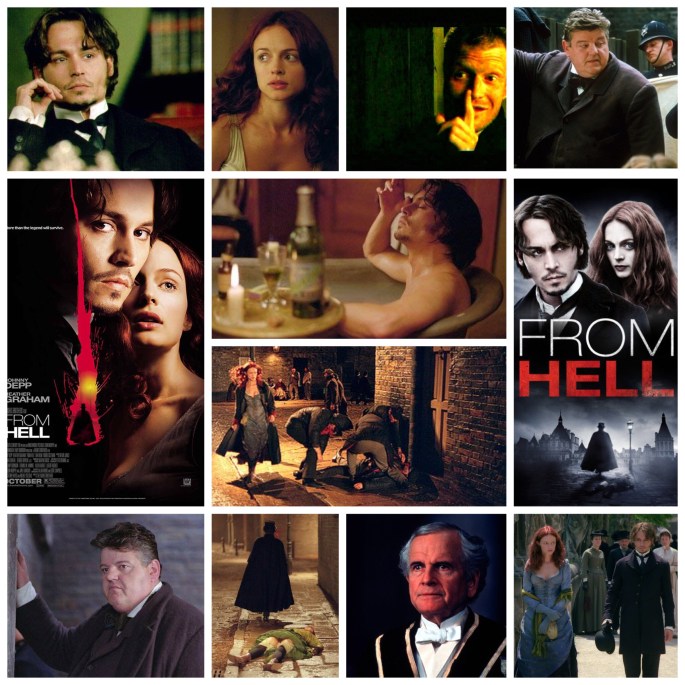
The Hughes Brothers’ From Hell

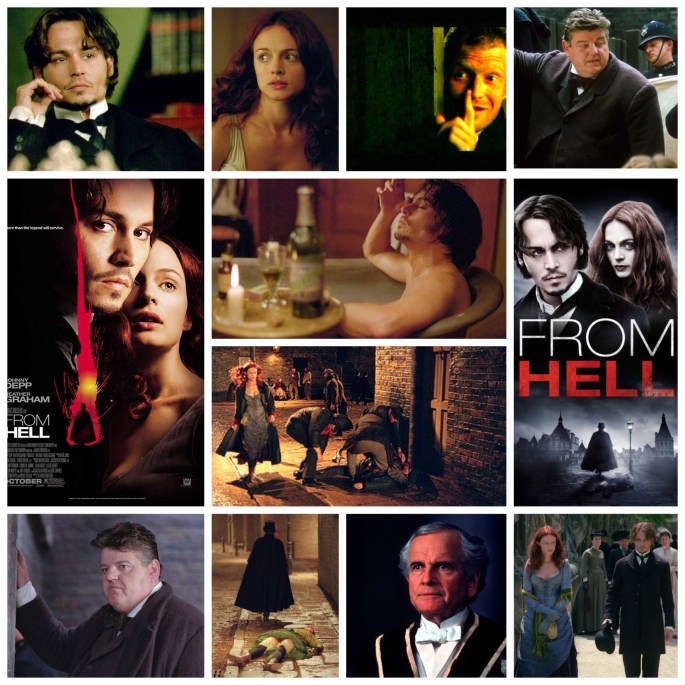
The Hughes Brothers’ From Hell is one one of the most opulently stylish horror films out there, and despite being a bit melodramatic in areas, it boasts a grim, severely menacing atmosphere which is mandatory considering it focuses on the Jack The Ripper murders in Victorian era London. Based on a drab graphic novel by the great Alan Moore, The Hughes have amped up both suspense and passion and could be accused of Hollywood-izing Moore’s work too much, but the guy just doesn’t write very adaptable material and some liberties have to be taken to make watchable films. This one works better on its own terms, a dark, blood soaked detective story starring Johnny Depp as Frederick Abberline, a brilliant opium addicted Scotland Yard inspector out to nab the Ripper, with the help of his trusty boss Sgt. Godley, played by a scene stealing Robbie ‘Hagrid’ Coltrane. As we all know, the Ripper murders were never really solved, so naturally here a fictitious conspiracy is whipped up, full of intrigue and corruption, but as many cluttered subplots there are flying about, the film’s strength lies in the eerie murders carried out in nocturnal London, and Depp’s very strong performance as the drugged out cop who won’t quit. Supporting work comes from lovely Heather Graham as prostitute and love interest Mary Kelly, Ian Holm as London’s top medical consultant as well as Jason Flemyng, Ian Richardson, Katrin Cartlidge, Ian McNeice, Sophia Myles, Dominic Cooper and scene stealer David Schofield as an evil East End pimp. Some of the fat could have been trimmed here to make this a shorter, more streamlined experience, but the visual element is so damn good that at the same time one can’t get enough of the lavish production design. This one succeeds in creating a lived in London with dimension and scope, as well as staging a very effective sense of dread and danger lurking around every corner of every cobblestone alleyway, the atmosphere is just unreal, as well as the supremely graphic gore that lets us plainly know that the Ripper wasn’t just messing about, he was an actual monster. Great stuff.

-Nate Hill

Pascal Laugier’s Martyrs

You think you know what fucked up and disturbing is until you’ve seen Pascal Laugier’s Martyrs, and then you damn well for sure do, on top of wishing that you didn’t go looking because the experience is not one so easily shaken. This is a punishing, relentlessly cruel and violent film that will leave the viewer emotionally barren, but it’s also a very intelligent piece, with a wholly unpredictable, very thought provoking story that arrives on an avenue somewhere truly different than the one it set out on. It’s a sort of extreme existential shocker, which is an intriguing description but doesn’t begin to scratch the surface of the dark psychological netherworld it bravely troops into. Lucie (Myléne Jampanoï) remembers being brutally tortured and held captive years ago when she was very young, and with the help of her friend Anna (Morjana Alaoui) who was also abused as a child, she sets a bloody quest in motion to hunt down and slaughter those responsible. Haunted by a grim, shrieking spectre (Isabelle Chasse) that may or not be real and met with curveballs in her plan at every turn, she discovers that her traumatizing experiences as a child are but the tip of a very large, very sinister iceberg and pretty soon she finds out way more than she ever set out to. I’m being purposely vague here because the diabolical fun lies in figuring this hell-house of a story out for yourself, and if you haven’t seen it yet, you’re in for treat. Your jaw will hit the floor, your pulse will race, it will sicken, amaze, provoke heated debates and generally just cause extreme reactions all across the board. What’s important to understand is that Laugier never strays into realms of exploitation or torture porn for its own sake; yes, the scenes and situations here are incredibly, almost unbearably violent and gruesome, but they do service a narrative that has questions to ask and points to prove. Just buckle up getting there and pay close attention, because trust me this is not a trip you’re going to want to take twice. Oh, and one more thing, careful that you don’t accidentally watch the recent remake which is unnecessary garbage, Laugier’s original is the only version of this story. Good luck!

-Nate Hill

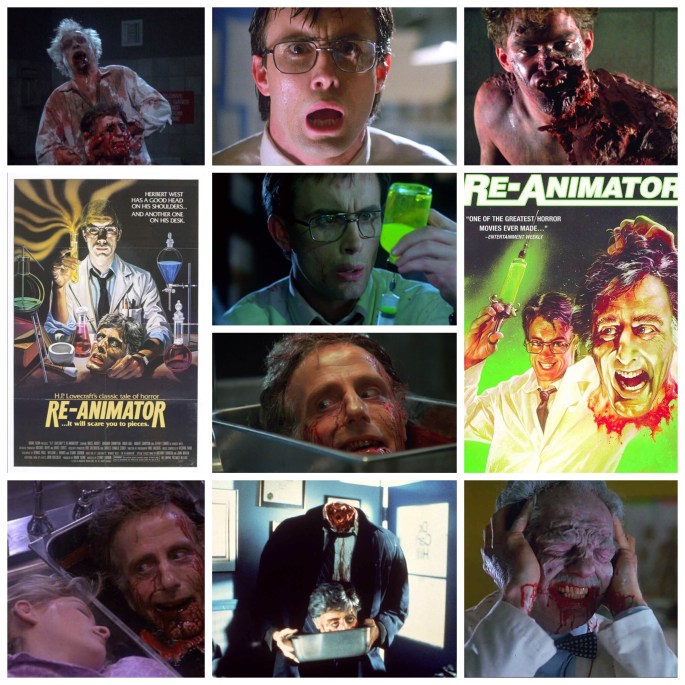
Stuart Gordon’s ReAnimator

Stuart Gordon’s ReAnimator is a healthy dose of schlocktastic fun, taking a page out of the silly splatter book of Sam Raimi, and although not quite as fun as some of the stuff it draws inspiration from, it does the trick. I know this film has a massive cult fanbase and while I can’t say that I loved it quite as much as some no doubt do, I always have some love for gory practical effects, and the ones on display here are pretty impressive. Jeffrey Combs is funny (if not exactly the definition of subtle throughout his whole career) as Dr. Herbert West, a loony fuckin quack who has stumbled upon an ectoplasmic looking serum that brings dead corpses back to life, albeit with a side of extreme retardation. Things go riotously awry when a jealous rival (David Gale) literally loses his head and steals it, prompting a gruesome comedy of errors in which heads, limbs, blood and entrails are hurled about the screen in a feverish celebration of all things gory and grisly. You can’t exactly call them zombies, I mean I suppose they are but they’re given a modicum more sentience than your average shambling Romero flesh-eater, but the actors get to have fun with their zany side, as the formula sort of plays havoc with their cognitive functions, a hilarious touch. There’s a sexually icky part that was even a bit in bad taste for my lax sensibilities (poor Barbara Crampton is a trooper and better have gotten paid hefty fucking overtime), but I suppose that trash is sort of the name of the game here. The 80’s was a very formative decade for the horror genre, and its fascinating to see how not only was this inspired by earlier stuff like Raimi, but would itself go on to rouse other filmmakers and give them ideas, as Hollywood progresses in symbiosis. A fun, freaky time.

-Nate Hill

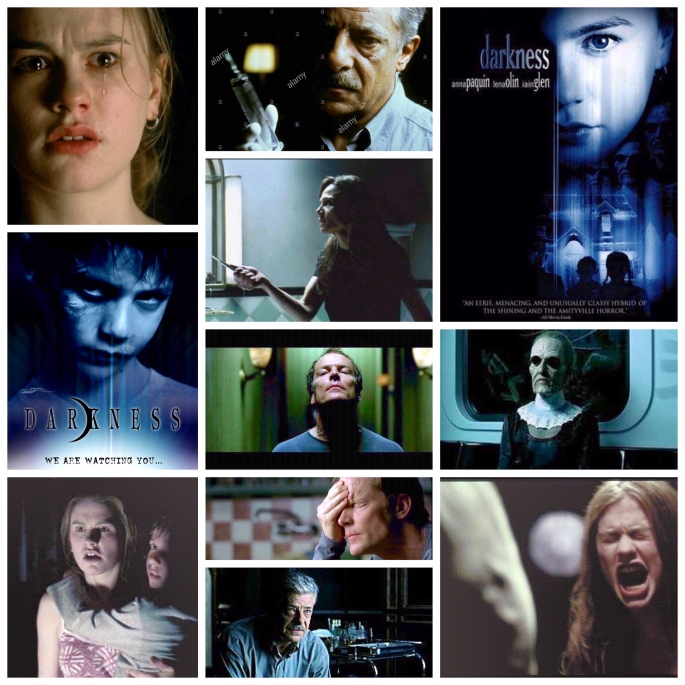
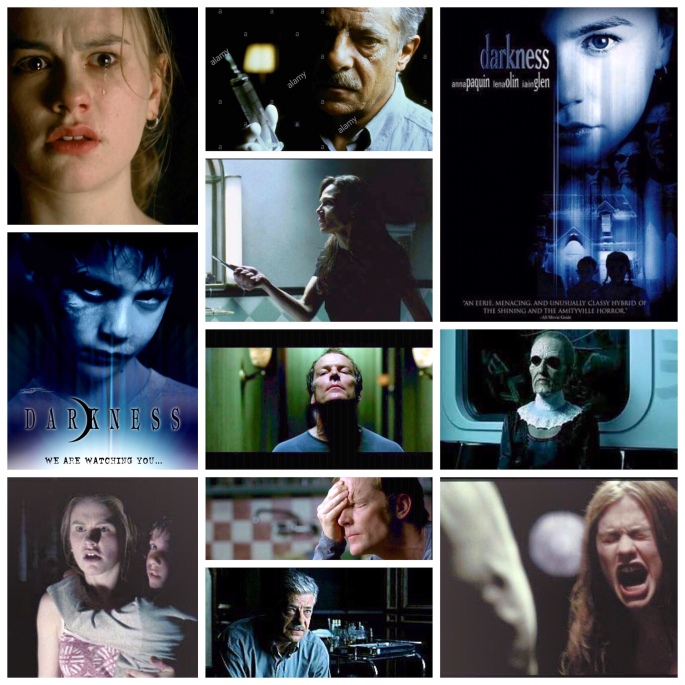
Jaume Balagueró’s Darkness

I’ve always loved Jaume Balegueró’s Darkness, an eerie Spanish horror film that went through some unholy distribution problems before finally being dumped out by Dimension films as a heavily edited PG-13 version circa 2004. There is, however, an unrated cut floating around out there on DVD as well, and that’s the one to buy as it is longer, darker and way more grim. Marketed as an Amityville style chiller, it’s a little more ambiguous and esoteric than simply a haunted house yarn, concerning an American family who journeys back to Spain to the childhood home of disturbed husband and father Iain ‘Ser Jorah’ Glen. Staying at his ancient childhood home in the countryside, old ghosts from the past are dug up, unfriendly locals hover about the edges of town, Glenn’s psychological symptoms get worse in that environment and his seemingly friendly father (the great Giancarlo Giannini spooks it up royally) clearly knows more than his affable manner is letting on. Anna Paquin is great as Glenn’s daughter, clearly used a lot for marketing following her X Men fame, and Lena Olin does fine work as her mom. This one doesn’t spell everything out but rather takes its time setting mood and atmosphere, and not until the third act do we have any real idea what is going on. The scares are subtle and crawl (sometimes literally) out of the woodwork when you least expect it, and the folk-horror element gets pushed nicely into the forefront later with themes of sacrifice, possession and the raw, evil potent that can seep out of a full solar eclipse. You won’t find a lot of praise or great reviews for this, hell there aren’t many reviews floating around as it is, those cunty Weinsteins messed around with yet another awesome film and somewhat buried it, but if you can find that unrated DVD, it’s a really satisfying mood piece dripping with constant unease, mounting rural dread and heaps of the titular Darkness, both visually and thematically.

-Nate Hill

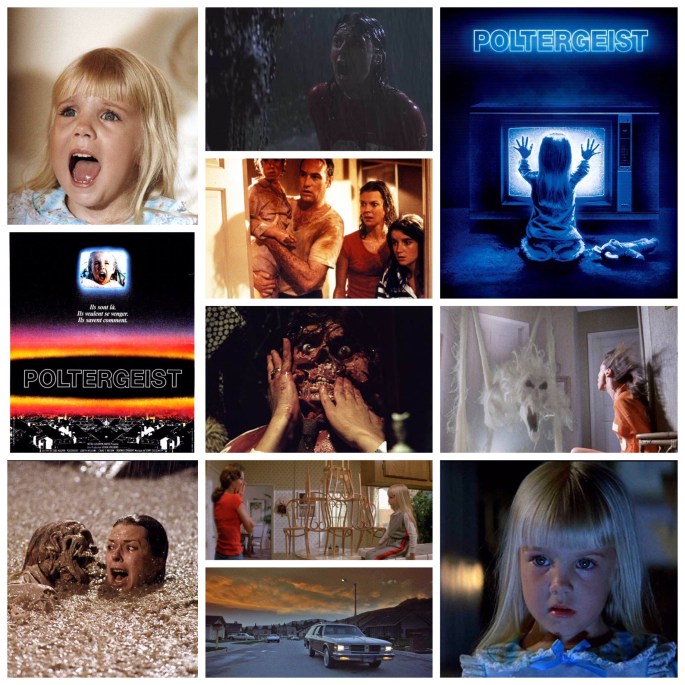
Tobe Hooper’s Poltergeist

Tobe Hooper’s Poltergeist actually feels like a total joint venture between him and producer Steven Spielberg, because there’s as much whimsical Amblin style as there is gooey horror and supernatural chills. I saw the film for the first time ever last night and enjoyed it spectacularly, it’s a visually impressive, supremely spooky haunted house ride that showcases some brilliant practical effects, but what I liked most was the family dynamic between Heather O’ Rourke, Craig T. Nelson, Dominique Dunne, Olivier Robbins and JoBeth Williams. You really get the sense that this family loves, cares and protects each other, and the devastation felt by all when malevolent forces kidnap poor Heather through the television into the astral plane feels earned and palpable. Ironically that onscreen bond makes it all the more tragic that both O’Rourke and Dunne lost their real lives some years later after completing two more Poltergeist films, which some attribute to a curse directly related to the films but is most likely just life being a bitch as usual. Anyways, this film is a keeper and at least the two of them will always live on in cinema. The effects here are really varied and diverse, from corpses bubbling up from a muddy swimming pool to tree coming alive, but my favourites has to be the weird spindly spider ghost thing that materializes at the top of the staircase and hovers like an emaciated spectre. You can tell The Duffer Brothers took more than a few inspirational cues from this one for Stranger Things, their tunnel to the upside down looks almost identical to the gooey wall orifice used here. Jerry Goldsmith’s score is appropriately jumpy and jittery, especially great in the extended prologue that sets up impending disaster while quaintly showing lazy Sunday life in suburbia with a nostalgic flavour. Sometimes there’s a little too much commotion and chaos, like later on when a weird midget clairvoyant (Zelda Rubinstein seems like the Oompa Loompa who left the factory and made it big in Hollywood) shows up and there’s a lot of yelling, whooshing and noise where there could have been more quiet hallways and suspense, but it’s all good. This one is a treat and I see why it has become timeless.. I’ll weigh in on the sequels when I get around to them.

-Nate Hill

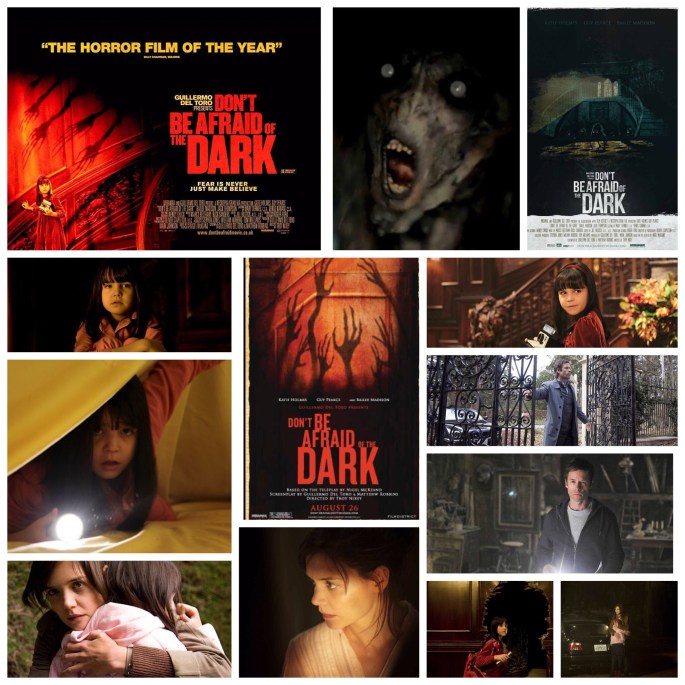
Don’t Be Afraid Of The Dark

Although not particularly scary or super memorable, Don’t Be Afraid Of The Dark is an atmospheric gothic fright flick with distinct production design and some really neat visuals. Based on a 1973 film of the same name, Guillermo Del Toro was apparently a big fan and adapted it with a new screenplay, and while I can’t help thinking what could have been if he took up director’s duties as well, the result is still pretty good. Guy Pearce plays an architect who moves into a giant, baroque old mansion in the sticks with his introverted daughter (Bailee Madison) and interior designer girlfriend (Katie Holmes). The plan is to fix the place up, but Madison does a bit too much wandering around and discovers they aren’t alone, and the manor is also home to a horde of tiny, creepy demon thingies with glowing eyes, skeletal limbs and they’ve activated stealth mode. They live in dark corners, shadowy closets and make weird chittering noises (Del Toro himself lent his voice to one of them) that freak the girl right out, but naturally her dad thinks she just has an overactive imagination. Pearce and Holmes are great in their roles and add class, as does Madison who is a competent young protagonist. This doesn’t exactly reinvent the horror wheel or make any kind of huge impression, but the art department really did well with the design of the old house, the visual elements are all really great and pop on the Blu Ray. It’s more of a mildly eerie children’s fairy tale than an outright horror film but it works on its terms.

-Nate Hill

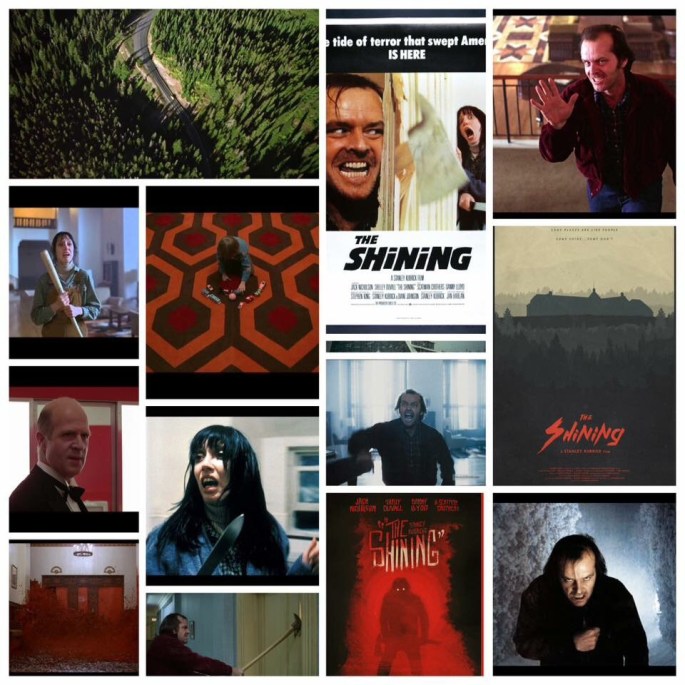
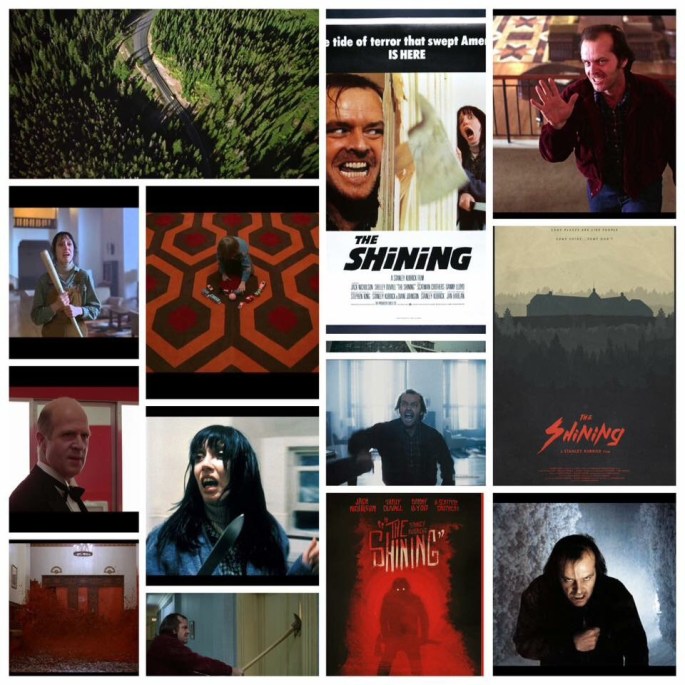
Stanley Kubrick’s The Shining

Confession time: I saw Stanley Kubrick’s The Shining for the first time last night. I know, late to the party. Gotta say, I get the hype. From the first haunting, magisterial helicopter shots that follow Jack Torrence’s car up a gorgeous Montana mountain road to the icy snowbound finale in and around the deserted Overlook Hotel, this is one effective chiller that doesn’t quit, and succeeds in whipping up an atmospheric mania that culminates in the final shot, a simple black and white photograph that says it all. Nicholson is terrifying in every staccato gesture and possessed, ravenous glare as Torrence, a man who already has the capacity for volcanic violence if pushed, and all it takes is the seething malevolence of the hotel to push him right over that edge and turn him into a homicidal monster. Danny Lloyd is appropriately creepy as his kid and handles the dual voices thing in creepy fashion. My favourite performance of the film has to be Shelley Duvall though, and now it stands as one of my favourite works of acting in the horror genre itself. I’ve heard that Kubrick pushed her to some pretty dicey places to play Wendy Torrence, and fuck man she really got there. When shit starts getting freaky, she reacts in a raw, naturally progressive way that shatters all artifice and practically burns organically right into the celluloid, I believed her outright terror and her work pulled me right into the situation. Joe Turkel and and Philip Stone are super creepy as, shall we say, permanent residents of the Overlook, and Scatman Crothers is good if a little cartoonish as Halloran, the head chef who tries to help the Torrence family before it’s too late. Now, it’s no secret that Stephen King dislikes this film, and honestly I can’t see why anyone was surprised. I’m a huge King disciple and I’ve noticed that literally every other adaptation of his work but this one has felt like King, without really doing its own thing. Kubrick boldly went and made a totally different vision than King had, and that’s fine. This is a cold, desolate chiller with none of King’s trademark emotional beats or fiercely internal storytelling, and it works wonders as that. It isn’t perfect, some of the dialogue in the first half is awfully stilted and awkward, but that was sometimes a hallmark of the 70’s. I also wish there was more character development with Jack before he goes postal, it sort of makes it so you mostly only care about Wendy as opposed to the family as a unit, which would have been more effective. The film overall is brilliant though, particularly in score, cinematography and atmosphere. So many images are now iconic: the kaleidoscope carpet design, the room full of blood, those two creepy girls, that axe busting through the door, and they are all beyond fantastic, but some of my favourite frames are the ones less celebrated, like the stark moonlight through foggy snowdrifts outside, the sentinel hedge maze on the grounds, the opening vista shots of wilderness that suggest the horror comes from some vaguely elemental place. The score is a broad, varied soundboard of threatening death notes, ambient passages and startling cues. This is every bit the beloved horror piece I’ve always heard about, I’m glad I finally saw it, I enjoyed the hell out of it and I can’t wait to revisit.

-Nate Hill

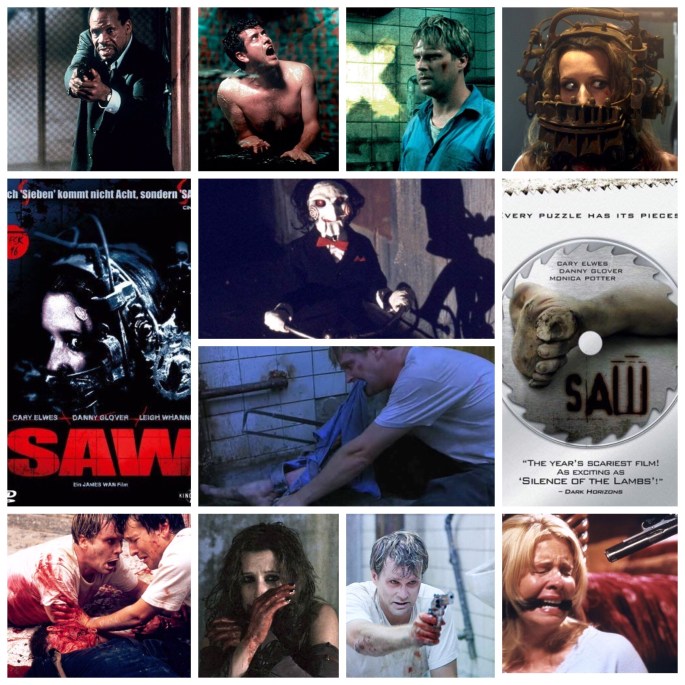
James Wan’s Saw

As much as the Saw franchise has become a screaming mad runaway train from which there is no escape or slowing down (I think they just rolled out the eighth one? Fucking Christ), sometimes I need to remind myself that the first is in fact an excellent horror film and worthy of the mythic status it has earned these days. Written by and starring Leigh Whannell who has recently branched out to direct this year’s awesome genre bender Upgrade, it’s directed by James Who has gone on to become a superstar in the genre, but it’s a bit ironic because with this he basically pioneered a whole new tributary of gore-centric horror, yet went on to do fright flicks that notoriously toned down the carnage in favour of real scares. In a dark, damp room, a doctor (Cary Elwes) and a smart ass (Whannell) are held prisoner, chained to radiators. They are informed by unseen serial killer Jigsaw that they must either chop off a limb with the rusty hacksaw laying about, or die in captivity. A corpse lies near them as well as several other tools and riddles, both of the men have secrets that will come to light and play a part in the unfolding horrors to come. Elsewhere, a weary police detective (Danny Glover) follows the trail of clues and tries to hunt down the elusive Jigsaw killer. It’s all a wickedly paced mechanization that moves along like one of Jigsaw’s jagged, gruesome traps until it reaches that final staggering revelation that has since become legend. Others along for the ride include Lost’s Michael Emerson, Tobin Bell, Monica Potter and Shawnee Smith as the now infamous Amanda. The key to all this, and something that they forgot when churning out those ridiculous sequels, is that less is more. This was a low budget shocker that largely relied on one location, and the looming threat of grisly violence rather than wanton gore every other minute. I suppose every successful idea gets saturated by money and excess once the ball gets rolling but holy fuck did they ever let these Saw films get out of control. The first two are like being at a bar with a few of your friends having casual drinks, then three and four roll in as those crazy friends of friends who order way too many shots and start breaking stuff, by the time five and six show up everyone is dancing and throwing up all over the bar and you forgot how you even got there, and the seventh (in 3D no less, because that’s what we needed) is the anguished hangover the next morning and by then you just want it to stoooopppp. At least that’s how I felt watching the them. I’d just as soon stick to this one, it’s a dark, surprisingly thoughtful chiller with a strong story and one of the best yuck moments in the genre. People forget how measured and restrained it is compared to the un-contained wildfire that those sequels smothered it with.

-Nate Hill

Bill Paxton’s Frailty

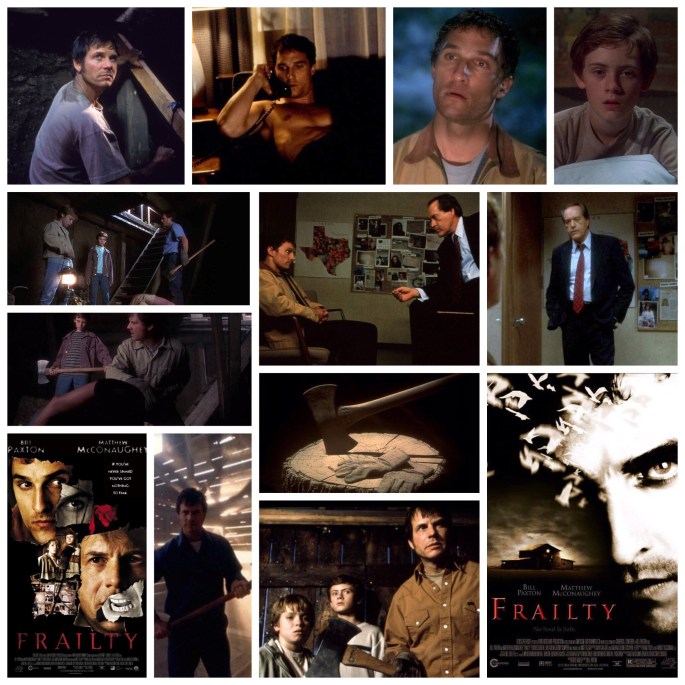
Bill Paxton’s Frailty, man what a film. It’s like a particularly warped Twilight Zone episode with heaps of southern gothic, a few plot twists that will blindside you, enough subtle hints to keep you coming back for revisits and plenty of chilling horror elements. It’s nice that the late Paxton produced a now iconic cult classic as his director’s debut because it shows that he’s a cinematic renaissance man and had talent in multiple areas, he was something special. On a rainy Texas night, a mysterious man (Matthew

McConaughey) shows up at the FBI headquarters and informs a senior agent (Powers Boothe) he knows who the God’s Hand Killer was, a case that has long gone cold. This sparks an intense, eerie tale of his growing up in midland Texas, how his father (Paxton) seemingly lost his mind and dragged his two sons (Jeremy Sumpter and Matt O’ Leary as young McConaughey) into a delusional practice of kidnapping and murdering people that god has told him are demons. It’s harrowing, blood curdling stuff because the horror is treated so bluntly, without much melodrama or shtick. Paxton was indeed a loving father and he approaches the killing with such an earnest rationality it makes one’s skin crawl. That’s just the start of it though, and watching how the past ties in with the story McConaughey weaves is a deliciously dark pathway of unexpected secrets and uncomfortable revelation. People who rag on about McConaughey’s career pre circa 2012 obviously haven’t explored deep enough. Between stuff like A Time To Kill, Lone Star, Contact, Reign Of Fire, this one and others he had one legend of a career before he even arrived at milestones like Mud or True Detective, and rocks it here. Boothe, who sadly passed the same year as Paxton, was an actor with more than a few tricks up his sleeve and he’s wicked good as the shady agent who gets visibly shook up by the gruesome campfire yarn he has to sit through. Paxton is haunting in front of the camera, turning a loving father into a conflicted killer with burrowing complexity, and in the director’s chair he proves more than competent, making this a horror thriller for the ages with its constant surprises, sickening scares and uneasy atmosphere.

-Nate Hill

Clive Barker’s Candyman

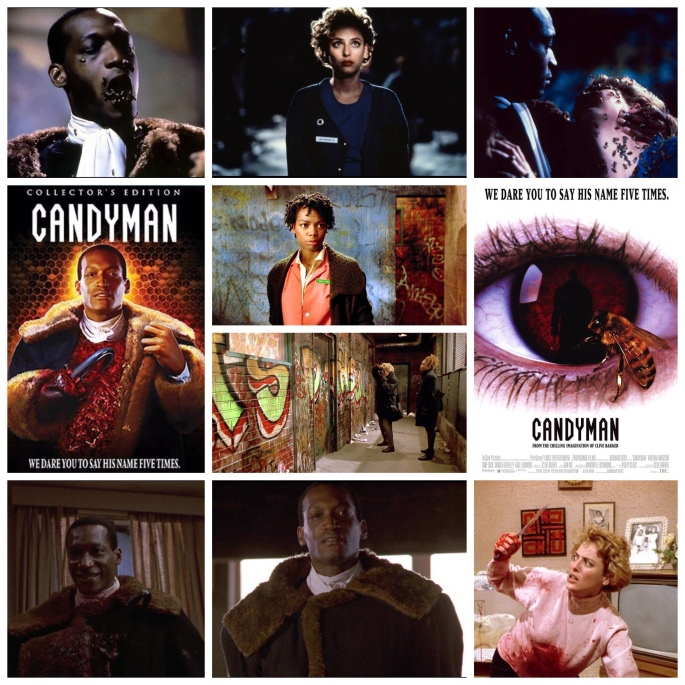
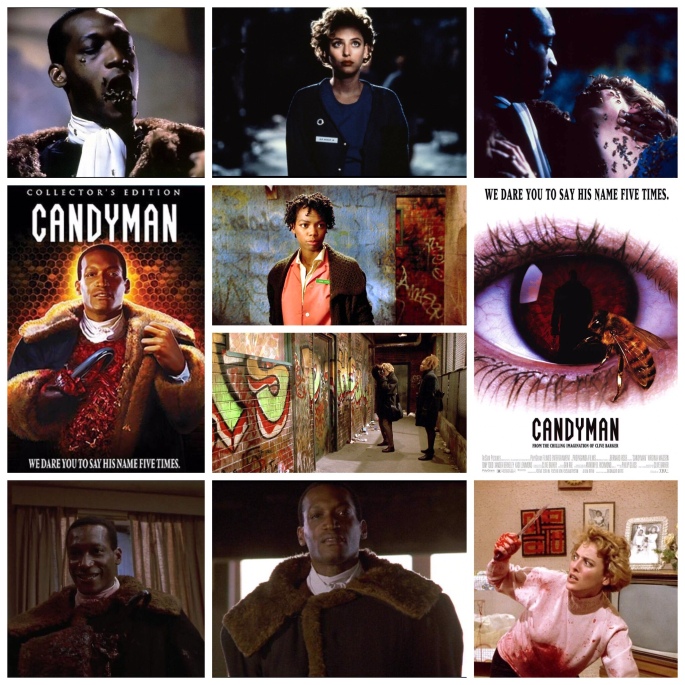
Clive Barker’s Candyman is bar none one of the best horror films ever made. Many factors can take credit for that, but the two chief among them are Tony Todd’s performance as Daniel Robitaille, the hook handed, honey voiced spectre that haunts even the frames he doesn’t appear in, and Philip Glass’s beautiful yet terrifying electronic score that rips through the story like a rogue orchestral piece with a life of its own. Production design and locations are also key here, as they filmed in Chicago’s infamous Cabrini Green Project for real, and it makes all the difference. Candyman is one of those urban legends, the angry ghost of an ex slave who was murdered, and now gets resurrected to raise hell whenever someone says his name in a mirror five times. That someone here happens to be college professor Virginia Madsen, who has heard whispered rumours among the locals and decides to research it a little too closely. Before she knows it she’s seeing Robitaille everywhere, dead bodies are starting to pile up and she begins to look an awful lot like the culprit. With the help of her boyfriend (Xander Berkeley) and colleague (Kasi Lemmons, always fantastic) she tries to get to the bottom of the mystery but Candyman is a tough curse to shake, and the killing doesn’t stop. Many of the actors here are genuine residents of the Green, providing both authenticity and a very human quality to the film. Todd is now something of a household name and has achieved cult status for this role, it pretty much set him up for good in the horror genre and it’s no wonder, he’s a hypnotic dark angel as Robitaille, with both seething menace and a crazy calm lurking behind those eyes. There’s moments of real fright that hold up to this day as truly chilling shockers, such as a kid getting ambushed off camera by Candyman in a park restroom and the horrific aftermath of a dog’s murder coupled with a missing baby, brought to life by Vanessa Williams’s vivid, heartbreaking performance as the mother. This is how you create an effective horror film, by balancing gore with story and character, creating an atmosphere in which we feel both lulled by the sights and sounds but always unsafe as to what could be lurking through that bathroom medicine cabinet or dark, graffiti scrawled hallway. A classic. There’s two sequels that aren’t too awful thanks solely to Todd’s presence, but they come nowhere close to this one.

-Nate Hill