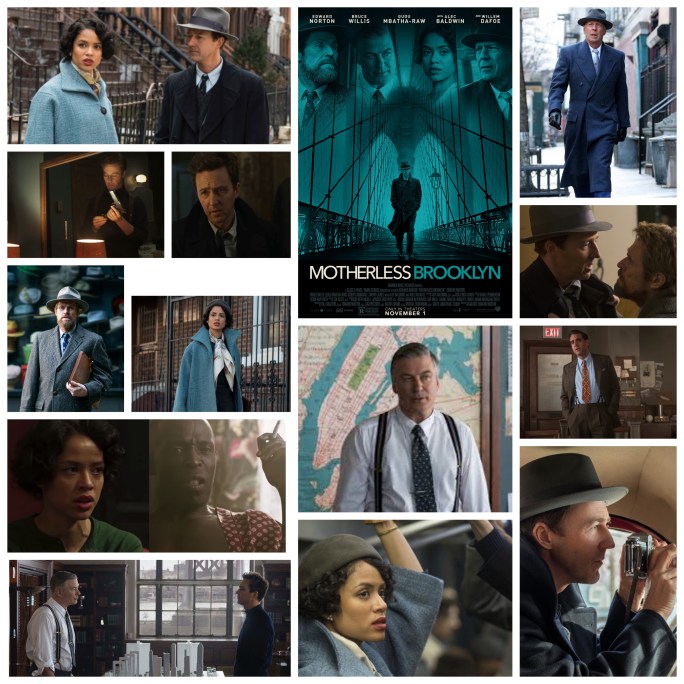
Edward Norton’s Motherless Brooklyn

It’s always cool for two of my top ten films of the year to find their way to me inside a week. A few days ago it was The Lighthouse and yesterday it was Edward Norton’s Motherless Brooklyn, a brilliant, sprawling noir epic that sees this accomplished artist behind the camera for only the second time in his career and in front of it for the first time since I can remember… I think the last thing I saw him in was that fourth Bourne film that didn’t even have Jason Bourne in it. He roars back into action commendably here as both writer and director in a passioned period piece that has a lot to say and one of those old school two plus hour runtimes to say it in as well as the kind of jaw dropping, star studded ensemble casts they just don’t bother to assemble much anymore.

In adapting Jonathan Lethem’s novel, Norton rewinds a 90’s setting back into the 50’s and comes up a winner playing Lionel Essrog, a private detective whose friend, mentor and father figure Frank (Bruce Willis lingers in a cameo you wish was more) is murdered by shady thugs whilst investigating the kind of lead that can only end in bloodshed. Lionel suffers from Tourette’s Syndrome in an era where medication, compassions and science are sorely lacking and has thus sadly earned the moniker ‘freak show’ by his peers. That doesn’t stop him from using gut intuition to continue Frank’s work, leading him down the obligatory NYC noir rabbit hole of Harlem jazz clubs, red herrings, betrayals, corrupt government officials and bursts of sudden violence meant as warning but there to juice up the intrigue. It’s a fairly serpentine web of lies and decades old secrets involving many characters brought to life by one hell of a cast. Gugu Mbatha-Raw scores soulful points as an activist whose involvement runs far deeper than even she knows. Alec Baldwin gives a terrifying turn as an impossibly evil, truly bigoted mega city planner whose agenda to bulldoze poorer communities shows little remorse in character and allows the seasoned actor to provide what might be the best villain portrayal of the year. I didn’t think I’d be raving about Willem Dafoe two times in one week (he crushed his role in The Lighthouse) but the guy is on fuckin fire, bringing cantankerous warmth to a vaguer role I won’t spoil. Also in the mix are Michael Kenneth Williams as a mercurial trumpet player, Bobby Cannavle, Dallas Roberts, Ethan Suplee, Fisher Stevens, Cherry Jones, Robert Wisdom, Josh Pais, Peter Gray Lewis and Leslie Mann.

Considering that Norton’s director debut was a Ben Stiller romcom, its fairly heavy lifting to pivot over towards a two and a half hour period piece adapted from a revered novel but he pulls it off and then some. He directs the actors with snap and ease so we get organic, underplayed yet lasting impressions from each performance including his own, a very tricky role that never comes across as a gimmick. His affliction is never conveniently absent when the scene requires it and he makes sure to find the frustration, humour and lived-in aspects of Lionel’s personality. Baldwin’s character serves to represent the callous nature of real estate development conglomerates these days and the tendency to gloss over less fortunate folk like invisible downtrodden, or downright see them as lesser people. Norton, as both actor and director, gently explores this world with a compassion for areas in which some have more than less and focuses on themes until we get to see a powerful morality play unfold within the already tantalizing central mystery. This film sort of came out of nowhere (I don’t remember any marketing outside like a month before release?!) and isn’t making huge waves yet but it’s a powerful, funny, touching, detailed, beautifully acted and directed piece, one of the best thus far of the year.

-Nate Hill
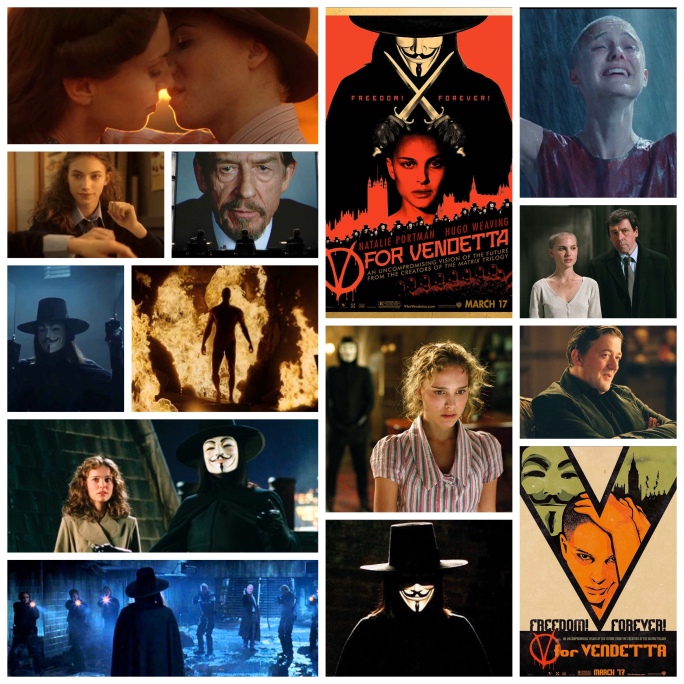
The Wachowski’s V For Vendetta

As far as comparing The Wachowski’s V For Vendetta to its source material by Alan Moore, I may be one of the only few who feels like the film is an improvement. The graphic novel is beautifully written but bleak and drab in many instances where the film adopts a rich, full bodied and ever so slightly hopeful tone in the adaptation forage. I know Moore is somewhere out there in his yurt on the plains, reading my review on a 3G tablet and cursing my name, but oh well. Fierce political commentary, blitzkrieg action picture, careful interpersonal drama and more, this has aged well (scarily well depending on the angle one views it from) and holds up gorgeously fourteen November 5ths on since its release.

Natalie Portman and Hugo Weaving make Stockholm Syndrome sexy again as Evey and V, two very different individuals whose lives have both been upended by the tyrannical, fascist British Government. He’s a vicious vigilante freedom fighter with scars on the outside and inside, she’s a wayward civilian swept up in his brutal quest to overthrow an evil dictator (John Hurt in beast mode), first as witness and later as accomplice. This involves a complex laundry list of various betrayals, sieges, escapes and terrorist acts, all brought to life in breathtaking spectacle. An underdog secret policeman (Stephen Rea, a study understated excellence) doggedly pursues them and questions his own loyalties, while the chosen date of Guy Fawkes day (hey, that’s today!) looms ever closer and with it V’s promise to blow the shit out of the parliament block.

V says it best when he growls: “People shouldn’t be afraid of their governments, governments should be afraid of their people.” There are large scale, prescient ideas at work here and despite being based on a graphic novel it feels eerily akin to our own world. V is a product of this damaged, corrupt system who has become a monster and is now ready to administer horrific dark justice on those who wronged him, working his way up an increasingly grotesque chain of despicable politicians with grim resolve. There’s a righteous fury to his quest and no other actor could have better captured the fire and brimstone behind that mask like Weaving does, he works wonders with his voice alone. There’s a lot more action than in Moore’s novel but can you really blame the Wachowskis? They are incredible at staging set pieces and the character of V suits the swooping, knife throwing, roof leaping, swash, buckle and bloody bodily harm on display here. There’s a strong undercurrent of compassion and humanity here to, as seen in my favourite sequence of the film: Portman’s Evey is locked up in a government prison and ready to wade into despair before she finds a rolled up scroll detailing the story of the cell’s former roommate and her struggles during the rise of this horrible regime. It’s in this short flashback scene alone we see all that’s worth fighting for in the microcosm of one girl’s life and feel the justification of not just V’s violent rampage but the collective uprising it stirs in the people. Great film.

-Nate Hill

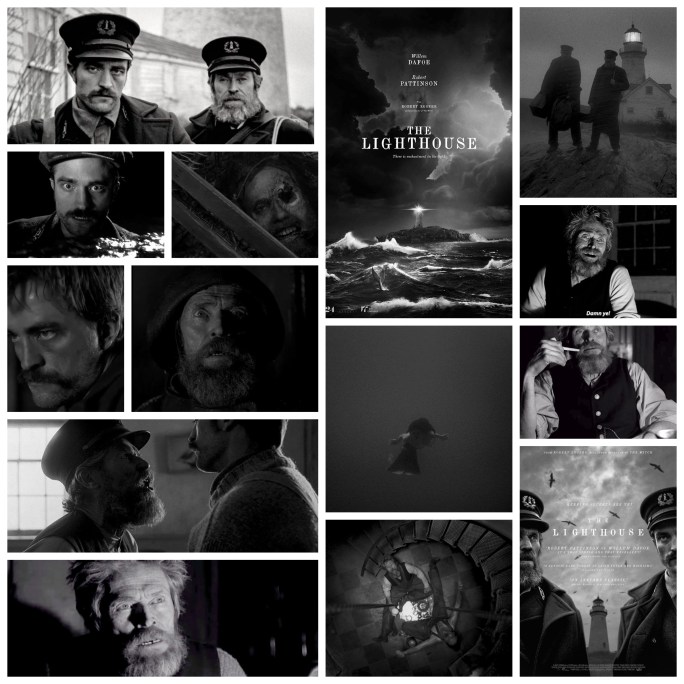
Robert Egger’s The Lighthouse

I don’t really have a clever lead-in line to Roger Egger’s The Lighthouse for this review, partly because I’m still not sure just what the fuck I watched and partly because I’m processing the giddy traumas this thing inflicts on a viewer. One thing I’m sure of is the sheer elemental wonder of this film, it’s an intimate experience of immense power, a loving ode to black and white films overall, a pulverizing experience in off the wall horror, a terrific dose of briny black comedy, a dual character study for the ages, a gooey Lovecraft homage and one of the most hysterically intense viewing experiences of the year and perhaps ever.

From the moment Willem Dafoe’s Thomas Wake and Robert Pattinson’s Ephraim Winslow set foot on the rock that is to be their home for months, there is an oppressive maritime aura like no other, made so by several key factors. The haunting black and white photography by Jarin Blaschke is at once chilly, gorgeous and all encompassing, the creaky original score by Mark Korven has retro sensibilities and practically leaks dread off the screen and Eggers chooses to frame his story in the 1.19:1 aspect ratio used by early B&W filmmakers like F.W. Murnau. These aspects combined craft one unforgettable, deeply disquieting package, and I haven’t even raved about the performances yet. Dafoe and Pattinson give the kind of towering, monumental, thunderous turns that make you scared for them and want to yell cut before they’re lost to the maelstrom of their own mania. Dafoe is a creepy, crusty, brittle old salt who bellows, farts, berates and abuses Pattinson’s Winslow, a greenhorn who quickly loses his keen edge to the drink and the intangible, perhaps supernatural forces surrounding them. It’s a macabre treat watching these two poor sods race each other headlong towards madness helped by copious amounts of rum, the gnawing reality of isolation and the ever present wailing of seagulls which, as Dafoe makes clear, are bad luck to kill.

Word of warning with this one though: this is very much a bizarre, knowingly fucked up arthouse film and worlds apart from Egger’s hailed previous effort ‘The Witch,’ which for all its insanity actually had a coherent and decipherable story. With The Lighthouse he strives more for abstract, surreal and often impenetrable imagery and has no interest in providing concrete reasons or resolution for what’s seen, heard and felt. I myself prefer this style much more than conventional storytelling but it’s not for everyone and for better or worse there will be no viewer, however thick-skinned, left undisturbed. In any case this is one unique and impressive piece of work; Dafoe and Pattinson howl their way through impossibly long and intricate monologues (cue the original script and acting Oscars), the wind shrieks through the gorgeously designed set, a beautiful but terrifying mermaid (Valeriia Karamen) screams like a banshee out on the barnacle stained rocks and the ever present beam of the lighthouse (sometimes seeming eerily similar to the projector beam within the cinema itself) pierces the New England fog and sees all. A masterpiece and one of the very best films of the year thus far.

-Nate Hill

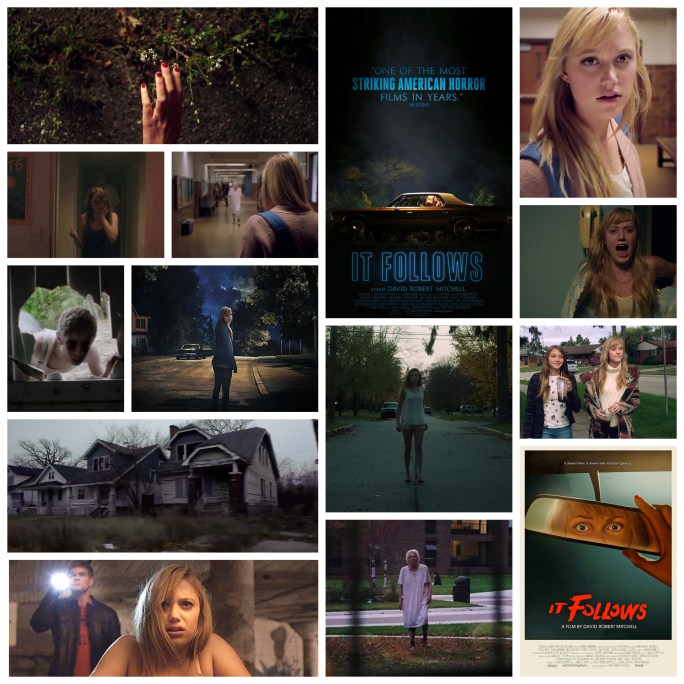
David Robert Mitchell’s It Follows

Have sex with the wrong person and It will follow you around, until It kills you. ‘It’ is very obviously a metaphor for STI’s but also could be seen as many different things. David Robert Mitchell’s It Follows is a high concept, slow burn, atmosphere smoked, synth saturated piece of sheer simultaneous beauty and terror, one of the finest and most influential pieces of horror filmmaking of the last few decades. The concept here is like some urban legend you’d hear at a house party: teenager Jay (Maika Monroe) sleeps with a strange boy from a neighbouring county, after which he ties her up and informs her that something, which can look like anyone, will follow her around relentlessly until it kills her, then resume following him and go back down the chain of sleeping around to whoever pissed it off in the first place. It only walks, mind you, but that’s almost worse because it comes across as more nightmarish and only prolongs the inevitable. Along with her sister (Lili Sepe) and some friends they form a makeshift posse to both outrun, outwit or simply beat the shit out of It until it leaves her alone.

This film works wonders for many different reasons other than the horror, which is chillingly effective. The concept alone works to stir up the kind of fear you don’t cultivate with gore, jump scares or cheap ghoulish tricks. This is the kind of horror that creeps up and sits down beside you during the film until you are uneasy beyond words, then gets up and follows you home when the credits roll. There are several practical set pieces involving this thing stalking them that should be used as textbook examples on how to raise hell within the genre. The performances are fantastic as well, particularly Monroe and Sepe, making these kids feel vaguely 80’s, kind of contemporary but always in a kind of dreamy, faraway laidback state that slips right in with the atmosphere. Speaking of atmosphere, one of the key elements here is the unnerving original score from Disasterpeace. It’s sometimes melodic and aerial, sometimes jagged and abrasive but always serves the scene and provides an auditory dreamscape for character and audience alike, giving a voice to the mute fiend that hunts them and lacing the dereliction of the Detroit setting with dread. The monster itself is representative of STD’s and that’s the main theme to read but there’s deeper linings to it as well. Her sister remarks at one point how when she was younger their parents wouldn’t let them stray past 8 Mile and how she didn’t understand why. It can almost be seen as a spectral manifestation of the unseen, unmapped, wilder areas of our urban sprawl, the mounting decay in any given city and the forces that govern it and perhaps eventually follow us back to the sanctuary of home. Whatever you choose to read into it, this is one fine example of what can be done in the horror genre and a brilliant slice of spook pie. Hell, the five minute prologue alone is already something else.

-Nate Hill

B Movie Glory: The Eternal aka Trance

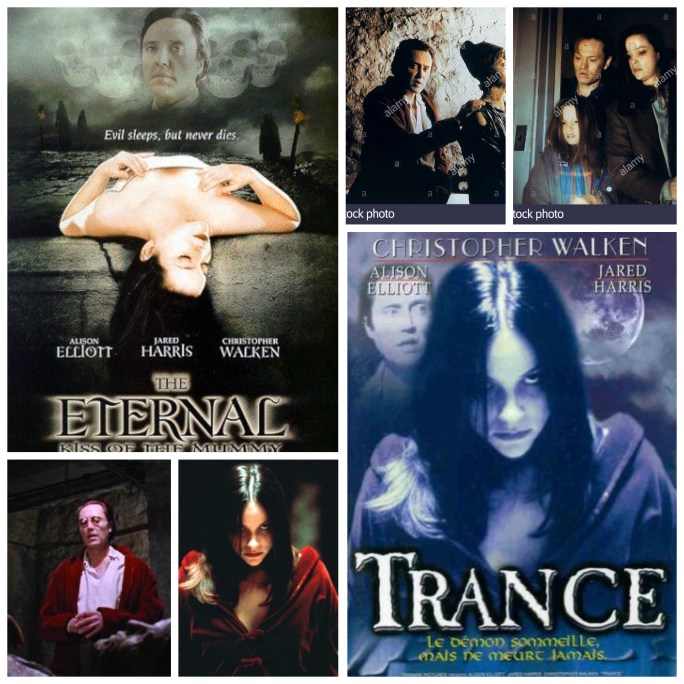
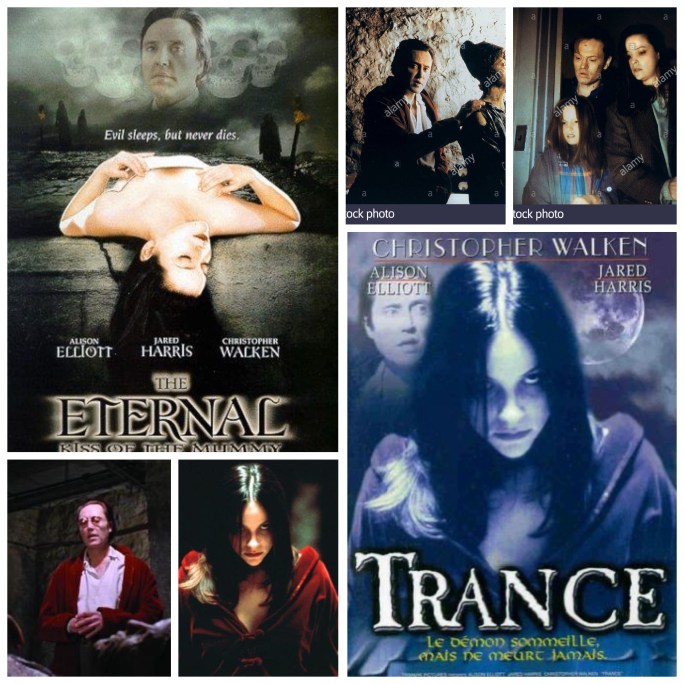
What do Christopher Walken and Celtic druids have in common? Well something, according to this film but I’m still not sure what I watched or how to make heads or tails out of it. Sharing the alternate titles of ‘Trance’ and ‘The Eternal’ depending on which DVD or streaming version you find, this is a kind of inexplicably odd, low key B movie about a troubled American couple (Alison Elliot and Jared Harris) who travel to rural Ireland with their young son in order to quit the sauce. Why they picked a perennially pickled country like that to come down off of booze is their business, but anyways. They end up staying with her wacky uncle Bill (Walken) who apparently is Irish but Walken makes no effort to hide his trademark accent and idiosyncratic vernacular which actually gives this thing some ironic charm. He spends his time in the basement trying to resurrect some ancient druid mummy thing and needs her help because of their bloodline or something and they spend their days arguing, listlessly parenting the kid and making every effort not to get sloshed at every turn. I don’t know what to say other than this general summary, it’s a weird little flick. Walken has found himself in the UK in cinema before playing a kooky mortician (seek out Plots With A View if you can, it’s a gem) but here I’m not really sure what or who he is supposed to be because the film has no idea where it’s going and takes it’s time not getting there. He’s always watchable no matter what though so it has that going for it I guess. Just not much in the way of a clear vision.

-Nate Hill

Hidden Gems: Paul Andrew Williams’ The Cottage

I like films where an unassuming set of real world circumstances lead the main characters into a horror situation. It makes us feel as though we’ve started one film and by chance the narrative has wandered into the macabre as opposed to knowingly starting off the film like that (From Dusk Till Dawn is a nice example. The Cottage follows this effective motif with two petty criminals, one a meek pussy (Peter Shearsmith) the other a hotheaded asshole (Andy Serkis) who kidnap the daughter (smokin’ Irish model Jennifer Ellison) of a very wealthy man and hide out in a remote forest cabin to negotiate ransom. Her being an uncooperative little spitfire turns out to be the least of their problems though as they soon discover they aren’t alone in the cottage. Out of nowhere barrels in a deformed, nine foot tall, Jason Voorhees-esque monster farmer who’s out for blood and it’s now up to them to survive or they’ll never see any money, let alone all their limbs remaining attached to their bodies. The first half of the film sets up character dynamic nicely with Serkis naturally stealing the show and then later on its an all out grisly bloodbath as the farmer comes in swinging. Being a British horror film it has that wry underlying sense of humour to it as well as spectacularly gory visual effects and a suspenseful, chamber piece tone. Oh, and watch for a beat cameo by Doug ‘Pinhead’ Bradley from the Hellraiser films as an angry villager.

-Nate Hill
Actor’s Spotlight: Nate’s Top Ten Michael Parks Performances

Michael Parks was one of those actors who could light up a scene, and although you hear similes like that thrown around about a whole lot of people on the business, he was one that more than deserved to have it applied in his work. Originally gaining traction in the 60’s and 70’s for television, feature films and westerns, Parks was put on the Hollywood blacklist for simply standing up to the integrity of a character/show he was working on, a testament to his spirit and refusal to let the work be anything but top notch. The latter half of his career saw him resurrected with a vengeance by the likes of Kevin Smith, Quentin and others and it was here that he provided us with some truly unique, compelling performances. Here are my personal top ten!

10. Esteban Vihaio in Quentin Tarantino’s Kill Bill Volume 2

His second role in the Kill Bill films sees him embody a mercurial Mexican pimp who provides the story with some purring exposition and Uma Thurman’s The Bride with vital information whilst slyly hitting on her at the same time. It’s only a quick scene but he grounds it with some deft humour and relishes every syllable of the Latin accent.

9. Dr. Banyard in Deceiver

More exposition! This is a weird little 90’s neo-noir about two troubled Detectives (Michael Rooker and Chris Penn) investigating the murder of a hooker (Renee Zellweger). Parks plays the psychiatrist they consult about a creepy suspect (Tim Roth) who suffers from a rare type of epilepsy. He’s essentially laying out information for the audience here but Michael was one of those rare actors who could do that and tell you so much about his character without, you know, *actually* telling you. This is pretty obscure for a such a great cast but it’s worth seeking out.

8. Abin Cooper in Kevin Smith’s Red State

Terrifying is the word for him here, playing the maniacal patriarch of a bunch of backwoods extremists who make the Westboro Baptist Church look like choirboys. The key is in the soft spoke dialogue, letting his energy simmer on the back burner so that when the fire and brimstone portion of his performance does show up, it blindsides us.

7. Doc Barrow in Jim Mickle’s We Are What We Are

A small town doctor who gets suspicious when people including his wife go missing near a secluded rural area, Barrow discovers a family of cannibals living in the hills and must fend them off. This is a brilliant slow burn horror with solid performances all round but it’s his keen, quiet and observant husband who wins the day and becomes the most memorable.

6. Tommy O’Shea in Death Wish V: The Face Of Death

O’Shea is a reprehensible piece of shit Irish mobster who isn’t above threatening or killing women and children and rules his district with casual Joker-esque brutality until, naturally, Charles Bronson kicks the piss out of him. He’s one of the most memorable villains of the franchise in ironically the least memorable film it has to offer, but oh well. He redeems the film with his thoroughly evil portrayal and has a lot of fun along the way.

5. Ronny ‘Del’ Delany in The Hitman

This is essentially just another carbon copy, subpar Chuck Norris action flick but Michael owns villain duties as Chuck’s scumbag partner who betrays and tries to kill him. He’s only in the beginning and end of the film but the character bookends the whole thing and provides a classy, dashing evil prick to do battle with the hero. Too bad he doesn’t win in the end, because he’s eternally more watchable than that goofy ass cocker spaniel Norris.

4. Ambrose Bierce in From Dusk Till Dawn 3: The Hangman’s Daughter

Real life poet Bierce really did disappear, although he likely didn’t end up in an Aztec vampire bordello like this film imagines. Parks made an appearance in the first Dusk film and gets the lead here, making Bierce a well read, hard drinking, sardonic badass who totally steals the show.

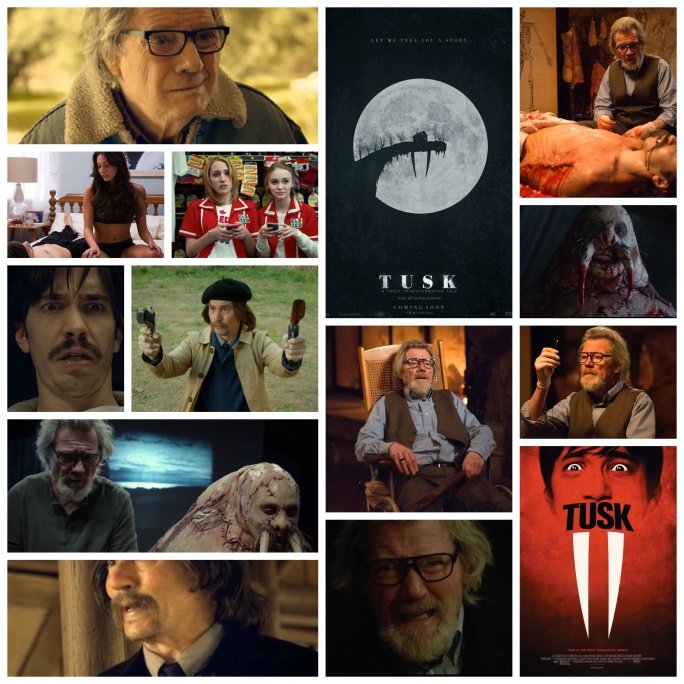
3. Howard Howe in Kevin Smith’s Tusk

How do you bring dimension to the role of a walrus obsessed serial killer? Start by being Michael Parks. Smith gave him the role of a lifetime here and he chews it up enthusiastically, hitting so many notes in his performance that one could write a dissertation on the character. He makes the guy a monster, no doubt. But a funny ass monster, one with depth, charisma and the magnetism to pull off such an absurd premise.

2. Jean Renault in Twin Peaks

This masterful show is jam packed with villains both earthbound and of other planes so the competition to leave a lasting impression is high. Parks showed up during a season two creative drought as Renault, a psychopathic French Canadian drug kingpin with a taste for blood and the nerve to back it up. Stylish, confident and venomous, he’s one of the show’s great antagonist arcs and plus the dude has a retractable dagger up his sleeve, it doesn’t get any cooler than that.

1. Texas Ranger Earl McGraw in Quentin Tarantino’s Kill Bill Volume 1/Death Proof and Robert Rodriguez’s From Dusk Till Dawn/Planet Terror

Parks is so good as McGraw that the character is pretty much an archetype by now, appearing multiple times across the Tarantino/Rodriguez multiverse to battle zombies, investigate the El Paso wedding chapel massacre and lament that retards are allowed to operate BBQ stands. The laconic nature, laidback yet keen attitude and no nonsense demeanour of this guy makes him stand out in whichever scene he chooses to amble in and grace his true blue presence with.

Thanks for reading and stay tuned for more content!

-Nate Hill

Revisiting Jonathan Demme’s The Silence Of The Lambs on the big screen

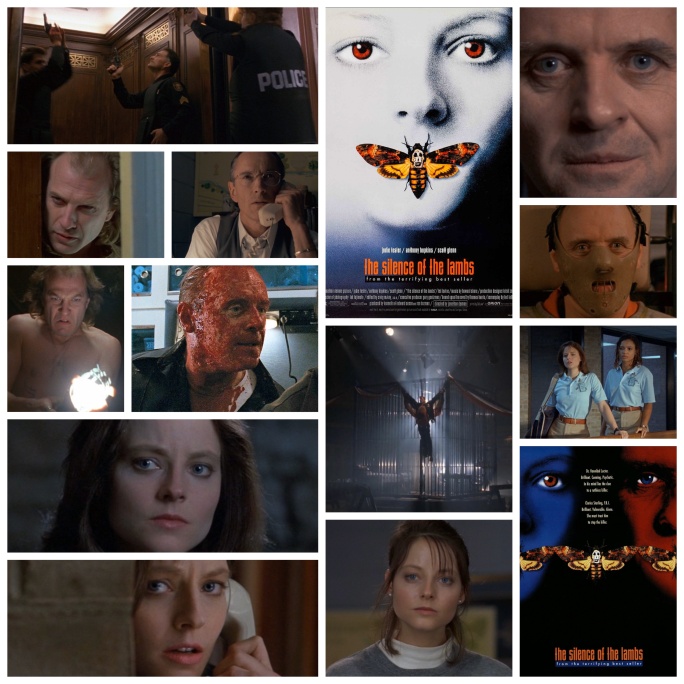
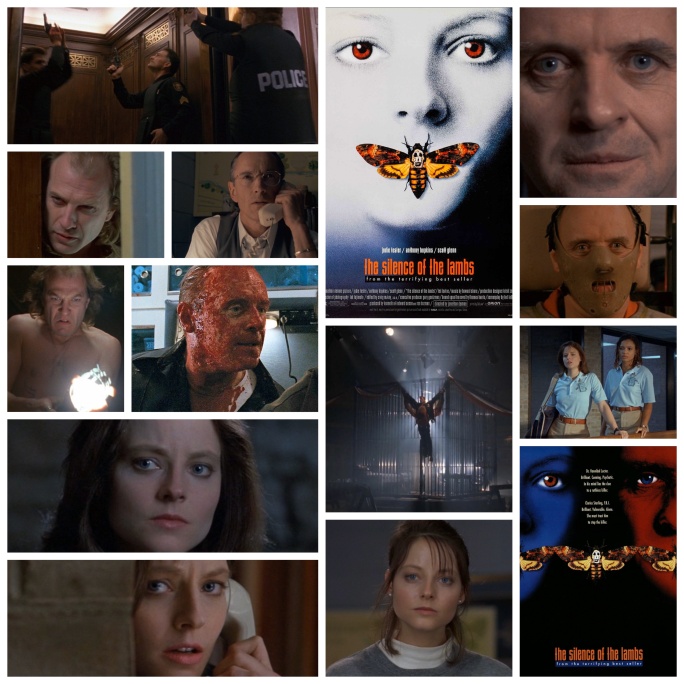
I got the chance to see The Silence Of The Lambs on the big screen last night and was very curious to see if it held up as I had only seen it once before, when I was like fifteen and on VHS no less. Well. This has to be one of the most airtight, hair raising, gorgeously produced psychological horror shows ever made and it really, *really* pops in a darkened theatre. I remembered bits and pieces, some of the iconic interplay between Anthony Hopkins’s Dr. Hannibal Lecter and Jodie Foster’s Clarice Starling as well as all the freaky pervo stuff with Ted Levine’s Buffalo Bill and had retained the general atmosphere. I *knew* I loved this film already but getting to see it in that environment of the theatre with focused, uninterrupted absorption really reminded me not only of what a masterpiece this is but also why it’s important to see films theatrically to begin with.

From the moment we see Clarice running through those misty Quantico woods to that final extended shot of Lecter strolling down that street in the Bahamas this is fluid, brilliantly edited, first rate storytelling and the one aspect that stands out most to me is the way the characters relate to each other psychologically. Scott Glenn’s Jack Crawford handpicks Clarice in this assignment for a reason. Hannibal takes an immediate and intimate interest in her for a reason. Clarice toughs out the terrifying aspects of this case and taps into her own vulnerability for a *reason.* We the audience are never told exactly what these reasons are but they’re clearly spelled out in each mannerism, each glance, each performance, there for us to find and digest each in our own way. There’s a reason this film crushed the Oscars, the acting awards in particular. Hopkins lingers over every scene like a cobra, his voice that of an icy river and the horribly calibrated intellect behind it scarier still. Foster shows the wounded orphan in Clarice, toughened up by years of hardship and her training at the academy, all her innermost qualities brought out by Lecter’s presence in a relationship that’s hard to classify. “The worlds more interesting with you in it” he assures her later in the film and we silently beg to know what’s going on in his head. Levine is every bit as scary as we remember, finding the human notes in this egregious monster and making him one of the most iconic serial killers in cinema. Glenn is buttoned down and unassuming as Crawford but we slowly see from his acting that it’s a ruse and he’s as sharp as any of them under that well kept veneer. The rest of the cast are carefully picked and include the likes of Kasi Lemmons, Charles Napier, Tracey Walter, Daniel Von Bargen, Anthony Heald, Frankie Faison, Brooke Smith, Diane Baker, Roger Corman, George A. Romero and Chris Isaak all doing great work.

One sequence in particular demonstrates how well this film holds up and why it should be seen on a big screen, and it’s where Lecter escapes from federal holding, dodging dozens of agents, SWAT operatives and sheriffs along the way. It’s an extended scene full of law enforcement lingo shouted breathlessly, a sneaky elevator roper dope, bloody special effects, desperate mustering of FBI forces to stop him all set to Howard Shore’s exceptionally creepy and exciting score. All that plus Jonathan Demme’s tight, succinct direction make a sequence that just hums along and showcases the film’s firm grip on horror, suspense, police procedural, editing, music and overall storytelling. They don’t get much better than this.

-Nate Hill

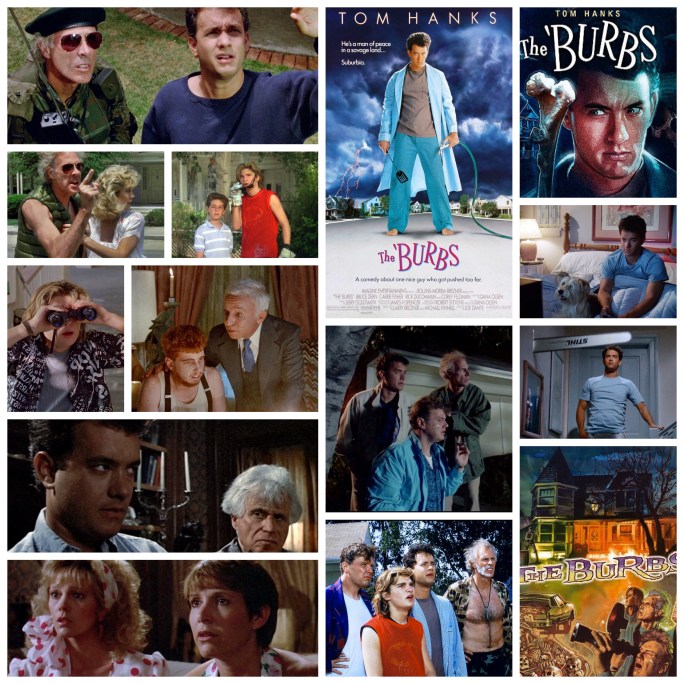
Joe Dante’s The Burbs

Ever wonder what your neighbours are up to? Probably nothing, but there’s always that off chance that they are in fact spooky serial killers or occult weirdos. Or not. Joe Dante’s The Burbs plays with this notion of paranoia about those next door and gives us a hysterical social commentary on the white picket fence life while it’s at it for something decidedly different. Stressed out yuppie Tom Hanks is certain that the oddball German doctor family down his block are up to no good, and he whips up the rest of the folks who live around him into a fervent panic with his anxieties. It doesn’t help that the people he’s suspicious of are played by the oddball likes of Henry Gibson, Courtney Gains and Brother Theodore, but he still seems like a delusional schmuck and we’re never really sure exactly what *is* going on until the demented, ballsy ending which makes laugh like hell each time. His wife (Carrie Fisher!) thinks he’s lost it, we think he’s lost it and he desperately scrambles to prove otherwise by gathering any evidence against these dudes with the help of local kid Corey Feldman and persnickety Nam vet Bruce Dern who absolutely steals the show with priceless lines like “Smells like they’re cookin’ a goddamn cat over there!!” This one is a total scream, retaining Dante’s ooey gooey horror roots while almost reminding one of Spielberg/Zemeckis style fright flicks that take place in suburbia. The only thing separating people from one another in a neighbourhood like this are four walls and a roof, and within them anything could be happening right under one’s nose and several metres away, yet unseen. This is Hanks’ worst fear here and Dante plays it’s for absolute hilarity, mirthful menace and glorious black comedy. Great stuff.

-Nate Hill

Kevin Smith’s Tusk

I cant imagine studios giving the green light to anything as fucking deranged as Tusk, so thank god we have Kevin Smith to take the backroad channels through the system in getting it to us. This is one disturbing, bizarre, unclassifiable and defiantly loopy piece of Midnite-Movie horror madness that has to be seen and heard to be believed. It’s also pretty damn entertaining and well done considering, you know, it’s about a serial killer who anatomically transforms his victims into walruses.

Now Smith aside there is one key element that makes the film work, and without it I’m sure this would have been a resounding failure or nowhere as close to the inspired piece of abstract theatre it turned out to be. That element is the late Michael Parks, a brilliant but blacklisted character actor who saw glorious resurrection in both Smith and Quentin Tarantino’s work, bless their nostalgic hearts. He’s a masterful actor that never got his proper due but Smith lets him have a twilight encore here as Howard Howe, a lonely old freak-show who once spent days at sea marooned with only a walrus for company and just can’t let the companionship go. Why he doesn’t go rip off the local zoo and nab the real thing is his business but for whatever reason he sees fit to drug, imprison and mutilate victims to suit his needs. His latest is a brash, asshole podcaster from LA who travels up to Howe’s Canadian neck of the woods to interview him and finds his endeavour getting a bit more hands on than he planned. His fellow podcaster (Haley Joel Osment who first saw dead people and then the McDonald’s drive thru, it seems) and girlfriend (Genesis Rodriguez) attempt rescue by joining forces with French Canadian Detective Guy Lapointe, played by Johnny Depp in a performance so indescribably, hilariously off key that I could employ every adjective under the sun to impart it and still not quite capture the essence.

“The things your generation can get away with” observes Howe when told about the wonders of the internet and podcasting. He’s more right then he knows because in Parks’ heyday this film would either be buried deep in Grindhouse theatre town or not even made at all. Smith doesn’t half ass this or turn it into a lame SyFy original style monster flick, but takes these characters seriously even when they’re ludicrous and the result is something that defies explanation and shuns derision. Parks gives what might be the performance of his career, finding so many different notes in Howe’s soul that one might write a dissertation on this guy. He’s simultaneously ghoulish, endearing, captivating, terrifying and so over the top he circles back and reaches the realm of subtlety again. Depp is amazing, his Québécois accent a thing of misguided beauty (America’s vision of Canada is always consistently adorable) in several droning monologues that could be performance art. He has a flashback scene with Parks in which the guy uses a retarded vernacular to avoid detection and the whole thing is so maniacally staged it feels like a dream or something. For better or worse I’m glad this thing got made, Smith dives headlong into waters he knows are outlandish but cares not for mockery or ridicule (which he unfortunately gets aplenty) and I admire him for that. I loved this crazy flick, it’s as funny as it is scary and the power that everyone involved finds in a story so bizarre as this is something else.

-Nate Hill