HBO’s True Detective: Season 2

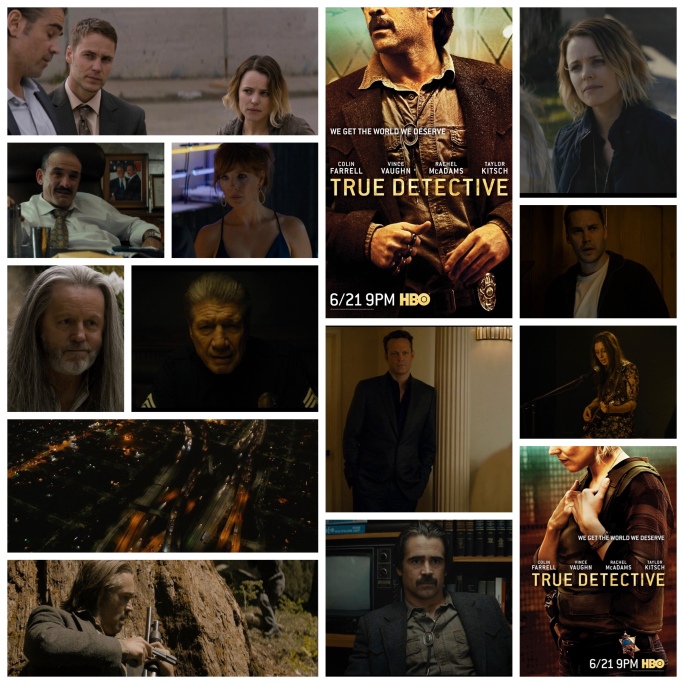
So just what was it about season two of HBO’s True Detective that caused such a monumental ruckus of ruthless criticism? Well, who can say. I imagine it had something to do with the dark, difficult and byzantine way that creator Nic Pizzolatto presents the material. Maybe it’s the fact that it had to follow the lightning in a bottle, southern gothic, out of left field mastery of season one. Simply just the shift in tone and setting? I’m reaching for straws here because the hate and rejection that this brilliant piece of television has amassed always flew over my head. This is deep, dark LA noir at its finest, most gorgeously dangerous and I love every challenging, impenetrable episode to bits.

The setting shifts from bayous of Louisiana, the amount of lead characters multiplies significantly and where there was once eerie folk horror and occult conspiracy we now find decadence, corruption most high and a focused, implosive inwardness in exploring each individual the narrative focuses on. Colin Farrell is unbearably intense as LA cop Ray Velcoro, a haunted addict who has fallen from the grace of both the department and his family, but isn’t down for the count quite yet. Vince Vaughn is emblematic of every career criminal trying to go straight as Frank Semyon, a stubborn small time kingpin with dreams of scoring big in California real estate. Rachel McAdams is haunted as Ani Bezzerides, a cop with a tragic past and the deep set trauma to prove it. Taylor Kitsch is Paul Woodrough, a pent up special ops veteran turned state trooper who rounds out this quartet as they’re faced with the kind of miserable, insurmountable odds one always finds in the best kind of film noirs. There’s an unsettling, decades old conspiracy afoot in the fictional yet uneasily realistic county of Vinci, CA, a brooding, festering menace that seems rooted in the now booming transportation system that has taken the economy by storm. Our heroes struggle to fight treachery, debauchery and excess run mad everywhere they turn, for their souls and California’s itself alike as the slogan for promotional material “We get the world we deserve” seems stingingly apparent throughout.

Farrell is my favourite as Velcoro, the anxiety ridden badass who displays the horrors of his past in the manic whites of his eyes and drowns them out with enough booze and blow to feed a city’s collective habit. He’s an antihero type, moonlighting as an enforcer for Vaughn but maintaining a fierce moral compass when all else is naught. Vaughn feasts on the stylized dialogue here and produces verbal poetry so good it hurts and you hit the rewind button just to hear his delivery again. His Frank is a hard, jaded piece of work with a soul hiding beneath the layers of anger and distrust for the world around him. McAdams’s Ani comes from a place of childhood trauma so unthinkable that they barely show it in hushed flashback, and it’s apparent in her caged animal body language, by far the actress’s most affecting work. Kitsch makes the slightest impression of the four and his arc didn’t seem as immediate as the others but he still did a bang up job in intense physicality. After the success of season one a host of excellent actors were drawn to this project, standouts here include David Morse as Ani’s commune leader dad, Kelly Reilly as Frank’s intuitive wife and second in command, Rick Springfield (!) as a shady plastic surgeon, Ritchie Coster as Vinci’s terminally alcoholic mayor, W. Earl Brown, James Frain, Ronny Cox, C.S. Lee, Lolita Davidovitch and the legendary Fred Ward as Ray’s bitterly prophetic ex-cop father.

Pizzolatto spins a very different kind of story here, one composed of long glances, deep shadows, arresting establishing shots of Vinci’s sprawling highway system, as dense and tough to navigate as the season’s central mystery, which isn’t one you get a sense of in just one, two or even three viewings. Impatience and frustration are easy to understand with this narrative, but one shouldn’t write off this piece so easily and I’m sure that’s what happened. A few people don’t have the time to invest in it, get hostile and throw some negative reviews out there and before you know it it becomes cool to hate and there’s folks throwing around words like ‘flawed’ before they’ve attempted a single episode, but that’s the way the internet works I suppose. Balls to them though, this is a deliciously dark, highly stylized, very emotional ride through a world whose themes, intentions and true colours aren’t readily visible until you descend several layers deep alongside these compelling characters. It’s thoughtful, pessimistic yet just hopeful enough to keep a candle lit in all that darkness and has some of the most beautiful acting, camera, dialogue and music work I’ve seen from anything. Masterpiece.

-Nate Hill
Christopher McQuarrie’s Jack Reacher

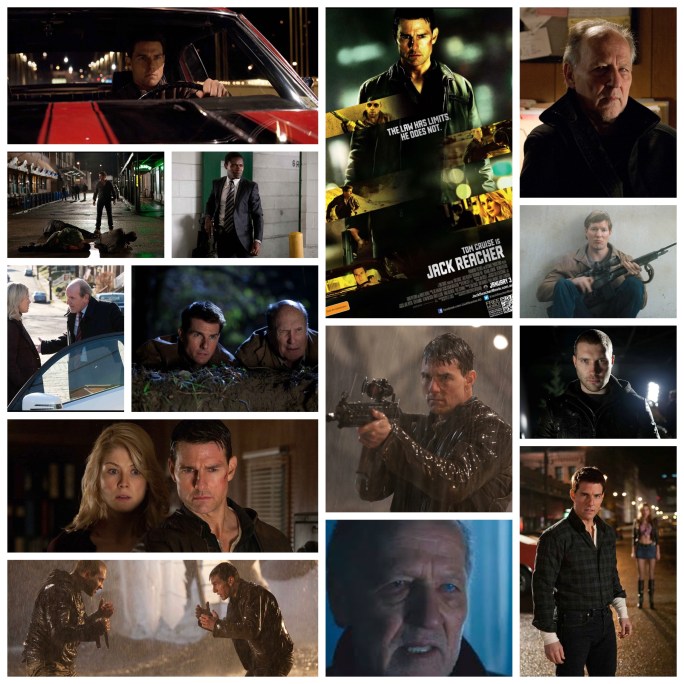
So I get that Tom Cruise isn’t over six feet tall and doesn’t look like an ex marine biker type tough guy, but that doesn’t stop Christopher McQuarrie’s Jack Reacher from being a lean, mean, badass fucking film and one hell of an effective, tightly written thriller. Now, I’m not a huge disciple of Lee Child’s books nor have read a single one of them and therefore don’t have beef with Cruise in the role, in fact I like the steely, unflappably calm violence he brings and believed him as this outlaw ex military renegade warrior, but I can see hardcore literary fans being a trifle pissed.

Anyways, McQuarrie paints a propulsive, brutal world that Reacher exists in, full of sociopathic mercenaries for hire, mad dog war veterans out for the kill and deep rooted corruption in almost every facet of the government. Reacher, existing outside of said institutions, is free to use any force or tactic necessary to smoke out evil and restore the balance, and believe me this guy does not fuck around, but to his credit, gives fair and ample warning to anyone in his way before he beats the piss out of them. The film opens with a harrowing public shooting perpetrated by some ghost operative (Joseph Sikora) employed by shadowy factions we can’t even imagine. The act seems random but of course isn’t, and Jack breezes on in to untangle a terrifying web of dark deeds and malpractice in echelons most high. Rosamund Pike is excellent as a government figure who may or may not be on his side, as is Richard Jenkins as her high ranking father who also might (or might not) be up to all sorts of no good. David Oyewelo, Jai Courtney, Josh Helman and Robert Duvall all provide solid supporting work.

The real treat and scene stealer here though is legendary filmmaker Werner Herzog cast as a terrifying arch villain known only as ‘The Zec.’ Dressed in black with half his fingers missing, blessed with that milk over mercury voice only he has and with a penchant for inflicting heinously ruthless torture and punishment on his own cohorts, this is one villain that I wouldn’t want to come across anywhere, it’s a fantastic portrayal and he’s clearly having a blast. This is one of the rare times where I’ll concede and say that an action film works with a PG-13 rating. Usually it limits creativity and dulls any edge a thriller might have but here McQuarrie has still somehow made this thing feel genuinely dangerous, edgy and mature. It’s a brilliant thriller with several set pieces designed for maximum impact, a smart script with just enough eccentricities peppered throughout the dialogue to stick. Cruise has a lot of fun to, whether he’s taking a bar brawl out into the street and putting several dudes in wheelchairs at once or engaged in nasty, bone smashing hand to hand combat with any of the many spooks out to get him. Love it.

-Nate Hill

Marc Forster’s Stay

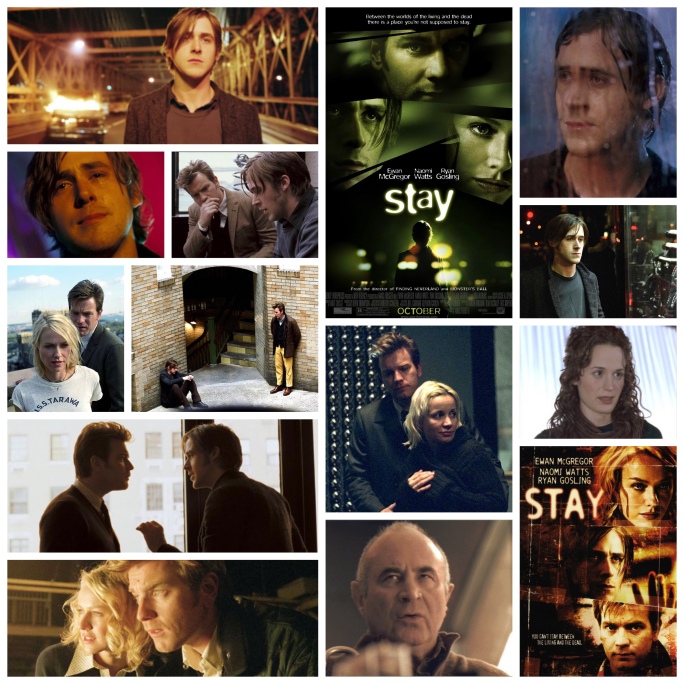
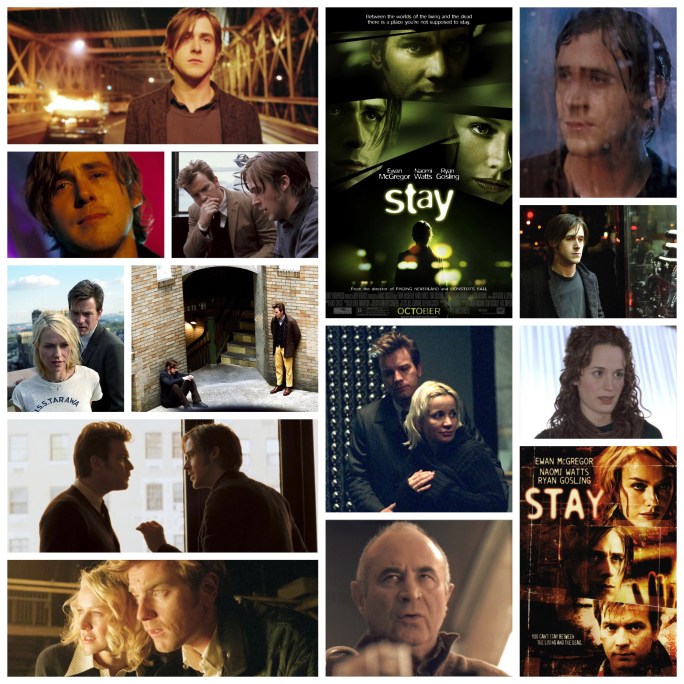
Marc Forster’s Stay is billed as a psychological thriller and it’s… sort of that, but really it’s something far deeper and more metaphysical, a core concept that I can’t say much about without spoiling the whole deal and trust me this isn’t one you want ruined ahead of time, it’s that affecting. It’s easy to see why this didn’t make waves at the box office and how it left a lot of critics cold (Ebert got it, and loved it) as it’s a slow, stylish, disorientating experience that slowly reveals secrets it holds close to its chest for much of the duration.

Ewan McGregor is an NYC psychiatrist who is filling in for his colleague at a university when a distraught young art major (Ryan Gosling) wanders into his office and announces plans to kill himself a few days from then. What to do? The guy seems eerily resolute as if his fate is somehow already decided, and seems like he’s already halfway gone to the other side. McGregor’s wife (Naomi Watts) tried to end her own life once so the doctor is no stranger to these things, but something about Gosling unnerves him to his soul, especially when he tells him about voices he’s hearing, phenomena that soon leak into the doctor’s own waking perception and blur the lines between reality and… something else. Bob Hoskins is low key great as a blind colleague that he plays chess with, and watch for nice work from Mark Margolis, Kate Burton, Elizabeth Reaser, Sterling K. Brown, Amy Sedaris, Michael Gaston, Isaach De Bankolé and Janeane Garofalo too.

It’s very important that you give unwavering attention to this film if you wish to get the most out of it. Best viewed in the wee hours, all lights off and on your own, it’s a visual and auditory mood board of sounds, faces, snippets of seemingly arbitrary yet crucial dialogue and scene-to-scene transitions that are orchestrated to confuse and confound yet make sense on a cosmic level when looked back upon later. McGregor and Watts are terrific but Gosling owns the film in what is probably his great under-sung performance. We get the sense that although this guy seems lost, devastated and out of place and time that he still somehow knows exactly where and when he is, but isn’t telling anyone else a thing as it’s not their place to know… yet. The artwork for this film suggests something sketchy, scary and horror oriented but the reality, although jarring and unsettling, is something gentler, more close to the soul and spirit. Director Forster (Monster’s Ball, Stranger Than Fiction, Finding Neverland) is no stranger to deep, challenging projects and here he strives to go beyond what we’d usually see in a film like this, and make it stick. He’s helped by everyone involved including an otherworldly score composed by offbeat musical duo Asche & Spencer to make this something unique, something to Stay with you long after the credits have rolled and the sun peeks over the horizon. Haunting, dreamlike, ethereal, altogether brilliant piece of filmmaking.

-Nate Hill

Rowdy Herrington’s Striking Distance

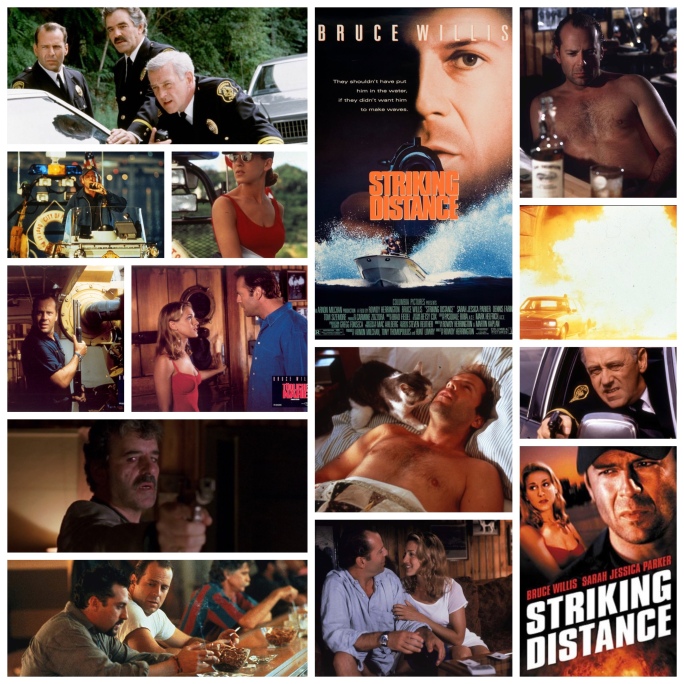
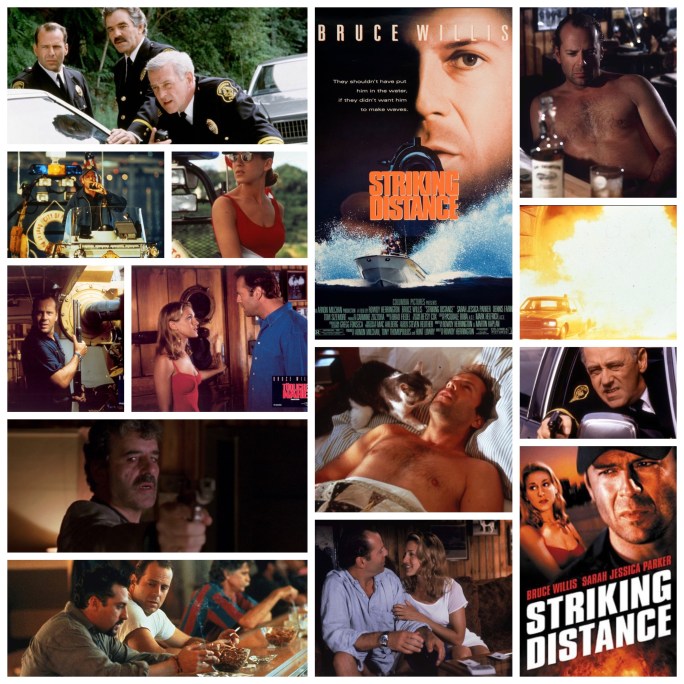
Bruce Willis in another cop flick? That’s not even a Die Hard Entry? Rowdy Herrington’s Striking Distance got put through a wheat thresher by critics and viewers alike but I think it’s a lot of fun. Never mind that it’s overly lurid, predictable to a dime and excessively stylish. Willis is Detective Tom Hardy (lol) one of his mopey disgraced cops who drinks a bunch and mutters half assed one liners under his breath whenever someone tries to tell him to get his shit together. After failing to catch a slippery serial killer, he’s relegated to boat duty in the Pittsburg harbour and assigned to a rookie partner (Sarah Jessica Parker doesnt do much here) he can barely stand. Tom comes from a police family, his uncle (Dennis Farina) is the commissioner, his cousin (Tom Sizemore) a fellow detective and as such he’s been kind of shunned and also blamed for the death of his other cousin (Robert Pastorelli), a cop who lost his mind. But this killer has resurfaced and is playing sick mind games with him all over the city, murdering people and ghost calling him, until a series of sting operations, stand offs and one man hunts are conducted to smoke him out. The cast also includes Brion James, Tom Atkins, Andre Braugher and John Mahoney as Tom’s father who, you guessed it, is also a high ranking cop. Director Rowdy Herrington is known for Roadhouse and therefore subtlety isn’t his game, so the lapses in logic and continuity are kind of to be expected. What he does do well are scenes of atmospheric suspense and well staged shootouts. Yes, the identity of the killer is kind of easy to surmise given that it’s not a huge cast and there’s only a few people it could be (at least it doesn’t go Jennifer 8 and cheat by literally picking one of the bit players out of the crowd that we’d never suspect), but the fun is in watching how Willis hunts and takes him down. Plus the cast is great, you really can’t go wrong with Farina and Sizemore, both of whom are reliably intense. Not the best cop vs. killer flick out there but for sure not the worst either.

-Nate Hill

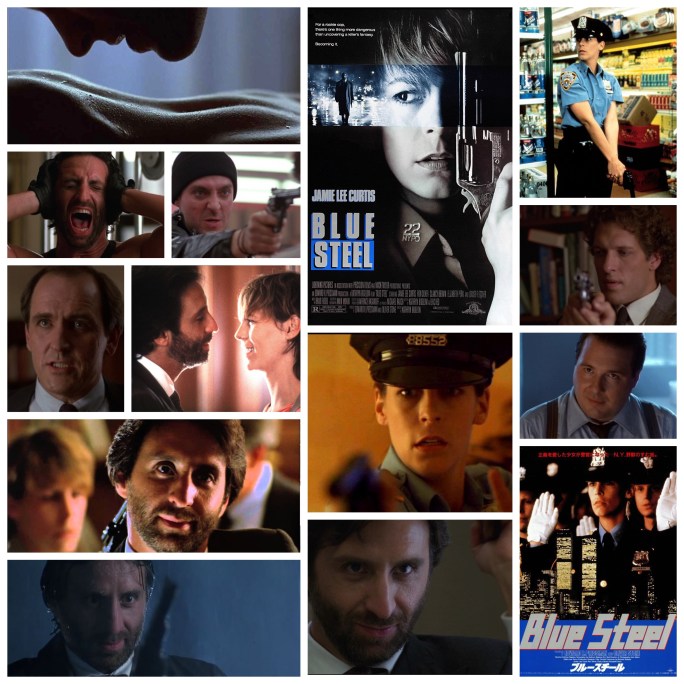
Kathryn Bigelow’s Blue Steel

How bad could your first day on the job as a cop go? For Jamie Lee Curtis in Kathryn Bigelow’s Blue Steel, pretty damn bad. Before the title was a Ben Stiller fourth wall break it was a sexy, simmering, extremely violent psycho thriller from Bigelow, who was always way better back in the day when she focused on gritty genre films and not the politico-war stuff she’s known for today.

Curtis is a rookie cop who finds herself in a tense stand-off with a convenience store robber (Tom Sizemore, fired up in one of his first gigs). When the guy won’t back down she’s forced to shoot him, case closed. Right? Nah. First of all, her superiors take harsh disciplinary actions instead of giving her the medal she deserves, but there was also someone else there that night, a posh stockbroker (Ron Silver) who witnessed the whole thing, and something about the violence and potency in the air just kind of makes him lose his shit. He somehow got ahold of her gun, has been carving her name into the bullets and shooting people all over town, making it look like she’s out there playing vigilante. The captain (Kevin Dunn, always welcome) and the DA (Richard Jenkins, also always welcome) are furious and blame her for inciting this whole hellish series of events. But soon he’s insinuated his way into her life and she finds herself in a steamy affair with him, unbeknownst that he’s the lunatic that’s been circling her for days like a hungry wolf. There’s also another fellow cop, a hard nosed detective played by Clancy Brown, who she *also* starts up a torrid affair with and naturally that doesn’t end well. It’s nice to see Brown in a non-villain role for once and especially as the romantic lead, of sorts anyways. Elizabeth Pena shows up as well, as do Louise Fletcher and Philip Bosco as her troubled parents.

This is a gritty, bloody, scary piece of filmmaking and I can see why it turned many viewers off. There’s a kinky psychosexual vibe running through it like a perverse current of deviant energy and delirious, trashy abandon. Curtis is tough but vulnerable as well, no stranger to playing the lone girl stalked by an unrelenting, spectral madman. Silver is an actor who is no longer with us (remember him as the evil senator in TimeCop?) and it’s a shame because he was a real treasure. This has to be his best turn and he’s eerily on point in showing how a mind can deteriorate and turn sick after witnessing trauma. There’s an ‘unstoppable killer’ vibe to his action and pursuit scenes but he also gives the quieter moments a terrifying humanity as a guy who maybe doesn’t even know what he wants or isn’t in control anymore, it’s deeply disturbing work. Bigelow is just so good at staging practical action scenes and makes the chases, gunfights and jump scares supremely effective while maintaining a shadowy, blue tinged nocturnal palette that’s decidedly noirish and feels like an outright horror film in many instances. A real forgotten classic.

-Nate Hill

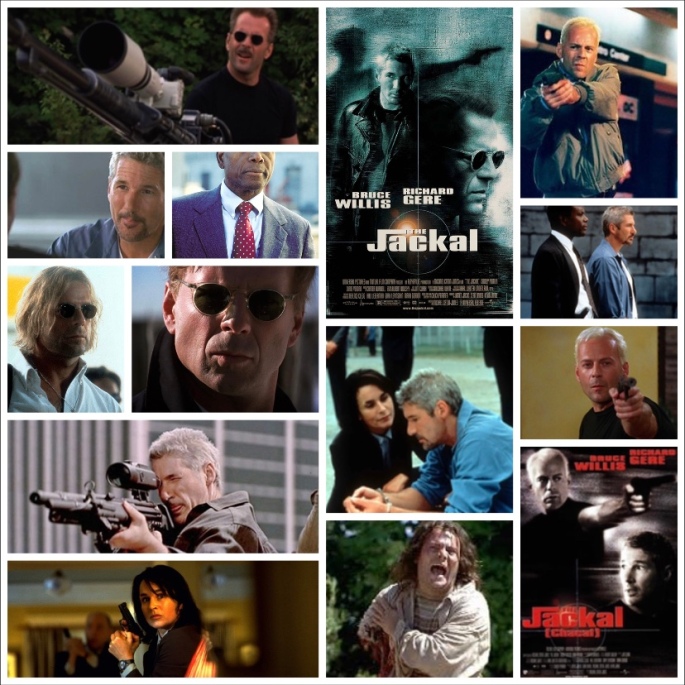
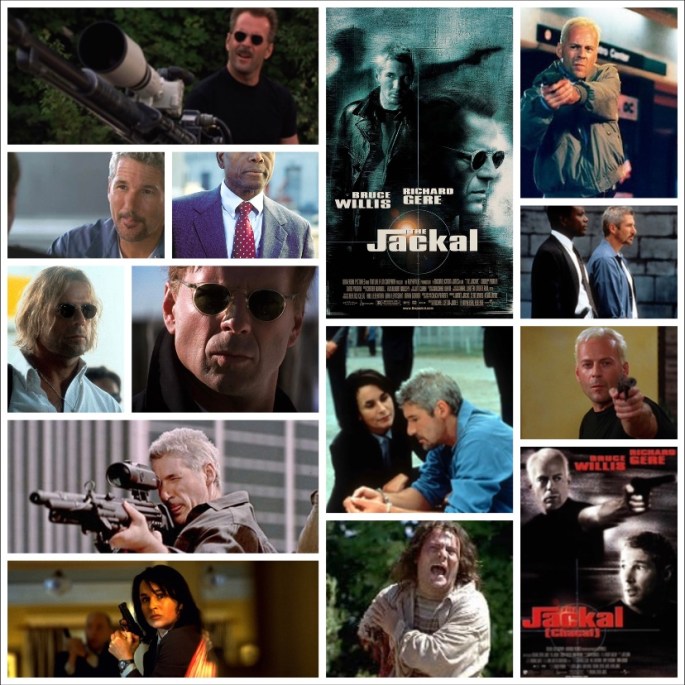
The Jackal

If you ever want to see Bruce Willis being a nasty bastard check out The Jackal, a pulpy remake of a 70’s spy flick that ramps up the intrigue, ultra-violence and takes a decidedly silly turn with its set pieces. Despite the fact that he and Richard Gere are kind of miscast, they both somehow get the intensity right and bring the heat even though we never really believe them in the roles. Willis is the titular Jackal, a sadistic international assassin whose methods get so elaborate you wonder where he gets the energy from. Gere is the imprisoned IRA radical who is sprung by super agent Sidney Poitier to bring him down. Willis’s next job is supposedly one that will put the delicate forces of international diplomacy off their axis and therefore the powers that be have allowed dangerous Gere to come into play as a ‘fight fire with fire’ mentality, which as any student of action movie narratives knows, never really ends well. Gere seems out of place as both an Irishman and an antihero but is fun to watch nonetheless, while Willis hams it up royally with a stoic grimace and enough high powered weaponry to bring down a building. Poitier always seems dignified no matter the material and such is the case here. The real scene stealer though is underrated character actress Diane Venora as Poitier’s partner, a scary badass of a Russian agent who displays more grit and grizzle than both Willis and Gere combined. Other work is observed from JK Simmons, Tess Harper, Stephen Spinella, Mathilda May, Sophie Okonodo and others. One scene always stood out though for years, and for awhile I didn’t even know what film it was from as a watched it with my dad when I was very young. Jack Black plays a shady arms dealer who hooks up Willis with product, but he gets a bit greedy with his paycheque. Willis, not impressed, loads up a giant 50 caliber cannon, tells him to start running and blows his fucking arm off from a few hundred yards out. Needless to say that scene made a spectacular impression on me and for years I just knew it as ‘that movie where Bruce Willis fucks up Jack Black with a 50cal’ until I eventually went for a rewatch. Not a great film but worth it for that scene alone, and the production value.

-Nate Hill

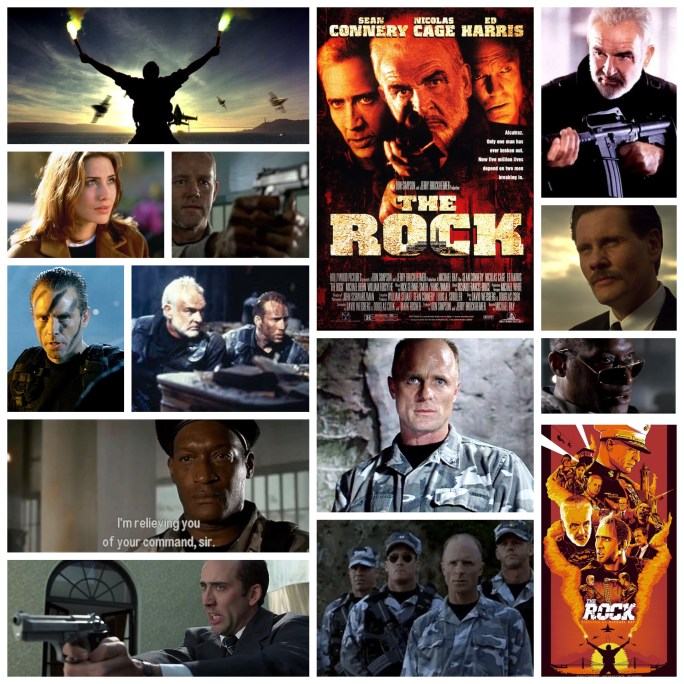
Michael Bay’s The Rock

Who loves Michael Bay’s The Rock? I think a better question is who doesn’t. It was one of my first introductions to the action genre as a kid and I sat there in Saturday morning disbelief at just what was possible in the realms of cinema. Alcatraz Island, nuclear warheads filled with horrific poison gas, Nicolas Cage in charismatic goofball mode, Sean Connery basically reprising his 007 role one last time, a rogues gallery of gnarly character actors all hamming it up to high heaven, a score from Hans Zimmer that soars and invoked both emotion and adrenaline, what’s there not to fall in love with.

The plot here is besides the point: angry rogue military general Ed Harris takes Alcatraz hostage, threatens to launch warheads across harbour into crowded San Fran. Chemistry guru Nic Cage, ex MI6 super-spy Sean Connery and a team of Navy Seals covertly lead a siege on the rock to stop him. Many guns are fired, a lot of shit blows up and endless one liners are uttered. That’s the nutshell version though, the actual experience is something blissful and perfectly pitched in terms of the recipe for a great action film. Connery is intense yet somehow laid back and steals the show as the pissed off, blacklisted agent who really doesn’t care about the threat towards the city, or at least pretends not to. Cage, whether strumming his guitar, banging his super hot Italian American wife (Vanessa Marcel) or referencing Elton John right before killing a bad guy, is comic dynamite and a source of desperate, scenery chewing energy that somehow works despite how ridiculous his performance is (it’s like the antithesis of his work in Con Air, the sister film to this). What I love about Harris’s villain here is that, unlike many huge budget action flicks, you actually care about this guy and what he wants, despite the extreme measures he’s gone to get them. He’s calm, resolute and sorrowful and not much about his performance suggests an antagonist except for the situation the character is written into and it’s an interesting, thoughtful choice for the film’s baddie. The real nasty characters are the mercenaries he hires to carry out his mission, who include the more subdued likes of David Morse and John C. McGinley, the less subdued Bokeem Woodbine and Gregory Sorlader and the positively psychotic Tony Todd as Captain Darrow, the last guy you’d want on either side of the moral fence as his seems to be absent. On the other side of the action we get John Spencer as a cranky FBI bigwig, legendary Michael Biehn as the Seal commando, always awesome William Forsythe as the one FBI agent with a brain in his head and cameos from Pat Skipper, Claire Forlani, Danny Nucci, Tom Towles, Jim Caviesel, Stanley Anderson, Raymond Cruz, Xander Berkeley, Philip Baker Hall and Stuart Wilson.

From the moment Harris’s team steals the rockets to the explosive sequence where Cage flags down the military in a sly Platoon reference, this thing fires with everything it’s got. Connery’s escape and car chase through the streets of San Fran goes on needlessly long and exists only for the purpose of an action sequence, making it all the more awesome. Harris and Biehn’s utterly badass stare down and frantic chicken fight over who will order a stand-down first always gets me. It’s such a well made action film that even the Bay haters sound like ignoramuses when they bash it. Roger Ebert, who has routinely torn Bay new assholes over the years in his reviews, loved it. Zimmer’s theme is the perfect symphony for fighter jets, commandos, yellow hummers’ (“You shtole my humvee!”), trolley cars, assault weapons and high powered rockets to thunder across the harbour in spectacular fashion. The Rock rocks.

-Nate Hill

Peter Jackson’s The Lord Of The Rings: The Two Towers

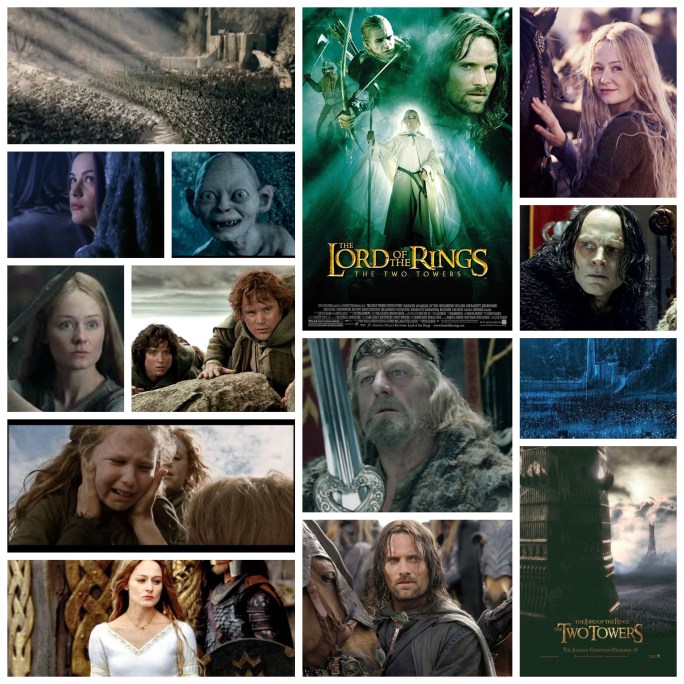
The middle chapter in any trilogy has the unfortunate luck of being an oasis interlude that by definition can’t have an opening or a conclusion, because a hunk of story came before it and, naturally, there’s more to come after. However in the case of Peter Jackson’s The Lord Of The Rings: The Two Towers, it adapts and adjusts that malady by finding it’s own groove with a surging forward momentum that is removed from the episodic nature of both Fellowship and Return Of The King. It’s not my personal favourite of the three (Fellowship holds that trophy on sheer potent nostalgia alone) but to me it’s the most unique in the sense that *because* it has no bookend on either side of its narrative, it ironically feels like the most independent chapter.

There’s a restless surge of movement from every side of the action here; Frodo and Sam are uneasily led by Gollum through a haunted, labyrinthine marsh ever closer to the acrid peaks of Mordor. Aragorn, Legolas and Gimli furiously race to save the entire population of Rohan from devastation at the hands of Saruman, the good wizard who went about as bad as you can go, and his manipulative lackey Wormtongue. Merry and Pippin are whisked away on the shoulders of Ent elder Treebeard on an endless hike through Fangorn Forest, and eventually Isengard itself. Even Gandalf doesn’t get a sit-down or a smoke break, propelled on a dizzying battle with the Balrog and thrown right back into the struggle for Middle Earth with Tim for nought but a wardrobe update and hair dye. It’s that movement, the ever forward rhythm that sets this one apart and emphasizes what a truly massive journey this whole story is. Fellowship had dreamy interludes in Rivendell, whimsical leisure time spent in The Shire and near constant time to reflect and sit down for these characters, and Return had… six different endings that broke the pace. Two Towers begins with fiery chaos in Moria, holds that note throughout and finishes literal moments after the thunderclap battle of Helms Deep, which is still just an incredible piece of large scale filmmaking.

This one also introduced two of my absolute favourite characters in the whole trilogy, Theoden king of Rohan and his warrior niece Eowyn. Played by Bernard Hill and Miranda Otto, these two performances just sing through the whole film, drawing sympathies not just for Rohan but the entire human race, it’s struggle and earning every cheer out loud moment. The whole conflict with Rohan, despite again not being the inciting event in the war for Middle Earth or even the final battle, feels very immediate and important thanks to Hill, Otto, everyone involved and the monumental special effects involved in bringing the terrifying Uruk Hai army to life. There’s a tactile use of CGI that’s almost subtle enough to blend in with the real world elements, and despite being made like almost two decades ago, they still hold up and eclipse other similar efforts in more recent years, especially with the battle, Treebeard and poor Gollum who still looks fantastic. The stuff with Frodo is less compelling, or at least to me, I’ve always found in the latter two films that his trajectory gets increasingly dark, horrific and suffocating and find myself counting down the seconds until we rejoin the others. I suppose that’s the point as he is carrying that terrible Ring, but nevertheless, always tough to make palatable.

The climactic battle that goes on for nearly fifteen minutes, the incredibly cathartic siege of the trees on Isengard, the hair raising Warg attack, Gandalf’s final boss battle with the Balrog, Eomer (Karl Urban, a study in badassery) and his company massacring the Uruk war party, all are standout moments and fantastic pieces of cinema. But there are a few moments that are always present and important in my mind when watching this film: As a small village in Rohan is plundered by marauding orcs, a desperate mother sends her two (Robyn Malcolm) sends her two children ahead of her on horseback, and nothing is more heartbreaking or immediate than this parting. Later on, Theoden stands by the grace of his son and weeps against a twilit sky while Gandalf looks on in sorrow and utters words of comfort. Elsewhere, Frodo, despite being under the malicious influence of the Ring, takes pity on Gollum and treats him with compassion even though the creature has a track record of nasty behaviour. It’s the little moments like these that ground the story in emotion, create a stirring palette for the characters to interact in and make the battle scenes count for something.

-Nate Hill

Clint Eastwood’s The Eiger Sanction

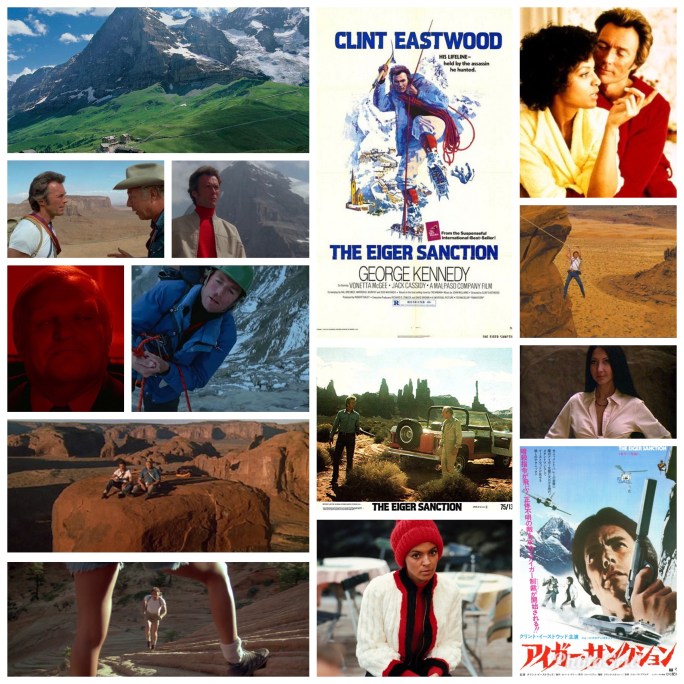
Clint Eastwood tries to do both Indiana Jones and 007 in The Eiger Sanction, a gorgeous production with incredible photography and stunt work that unfortunately is about half an hour two long, and would have greatly benefited from being a sleek ninety minute thing instead of being drawn out over a full two hours to the point where we wonder if some of the extended scenes of dialogue will end and if we’ll ever get to actually see the Eiger. Eastwood is Hemlock, a soft spoken liberal arts professor who just happens to also be a retired assassin super spy in hiding. His old organization, spearheaded by a creepy albino pseudo-bond villain (Thayer David), tracks him down and blackmails him into getting back to work, in particular climbing the infamous mountain in Switzerland to kill a target that ran up there… or something. This involves a long interlude in Monument Valley where an old buddy (George Kennedy, a study in gregarious exuberance) trains him up and an old enemy (Jack Cassidy, a study in the kind of characterization that would get a film boycotted these days lol) stirs up trouble. Then it’s off to Switzerland for an extended climbing sequence and an eventual showdown high atop snowy peaks. If this all sounds terrifically exciting… it isn’t. Eastwood shows a sure hand in directing elsewhere in his career but here the fight scenes are clumsy, cartoonish affairs, the dialogue is oddly conceived (Cassidy’s character has a dog whose name I won’t repeat here because I’m sure some lame brain would report my post) and the editing is loose and unrestrained, creating pacing that has you looking around the room for more interesting things to focus on. Still, the stunts (all done by Eastwood for real) are breathtaking, especially an ascent of one of those huge rock pillars that stand so formidably in the desert. The cinematography once the action switches to Switzerland is unbelievable but the place is so beautiful anyone could point a camera around and get gold. The climbing is all incredibly staged stuff and often suspenseful, but in terms of plot, character and cohesion it just falls apart though, sadly. I’ll always love it because my dad did, he was in the same Swiss town during filming and always talked about meeting the cast and crew. But yeah, from an objective critical standpoint, not the best Eastwood flick out there.

-Nate Hill

John Woo’s Face Off

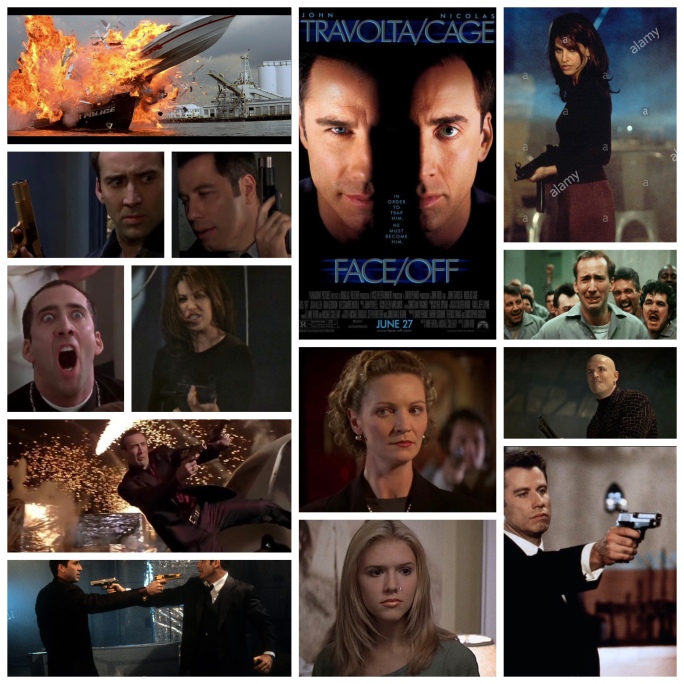
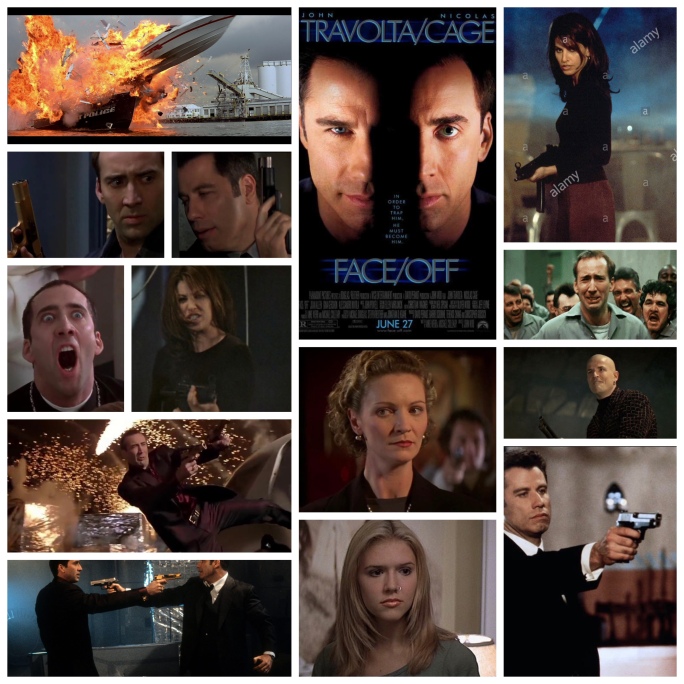
John Woo’s Face/Off was originally conceived as a Schwarzenegger/Stallone vehicle and was to exist in a far more futuristic setting. I’m glad that the eventual execution was more down to earth because I get cold sweat visions of the 90’s Judge Dredd flick with Arnie swapped in for Armand Assante. Jokes aside, the performances, production design finished product turned out to be pretty much as amazing as anything you’ll find in Hollywood throughout the years, and has become a classic for me.

John Travolta and Nicolas Cage are perfectly paired as grizzled FBI super-agent Sean Archer and eccentric, psychopathic rock star terrorist Caster Troy, two star crossed arch enemies who find themselves battling on a whole new plane when their faces literally get swapped by the bureau’s fanciest clandestine nip tuck procedure. This gives the film not a only a high concept boost but the opportunity for each actor to really break free from the bonds of playing just one character and overlap into the realms of their counterpart, not to mention parody the absolute fuck out of their respective acting styles, which we as moviegoers know is never short on eccentricity for the both of them. Others revolve around them, specifically two very different women in their lives who are caught up in the in the titanic clash of will, ego and guns upon guns. Joan Allen is angelic poetry as Eve, Archer’s wife, and Gina Gershon adds a feline sexiness in Sasha, Troy’s old concubine. They both share a wounded nature in different ways, both having been drawn into the conflict and taking charge of their trajectory in different, equally compelling ways. Nick Cassevetes and his bald dome steal scenes as Dietrich, Troy’s trigger happy lieutenant, Dominique Swain shows early what talent she has as Archer’s strong willed daughter and there’s a galaxy of supporting talent including Harve Presnell, Colm Feore, CCH Pounder, Matt Ross, Margaret Cho, Thomas Jane, John Carroll Lynch, Alessandro Nivola, Chris Bauer, Robert Wisdom, Kirk Baltz, Paul Hipp, Danny Masterson, David Warshofsky, Thomas Rosales and Scottish badass Tommy Flanagan, early on before Hollywood gave him lines and those leering Joker scars did the talking.

This is the Cage/Travolta show most of the way though and they positively rock the house as two dysfunctional would-be siblings who could probably sit down and have a few beers together if they weren’t so busy trying to kill each other. Woo outdoes himself in a production that includes all of his hallmarks: white doves breaking formation in languid slo-mo, dual wielded berettas barking out clip after clip, symphonies of smashing glass, looming pillars of fireball pyrotechnics and the always classy tradition of characters having firefights clad in snappy suits. There’s a plane chase, a boat chase (my favourite sequence of the film), a breathless aquatic prison break, a church shootout of biblical proportions, a thundering FBI raid on a dockside stronghold, a vicious beatdown of Hyde from That 70’s Show (art eerily imitates life here) and the most inventive use of a harpoon gun I’ve ever cringed at.

Obviously the content of my favourite films is fluid and changes over time but in terms of a top action film, this is likely the constant. It’s like the whole genre went to sleep, had a dream and this was the resulting output. I gotta mention the original score because it’s a doozy, but I’ve always been a bit confused who to thank for it. IMDb has John Powell credited, whose work I love on the Bourne films. But other research turns up evidence of stuff from Hans Zimmer and James Newton Howard as well, so I’m not sure who did what or if it was a collaboratively lateral thing, but in any case it’s fantastic work, particularly in the boat chase where the composition reaches that near celestial height where it has the power to raise the hairs on your arms. What else is there to say? “Gonna take his face…. off…!”

-Nate Hill