As the child from a working class family in South Bend, Indiana, Larry was introduced to the movies by his father. He was not restricted as to what he could watch, so he watched it all. After high school he debated between pursuing either a career in comedy or a life in pictures.
Larry opted for the movies, and soon found himself at USC. It was there that he would meet Scott Alexander, and together they would form not only a friendship, but also the foundation of a prolific career as a successful screenwriting duo.
After (and though it launched a trilogy of films and even an animated series) Problem Child, the screenwriters struggled to find work. It seemed as though they had been typecast buy their work and so looked to independently produce a biopic they were working on about the notoriously bad filmmaker Ed Wood.
As fate would have it, word of the project reached director Tim Burton. After expressing interest, the boys would have to hammer out a screenplay in double-quick fashion. They succeeded, and this, the first in a string of biographical efforts, would re-establish them in Hollywood and from it they would carve out their place in the genre and become, in many ways, its ‘go-to guys.’
Biopics of Larry Flynt and Andy Kaufman would follow, seeing the boys team up with Academy Award winner Milos Forman. They would go on to re-team with Tim Burton as well as dabble in a variety on different genres including everything from a kid-friendly version of James Bond to horrific hotel rooms were you’ll spend a night or perhaps even an eternity.
Larry and Scott have garnered the highest accolades the industry has to offer and continue to deliver. While trying to get a hold of Larry for this interview I caught him riding high on his recent wave of success, so I would just have to wait for the tide to turn. I am however, glad that I did. It was, as it is ever, a privilege to chat with a man whose work I heartily admire. I love the films he has written and I look forward to the projects that he and Scott have in the pipeline.
Without further ado I present, the award-winning screenwriter and all-round nice guy . . . the one, the only, Larry Karaszewski.
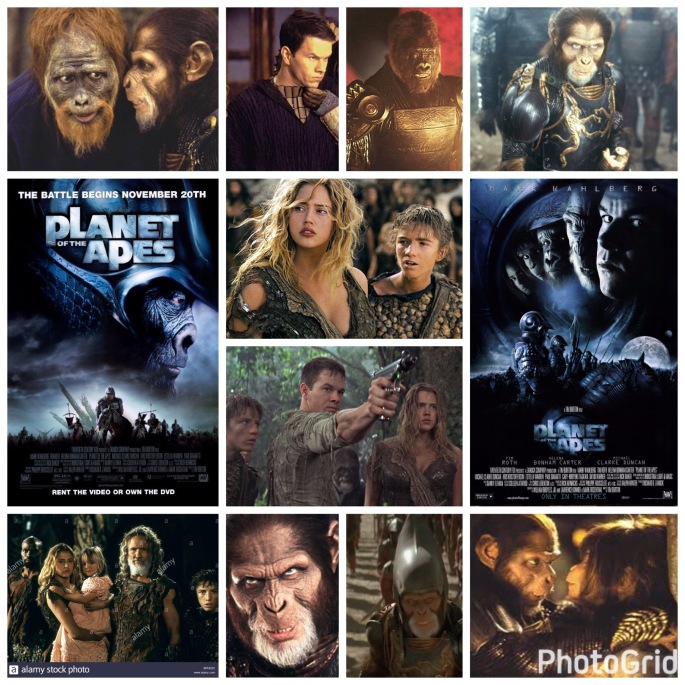
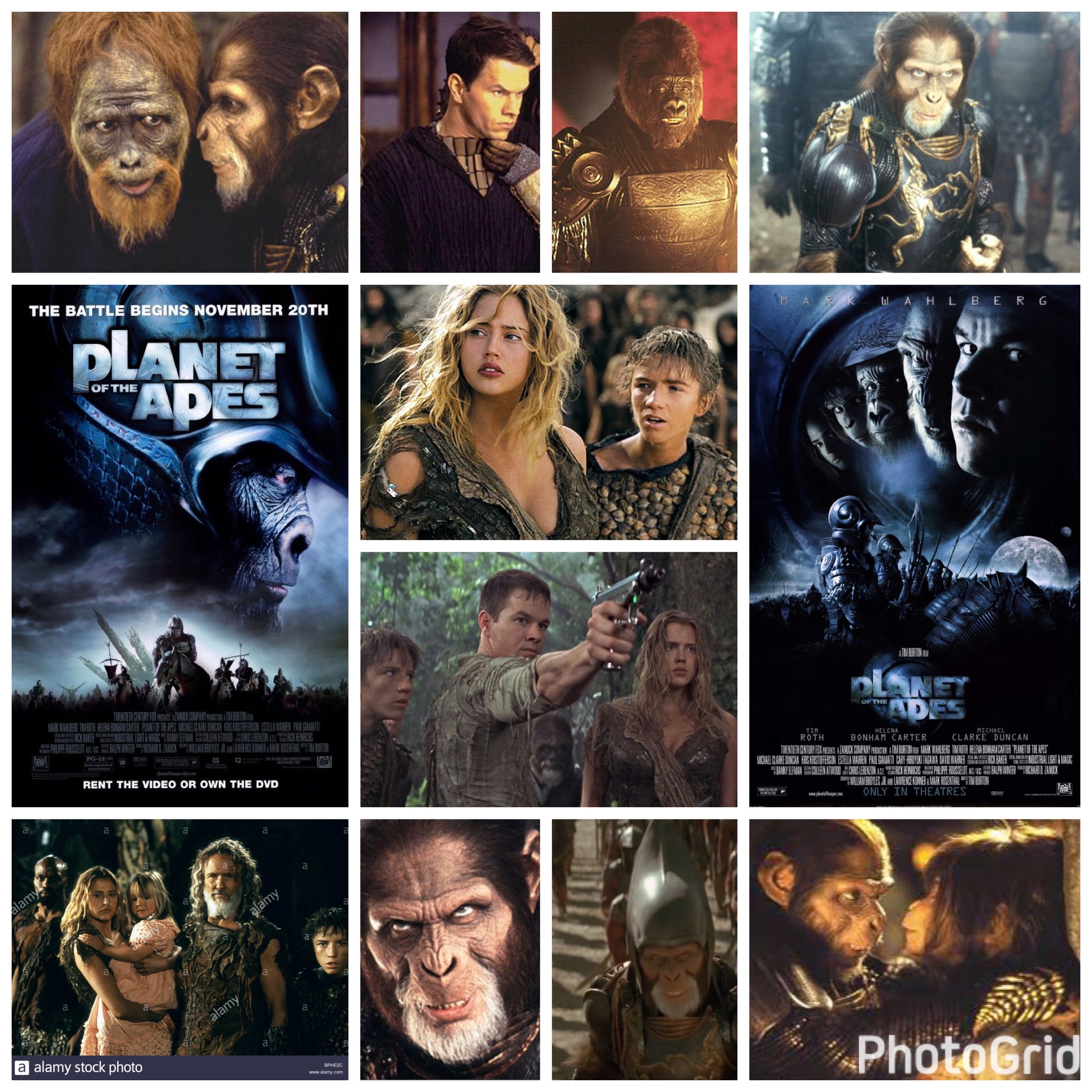
I’m going to catch some heat for this, but I’ve found Tim Burton’s Planet Of The Apes to be a far better film than any of the three recent versions. I can’t explain it, but there’s something so otherworldly and exotic about the production design, makeup and effects, a true storyteller’s touch used, resulting in a piece with elements of fantasy and world building brought lushly to the forefront, whereas the newer films just felt somewhat clinical and sterile, going through minimalist motions without any real sense of wonder applied. Oh and another thing: real, tactile makeup on actual human actors, which will win against motion capture/cgi any day. There’s also an old world, medieval feel to this planet, as the ‘humans being subservient to apes’ dynamic has already been in full swing for generations, as opposed to a lengthy origin story that takes up most of the newer trilogy. No build up here, just Marky Mark getting marooned on a distant world dominated by simians, fighting his way through their ranks, sort of falling in love with one (Helena Bonham Carter as a monkey=kinky) and attempting to find a way back to earth. There’s various apes of all shapes and sizes at war, the most memorable of which is a sleek, snarling Tim Roth as Thade, a volatile warlord who despises humans. Michael Clarke Duncan towers over everyone as Attar, his cohort and fellow soldier, and seeing already be-jowelled Paul Giamatti as a cumbersome orangutan is priceless. The human faction is led by weathered Kris Kristofferson and his daughter (Estella Warren, quite possibly the most beautiful girl on the planet), leading the dregs of humanity as they exist in hiding and fight for their lives. No expense was spared in filling every frame of this planet with lived-in splendour and atmospheric decoration, from suits of armour and architecture to the overgrown thickets of mountainous vegetation that grow on this world. As for the apes themselves, it’s terrific how real they feel. It’s the same thing that happened with Lord Of The Rings vs. The Hobbit, and the switch from practical Orc effects to the overblown cgi madness of the goblins in the later films. The human eye is inherently adept at deciphering what is real and what is not, and the effects of the later Ape films with Andy Serkis just felt lifeless and orchestrated, whereas here the makeup prosthetics are organic, authentic and wonderful to look at. Don’t even get me started on the ending either, it’s completely brilliant and will leaving you in cold isolation as the credits roll, a perfect gut punch to a film that could have easily turned sappy in the eleventh hour. So that’s my two cents. Bring on the backlash.
You might not know his name, but you’ve certainly seen his movies.
Andrew Bryniarski is a high-octane actor. His explosive and memorable performances stay with you. He is full-tilt, funny and furious. He has worked with an impressive array of Hollywood’s ‘big hitters’ like Tim Burton, Oliver Stone, John McTiernan, Michael Bay and John Singleton. He has starred alongside Bruce Willis, Christopher Walken, Al Pacino, Raul Julia, Richard Lynch and Scooby Doo. He is beaten the shit out of Superman and made out with his girlfriend. Now if that is not an impressive resume, I don’t know what is.
All I can say is, I have done a number of interviews, but this one was a BLAST! Andy I feel has more great stories in him, only a few of which he was able to share over the couple of conversations we had. I would love this guy to sit down and write a ‘tell-all.’ The things that he has done, the places he has been, his experiences as a guy who was plucked out of obscurity and propelled from there to a Hollywood career that has spanned three decades, and has seen him do everything from sacking quarterbacks to wielding chainsaws, in that old Texas-massacre kinda way. It’s a tome that would be utterly enthralling.
The same enthusiasm that Andy applies to his work is apparent in his personality and his perspective. I get the impression there is no half-way with this man, and though it might seem that he has drifted from one grand adventure to another, there is a relentless dedication beneath the surface bravado that has been the catalyst behind his success.
It is always my intention to transcribe my interviews as, at times, the quality of the recording is not that great. But this is one of those times where you have to hear it from the man himself. No one does Andrew Bryniarski better than Andrew Bryniarski, unless of course it’s Andrew Bryniarski doing Christopher Walken (which I promise you’ll love.)
On that point, Andy sent me a message the day after our initial chat, saying that he had forgotten a line in his anecdote regarding Walken. It reads as follows:
Walken’s father was a baker and during the depression, there was a flour shortage so they used sawdust so they got ‘the rickets.’ By the time Chris Walken came along they had flour, so he was taller than his father. But Andy – he had orange juice.
It doesn’t make sense I know. But take note of the missing line (above here underlined) and listen to the incomparable Andrew Bryniarski tell it in his ‘awesome’ Christopher Walken voice…
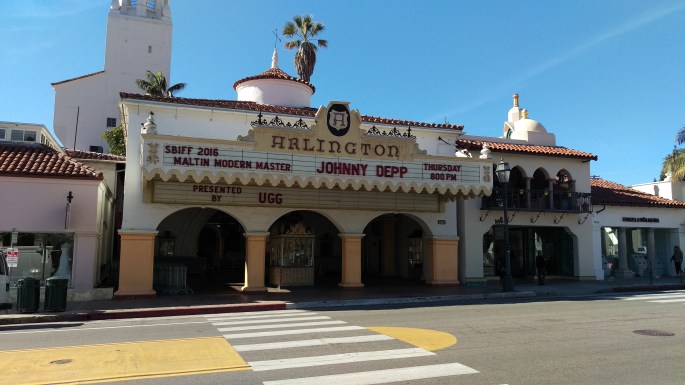
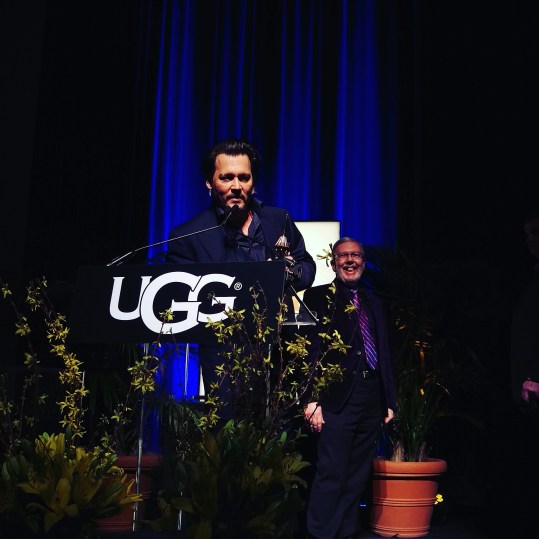
Everyone was waiting. Leonard Maltin was waiting, Roger Durling was waiting, Scott Cooper was waiting, the press was waiting, and the giant mob of screaming fans were waiting. Johnny Depp was running late, and nobody cared. Depp arrived thirty minutes late. He was set to receive the Leonard Maltin Modern Master Award from BLACK MASS director, Scott Cooper as well as participating in a much anticipated Q&A with Leonard Maltin.
He arrived in a black Cadillac SUV and once he exited he instantly disobeyed his handlers and went directly to the vast mob of his fans. He took his time signing autographs, taking photographs, and shaking each hand he could. Depp then moved to the red carpet, timidly keeping away from the press yet posing for a gracious amount of time for photos against the sleek SBIFF backdrop. He posed with Scott Cooper and then he quickly was moved to the end of the press line, but I caught his attention:
“Mr. Depp, one quick question: DONNIE BRASCO, ONCE UPON A TIME IN MEXICO, and SWEENEY TODD. Which is your favorite role?”
He put his hand up to his mouth, held his chin, stared right at me through his blue Michael Mann tinted glasses and said,
“I don’t know. That’s difficult, man.”
Depp was quickly moved into the Arlington Theatre and the floodgates opened and everyone rushed in. Once the gorgeous Arlington Theatre settled down, the dapper Roger Durling took the stage and he spoke graciously, thanking everyone for being there and thanked Johnny Depp for coming.
Maltin then took the stage and he introduced Depp and an excellently edited highlight reel played. Watching a brief highlight of Depp’s career doesn’t do it justice, yet you can’t help feeling overwhelmed by his truly epic career.
Depp walked out, and the theatre erupted with applause and screaming. Depp shyly smiled. To this day, Johnny Depp is the epitome of cool. He was wearing socks with hemp leaf patterns and for about the first hour and a half of the Q&A, he meticulously hand rolled a perfect cigarillo. He then lit it and took the rest of the Q&A slowly smoking it. In California, and pretty much anywhere else, it is illegal to smoke in a public venue, but who is going to tell Johnny Depp to stop smoking?
Depp is a very sweet guy, he’s incredibly humbled. Whenever Maltin would bring up a film, whether it was one of Depp’s blockbusters or a seminal undercard performance, the audience would clap and Depp would smile and thank the audience.
The Q&A with Leonard Maltin was almost three hours long and it was wonderful. I was able to ask Leonard Maltin two quick question on the red carpet, I asked him to pick between DONNIE BRASCO, ONCE UPON A TIME IN MEXICO and SWEENEY TODD. Maltin paused for a moment and said DONNIE BRASCO. I then asked him what his favorite underrated performance of Depp’s was and he said, without hesitation, DON JUAN DEMARCO.
It took about an hour for Depp to warm up and get comfortable. He was incredibly candid about his career. He spoke frankly about how he’s a musician, who happened to become an actor to pay the rent. He spoke in depth about what a horror he was, and sometimes still is, on film sets. Maltin asked him about his relationship with Leonardo DiCaprio on the set of WHAT’S EATING GILBERT GRAPE. Johnny Depp just started laughing.
“You know, I respect Leo a lot. He did so much work and research and preparation for that role,” and a sly smile arose on his face, “and I tortured him.”
The audience started laughing, and Depp stopped, and looked at the audience,
“No, really, I did. He liked video games. No Leo, I won’t give you a drag of my cigarette while you hide from your Mom.”
Depp briefly spoke about his work with John Waters, saying how Waters was the only filmmaker he knew who made a film based on a title. He said Waters came up with the idea of PECKER, solely for the fact that when it would be advertised it would be: John Waters’ PECKER Coming Soon.
When Depp was asked about his casting in EDWARD SCISSOR HANDS and his long and awesome collaboration with Tim Burton, Depp started laughing. He spoke about how he didn’t want to even meet with Burton, he knew he wouldn’t get the part, but his agent Tiffany talked him into it. Depp recalled walking into a diner to meet Burton. He had no idea what he looked like. He scanned the diner and saw a guy “whose hair looked like a hardware store exploded, and I knew I had to talk to him. Even if he wasn’t Tim, I still had to talk to him.” The man with the exploded hair was Tim Burton, and that was the beginning of one of the greatest collaborations in cinema history.
Leonard Maltin beamed as he showed a clip of DON JUAN DEMARCO and then asked him about that film, and working with Marlon Brando. Depp settled back in his chair and smiled, and spoke about his abundant love and admiration for Brando. He said he was a father, mentor, brother, essentially a gigantic blanket that meant the world to Depp. When Maltin asked Depp to describe what he learned from Brando, he paused looked down, and then back up at Maltin and said: justice.
Maltin asked Depp about the only film he directed, THE BRAVE that premiered at Cannes in 1997 and featured Marlon Brando in a prominent role. Maltin asked when we could see it. Depp asked the audience who wanted to buy it. He then went on to speak about the reason he shelved the film was because he didn’t want to play the distribution game, and he wanted to retain control over it.
In 2004, when Brando died, Depp was devastated and he was receiving offers about releasing THE BRAVE. He was told it was a prime time to release the film, it was an unseen Brando performance, and now was the time to release it. That’s the moment when Depp decided to put the film under lock and key. He was returning justice back to Marlon Brando. Maltin then said that releasing it now wouldn’t be an exploiting Brando’s death. Depp then said he would show THE BRAVE at the Santa Barbara International Film Festival next year, and shook Maltin’s hand on it.
So in theory, next year, Johnny Depp will be premiering his unicorn of a film, THE BRAVE, at the 32nd Santa Barbara International Film Festival. That remains to be seen, but seeing Depp speak, in depth, for three hours about his remarkable career was amazing. After the Q&A was over, Depp went back outside to all his screaming fans and took more photographs and signed as many autographs as he could. Johnny Depp is not only one of cinema’s best actors, but he’s truly a class act.
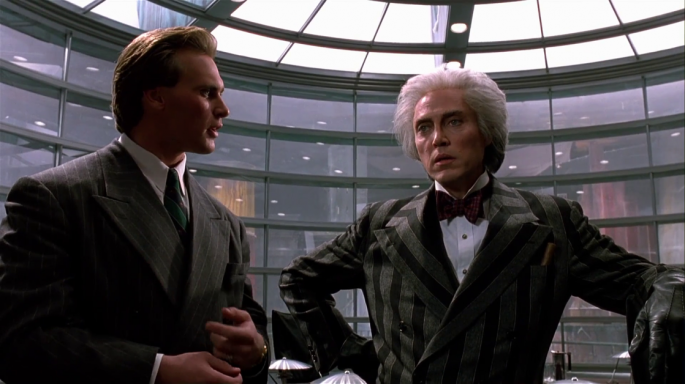
Tim Burton’s Batman Returns is my second favourite Batman movie thus far. It’s pretty underrated, stylishly cheeky and full of ornate, wonderfully oppressive, melancholic set design and drips with a gothic sensability that only Burton included in his versions, and seems to be missing from the franchise these days. It’s dark, comical and just a little bit campy, always a winning combination. Michael Keaton steps back into the batsuit for a second time, and he’s even more somber and downbeat than in Burton’s original 1989 film. Keaton is so talented, and one only needs to look at his zany work in Beetlejuice and compare it to the heft and restraint he shows as the caped crusader to see this. Here he’s faced with a snowy, blackened and endlessly corrupt Gotham City, this time under siege from three wildly different villains. Danny Devito plays Oswald Cobblepot, a.k.a. The Penguin, in what is probably the most outlandish character in the otherwise grim film. He’s a bad tempered, knobbly little gremlin, encased in sallow makeup and sporting disgusting, pasty little flippers. It’s hard to tell it’s even Devito at all until that little smart ass mouth opens up to hurl calculated obscenities at anyone and everyone. He aims to be mayor, and only in freaky deaky Gotham would a plan like that ever be taken seriously, from a sewer dwelling, animalistic mobster with an army of clowns following him. Christopher Walken plays evil, ghoulish Max Schreck, an amoral monster of a businessman with nefarious plans of his own, and a haircut that would make Andy Warhol run for cover. Last and most memorable is Michelle Pfeiffer as Selina Kyle, Schreck’s awkward, meek secretary who eventually becomes Catwoman. And what a Catwoman she is. Forget Anne Hathaway, Julie Newmar take a number, and we won’t even mention Halle Berry. No one played the pussy quite like Pfeiffer. She’s got a shiny, skin tight outfit with the body to match, a sassy, sexy attitude, a whip smart mouth on her and just a hint of psychosis, making her my favourite film incarnation of the character. “Meow” she purrs sensually as an incendiary bomb detonates behind her. Damn. They all get wrapped up in various schemes and scams. Penguin wants ultimate power, which apparantly involves kidnapping a bunch of infants. Schreck wants ruthless progress to tear Old Gotham up in worship of the almighty dollar, and Catwoman is content to slash and burn everyone’s plans, until she gets a bit of a smolder in her eye for Batman, providing some electric sexual tension between the two of them that’s a highlight of the film. Neither of them are sure whether they want to kiss or kill, fight or fuck the other, and it’s devilishly entertaining watching them hash out their hormones in naughty little action sequences and slow, slinky intimate scenes, involving both Bruce and Selina as well as their feral alter egos. Their chemistry revolves at the center of the piece, with all manner of circus sideshow madness happening around them. Pat Hingle and Michael Gough diligently put in work as Commissioner Gordon and Alfred Pennyworth, with Doug Jones, Michael Murphy, Andrew Bryarniarski and Paul Reubens rounding out the roster. Burton outdid himself with style on this one, his trademark eye for loving detail laboriously employed here to the point where it surpasses the artistry of a comic book and starts to look like some mad dream of Vincent Price. He dipped his toe in the water of the Batman universe with his first outing. Here he plunges headlong into it and fully commits to a style and tone that’s distilled to a satisfactory point that he wasn’t quite at with Batman 1989. A treasure in the franchise, and a wicked fun film at that.
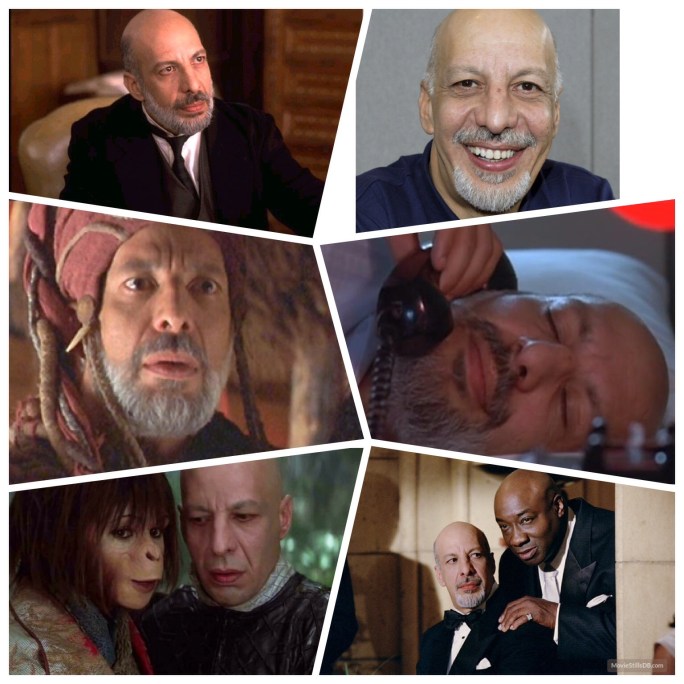
Proud to present to you my latest interview, with Erick Avari, an instantly recognizable, charming actor who seems to pop up all over the place. He has very memorable appearances in films including The Mummy, Independence Day, Planet Of The Apes, Stargate, Daredevil, Hachi: A Dog’s Tale, Paul Blart: Mall Cop, Mr. Deeds, The Glass House, The 13th Warrior and more. He’s also done work in television shows like The X Files, Madam Secretary, The Mentalist, NCIS: Los Angeles, Castle, Lie To Me, Burn Notice, Heroes, The OC, Alias and many more. Enjoy! Nate: When did you know you wanted to become an actor? Erick: Age 14 (1966) It was something the late Fr. McGuire said in a class named “moral science” which was essentially a forum to talk about just about anything at all. While on the topic of an artists’ responsibility to society, and he astutely pointed out that societies have flourished when artists hold up a mirror to life and crumbled when artists stopped doing so. It seemed like a noble profession and the final nail in the coffin sealing my fate as an artist. If he were around today I’d have to ask if he thought Art imitates life or the other way around?
Nate: The Mummy: Care to speak a bit about your experience on this film? Erick: Little bit of trivia. I was originally cast in the role Jonathan Hyde played and Omar Sharif was set to play the curator but two weeks before the shoot they called to say Omar had emergency hip surgery and so they were bumping me up to the role of the curator. It was a wonderful shoot! A couple of weeks in Marrakesh, a couple of weeks in London great cast and the most fun director to work with. It was magic. Made some lifelong friends and reestablished contact with some old. Who could ask for more? Nate: Care to speak a bit about your years growing up in Darjeeling, India? It’s an area I’ve heard a lot about and would be fascinated to hear what you have to,say about it. Erick: Funny you bring that up as just the other day some one posted a video of Darjeeling on Facebook and a flood of memories came pouring back. It is situated in one of the most beautiful parts of the world. Nothing like you might imagine India to be at all. Small tourist town nestled in the foothills of the Himalayas with the most spectacular views of the worlds highest mountain, Kanchenjunga. I believe natural beauty stimulates the creative mind and it’s no wonder the residents have always had an affinity to the arts. Growing up I was surrounded by music, dance, theater, literature and given my father owned and operated the only two cinema halls in town, I was a very popular kid on Saturdays when traditionally the two would flock to see the latest “flick” that was playing at either the Capitol Cinema or The Rink (formerly a roller skating rink). Nate: You have probably the best line in the movie Independence Day, despite only briefly appearing in the first scene. How was filming that for you, and how did it end up that you were uncredited for it? Erick: Another story behind that. That was Roland Emmerich and Dean Devlin’s way of saying thanks for my work on Stargate, shot the year before. Without going into too much detail but it was my first, “offer” and a very generous one to boot and I was overwhelmed with gratitude and though (mistakenly) and by not asking for billing I would be giving back in some stupid way. It was so wonderful to be appreciated and best of all, not having to go through the audition process. I can’t tell you how much of a joy that alone was but to be reunited with the same team even if it was for a week was heaven. Nate: If you had to think of some of your favourite roles, in both film and theatre, what might they be? Erick: Sir Richard in Jean Genet’s The Screens performed at The Guthrie theater in Minneapolis. One of the grandest productions on stage that I have been a part of (including King and I on Broadway) and perhaps the most acrobatic role physically I have ever undertaken. I ended up tearing ligaments in my ankle and finished the run on crutches. Best part, people thought the crutches were part of the play!
Vasquez in ’Tis Pity She’s A Whore at the Public theater with Val Kilmer, Jean Tripplehorn, Jarred Harris and on and on. Anyone who know the play knows that’s the run away role. Just loads of fun playing a smooth talking, eye gouging villain with an exit applause line designed to elicit applause to boot!
Nate: Daredevil: Nice to,see you pop in a comic book universe, playing Nikolas Natchios. How was your experience on that film? Erick: I was completely charmed by Jennifer Garner and I had become friends with Michael Clarke Duncan over the 6 months we worked on Planet of the Apes together so that was …god I’m running out of superlatives but you have in fact touched on some wonderful moments in my career. Sufficeth to say, I miss Michael and feel he died way too young as he had so much to give to the world. He was a wonderful soul. Nate: Tim Burton’s Planet Of The Apes: an underrated film for me, doesn’t deserve the negative reviews it’s gotten. How was your experience on this one? Erick: I think a lot of people got robbed on that one starting with Rick Baker for make up. Tim Burton had a wonderful concept going into the film and we, the actors were so excited about where this one was going to go. It’s too bad there were too many opinions that had to be considered in the making of the film and it ended up to be a completely different animal (pun regretfully intended) and was perhaps one of the biggest disappointments of my career. Nate: Any upcoming projects you are excited for and would like to speak about? Erick: I am returning to the theater, that is as soon as I find a job! I have been burning to get back to my roots and fortunately I am no in a position in my life where I can afford to do just that. There are roles in the cannon that I have been waiting to grow into and King Lear is at the top of my list. It will be a challenge that I will have to work toward but that is on my bucket list. Shylock is one I’d like another shot at as well and I could go on and on on that score. I am also transitioning into directing independent features and working to develop several projects. Nate: Films/Actors/Filmmakers that you admire and enjoy, and maybe have inspired your work? Erick: I have learned so much from every director and actor I have ever worked with. I have been fortunate to have worked with some of the greats of our era and I was always cognizant of the fact that I was getting a free education every time at bat. I think you learn so much from just observing and being privy to the conversations that move the creative process forward. To mention Woody Allen and Lasse Hallestrom and leave out Mike Nichols (whom I worked with although my scene from Charlie Wilson’s war was cut) or many of the theater directors I’ve worked with would be remiss of me. Nate: Thank you so much for taking the time to chat, and keep up the great work Erick!
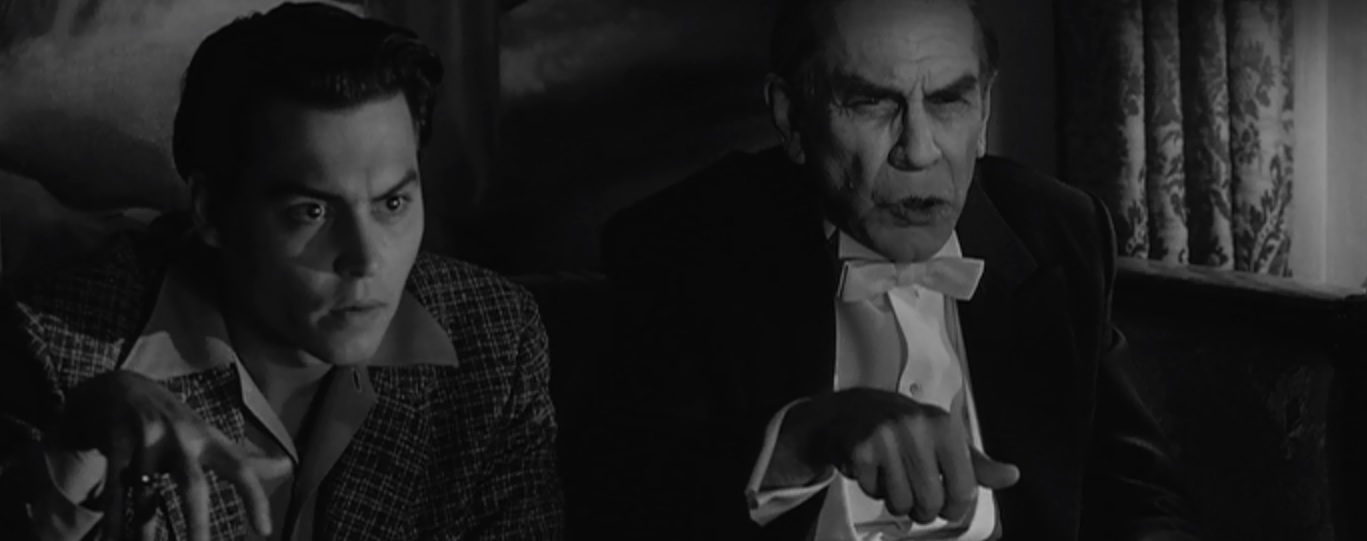
Other than Pee Wee’s Big Adventure and Beetlejuice, Tim Burton’s Ed Wood is my “favorite” film from this phenomenally adventurous and eccentric filmmaker, but I think it clearly stands as his “best” piece of work to date. Working with the invaluable screenwriting duo of Scott Alexander and Larry Karaszewski (Man on the Moon, The People Vs. Larry Flynt, the upcoming original FX series American Crime), Burton was able to craft a black and white ode to a Hollywood of yesteryear, and because the ingenious screenplay bucked the traditional notes of the conventional biopic, the film takes on a more layered feel and structure, examining not only Wood the director but Wood the man and Wood the mystery, as well as stopping to consider all of the colorful people who surrounded his bizarre life. Shot by the great cinematographer Stefan Czapsky (Batman Returns, Edward Scissorhands), it’s one of the rare modern movies to get the studio approved monochrome treatment (after switching homes from Columbia Pictures to Disney/Touchstone), but let’s be honest, there was NO other way to present this material; this is one instance where the content dictated the style, and not the other way around. Johnny Depp was marvelous in the picture, easily giving one of his greatest performances as a man caught in eternal confusion, both personally and professionally, never truly understanding his place in society or how to grasp all of the straws around him. Some of these themes would be later explored by Burton and Alexander and Karaszewski in last year’s underappreciated (at least by theatrical audiences) art world exploration Big Eyes, which featured a splendid lead performance from Amy Adams. The dynamic supporting cast includes Oscar winner Martin Landau, giving an unforgettable performance as screen legend (and notorious drug addict) Bela Lugosi, and also featured terrific turns from a pensively hilarious Bill Murray, the always awesome Patricia Arquette, an exasperated Sarah Jessica Parker, Mike Starr, Vincent D’Onofio, Max Casella, Lisa Marie, and G.D. Spradlin. The film opens with a charming and creative opening credit sequence evoking all of Wood’s disasterpieces, with Danny Elfman’s imaginative and playful musical score setting the tone early on. The film would receive overwhelming critical praise and also garner two Oscars, one for Landau for Best Supporting Actor, and the other for make-up artist Rick Baker. Alexander and Karaszewski would receive a WGA nomination for Best Original Screenplay. Despite not attaining box-office success in theaters, Ed Wood has lived on as one of Burton’s most respected and mature films, a piece of work that feels extremely personal and incredibly generous in spirit.
Podcasting Them Softly is proud to present a chat with feature film producer BILLGERBER. Bill has some huge credits under his belt — Clint Eastwood’s GRAN TORINO and Jean-Pierre Jeunet’s A VERY LONG ENGAGEMENT are major feathers in his cap — and over the past 30 years he’s etched himself into the Hollywood landscape with a diverse background that includes work in the worlds of both film and music. Attracted to exciting material and excellent filmmakers, he spent time at the studio level working as an executive on both Oliver Stone’s JFK, Michael Mann’s HEAT, Clint Eastwood’s UNFORGIVEN and Curtis Hanson’s LA CONFIDENTIAL, before branching out as an independent producer with a first-look deal at Warner’s. Passionate, insightful, and beyond knowledgeable, we had a great time chatting with Bill, and we hope you enjoy!






 Podcasting Them Softly is proud to present a chat with feature film producer
  Podcasting Them Softly