“We’ve got some unique time constraints.” : Remembering Déjà Vu with Bill Marsilii by Kent Hill

20376139_10211941414824671_4144323378367258309_n

Initially I felt the same way about Déjà Vu as I did Gilliam’s 12 Monkeys. Both of the inaugural screenings I attended were sullied by external forces which greatly influenced my mood during the viewings and thus, my opinion of the films.

But time, it was once said, is the ultimate critic. Under different circumstances I watched both films again, and, this time around, my feelings toward both movies were drastically adjusted.
2040d

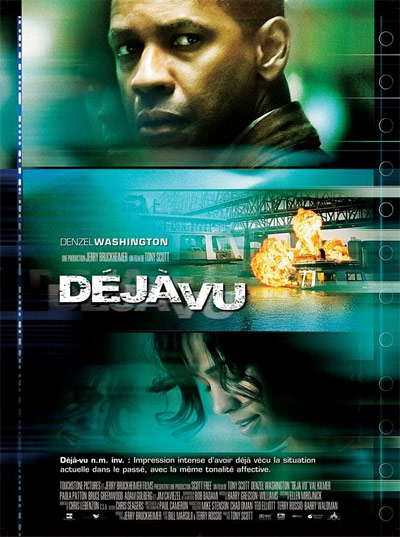
In several books on the art of screenwriting it is often put about that, if you cannot sum up the film you are writing in a single sentence, then you may want to rethink the plot. There is a great moment on the commentary track of this film in which the late, great Tony Scott admits that even he struggled to distill Déjà Vu into the logline form.

It’s a science-fiction/action/thriller/time-travel/romance in which the hero, Denzel Washington, meets the girl he will eventually fall in love with on the slab – dead as disco. Unbeknownst to him, he will eventually join a team that will, along with the help of a device that can see into the past, aid him in bringing her killer to justice. And it was from this humble yet intriguing premise that my guest, Bill Marsilii and his co-writer Terry Rossio constructed this rich, multi-layered tale which deserves more applause than some would proffer for its inventiveness and compelling real-world take on the age old time machine story.


But what I uncovered as I spoke to Bill was far more than a series of behind the scenes anecdotes and your typical boy meets idea, boy turns idea into a screenplay, screenplay sells for big dollars, boy lives happily and successfully ever after in Hollywood kind of scenario.

And yes, while it is true that Déjà Vu is the highest earning spec script thus far, beating out other entries like Basic Instinct, Panic Room and The Last Boy Scout, the story of how Bill came to, not only the concept, but how the writing and selling of the script changed his life is just as compelling as anything Jerry Bruckheimer and Co. managed to get onto the screen.


This interview, at least for me, proved also to be somewhat of a masterclass in, not only screenwriting, but the ever painful and soul-crushing journey the writer must endure to actually sell the script. It’s about the luck, timing, persistence and internal fortitude that you must have sufficient quantities to survive the gauntlet that exists between the page and the screen.

Bill’s heart-warming, inspirational adventure to make it in the realm where dreams are brought to life with that strange blending of art, science and commerce – that ultimately no one can tell you how, when a film is successful, it all comes together in the perfect proportions to ensure success is on the menu – is a conversation that could have gone on and on.

I hope you’ll will enjoy some extended insights into Déjà Vu, but more than that, I hope you, if you are one of those dreamers still out there trying to write your own ticket to cinematic glory, that Bill’s wisdom you’ll take onboard and continue pounding away on those keys until fortune smiles and your efforts will be coming soon, to a theater near us…

Ladies and Gentlemen . . . Bill Marsilii . . .
thvjkxqamkgoxlln7oui

“Roadblocks won’t stop somethin’ that can’t be stopped.” : Remembering The Wraith with Mike Marvin by Kent Hill

AC_A_HotDog_MarvinLangeCupSunValley_web

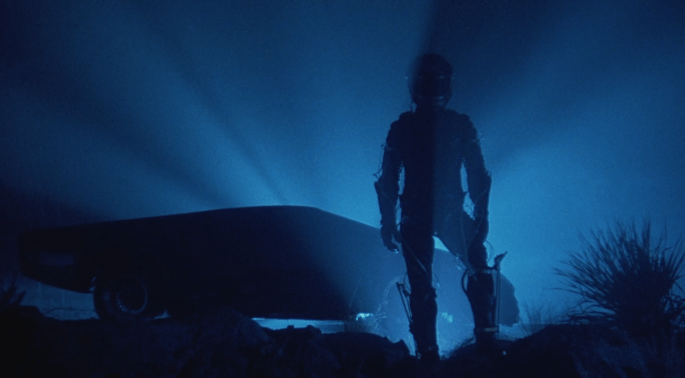
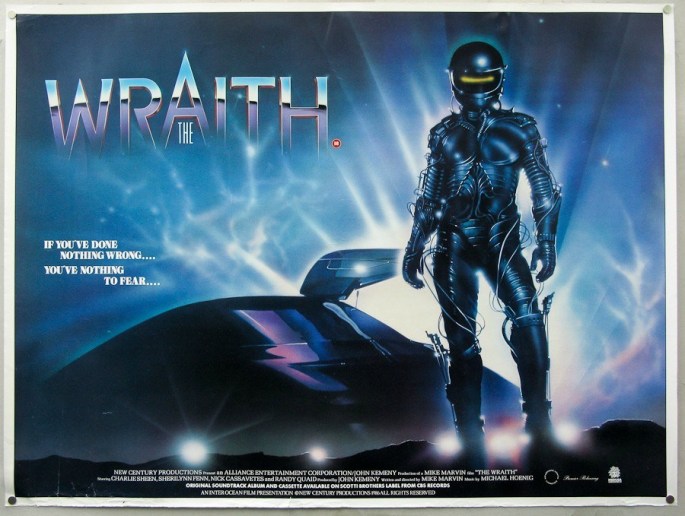
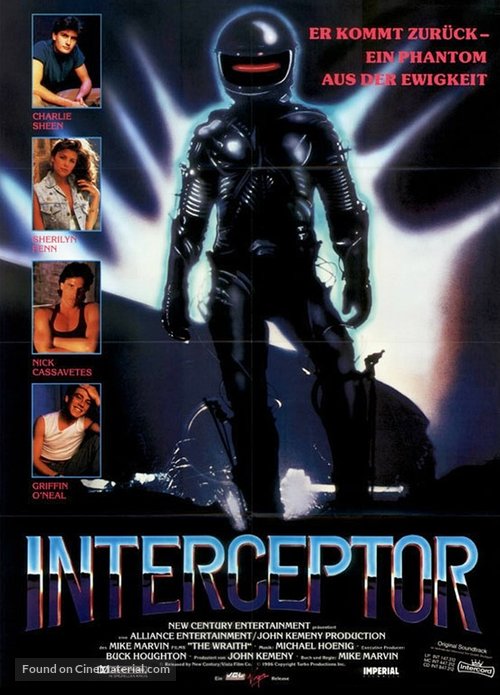
The Wraith was like many a glorious find back in the day at my local video store. The cover had a holographic shimmer to it – a strange robot-like character standing in front of some bad-ass, customized car that looked as though it would be more comfortable zipping through the galaxy rather than flying at break-neck speeds along the long stretches and cactus-lined roads of Arizona.

Yes sir, that cover held the promise of sci-fi mysticism combined with heat-thumping vehicular action to rival the Road Warrior.

Oddly enough, Dr. George’s post-apocalyptic action-adventure was the template for Mike Marvin’s Cult Classic. When the man who started out making skiing films came to Hollywood and saw an opportunity to fuse High Plains Drifter with Mad Max 2, one would assume it was a concept any studio would be happy to throw their weight behind.

But, then as now, the movie business can be treacherous, and Marvin’s experiences making The Wraith were far from pleasant. As a matter a fact, they were a nightmare. Plagued by unscrupulous producers, a tragic death while filming – along with all the other perils of production – it is a wonder that this certified 80’s classic ever made to to the screen.

tumblr_m7i5f6oPSu1qfyx7eo1_1280

Lucky for us, however, thanks must go, in no small part, to a string of wonderful performers, a dedicated crew and a talented director at the helm, The Wraith survives as a one of a kind mash-up of genres that has endured and is, for this film writer at least, yet to be equaled.

This interview was conducted before I was able to sample Mike’s great and candid commentary on the Region 1 DVD release of the film. And while some of what he relayed to me you will find on that release, the truly glorious thing that I experienced was to hear these insights, plus a couple that were not covered in that commentary track, first hand from this journeyman warhorse of a film-maker.

the-wraith-german-movie-poster

So seek out the The Wraith, those of you who have not yet experienced it. Let this interview, hopefully tantalize your interest to learn more about this incredible film that really was both ahead of its time, a product of its time and most assuredly one of a kind…

Ladies and Gentlemen…Mike Marvin.


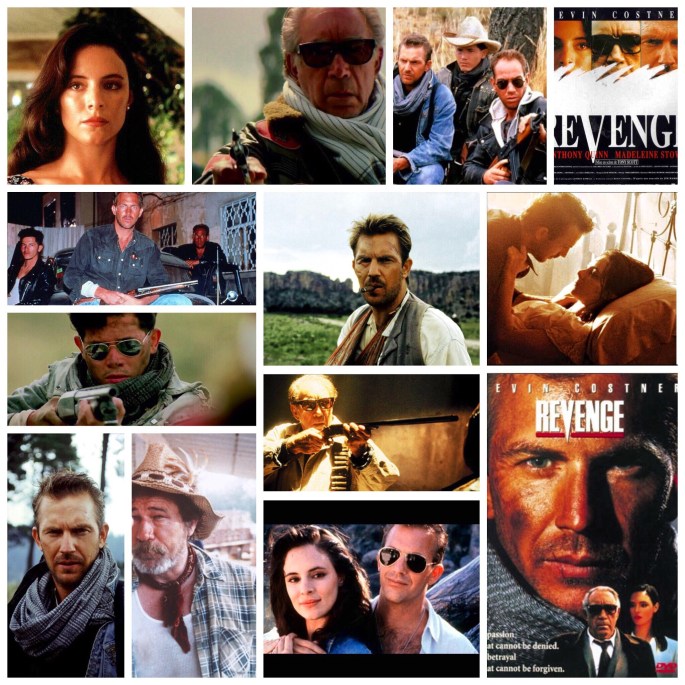
Tony Scott’s Revenge

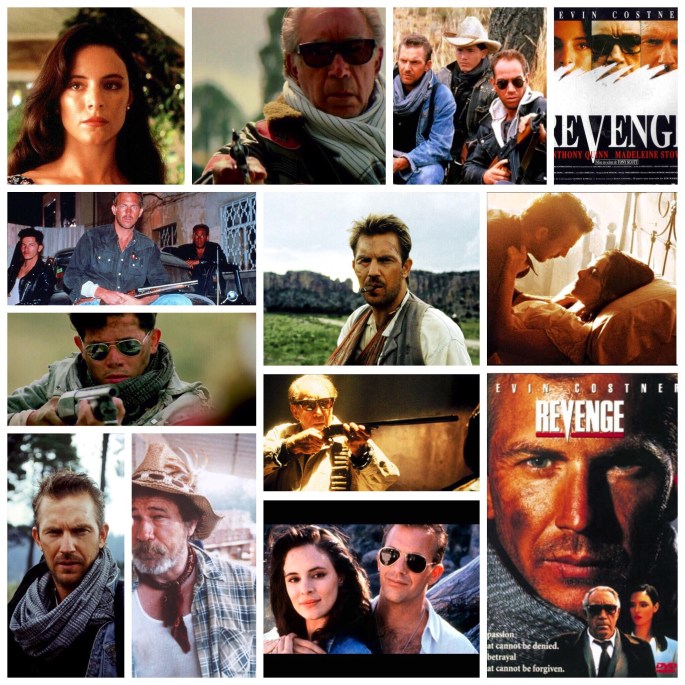
Tony Scott’s Revenge is a difficult one to sit through, but it’s Aalto a good showcase of not only the late director’s inherent talent around a camera and staging of restless, brutally violent action, as well as one of the better, albeit off-putting entries in a sub genre I like to think of as ‘desert noir’ (Oliver Stone’s U Turn pioneered and set the good standard in my books). Sweaty, sleazy, excessively graphic, melodramatic and mottled out of those old school, primitive pulp laden love triangle bad blood archetypes, it’s relentlessly unpleasant but has a dark hearted charm that somehow sneaks in the back door and gives it an iota of likability, albeit in a weird way. Kevin Costner plays a hotshot navy pilot (Scott shamelessly plugging Top Gun) who heads to Mexico for a little down time, where he finds anything but. While on a visit to his old gangster friend (Anthony Quinn, that big ol’ sweaty Italian meatball), he meets the kingpin’s beautiful, shockingly young wife Miryea (Madeleine Stowe, back when she used to be in things), and naturally they fall in love. This ignites a volcanic conflict between them all that results in some of the most sadistic, sexist acts of violence and a giant rift in the brotherhood between Costner and Quinn, for you see, the pilot saved his life years before and there’s some vague blood debt owed, obviously now null in void when he tries to mow the guy’s lawn. There isn’t much to the story other than these Stone Age, chauvinistic games of betrayal, sex and retribution the three play, or at least the two while Stowe is so badly hurt she’s out of commission after the first act. Costner spends time moping about the backroads and flophouses of Mexico, befriending a dusty old shit-kicker (the late character actor James Gammon, credited simply as ‘Texan’), who helps him get back on his feet. He’s also aided in his vendetta against Quinn by two mercenaries, played by scene stealing Miguel Ferrer and John Leguizamo. The eventual final confrontation between them has the hollow howl of redundancy as both men sheepishly realize they’ve become a slave to their own emotions and ruined their lives, and especially Miryea’s. Ebert wrote of this “It’s such a good job of salesmanship that you have to stop and remind yourself you don’t want any.” Well, that’s Scott for you, who could take footage of a domestic dispute and whip it up into a frenzy of action and energy you can’t take your eyes off of. This is a dark, empty, unpleasant film bereft of gallows humour or tongues in cheeks. But there’s something about it’s lurid sense of danger, hot blooded anger and over the top, hide-behind-the-couch doses of extreme violence that draw you in and cast a dark spell.

-Nate Hill

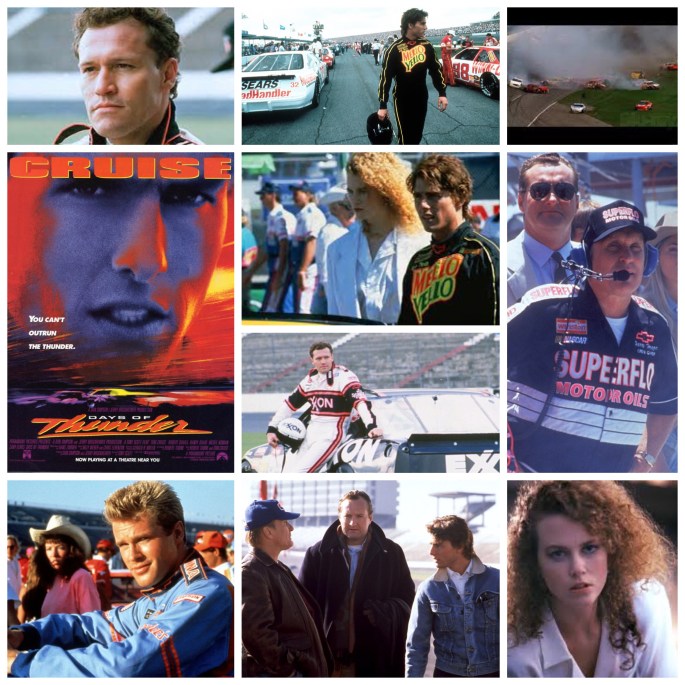
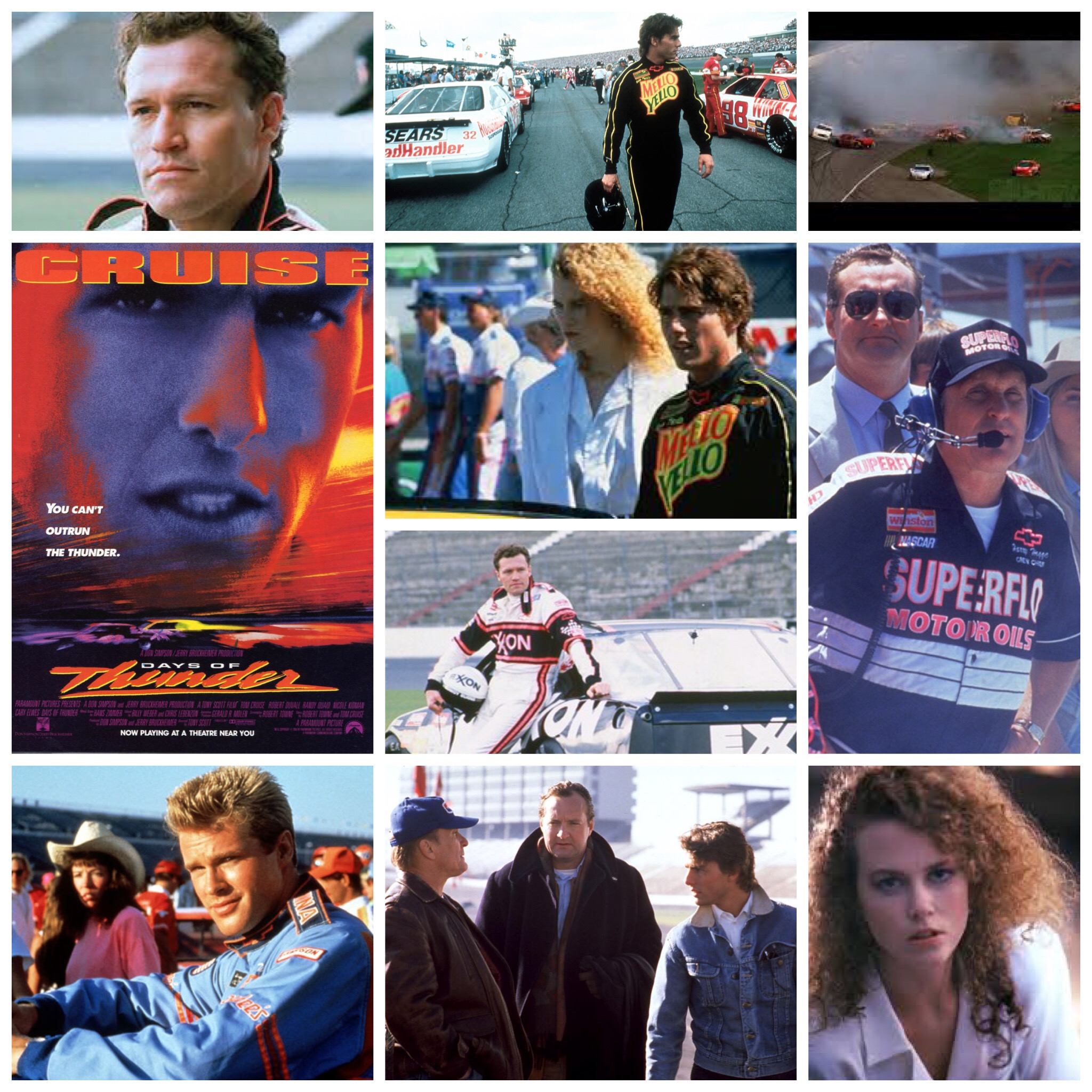
Tony Scott’s Days Of Thunder 


The first ten minutes or so of Tony Scott’s Days Of Thunder should be used to demonstrate the power of any new home theatre/speaker/sound system freshly harvested from Best Buy. As it opens on a piping hot stock car race-track in the midst of noonday sun festivities and preparations for the day’s events, Hans Zimmer’s explosive, patriotic thunderbolt of a score kicks in and you feel that mad rush of adrenaline reserved for only the most combustible, rabidly entertaining movie magic. It’s just too bad that the rest of the film can’t keep up with the level of energy on display in that whopper of a prologue, despite doing it’s very best. An obvious sister film and coattail hugger of Scott’s other ‘loud noises’ film Top Gun, there ain’t much to it other than screaming race cars and a daredevil Cole Trickle (Tom Cruise) trying to prove his sporting worth to various folks including the romantic interest, a doctor played by sexy Nicole Kidman and the sagely Yoda of stock car lore (Robert Duvall). He also has quite a few homoerotic run-ins with rival/partner Rowdy Burns (Michael Rooker is certainly someone I’d tag with the adjective rowdy), and of course races a whole bunch of race cars as well as crashes a few. You gotta hand it to cinematographer Ward Russell, as it can’t be an easy task to do crisply capture those vehicular torpedoes as they careen by at a zillion miles per hour, let alone immortalize the afternoon sun glancing off the Wonderbread sponsor logos so beautifully. Like I said, after that initial banger of an opening credits sequence, its run of the mill in terms of story, albeit dynamite in terms of stunts. Watch for work from Randy Quaid, Cary Elwes, Fred Dalton Thompson, John C. Reilly and mega-producer Don Simpson in a neat extended cameo. The real magic happens with Zimmer’s score though, go check it out on YouTube, as iTunes only has some weak retread by some philharmonic orchestra schmucks. Quite possibly one of the maestro’s best works. 

-Nate Hill

PTS Presents EDITOR’S SUITE with MARK GOLDBLATT Vol. 2

Goldblatt v2

goldblatt

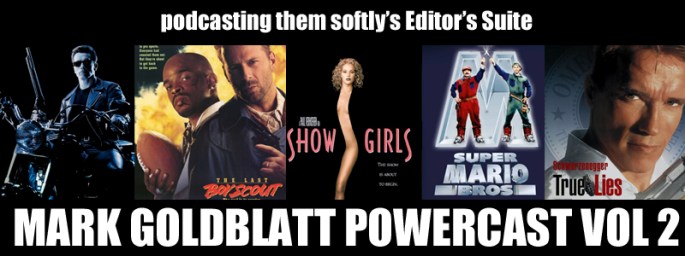
Podcasting Them Softly is incredibly excited to present PART 2 of our epic conversation with veteran film editor Mark Goldblatt! Up for discussion — his work on James Cameron’s Terminator 2: Judgement Day (aka one of the greatest movies ever made), Tony Scott’s The Last Boy Scout (one of our all-time favorites!), the off-the-wall big-screen video game adventure Super Mario Bros., Cameron’s spectacular action-comedy True Lies (try getting this one made today…!), Paul Verhoeven’s extreme cult classic Showgirls, and Verhoeven’s bold and bloody sci-fi satire Starship Troopers. This is yet another fabulous and informative chat with a true legend in the industry. And just wait – there’s still one more episode with Mark coming in the near future….! We hope you enjoy!

PTS PRESENTS: WRITER’S WORKSHOP WITH PETER CRAIG

CRAIG POWERCAST

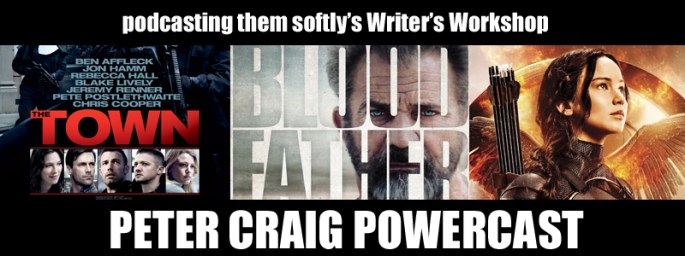
Peter CraigPodcasting Them Softly is thrilled to present an exciting chat with the extremely talented author and screenwriter Peter Craig. Peter collaborated with Ben Affleck and Aaron Stockard on the screenplay for the blockbuster crime movie THE TOWN, and hitting screens this weekend is his latest project, the Mel Gibson action thriller BLOOD FATHER, which finds Gibbo back in total ass-kicking mode, with the film serving as an adaptation of Craig‘s original novel. Other co-screenwriting credits include THE HUNGER GAMES: MOCKINGJAY PART 1 and 2 for director Francis Lawrence, which he tackled with writer Danny Strong, as well as drafts for the hotly anticipated sequels to both TOP GUN and BAD BOYS for super-producer Jerry Bruckheimer. He’s an accomplished novelist, with titles that include THE MARTINI SHOT and HOT PLASTIC, while the future holds some interesting big screen work, with an adaptation of Homer’s ODYSSEY, an adaptation of Lynsey Addario’s memoir IT’S WHAT I DO for producer Steven Spielberg, and a really cool sounding submarine action film called HUNTER KILLER with Gary Oldman and Gerard Butler. This was a serious treat and total honor to be joined by Peter for a discussion on his work – we hope you enjoy!

PTS Presents EDITOR’S SUITE with MARK GOLDBLATT

GOLDBLATT vol

goldblattPodcasting Them Softly is beyond thrilled to present a discussion with veteran film editor Mark Goldblatt! Mark‘s credits are beyond amazing, and feature some of the greatest action adventure films of our lifetimes  — The Terminator, Terminator 2, True Lies, Bad Boys 2, Pearl Harbor, Armageddon, Commando, Rambo: First Blood Part 2, Starship Troopers, Predator 2 and Tony Scott’s immortal action masterpiece The Last Boy Scout. He’s worked with absolute titans of industry, including James Cameron, Michael Bay, Paul Verhoeven, and Joe Dante, all of whom Mark has worked with multiple times. Other amazing credits include Rise of the Planet of the Apes, Hollow Man, Showgirls, The Ambassador, Halloween II, and Piranha. He also had multiple collaborations with Cannon Films head honcho Menahem Golan, which is always a subject that fascinates us at PTS! Mark‘s directorial debut was the wild and crazy Dead Heat with Treat Williams and Joe Piscopo, which he then followed up with the absolutely awesome The Punisher with Dolph Lundgren. We were overwhelmed by his resume and are so excited to share this exciting chat!
Tony Scott’s Unstoppable: A Review by Nate Hill


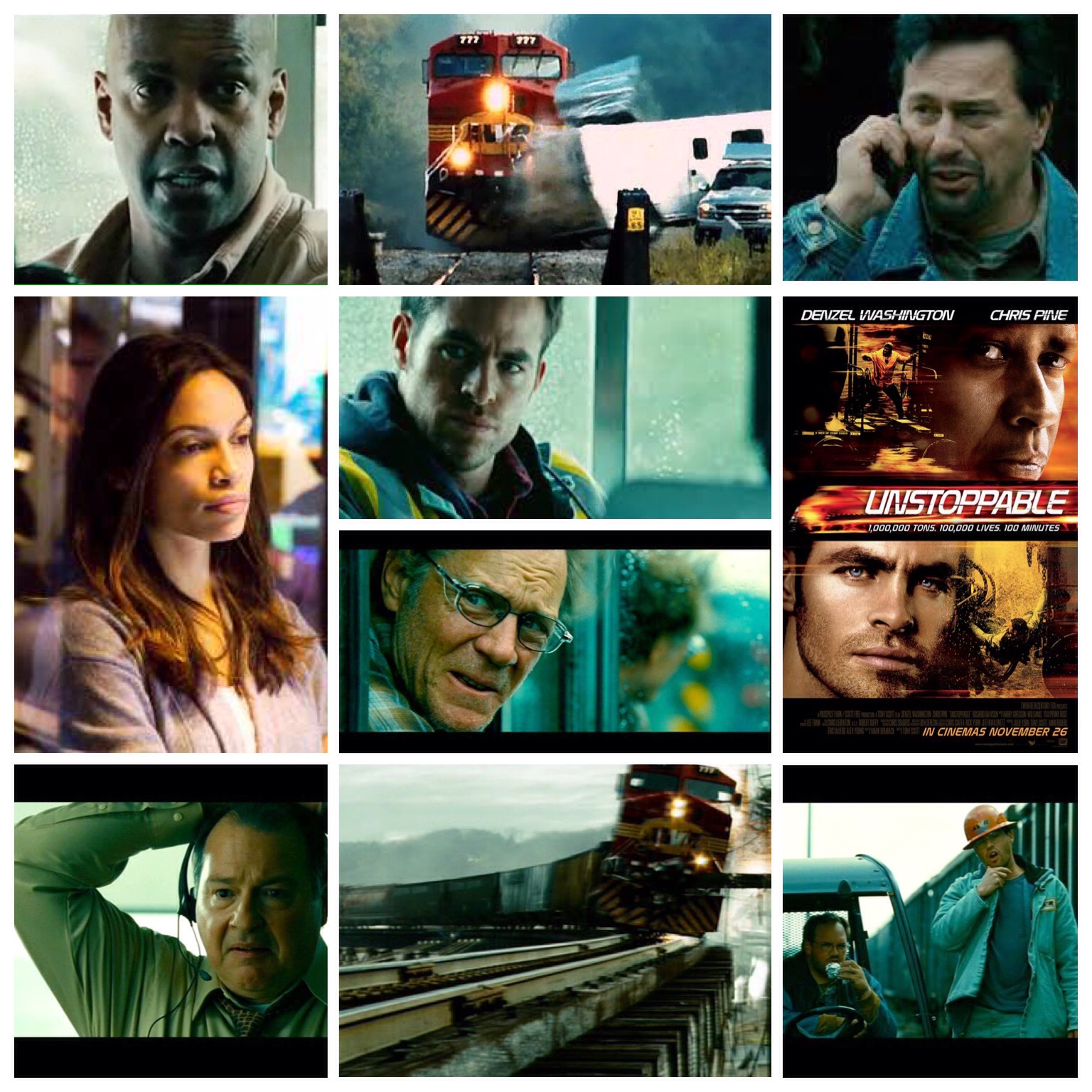
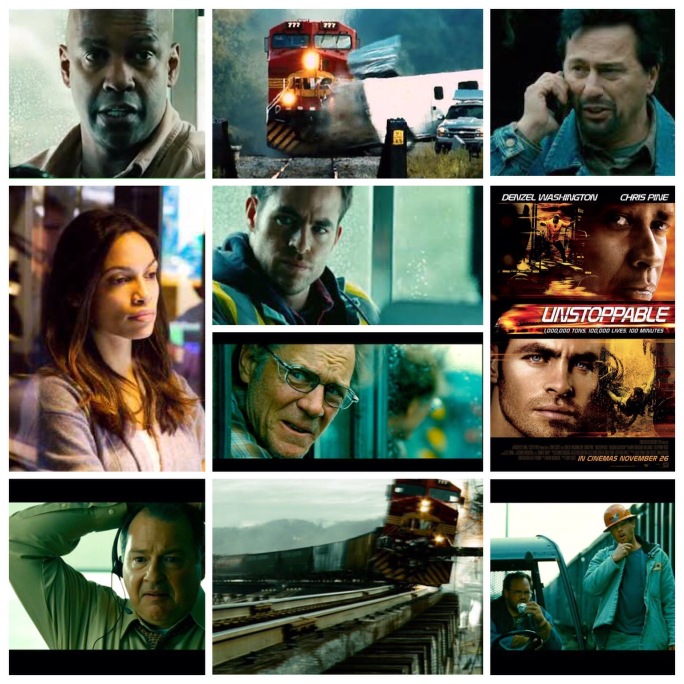
Tony Scott’s Unstoppable was the maverick’s last directorial outing before his heartbreaking and untimely death. It’s ironic because the film’s title is a descriptive term I would have applied to the man’s career, life and approach to filmmaking. But it was not to be. This is some swan song of a film to go out on though, a pleasing juggernaut of an action drama that greases the tracks and goes full steam ahead. Any film about trains run amok will inevitably be compared to the 1984 masterpiece Runaway Train, and although this one is vastly different in both story and tone, they just seem to be sister films. The mournful, resolute nature of Jon Voight’s character in it just seems to echo the sadness surrounding this film, and the fact that it was Tony’s last. But that’s just my strange intuition talking. The film itself isn’t really melancholy or downbeat, in fact it focuses largely on human triumph in the face of gross error. There is in fact a runaway train on the loose here, but the stakes are upped when we find out that it’s packed to the brim with highly toxic and flammable chemicals, and hurtling unchecked towards a densely populated metropolitan area. Denzel Washington is the Everyman veteran railroad worker, in danger of having his job devoured by greedy corporate development and ready to have a meltdown. Chris Pine is the hothead rookie swaggering through his first month on throb, and together they have to deal with the disaster, and prevent any further outcome. Rosario Dawson is the frantic control station operator, trying to coach two other workers (Lew Temple & Ethan Suplee) and help as best she can. Kevin Dunn is the abrasive company CEO, unwilling to get his hands dirty and callously looking for the first readily available solution, even if it results in mild casualties that he doesn’t have to witness. It’s all been done before, no doubt, but not by Scott, and you can never write off a formula, trope or act n cliche as dead until the maverick has had a good crack at it. The scenes involving the train are breathless and edited with a glass shard explosiveness, never to shaky or chaotic, always in control and bursting from the frames like the speeding locomotive they encompass. Look out for Jeff Wincott as Pine’s older brother, as well as Kevin Corrigan, T.J. Miller and David Warshofsky as well. It’s not a bad little flick for a director to put the final seal on his career with, and stands as a wrecking ball of an action flick. I just wish we got to see more from the guy. RIP Tony. 

Tony Scott’s Man On Fire: A Review by Nate Hill 

Tony Scott’s Man On Fire is one of those films I can watch time and time again and never tire of, a magnificently melancholy tale of South of the border justice, criminal intrigue and a tequila shot of pulpy, blood soaked style that gets me every time. It’s loosely based on a 1987 film of the same name starring Scott Glenn, Jonathan Pryce, Danny Aiello and Joe Pecshi (there’s a random lineup, no?), but Scott intrepidly branches off into his own territory, and thank god for his vision. This was the first film in which he really explored his sketchy smokehouse of an aesthetic that he would later take to angelic heights with Domino. Colors blur and saturate, editing rockets by with the force of a bullet in a storm, subtitles appear arbitrarily and seemingly of their own volition. It’s a jarring tool set that he employs, and many abhor it. I’m as in love with it as he was though, and whether to throw us right into the protagonist’s psyche or simply because he felt the need to paint his pictures this way, the rest of the films in his remaining career carried the DNA, in varying doses. Fire is the key word for this film, in many of it’s forms. There’s a smoldering ember in Denzel Washington’s John Creasy that is fed by the winds of corruption as the film progresses, erupting into a blazing inferno of violence and fury. Creasy is a broken man, haunted by the questionable, never fully revealed actions of his military past. “Do you think God will ever forgive us for what we’ve done” he grimly asks his old war buddy Rayburn (a scene stealing Christopher Walken). “No” Rayburn ushers back curtly. It’s at this heavy nadir we join Creasy, lost in a sea of alcohol and guilt, an unmooored ship with a shattered hull looking for both anchorage and repair. Rayburn hooks him up with a bodyguard gig in Mexico City, keeping the young daughter of a rich businessman (Marc Anthony, terrific) safe from the very real threat of kidnapping. Dakota Fanning is compassionate, precocious and endearing as young Pita, who spies the wounded animal in Creasy right off the bat and tries to make friends. Creasy draws back in reluctance, but eventually warms up. I love the pace of this film to bits. It spends nearly half of its hefty running time simply getting to know these two characters, forging a bond between them before the inciting incident even looms on the horizon. And when the kidnapping occurs, as it must, the stakes are high as can be and our investment level in the situation is paramount. Setting up character is so key, and Scott nails it with scene after scene of quiet and careful interaction. Then he yanks the lid off the pot, as Pita is snatched in broad daylight, Creasy is injured and the kidnappers vanish into thin air. Pita’s mother (a soulful Radha Mitchell) works with the dodgy Mexican authorities and her husband’s lawyer Jordan (a sleazy Mickey Rourke). Creasy has other plans. Once healed, he embarks on a mission of fury and vengeance, knocking down doors, removing body parts, inflicting gratuitous bodily harm and using every technique in his training (believe me, there are some interesting ones) to track down those responsible and get Pita back. Washington does all this with a calm and cool exterior, letting the heat emanate from every calculated syllable and intense glare. The descent into Mexico City’s poverty stricken criminal underworld is a grisly affair, and all sorts of ugliness is exposed, shredded through the caffeinated prism of Scott’s lens. Two cops do what they can to help Creasy, idealistic Guerrero (Rachel Ticotin) and battle hardened Manzano (the always awesome Giancarlo Gianninni). It’s Creasy’s show though, and he blasts through it like a righteous hurricane of blood and bullets. Scott’s films have a knack for ending in over the top, Mexican standoff style shootouts, but the man subverts that here, going for something far more sorrowful and atmospheric, ending an intense tale on notes of sadness and resolute calm, gilded by the aching tones of songstress Lisa Gerrard and composer Harry Gregson Williams. Walken provides both comfort and catharsis, the only beacon of hope for Creasy other than Pita. Unlike John, Rayburn has moved on from the horrors of their past, but one still sees the trauma in his soul when he looks John in the eye and gets hit with what is reflected back. Tough stuff to get right, but hey, it’s Walken we’re looking at here, and he’s brilliant. Rourke has little more than an extended cameo, but his flavor is always appreciated, and he’s great too. I had no idea Anthony had the chops he exhibits here, but I loved his arc as well as his performance and he holds his own in a blistering scene with Washington. Washington is an elemental beast, shadowing what’s left of his humanity under a cloak of booze and brooding contemplation, until he’s coaxed out by the life saver Pita. Then he’s a lion, riding guns out into a ferocious swan song of a sunset that may just hold rays of redemption for him. This is Scott at his best, his unique brand of storytelling at its height, his creative juices a canister of lighter fluid set aflame with genius and innovation. A masterpiece.

Tony Scott’s Crimson Tide: A Review by Nate Hill 

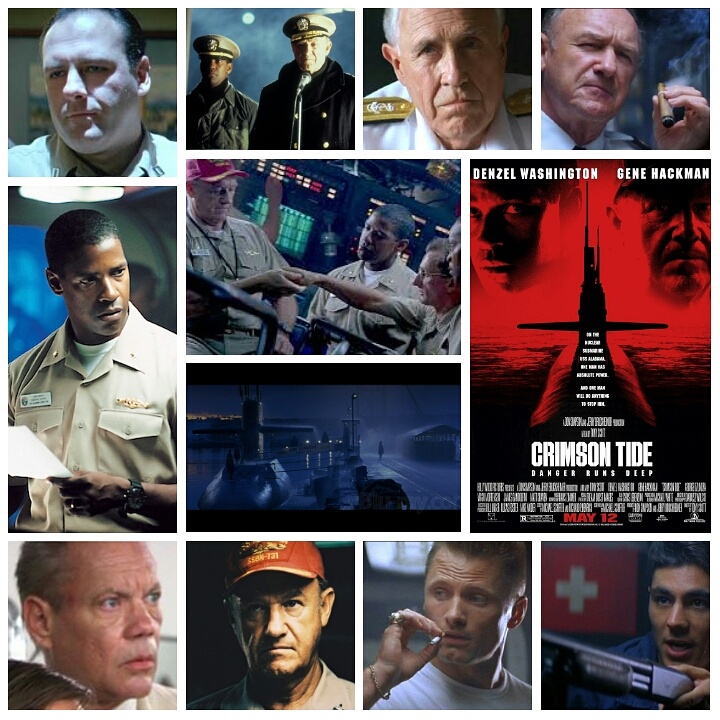
In terms of submarine movies, nothing will light your fire or get your pulse racing quite like Tony Scott’s Crimson Tide (well maybe Das Boot, but that’s another story). Scott just has this way with hyper kinetic tension and a knack for causing whirlwinds of propulsive energy in his work, and even when the material is more melancholy there is still a rousing climate to every frame. Pair his visual skill with Quentin Tarantino’s sterling (and uncredited) ear for dialogue and you’ve got one simmering package. Not too mention the actors and the blood stirring score from Hans Zimmer which is one of the composer’s best and richly orchestrated works. This is the second time Tarantino and Scott have done the writer director duo, albeit the lesser of the two films, it’s still a stunner. When lunatic Russian extremist Vladimir Radchenko (Daniel Von Bargen, RIP) goes off in a huff and threatens nuclear warfare, the Yanks get nervous and send in an ace in the hole submarine loaded with warheads of it’s own, cause, you know, ‘just in case.’ The vessel is captained by an intense and corrosive Gene Hackman, backed by a more reserved and introverted Denzel Washington. The two clash right off the bat and its obvious that fireworks of conflict will erupt between them once the shit hits the propeller. It soon does, in the form of a command order that is partly lost in translation. It could mean go ahead and fire the nukes on Radchenko. It also could not. Hackman, that spitfire, wants to engage and eradicate any chance of action on the extremist’s part. Washington insists on holding back, terrified by uncertainty. This troublesome personal disagreement eventually leads to flat out mutiny amongst the crew, in more ways than one. The crew has no concrete leader to direct their devotion to, and that’s a dangerous thing aboard a military vessel. Hackman and Washington are pure electricity as opposite sides of the same coin, facing off in a claustrophobic arena where one wrong move could end up in cataclysm. Along with internal disruption concerning the crew, there’s also the fact that they’re on a submarine miles below the surface to contend with, and it’s one whopper of a suspense cocktail. Viggo Mortensen is terrific in a conflicted supporting role, and watch for solid turns from Danny Nucci, George Dzunda, Matt Craven, Ryan Phillipe, Steve Zahn, Chris Ellis and a fiery James Gandolfini. Ooo and Jason Robards in an uncredited cameo, which he’s also done for Scott in Enemy Of The State. It’s pure movie bliss, but what can you expect from Scott other than the cream of the crop? The guy gave us pure gold for decades, bless his soul, and this is one of his best.