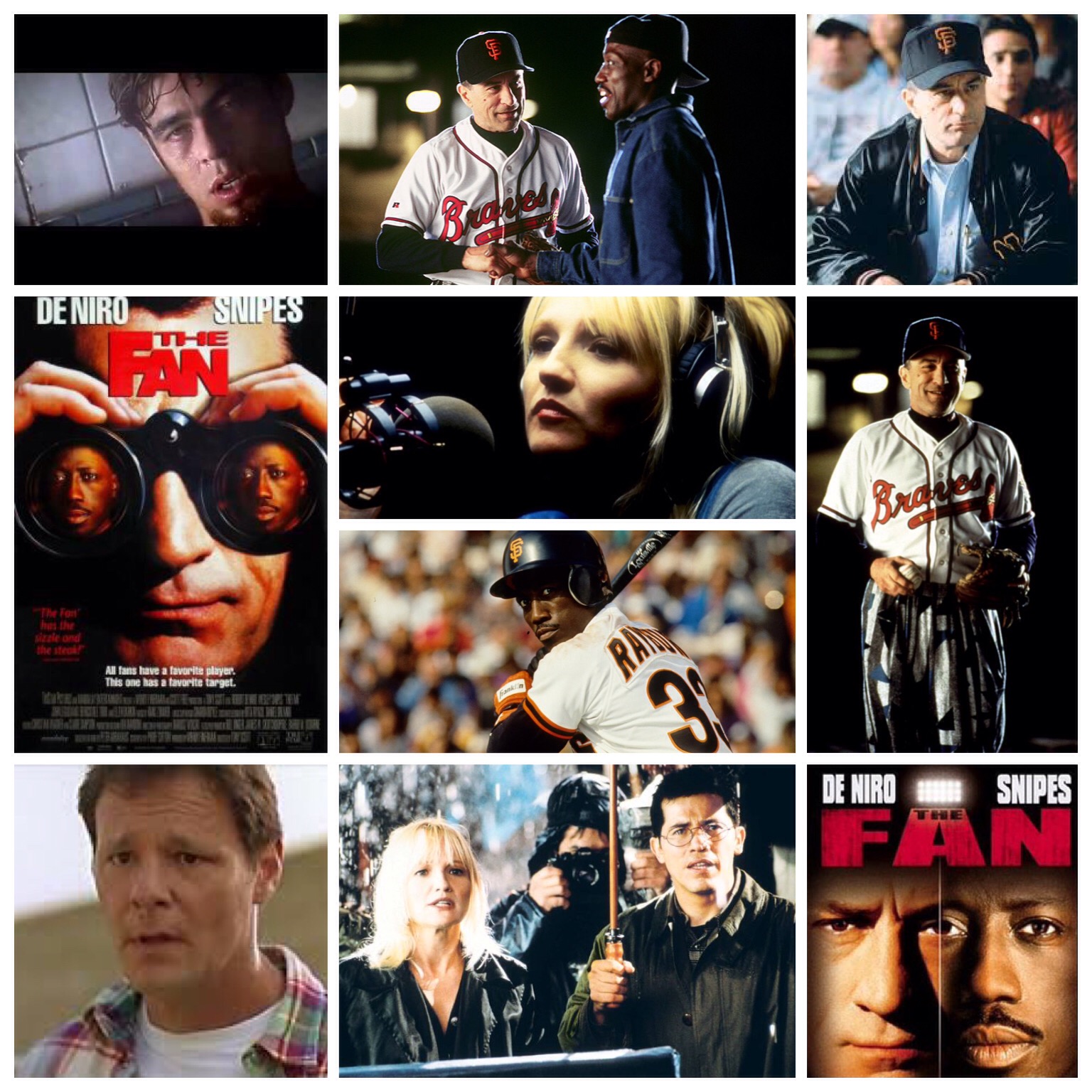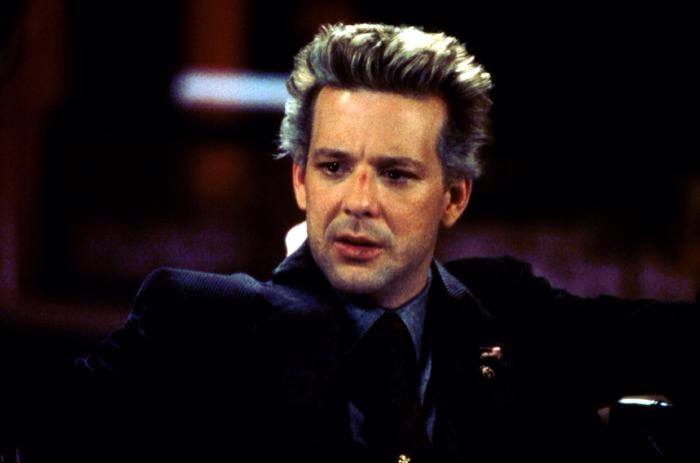
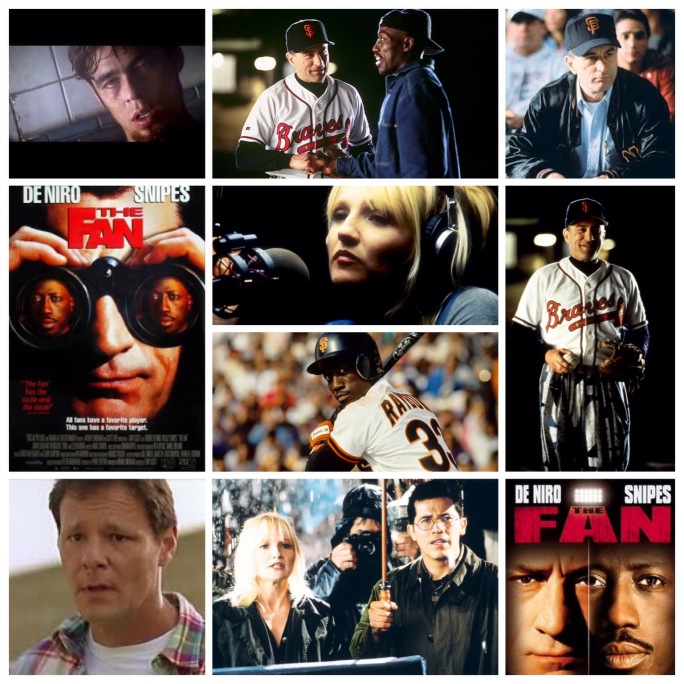
Tony Scott’s the fan is a wild ride with an off the hook turn from Robert De Niro. It’s ranked and regarded as a pretty low notch on Scott’s belt, but it’s hard to compete with his best work. It’s still a sleazy blast and pure Scott, his characters always let, lurid and delightfully pulpy. Sure it falls apart near the end, but until then it’s nasty, delicious fun. De Niro plays Gil, a die hard baseball fan and devout follower of Bobby Rayburn (Wesley Snipes), star player for his favourite team. Gil wants Bobby to succeed so badly that he becomes violent, unstable and pretty bonkers. At first it’s obnoxious and amusing, but soon he gets dodgy and dangerous and eventually just out of control. It’s great fun seeing De Niro go bug nuts bit by bit, and he’s always had a wild menace that he like to take down from the shelf and dust off for the occasional performance. Benicio Del Toro does one of his puzzling, indecipherable vocal riffs as a rival player, adding to the weird factor. Ellen Barkin is a sexy sass bomb as Jewal Stern, a mouthy talk show host who sniffs out the controversy in high style. John Leguizamo is always sterling, and classes his scenes up like a pro. Watch for speckled cameos from M.C. Gainey, Brad William Henke, Don S. Davis, Tuesday Knight, Wayne Duvall, Richard Rhiele, John Carrol Lynch, Michael P. Byrne and Chris Mulkey as well, all excellent. Not Scott’s best for sure, but a nicely mean spirited little romp through the psycho stalker fields. Fun stuff.
Tag: Tony Scott
Tony Scott’s Beat The Devil: A Review by Nate Hill
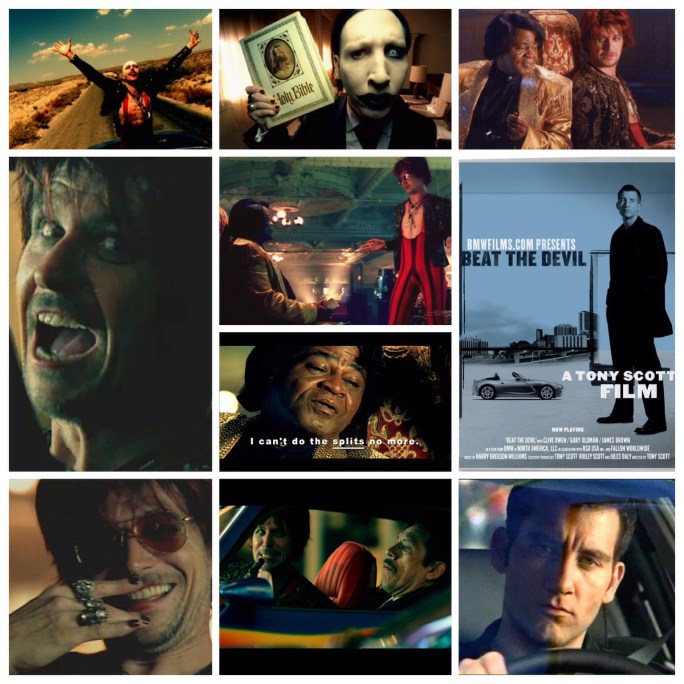
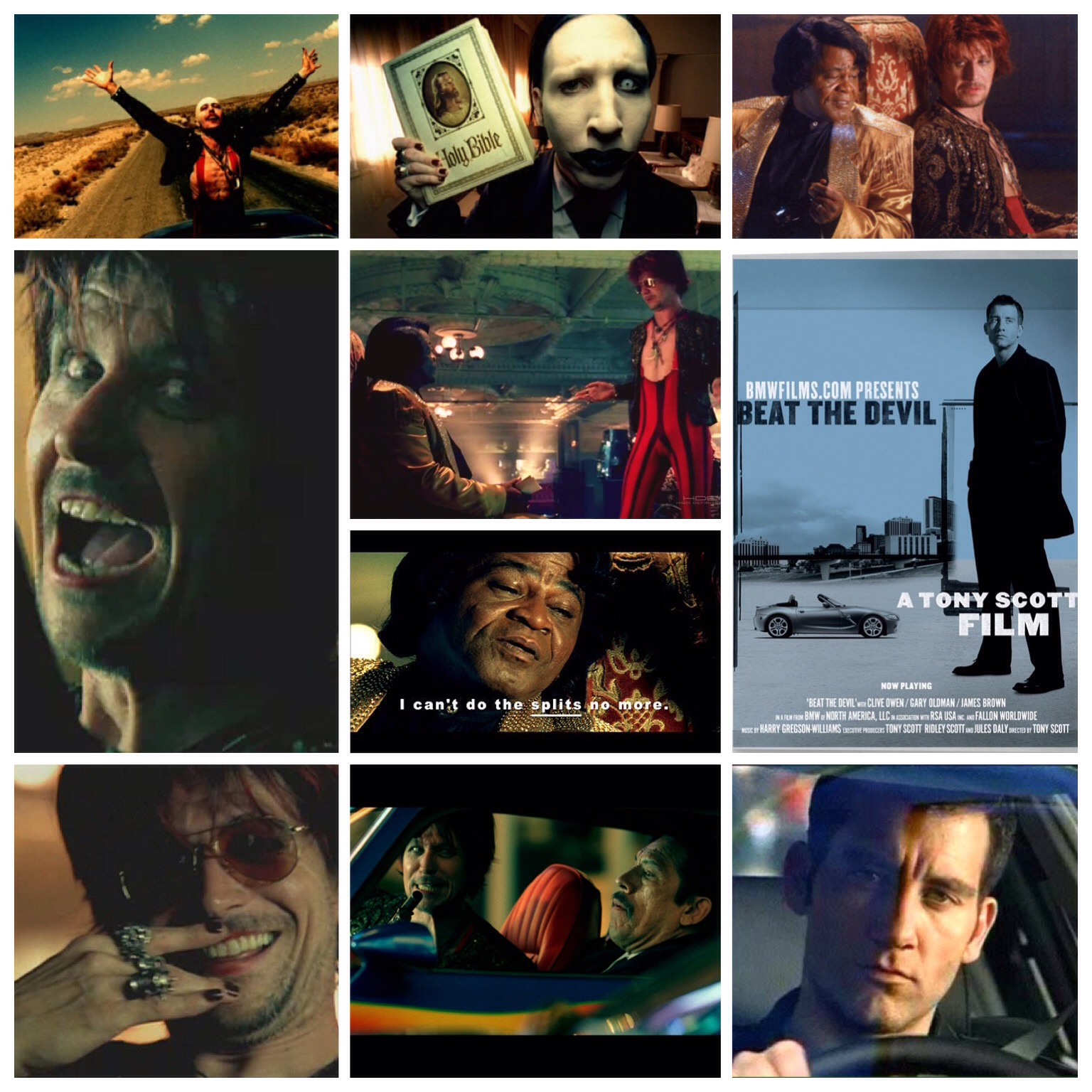
Tony Scott’s Beat The Devil is one part of a multi episode series of promotional short films called The Hire, themed around, and sponsored by BMW. An unbelievable amount of acting heft and prolific directors were brought in to make these, including Scott, Joe Carnahan, Alejandro Gonzales Inarritu, Guy Ritchie, Ang Lee and more. They’re all wonderful and different in their own way, but Scott’s is my favourite of the bunch hands down. From the eclectic cast, all having a blast, to the sheer kinetic momentum and adrenaline soaked velocity of the stylistic direction, it’s pure moviemaking. Tony Scott’s very distinct and polarizing visual aesthetic rears its beautiful head here for a literal crash course which would go on to emerge from the chrysalis and fully spread its wings in the director’s two best films, Man On Fire and Domino. This one is a delicious little treat and obvious precursor to those. The story is fable in nature, starring James Brown as himself (!), pining about his old age. He hires the 007 sequel Driver (Clive Owen, stars in every one of these films, drives a BMW all the time and ties them all together), who takes him to Las Vegas to see The Devil (Gary Oldman, who else), who he sold his soul to decades earlier for fame and fortune. Brown wants to renegotiate the terms of contract, or simply put. Wants to live as a youth longer. Oldman is a sight to see, adorned in crimson lipstick and all manner of kitschy wardrobe numbers, a flamboyant debutant who acts like a Dr. Seuss character in drag. He makes a deranged proposal: the two of them will race the Vegas strip at dawn, Owen against Devil’s driver Bob (a deadpan perfect Danny Trejo). If Brown wins, he gets an extension on life and youth. The race is pure Tony Scott, a commotion fuelled superstorm of breakneck editing, colours flying off the saturation charts proudly and auditory assault as only the guy can craft. It’s the most fun out of the Hire series, careening along on its own delirious and joyful reckless abandon. Watch for a priceless cameo from Marilyn Manson as well.
Top Ten Mickey Rourke Performances: A list by Nate Hill
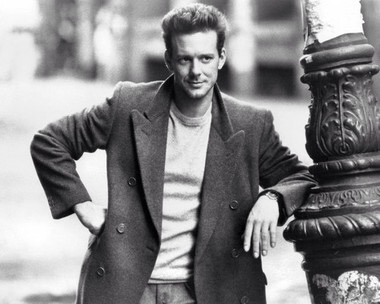
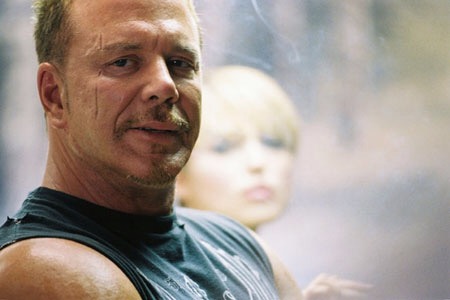
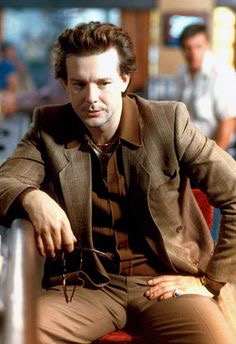
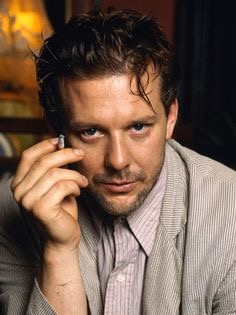
Mickey Rourke has been called the Hollywood outlaw by some, a difficult outsider by others, a master of his craft by anyone with sense, and has never not been a completely surprising thespian who refuses to reside within one box for long. He’s an outspoken, candid guy who has never been afraid of speaking his mind or laying down the verbal hammer. For me, Mickey is an undisputed genius of his craft and has shined like a brilliant nebula of talent, intuition and brilliance in each and every role he has brought to our screens. Here are my personal top ten performances from one of my all time favourite actors:
10. Billy Chambers in Once Upon A Time In Mexico
Director Robert Rodriguez allowed Mickey to carry around his own personal chihuahua (something that he has walked off of a set in a huff over in the past), and encouraged him to wear his personal shiny purple suit to play Chambers, a gruff cowboy hiding out in Mexico and working for a ruthless cartel boss (Willem Dafoe, a frequent Rourke collaborator). Chambers seems like a sly amalgamation of several early characters he played, world weary from too many skirmishes and events gone wrong, marinating in the Mexican sun and wishing for an exodus from criminal life. Billy has trouble with the sadistic tasks which the cartel orders him to carry out, showing a delineation between a life of crime and an evil path. Regretful, posturing and laconic, the first team up between Rourke and Rodriguez turns out to be a delight.
9. Captain Stanley White in Year Of The Dragon
Rourke first did a bit part for manic maestro Michael Cimino in the notorious Heaven’s Gate, a precursor to his turn in this blistering cop film as a belligerent, hard nosed and uncompromising cop who will do anything in his power, and even a few things outside it, to bring down a Chinese crime syndicate. White has tunnel vision, a Viet Nam war veteran whose internal battery is set on search and destroy mode regardless of any collateral damage, of which there is a considerable amount. Rourke takes a blow torch to the character until the edges flare and fray, never letting the heat lower for a second, be it an introspective moment that smoulders or one of many thunderous outbursts of self righteous, racist fury.
8. Randy ‘The Ram’ Robinson
Some see this role as Rourke’s comeback, but similar to Randy ascending the ranks of his former glory only to take a hazardous dive off the ring and back down again, such was the case for Rourke, who is back to smaller films. For a single piercing couple hours, he brought us legendary work in an Oscar nominated turn that burns deep, encased in Darren Aronofsky’s intrepid direction. Randy is a fallen Titan who is looking for another shot in both his professional and personal life, and Rourke gives him the presence to hit home.
7. The Motorcycle Boy in Rumble Fish
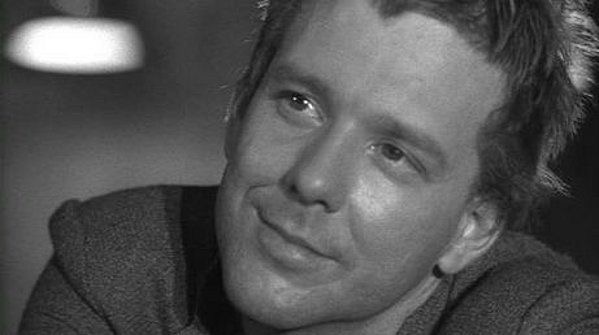
Returning from a mysterious motorbike odyssey, speaking in cryptically poetic fashion and filling out the restless bad boy archetype like no other, this is one of Rourke’s most fascinating turns, in a surreal black & white tumble town that evokes the 1950’s beautifully. He’s relaxed yet uneasy, friendly yet vaguely portentous and obtains an intangible state of heightened awareness with his work that you can never quite pin down or explain properly in words. His character’s resolution seem fittingly oblique, matched by his performance that simultaneously cries out and holds back, often mirroring each other eerily.
6. Jim Olstadt in The Pledge
Sean Penn cast Rourke for an appearance that lasts for less than a minute, and he manages to quietly devastate and then some within that time. He plays a grieving father who is questioned by Jack Nicholson’s obsessed detective about his young daughter, who disappeared several years before. Unshaven, chain smoking and hiding behind a vacant expression, Nicholson’s queries trigger a well of raw anguish which spill out unforced into the certain and seem remarkably genuine. It’s uncomfortable, despairing and you just want to walk right into the screen and give poor Olstadt a hug. His work is that good, a gem of an appearance in probably the best film on this list.
5. Marv in Sin City
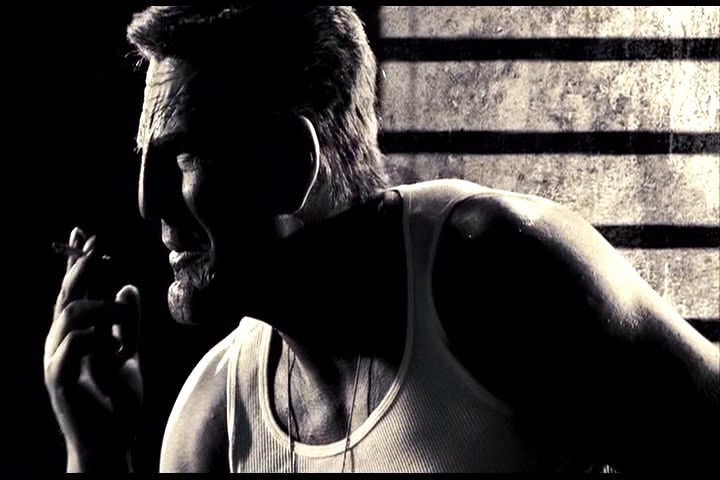
When Robert Rodriguez told Frank Miller of his notion to cast Rourke as the hulking bruiser Marv, Miller’s response was “What, that skinny guy from Body Heat?”. Rodriguez had a vision though, which Rourke followed through with in legendary fashion. Marv has to be played by a performer with the right presence (Ron Perlman and Clancy Brown could have taken a decent crack), someone with somber grit and just the right shot of blackest humour. Rourke sets the role on fire, filling every gorgeously composed frame with his Boulder tough, terrifying and surprisingly touching take on the character.
4. Ed Moseby in Domino
The title of most legendary bounty hunter in Los Angeles is a pretty steep hill for any actor to start out on in at the beginning of their performance. Mentor to Domino Harvey, street smart professional, world weary badass and all around character, Ed is one third of the film’s psychedelic soul and Rourke charges full guns ahead with the work, pausing at penultimate crossroads to show us the seething regret and sadness that Ed harbours beneath the violence and tough guy shell. There’s one scene with co star Edgar Ramirez that seems pulled straight from Rourke’s own history, where the camera sits still long enough to allow him to show piercing truth.
3. Charlie in The Pope Of Greenwich Village
Charlie is a small time thug who does his absolute best to not be a screw up. Only problem, he’s saddled with best friend Paulie (Eric Roberts) who happens to be the biggest screw up this planet has ever seen. The pair are comic dynamite, Rourke setting off on exasperated tirades whenever Roberts gets them in hot water, and then using his brand of cunning and survival instinct to bail them out. Rourke shows a fox-like resourcefulness, a hurricane of anxious energy that cools over when evasive action is required. Charlie is Rourke in his youth and loving the game, firing synaptic bursts of energy at Roberts and receiving them back in synergy, showing off what a great onscreen duo they make.
2. The Cook in SPUN
A cowboy hat wearing, meth cooking oddball hardly seems like the type of character to land an emotional punch, and for the most part you’d be right to think that. Rourke is like Jim Carrey in the mask here, inhabiting an overblown and dizzyingly stylistic aesthetic that exists to show us the unhinged lifestyle of meth addicts. He jumps from serious to scary to funny to sad so quick it’s hard to put the puzzle of his character together, until a n emotional wipeout of a monologue that’s delivered late in the last act, bringing his sad arc full circle. Be it a seminar on the political qualities of Pussy, a whopper of a tiff with girlfriend Brittany Murphy or a brief tongue in cheek encounter with Eric Roberts, it’s glitzy grungy playtime all the way, until we get to that one extended speech, which halts the mayhem and sobers the viewer up post-delirium. It’s tearful in a film where you’d last expect it, and Rourke handles the 180 degree turn like the master he is.
1. Harry Angel in Angel Heart
In one of the finest and most flat out unnerving southern gothic horror films ever made, Rourke throws himself at the role of a down and out private detective who is hired by a sinister Robert De Niro to find a missing singer who doesn’t even seem to exist at all. Harry starts off in control, assured, well travelled. His nerves begin to shake when a trail of hideously murdered bodies pile up behind him, seemingly connected to his search. Rourke slowly unscrews the lid of Harry’s sanity in a sweaty frenzy of fractured machismo and blossoming terror, his fear riling up the audience with each new grisly discovery. There’s plot revelations, shocking violence, the mother of all graphic sex scenes, steeped melodrama and a near constant state of primeval fear, all infused into his performance with skill and tact. For me, Rourke has never been more ‘Rourke’, in all facets, than he was as Angel.
TONY SCOTT’S TOP GUN — A 30TH ANNIVERSARY RETROSPECTIVE REVIEW BY NICK CLEMENT

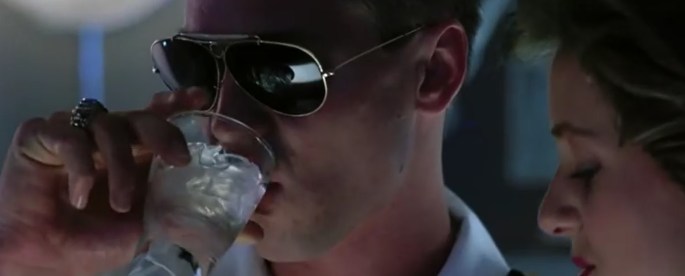
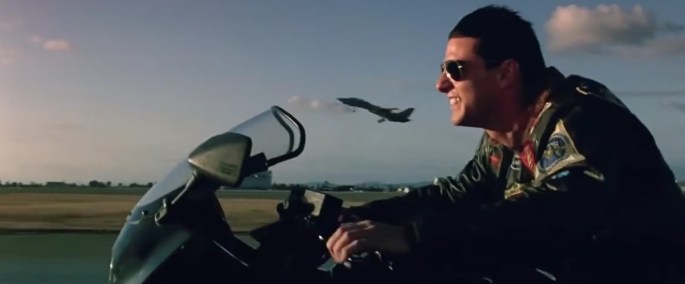
At this point in our culture, it’s nearly impossible to discuss Top Gun with any amount of clear-eyed objectivity. The film is a milestone for all of its key contributors, a pop culture touchstone for multiple generations of people, and an often imitated and parodied relic from a very specific time and place in cinematic history. For director Tony Scott, it was his early-career masterpiece, the film that announced an exciting new voice in commercial cinema while showcasing his slippery-slick yet still gritty visual aesthetic, which would come to dominate the action genre for decades. It’s also the film that got him out of director’s jail after the critical and box office failure of his artsy debut, The Hunger, which is now of course a premiere cult classic. For producers Don Simpson and Jerry Bruckheimer, it was the movie that truly solidified them as the uber-showmen of the 1980’s, with Flashdance and Beverly Hills Cop arriving before and Beverly Hills Cop 2 and Days of Thunder immediately following.

As legend has it, Simpson and Bruckheimer were in their office, and an issue of California magazine was sitting on their desk, featuring a clean cut fighter pilot standing next to a jet. And with that evocative and elaborate “Nothing On Earth Comes Close” Saab commercial that Scott had made in the early 80’s continually turning heads (the one that showed a Saab 37 Viggen fighter jet going neck and neck with the Saab 900), it was clear that it would be a match made in heaven between the producers and their ace in the hole. And for star Tom Cruise, it was his first runaway blockbuster sensation, his first taste of global superstardom, and the film that made him a house-hold name. Top Gun is a product of its time in a way that so few films can claim to be, and over the years, has come to mean so many different things to so many different people, which is why it remains imminently watchable 30 years later.

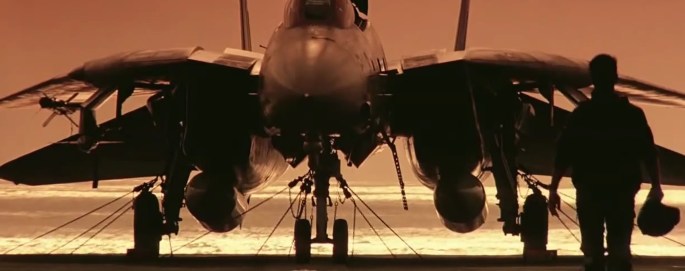
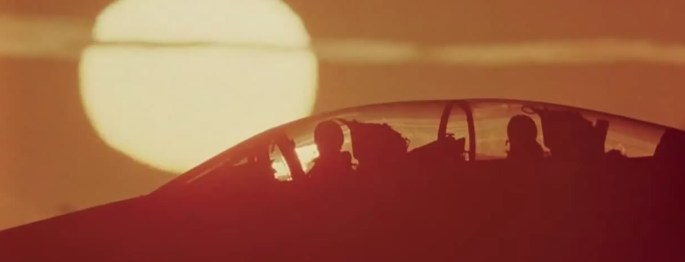
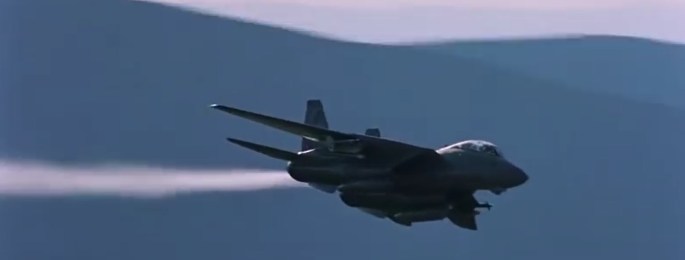
Released in the summer of 1986, Top Gun played on the still lingering fears of war with the Soviets, and carried a rah-rah, jingoistic spirit that seems laughable to some nowadays, but probably felt very honest at the time of release. It feels pointless to rehash the plot of Top Gun – anybody with a pulse has seen it and knows all about Maverick (Cruise, in all his perfect-grinning excellence) and Goose (Anthony Edwards, everyone’s best buddy) and Iceman and Jester and Charlie and the rest of the crew. The scenes on the ground carry an earnestness to them, playing off of melodrama (the mysterious death of Maverick’s father, himself a legendary pilot; workplace romance; the death of a best friend), but the film truly comes alive when it’s up in the sky, as Jeffrey Kimball’s gorgeous, smoky, 2.40:1 anamorphic widescreen cinematography is still a lesson in mid-80’s perfection. Every single shot in this film is spectacular, whether the moment is big or small, with cool blues and sunset reds dominating the horizon. It can’t be understated how influential the look and feel of Top Gun would become for so many films and filmmakers to follow in the years, and whether or not this style is your favorite or not, it’s undeniably exciting on a visceral and stylistic level, with an emphasis on the balance of light, visual minutiae, and overall atmospheric texture. It’s commercial cinema without a shred of pretension, smartly focusing on the drama and action inherent to the story’s scope, and all balanced out by Harold Faltermeyer’s propulsive, oh-so-80’s musical score and the lightning quick editing patterns of Billy Weber and Chris Lebenzon. And when you add in the ridiculously quotable one-liners conjured up by co-screenwriters Jim Cash and Jack Epps, Jr. (who knew that rubber dog shit originates from Hong Kong?) and the high-flying airborne camerawork which is still unmatched to this day, then it’s no wonder that the film plays every Sunday on TNT and has become one of the most influential and iconic movies ever made, with so many other movies attempting, and failing, to ape its success.

On a thematic level, the film is all about machismo (a major theme in all of Scott’s work), and how men deal with expectations, loss, tragedy, acceptance, and success. Those classic scenes in the shower (or during a particular game of beach volleyball…) seem homoerotic in hindsight (and maybe they did upon first glance…), but what they’re really about is men trying to one up each other, trying to figure out how to best your opponent, and always remembering that there are no points for second place. To say that Top Gun is one of the most macho movies ever made would be understatement; you can practically smell the testosterone on the set. I’ve often wondered if PA’s were kept solely for the purpose of spraying down the actors with water in order to simulate excessive sweat, because everyone is glistening in this film. Top Gun also expertly understands male camaraderie and friendship, and how people are willing to go the extra step for those that they care about, both professionally and personally. Kelly McGillis and Meg Ryan were the objects of affection for Cruise and Edwards respectively, while the absurdly masculine supporting cast included Val Kilmer, Anthony Edwards, Tom Skerritt, Michael Ironside, John Stockwell, Clarence Gilyard, Jr., Whip Hubley, James Tolkan(!), Barry Tubb, Rick Rossovich, Duke Stroud, Tim Robbins, and Adrian Pasdar.

Shot for a now hard to believe $15 million, Top Gun opened on roughly 1100 screens nationwide, grossing $8,193,052 on its opening weekend. The film would eventually gross $176 million in the U.S. and another $177 million overseas, truly cementing the Simpson-Bruckheimer brand after the similar worldwide gross two years previous from Beverly Hills Cop. Top Gun would also break every single VHS sales record, as it was one of the first movies made available to the public at the $20 price point. Scott would continue his legendary streak with the two producers in the following years with the equally huge Beverly Hills Cop 2, and then in 1990 with the summer hit Days of Thunder, which while not becoming the blockbuster some might have thought, is still a splendid piece of action moviemaking that was all accomplished with zero CGI and some of the greatest racing footage ever put on film. But Top Gun would be the film that all of the creative parties would become remembered for, what with its sleek visual design, tough guy banter, love story for the ladies, and the dynamic aerial combat footage that still pops off the screen to this day, especially when viewed in the Blu-ray format. In 2015, the United States Library of Congress added the film to their preservation vaults, deeming it “culturally, historically, or aesthetically significant.” And if you’re not a fan of Top Gun, then just remember, the plaque for the alternates is in the ladies’ room.

EPISODE 27 THE WORKS OF TONY SCOTT AND QUENTIN TARANTINO with SPECIAL GUEST SHELBY SIM

We were honored to be joined by Shelby Sim who is the Executive Director of Visit Santa Ynez Valley, and who sponsored the press/filmmaker lounge where Frank hung out when he was at the Santa Barbara International Film Festival. The three of us riff on films that were filmed in the Valley, including Quentin Tarantino’s DEATH PROOF. From there, we bounce all over Quentin Tarantino and Tony Scott’s filmography. Visit www.visitsyv.com and contact Shelby if you’re interested on going on an amazing vacation!
Tony Scott’s Spy Game: A Review by Nate Hill
Tony Scott’s Spy Game is a kinetic yet heartfelt espionage thriller that sees the director maintain considerable shards of his assaulting sensory overdrive of style, whilst pausing along the way for a story that is really rooted in the personal story of the bond and friendship between two men. A lot of his films are predominantly visual and auditory, a bullet train of sound and fury, with plot and characterization as passengers onboard. Here those elements are cogs in the machine, resulting in a very touching, extremely exciting outing and perhaps the director’s most overlooked piece. Robert Redford used to be the younger, more naive faction in a lot of cinematic pairings, especially with Paul Newman. Here he flips the coin, taking on the grizzled mantle of both father figure and mentor to Brad Pitt. Pitt is Tom Bishop, an operative taken under the wing of veteran agent Nathan D. Muir (Redford). Nathan no doubt sees some of himself in the lad, and takes a shine to him, grooming him with all the skills and cunning that a lifetime in the business has given him. Life throws curveballs though, and more often than not they involve love. Bishop has gone rogue in an attempt to rescue relief worker Elizabeth Hadley (the brilliant Catherine McCormack, who needs to be in more movies) from a Chinese prison. In his eagerness he is captured, leaving Muir to make some tough decisions, pull some hidden cards and use all of his talent and resources to extract them. Now in many films like this there would be several blistering action set pieces to show how it’s done. Scott instead chooses to give Redford the intellectual grit and subversive genius to pull hidden strings and come up with a wicked fun solution that is endlessly more satisfying than an explosion ridden shock and awe campaign. His struggle to get his friend back is laced with flashbacks of his training, with a 70’s flavour that feels authentic and writing that lovingly builds the blocks of their dynamic. Stephen Dillane provides wonderfully understated work as a quietly smarmy CIA prick, and watch for a quick appearance from the great Charlotte Rampling. To see Scott’s frenetic aesthetic hired for a script that takes its time and plays out less like a conventional thriller and more like the paced, elliptical spy thrillers of years past (vaguely reminiscent of aspects of Le Carré) is a somewhat rare treat. Terrific thriller with Redford at his best, highly, highly recommended.
Tony Scott’s The Last Boy Scout: A Review by Nate Hill
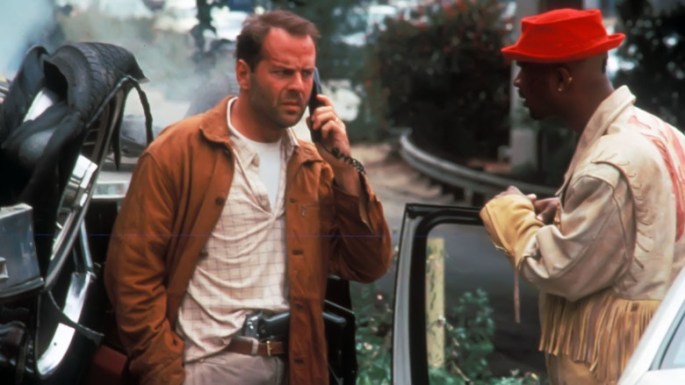
Tony Scott’s The Last Boy Scout is pure stylistic grime, an exercise in early 90’s action with the blackest of humour. The tone is set with a square jaw early on: a star quarterback for a hotshot NFL team is under a lot of underground pressure to make that perfect play and in turn please the loan sharks. He buckles under the heat, ends up pulling a gun on the field and murdering a score of opponents before turning the gun on himself. Now horrifying as that is, if you have a sick sense of humor like me it conjures a dark chuckle of the most guilty variety, because.. well, it’s funny! Albeit in the darkest way possible, which is the arena this one skates in, love it or leave it. Upon closer examination of the script we discover it’s penned by that wonderful man Shane Black, who gave us Kiss Kiss Bang Bang and the upcoming The Nice Guys. No one can produce such heinous mayhem with a cavalier attitude and actually get away with it as well as Black does. The guy is a prodigy of dark humour, and who better to embody his protagonist here than a sheepish Bruce Willis as Joe Hallenbeck, a jaded ex detective who is so sullen and cynical he’s almost comatose. He’s paired with equally slummy former quarterback Jimmy Six (Damon Wayons), lazily trying g to solve a case involving the murderous quarterback and some shady politicians. Along the way that’s paved with many a sarcastic, beleaguered exchange they cross seedy paths with shady villains (Taylor Negron, RIP, and a youthful Kim Coates), a beautiful working girl with ties to the case (Halle Berry) and Willis’s spitfire of a dysfunctional daughter (Danielle Harris). There’s a wonderfully bloated supporting cast including Noble Willingham, Chelsea Field, Joe Santos, Bruce McGill and more. It’s got a bite that stings, mainly thanks to Black’s frighteningly stinging screenplay which give the film it’s sardonic, put – upon aesthetic. This meshes together nicely with Scott’s trademark sun soaked, pulpy, picturesque tone and provides one hell of an action movie rode. Nasty in all the right places, funny when the story begs for it, and build to last.
THE LAST BOY SCOUT – A REVIEW BY J.D. LAFRANCE
Shane Black’s career has had a fascinating, meteoric rise and fall (and rise again). The screenwriter hit the big time when his breakthrough screenplay for Lethal Weapon (1987) sold for $250,000. This kick-started a wildly popular action film franchise. He soon hit rock bottom with the heavily re-written (by others) modest hit, The Long Kiss Goodnight (1996), the script of his that sold for a staggering $4 million. And yet, even his weaker efforts still contain decent action sequences and playful banter between characters. What seemed to be missing in Black’s later films was depth and characterization – elements that made his screenplays distinctive. Perhaps this was as a result of meddling and script revisions at the hands of others. For Black, screenwriting came easy: “The fact that there were so few rules associated with it, so few actual structural maxims … you can just do what you want. So I played around and it was fun. I would just type to keep myself entertained. It turned out people liked that. They felt it represented an interesting way to go, but for me it was truly just typing to keep myself entertained.”
Studio executives were only interested in using Black to write formulaic drivel. Determined to make it, he wrote Lethal Weapon. The script was a blast of fresh air and ended up being made into a big budget action film starring Mel Gibson and Danny Glover. This kind of thing almost never happens in Hollywood and it’s a testimony to Black’s skill as a screenwriter that he achieved this kind of success so early on in his career. Lethal Weapon grossed over a $100 million. In the best tradition of Hollywood, money talks and so in 1990, Black was paid $1.75 million (an unheard of amount at the time) for The Last Boy Scout script. The next year it was made into a 1991 action movie starring Bruce Willis and Damon Wayans and directed by the late Tony Scott.
The film starts off literally with a bang as a pro-football player (a pre-infomerical Billy Blanks) pulls out a handgun right in the middle of a play and shoots three opposing players in his way to getting a touchdown before killing himself. Joe Hallenbeck (Bruce Willis) is a private detective hired by his best friend (Bruce McGill) to protect a stripper named Cory (Halle Berry in an early role). The best friend is subsequently blown up in a car and the stripper gunned down by thugs. Her washed-up, football-playing boyfriend Jimmy (Damon Wayans) hooks up with Joe to get some answers and some much needed payback.
“I had this period where I didn’t think I was any good at anything and fought desperately to stay afloat,” Black said in an interview with Creative Screenwriting magazine. And with that feeling in mind, Black wrote a movie that pushes the world-weary detective stereotype to then new, surreal levels. Willis’ performance and Black’s screenplay combine to produce a portrait of a guy who is so down and out that our first glimpse is a shot of him passed out in his own car while being harassed by snotty neighborhood kids with a dead squirrel. When we meet Joe he has a pretty simple outlook on life – a mantra, if you will, to start each day: “Nobody likes you. Everybody hates you. You’re gonna lose. Smile you fuck.” Willis, who has made a career out of playing world-weary tough guys, nails the defeated vibe that sticks to Joe like stink on dog poop. Joe’s actually a very disillusioned good guy, an ex-Secret Service agent who saved the President’s life once but got fired after he punched out a senator (Chelcie Ross) with a kinky streak. Throughout the movie, Willis delivers deadpanned one-liners while constantly getting the crap kicked out him. As a result, you can’t help but root for him as he and Wayans send the baddies to their well-deserved violent deaths.
Willis plays a classic burn-out, sporting the traditional slovenly appearance of a down-on-his-luck P.I. complete with unshaven look and rumpled clothes that he slept in. And that’s the best he looks, from that point on it’s all downhill as his face takes on cuts and lacerations accrued from fighting numerous bad guys. Joe actually uses his disheveled appearance to his advantage, like when a random baddie takes him into an alleyway to kill him. Joe buys time by cracking jokes about the flunkie’s wife and then, when the guy lets his guard down, stabs him in the throat with a broken bottle. The guy gurgles, “You bastard,” to which Joe curtly replies, “And then some.” Willis was born to spout Black’s dialogue. He’s the master of sarcastic comebacks and gets some real doozies in The Last Boy Scout. At one point, Jimmy chides him, “You read much?” Joe replies, “My subscription to Juggs magazine just ran out.”
Jimmy is also at an emotional cul-de-sac of sorts – popping pills to stave off chronic pain from football injuries he picked up as a player. Like Joe, he’s been disgraced from his former profession, kicked out of the league for gambling. He now spends time feeling sorry for himself by cultivating a drinking problem and nailing anything in a skirt despite having a super-hot stripper girlfriend played by Halle Berry (only in the movies!). Like Martin Riggs in Lethal Weapon, Jimmy lost his family to tragedy and it taints his entire worldview. Life means nothing and solving his girlfriend’s murder is the only thing he has left. Wayans shows that he’s more than just a goofy funnyman in a scene where he tells Joe how he got kicked out of football. It is an angry tirade tinged with hurt and bitter resentment as he was basically chewed up and spit out by an uncaring organization. His speech touches upon the harsh realities of professional sports.
Scott populates his movie with a fine collection of character actors, chief among them Noble Willingham as uber rich football team owner Sheldon Marcone and stand-up comedian Taylor Negron cast wonderfully against type as one of Black’s trademark polite, well-spoken sociopaths (see also Lethal Weapon’s Mr. Joshua and The Long Kiss Goodnight’s Timothy). Marcone is also a repeating motif in Black’s scripts. He’s an old, privileged white man who is greedy and corrupt. Think of the money-laundering retired general in Lethal Weapon and the war-mongering CIA boss in The Long Kiss Goodnight. Black clearly sees these men as the source of real evil in the world, pulling the strings that will result in death and destruction in the name of money. In all three films, the protagonists face insurmountable odds to do what is right regardless of the danger or risk to their own well-being.
Like most buddy action movies, the relationship between Joe and Jimmy starts off with plenty of friction as the quarterback resents the private investigator watching over his girlfriend because that’s his job. They trade a few insults and then decide to team up when she’s killed. Black has fun playing around with the dynamic between two guys who basically hate each other but are thrown together due to extraordinary circumstances. At one point, Jimmy cracks a joke to lighten the mood between them only to be rebuffed by Joe. Jimmy tells him, “I’m just trying to break the ice,” to which Joe replies, “I like ice. Leave it the fuck alone.” There are all kinds of snappy banter between them as Wayans tones down his trademark goofy shtick and more or less plays straight man to Willis’ deadpan humor.
Unlike a lot of buddy action movies, Black allows for the occasional lull, like the moment where Jimmy looks at a photograph of him and Cory and you can see on his face how upset he is by her death now that he has a moment to reflect on it. No words are said, Wayans’ face says it all. Joe and Jimmy represent the last bastion of decency in a world that is corrupt and morally bankrupt, where best friends double cross each other, wealthy businessmen are blackmailed, and wives cheat on their husbands. The deeper our two heroes go into investigating Cory’s murder the more corruption they uncover.
The aforementioned alleyway sequence and Cory’s death are vintage Tony Scott moments with his trademark look: smoke, neon and rainy streets at night. Think of it as the director’s version of a neo-noir. He is equally adept at action sequences as he is with showdown set pieces, like the scene where a henchman repeatedly offers Joe a cigarette only to punch it out of his mouth. Joe has been captured and is unarmed and outnumbered but he still has the balls to threaten to kill the guy if he hits him one more time. There is palpable tension as we wait for Joe to follow through on his threat (or be killed), which he does with brutal swiftness. It is reminiscent of the famous showdown between Christopher Walken and Dennis Hopper in True Romance (1993) where a tense scene could erupt in violence at any moment.
Successful screenwriter Shane Black made headlines in 1989 when he sold his spec screenplay (written without a contract from a studio or a producer) for The Last Boy Scout to the David Geffen Co. for an unprecedented $1.75 million. He had wisely taken advantage of the boom of independent production companies that sprouted up in the late 1980s looking for big budget action scripts. It must’ve come as validation of his abilities after what he had been through.
After his meteoric rise with the success of the script he had written for Lethal Weapon, a sequel was inevitable. The studio gave Black first crack at it. Something had happened to the writer after enjoying a taste of notoriety and his first draft was even darker than what he had written for the first movie. For starters, he proceeded to kill off Mel Gibson’s character. Not surprisingly, the studio didn’t want to go that route and Black quit the project. Then, he lost the desire to write. A family illness coupled with the break-up of a long-term relationship rocked his already shaky confidence. For the next two years he did no writing and instead lived in fear of the next project and failing. Out of this dark period in his life came the script for The Last Boy Scout, which he wrote in five months.
For the script, Black drew on such influences as hard-boiled crime fiction by the likes of Raymond Chandler and Ross McDonald because they wrote about “personal integrity, morality, conflict, dealing with insanity, dealing with pain and death.” He wanted to write a modern private investigator story set in Los Angeles. He decided to set his story with the sleazy side of professional football as the backdrop because it matched up well with his take on a Chandleresque private investigator story. For Black, football “combines the spirit of the American hero with the spirit of American greed.” After finishing the script, he didn’t think it would sell because “it was weird” and “too rough for most people. It’s not a commercial formula; it’s a very raunchy, down and dirty detective film.”
Originally, director Tony Scott had a war movie taking place in Afghanistan set up as his follow-up to the Tom Cruise racing car movie Days of Thunder (1990). However, the script didn’t come together and he was given The Last Boy Scout. He liked it so much that he agreed to do it. Not much has come out of what went down during filming but what little has suggests a contentious shoot. With titanic egos like producer Joel Silver, movie star Bruce Willis and Tony Scott, they were bound to clash and they did as Scott later admitted, “I got caught a little bit between Bruce and Joel Silver … I was pushed in terms of the cast and in terms of how I was shooting it.” He also felt that Black’s script “was better than the final movie.” Of the experience, all Silver would say was that it was “one of the three worst experiences in my life.”
The Last Boy Scout performed fairly well at the box office and has since enjoyed a second life on video and television (thank you, TBS). Black went on to get paid more than $1 million for his rewrites on The Last Action Hero (1993), a criminally underrated romp that is the granddaddy of self-reflexive action movies. This movie was crucified by critics and did not perform as well at the box office as expected but this did not tarnish Black’s reputation either. However, he disappeared from movies for a few years before coming back with a vengeance with the quirky private detective movie Kiss Kiss Bang Bang (2005) and Iron Man 3 (2013). The Last Boy Scout is a lean, mean guilty pleasure with a misanthropic streak that is uncompromisingly un-PC in attitude. This is further reinforced by its rather poor view of women. They are either liars and cheats (Joe’s wife), whores (Cory), or foul-mouthed brats (Joe’s daughter). Joe takes it all grimly in stride because hey, he’s already hit rock bottom. He doesn’t care about anyone or anything, including himself. Action films don’t get any nastier than this one.
PTS PRESENTS CINEMATOGRAPHER’S CORNER with PAUL CAMERON

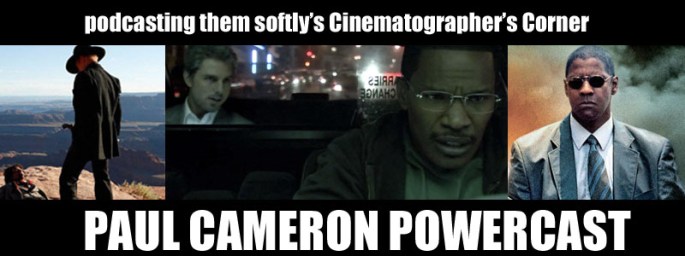
Podcasting Them Softly is extremely honored to present a chat with the fantastic cinematographer Paul Cameron. Paul has been responsible for shooting some of our absolute favorite modern action films, from his collaborations with the late Tony Scott including MAN ON FIRE, DEJA VU, and the BMW films entry BEAT THE DEVIL, to his groundbreaking work on Michael Mann’s COLLATERAL. Other efforts include the slick and gritty actioners GONE IN SIXTY SECONDS from director Dominic Sena and producer Jerry Bruckheimer, the crazy-fun cyber-terrorism thriller SWORDFISH with John Travolta and Hugh Jackman, the lens-flare gorgeous Total Recall remake, and the underrated thriller Dead Man Down. Paul has some massive projects coming up next year and beyond, with the HBO series WESTWORLD from Jonathan Nolan hitting TV screens in 2016, and he’s just wrapped principal photography on the latest PIRATES OF THE CARIBBEAN installment which is set for release in summer 2017. As most listeners of this podcast will know, we are both huge fans of Tony Scott and his artistically expressive aesthetic, so it was a real highlight to get a chance to speak with one of his key camera collaborators. We hope you enjoy!
Tony Scott’s Deja Vu: A review by Nate Hill
The late Tony Scott and Denzel Washington collaborated on five films, the second last of which is underrated sci fi thriller Deja Vu. It contains Scott’s trademark visual style, all skitchy sketchy frames, deliriously rapid editing and deep, gorgeously saturated colours that pisses a lot of people off in its garish, flippant aesthetic. I for one love his style, and here he is coming down off the high that was his masterpiece, Domino, exercising restraint that was no doubt mandated by the studio bigwigs. Nevertheless, the same unmistakably heightened forces of filmmaking that flow through the veins of this crackling thriller can be found in most of his work, just in smaller doses here. The film tackles a lot in its unassuming narrative, from terrorist bombing, an elliptical story that’s put in an otherworldly trance by a plot point involving a high tech time travel capability, and a surprisingly heartfelt undercurrant that somewhat sneaks up on you. During a captivating opening credit sequence, we see a horrific explosion onboard a navy transport ferry in the New Orleans harbour, killing over five hundred people including women and children. ATF Agent Doug Carlin (Washington) is called in to investigate, and before long his cunning intuition catches the eye of FBI Agent Pryzwara (an unusually calm Val Kilmer) who is spearheading a very hush hush investigative technique that’s being used to track the terrorist in the days leading up to the incident. What Kilmer doesn’t tell him is the mind-bending metaphysical implications of it, but keener Denzel gets wise to their act, and throws himself headlong into a quest to stop the bomber, save the mysterious Claire (Paula Patton, just phenomenal) who was murdered and has ties to the event, and reverse time. Denzel is an implosive wrecking ball of determination, his ingenuity and reserve made me wonder why Carlins career aspirations stopped short of the ATF. I don’t know why Patton isn’t in more films (she recently starred alongside Denzel again in the super fun 2 Guns), she brings a battered resilience to her work, and is a radiant beauty to boot. Peppy gerbil Adam Goldberg is the obligatory one liner spewing techie who’s got more going on than his exterior may read, and Bruce Greenwood is all stern bluster as the FBI honcho in charge. This film doesn’t often come up in discussions of either Denzel’s or Scott’s greatest hits, but it’s ripe for rediscovery and praise. Propulsive action, far fetched sci fi intrigue that’s hard to digest and follow, yet simultaneously wicked fun, and like I said before an emotional core that takes you by surprise. There’s a sentence that I internally intone to myself whenever I see a film, or aspects within a film that fire up my adrenal glands, tear ducts or simply rouse my soul. Be it a banger of an action sequence, a romance that hits all the right notes, a good old fashioned fantastical invention or visual flights of fantasy that stir wonder within me. That sentence is “This is why I watch movies”. I get no greater pleasure in my cinematic escapades than being able to say that to myself as my heart pumps to the tune of whatever grand spectacle I’m witnessing before me onscreen. I can tell you, the sentence was uttered while watching this one, and now that I think of it, pretty much every film in Scott’s portfolio. Highly recommended.