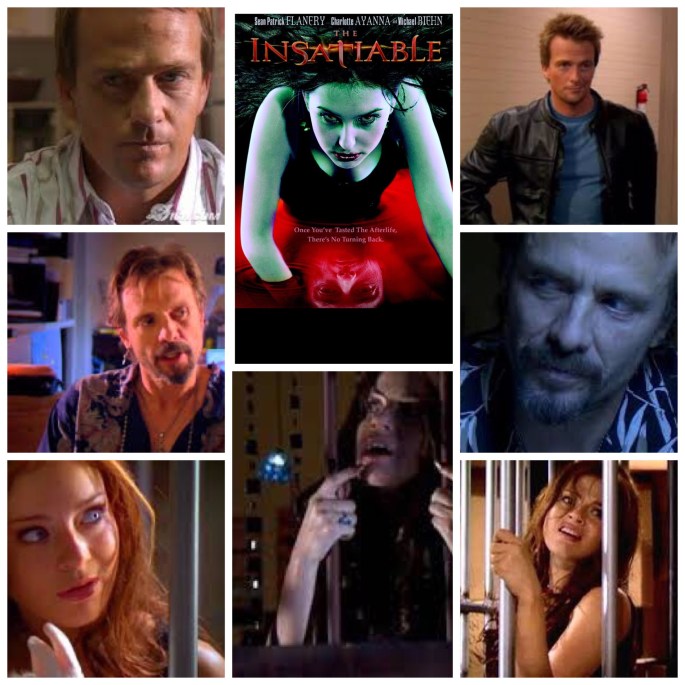
B Movie Glory: The Insatiable

The Insatiable, like droves of other vampire flicks, attempts to cover new ground and build on established formulas to create something memorable, and despite having the direct to video stigma working against it’s notoriety, works pretty well for the most part. Sean Patrick Flanery plays a timid fellow who, after being targeted by a sexy, devilish bloodsucker (Charlotte Ayana), seeks help anywhere he can, broadcasting his predicament via HAM radio (maybe not the most effective outlet) to anyone who will listen. It just so happens that there is a grizzled old vamp hunter out there played by Michael Biehn, a jaded hardass who’s just waiting for signs of these creatures. Ayana likes to play with her prey, and taunts both of them throughout the film in some amusing cat and mouse games, forcing Flanery to great lengths of survival including building one hell of a cage in his basement to trap the bitch. The material is treated mostly head on with just a smidge of smirking deadpan, especially in the sly ending. Biehn is awesome as the cranky, high strung vamp slayer, really having fun in the role. A fun, if slight little flick. 

-Nate Hill

B Movie Glory- Dracula III: Legacy 

Dimension films made a few Dracula sequels following their solid 2000 effort starring Gerard Butler, most of which are meh. Dracula III: Legacy, however, has the ace-in-the-hole asset of having legendary cult thespian Rutger Hauer in the titular vampire role, and that alone makes it noteworthy. Even though the guy doesn’t even show up until the third act, and isn’t around for long, he’s magnetic as the dark prince of bloodsuckers and not to be missed when rallying up the lengthy list of actors who have played the role. The film itself is grade A-cheese and hardly ever feels like a Dracula story, as well as being fairly incomprehensible in relation to the other handful of films in the franchise. I’ve got a weakness for Dimension horror films though, and they’re particularly slick brand of schlock. Jason London, who we all wistfully remember as Randall Pink Floyd in Richard Linklater’s Dazed & Confused, is some random vampire hunter, off trekking into the Eastern European alps with martial arts actor Jason Scott Lee to find the Vamp of all Vamps. They do find him, in the form of Hauer’s entertaining fiend skulking around a derelict castle and… that’s pretty much it. For Hauer fans, load up Final Cut Pro and edit a breezy short film with just his wicked good scenes. For fans of B Movie silliness, have a few beers first. Everyone else, keep on browsing the blockbuster shelf. Oh yeah, and Roy Scheider is in it too, and I’ve completely forgotten who he plays. 

-Nate Hill

B Movie Glory: Mark Young’s Southern Gothic

A disgraced nightclub bouncer faces off against a psychotic zealot vampire preacher. Quite a crazed concept ripe for hyperactive exploitation thrills, and yet Southern Gothic plays it pretty low key and laconic, for the most part anyway. Moody where other films would have been brash, it’s a nice atmosphere piece with gore galore and a gonzo central performance from William Forsythe as Enoch Pitt, a man of the lord who has strayed from the path. Bitten by a vampire, the already sleazy Pitt turns into a full on monster, tearing up the small Deep South town of Redemption and building an army of the undead. Hazel Fortune (Yul Vasquez) is traumatized and broken by the death of his young daughter, until he meets young Hope (Emily Catherine Young), who crosses Pitt’s vision and finds herself in mortal danger. This puts the two men on a vengeful collision course of blood, retribution and carnage. Ok, so I’ve made it sound a little more epic than it actually is, but that’s more or less how it goes down. Energetic it ain’t, more of a slow burn than anything else. Firmly rooted in B-movie territory in terms of both budget and script, but entertaining and distinctly flavoured nonetheless. Vasquez is moody and four, but dangerous when he needs to be. Forsythe, as usual, is the acting equivalent to a junkyard bulldog let off the chain, chewing scenery faster than he can munch carotid arteries, and loving every campy, frightening minute of it. Not the cream of the horror crop per sé, but reasonable enough Saturday night horror background noise fodder. 

-Nate Hill

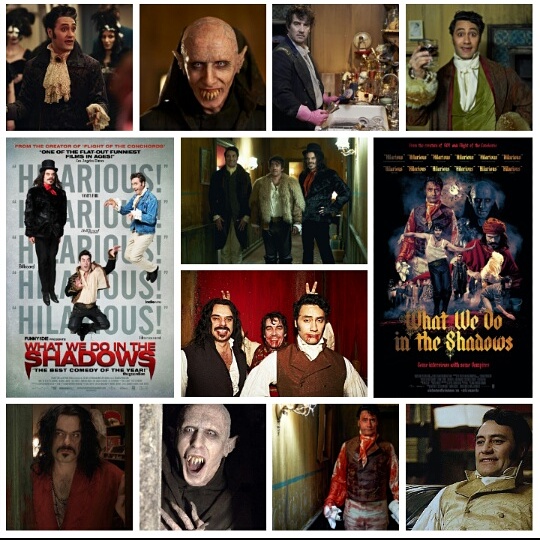
Taika Watiti’s What We Do In The Shadows: A Review by Nate Hill 

I don’t remember laughing as hard at a film in years as I did at What We Do In The Shadows the other night. It’s pure comedic bliss from front to back, and makes the often tedious chore of making an audience laugh seem effortless. It’s part horror comedy, part mockumentary with a dash of buddy camaraderie and and depth of wit and character all it’s own, thanks to New Zealand filmmaker Taika Watiti, who is fast becoming one of my favorite new voices in the independent field. A master at finding the humour in little moments and dry subtlety, his cameras spend a couple hours documenting pratfalls, squabbles and zany encounters wirh quartet of vampires living in Wellington, New Zealand, each one simultaneously a different caricature of bloodsuckers from previous lore, as well as a completely unique, hilarious individual. Jermaine Clement is the closest thing you’ll find to a household name amongst the cast as Vladislav, a Dracula esque, baroque vamp. Jonny Brugh is Viago, the musically inclined, Ann Rice incarnation, and Ben Fransham, plays Peter, a spooky eight thousand year old Nosferatu clone. It’s Watiti himself who steals the show though, as Deacon, a dandy of a Germanic royal who gets all the best lines and relishes them with adorable deadpan delivery every chance he gets. The film comes nowhere near the classification of horror, and in fact these four resemble a bumbling, lovable frat house, their vampiric nature treated lightly as they cavort about their everyday life like rambunctious nocturnal teddy bears. They navigate household chores, nightlife, inter species relations (there’s a few priceless encounters with a rival pack of werewolves), pesky humans, and have a ball the whole time through. What makes the film so special is the goldmine of comic skill and talent that both director and cast have tapped into. The relationships are unforced, full of idiosyncratic nonsense and always feel utterly organic. For a group of undead fellows, they truly are the life of the party. The documentary style never feels intrusive or irritating, seamlessly taking refuge behind the forceful and side splitting antics which take center stage for the entire film. Comedy is the hardest genre to produce fruitful results in, with horror a close second. What it takes to make you laugh can often be a rare gift, wielded by few and far between, those writers, directors and actors who have that elusive midas touch on our funnybones, combining just the right elements of script, improv and intuition to  get us laughing ourselves silly. This one achieves that and then some.
Taika Watiti’s What We Do In The Shadows: A Review by Nate Hill 

I don’t remember laughing as hard at a film in years as I did at What We Do In The Shadows the other night. It’s pure comedic bliss from front to back, and makes the often tedious chore of making an audience laugh seem effortless. It’s part horror comedy, part mockumentary with a dash of buddy camaraderie and and depth of wit and character all it’s own, thanks to New Zealand filmmaker Taika Watiti, who is fast becoming one of my favorite new voices in the independent field. A master at finding the humour in little moments and dry subtlety, his cameras spend a couple hours documenting pratfalls, squabbles and zany encounters wirh quartet of vampires living in Wellington, New Zealand, each one simultaneously a different caricature of bloodsuckers from previous lore, as well as a completely unique, hilarious individual. Jermaine Clement is the closest thing you’ll find to a household name amongst the cast as Vladislav, a Dracula esque, baroque vamp. Jonny Brugh is Viago, the musically inclined, Ann Rice incarnation, and Ben Fransham, plays Peter, a spooky eight thousand year old Nosferatu clone. It’s Watiti himself who steals the show though, as Deacon, a dandy of a Germanic royal who gets all the best lines and relishes them with adorable deadpan delivery every chance he gets. The film comes nowhere near the classification of horror, and in fact these four resemble a bumbling, lovable frat house, their vampiric nature treated lightly as they cavort about their everyday life like rambunctious nocturnal teddy bears. They navigate household chores, nightlife, inter species relations (there’s a few priceless encounters with a rival pack of werewolves), pesky humans, and have a ball the whole time through. What makes the film so special is the goldmine of comic skill and talent that both director and cast have tapped into. The relationships are unforced, full of idiosyncratic nonsense and always feel utterly organic. For a group of undead fellows, they truly are the life of the party. The documentary style never feels intrusive or irritating, seamlessly taking refuge behind the forceful and side splitting antics which take center stage for the entire film. Comedy is the hardest genre to produce fruitful results in, with horror a close second. What it takes to make you laugh can often be a rare gift, wielded by few and far between, those writers, directors and actors who have that elusive midas touch on our funnybones, combining just the right elements of script, improv and intuition to  get us laughing ourselves silly. This one achieves that and then some. 

From Dusk Till Dawn 3: The Hangman’s Daughter- A Review by Nate Hill 

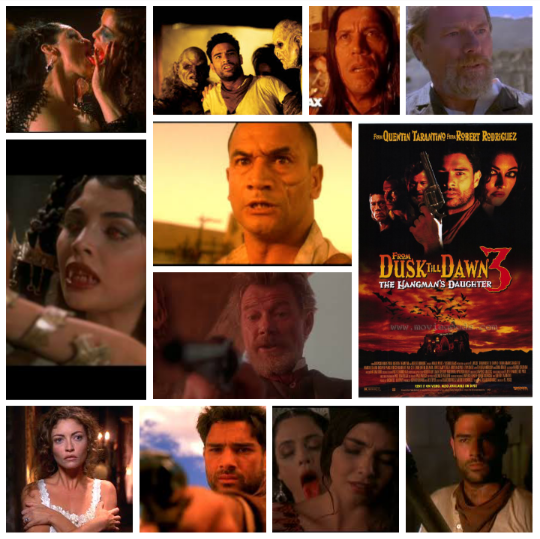
Some franchises feel stale and wrung out by the time the third effort comes along, but not From Dusk Till Dawn. In fact I’d even be so bold as to say that despite not having quite such a budget and resources as the original Tarantino/Rodriguez splatter party, this prequel almost has more in the way of imagination. The first came out of the gate roaring and paved the way, the second was a more mellow heist orientated flick that incorporated the horror elements in as it went, but the third does something altogether different. It’s a period piece, set a hundred years in the past, sometime around the Mexican/American war. When notorious outlaw Johnny Madrid (Marco Leonardi) dodges the hangman’s noose and escapes, he brings abused daughter Esmerelda (Ara Celi) along and scrambles for the state line. The ferocious hangman is none too pleased, given the menacig scowl of Maori bad boy Temuerra Morrison, who played Jango Fett in another prequel we all love. Rounding up a posse, he hunts Madrid and his scurvy gang through the terrain. Madrid is unknowingly headed for a far worse danger though, when he and Esmerelda run straight into the iconic Titty Twister bar, dressed up like a frontier whorehouse this time around. Also along for the ride are a group of wagon travellers including a young newlywed couple (Rebecca Gayheart and Lennie Loftin), oddball Ezra (Orlando Jones) and the real life writer Ambrose Bierce, played with alcoholic grit and gallows humour by Michael Parks. Bierce is famous for actually disappearing somewhere in that area back then, and I like how the film cleverly weaves fact and fiction, putting in a commendable effort to make the turn of events fascinating beyond just a servicable horror level. Danny Trejo also returns, as he must, playing pretty much the same character he did in the first and second, never mind the fact that he keeps dying (you can’t really kill Danny, everyone knows this). I love the formula for these films; they always start out with a slower paced, pulp/crime style narrative that suddenly explodes into creature FX, blood orgies and vampire mayhem without much warning. The first was the bank robbers on the run with hostages, the second was the heist crew and the third is a rousing Desperado style actioner that morphs into the horror we all know is coming. Well produced with a lot of love and some real thought put into the story, exciting and provides more than enough for any horror fan. Definitely the better of the two sequels. 

Daybreakers: A Review by Nate Hill


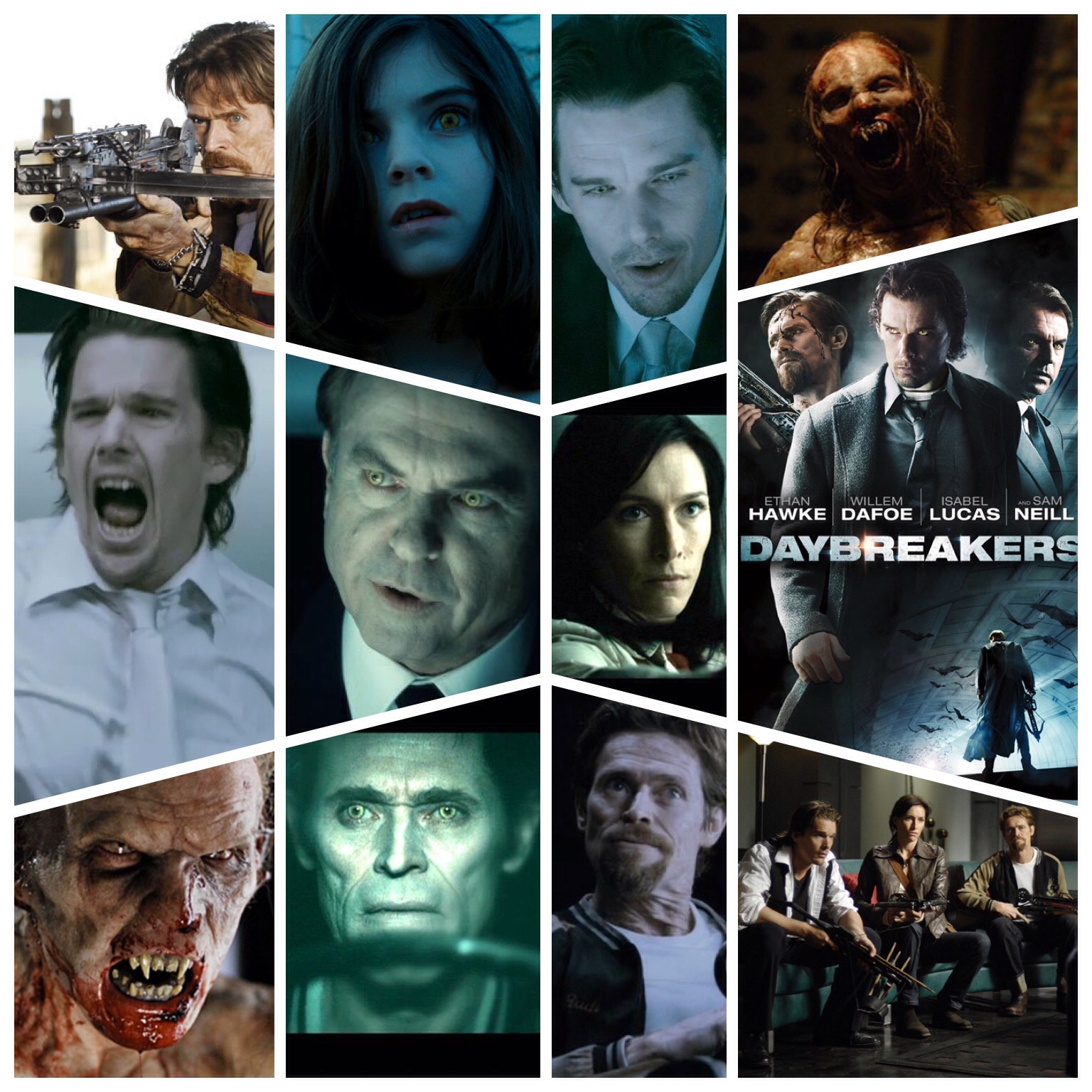
As each genre evolves, it has to find new and creative ways to stay alive and entertain it’s audience. The vampire genre has come a long way, from the grainy film stock showcasing a theatrical Bela Lugosi, to the slick, throat ripping Baltic nocturnal terrors of 30 Days Of Night. No other corner of horror (except perhaps the zombie arena) has worked so hard to reinvent, rework and revamp (hehe) it’s aesthetic than the bloodsuckers realm, and it’s in that area that Daybreakers is a huge success. Not necessarily the most groundbreaking or incredible outing as a film alone, it breaks impressive new ground in the vampire genre and had me wondering why no one had come up with such ideas sooner than 2009! In the year 2019, ninety five percent of the world’s population are now vampires, following an outbreak decades earlier. The remaining five percent of humans keep an understandably low profile and continue to dwindle in this harsh new world. There’s just one problem: vampires need blood to thrive, and once the last human is drained, they face a serious problem. In this lore, a vampire deprived of sustenance turns into a savage berserker that will attack anyone and everyone in pure feral mania. Vampire scientist Edward Dalton (Ethan Hawke) searches endlessly for an artificial blood substitute, partly out of an instinct to preserve a race that was never his own, and partly out of compassion for the humans he once called kin. Corporation executive Charles Bromley (a downright creepy Sam Neill) hordes the scarce resources, and chaos threatens on the horizon if a solution is not found. A bombshell drops, however, when Dalton stumbles across a rebel band of humans who claim that they were once vamps, until some variable turned them back into fleshy human critters. Led by hotshot renegade McCormac (Willem Dafoe dialling up the grit) they see a glimmer of hope in Dalton, not to mention his scientific prowess. Bromley sees the end of days and gets dangerous with his power, Dalton and newfound friends work to overturn the Vampire order, and gore splatters all over the screen in a sleek, entertaining and supremely gory film that should have a little more infamy. The R rating is gloriously wrung out as gallons of blood are thrown, flung and dripped all about the place and a real sense of supernatural, apocalyptic danger is attained with the story. Neill is an inspired choice to play a vamp too; Even when he’s playing a gold hearted protagonist (remember how ominous he got with the raptor claw in Jurassic Park?), there’s a semi dormant aura of menace that always dances in those Aussie eyes. Dafoe is at his best when his playing around in the genre theme park, and he’s having a barroom blast here, getting to play the ultimate badass. There’s a reverence for humanity here too, attention paid to a last ditch effort to save our race from a predatory one that is just trying to survive as well. Terrific stuff. 

Priest: A Review by Nate Hill 

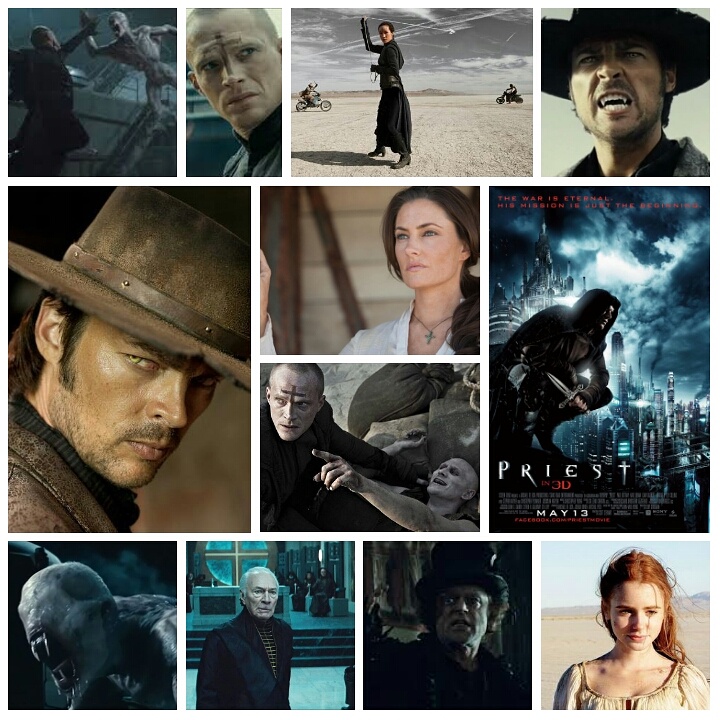
Priest is one of those flashy missed opportunities, a visually stimulating comic book flick that just couldn’t amp the substance metre up enough til it’s flush with style, and ultimately feels somewhat hollow. It’s still a gorgeous Blu Ray that will give your system a workout though, with some neat vampires and a great cast. Sometime in a murky post apocalyptic future, humanity lives in a giant gloomy city on the edge of oblivion, walled in for fear of vampires who have preyed upon them in the past. An order of warrior priests protects citizens and keeps order, until one rogue from their sect (Paul Bettany) discovers that the creatures may be back when an outsider couple (Stephen Moyer and Madchen Amick) have their daughter (Lily Collins) kidnapped from their desert dwelling outside the city. They come to Bettany for help, but the leader of his priesthood (a smug Christopher Plummer) is an obstinate son of a bitch and refuses to act. Bettany goes renegade along with Priestess (Maggie Q) and ventures into the wasteland to rescue Collins and fight these baddies. It’s frustrating because the look and design of this world is brilliant, like a dark opulant jewel that clearly has some thought put into it. But then… the dialogue and story are so numbingly pedestrian, straying not a kilometer into uncharted narrative waters to give us something even a little bit exciting or unpredictable. Quality jumps with Karl Urban’s dapper villain Black Hat, a vampire cowboy outlaw who oddly resembles what I’d imagine Stephen King’s Roland Deschain would look like if the powers that be took their heads out of their ass and recasted Idris Elba. But I digress. Like I said, terrific cast; Brad Dourif has a great cameo as a snide hustler peddling trinkets to superstitious townsfolk, and watch for  the great Alan Dale too. Bettany always makes for a solid action hero, he just has a bit of trouble finding the right projects (have you seen that turd Legion? Good lord) that deserve bis talents. This one falls just short. It could have really used a few rounds of defibrillation from another screenwriter, and perhaps a hard R rating to take advantage of the horror aspects. Still, the vampires are creepy enough (echoes of Blade II are always welcome), the actors keep it going and there’s no shortage of style. 

Dracula 2000: A Review by Nate Hill

image

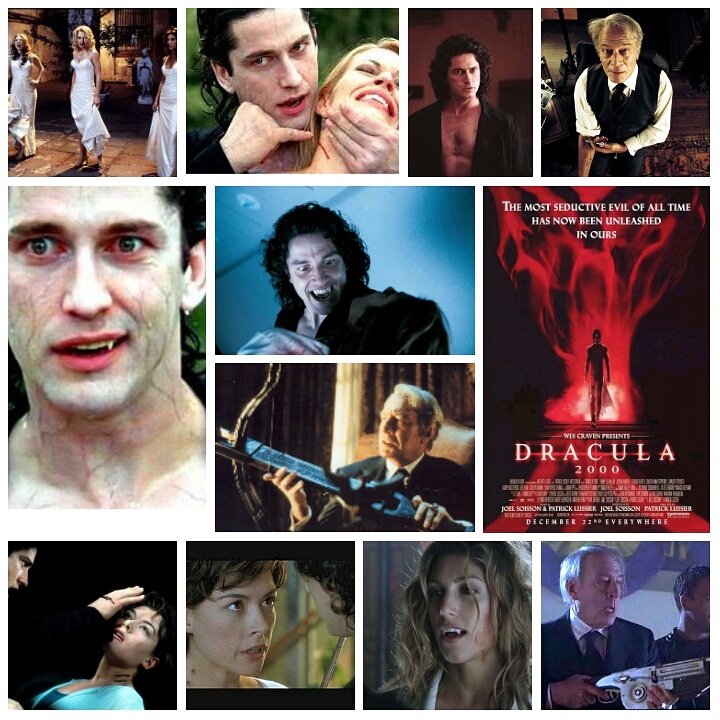
Wes Craven’s Dracula 2000 is one of those horror flicks that proudly slaps his name over the title like he runs the show, when in fact he’s only participating under a vague executive producer credit. Now that we’ve got that little detail out of the way we can talk about what a thoroughly awesome movie it is, and how the haters can go suck it. It’s a high concept slice of bloody fun and has easily one of the best pairings of an actor with the Dracula mythos ever: Gerard Butler. He’s young and lean here, before he turned into a tank later in his career, and he makes one hell of a kick ass Dracula. The story is too good to be true: a team of arch criminals, led by Omar Epps and also including Hyde from That 70’s Show (lol) break into the European mansion of Dr. Abraham Van Helsing (Christopher Plummer) and steal the heavy duty coffin which he has stashed in his basement and used to contain Vladdy for over a hundred years. Helsing has always used a compound derived from his blood to keep himself alive all that time and ensure that he never gets loose. The burglars have no idea what they’re on for, and pretty soon Butler is loose and ready to get freaky, tearing apart their getaway plane and running off into the chaotic streets of New Orleans during Mardi Gras. He’s searching for a girl (Justine Waddell) to have sex with her and fulfill some horrific prophecy (nice little nod to End Of Days there). Dracula, Mardi Gras, Gerard Butler, Christopher Plummer; four ingredients to pretty much ensure your movie is gonna rock. Plummer makes one of the best onscreen Van Helsings in my books, rivaled only perhaps  by Anthony Hopkins. Butler is a sleek, hip and sensual Dracula, playing the role to the bloody hilt and sedimenting a really cool rendition of the character, with a surprising twist ending that adds some depth to the guy. Watch for work from Jennifer Esposito, Sean Patrick Thomas, Shane West, Lochlyn Munro and Nathan Fillion as well.
Great retelling, or rather addition to the legend, held up by Butler.

Neil Jordan’s Interview With The Vampire: A Review by Nate Hill


Neil Jordan’s film version of Interview With The Vampire is simultaneously one of the most sumptuous and tedious visions of the affliction to ever hit cinema. On the one hand, it’s an absolutely gorgeous, atmospheric and old worlde glance at two damned souls who carry out their macabre destiny with flair and vicious grace. I say tedious as some kind of bitter compliment, because no other film has quite captured the internal torture of eternity or the nocturnal gloom that must prevail over such an existence quite as well as this film has. It barely runs over two hours and we feel like we’ve been planted in front of the screen for years. Such is the dedication of director Jordan, a sneakily versatile gent who augments his stylistic and tonal approach to whatever material he is working with. The film is exciting and raises a pulse, but only on its terms, and for long periods of time we sit through languishing despair that no doubt adds to the mood, but exists to serve the psyches of our two leads, and dares the viewer to suffer alongside them. I have somewhat of a bone to pick with certain producers behind the scenes who no doubt had a forceful hand in the casting of Brad Pitt and Tom Cruise. You see, author Ann Rice had her heart set on a filmic version starring Rutger Hauer as Lestat, and Lance Henriksen as Louie. Now, Cruise and Pitt are at the utter opposite end of casting types in Hollywood, and while Jordan is never a guy to compromise or chase stars right off that bat, I am still sour when I think of the film we’ll never see, starring two actors infinitely more fascinating and vampiric that Brad and Tom. Nevertheless, I have som much appreciation for the film that I can’t take it too hard, and remain a steadfast fan. Pitt plays Louie, a depressed Louisiana plantation owner with nothing left, especially to lose. He meets roaming vampire Lestat (Cruise), who promptly turns him, and the two embark on a century spanning odyssey of nighttime escapades, thoroughly fraught with homoeroticism. It’s isn’t so much an organized narrative as it is a lengthy look at these two, trapped by their condition and making the bitter best of it. They meet others along the way, including Armand (a slinky Antonio Banderas), Santiago (Jordan regular Stephen Rhea, lively evil incarnate) and Claudia, a child who Louie turns. She’s played by Kirsten Dunst in the best performance of the film. A young girl with the vampire curse thrust upon her at such an age, who mentally matures into a steely, furious woman trapped in the body of a ten year old. Not many actresses could succeed at that, but she is a spitfire little shryke who dominates every scene. All this is being retold by Louie to a 1990’s journalist (Christian Slater) who morphs from bemused disbelief to cold terror, and eventual morbid fascination. It’s a slog to get through, but an ornately beautiful one with some really bloody effects and the always terrific stewardship of Neil Jordan, whose films are never short of mesmerizing, whichever genre they fall into. A dark, dingy horror with lacy elegance at its core.