SEAN STONE: An Interview with Kent Hill

Many of us can only imagine what it must be like to grow up in a household where one or both of our parents are people of extraordinary ability. We can only muse further what it must be like if that said parent were internationally recognized in their chosen field of expertise.

On the other hand, when we are young, we don’t really question such things. They are the ‘norm’, the everyday, and our parents are simply Mum and Dad. They do what they do and we are none the wiser. Then of course we reach an age when that changes. We realize that there are differences, and our worlds shrink or growth according to the depth of that perception.

61TzhdXDn1L__SY300_QL70_

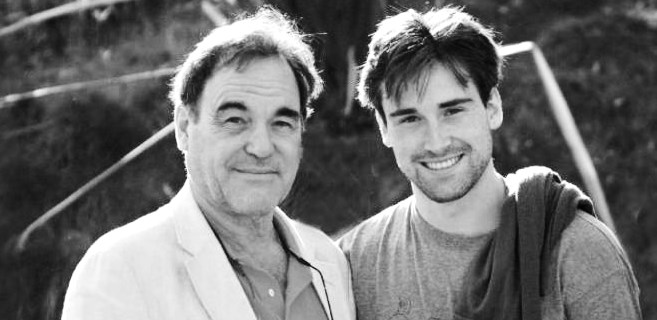
So imagine growing up and one day the realization hits that your Dad is the acclaimed filmmaker Oliver Stone; on top of that you have essentially grown up in the movies your father has been making. Now you were unaware to the extent of just how different things at home where compared to other people. But, it’s just how things were, and it’s just how things were for Sean Stone.

1002004006473548

Being on the set was normal because making movies is what Dad did for a living. These famous actors were simply people that were helping Dad out. It all seems fine that is till, as Sean told me, the world opens up and your understanding of that which you have been exposed to becomes evident.

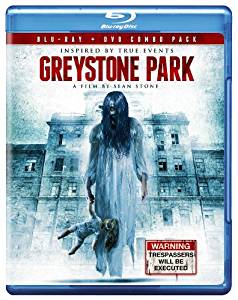
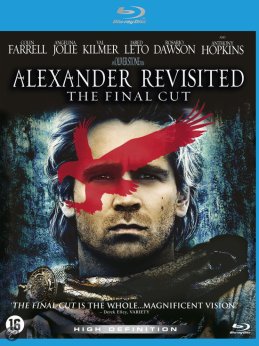
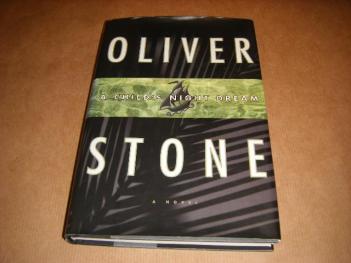
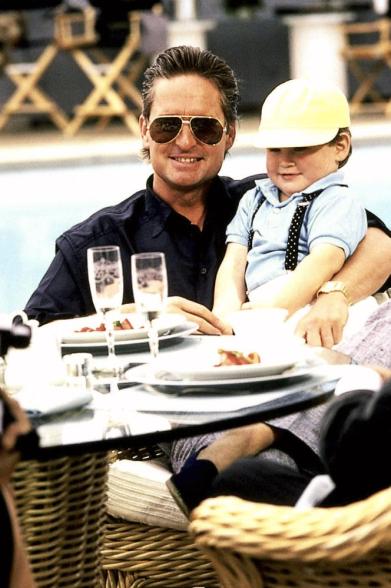
Being a lover of the work of Sean’s dad, I, like the rest of you, have seen him as a baby on the lap of Gordon Gekko, as a young Jim Morrison, as the brother of an eventual mass murderer and more. He is now, however, a storyteller in his own right. Beginning with the chronicling of the making of Alexander, Sean has emerged as a naturally talented filmmaker. He has continued exploring the documentary as well as genre filmmaking, and I eagerly anticipate his intended adaptation of his father’s book A Child’s Night Dream.

35445

It was a real treat to chat with him at the dawn of 2017 . . . ladies and gentlemen, I give you . . . Sean Stone.

MCDWAST FE007

https://www.amazon.com/Alexander-Revisited-Blu-ray-Colin-Farrell/dp/B00CSKQ5TK/ref=sr_1_9?ie=UTF8&qid=1491450945&sr=8-9&keywords=alexander+blu+ray

https://www.amazon.com/Greystone-Park-Blu-ray-Combo-Pack/dp/B008NNY93K/ref=sr_1_2?s=movies-tv&ie=UTF8&qid=1491451403&sr=1-2&keywords=greystone+park

https://www.amazon.com/Childs-Night-Dream-Oliver-Stone/dp/0312167989/ref=sr_1_1?ie=UTF8&qid=1491451496&sr=8-1&keywords=a+childs+night+dream+oliver+stone

What began with Weng Weng: An Interview with Andrew Leavold by Kent Hill

When Shakespeare wrote about all the world being a stage, and all the people in it being merely players with their entrances and exits, he was on to something. But it is the line: and one man in his time plays many parts that brings to mind the life and now the burgeoning cinema of Andrew Leavold.

Here is a man for whom movies are a great passion, a grand obsession, and they have been the catalyst for the direction in which he has moved through his life. Beginning with his own video store, Andrew filled the shelves with everything from the opulent and the uniquely obscure. For the better part of two decades he brought awareness and ultimately his love for film to the renting public – but the times, as they are bound to do, started a changin’. The landscape of delivering entertainment to the masses forced the then proprietor of Trash Video to reassess.

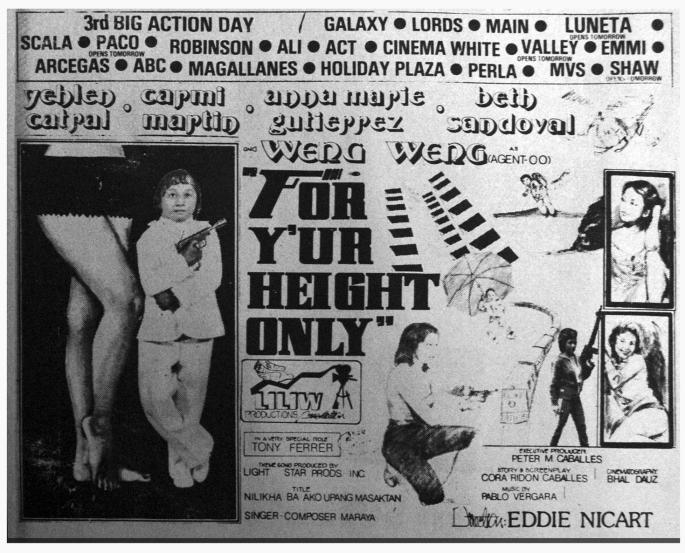
Fortunately by the time the demise of the video store descended, Andrew had already encountered the thing that would prove to be the gateway to the next phase in the evolution of him realizing his dream. That ‘thing’ would appear in the form of a little man the world, up until that point, knew simply as Weng Weng; a pint-sized Filipino actor that had been propelled into recognition as Agent 00 in a film called For Y’ur Height Only.

for_your_height_only_1

Andrew’s fascination with the tiny action man would see him embark on a seven year odyssey, returning multiple times to the Philippines in search of Weng Weng and the story surrounding his life and cinematic career. All of this became the basis of the incredible documentary which still continues to evolve; its release bringing to light more and more stories about this petite performer seemingly enshrouded by magic and myth. But The Search for Weng Weng (the film) is only a piece of the adventure. There is now a book, the print companion to the documentary in which Leavold extends and expands upon all he has and continues to unearth.

What I took away from our conversation is that the spark that fuels the fire which burns within us, inspires us, drives us toward that which we seek to achieve can come, at the best of times, from the most unlikely of places. For Andrew, a mysterious video tape catapulted him from one dream to the next, now, he is the filmmaker he thought he would never become. It was a privilege to talk with him and I sincerely hope you will check out The Search for Weng Weng, the book and the film and help Andy continue his work, keeping the dream alive.

Ladies and Gentlemen . . . Andrew Leavold.

Me


To get your hands of the book and the film please visit:

https://www.facebook.com/TheSearchForWengWeng

https://www.facebook.com/andrew.leavold

WRONG: DULL ISLAND

kong-skull-island1

He’s bigger, he’s better and he’s back. He’s King Kong, and this time he is not going to be dragged off Skull Island and taken back to civilization to be paraded around till he takes exception to being someone’s meal ticket, breaks loose his chains and starts a city smashing rampage which ends with a barrage of bullets and a long fall to the asphalt below.

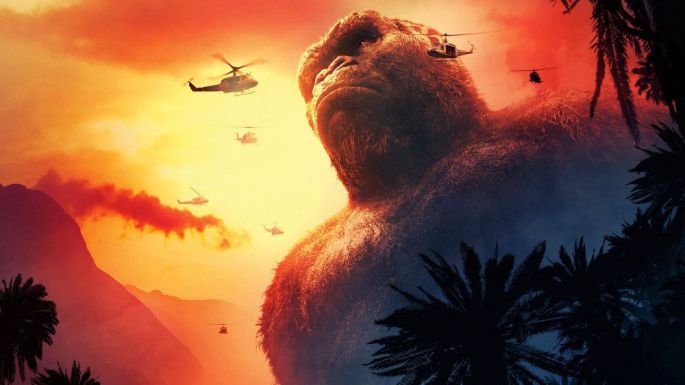
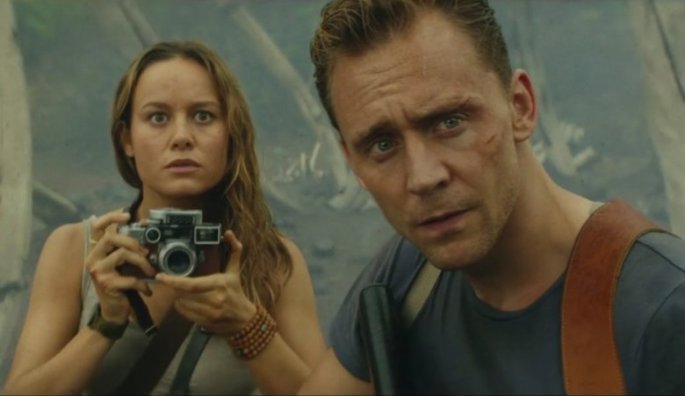
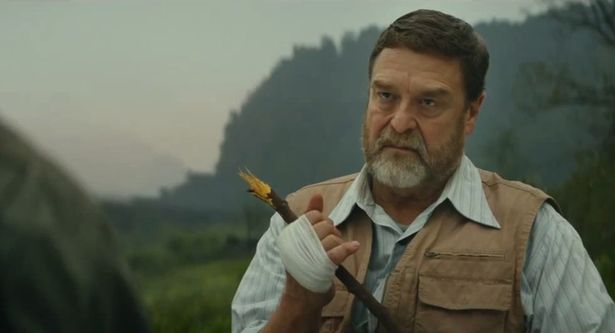
No folks, this time round Kong, now the size of a mountain, is hanging out and keeping the peace on his island. That is until and group of curious humans, led by an alleged Bear Grylls, Tom Hiddleston, Oscar winner Brie Larson who shifts between looking wide-eyed at things and taking photos, John Goodman who knows the truth is out there and Samuel L. Jackson. When you absolutely, positively have to kill every monkey in the room – accept no substitute. This group headlines a cast of who-gives-a-shit characters on a trip to Skull Island where everything is big. Even the ants apparently, but that’s a set piece too far.
Kong-Skull-Island-Trailer

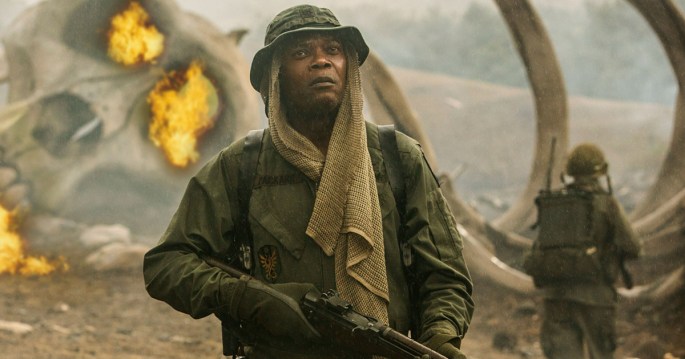
The journey to the island is mandatory – montage and music stuff. Then we break through the perpetual storm clouds and have ourselves a bit of an Avatar moment as the crew marvel at the grandeur and beauty of this lost wilderness. Then Kong shows up and goes apeshit. He smashes up the Apocalypse Now homage and then walks off to enjoy a little calamari, ’cause they just don’t make bananas that big. So,  with the cast all over the place, Tom and snap-happy Brie and their group are headed from the rendezvous point, Sam and John and that guy who played Private Wilson in Tigerland, plus the other soldiers are off to get some more guns to aid in Sam’s desire to turn the King into fried funky monkey meat.

There’s a giant spider that should make Jon Peters happy. There’s the Watcher in the Water moment. The Soldier who writes to his son bites it, or gets bitten by something unusual, but we don’t get the exposition till we meet up with John C. Reilly looking like his character Gershon Gruen from The Extra Man, minus the collection of souvenirs and the no-testicle high voice. This guy though gives the film a pulse. Oh, and he was the pilot from the beginning, SPOILER! He’s been hanging out on the island with the tribe that speech forgot, waiting to come in and add some much needed comic relief. Turns out there are huge nasties that you can call whatever you want under the ground that Kong has kept from emerging to prominence and getting there own spin-off movie.
10-apocalypse-now-kong-skull-island_w1200_h630

This task used to be in the hands of more Kongs, but there is a ‘big one’ of these things that lay waste to them. Now Kong is the only one left who can keep cool, sit tight and keep the creatures in there holes. Of course this film falls into the cash-cow category. They brought back Godzilla, now they make a Kong that’s to scale, in order for the pair to have a decent scrap. But sadly it is a joyless ride. Predictable, laughable, with (and I’m quoting a prior review I’ve read) cardboard cut-out characters that are simply there to fill in the time between Kong and his monster-bashing bits. Heck my son started talking at least 45 minutes out from the end. This tells me that he is board out of his mind and I was with him. But I tried to hang on. I did not fall asleep like I did after the first fifteen minutes of the Conan remake. I have since completely avoided the try-again versions of Clash of the Titans, RoboCop, Ben Hur, Point Break, Total Recall as so on and so forth.

There is a line from James Ivory’s Surviving Picasso in which Anthony Hopkins, as the title character, refers to the methods of artists who have found fame and fortune. He says they make themselves little cake-molds and bake cakes, one after the other, all the same. He then  stresses to Natascha McElhone’s Francoise, not to become your own connoisseur. This is extremely relevant and typical of the modern Hollywood. There is little to no attempt at originality, and if there is, it takes place within a film that fits into the friendly confines of a pre-branded property.
kong-skull-1

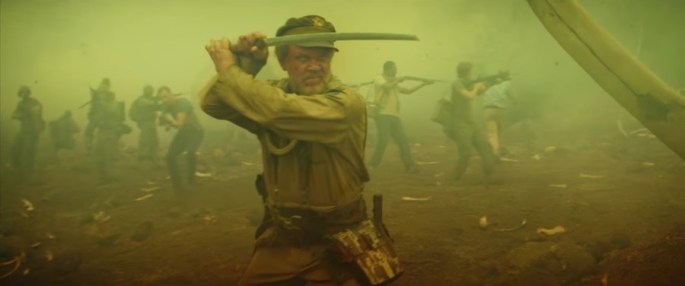
But the big ape lives and walks off into the center of his jungle home. He survives his encounter with dim-witted humanity, only to go off and fortify himself for the coming sequels and, quick note on cinematography, Larry Fong gets to send a love letter to his buddy Zack Snyder with a little samurai sword in green smoke action. We have reached that point in the history of the movies dear readers, in which the dead horse has been flogged so often that they have been whipping the bones. Soon all that will be left is the dust of said bones under foot. What are we to expect then? I’m reminded of one of Kevin Costner’s lines from his summation speech in JFK, “perhaps it will become a generational thing.” Ten years goes by  and it’ll be, “Well, time to drag a King Kong movie out again.”

Sam Jackson buys the farm much like he does in Deep Blue Sea, swiftly and unexpected, at least for him. I’m starting to believe Hollywood is looking at us the same way. Here we stand, full of confidence, about to witness triumph in whatever form it may appear. Then it becomes like the lead up to the first ever screening of the Phantom Menace. The audience was cheering, poised, ready for the planets to align in complete and utter harmony. The Fox logo. The Lucasfilm logo. A long time ago, in a galaxy far far away. Star Wars. If you watch the documentary The People Vs. George Lucas, one interviewees describes this as perhaps one the greatest moments in cinema history, then, then the film started.

I think it is a frequent occurrence today. There is so much pomp and pageantry surrounding these tent-pole movies that more often than not bad, because to achieve the same level as the hype generated is near impossible. Mind you, there are a few that defy this convention but they are few and far between.

So my favorite Kong is still the one I grew up with, the John Guillermin 1976 version.

People tell me they hate that one too. But to each his own. Kong will most likely be back in a decade after this lot. He’ll be half the size of the planet, ripped and ready to rumble against the Independence Day giant aliens when they decide to return to the best place in the universe, Planet Earth: home and the re-imagination of the adaptation of the sequel of the remake.

He’ll take a huge crap in his mighty hand and fling it at them. Oh if only…

The Dude in the Audience

flat,550x550,075,f.u1

Back to Graceland: An Interview with Demian Lichtenstein by Kent Hill

If you have seen the restored Lawrence of Arabia then there’s a chance you’ve seen the extras on the second disc? One such extra is an interview with Spielberg, in which he recounts sitting down with David Lean for a screening of the film. As they watched, Lean provided what Spielberg describes as a ‘live’ director’s commentary, pontificating about all aspects of the production while the pair sat through the movie.

Now Spielberg himself doesn’t do commentaries, but a lot of directors do. Of course I have a list of films that to date, do not boast a commentary track which I wish, so badly, that they did. Near the top of that list are a pair of movies that stick out. One is John Milius’s Farewell to the King and the other is Demian Lichtenstein’s 3000 Miles to Graceland.

But now for something really cool.

At the close of 2016 I had the chance to chat with Demian, and what eventuated was quite extraordinary. I was working my way through my questions when, all of a sudden, Demian started to unload his fantastic tales from the production, and it just kept getting better. As I listened, I imagined Spielberg listening to Lean, receiving first-hand all of those astonishing insights, and here I was in a similar situation getting the good oil on the production of Graceland.

It has become a cult film with the passage of time, but there remains no chance of Demian ever being gifted the ability to go back in and retool his movie. Perhaps in some small way set certain things to right.

I was tired when we spoke, it was 3am here Down Under, but, by the time we were through, I was energized and so sat back and re-watched 3000 Miles to Graceland with fresh eyes. Demian’s stories swirled in my head. When we were talking, just when I thought it was over, he went on. I received scene-specific commentary and even insights into scenes that were written but never shot.

It was a genuine thrill, along with being a great and one of the most surprising interviews I’ve ever done.

3000 Miles to Graceland is out there waiting for you to watch it again or to discover it for the first time. It makes me proud as a fan to think that this interview may serve as the bonus material we never received. A director’s commentary of a splendidly intricate and playfully unique movie with great anecdotes, favorite scenes and even deleted scenes in the form of unrealized story elements.

So, for all you fans and even the first-timers, the journey of 3000 Miles back to Graceland begins here, for your listening pleasure.

51589485

Don’t Argue: A Conversation with an Australian Screen Icon by Kent Hill

David Argue is a brilliant, unpredictable talent. At his greatest when left to his own devices and instincts, he has graced Australian screens for the better part of five decades.

Gaining is equity card as an infant, he soon found his way to the National Institute of Dramatic Arts whose graduates include the likes of Mel Gibson (Lethal Weapon, Braveheart), Judy Davis (Celebrity, Absolute Power) and Colin Friels (Dark City, Darkman) just to name a few. He has worked with our finest behind the camera as well, under the direction of Peter Weir (The Truman Show, Dead Poets Society), Brian Trenchard-Smith (The Man from Hong Kong, Turkey Shoot) and Russell Mulcahy (Highlander, The Shadow).

He has enjoyed a career of richly diverse roles. Playing everything from outback lunatics to bumbling criminals to budding cinema proprietors. Sharing the screen with the cream of both Australian and international talent from a then unknown Nicole Kidman to being the cellmate of Ray Liotta.

David has watched the industry thrive, shrink and change as well as having the distinction of seeing himself decapitated. (If anyone out there reads this and knows the whereabouts of David’s fake head from the film Blood Oath – he would like it back)

David sat down with me recently, in one of the most fun and certainly funniest conversations I’ve yet had, talking about his life of many parts, about his hours of strutting and fretting upon the stage, as well as his hopes for a BMX Bandits 2.

Ladies and Gentlemen I give you the irrepressible, the incomparable, the irresistible David Argue.

mvm_david_argue-245x300

For the Love of the Movies: A Conversation with Paul M. Sammon by Kent Hill

Those of us who love the movies were bitten by the bug at an early age. Paul M. Sammon is no different, though as he told me, his options regarding entertainment whilst growing up on a military base were limited. If you were athletic there was baseball, if you were a reader there was a library. Then of course there was the cinema.

When you are young there is no such thing as a bad movie. You devour all you can of the sights, the sounds, the sensations that rip through your entire being as screen comes alive and you are transported. At times to far-flung stars, only to be besieged by angry armies of giant bugs or thrust into the midst of a crime wave, surrounded by urban decay only to turn and find yourself staring down the barrel of a gun in the hand of a cyborg police officer who instructs you in no uncertain terms to, “think it over creep.”

Paul M. Sammon has spent over thirty-five years in and around the movie business. His ferocious zeal and meticulous attention to detail have garnered him a reputation. Not merely for his comprehensive and passionate coverage of the films that he admirers but also (and in this I share his passion in equal measure) for the journey that a film must undertake from its inception to its coming soon to a theatre near you.

He has brought his veracious eye for intricacies to many a fine piece that has graced the pages of publications such as The American Cinematographer, Cinefantastique and Cinefex. He has served within the industry as everything from a special effects coordinator to a still photographer. Then of course there are his books; the most memorable of these being Future Noir: The Making of Blade Runner. During his time on the production he came to know better the film’s director Ridley Scott, whom he would later serve as biographer.

He has rubbed shoulders with many of Hollywood’s finest talents and been present to document the triumphs and the tragedies that have occurred on the film sets, upon which the lamentable and the legendary have been photographed at twenty-four frames a second.

To converse with Paul was everything I had hoped for and more. His candidness, his cleverness, his unbridled joy for cinema ebbs and flows from his deliciously detailed delivery. But that’s enough from me.

Sit back and enjoy this reminiscence, as a great storyteller reflects on his adventures in the sometimes fun, sometimes fickle but often fascinating land where movies are born, raised and once in a while butchered.

Ladies and Gentlemen, I give you, Paul M. Sammon…


The Blind Wolf speaks: An Interview with Kurando Mitsutake by Kent Hill

Independent film making is a minefield.

I recall Tarantino being asked for his advice on how to break into the film business. In his response he compared films to waves breaking against the shore. One after another, after another. I’m paraphrasing here, but at the end of his answer he said if you really want people to stand up and take notice, then you have to put a killer shark on one of those waves.

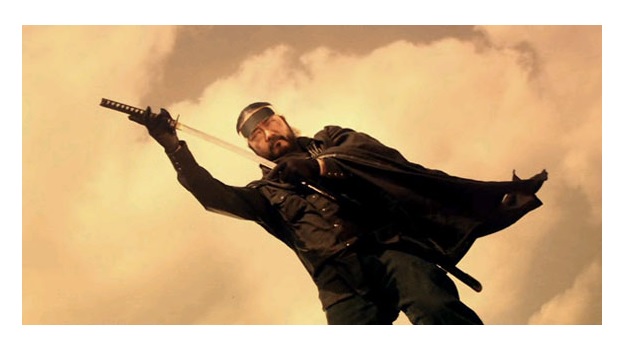
Kurando Mitsutake has been climbing the mountain towards success in the industry for a while now. Burdened by low budgets and tight schedules, he has refused to surrender to defeat by virtue of his tenacity and creativity. Thus he has gone on to produce a collection of eclectic, action-packed explosions that not only homage but summon the spirit of the heady days of that glorious age that saw the rise of exploitation cinema.

Beginning with his audacious debut Samurai Avenger: The Blind Wolf, Mitsutake brought to my mind memories of Jodorowsky’s El Topo as he would himself write, direct, produce and even star in the ultra-violent extravaganza that carried all the delightful hallmarks of a revenge western, along with shades of Kenji Misumi’s Lone Wolf and Cub series.

Success lies at the ends of roads that present everything from gentle rises to precipitous falls. Kurando has known both and has managed to endure. His ability to deliver furious and engaging movies on a shoestring has preempted his rise, and rise again. He is a filmmaker on the verge of greatness, and what he may he yet achieve with a healthier budget or, dare I say it, studio backing will be (I have no doubt) a film the likes of which the world has not yet experienced.

He was an absolute delight to talk to and I say to you now, mark well and remember – Kurando Mitsutake has only just begun. His journey will captivate, his cinema will excite.

I give now, The Blind Wolf himself . . . . Kurando Mitsutake.

Making mashed potatoes with Walken: An Interview with Andrew Bryniarski by Kent Hill

Error
This video doesn’t exist

You might not know his name, but you’ve certainly seen his movies.

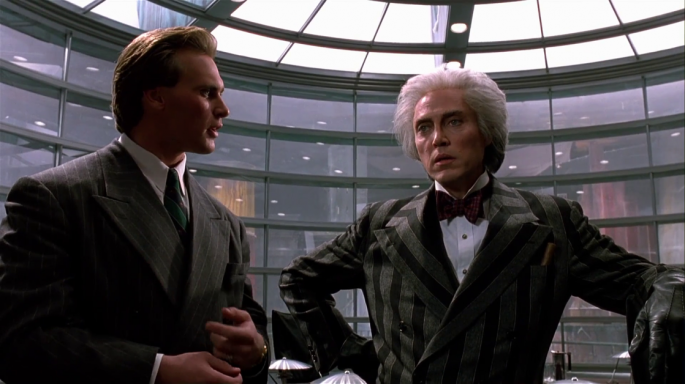
Andrew Bryniarski is a high-octane actor. His explosive and memorable performances stay with you. He is full-tilt, funny and furious. He has worked with an impressive array of Hollywood’s ‘big hitters’ like Tim Burton, Oliver Stone, John McTiernan, Michael Bay and John Singleton. He has starred alongside Bruce Willis, Christopher Walken, Al Pacino, Raul Julia, Richard Lynch and Scooby Doo. He is beaten the shit out of Superman and made out with his girlfriend. Now if that is not an impressive resume, I don’t know what is.

All I can say is, I have done a number of interviews, but this one was a BLAST! Andy I feel has more great stories in him, only a few of which he was able to share over the couple of conversations we had. I would love this guy to sit down and write a ‘tell-all.’ The things that he has done, the places he has been, his experiences as a guy who was plucked out of obscurity and propelled from there to a Hollywood career that has spanned three decades, and has seen him do everything from sacking quarterbacks to wielding chainsaws, in that old Texas-massacre kinda way. It’s a tome that would be utterly enthralling.

The same enthusiasm that Andy applies to his work is apparent in his personality and his perspective. I get the impression there is no half-way with this man, and though it might seem that he has drifted from one grand adventure to another, there is a relentless dedication beneath the surface bravado that has been the catalyst behind his success.

It is always my intention to transcribe my interviews as, at times, the quality of the recording is not that great. But this is one of those times where you have to hear it from the man himself. No one does Andrew Bryniarski better than Andrew Bryniarski, unless of course it’s Andrew Bryniarski doing Christopher Walken (which I promise you’ll love.)

On that point, Andy sent me a message the day after our initial chat, saying that he had forgotten a line in his anecdote regarding Walken. It reads as follows:

Walken’s father was a baker and during the depression, there was a flour shortage so they used sawdust so they got ‘the rickets.’ By the time Chris Walken came along they had flour, so he was taller than his father. But Andy – he had orange juice.

It doesn’t make sense I know. But take note of the missing line (above here underlined) and listen to the incomparable Andrew Bryniarski tell it in his ‘awesome’ Christopher Walken voice…

Remembering Flight of the Navigator with Randal Kleiser by Kent Hill

Error
This video doesn’t exist

I was still a boy, and there was no such thing as a multiplex in sight the night I saw Flight of the Navigator.

I remember what was then the Russell Street theatre. A relatively new cinema built as its aged counterpart, The Strand, had slipped into disrepair. I remember the smell of the new carpet mixing with the popcorn, how the place always seemed packed, as two lines of movie-goers had to snake around both sides of the block to line up.

But it was a quiet Friday night when I went with my Mum to see Randal Kleiser’s new movie. From the poster, which was all you had to go on back in those days, it looked like one heck of a ride. Another boy meets an alien movie in the wake of the monumental achievement that was E.T. But let’s not descend into comparisons,  such is the way of the industry. Like Dante’s Explorers, Flight of the Navigator is an ingenious blending of many great elements. It begins as a movie about a family, about two brothers. Then we fall into a time travel story that sees our hero transported eight years into a future where he is presumed to be dead. This is further compounded by the fact that he has not aged a day. Thus the testing begins, a search for the heart of the mystery. The testing reveals the hero’s head is filled alien information and that he had been selected as a specimen to study on a far-flung planet in a distant galaxy. The boy is then taken by NASA scientists to be scrutinized further. This is where the boy meets alien story begins and our hero takes off inside a spacecraft in an adventure, not only to help the alien return home, but to once more, travel back in time and get home himself.

That’s a fairly vague overview I know. But I always take into account that there may yet be someone out there that has not seen the movie. That being the chase, I have no desire to spoil it for them.

After I saw the movie I wanted to write Randal Kleiser a letter, which I did, telling him what a marvelous movie I thought he’d made. I did not know where to send it, so my Dad looked up the address of Walt Disney Pictures and we mailed it together.

I know now Mr. Kleiser never got my letter, because thirty years later I got to call him on the phone and tell him just that – what a marvelous movie I thought and still think Flight of the Navigator is.

I hope you’ll enjoy our interview  you dumb dork! Buttface! Scuz-bucket! Ha-ha!

P.S. –

If you would like further information on the Nina Foch DVD or course please follow this link: http://www.ninafochproject.com/

Virtually Speaking: An Interview with Brett Leonard by Kent Hill


My Grandmother was the avid cinema-goer in our family. She passed her love of movies down to my Mother who in turn, passed it on to me. Another little boy who learned about the wonders of the movies from his Mother was Brett Leonard.

This love would grow, forging a filmmaker whose career that has been eclectic, but always on the cutting edge. The man who was once a killer clown from outer space, has in many ways been one the pioneers in the eventually, all-compassing integration of the digital age into the celluloid art form. With his ground-breaking work in The Lawnmower Man, Leonard has since been blazing a trail  throughout the industry. His early concepts of combining virtual reality with the cinematic experience are still expanding, and his vision of where it is all going to go, is far from complete.

Yet I was fascinated with the journey this humble gentleman has taken. He has worked both independently and with the studios, he has directed some of the finest actors to grace the screen, he has bore the brunt of the dark politics that whirls below surface of the filmmaking process. Still, he manages to laugh it off and move on to the next project with an energy and optimism that has served him well.

I thrilled at the revelations Brett shared with me about his movies, which I admire greatly, but also about his personal adventures including something I was, I admit, grossly unaware of: he a spent a significant period of his life living and working here in Australia. To such an extent he even was labelled an Australian filmmaker by the local media. He said, in the great Down Under, he learned not only the true value of mateship, but also spent some of his most glorious days.

He was a pleasure to interview, a true gentleman, a fabulous filmmaker – ladies and gentlemen, I give you, Brett Leonard…