Todd Phillips’ JOKER

Image result for joker poster"

Join Frank, Tim, and Nate discuss Todd Phillip’s box office hit, JOKER, which is currently the highest-grossing rated R film of all time. Discussed in length is the film, and its commentary on American culture, Joaquin Phoenix’s transformative performance, Robert De Niro’s sublime turn, and the film’s Oscar chances. We hope you enjoy!

Irvin Kershner’s NEVER SAY NEVER AGAIN

NSNA
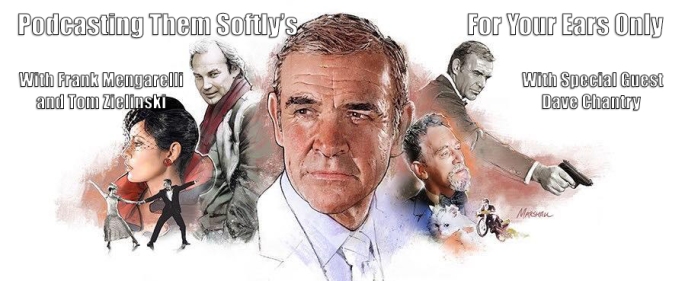
Artwork by Jeffrey Marshall

Frank and Tom are joined with special guest Dave Chantry, to discuss the renegade James Bond film, NEVER SAY NEVER AGAIN featuring Sean Connery’s return as James Bond, 007. This is a very lively discussion about the often forgotten and criticized Bond film, that features a stellar cast, amazing production, and behind the scenes talent that is some of the finest of the series.

For your reference: The Battle of the Bonds

Quentin Tarantino’s JACKIE BROWN

Following the cinema changing smash of PULP FICTION, marking the first and last time (so far) in his career, Quentin Tarantino adapted a property by someone else By adapting Elmore Leonard, Tarantino made the story and his characters his own, by using a set story and characters, he populates each character with his hallmark casting and colors in Leonard’s dialogue with his own Tarantinoisms. JACKIE BROWN has long been hailed Tarantino’s most “mature” work, and in a sense, that is a more than a fair assessment.

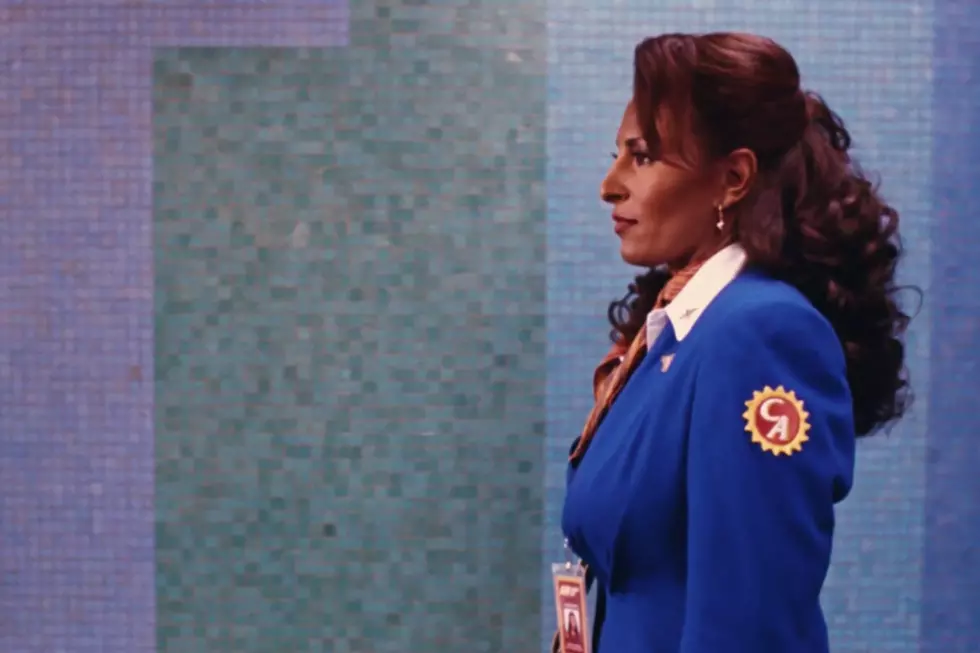
Tarantino’s cast is rather remarkable in this picture. He changes the name and skin color of Leonard’s heroine by casting Pam Grier in her finest role that acts as both a callback continuation of some of her most seminal 70s characters and an empowering role of fierce feminism. Robert Forster, another mainstay of forgotten roles in cinema gets cast in one of Tarantino’s best characters, Max Cherry, the stoic bail bondsman who assists in Grier’s caper.

Image result for jackie brown 1997

Michael Keaton and Robert De Niro are magnificent in meaty roles that act as respective undercards in their rich canon of characters; it truly is a shame that Tarantino never worked with Keaton and De Niro again, because he gets unique performances out of them, that is tremendously underrated. And of course, Samuel L. Jackson gets a very Sam Jackson role, and he is such a magnificent son of a bitch to watch in the film. Bridget Fonda has never been better or sexier.

Image result for jackie brown 1997

Tarantino crafts a film populated with older actors, giving us a pulpy crime caper, where the action is moved forward by dialogueless characters, Forster and De Niro’s total dialogue probably would take up three pages in the screenplay, through their reactions, stares, and movements very much move the film along. The cunning screenplay foregoes Tarantino’s violent nature, through the guise of character progression.

Tarantino’s love for the dangerous and sexy heroine is on full display in this film. Pam Grier’s take on the role that she’ll more than likely be remembered for is phenomenal, and she shifts back and forth between manipulating the bad men in the film and falling for her sidekick, Forster.

Related image

The reason this film is deemed Tarantino’s most mature is that the film laminates stoicism through Grier and Forster. The film is about living with mistakes, living long enough to know your limitations, and how to survive. All these characters have lived a life of struggle and hardship well before the cameras start rolling. The film builds up and cascades into an emotional moment between two genre actors that get dropped into a mainstream, highly polished film and that is such a beautiful thing.

For Your Ears Only: John Glen’s OCTOPUSSY

Octopussy Banner
Artwork courtesy of Jeffrey Marshall.

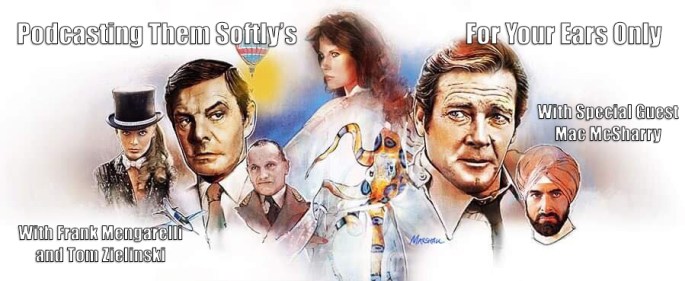
Join Frank and Tom with special guest Mac McSharry as they discuss John Glen’s OCTOPUSSY in all its glory. They discuss Moore’s turn, Maud Adams’ return to the series, and Louis Jordan as well as the behind the scenes production as well as the original source material written by Fleming. Join us next time as they cover Sean Connery’s return as James Bond in NEVER SAY NEVER AGAIN.

Once Upon a Podcast in…Hollywood

BeFunky-collage (1).jpg

The gang is back! Frank Mengarelli, Tim Fuglei, Nate Hill, Ben Cahlamer, and Patrick Crain dish on the ninth film by Quentin Tarantino. We run a little long (but under the runtime of the film, which was our goal) and had some technical difficulties, but we have a very enthusiastic and lively chat regarding the film. We discuss the film in whole, as well as analyzing our favorite moments. Are Kurt Russell and Zoe Bell Stuntman Mike’s parents? Was Rick Dalton fired from THE GREAT ESCAPE? Will Tarantino make his BOUNTY LAW episodes? How involved was Burt Reynolds in the film? All these questions and more are discussed in our epic ONCE UPON A TIME IN … HOLLYWOOD podcast!

FOR YOUR EARS ONLY: John Glen’s FOR YOUR EYES ONLY

For Your Eyes Only
Artwork by Jeff Marshall

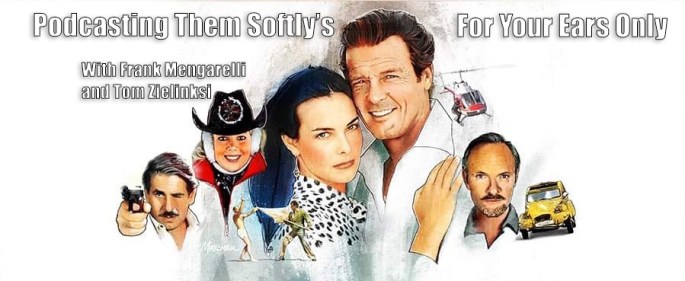
After a summer break, we’re back at it and finally tackling John Glen’s FOR YOUR EYES ONLY which was released in 1981 and of course featured Roger Moore as James Bond. We cover a little of Bond 25 and our next podcast as well. We hope you enjoy, and we’re happy to be back!

Artwork was supplied to us by the very talented Jeff Marshall. Please visit his website here to view his other works.

ONCE UPON A TIME IN…2019

I have always been hesitant about writing in the first person when it comes to anything analytical, one thing instantly comes to mind; Robert Prosky in BROADCAST NEWS saying “who the hell cares what you think?” after watching William Hurt, a network anchor, say “and I think we’ll all sleep better tonight.” At the risk of sounding like a flippant fanboy (which I am), I think what I have to say about this topic, and this auteur, in particular, is important. When it comes to the minority of naysayers and torchbearering wokaholics, Quentin Tarantino and his latest and most seminal film, ONCE UPON A TIME IN…HOLLYWOOD has become an easy target. Violence against women, Margot Robbie doesn’t have enough lines, it glorifies toxic masculinity – no, no, and NO – the film surely does not.
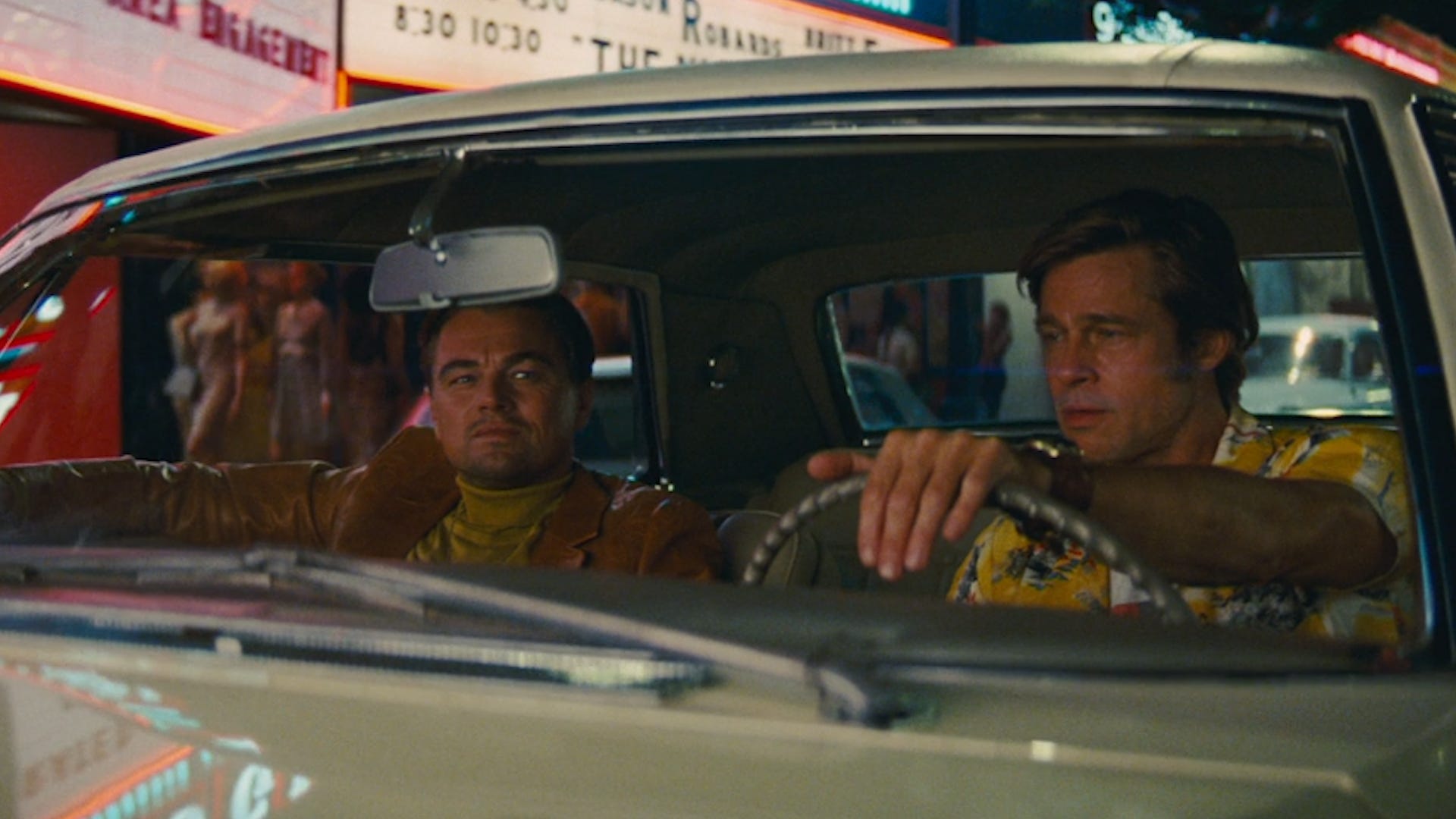
Image result for once upon a time in hollywood

Tarantino is fundamentally important to me as not just a cinephile, but as a person. I wore out my used VHS copy of RESERVOIR DOGS when I was in middle school. My mother forbid me to watch it, and my Dad embraced it. One of the benefits of being a child of divorce. It was cool, sexy, violent, and overly masculine. It made me feel empowered yet cautious. Would I want to be a Reservoir Dog in a black suit and carrying a big gun? Kind of, yes. But did I really want to live that life, where less than one percent of that life is glorified in encapsulated moments on screen? No. No, I did not. Tarantino has a fanbase that isn’t so much a cult as it is an organized religion, and QT will always be our cinematic lord and savior.

My pallet of film was already starting to get diverse. My father brought me up on John Wayne and John Ford, Errol Flynn, Burt Lancaster, Gary Cooper, Martin Scorsese, Francis Ford Coppola, and my namesake, Frank Sinatra. My Mother’s contribution was ROCKY, TO KILL A MOCKING BIRD, INDIANA JONES, and STAR WARS. Then, I experienced Quentin Tarantino. It was that cool fucking name that introduced me to Harvey Keitel, John Travolta, Steeler’s Wheel, Harry Nilsson, Tim Roth, Michael Madsen, Sam Jackson, Uma Thurman, Dick Dale, Kool and the Gang, Robert Forster, The Delfonics, Pam Grier, Bridget Fonda, Michael Fassbender, Christoph Waltz, David Carradine, Michael Parks, Sid Haig, Larry Bishop, Ennio Morricone, Franco Nero, DJANGO – I would love to keep going, believe me, I really would, but you get the point.

Image result for once upon a time in hollywood

Not only were these musicians, films, and actors all put on my radar, so were genre pictures, and sub-genres. His films are not only an encyclopedia of all that, but also a chose your own adventure. After seeing ONCE UPON A TIME IN…HOLLYWOOD, I instantly ordered C.C. & COMPANY and THE ILLUSTRATED MAN and watched both instantly upon arrival. Anyone who knows me well knows that was an incredible feat I pulled off: watching a movie as soon as I bought it. Not only does Tarantino’s films make me feel good, they send me on a quest of an actor or band’s catalog and I immerse myself into everything I can in microbursts that send me to buy bootleg DVDs of Michael Parks’ movies on eBay, or scouring record stores for cassettes of The Delfonics.

Quentin Tarantino and everything he’s created, curated, and recommended – everything that is Quentin Tarantino is important to me. I hold him and everything that comes with him sacred. Which is why I was so deeply moved by the haunting beauty of ONCE UPON A TIME IN…HOLLYWOOD. Sure, it is a jovial bromance between a fading star and his stuntman, as well as portraying Sharon Tate as this beautiful showboat of purity and everything that was once good in the world, and revising the wrongs that history should have gotten right. There is a multitude of takeaways from this film, and that’s one of the reasons it so rewatchable and so fucking alluring. The film is an experience. You get immersed by it; you become lost in a place where there is no space and time.

Image result for once upon a time in hollywood

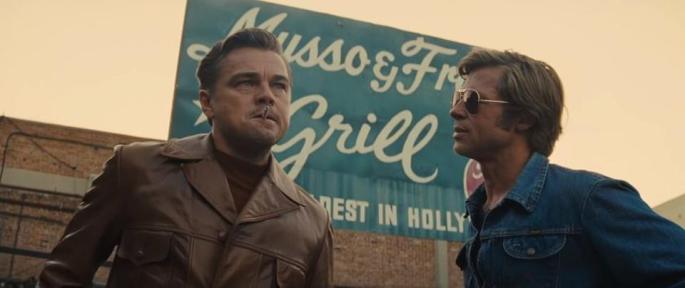
For me, the film plays like a Sam Peckinpah picture. Leonardo DiCaprio and Brad Pitt are two men who are coming to the realization that the world, their world, has progressed past them. There really isn’t a place for a fading TV star who fucked up his movie stardom, and his faithful, wife killing, war hero stuntman who is the epitome of loyal, who will stand by him when everyone else has abandoned him. And then there’s Margot Robbie as Sharon Tate, who is portrayed as a goddess of fertility and good, whose performance is ever more powerful because everyone knows her fate. The three of them have no place in the world anymore.

Are you the fading movie star who comes to the realization that his previous transgressions coupled with cultural advancements have left him as the bad guy on prime time tv? The one who doesn’t even know who he is? His phonies and insecurities have boiled to the surface, and he’s become a fragile and emotional being? Or are you the stuntman? The anthesis of stoicism; the rocksteady one who deals with problems on their own terms; right or wrong, it gets handled and the problem is over. Are you the one that carries the load? Does the heavy lifting?

This is not singular to men. These are two people that have broad strokes that encompass any individual and are as relatable as Bill and The Bride, and Jackie Brown and Max Cherry. Yet, the ending of the film, the saving of Sharon Tate elevates not just these two characters and the film, but Tarantino himself to a rung of uncertainty. Tarantino is surely an amalgam of both Rick Dalton and Cliff Booth, and one thing is for sure, he knows his days as a final cut artist are numbered. He’s become an artist without a means to an end. With the downfall of Harvey Weinstein, he became a filmmaker without a studio. The #MeToo movement had nearly dragged him down to the point of no return until he signed Leonardo DiCaprio, Brad Pitt, and Margot Robbie to his next picture after Sony beat all the other studios into submission over a bidding war for QT’s ninth film.

Image result for once upon a time in hollywood

Tarantino had always been a problematic filmmaker. His excessive use of the word “nigger”, he “glorified” violence and drug use; and then when THE HATEFUL EIGHT came out, to a hostile environment of the beginnings of Donald Trump’s America. Tarantino was caught in the crosshairs of the alt-left and their faux outrage over violence towards Jennifer Jason Leigh’s character (who was the villain, mind you) and cartoonish racism aimed at Sam Jackson’s character. If you stayed until the end of the movie, you’d find that the racist and the black guy come together to hang the evil bitch, coming together to serve not just justice, but retribution.

AND THEN Tarantino decided to march in a Black Lives Matter protest in New York City, that quickly eroded any support and counter support that he had from the “silent majority”. He was in a lose/lose situation. There was no way out of this. So what does he do? He crafts a fucking masterpiece that is ONCE UPON A TIME IN…HOLLYWOOD as not just an ode to the era, and himself, but to who he is as a filmmaker.

The Atlantic and The New Yorker and even Time Magazine, fucking TIME MAGAZINE, released half baked and lazy think pieces on Tarantino and how he’s “problematic” with the way he treats women. What those three analysis had in common is they had a lazy argument for a shit opinion. Tarantino loves women. LOVES women. Sure, some of his characters have hilarious demeaning deaths, but so do male characters. He has created bold and empowering female characters that are worshiped by both the world inside the film and the audience themselves. The Bride, O-Ren, Jackie Brown, Mia Wallace, Sharon Tate, Jungle Julia, Broomhilda, and Santanico Pandemonium are just a few.
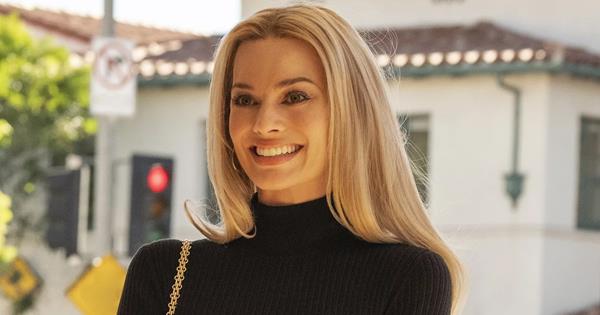
Image result for once upon a time in hollywood margot robbie

And while I can understand perspectives, and am empathetically in tune with how violence against women can be a breaking point for audience members, who the fuck are you, me, or anyone else to tell an artist what they can and cannot do with their own work? The world can be evil, ugly, and bad – and at times, art and artists are a direct reflection of that. At the time this “editorial” was written, Donald Trump is trying to buy Greenland, children are being taken from their families and locked in cages, and people are walking around carrying weapons designed for maximum carnage killing school kids, and mothers, and fathers, and friends, and neighbors, and lovers – and you want to use your corner of the internet and complain about Manson Family hippies getting torched and graphically killed? You’re not helping. At all. All your nuance is temporarily going to stick to the landing. Once we make it through and the pendulum swings back to a President who gives a fuck, then absolutely no one is going to give one single fuck that Brad Pitt broke the face of a hippie girl with a thirty-two ounce can of dog food.

Quentin Tarantino doesn’t make films for me, even though it feels that way for me, he doesn’t make them for you, and he sure as shit doesn’t make them to offend people’s delicate sensibilities; he does what any great artist does. He makes art for himself because he has to.

#byNWR Presents TOO OLD TO DIE YOUNG. Reviewed; Part I.

Too Old to Die Young
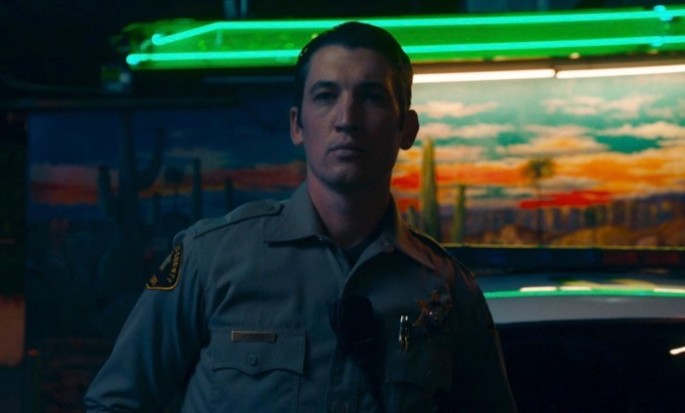
Miles Teller as Martin Jones in TOO OLD TO DIE YOUNG

Amazon Studios has just unleashed a juggernaut, Nicolas Winding Refn’s TOO OLD TO DIE YOUNG as a new exclusive to their streaming platform. The series, which runs ten episodes wherein more than not have a feature-length runtime, is moody and stylized, and quite frankly might be the first series that one cannot simply binge. It is not that it is bad; on the contrary. Refn has developed a show that is so dense and exhilarating that some viewers might need to take a break between episodes and get back into the routine of the normalcy of their respective lives because TOO OLD TO DIE YOUNG is not just dark, it is pitch black.

Much like his previous two pictures, ONLY GOD FORGIVES and THE NEON DEMON, Refn has become a fierce auteur, channeling other filmmakers like David Lynch and Michael Mann, but mostly carving out his own niche within arthouse filmmaking.

Too Old to Die Young William Baldwin
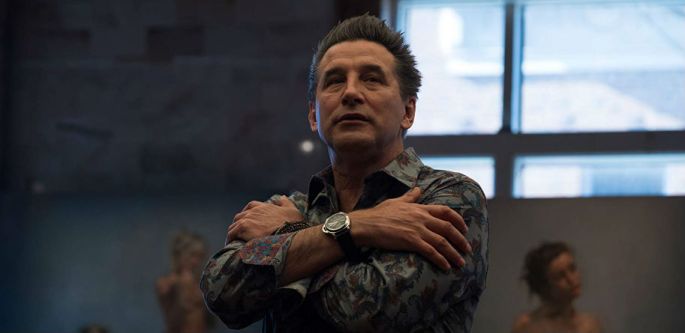
William Baldwin as Theo in TOO OLD TO DIE YOUNG

The first five episodes of the series build a world of degradation and debauchery. There are few likable characters, and the ones that are likable are fundamentally likable for the wrong reasons. The plot is loosely strung together by central events that the characters weave in and out of. Much like TWIN PEAKS: THE RETURN, the viewer just has to put their trust in Reft and co-creature Ed Brubaker and enjoy the ride that is wonderfully accompanied by Cliff Martinez’s hypnotic score.

The series is anything but formulaic, including its center characters. Miles Teller is Martin Jones, a police officer whose partner is killed in the opening scene of the pilot. He’s also a hitman for a gang, as well as dating a seventeen-year-old high school senior whose father is a beautifully coked out and wealthy investor, William Baldwin.

Too Old to Die Young Mandy
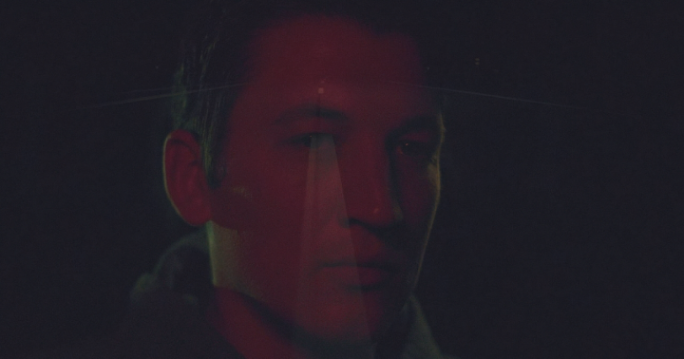
Miles Teller, TOO OLD TO DIE YOUNG

It absolutely, positively cannot be understated; William Baldwin gives the finest performance of his career. His introduction scene is one where he’s sitting across from Teller. Not really interrogating him, or yelling at him for being a thirty-year-old policeman who is illegally dating his daughter; he is establishing his dominance over his daughter’s older suiter through intense stares and clearing his sinuses that have surely are from an obscene amount of cocaine he did.

The four episodes that follow introduce us to new characters. The second episode is solely focused on the killer of Teller’s partner from the pilot. He’s in Mexico with his Uncle, a Cartel head. The third episode introduces us to Jena Malone who is a caseworker by day and an energy healer who connects with the parents of victims of sex abuse. She sends out a one-eyed John Hawkes who is an off the radar former g-man who is dying. They are lovers, pretty sure.

The worldbuilding is mesmerizingly intense. Themes of murder, deviant sex, self-discovery, and vengeance are all prominent parts of each episode, creating an environment that is apathetic on itself, where our “heroes” of Teller, Malone, and Hawkes are trying to restore the balance in a world that has become total darkness. Halfway through the series, the pendulum swings to and fro the motivations of the characters, leaving so much to be discovered and desired. Amazon Studios deserves all the credit in the world for having the balls to back a project such as this. Regardless of the ambiguity and self-indulgence of Refn, one thing is for certain; TOO OLD TO DIE YOUNG is a work of beauty and everlasting art.


Harley Cokeliss’ MALONE


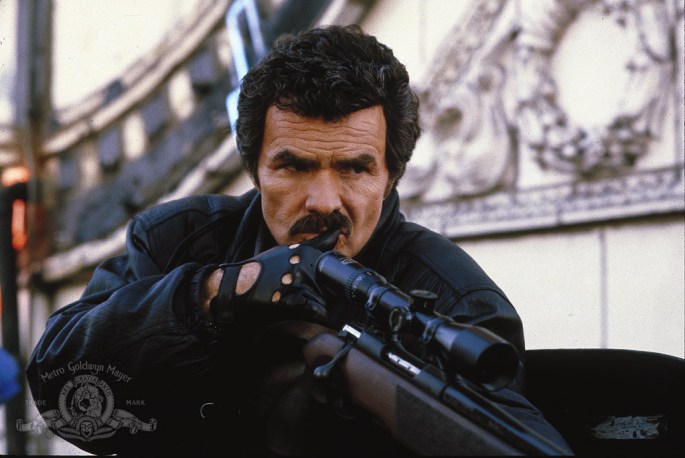
Malone Burt Reynolds 1986

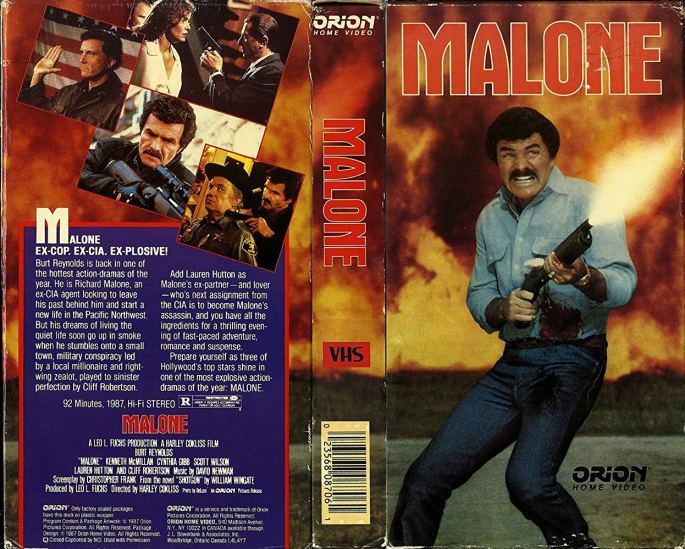
They sure do not make them like Burt Reynolds anymore, do they? After maxing out being a movie star, and before getting resurrected in the role of a lifetime in BOOGIE NIGHTS (“Jack Horner, filmmaker.”), Reynolds starred in what could and should have been a JOHN WICK-esque action vehicle, MALONE, a very lean and action-packed extravaganza that has a formulaic story with an excellent cast and a magnificently satisfying climax.

In typical Reynolds fashion, he plays a mysterious drifter on the lam from his past, whereby fate, his Mustang (of course) breaks down in some small town and befriends the mechanic and his daughter, and by happenstance uncovers a sinister plot of a deep state takeover. Seriously.

As noted, the ensemble is terrific. Lauren Hutton plays a maturely sexy government assassin sent after Reynolds. She’s either his former protege or lover, but probably both, and in typical style, she’s a total badass in the film, and is a lot of fun; think Dafoe in JOHN WICK. Cliff Robertson’s combover and bronzer perfectly compliment his character, which is one of deep-rooted and misguided “patriotism” who has bred and nurtured a following of homegrown extremists ready to take the government back. Rather timely.

Tracey Walter is a polished redneck goon, and he’s wonderful. A good precursor to his role as Bob in BATMAN. Scott Wilson is the town mechanic, who has backed and stood by Reynolds’ ultra cool and machismo antics, Cynthia Gibb as Wilson’s daughter and Reynolds’ just too young to be his love interest, and the film does a very smooth way of acknowledging that fact. Dennis Burkley, Cliff Gardner, and Kenneth McMillan all play their respective typecast and do it exceptionally well.

Malone VHS

The narrative is lean, almost too lean. While the story is very formulaic, which totally works, some of the snappy dialogue gets lost in translation being used on underdeveloped (or undercast) characters. Everything about Reynolds in this film is gold, though. From smoking cigarettes to his alpha vernacular, right down to his rather apparent toupee, it all works so damn well.

The third act is the payoff. After a series of melodramatic events, it comes down to Reynolds versus Robertson and his WASP brotherhood of weekend warriors. And yes, absolutely, this film snap, crackles, and pops into an overly satisfying showdown that is squib city and practical explosions that will set anyone’s chest hair on fire.

The film itself plays it like an “edgy” contemporary tale of a ronin from some old black and white Kurosawa flick (just supplement Toshiro Mifune’s man bun for Reynolds’ toupee), and a western like SHANE (supplementing Alan Ladd’s mustang with a mechanical one). It’s not quite neo-noir, nor is it a time capsule piece of the era either. It just exists, in an almost forgotten yet certainly undervalued way; in a decade that most will bypass or fail to acknowledge.

There is a lot of good stuff from the 80s, and a bounty of those films paved the way for the big budget 90s adult, R rated dramas that are held in such nostalgic fashion in the current era of CGI and regarded thespians rendering themselves into superheroes. There was a time before, there were no boxes to check or poorly dated popular music featured in the film, for it was a time of cigarette smoke and stuntmen and movies that did not get a sequel; MALONE is one of those films.

Martin Scorsese’s BOXCAR BERTHA

BOXCAR BERTHA is not only an aesthetic precursor to Martin Scorsese’s seminal picture, THE LAST TEMPTATION OF CHRIST but also a thematic one. It is equal parts a love story between the lead, Barbara Hershey, and man, David Carradine but also Scorsese’s most Americana film that encompasses the life of the 1930s through craps games, bank robberies, and our heroes riding the rails.

The film is very low budget and not as polished as those of us who have followed Scorsese’s career are used to. It’s rough and hard, playing less like a Scorsese picture and more like a less tuned version of BADLANDS or some early Malick movie that time forgot; yet the film plays more like an exploitation than something whimsical.

Boxcar Bertha

In typical Scorsese fashion, he has his core ensemble of actors who would again appear in later works, Hershey, Carradine, Barry Primus, Harry Northrup, and Victor Argo. And naturally, the film features a cameo by Scorsese himself. Bernie Casey is also featured in an excellent turn, who brutishly rounds out the gang.

In the film’s less than ninety minute runtime, a lot of ground gets covered, and the plot devices and the pacing is slightly out of sync but works towards the film’s advantage. Through it’s exploration of sex and violence, this was the first “studio” film where Scorsese honed his skills as one of cinema’s most important auteurs.

Hershey gives a marvelous performance as a young woman who accidentally gets ensnared in a fight between the railroad and its workers, becoming the eye of Carradine’s storm. Big Bill Shelley is his name, and busting up the railroad is his game. Carradine is such a magnificent bastard in the film, and wonderfully chews each scene he is in. John Carradine, his father, gets a very fun, albeit, brief role as the railroad tycoon determined to bring Big Bill Shelley down. And of course, Scorsese gives us one scene between the two.

Boxcar Bertha Carradine Hershey

It is not Scorsese’s most important film, nor by any means is the film a masterwork. It plays like a thesis film he’s making as so he can graduate and blossom into the filmmaker he is known for today. It is sexy and dangerous, it is rough around the edges, and has such a grandiose ending; one that is one so striking and powerful, both thematically and practically made, that any serious viewer of film cannot help but absolutely admire how audacious it is.

BOXCAR BERTHA is available on blu ray from Twilight Time and to stream on Amazon Prime.