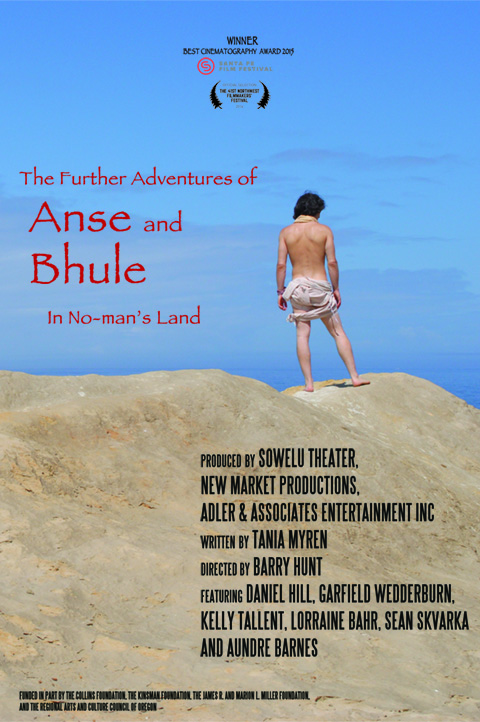
After the Apocalypse: A Conversation with Barry Hunt by Kent Hill

images

There are too few films in this day and age that leave you with something to ponder in the wake of experiencing them. But, The Further Adventures of Anse and Bhule in No-Man’s Land is, I’m pleased to report – does not fall into that category.

anse-and-bhule

As I remarked to its gentleman director – Barry Hunt – I found myself thinking to the influences which drove his artistic choices and compositions. I found traces of Herzog, Annaud, Jodorowsky – even Samuel Beckett.

For you see, this ain’t your typical day in the wake of the devastation of the world as we know it. Mr. Hunt has crafted here a sublime and visual feast that is as deep as it is vast. I found myself recalling films like Quest for Fire, Aguirre and Holy Mountain – even the lost children scenes from Mad Max: Beyond Thunderdome.

Old-company-2

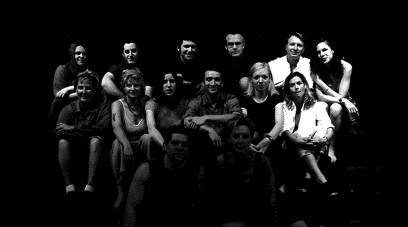
One of the founders of the Sowelu Theatre in Portland , Oregon, Hunt has taken this intriguing, theatrical source material and constructed a film which is at once engaging and thought-provoking. And you can’t tell me there are too many films about which offer these sensations anymore. From the opening scene, to the world after the fall, Anse and Bhule also brought back to me the emotions evoked by McCarthy’s The Road. Both are absorbing journeys in which the characters we follow must shed, if you will, their emotional and even physical ties to all they have known. Then and only then can they truly become creatures of the new age, thrust upon them.

I urge you to seek this film out, and prepare yourself for a profound cinematic experience. The burgeoning cinema of Barry Hunt I eagerly anticipate. He has a new film in the spawning, and I have a feeling it will, just as Anse and Bhule did, exceed my expectations while completely stripping them away.

lower-rooms

https://vimeo.com/107316810

I present a fresh and brave new voice in the service of pure cinema. I give you, Barry Hunt.


John Wick: Chapter 2

John Wick: Chapter 2 expands nicely on a mythology that we caught a glimpse of from behind the shadowy curtain of assassin’s anthropology in the first film, a fantastic meld of stylish world building and hyper violent, stunts driven action that saw Keanu Reeves come blasting back onto the big screen in probably the best role so far of his career. Chapter 2 has one big challenge to face though: the first one was driven by the fact that those fuckers killed his dog, and the man’s subsequent bloodlust over it. That was the crux, the catalyst, the reason we cheered so loudly each time he maimed or mauled someone. Now, I don’t need an excuse like that to watch an antihero slaughter people, but some might, and the dog thing just propelled him forward faster and furious…er. What’s the catalyst here? Well, they destroy his house. Not quite the emotional kick in the nuts you get from seeing a beagle murdered, but it seems to be enough to light Wick’s fuse again, so there you go. He’s faced with a figure from his past here, some fruitcake of an Italian mobster (Ricardo Scamarcio) who wants him to come out of retirement and kill his powerful sister (Claudia Geroni) to ensure his seat at a revered council table of international crime figures. It’s basically John Wick’s Eurotrip, as he treks across the pond to kill more goons and thoroughly destroy more night clubs and other such convenient set pieces than you can shake a stick at, before returning back to New York for an ultra-violent third act. John Leguizamo, the always awesome Ian McShane, Lance Reddick, Bridget Moynahan and David Patrick Kelly all reprise their wicked cool roles, whilst Common, Ruby Rose, Peter Serafinowicz and Franco Nero create new characters that flesh out this fascinating world of killer’s mythology even further. The film is special though for two important reunions for Reeves that give wonderful callbacks to earlier in his career: the prologue sees Wick ferociously reclaim his stolen car from Abram Tasarov (Peter Stormare) the more gregarious brother of Viggo, villain from the first film. Reeves and Stormare played Constantine and Lucifer in the underrated 2005 comic book adaptation, where they faced off with just as much menace and charisma we see in their little bit here. It’s also a reunion for Neo and Morpheus, because Laurence Fishburne shows up as the godlike Bowery King, a rooftop dwelling, pigeon keeping derelict who runs a vast crime syndicate that all disguise themselves as dishevelled hobos. It’s wonderful references like these that pack the pedigree with solid gold and moments to remember, not to mention it’s just a worthy sequel, a slam bang screamer of an action flick and a great time all round. Bring on Chapter 3, and I request an Al Pacino villain turn so we can get nostalgic for The Devil’s Advocate all over again.

-Nate Hill

Jim Sheridan’s Dream House

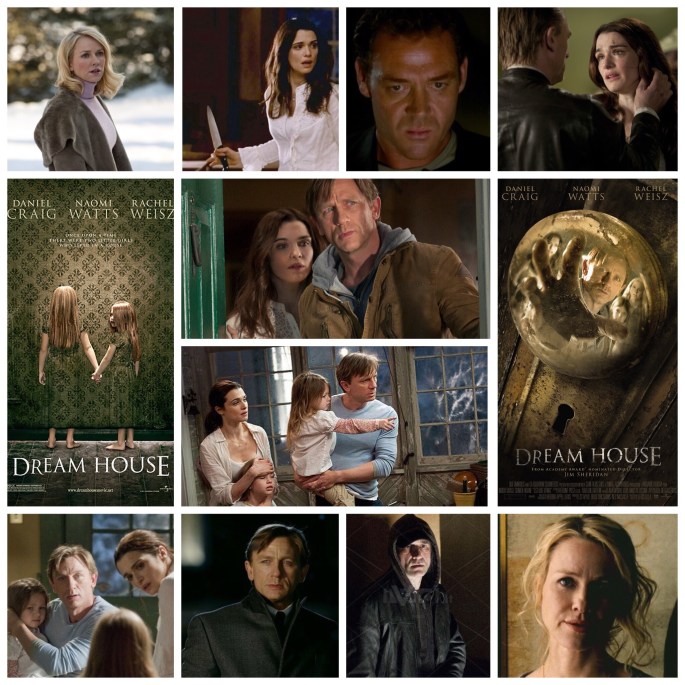
Imagine the potential for a concept like Dream House, and then look at how badly, how royally they fucked up the script and eventual film that came after. It’s like someone had a really cool idea for a thriller that could have been something great in the vein of Shyamalan or Hitchcock and it just ended up a flat, lifeless, boring exercise in.. well… not much. Sadder still is the talented, first rate cast stuck in it, and when you consider the director has a heavily Oscar nominated film from back in the day under his belt, it boggles the mind. Okay, maybe the last two points are unfair, artists sometimes don’t have control over what projects cross their desk, but I would have jumped ship at the premiere if I were them, paycheque in hand. The premise is certainly interesting: a publisher from New York (Daniel Craig) moves with his wife (Rachel Weisz) and two young daughters to a quaint manor in quiet New England to get away from it all. The house, naturally, has a troubled past and is sorta kinda haunted, in one of those twisty roundabout ways I can’t say without spoiling the whole deal (*cough* The Others). Craig has to solve the mystery of a brutal crime that took place in his new home, avoid freaky stalkers that seem to follow his family, and with the help of a kind, benevolent neighbour (Naomi Watts), figure out just what’s going on. There is a twist, that shows up midway through the film instead of near the end and because of that feels entirely like a silly gimmick once we know, a misjudged pacing decision if there ever was one. The thing that sucks is there are well done aspects; the acting from everyone is great, the cinematography and production design beautifully done, it’s just story that takes a nose dive, and almost right off the bat, too. The payoff and resolution for such an ‘out there’ setup just feels dry and voided of the mysticism and otherworldly spookiness that the film set you up with, and the result is you just feel cheated. Not even capable actors like Elias Koteas as a shady hitman and Marton Csokas as an even shadier businessman can bring antagonists with enough life into the fold, and their thankless presence is wasted. After this film I kind of wish I watched it again without any sound or subtitles on like a silent version, because the imagery and visual element is too good to be wasted on a script as badly drawn and executed as this.

-Nate Hill

John Krasinski’s A Quiet Place

John Krasinski’s A Quiet Place surprised me by investing more in its fright flick concept than just shrieking banshee monsters and a flurry of hastily shot chase action/close calls. For a film that focuses so much on hearing and an auditory mood-scape, Krasinski is an excellent visual storyteller and as far as first time directors go, should be very proud. Not to mention the fact that he tells a human story amongst the horror, one that actually gets us feeling closer to the characters until we really give a shit when they’re being hunted by the screamers. It doesn’t hurt that he and real life wife Emily Blunt give two breathlessly alive performances that paint a dual portrait of parents who will stop at nothing to protect their children. Sometime in a desolate future, vicious predators of unknown origin (could the brief shot of a newspaper clipping claiming “meteorite hits in Mexico” have anything to do with them?) invade the world and slaughter humans en masse. They’ve got mutant ear drums that can hear a wood-bug sneezing from sixty miles out, but they’re also blinder than Stevie Wonder. Using your inside voice, or no voice at all if possible, is an imperative mantra for Krasinski and clan, as they must exist in monk worthy silence for fear of being run down by these things. The trailers tend to spoil a lot of things, and I guess marketers think that just because a sequence is in the prologue that people wouldn’t want it to still be left a surprise, but oh well. Early on there’s a tragedy that causes kind of a rift in the family, particularly between Krasinski and his deaf daughter (Millicent Simmonds, brilliant work). Flash forward a year or so and he’s built an impressive rural stronghold for his family on an abandoned farm, complete with grain silo watchtowers and a homemade electric light alarm system. It’s this innovative and careful design that sets it apart from other horror flicks that just go for the throat without and character development or world building to draw you in. Eventually the screamers do come for them, in one long extended night from hell that plays out like the most stressful chain reaction of mishaps you could imagine, with enough suspense to bring on a heart attack. I call them screamers, and I read one review on Facebook whining that they’re the same CGI clicking beasts in every other horror flick these days, but I think that’s an unfair assessment. They’re neatly rendered and have a clearly visible biology to explain their uncanny sense of sound, and I never once tuned out or felt removed from the atmosphere while watching them. The human element is well done and treated with care here, and while I can’t quite understand why they would decide to have a baby, which are notoriously loud individuals, in a world that’s gone so badly to shit (maybe they couldn’t find condoms when scavenging abandoned towns), they’re resilience and love for their children are brought fiercely to life by the two actors, who knock it well out of the park. You gotta love Marco Beltrami’s original score too, which is shadowy and ominous in one instance and switches gears quickly to orchestral catharsis when needed. A real surprise out of horror-town, this one was, and one of the best I’ve seen so far this year. Oh, and try to find a more badass, adrenaline soaked ending scene to a film so far this year, I dare ya.

-Nate Hill

Johnny English

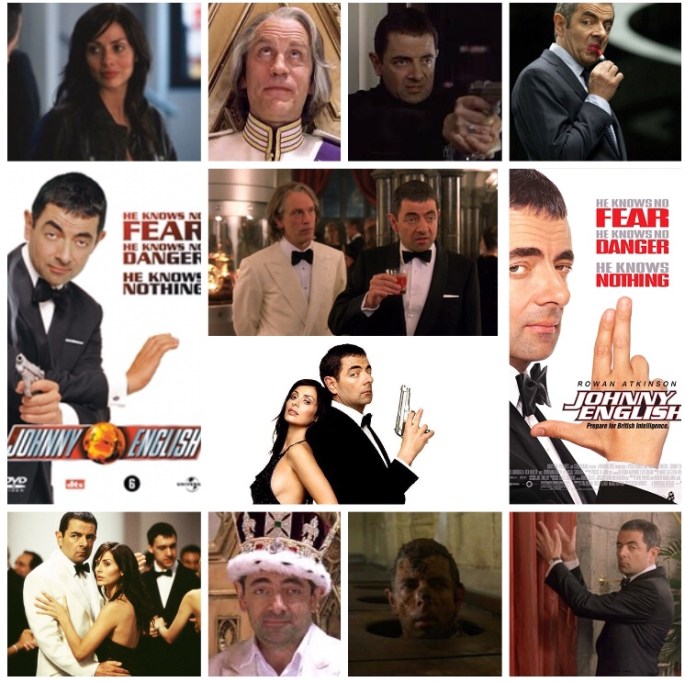
Johnny English is kind of like James Bond, except his stairs don’t quite reach the attic. The bumbling spy comedy has seen many different iteration, from foppish Clouseau to classy but dense Get Smart, but English is my favourite of the bunch because it’s blessed with the star power of Rowan ‘Mr. Bean’ Atkinson, a man who’s so funny that he’s still hilarious when he’s not even trying, or even attempting a serious role. There’s something about his impish, mischievous, pointedly smug yet somehow friendly visage that makes him perfect for comedy. Johnny English is the Crown’s last hope, a hapless desk jockey shunted into the field of MI6 work when literally every other active agent is killed in a failed op. Atkinson plays him to a note: resoundingly confident and assured of his skill, charm and charisma, yet endlessly, unbelievably stupid in every situation he enters. Parachuting onto the wrong building, royally fucking up a London vehicular pursuit, accidentally shooting a poor secretary with a knockout serum from a ballpoint pen, the list goes on. If there’s a carefully planned mission or set piece, it exists solely for him to bumble through and screw up spectacularly, like a room full of dominoes set up for a toddler to decimate. He’s up against one of the most ridiculous villains cinema has ever seen, a ‘jumped up Frenchman’ called Pascal Sauvage, some fruitcake billionaire who wants to turn the UK into a giant prison after he’s stolen the crown jewels and quite literally the throne as well. He’s played by John Malkovich in a L’Oréal worthy wig and spluttering out a French accent that’s so terribly misguided it makes his Russian one from Rounders sound half-legit, and if you’ve seen that film you’ll know what I mean. You need a villain as idiotic as the hero in this type of thing though (McGruber understood that well), and it’s a pleasure to watch ever eccentric pompously send up his own image with good cheer. There’s also a sexy Bond girl, or rather ‘English girl’, who’s eons smarter than the man as well and played by Australian singer Natalie Imbruglia. This is silly stuff all round, non of it believable in anything but a satirical fashion, but it’s great fun, carried by Atkinson’s effortless prancing antics and some genuinely hilarious set pieces. My favourites are when he has to pretend to be retarded to get out of a sticky situation that was naturally his own fault to begin with, and when he actually flips on the palace loudspeakers for Sauvage to hear his whole plan as he whispers it to his sidekick, Malkovich’s exasperated reactions are inspired. There’s a sequel, Johnny English Reborn which is fun but not quite up to this pedigree, and a third one coming out this year that I’ll be checking out as well.

-Nate Hill

B Movie Glory: Russell Mulcahy’s Tale Of The Mummy

Russell Mulcahy’s Talos: Tale Of The Mummy is a fascinating failure of huge proportions, a well casted, unbelievable muck-up that has to be seen to be believed. When your low rent Mummy flick comes out at pretty much the same time as Stephen Sommer’s classic The Mummy, you know you have no shot at getting it out there past a few cable runs, especially when the film has been plagued by one nightmare of an editing fiasco from day one, not to mention low budget and more pacing issues than spastics in a sack race. There’s two apparent versions of it, a 115 minute international cut that was edited down to 88 minutes because of some humour that was in bad taste and aforementioned pacing problems. I saw the shorter version, and I can’t imagine the flow of the film being any worse than what I bore witness too, so maybe they should have just gone with the original cut, but who can really say. The film is essentially just two very cluttered, chaotic prologues jam packed with cameos and creaky special effects, and then one long boring extended horror sequence set in London, so you never get the feeling that they knew what they were doing before the editing process even commenced.

The opening sees archeologist Christopher Lee unearthing some ancient tomb in Egypt with his assistant (Jon Polito), both getting very quickly dispatched by some evil via a flurry of visual effects that are either really cool or really bad, jury is still out on that one for me, they’re just weird more than anything. Skip ahead some years and yet another team falls victim to this Talos Mummy thing, led by Louise Lombard, Brit tough guy Sean Pertwee and Gerard Butler of all people, in what is probably his first movie gig ever. Flash forward to London some months later, we see the Mummy thing roaming around killing people at will, and also seemingly at random. Two detectives played by Jason Scott Lee (looking very out of place in England) and Jack ‘Commodore Norrington’ Davenport investigate and the story just loses itself to nonsensical doldrums and lame ‘scares’ for the rest of the duration. Shelley Duvall bizarrely shows up as a journalist, as well as Honor Blackman and the Sean Pertwee character, now a raving madman who no one will believe when he says the Mummy is out to get them. I’m still aghast at the sheer number and variety of notable actors Mulcahy got to appear in this thing, most of them fleeting or short lived but still making hilarious impressions in a story they had to know was just plain silly. There’s a few things that work; the FX in the Christopher Lee sequence are a neat, schlocky blend of CGI and practical and work on their own scrappy terms. There’s a very brief flashback sequence to Ancient Egypt that shows how Talos became an evil creature that’s visceral and well designed, but doesn’t last long enough to boost the overall quality. Everything in London with the two cops is just laaammee though, and drags it all down the sewer. Talos there resembles a filthy shower curtain that went through a paper shredder and subsequently got carried away by a strong gust of wind, neither remotely scary nor stylish, just your average half assed B flick monster. Worth a watch simply for the odd spectacle of it all, and for research purposes.

-Nate Hill

THE SHAPE OF WATER

THE SHAPE OF WATER

Guillermo del Toro makes beautiful films, let’s just make that clear. His craft is impeccable. With a variety of collaborators he has created some of the most brilliant productions, sets, and practical effects in all of modern cinema. Here he blends practical and computer generated effects better than any film I can think of (I think he’s still trying to redeem himself for that awful CG fight in BLADE 2).  His massive monster muse Doug Jones, who has been featured under heavy make (yet still somehow always recognizable?!) in six of del Toro’s eleven features, creates a performance that is hard to judge because of this mixture. The creature this time is credited as both “The Asset” and “Amphibian Man” and really has to be seen to be believed. The obvious inspiration is, which del Toro heartily acknowledges, THE CREATURE FROM THE BLACK LAGOON, but del Toro and his crew go beyond simple movie monster and create a character of depth and sympathy, so much of which lies in its eye, as is the case with all film performance. These eyes are fixed black orbs but the blinking is all CG. Given this is a story of two mute characters, Sally Hawkins’ Elisa was injured as a child, the importance of their eye contact cannot be understated. Make no mistake this is an inter-species love story, complete with consummation, so if at any point we stop believing the reality of the creature, the whole thing falls apart. Because of the great effects and both legitimately wonderful performance we believe every moment: the “meet cute”, the courtship, the physical attraction, all of it. Unfortunately not all the other performances, or characters, live up to this standard.

Michael Shannon can do menacing while sipping tea and reading Better Homes and Gardens. It’s just his thing. Here his does MENACE! Or more specifically GOVERNMENT MENACE! and it’s all cartoon and caricature. You believe he’s scary, you believe he is dangerous, you just don’t believe he’s human. Octavia Spence suffers a similar fate as SUPPORTIVE FRIEND! This wouldn’t even be an issue if the film was a strict fantasy. Hell, I love watching actors find nuance in timeworn character types. For my money one of Michael Shannon’s best performances is as MENACE WITH A BADGE! in David Koepp’s underseen, highly entertaining PREMIUM RUSH. But I digress. I should clarify “strict fantasy” I think. I’m obviously not referring to elves and fairies and what have you. What I mean is a story set sort of out of time, where things are, in varying degrees recognizable, but not really discernable in regards to era and sometimes locations, and often distorted or exaggerated. EDWARD SCISSORHANDS and SEVEN are a couple films that leap to mind. But THE SHAPE OF WATER goes out of its way to place in a very specific time: American in the 1965. How do we know this? Because at one point Elisa is at her neighbor Giles’ (Richard Jenkins) apartment and she turns on the television and we see footage of the Selma marches. More specifically we see violence against the marchers. I can’t recall if it was them being hosed or attacked by dogs, it is only a brief glimpse. Giles, who happens to be gay, reacts by waving his hands and insisting that Elisa “turn it” and that he “doesn’t want to see this.” Elisa turns the channel to a musical and Giles sits down responding “isn’t that lovely.” I have never in my life felt the energy sucked out of a theater like I did at that moment. I saw this on a Tuesday morning with a full theater and diverse audience and I don’t think there was a single patron that didn’t either gasp or groan (I was a groaner). It is a callous and inexplicable moment, particularly when you consider the film is supposed to be a metaphor for inequality and forbidden love. Pro tip (ok, fine, amateur tip), when creating a cinematic metaphor don’t  put it directly next to images of real people with real struggles, and if you must then for fuck sake don’t treat that image like someone just put a plate of something disgusting in front of you. It is rare that a single, quick moment like this can deflate an entire theater but there was definitely a marked difference in my audience after this. No one reacted to much else for the remainder of the film, except another groan during a scene where, believing he has a mutual attraction, Giles, hits on the cashier at a local pie store (were there really pies stores in the 60s?), but has taken the cashiers customer service training as affection and is promptly told to leave, but kicking him out is not enough, as he is being asked to leave an African American family enters and is also kicked out.
 

The story moves on, the plot unfolds, but the magic has gone. The metaphor, which had been working, seems flippant and petty by comparison. The rest of the film is basically a well-staged heist film with Amphibian Man as the ultimate prize. Elisa enlists her friends and a Russian spy (Michael Stuhlbarg) whose character I won’t even get into but to say that it is a character that the film doesn’t know what to do with or how it wants us to feel about him. He’s Russian so he has to be coded “bad guy” but he’s also the only person outside her immediate circle who sympathizes with both Elisa and The Asset. There’s a complexity to his motivation that could have really been interesting to explore but instead his stand alone scenes feel more like cut-aways to a different film, the international intrigue and cold war representation a pointless sheen over the bizarre love story that is the heart of the film. Bizarre and otherworldly is where Del Toro shines. Not just in this film but throughout his career it has always been the fantastic that he seems most comfortable with, but it is only here where I’ve felt the real world setting a crutch to his story and themes. He should have let these two beautiful characters do their dance and trusted his audience to understand the metaphor.

by Jason Callen
Fernando Meirelles The Constant Gardener

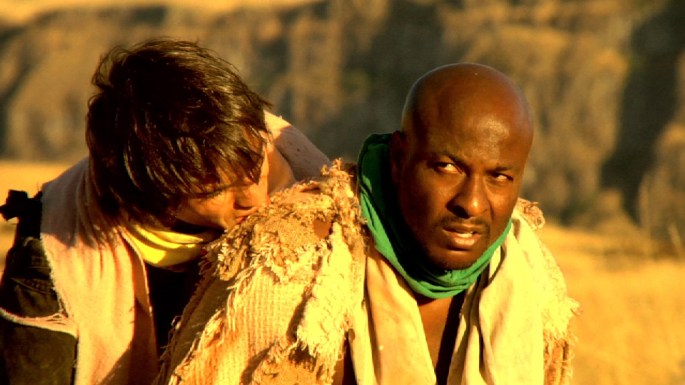
Fernando Meirelles’s The Constant Gardener is a film you just can’t get enough viewings of, it’s such a dense, sumptuous and emotionally complex piece that each revisit rewards with new angles on story, perspectives on character motivation and comprehension of subtle, hazy moments in the performances that you didn’t pick up the first few times because the visual element just overwhelms you at first. This is a cool flick for me because it’s based on a book by John Le Carré, a spy novelist whose work I often find too dry and lacking in warmth, but not here, I saw this during it’s theatrical run way back when and have loved and felt connected to it ever since. It doesn’t hurt that it stars Ralph Fiennes and Rachel Weisz, two of the most intuitive, brilliant performers of their generation, and if there’s a duo who could do justice to a story like this, it’s them. Fiennes plays Justin, a reserved, introverted diplomat in Africa. Weisz is his wife Tessa, a fiery, outgoing humanitarian worker. They couldn’t be more opposite, as we later learn through fragmented flashbacks, but the film throws us in the deep end by telling us right off the bat that Tessa has been murdered. So begins an elliptical mystery shrouded in a poignant love story, a conspiracy thriller that uncoils patiently, each clue spreading the seeds for ten more. Tessa was working in the field researching the actions of drug companies in this third world region, she may have been having an affair, and she was pregnant. The stakes couldn’t be higher, but so is the risk for Justin to become too entrenched in a quagmire of lies, red herrings and dead end crossroads, and, just like Tessa, lose his way. Who really knows what’s going on in such a chaotic part of the world? Does Pellegrino (Bill Nighy) the mysterious CEO of big pharma? Perhaps Sandy (Danny Huston) Tessa’s friend from the embassy? Or is it Dr. Lorbeer (Pete Postlethwaite, excellent in the haunting third act), an elusive aids worker, who holds the secret to her death? It’s not easy resolution this film is interested in, but rather overturning more stones that lead to more mysteries until one feels wonderfully beguiled, a true sign that script and edit are firing on all cylinders. Many things are hinted at, including whether or not the drug companies are illegally testing non FDA approved prototypes on poverty stricken locals under the guise of medicine, which seems just scary enough to be true. The film dangles answers just out of reach, and even in the eerie eleventh hour where Justin finds himself stranded in a desolate plane of Africa, you get the sense that the resolutions he comes too are only the half of it, if that. Meirelles also directed City Of God, another film set in an unfortunate area of the world, he brings a jagged, splintered perception to the editing and narrative, a perfect garnish to the already impenetrable nature of Le Carré’s literary work. Cinematographer Cesar Charlone (also responsible for City Of God) films with elemental grace and captures the light brilliantly. Weisz and Fiennes bring out humanity in Le Carré’s work that he probably didn’t even know was there, and are beacons in a weathered storm of indifference and injustice. Not an easy film to absorb, but what it withholds in straightforwardness (which is a plus quality in my books anyways) it makes up for in beauty, mystery and nuance. One of the best films of the last few decades.

-Nate Hill

Joe Dante’s Small Soldiers

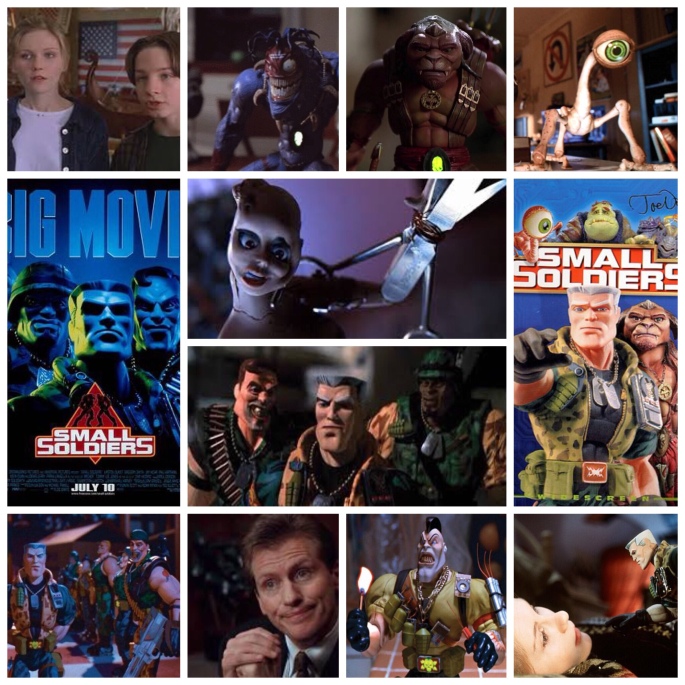
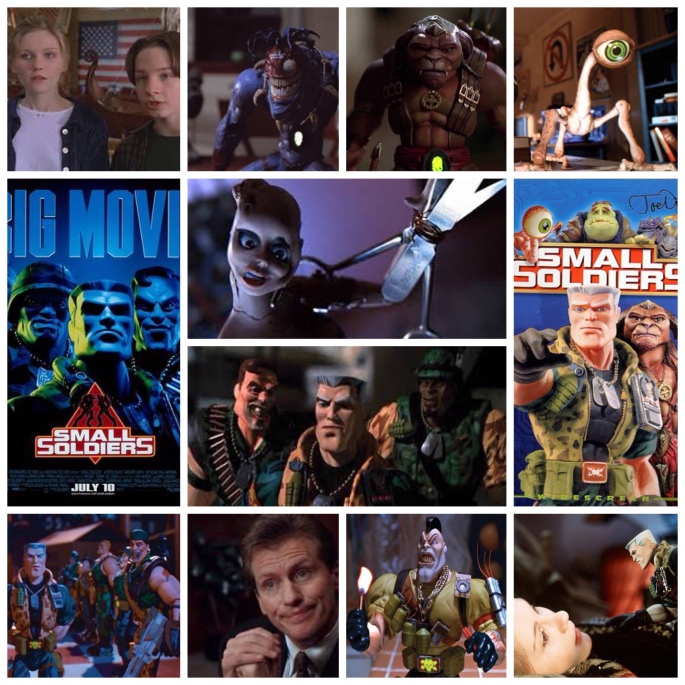
Joe Dante’s Small Soldiers. Fuck yeah. What a blast. I often refer to Dante as ‘The Toymaker’, as each and every one of his films (save for one political satire that only I saw anyways) has fantastical animatronic effects, plenty of creatures and no shortage of whimsy. The guy lives to make genre bliss, and you can always count on monsters, whacked out sci-fi or Tim Burton esque horror elements in his work. Here, it’s a bunch of action figures implanted with AI chips that make them fast, sentient, highly trained and very dangerous. The main story arc is something we’ve seen a zillion times: nerdy kid (Gregory Smith) looks for a way to win over girl of his dreams (Kirsten Dunst) and climb out of the beta pit. His cranky father (Kevin “lemme see that chainsaw for a second” Dunn, priceless here) owns a toy store, when he’s not terrorizing his insufferable neighbour (the late Phil Hartman) with power tools. Simultaneously, two super geeks (Jay Mohr and David Cross) over at a giant toy conglomerate ‘accidentally’ put military grade computer chips into two separate toy prototype lines which are, naturally, sent on over to small town suburbia, specifically Dunn’s store. This is all while the company’s arrogant CEO (Denis Leary) is too busy strutting around in a huff to watch his guys more closely. It’s a familiar series of events, until the toys come to life and start wreaking havoc, which is where the innovation really kicks in. The main threat is a deranged, pint sized band of commandos led by Chip Hazard (I can picture Tommy Lee Jones in the recording studio barking out lines in his pyjamas), who literally just want to blow shit up and cause widespread chaos. The voice talent they’ve amassed here is staggering, with the talents of old school tough guys Jim Brown, Bruce Dern, Clint Walker, Ernest Borgnine and George Kennedy as Hazard’s gonzo unit. A much more sane band of mythical creatures also shows up, led by dog/elf thing Archer (Frank Langhella) as well as an eyeball on a stick (Jim Cummings) and a dopey Frankenstein hybrid (Michael McKean). They’re more peaceful, but immediately become the main target of Chip and Co., which causes enough of a skirmish to level city blocks. The real mad genius shows up when a group of pseudo Barbie dolls (the ‘Cindy Doll’) are reanimated by Chip’s team and start causing homicidal shenanigans, bald giggling lunatic chicks given the unsettling valley girl vocal talents of Christina Ricci and Sarah Michelle Gellar, both providing auditory nightmare fuel with their work. Roger Ebert thought this was too mean and violent to be a family film, and fair enough, but I really view it as a noisy, nihilistic black comedy that just happens to hide in the structure of a kids film. It’s no walk in the park, Chip’s boys see to it that it gets as shocking and messed up as one can without pushing that PG-13 rating, and that’s where the fun comes from. The special effects are really where it shines though, as they should in any film about a multitude of toys that come alive. The only thing missing is a cameo from The Indian In The Cupboard to lodge a Tomahawk in Tommy’s head and even the odds for Archer’s team. Perhaps in the sequel.

-Nate Hill

Antoine Fuqua’s King Arthur

I’ve been singing the praises for Antoine Fuqua’s King Arthur for years, but here’s the thing: you simply have to watch the extended director’s cut, it’s a different film entirely than the theatrical. Expanding both on complex moral quandary and lethal, bloody carnage, it allows ideas, expression and extreme violence to play out in a cut free of time and rating constraints, and as such is one of the best sword/battle flicks I’ve ever seen. The main buzz surrounding this one was how much of a departure it is from the usual Arthur lore we’re used to.. darker, grittier, more tied in with Ancient Rome and bereft of any lighthearted fantasy, it may as well be its own thing untethered of any Arthurian scope, because who can really say how it all went down back then anyways. Here Arthur is a restless, stormy Sarmatian knight played by a hot blooded Clive Owen, a fearless, jaded warrior who is steward to a rowdy troop of loyal swordsman forced by the empire to serve out fifteen years of service in exchange for freedom at the end of it all. Each of his troupe is played by a stellar actor, and each blessed with their own distinct, fully formed personality. Headstrong Bors (The always awesome Ray Winstone), dysfunctional Lancelot (Ioan Gryffud), lethal Tristan (Mads Mikkelsen, probably the coolest of the bunch), stalwart Galahad (Hugh Dancy), mischievous Gawain (Joel Edgerton) and strong, silent Dagonet (Ray Stevenson). They’re a wickedly diverse bunch of warriors, lovers, brothers and each has their own carefully carved out view on freedom, the Romans, life on the battlefield and ancestry, just a few of the themes explored deeply by the consistently surprising script. This film is notorious for its portrayal of Keira Knightley’s Guinevere, a bikini clad warrior whose appearance in the third act eclipses what is actually a really well written character, is unfairly panned based on a few brazen costume choices. Arthur and gang are up against a fearsome Saxon army led by Cerdic (stellar Stellan Skarsgard), a bloodthirsty maniac restlessly looking for his equal on the battlefield, which he finds in Arthur once they duke it out. Merlin is a tree dwelling mystic played by an unrecognizable Stephen Dillane, the round table in a dilapidated version of the glory found in books, and the knights resemble rough n’ tumble mercenaries more than the glowing reputation they’re given in classic lore. Sure, it’s a different take, but I for one really like the gritty, hellish aura surrounding the whole thing, it’s a brutal and risky departure from anything close to Disney and I applaud them for it. Better still is the way morality and philosophy are explored through the character’s actions, until we have a clear picture of Arthur as a realistic, hands on hero who isn’t afraid to get violent to prove points. The set pieces and swordplay are breathtaking, from a tense stand-off set on a deadly frozen lake to the final spectacular battle, each knight getting their chance to nail some superb fight choreography and draw gallons of blood. Hans Zimmer provides one of his most surging, palpitating thunderclap original scores, it’s up there with his best work and rides right next to the knights into battle with symphonic glory that just begs for a surround sound system to play on. I think this got so shit on because critics are usually only privy to the theatrical version right out of the gate, and first impressions cement reputation for years to come. Once again, the director’s cut is really the only way to go. It’s bolder, longer, more violent and sensual, and just tells the best version of the film’s story that it can.

-Nate Hill