Charlton Heston’s Mother Lode

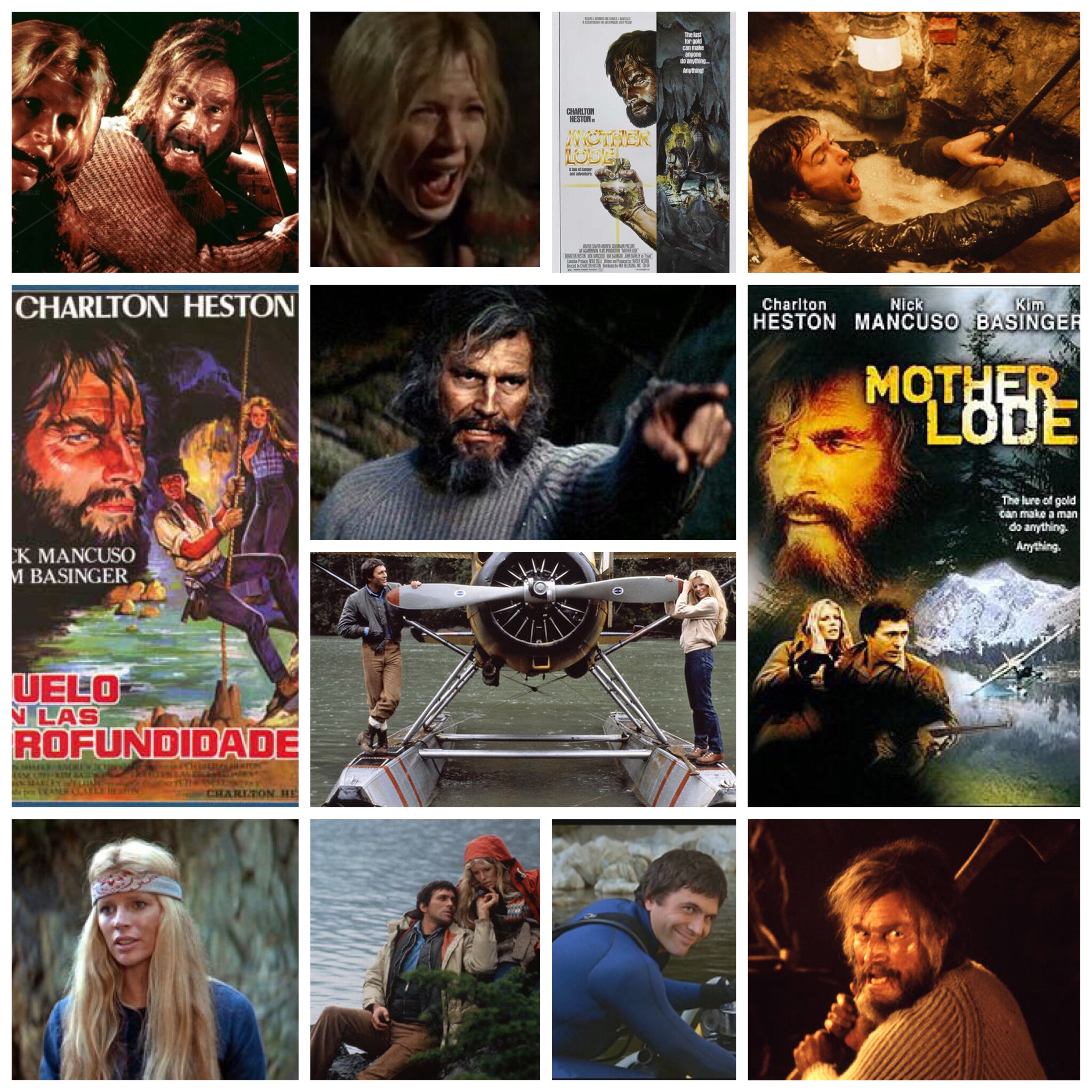
Charlton Heston’s Mother Lode is one of those neat flicks that not only is filmed in my hometown of Vancouver (like every movie ever) and the surrounding British Columbia region, but is also set there as well. It’s an entertaining, if slight little adventure story that’s perfect to put on for a rainy afternoon on the iPad. Heston, in addition to both writing and directing, plays two roles here, but it’s a bit of a sly trick saying that because he mostly appears as one, and only briefly as the other, but no matter, the old pro works his butt off to steal every scene. He plays loner mountain man Silas McGee, an eccentric prospector whose stairs don’t quite reach the attic, living alone in the wilderness looking for that perfect gold strike. The excellent Nick Mancuso, in a role originally meant for James Brolin, is Jean Dupre, a cocky bush pilot who heads McGee’s way with his high strung girlfriend (Kim Basinger), looking for a fellow pilot who got lost and a little of the gold stuff for himself while he’s at it. As soon as they run into McGee it’s clear the old dog is crazy as shit and not to be trusted, creating a nice atmosphere of isolated paranoia and mystery as the man’s true intentions come to dark light. Mancuso is always terrifically intense and so great at subtle comic moments, this is one of his great early roles and not to be missed for any fan. Poor Basinger suffered a miscarriage while production was underway and as such seems understandably distracted, but she’s a trooper and carries her end well. Heston either does a brilliant Scottish accent, a slipshod one or a bit of both, it’s hard to tell with his rapid fire banter and eloquent, robust verbosity. He’s electric though, and freaky as all hell as the type of dodgy fellow you better pray you don’t run into out there. The action is pretty run of the mill and the film loses the tautness a thriller like this should have in parts, but it’s solid enough to not change the channel. For B.C. residents it’s an absolute treat though, especially as Mancuso’s rickety float plane arcs up over the Vancouver harbour towards the Cassiar mountains and we get to see what our city looked like back in the 80’s. Cool stuff.

-Nate Hill

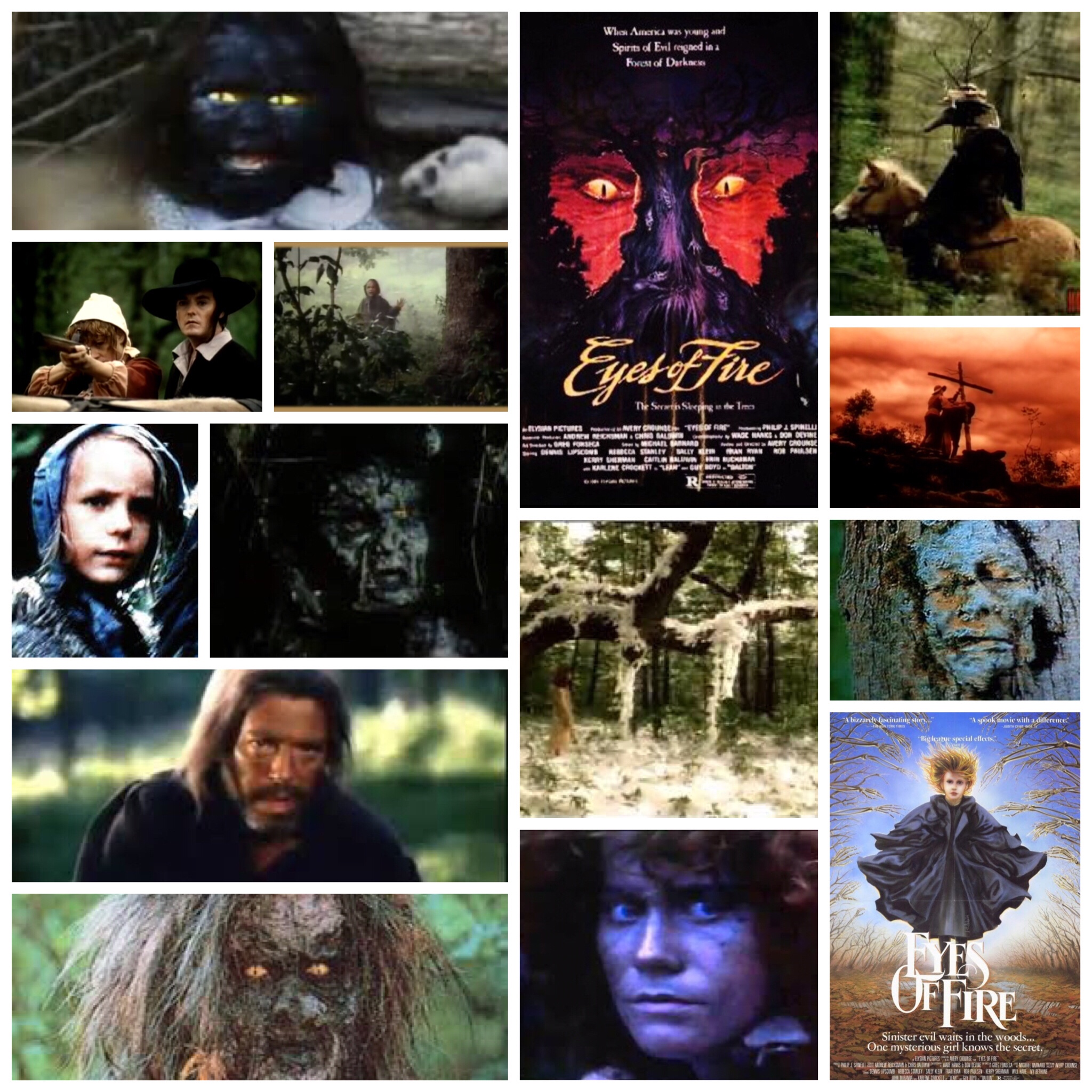
Forgotten Gems: Avery Crounse’s Eyes Of Fire

Avery Crounse’s Eyes Of Fire is so rare and forgotten that it’s only available on YouTube, as far as I could tell, which is saying a lot because my net of sources stretches pretty far these days. It’s truly something special and who knows how long that video will be up for. Belonging to one of my favourite sub genres, the horror western, I’m almost convinced it largely inspired 2014’s celebrated horror flick The VVitch, as well as a few others over the years. It’s a bit of a heartbreak that it isn’t more widely recognized or even available (a DVD release seems to be nonexistent). On the American frontier in the 1700’s, a creepy minister (Dennis Lipscomb) is banished from a settlement for suspected adultery and witchcraft. The man and his followers venture out into a mysterious, little traversed valley and find themselves preyed upon by… something. The region is haunted by nature spirits who have imprisoned deceased Natives, now phantom spectres who stalk through the trees consuming souls of the living, also controlled by what the clan’s children call a ‘devil witch’. There’s various plot threads involving women in the group, one of whom has a mountain man ex husband (Guy Boyd) who has been living in the wilderness and has intuitive knowledge about the forces there, imparted in a well written, spooky campfire monologue. There’s also a Celtic witch (Karlene Crockett) who acts as a force of good against the dark magic. Once the folk start encountering all this though, plot takes a backseat to a spectacular array of very surreal and thoroughly scary special effects, colour filters, hallucinatory nightmares, unnerving musical sound design and all mannered spook-house atmospherics. It’s hectic as all hell and the acting sometimes gets super melodramatic, but what wonders of practical effects they’ve used here, a showcase of prosthetics, eerie photo-negative filters, Wiccan lore, earth magic and terrifying phantasms. Trees have faces, weird charcoal demons plague everyone, all set to a wonderfully warped score that uses experimental white noise, Gaelic thrums, ethereal tones and elemental cues to chill the spine. A hopelessly forgotten gem, but one of incredible value to any fan of unconventional horror.

-Nate Hill

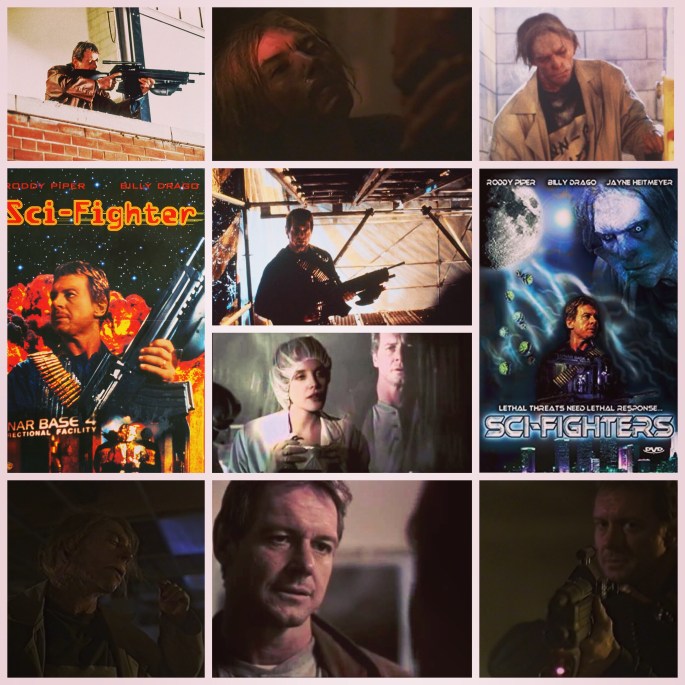
B Movie Glory: Sci Fighters

Picture a bleached out, acid washed dime-store version of Blade Runner on a shoestring, bargain budget and you’ll have some notion of Sci Fighters, a silly futuristic flick starring lovable wrestler ‘Rowdy’ Roddy Piper and B Movie stock villain Billy Drago. By most standards it’s a miserable little exercise in schlock, but if that’s your thing to begin with, it’s a pearl. So it’s set in 2009, and the film was made in 96’, which going by a combination of the math and the severely bleak atmosphere, the filmmakers didn’t even stretch their timeline barely past twenty years from their date, showing either amusing carelessness in writing or even more amusing cynicism for where we’re headed, and how fast. The setting is Boston, and it’s a goddamn slum, with perpetually overcast skies, garbage heaps everywhere and a general sense that people have given up. Piper is Grayson, a hard boiled detective on the trail of a somewhat unusual killer. Far above earth in a filthy off-world prison on the moon, criminal Dunn (Drago) has encountered some weird alien parasite which hijacks his gaunt frame and torpedos back stateside to start a murder spree. Drago vs Piper in a sad-sack, disease ridden Boston is pretty much the suitable logline, and it’s not half bad. Piper makes a more grounded leading man than the film deserves, while Drago is straight up certifiable (nothing new) especially when the extraterrestrial, who has a garbled and endearing speech impediment, is controlling him. Effort is put into the atmosphere to some degree, but I feel like the success in achieving mood was probably also by accident of just leaving shit lying around set. A true peculiarity, worth it only for fans of the two actors and schlock-hounds alike.

-Nate Hill

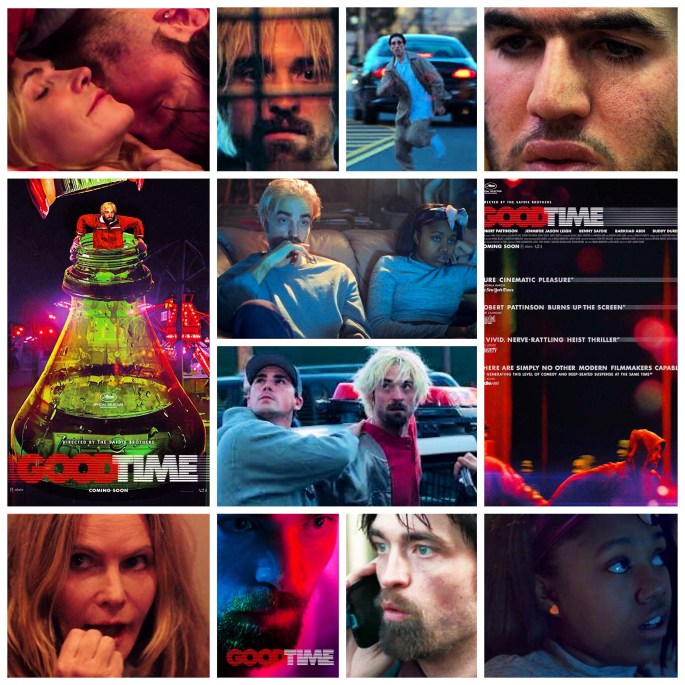
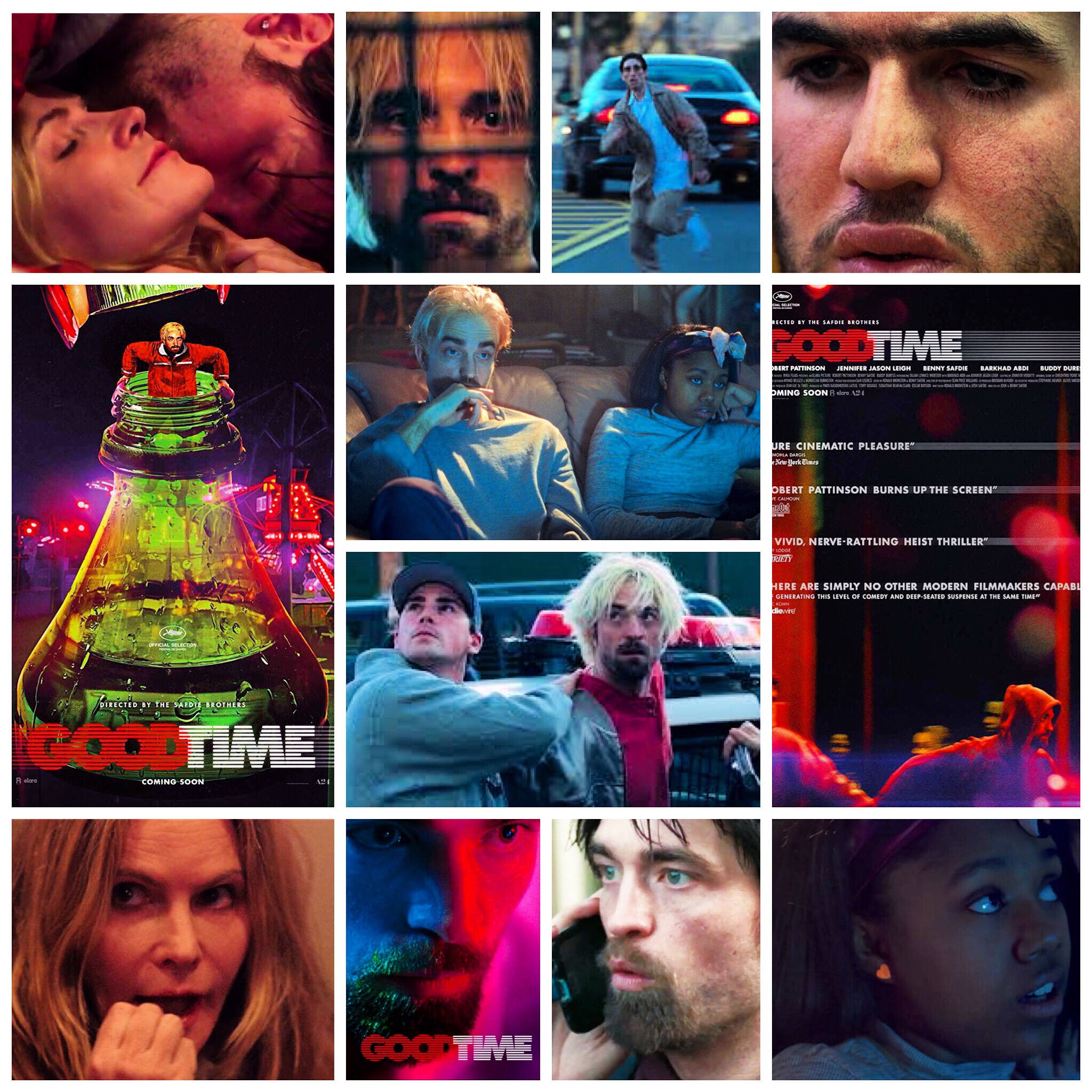
The Safdie Brother’s Good Time

You probably won’t find a more kinetic, nerve draining film so far this year than Good Time, a neon saturated nocturnal fiasco that takes pages out of the same book you’d find stuff like Wayne Kramer’s Running Scared and Martin Scorsese’s After Hours in. Whether or not it’s a good time, as the title dryly advertises, is up to you. It’s well made, breathlessly paced and so realistically acted that we feel like you’re right alongside the mad dog characters running around seedy NYC, but you have to be willing to go with it’s often strange and unpredictable flow, as well as tolerate some unpleasant diversions. Robert Pattinson has beyond proved by now that he is indeed serious about acting and not just aimlessly riding the dollar sign tidal wave of his sparkly boi fame, not to mention he actually has some chops. He’s a wiry, resourceful bank robber here, trying to prevent his mentally challenged brother (Benny Safdie, also the director) from being sent to Riker’s Island after a heist ends up in disaster. Any and all means necessary are the functioning tools of this twitchy fellow, including assistance from his neurotic ex girlfriend (Jennifer Jason Leigh), a corrupt bail bondsman (Erik Paykert), and a spunky teenage girl (Taliah Webster in a wicked sharp debut performance) who unknowingly gives them shelter from the law. Things just sort of… happen here, like they would in real life, a loosely structured series of snowball effects and plot turns that feel authentically influenced by choices the characters make as opposed to pawns in an obviously preordained narrative, a neat touch. The film has a visual mood-board that would make Nicolas Winding Refn jealous, one of those hyper-hued, soaked in colour palettes that pop off the screen like candy, accompanied by one striking synth score from experimental musician Oneohtrix Point Never. There’s a few plot points that take some thinking to really absorb, and an ending that may leave some in the dust of wtf-land, but overall it gels nicely together, and doesn’t run on too long either. I like those frenzied thrillers set all in one hectic night where the protagonists are put through a wringer, forced to jet all over some throbbing night-scape to right some egregious event gone awry, and this one holds it’s own with some of the best in the sub genre.

-Nate Hill

The Farrelly Brother’s Osmosis Jones

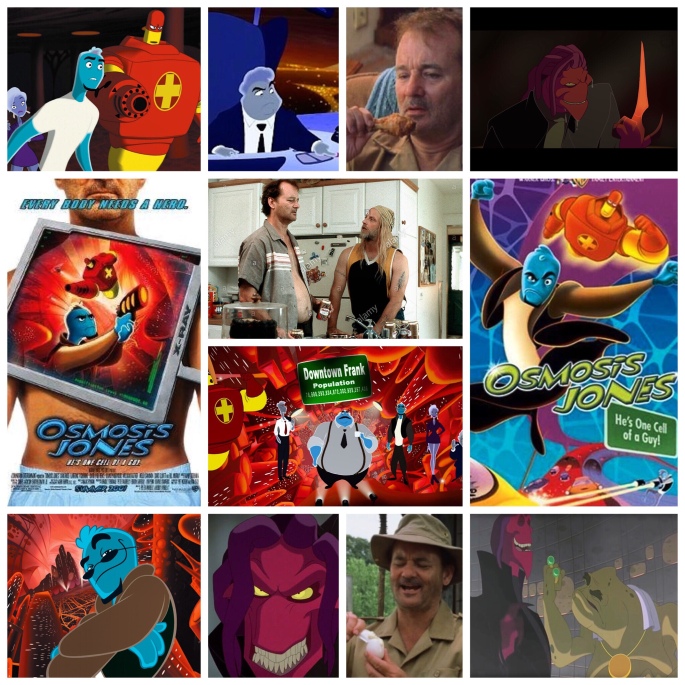
ScienceWorld once did a colourful exhibition called Grossology, in which various parts of human anatomy are presented in garish, cartoony displays. The Farrelly Brother’s Osmosis Jones reminds me quite a bit of that, an inspired, juvenile little creation that seems to have slipped through the cracks. Focusing on the human body, or rather one human body in the form of out of shape, sloppy schmuck Bill Murray, it’s one of those rare half live action, half animated flicks, a concept which I love but one that only works out if you do it right. It worked magic in Who Framed Roger Rabbit, it train-wrecked in Rocky & Bullwinkle, and went more middle of the road in stuff like Cool World and The Pagemaster. Here it works pretty damn well, if a little better on the animated side, where most of the focus is put anyways. Murray is Frank, a walking disaster whose lifestyle reflects the culmination of the Farrelly’s career in terms of utmost vulgarity. Zooming inside his body, a sassy technicolor world emerges, sentient forces living in infrastructure not unlike our own, albeit peppered with so many delightful jokes, gags (some which will kick the reflex into action) and word-plays it’s hard to keep up. Chris Rock plays a lively white blood cell cop who responds when Frank eats a hard boiled egg that’s home to a deadly virus, and runs all about the City Of Frank chasing it down, joined by a robotic cherry flavoured Cold Pill (David Hyde Pierce). City Hall is Cerebellum Hall in the Brain, the bowels resemble skid row, Mafia bacteria thugs reside in the armpit, and you get the idea. The imagination runs wild here, if a little grotesque in areas. The live action bits suffer in terms of writing and realism, they just feel like a queasy SNL skit and never have enough weight. It’s non stop fun when the animation kicks in though, a slightly off-Disney style that stimulates the screen visually and pops with every colour combination you can imagine. My favourite has to be Laurence Fishburne as Thrax, the deadly virus attacking Frank’s nervous system, a gangly, evil eyed freak who sports purple dreadlocks, a contagious Freddy Krueger style index finger and enjoys his job a bit too much. William Shatner is great as sleazy Mayor Phlemming too. It’s not as much fun as stuff like InnerSpace, and the live action clashes with the animated world in places where it should seamlessly mesh, but it has one admirable quality in spades: imagination. The jokes and ideas within Frank’s body are hurled at you a mile a minute, and you’d need to watch it at least twice to catch every little barb and dad-joke worthy pun. Good times.

-Nate Hill

Wolfgang Petersen’s The Neverending Story

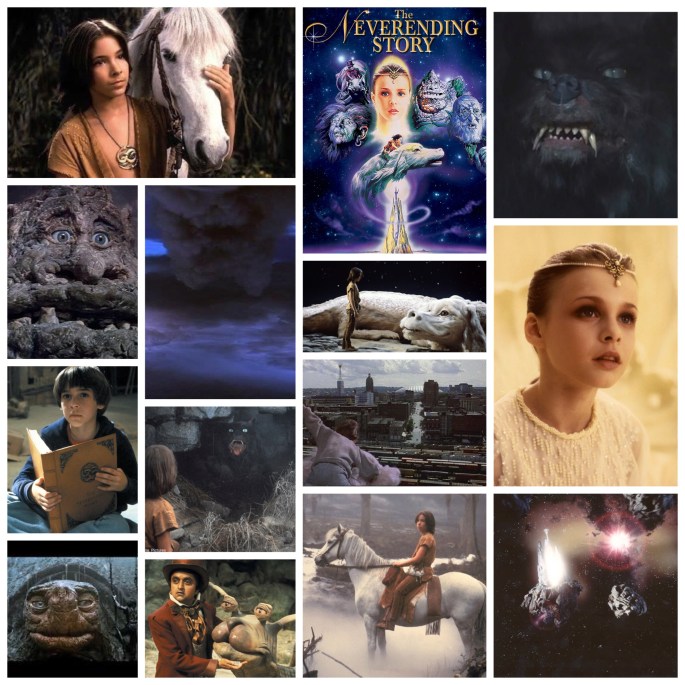
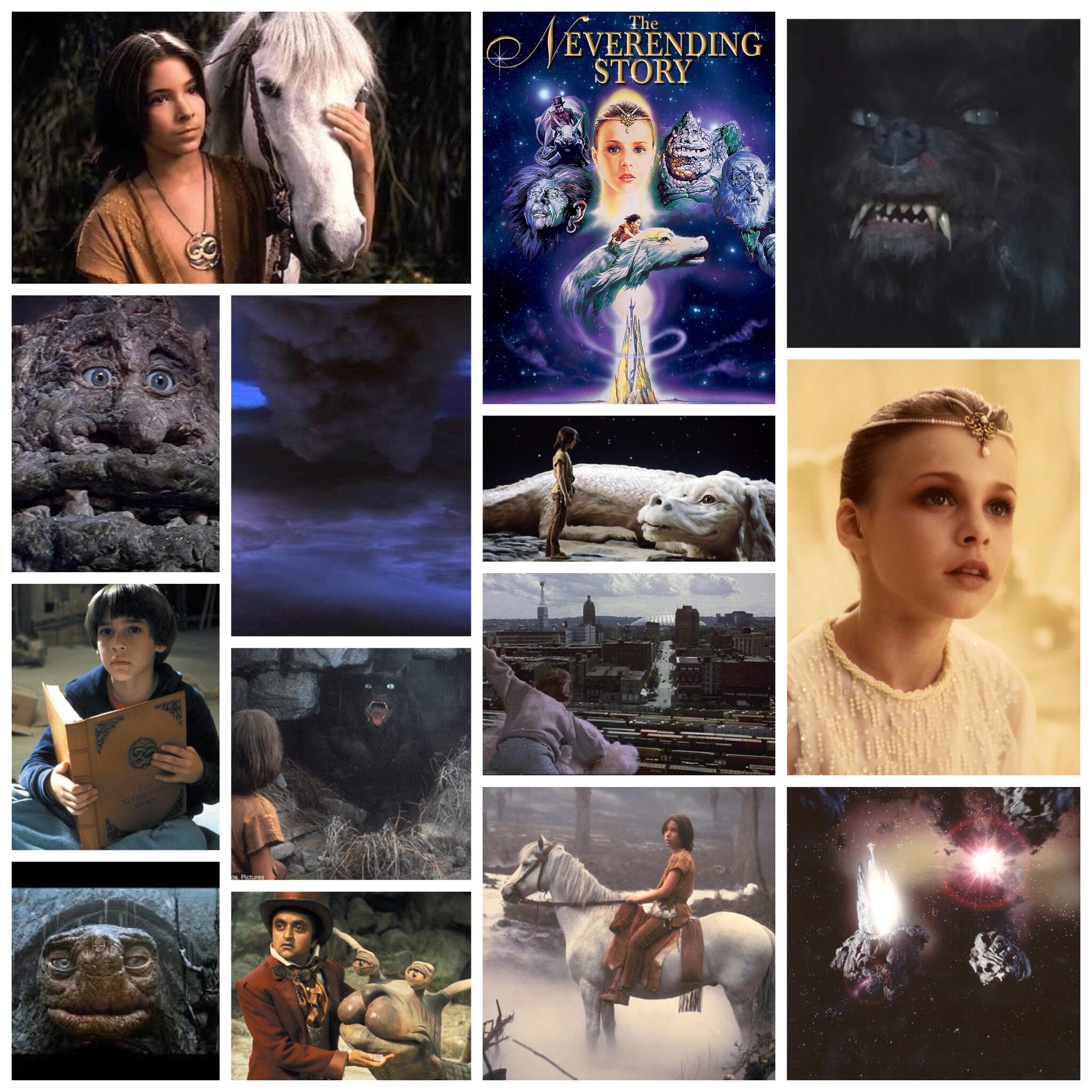
Although admittedly not quite as dense or thoughtful as Michael Ende’s classic novel, Wolfgang Petersen’s The Neverending Story is a stunning film full of imagery that has stuck with me for years. Petersen usually guns for sprawling adult oriented fare (Troy, Air Force One, Das Boot, The Perfect Storm, Enemy Mine), so this stands out as the one children’s story he’s done that still has that same epic magic he puts elsewhere, on a more whimsical scale. In a land called Fantasia, a threatening dark force called The Nothing is swallowing up real estate faster than Chinese investors, and many peaceful creatures are losing their homes to it. It lives up to it’s name in the sense that it is quite literally nothing, replacing tangible vistas with eerie black void, a spooky enough antagonist for any fable. It’s up to young prince Atreyu (Noah Hathaway) to journey across Fantasia, find the princess who is the origin of the land’s life force and restore balance in the universe. This is all in a dusty old storybook of course, eagerly read by a lonely kid (Barrett Oliver) holed up in some attic. I’ll admit I haven’t seen the film in a while, so I’m not up to speed on every little twist and crook in the story, but this one is kind of more about images and impressions than analytical narrative anyways, especially once Atreyu finds the Princess (Tami Stronach) and things get beautifully, cosmically surreal, then fairly meta as the world of Fantasia leaks out of the book’s pages into our own realm, and Oliver is treated to a flying escapade over the Vancouver skyline atop adorable dragon-doggo Falkor, a lovingly creaky reminder of the wonders of animatronic effects. I’ll always remember the council meeting between the rock biting giants, pint sized Willy Wonka looking dude and a sentient snail, all debating what course of action to take against The Nothing. The one primal element that stands out in my subconscious is the ongoing chase Atreyu finds himself in with a terrifying, ghostly direwolf that just won’t quit. For pure eerie suspense you can’t beat the seat grabbing moment where it ruthlessly pursues him through a haunted looking forest towards an escape so narrowly made that breathing isn’t an option while viewing it. Dark, scary stuff for a kids movie, but that should be the idea anyway. A wee bit dated on today’s terms, but all is forgiven considering the lasting impact it’s had on my generation, and the imprint on our dreams. I’d be wary of the two sequels, as I remember not a thing from the second, and only recall that the third is an abysmal thing that should have been left to the Nothing. Stick with this beauty instead.

-Nate Hill

Sean Penn’s The Indian Runner

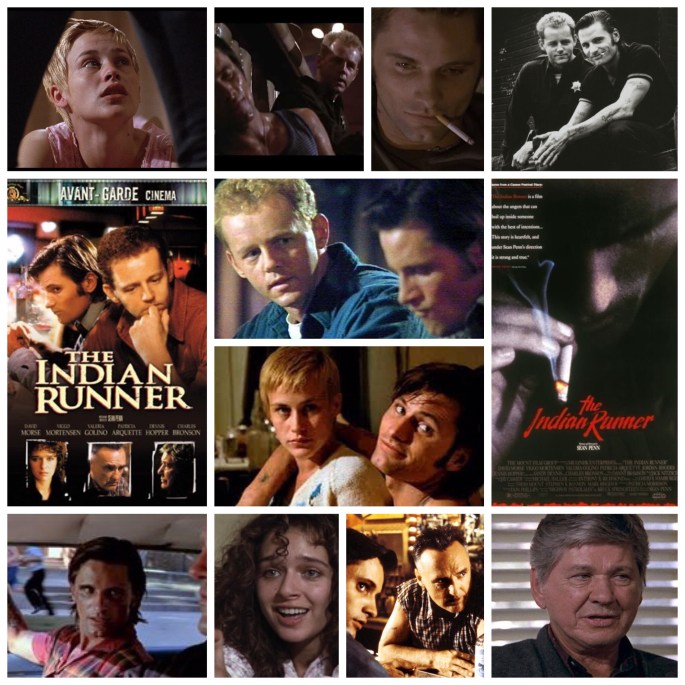
I’ve often argued with myself whether Sean Penn is a better actor or director, but the truth is he’s just as captivating a storyteller whether on camera or behind it, and The Indian Runner is a bold testament to the latter, a somber, tragic family drama that leaves the viewer reeling with it’s hard luck characters and sorrowful resolutions. Set in the heartlands sometime after the Viet Nam war, Penn’s focus is on two brothers who have been at odds with each other years. David Morse’s Joe is a farmer turned cop, an even tempered, recent family man with a loving wife (Valeria Golino, what ever happened to her?) and his shit firmly together. Viggo Mortensen’s Frank is a volatile, hotheaded veteran, the little brother with a big chip on his shoulder, a fiery temper and wires crossed somewhere deep inside. From the get-go there’s tension, and when Frank brings home a naive girl (Patricia Arquette) to start some semblance of a family, trouble really brews. There’s hints from director Penn of his own internal turmoil, two wolves that roil against one another represented by the brothers onscreen, and the inevitable violence begotten from the hostile one. It’s so strange seeing Mortensen in a role like this, miles removed from not only the stalwart Aragorn we’re used to, but from anything else he has ever done in his choosy, sparse career. This is the role of a lifetime for any actor and it’s the one he should be remembered for, a maladjusted outsider who rages against civility and can’t be controlled, to his own demise and detriment. Morse is always a slow burner, and takes it laconically here, but there’s a sadness that burns at the corners of his eyes which the actor exudes achingly well. Arquette captures the stars her character has in her eyes for Frank, and tragically lets them fall in disillusionment when she realizes he’s not the man she thought she knew, a splendid arc for the actress to breathe life into. The brother’s patriarch is played by a low key, heartbreaking Charles Bronson, probably the last role in which he actually gets to *act*, and not just play a tough guy. He’s full of complexity and depth in his brief appearance here, and knocks it out of the park. Dennis Hopper has an extended cameo as an antagonistic bartender, and Benicio Del Toro is apparently somewhere in it as well as he’s in the credits, but I honestly couldn’t spot him anywhere. The film subtly tackles everything from implied PTSD to biblical references to near mythic aspirations built around a legend that explains the title, but more than anything it’s about something as simple as can be: How circumstances shape human beings, how trauma affects us and the ways we interact with each other, what it means to exist and make choices. Penn’s fascination with these themes is obvious, skilled and nears profundity in dedication to story and character. A brilliant piece in need of far more exposure than its ever gotten.

-Nate Hill

David Mackenzie’s Perfect Sense

David Mackenzie’s Perfect Sense is one of those films that is indeed almost near perfection, a totally unique viewing experience from frame to frame. It also happens to be one of the most depressing things you’ll ever sit through, so fair warning. The story unfolds in Glasgow, where some strange pandemic is causing people, all over the world, to slowly lose there sensory perception, one at a time and preceded by cursory symptoms like rage, hunger, grief or the like. Sounds like a neat setup for a streamlined post apocalyptic thriller right?

Not so much. Mackenzie is fascinated more by things like intimacy, pacing, thoughtful musical accents, haunting narration and how these underplayed qualities are influenced by the extreme nature of the theme. It’s also a fiercely passionate love story, but one that gets gradually bleaker, as each instrument in our bodies we use to show love for one another slowly dims and darkens, a harrowing thing to witness once we’re invested. A research scientist (Eva Green) and a chef (Ewan McGregor) meet, fall in love and are then faced with the dire adversity of the world’s situation. First everyone’s sense of smell disappears. Then taste. Hearing soon after. And so it goes. Their romance is already a tangled bramble bush thanks to both their collective issues, and once the epidemic enters the picture, things aren’t easy to deal with and don’t go well. McGregor’s sunny disposition contrasts the overcast,

dismal palette of the film, whilst Green and her seemingly never depleted stores of intensity are in full forecast, the two making an electric pair onscreen. I love how a story that’s so rooted in sci-fi and thriller elsewhere gets the quiet, contemplative romantic focus here, it’s a welcome change. This isn’t Hollywood territory though, and the epidemic is treated in the gravest way, without salvation via deus ex machina in sight, and I’ll warn you that the final scene will land with an anvil blow to your ol’ soul, it’s that bleak and disheartening. Couldn’t recommend it enough though, it’s a dose of pure brilliance on every perceivable level.

-Nate Hill

Luc Besson’s Valerian And The City Of A Thousand Planets

Luc Besson’s Valerian And The City Of A Thousand Planets is a lot of fun here and there, but I couldn’t help being a smidge underwhelmed by the whole deal, having waited years for news of a new Besson space opera following his insta-classic The Fifth Element. There’s just… something missing in the magic here, an undercurrent that should be cohesively flowing through it that’s sort of absent, leaving it feeling very episodic and loose. It’s not the heavy CGI that bothered me either, as the effects here are some of the most flat out amazing and well done graphics I’ve ever seen, particularly in a prologue set on a shell beach style planet with avatar natives running about, a stunning way to open the picture. No, it’s something illusory that didn’t ring true, something that was there in Fifth Element and just didn’t make it to the meeting this time around. The story centres on space feds Valerian (Dane DeHaan, who I just can’t help but be annoyed by in anything I see him in) and Lauraline (Cara Delevigne), hunting through the universe for a treasured artifact from aforementioned shell beach planet, mainly focusing on a manufactured megastructure housing over eight hundred million different species, all clambering over each other in the craziest, most colourful celebration of special effects to come along in a while. Seriously, the wildly varied aliens, gorgeous vistas and chase sequences set in the City are really something to be proud of, and when the film is in action mode, it’s a delight. Story suffers a lot though, with Clive Owen awkwardly hamming his way through a military captain role, John Goodman playing Jabba The Hut, a vague genocide subplot involving the avatar dudes, it all happens dimly and is hard to get a grasp on from scene to scene. Also, the writing for Lauraline and Valerian’s suuuuccckkkks. It’s meant to be adorable, glib romantic back and forth, yet just feels clipped, unnatural and stale. DeHaan drones on with it, and doesn’t ever feel at home in the role unless he’s doing stunts that don’t involve dialogue. Delevigne fares better and seems to really be having fun with her role, stealing the show from under Valerian’s nose. The best acting work of the film, shockingly, comes briefly from Rihanna as a shapeshifter thing called Bubble with an affinity for dancing and a hopeless romantic’s heart. Ethan Hawke is also there as some kind of zany cowboy pimp, an energy that’s a far cry away from his usual stone-faced intensity. Watch for the quickest ever cameo from an under-utilized Rutger Hauer, so fleeting that if you’re even a minute late to the theatre you won’t have a clue he’s in it. I did enjoy lots with this one, including a romp through the dining hall of a gluttonous alien race that resemble Harry Potter trolls, a fantastic extended action set piece in a sprawling bazaar market that overlaps into multiple dimensions, providing clever shortcuts, escapes and pratfalls for all involved, and the rich detail in costume design as Valerian travels through Rihanna’s section of the City, not to mention top drawer special effects all about the film. It just didn’t have the heart or connective tissue to make all these elements stick or resonate though, like a shattered mirror whose pieces are off lost somewhere. I found myself wanting to pop in my Fifth Element DVD multiple times, for there the story provoked emotion and made you deeply care for it’s two intrepid protagonists and their romance, whereas here it just feels a bit lifeless and forced, with an overarching narrative that needed way, way more fleshing out to really work or go somewhere. Next time, Luc.

-Nate Hill

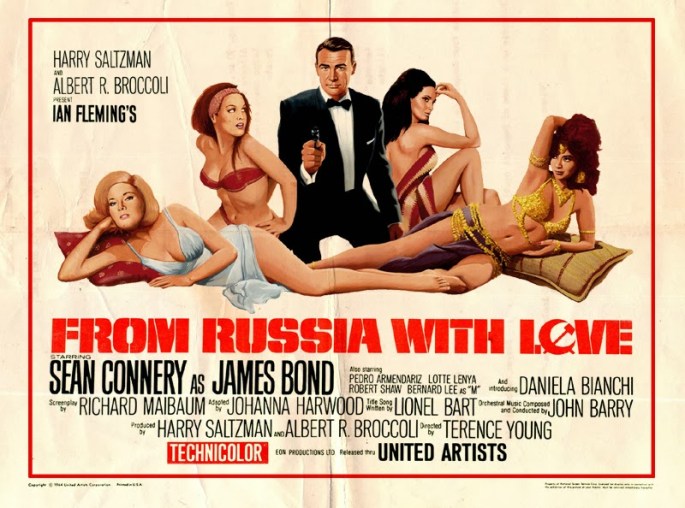
For Your Ears Only: FROM RUSSIA WITH LOVE

Image result for from russia with love poster

Returning for our next installment of our James Bond series, For Your Ears Only,  Frank and Podcasting Them Softly’s James Bond expert, Tom Zielinski, are joined with fellow Bond aficionado, Paul Sparrow-Clarke.