Chitty Chitty Bang Bang: still truly scrumptious all these years later 


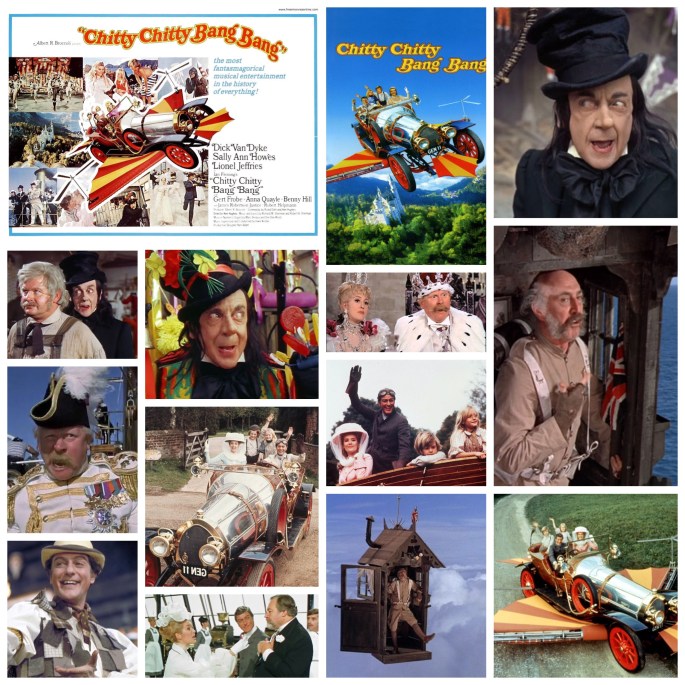
Chitty Chitty Bang Bang is the greatest musical ever made. Fight me. In all seriousness though it stands as a nostalgic beacon of my childhood in a genre that I just never took to, save for a few others in the same boat (The Sound Of Music is class, but that’s a another story). I grew up with Chitty, watched it from a very young age when I was still impressionable, and since then I’ve probably seen the thing over a hundred times as the years passed, with new eyes each time I revisited it at a later age. It’s a miraculous marvel of visual storytelling, a film that truly employs the sentiment “they don’t make em’ like they used to.” They really don’t though, films with this much hands-on imagination, passion for storytelling and ear for music just aren’t a common thing in our newfound age of computer dominated franchise giants. This is a film that is fuelled by wonder and whimsy, a monumental undertaking when you consider it’s length and scope, a pure oasis of childlike escapism, and a thoroughbred bona fide classic. Based on a short, slight storybook by Ian “James Bond 007” Fleming, this is one of the extremely rare occurrences in which a film adaptation surpasses it’s literary source material in every way. How does it achieve this you ask? Two words: Roald Dahl. Dahl, a beloved novelist himself, concocted a scrumdiddlyumptious screenplay that let what was conserved and clipped in the book run positively wild for the film, not to mention dreamed up some achingly beautiful, endlessly catchy songs that have since become timeless. The titular machine is a souped up jalopy that has a few gizmos under it’s hood including the ability to fly and float on water, lovingly built up by master inventor and father of the year for the next ten centuries, Characticus Potts, played by Dick Van Dyke in the performance I’ll always remember him for. After a sincerely charming opening act set in rural England, it’s off to fairytale land as he, his two darling children Jeremy and Jemima (Heather Ridley and Adrian Hall) and lovely Truly Scrumptious (Sally Ann Howes) embark on a dazzling adventure to Germanic country ‘Vulgaria’ to rescue eccentric Grandpa Potts (Lionel Jeffries) and get into all sorts of mischief. Vulgaria is ruled by buffoonish tyrant Baron Bomburst (Gert ‘Goldfinger’ Frobe) and his leggy wife (Anna Quayle), but the real threat is the single scariest villain in cinematic history (don’t even dare argue with me on this one), Robert Helpmann’s Childcatcher, a demonic willy wonka who is pure unbridled nightmare fuel whenever he shows up. The mind boggles at the sheer ambition on display in terms of set pieces here, from the Pott’s gorgeously rickety, unfathomably cozy windmill castle of a home to the Baron’s ornate palace and everything in between, it’s a visual triumph in every way. Better still are the songs, which, excluding one dud from Howes, are all instant classics. Me ol’ bamboo, Toot Sweet, The Roses Of Success, the titular tune that heralds Chitty herself, and particularly a demented little number called Posh sung by Grandpa as his peculiar outhouse of a man-cave dangles on a tow rope below Bomburst’s mini Hindenburg, they’re all fuckin beauties that I’ve been singing along to since I was a wee lad. Added is the giddy presence of people like James Robertson Justice, Desmond ‘Q’ Llewelyn and Benny Hill (as a German, no less) to gild the lining of an already nutty good cast. This film is immortal for me, a jewel in my DVD collection, a nostalgic gift wrapped delicacy to come back to time and time. No matter where I am in my life, the Potts will always be hurtling through the English countryside and soaring over those white cliffs of Dover singing to high heavens about their phantasmagorical machine, and I can sit down and rejoin them any time I like, which I will do over and again as long as time permits. 

-Nate Hill

Desmond Devenish’s “Misfortune” struggles to find it’s footing.

“A lot of holes in the desert, and a lot of problems are buried in those holes.” ~ Nicky Santoro, “Casino”

Cinematic history is replete with B – level budget films; films that the traditional Studio system were unwilling to take a bet on.  Roger Corman and George Romero are probably the most familiar names, while Peter Fonda and Bob Rafelson pushed ultra-low budget movies in the 1960’s and 1970’s with solid stories and characters that audiences could relate to.  Their efforts and changes in technology paved the way for Desmond Devenish to get his debut feature film “Misfortune” out to audiences.

When he’s not behind the lens producing and directing the film, Devenish plays Boyd, an unemployed aimless soul.  His girlfriend Sloan is a diner waitress who wants nothing more than to see Boyd do something with his life, even at one point asking him to take out the garbage which has been piling up in the kitchen for weeks.

Boyd learns from an old family friend that Mallick is about to be paroled.  Years ago, Mallick and Boyd’s dad, Roman, tried to do a deal for a small cache of diamonds.  Roman ended up dead and Mallick ended up in prison, but no one knows where the diamonds ended up.  With Mallick out for revenge, Boyd works with his street pal Russell, a cat and mouse chase across the Sonoran Desert ensues.

Where Devenish succeeds is in his casting choices.  Xander Bailey, who co-wrote the screenplay with Devenish played the ultra-suave Russell maintaining an even temper, an asset when certain situations throughout the film need diffusing.  Jenna Kanell pays Janel quite effectively.  However, once the story picks its pace up, she blended a little too much into the background.  This might have been intentional, but it didn’t serve her character effectively. Watching Boyd and Russell, I couldn’t help but recall Andy and Billy from Rob Weiss’ “Amongst Friends”:  two young punks who want to be street thugs, but don’t have the resolve to see their deals through.

Nick Mancuso plays Roman, who is only on the screen for a few minutes.  The confrontation between he and Kevin Gage’s Mallick at the opening of the movie really packs a punch.  Mancuso will be familiar to audiences as Tom Breaker, the CIA director in “Under Siege” and “Under Siege 2.”

Kevin Gage played Mallick with the same relentlessness that he gave us as Waingro in Michael Mann’s “Heat.”  Performance – wise, both Mancuso and Gage really took the film to the next level, but they couldn’t carry it.

Filmed on location in the Tucson suburb of Tanque Verde, Seth Johnson’s cinematography truly expands the scope of the film, giving it an epic quality.  It helped to capture the essence of the chase nature of the film.

Devenish’s script is a familiar, yet well – told story with Mann’s story telling sensibilities and Scorsese’s influences including “Goodfellas” and “Casino.”  Unfortunately, the story doesn’t expand beyond its boundaries.  The challenge is that most of the characters are so flat that when some of the reveals happen, you aren’t invested in them enough to care.

“Misfortune” is now playing in a limited theatrical release.

Tony Scott’s Days Of Thunder 


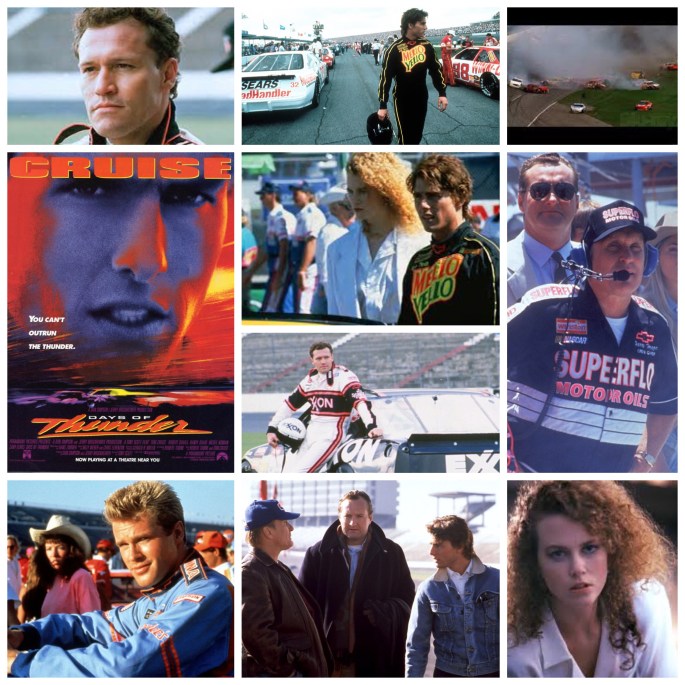
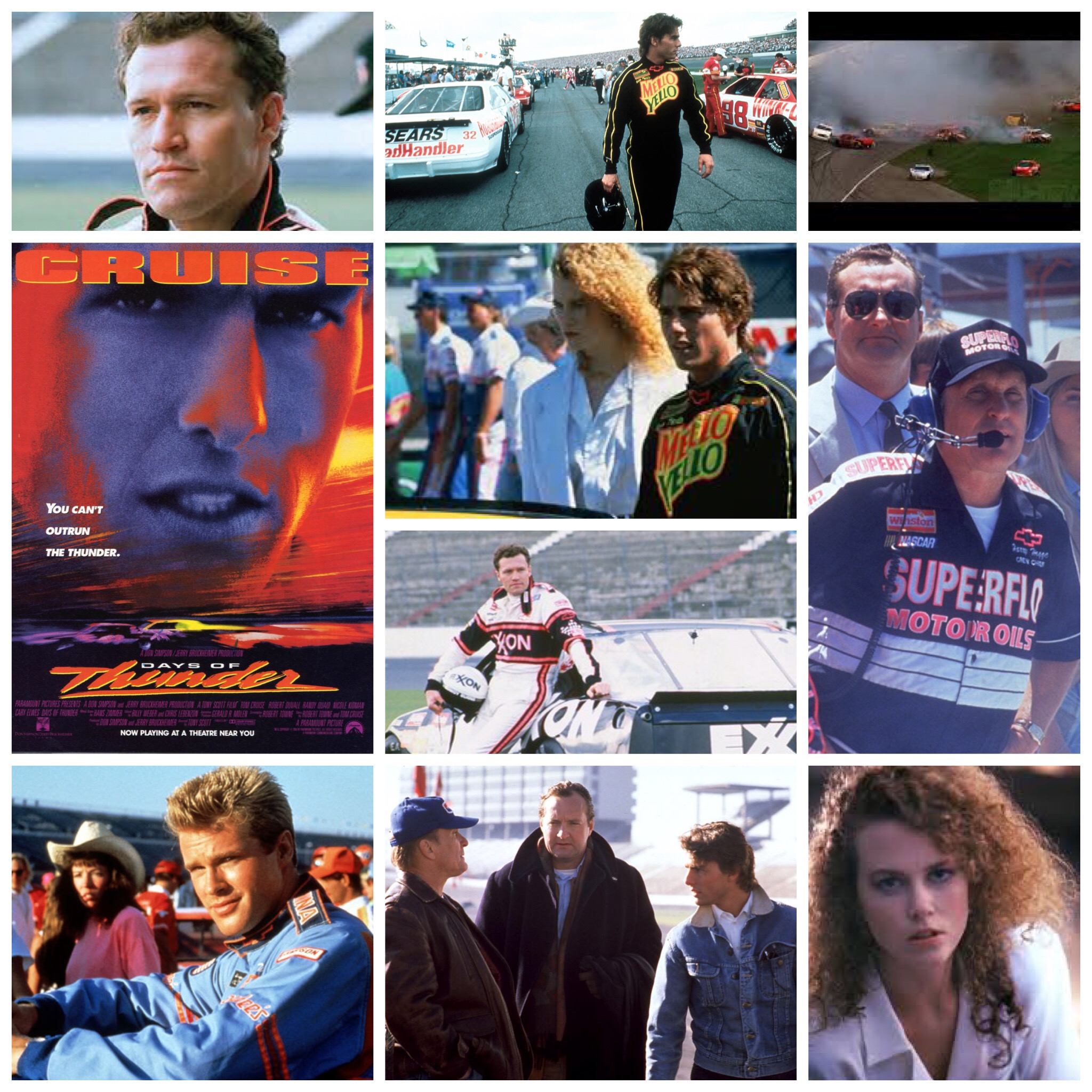
The first ten minutes or so of Tony Scott’s Days Of Thunder should be used to demonstrate the power of any new home theatre/speaker/sound system freshly harvested from Best Buy. As it opens on a piping hot stock car race-track in the midst of noonday sun festivities and preparations for the day’s events, Hans Zimmer’s explosive, patriotic thunderbolt of a score kicks in and you feel that mad rush of adrenaline reserved for only the most combustible, rabidly entertaining movie magic. It’s just too bad that the rest of the film can’t keep up with the level of energy on display in that whopper of a prologue, despite doing it’s very best. An obvious sister film and coattail hugger of Scott’s other ‘loud noises’ film Top Gun, there ain’t much to it other than screaming race cars and a daredevil Cole Trickle (Tom Cruise) trying to prove his sporting worth to various folks including the romantic interest, a doctor played by sexy Nicole Kidman and the sagely Yoda of stock car lore (Robert Duvall). He also has quite a few homoerotic run-ins with rival/partner Rowdy Burns (Michael Rooker is certainly someone I’d tag with the adjective rowdy), and of course races a whole bunch of race cars as well as crashes a few. You gotta hand it to cinematographer Ward Russell, as it can’t be an easy task to do crisply capture those vehicular torpedoes as they careen by at a zillion miles per hour, let alone immortalize the afternoon sun glancing off the Wonderbread sponsor logos so beautifully. Like I said, after that initial banger of an opening credits sequence, its run of the mill in terms of story, albeit dynamite in terms of stunts. Watch for work from Randy Quaid, Cary Elwes, Fred Dalton Thompson, John C. Reilly and mega-producer Don Simpson in a neat extended cameo. The real magic happens with Zimmer’s score though, go check it out on YouTube, as iTunes only has some weak retread by some philharmonic orchestra schmucks. Quite possibly one of the maestro’s best works. 

-Nate Hill

Once Upon A Time In Nostalgia Occupied France: Revisiting Quentin Tarantino’s Inglorious Basterds


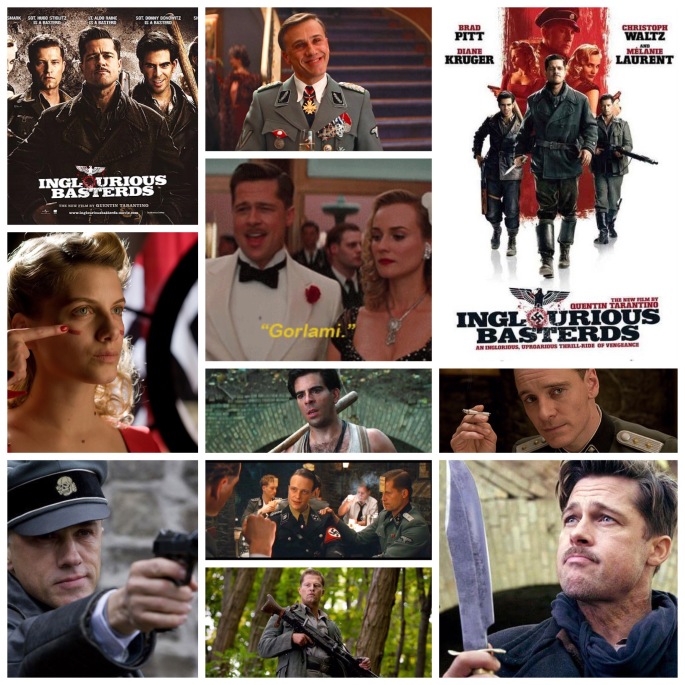
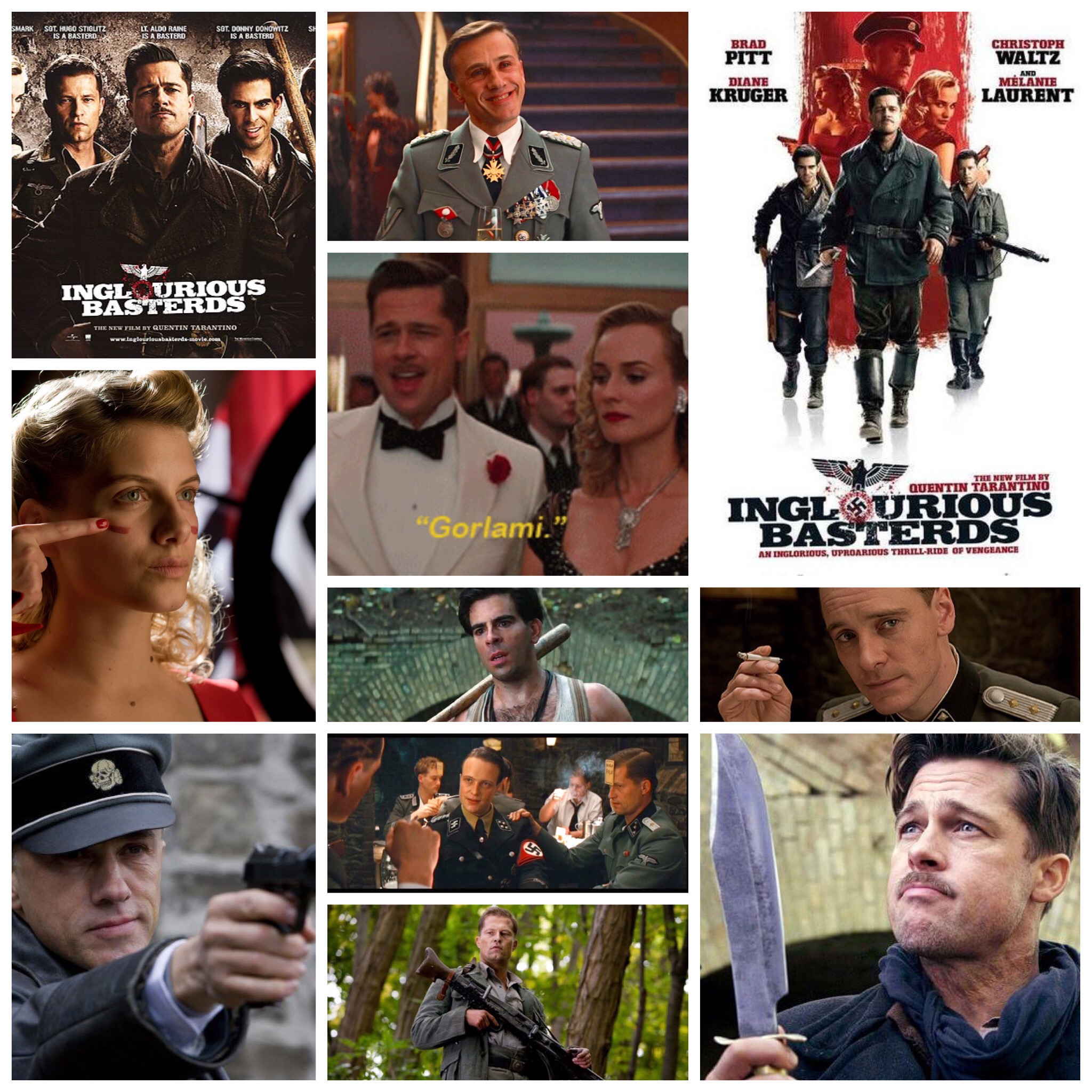
Having rewatched Quentin Tarantino’s Inglorious Basterds the other night for the first time in years, I’d since forgotten what a fuckin rip snorting good time at the movies it is. It used to rank fairly low on my Quentin-metre, but not only has it aged quite nicely since 09′, it’s even better than I remember it being in theatres. I think that one of the reasons I didn’t hold it in such high esteem right off the bat is that I wasn’t prepared for the blunt revisionist history approach, which at the time I think felt very silly and fake. I get now what he was going for and appreciate it tenfold more than I did then. From the opening chords of a Morricone piece that signals the portentous arrival of Christoph Waltz’s terrifyingly affable Jew hunting SS nutbar Hans Landa, this film is a near perfect ballet of extended dialogue, shocking musical cues and sporadic bursts of satisfying and graphic violence. It’s an episodic roundtable outing that spins around to focus intently on specific scenarios for quite a bit of time before jarringly shunting off to the next. Young Shosanna (Melanie Laurent) runs a quaint cinema in rural France that garners the attention of a pesky German war hero (Daniel Brühl). Evil Landa and his corps doggedly hunt enemies of the state whilst preparing to act as a security force for a bigwig film premiere attended by the Fuhrur himself, et al. Elsewhere in Germany, a plucky band of double agents led by Michael Fassbender and Diane Kruger await instructions on a small tavern, commissioned by Winston Churchill and Austin Powers to carry out their mission. This sequence is a textbook example on how to whip up vice grip suspense until one can barely breathe, then cut the cord loose all of a sudden, brilliantly structured, written and acted scene all round. Brad Pitt also leads his merry band of Nazi killers all over Europe creating havoc and delivering some of the best dialogue that the Q-Man has ever penned. The sequence where Aldo Raine (Pitt) and his crew must be ‘fake Italian’ to blend in at the film premiere is the single funniest thing in a Tarantino film to date. The cast is layered with all kinds of wonderful work, standouts from August Diehl, Richard Sammel, Eli Roth, a priceless Til Schweiger, as well as quick snippets from Samuel L. Jackson and Harvey Keitel. Waltz made a name for himself with the Landa character, and is a simultaneously freaky and funny villain who steals the film each time he shows up to smarm and charm the pants off of everyone else. Funny beyond words, brutally exploitive in the best possible ways, whip smart in writing and characterization and just a hell of a good time, Basterds has held up and even improved excellently since it’s release, and will likely stand as one of Tarantino’s key films in years to come. Gorlami. 

-Nate Hill

MATT REEVES’ WAR FOR THE PLANET OF THE APES — A REVIEW BY NICK CLEMENT

war_for_the_planet_of_the_apes_ver5_xlg

War for the Planet of the Apes is Grade-A blockbuster filmmaking. I will forever judge and compare the CGI in every movie that I see moving forward against the FLAWLESS work done in this film. Seriously. What the hell? I couldn’t believe what I was watching. Everything about this movie works like gangbusters, from the intelligent screenplay to the emotionally engaging performances to the logical plotting to the kick-ass action sequences – this is how you do it when it comes to spending what looks like a billion dollars to make a movie. I’m not kidding. This movie had to have cost a mint. When you get that quality of images, it can’t be cheap, and you know people were seriously invested in their work. There isn’t ONE SINGLE TIME where you look at one of the apes during the course of the film and think that they don’t look real and tangible and legitimate. It’s stunning. It’s landmark work when it comes to this sort of technological achievements. The incredible Andy Serkis made me cry like a baby – repeatedly – during this film. His motion capture performance as Caesar is all-time level stuff, expanding upon his two previous performances, and I have to be honest, I wouldn’t be shocked if his work in War for the Planet of the Apes feels more resonant than most others by the end of the year.

3

Co-writer and director Matt Reeves (Dawn of the Planet of the Apes, Let Me In, Cloverfield), who worked with scenarist Mark Bomback (Unstoppable, Live Free or Die Hard) has now joined the absolute upper-echelon of large-scale popcorn filmmakers, tipping his hat to Nolan (in tone) and Spielberg (in intent), proving that he cares about his story, characters, and dialogue just as much as he does to the photo-real visual effects and the gorgeously composed photography that he crafted in tandem with the great cinematographer Michael Seresin (Midnight Express, Shoot the Moon, Dawn of the Planet of the Apes). The fantastic musical score by Michael Giacchino heightens nearly every scene yet never overpowers, with a late in the game musical cue that sets the stage for the unrelenting final act. The swift editing by William Hoy and Stan Salfas moves this epic picture along at a fast pace despite a two hour and twenty minute running time, with everything clicking into high-gear thanks to the superb production design by James Chinlund, who clearly had a ball with the various sets and locations. Also, there’s snow in this film. I love “snow movies.” Woody Harrelson is one of my favorite actors, so it was delightful seeing him play the chief villain. I’m consistently blown away by his ability to portray lovable protagonists and evil antagonists, switching it up with total ease and confidence. He’s terrific here, getting the chance to tackle a multi-dimensional baddie who goes head to head with Caesar for much of the film.

2

I’ll spoil none of the robust story or the poignant finale, but I will comment that War for the Planet of the Apes is very violent, rather dark, and appreciably grim, as it should be. But it’s going to the lingering close-ups that I’ll remember the most about this artful, expressive, and thoroughly absorbing film, as I just couldn’t get over the level of believable artistry that was brought to the table to bring these digital apes to life. There are zero excuses any more as far as I’m concerned in terms of other films and filmmakers. If this sort of work was possible on this film, than it should be standard operating procedure for any movie involving copious CGI work in the future. Get it right, or don’t do it at all. No more half-assing it. When a film like War for the Planet of the Apes comes along, I can’t help but feel that the only people who will have something negative to say will be people who went into their screening looking to hate on it. Sort of like with Baby Driver. The “too cool for school” police seem to be out and that’s a shame, as this is grand cinematic escapism done on a massive yet intimate scale. And as much as I don’t care about seeing anymore comic book/superhero movies, the fact that Reeves wants to make a noir/detective Batman film, well, I’m curious about that. But for now, he should feel extremely proud, because this has been the most unexpectedly moving and exciting trilogy of summer movies in decades.

1

Oliver Stone’s Natural Born Killers


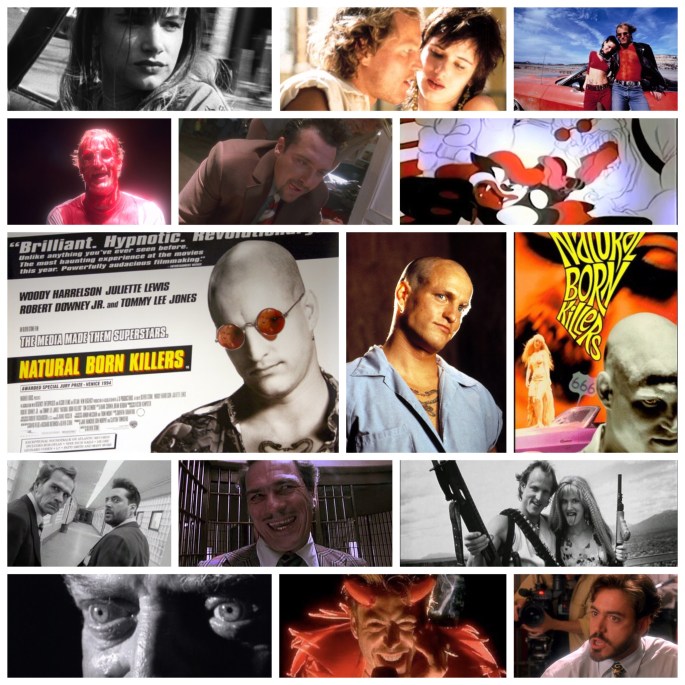
I will sing the praises for Oliver Stone’s Natural Born Killers til the day I either die, am too dementia ridden to compile a coherent review or too arthritic to type anymore (you folks will get some peace and quiet on your social media once any or all of the above happens). This film is less a film than it is a writhing elemental force, a cinematic being brought to life by tools seldom used in Hollywood, namely the sheer audacity of Stone’s frenetic filmmaking style. The MPAA kept an R rating just out of his reach for a while before finally conceding, harping to him that though he cut violent bits here and there to make it semantically tamer, it was the general aura of chaotic madness that irked them so. Stone considers this a compliment, and well he should, for its not everyday that an artist so fluidly taps into the artery of violence and the many catalysts of it in such a primal, intangible way that brilliantly splices what compels us with what appalls is, and the scarily thin line that wavers between them. This film is many things: a psychedelic road flick, a blistering indictment of sensationalist American media and the decaying degeneracy it breeds, a hallucinatory mood piece, a severely expressionistic action film, a thriller, a chiller and the list goes on, but more important than all of those is the love story that ties it all together. Juliette Lewis and Woody Harrelson are sticks of poisoned dynamite as Mickey and Mallory Knox, two twisted up kids on the run from everyone and everything, products of the darkest bowers of bizarro world Americana, deeply scarred by their pasts, fully committed to the wanton murder spree they’ve engaged in and unapologetic about the wave of carnage they’ve left in their wake. Demonized at every turn by the powers that be and everyone else in between, it’s easy to see why a system feeds two sick souls like this with infamy and notoriety instead of helping them. Anything for that big ol’ dollar sign, or simply whatever fills the void. We see the sickness creep after them, ever present in creatures like Tommy Lee Jones’s fire and brimstone prison warden, Robert Downey Jr.’s manic, sickening enabler of a talk show host and Tom Sizemore’s psychotic, gung-ho detective Jack Scagnetti. There’s a saying out there that goes “animals are beasts, but men are monsters, a sentiment that Stone has taken and run right off the cliff with, blasting us in the face with humanity’s very worst for a solid two hours, until he’s damn sure we catch his drift. The film is a stylistic tornado, every kind of colour, lens, filter, soundscape, visual trick and style of editing used until we realize we’re watching something truly unlike anything before, and likely after as well. Mallory’s backstory is staged in a stinging sitcom format as she’s terrorized by her abusive father (Rodney Dangerfield, cast grotesquely against type). Mickey breaks out of prison in black and white Lone Ranger style. A drug store Mexican standoff is painted with swaths of neon vomit green. Shadowy title cards and striking lighting are used in a sequence where the pair visit the lonely desert hut of a prophetic Indian (Russell Means). Visions dance on walls like spectral tv screens, faces leer and loom out of shadows for no apparent reason other than to add to the beautiful commotion, characters skitter through frames looking for a moment like demons. There is no other film like this, no other experience rather, an animalistic treatise on primal human urges, societal constraints that bind them, loosely and laughably out of place when you consider the dark urges within everyone. Amidst all this chaos though, like two corrupted beacons, are Mickey and Mallory. This is their story, and despite being a chief cause of the chaos I just mentioned (the universe has a sense of irony), it’s a love story, they being the centrepiece and everyone else rushing past like dark passengers in a swirling sideshow to their main-tent event. They’re brutal serial killers, no question, but they’re tender and caring with each other, and we see hints at a collective sweet disposition hiding below all those years of built up scar tissue. It’s a gorgeous film, full of scream-at-the-heavens ugliness, imagery that burns a patchwork quilt of impressions straight into your soul, an angry satirical edge that cuts like a knife and so much overflowing style you could watch the thing a thousand times and still pick up on things you never saw before. From the first cacophonous diner slaughterhouse set piece, to the second half of the film that descends into a regular Dante’s Inferno of a prison riot, this film is truly something else, in my top ten of all time and a uniquely affecting experience that has shaped the way I’ve watched films ever since. Plus that soundtrack man.. the story is set to every kind of music out there including Trent Reznor, Lou Reed, Patsy Kline, Peter Gabriel, Dre, Mozart, Marilyn Manson and so many more, with a pair of perfectly nailed opening and closing numbers warbled by Leonard Cohen. Everyone and anyone has quick bits and cameos to support the titanic work of the main cast too, including Denis Leary, Ashley Judd, Arliss Howard, O Lan Jones, Pruitt Taylor Vince, Jared Harris, Mark Harmon, Balthazar Getty, Marshall Bell, Louis Lombardi, Steven Wright, Rachel Ticotin, James Gammon and more. What more can be said about this film? It’s a natural born classic.

-Nate Hill

Joel Schumacher’s Phone Booth 


“Isn’t it funny? You hear a phone ring and it could be anybody. But a ringing phone has to be answered, doesn’t it? Doesn’t it?”

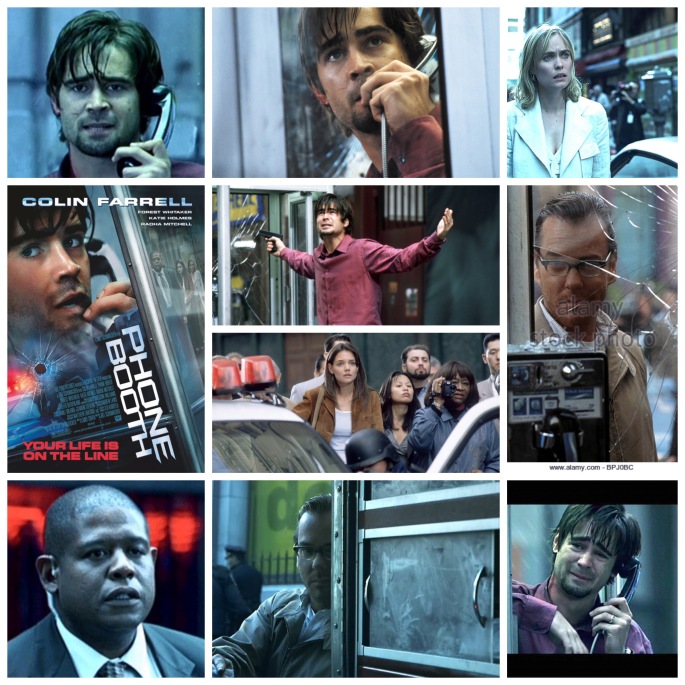
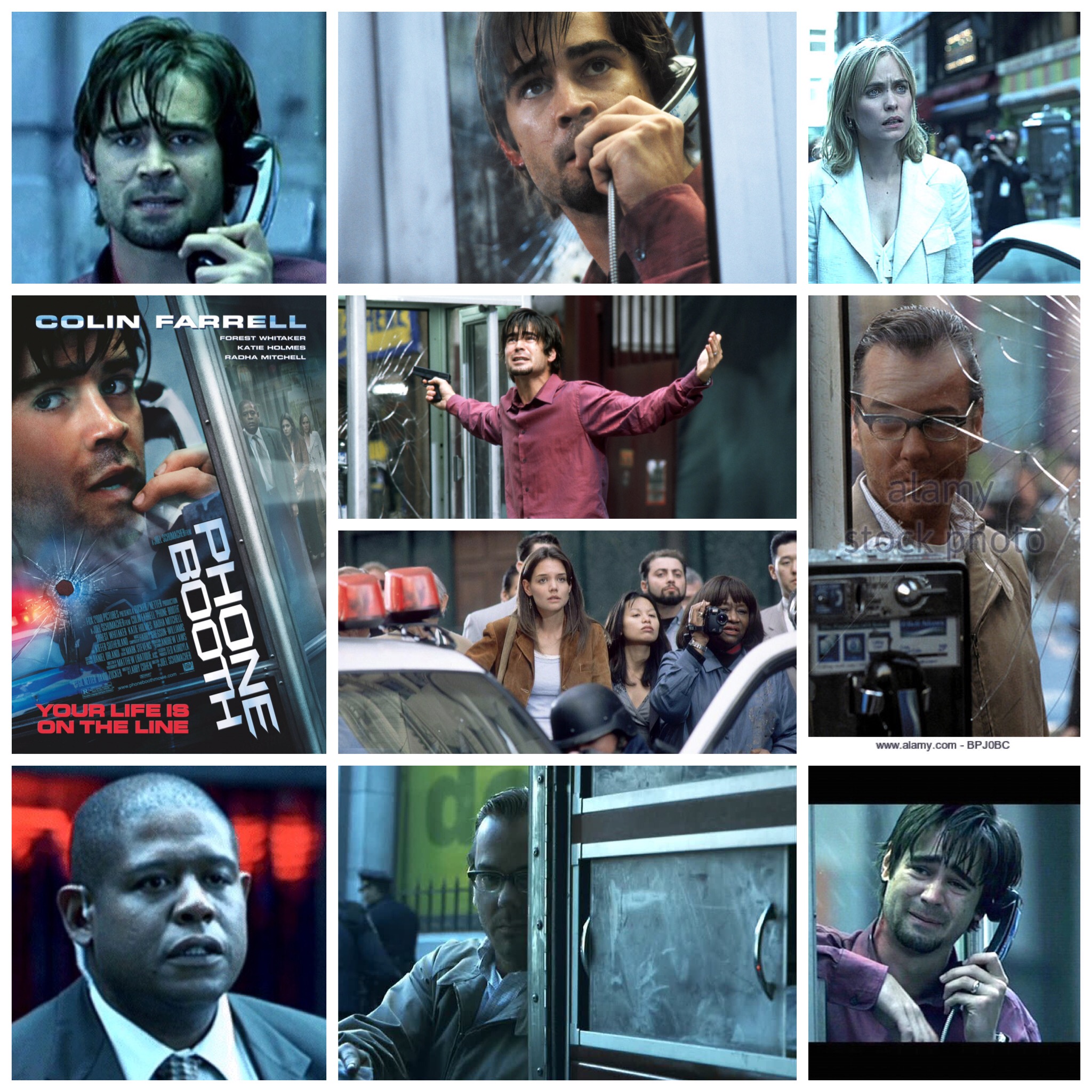
So snarls Kiefer Sutherland’s mysterious telephone terrorist to a petrified Colin Farrell in Joel Schumacher’s Phone Booth,

a taut, entertaining and oh so slightly heavy handed single location thriller that brings home the bacon, albeit messily spilling some grease along the way. Farrell is a hotshot businessman who steps into a phone booth (remember those?) one day, which serendipitously happens to also be the favourite haunt for sniper slinging whackjob Sutherland, who plays sadistic mind games, extorts the poor guy and digs up his darkest secrets, all while keeping him firmly in the crosshairs of his high powered rifle. The cops, led by a stoic Forest Whitaker, are perplexed at first and eventually drawn into this monster’s web too, as Farrell’s life begins to unravel at the whims of this unseen harasser, and the audience gets to see just how far either will go to resolve or escalate the situation. In this day and age there’d never be a scenario like this, the obvious reason being the extinction of phone-booths, but in the era of social media tech giants there’s just too much information and reaction time available for a situation this intimate to play out to the end. These days this nightmare would take the form of account hacking, an equally terrifying prospect, but a far less lucrative idea for a film. Now, we never really see Sutherland but for a few bleary frames, and he probably just recorded his dialogue from a cushy studio in jammies plastered with the 24 logo, but none of that takes away any of the lupine, icy calm malevolence from his vocal work here, and we believe in the ability of this man to freeze someone in their tracks, not only with a gun but with the power of verbal intonation as well. Farrell uses atypical caged animal intensity to ramp up the tension, and the other players, including Rhada Mitchell as his wife, Jared Leto and a very young looking Katie Holmes do fine by their roles. It’s a little glossy, a little too Hollywood if you know what I mean, but it’s a well oiled thriller nonetheless, with Sutherland’s shrouded, edgy persona being the highlight. 

-Nate Hill

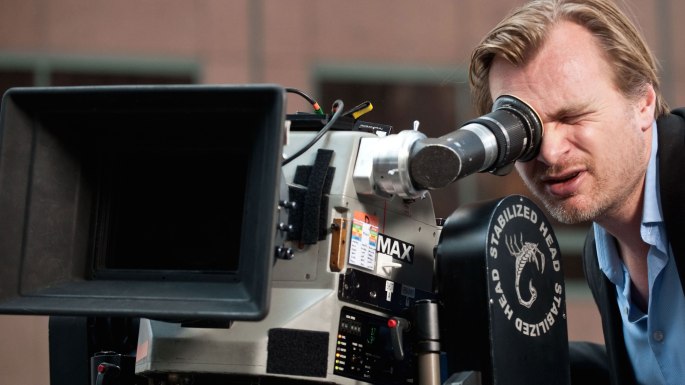
Christopher Nolan: Favorite Films

In honor of Christopher Nolan’s upcoming Dunkirk, Kyle and Ben sit down this week to discuss their Top 5 Nolan films.  We culled from his library of works our respective Top 5 films. In doing so, we included those films that he’s produced, written and/or directed.  We both had the same consensus about a large majority of Nolan’s body of work and we diverge on at least one film.
Christopher-Nolan-directing-The-Dark-Knight-Rises-323.jpg

Insomnia

insomnia_christopher_nolan_2.png

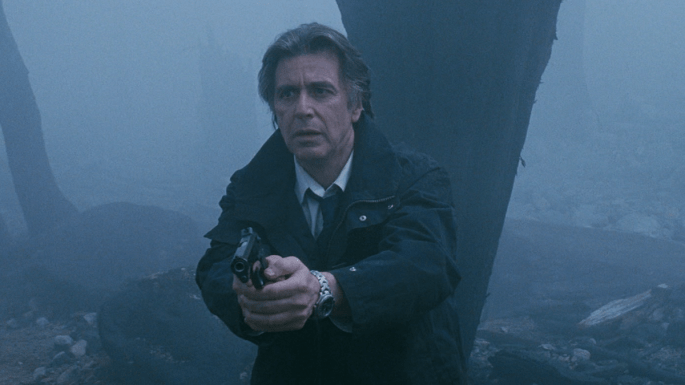
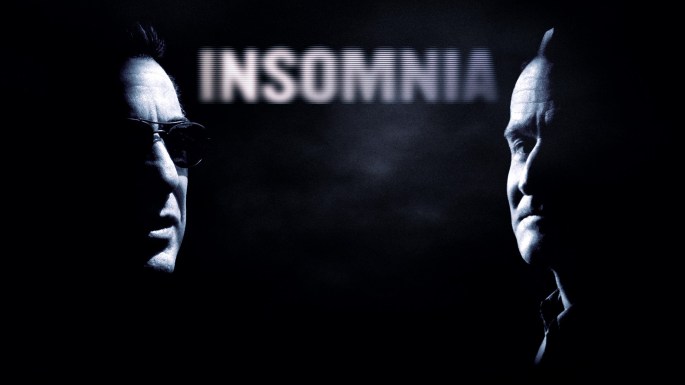
BEN: Nolan’s sophomore directorial effort, Insomnia is a remake of a 1997 Norwegian film featuring Al Pacino, Hilary Swank and Robin Williams in one of his few dramatic roles.  Set in a small Alaskan frontier town, two Los Angeles detectives are sent to investigate a grisly murder.  Eternally suffering from guilt over another case, Pacino’s performance is a familiar one where he’s driven to the edge while maintaining his sharpness.  Swank is a nice balance to Pacino’s descending manic-depressive insanity while Williams just absolutely chews every scene he is given.  Wally Pfister’s cinematography and Dody Dorn’s tight editing add to the tension of torn personalities trying to find peace.  After writing this, I might just need to revisit it!

KYLE: This is an amazing film.  While I absolutely love the 1997 original, I really appreciate Nolan’s take on the material.  While a few of the darker scenes are excised from the narrative, Nolan’s focus on endless torment is framed in a fascinating, psychological manner that really allows Pacino and Williams a lot of breathing room with the script.  As you mentioned, I think is one of Williams’ best performances and I’ve watched it several times since he left us.
insomniablu_shot42l.jpg

The Dark Knight

main-qimg-e75b65e75bd732070131d755e46aad14-c.jpg

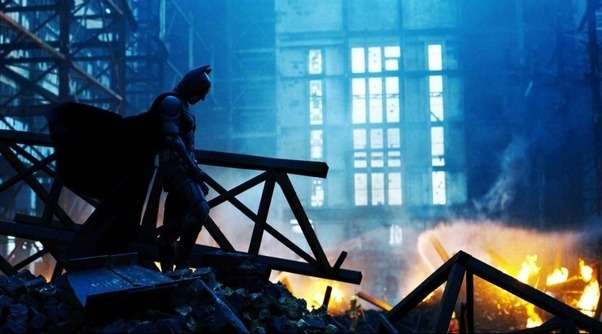
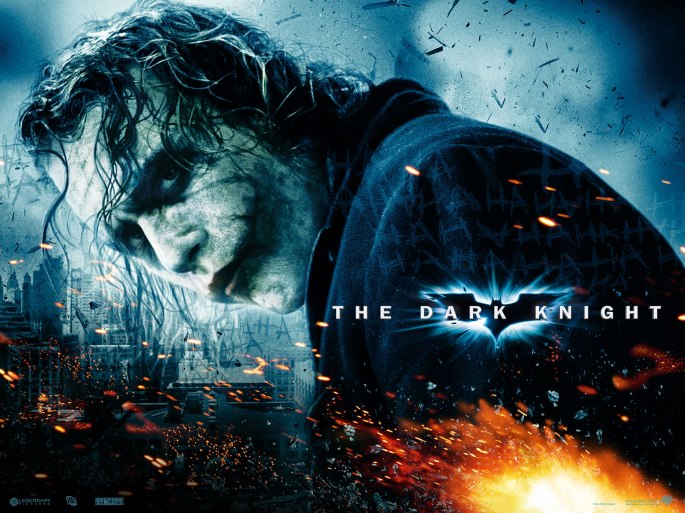
BEN: Following the immense success of Batman Begins, Nolan’s effort to build a modern Gotham City is rich with relatable characters and terror that mirror our everyday existence.  Christian Bale draws us in as both Batman and the torn Bruce Wayne, trying to find his place within his own demons.  Just as with Pacino in Insomnia, this is a character trait that Nolan has been able to tap into time and time again.  Gary Oldman as Commissioner Gordon is absolutely first rate.  This story allows him to portray a true detective, which is a key to this story.  Aaron Eckhart’s transformative performance as Harvey Dent only compliments the other characters as he struggles with his own demons.  Heath Ledger is the true star here as the Joker.  Maniacal and dangerous, Ledger’s final screen performance is near perfect and holds his own next to Bale.

This is in part to Nolan’s understanding of the psychological nature of each of the characters as well as their environments.  Nolan knows when to push his boundaries.  Wally Pfister was called to service again here and he answers the call of The Dark Knight with precision.  Hans Zimmer’s and James Newton Howard’s score help convey the beats and the lethality on the screen without ever overwhelming the action.

KYLE: It’s my favorite Superhero film and Ledger’s iconic performance is unforgettable.  I love how Nolan makes Gotham itself a character that lives and breathes around the larger than life personas that inhabit it.  There are so many iconic shots in this film it’s impossible to pick my favorite, but the scenes shot in IMAX, such as the initial bank heist are razor sharp proficiency.

I do think it stumbles, just a bit in the final act, but everything else is near perfect.  Nolan made a Michael Mann level crime epic inside of a DC comic book film before the term Cinematic Universe had been invented.  It’s definitely one of his greatest.
the_dark_knight_7.jpg

Inception

Secondkick.jpg

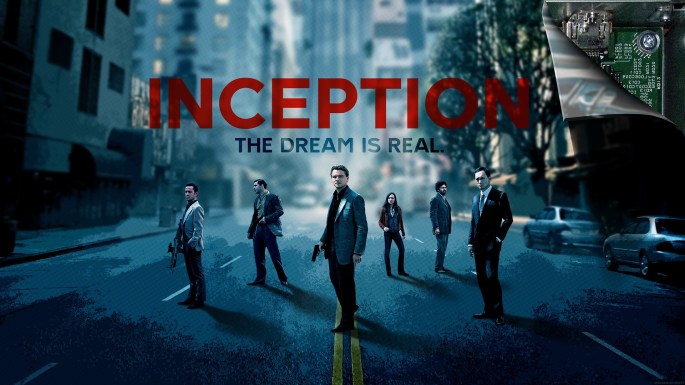
BEN: Following on the heels of his Dark Knight trilogy, Nolan began his foray into the realm of science fiction/fantasy with 2010’s Inception.  Part espionage, part thriller, Inception is the story of a troubled man (Leonardo DiCaprio) who has been trying to get home to be with his family, but because of a past transgression, he cannot.  He may have found a way home when he is presented with an opportunity to help a Japanese businessman with a corporate espionage job.  Full of wondrous special effects, Nolan’s efforts here are about smoke and mirrors, almost emulating Soderbergh’s Ocean’s Eleven from 2001.

Carrying on the theme of a torn soul, DiCaprio’s motives are always front and center, but the layers that Nolan puts on each of the characters is beyond belief.  This is not a simple movie and it never claims to be such, especially with the closing frame.  Ken Watanabe, Joseph Gordon-Levitt, Marion Cotillard, Tom Hardy, Cillian Murphy and Tom Berenger co-star.  Michael Caine, who was a staple of Nolan’s Dark Knight trilogy, and would also have a pivotal role in one of my Top 5 Nolan films, is along for this ride, as are his trusty cinematographer, Wally Pfister and Hans Zimmer, who creates yet another stunning score for the ages.

KYLE: I am in love with this film!  One of my favorite things about it is the layers.  There’s the main event tiered dream sequence, in which Joseph Gordon Levitt’s part is the whole ordeal, but for me, I really love how it gets into the concepts of perception and grief and how both alter one another in the flow of time.  Marion Cotillard’s specter is my favorite character and I love how her performance drifts between tragedy and horror seamlessly.

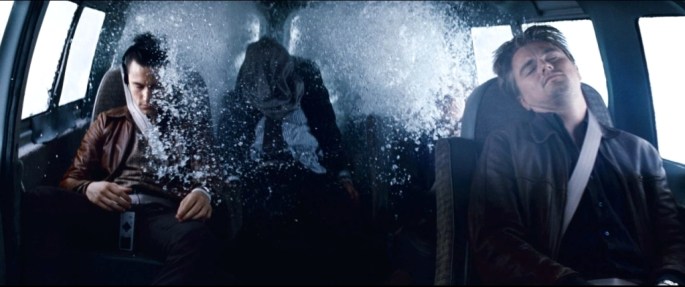
Also Pfister’s Oscar winning cinematography is breathtaking.  The slow motion scene where the van hits the water is a wonder to behold.  I also really enjoy the costuming and how it is vital to deciphering the mysteries of both the plot and its ambiguous ending.  While this is not my personal favorite Nolan, I think there is a strong case to be made for this being his most well-made feature.
1b5c10d82b892ba0f2c2e9b42d5df5fe-inception-1469000805.jpeg

Interstellar

interstellar-gargantua.jpg

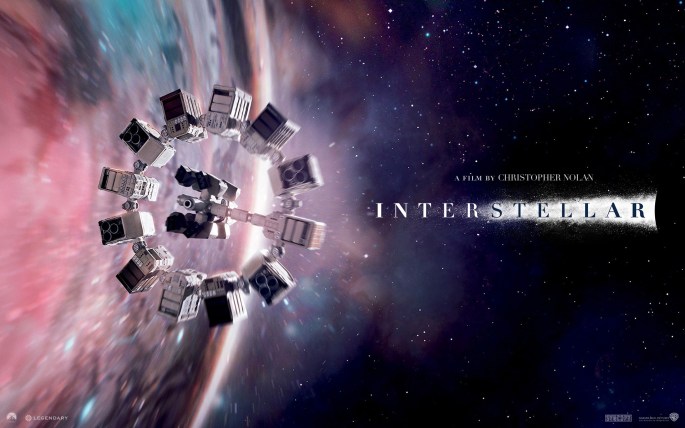
BEN: This is the film where Kyle and I diverge just slightly.  Partially an environmental tone poem, partially an homage to Kubrick’s 2001:  A Space Odyssey and very much in line with the emotional roller coaster that Nolan’s protagonists seem to undergo, this science fiction film about life and death is set in the near future where we have decimated our planet and a crop blight ravages the surface.  As a result, we now seek to find other worlds beyond our solar system such that they are suitable for human life.

Matthew McConaughey is Joseph Cooper, a widowed, former NASA pilot who is trying to cultivate the land his home is on along with a failing father-daughter relationship.  When “Coop” is called to duty, he must leave his daughter (Mackenzie Foy) and father-in-law (John Lithgow) behind, potentially forever.  Michael Caine plays the reassuring father figure, given to quoting Dylan Thomas, while Anne Hathaway plays Coop’s co-pilot, Dr. Amelia Brand.  The supporting cast is a who’s who with Casey Affleck, Wes Bentley, Bill Irwin, Ellen Burstyn, Jessica Chastain, Topher Grace, David Oyelowo and William Devane who plays the same role he played in Clint Eastwood’s Space Cowboys, another film that Interstellar mirrors.

The story by Nolan and his brother Jonathan is intelligent sci-fi at its finest.  Yes, it is a bit preachy with respect to its environmentalism, but the notion of being able to see your daughter’s life through a looking-glass and to have that image reflected back to you is priceless.  Much like Bud in Cameron’s The Abyss, Coop knows this is a one-way trip for him.  However, because our characters don’t necessarily understand the true nature of the universe, they are given opportunities to correct past transgressions, or so it seems.  Taking a page from Inception, not everything is as it seems.

Hans Zimmer’s score is second to none, taking the heightened emotionalism to the next level.  But, it is Hoyte van Hoytema’s stunning cinematography that truly blasts this movie into another dimension.  Shot with IMAX cameras in the 1.43:1 aspect ratio along with the 2.39:1 Cinemascope aspect ratio, the film was exhibited on IMAX screens with a blending of the two formats heightening the images while traditional theaters ran the 2.39:1 aspect ratio.  On Blu-ray, the mixed aspect ratio has been retained, which I think highlights van Hoytema’s composition.  Its preachiness hinders in it comparison to other films of its nature, but it’s a ride well worth taking.  Just ask Matt Damon.
int_wps_1920_worm.jpg

The Prestige

137199_orig.jpeg

KYLE: This is my favorite Nolan by a mile.  It not only a remarkable cinematic experience, it’s a puzzle that requires multiple viewings in order to work through all of the clues.  As a colleague wisely pointed out, the entire film is a magic trick like the one described during the first act.  This realization makes the surprise twists more impactful, distancing The Prestige from other magic related pictures.

Christian Bale and Hugh Jackman are wonderful as dueling magicians, fueled by vain composition and deadly vendettas.  Michael Caine and Scarlet Johannsen support with vintage appropriate turns that set up Nolan’s carefully planned bait and switch from the moment they appear on screen.  The great David Bowie has an esoteric turn as Tesla, whose electricity fueled pseudo-science is the key to one of the struggle at the center.

Nolan’s long time cinematographer Wally Pfister once again provides crisp visuals and haunting imagery, with the opening frame, a somber field of top hats sticking in the viewer’s memory for the duration.  It rivals The Dark Knight for atmosphere and world building, and for me, it takes top honors because it never falters and forms a perfect circle of deception and comeuppance.

Hugh_Jackman_in_The_Prestige_Wallpaper_1_1280.jpg

BEN:  I think we hit all the right notes here, Kyle.  I don’t know about you, but I am looking forward to seeing “Dunkirk” next week.  Despite the negative social media reaction to the film’s running time, I am a firm believer in Nolan’s story telling abilities.

KYLE: Once again, we’re in complete agreement!

We’ll see you at the movies.

nolan.jpg

Disney’s Big Hero 6


Disney/Pixar’s Big Hero 6 is the perfect example of what we should expect from animated films: dazzling, imaginative, passionate fables set across times and dimensions with no shortage of expanse or varied themes and visual splendour. It does seem that with each new outing (they’ve recently outdone themselves with Inside Out) they reach further for the stars and pull something out of the hat with qualities that somehow get better and better each time around. 6 is a miracle of innovation and future-house scientific pyrotechnics, a story that calls on everyone who ever wanted to try their hand at robotics, engineering or dazzling computer tech to take a look at the images on display here. In the futuristic metropolis of SanfranSokyo, the search for scientific progress and new discoveries reigns supreme, free from other pesky constraints like the R word (the way it should be in every society, tbh), and everybody is a pseudo Asian American brainiac devoted to brilliant new ideas and ingenuity, basically one giant year round science fair that doesn’t quit. Young Hiro (Ryan Potter) worships the endeavours of his prodigy of an older brother, who whips new inventions out of his sleeve every day, until one of them garners the attention of a shadowy arch villain, hijacking it for himself, resulting in his bro’s death. Left behind for comfort and companionship is giant Michelin Man robot Baymax, an adorable fatso who uses his Inspector Gadget level itinerary of utilities and rotund charm to befriend Hiro, while coaching him through the dangerous waters of seeking revenge. He’s joined along the way by many friends with voices from TJ Miller, Jamie Chung, James Cromwell and more, blasting off into one of the most visually stimulating Sci Fi adventures the world of animation has ever seen. Every kind of tool, gizmo and tech marvel is on display somewhere, and not just plonked in there as Dr. Seuss-ical sideshow diversions either, everything has a logical and specific purpose to fit it’s garish appearance and style. Baymax is the highlight, a big baby with a heart as big as his waistline who knows just when to lay down the comic relief when things get heavy. They do get heavy too, this is a mature film that treats subjects like loss, anger and moral corruption seriously, it’s a fantastical world inhabited by humans that couldn’t be more real or fleshed out, a recipe that Pixar has been perfecting for sometime now, since the first human leading characters showed up in The Incredibles. The Sci Fi is laid on thick enough for any geek to run with, and we’re reminded of everything from Stranger Things to Astro Boy and more with this package. If Pixar plans to keep climbing uphill in terms of quality, this is one hell of a brilliant plateau, and I can’t wait to see where they ascend too from it on rocket powered boots of inspiration and magic. 

-Nate Hill