
PTS Presents DIRECTOR’S CHAIR with John D. Hancock

HANCOCK POWERCAST.jpg

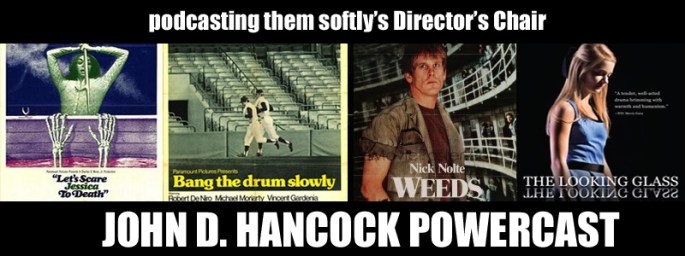
John Hancock.jpgPodcasting Them Softly is thrilled to present a discussion with filmmaker John D. Hancock! John is the director of the 70’s horror classic Let’s Scare Jessica to Death, the highly acclaimed baseball drama Bang the Drum Slowly with Robert De Niro and Michael Moriarity, Baby Blue Marine with Jan-Michael Vincent, the cult classic California Dreaming, family holiday favorite Prancer, and the prison drama Weeds with Nick Nolte. His most recent film was The Looking Glass (currently streaming on Netflix), which was a collaboration between John and his wife, Dorothy Tristan, who in addition to delivering a superb lead performance, wrote the film’s sensitively observed screenplay. His impressive TV credits include Cover Up, Lady Blue, Hill Street Blues, and The Twilight Zone, as well as multiple made for TV movies. He’s also a veteran of the stage, having directed works from Shakespearre to Saul Bellow, as well as versions of ‘night, Mother and Noises Off. He served as the Artistic Director of the San Francisco Actor’s Workshop in 1965, and later became Artistic Director of the Pittsburgh Playhouse and the New Repertory Theater in New York City, while also collaborating with famed playwright Tennessee Williams. It was a total honor to speak with him about his fabulous career – we hope you enjoy!
M. NIGHT SHYAMALAN’S UNBREAKABLE — A REVIEW BY NICK CLEMENT

3
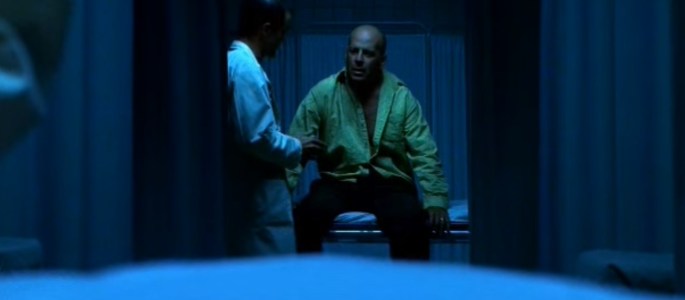
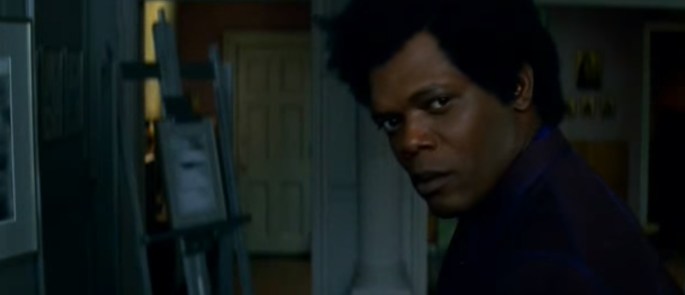
Unbreakable is easily my favorite film from writer/director M. Night Shyamalan, who has had, without a doubt, one of the most fascinating, frustrating, and fantastic careers that any filmmaker has ever had. After taking the world by storm in the late summer of 1999 with his superb ghost movie, The Sixth Sense, he unleashed his masterpiece, Unbreakable, at Thanksgiving the following year, and while it left many people cold and confused, I was completely floored by this ambitious film when I first saw it in theaters, and over the years, I’ve found myself revisiting it quite often. From the cool-blue-gray visual aesthetic that Shyamalan and cinematographer Eduardo Serra used to convey the murky moral underpinnings of the crafty and suspenseful narrative to the magnificent score by James Newton Howard, everything in Unbreakable felt like it was from another world yet strangely familiar.
2
And I can’t help but feel that the film contains two of the best performances that Bruce Willis and Samuel L. Jackson have ever dished out; the two of them have great on-screen chemistry, and I’d love to see them paired up in something worthwhile and fun. There’s a sense of genuine danger in this film, with a home invasion sequence shot and cut in an imaginative way so as not to wallow in the sequences’ implied level of heavy violence, while notions of vigilantism and revenge are explored in a thoughtful manner. This is easily one of the most unique superhero films ever made, paying subtle and sly tribute to a genre that was just about to explode on screen, and subverting expectations at nearly every turn, with a great sense of humanism to match its otherworldly ideas and provocations.
1

The Fourth Kind: A Review by Nate Hill 


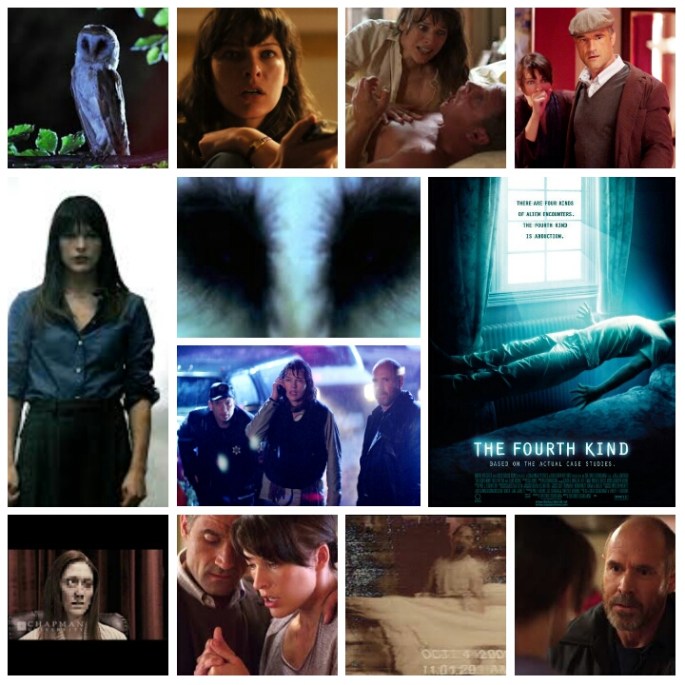
One should go into The Fourth Kind aware of a single important fact: Despite claiming to be based on a true story, and featuring numerous realistically creepy candid accounts, it’s essentially entirely made up stuff. People seemed to have a huge bee in their bonnet about that, but curiously weren’t bothered by it in The Blair Witch Project, another film guilty of the same gimmicks. Cinema is make believe anyways, and if the story works, then what does it matter. This is one of the scariest films I’ve ever seen, thanks to a few well orchestrated and very bizarre moments that transcend what usually gets passed off as horror these days. It tells the alleged story of several incidents and encounters with paranormal beings in and around Nome, Alaska, from the perspective of psychologist Abigail Tyler, played by Milla Jovovich in elaborate, atmospheric reenactments, and by Charlotte Milchard in terrifying newsreel testimonials. Something has come to Nome, and is causing not only disappearances but very, very weird behaviour among the townsfolk, and a general aura of poisonous unease. Abigail does her best to work with patients and locate the source ofnthe trauma without losing her mind or having an encounter herself. Her patients babble and rave, but there’s consistency to their claims, prompting her further belief and summoning of other experts, including a language specialist (Hakeem Kae Kazim) and an old colleague (Elias Koteas), who are equally as stumped. The town sheriff (Will Patton) believes her to be a complete whacko and does everything to hinder her efforts at every turn. Patton starred in another film that’s very similar to this, Mark Pellington’s The Mothman Prophecies, and his grave presence only perpetuates the same kind of eerie supernatural vibe, albeit far closer to outright horror than Mothman. The way the film shows the ‘real’ Abigail sometime following the events chilled me to the bone. She’s broken, haunted and speaks as if there’s a stain on her soul from some otherworldly force. The film knows what gives people that creeping, cold dread fear that we seek so desperatly in the genre, and gave me a fair helping of it. Whether or not the story is even remotely true is trivial; they’ve made a gruesomly scary tale out of it, and that’s what’s important. Also, you’ll never look at owls quite the same way after seeing this. Top shelf horror. 

WARREN BEATTY’S BULWORTH — A REVIEW BY NICK CLEMENT

3

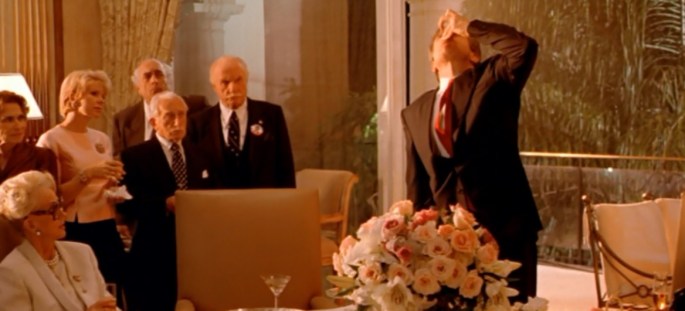
Bulworth remains just as funny and incisive now as it did back in 1998 when it scorched movie screens. Directed with verve by Warren Beatty and co-written with obscene ferocity by Beatty and Jeremy Pikser, the film stings with blunt truth, outlandish yet cogent satire, and an eerily prescient vibe that feels more and more bracing as the years have progressed. Beatty was absolutely hilarious in the lead role, playing a burnt out California Senator who is up for re-election but facing stiff competition, and who tips over the edge in every possible manner. Oliver Platt stole the show as his beleaguered campaign manager, delivering a hyperactive performance of intense comedic force; his cocaine bits are priceless. Halle Berry appeared as the unlikely love interest with a twist, while the assassination-for-hire subplot gets more amusing the more times it’s viewed. Vittorio Storaro’s edgy, tactile cinematography made smart use of physical locations, swerving in one direction for a moment and then the opposite the next, while projecting a jittery visual atmosphere that meshed perfectly with the emotionally and politically charged material and overall unpredictable tone.

2

Don Cheadle, Jack Warden, Paul Sorvino, Amiri Baraka, Sean Astin, Isaiah Washington, and Christine Baranski as Bulworth’s constantly annoyed wife were all superb in supporting roles, especially Cheadle, who really grabbed his character and went for it. And I absolutely LOVE the final scene and shot and lines of dialogue and what it implies and leaves open for the viewer to interpret. Rumor has it that Aaron Sorkin and James Toback helped to write the script, and that the film was shot mostly in secret (only an outline was shown to studio execs), and released by 20th Century Fox who were fearful of a lawsuit stemming from their backing out of producing Beatty’s Dick Tracy. With hardly any major promotional efforts and only appearing in limited to medium theatrical release, the film grossed nearly $30 million domestic, and received Oscar and WGA nominations for Best Original Screenplay. Aggressively humorous, socially astute, and more timely than ever, Bulworth is long overdue the Blu-ray treatment, and is ripe for rediscovery as its message still feels sharp as a tack and wholly resonant.

1

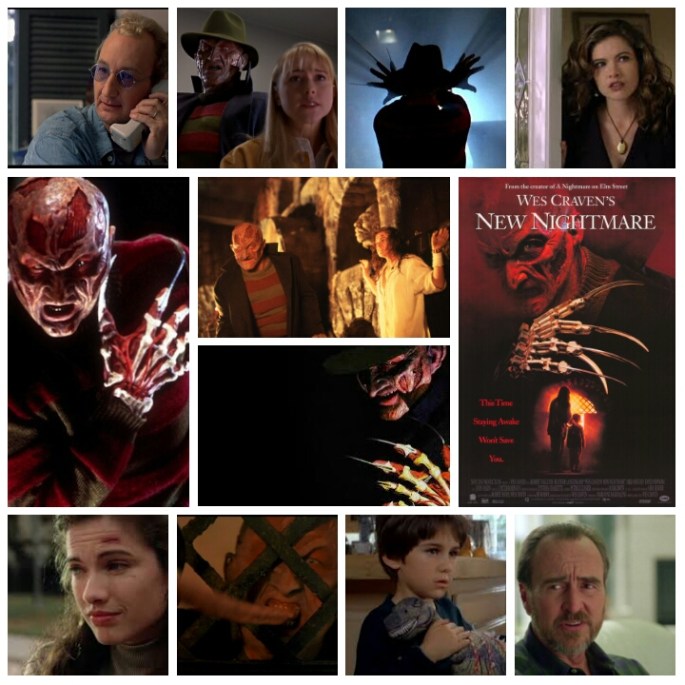
Wes Craven’s New Nightmare: A Review by Nate Hill 

Sleek, frightening update on a sagging franchise. Brilliant use of a meta concept that could have easily taken the silly route. Imaginitive, jaw dropping practical effects. A darker, less flamboyant take on the iconic character Freddy Krueger. Wes Craven’s New Nightmare was the best Freddy flick to come along since Dream Warriors, the third installment. After the stale and awkward sixth film, Freddy’s Dead: The Final Nightmare (my ass final), there really needed to be a game changer, something fresh and solid that would shake up a routine that had been getting fairly silly for some time. Who better to facilitate that than the man who kicked the entire legacy off back in 84′, Wes Craven himself? Back with a vengeance and a whole grab bag of new ideas, Crane brought forth a new, remodeled version of the Freddy lore, with some innovative twists. This one takes place in the real world, where Heather Langenkamp is Heather Langenkamp and not Nancy, Robert Englund is actually Englund and not Freddy. Heather has a young son (Miko Hughes, the go to little tyke of the 90’s), Englund is relaxing and trying out the artist’s life, and Craven, also playing himself, has big bold ideas for the Nightmare franchise. The meta doesn’t stop there though; Whatever Craven is cooking up has somehow awoken a very real, very serious and very scary version of Freddy who is now trying to break free from dreams and into our world, using young Hughes as a conduit, and wreaking havoc left right and center. Heather knows the only way to put a stop to the evil is to face Freddy, as Nancy, one last epic time. I love the high concept, I love that Craven conceived of this and got it made, it’s one of the most inventive horrors ofnthe decade. When Freddy does show up, he’s dead straight serious without a quip or wisecrack in sight. His design and attitude are way darker too, he’s a suitable real world dream demon that makes the Englund of past outings look like Big Bird. The special effects crafted for the netherworld Heather ventures into are a confusing labyrinth of body horror, ornate production design and impressive imagination. A complete vision of the Elm Street legacy that does what few horror franchises attempt, let alone succeed at: It reaches beyond the tropes that have got it to where it is and pleased audiences so far, breaks new ground and reinvents the legend. 

JOHN IRVIN’S HAMBURGER HILL — A REVIEW BY NICK CLEMENT

3

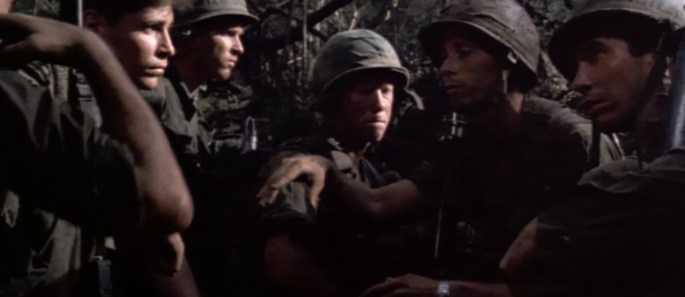
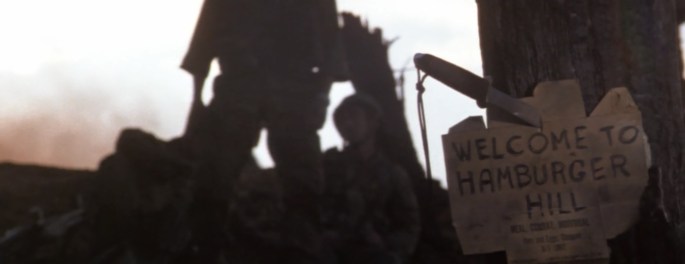
War films are rarely as harrowing or as gritty as Hamburger Hill, which is easily one of the more underrated entries in this most venerable of genres. Released in 1987 to strong reviews but small box office returns, this is a movie that has gained a considerable reputation throughout the years, and is ripe for rediscovery after films such as Black Hawk Down, Saving Private Ryan, Lone Survivor, We Were Soldiers and 13 Hours have all subscribed to the same sort of cinematic aesthetic of absolute bombardment by way of on-screen combat. Directed with solemn integrity by macho director John Irvin (The Dogs of War, Next of Kin, Raw Deal, City of Industry, Shiner) and written with a strict sense of discipline by Vietnam veteran James Carabatsos, the film details the bloody and exhausting battle for the Ap Bia Mountain in 1969 between the U.S. Army and the Vietcong, near the border of North Vietnam and Laos.

2

Starring a roll-call of then-fresh-faced acting talent including Dylan McDermott, Steven Weber, Courtney B. Vance, Don Cheadle, and many others, Hamburger Hill stays focused on the horrific event while also providing a strong sense of political and social context, given that strategic military incompetence, racism within the ranks of soldiers, the treatment of Veterans at home after serving tours of duty, and the cavalier attitude of superiors who weren’t in harm’s way are explored and dealt with in a blunt and forceful manner. Peter Macdonald’s intense and documentary style cinematography never shied away from any of the battlefield brutality, while Philip Glass supplied the mournful musical score. Peter Tanner’s editing did a tremendous job of keeping all of the action coherent, while giving the film a fast and purposeful pace. This is a heavy duty piece of filmmaking that spares no emotional or visceral expense in terms of highlighting a hugely sad and ferocious conflict.

1

Sam Raimi’s Army Of Darkness: A Review by Nate Hill 

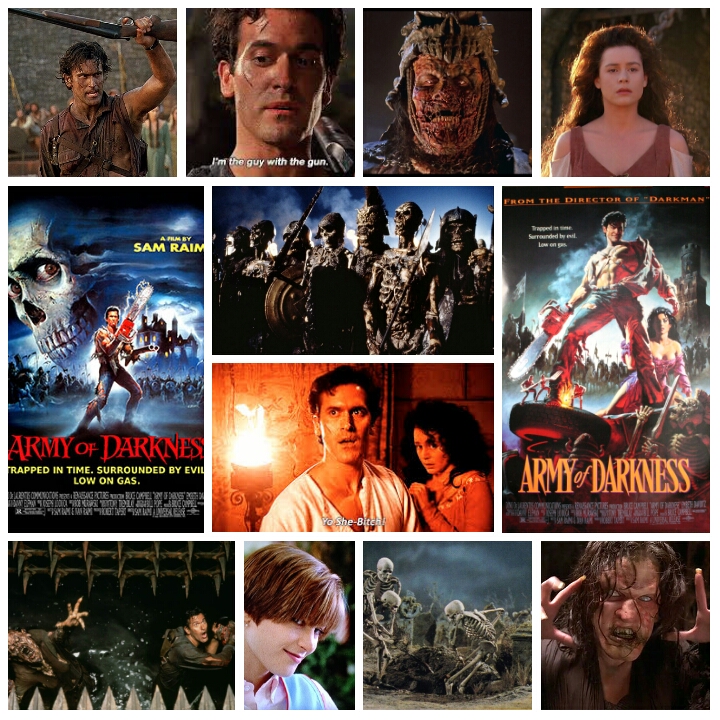
Sam Raimi’s Army Of Darkness completes his demented Evil Dead trilogy in high style, and with way more off the wall humour than the first two, which made you laugh while simultaneously going straight for the jugular with gore. Slapstick seems to be the theme here, as Ash and his trusty accessories of destruction find themselves catapulted straight into the heart of the Middle Ages, where the denizens of the Necronomicon have somehow once again found him. Joining forces with a medieval King, and hopping into bed with a shapely princess (Embeth Davidz), Ash uses his modern day know-how and sassy disposition to battle hordes of skeletal beasties and flying deadites, with occasional breaks for absurd humour and near surreal set pieces. My personal favorite is when he finds himself under attack from numerous pint sized versions of himself after setting off an ancient spell in the nearby dark forests. “Ramming speed” they chirp as they jab him in the ass with a metal fork and giggle like demonic Borrowers. Only in these movies, man. The change of setting from a cabin in the woods to a castle allows for a much larger scale of action, involving entire armies and much more moving parts. The deadite horde has a satisfyingly creaky, Harryhausen-esque way of moving, and look great when blown to bits by the ol’ boomstick as well. They also inherit the silliness and near constant mischief of the demons from the first two films too. Whether it’s trees, deer heads, zombies or skeletons, anything that materializes as a result of that book just seems to have a flair for bizarre and childish shenanigans, kind of like their trademark mode of behaviour.  That too is what makes these films so distinct; they’re horror comedies, yes, but not in the sense that Scary Movie or Young Frankenstein is. They’re like a clown with ADHD prancing about the place and destroying things in their own special and unhinged way. Different from the other films in the series, no doubt, but a welcome and very successful departure. 

CHRISTOPHER NOLAN’S INCEPTION — A REVIEW BY NICK CLEMENT

3

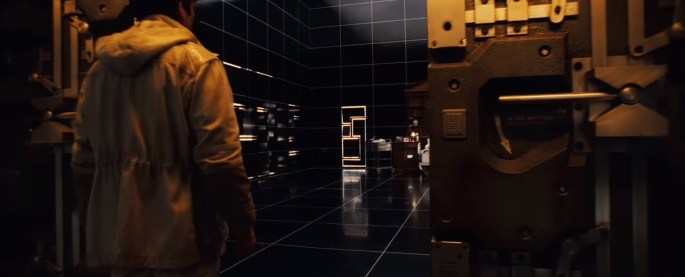
I still don’t understand everything that happens in Christopher Nolan’s spellbinding sci-fi epic Inception, but I don’t care, because I am convinced that Nolan understands it all, and that’s good enough for me. This is a supremely satisfying movie that leaves your head spinning, much like the best of Nolan’s work (The Prestige, Interstellar, The Dark Knight Rises, Memento), and given that I’m a massive fan of his entire filmography and overall aesthetic, it’s no small thing to say that this film might be his most totally realized effort to date. I’m not sure. It’s debatable, of course. The Prestige is probably my favorite of his overall, just because it’s so damn fun and unique for a period film. But on repeated viewings of Inception, zero impact has been lost over the astounding cast (I absolutely LOVE Tom Hardy in this movie), the impeccable cinematography by Wally Pfister, the dreamy narrative concocted by Nolan, the nearly operatic musical score courtesy of Hans Zimmer, and the overall sense that anything’s possible within the visually stunning fantasy sequences that mix architectural rigidity with a sensual swirl of emotions and passion and free-form association that our most vivid dreams and nightmares are capable of concocting. The ending is deliciously tantalizing to ponder, constructed not as a cheat, but as a further extension of all that has come before it. Leonardo DiCaprio was seriously on-point, much like everyone else who Nolan recruited, while the thundering action scenes resonate with nods to Bond, the Wachowskis, and classic action movie cinema, all of which has further cemented Nolan as a populist popcorn auteur with a cerebral streak that separates him from the rest of the blockbuster pack.

2

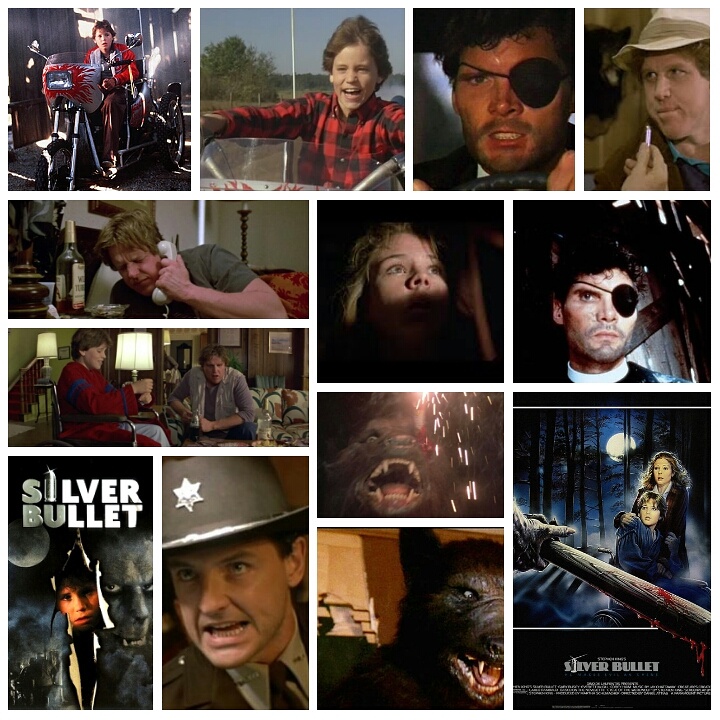
Stephen King’s Silver Bullet: A Review by Nate Hill 

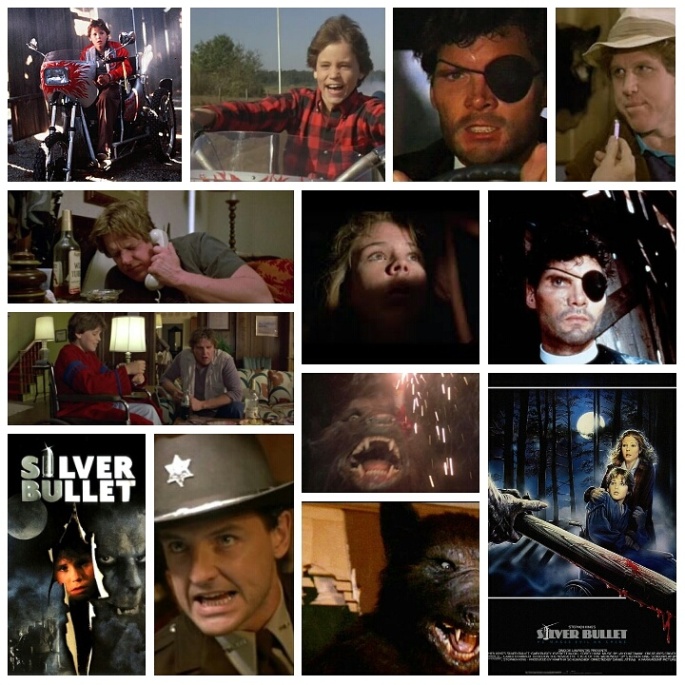
Stephen King’s Silver Bullet is one of the most charming werewolf flicks in the stable, one that combines adult orientated, gory horror with the fable-esque, childlike sensibility that seems to permeate King’s work. It’s also quite funny, thanks to the presence of a boisterous, rotund and quite young Gary Busey. Young Marty (Corey Haim) lives in a sleepy little town where not much of anything happens, until a rash of brutal murders occur in the area. Attributed to a serial killer by townsfolk, Marty has other ideas, specifically that a werewolf has taken up residence among them, and is snatching victims in the night. Taken seriously only by his sister (Megan Follows) and kindly Uncle Red (Busey) he bravely stalks suspect number one, who happens to be the creepy town priest (an intimidating Everett Mcgill). Things escalate into a series of gooey, effects driven set pieces that drip with wonderful 80’s schlock and awe, as of course is the tradition with anything based on King’s work. Other notables include Terry O Quinn, Bill Smitrovitch, Lawrence Tierney, King’s own son Joe Wright, and late great character actor James Gammon in an opening sequence cameo. It’s not all that scary, but more about the beloved tropes of such stories as these, the timeless monsters that inhabit them, as well the the intrepid young heroes whose lives growing up and finding themselves equally as important and high stakes as the horror elements. 

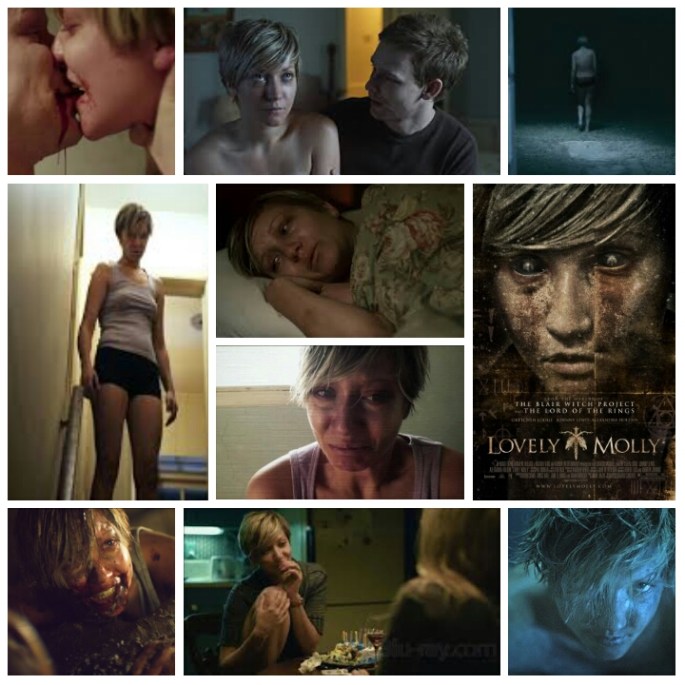
Eduardo Sanchez’s Lovely Molly: A Review by Nate Hill 

Eduardo Sanchez is a name you may or may not know, but title the title of the film which put him on the map you will most definitely remember. The Blair Witch Project was the little horror indie that caught the snowball effect and went on to become one of the most legendary fright flicks ever made, as well as unfortunately spawning the found footage sub genre. So the question was, how would a filmmaker who accidentally captured lightning in a bottle top such an achievement? Well, by not trying to recreate said lightning, that’s how. By branching off, by breaking new ground, and by giving us a terrifying little character study of a horror like Lovely Molly, which has unsettled me like no other in the past couple years since I’ve seen it. It’s a character study in the sense that the horror comes mostly from a psychological place, with the slightest suggestion of external and paranormal torment, a subtlety that goes a long way in scaring the pants off us. The story focuses on Molly (Gretchen Lodge, superb), and her husband Tim (Johnny Lewis, or halfsack for anyone who watches Sons Of Anarchy). They are a young newlywed couple just starting life together, until some restless demons from Molly’s past come back to haunt her. Tim is gone for extended periods of time with his trucking job, leaving Molly alone in their secluded house, a sitting duck for supernatural and psychological forces to hunt her. Raw, disconcerting terror sets in as we witness a tragic downward spiral of disturbing sexual behaviour, unseen phantoms and unending torment befall the poor girl. Scarier still is Sanchez’s blatant refusal to spell out in bold fonts just exactly what is happening to her. Is this just extreme mental illness cauded by residual trauma leftover from an abusive childhood that is hinted at? Are there actually percievable paranormal entities at work? It’s the murky deliberation to not draw lines or give solid answers that makes the film work so well, right up until a climax from darkest nightmares. Lodge is beyond capable with the role, taking Molly’s mania and sickness to levels beyond comprehension or reprieve, truly gone to a place of boiling internal horror. This is a different kind of horror for Sanchez, and he proves to be just as adept with the slow cooker style as he was in frenzied found footage. Don’t go expecting any clear cut answers here though, this is the realm of feverish ambiguity. Some people take issue with that and need a breadcrumb trail laid out for them. I for one love not knowing, just increases the intrigue and the creep factor. A horror gem.