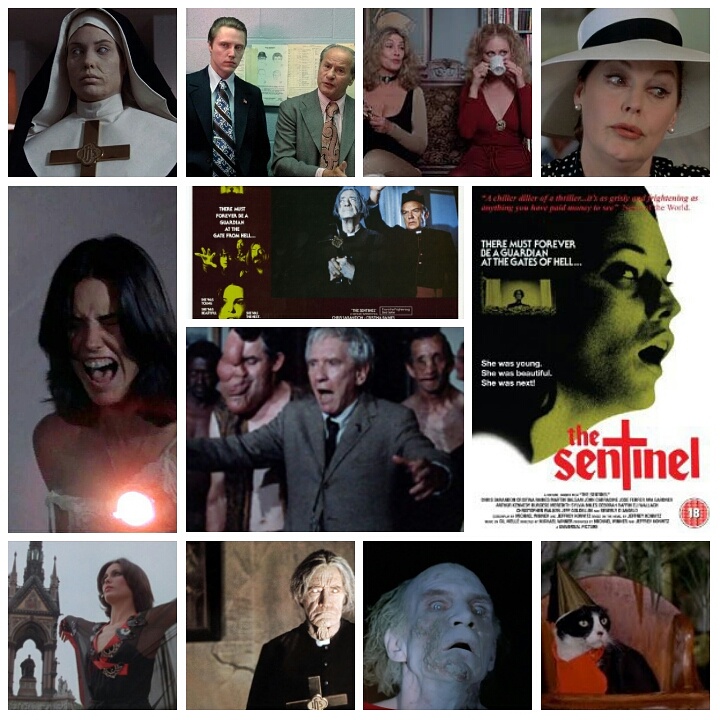
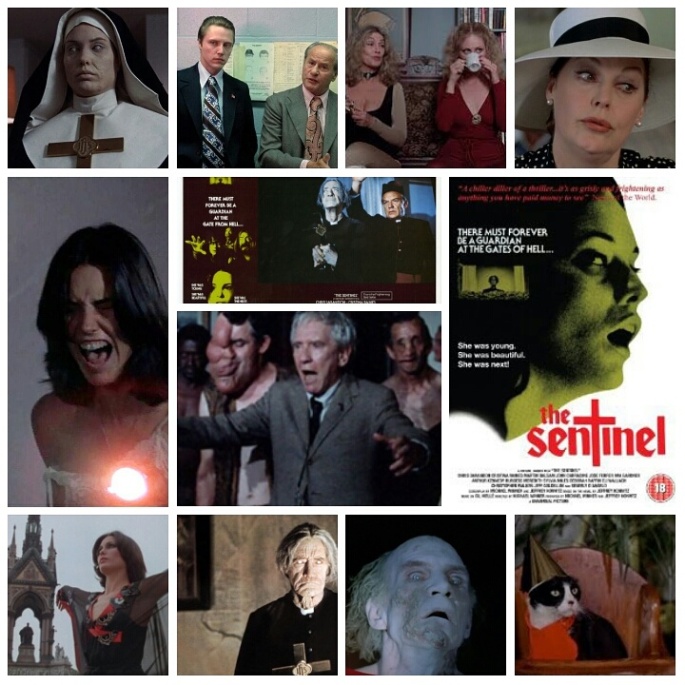
The Sentinel is one of the weirdest thing you’ll ever see. It’s less of a horror and more just a parade of bizarro world situations strung together loosely by a vague haunted apartment story. A young model (Christina Baines) has found a sweet deal on an uptown flat, inhabited by only herself and a blond priest (John Carradine). It’s just too bad that when a deal seems to good to be true in these kinds of movies, there’s almost always some kind of sinister agenda behind it. It’s not too long before spooky stuff comes along, starting with strange physical problems, creepy encounters with her odd lesbian neighbors, flashbacks to her attempted suicide and psychic disturbances that can’t be explained. She soon realizes that she has been brought to this building for a very specific and decidedly sinister reason. The way I described all that sounds kind of routine and pedestrian, but trust me when I say that there’s nothing generic or run of the mill about this absurdity of a film. Everything has a very disconcerting and surreal feel to it, particularly in a whopper of a climax where a portal to hell is opened and all sorts of babbling loonies pour out, deformed, whacked out and adorned in some of the most creatively gross practical effects that will give your gag reflex a solid workout. The film also speckled with a diverse group of actors, some of them quite young looking when you remember that this was 1977. A chatty Eli Wallach shows up as a detective, with a youthful Christopher Walken in tow as his partner, Ava Gardner of all people has a cameo, and watch for Burgess Meredith, Jerry Orbach, Beverly D’Angelo, William Hickey, Jeff Goldblum, Richard Dreyfuss, Chris Sarandon, and Tom Berenger in what must have been one of his very first gigs, a literal walk on part. Very distinct and memorable film, one that pushed the boundaries considering the time period, and never let’s the weirdness mellow down for a single minute.
Category: Film Review
THE HUGHES BROTHERS’ DEAD PRESIDENTS — A REVIEW BY NICK CLEMENT
Hugely ambitious, extremely tough and gritty, and telling a story of massive scope that might’ve benefited from at least 30 more minutes of screen time, the 1995 war/crime hybrid Dead Presidents was the extra-stylish and hot-blooded follow-up for sibling filmmakers Allen and Albert Hughes, who had conquered cinema a few years previous with the crimes-in-Compton classic Menace II Society. Larenz Tate was absolutely sensational in the lead role of a lifetime, playing a young high school student on the cusp of graduation who ships off to Vietnam as a new Marine, sees some absolutely horrendous stuff on the battlefield, and comes home a changed and scarred individual, leading to a life of petty crime before taking on something much larger, something he probably knows he can’t fully control. The superb supporting cast, including Chris Tucker, Keith David, Terrence Howard, and Bokeem Woodbine (to name just a few) all delivered fierce performances, while the film itself was greatly bolstered by Lisa Rinzler’s muscular and brooding cinematography, and through one of Danny Elfman’s most atypical musical scores. Reviews were mixed and box office returns were only decent, but the film looks five times as large as its reported $10 million budget, and the balance of action, violence, romance and social/family commentary was all extremely well-calibrated. Available as a $5 DVD or as a streaming option via Amazon.

Paul Verhoeven’s Hollow Man: A Review by Nate Hill
Paul Verhoeven’s Hollow Man is one of the most scummy, awful, overblown ridiculous shit masquerading as a movie that I’ve ever had the misfortune to see. It’s also entertaining on a level that suffocates you with unpleasantness and knowing stupidity at every turn. Verhoeven has taken what could have been a fascinating and suspenseful premise and turned it into a one note, bottom feeding genre pile of piss that is pretty hard to sit through. Scientifically inaccurate (not that that matters in this terrain) relentlessly unpleasant, super awkward and an all round disaster, it’s still pretty compelling to witness, like a school bus on fire. It’s a wreck to be sure, but there’s plenty of glee to be found, if you’re feeling masochistic. Kevin Bacon has laid down a path of many asshole characters over the years, but Dr. Sebastian Caine just takes the cake. He’s an egotistical, psycho sexual maniac in charge of an underground research lab, working on a brand new cheeseball formula to make the invisible man. He’s creepy and possessive with his girlfriend (poor Elizabeth Shue) callous to his lab staff (Josh Brolin included, before his second coming, as well as Kim Dickens) and an all around jerk off. But that’s really nothing compared to what happens when the formula works, effectively turning him invisible, with a few nasty side effects. He goes from a nasty dude to an all out monster as he starts to arbitrarily prey and perv out on his co workers in their underground bunker, going full on Lon Chaney with a side of Ted Bundy in a grating performance that is a career sinkhole for Bacon. I read Ebert give golden praise to the special effects in a scene where he teansforms from visible to invisible, but i have no idea what he was smoking that day because they are an abysmal effort. Verhoeven always has a sort of knowing layer of hedonism blanketing his work, but this one takes it to a whole new level. Hey, at least there’s a cameo from the always welcome William Devane! The rest is just a vomitorium. There’s a sequel floating around out there with Christian Slater, I’m curious but have never have come across a copy.
Absentia: A Review by Nate Hill
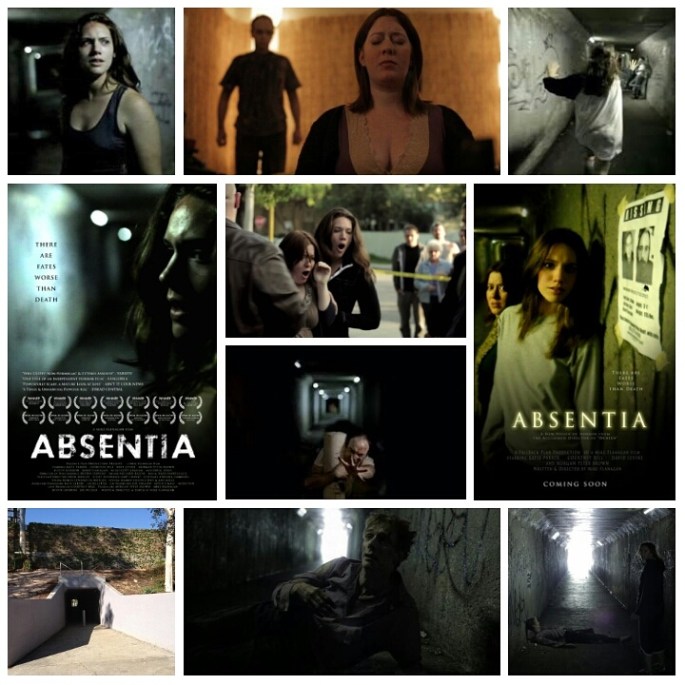
You’ll think twice about taking that shortcut through through the tunnel on your way home from work after watching Absentia, a spooky little indie with its heart in the right place and the filmmaking talent to back it up. There’s a tunnel that’s home to some unspeakable scuttling fiend in a local neighborhood, and two sisters who live nearby, as well as a few unfortunate other folks, stray directly into it’s path. Pregnant Tricia (Courtney Bell) and her younger sister Calley (Catherine Parker) are just trying to get by, literally and figuratively, but every routine trip into this hellish part of the neighborhood ends in disappearances, freaky apparitions from a spindly Doug Jones, this time not playing the monster, and tragic loss of life. I won’t give away what the threat is or what it even looks like (you’ll piss your pants), and such is the beauty of a minimalist scarefest like this. You go in not knowing much beyond the hype or word of mouth, and have your pants scared off. There’s a wonderfully atmospheric score at play here, no psycho strings of operatic swells, the film instead favoring a quiet, emotional melody that contrasts the extremely bleak story arc and grim happenings rather nicely. Jones is the only prolific actor we see here, but his work amounts to not much more than a cameo anyway, the brunt landing on our two protagonists, and a local detective (Dave Levine) who assists them, and they all give very solid efforts. The tunnel is a pure unbridled nightmare though, the fates of those who wander in something that you pray never happens to anyone ever, as you cling to whoever is closest to you on the couch (or bed, preferably). Horror should illicit some empathy from viewers as well as scare them, which will in turn be more disturbing for all. This little baby does just that with it’s characters, truly making you feel sorrow and dread for these poor people and their predicament, adding to the creep factor. A gem.
SEASON OF THE WITCH (1973) – A REVIEW BY RYAN MARSHALL

George A. Romero is – or at the very least once was – the kind of socially conscious filmmaker the horror genre is in dire need of these days. His early films are the most blunt, angry, and effective in his oeuvre; though few would deny they are rough around the edges, their energy and ambition is nonetheless infectious. Sandwiched between NIGHT OF THE LIVING DEAD, Romero’s little-seen sophomore effort (1971’s THERE’S ALWAYS VANILLA, a romantic comedy), and 1973’s THE CRAZIES is SEASON OF THE WITCH (known as JACK’S WIFE when it was in production, and before the distributor excised half an hour from its run-time), a surprisingly thoughtful musing on contemporary witchcraft, repressed sexuality and the patriarchy; an endlessly fascinating, mostly successful marriage of talky, sleazy soap opera aesthetics and surreal psych-out horror.
Joan Mitchell is a bored housewife facing a mid-life crisis. Her husband Jack has little time for intimacy, there’s a considerable distance she feels between herself and their daughter Nikki, and she has recurring nightmares in which Jack aggressively pays her no mind and she envisions herself as a pale-faced old hag. The psychotherapist she’s been regularly seeing feeds her the same old crap in response to her attempts to understand these dreams (“The only one imprisoning Joanie…is Joanie.”), Nikki’s seeing more action in her week than Joan surely has in years, and things are just overall rather drab.

If nothing else, Joan’s got her circle of friends – a tightly knit community of fellow housewives who seem to share many of her anxieties. One evening at a dinner party, there’s talk of a new woman on the block that practices witchcraft. Joan, along with her closest friend Shirley, seeks her out and gets a Tarot reading, which surely opens up a couple of doors for them both. As Jack goes away on business, leaving her to her own devices, and terrible nightmares – in which a masked assailant breaks into the house and rapes her – continue to plague Joan’s mind, she dabbles in the occult as a way of reclaiming her sanity.
It wouldn’t be revealing too much to say that this is a film about – many things, but most importantly – a woman transcending her role in the household and discovering a new identity that has, in fact, been with her all along. Sexual identity, as is the case when Joan starts an affair with a teacher at Nikki’s school who had previously seduced her daughter as well and finds solace in the young man’s spirit, and personal identity go hand-in-hand. There’s also an emphasis on the pointlessness of the so-called “necessities” of life when one doesn’t truly believe in them, and at the beginning of this tale, Joan doesn’t believe in much of anything.
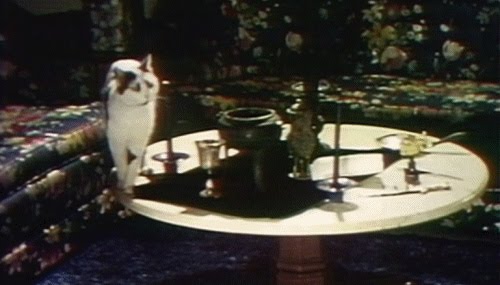
As evidenced in the opening dream sequence, Romero gives it you straight in regards to what the themes are here – to a fault, it could be argued, as Joan wearing a leash and collar, led on by Jack, and being locked inside a cage is a bit much – but regardless of how obvious they may be, they remain as relevant now as they were then. There’s a lot more dialogue than action, to be sure, but this is the kind of film where all the talking somehow manages to get us somewhere in the end, somewhere that feels on a whole satisfying and even intellectually stimulating. Audiences didn’t embrace the film upon its initial release, though Romero can hardly be faulted; marketed as some of kind of softcore porno in its severely cut form as HUNGRY WIVES, it would be difficult to make something this smart and genuinely challenging seem exciting to purveyors of provocation. Romero’s original 120-minute version may have been left on the cutting room floor but what resurfaced in 2005 with the help of the good folks at Anchor Bay seems like a damn fine representation of his intentions in its own right. We’ve changed with the times, and the time for SEASON OF THE WITCH is now. Better late than never, as they say.
At the very least, this is an ambitious cinematic cocktail, and for the most part it works. No doubt most people won’t find it to be all that visually stimulating, but if it really is about what you do with what you’ve got, Romero is a miracle worker. As cinematographer and editor as well as writer/director, he establishes an intoxicating rhythm early on that luckily remains consistent throughout – there are some really neat tricks employed during the post-production stage, as well as some creative camera movements which keep the proceedings from becoming mundane, even when the story doesn’t seem to be moving forward. This is a chilly film, perfect for viewing during the Fall season, and once Donavan’s titular song blares over an occult shopping spree, Romero’s unique alchemy has all but won you over. It’s very much of its time – the fashion, the unquestionably ugly décor, the hep terminology – and appreciation may vary based on one’s tolerance of this kind of stuff, but a thoughtful viewer will surely find plenty to chew on here, if not even more to swallow.

RICHARD LINKLATER’S EVERYBODY WANTS SOME — A REVIEW BY NICK CLEMENT

Richard Linklater’s Everybody Wants Some is a fun and amiable college-set comedy about a group of baseball players going to school in Texas who spend the first few days of the new school year getting wasted, chasing the ladies, and generally acting like a bunch of horny and rambunctious clowns. Set in 1980 and filled with wall-to-wall classic rock hits and all sorts of hilarious wardrobe and production design, the film does feel, to a certain degree, like Linklater’s “spiritual sequel” to his far greater and more ambitious high school classic Dazed and Confused. But if Everybody Wants Some lacks that film’s overriding sense of lightning-in-a-bottle-magic, the bros in his newest tale are fun to hang with (to a certain extent…), the drug humor is funny, the ball-busting on display is frequently inspired, and the women are all very, very attractive. Slight, modest, and totally in love with itself from first frame to last, Everybody Wants Some benefits from it’s mostly unknown cast of charismatic actors hiding behind ridiculous mustaches, and feels like yet another effortless extension of Linklater’s idea of unassuming, organic cinema.

Hush: A Review by Nate Hill
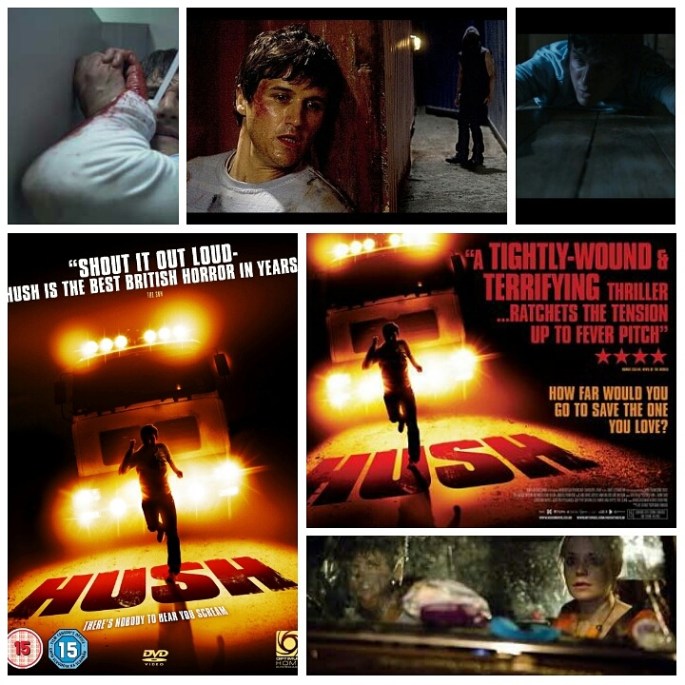
Hush is a pulverizing little exercise in extreme suspense. I’m not talking about this year’s Hush, a sleek little home invasion shocker that’s worth your time too. No, this Hush is a little seen British flick from back in 2008, and it’s a proper nerve jangler. In the tradition of Duel, The Hitcher, Joyride and others, it takes place on a bustling motorway somewhere in great Britain. A young couple trundle through the night on a highway, and find themselves behind a great big creepy semi truck. In one split second, the doors of it’s trailer come unstuck and open just a crack, allowing the to see what’s inside. It’s only a glimpse, but it’s unmistakable: a girl, badly hurt and tied up, screams for help before the motion of the vehicle causes the doors to slam shut again. What would you do? This couple bravely pursues the truck and it’s villainous driver across many miles of road, trying to rescue the girl inside, avoid getting killed themselves and put an end to whatever is going on. It’s one merciless ride into gut churning suspense, and I marveled at the film’s ability to keep such high tension up for a streamlined ninety minutes of pure horror nirvana. It’s not too lenghthy, never sags or drags and always keeps the vibe as taut as the ominous chain holding those truck doors in place. Swift and sensible in resolution, stylish as all hell and scary in spades. Any horror fan owes it to themselves to take a look.
RICHIE SMYTH’S THE SIEGE OF JADOTVILLE — A REVIEW BY NICK CLEMENT

The Siege of Jadotville, a new Netflix original film, is one of those square-jawed military actioners that used to get released in the 60’s and 70’s, unpretentious and ass-kicking, centering on a true story, and adding appropriate dashes of Hollywood flash while never sacrificing any of the gritty integrity that the material promises. Impressively directed by Richie Smyth, who shows a terrific sense of action choreography with his well-produced battle scenes, Jadotville tells the story of a group of 150 Irish UN troops who went into battle against nearly 3,000 Congolese fighters led by Prime Minister Moise Tshombe in Central Africa. The year was 1961, and the cold war was raging on, with French and Belgian mercenaries becoming contracted by the various mining companies in Africa to help lead the fighting and protect valuable resource interests. Outnumbered and outgunned, the Irish forces had to rely on some unpredictable strokes of great luck, as well as steely-eyed determination in an effort to never give up. Kevin Brodbin’s extremely solid and action-packed screenplay has a good sense of history to match the archetypal character work that one might expect for the genre, while it’s clear that he must’ve done his research, as the narrative rarely leaves the field of battle or the interiors of discussion rooms. This is the sort of lesser-known war story that might not have gotten the big-screen treatment if it weren’t for Netflix stepping up to the plate with a diverse and interesting set of in-house projects, and I have a feeling that the combat angle that Jadotville showcases will be very compelling for many viewers.

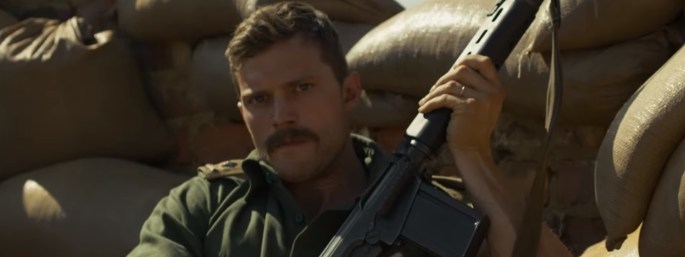
For over an hour, after establishing who’s who and the various sides to the story, Smyth, in his assured directorial debut, brings the explosive action with hardly any interruptions, as Brodbin’s efficient screenplay, which was based on Declan Power’s non-fiction account of the incident, stayed focused on the bloody combat and the militaristic maneuverings of both sides, both on and off the battlefield, while allowing for the appropriate amount of character development and interplay to smooth out the edges. Shot with clarity by director of photography Nikolaus Summerer, all of the fighting takes place on a hot, sunny day, and the way that both director and cinematographer were able to portray the unrelenting madness brought back some shades of films such as Hamburger Hill and We Were Soldiers. All of the various set-pieces were seemingly done for real, with some tremendous explosions and vicious fire-fights, and when CGI is employed, it’s kept to a mostly seamless minimum, including some very cool aerial shots of warplanes with heavy artillery. Everyone in the thoroughly macho cast feels right at home with the material, with Jamie Dornan providing a very commanding sense of purpose as the leader of the Irish troops, and Jason O’Mara and Sam Keeley doing strong supporting work. Other standouts include a gruff Guillaume Canet as one of the French soldiers of fortune, and the ever-reliable Mark Strong as an ineffectual politician without the knowledge or resources to help his men out. I had never heard of this particular incident before seeing this film, and I gather it went oddly unreported for many years. The Siege of Jadotville is available on Netflix Streaming, and currently is screening at iPic theaters.

BEN YOUNGER’S BOILER ROOM — A REVIEW BY NICK CLEMENT

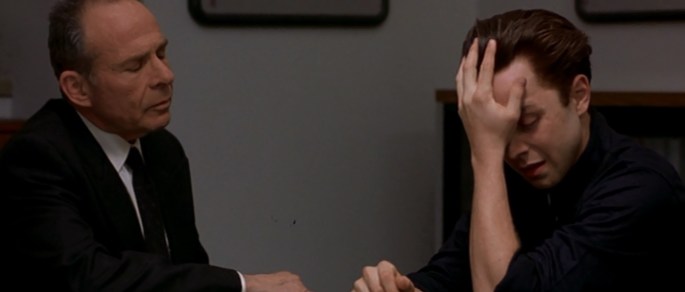
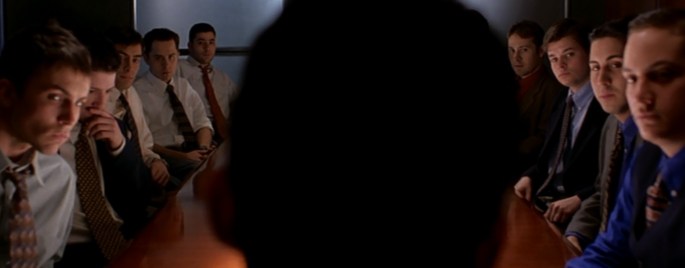
Wearing its influences like a badge of honor while setting the stage for future endeavors, Ben Younger’s smashing directorial debut Boiler Room generated some serious heat for its all-star cast and incendiary storytelling. Released to excellent reviews in 2000 and announcing a dynamic new storytelling voice from its debuting director, this propulsive drama races through the shady inner-workings of a questionable NYC brokerage firm, operating outside of the lines of all the big players in the crowded market. Starring Giovanni Ribisi, in one of his best performances, as an underachiever running an unlicensed gambling operation out of his apartment who gets sucked into this particular brand of high-stakes, high-reward con-artistry, the film has a ridiculous supporting cast which includes Tom Everett Scott, Vin Diesel, Nicky Kat, Jamie Kennedy, Nia Long, Scott Caan, Ben Affleck, and Ron Rifkin. Younger’s sharp script balanced solid drama with raucous humor in good measure, while the exceedingly masculine cast clearly forged a major on-screen bond as everyone feels perfectly in synch.

Affleck was fantastic in only a few scenes, taking on a role that was clearly molded after Alec Baldwin’s fiery turn as a corporate motivator in James Foley’s adaptation of David Mamet’s play, Glengarry Glenn Ross. And Rifkin, one of the great and unsung character actors of the 90’s, was extremely memorable as Ribisi’s disapproving father, a man working as a high ranking Federal judge who catches wind of what his son is up too, with explosively dramatic results. The scenes between Ribisi and Rifkin are absolutely fantastic, and ground the film with a serious sense of morality, while there’s a definite thrill to being privy to all of the ways that these sharks in business suits cut their way through ethically questionable waters. Enrique Chediak’s lively cinematography gave the film a terrific vibe; he’d go on to shoot such films as 28 Weeks Later, 127 Hours, and Deepwater Horizon. The tight editing by Chris Peppe kept the pace brisk while never moving too fast, as lots of information is hurled at the viewer. After Boiler Room, Younger released the very underrated dramedy Prime, with Meryl Steep and Uma Thurman, and has the hotly anticipated Bleed for This, with Miles Teller, set for release this fall.

Sam Raimi’s Evil Dead 2: A Review by Nate Hill
Sam Raimi’s Evil Dead 2 is similar to Robert Rodriguez’s Desperado in the sense that it takes what was already there, in this case Evil Dead, and tells the same story once again, simply smoothing out edges, ramping up certain areas, using more money than it had before and generally giving the story a tune up. It also gets quite a bit funnier than Evil Dead, which although schlocky was pretty much outright horror. The sequel emphasizes comedy far more, and is the more definitive of the two in terms of the franchise’s legacy. The story is more or less the same: Ash (the eternal Bruce Campbell) and a group of friends venture to that creepy, archetypal cabin in the woods and foolishly set loose a rambunctious horde of unholy demons, zombies, cackling fiends, rapey trees and a mountable deer head with a disconcerting case of the giggles. This marks the first time Ash donned his now iconic chainsaw hand and picked up that ol’ boom stick to give the nasties a good whupping. And whup he does, like the smooth talking badass that he is. I love the aesthetic in these films; the monsters all have a devilishly mischievous attitude that provides endless laughs, always trolling, taunting and teasing the poor victims. Nothing beats the sight of Ash’s severed hand flipping him off before it scuttles off into the corner like an angry facehugger. That’s one key element which the 2013 remake ditched: I liked what they did in terms of special effects, but the pissy humour wasn’t there, the decayed, sarcastic ADHD madness that I came to love so much was replaced by something far too grim and somber. Bad move. No, kids, this is the ultimate Evil Dead flick, the most complete and entertaining entry into a franchise that has influenced every facet of the horror genre for decades. Ash is now a household name, a beloved halloween costume, a celebrated pillar of pop culture and still one of the most enjoyable protagonist’s to spend time with, as we now get to see with Starz’s terrific Ash Vs. Evil Dead. The original Evil Dead spawned it all, but this baby turned the dial up past eleven, tossed on the buckets of gore and has more than earned it’s place both in our hearts, and horror infamy.