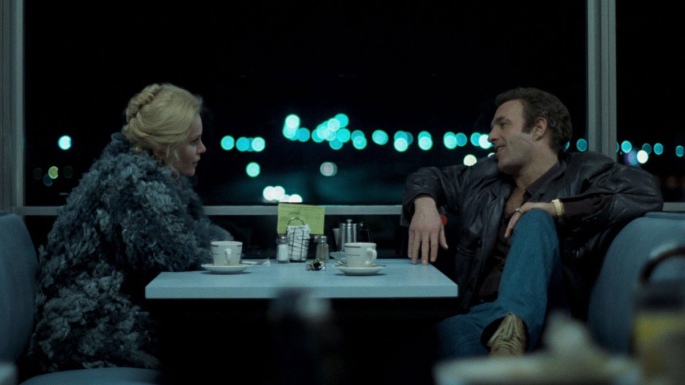
Shadow Of The Hawk

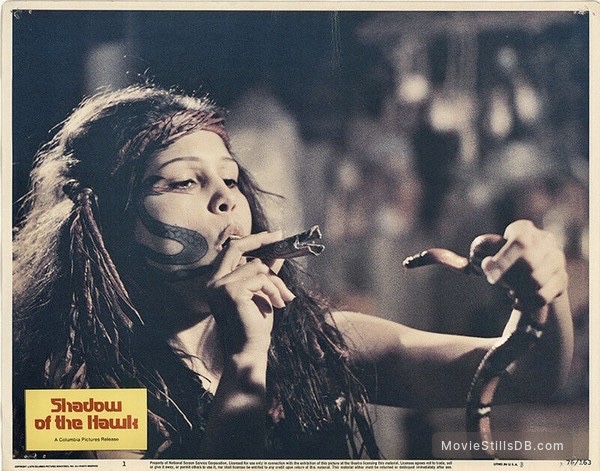
I expected Shadow Of The Hawk to be campy, cheesy or at the very least creaky, but this is a genuinely spooky, effective and quite earnest old school ghost story with three good natured lead performances, absolutely gorgeous Vancouver locations and eerie, atmospheric indigenous mythology. The great Chief Dan George plays a Native elder who voyages from his home in the British Columbia mountains to find his halfbreed grandson (the late Jan-Michael Vincent), to get his ancestral help in battling the ghost of an ancient sorceress who has put a deadly curse on their bloodline. Grandson is less than happy to be pulled into a facet of his life that he’s actively distanced himself from, but has no choice really as the dark magician and her evil minions are plaguing his life too. Together with a helpful reporter (Marilyn Hassett) they embark on a road trip into the sacred lands of BC to contend with these powerful dark forces amassing against them and cleanse their family lineage of this voodoo mysticism. Being an obscure 70’s horror flick theres naturally a touch of camp, most notably in Vincent’s doe eyed, slightly androgynous aura, but for the most part this plays it straight and spooky. The spirit of this witch first manifests as a legitimately terrifying masked phantom that haunts the characters wherever they go accompanied by some sound design that truly stood my hairs on end, then later she shows up in dreamy flashbacks as a snake charming witch-doctor played by Vancouver indigenous actress Marianne Jones. There are very well done set pieces here including a white knuckle suspension bridge crossing, an ongoing car chase between our three leads and a mysterious, supernatural black car that tails them all around the BC landscape. Vincent must fight a bear to death and as if that wasn’t strenuous enough then a Wolf as well *and* some masked cultist acolytes of the sorceress high atop a craggy bluff in a confrontation that has some Last Of The Mohicans vibes. It’s a fun film, with some really engaging visual atmosphere, very frightening score and a neat ‘modern world clashing with ancient spiritualism’ feeling as our characters venture from the cement and glass world of 70’s Vancouver out into the lush, elemental Pacific Northwest wonderland of British Columbia.

-Nate Hill

Ryan Gosling’s Lost River

I think that sometimes there may be a certain expectation set when an already minted Hollywood superstar branches off from the acting game and tries their hand at writing/directing, a vague conjecture that their foray into filmmaking will be more of the same stuff that fans are used to. Well, Ryan Gosling has no use for any of that in his stunning, surreal, masterful and wonderfully otherworldly directorial debut Lost River, a haunting, dreamlike slice of Detroit Gothic wrapped in a dark fairytale that casted a spell on me like no other film has. This is arthouse stuff through and through, Gosling has no interest pandering to the masses or sculpting his work into something wieldy or palatable, he courageously dives headfirst off the map into uncharted territory where there be monsters and visions the likes of which your screen has never seen. In a crumbling, decrepit borough of old Detroit, single mother Billy (Christina Hendricks) struggles to keep her family home from being seized by the bank and demolished, so she takes up employment from oily loan officer Dave (Ben Mendelsohn) working at the club he owns as a moonlight gig, where dancers like the beautiful Cat (Eva Mendes in a wonderfully playful turn, her last acting gig to date) pantomime being murdered on stage for a rapt audience. Meanwhile Billy’s son Bones (Iain de Caestecker) runs wild in the overgrown, labyrinthine basilicas, ragged chain-link fence desolation and jungled ruins of their Lost River county, collecting copper piping for cash, evading a very strange and violent bully named, uh, ‘Bully’ (a feral Matt Smith) and forming an ethereal bond with a lonely wandering waif called Rat, played by Saoirse Ronan in a lovely study of calculated, underplayed wonderment. Many have complained that this film is style over substance and that there isn’t really a plot to speak of supporting all the visual and auditory splendour but they’re kind of missing the point here; this is an abstract parable that refracts aspects and elements of our waking material world through a very primal, subconscious and childlike prism of images, impressions and emotions, I don’t think Gosling ever meant to tell a constructed story with delineated edges and beats, he strives for the fluid, the intangible, the kind of film you feel your way through as opposed to think. There is a strong undercurrent of deep, essential meaning here that can be very, very finely tuned into as a sort of subconscious frequency and in that sense what the film imparts to you could be called a ‘plot,’ but if you’re not tuned into it well… that’s your problem, really, and to say there’s no story or meaning just because you can’t quantify it with your waking consciousness is simply narrow, lazy criticism. Gosling employs the talents of musician Jonny Jewel to compose a suitably synth soaked, absolutely gorgeous score that is accented by several cast members doing singing of their own including Ronan and Mendelsohn, who belts out a transfixing, unforgettable rendition of Marty Robbins’ Cool Water in his eerie nightclub. The cinematography is bliss, from said club to it’s austere archway entrance that can be seen on the film’s poster to a ghostly underwater town long flooded to develop neighbourhoods that are swiftly falling beautiful ruin and the spectral, vegetative barrens of their environment around them, speckled with broken architectural curios and slowly being reclaimed by nature. I try not to use the ‘M’ word too much in my writing (that’s a big fat lie) but there are some films that I just vibe with so deeply and care for so much as immersive experiences that one can scarcely put into words (I hope I’ve made out alright here) that there’s just no way around it: to me, Lost River is a masterpiece, Gosling and everyone involved should be immensely proud of what they’ve made and how it will affect many like me who were powerfully moved by it.

-Nate Hill

THE MICHAEL MANN FILES: THE KEEP (1983)

There is a scene in Michael Mann’s Thief where James Caan’s professional cat burglar takes up the standing offer from a crime syndicate to work packaged scores (ie, jobs that have already been set-up and are mostly ready to execute) in exchange for big dollars. Frank doesn’t like the idea as his is a fully independent operation. “I am Joe the Boss of my body,” he tells Leo, head of the organization. But Frank needs money and he needs it fast so he takes on the first gig that will net him close to a million in cash.

I think about that scene a lot when I think of The Keep, Mann’s big studio follow-up to Thief. Based off the the very popular book, itself the first in the Adversary cycle of novels by novelist/doctor Paul F. Wilson published between 1981 and 1992, The Keep seems like a job taken rather than a job wanted. A tale of a mysterious keep in the Carpathian Mountains where Nazi soldiers have awakened an unspeakable evil while doing Nazi shit to the edifice and the contents within, there seems to be little within the narrative itself that really interests Michael Mann and, to be sure, he never made another movie quite like it.

But Michael Mann does find thematic value in the notion of matter versus anti-matter which is at the center of The Keep. Like his protagonists in Miami Vice, Manhunter, and Heat, there are stark opposites on the dividing line of good and evil but regardless of the size of the chasm between the two, they simply cannot live without each other. In The Keep, the occupying force, first led by benevolent Woermann (Jurgen Prochnow) then by the butcher Kaempffer (Gabriel Byrne sporting the proudest of the proud boy haircuts) inadvertently releases Molssar, a powerful force of ultimate evil and destruction that takes terrifying human form with each soul and body it annihilates. This awakens Glaken (Scott Glenn) a curious, timeless being of ultimate good and healing (in somewhat androgynous human form) who, triggered the moment Molssar’s tomb is opened, begins to move from Greece toward the Romanian keep and a final battle royale with Molssar.

Like most other Mann projects, there exists levels and degrees of each character’s goodness and badness and sometimes these get blurred or become interchangeable. A subplot involving Dr. Theodore Cuza (Ian McKellan) a Jewish professor who is called in to assist in figuring out what’s killing all of the Nazi soldiers around the keep, is seduced into selfishly harnessing the destructive power of Molssar for good and there is likewise an attempt to contrast between characters on the same team as reflected in the relationship between Prochnow and Byrne (which, in the case of Nazis, will ALWAYS boil down to a distinction without much of a difference). Present also is the Mann-favorite theme of doomed love that occurs between Eva Cuza (Alberta Watson) and Glaken but the decision to bring the latter into the story when there are only thirty or so minutes remaining in the whole film make it an easy one to miss or really care about on any kind of serious level. That said, the film’s sole sex scene, whiplash-inducing it may be, is so ravishingly shot by cinematographer Alex Thompson that the mind boggles at the idea that, given different circumstances, Michael Mann could have run a side hustle making high-end erotic cinema.

There is a very strong temptation to consider The Keep Michael Mann’s equivalent to The Magnificent Ambersons. In both cases, a visionary director adapts a best-selling work and fashions it to his taste only to see the studio destroy it in post-production. But Orson Welles didn’t have contempt for Booth Tarkington’s novel as Mann did for Wilson’s (reportedly, he didn’t like the book at all) and, unlike Ambersons, The Keep has bigger issues than its ending (though the ending is an issue and a half in The Keep). The film is choppy and festooned with tell-tale signs of post-production stitching such as abrupt ADR laid over wide shots and it sports a sound mix that goes from indifferent to incompetent. Additionally the heavy studio axe taken to the contract-violating three hour cut Mann delivered rendered the film baffling; an oddly paced fever dream with a confused narrative structure encased in a beautiful, smoke-filled phantasmagoria. Also working against Mann was the rather unexpected death of the film’s visual effects supervisor, Wally Veevers, who left this earth with a great many ideas still locked in his head JUST as post-production was gearing up. This was quite an unwelcome bit of bad fortune for a film that had already gone over-budget and over-schedule and whose director, only at the helm of his sophomore theatrical feature, continually gamboled from one unfocused visual idea to another.

And, to be sure, there was a great deal of excitement at Paramount when this went into production. Big-budget supernatural horror films were only fitfully profitable but they were in vogue again and Paramount wasn’t going to miss their chance to get a piece of that pie. In fact, they were so jazzed that a tie-in board game was commissioned and created by Mayfair Games. Today, that game will cost you a small fortune if you stumble across one that is intact but, at the time, they mostly sat on the shelves of game and hobby shops and collected dust due to the fact that the film as released found absolutely no audience.

But for something that STILL feels like an unfinished rough cut, there are many things going for The Keep, and there are enough of them to justify both the film’s rabid cult-following and the academic attention given to it. Chiefly, Tangerine Dream’s score is truly fantastic and it’s perhaps even better than the one in Thief. And The Keep is REALLY where the rubber meets the road in terms of Mann’s near-trademarked, perfect marriage of strong visual ideas with their passionately charged, aural counterparts, often working overtime to create an overwhelming sense of beauty and tragedy. Scenes of great dramatic gravity that Mean Something™️ are underscored with deadly earnest tonal passages that guide the viewer’s emotions in a way that are simultaneously manipulative and inspired, predating the broadly orchestrated dramatic lifts in Miami Vice and Manhunter and would continue to remain a staple of Mann’s work. Likewise, moments of pure cinematic masturbation that are constructed out of little more than backlighting, slow-motion, and fog machines are cut and scored in such a way that an unmistakable gorgeousness is conjured up, absolutely trumping the pointlessness of the artistic choices made.

After there came an impasse between artist and studio, The Keep was dumped into theaters with almost zero fanfare and, these days, Michael Mann mostly disowns it. The rights to the music have been difficult to tie down which has created a legal stalemate regarding the film’s ability to be distributed in the United States and there hasn’t been a domestic release of the film in over thirty years. After its headache-inducing production and the even more hellish post-production, a disgusted and broken Michael Mann turned his back on features for a hot minute to regroup in the world of television, the medium that had previously been so good to him. For he yearned to bring his cinematic vision to the more controllable world of small screen entertainment; a television series with the high production values of a Hollywood film where he could impress his progressively moody visual palate onto his obsessive themes regarding good and evil.

In 1984, he would find the perfect vehicle for all of those things. And when Michael Mann was bound for Miami, nothing in American pop culture would ever be the same again.

(C) Copyright 2021, Patrick Crain
John Erick Dowdle’s No Escape

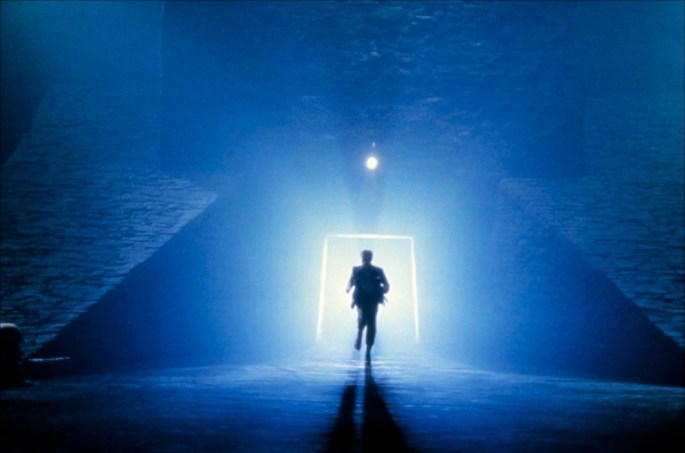
There may not be much of a, shall we say, culturally tactful or sociopolitically subtle premise behind No Escape, but I’d be lying if I said that this isn’t an almost unbearably suspenseful, purely nightmarishly effective thriller. Owen Wilson and Lake Bell play a wealthy American couple on a business trip to some unnamed southeast Asian country that is going through kind of a rough patch, politically and economically. When the hotel they are staying in is stormed by a citizen’s army of ruthless, barbaric rebels staging an infrastructure-shattering coup, they are forced to flee through the dangerous streets of the city with no law enforcement or anyone to help them, save for one British intelligence agent played by Pierce Brosnan, an undercover operative who does his best to help them amidst the chaos of a country turning itself inside out. Now, I see from this director’s filmography that his work is almost all in the horror genre so far, which makes sense because this film is so punishingly, exhaustively suspenseful and tense that it could almost be classified as horror itself. The rebels are a terrifying, almost inhuman threat around every corner and are both willing and capable of inflicting frightening atrocities, as this family dodges them at every turn. If I were this director though I would have mayhaps lent my talents to a better, more tasteful script though, and here’s why: Wilson and his kin barely register as characters of their own, but rather blank, terrified chess pieces being frantically shunted across the board of pre-constructed dangers with no real agency or unpredictability of their own. The rebels are a faceless army of homicidal, rape inclined psychos and we get zero grasp on their cause or agenda beyond hunting this family down at al costs. The city they’re in doesn’t even have a name, and that’s how much this script cares for specificity or nuance. The only believable, well rounded character is Brosnan’s guilt ridden agent, he brings an obligatory Bond-esque charisma to the role while retaining this sort of haggard, world weary resolve too and is actually quite good. But his character and the unbelievable talents of the director in generating horrific suspense could have been put to use in a much better setting, premise and story beyond ‘white American family is brutalized by savage Asians in a crumbling third world.’

-Nate Hill

White Noise 2: The Light

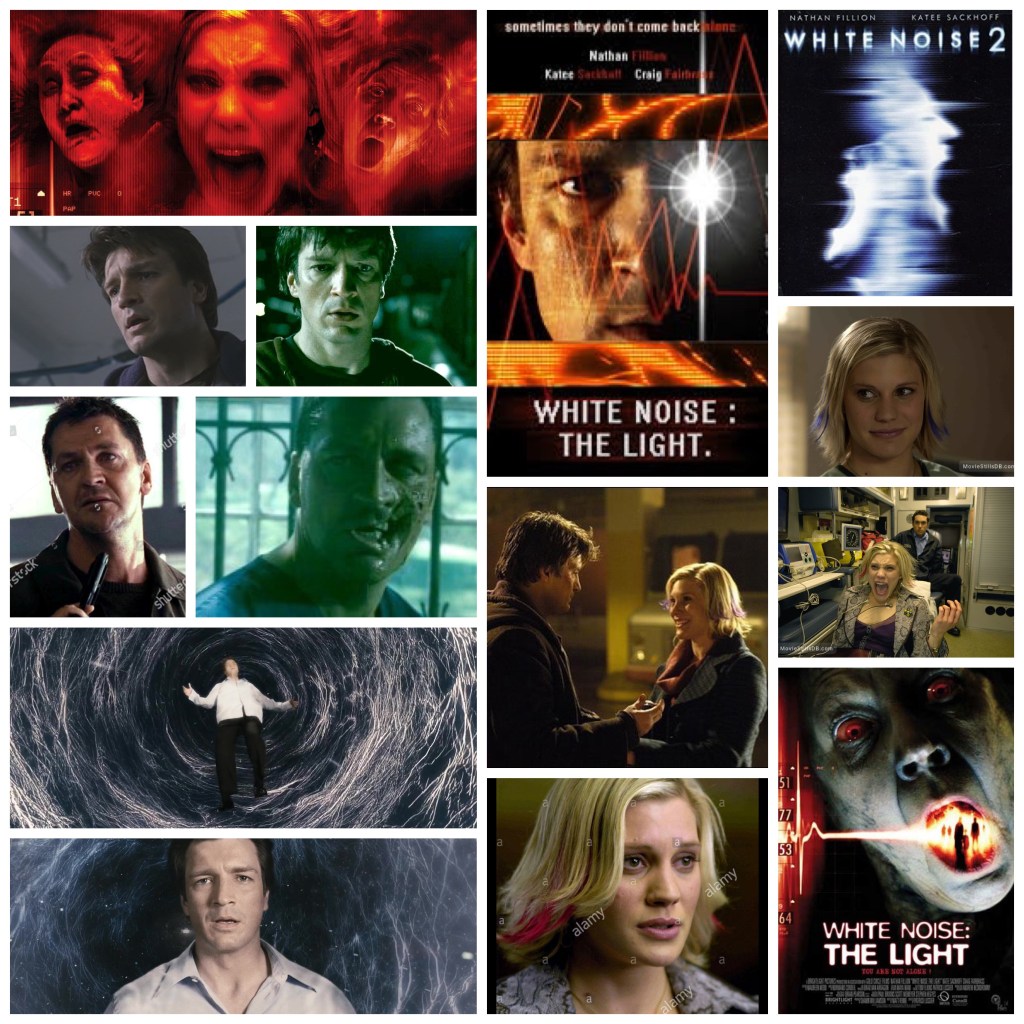
It can be jarring when horror sequels do something almost entirely different with their concept but still use that same franchise name as the first one, it either means bravely pioneering new ground or gravely deviating from an already solid blueprint into a morass of sideshow muck. In the case of White Noise 2: The Light I couldn’t tell you which of those two categories it fits into because it was such a confounding, nonsensical story I really didn’t make too much sense of any of it, so I suppose the second one if I had to say. Following the exploits of the excellent first film in which we saw Michael Keaton communicate with the dead, including his wife, via spooky VHS tape static, this one goes in a drastically different direction. Nathan Fillion plays a guy whose wife and child are murdered in the opening scene of the film by a disturbed, gun wielding maniac (perennial UK tough guy Craig Fairbrass) before the man blows his own head off. Lost in a pit of despair, Fillion attempts suicide himself and has a brief trip to the afterlife (cue the XBox 360 cutscene effects) before returning to make it a near death experience and discovering he has certain… abilities. Premonition, foresight, the power to sense impending catastrophes and save those in their path and the clairvoyance to know when certain seemingly benign people are going to perpetrate horrible acts of their own, kinda like the guy… well you can see where this going. He meets a friendly nurse played by the wonderful Katee Sackhoff and I must admit that their pairing is pretty much a casting match made in Heaven and the best thing the film has going for it, even if the script doesn’t do all that much with them together. The cast beyond them aren’t people I recognized except for a hilarious early career cameo from Jared Keeso, who Letterkenny fans will be just tickled to see here and may even do a double take. The film is set in Vancouver again and as always it adds a lot of atmosphere, but you can only do so much for a story that’s told as loosely and unconvincingly as this. There’s no real reference to the first film or it’s premise, this for sure didn’t even need to be called White Noise at all, it’s more a sequel to that Sandra Bullock flick Premonition than anything resembling a tie-in to the Keaton one, and it’s just not gripping, interesting, scary or affecting enough to recommend whatsoever. If you must give it a look to see Fillion and Sackhoff gently flirting for a few scenes then go for it, I don’t blame you, but just don’t expect anything close to an involving thriller here.

-Nate Hill

Rick Alverson’s Entertainment

There are some films that just aren’t for everybody, and seem to have even been fashioned to deliberately repel a certain demographic, as if to weed out those unwilling to take a trip down the weird end of the street and serve as a litmus test to determine who will stand-fast. Folks like John Waters, Todd Solondz and Lars Von Trier are prime examples of artists who traffic in such cheerfully provocative, knowingly inflammatory ventures and now Rick Alverson is well on his way with an eerie, uncomfortably abstract mood piece called Entertainment that I saw a long time ago and recently caught up with, and let me tell you it’s just as fucking bizarre as I remember. Alverson wrote this alongside Tim Heidecker himself and their buddy actor Gregg Turkington, who graduated with honours from the proverbial Tim & Eric Theatre Of Shock & Awe and works frequently with the two, so his badge of bizarre was squarely pinned to his chest before churning out this relentlessly off-putting curio of dust-bowl doldrums, against type cameos, agonizing awkwardness, surreal dreamscapes and nightmarish atmosphere. The film follows pitiful nebbish ‘The Comedian’ (Turkington), a would be standup comic with no audience on a tour to nowhere somewhere in the desolate American southwest. His jokes are excruciatingly cringe, his onstage personality is a grating head-scratcher, his doubting manager (John C. Reilly in a hilariously deadpan cameo) subtly begs him to tone the weirdness down, and just overall this guy’s life seems like a dead end that’s swiftly leading to a deader end. His one respite and glimmer of hope is infrequent phones calls where he leaves forlorn voicemails to an estranged daughter that we never see, perhaps because she never existed at all and it’s his last ounce of conviction to cry for help into an abysmal void. He runs into many characters along the way played by the likes of Heidecker himself, Dean Stockwell, Tye Sheridan, Amy Seimetz and Michael Cera as an impossibly creepy dude that he has an icky run-in with in a men’s bathroom. Many will find this to be a frustrating, confounding, empty, disquieting experience and that’s fine, I would be worried if *everyone* liked it. I admit that this particular flavour of weird isn’t typically my bag and that chunks of it were lost on me, like his interminable bouts of caustic and repulsive verbal digression on the standup stage. However, when the perception and focus shifts over to his ponderous meanderings in the Mojave desert and the incredibly effective, soul shaking original score by Robert Donne I got a real sense of this character’s waywardness, disconnect from everything around him and complete, utter loneliness, and on that front I was able to connect with the film. It’s unique, it’s weird, it’s darkly funny in a sort of brittle, curdled way and uses illogical, jagged sensibilities to explore an artist whose work alienates and humiliates him. You will either vibe with this intensely or be wholly turned off, there’s no real middle-ground.

-Nate Hill

House Of Wax (2005)

It amazes me what a dismal critical reception that House Of wax got because to me it’s a treasured horror film and one of the most disturbing, freaky ass experiences my stoned 14 year old ass ever had as an introduction to the genre. Just to prove that I’m not wistfully beefing up a mediocre horror flick through the treacherous prism of teenage nostalgia, I recently revisited it and it *still* just absolutely slaps, so I’m not sure what bone the critics had to pick with it other than it being a horror remake and having to face the unfair bias and hostility of being saddled with that yoke right out of the gate. So it’s the classic scenario where a bunch of reckless, impossibly sexy teens end up in some godforsaken county with a dried up town full of spooky abandoned buildings, menacing inbreds and a dark history. They’re played by people like Chad Michael Murray, Jared Padalecki, Elisha Cuthbert and Paris freakin Hilton, which is more pedigree than these horror flicks usually get to boast. They discover that a creepy old wax museum isn’t as derelict as outward appearances may suggest and that it’s demented curators never really retired, and have taken up a, shall we say, disconcerting brand of human ‘Wax-idermy’ as extracurricular activities in their spare time. They now find themselves on the run from these whack jobs and fighting for their lives to not be turned into living human wax dolls, or simply hacked to pieces by these crazies. This is one fucked up, super gruesome flick and the refreshingly practical effects are truly some brain melting, squirm inducing eye candy. They must have had to hire a ‘wax wrangler’ just to keep all of their production design materials in line because once they get deeper into this museum and the narrative overall, there are some genuinely nauseating, profoundly disquieting and altogether impressive visual gags and set creations on display. Don’t let anyone ever tell you this movie sucks or is anything other than an absolute banger, because they have no idea what they’re talking about. It’s sweaty, greasy, spooky, waxy, sleazy, trashy, shameless and wonderful in all the best ways a slasher can be. And for the record, I have seen the original, it’s cool, but for a kid my age it’s dated and creaky and something as balls out and energetic as this is just always going to take top spot. Great film.

-Nate Hill

The Chronicles Of Riddick: Escape From Butcher Bay & Assault On Dark Athena

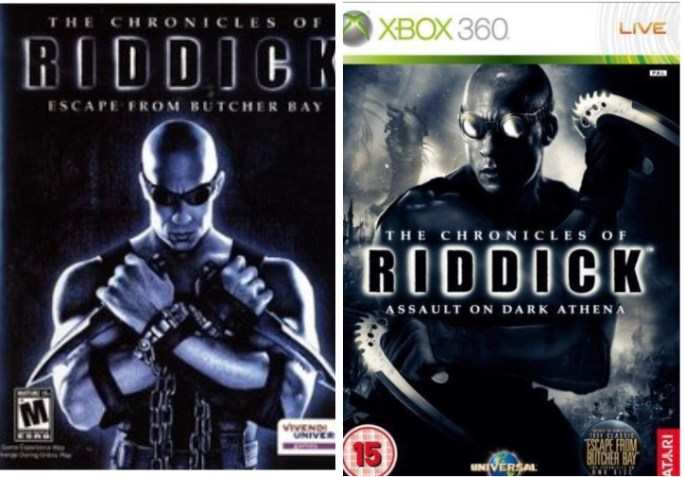
I’m a huge fan of the Riddick films, I love the mythology, world building, alien anatomy and general vibe, and while the film trilogy is amazing there are also all kinds of other bits of lore to be found in other arenas including comics, animated shorts and two spectacular video games that I got a chance to view entire walk-throughs on YouTube the other night. Now, these aren’t just cheap promotional ‘tie-in’ games that are rushed into production to be released alongside the film for no other purpose than cash, they are deep, important chunks of Riddick’s story with integral character beats, wonderful stories and jaw dropping set pieces all their own. They’re also great because Vin Diesel did the voice and motion capture work for Riddick, which has to be the lynchpin role of his career and he’s supported by a galaxy of star talent and cult actors in voice roles.

The first game is called Escape From Butcher Bay and it sees Riddick and his perennial bounty Hunter nemesis/best pal Johns (Cole Hauser) arrive at the titular penitentiary, a grim institution lorded over by preening Germanic warden Hoxie (Dwight Schultz) and brutally kept in check by his corrupt head guard Abbott (rapper Xzibit). It’s here that Riddick must fight his way through hordes of feral inmates and descend deep into the bowels of the prison to find a way out and discover pieces of his mysterious identity. He participates in a gruesome fight club run by Centurion (Michael Rooker), fights alongside exiled gang kingpin Jagger Valence (Ron Perlman) and runs afoul of many other creeps voiced by awesome folks like Tony Plana, the late William Morgan Sheppard, Stephen McHattie and Joaquim De Almeida. Deep in the heart of the facility he encounters half undead deformities and meets a shadowy subterranean prophet called Pope Joe (Willis Burkes) who operates on him and first gives him his ‘sight in the darkness’ eyes. Along with these eyes come haunting visions where Furyan spirit Shirah (Kristen Lehman) speaks out to him from his ancestral past and guides his eventual path towards destiny that we see unfold in the films.

The second game is called Assault On Dark Athena and while not as mythologically rich as Butcher Bay it has the advantage of being made a few years later and so the graphics, cutscenes, fighting styles and visual aesthetics are far more polished and impressive. It picks up right where the other left off, as Riddick and Johns approach a mammoth slave ship ruled by aggressive tyrant Revas (Michelle Forbes), where he must fight and outwit his way to find intel and weaponry deep within the giant floating prison. He’s aided by former military man turned inmate Dacher (Lance Henriksen, superb) and he forges a deep bond with a little orphaned girl roaming the craft, a relationship that reminded me very much of Ripley and Newt from Aliens and provides Riddick’s arc with pathos and poignancy. I can’t speak for the actual gameplay, controls or anything on the ‘hands on’ aspects of these games as I essentially watched them as you would a movie, but in that sense they are absolutely terrific stories and more than essential to the Riddick canon and lore. Spectacularly violent, gory and hard-R like these stories were always meant to be, a beautiful fusion of poetic deep space atmosphere and kinda steampunk/mecha/convicts in space aesthetics and a wonderful pair of expansion stories on Riddick’s exciting, moving, imaginative, immersive and artistically spellbinding voyage through galaxies to find his identity, history and change the course of the universe’s future. Highly recommended, whether you want to get an old console and play them as games or hop on over to YouTube and view them as films.

-Nate Hill

Carl Strathie’s Dark Encounter

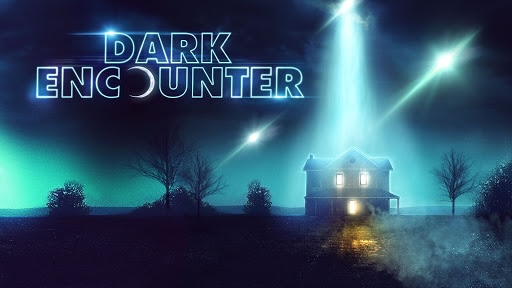
You can do pretty amazing things with lower budgets if your heart, storytelling technique and ambitions are in the right place and Carl Strathie’s Dark Encounter is a glowing example of that. This is a wonderful, emotionally devastating amalgamation of classic alien abduction/UFO stylistics and deeply heartfelt interpersonal family drama that wears its influences (everything from Nolan’s Interstellar to Spielberg’s Close Encounters) lovingly on its sleeve. It tells the story of a large family sometime in the 60’s or so who get home one night to find their young daughter missing. Flash forward one year later, they are still grieving her loss and trying to deal with the lack of closure, and as they all gather at her parent’s place to try and heal, strange things begin to happen. Lights in the sky and in the forests around their property, massive flocks of birds vacating the area en-massé, and mysterious spacecrafts hovering over their abode. Was their daughter abducted by aliens, who have now returned to torment the rest of her kin? I won’t say another word about the story beyond that except to say that at this point things get *really* interesting and completely unexpected. This is a beautifully made film full of unbelievably innovative special effects when you consider the budget, everything from iridescent strobe lights emanating from the floorboards to haunting points of light dancing on the edge of the forest’s horizon to a jaw dropping immersive sequence where our POV zooms out for a breathtaking visual voyage into the far reaches of the cosmos, a journey both inwards and outwards that reminded me, in spirit, of both Kubrick’s 2001 and Malick’s The Tree Of Life. I have to warn any viewer that this is a gut punch of a story that deals in subjects matter both tragic, disturbing and is tough to watch, but the process, execution and artistic forces at work are remarkable. The film’s score might be the best I’ve heard in a long time, an expansive auditory soundscape that encapsulates everything from the eerie to the experimental to the emotionally orchestral that digs your heartstrings right out of your chest. The cast are all perfect, with Laura Fraser and Mel Raido giving soulful work as the girl’s tormented parents, and an appearance by the always awesome Vincent Reagan, this role being perhaps the first time I’ve ever seen him in cinema without a sword in his hand. This is a fantastic film for anyone who appreciates spooky, atmospheric UFO themed storytelling, very well acted family drama and an unexpected, highly affecting narrative that I promise you will not guess ahead of time. Great film.

-Nate Hill

THE MICHAEL MANN FILES: THIEF (1981)

“I have run out of time,” Frank softly says to Jessie, almost begging her to listen to him. He wants her to know that his time on this earth has been abnormally disrupted due to incarceration and that his life as a professional criminal has rendered a regular, natural existence impossible. In Jessie, the lady who works the register at one of his favorite breakfast haunts, Frank correctly senses another outcast; a wounded and marginalized soul who is letting the better part of her years slip away from her. He desperately wants her to be a part of his life and does everything in his power to convince her to agree to do so. Tearfully, she eventually does.

Leading up to that conversation in a late night diner, it’s crystal clear that Frank has had quite a day. After pulling off a meticulously executed, all-night diamond heist, he has to deal with some criminals that have stolen the money he was supposed to have received for the aforementioned robbery, he’s learned that his father-figure and mentor, Okla, is rapidly dying from heart disease, and, to top it all off, he’s over two hours late for a dinner date with Jessie due to his having to go through some clandestine, bullshit meet with members of a crime syndicate just so he can recoup his dough from the robbery the previous evening. This is his life, but it’s sure not the life he wants.

One of the most disarming things about Thief, Michael Mann’s theatrical film debut from 1981, is how much it focuses on Frank’s desire to chuck his life as a criminal and to settle into suburban anonymity. As portrayed by James Caan, Frank is decidedly not addicted to the juice of living like a criminal nor does he need the action to direct his life. Unlike Harry Dean Stanton’s Jerry in Ulu Grosbard’s Straight Time, co-scripted (uncredited) by Mann, or later Mann characters such as Heat’s Neil McCauley, a “regular type life” with “barbecue and ballgames” sounds just fine and dandy to Frank. In fact, Frank is so desperate for convention that he carries around a sad, wallet-sized collage of his dream life replete with pictures of children, a luxury car, Okla, and an inexact depiction of someone who will fill the role of wife and life partner. It’s no more exciting than what regular people take for granted but it means the absolute world to Frank.

In order make his modest dream life happen quickly, Frank makes a devil’s bargain with crime boss Leo (Robert Prosky), agreeing to a limited number of complex, pre-set, and high-yield robberies with the handshake agreement that he will be able to refuse any further work after each completed job. Naturally this will fall apart in spectacular fashion as crooked cops and even more dishonorable criminals complicate and jeopardize Frank’s vision for his future.

For a movie that made such limited noise at the box office, Thief’s influence on the crime thriller, in both look and content, is all but incalculable. As to the former, one would think that Michael Mann singlehandedly invented the visually intoxicating mix of wet streets and neon signs in the same way someone bumbled into mixing peanut butter and chocolate and made the Reece’s organization a bottomless fortune. As to the latter, the attention to detail that soon became the norm is directly influenced by Thief’s impeccably shot and edited sequences that highlight the fascinating, granular elements that make up the lives and work of professional criminals. Certainly films such as Jules Dassin’s Rififi and any number of Jean-Pierre Melville titles predated Thief’s love for the Swiss watch-precision in criminal activity. But Mann’s significant choice of laying the hypnotic and percolating minimalism of Tangerine Dream’s prog rock score over his near-wordless action montages pretty much created the blueprint for the look of almost ALL visual media that followed. When critics spoke about the slick, heavily-stylized “MTV look” that crept into theatrical films and commercials in the early 80’s (including Mann’s next theatrical endeavor, The Keep), they were talking about a style the ground zero of which was found in Thief. William Friedkin may have pioneered the idea in 1977 with Sorcerer (also boasting a score by Tangerine Dream) but Mann perfected it in 1981.

The lyricism found in Mann’s dialogue is also in full flower in Thief which melds quite beautifully with the stark, unmistakable realism of the life of the convict both in and out of prison, as chronicled by Frank in his diner monologue to Jessie which eerily recalls the day-to-day life of Murphy in Michael Mann’s previous film, The Jericho Mile. When Frank tells Jessie about an assault on his life and the aftermath that followed while he was serving time, he sounds as if he’s reciting a poem he was asked to write to describe the hell that exists within the prison walls. This is likewise the case when a bereft Frank verbally melts down and makes a full spectacle of himself in an adoption agency after he and Jessie are turned down as prospective parents due to Frank’s status as an ex-con. Never before has the utter hopelessness and anguished inhumanity that is the part and parcel of the life of a criminal been delivered with such control and beauty as it is in Thief.

Unlike Michael Mann projects that would come later, Thief, isn’t as interested in exploring the slippery nature between cop and criminal as it aims to be more classic in its mold while being more progressive in its approach. Thief, for lack of a better term, is a neo-noir where the chiaroscuro is given heavy assistance by magnesium but it is not an existential mediation on the tenuous line between good and evil. That said, in doing some rather interesting things in its casting, it does serve as a bit of thematic foreshadowing as real-life thief John Santucci, who served as a technical adviser and whose actual industrial burglar tools are used in the film, portrays the sleazy Sgt. Urizzi and real-life cop Dennis Farina, close to hanging up his badge for a respectable career in show business, shows up as Carl, Ataglia’s lethal bodyguard. The crossed lines of cop and criminal are all in the casting here but they will soon be at the heart of the rest of Mann’s oeuvre.

Aside from its technical and structural brilliance, Thief will always register as a bonafide masterpiece due to the impossibly high level of passion in the performances. It has been said countless times over but it will never not bear repeating that Thief is James Caan’s greatest hour. Equal parts tough, thoughtful, tragic, and triumphant, Caan slow-walks himself through the role of a lifetime, enunciating every syllable and wearing every nuanced emotion on his face while also turning in a remarkably physical performance (cat burglary looks like a lot of work, folks). As a woman whose past connection to the criminal element has limited her own options in life, Tuesday Weld’s Jessie radiates a wholly believable warmth and an inner-toughness which has been constructed to shield her from certain disappointment and render her invulnerable to easy influence. Jim Belushi is terrific in a rare dramatic role as Barry, Frank’s wiretapping and surveillance whiz, and Willie Nelson transcends mere stunt casting as the zen and terminal Okla, Frank’s jailhouse mentor. Among all of the supporting cast, though, Robert Prosky is the one who deserves special mention. A latecomer to acting (he was 41 when he was cast in his first part in a television movie in 1971), Thief was Prosky’s first big role and he owns every second of it. One second professional to the core and the other the most poisonous villain this side of Ben Kingsley’s Don Logan, Prosky brings a perfect balance to the role that forces him to oscillate between grand benevolence and guttural betrayal. Prosky’s delivery of an absolutely odious monologue in the last third of the movie deserves some kind of special award for being as captivating, thrilling, and rewatchable as it is horrifying, execrable, and repellant.

When speaking about the contemporary crime thriller, Michael Mann’s name brings as much heft to the genre as Hitchcock’s name did with the suspense film and Thief worked overtime to make that happen. And due to Michael Mann’s unshakable fidelity to the detail of the work of his characters and his impeccably operatic examination of their melancholic lives, he would soon find his options opening up exponentially when he redirected his focus from the lonesome, existential life of the career criminal and towards the cops that made their living chasing them. But with Thief, Mann found that perfect vehicle that allowed him to fuse his visual and thematic sensibilities into one flawless package while setting a stylistic pole position for the rest of Hollywood.

(C) Copyright 2021, Patrick Crain