STAR WARS POWERCAST EPISODE VI: Let’s Discuss Carrie Fisher and CGI Recreation

star-wars-powercast-4

Join Frank and Tim as they bring you yet another amazing STAR WARS POWERCAST.  This time, we discuss the passing of Carrie Fisher and how Lucasfilm/Disney should handle the role of Princess Leia in Episode 9.  We also discuss what we think is going to happen, the newly announced title for Episode 8 THE LAST JEDI, and whether or not Disney should CGI reconstruct Carrie Fisher for Epsidoe 9.

DON SIEGEL’S DIRTY HARRY — A MINI REVIEW BY NICK CLEMENT

3

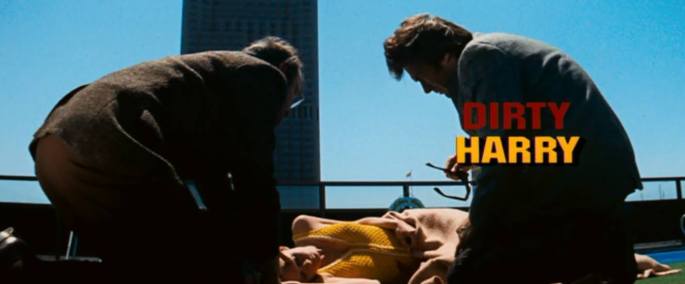
Don Siegel wasn’t too concerned with how people responded to his work. He made the kinds of movies he wanted to make, while clearly loving to provoke a visceral response from his audience. There are still a number of efforts I need to see from this filmmaker, but one thing’s for certain – Dirty Harry will always rock the house. I love Bruce Surtees’s stark cinematography in this film, and Lalo Schiffrin’s score is one for the ages. Clint in quite possibly the most iconic role of his legendary career, and it’s no surprise that John Milius did work on this ultra-ass-kicking film. And it’ll always tickle me to no end that Terrence Malick was paid for some writing services on this long-in-development project (more of his ideas would be used in Magnum Force). A critical firestorm at the time of its release, Dirty Harry would become a scandalous box-office smash, forever changing the landscape of the cop film.

2

NORMAN JEWISON’S IN THE HEAT OF THE NIGHT — A MINI REVIEW BY NICK CLEMENT

Nin_the_heat_of_the_night_xlg

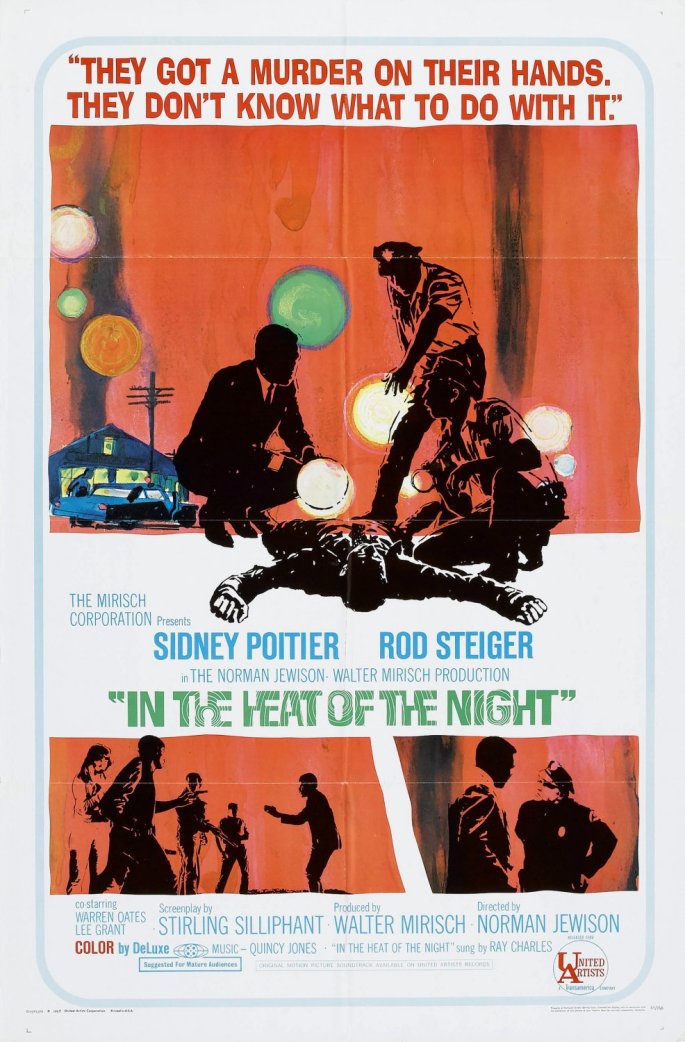
In the Heat of the Night is a tremendous film, still incendiary and thought provoking some 50 years later (the film was released theatrically on August 2, 1967). Directed by the underappreciated Norman Jewison, a filmmaker who made social commentary his stock in trade in terms of his cinematic storytelling, the film’s sharp, Oscar-winning screenplay was adapted by Stirling Silliphant from John Ball’s original novel, and centers on a police investigation in Mississippi that involves race relations, murder, corruption, and procedural elements which would come to define the modern television landscape in the years which would follow. And it certainly serves as a genre precursor to more light hearted, tonally-mixed efforts like Busting, Freebie & the Bean, and Lethal Weapon, but In the Heat of the Night is a decidedly more serious affair by a large measure. Sidney Poitier’s landmark performance was a true door-buster, while Rod Steiger’s Oscar-winning work is easily some of his best. Haskell Wexler’s superb cinematography made terrific use of real locations and stark, shadowy light, while future director Hal Ashby won an Oscar for his well-paced and judicious editing. I’ve yet to see the two sequels, They Call Me Mister Tibbs and The Organization, that were released after In the Heat of the Night became a huge success; neither seemed to replicate the original’s box office performance or critical response. In the Heat of the Night is available on DVD and Blu-ray.

ROB BOWMAN’S REIGN OF FIRE — A REVIEW BY NICK CLEMENT

3

I’m picky when it comes to fantasy movies. Very picky. I’m not a fan of LOTR or any of its seemingly endless derivatives. But while not perfect, I’ve always had a HUGE soft spot for Rob Bowman’s Reign of Fire, which sports a genre-popping screenplay by Gregg Chabot, Kevin Peterka, and Matthew Greenberg that had some fun with a wild premise. Extremely enjoyable on a blunt-force level, I still wish it had been rated-R, and it definitely needed more tanks, helicopters, and few more scenes with multiple dragons tearing shit up, as those AMAZING one-sheets had promised. However, what was delivered was still a total blast of fabulous looking B-movie fun, and the numerous, high-grade action scenes have an in-camera integrity and an honest sense of weight to them. The CGI dragons were definitely some of the best that I’ve seen in any movie – why do older special effects look so much better than a lot of the stuff that we’ve seen on screen in the last couple of years?

2

There’s tons of yelling, grunting, and sweating with macho behavior galore from an almost impossibly beefy cast. You got Christian Bale pre-Batman, Matthew McConaughey before his McConaissance, ex-Bond girl Izabella Scorupco looking way hot, and Gerard Butler rather effectively playing third fiddle. The production value on this movie was just massive, and I loved the desolate, post-apocalyptic wasteland production design by Wolf Kroeger (Casualties of War, The 13th Warrior) and the bleached and scorched cinematography by the great Adrian Biddle, who shot Thelma & Louise and 1492: Conquest of Paradise for Ridley Scott, among many other fabulous credits. Bowman, a veteran of television’s The X-Files and helmer of the theatrical spin-off The X-Files: Fight the Future, really used the widescreen space with authority in this movie; there’s an aesthetic muscularity to the entire film that I’ve always noticed on many repeat viewings. This is a very solid, unpretentious B-movie made with a slick visual panache that might’ve been better had it gone even more berserk with the larger battle scenes. But back in 2002, this movie must’ve cost a mint.

1

The Year was 2016, and Warner Brothers Dared to Be Different.

neakzmkrnpeteh_3_b

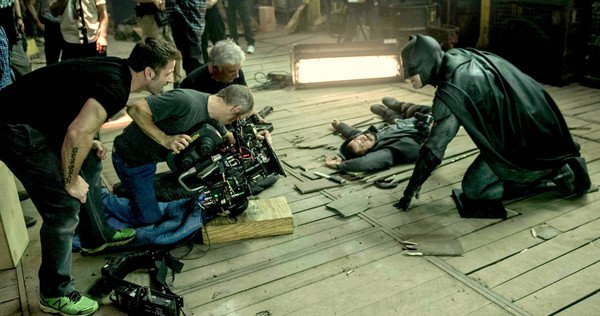
With recent news of Ben Affleck’s directorial departure from the tentatively titled, THE BATMAN, the state of the DC cinematic universe is a bit uncertain, personally, I have full faith in Snyder and company because I think a lot remains to be seen.  One thing is for certain; the rabid echo chamber is loud as ever.  There are a lot of people who HATE the DC films.  Hate them with a fiery passion.  Hated them before they came out, and once the films came out, they acted as if someone set their Facebook page on fire.

In 2016, Warner Brothers took a huge gamble.  They set out to make films for adults, in their own way.  Sure, they had a lot of catching up to do in regards to the near flawless template that Marvel created, but Warner Brothers made a clear decision; they were making films by adults for adults.  Batman was a blood lusting killer.  Harley Quinn was the epitome of over-sexualization.  Jared Leto took the Joker to an almost unrecognizable level.  Jesse Eisenberg played the anti Lex Luthor.  Both films were so anti-PC, it was a cinematic revelation.

Perhaps there is some trouble at DC, but then again, maybe there isn’t.  The internet has birthed an overpopulated mass of film websites (PTS included) that are a constant trove of clickbait headlines (PTS NOT included).  It seems as if every day for the past year, the state of the DC universe was on the verge of collapsing.  The second JUSTICE LEAGUE film was canceled.  SUICIDE SQUAD 2 isn’t happening.  Early word is WONDER WOMAN is as big of a “mess” as the previous two films.  If there’s one thing I can tell you that I know for certain, no one really knows what’s going on other than the executives at WB/DC.

Here’s the bottom line.  BvS and especially SUICIDE SQUAD made a ton of money.  Sure, BvS underperformed a bit, but it still made a lot of money.  And both films made A LOT more money than the second and third installments of Marvel’s cinematic universe.  Worldwide, SUICIDE SQUAD made 746.6 million dollars, and that was WITHOUT opening in China, which is the biggest market next to America.  SUICIDE SQUAD was a flat-out hit, and Warner Brothers were so happy with it, they signed Margot Robbie to an exclusive deal, which includes the pseudo follow up Harley Quinn film directed by David Ayer.  Will Smith is getting his own Deadshot film, there will be an official sequel to SUICIDE SQUAD at some point, and the FLASH and AQUAMAN films are in the pipeline.

DC Films does not want to be Marvel Studios.  They want to be better, and they still can be.  They have the two most valuable superhero properties; Batman and Superman.  There could be any number of reasons why Ben Affleck decided not to direct THE BATMAN.  It could be the underperformance of LIVE BY NIGHT, it could be that he doesn’t feel comfortable directing a CGI-heavy film, or it could be something completely plausible that will surely be silenced by whatever website decides the real reason is.  Basically, it does not matter.  Ben Affleck is still the Batman, and he still developed the script and is still producing the picture.  If I had to venture a guess as to what’s going on with Affleck is that he’s struggling with whether he wants to be a movie star or an auteur, because realistically, he cannot be both.


A chat with filmmaker Jack Perez: An interview by Nate Hill


Excited to bring you my latest interview, with filmmaker Jack Perez. Jack is responsible for one of the coolest, most unique indie films of the 1990’s, La Cucaracha. Starring genre icons Eric Roberts and Joaquim De Almeida and featuring an early career turn from Michael Pena, it’s a film like no other, a severely underrated south of the border morality play with shades of everything from Peckinpah to Walter Hill, a style all its own and a script that is genuinely one of a kind. The film has just been remastered for streaming release on Amazon prime, and I have included a link to the new trailer here, it’s  not a film to be missed. Enjoy! 

Nate: What led you to filmmaking? Was it something you always knew you wanted to do, or did you fall into it?
Jack: I got into it very young, one of those Super 8 kids who borrowed the family camera and drafted my sister into doing homemade monster movies. My father was a movie nut, and our primary mode of communication was watching old films together, so that’s what started it.  
Nate: Who are some filmmakers that you would say influenced your work, or you are a huge fan of and have looked up to?
Jack: Peckinpah definitely, probably above all others. His work was personal and mythical and expressionistic and truthful. And totally alive! Scorsese, of course – his mastery of the medium also melded with a powerful personal vision. Robert Aldrich, who did such a great range of work: VERA CRUZ and THE DIRTY DOZEN and KISS ME DEADLY. Altman and Polanski. Hitchcock and Hawks. Wyler and Wilder. Again, my father is the one who first introduced me to the classics, so by the time I went to film school I was pretty well saturated and ready to look at European cinema and cool experimental work (like Maya Deren!).
Nate: If you could have the rights to any novel/graphic novel series to undertake as your dream project, what would it be?

Jack: I don’t know if it could be done, or even should be done (probably not), but Dan Clowe’s LIKE A VELVET GLOVE CAST IN IRON. Overwhelmingly striking.
Nate: La Cucaracha: How did the idea come about, and did the end result look anything like what you first started out with on paper?
Jack: My writing partner, Jim McManus, and I were very much into Peckinpah at the time, and the whole idea of gringos getting into trouble south of border was very much on our minds. BRING ME THE HEAD OF ALFREDO GARCIA was a huge influence, but we were also enamored with THE WAGES OF FEAR and TREASURE OF THE SIERRA MADRE and RIDE THE PINK HORSE. The south-of-the-border noir is kind of a mini-genre unto itself and we wanted to use that as a backdrop for a new kind of story. Something more character-driven and personal. Actually, Jim’s original concept – the one that set the whole thing in motion – was that the Walter Poole character would literally roll into town in his wheelchair at the climax, guns blazing ala Rooster Cogburn, and go down in a hail of bullets. An nifty idea. Of course, by the time we actually got to the end of the screenplay that ultimately resulted, that kind of hyperbolic nihilistic ending didn’t fit anymore.  Also I had intended to shoot it on location in Mexico and use the actual landscape and real people as part of the film’s fabric. But budgetary considerations brought us to the backlot of Universal, and the result was a Mexico much more mythical than intended (which I have to say, I kind of preferred in the end because it allowed for a more expressionistic look overall).
Nate: Working with Eric Roberts: you can honestly claim that you have directed him in what is, for me at least, in the top three greatest performances he’s ever given. How was the working relationship? What is he like? Do you guys keep in contact?
Jack: It was great working with Eric, and we’ve remained close over the years – him and his wife, Eliza. Eric works a lot, but I think he came to see LA CUCARACHA as an opportunity to really create a character, and show dimensions and vulnerabilities that he sometimes doesn’t get a chance to play. He knew I was deadly serious about making this picture the best it could be and, to his credit, attacked the role accordingly. He was a joy and a lot of fun to hang out with. Great sense of humor and loves animals (as I do).
Nate: Working with Joaquim De Almeida: a criminally underrated actor who rarely gets to show his true range and versatility. How was it working with him, especially in his intense and emotional scene near the end of the film? You can also claim to have seen probably the best and most truthful work he has ever done. 
Jack: I totally agree. A great actor – like Eric – sometimes limited to roles that don’t show what he’s truly capable of. Here, he went for it as well. In fact on the day we shot the Sunday Schoolroom scene, where he tests Walter’s character and actually steps on his head – he had a huge, complex 2-page monologue that, when he finished – the crew literally jumped to its feet and broke out in applause. Ive never seen that happen on any set. He was also a real gentleman, bright, warm and thoughtful. And unafraid. The scene at the end that you mentioned required him to be emotionally naked, and he went there.
Nate: How did the remastered version of La Cucaracha come about? To be honest it’s nice to see it now widely available, I searched for it for nearly five years before finally finding a second hand DVD, being blown away and wondering why it wasn’t on every shelf of every store out there.. Did Amazon approach you for this?
Jack: I pushed for it. I too was bummed it was sorta out of circulation. Certainly not in HD or in the proper aspect ratio (the DVD release cropped the the original 1.85 image). So I approached Renascent Films, who had acquired the streaming rights, and asked if they would pursue it. Thankfully they agreed and I set about tracking down the 35mm negative, which was no longer in the original lab and wound up – through a corporate buyout – in the vaults of Technicolor. We did the telecine there and I’m happy with the results and genuinely excited it’s out there on Amazon Prime.
Nate: What’s life like for you these days? Any upcoming projects, film or otherwise, that you are excited for and would like to speak about?
Jack: I’m always going after the next project. The more personal the better. Though to make ends meet or just for the quick junkie filmmaking fix, I’ll do a TV project or a genre pic for hire. But the real joy is doing work that is personally necessary, ideally in an environment where not too many people fuck with you. That limits you to the world of independent financing. Anyway, we’re close to raising the bucks for a female-driven action-thriller I wrote called SHOTGUN WEDDING. I’ve wanted to do it for years and am I’m psyched for that!
Nate: Thank you so much for you r time, Jack, it’s been an honour and I’m very much looking forward to seeing La Cucaracha once again remastered!

THE LOVE WITCH (2016) – A REVIEW BY RYAN MARSHALL


the-love-witch1

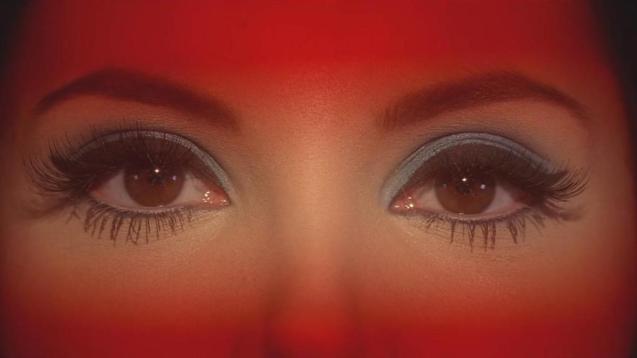
Anna Biller may be one of the cinema’s last truly exceptional auteurs. Sure, the term itself is thrown around a lot, and sure, it’s particularly challenging to register as one when dealing almost exclusively in homage. Somewhere and somehow, Biller – born and raised in Los Angeles – finds a way, but regardless of the individual viewer’s tolerance for the director’s unabashed parading of influences and intent, her voice is positively one-of-a-kind.

Nearly an entire decade may have separated Biller’s feature debut (2007’s VIVA) and her latest oddball offering, but the same powerfully progressive voice remains unmistakably in-tact. THE LOVE WITCH concerns, as you could probably guess, a contemporary (?) witch Elaine (Samantha Robinson) pursuing a suitable male companion by means of black magic. Holed up as the new tenant in a gorgeous Victorian-style mansion, she practices making potions, but as we learn from her voice-over narration in the coastal cruise intro, Elaine’s still got a lot to learn.

The heroine’s quest is initially driven by the desire to be desired – preferably by all who should happen upon her but more specifically by men. The trail of gullible bastards she leaves in her wake – including but certainly not limited to suave University professor Wayne (Jeffrey Vincent Parise), a police inspector (Gian Keys) perplexed by the prospect of a tampon submerged in a bottle of piss, and even her own ex-husband – ultimately leads the witch on a path to reclaiming individuality that is as hysterical as it is genuinely insightful.

elaine_wayne[1].jpg

Firmly rooted in a bygone era (or several), the film features, among other seductive delights, exceedingly over-the-top performances, vintage costumes and décor, music borrowed from the likes of classic gialli A LIZARD AND A WOMAN’S SKIN and THE FIFTH CORD (both scores courtesy of Ennio Morricone), and M. David Mullen’s photography is spot-on in recreating even the most seemingly insignificant ticks of 60’s/70’s occult-sleaze cinema to a tee. It’s a seamless evocation of everything it claims to be, but there’s much more to this beatific brew than an ornate toast to the silver screen of yesteryear.

A great artist is always flourishing, and flourish is precisely what the writer/director/set and costume designer/composer/etc. has done in her absence. True to such developments, this is perhaps the furthest extension of Biller’s vision that she’s graced us with yet; more interesting than the obvious parallels between a witch and the contemporary female is, well, just about everything else regarding the patriarchy that the film dares to challenge under the guise of an amusing, consistently vibrant entertainment.

elaine_tearoom[1].jpg

Biller would rather her indignant criticisms fester on the surface, which allows for a remarkably articulate confrontation of gender stereotypes that feels empathetic where it could have just as easily been perceived as preachy. THE LOVE WITCH neglects to give off the impression of a work influenced too much by invasive contempt, instead seeking to explore equality by way of humility. A medieval-style wedding late in the game, complete with faux duels and a puppet-toting jester, holds the key to the filmmaker’s stance on both passion and passiveness alike. Elaine’s maturation, twisted as it is, is hardly glorified; in fact, she’s just as damned as her predominantly male victims. Nevertheless, the argument appears to be that it’s time the sorceress had her day as well, however demented and morally conflicting it may be.

It’s easy to surrender to the film’s campy, hallucinatory charms but Biller’s decision to balance her immanent cinematic fetishisms with such a biting, subversive critique is the true stroke of genius. Getting lost in WITCH’s candy-colored ocean is one thing, extracting individually invaluable observations is another. Once again, the filmmaker reaches into the past in order to look to the future – that of man, woman, and our relationship with one another – and the culmination of this particular excursion speaks for itself, loud and clear. It announces its spectacular existence until it knows that it doesn’t have to, and if this is indicative of where we’re headed, we might just be in good hands.

elaine_rug_011

The Best 10 Movies of 2016, by Joel Copling

(This article was originally posted at Joel on Film.)

Taking inventory of a year in film is always a difficult prospect, but with 2016, I saw a very specific thematic constant forming: empathetic storytelling. Many among my top ten — and, indeed, beyond — were marvels of empathy, much needed in the year with that Presidential outcome and the political trash fire that proceeded and has succeeded it. I did not see everything, of course. That seems increasingly impossible as the number of high-profile gems rises. But I did see some stuff, and what follows was the best of it.

Moonlight

The best film of 2016 was this gem, following Miami-born Chiron from a boy (played by Alex Hibbert), who is raised by a crack-addict mother and the man who deals her the narcotics (Naomie Harris and Mahershala Ali offer nuanced portrayals of these archetypes that transcend them) to a teenager (played by Ashton Sanders) questioning his own sexuality in an environment that tells him he perhaps shouldn’t to a man (played by Trevante Rhodes) whose path in life is a form of imitative flattery toward the old father figure. All three of these performances are tremendous, as is the film’s marvelous empathy for its achingly human characters. Moonlight, with its shimmering cinematography (by James Laxton) and its quixotic editing (by Joi McMillon and Nat Sanders) of a triptych, is a masterpiece of compassionate storytelling. No film in these twelve months resonated with me more completely, and none of the various displays of compassion spoke to me as fully, as this one.

Toni Erdmann

Toni Erdmann could have gone so wrong in so many ways. The plot is thus: A woman named Ines (Sandra Huller), dealing with sexism (some of it casual, some of it sly) in the workplace, is cheered up by her estranged father Winfried (Peter Simonischek) after she returns home for her own birthday celebration. The method by which her father cheers her up is absurd: He dresses up in a suit, slaps on a wig of long, dark hair that is at great odds with the rest of his features, inserts fake teeth into his mouth, and introduces himself as the German ambassador. One could imagine that this premise is ready-made for Adam Sandler and his producer cronies, placing the woman’s degradation in the odd situation of being both the subject of ridicule and of the hypocrisy of calling out those who do the ridiculing and mangling the father’s antics into meaningless physical comedy. But writer/director Maren Ade is remarkably precise in her goals here, and the humanity on display throughout what might be a freak show is disarming.

Jackie

After her husband’s death, what will be Jacqueline Kennedy’s place in the world? This is the matter at the heart of Jackie, a film that contains a great well of emotion that builds by a finale that has no straight answer to such a question. Jackie may now be only the widow of a fallen President (the fourth and most recent of the handful that have been assassinated), but her dreams and aspirations — for the country right alongside her husband, for a family that had already seen tragedy in the form of children already gone, for the legacy of the House they inhabited as a monument and as a place of warmth in itself — ended with an assassin’s bullet on a chilly November day in 1963. Natalie Portman’s portrayal of this broken woman, her resilience astounding in the wake of trauma, is surely one of the year’s greatest screen achievements, and the film is an aesthetic wonder, too, with Stephane Fontaine’s granular cinematography and Mica Levi’s sweeping score.

Manchester by the Sea

A man has lost his brother and a son his father in Kenneth Lonergan’s devastating but entirely naturalistic new drama. My colleague Mark Dujsik called this film a “marvel of compassion,” and that sentiment rings true, especially in the writer/director’s examination of a shared past between Casey Affleck’s Lee Chandler and his ex-wife Randi, played in a handful of scenes by Michelle Williams. Lee’s brother Joe (Kyle Chandler) has died rather suddenly of heart disease, and Lee has now inherited the care of Joe’s son Patrick, played by Lucas Hedges (the highlight in one of the year’s strongest ensembles). Manchester by the Sea is not a film dominated by simple plotting or simplistic characters but by compassionate observation. All of these performances are convincing, not least Affleck, whose purest moments are when he must only emote without the aid of dialogue, and Michelle Williams, who devastates in particular the second time her ex-wife Randi and Lee meet. Jennifer Lame’s editing, meanwhile, is fascinating in the way it treats memory as an unwelcome guest upon the present consciousness.

La La Land

He’s an aspiring jazz club owner (played by Ryan Gosling in one of the year’s best performances) who wants to revive a dying genre, and she’s an aspiring actress (played by a radiant Emma Stone) who wants to be on the big screen. La La Land is about the dream deferred, and the way in which these two, who meet, fall in love, and change each other’s destiny, diverge from their path is at the heart of an exhilarating romantic comedy/drama that also happens to be a musical in the tradition of Astaire and Rogers. Writer/director Damien Chazelle, in his third film, stages those musical sequences with cinematographer Linus Sandgren and editor Tom Cross as flights of fancy even when the situation surrounding them is earthbound: a flight among a city of stars, a sung audition through which Stone’s Mia must act, a thrilling opening number set in the midst of traffic, a lovely dance on Mulholland Drive. One can joke that one must be a cynic to dislike the film, but is it, really, a joke?

Green Room

It seems that, even among its central fan base, Green Room has been widely misunderstood. This is a genre effort and not much more than that, they say, and just look at the premise for proof. And indeed one could sum up the premise as a headline easy to picture in one’s mind: “Members of Band Killed by White Supremacist Group.” Members of a band, played by Alia Shawkat, Joe Cole, Callum Turner, and the late Anton Yelchin in a career-best performance, are indeed targeted by members of a white supremacist movement, whose foremost leaders are played by an unnerving Patrick Stewart as a personification of casual evil and Macon Blair, terrific as his waffling, cowardly lieutenant. The carnage is savage and graphic (“No guns,” Stewart’s Darcy intones rather ominously) but intensely well-edited by Julia Bloch, and the whole thing is kept at a feverish pitch. One senses violence simmering down the generations, and look at what it’s come to. None of these characters is unintelligent, but cleverness has variations. This was a nightmarish game of cat and mouse.

Hidden Figures

Now here was an unexpected delight: A true story told with conviction, gentle humor, and wonderful performances. The film was about Katherine Johnson (nee Goble), Dorothy Vaughn, and Mary Jackson, a trio of African-American women (played phenomenally by Taraji P. Henson, Octavia Spencer, and Janelle Monae) working as human computers for NASA in the 1960s, until Johnson’s proficiency with numbers helped to launch John Glenn and Apollo 11 into an orbital space excursion. The women each meet some element working against them: Generally speaking, systemic racism and its institutional consequences limit the information to which they can be privy, while specifically, supervisors and co-workers of each woman have their own personal prejudices, clearly read on their judgmental faces. Hidden Figures is deadly serious in its examination of this prejudice, but it’s also an entertainment and a rousing love letter to scientific progress.

The Handmaiden

One of the many delights of 2016 was discovering the storytelling prowess in a film like The Handmaiden, Chan-wook Park’s deliriously enjoyable, 144-minute maze of shifting perspectives, sympathies, and points of view. It begins as the story of a young con artist named Sookee (Tae-ri Kim in an auspicious debut performance), who is asked to be handmaiden to Lady Hideko (Min-hee Kim, perhaps the highlight of a strong ensemble), continues as various long cons raise their heads, and ends in a final act of such irresistible, hypnotic intrigue that it consistently amazes. The story surprises here were genuine surprises, too, not arbitrary twists that might belong to a lesser film about con artistry, and the film boasted the year’s finest exhibition of production design, featuring a central house with as many surprises in its construction as the narrative.

Krisha

Family gatherings are always stressful, but it’s unlikely any have ever had a strain on anyone like this particular Thanksgiving reunion has on Krisha, the long-lost aunt of the family in Krisha, a shattering examination of familial strain and anxiety from writer/director Trey Edward Shults in the feature debut of the year. Shults showcases shades of Stanley Kubrick and Terrence Malick in ways that thankfully don’t feel imitative but as if he actually learned from his classes in film school how to utilize striking visual storytelling. He also incorporates reality-based and semi-autobiographical elements: Krisha Fairchild, Shults’s aunt in real life, plays the aunt of the character Shults plays in the film (also named Trey) in a devastatingly great performance, and Shults’s various real-life family members play Trey’s family, too. It’s a striking vision from an exciting new voice.

Silence

With his third religious epic, after 1988’s The Last Temptation of Christ and 1997’s Kundun, co-writer/director Martin Scorsese brings his passion project to the screen, an adaptation of Shusaku Endo’s novel of the same name about a pair of Portuguese Jesuit priests (played by Andrew Garfield and Adam Driver) called to search war-torn Japan of the 1640s for a third (played by Liam Neeson), who has renounced God and appropriated the life of a Japanese native. What they meet is the harshest resistance of the Christian faith that they have seen, a regime that beheads Christians by the thousands when they are not crucifying them. Silence is a troubling, sometimes frustrating, always mesmerizing venture from the legendary filmmaker, and in Garfield, we have found one of the great performances ever given in a Scorsese picture.

And here were ten more in no particular order, a next tier of films as fine as that above them:

Like so many of this year’s films, here was one set in the South, and the milieu is just one of the various things that American Honey, from director Andrea Arnold, accurately portrays. This one follows a young woman named Star, played in an auspicious debut performance by Sasha Lane, as she barely survives the backroads poverty of Texas and an abusive household and latches onto a group of nomadic magazine solicitors running a business scam and led by Riley Keough and Shia LaBeouf.

Lion, from director Garth Davis, contained a surprising burst of emotion and tension. If Manchester by the Sea was a portrait of a man’s difficulties in returning to the town in which he grew up, this was just as compassionately the flipside in that is about a young man’s desperation to return to a home from which he was lost in a seemingly random turn of events. Twenty-five years after disappearing as a boy, memories are stirred from deep within, and he must return home.

Hell or High Water, from director David Mackenzie, was a Neo-Western on the order of 2007’s No Country for Old Men, and while it wasn’t as thematically loaded or as jarringly nihilistic as the Coens’ masterpiece, it still featured great work by Chris Pine and Ben Foster as a pair of bumbling bank robbers looking to stick it to the banks that did them wrong and Jeff Bridges (in the year’s best performance) and Gil Birmingham as the Texas Rangers on their trail.

Fences, from director Denzel Washington, adapted August Wilson’s play (which Washington revived for Broadway in 2010 with the cast that appears onscreen here) with literate fireworks and a healthy helping of deepest emotion. Washington himself stars as Troy Maxsen, the current patriarch of a family that has existed for some time under his deeply ethical, morally virtuous rule. The story then takes turns that strip the man of his values while building his character as a more complex one over 139 dazzling minutes.

Arrival, from director Denis Villeneuve, was the science-fiction effort that filmgoers needed in 2016 (a year plagued by miscommunication both unintentional and entirely intentional), featuring Amy Adams’s best performance in ages as a grieving mother and linguist asked to be the communication specialist when crafts carrying aliens descend upon Earth. The film then takes several narrative chances that resonate far beyond their puzzlebox nature before twisting upon itself with tragic consequences. It was hard removing this from the list above.

Sing Street, from director John Carney, was a wonderful romantic drama that used music as its entryway into the characters and their story — which is no surprise from Carney, who has a history with the art form that has driven his intentions as a storyteller. Here, it’s of a boy, a girl, and their shared, complex ideas about a future far away from the restrictive social norms of 1980s Ireland. The music was deliriously good, too.

Elle, from director Paul Verhoeven, was far more than the post-rape fantasy a cursory glance at its premise might suggest. Yes, Isabelle Huppert stars as a video-game designer whose agency as a woman is violated by a seemingly random home invasion that results in sexual assault, but the film is cannier than that in what it has to say about this situation, as (like The Handmaiden) the film shifts sympathies (Everyone — and I do mean everyone — is at some point worthy of our sympathy) as if it’s the easiest thing.

Other People, from director Chris Kelly, was the semi-autobiographical story of a young comedy writer (played by Jesse Plemons in a performance of great compassion) who has just exited a relationship with his boyfriend of several years and been sidelined by the cancer diagnosis of his ailing mother (played by a devastating Molly Shannon). The film then examines how the diagnosis and subsequent prognosis impact his focus on the rest of his life.

Midnight Special, from director Jeff Nichols, was something of an enigma in the early part of the year, but it was a forgotten gem — a science-fiction film more about characters than its genre, about a young boy (played by Jaeden Lieberher) being trucked across America by Joel Edgerton and Michael Shannon for reasons that are kept close to the vest by Nichols until a climax that might or might not answer the film’s pressing queries. This was more about the questions, though.

And Swiss Army Man, from directors Dan Kwan and Daniel Scheinert, was the year’s most oddball delight, starring Paul Dano as a suicidal man stranded on an island and Daniel Radcliffe as the mostly-dead corpse that washes onto it. Bromance ensues as the corpse starts showing unmistakable signs of life, talking and farting and otherwise acting as a multi-purpose tool for Dano’s survival. That Kwan and Scheinert attempted this mixture of the absurd and the emotional was strange enough; that it worked is kind of a miracle.

PABLO LARRAIN’S JACKIE — A REVIEW BY NICK CLEMENT

1

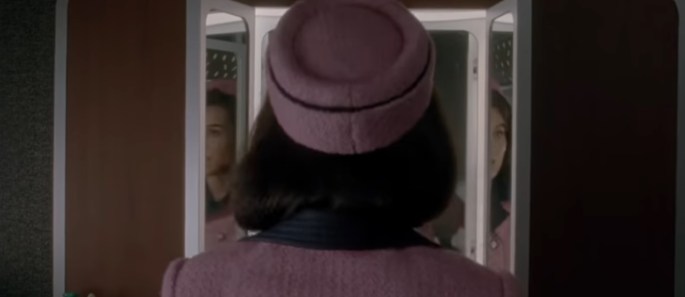
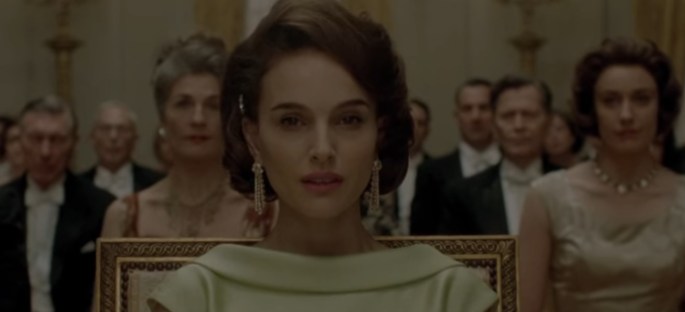
The elegiac and introspective drama Jackie is not an attempt at a traditional biopic of Jacqueline Kennedy Onassis, and it’s all the more poignant as a result. Taking a very specific route with its narrative and presenting the story during the incredibly sad and difficult days that immediately followed her husband’s assassination, Pablo Larrain’s smart and affecting film features a stunning Natalie Portman, who appears in virtually every scene, as one of the world’s most iconic women. Noah Oppenheim’s carefully measured screenplay takes a very streamlined and psychological approach to how the former first lady processed the tragic events and how she was able to begin her grieving process, while shining a light on her request to honor her husband’s legacy. This is a very hard film to watch at times, and because Portman is so forceful and commanding as Jackie, you’re immediately invested as a viewer. She’s always had the ability to project a stern sense of control in all of her performances, so when playing a real person, it’s no surprise that she’d excel at capturing the essence of another human being.

2

The supporting cast is peppered with familiar faces, all of whom do strong work, including Billy Crudup, Peter Sarsgaard, Greta Gerwig, John Carroll Lynch, and the late John Hurt. Using two framing devices (her first interview after JFK’s death and Jackie’s famous tour of the White House which was aired on television) and positioning Jackie front and center, you’re never not in her head-space at any point during the film, and because of that, it’s easy to become wrapped up by the intense feelings of sadness that she must have been feeling. The interesting musical score by Micha Levi (Under the Skin) effectively heightened Jackie’s wobbly mental state at the time, while the matter of fact cinematography by Stéphane Fontaine took a front-row and intimate view of all the action and conversations that dominated the narrow time-frame. And the idea that this film was mostly shot in Paris boggles the mind; the production design by Jean Rabasse is remarkable. This is an excellent piece of work, and the first from Larrain that I’ve seen; I must seek out the rest of his work.

3

THE CRAZIES (1973) – A REVIEW BY RYAN MARSHALL

vlcsnap-2017-01-27-16h36m23s083

The most obvious point of comparison that could be made between THE CRAZIES and anything else from George Romero’s early catalogue is to the quintessential NIGHT OF THE LIVING DEAD, and though such connections are mostly apt on a surface level, the former is more or less its own hypnotically horrific beast. Romero’s obsessions lie in the ramifications of claustrophobia – in both smaller communities and the country at large – and communication breakdown; he possesses a natural talent for melding characters with their respective environments. Here, that very relationship seems more detrimental than ever, as if regressing to animal instincts is our only hope of escaping from a grotesquely testosterone-fueled reality.

Coming out the gate with a bang, this allegorical tale of small-town terror begins with a pair of young siblings running around the house, trying to scare one-another, only to discover that their father has gone mad and killed their mother. This is soon revealed to be the first case of a virus, known by government officials as “Trixie”, which has spread throughout the town (Evansville, Pennsylvania to be precise) via its water supply and turns all those infected into hollow, bloodthirsty shells of their past selves.

vlcsnap-2017-01-27-16h37m08s471

Generally speaking, two narratives unfold simultaneously, and they rarely overlap in the more obvious and expected ways. The first concerns firefighters David (Will McMillan) and Clank (Harold Wayne Jones), the former’s nurse girlfriend (Lane Carroll), father and daughter (Richard Liberty and Lynne Lowry, respectively) as they attempt to make it out of town alive. The second oversees the military’s arrival, take-over, and subsequent research into the origins of Trixie. Everyone’s just trying to survive in their own way(s) – and as can be expected, desperate measures often lay bare the ugliness of the human spirit for all to see.

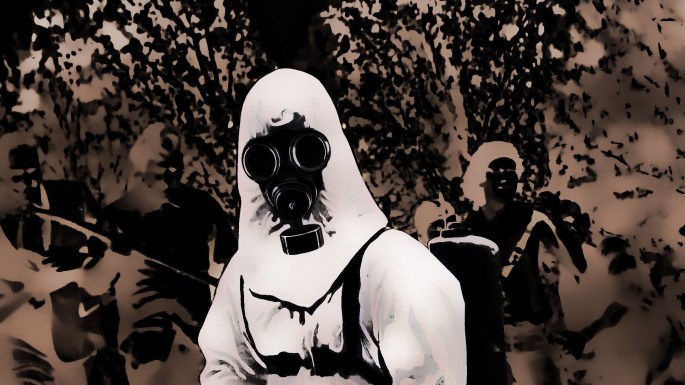
This motif is compelling in its own right, but Romero has enough intuitive gifts as a storyteller to understand that it shouldn’t – and doesn’t – make up the whole of the film’s thematic backbone. Even so, the way in which the tight-knit community receives this mysterious outbreak is genuinely chilling; with farmers, a priest and even a grandmother embracing the hysteria in their own madcap way. Hazmat suit-wearing soldiers burning a wife directly on top of her husband says as much as civilians hiding their infected loved ones in the upstairs of their houses.

vlcsnap-2017-01-27-16h40m15s654

Of course, it’s the precision and ardor with which the Pittsburgh native stages the chaos that makes it so utterly unforgettable. Romero cut everything from his legendary debut in 1968 to 1982’s CREEPSHOW himself, and his unmistakable eye for borderline experimental editing serves his apocalyptic visions well. At first sight, it’s just messy; and yet, manic as it ultimately is, Romero (with the aid of DP Bill Hinzman, who fans might know better as the first zombie in the cemetery from NOTLD) maintains steady tension throughout on a relatively low budget, never surrendering to his own more illogical indulgences. Sure, there’s some shoddy lighting during the nighttime scenes, and those edges are arguably rough, but it seamlessly achieves the ambiance of a terrifying, wholly unpredictable anxiety attack – a considerable feat, indeed.

The so-called Godfather of the Dead is seldom very subtle in regards to who, what, and where his social critiques are aimed at, but when he feels the need to be louder (the on-and-off patriotic score) in certain respects, he knows when to simmer down in others. THE CRAZIES excels as much in unapologetic anger as it does in individually compelling moments of near-absolute silence, soaking in its surroundings so thoroughly to the point where one feels that it is truly inseparable from the human life is sustains. As can be expected, it isn’t devoid of the Romero’s typically pitch black sense of humor, but its lingering paranoia has aged like wine; mighty fine. If nuclear holocaust is in the cards, we can’t say we weren’t warned – so explicitly, exquisitely warned.

vlcsnap-2017-01-27-16h35m59s787