PAUL MAZURSKY’S DOWN & OUT IN BEVERLY HILLS — A REVIEW BY NICK CLEMENT

5

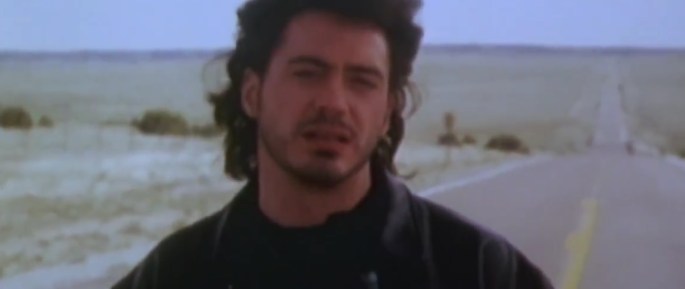
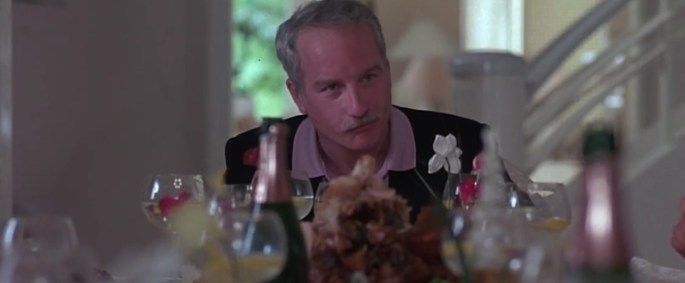
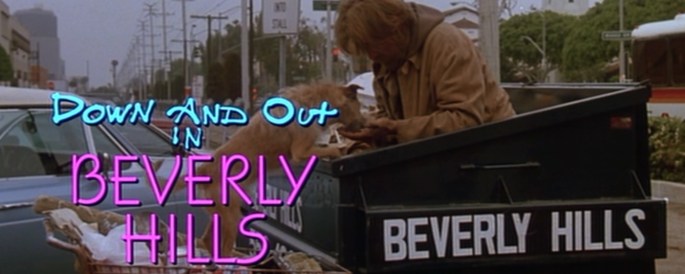
Almost 30 years later and Paul Mazursky’s incisive and always amusing social-class comedy Down and Out in Beverly Hills still holds up. Mazursky was a filmmaker who was always interested in people and their flaws and what it means to be human in a world that often overlooks people and their problems. I love how the opening credits closely resembled those from Harry & Tonto; Mazursky was a filmmaker in love with people’s faces and the untold stories that they tell. Everyone in the cast was perfect; Nolte as the grizzled homeless man looking for a second chance, Dreyfuss as the angry Richie-Rich who needs something to justify his existence, and Bette Midler as the spoiled wife who just absolutely needs to have a dog psychotherapist visit their family pet. Donald McAlpine’s crisp and clean cinematography kept an appropriately upscale vibe. What people found funny in one generation can sometimes feel stale and incredibly unfunny a few generations later – this is definitely not the case with this timeless gem. Released in late January of 1986, I wonder if the studio thought it would become as big of a hit as it did (it grossed nearly $70 million domestic).

2

THE BOURNE SUPREMACY – A REVIEW BY J.D. LAFRANCE

bourne1

After the grueling experience that was making The Bourne Identity (2002), Matt Damon was understandably wary about reprising the role of Jason Bourne. However, the film’s substantial box office success meant that the studio was eager to crank out a sequel and brought their leading man back into the fold with the promise of a new director after Doug Liman managed to alienate almost everyone on the first film. Paul Greengrass, director of the critically-acclaimed Bloody Sunday (2002) came on board, taking up where Liman left off by adopting the same loose, hand-held camerawork and cranking up the intensity, especially with the action sequences, to the detriment of some that felt the herky-jerky movements resulted in motion sickness. Regardless, The Bourne Supremacy (2004) was a hit both critically and commercially, outperforming Identity.

Bourne (Damon) and Marie (Franka Potente) have gone off the grid by taking refuge in India and this gives him time to sort through his fragmented memories and feverish nightmares. But, as is always the case with these kinds of films, our hero can’t stay hidden for long and trouble finds him. Meanwhile, a top-secret government deal in Berlin goes bad. Two agents are assassinated by Russian bad guys who steal $3 million and files that pertain to the whereabouts of Bourne. Greengrass ups the stakes right from the get-go as he has Bourne framed for the agents’ deaths and the stolen money and has an assassin (Karl Urban) track him and Marie down. An exciting car chase ensues that leaves Bourne alone and putting on him on the run again. This makes him dangerous as he has nothing holding him back so he can focus entirely on finding out who wants him dead and sift through the remnants of Operation Treadstone from the first film.

One of the first things that becomes obvious while watching this film is how its look harkens back to 1970s American cinema. Director Paul Greengrass utilizes the gritty, realistic look of his previous film, the powerful Bloody Sunday, with a lot of hand-held camerawork and snap zooms to give a you-are-there rush of adrenaline and urgency to the action sequences. In the car chases, Greengrass often places the camera right in the vehicle so that it is almost like we are riding along with Bourne, trying to piece together his fragmented past. In particular, the first chase in India is like The French Connection (1971) by way of Calcutta. Tony Gilroy’s screenplay wastes no time getting into it. We’re not 15 minutes into the film and Bourne is being chased by a mysterious and ruthless Russian assassin. It is this intense, no-nonsense pacing that propels this film so that one barely notices the two-hour running time.

Matt Damon plays Bourne with a quiet determination and intensity. It’s a surprisingly minimalist performance devoid of self-conscious tics and proves that his performance in the first Bourne film was no fluke. Bourne is not some invincible, super-soldier, but a tortured man trying to rebuild his past and his identity. He doesn’t kill unless absolutely forced to. And yet, he is certainly a man of action, capable of going from an inert, passive figure to one full of explosive action in a heartbeat. Supremacy sheds more light on his past as he’s haunted by a job where he killed a Russian politician and his wife. Damon does a nice job of portraying a man coming to terms with the fact that he is a killer. Bourne also comes to terms with the notion that what was just another mission for him forever changed the life of a young woman who was made an orphan because he killed her parents. It is an important part of the humanizing of Bourne as he sheds his past of being a detached assassin to someone trying to redeem himself. He tracks down people like Nicky Parsons (Julia Stiles), introduced in Identity as a handler to the Treadstone assassins, that can provide him with pieces of his past so that he confronts it and understand what he was in order to change who he is in the present.

The primary bone of contention that critics had with The Bourne Supremacy was how Greengrass films the action sequences. There is an impressively staged fight scene between Bourne and another Operation Treadstone survivor in Munich that is dizzyingly claustrophobic thanks to extensive hand-held camerawork that dives right into the chaos. It is memorable not only for its jarring brutality but also for Bourne’s skill with a rolled-up magazine that he uses to defend himself against a rather large knife. Greengrass’ camera flies around the tight confines of this room, dragging us along for this visceral, almost primal sequence. He treads a fine line between being edgy and incoherent, but knows just how far to push it – something that the countless imitators didn’t always achieve. This approach drew criticism for being too fragmented and disorienting, making it difficult to see what was happening but I think it was Greengrass’ attempt to put the audience right in the middle of the action and to experience the sudden and brutal nature of how quickly these guys fight.

bourne2Joan Allen’s Pamela Landy is an interesting character in that initially it appears as if she will be an antagonist like Conklin in The Bourne Identity, but when she’s assigned to investigate the Berlin job she uncovers the existence of Treadstone and this brings her up against Ward Abbott (Brian Cox), the operation’s caretaker and the man who also mothballed it. She’s no dummy and quickly figures out its nature, what Conklin was up to and Bourne’s role, which, in a nicely executed scene, quickly recaps the events of Identity for those who haven’t seen it. Over the course of Supremacy, she shows indications of sympathy towards Bourne’s plight that are developed further in The Bourne Ultimatum (2007). Allen’s scenes with Cox are interesting as they are often fused with tension as Landy uncovers the secrets of Treadstone while Abbott, clearly uncomfortable with his dirty laundry being aired, tries to cover his ass, which makes for some heated exchanges between the two as they butt heads.

The Bourne Supremacy gives more screen-time to the character of Nicky Parsons. Landy brings her along because of what she knows, but Nicky ends up playing a crucial role when Bourne confronts her, asking questions about the operation. Stiles was an up and coming movie star in the late 1990s with films like 10 Things I Hate About You (1999), but had dropped off the mainstream radar by the mid-2000s. It is nice to see her pop up in the Bourne films even if she isn’t give much to do initially.

The Bourne Supremacy was based loosely on the 1986 best-selling novel of the same name by Robert Ludlum. Universal Pictures offered screenwriter Tony Gilroy $3 million to write the screenplay and he agreed, but only if it wasn’t a repeat of The Bourne Identity. Gilroy used a plot point from the novel – Marie is kidnapped and held ransom, forcing Bourne out of hiding – as the impetus for the sequel. The screenwriter came up with the idea of taking Bourne on “what amounts to the samurai’s journey, this journey of atonement,” said producer Frank Marshall. Gilroy didn’t want to make a revenge movie because “Bourne killed people and he doesn’t start the movie with a clean slate. There’s a lot of blood on his hands.” He decided to make Bourne a reluctant murderer and that he should suffer for his crimes. To this end, Gilroy envisioned Supremacy as “The Searchers of action films,” but was upset that Greengrass came in and placed an emphasis on action and not Bourne’s atonement.

Next, the producers had to find a new director that would have an affinity for the subject matter. Gilroy recommended that Marshall watch Bloody Sunday, directed by Paul Greengrass. It was a gritty recreation of the 1972 peaceful civil rights march in Derry, Northern Ireland that ended in violence. The producers were impressed with the film’s immediacy and sense of realism. Greengrass liked The Bourne Identity and how it “married an independent sort of feel with a mainstream Hollywood sensibility.” He flew to Prague and met with actor Matt Damon and they talked about the character of Bourne. Greengrass said of the character: “I think this film is not so much about a man who’s lost his memory, although that is part of it – but it’s more about what happens when you’ve recovered your memory and realized that you’re actually a bad man.”

Damon spent months doing personal and combat training including special firearm instruction in order to portray a trained assassin. The actor worked with a SWAT expert in Los Angeles so that when Bourne first picks up a gun in the film “it needs to look like an extension of his arm,” Damon said. He and Greengrass got along right away with the actor happy to have a director “who was putting you first and saying, ‘Be as natural and real and honest as you can and it’s our job to capture it rather than yours to adjust for the sake of my shot.’ That’s the thing an actor wants to hear.” The actor had no problem doing most of his own stunts, but was apprehensive doing an underwater scene where Bourne’s car goes crashing into a river. “I didn’t want to do that at all,” Damon said and so he worked with a diving instructor a couple times a week for a month in order learn how to relax underwater without an oxygen mask and eventually be able to do simple tasks like tying a shoe. Still, after one day of shooting under water, he “woke up probably four times gasping for breath, thinking I was drowning. It was terrible.”

Principal photography began on the streets of Moscow then moved to Berlin with the city’s former eastern sector doubling for the streets of the Russian capital and finally ending in Goa, India. Producer Patrick Crowley wanted the transition from locations to mirror Bourne’s arc “from lush, tropical and warm to more progressively cool, steely, blue, then finally to grays.” To depict the visceral car chases, the production utilized a high-speed, low center of gravity, chassis replacement stunt driving camera platform that was piloted by a stunt driver from a moveable cockpit, which allowed all kinds of camera placement around the vehicle.

bourne3The people behind the Bourne franchise are smart and willing to take chances. They cast an atypical action hero with Matt Damon, surrounded him with an eclectic cast that mixed Hollywood and internationally known stars (with the likes of Julia Stiles, Brian Cox and Karl Urban) and hired independent filmmakers like Doug Liman and Paul Greengrass against type to direct, letting them put their own unique stamp on their respective films. Ultimately, The Bourne Supremacy is all about the title character making amends for his past. There is a scene where he confronts the woman, whose parents he killed, that is rich in understated emotion as Bourne takes responsibility for his actions and tells her what really happened. It’s a great way to end the film as Greengrass eschews the cliché of a climactic action sequence (which happens before this scene) in favor of a more poignant one as Bourne atones for one of his many sins while also setting things up for the next installment.

OLIVER STONE’S NATURAL BORN KILLERS — A REVIEW BY NICK CLEMENT

1

In August of 1994, Oliver Stone released his defining masterpiece, Natural Born Killers, all across theaters nationwide, to a chorus of controversy. I can remember my father taking me to see it on the big screen at the impressionable age of 14, with my love for film just starting to bud; the impact it made on me would be forever lasting. I had never seen anything remotely like it, and to this day, few films have come close to matching the raw, primal, explosive intensity that it offers. I can remember my mind literally expanding as the images seared themselves into my cerebral cortex, providing me with a glimpse of madness that I couldn’t fully comprehend. It was at that point when I truly realized what a filmmaker could be capable of, and despite the fact that many layers of the story went over my head during that initial screening, over the years through countless viewings, I’ve come to understand what Stone was saying with this anarchic vision of a society gone berserk. The impact it made on modern filmmaking and up-and-coming-filmmakers is as bold and as hugely important as the impact made by Pulp Fiction, with both films being co-authored by Quentin Tarantino, which should tell you something. And to think that Pulp Fiction would be released roughly 6 weeks later – truly mind-boggling!

3

Birthed by the indelible pen of Tarantino and masterfully shaped by Stone and his writing partners David Veloz and Richard Rutowski, Natural Born Killers is a crushing, beyond-angry satire of the media, our culture, television in general, and our collective desire for bloodlust. Taking aim at the then-just-emerging trend of reality TV and 24/7 tabloid crime reporting, Stone and his team utterly destroyed our country’s obsession with criminals and mass-murders, painting a damning portrait of things to come. Woody Harrelson and Juliette Lewis, in career topping performances, are Mickey and Mallory Knox, two mass-murdering lunatics (not without their own set of ideals, naturally) who cut a bloody swath across the country on a Bonnie and Clyde-styled crime spree, while a psychopathic cop, played with demonic glee by Tom Sizemore, gives pursuit. Once captured, Mickey and Mallory incite a prison riot inside of warden-from-hell Tommy Lee Jones’s maximum security facility, and kidnap a morally bankrupt Geraldo Rivera-esque crime-TV reporter named Wayne Gayle (the utterly amazing Robert Downey Jr. at his slimy, faux-Aussie best) as they videotape their insanely violent escape. That’s a general story description, but like the best of gonzo-outlaw cinema, the plot is just a clothesline for the unique artistic expression on the part of the filmmakers, and it’s in this film that Stone went truly nuts as a signature storyteller.

4

Working with the legendary cinematographer Robert Richardson, the film has a hyperventilating and excessively stylized visual aesthetic, implementing 35mm, 16mm, 8mm, black and white, animation, various lens distortions, off-key filters, and expressive lighting patterns that give the entire film a purposefully ragged vibe in an effort to create maximum visceral impact. The audience is kept off balance all throughout the movie, the pace hurtling forward like a freight train, with flashbacks, flash-forwards, flights of fancy, and moments of extreme bloody violence that all add up to what might be considered hallucinatory, fever-dream cinema. Hank Corwin and Brian Berdan’s in-your-face editing went for the jugular at all times, yet everything remained coherent amidst the narrative insanity. The soundtrack is also an all-timer, filled with offbeat and inspired musical cuts to go along with the aggressive rock and roll underpinnings. It’s easy to state that a film like Natural Born Killers will never, ever get made again; it was the textbook definition of “lightning in a bottle,” ahead of its time in so many ways, the perfect combination of a filmmaker armed with perfect subject matter and a society at the exact place in its history ready to be skewered into oblivion. As Roger Ebert said in one of his numerous articles on this most important motion picture, “Seeing this movie once is not enough.”

2

A Batman V Superman review by Josh Hains

I haven’t received a single payment from Disney for my criticisms of Batman V Superman over the last four months. Cough up a buck already Disney, I’m waiting! But wait a minute, Warner Bros hasn’t paid me for my criticisms of Avengers: Age Of Ultron either! Where’s my damn money? I’m mad as hell, and I’m not going to take this anymore!

Before I go any further, I am a HUGE lifelong fan of comic books, both DC and Marvel alike, and I don’t prefer one over the other. Marvel has more movies, comics, and characters in their respective universes, so I’ve been exposed to more of their content and therefore have a tendency to lean toward Marvel. That being said, Batman and Superman are my first two favourite comic book characters in a top ten roster, and the first comic book I ever read was Batman (I still have the comic), so it’s not like Marvel completely dominates my love for comics, even if my favourite comic book movie is Guardians Of The Galaxy. No preferential treatment here, and besides, I like this movie.

Somewhere in my mind is a long, long review of this movie that eclipses four or even five thousand words and feels as long as the Director’s Cut of BVS (for my own sake I’ll refer to it as BVS from this point forward). I could go on for far too long about all the various plot issues I have found in this movie, but I don’t want to do that. That would bore me writing it as much as it would bore you reading it. Over the last few months, I’ve been able to watch and read all kinds of arguments for and against this movie, and had plenty of conversations myself with like minded individuals who share similar and opposing opinions. The more I watch, read, or talk BVS, the more flaws come to light, most of which are script level. This Director’s Cut seemed to rectify a lot of editing issues, so I won’t traverse that territory. I do however want to want paint a clear picture of my two main issues with the movie.

Nothing that has been said in the last four months can sway me to believe that Jesse Eisenberg was the right choice for Lex Luthor, and I do mean nothing. When you take into consideration that Bryan Cranston wanted to play Luthor, and even BVS’s director Zack Snyder admits that Cranston would have been an awesome choice, it’s nearly impossible to not watch this movie and picture the better actor delivering those lines. The Lex Luthor I grew up with in the pages of my Superman comics collection, or in cartoons or the classic Superman movie, was always a formidable opponent for Superman. He was built like Superman or Bruce Wayne, and had that entrepreneurial sensibility and the luxuries of a billionaire. He was what one could imagine an evil Bruce Wayne to be. That is not the Lex Luthor we see in BVS. The Lex Luthor in BVS lacks the immediate intimidating presence of the Luthor I grew up with. Instead we’re treated to a a socially neutered, twitchy geek who likes stuffing Jolly Ranchers into the mouths of government officials. Weird. Not once did I ever think he could fight Superman, or that he could outwit or outsmart Bruce Wayne. Not once did I find his behaviour unpredictable and ferocious, intimidating, powerful, and fearsome. He was just a whiny, thinly constructed way to bring the real heavy, Doomsday, to life. Yes, he does look like a steroid enhanced troll from Lord Of The Rings, but that dude was more than a match for three heroes. This Luthor never could be.

My other major critique is that the movie as a whole is bloated, and unnecessarily long in order to intentionally overstuff the narrative of the movie to allow for various subplots, most of which are also unnecessary. In the theatrical cut of the movie, many plot threads were left hanging because of continuous smash cuts that abruptly ended, and some footage that actually enhances the movie was brought back in for this Director’s Cut.

The new footage surrounding Bruce Wayne/Batman, actually contributes to the emotional impact of his storyline, as well as enhances the action sequences. The warehouse fight is even more brutal and cool to watch than ever before. Actually, nearly everything that has Batman or Bruce Wayne in this movie is pretty awesome stuff. I know some people were turned off by his murderous side, but clearly they’ve never read The Dark Knight Returns from which entire scenes were lifted and implanted into this movie. This is unmistakably the best live action representation of Bruce Wayne and Batman to date.

That being said, while the new footage ties up some of the loose ends, it not only leaves plenty left, but also creates more at the same time, and all of it is still incredibly unnecessary, and actually does very little to propel the story forward. You can argue against that and tell me I’m wrong all you like, but let me provide a strong example of what I’m alluding to first. Diana Prince casually pops up a few times over the course of two and half hours or longer, shoved in the background because Warner Bros needed to shoehorn this character into this movie to set-up Justice League. However, the extended game of cat and mouse she and Bruce play does absolutely nothing to propel the story of this movie forward. Their interactions easily could have been removed in favour of something that would actually contribute to the movie, like five extra minutes of the titular fight, rather than serving the Warner Bros agenda of Justice League setup. You can keep the actual Wonder Woman fight scene footage which was pretty badass stuff. Given that Warner Bros is setting up Justice League in this movie, it makes sense that they work in reference to other metahumans who we all know will later become League members. The addition of a scene where Bruce sends vital information showing off captured footage of these metahumans to Diana via email is embarrassingly stupid. I still can’t believe someone was paid millions to write that, but for a better writer it’s easily fixable.

Don’t even get me started on the Martha connection.

Aside from these issues that I can’t overlook, I still love this movie. It looks and sounds amazing, the cast is all fantastic with the exception of Eisenberg, the action is as slick and involving as ever, especially in 3D, and we’ve been given the best film Batman and Bruce Wayne to date,  which is something to be proud of.

Somewhere in this bloated runtime and narrative indulgence is a two hour long movie that contains all of the incredible Bruce Wayne/Batman footage we saw in BVS, and smarter, refined, and involving material featuring Superman. A movie that has the same thought provoking idealism of controlling the uncontrollable as in Captain America Civil War, because the fear and worry of the destructive power of Superman keeps men like Bruce Wayne awake at night. A movie that chooses to build on the relationship between Superman and the public, and Clark and Lois. A movie that doesn’t need Lex Luthor’s boring evil plan to pit our heroes against each other. A movie that makes us believe that Batman and Superman are at odds, that bring them together for reasons that feel authentic to their dislike for each other. A movie with a titanic fight scene between Batman and Superman that lasts longer than eight minutes, that isn’t apocalypse porn and all CGI, and is so cool, so stylish, so powerful and resonant, it would make the battle that ends The Avengers weak in the knees. A movie that is about the triumph of good over evil, of light over darkness. The movie we all paid for and still haven’t gotten. It’s no masterpiece what we were given, but it’s not granny’s peach tea either.

It’ll do until Justice League gets here, and hopefully exceeds expectations.


Doom: A Review by Nate Hill 

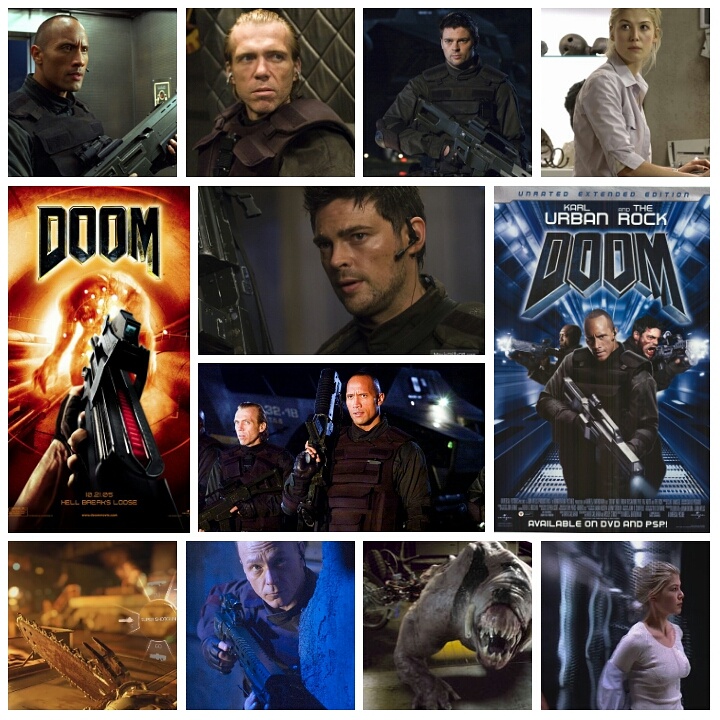
Despite not having a whole lot to do with the video games, Doom is still a rush of schlock and awe silliness, getting more fun and ridiculous in equal amounts near it’s nonsensical ending. Karl Urban and The Rock are the tough guys for the job when it comes to scoping out a Martian research base that’s accidentally opened up a portal to hell, unleashing all kinds of lovely things. Rock is Sarge, stoic commander of this unit, and Urban is John Grimm (he lives up to his last name) a battle scarred badass who has personal stake in fighting these monsters. His sister (Rosamund Pike) is a scientist on the base, and is now in a great deal of danger. After a neat Google Earth type zoom in on the Martian surface (ironically the only shot in the film that suggests they’re even on the red planet), it’s off to dank corridors, vast bunkers and beeping control panels, an Aliens-esgue siege on horrors of the dark that quickly goes sideways on them. It’s run of the mill stuff save for one stroke of brilliance: a pulse racing first person shooter sequence that showcases a POV of Urban shooting, slashing and chain-sawing his way through alien flesh. It’s a bold move that pays off immensely and is quite fun. The rest of their team is forgettable except for Richard Brake as Portman, the loudmouth A Hole of the bunch, a refreshingly animated performance in a roomful of muted, grim characters. The monster from the game shows up, a hulking hell pig nicknamed Pinky that tirades it’s way through everything until Urban gives it what for. This ain’t no great flick, but as far as video game movies go, you could do way worse. There’s definitely enough gore for the hounds, and it’s adequately stylish in presentation. 

THE BOURNE IDENTITY – A REVIEW BY J.D. LAFRANCE

bourne1

When The Bourne Identity (2002) debuted in theaters, audiences were hungry for a new kind of spy film. The James Bond movies adhered to a tried and true formula and it had gotten old. Mission: Impossible II (2000) collapsed under John Woo’s stylistic excesses and a boring love story with no chemistry between Tom Cruise and his love interest played by Thandie Newton. The world had changed dramatically since the events of 9/11 and a new international espionage action thriller would have to acknowledge this new reality. Along came The Bourne Identity, a very loose adaptation of Robert Ludlum’s novel of the same name and it connected with audiences even if most critics hated it.

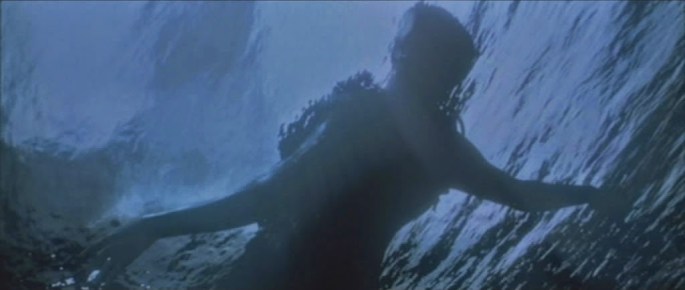
A mysterious, unconscious body is found floating out at sea by a boatload of fishermen. Two bullets in his back and a device that stores a Swiss bank account are found embedded in his hip. He wakes up with amnesia and one of the men onboard fixes him up. It isn’t until almost five minutes in that the first bit of understandable dialogue is uttered. Up to that point director Doug Liman drops us into this strange world without any set up so that we are disoriented, much like the film’s protagonist and therefore we identify and empathize with him almost instantly. These first few scenes establish the film’s style – constantly moving camerawork often with jarring, jerky movements that mimic our hero’s disorientation.

After two weeks at sea, he makes his way to land and begins a quest to uncover his identity. Over time, he discovers skills he didn’t know he had but that come out instinctively, like the ability to disable two armed police officers with his bare hands in Switzerland. He checks out his Swiss bank account and discovers that his name is Jason Bourne (Matt Damon). The safety deposit box contains money, passports for several different countries, and a gun. It becomes obvious that Bourne assembled this stash of supplies in case of a situation like the one he’s currently experiencing.

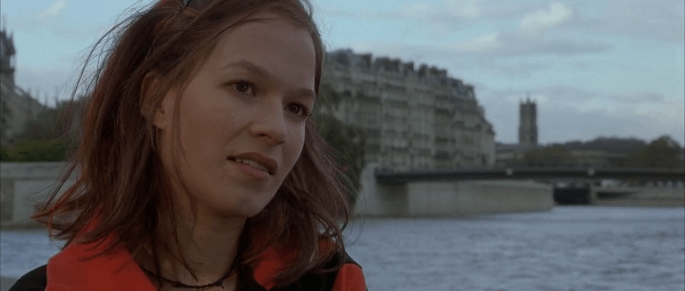
After a daring escape from the United States embassy, Bourne pays a young German woman named Marie (Franka Potente) to drive him to Paris where he apparently lives. It turns out that he’s some kind of lethal, CIA-trained assassin who has something to do with a top-secret operation known as Treadstone and he should be dead. It seems that the United States government is trying to silence an exiled Nigerian dictator by the name of Nykwana Wombosi (Adewale Akinnuoye-Aghaje) now living in Paris. He wants the CIA to put him back in power in six months or he’ll blow the whistle on their attempt to assassinate him. The man in charge of Treadstone – Alexander Conklin (Chris Cooper) – wants to make sure Bourne is dead because he was supposed to kill Wombosi when something went wrong. He sends three other assassins after Bourne and Marie.

Because Bourne suffers from amnesia and is being hunted by a secret branch of the CIA, we sympathize with his plight. It doesn’t hurt that he’s portrayed by Matt Damon who comes across as instantly likable and empathetic. Before The Bourne Identity, he was not regarded as an action star and so his capacity for sudden bursts of ruthlessly efficient violence and the ability to escape from several dangerous situations was a revelation. Damon pulls it off and more importantly is convincing as a deadly assassin with no memory. He is nothing short of a revelation as Bourne and the actor does an excellent job of not only gaining our sympathy early on, but also maintaining it throughout as we root for Bourne to figure out who he is.

When Bourne breaks out his martial arts for the first time in the film we are as surprised as he is and not just because it’s the first time we’ve seen him do so, but at the time Damon had never done a film like this before and it was his debut as a man of action. To his credit, he looks very adept and comfortable in the fight scenes and doing the stunts. The first substantial fight sequence where Bourne is attacked by a fellow Treadstone assassin is a visceral set piece as he uses everyday objects like a pen to defend himself. This is not the clean, polished style of Bond movies, but down and dirty fighting that looks bloody and painful. It has a personal vibe to it as the fight takes place up close and personal in an apartment. I like that the film shows Marie’s reaction to what has just happened. She is genuinely shocked and upset at the sudden outburst of violence she witnessed. As she and Bourne flee the scene she even throws up as a reaction to being in real danger.

The casting of Franka Potente as Bourne’s love interest is an intriguing choice. She doesn’t have the supermodel looks associated with the Bond girls. She’s beautiful with a nice smile and an easy-going charm. She’s relatable and grounded – part of the film’s realistic aesthetic. Marie is an everyday person thrust into extraordinary circumstances once she encounters Bourne. Potente also brings a certain amount of international cinema cache thanks to her breakout performance in Run Lola Run (1998). As a result, she doesn’t come across as some damsel in distress, but a proactive foil for Bourne. They quickly develop an easy rapport as he finds her constant, nervous talking comforting. Damon and Potente play well off each other in these early scenes as her character humanizes Bourne so that he’s not just some inhuman killing machine.

Chris Cooper is ideally cast as the no-nonsense bureaucrat Conklin who knows more than Bourne and yet is always one step behind in finding and catching the elusive assassin. He isn’t given much to do, but makes the most of his limited screen-time as he orchestrates the search for Bourne with considerable technological resources at his disposal. Cooper exudes just the right amount of uptight malevolence that we’ve come to expect from a Republican-controlled government. A young Clive Owen shows up as a Treadstone assassin who methodically tracks and then kills his targets. His showdown with Bourne in a field of tall grass is a tension-filled sequence as our hero uses misdirection to get the drop on the assassin, neutralizing him, but not before he imparts crucial information about Bourne’s past.

One of the reasons that The Bourne Identity was such a game changer for the spy movie genre came as a result of taking the hi-tech surveillance used in movies like Enemy of the State (1998) and updated it on a global scale as Conklin and his room full of I.T. specialists (including character actor extraordinaire Walton Goggins in a small role) track Bourne’s movements in Europe. Everyone leaves electronic footprints be it through credit card use or being picked up on security cameras and this was even more prevalent after 9/11. This heightened sense of surveillance has become a part of our daily lives. There is a certain delicious irony at work as Liman crosscuts between Conklin and his staff using sophisticated technology to find two people who are doing their best to stay off the grid, which results in them taking refuge in a house in the French countryside.

I like that Liman shows Bourne and Marie actually trying figure out his identity by doing the legwork involved as they call potential leads on the phone, visit key locations and talk to people as they try to put together the jigsaw puzzle that is his past. There’s a nice sequence where Bourne walks Marie through a task that he needs her to do for him. As she makes her way through a hotel lobby his words play through her head and we hear them over the soundtrack in voiceover narration.
bourn2.pngAt the time of its release, much was made of the chaotic production that pitted indie director Doug Liman and against Universal Pictures. Their dirty laundry was aired in the mainstream press and there was speculation that The Bourne Identity was going to be a box office failure. After the critical and commercial success of Go (1999), Liman decided to pursue his passion project – an adaptation of Robert Ludlum’s The Bourne Identity, a book he loved while growing up. It had been published in 1980 and featured an ex-foreign-service officer on the CIA’s hit list. Liman read it again while making Swingers (1996) and found that the characters still engaged him. He inquired about the film rights and found that Warner Bros. controlled them. Over time, the rights expired and Liman met Ludlum at his home in Montana, securing the rights. In 2000, Liman asked screenwriter Tony Gilroy if he would rewrite the screenplay he had for The Bourne Identity. After the success of The Devil’s Advocate (1997), Gilroy had gotten a reputation for saving damaged scripts.

Gilroy was not thrilled with the source material: “Those works were never meant to be filmed. They weren’t about human behavior. They were about running to airports.” Liman persuaded Gilroy to read the script, which he realized was “awful,” but they met and the latter asked the former why he wanted to make this film. Gilroy declined Liman’s offer, but when pressed gave him a suggestion: toss the novel and keep the idea of an assassin with amnesia. “You only have one way to find out … What do I know how to do? I guess your movie should be about a guy who finds the only thing he knows how to do is kill people.”

Liman eventually wore Gilroy down and he agreed to work on the script. While the first five minutes of the film comes from Ludlum’s book everything after Bourne gets off the boat was created by Gilroy. At the time, Matt Damon wanted to “try an action movie … exactly the way I’d love to do it, with someone who was thinking outside the box. Doug being Doug, this would be an interesting movie.” He agreed to do the film after meeting Liman and reading Gilroy’s script.

Liman took the project to Universal Pictures in the first place because “it was just as important to them as it was to me to make this a character-driven movie and not just a generic action movie.” By his own admission, the director was mistrustful of studio decisions like their suggestion that he shoot in Montreal instead of Paris to keep costs down. He argued that the Canadian city didn’t look like the City of Lights and the studio relented. Liman applied his often chaotic, unpredictable style of filmmaking to a big budget studio film with mixed results, often angering the producers. For example, once in Paris, he hired a crew that didn’t speak English (so he could practice his French).

When Damon arrived he didn’t like the changes made to the script after the one that made him sign on in the first place. Liman had brought in David Self (Thirteen Days) to fix what he felt was a problematic third act when Gilroy left to write Proof of Life (2000). Some of the character-driven material had been removed in favor of bigger action sequences. According to Damon, Self “went to the book and did a page-one rewrite. Every few pages, something blew up … It was not the movie I agreed to do.” Editor Saar Klein remembers, “We went into production with a script that was just a mess.” Liman agreed and Gilroy came back after finishing Proof of Life to write new scenes and fax them from New York City to Paris.

Producer Richard Gladstein left the production because his wife was going through a difficult pregnancy. Universal did not want Liman filming unsupervised in Europe and brought in veteran producer Frank Marshall who had known the director since he was a child. The studio felt that Liman’s approach was unorganized and unnecessarily costly. He responded by saying, “I like to keep my options open. I’m known for changing my mind.” The studio also felt that he lacked maturity. For example, one night Liman paid the crew overtime to light a forest for him to play paintball. Liman claimed that the studio hated him and they tried to shut him down: “The producers were the bad guys.”

It got so bad between Liman and the studio that they rejected anything he said. The director ended up using Damon as his surrogate, but this only worked for a short time. One day, Liman realized he’d missed a shot and asked the producers if he could redo the scene. They said no and so he loaded four minutes of film in a camera and reshot the scene himself, which infuriated the producers. This resulted in a giant screaming match on the set. At one point, Liman even toyed with auctioning off his director’s credit on eBay. Despite all the friction between Liman and the studio the end result speaks for itself. The Bourne Identity was a commercial hit, but the studio had not surprisingly soured on Liman and banned him from directing the sequels. “I lost my baby,” he said.

The Bourne Identity was shown to a test audience who liked it, but wanted more action at the end. After much debate with the studio, Liman and Gilroy devised a new action sequence. The screenwriter did not enjoy the experience of working with Liman finding that the director “didn’t have any sense of story, or cause and effect.” Liman found Gilroy “arrogant” and at one point attempted to hire a new screenwriter until Damon threatened to quit if his script wasn’t used. Gilroy saw a rough cut during post-production and was worried that the film wasn’t going to be good. It had come out a year late and went through four rounds of reshoots. He tried to take his credit off the film and arbitrated against himself. He wanted to share credit (and blame) with someone else. After all the dust had settled the film went over budget by $8 million and two weeks over schedule. This forced Universal to move the original release date of September 2001 to February 2002 only to push it back again to May 31 and finally settling on June 14.

What separates The Bourne Identity from the Bond films at the time is that it took the international espionage thriller and personalized it. For the most part, the adventures that Bond had in his movies never affected him personally (the notable exception being License to Kill and now the Daniel Craig films) while in The Bourne Identity it is very personal, but without sacrificing all the things we’ve come to expect from a spy movie: exotic locales, exciting car chases, lethal bad guys, and intense fight scenes. What made the film such a breath of fresh air was how it tweaked these tried and true conventions.

bourne3At its heart, The Bourne Identity is a mystery as Bourne tries to figure out who he is and why there are people trying to kill him. This gives Liman the opportunity to ratchet up the tension as Bourne is constantly looking over his shoulder, never able to rest for too long and unable to trust anyone except for Marie. Known previously for character-driven independent films Swingers and Go, Liman showed his adeptness at working in multiple genres by bringing his trademark loose, almost improvisational approach that breathed new life into the spy genre. It had become safe and predictable and it took an outsider like Liman and casting against type with Damon to shake things up. Without The Bourne Identity, Casino Royale (2006) would have been a very different film and the subsequent Daniel Craig Bond films wouldn’t be as gritty and substantial as they are.
Netflix’s Stranger Things: A Review by Nate Hill 

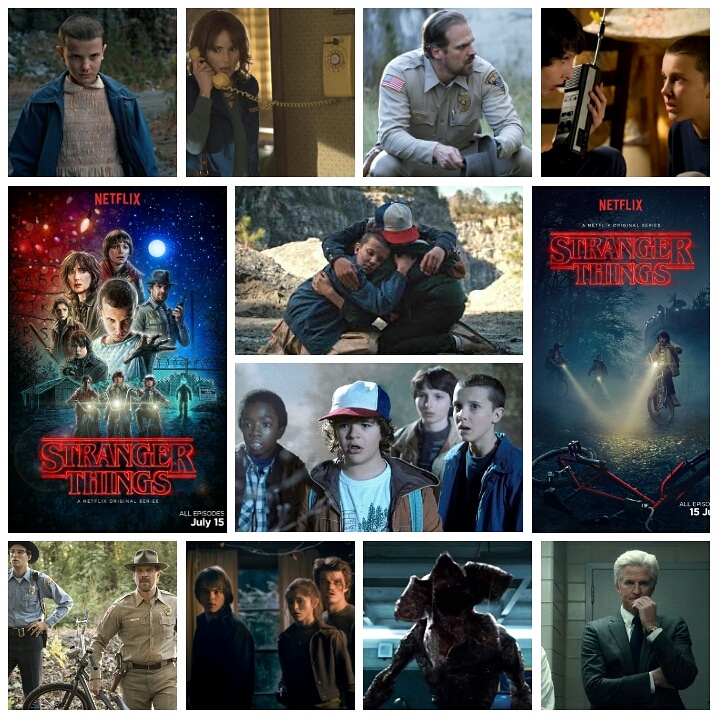
Netflix’s Stranger Things snuck up and floored me. You’d think that a long form mystery series concocted from the DNA of Amblin/ET/Goonies and retro, gooey Stephen King horror would have made a significant blip on my radar months in advance, but nope. That almost made watching it even more special; this wasnt something I’d spent oodles of time hyping up and thinking about (which often leads to expectations being dashed). It came out of the blue and knocked me sideways six ways to Sunday. I came home one night with the notion to check out the pilot before I went to bed. I fell deeply in love within the first ten minutes, and slashed my curfew to bits as I devoured about half the season in one go, hitting stop only because I would have been depressed to wake up the following morning and have no more to watch. I took the next day off work to finish up the remaining episodes, after which I sat there in a gaping stupor. I’ve since rewatced it all again. Yes, it’s that good. It’s not just the nostalgia bursting at the seams that suckered me in. This is is a show with a meticulous pace where you feel every beat naturally, some of the most fleshed out characters of recent times that you actually really CARE about, and a wondrous story relating to fear of the unknown, the bonds of friendships both new and old, redemption in the face of ages old trauma and grief, a reverence to all things creepy & crawly, an understanding of the importance fear holds in both our entertainment and collective psyches and above all, a sense of adventure. As soon as the retro opening credits flared up, I knew I was in for something special. They’re a flurry of neon letters that assemble in fashion and font achingly similar to King’s books, set to an ominous synth rhapsody that echoes everything from Refn to Sinoia Cave’s Beyond The Black Rainbow. Immediately we are transported to a setting drawn forth from the past and the nightmares of many other artists before it’s time, which is not to say it’s at all derivitive or lazy. That’s the issue with deliberatly nostalgic stuff: it can come across as forced or cheap novelty trying to play to our sentimental sides. This one uses it naturally and never feels like a gimmick for one second. What’s amazing is that despite the fact that nearly every element of story it uses has been done before multiple times throughout the years, it all somehow feels completely new, and never once leans on the crutch of inspiration any harder than it has to, which in this day and age deserves a goddamn medal. The story opens up in small town Hawkins, Indiana, sometime in the mid 80’s. Just outside of town, trouble brews deep within a mysterious CIA sanctioned research laboratory. A dangerous portal is opened, something from another dimension gets out, a girl with telepathic abilities named Eleven (Millie Bobby Brown) escapes into the town, and young Will Byers (Noah Schnapp) disappears without a trace from his home. All this happens in the first half hour, kicking off a well timed wind chime of inciting incidents to get the tale underway. The town is thrown into a panic as Will’s mother Joyce (Winona Ryder) frantically searches for him. The forlorn, sad sack police chief Hopper (David Harbour, beyond excellent in so many ways) tries to reign in the growing mania, but the situation only gets worse. Will’s sister Nancy (Natalia Dyer) witnesses another disappearance, and Eleven finds herself hiding out with Will’s endearing gang of buddies (Finn Wolfhard, Caleb Mclaughlin and Gaten Matarazzo), who valiantly launch a quest to ensure his safe return from the netherworld. Meanwhile, the laboratory’s sinister, silver haired head Doctor Brenner (a chilling Matthew Modine) is an amoral prick who will stop at nothing to get Eleven back and continue his godawful experiments. It’s a hell of a lot crammed into eight hours, but not a second is wasted, not a scene or a line of dialogue misplaced. Everything glides smoothly and the whole thing is so joyously watchable that I had trouble even thinking about picking up my phone or reaching for the iPad (I’m easily distracted). There’s teen drama, heartbreaking tragedy, first love, palpable danger without being too gory or messed up, and damn if the Spielberg/King flavour isn’t just delactable. The monster is a gooey, walking Venus fly trap that instills real fear in the opening moments of the pilot. The ideas explored are presented in ways that would make both the X Files and Twilight Zone jealous. My favourite performance has to be Brown as Eleven. Of all the child roles hers is the most difficult to land and she’s a revelation. Seeing the world outside the facility with new eyes, falling for Wolfhard, protecting her newfound friends, it’s all handled impeccably and I think we can expect great things from this young actress. David Harbour has consistently shown versatility in anything he does, and when one looks at his role here contrasted against work in, say, A Walk Among The Tombstones, it’s uncanny. His arc goes from sheepish to badass to tragic and he positively soars. Modine channels the very essence of King style villains, over pronouncing every syllable with poised venom on the tongue and cloaked malice oozing from every pore. Ryder works herself up into a frenzy that any mother must feel in the situation, and it’s just great to see her in a central role in anything these days. The kids provide heart and levity, proving wise beyond their years to the point of Calvin & Hobbes esque insight, yet still maintaining their innocence in the face of peril. Not only does the soundtrack showcase a whole whack of 80’s treasures (that Joy Division tho♡), the score itself by Kyle Dixon and Michael Stein is a love letter to everything from Tangerine Dream to Cliff Martinez, evoking the setting beautifully and bringing forth atmosphere in scene after scene after scene. Stranger Things lovingly blows a trumpet of times past, wears it’s influences proudly and unobtrusively on its sleeve and brilliantly blazes it’s own trail. There are monsters out there, both human and otherwise. Never give up hope, not matter how bleak the prognosis. There’s still some wonder and unknown to be discovered in this world of ours (and beyond). Redemption is only a few daring acts around the bend. Kindness goes a long way, as does trust. Friends don’t lie. These are but a few things you’ll discover if you give this one a shot, which I hope you will. Bring on Season 2, man.

RICHARD BENJAMIN’S DOWNTOWN — A REVIEW BY NICK CLEMENT

1
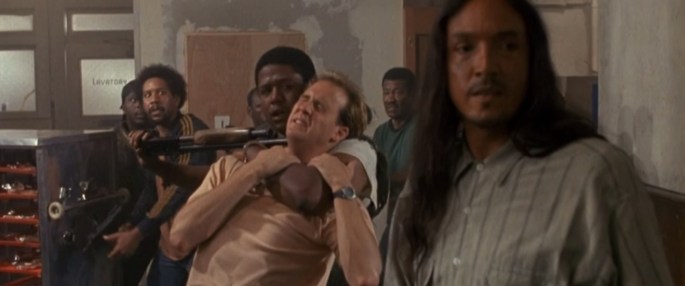
Despite clearly being a Lethal Weapon wannabe without the same spark in nearly every category, Richard Benjamin’s low-wattage buddy-cop film Downtown still features some solid car chases, explosive action sequences, and one very memorable bad-guy dispatching that sort of has to be seen to be believed. Pairing Anthony Edwards and Forest Whitaker as mismatched partners on the streets of Philadelphia yielded some fun results, with the two of them sharing fine chemistry, but it’s the screenplay that never allowed for anything original or truly inspired to take place. The supporting cast adds some life, with Joe Pantoliano, Penelope Anne Miller, David Clennon, Art Evans, and Glenn Plummer all giving better performances than the material deserved, while the heavy lifting was left to Edwards and Whitaker, who clearly were having some fun, but probably wished that they were making a better film than they were.
3
Casual racism is tossed off like nobody’s business, the script really leans on cliches, the jokes are decent yet never uproarious, and the film has this odd vibe where, in certain spots, it’s very goofy and affable, and in others, extremely vulgar and rather violent. The narrative is very much a rehash of so many other, better movies that had come before it, but for fans of R-rated B-actioners, Downtown will serve as a decent time waster, the sort of movie that feels like it was made to specifically be rented for $3 on YouTube. Features a very energetic score from Alan Silvestri (Back to the Future) and no-nonsense cinematography by versatile cameraman Richard Kline (Who’ll Stop the Rain, Death Wish II). Dumped onto less than 400 screens in January of 1990, the film barely earned $3 million in domestic box office before being sent to cable rotation. If you’re a fan of this well-traveled genre, it’s worth a low-expectations viewing. And again, it’s got one helluva death scene for one particular villain…!
 2

PETER BOGDANOVICH’S WHAT’S UP, DOC? — A REVIEW BY NICK CLEMENT

1

This movie is tons of fun from start to finish. I love the busy plotting and frenetic vibe, and count me in for any successful attempt at screwball comedy from any year; these types of movies would clearly never be made today and thanks to the people at TCM, their programming slate has been on fire of late. Peter Bogdanovich obviously had a total blast with this wild and crazy little movie, one that seems to be in love with the fact that it exists solely to entertain; there isn’t a pretentious bone in this film’s charming body. The inspired absurdity, which pays reference to Bringing Up Baby and various Bugs Bunny cartoons, revolves around four strangers who all happen to be carrying the same piece of plaid luggage and staying at the same hotel, with everyone getting their belongings mixed up, and hijinks ensuing.There’s a gleeful sense of madcap to most of this movie, which always puts a smile on my face, and I love how the entire film felt like an escalating series of nonsense that everyone took just seriously enough to make it all work.

3
Ryan O’Neal and Barbara Streisand were both superb, while Madeline Kahn stole the film in her first big-screen outing. Kenneth Mars, Michael Murphy, Austin Pendleton, John Hillerman, and many others all contributed to the sterling supporting roster. Released in 1972, What’s Up, Doc? grossed nearly $70 million domestic on a $5 million budget, making it a massive financial success while receiving warm critical embrace. The cinematography by master of the era László Kovács paid tribute to films that had come before, while still staying zippy and displaying a sense of visual energy that bolstered the entire production. Verna Field’s brisk editing kept a fast pace which felt appropriate for the material. And despite not being a traditional musical, there’s a harmonious vibe to the entire movie that is very pleasing, with the WGA-winning screenplay by Buck Henry, David Newman, and Robert Benton hitting one hilarious beat after another. Bogdanovich made some absolutely brilliant movies and this is one of his loosest and most purely enjoyable on a simple but never stupid level.

2

Priest: A Review by Nate Hill 

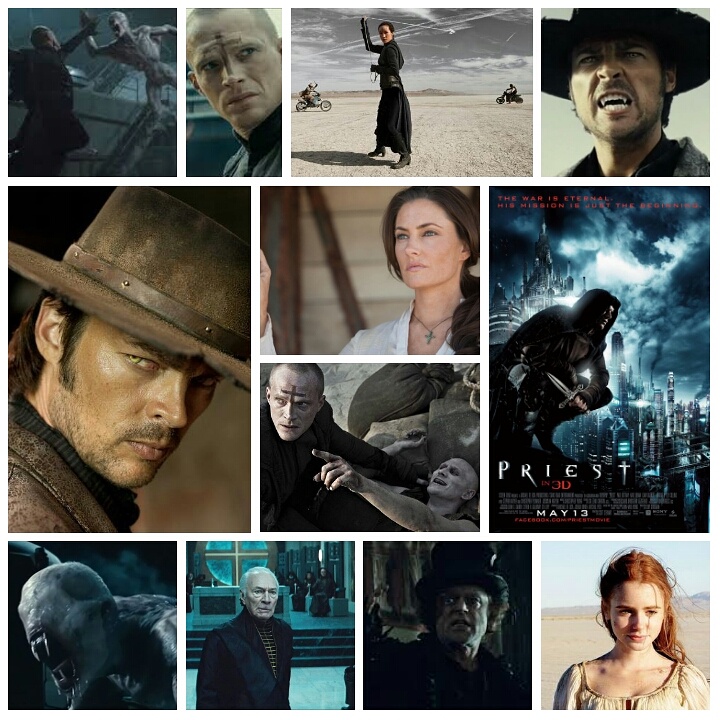
Priest is one of those flashy missed opportunities, a visually stimulating comic book flick that just couldn’t amp the substance metre up enough til it’s flush with style, and ultimately feels somewhat hollow. It’s still a gorgeous Blu Ray that will give your system a workout though, with some neat vampires and a great cast. Sometime in a murky post apocalyptic future, humanity lives in a giant gloomy city on the edge of oblivion, walled in for fear of vampires who have preyed upon them in the past. An order of warrior priests protects citizens and keeps order, until one rogue from their sect (Paul Bettany) discovers that the creatures may be back when an outsider couple (Stephen Moyer and Madchen Amick) have their daughter (Lily Collins) kidnapped from their desert dwelling outside the city. They come to Bettany for help, but the leader of his priesthood (a smug Christopher Plummer) is an obstinate son of a bitch and refuses to act. Bettany goes renegade along with Priestess (Maggie Q) and ventures into the wasteland to rescue Collins and fight these baddies. It’s frustrating because the look and design of this world is brilliant, like a dark opulant jewel that clearly has some thought put into it. But then… the dialogue and story are so numbingly pedestrian, straying not a kilometer into uncharted narrative waters to give us something even a little bit exciting or unpredictable. Quality jumps with Karl Urban’s dapper villain Black Hat, a vampire cowboy outlaw who oddly resembles what I’d imagine Stephen King’s Roland Deschain would look like if the powers that be took their heads out of their ass and recasted Idris Elba. But I digress. Like I said, terrific cast; Brad Dourif has a great cameo as a snide hustler peddling trinkets to superstitious townsfolk, and watch for  the great Alan Dale too. Bettany always makes for a solid action hero, he just has a bit of trouble finding the right projects (have you seen that turd Legion? Good lord) that deserve bis talents. This one falls just short. It could have really used a few rounds of defibrillation from another screenwriter, and perhaps a hard R rating to take advantage of the horror aspects. Still, the vampires are creepy enough (echoes of Blade II are always welcome), the actors keep it going and there’s no shortage of style.