Alfonso Cuarón’s Roma

Less a film than it is a two and a quarter hour slice of hyper realistic, deeply immersive life, Alfonso Cuarón’s Roma weaves a transfixing, masterful spell by imparting to us one year in the lives of a Mexican family circa early 70’s, through the eyes of their shy, courageous and compassionate maid, Cleo (Yalitza Aparicio). Cuarón is partial to lofty special effects, tricky camera work and experimental sensibilities, all of which make their appearances here but in quite a different capacity than expected. The shots (he served as his own cinematographer and it makes the film all the more personal) are used as living visual canvas for these characters to dwell in, the pace is languid yet never slacks, there is no score or soundtrack to speak of and the result is something so lifelike and authentic that I felt if I paused it to take a piss it would just continue on without me, free from the commonplace vibrations of what we are used to in cinema. There’s a remoteness to the storytelling here, but nothing in the way of warmth is lost; as anti-melodramatic as it is, the film meanders through the lives of these people with a fly-on-the-wall intimacy, remaining at arm’s length in terms of the drama yet stemming right from the heart as it shows the events unfold. All of the actors except for one are virtual unknowns, and there’s an organic cadence to their performing language that’s so unique, especially in the case of the children in the family, who take sort of a backseat to Cleo and the parents, despite the film being semi autobiographical. Aparicio too has one sole credit with this film, but her work as Cleo would have you believe she’s been at it for years. She’s a radiantly magnificent pillar of support for the family, surrogate mother and caretaker whose deep, soulful eyes harbour a fierce modesty. It’s when we start to see the heartbreak, struggle and triumph of her own personal life that the film truly takes hold, this is her story and from moment to moment, we are captivated as to where it will take us. Cuarón shoots in incisive, elemental black and white and after seeing the film it’s hard to imagine another choice of palette. The visual aura combined with shooting techniques and hyper realism make it seem like the closest we’ll get to a time machine in cinematic form, like a temporary window into his hazy memories of the past, accessible for an entrancing few hours and then gone again like the dream it is, culled straight from Cuarón’s potent memories of growing up as a child. I was unfortunately to busy to catch this in its theatrical run here, but on a large enough screen at home with every light switched off and the volume cranked, it still works it’s magic beautifully. A minimalistic tone poem that speaks volumes, a quiet masterpiece from Cuarón and one of the best films of the year.

-Nate Hill

Francis Ford Coppola’s Rumble Fish

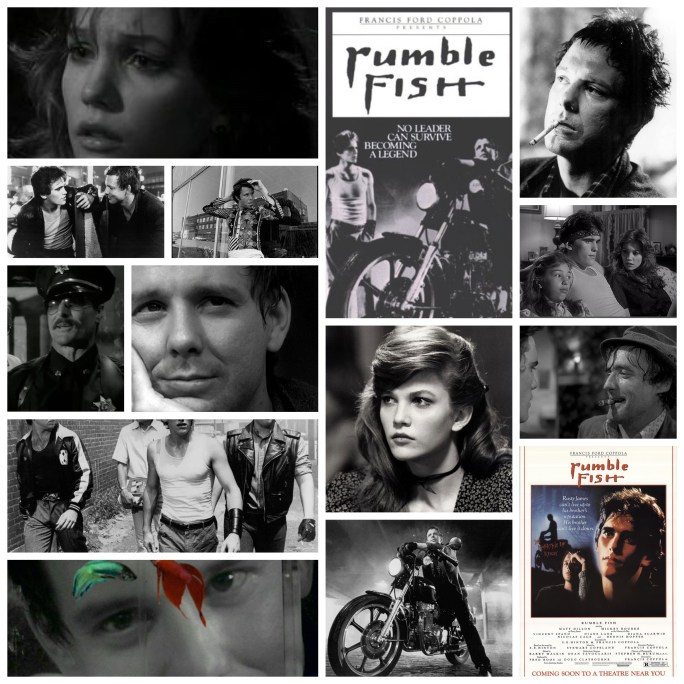
Francis Ford Coppola’s Rumble Fish is a gorgeous, star studded look at street hoodlums of the 1950’s through a strange, dreamlike prism of off kilter dialogue and mesmerizing characterization. It’s based on a book by S.E. Hinton, who also wrote The Outsiders, which Coppola adapted as well, this one is a bit of a different animal. Where one might expect a grounded, topical, straightforward script and narrative, we’re instead treated to a lyrical, dense and almost experimental tone. Characters exude archetypal charisma that is stunningly thrown off balance by the poetic, otherworldly dialogue that’s at times almost inaccessible, but always feels intuitively… right somehow. It’s as if The Outsiders went to sleep and had a dream, functioning on a similar yet highly unconscious plane. Once you get accustomed to such an aesthetic, it’s a film to draw you in and give you poetic dreams of your own. Young Matt Dillon is Rusty Ryan, a naive upstart with dreams of notoriety in the worn doldrums of his urban sprawl neighbourhood. He lives under the intense reputation of his older brother, known only as The Motorcycle Boy (Mickey Rourke). Rourke is at the peak of his moody blues James Dean phase here, and commands the screen with a laid back abandon and smirking charm. He gets romantically involved with angelic local beauty Patty (young Diane Lane, stunning), and deals with his loveable deadbeat father (Dennis Hopper). The scenes between Hopper, Dillon and Rourke have an easy swing to them, and the three inhabit a lived in dynamic that strengthens their characters, individually and as a group. Rourke is under the suspicious eye of robotic, violent local cop Patterson (William Smith), who is just waiting for him to step out of line. Dillon and his thug pals, including Nicolas Cage, Chris Penn and Vincent Spano, daydream their days away pining for the oft talked about days when gang warfare was commonplace. There’s a splendid supporting cast including Laurence Fishburne, Sofia Coppola, Diana Scarwid and Tom Waits, mumbling sweet existential nothing’s to themselves in the local diner, the silent streets and other beautifully shot locations. The film is shot in wistful black and whites with the vivid exception of the titular rumble fish, who appear in vibrant hues to accent their metaphorical presence. The film exists in a realm of heightened emotions where the characters all seem to be a little larger than life, but nevertheless human. There’s a gorgeous, entrancing surreality to it too, a free flowing, dreamy vibe of chrome on asphalt, lazy afternoons and long glances at pretty girls in windows. An unconventional masterpiece.

-Nate Hill

Cops & Robbersons

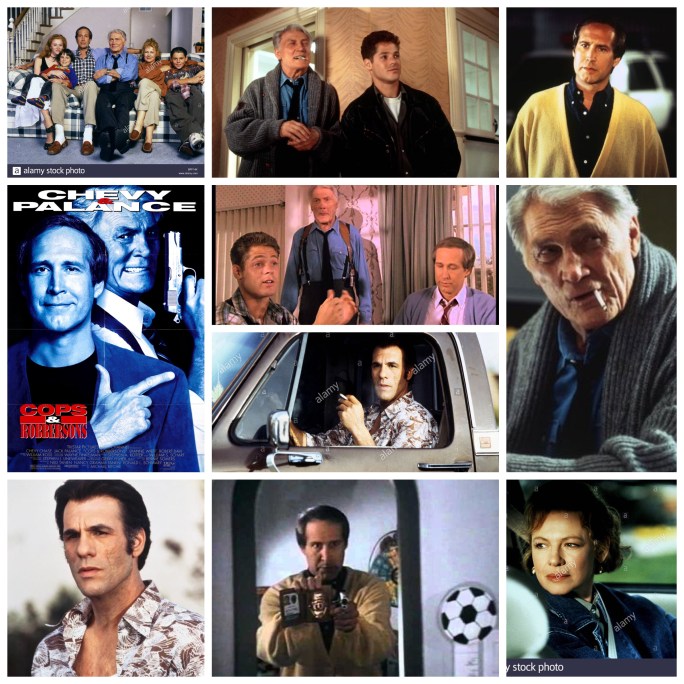
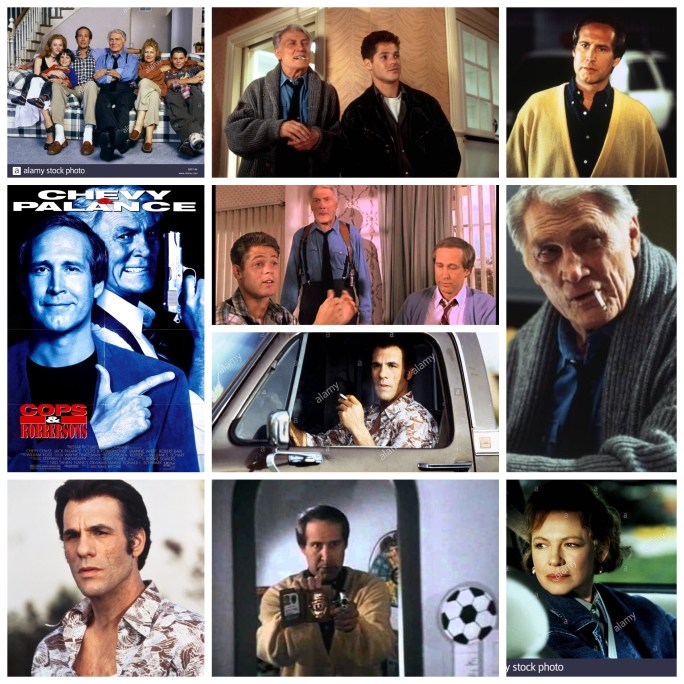
Here’s a concept: The feds camping out in suburbia with annoying Chevy Chase and his annoying family trying to lay down surveillance on the murderous counterfeiter who lives next door. It’s as asinine as it sounds, and as much as I actively avoid Chase (the guy just isn’t and has never been anything close to funny), the film has two redeeming factors: Jack Palance as the cranky, chain smoking veteran agent in charge, and Robert Davi as the scary criminal who has a habit of killing anyone he does business with, and a few watermelons along the way. Palance and his junior agent shack up with Chase’s hapless blue collar simpleton, his wife (Dianne Wiest) and kids. The old grump couldn’t be unhappier about it either, especially when Chase takes it upon himself to do recon all his own, royally screwing up the operation and nearly blowing their cover at every turn. Palance is priceless as always, Davi is reliably menacing and even Wiest has a sunny naivety that’s almost winning… the problem is just Chase. The guy is neither funny nor engaging, and just looks like a thumb with hair sitting there trying every trick to make us laugh and failing. An above mediocre comedy that’s best viewed on cable as background noise.

-Nate Hill

Gregory Hoblit’s Fracture

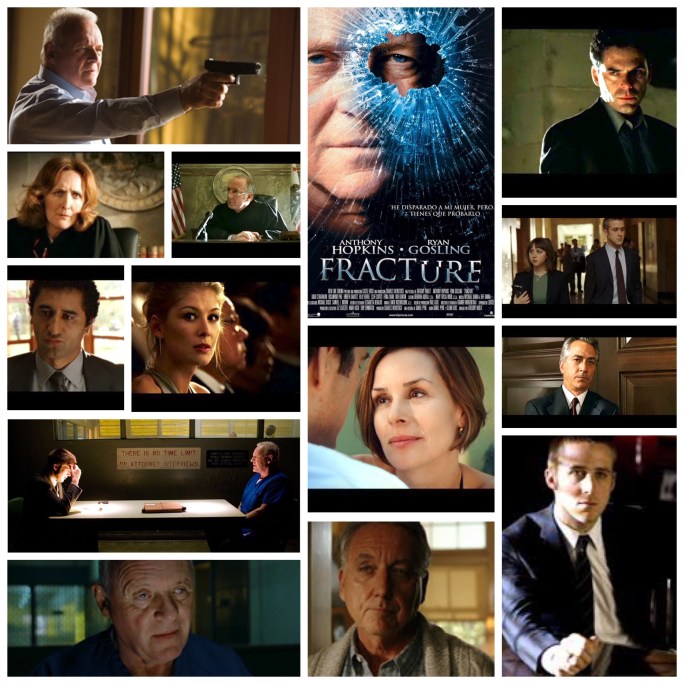
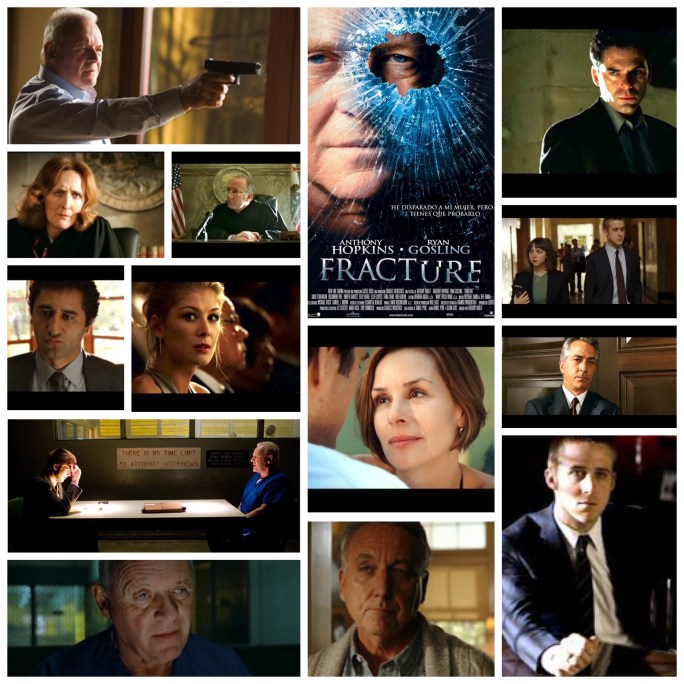
The judicial system has never been played so hard as it has by Anthony Hopkins in Gregory Hoblit’s Fracture, a thriller that’s written, acted and directed to high heavens but scored into oblivion. I’m not kidding, a hotshot courtroom gig of this caliber should sound great but the musical composition here by the Brothers Danna makes it sound like a TV movie and really doesn’t do it any favours. Odd, when you consider the fact that they are Oscar winners for previous scoring work. Hopkins is the murderous rich prick who shoots his wife (an underused Embeth Davidz) in the face when he finds out she’s having an affair with a cop (Billy Burke). Then in a spectacularly nasty move, he sets it up so the detective is first on scene to find her just so the old bastard can see the look on his face. After that, no one seems to be able to make the case stick to him, and it’s passed off to young hotshot prosecutor Ryan Gosling, who underestimates the sheer diabolical resolve of Hopkins and sails straight into his net. It’s pretty preposterous and overblown in terms of what’s allowed, not allowed and plausible in events surrounding such a high profile court case (why would they let him so close to his comatose wife right after such a suspicious acquittal?), but employ suspension of disbelief and this vicious little narrative is a lot of fun. Hopkins has a ball with this role, relishing the moment every time he royally fucks someone over and cooking up a stinging blend of laconic sociopathy and bubbling mirth. Hoblit gathers an impressive supporting cast including perennial silver-fox David Strathairn, Bob Gunton, Fiona Shaw, Cliff Curtis, Xander Berkeley, Zoe Kazan and slinky Rosamund Pike as a love interest from a rival firm. It’s a bit of a shame because the script, performances and story are all very well orchestrated, but the score and certain details just seem glossed over when there could have been more grit and depth. Those lacking elements give it an airy feeling of incompleteness where it should have been deeper and tighter drawn.

-Nate Hill

Drew Goddard’s Bad Times At The El Royale

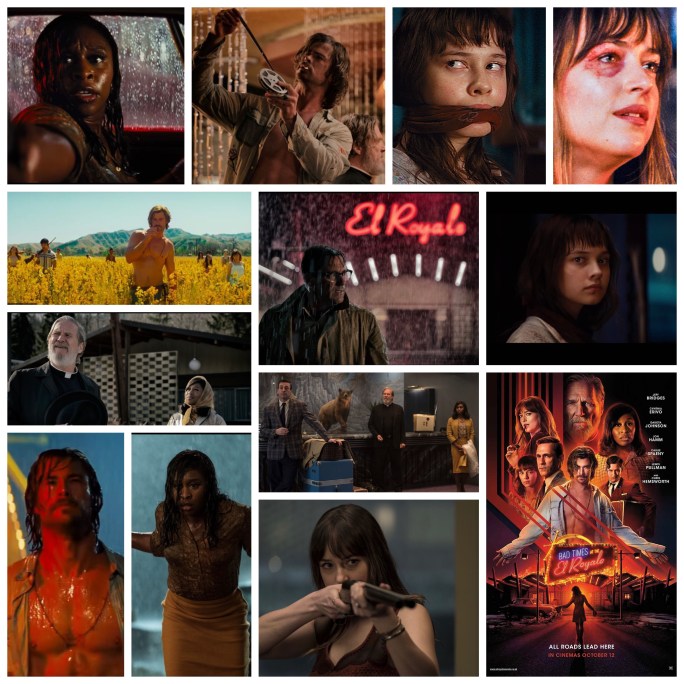
Although not quite the dense, delicious narrative feast I envisioned based on marketing, Drew Goddard’s Bad Times At The El Royale is an impressively mounted period thriller with gorgeous late 60’s production design, fantastic performances from a variety of players and a hard boiled, ultra violent storyline loaded with equal helpings of melodrama and pulp. Somewhere along the Nevada/California state-line lies the ornate El Royale, a retro pop funhouse with a giant chandelier, soda jerk sensibilities and and a jukebox that doesn’t quit. The rooms in California cost an extra dollar a night than those in Nevada because of course they do. A handful of strangers show up one fateful day in 1969, the motives, pasts and true temperaments of which are slowly revealed throughout the rainy night via an elliptical tale that weaves forward, backwards and flows past many perspectives and angles to show what is actually happening. Jeff Bridges is the salty preacher with memory issues, Jon Hamm the chatterbox salesman who moonlights as a clandestine federal agent, Lewis Pullman the dodgy hotel clerk, Dakota Johnson and a scary Cailee Spaeny two hippie sisters on the run and Cynthia Erivo in the film’s best and most human performance as a fledgeling singer just trying to survive the crazy night. Alliances shift, flashbacks sometime prove reliable and sometimes not, people are killed graphically, the rain pours down, intentions are laid bare and that jukebox keeps on keeping on. The soundtrack they’ve amassed is something else here, an old time collection of Mo town, sun n’ surf and heartfelt solos by Erivo that give the film a vibrant personality. And yes, Chris Hemsworth is in it too, playing a volatile, Manson-esque cult leader with a short temper, long hair and a button down shirt that conveniently never gets buttoned down (anything to fill those seats). The character is a bit much and sort of takes over the wheel in the third act, but Chris is too young to pull something that magnetic off as well as others could and I couldn’t help feeling like he was miscast. The film sort of suffers from what I call Hateful Eight syndrome a bit; when you have an Agatha Christie sort of tale to tell, the setup is always a tantalizing mystery that, once unravelled, has to feel worth the build and earn its revelations along the way. The payoff here is better than Hateful Eight and the film overall is stronger too, but I felt just a smidge underwhelmed once everything was laid bare and the wrap up rolled around. Nevertheless, this is a surefire piece of thriller entertainment with many elements that work terrifically, namely acting, dialogue and production design. Erivo seems to have come out of nowhere and also impressed me in Widows earlier this year, she grounds the film in reality and serves as the moral compass of sorts in this miasma of reprehensible human behaviour, I hope to see more of her and hear more of that singing voice in the future. Spaeny too was excellent, playing a pitch perfect acolyte with an unbalanced edge and a dead eyed stare that was truly chilling and definitely reminiscent of what I’d imagine a freaky ass flower power cult chick would have come across as back then. A fine piece of entertainment that wasn’t as deeply plotted as it could have been, but blasts by with admirable energy and streamlined ambition.

-Nate Hill

Bruce Robinson’s Jennifer 8

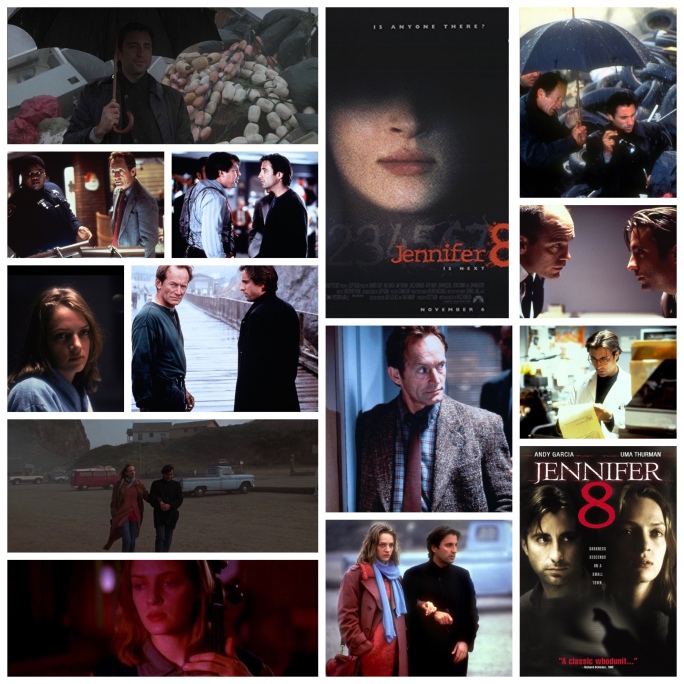
‘Darkness descends on a small town’, the tagline of Bruce Robinson’s Jennifer 8 warns us. No kidding, this is one rained out, bleakly lit, forbiddingly gloomy thriller. Although not without noticeable editing and pacing issues, I love it for the thick, nightmarish atmosphere it produces, the drab northwestern small town feel and a well rounded cast of leering character actors who all may be suspect in the harrowing central murder mystery. Andy Garcia is big city cop John Berlin, called in by his veteran detective buddy Freddy (Lance Henriksen, almost incapable of not stealing every scene) to investigate possible serial killer after a woman’s severed hand is found at the local dump. Talk about your rainy movie scenes, the part in the scrapyard seems like they set up sixty rain towers in a circle and ran them full blast for a deafening monsoon that almost drowns out the dialogue. From there on in it’s a murky whodunit populated by cops, reporters, coroners and and other skeleton crew occupants of this understaffed town, many of whom have skeletons of their own in the closet or just may be the killer. Clues lead to a young blind girl (Uma Thurman, radiant in one of her very first roles) who attracts the killer like moth to a flame, as well as Garcia who acts as guardian angel and love interest to her. I guessed who the murderer is way before the final twist, but that’s not to say it’s a dead giveaway or lazily written, I just have a knack for recognizing actors anywhere right down to the bit players and saw traits in a brief physical reveal, but the mystery is still decently shrouded and pretty much plays fair against scrutiny. Garcia, Henriksen and Thurman are supported by a thoroughbred roster including Paul Bates, Kathy Baker, Kevin Conway, Graham Beckel, Nicholas Love, Bob Gunton, Jonas Quastel and Twin Peak’s Lenny Von Dohlen as the local newspaper scribe. Oh yeah, and John Malkovich weirdly shows up out of the blue as some eccentric, obsessive Fed who has it in for Garcia and puts him through a hilariously faux intense interrogation monologue. Director Robinson (the famed Withnail & I) apparently only wrote and directed this one in hopes of whipping up a mainstream commercial hit to raise dough for more brooding artsy stuff, but the joke was on him because from what I hear, this royally tanked and even went direct to video across the pond. Well it ain’t a perfect film but I love it anyways, there’s too much eerie rural atmosphere and too many stalwart actors to write it off, it fits squarely in amongst my top serial killer mysteries.

-Nate Hill

Peter Antonijevic’s Savior

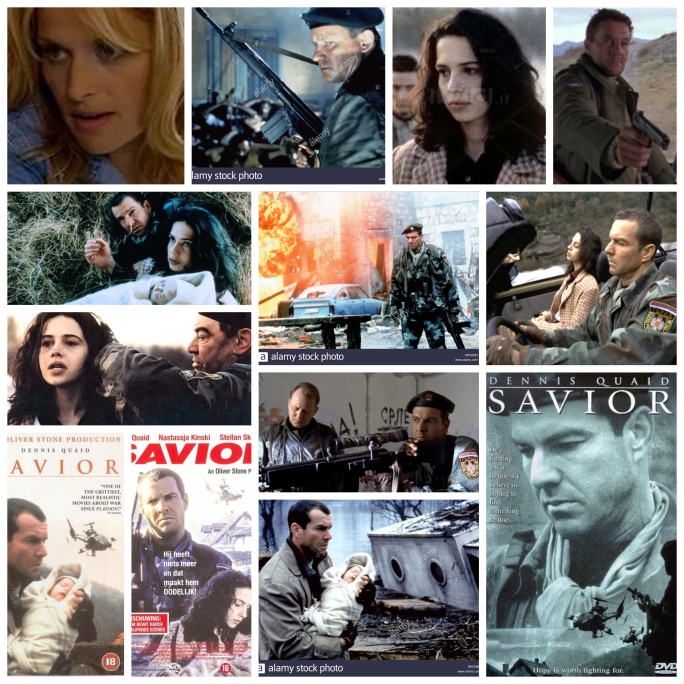
Savior is not an easy film to watch. At times it’s downright excruciating. But it’s also beautiful, and takes its subject matter very, very seriously, with not a cliche in sight for the entire duration, one of the reasons it’s my favourite war film. Dennis Quaid is mostly known for the charming, roguish way he has about him and that unmistakable mile wide grin, but here he drops all of that for a solemn, tortured turn that leaves your heart in a vice grip and your hands gripping the chair. He plays plays a military man forced to go mercenary in the French foreign legion after his wife (Nastassja Kinski) and young son are murdered in a radical terrorist bombing. His knee-jerk reaction is to walk down the street to the nearest mosque and shoot everyone in the place to death, so naturally he kind of has to lay low after. Fate finds him working freelance in the horrors of the Serbian Bosnian war circa mid nineties, and it’s there the film becomes a deep, challenging, distressing but necessary portrait of the kind of chaos, both physical and psychological, that war leaves in its wake. Tasked with transporting a Bosnian girl (Natasa Ninkovic) who was impregnated by a man on the other side of the conflict and has now been shunned, he’s faced with a shot at doing something kind to combat the tide of horror and perhaps find his retribution. In a time of such rampant, normalized genocide, he takes a stand for one mother and her child, trying to get them safely to the UN and find a little solace for himself while he’s at it. It’s an interesting character and Quaid plays him brilliantly but close to the chest. Early on we see him absentmindedly gun down a young boy herding goats, a harsh and seemingly inexplicable action. Later on he defends innocents against slaughter, but he’s not a hero so much as he is a malleable, realistic human being who makes choices just like anyone, and war sometimes brings out extremes in people that go both ways. This is unlike any other war film; there are no orchestral heroics, no ponderous meandering, no large scale epic battles to flash the budget. This is the frank, blunt force trauma vision of the genre, and Quaid is the perfect haunted, bitter hearted antihero to populate it and find the dormant humanity residing in himself even in a region that has so badly lost its way. Genocide is depicted later on in the film and it’s a fucking harrowing thing to witness, the perpetrators matter of factly bludgeoning villagers to death along a river, the victims relegated to a resolute shell shock, it’s nothing like usual melodrama employed in these scenes elsewhere. Stellan Skarsgard makes a quick and welcome appearance as his partner and fellow mercenary who himself has had just about all he can take of war, but it’s Quaid and Ninkovic’s show mostly and they’re captivating. The Bosnian war isn’t one you hear about often in films but it was one of the worst, and the fact that director Peter Antonijevic was a real life political prisoner during this time gives it all an eerily authentic edge. Not a film you hear about very often when discussing war in cinema, but one of the very best you’ll find.

-Nate Hill

Oliver Stone’s U Turn

Ever had one of those days where literally everything seems to go wrong and there’s some kind of invisible cosmic force aligned against you? Sean Penn’s Bobby has one of those in Oliver Stone’s U Turn, a deranged, sun drunk parable by way of neo-noir and near Boschian displays of brutal human behaviour punctuated by pockets of the blackest comedy one can find. This is a deliberately, brutally unpleasant slice of nihilism that wouldn’t be easy to swallow were it not so fucking funny, so gorgeously visual, so perkily acted by the knockout ensemble cast and so beautifully scored by Ennio Morricone. Penn’s Bobby has the rotten luck of breaking down in the one horse town of Superior, Arizona, where bumpkin mechanic Billy Bob Thornton takes his sweet time patching up the rig, leaving him to drift about town and get in all sorts of trouble. There’s a rockabilly maniac named Toby ‘TNT’ Tucker (Joaquin Phoenix) who wants Bobby’s head for ‘making time’ with his girl (a loopy Claire Danes). The menacing local Sheriff (Powers Boothe) seems hellbent on doing anything other than protecting and serving. Jennifer Lopez is sultry babe Grace, who snares him up in a dangerously lurid love triangle with her husband Jake (Nick Nolte at his utmost Nick Nolte-iest), who also happens to be her stepfather (!). This all boils into a mucky miasma of murder, violence, sex games, insurance fraud, gas station robberies, betrayal, severed limbs, manipulation and any other noisy calamity you could think of to befall a small town in Arizona that the rest of the world has seemingly forgot. Bobby is on the run from a scary Vegas loan shark (Valery Nikoaelev), but nothing he can do compares to the level of hurt these warped townsfolk inflict upon him, so it’s kind of an out of the frying pan into the fire type scenario. The thing is, Bobby himself is something of a reprehensible scumbag anyways, so there’s a cheeky masochist edge in watching him traverse this dusty, 9th ring of Americana hell and circle an ending of inevitable doom. ‘Treat others how you wish to be treated’ is an adage that almost every single character in the film seems to have sadly forgotten or chose to ignore except one individual, a blind old native man played with disarming truth by Jon Voight. Bobby has several encounters with him, and he’s the only one who isn’t after something, doesn’t display hostility or unkindness, he speaks plainly and offers Bobby bitter pearls of wisdom that ultimately go unheeded. Stone employs the same type of jittery, whacked out visual surrealities he used in Natural Born Killers, a deeply saturated colour palette, tumble dry editing techniques and more breathe life into this vivid version of curdled small town life in the vast, lonely desert. Morricone’s score is a spring loaded jack-in-the-box in areas and a melodic, melancholic lullaby in others, an underrated composition that gives the film an eerie sadness and zany vibration all it’s own. There’s more going on than meets the eye here; at surface level it’s a dark crime comedy with a quirky edge, but both Voight’s character and a few mysterious hints at Lopez’s backstory with the tribes in the region hint at a deeper, darker sense of malice lurking out there with the coyotes, suggestive of an almost mythic aspect. Stone gets high praise for his political dramas, but I’ve always loved him best when he’s doing genre stuff, he’s such an expressive storyteller and the real fruit of his imagination comes out when he’s turned loose. For me this is his second finest work after Natural Born Killers and before Savages, the three films that seem most genuine and celebratory of the medium. In any case, U Turn is a southern fried, asphalt laden, angry, sexy, perverse road trip to sunny noir heaven or hell, and a masterpiece. Watch for neat cameos from Laurie Metcalf, Bo Hopkins, Brent Briscoe, Julie Hagerty and Liv Tyler.

-Nate Hill

The King has risen: A Joyous Appraisal of AQUAMAN

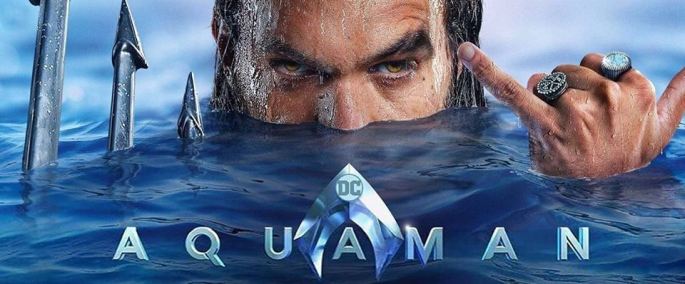
Now the dude in the video above isn’t singing about the movie I caught today (and I’m not denying the fact that that is a damn tasty burger he has there) but his song along in the words of the film’s charismatic lead: “That was awesome,” is kinda how I feel right now.  Yes folks, despite any negative press you’ve heard, read, whatever – Aquaman is a feast – a thrilling adventure that really transported me. Not merely into the sumptuous and glorious undersea kingdoms created by the filmmakers involved – but back to the fun, exuberant times I ‘used’ to have at the movies – before the dark clouds engulfed us, trapping us in the forgotten seas where the dark creatures of the trench started forcing us to feed on one franchise after the next. Dark, moody, brooding, shit. That is not the joy I remember in that magnificent dark place we call the cinema – where worlds merge and the magnitude of the movie-maker’s vision takes me into it’s care, placing me, willingly, under it’s spell.

What a spell indeed, let me tell you. James Wan had me when I read his response to a question regarding the tone of Aquaman: “I’m a film fan, I’m a product of the 1980s and 1990s, and a lot of people have said that  Aquaman has a very 1980s quality to it. Especially the high-fantasy of the 1980s, like Flash Gordon and Krull.”

DSC_9698.dng

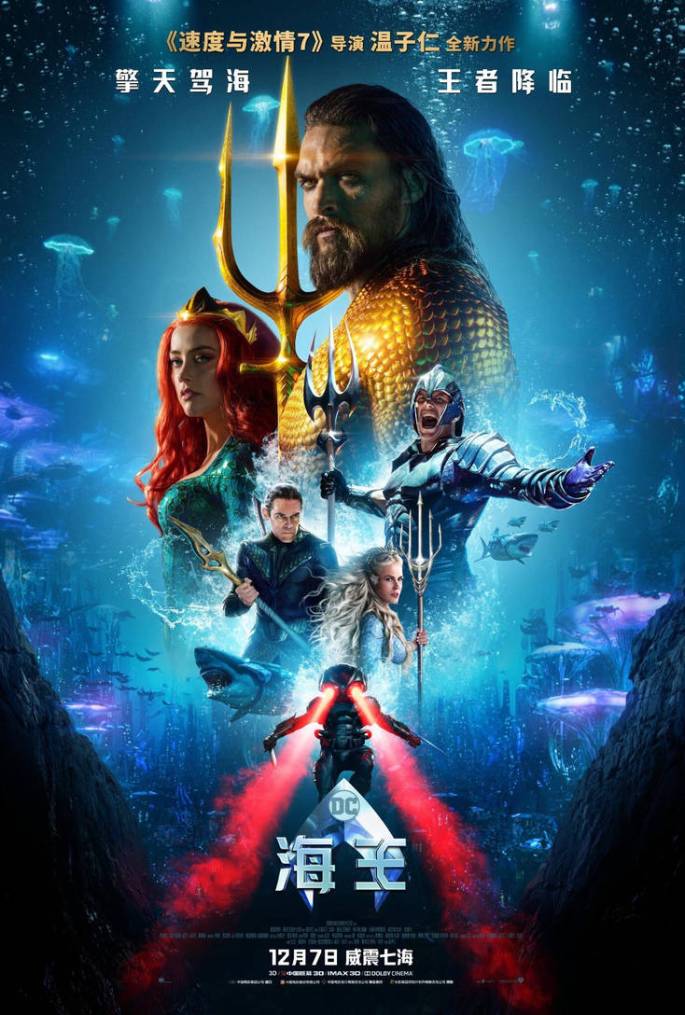
Flash Gordon meets Krull! Vibrant, fantastical, magical world building on a big canvas. I don’t chiefly give to much of a fiddler’s fart about the MCU or the DCEU and their never ending cavalcade of chicanery, but, when I read Wan’s response to that question I was, hands down, not missing this picture. And it’s become a common phrase of late – “see it on the biggest screen possible” – but, meh, they’re right. Aquaman is a big picture, so that’s the best advice I can give.

aquaman__2018____japanese_poster_by_williansantos26_dct9sqg-pre

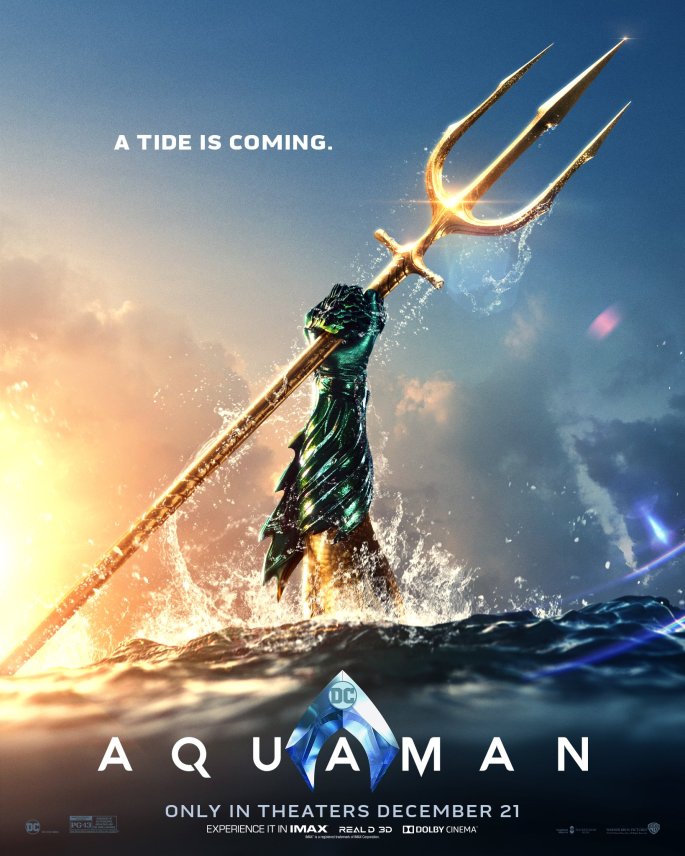
The cast are wonderful in their parts, and I get the feeling they understand the kind of ride they’re crafting. The exposition is fluid like the oceans that dominate the movie. You feel carried along on a current if excitement and wonder as the story advances. But, one the best parts truly, in terms of constructing this film which Wan did so masterfully, is that he simply shunned the Marvel formula of tying it together with all that has come before – a line of dialogue sorted that out. It’s a freeing maneuver that allows this exciting director to do what he does best, which is to flex is visual muscles and take us into a world that makes anything James Cameron has done thus far seem a little flaccid. The production design, the gliding camera, the effortless action. Oh my God – I love it.

aquaman-poster

Momoa brings a grand juxtaposition of the boy unwilling to take up his trident, mixed with a guy just playin’ it cool. His nonchalant approach is great, and I caught myself smiling at his delivery more than once. He is supported by strong players all. Patrick Wilson’s power-mad dictator, Dolph Lundgren on his seahorse (sorry, sea dragon). Willem Dafoe, always dependable, Nicole Kidman, getting better with age (love that fish suit), Amber Heard, feisty-sexy, badass Black Manta and hell, his dad is Jake ‘the Muss’ for Christ’s sake – and he can drink Fishman under the table.

It’s a whale of a tale I tell you lads, a whale of a tale that’s true. ‘Bout the flappin’ fish and a mother’s love – stoppin’ a deep sea war with the shores above. I’d swear by my tattoo if I had one but put simply – scintillating, sensational, spectacular. Home might be calling, but they’ll need to leave a message ’cause I’ll be out . . . watching Aquaman . . . again. GO SEE IT NOW!

As always, dig your movies . . .

flat,750x1000,075,t.u1

That Dude in the Audience.

Sam Mendes’s Skyfall

What are the key ingredients in a Bond film? Chase sequences. Gadgets. A sexy chick, maybe two or even three per film. A flamboyant, megalomaniac asshole bent on world domination or some other far flung quest for global chaos. Flashy cars. Admirable stunt work. Cringy one liners. What else? Not much, unfortunately, and it’s these formulas, mostly stuck to like a well worn blueprint throughout the franchise that have made me a self proclaimed Bond non-fan, aside from a few specific entries. That changed when the Daniel Craig iterations came along, thoughtful, self aware reworking that peaked with Sam Mendes’s Skyfall, which is arguably the best in the whole canon, and definitely my favourite. For the first time there’s thought put into 007’s arc, a personal backstory, connections to others that are rooted in emotion and a refreshingly intelligent script that both calls loving attention to and subtly sends up the franchise tropes. Craig’s Bond is an implosive, haunted warrior whose quips are never cavalier or cheeky, but feel rather sardonic with a touch of sadness. What made him this way? Well, a solid career of killing people and having extreme bodily harm inflicted upon him I’d imagine, the effects of which are readily apparent on his rough hewn frame and weary expression like never before in the franchise. The cryptic title of the film also calls back to his past, never thoroughly explored but hinted at just enough to accent the character. Then there’s the villain, a blond dye job piece of work named Silva, given the devilish, over pronounced charisma of Javier Bardem, who handles the dangerous monster, playful joker and petulant brat aspects of the character in harmonized synergy for a scene stealing and franchise best Bond baddie. Although admittedly a power-mad despot like any other, Silva’s ultimate endgame is something far more personal, which makes for a stronger character than some freak who just wants to blow up the moon with a laser. Most of the characters here shirk the standards and become something more than their allotted archetypes. Judi Dench’s hard-nosed M takes centre stage as not only the steely shot caller behind the desk but as a well rounded character whose choices behind said desk come back to haunt her. Ralph Fiennes’s salty aristocrat Gareth Mallory proves more resourceful and intuitive than that perfectly tailored suit n’ plummy accent would let on. Naomie Harris’s badass Eve is a cracking field agent with the wits and charisma to match Bond, and Ben Withshaw’s Q gets to intone more than simply the function of a few well placed, elaborate gadgets, of which there are indeed few, if any on display here. The only one who remains squarely in the imprint of past 007 films is Bérenicé Marlohe’s sultry but short lived Severine, who almost proves unimportant to the plot beyond obligatory eye candy and could have been left out. Pretty much everything works here, and better than it has for any prior Bond film, particularly the clever, wry dialogue, emotional element and iconoclastic trailblazing. Roger Deakins makes visual poetry yet again with his camera, from the neon soaked skyscrapers of Shanghai to the floating lantern casinos of Macau to the comfortably rain streaked brick of London, this is one flat out gorgeous film to look at. Couple the technical prowess with that oh so weighty, thoughtful script, Craig’s craggy and well worn warrior Bond and the fresh feeling rogues gallery of characters around him, not to mention Adele’s heart-stopping original song and you’ve got something truly special and elevated from any other 007 film out there. Oh, and the courtroom scene where M quotes Tennyson? Bloody time capsule worthy.

-Nate Hill