THE ‘SHOWDOWN’ TRIPLE FEATURE by Kent Hill

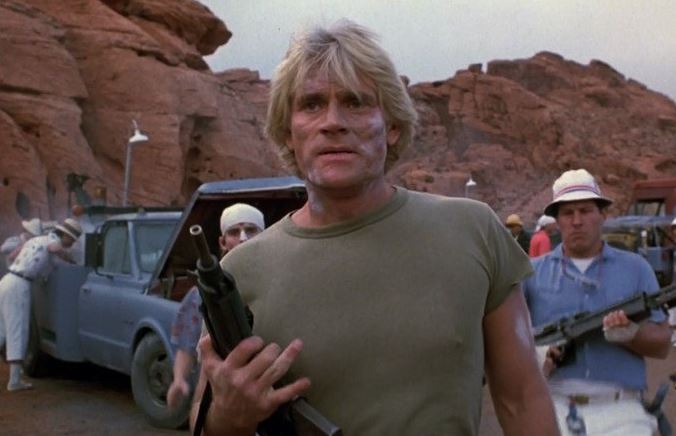
This film might not seem like a big deal to you. It could merely appear as another throwaway action flick on your regular streaming service – one that you glance at out of curiosity, and then move on. But I really loved SHOWDOWN IN MANILA, and here’s the reason why . . .

Once, a long time ago, in the age of wonder, they were these glorious palaces that we called, Video Stores. They were a veritable treasure trove for cineastes of all ages to come and get their movie-fix. They housed the cinema of the ages and best of all, there would be movies you could find there, that hadn’t played at a cinema near you.

kN5geD7jzQMys9ikhNetzAhacnw

These were the titles that were made specifically for this new medium of VHS. Like the drive-in before it, these stores needed product. Thus a new genre was born, and it was called Straight-to-Video. What arose were glorious movies, some of which, sadly,  died along with their era. Awesome were the sci-fi, the horror, and specifically speaking now, the action movies that would appear on the shelves. And such action. Real, intense, dynamic and always in frequent supply. It was good versus evil in all its glory – the villains wore dark shades and the heroes carried big guns. So, it was while watching SHOWDOWN that I was hit by this wave of nostalgia, engulfed by memories of the golden age of home entertainment.

The plot of the film is simple. But isn’t that true of the best action flicks? The package is a beautiful cocktail of old and new, peppered with filmmakers wishing to deliver a splendid throwback, mixed with the stars that climbed to the dizzying heights of VHS stardom.

For those who know what I’m talking about, and even those that don’t, I say, go check out this little gem that is cut from the past, and at the same time, is polishing by the future. So, here now, I present a trio of interviews with the film’s stars Alexander Nevsky (The man on the rise), Matthias Hues (The action legend), and the man responsible for that important seed from which all great cinema grows, the script, Craig Hamman (the veteran screenwriter).

26994916_2003478956334522_1713502892_n.jpg

Alexander Nevsky is a Russian bodybuilder, actor, writer, producer. His life changed when he saw Arnold Schwarzenegger in Pumping Iron and that spark would light the fire which continues to burn bright. In 1994 Nevsky graduated from State Academy of Management (Moscow). In 1999 he moved to California. He studied English at UCLA and acting at the Lee Strasberg Theatre Institute. He has risen from a bit-part-player to an international action star the cannot be ignored. With his imposing intensity, versatility and personal drive, Alex, I believe, is poised to enter the arena of formidable action superstars – its only a matter of when.

DEi4u7XUMAAmOiE

Matthias Hues is a German-born actor and martial artist as well as being an action movie icon. He came to L.A. not knowing how to act or even speak English. The fateful moment would come when he joined Gold’s Gym and the establishment’s manager received a call from a producer who had just lost Jean-Claude Van Damme for his movie and needed a replacement. Matthias tested for the role, and he managed to convince the producers to give him the part despite having no prior acting experience. The movie, No Retreat, No Surrender 2, was a moderate success, but it opened the door. He is, of course, most recognized for Dark Angel, but has also played everything from a gladiator turned private investigator in Age of Treason to an aging hit-man in Finding Interest to a bumbling idiot trying to kidnap a rich kid in Alone in the Woods to a dancing lion tamer in Big Top Pee-wee. He’s even played a Klingon general in Star Trek VI: The Undiscovered Country.

MV5BMmFhNjY0MDYtMTNmNC00MjJmLTkxZTMtOWU4NzNjYWU3MTM4XkEyXkFqcGdeQXVyMTAzMjk1Ng@@._V1_UX214_CR0,0,214,317_AL_

Craig Hamann came up alongside another young aspiring filmmaker whose work would go on to define a generation. When he and Quentin Tarantino embarked upon the journey to make their own movie, My Best Friend’s Birthday, there was no telling then, where the road would lead. Well we all know where Quentin ended up, but Craig too has enjoyed a long and prosperous career that has been anything but ordinary. He’s a writer, former actor, that has watched the industry ebb and flow. He’s directed Boogie Boys, had encounters with Demonic Toys and of course, of late, he’s been a part of an action-thriller in Manila. Craig has other projects in the works, and with the company he keeps, these efforts are, I’m sure, set to explode and entertain. Yet he remains a humble gentleman with a passion for his work and a dedication that has seen him endure as a great veteran of the movie business.


JACK DETH IS BACK . . . AND HE’S NEVER BEEN HERE BEFORE: An Interview with Tim Thomerson by Kent Hill

Cherry-2000-31

I was mid-way through my interview with C. Courtney Joyner when Tim Thomerson’s name came up. Joyner of course, had directed Tim in Trancers 3, and cooler still, he had just had him round for breakfast earlier that day. You might call it an imposition, but I mentioned that if there was even a remote possibility that he could put me in touch with Tim, I would be forever grateful. Courtney told me he was seeing Tim again on the weekend and would put forward my proposition. Soon after, I received a message with a phone number.

Now, I’m usually in the habit of arranging an appropriate time and day to call, but Courtney had left it open. I remember for the first time, in a long time, being nervous to make the call. After all this was Tim Thomerson who was going to be picking up the phone; a guy, a legend that I had watched for years. So I summoned my moxy and dialled the number. The familiar international ring-cycle began and then . . . “Thomerson,” the voice on the other end of the line said.

I’m going to come off as an idiot here, but I.D.G.A.R.A. “Damn,” I remember thinking. “He sounds exactly like he does in the movies.” Stupid, I’m well aware. But the moment was profound, and I was instantly transported to that time when I sat in the theatre watching Metalstorm, and that glorious afternoon I first sat down to watch Future Cop (aka Trancers). Here was Jack Deth now, on the end of the line and talking to me like we had been buddies since forever.

I did kinda wish we could have jumped into our chat right there. Tim was at once disarming, candid and as cool as i had expected him to be. He was off to his retreat in the desert to do “old man shit” as he put it, and, while I realize he is an aged gentleman now, that voice, the larger than life character that he is still packed all of the vitality, swagger and youthful exuberance that very much belies his years.

I didn’t have to wait long before we would talk again, and when we did, the conversation picked up right where it left off. I would take a significant amount of time to go through the length and breadth of his career, so I restricted myself to personal favourites among his credits. We talked about his beginnings, his great friendships, his bumping into Mel Gibson at the doctor’s office, him working with his idols, Australian Cinema and his meeting with the legend that was Sam Peckinpah.

For those of you who regularly check out my stuff here on the site (God bless you), I fear I might be starting to sound like a cracked record. A number of times in the past I have found myself gushing about the opportunities I have enjoyed whilst writing for PTS, and how humbled and indeed awe-struck I have been as a result of these encounters with the folks who make the movies. Sadly I’m now going to do it again. Tim Thomerson is a hero of mine and it was at once spellbinding and an indescribable treasure to have had the chance to shoot the breeze with an actor I have long held in high regard . . .

. . . and an equal pleasure it is, to now share it with you.

Enjoy.

Michael Mann’s Collateral

I love Michael Mann’s Collateral so much. Few other films evoke the detached, hypnotic atmosphere of a metropolitan city, the thrum of a single night passing by, the hard bitten nature of a city whose main brand of social interaction is usually crime. Mann has a way with restless urban nocturnes and the weary, resolute characters who drift through them, personified here by Jamie Foxx’s shy, plucky cab driver Max and Tom Cruise’s lupine, charismatic hitman Vincent. They’re on odd pair to spend a murky, digitally shot Los Angeles night with, but the two actors make it a clash, confrontation and ironic companionship for the ages. Max is veering close to being a career cabbie, his dreams of entrepreneur enterprising fading fast in the rear view. He’s meek and soft spoken but we get the sense that somewhere in there is the capacity for violence and unpredictability, if prompted by the right catalyst. Speak of the devil with Vincent, a whip smart apex predator who hijacks Max into helping him make several high profile stops before a 6am flight out of LAX, each one leaving a cadaver in its wake, all related to an interwoven criminal syndicate that DA is trying to bring down. It’s high concept done on slow burn, with action taking a backseat beside Vincent, while story, character and brilliant dialogue command the forefront, a technique rarely employed in the big budget Hollywood blockbuster, but always a surefire way to success. Mann captures the pulse of LA almost better than he did with Heat, albeit to a smaller scale and constricted to one night, a nervous time-sensitive mood-scape that gives the proceedings a haunted aura. Cruise has never been better, sporting a silver fox get-up and enough scary micro-mannerisms to more than make us believe he’s an expert at his profession, until jaggedly unravelled by Foxx’s presence, who goes from unassuming hostage to razor sharp thorn in the side real quick. Jada Pinkett Smith is brilliant as a lawyer who Max picks up in the opening scene, their extended conversation set against the dreamy LA backdrop serving as a neat, Elmore Leonard-esque way to set up shop. The supporting cast are like easter eggs hidden throughout, they’re never obvious or given key monologues, but exist in harmonious flow to the chamber piece unfolding mostly in the taxi. Mark Ruffalo shows up in his coolest role to date as a detective who gets wise to Cruise uncannily quick, Javier Bardem has a showcase scene as an angry mob boss, and watch for Bruce McGill, Debi Mazar, Wade Williams, Klea Scott, Paul Adelstein, Peter Berg, Irma P. Hall, Emilio Riveria, Jason Statham, Richard T. Jones and the always excellent Barry Shabaka Henley as a jazz club owner with a few skeletons in his closet. My favourite scene is a wordless one, in which Vincent and Max see a lone coyote loping across the freeway in the hazy night. Each of them reacts, the sight of the beast meaning something different to them, internally, they share the moment, and move on. Taken out of context it could mean anything, stand on its own as a fifteen second short film, or be injected into a crime drama masterpiece like this to make it all the more atmospheric and special. It’s moments like this, along with a few other key scenes, one set on a subway train and the initial conversation between Foxx and Jada, that inject a surface level genre film with something intangible, something elemental. Mann gets this, every frame of his urban crime epics are filled with that kind of energy, and this stands as one of his best.
-Nate Hill

Sergio Leone’s Once Upon A Time In The West

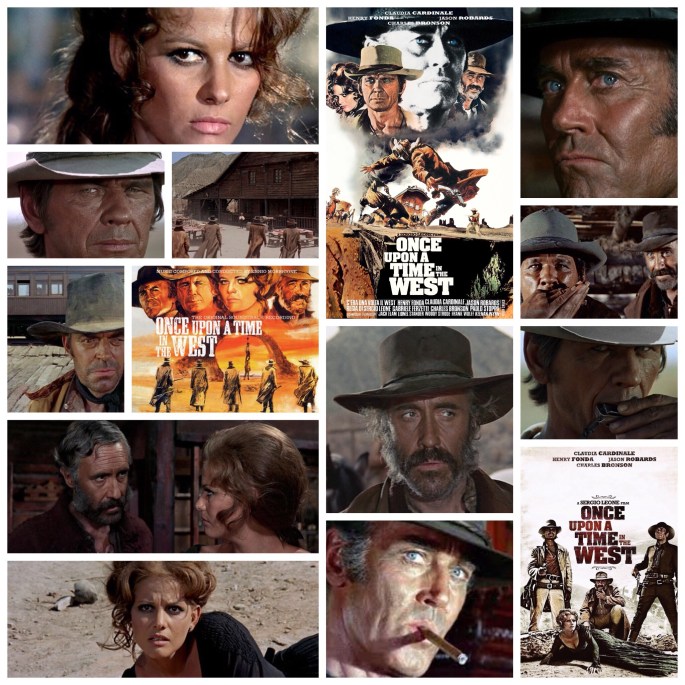
There isn’t much I can say about Sergio Leone’s Once Upon A Time In The West that the mythical, larger than life masterpiece couldn’t say for itself, especially on its magnificent, crystal clear Blu Ray transfer that blows the dust out of the cracks and showcases it’s sunny cinematography in full remixed glory. From the coming of the railroad to a fledgling empire, the corrupt businessmen employing hard bitten thugs to do their nefarious bidding (a prophetic motif if there ever was one), the searing forbidden romance between the archetypal ex-working girl and the silent, lethally dangerous drifter, the dusters adorning gunfighter that sway in a lilting prairie breeze, the trod of hooves, the thunder of impending gunfire preceded by the eerie calm of the showdown before, this is the western to end all westerns, the textbook example, the crown jewel of the genre and the one wheat-stalk saga that I just can’t get enough of. Leone basically patented an entire sub-genre between this and the Man With No Name trilogy, it’s a now timeless flavour that rippled down throughout the generations and changed the face of the western forever. The film itself is perfectly balanced symphonic storytelling, in every aspect of the medium. Charles Bronson’s mysterious loner Harmonica blusters into town, opaque and uttering few words save for the melancholic strains of his instrument brought to wailing life by composer Ennio Morricone. Henry Fonda’s elegant, magnetic and unbelievably evil mercenary Frank hovers over everything like a black cloud of portent. Claudia Cardinele’s drop dead gorgeous Jill violently carves out her own path of survival, lust and grief amidst the unforgiving frontier. Jason Robard’s half injun outlaw Cheyanne tries hard not to wear an obvious heart of gold on his sleeve while seeking retribution for a diabolical frame-job. These mythical, monolithic individuals invite shades of grey into what we’ve become accustomed to in Western archetypes too, which is another hallmark of Leone. Gone are the stalwart sheriffs, stoic heroic leading men and obvious moustache twirling of clearly delineated villains. Bronson is rough, callous and never straight up chivalrous, Fonda is reptilian but oh so charming, the kind blue eyes barely suggesting what evil leers beneath, and Robards for his part turns an outright scoundrel into something of a teddy bear during his arc. It’s in the little, drawn out interactions and moments that we learn what we need to know about these characters, and Leone lets their performances, Morricone’s iconic score and the lingering space between action tell the story, so that by the time the monumental showdown rolls in, we know what we need to know about these wild, complex personalities and can get swept up in the revelatory spectacle of it. One for the ages.

-Nate Hill

Tim Burton’s Batman Begins

Batman Returns

1992. Directed by Tim Burton.

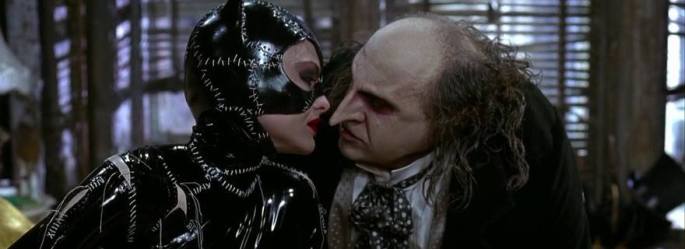
A landmark achievement and Burton’s masterpiece. Batman Returns marked the beginning of serious, adult themed superhero films with absolutely zero apologies.  There’s so many pieces at work in this tragic fairy tale that it’s difficult to stay focused. It delves into human despair; highlighting rejection, loss, and the life of a victim after traumatic abuse.


Danny Devito and Michelle Pfeiffer deliver the performances of their careers and were both criminally robbed of Oscar nominations. Devito’s Penguin, a menacing troglodyte from the sewers symbolizes the refuse of the American Dream, discarded by his socialite parents for his physical and emotional deformities. He chews up every scene with malicious heartbreak, a son scorned by denial.

Opposite him, is the Catwoman. Pfeiffer’s absolutely brilliant incarnation of Batman’s constant foil is unforgettable.  She forces the viewer to confront the inequalities in the boardroom and in the bedroom. On first glance, it’s easy to dismiss her as a leather clad dominatrix and I believe that is Burton’s intent. It is through this satire that she becomes the epitome of a victim’s rage and it’s simply delicious to watch her spar, both verbally and with claws.


Keaton brings the usual anchor as Batman, whose own demons take a backseat to the troubles of the rogue gallery that are an organic response to the costumed vigilante’s presence in Gotham.  Walken fills out the cast as a white-haired mogul, a modern day symbol of the wealth that rejected the Penguin in his youth, thus showing that ultimately, greed is a spirit as real as Gotham itself.

Stefan Czapsky’s cinematography shows a Christmas time Gotham in its death throws, with blacks, white, and grays flooding the visuals. The concept of death is in the very foundation of the city, brought to life with Cheryl Carasik’s breathtaking set pieces. The costumes are a marvel and transcend the superhero mores with a sense of desperation, due to Bob Ringwood and Mary Voight’s creative efforts.

Some could argue this is not really a Batman film, but more a Burton film and thus that is why it is such a masterwork. I contend the opposite. Batman is a story, at its core, about loss, searching for acceptance, and the inevitability of ones actions coming to fore. I think it is for these reasons that Burton chose Batman as the setting for his turbulent Shakespearean tragedy.

You can’t help but marvel at the spectacle, and the stench of Gotham’s sewers will follow you home, long after you’ve left the film behind.


Oz Perkin’s February, aka The Blackcoat’s Daughter

I like Emma Roberts, and really dig the career path she’s chosen for herself so far. Daughter of eccentric, legendary badass Eric Roberts and niece to Hollywood’s darling superstar Julia, she could have easily taken the oft trodden path of teen sensation, appearing only in stuff that appeals to a new generation that’s forgotten much of the odd, freaky stuff of former times. Instead she’s deliberately accepted best, off kilter genre scripts, using an ongoing stint on FX’s American Horror Story as a launching pad for some really interesting projects that duck the mainstream, just like her dad. Oz Perkin’s February is one such outing, a laconic, nightmarish mood piece that plays like a demon possession film without all of the tired hysterics, using pacing, atmosphere and glacially mounting dread to tell its story. Roberts plays a young runaway stranded outside a hospital on one cold night. Picked up by a kindly man (James Remar ditching the villain shtick) and his wife (Lauren Holly, who apparently is still in films after all!), she embarks on a tense road trip towards a county far away. In said county, two forgotten girls (Kiernan Shipka and Lucy Boynton) spend the holiday break at their catholic school. Gradually they start to feel some presence in the building, haunting them, and then shit gets crazy. This is textbook slow burn territory though, and anyone expecting a trove of jump scares need not apply. There are a few well earned moments of terror, but they’re fleeting, and all the more disturbing as a result. There’s a vagueness to the narrative too, with just enough left unexplained to spark some interesting Reddit discussions. A dark, moody flick that rewards those who give full attention with some scary secrets and a smothering atmosphere of danger on the horizon. You’ll find this titled as ‘The Blackcoat’s Daughter’ on demand and iTunes, but that title seems to not mean much except to quite an eerie song used throughout the film.

-Nate Hill

Lawrence Kasdan Autuer Series: The Big Chill

Image result for the big chill poster

Frank, Jason, and Patrick discuss one of Lawrence Kasdan’s most seminal films, THE BIG CHILL. They discuss the thematic elements, the all-star cast, and the iconic soundtrack from the film.

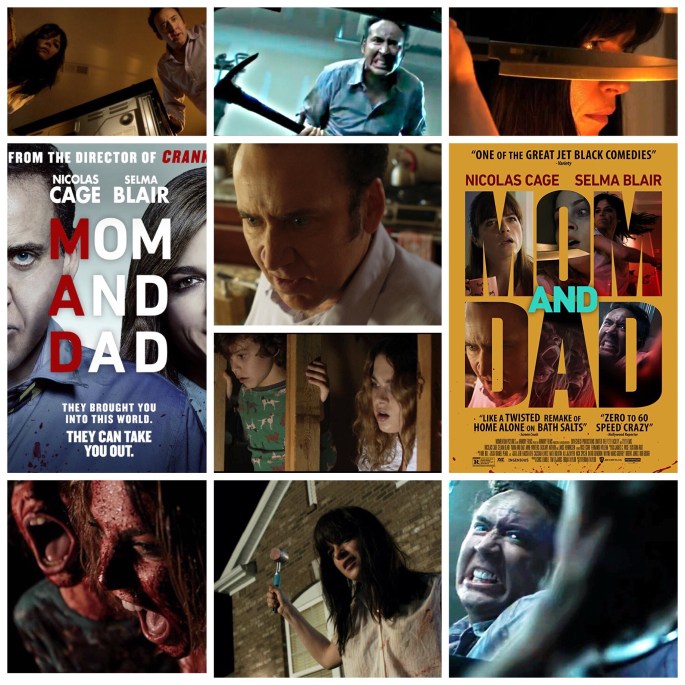
Brian Taylor’s Mom & Dad

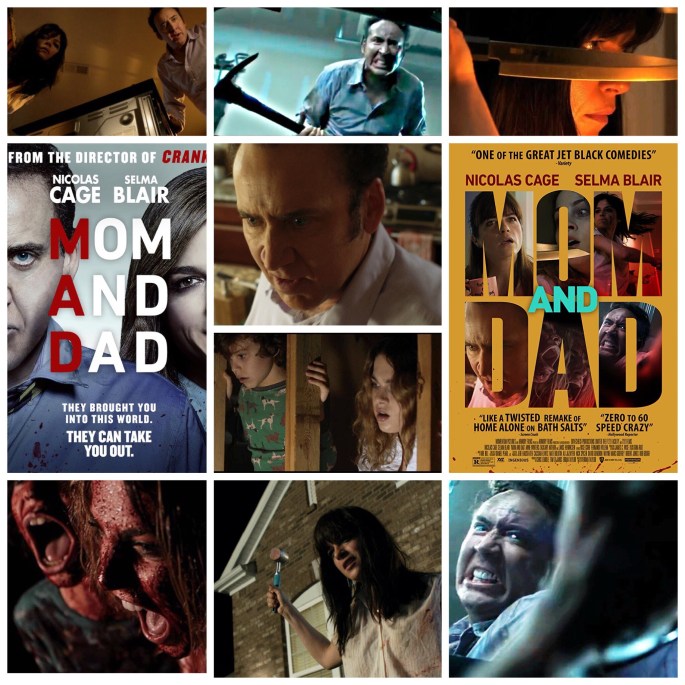
I read an article a while back saying that at the premiere of Brian Taylor’s Mom & Dad, the director attended the screening and prefaced it by saying that his film has “mental problems.” Well… he wasn’t wrong. Taylor is one half of the Neveldine/Taylor genre filmmaking team, a blitzkrieg duo responsible for both of the Crank movies, plus Gamer, and if you’ve seen any of those you’ll have an idea of the way their sense of humour slants towards the bizarre. With this one it kind of trundles headlong into willfully fucked up territory though, and before you know what’s happened, it’s scant 86 minute runtime is up and you’re left there in the dust, feeling somewhat violated. The concept is blunt and visceral: everywhere, all at once, the nurturing instinct in parents is savagely reversed and they immediately start to murder their own children. Only their children, mind you, and with a disturbing lucidity that I couldn’t decide whether to laugh at or get spine chills from. An amped up Nicolas Cage and Selma Blair play your average upper middle class parental unit, and the film mainly focuses on their eventual snap, and a subsequent tooth & nail fight to snuff out their poor son and daughter (Anne Winters and Zackary Arthur). That’s pretty much the film, although for such a seemingly simple concept within a short piece it somehow manages still clearly articulate its narrative amidst the ruckus and even comment on something deeper than it’s 70’s Midnite Movie veneer initially suggests. Cage treats this as the ultimate midlife crisis, and indeed his acting these days is more gonzo than ever. He’s got a mental breakdown midway through the film and before the killer epidemic even breaks out that is so over the top it reaches a kind of feverish harmony, not to mention appearing scarily un-faked on the actor’s part. Though quick and fierce, the film could have still tightened the pace a bit in the opener and extended the super violent, Home Alone-esque second act a smidge, but oh well. Watching Cage and Blair overact to the heavens as they try and kill their own kids with every household item they can grab including a meat tenderizing hammer (ouch) and a Sawzall (“Sawzall… saws…. all…”) hits some blissfully transcendent notes, if you have the twisted mind to stomach it. There’s a scene that will test boundaries though and walks a fine line between crazy and flat out uncalled for (one of my friends walked out of the room in disgust), but hey, that’s the kind of stuff this director is known for, so try and roll with it. Things get really bizarre when Cage’s own parents show up to add to the cluster-fuck, his demonic veteran daddy personified briefly and perfectly by a ferocious Lance Henriksen. Accompanied by a sketchy, warped and nerve-shredding score and some off kilter editing, this will either be your thing or it won’t, there’s just no middle-ground in an arena this fucked up. Good luck.

-Nate Hill

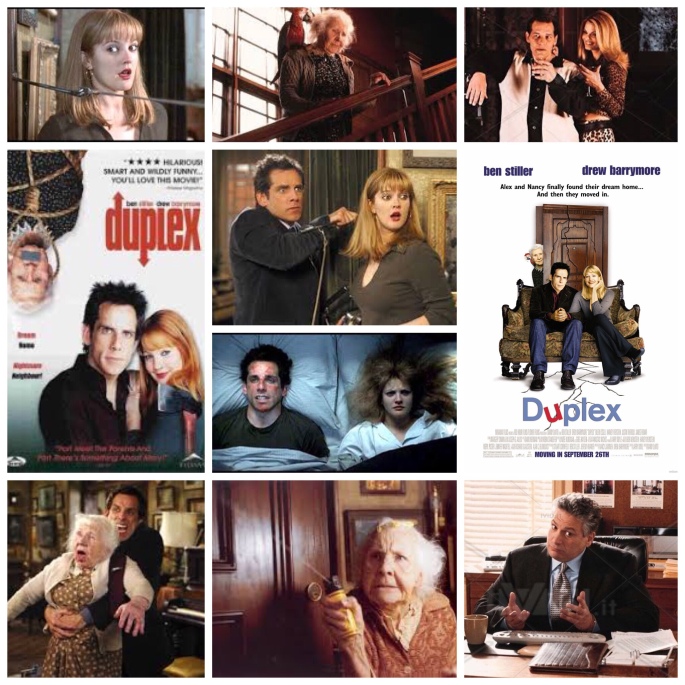
Danny Devito’s Duplex

I will never not love Duplex, Danny Devito’s jet-black ode to neighbours from hell, a ninety minute domestic squabble of epic proportions and one of the funniest films of the last few decades. Devito knows how to do comedy at it’s meanest, lowest and most shamelessly un-PC, whenever he’s in the director’s chair you know you’ll get something that will either land squarely with those who have a deranged sense of humour (moi) or drive of the prudes in droves. Ben Stiller and Drew Barrymore play a hapless NYC yupple (yuppie couple, just made that shit up) looking for their perfect little love nest to settle down in. They think they’ve found it in a gorgeous, spacious Brooklyn split-suite, but there’s just one problem: sweet, ninety year old Mrs. Connolly (Eileen Essell), who is the tenant equivalent of the plague. At first she’s a benign darling, but after a few weeks pass, she’s a harridan hellbent on making their lives into an extended nightmare of never ending chores, sleepless nights and maddening disruption. The solution? Well there’s many in the real world, but in Demented Devito realm it’s to kill her, of course, an eventual resolution they come to quicker than your average ruffled landlord. It’s all in good fun if you’ve got the wicked internal lens to angle at it, and I find it to be a consistent laugh riot with each repeated viewing. Essell is comic dynamite, pretty spry for an old gal and always game to make the dialogue sizzle, as the film sort of relies on her character to work. Stiller and Barrymore stir up a collective brew of exasperation and screeching hysterics, while the wicked good supporting cast includes Wallace Shawn, Robert Wisdom, Justin Theroux, Swoozie Kurtz, Maya Rudolph, Amber Valletta, Tracey Walter, Michelle Krusiec, James Remar as a shady hitman and Broadway’s beloved Harvey Fierstein as New York’s sleaziest real estate tycoon. Devito’s scripts almost always veer into a dark, bizarro cartoon style once the antics get feverishly out of hand, and bearing witness to the many varied and idiotic ways Stiller and Barrymore try to kill the old broad are a showcase of him at his nuttiest. Gross, unpleasant, cheerfully in bad taste, relentlessly raunchy and delightfully mean spirited, pretty much all the things a great comedy should be.

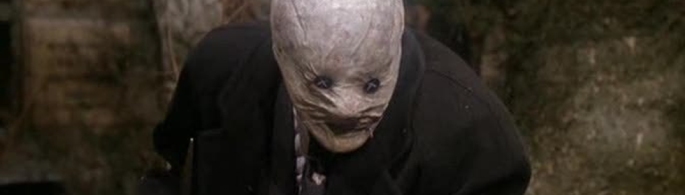
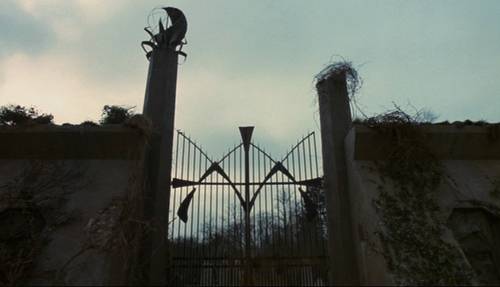
Clive Barker’s Nightbreed

Nightbreed (Director’s Cut)

1990.  Directed by Clive Barker.

Clive Barker’s most ambitious film, Nightbreed was hacked to pieces by studio execs prior to release and then by critics after its lackluster debut.  Horrendously marketed as a slasher film, Barker’s misunderstood opus has thankfully gained a cult following over the years, and a recent Director’s Cut release by Scream Factory, allowing Barker’s incoherent monster-centric fable to be viewed in its intended form.

Boone is a drifter who thinks he may be killing people.  His dreams are filled with visions of a city called Midian, a place where monsters dwell.  He sets out in search of the city with his paramour, Lori.  Pursued by the authorities and his murderous therapist, Decker, Boone discovers that Midian is not only real, but that his coming has been foretold by dead gods, prophesying a war between the inhospitable forces of humanity and the savagely noble legions of outcast creatures known as the Nightbreed.

The biggest problem with this film is also its strongest attribute.  Barker throws so many balls into the air that it’s a foregone conclusion that not everything will hit the mark, and yet, Nightbreed comes off as wonderful combination of serial killer fodder, a Gothic fairy tale, and a hauntingly rich form of original mythology.  There are dozens of characters that inhabit Barker’s epic with the monsters eclipsing their human foils, save for David Cronenberg’s sadistic Decker, who is one of the more vital roles in the bloated ensemble.  Oliver Parker as Peloquin is the monstrous standout, with his flesh dreaded faux Rastafarian killer barking the film’s best lines.


Mark Coulier’s freakish makeup designs are both elegant and obtuse, as some creatures appear as tangible nightmares and others come across half rendered, in part due to Robin Vidgeon’s stormy cinematography that bounces through lonely cemeteries and ancient catacombs without stopping to catch a breath.  The shame is that many of the creature designs are revealed as horrific intricacies,  whenever the viewer is allowed to glimpse their unspeakable splendor.  Danny Elfman’s amazing score enhances the mythic quality of the story, but it’s offset by the cardboard villainy of the humans and the wholesale familial slaughter that looms in the background throughout the narrative.

A feeling of too little, too fast is the mantra of Nightbreed.  What begins as a menacing serial killer story mutates into a quest for Midian, with Boone’s Christ-like ascension saturating the central act.  There’s also the race war between the monsters and humans and the various social dynamics of the underworld that come into play, but in regrettable portions.  The confusion is when all of these elements collide in an uneven stream of sexually charged violence during the final confrontation.  Despite the inconsistencies, the final battle is an amazing blend of CGI, practical effects, and gritty stunt choreography that is easily Nightbreed’s strongest aspect.


Available now on Netflix, or on an excellent blu ray transfer by Scream Factory,  Nightbreed is a unique horror saga that succeeds as much as it fails.  The director’s cut fills in many gaps, but also leaves the viewer wanting more, which while eternally frustrating, is also a testament to Barker’s meticulous world building.  This is a film that drives the viewer down a pot hole ridden dirt road into another world filled with esoteric mysteries and dark wonders, delivering an excellent horror fantasy unlike anything ever attempted in the genre.

Highly Recommend.