MALCOLM X: A Review by Joel Copling

**** (out of ****)
Denzel Washington, Angela Bassett, Albert Hall, Al Freeman Jr., Delroy Lindo.
Directed by Spike Lee. Written by Lee and Arnold Perl, based on the book by Alex Haley and Malcolm X.
Rated R. 203 minutes. 1992.

Like Amadeus and Raging Bull a decade before it, and Ali and The Aviator a decade after, Spike Lee’s galvanizing Malcolm X is one of the great screen biographies (joining Nixon in that categories for a pair from the 1990s), never taking for granted the hero status of its polarizing figure, but examining his psychology and what made the man into the martyr. Superficially, the structure is not uncommon. We see his upbringing, born Malcolm Little in Omaha, Nebraska, to a father later probably killed by the Ku Klux Klan in a “streetcar accident” and a mother who loses her nerve as swiftly as she loses the ability to support Malcolm and his brothers. He later leads a life of drugs, pimping, gambling, and racketeering, before being imprisoned, partially for cavorting with white women while doing so. In prison and after, he becomes smitten with the teachings of Islam, in particular through the mentoring of Elijah Muhammad, the leader of the Nation Islam. Black supremacy, in the guise of black self-reliance, is the subject of the teachings, as Malcolm, who sheds his “slave” surname and replaces it with the letter “x,” learns that all white men are devil spawn. After a pilgrimage to Mecca, he becomes considerably less radically anti-white, though returning the African diaspora from the Americas, Europe, or anywhere else to their mother continent remains his message until his violent assassination, probably by Elijah Muhammad’s henchmen within the Nation of Islam,  with which he becomes increasingly disenfranchised over the course of his life. Here is that life, entirely and sprawling, portrayed in just less than three-and-a-half hours by Lee and co-screenwriter Arnold Perl (adapting Malcolm X’s own autobiography, co-written by Alex Haley, presumably after the man’s murder), who earn the gargantuan film’s every minute. We see this man live, breathe, fear, love, hate, doubt, firmly believe, and orate, and in an astonishing performance that ranks among the best in the movies, Denzel Washington captures the spirit, the controversy, and the humanity of this great man. Surrounding him is a superb supporting cast, each of whom I could name, but at the center is Washington’s disappearance into the role of any actor’s lifetime. It’s a performance of great courage in a film of great candor.
Cherry Falls: A Review by Nate Hill 

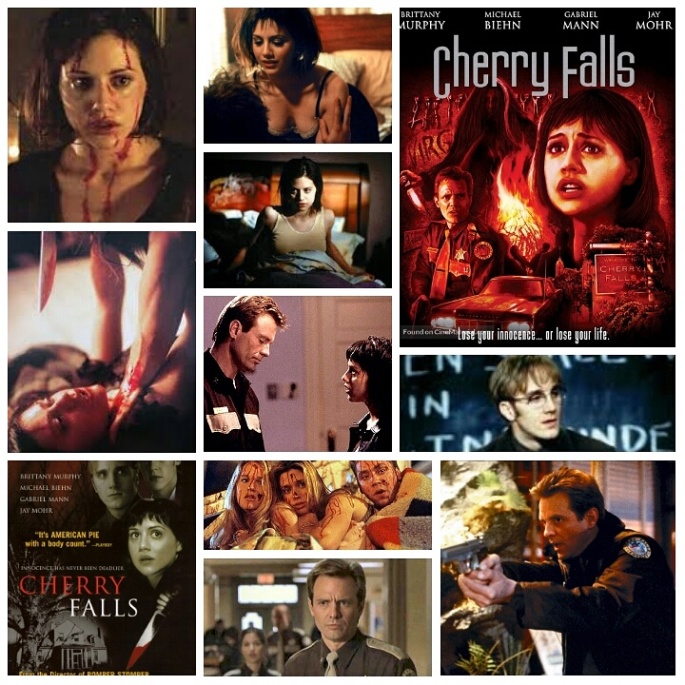
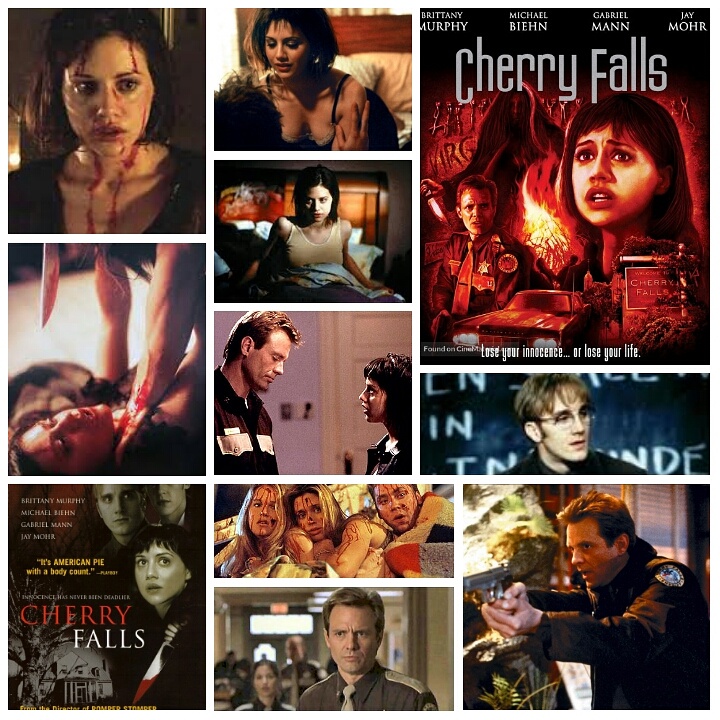
The slasher genre never got a tune up quite like it did with Cherry Falls, a tongue in cheek satire that while hilariously high concept and silly, can actually be pretty frightening, especially during it’s intense climax. Here’s the premise: Cherry Falls is a small town in Virginia that has fallen prey to a masked serial killer. The twist? Said killer is only targeting virgins, which causes quite the uproar. As the high school kids all scramble to get laid before they get laid six feet under, the prudish townsfolk become unhinged and disgusted by the whole affair, and a decades old secret involving some of the town’s best and brightest comes to light, a scandal to rival tr sleazy parade of flesh this murderer has set into motion. Young Jody Markum (Brittany Murphy) has yet to have her cherry popped, and fears for life in between bouts of teenage angst. Her father (Michael Biehn), who also happens to be the town sheriff, wrestles with demons in his past, as well as his own. A schoolteacher (Jay Mohr) scours the town archives for clues before it’s too late. And every horny adolescent tries to desperately get their freak on, providing some of the funniest moments you’ll see in a fright flick. Gymnasium orgies, rampant fornication and all kinds of naughty antics ensue. Nothing beats the faculty meeting where parents violently argue as to who has the sluttiest offspring. Full of in jokes, innuendo and sly sexy humour, this is one of the great overlooked horror comedies out there. 

PAUL GREENGRASS’ CAPTAIN PHILLIPS — A REVIEW BY NICK CLEMENT

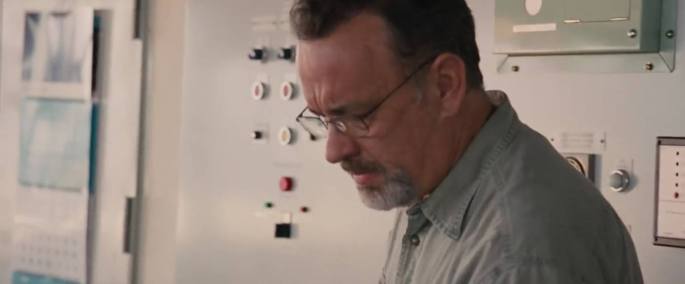
3To say that I’m a fan of the visceral filmmaking aesthetic of director Paul Greengrass would be a massive understatement. I think he’s a genius, and he’s one of my absolute favorite directors. From the stunningly realized recreations of real-world tragedies as depicted in masterpieces like Bloody Sunday and United 93 to his fantastic studio-based work on the Bourne franchise and the supremely underrated Iraq war thriller Green Zone, he employs a certain degree of cinematic verisimilitude that I find thrilling and immediate to experience. 2013’s Captain Phillips found him working with a nearly-career-best Tom Hanks on the true story of a freight ship captain who is taken hostage by Somali pirates on the open seas. Newcomer Barkhad Abdi was terrific as Hanks’s main nemesis, projecting both desperation and anger in an extremely vivid, unpredictable performance. \

2

Billy Ray’s compressed and tight screenplay fed very well into Greengrass’ inherently stripped down storytelling instincts. Ace cinematographer Barry Ackroyd (The Hurt Locker, United 93) kept the camera swerving and ducking, and in tandem with the staccato editing patterns of Chris Rouse, the film maintained a break-neck momentum for two, extremely tight hours, demonstrating nearly unrelentingly intensity. And then, when those final five minutes arrive, with Hanks pulling out all the stops and shattering the screen in an emotional juggernaut of acting – it’s not only his character’s catharsis but that of the audience, too. One of the best “ripped-from-the-headlines” thrillers of all-time, this is a crisp and clean actioner with important topical overtones, and produced with a phenomenal sense of the here and now.

1

JFK: A Mini-Review by Joel Copling

**** (out of ****)
Kevin Costner, Kevin Bacon, Tommy Lee Jones, Joe Pesci, Sissy Spacek.
Directed by Oliver Stone. Written by Stone and Zachary Sklar, based on the book by Jim Garrison and Jim Marrs.
Rated R. 201 minutes. 1991.

Note: This mini-review is based on a viewing of the director’s cut of JFK.

The late, great Roger Ebert once said, “I don’t have the slightest idea whether Oliver Stone knows who killed President John F. Kennedy,” and that pretty much sums up my own thoughts on the matter. Oliver Stone’s JFK is, purely, simply, and truly, an examination of so-called “facts,” a conclusion that those facts are likely made of whole cloth, and a hypothesis that fills in the gaps with what Stone believes are probably the events. He is imparting truth here, not procedural facts about the killing of the 35th President of the United States of America. He tackles, through his protagonist Jim Garrison, the man on whose book (co-written by Jim Marrs) Stone’s screenplay (co-written by Zachary Sklar) is based and who is played by Kevin Costner, the facts of the assassination as provided to the American public by the government who investigated it. Garrison finds damning evidence in every nook and cranny, as witnesses and accomplices are killed with impunity and under curious circumstances or otherwise bought to keep silent, a series of connections are uncovered between the American government, the Dallas Police Department, and the branch of the Dallas mob that resided in the metroplex, and supposed assassin Lee Harvey Oswald’s guilt begins to appear increasingly coincidental. The footage of the actual shooting, captured by onlooker Abraham Zapruder, establishes, rather unexpectedly, evidence of more than one rifle used in the crime. A mysterious former military man lays the groundwork for Kennedy’s assassination at the feet of a U.S. government that desires war for financial viability. Stone’s most monumental achievement lay in Joe Hutshing and Pietro Scalia’s editing, which makes sense of the labyrinthine investigation laid out before Garrison, and in the astounding cast: Costner, sympathetic as Garrison; Tommy Lee Jones, superbly indifferent as primary defendant Clay Shaw; Gary Oldman, adopting Oswald’s unique vocal inflection and affording great humanity to a man seen around the world as a villain; Joe Pesci, a bundle of nerves as getaway pilot David Ferrie; Sissy Spacek as Liz Garrison, increasingly tired of her husband’s seeming obsession with the assassination; Jay O. Sanders, Michael Rooker, Wayne Knight, Gary Grubbs, and Laurie Metcalf as Garrison’s army of investigators; Donald Sutherland, fascinating in his single-sequence appearance as “X,” the mysterious whistle-blower later identified as Fletcher Prouty, who offers crucial points in Garrison’s investigation; Ed Asner, Jack Lemmon, Walter Matthau, Kevin Bacon, and John Candy, all solid as various figures within the investigation itself. The film weaves in, around, and through the varied ways that Oswald could not have acted alone. This, Garrison and the film reckon, was a conspiracy, and the result was a murder of great mystique, political expediency, and, worst, arrogance that led a consortium to believe a story with this many holes would survive scrutiny.

Dario Argento’s Trauma: A Review by Nate Hill 

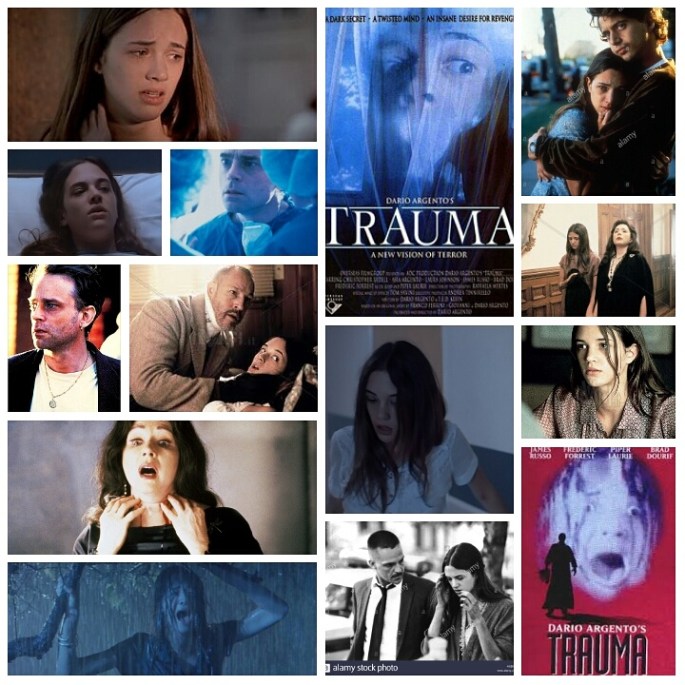
Dario Argento’s Trauma is simultaneously one of the most loopy and coherent efforts from the maestro. Most of his earlier work is pure sensory and atmospheric bliss, detached from things like logic and story. While this one does in fact have a discernable narrative to go along with its giallo splendor, it’s still as whacked out as anything else in his ouvre. This was the first of many times he would cast his exotic beauty of a daughter Asia in a lead role, here playing troubled Romanian teenager Aura Petrescu, on the run from dark forces that seem to plague her family. Her lunatic mother (a terrifying Piper Laurie) has her commited and examined by a freaky Doctor (Fredric Forrest in a glorious train wreck of a performance), meanwhile a mysterious serial killer called the headhunter is out there somewhere, decapitating people with a piano wire. It all gets a bit overwhelming for poor Aura, and she runs off, straight into the protective arms of an ex drug addict (Christopher Rydell) who becomes her guardian and eventual lover. Argento is terrific in the role, exuding dark beauty and burnished resilience in the face of many terrors. Brad Dourif has an intense extended cameo as a doctor with icky ties to the origin of the headhunter as well, adding a welcome bonus horror flavor. Also watch for another intense actor, James Russo, playing a police detective determined to nab the killer for good. As far as Dario’s stuff goes, this is about as complete and cohesive a narrative as you will find. Granted it’s not the garish psychedelia of classics like Suspiria, Phenomena and Inferno, but a little more subdued and clinical, a dark fairy tale that gets geniunly scary in several excellently staged scenes and provides loads of uneasy atmosphere. 

LENNY ABRAHAMSON’S FRANK — A REVIEW BY NICK CLEMENT

3

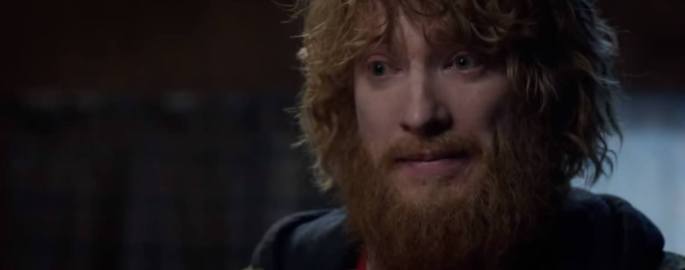
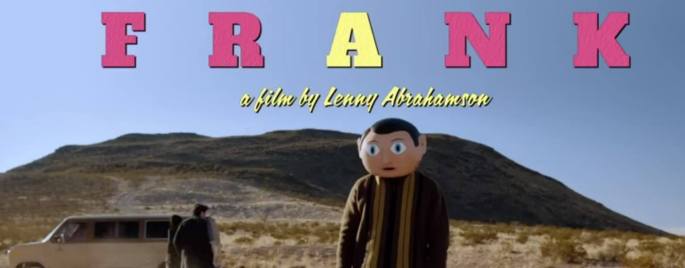
Lenny Abrahamson’s odd, willfully eccentric little movie Frank, starring the brilliant Michael Fassbender under a massive paper mâché mask, is a sneakily poignant study of mental illness and our desire to be noticed and recognized. It’s not until the final act of this bizarre black comedy that you fully realize what’s been going on, and the initial frustrations that you may have had with the narrative fade away because everything has come into strange but clear focus. Co-written by the team of Jon Ronson and Peter Straughan (The Men Who Stare at Goats), the film has a tone that constantly juggles many dimensions, hinting at so many things and presenting a story that feels strangely familiar despite the odd visual flourishes and eccentric character beats. Domhnall Gleeson is very good as a regular guy sucked into a unique life situation, Scoot McNairy continues his amazing run of character actor work, and Maggie Gyllenhaal is all bottled rage and passion (as usual).

1

But it’s the Fassbender show all the way, with this most intense of actors giving a highly internalized performance, and even under this big, goofy head-piece, elicits empathy and sympathy despite being very hard to read on a physical level. There’s definitely a hint of Wes Anderson-flavored whimsy meets sadness that pops up in the narrative at times, but Abrahamson’s worldview and aesthetic style aren’t as dollhouse-precious as Anderson, and while surreal at times, Frank feels very much rooted in the here and now. James Mather’s sharp cinematography never calls massive attention to itself, while the extremely fluid editing by Nathan Nugent keeps a pace that feels almost dreamlike at times; this film has an internal rhythm that’s very hard to accurately describe. And of course, for a movie about music, the tunes heard all throughout are excellent, with an offbeat, punkish spirit that feels perfectly suited to the fragile story. I can almost guarantee you that you’ve never seen a music-movie quite like this one.

2

Balto: A Review by Nate Hill 

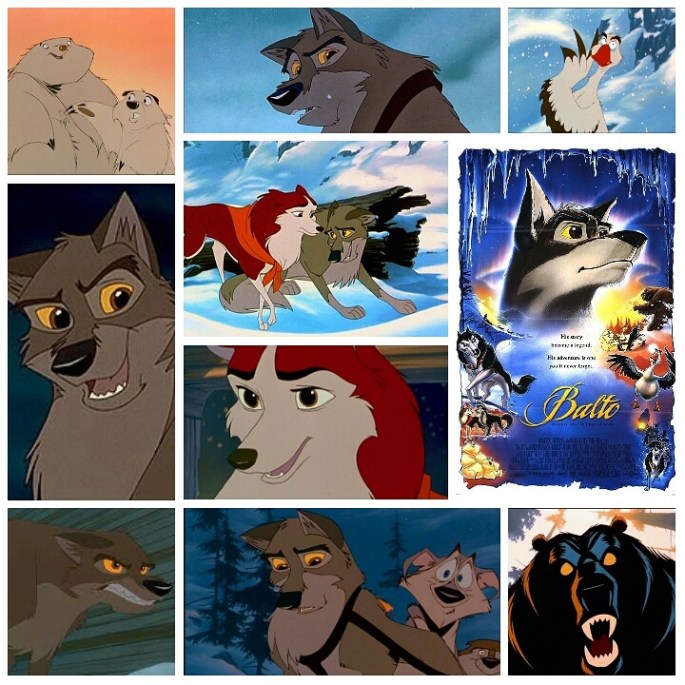
Anyone remember Balto? I remember Balto. Pepperidge Farm remembers Balto too. How can you not, when it was one of the most charming, beautifully done non Disney animation films we saw as kids. I think the fact that it was not made by Disney threw it into obscurity a bit, but there’s the odd copy floating around out there in the Arctic snow. It’s an underdog story (built in pun there eh) about half husky, half wolf Balto (Kevin Bacon having a blast) who hangs around Nome, Alaska and is ridiculed by the local sled dogs for being a mudblood. Every dog has his day though, and Balto gets his when a deadly epidemic breaks out in town during a storm, and he courageously volunteers to make the perilous journey to a far away outpost that has the required medicine. Joining him are his lovable goofy goose friend Boris (Bob Hoskins trading in his jovial cockney accent for a jovial russian accent), ant two adorable polar bears called Muk and Luk. Watching out for him is the only purebred dog in town who cares about him, Jenna the husky (Bridget Fonda), determind to muster a rescue party when he gets in over his head. Balto must brave raging blizzards, treacherous fellow sled dogs and the world’s biggest grizzly bear (seriously that thing is like 15 feet tall) to save the town’s population, and he does it all with bravery, charisma and a winning attitude that’s essential in any animated film. His sidekicks are endearing, his efforts intrepid and the film a winner. 

Stephen King’s Sleepwalkers: A Review by Nate Hill 

Stephen King’s Sleepwalkers has a reputation as one of the lesser quality adaptations of his work, which led me to put off watching it for years. Well I don’t know what film the critics saw, cause the one I watched was wicked good. Nestled in that perfect area of 80’s horror where the blood was corn syrup, the flesh was latex, there wasn’t a pixel or rendering in sight and atmospherics mattered more than excessive violence, this is one serious piece of horrific eye candy with the backbone of King’s wicked imagination to hold it steady. The story tells of a small Midwestern town (is there any other kind in the man’s work?) That falls prey to a pair of vampire werewolf hybrid creatures who subside off the blood of virgins and morph into slimy behemoths that conveniently show off the impressive prosthetics. Brian Krause is one of said creatures, drifting into town with his creepy mother (the wonderful Alice Krige) and setting his sights on severely virginal schoolgirl Madchen Amick, by dialing up the charm past eleven. People and animals start to die all over town and the suspicions arise, but the pair are cunning and have most likely been doing this for centuries almost unnoticed. It’s nothing too unique as far as the concept goes, but the fun of it lies in the gooey special effects and one demon of a performance from Krige, a veteran stage actress. She is one part beautiful seductress (even to her son, in one unsettling scene) and one part volatile banshee, setting your nerves on edge time and time again throughout the film. Krause does the demonic James Dean thing nicely and Amick shows blossoming reilience beneath the required mantle of terrified cream queen. The three of them run amok in a beautifully realized fever dream of psycho sexualized terror, small town atmospherics and a classic old school horror climate. This film loves it’s cameos, so watch for Clive Barker, Ron Perlman as a grouchy state trooper and King himself as the world’s dumbest graveyard caretaker. Baffles me why this was panned upon release. It’s actually one of the best films I’ve seen based on King’s horror work, and there’s a lot to compete with. 

FRANCOIS TRUFFAUT’S JULES AND JIM — A REVIEW BY NICK CLEMENT

3

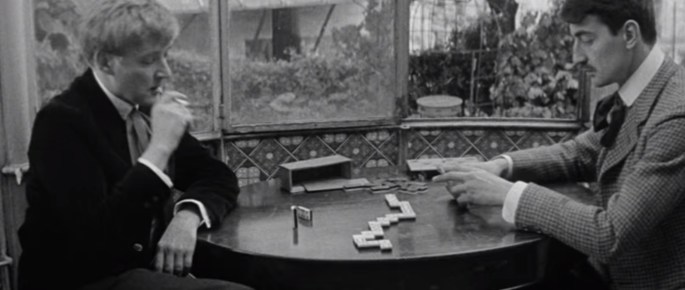
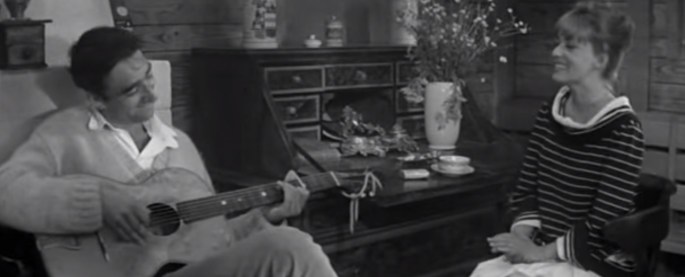
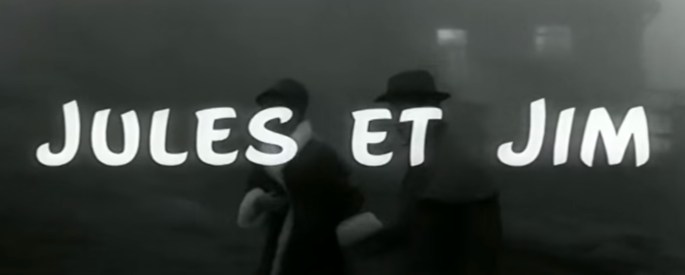
At this point, what can one really add to the discussion concerning Jules and Jim from legendary director Francois Truffaut? A movie of this sort is a product of its time, as this was made by a filmmaker exploring the medium with the zeal of a child, and telling a story that’s uniquely European and a clear reflection of a different era and society. It’s remarkable to observe Truffaut’s camera style in Jules and Jim; his aesthetic is a textbook example of the French New Wave movement in cinema, very ahead of its time, seemingly obsessed with momentum and kineticism, as fully alive as the passionate characters that consume the narrative. The various forms of imagery that Truffaut incorporated into his storytelling during Jules and Jim sort of feels like a precursor to the more extreme, kaleidoscopic aesthetic of 90’s-era Oliver Stone, with Truffaut opting for stock/newsreel footage, freeze frames, rapid-paced dolly shots, voiceover, and a seemingly freewheeling style. Jeanne Moreau, Henri Serre, and Oskar Werner basically projected every single emotion on screen during the course of this film; there’s vulnerability about each one of them that makes them all so empathetic despite some of the decisions that they all make throughout the poignant, funny, and finally tragic story.

1

The film’s energetic cinematographer, Raoul Coutard, had previously worked with Jean-Luc Godard, and was famous for using the lightest cameras possible at the time, in order to approximate a very organic and loose filmmaking approach. And because of this, there’s a nimble quality to the aesthetic, with the camera bouncing from one place to the next, and in tandem with the jaunty editing patterns provided by cutter Claudine Bouché, Jules and Jim radiates with a fizzy sense of life that runs up against honest sadness and moments of personal uncertainty. The gorgeous swirls of music came courtesy of master composer Georges Delerue; this film wouldn’t be all that it is without his uncanny melodic sense. The story, which involves a passionate love triangle between two men and one very free-spirited woman, is timeless romantic material, with an appropriately downbeat ending that feels justified and emotionally cathartic. The Criterion Collection Blu-ray is as crisp and clean as one could ever ask, with the beautiful black and white film stock perfectly capturing all of the emotions and thematic shadings on display. I’ve never seen a movie that feels as lighthearted as this one while still exploring deep, intimate, very dramatic life challenges that could hardly be described as easy-going.

2

James Wan’s Death Sentence: A Review by Nate Hill 

Charles Bronson ain’t got nothing on the level of grit seen in this revenge story. James Wan’s Death Sentence is obviously inspired by the endless Death Wish films, which by their end had gone from classy exploitation (sounds like an oxymoron, but trust me, it’s a thing) to lazy spoofs. This one goes back to the gritty roots, as well as udating the setting to our present time and laying on the gloomy, oppresively violent atmosphere so thick you’ll want a shower and some cartoons after. Kevin Bacon is Nick Hume, a mild mannered advertisement executive living an idyllic life with his wife (Kelly Preston) and two young sons. All that changes one night when one of his boys is murdered in cold blood by some punk in the midst of a gas station robbery. The thug gets released on a technicality, and Nick gets shafted of both justice and peace of mine right at the start of his grieving process. Making one of those penultimate crossroad decisions that alter both his life and the fate of the film’s narrative, he takes it upon himself to murder the perpetrator in a grisly display of vigilante justice. Only problem is, that ain’t where it stops. The murderer has a brother who makes him seem like tweety bird, a terrifying urban scumbag named Joe Darley (Garrett Hedlund) who puts Nick and his family directly in the crosshairs of revenge. Nick is forced to become a one man army to protect his family and eradicate the evil that has entered hiss life once and for all, assisted by a wicked arsenal of nasty weapons provided by sleazeball arms dealer Bones Darley (John Goodman). If you look up ‘scene stealer’ in the dictionary you’ll find a picture of Goodman’s jolly visage grinning back at you. No matter who he plays, he’s the life of the party, and his Bones is a fast talking gutter-snipe who jacks up every scene he’s in with scuzzy dialogue. He plays an integral part in Nick’s brutal and often disturbing quest for justice, a hard R urban bloodbath that pulls no punches and aims to shock. Bacon often plays morally questionable pricks, walking a fine line between upright heroes and corrupt nasties. In one character arc he gets to traverse that whole spectrum here, a regular guy who is pushed to criminal extremes until he’s barely recognizable, even to himself. Intense stuff that heads down a dark alley of human unpleasantness.