Brian Yuzna’s Return Of The Living Dead 3

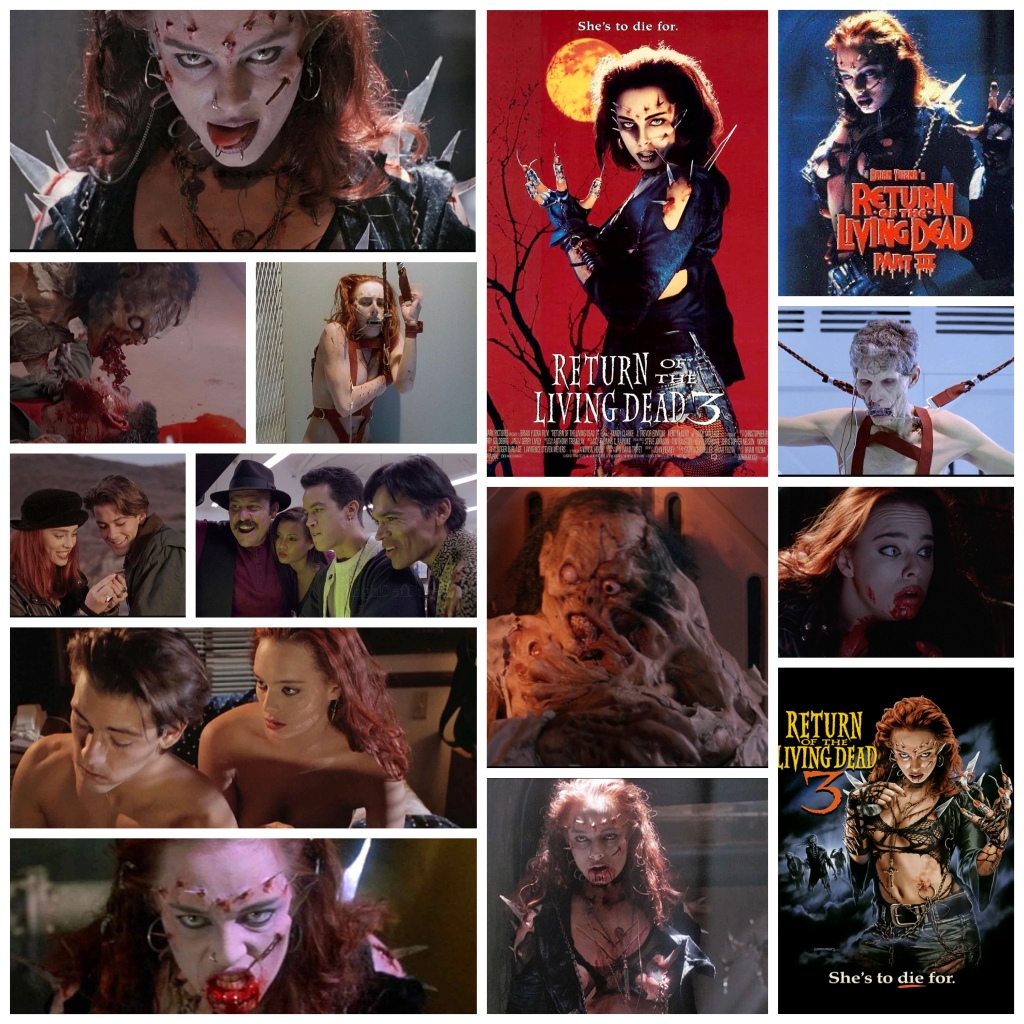
Brian Yuzna’s Return Of The Living Dead 3 is my baptism into this franchise, so to speak, and while I try overall to not just haphazardly launch into a franchise midway without regard for chronology, this was recommended to me by a friend and it’s one of her favourites so here we are. This was an absolute blast, and although it’s obvious this franchise had reached its ‘weird’ zenith, it’s ‘Jason Goes To Hell’ or ‘Michael Myers is actually in a Druid cult’ area of bonkers sequel writing, I love the ideas, special effects and fresh spin on the zombie genre found here, even if I had no context in regards to the many Living Dead films that led up to this point. There’s an army base where a gruff Colonel (Kent McCord) conducts bizarre experiments on the undead in a world that has been living with the existence of zombies so long they’ve just become like, part of the scenery, less of a novelty threat and more of a given. The general’s kid (J. Trevor Edmonds) is one of those motorbike riding, earring sporting, dreamy 90’s bad boys whose rebellious nature is constantly at odds with the shirt tucking, militaristic nature of his pops, who doesn’t approve of the girlfriend (Melinda Clarke) that he’s clearly very in love with. After a horrific bike accident leaves her on deaths’s door, the kid sneaks her into his dad’s facility in hopes of using the strange zombie necromancy within to resurrect his love. Well.. that just sounds like a recipe for chaos and indeed the film turns the dial way past eleven as some kind of otherworldly magick takes the girl over and she gains these snazzy, Hellraiser style clothes, weaponry and undead powers, with the makeup and costume department making her look fearsome and raw for the latter half of the film. What’s fascinating is that she doesn’t really lose her humanity either and doesn’t become a shambling corpse, she metamorphoses into this mesmerizing amalgamation of a bloodthirsty monster who needs to eat human flesh but with her emotions, drives and her thinking skills of a human being still clearly intact, gilded by these striking costume choices and surgically implanted, jagged looking weaponry. The character is a stroke of genius, actress Clarke sells every facet of it from the longing for her former self and her love for her boyfriend to her burgeoning primordial need to cause mayhem and carnage, she’s one of the most interesting characters I’ve ever seen in horror and I would have loved to see a whole spinoff franchise just about her. There’s a rather silly subplot where a loud, obnoxious Mexican street gang begins to transform into zombie-like creatures as well and it’s got its charms including a neat effect where a detached spinal column terrorizes anyone around it. The film works best when it focuses on the girlfriend and her chrysalis-esque remoulding into this spectacular undead demigod though, and I’d heavily recommend the film just for that event alone. Soon I’ll explore this franchise more in depth and have a better grasp on the world building and storytelling, but if the rest are anything like this, baby I’m sold.

-Nate Hill

THE ROBERT ALTMAN FILES: 3 WOMEN (1977)

After dicking with the Dino De Laurentiis company one and only time in 1976 with his acidic Buffalo Bill and the Indians, Robert Altman moved into what seemed to be a really nice and comfortable distribution deal with 20th Century Fox, whose film division president was Altman superfan Alan Ladd, Jr. To Ladd, Robert Altman could do no wrong, so whatever Altman wanted to deliver was a-ok with him. This couldn’t have been a more perfect arrangement but it somehow led Altman to write, produce, and direct five movies over the course of the following four years that would greatly assist in his unceremonious ejection from Hollywood and cause him to wander the creative wilderness for every waking second of the 1980’s. This is not a reflection on the quality of the movies Altman delivered to Fox, mind you. This was just how it went down.

3 Women, the first project on Altman’s slate, was likely the one that knocked him most off-course with audiences, causing him to have to thread quite the needle to work his way back into the mainstream. If audiences were only somewhat welcoming to Nashville and Buffalo Bill & the Indians, it’s hard to imagine that anyone thought they were going to cotton to 3 Women, a perplexing and mysterious film quite literally built out of a dream. But ever the maverick, Robert Altman just didn’t care. He had carte blanche with a major studio and he was going to make the movies that he wanted to make and 3 Women was his shot across the bow to illustrate just how serious he was about it. And, in crafting a post-Bergman/pre-Lynch meditation on shifting personalities and twinning identities, Altman produced a true masterpiece with 3 Women and it stands as one of his greatest achievements.

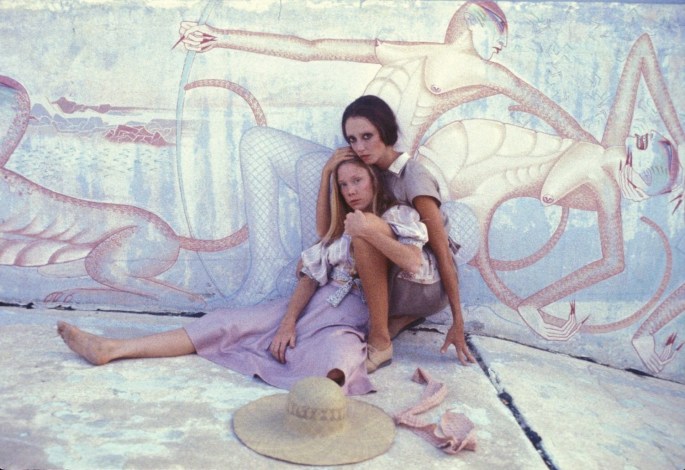
The film begins simply enough. Inelegant and plain Pinky Rose (Sissy Spacek) arrives fresh from Texas to a dusty, desert town in California and goes to work in a health spa that caters to the elderly. There, she meets Millie Lammoreaux (Shelley Duvall), a overly self-confident chatterbox whose lack of an emotional quotient would stun even the least self-aware among us. In need of a roommate after her freewheeling friend, Diedre (Beverly Ross), moves out of her one-bedroom apartment, Millie reluctantly allows Pinky to move in with her. Here, Pinky soaks in Millie’s constant jabbering about her goofy recipes for frozen banana pops and tuna melts and becomes completely enamored with (to Pinky) Millie’s excitingly independent lifestyle which doesn’t really consist of anything outside either being shunned by her neighbors at her apartment complex’s pool or hanging out at a nearby bar and shooting range run by Edgar and Willie Hart (Robert Fortier and Janice Rule). After one of Millie’s McCall’s-inspired dinner party goes awry, the film takes a sharp left turn better left experienced as a first person viewer rather than a third person reader as Altman and company take the audience on one of the most spellbinding and haunting journeys in his filmography.

The third part in a loose trilogy that includes That Cold Day in the Park and Images, 3 Women stays out of the humdrum life of Frances Austin or the unreliable mind of Cathryn and replaces them with a diaphanously hazy dreamscape where only Dennis Christopher’s Coca-Cola delivery boy seems like the only outsider. Traces of the other films occur as the horribly awkward Millie is much more like Frances Austin, her understanding of sex and contraception bordering on the juvenile as she chirps to Pinky that she only takes the pill “when I know I’m going to do something.” But more in line with Images, 3 Women goes into hyperdrive when it’s focusing on the confusion of identity and psychological doubling. Aside from the utilization of identical twin sisters who work alongside Millie and Pinky at the spa, the details that blossom from both Pinky and Millie reveal a wicked symmetry that continues to tangle around the two of them until metaphoric ripples across the surface of a pool triggers a sea change in attitudes and personalities that culminates in a horrific nightmare and an even more terrifying climax, the board and all of its players becoming completely resettled.

3 Women is a curious title for the film as it predominantly about two women. But Janice Rule fills the important role of the silent and intimate yet unknowable presence that fascinates Altman, an idea that he would explore in greater detail two years later in Quintet. Willie isn’t just another woman in this universe with a phonetically similar Christian name to Duvall’s character. She’s the sad end to a tributary Duvall pretends to understand but, in reality, one in which Duvall has no clue. To Millie, Edgar and Willie are just a fun couple who run the watering hole where he cuts up on the shooting range and she solitarily creeps around the rotten and derelict park and emblazons all available white space with sinister, anatomically-defined figures engaged in a terrifying and bitter scrum. To Willie, Millie and Pinky become, at different times, “the other woman” which, frankly, they can only understand from their side. It’s all Scrabble and wines with names like like Lemon Satin and Tickled Pink until you’re the one who is desperately alone, toiling away at the bottom of a dried up pool while on the downslope of middle age where allegory and reality cruelly blend into one.

It’s likely impossible to heap enough praise on Shelley Duvall and Sissy Spacek who give two of their greatest performances in 3 Women. And, truthfully, it was likely the best Duvall ever got, her performance nabbing her a Best Actress award at the Cannes Film Festival that year. As Millie, Duvall projects an almost impossible lack of self-awareness with an attitude both supremely confident and subtly fragile that is by turns both painful and hilarious. And Spacek’s Pinky has to go from homely to hot in both look and attitude and the 180 degree shift in her performance an absolute masterclass from top to tail. The film’s tone never strays from its dreamy origins and everything in the story clicks much like it would if you were half-lucid and looking at life through a gauzy filter. It sometimes feels like it’s a movie taking place about five hundred feet above an Altman film where the overlapping dialogue and off-frame conversations can still be vaguely heard, always keeping one of the film’s feet in a recognizable reality but submitting to almost no rule of traditional Hollywood filmmaking.

Given that this came out in April of 1977 and Star Wars came out a scant five weeks later, it probably comes as no surprise that 3 Women, despite getting some of Altman’s best reviews in years, got its ass kicked all over the box office. Unlike William Friedkin’s Sorcerer, another brilliant film from ‘77 that got itself all kinds of fucked up by Star Wars’s monopoly on America’s imagination, the business 3 Women lost to Star Wars was, truthfully, probably negligible. This film was going to be a tough sell no matter what year in which it came out. But what happened to 3 Women was not just that it simply got murdered in its general release, hardly anyone not named Jerry Harvey remembered it at all and the film languished in obscurity, never seeing a home video release until the Criterion Collection picked it up in 2004.

But to Altman, this was just part of the business and tough sells and easy sells weren’t his problem. He had a pipeline set up and when one project crashed, another one was on the horizon. While doing promotion for 3 Women, Altman made an off-handed remark to a reporter that his next film was going to be “a wedding,” a joke on the then-nascent business of having a legit film crew come and professionally capture your wedding. Well, a joke turned into an idea, an idea into a script, and a script into a film, and by the following year, A Wedding would be unleashed on America.

That’s just the way Altman rolled. Well… for a few more years, at least.

(C) Copyright 2021, Patrick Crain

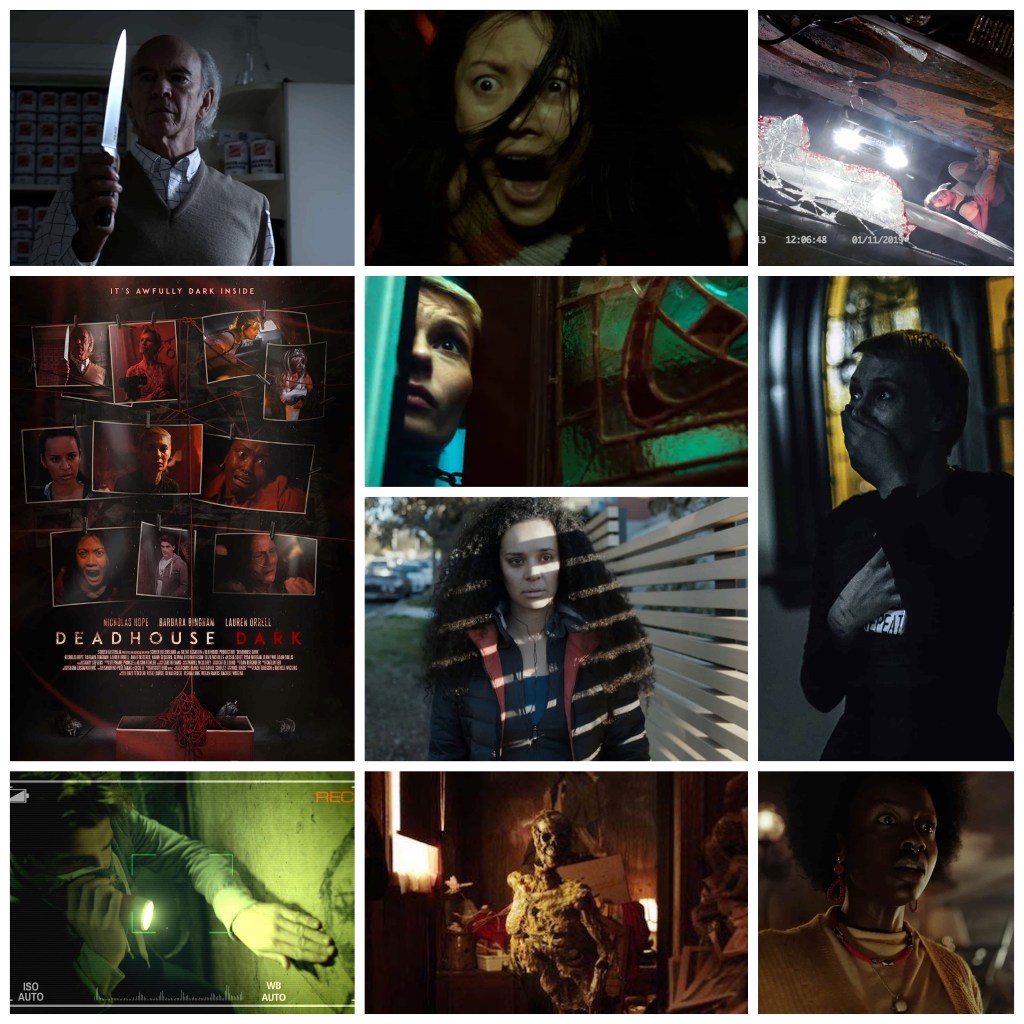
Shudder’s Deadhouse Dark

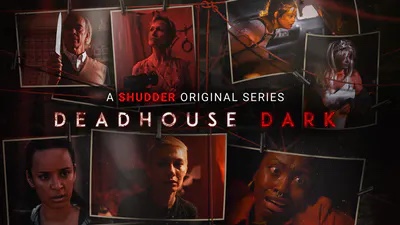
I love a great horror anthology, and while Shudder’s new original Deadhouse Dark may not be a great one it’s certainly a good one and definitely worth checking out, if it doesn’t become your thing then hey, at least the six modest episodes all clock in at under fifteen minutes for you rambunctious kids in the aisle. There’s something so delicious about the concept of anthology: each chapter is a new story, a new setting and a new narrative to devour, you get to check in with previous ones if there’s connective tissue or thematic resonance that bridges them and it all feels very… ‘fun’, in the best possible way. This is an Australian produced series and the stories vary greatly, from two sisters having a bloody encounter on the way home from a Halloween tailgate party all captured on their dash-cam to an elderly gentleman contending with a fearsome rodent problem in his home to a teenage athlete going that extra dangerous mile to win to an underground bunker with a horrific being lurking inside to a terminally ill hoarder with more than just stockpiled junk hiding in her house. They’re somewhat connected by a mysterious woman in an opulently decorated, Kubrickian mansion who receives strange boxes from the dark-web, each with a clue to a story we’ve seen unfold. I would have liked more cohesion and development in this segment because I wasn’t clear just how her presence or actions were the lynchpin of all these happenings, even though it felt like the show was assuredly trying to convince me of the fact. But how? And why? Ambiguity is welcome but I felt the need to know more, or to absorb what was there with more clarity, but it’s a relatively small quibble. The show has some fantastically creepy moments that range from jump scares to terrific suspense to leering monsters both seen and unseen to well orchestrated moments of encroaching dread. It’s well worth a look, the entire miniseries only takes up about an hour and a half of your time and can be binged swiftly on the greatest streaming app currently serving the population, Shudder.

-Nate Hill

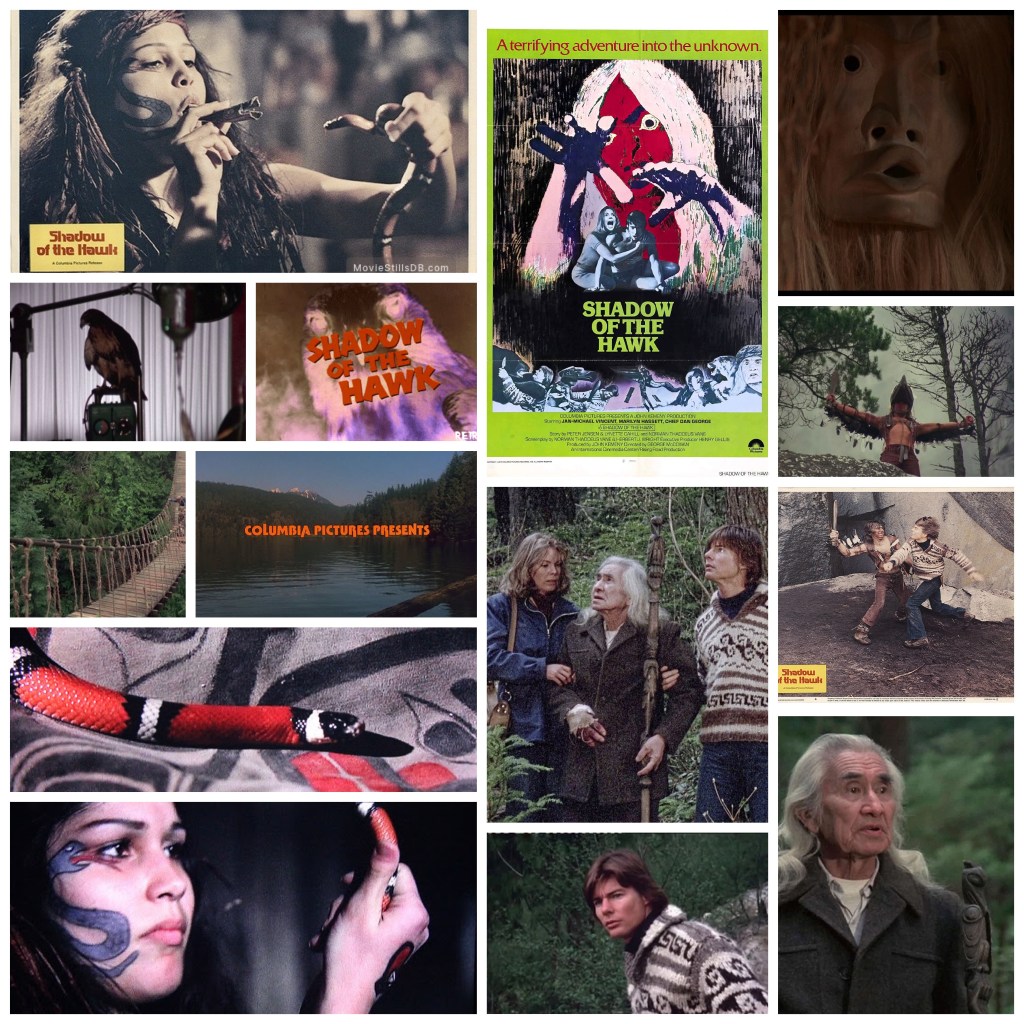
Shadow Of The Hawk

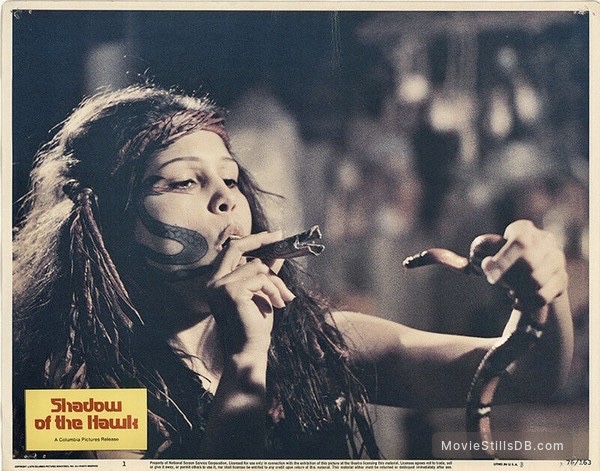
I expected Shadow Of The Hawk to be campy, cheesy or at the very least creaky, but this is a genuinely spooky, effective and quite earnest old school ghost story with three good natured lead performances, absolutely gorgeous Vancouver locations and eerie, atmospheric indigenous mythology. The great Chief Dan George plays a Native elder who voyages from his home in the British Columbia mountains to find his halfbreed grandson (the late Jan-Michael Vincent), to get his ancestral help in battling the ghost of an ancient sorceress who has put a deadly curse on their bloodline. Grandson is less than happy to be pulled into a facet of his life that he’s actively distanced himself from, but has no choice really as the dark magician and her evil minions are plaguing his life too. Together with a helpful reporter (Marilyn Hassett) they embark on a road trip into the sacred lands of BC to contend with these powerful dark forces amassing against them and cleanse their family lineage of this voodoo mysticism. Being an obscure 70’s horror flick theres naturally a touch of camp, most notably in Vincent’s doe eyed, slightly androgynous aura, but for the most part this plays it straight and spooky. The spirit of this witch first manifests as a legitimately terrifying masked phantom that haunts the characters wherever they go accompanied by some sound design that truly stood my hairs on end, then later she shows up in dreamy flashbacks as a snake charming witch-doctor played by Vancouver indigenous actress Marianne Jones. There are very well done set pieces here including a white knuckle suspension bridge crossing, an ongoing car chase between our three leads and a mysterious, supernatural black car that tails them all around the BC landscape. Vincent must fight a bear to death and as if that wasn’t strenuous enough then a Wolf as well *and* some masked cultist acolytes of the sorceress high atop a craggy bluff in a confrontation that has some Last Of The Mohicans vibes. It’s a fun film, with some really engaging visual atmosphere, very frightening score and a neat ‘modern world clashing with ancient spiritualism’ feeling as our characters venture from the cement and glass world of 70’s Vancouver out into the lush, elemental Pacific Northwest wonderland of British Columbia.

-Nate Hill

Ryan Gosling’s Lost River

I think that sometimes there may be a certain expectation set when an already minted Hollywood superstar branches off from the acting game and tries their hand at writing/directing, a vague conjecture that their foray into filmmaking will be more of the same stuff that fans are used to. Well, Ryan Gosling has no use for any of that in his stunning, surreal, masterful and wonderfully otherworldly directorial debut Lost River, a haunting, dreamlike slice of Detroit Gothic wrapped in a dark fairytale that casted a spell on me like no other film has. This is arthouse stuff through and through, Gosling has no interest pandering to the masses or sculpting his work into something wieldy or palatable, he courageously dives headfirst off the map into uncharted territory where there be monsters and visions the likes of which your screen has never seen. In a crumbling, decrepit borough of old Detroit, single mother Billy (Christina Hendricks) struggles to keep her family home from being seized by the bank and demolished, so she takes up employment from oily loan officer Dave (Ben Mendelsohn) working at the club he owns as a moonlight gig, where dancers like the beautiful Cat (Eva Mendes in a wonderfully playful turn, her last acting gig to date) pantomime being murdered on stage for a rapt audience. Meanwhile Billy’s son Bones (Iain de Caestecker) runs wild in the overgrown, labyrinthine basilicas, ragged chain-link fence desolation and jungled ruins of their Lost River county, collecting copper piping for cash, evading a very strange and violent bully named, uh, ‘Bully’ (a feral Matt Smith) and forming an ethereal bond with a lonely wandering waif called Rat, played by Saoirse Ronan in a lovely study of calculated, underplayed wonderment. Many have complained that this film is style over substance and that there isn’t really a plot to speak of supporting all the visual and auditory splendour but they’re kind of missing the point here; this is an abstract parable that refracts aspects and elements of our waking material world through a very primal, subconscious and childlike prism of images, impressions and emotions, I don’t think Gosling ever meant to tell a constructed story with delineated edges and beats, he strives for the fluid, the intangible, the kind of film you feel your way through as opposed to think. There is a strong undercurrent of deep, essential meaning here that can be very, very finely tuned into as a sort of subconscious frequency and in that sense what the film imparts to you could be called a ‘plot,’ but if you’re not tuned into it well… that’s your problem, really, and to say there’s no story or meaning just because you can’t quantify it with your waking consciousness is simply narrow, lazy criticism. Gosling employs the talents of musician Jonny Jewel to compose a suitably synth soaked, absolutely gorgeous score that is accented by several cast members doing singing of their own including Ronan and Mendelsohn, who belts out a transfixing, unforgettable rendition of Marty Robbins’ Cool Water in his eerie nightclub. The cinematography is bliss, from said club to it’s austere archway entrance that can be seen on the film’s poster to a ghostly underwater town long flooded to develop neighbourhoods that are swiftly falling beautiful ruin and the spectral, vegetative barrens of their environment around them, speckled with broken architectural curios and slowly being reclaimed by nature. I try not to use the ‘M’ word too much in my writing (that’s a big fat lie) but there are some films that I just vibe with so deeply and care for so much as immersive experiences that one can scarcely put into words (I hope I’ve made out alright here) that there’s just no way around it: to me, Lost River is a masterpiece, Gosling and everyone involved should be immensely proud of what they’ve made and how it will affect many like me who were powerfully moved by it.

-Nate Hill

THE MICHAEL MANN FILES: THE KEEP (1983)

There is a scene in Michael Mann’s Thief where James Caan’s professional cat burglar takes up the standing offer from a crime syndicate to work packaged scores (ie, jobs that have already been set-up and are mostly ready to execute) in exchange for big dollars. Frank doesn’t like the idea as his is a fully independent operation. “I am Joe the Boss of my body,” he tells Leo, head of the organization. But Frank needs money and he needs it fast so he takes on the first gig that will net him close to a million in cash.

I think about that scene a lot when I think of The Keep, Mann’s big studio follow-up to Thief. Based off the the very popular book, itself the first in the Adversary cycle of novels by novelist/doctor Paul F. Wilson published between 1981 and 1992, The Keep seems like a job taken rather than a job wanted. A tale of a mysterious keep in the Carpathian Mountains where Nazi soldiers have awakened an unspeakable evil while doing Nazi shit to the edifice and the contents within, there seems to be little within the narrative itself that really interests Michael Mann and, to be sure, he never made another movie quite like it.

But Michael Mann does find thematic value in the notion of matter versus anti-matter which is at the center of The Keep. Like his protagonists in Miami Vice, Manhunter, and Heat, there are stark opposites on the dividing line of good and evil but regardless of the size of the chasm between the two, they simply cannot live without each other. In The Keep, the occupying force, first led by benevolent Woermann (Jurgen Prochnow) then by the butcher Kaempffer (Gabriel Byrne sporting the proudest of the proud boy haircuts) inadvertently releases Molssar, a powerful force of ultimate evil and destruction that takes terrifying human form with each soul and body it annihilates. This awakens Glaken (Scott Glenn) a curious, timeless being of ultimate good and healing (in somewhat androgynous human form) who, triggered the moment Molssar’s tomb is opened, begins to move from Greece toward the Romanian keep and a final battle royale with Molssar.

Like most other Mann projects, there exists levels and degrees of each character’s goodness and badness and sometimes these get blurred or become interchangeable. A subplot involving Dr. Theodore Cuza (Ian McKellan) a Jewish professor who is called in to assist in figuring out what’s killing all of the Nazi soldiers around the keep, is seduced into selfishly harnessing the destructive power of Molssar for good and there is likewise an attempt to contrast between characters on the same team as reflected in the relationship between Prochnow and Byrne (which, in the case of Nazis, will ALWAYS boil down to a distinction without much of a difference). Present also is the Mann-favorite theme of doomed love that occurs between Eva Cuza (Alberta Watson) and Glaken but the decision to bring the latter into the story when there are only thirty or so minutes remaining in the whole film make it an easy one to miss or really care about on any kind of serious level. That said, the film’s sole sex scene, whiplash-inducing it may be, is so ravishingly shot by cinematographer Alex Thompson that the mind boggles at the idea that, given different circumstances, Michael Mann could have run a side hustle making high-end erotic cinema.

There is a very strong temptation to consider The Keep Michael Mann’s equivalent to The Magnificent Ambersons. In both cases, a visionary director adapts a best-selling work and fashions it to his taste only to see the studio destroy it in post-production. But Orson Welles didn’t have contempt for Booth Tarkington’s novel as Mann did for Wilson’s (reportedly, he didn’t like the book at all) and, unlike Ambersons, The Keep has bigger issues than its ending (though the ending is an issue and a half in The Keep). The film is choppy and festooned with tell-tale signs of post-production stitching such as abrupt ADR laid over wide shots and it sports a sound mix that goes from indifferent to incompetent. Additionally the heavy studio axe taken to the contract-violating three hour cut Mann delivered rendered the film baffling; an oddly paced fever dream with a confused narrative structure encased in a beautiful, smoke-filled phantasmagoria. Also working against Mann was the rather unexpected death of the film’s visual effects supervisor, Wally Veevers, who left this earth with a great many ideas still locked in his head JUST as post-production was gearing up. This was quite an unwelcome bit of bad fortune for a film that had already gone over-budget and over-schedule and whose director, only at the helm of his sophomore theatrical feature, continually gamboled from one unfocused visual idea to another.

And, to be sure, there was a great deal of excitement at Paramount when this went into production. Big-budget supernatural horror films were only fitfully profitable but they were in vogue again and Paramount wasn’t going to miss their chance to get a piece of that pie. In fact, they were so jazzed that a tie-in board game was commissioned and created by Mayfair Games. Today, that game will cost you a small fortune if you stumble across one that is intact but, at the time, they mostly sat on the shelves of game and hobby shops and collected dust due to the fact that the film as released found absolutely no audience.

But for something that STILL feels like an unfinished rough cut, there are many things going for The Keep, and there are enough of them to justify both the film’s rabid cult-following and the academic attention given to it. Chiefly, Tangerine Dream’s score is truly fantastic and it’s perhaps even better than the one in Thief. And The Keep is REALLY where the rubber meets the road in terms of Mann’s near-trademarked, perfect marriage of strong visual ideas with their passionately charged, aural counterparts, often working overtime to create an overwhelming sense of beauty and tragedy. Scenes of great dramatic gravity that Mean Something™️ are underscored with deadly earnest tonal passages that guide the viewer’s emotions in a way that are simultaneously manipulative and inspired, predating the broadly orchestrated dramatic lifts in Miami Vice and Manhunter and would continue to remain a staple of Mann’s work. Likewise, moments of pure cinematic masturbation that are constructed out of little more than backlighting, slow-motion, and fog machines are cut and scored in such a way that an unmistakable gorgeousness is conjured up, absolutely trumping the pointlessness of the artistic choices made.

After there came an impasse between artist and studio, The Keep was dumped into theaters with almost zero fanfare and, these days, Michael Mann mostly disowns it. The rights to the music have been difficult to tie down which has created a legal stalemate regarding the film’s ability to be distributed in the United States and there hasn’t been a domestic release of the film in over thirty years. After its headache-inducing production and the even more hellish post-production, a disgusted and broken Michael Mann turned his back on features for a hot minute to regroup in the world of television, the medium that had previously been so good to him. For he yearned to bring his cinematic vision to the more controllable world of small screen entertainment; a television series with the high production values of a Hollywood film where he could impress his progressively moody visual palate onto his obsessive themes regarding good and evil.

In 1984, he would find the perfect vehicle for all of those things. And when Michael Mann was bound for Miami, nothing in American pop culture would ever be the same again.

(C) Copyright 2021, Patrick Crain
John Erick Dowdle’s No Escape

There may not be much of a, shall we say, culturally tactful or sociopolitically subtle premise behind No Escape, but I’d be lying if I said that this isn’t an almost unbearably suspenseful, purely nightmarishly effective thriller. Owen Wilson and Lake Bell play a wealthy American couple on a business trip to some unnamed southeast Asian country that is going through kind of a rough patch, politically and economically. When the hotel they are staying in is stormed by a citizen’s army of ruthless, barbaric rebels staging an infrastructure-shattering coup, they are forced to flee through the dangerous streets of the city with no law enforcement or anyone to help them, save for one British intelligence agent played by Pierce Brosnan, an undercover operative who does his best to help them amidst the chaos of a country turning itself inside out. Now, I see from this director’s filmography that his work is almost all in the horror genre so far, which makes sense because this film is so punishingly, exhaustively suspenseful and tense that it could almost be classified as horror itself. The rebels are a terrifying, almost inhuman threat around every corner and are both willing and capable of inflicting frightening atrocities, as this family dodges them at every turn. If I were this director though I would have mayhaps lent my talents to a better, more tasteful script though, and here’s why: Wilson and his kin barely register as characters of their own, but rather blank, terrified chess pieces being frantically shunted across the board of pre-constructed dangers with no real agency or unpredictability of their own. The rebels are a faceless army of homicidal, rape inclined psychos and we get zero grasp on their cause or agenda beyond hunting this family down at al costs. The city they’re in doesn’t even have a name, and that’s how much this script cares for specificity or nuance. The only believable, well rounded character is Brosnan’s guilt ridden agent, he brings an obligatory Bond-esque charisma to the role while retaining this sort of haggard, world weary resolve too and is actually quite good. But his character and the unbelievable talents of the director in generating horrific suspense could have been put to use in a much better setting, premise and story beyond ‘white American family is brutalized by savage Asians in a crumbling third world.’

-Nate Hill

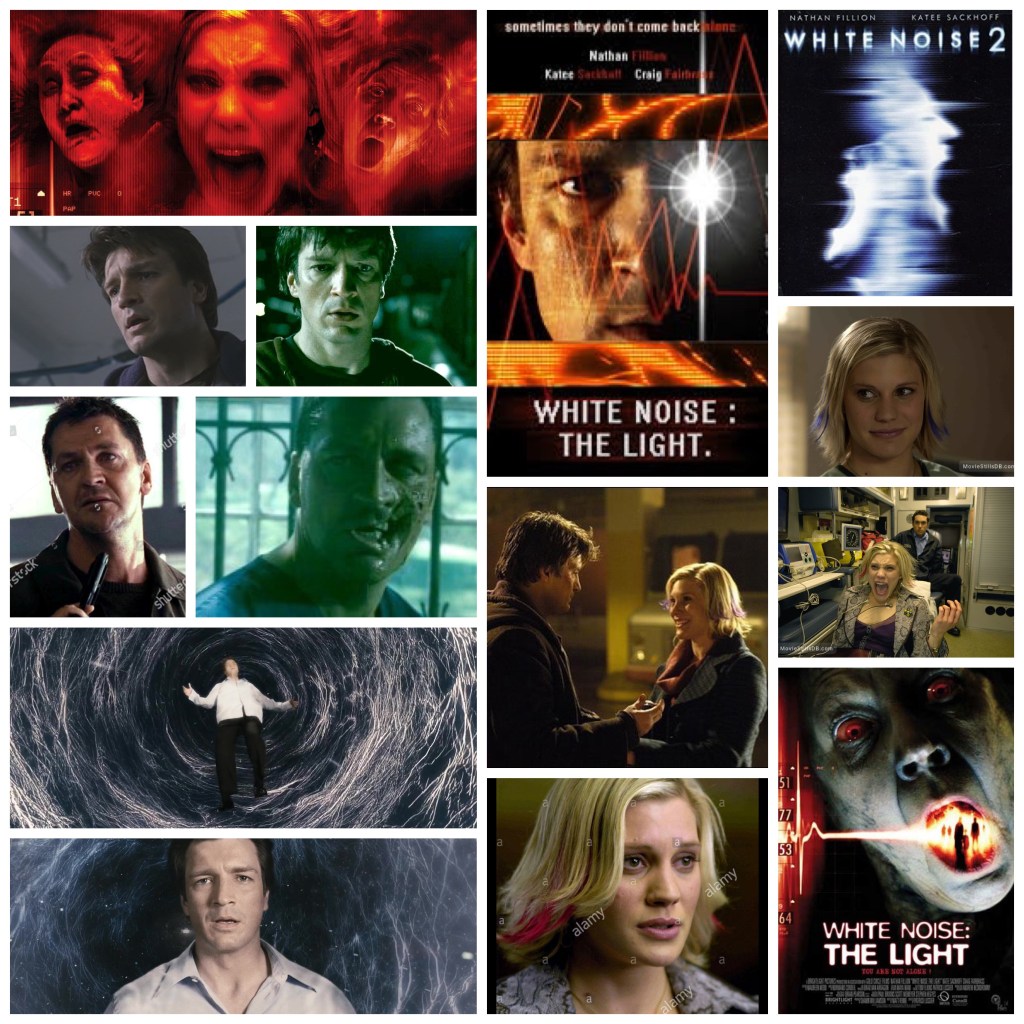
White Noise 2: The Light

It can be jarring when horror sequels do something almost entirely different with their concept but still use that same franchise name as the first one, it either means bravely pioneering new ground or gravely deviating from an already solid blueprint into a morass of sideshow muck. In the case of White Noise 2: The Light I couldn’t tell you which of those two categories it fits into because it was such a confounding, nonsensical story I really didn’t make too much sense of any of it, so I suppose the second one if I had to say. Following the exploits of the excellent first film in which we saw Michael Keaton communicate with the dead, including his wife, via spooky VHS tape static, this one goes in a drastically different direction. Nathan Fillion plays a guy whose wife and child are murdered in the opening scene of the film by a disturbed, gun wielding maniac (perennial UK tough guy Craig Fairbrass) before the man blows his own head off. Lost in a pit of despair, Fillion attempts suicide himself and has a brief trip to the afterlife (cue the XBox 360 cutscene effects) before returning to make it a near death experience and discovering he has certain… abilities. Premonition, foresight, the power to sense impending catastrophes and save those in their path and the clairvoyance to know when certain seemingly benign people are going to perpetrate horrible acts of their own, kinda like the guy… well you can see where this going. He meets a friendly nurse played by the wonderful Katee Sackhoff and I must admit that their pairing is pretty much a casting match made in Heaven and the best thing the film has going for it, even if the script doesn’t do all that much with them together. The cast beyond them aren’t people I recognized except for a hilarious early career cameo from Jared Keeso, who Letterkenny fans will be just tickled to see here and may even do a double take. The film is set in Vancouver again and as always it adds a lot of atmosphere, but you can only do so much for a story that’s told as loosely and unconvincingly as this. There’s no real reference to the first film or it’s premise, this for sure didn’t even need to be called White Noise at all, it’s more a sequel to that Sandra Bullock flick Premonition than anything resembling a tie-in to the Keaton one, and it’s just not gripping, interesting, scary or affecting enough to recommend whatsoever. If you must give it a look to see Fillion and Sackhoff gently flirting for a few scenes then go for it, I don’t blame you, but just don’t expect anything close to an involving thriller here.

-Nate Hill

Rick Alverson’s Entertainment

There are some films that just aren’t for everybody, and seem to have even been fashioned to deliberately repel a certain demographic, as if to weed out those unwilling to take a trip down the weird end of the street and serve as a litmus test to determine who will stand-fast. Folks like John Waters, Todd Solondz and Lars Von Trier are prime examples of artists who traffic in such cheerfully provocative, knowingly inflammatory ventures and now Rick Alverson is well on his way with an eerie, uncomfortably abstract mood piece called Entertainment that I saw a long time ago and recently caught up with, and let me tell you it’s just as fucking bizarre as I remember. Alverson wrote this alongside Tim Heidecker himself and their buddy actor Gregg Turkington, who graduated with honours from the proverbial Tim & Eric Theatre Of Shock & Awe and works frequently with the two, so his badge of bizarre was squarely pinned to his chest before churning out this relentlessly off-putting curio of dust-bowl doldrums, against type cameos, agonizing awkwardness, surreal dreamscapes and nightmarish atmosphere. The film follows pitiful nebbish ‘The Comedian’ (Turkington), a would be standup comic with no audience on a tour to nowhere somewhere in the desolate American southwest. His jokes are excruciatingly cringe, his onstage personality is a grating head-scratcher, his doubting manager (John C. Reilly in a hilariously deadpan cameo) subtly begs him to tone the weirdness down, and just overall this guy’s life seems like a dead end that’s swiftly leading to a deader end. His one respite and glimmer of hope is infrequent phones calls where he leaves forlorn voicemails to an estranged daughter that we never see, perhaps because she never existed at all and it’s his last ounce of conviction to cry for help into an abysmal void. He runs into many characters along the way played by the likes of Heidecker himself, Dean Stockwell, Tye Sheridan, Amy Seimetz and Michael Cera as an impossibly creepy dude that he has an icky run-in with in a men’s bathroom. Many will find this to be a frustrating, confounding, empty, disquieting experience and that’s fine, I would be worried if *everyone* liked it. I admit that this particular flavour of weird isn’t typically my bag and that chunks of it were lost on me, like his interminable bouts of caustic and repulsive verbal digression on the standup stage. However, when the perception and focus shifts over to his ponderous meanderings in the Mojave desert and the incredibly effective, soul shaking original score by Robert Donne I got a real sense of this character’s waywardness, disconnect from everything around him and complete, utter loneliness, and on that front I was able to connect with the film. It’s unique, it’s weird, it’s darkly funny in a sort of brittle, curdled way and uses illogical, jagged sensibilities to explore an artist whose work alienates and humiliates him. You will either vibe with this intensely or be wholly turned off, there’s no real middle-ground.

-Nate Hill

House Of Wax (2005)

It amazes me what a dismal critical reception that House Of wax got because to me it’s a treasured horror film and one of the most disturbing, freaky ass experiences my stoned 14 year old ass ever had as an introduction to the genre. Just to prove that I’m not wistfully beefing up a mediocre horror flick through the treacherous prism of teenage nostalgia, I recently revisited it and it *still* just absolutely slaps, so I’m not sure what bone the critics had to pick with it other than it being a horror remake and having to face the unfair bias and hostility of being saddled with that yoke right out of the gate. So it’s the classic scenario where a bunch of reckless, impossibly sexy teens end up in some godforsaken county with a dried up town full of spooky abandoned buildings, menacing inbreds and a dark history. They’re played by people like Chad Michael Murray, Jared Padalecki, Elisha Cuthbert and Paris freakin Hilton, which is more pedigree than these horror flicks usually get to boast. They discover that a creepy old wax museum isn’t as derelict as outward appearances may suggest and that it’s demented curators never really retired, and have taken up a, shall we say, disconcerting brand of human ‘Wax-idermy’ as extracurricular activities in their spare time. They now find themselves on the run from these whack jobs and fighting for their lives to not be turned into living human wax dolls, or simply hacked to pieces by these crazies. This is one fucked up, super gruesome flick and the refreshingly practical effects are truly some brain melting, squirm inducing eye candy. They must have had to hire a ‘wax wrangler’ just to keep all of their production design materials in line because once they get deeper into this museum and the narrative overall, there are some genuinely nauseating, profoundly disquieting and altogether impressive visual gags and set creations on display. Don’t let anyone ever tell you this movie sucks or is anything other than an absolute banger, because they have no idea what they’re talking about. It’s sweaty, greasy, spooky, waxy, sleazy, trashy, shameless and wonderful in all the best ways a slasher can be. And for the record, I have seen the original, it’s cool, but for a kid my age it’s dated and creaky and something as balls out and energetic as this is just always going to take top spot. Great film.

-Nate Hill