PETER BERG’S THE KINGDOM — A REVIEW BY NICK CLEMENT

3

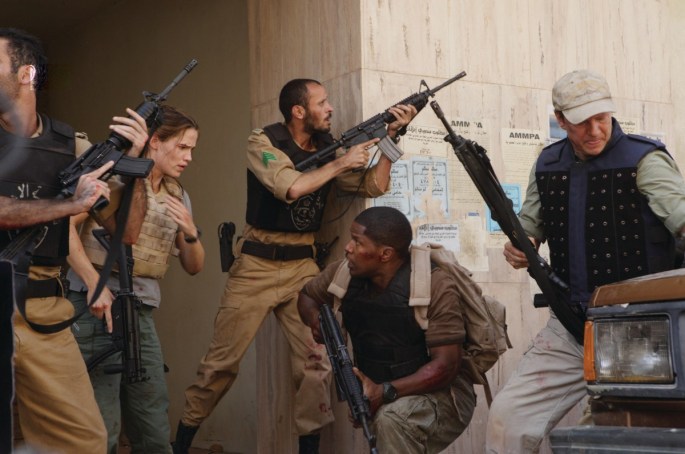
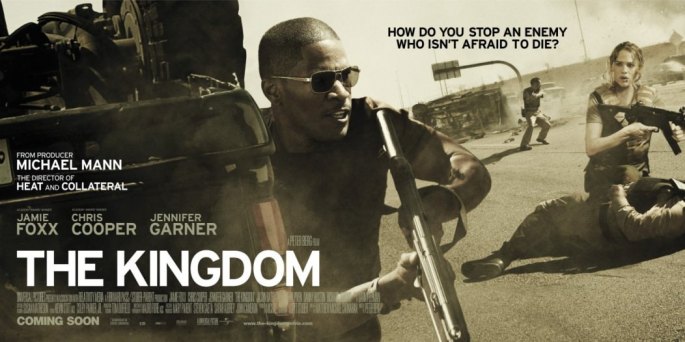
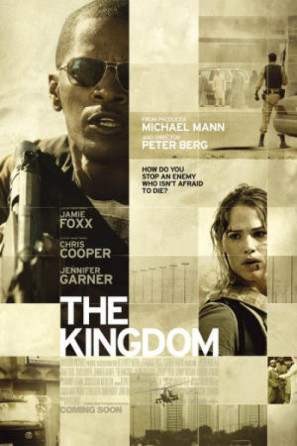
Peter Berg’s thrilling action picture The Kingdom is a ballsy, big-budget production that brings a surprising level of smarts to its relatively predictable and straight forward story. It’s a bummer that this movie didn’t find the theatrical audience it deserved. It’s a tightly focused procedural with solid acting, credible plotting, and shot with an amazingly immediate, semi-chaotic but still coherent visual style that puts you in the middle of the action at all times. The opening credits sequence is a total wowser, dispensing with a ton of information and political backstory during the first five minutes, while the audience is presented with an arresting animated timeline detailing the Unites States’ relationship with the insanely corrupt nation of Saudi Arabia, all stemming from the importance of oil. We’re then plunged right into the middle of a multi-stage terrorist attack on an American housing complex in Saudi Arabia which leaves 100 people dead, many of whom are women and children. Berg didn’t shy away from graphic violence in The Kingdom; rarely do you see a big-budget Hollywood action film that will actually show you on-screen deaths of women and children and innocent bystanders like THE KINGDOM does. Those moments, while shocking, are important. Without them, the filmmakers would be diluting the situation of its impact and realism. Innocent people die when terrorists strike, yet for the most part, Hollywood enjoys its killings bloodless and faceless. Not here. Multiple strikes are coordinated against U.S. interests, the stakes are raised, and it’s time for a response.

2

The FBI learns that a few agents were also killed in the attacks so they send Jamie Foxx, playing senior agent Ronald Fleury, and his team to try and apprehend the killers. Chris Cooper, Jennifer Garner, and Jason Bateman make up his squad and each are give more than a few moments to shine. They rendezvous with a sympathetic Saudi policeman named Faris, played by the excellent Ashraf Barhom, who was also fantastic in the supreme (and controversial) political drama Paradise Now, in an effort to gain solid footing. The middle section of the movie resembles a television procedural, but it becomes deeper than that. The relationship that develops between Fleury and Faris is serious and complex, never feeling phony or contrived. These two men are fighting the same fight, and while their backgrounds are different, they are able to agree on what is right and what is wrong. The character shadings that Faris has are important and distinct, and this is where The Kingdom elevates itself over most other action films in the genre. As much as it’s concerned with blowing stuff up real good (and that it does), Berg, and screenwriter Matthew Michael Carnahan, no doubt guided by producer Michael Mann, showcase the frustrations that would accompany an investigation like this. The filmmakers keep the storytelling efficient and coherent, with Foxx in fine form as the commanding officer in charge, and Cooper, as always, giving a sturdy supporting performance as a take no nonsense soldier ready to throw down at a moment’s notice. Garner is also excellent, channeling her role from Alias in some extremely physical fight sequences, and lending the movie a tender heart in a few sequences. And Bateman does his usual self-effacing routine but this time with a machine-gun; he gets all the script’s wisecracks and delivers them in an unforced manner while also getting a chance to flex his action muscles.

1

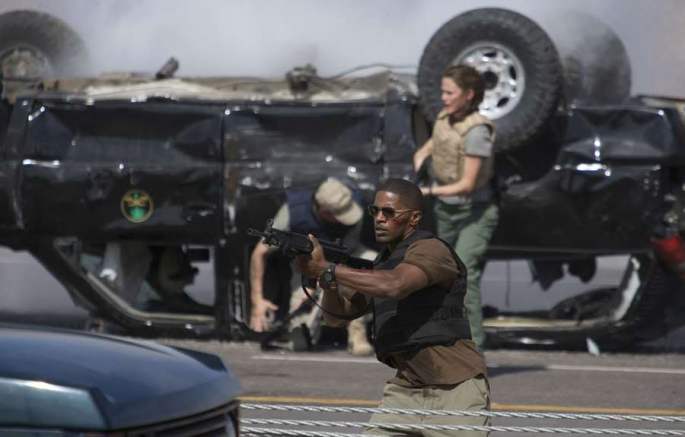
The Kingdom served as  Berg’s coming out as a big-time director of action (he’d later go on to direct Hancock, Battleship, and most impressively, Lone Survivor). The last third of The Kingdom, which basically boils down to 30 minute long extended action sequence, is a tour de force of staging, logistics, and pyrotechnics. Beginning with a high speed car chase and highway ambush that evolves into a Black Hawk Down-style urban-combat sequence, Berg never lets the viewer out of his grasp. RPG’s fly all over the place while automatic gun-fire explodes from every direction. Cinematographer Mauro Fiore, who has worked for action vets like Michael Bay on The Island, Jim Cameron on Avatar, and Antoine Fuqua on Training Day and The Equalizer, covers the action at the ground level, heightening every visceral moment for maximum impact. Employing a similar shooting and editing style to that of what Paul Greengrass cultivated with his work on the Bourne franchise and United 93, the restless camera never stops moving and searching, which amps up every sequence. You haven’t seen an SUV flip over like the way you do here. The highly bloody and intimate machine gun violence, reminiscent of the close-quarter shoot-outs in Munich, are pulse-pounding and flinch-inducing. And one sequence, with Garner engaged in hand-to-hand combat with a baddie, is unrelenting in its primal impact. Berg has a feeling for authenticity that’s reminiscent of the works of Mann, and the here-and-now quality of the locations and sets are incredible. But the real coup of the movie are its final moments. The Kingdom ends on a note of surprising darkness and honest reflection; without spoiling anything, you’re reminded that the cycle of violence in our current climate is something that will never end and can’t be easily fixed. It’s a small moment but it adds weight to everything that has come before it.

5

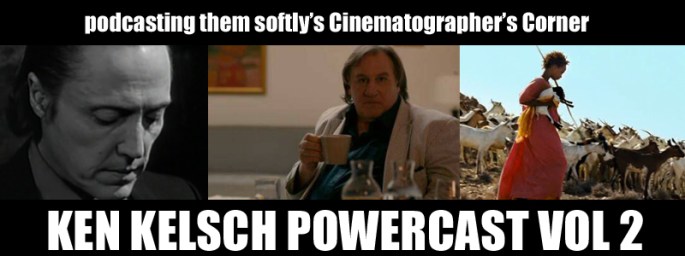
PTS Presents Cinematographer’s Corner with Ken Kelsch Vol. 2

Kelsch v2.jpg

kelsch ferraraWe’re back with our second volume with cinematographer Ken Kelsch.  This time we speak with him about more of his work with Abel Ferrara including WELCOME TO NEW YORK, THE ADDICTION and retouch on BAD LIEUTENANT.  We also speak with Ken about working with Eric Red on 100 FEET, his work with Stanley Tucci on BIG NIGHT and THE IMPOSTERS, and Sherry Hormann’s DESERT FLOWER.  Hope you guys have as much fun listening to this as we did recording this with Ken!

UNFAITHFUL – A REVIEW BY J.D. LAFRANCE

unfaithful_15

Sometimes it’s frustrating being a Diane Lane fan. For an actress so talented, she appears in a lot of dreck. For every The Outsiders (1983) or A Walk on the Moon (1999), there are three or four Must Love Dogs (2005) type clunkers. Yet, she gamely plugs along, turning in consistently good performances in even the most routine films (Murder at 1600). With Unfaithful (2002), she finally found material that could challenge her by portraying a fascinatingly flawed character in a provocative film. It was a remake of Claude Chabrol’s 1968 film, La femme infidele and was directed by Adrian Lyne, a filmmaker not afraid to court controversy by bringing a European sensibility to sex and sensuality in films like 9½ Weeks (1986), Indecent Proposal (1993), and Lolita (1997). With Unfaithful, he proposed a simple yet intriguing premise: why would a woman with a successful, loving husband and nice child threaten this security with an illicit affair with another man? While his film ultimately conforms to clichéd thriller conventions, Lane transcends the material with a career-best performance that garnered her all kinds of critical accolades and awards, chief among them an Academy Award nomination.

Constance Sumner (Lane) has it all: Edward (Richard Gere), a handsome husband with a successful business in New York City, and Charlie (Erik Per Sullivan), an adorable son. They live in a beautiful house on a lake outside of the city. Not to mention Connie has a body most women her age would kill for. The worst you could say about Connie and Edward’s marriage is that it’s gotten routine. They obviously still love each other and have that familiar shorthand that couples do after living together for years. For example, one morning she notices that he’s wearing a sweater inside out and lets him know before he goes off to work. We first see her in the midst of domesticity, doing the dishes and getting Charlie ready for school. She’s loving and supportive towards her husband and child.

Diane Lane and Richard Gere play this sequence well and are quite believable as a married couple by the way they interact with each other. Lyne inserts little details to reinforce their comfortable domesticity, like how Connie stops the dog bowl from moving around as their pet hungrily chows down on his food – it’s a move that looks like she’s done many times over the years. It also didn’t hurt that Lane and Gere were paired up previously in Francis Ford Coppola’s The Cotton Club (1984) and while they didn’t have much chemistry together on that film, they at least had something to build on.

One particularly windy, blustery day, Connie goes into the city to run some errands and literally runs into a young man (Olivier Martinez) carrying an armful of books. They both go sprawling and she ends up scraping her knees. He invites her up to his apartment so that she can tend to her wounds and call for a taxi. His offer isn’t difficult for her to accept. He’s gorgeous looking and has a sexy French accent. Paul is a book dealer who just happens to look like fashion model – of course he does or how else are the filmmakers going to explain Diane Lane cheating on someone like Richard Gere? Paul is aloof and accommodating but when Connie goes off to use his telephone, he checks her out. The camera adopts his point-of-view, slowly moving up her long legs to her face. No one can quite make a trenchcoat look sexy like Lane does in this scene.

Paul startles Connie by gently placing an ice pack on her knee and first physical contact is made. The look she gives him, a sly smile, makes you wonder if it is at this moment that she first thinks about having an affair with this man. The extremely windy day that starts off this scene is a harbinger, an ominous warning of how turbulent Connie’s life will become once she accepts this man’s invitation. After this alluring encounter, Connie comes home to reality: toys lying around, the dog roaming around and her son watching television. Later, she and Edward try to make love but are interrupted by Charlie – the ultimate mood killer.

Home alone during the day, she checks out the book Paul gave her and inside is his business card. On an impulsive whim, she takes the train into the city and calls him on a pay phone. Paul invites her over and Connie accepts, turned on by the attention she is getting from this mysterious, attractive young man. Once there, he slyly puts the moves on her, taking off her coat so that his fingers brush up against her neck. Lane is excellent in this scene as she conveys the excitement her character feels being with this man, the apprehension of being unsure of what she’s doing, and the inner turmoil as you can tell that she’s trying to decide whether to leave or stay. Ultimately, Connie leaves and visits her husband at work, giving him a present out of the guilt she feels for seeing Paul.

She visits him again and he excites her in the way he looks and touches her. Paul looks at Connie in a very seductive way that makes her feel wanted and desired – something that she doesn’t feel with Edward. She has a moment of conscience where she tells Paul that what they are doing is a mistake, to which he replies, “There’s no such thing as a mistake. There’s what you do and what you don’t do.” Connie leaves and then comes right back to get her coat. Before she can say anything, Paul embraces here and literally sweeps her off her feet. Lyne does an interesting thing here. Instead of just showing their subsequent love scene, he breaks it up by intercutting Connie’s train ride home, juxtaposing her emotional reaction to what she’s done with the act itself. As he demonstrated with 9½ Weeks, Lyne certainly knows how to capture the erotic intimacy of a sex scene.

Lyne shows Paul gently touching Connie’s body, which is trembling in fear and excitement. The emotional turmoil that plays across Lane’s face is astounding as she displays a vulnerability that is quite raw. This gentle foreplay segues into something more primal as Connie attempts one more time to stop this and Paul tells her to hit him so that her aggressive passion that he knows lurks under her conflicted surface will take away her fear. It does as she pummels him and this gives way to passionate kisses as she hungrily devours him. This is intercut with Connie’s train ride home as she reflects on what she’s done. The range of emotions that play across her face as she replays it over in her mind is incredible to watch. She smiles to herself and her hand absently runs across her chest. Her mood darkens ever so gradually before lightening again as she smiles and then breaks out into a laugh. Finally, her face takes on a slightly sad expression. In only a few moments, she has run a whole gamut of emotions and pulls it off masterfully.

Edward has been married to Connie long enough to sense when something is off with her. Early on, he doesn’t have any definite indicator that something is amiss except for a possible small lie that she told him. But it’s enough for him to ask her one night if she loves him. Richard Gere asks Lane in such a way that your heart goes out to his character. He’s done nothing wrong while she’s off having an affair with another man.

Lyne orchestrates another fascinating montage that juxtaposes Connie spending time with Edward and her son at their home with her spending time with Paul in the city. She has fun with both men but in different ways. With Edward, she feels safe and secure in domesticity, and with Paul, she feels excited and passionate. Ultimately, she is looking for someone who can make her feel both safe and passionate. Connie’s affair emboldens her to take unnecessary risks, like kissing Paul in a public place and, by chance, one of the men (Chad Lowe) that works with her husband sees them.

As he demonstrated in both 9½ Weeks and Indecent Proposal, Lyne really knows how to photograph women and bring out their beauty. Unfaithful is no different as he does an incredible job of conveying Lane’s beauty, both naked (the scene where she takes a bath) and clothed (she can even make wearing a t-shirt and jeans look sexy). It is the way he lights her and the angles he uses that bring out her natural good looks. Lane has never looked or acted so well.

When Edward suspects that Connie isn’t being truthful with him yet again, he checks up on her excuse and finds out that she lied to him. To add further risk, when she’s in the city to meet Paul for another tryst, Connie runs into a friend of hers with a co-worker. Unable to ditch them, they all go out to lunch. Connie calls Paul and tells him what happened and he shows up. On the spur of the moment, they have sex in a bathroom stall. Lyne shows a playful side during this scene as he cuts between Paul and Connie’s brief but passionate bout of sex and Connie’s friend talking to her co-worker about how good Connie looks, which is rather obvious. As Edward’s suspicions grow, he decides to have Connie followed and what he finds out and how he acts on it, changes the entire complexion of the story and the film.

The longer the affair goes on, the more selfish Connie becomes and she loses sight of what’s important to her – Edward and Charlie. She has become addicted to her rendezvous with Paul as he consumes her thoughts to the point where she even gets jealous when she spots him with another woman. Connie becomes more desperate and her behavior more erratic as the affair continues.

Richard Gere has the thankless role of playing the spurned husband and he does a good job of eliciting sympathy early on. Edward may not be has handsome as Paul but, c’mon, it’s Richard Gere! The man has aged incredibly well and looks handsome no matter how many frumpy sweaters Lyne tries to put him in. Gere’s finest moment in Unfaithful is when his character confronts Paul. Edward starts off angry but Gere doesn’t chew up the scenery – it’s a slow burn as Edward questions Paul and then he gradually becomes unglued. Gere has to convey a wide spectrum of emotions in this scene and does so quite expertly. From that scene on, his character undergoes a very profound change and it is interesting to see how Gere plays it out.

After years of playing heroic roles in films like Judge Dredd (1995), Lane began to seek out projects that gave her the chance to play more flawed characters. In many respects, A Walk on the Moon was a warm-up for her role in Unfaithful. In that film, she played a 1960s housewife who gets caught up in the sexual revolution of the era and cheats on her husband with a good-looking traveling clothes salesman. Whereas her character’s motivation was clearer in that one, it is more ambiguous in Unfaithful. In fact, Lyne cast Lane based on her work in A Walk on the Moon in which he found her to be “very sympathetic and vulnerable.”

During the production, Lyne fought with 20th Century Fox over the source of the affair. Executives felt that there needed to be a reason while the director believed that chance played a large role. Early drafts of the screenplay featured the Sumners with a dysfunctional sexual relationship and the studio wanted them to have a bad marriage with no sex so there would be more sympathy for Connie. Lyne and Gere disagreed and the director had the script rewritten so that the Sumners basically had a good marriage. He said, “The whole point of the movie was the arbitrary nature of infidelity, the fact that you could be the happiest person on Earth and meet somebody over there, and suddenly your life’s changed.”

When it came time to assemble the crew for this film, Lyne asked director of photography Peter Biziou, with whom he had made 9½ Weeks, to shoot Unfaithful. After reading the screenplay, Biziou felt that the story lent itself to the classic 1.85:1 aspect ratio because there was often “two characters working together in frame.” During pre-production, Biziou, Lyne and production designer Brian Morris used a collection of still photographs as style references. These included photos from fashion magazines and shots by prominent photographers.

Initially, the story was set against snowy exteriors but this idea was rejected early on and the film was shot from March 22 to June 1, 2001 with Lyne shooting in sequence whenever possible. Much of the film was shot in Greenwich Village and Lyne ended up incorporating the city’s unpredictable weather. During the windstorm sequence where Connie first meets Paul, it rained and Lyne used the overcast weather conditions for the street scenes.

Lyne also preferred shooting in practical interiors on location so that, according to Biziou, the actors “feel an intimate sense of belonging at locations,” and use natural light as much as possible. A full four weeks of the schedule was dedicated to the scenes in Paul’s loft which was located on the third floor of a six-story building. Biziou often used two cameras for the film’s intimate sex scenes so as to spare the actors as little discomfort as possible. For example, Olivier Martinez wasn’t comfortable with doing nudity. So, to get him and Lane in the proper frame of mind for the sex scenes, Lyne showed them clips from Five Easy Pieces (1970), Last Tango in Paris (1972), and Fatal Attraction (1987). The two actors hadn’t met before filming and didn’t get to know each other well during the shoot, a calculated move on Lyne’s part so that their off-camera relationship mirrored the one of their characters.

Lyne tested his cast and crew’s endurance by using smoke in certain scenes to enhance the atmosphere. According to Biziou, “the texture it gives helps differentiate and separate various density levels of darkness farther back in frame.” Lyne used this technique on all of his films; however, on a set where cast and crew were filming 18-20 hour days, it got to be a bit much. Gere remembered, “Our throats were being blown out. We had a special doctor who was there almost all the time who was shooting people up with antibiotics for bronchial infections.” Lane even used an oxygen bottle for doses of fresh air between takes.

The last 25 minutes of Unfaithful slides dangerously into formulaic thriller territory, threatening to derail what had been up to that point an engrossing drama about an illicit affair. Why did Lyne feel the need to go in this direction? Did the studio influence his decision and mandate that he incorporate more commercial elements? Lane and Gere do their best to keep things on track and it’s a credit to their abilities that they keep us interested in what is happening to their characters as they transcend the material. In some respects, Unfaithful is a horror film for married couples or for people in some kind of long-term relationship as it shows the ramifications of cheating on one’s spouse. The tragic thing is that all of this could have been avoided if Connie and Edward just talked to each other openly and honestly about how they felt about things. After all, communication is the key to a successful marriage or any meaningful relationship. As Unfaithful shows, lies only complicate things and drive people apart. It’s a harsh lesson that Connie and Edward learn the hard way.
TONY SCOTT’S BEAT THE DEVIL — A REVIEW BY NICK CLEMENT

devil.jpg

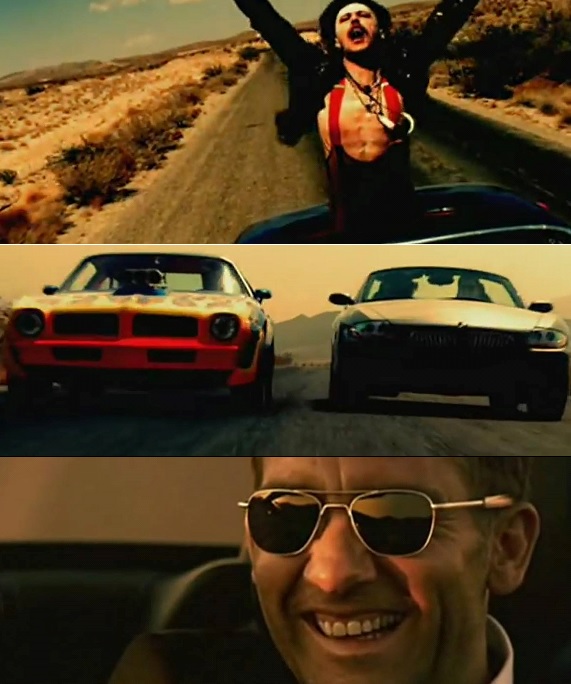
Tony Scott’s late-career, ultra-impressionistic style began taking its roots with the gloriously hyperactive Beat the Devil, his contribution to the historic BMW film series, The Hire, which was a series of extended car commercials in the guise of slick and exciting short films with serious Hollywood pedigree. The talent in front of and behind the camera on The Hire was staggering. Directors included John Woo, Wong Kar-Wai, Joe Carnahan, Ang Lee, Alejandro Gonzalez Inarritu, Guy Ritchie, John Frankenheimer and Scott with an acting lineup featuring the likes of Don Cheadle, Mickey Rourke, Madonna, Gary Oldman, James Brown, Danny Trejo, Stellan Skarsgard, F. Murray Abraham, Ray Liotta, Dennis Haysbert, Maury Chaykin, and Marilyn Manson. And for those of us who had hoped to see Clive Owen as the next James Bond, we’ll always have The Hire, where Owen plays the nameless Driver, an expert behind the wheel (always a BMW, naturally) who is tasked with various life-threatening missions with differing degrees of difficulty. The one linking thread between the different films was Owen, who brought a manly command to the lead role that helped solidify the entire series.

Beat the Devil is the most out-right entertaining film of the bunch, and it’s the one that seems to be having the most fun. It centers on the idea that James Brown (who played himself), back in his youth, sold his soul to the Devil (a hysterical Gary Oldman, in flashy make-up and garish costume that has to be seen to be believed) in exchange for the chance to have a legendary career. But now that the rocker is getting old, he wants to renegotiate the terms of his deal so he can go back to being young, so he suggests that his Driver (Owen) will race Lucifer’s driver, Bob (Trejo), from the Vegas strip out into the dessert. Winner takes all. For roughly 10 minutes, Tony Scott makes cinematic rock ‘n roll love to his camera; every image is cranked, every sound effect is juiced, every edit is sharp as a tack. His fragmented, cubist style that would be seen in future efforts like Man on Fire and Domino was being first experimented with here (and in the Amazon short Agent Orange – seek it out, it’s very cool), with overlapping subtitles, a washed-out and de-saturated color scheme, staccato editing patterns, and skewed camera angles. Beat the Devil exists primarily as a sensory blast but it’s also got a great sense of humor, probably the best sense of humor out of any of the entries in The Hire, which is why it’s my favorite of the bunch.


Sinners And Saints: A Review by Nate Hill

image

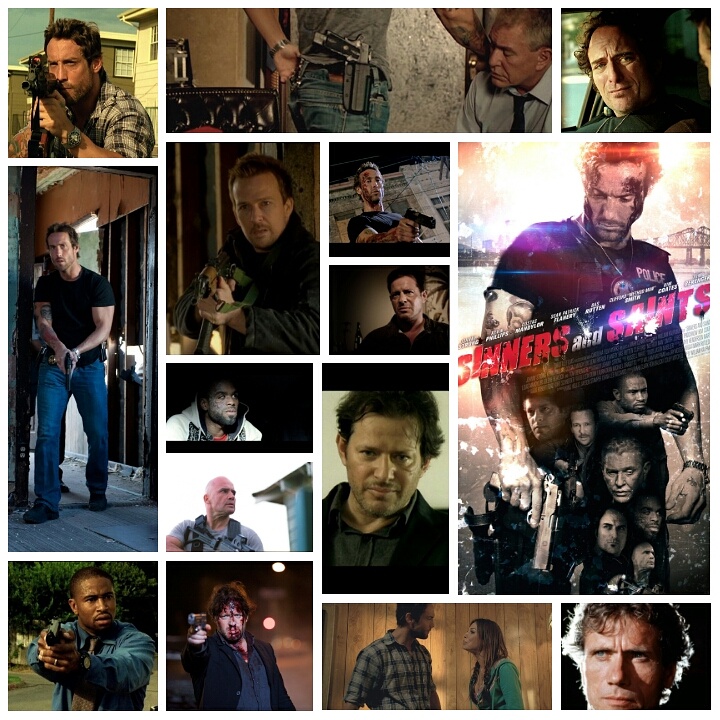
Sinners And Saints is a very adeptly made New Orleans set cop thriller that pays homage to tough archetypes of yore such as Lethal Weapon, Dirty Harry and Bad Boys. It’s far more serious and sinewy than those movies though, sucking the humour off its own bones and leaving a grim tale of one man ditching the force and going rogue in an attempt to hunt down some extremely bad people. Johnny Strong, a formidable, mscular guy, plays Detective Sean Riley, trying to sort through the post-Katrina chaos of the city whilst internally dealing with the loss of his wife and infant son. Strong is known for The Fast And The Furious as well as Black Hawk Down, quickly making it his calling card to play tough outsiders who get shit done with a fiery knack for not always playing by the rules. As it turns out, New Orleans is rife with psychopathic criminals up to no good, starting with evil mercenary Raymond Crowe (a badass, hateable Costas Mandylor), leading a crew of paramilitary scumbags into some very nefarious deeds. Riley discovers that his old army buddy Colin (the blonde half of the Boondock Saints, Sean Patrick Flanery, getting some nice, quiet moments of introspect before the firefights) is involved somehow, spurring him further into action. His commanding officer Trahan (Tom Berenger, stoically reminiscing about the youthful days in which he headlined flicks like these), worries that the path he’s headed down is too dark and similar to the men he is hunting. He’s paired with an unseasoned rookie (Kevin Philips), and an inevitable bond is forged in between and during bouts of gunfire. The action is wickedly staged, rising above the ineptitude that usually brands direct to video efforts like this. No, these filmmakers know exactly what they are doing and how to raise a pulse, demonstrating care and passion in creating their battle scenes. The cast is stacked high as can be as well. A boisterous Kim Coates has a fleeting scene to kick off the film. Resident baddie Jurgen Prochnow shows up a few times as malicious arch villain Mr. Rhykin, pulling strings which we are never fully privy to (I’ve heard rumblings about a sequel, hopefully with answers regarding his character). The other Mandylor brother Louis plays a bleach blond Australian mercenary and is beyond priceless. UFC legend Bas Rutten plays Dekker, a frightengingly nasty dude who proves a tough obstacle for Riley. Rapper Method Man even rears his head as a bad tempered, disfigured street thug who has his part to play in the whole cluster fuck. I watch countless direct to video action flicks that try their absolute adorable best to emulate the films they admire, often very lazily and without adding any new flavors. Can’t say that about this one. It fires up such a wicked, visceral punch while maintaining it’s own solid gold originality that it can scarcely even be called a B movie save for the fact that it wasn’t released theatrically. It’s pure, first class action, and demands a watch from anyone who says they’re a completist of the genre, before that claim can be validated.

Gothika: A Review by Nate Hill


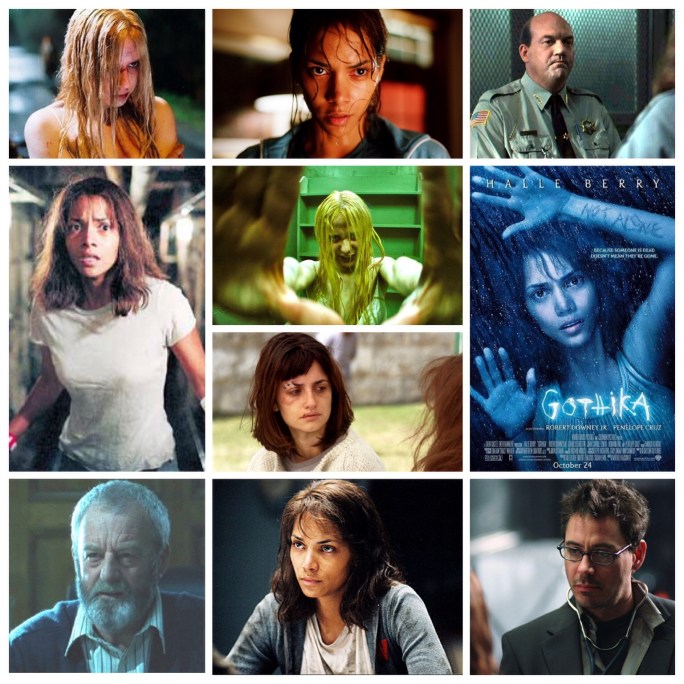
Matthieu Kassovitz’s underrated chiller Gothika is thick with a horror atmosphere that goes straight for the jugular in terms of scares, a psychological ghost story that actually raises hairs a frightens, or at least did for me. It sometimes sacrifices logic for style, but what style it’s got! Any horror flick set in an asylum just has to to be cloaked in workable atmosphere to be effective, and this one is positively dripping with it, hence the evocative title. Halle Berry plays a laid back psychiatrist who wakes up one day in the asylum she works at, only now a patient. She’s told she brutally murdered her husband (Charles S. Dutton) yet has no memory of the act. As if that weren’t a terrifying enough situation for her to be in, she starts having waking nightmares, haunted by a gnarly ghost of a girl (Kathleen Mackey) with mysterious ties to the facility’s past. Her colleague and friend (Robert Downey Jr. gives the dour proceedings his usual chipper pep) seems unable to help her. A guard (John Carroll Lynch) is hostile towards her, angry at the loss of her husband who was his friend. An erratic fellow patient (a de-glammed Penelope Cruz) seems to know more than her vacuous babbling would suggest. The asylum Director (Bernard Hill, excellent) is perplexed by the whole situation. It’s a twisty funhouse of a plot that probably piles on one stark plot turn too many, they’re nevertheless fun to be left aghast by as the rattle by with little regard for plausibility. Berry is convincing in her tormenting position, radiating desperation and resilience that claws at the cobwebs of insanity. Kassovitz piles on the gothic atmosphere relentlessly, and it really works, until we have a visual palette that looks like the dark underside of Tim Burton’s unconscious mind. The ghostly scenes have a threatening, intense edge to them and feel unnervingly realistic, putting us right in the hot seat with wide eyed Berry. Style over substance? Maybe. Okay, probably. But I care not. If the style, composition and palette are enough to draw me into a story, I can roll with it. This one imprints troubling negatives on the celluloid which latch themselves onto your psyche. Maybe it works well because it’s got a European director, and they’re more in tune with the supernatural in general. Maybe it just does a nice job at being effective horror. Either way, I enjoyed. 

OCEAN’S THIRTEEN – A REVIEW BY J.D. LAFRANCE

Ocean_s_Thirteen_2007_BRRip2

Despite its impressive box office returns, Ocean’s Twelve (2004) was considered something of a disappointment by its director Steven Soderbergh who felt that the plot was too complicated. While not quite as fun as Ocean’s Eleven (2001), it was a fine film in its own right – one that had a more satisfying emotional pay-off and doesn’t deserve the lousy reputation that it seems to have. Ocean’s Thirteen (2007) was seen as a return to the fun, breezy vibe of the first film by bringing it back to Las Vegas with style. The result was a very satisfying conclusion to the Ocean’s films.

As the revenge picture cliché goes, this time it’s personal. When Reuben Tishkoff (Elliott Gould) is muscled out of a business deal by slick businessman Willy Bank (Al Pacino), resulting in a heart attack, Danny Ocean (George Clooney) and his crew reunite for one last job: to ruin the opening night of Bank’s casino, The Bank, by making sure he loses a huge amount of money, which involves rigging all the games and slot machines. Bank wants the Five Diamond Award – the top accolade for hotels and will do anything to get it. Danny and the boys use this as a way to get at Bank. To this end, they devise an elaborate plan with the help of their arch-nemesis Terry Benedict (Andy Garcia) who bankrolls the operation. They also bring in Roman Nagel (Eddie Izzard) from Ocean’s Twelve to crack a state-of-the-art artificial intelligence security system.

Soderbergh kicks things off rather stylishly as we get a beautiful shot of Rusty Ryan (Brad Pitt) walking across a runaway tarmac to an awaiting plane at dusk with the sky an impossibly deep dark blue that, accompanied by David Holmes’ groovy score, is absolutely breathtaking. Once again, the director shoots the hell out of the film by employing all sorts of zoom ins and outs, pans and split-screens that, along with a saturated color scheme, keeps things visually interesting.

This time out, Matt Damon gets a juicy subplot where he goes undercover as Lenny Pepperidge, the assistant to a Mr. Weng (Shaobo Qin as The Amazing Yen, also undercover), a very high roller, in order to get close to Bank’s lovely assistant, Abigail Sponder (Ellen Barkin). Part of his disguise involves wearing a ridiculous fake long nose – a sly fuck you to Harvey Weinstein who wouldn’t let Damon wear said nose for his character in Terry Gilliam’s The Brother’s Grimm (2005) because he felt it would obscure the actor’s good looks and hurt the film’s box office potential. Well, it didn’t hurt Ocean’s Thirteen box office as the film went on to gross a very respectable $311 million worldwide.

It is also a lot of fun to see Ellen Barkin reunited with her Sea of Love (1989) co-star Al Pacino. She appears to be having a good time playing a confident businesswoman succumbing to Damon’s “seductive” charms. It is also fun to see Pacino go off autopilot for a change and sink his teeth into a juicy bad guy role. Who else could Soderbergh get to pose as a credible threat to the likes of George Clooney and Brad Pitt but someone of the legendary star caliber like Pacino? He plays Bank like the offspring of his take on Ricky Roma from Glengarry Glen Ross (1992) and Gordon Gekko from Wall Street (1987) – a smooth-talking unscrupulous bastard. In another nice bit of casting, the inventor of the artificial intelligence security system is played by none other than Julian Sands, an actor whose big break through came in A Room with A View (1985), but whose career settled into mostly direct-to-home video fare so it was a pleasant surprise to see him appear in a big mainstream film like Ocean’s Thirteen.

Another amusing subplot involves Virgil Malloy (Casey Affleck, sporting a ridiculous-looking mustache) organizing a revolution/strike among the workers at a dice-making factory in Mexico. He goes from complaining about a lack of air conditioning to tossing Molotov cocktails on the strike lines. At one point, he and his fellow co-workers drown their sorrows at a local bar and Virgil asks them, “Have all of you forgotten Zapata?” He goes on to offer inspirational words that fire them up. How this whole subplot plays out is quite funny. In another nice twist, Terry Benedict is helping Danny out albeit with all kinds of conditions. After all, he resents Bank’s lack of taste and the competition he represents. There can only be on top dog in Vegas and Benedict clearly feels that he is the one. Andy Garcia looks like he relished the opportunity to be in on the joke instead of being the target as he was in the last two films.

While working on Ocean’s Twelve, Steven Soderbergh began thinking about Ocean’s Thirteen. He thought about how fun it would be to set it back in Las Vegas. The motivation to make the film was a desire to work with everyone again but all eleven cast members had to want to do it. Producer Jerry Weintraub contacted them 18 months before hand and told them filming would take place during the summer of 2006 and to clear their schedules. He was able to find a way to juggle all these movie stars’ busy lives and add Al Pacino and Ellen Barkin into the mix.

For the film’s story, Soderbergh felt that Danny and his crew weren’t driven entirely by money and that they would reunite for friendship and revenge. The director came up with the notion of Reuben being betrayed and his friends helping him out. Weintraub hired Brian Koppelman and David Levien to write the screenplay. They had written the script for Rounders (1998) and created the gambling television cable show Tilt, and so they were familiar with the world of con men and gamblers. Soderbergh and Weintraub were both big admirers of Rounders and the director met with the screenwriters in New York City over lunch. They talked about great con movies, the nature of heists, and how the characters had evolved since Ocean’s Eleven. Within minutes, Soderbergh knew they were who he wanted to write the script and were working on it within minutes: “There was not a long list of people that we thought could step into this specific universe and pick up the language and the sense of humor.”

Koppelman and Levien had spent years exploring Vegas culture and the gambling lifestyle. They had every book they could find about con artists and thieves. Early on, Soderbergh told them that he wanted the film’s focus to be on the friendship between Danny and his crew. They understood that getting revenge on Willy Bank was what drove the entire story of Ocean’s Thirteen. They also wanted to “’flip’ the casino so that the patrons would win every time, which would spell disaster for Bank.” Soderbergh also told them that the bad guy should be a casino owner and they imagined Al Pacino and wrote Bank with him in mind. George Clooney also offered some ideas, mostly things to do with the revenge scheme that reunited the crew.

Some exterior scenes were shot in Las Vegas, but the casino interiors were mostly shot on one of the largest soundstages on the Warner Bros. lot in Los Angeles because it would have taken too long to film in actual casinos as they had done with Ocean’s Eleven. Soderbergh said, “In order to get the shots that I wanted, I needed to completely control the environment.” He instructed production designer Philip Messina to build a hotel and casino that would reflect Bank and his huge ego. Messina decided to go with a quasi-Asian theme and make it visually overwhelming. He purposely broke the rules in Vegas by designing a multi-level gaming floor because the production didn’t have a lot of horizontal space to work with.

Like Ocean’s Eleven, Ocean’s Thirteen pays tribute to the classic era of Vegas as Danny and co. restore Reuben’s honor. He’s an old school player who still believes in following a code and prides himself in being part of a select group of insiders that got to shake Frank Sinatra’s hand back in the day. Like Benedict, Bank represents the current corporate mentality of making money over the personal touch that the Mob-run casinos used to provide. If the first two films were about Danny and Rusty’s respective relationships with the loves of their lives, then Ocean’s Thirteen is about their friendship with Reuben. He mentored them when they were just starting out and taught them about respecting history as well as those who came before them. Like with the previous films, going after the bad guy is a matter of personal honor and hitting them where it hurts – in Bank’s case it’s his monster ego. Ocean’s Thirteen ends much like Ocean’s Eleven did thus bringing the trilogy full circle and with a truly satisfying conclusion as the bad guy gets what’s coming to him and Reuben’s honor is restored. Likewise, the film did very well at the box office and garnered fairly positive reviews going out on a well-deserved high note. It serves as an example of a star-studded big budget Hollywood film that entertains without insulting your intelligence.

TODD ROHAL’S THE CATECHISM CATACLYSM — A REVIEW BY NICK CLEMENT

catecism

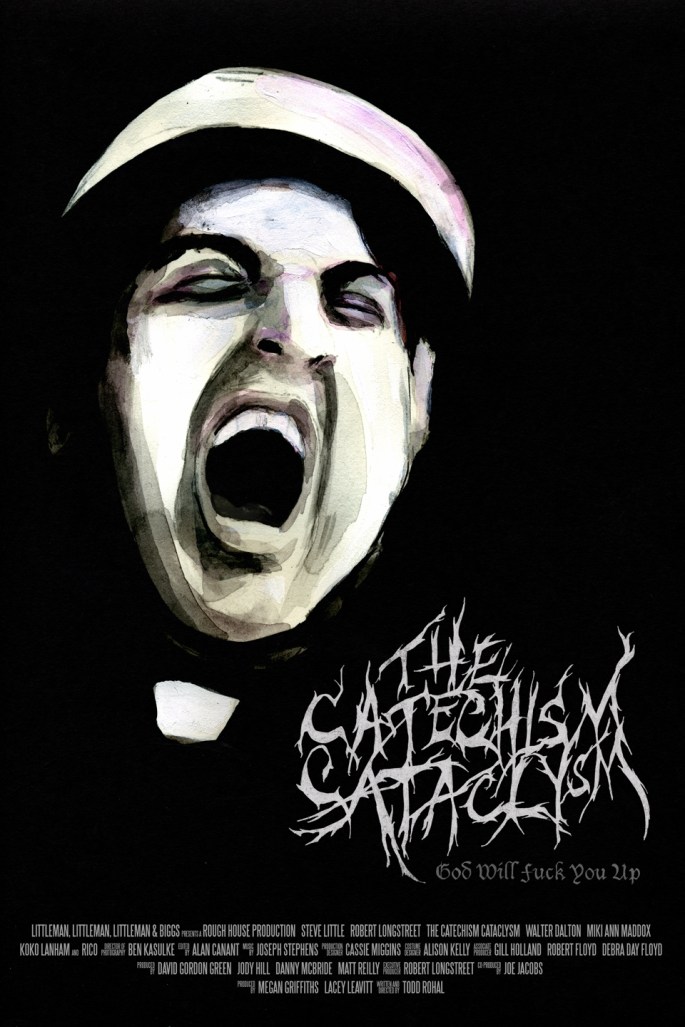
The Catechism Cataclysm is a totally messed up film on multiple levels. Unless the odd charms and surreal twists of this bizarre effort have been spoiled for you, there’s close to no chance that you’ll ever see where this unexpectedly creepy narrative is headed. The tonal switches in this film are beyond surprising, and the last 15 minutes of the slender 75 minute running time are some of the sketchiest, most weirdly hilarious cinematic moments I’ve seen in a while. What starts as a goofy and amiable two-hander between two very different temperments ferments into something close to Cronenbergian in its bodily horror and pyschological questioning. You’ve definitely got to be up for a film that isn’t interested in providing concrete answers to some of the more provocative and heady questions that the story raises, as it’s clear that the witty and quirky writer/director Todd Rohal wants the audience to fill in the gaps. By the end, you’re left with something that is beyond strange yet undeniably intriguing.

Feeling like a tall tale told by campfire through a haze of bong smoke, this 2011 independent effort has an impressive list of creative credits, including producers Danny McBride, Jody Hill, Megan Griffiths, and David Gordon Green, with the versatile cinematographer Ben Kasulke calling the shots behind the camera. The story involves a sub-mental priest named Father Billy (Eastbound and Down’s Steve Little) who takes a weirdly timed camping trip with an old childhood buddy named Robbie (Robert Longstreet). Rohal’s film bounces back and forth between the odd couple pairing, with Robbie’s increasing hostility brimming to the surface after having to repeatedly suffer Father Billy’s numerous idiocies. This movie is just flat-out silly and funny and then very dark and odd; I can’t really compare it to much else. And then, before you know it, the movie swtiches gears and becomes something surreal and potentially sinsiter. I’d like to give credit to whoever created certain props during the “big sequence.” Crazy stuff indeed. Lynn Shelton cameos. Available to rent via DVD on Netflix, and currently streaming on Amazon.

2

Tony Scott’s The Last Boy Scout: A Review by Nate Hill

image

Tony Scott’s The Last Boy Scout is pure stylistic grime, an exercise in early 90’s action with the blackest of humour. The tone is set with a square jaw early on: a star quarterback for a hotshot NFL team is under a lot of underground pressure to make that perfect play and in turn please the loan sharks. He buckles under the heat, ends up pulling a gun on the field and murdering a score of opponents before turning the gun on himself. Now horrifying as that is, if you have a sick sense of humor like me it conjures a dark chuckle of the most guilty variety, because.. well, it’s funny! Albeit in the darkest way possible, which is the arena this one skates in, love it or leave it. Upon closer examination of the script we discover it’s penned by that wonderful man Shane Black, who gave us Kiss Kiss Bang Bang and the upcoming The Nice Guys. No one can produce such heinous mayhem with a cavalier attitude and actually get away with it as well as Black does. The guy is a prodigy of dark humour, and who better to embody his protagonist here than a sheepish Bruce Willis as Joe Hallenbeck, a jaded ex detective who is so sullen and cynical he’s almost comatose. He’s paired with equally slummy former quarterback Jimmy Six (Damon Wayons), lazily trying g to solve a case involving the murderous quarterback and some shady politicians. Along the way that’s paved with many a sarcastic, beleaguered exchange they cross seedy paths with shady villains (Taylor Negron, RIP, and a  youthful Kim Coates), a beautiful working girl with ties to the case (Halle Berry) and Willis’s spitfire of a dysfunctional daughter (Danielle Harris). There’s a wonderfully bloated supporting cast including Noble Willingham, Chelsea Field, Joe Santos, Bruce McGill and more. It’s got a bite that stings, mainly thanks to Black’s frighteningly stinging screenplay which give the film it’s sardonic, put – upon aesthetic. This meshes together nicely with Scott’s trademark sun soaked, pulpy, picturesque tone and provides one hell of an action movie rode.  Nasty in all the right places, funny when the story begs for it, and build to last.

Batman Vs Superman: Dawn Of Justice – A Review by Nate Hill

image

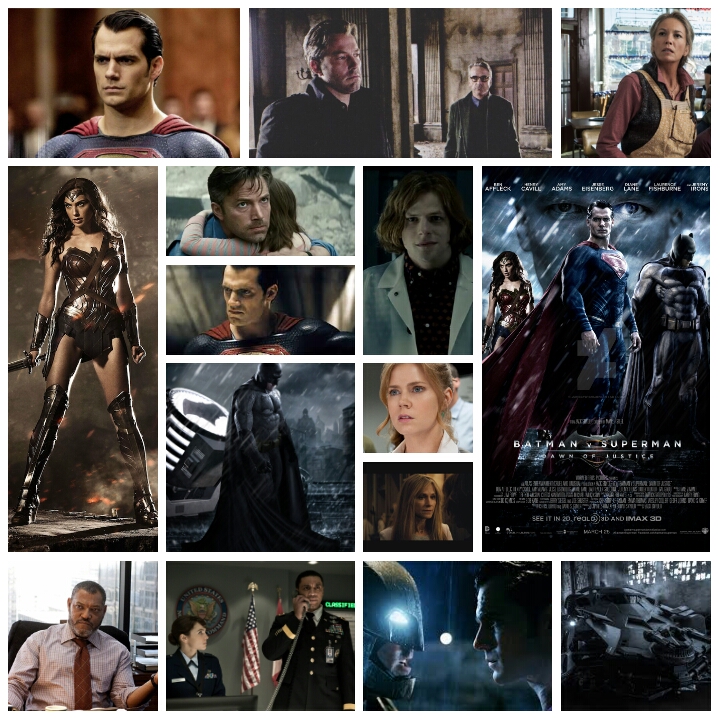
Batman Vs. Superman: Dawn Of Justice. Wow. Where to even start. What a symphony of scorched earth heroics, a two and a half hour maelstrom of thundering action, introspective gloom and very current vibes of apocalyptic dread. I’m not sure if I was watching an entirely different film from some of these bitter bottomed critics who are maiming it with inaccurately nasty reviews. Balls to them. Zach Snyder should be proud of this achievment, for in the face of both ruthless odds and rabid fans who would make any one of us piss down our legs at the thought of ‘getting it right’, he has mounted a titanic epic of a superhero flick, hitting all the right notes and fuelling both casual moviegoers and salivating super fans with a rekindled love for comic book films. A much welcomed grit and violent edge creeps into the proceedings here, a tone which Snyder has a passion for and is incredibly deft with. We begin with a visually arresting opening credit sequence, which Snyder previously perfected to hair raising brilliance in Watchmen, a ten minute opus set to Bob Dylan. Here he inter cuts shots of young Bruce Wayne, both discovering the prophetic swarm of bats and on the fateful night of his parents murder, a sequence done over a thousand times in film, but never quite with the inventive flair used here. We then arrive with adult Bruce (Ben Affleck) in Metropolis right as it’s being ripped to shreds by the Def Jam smackdown match of Superman (Henry Cavill) and Zod (Michael Shannon). There’s eerie shades of 9/11 as Bruce darts through the ashen rubble, attempting to save the employees in one of his towers. One senses the fear and rage in Wayne right off the bat (pun intended). He glowers in seething fury at the man of steel, primally threatened and haunted all over again by loved ones he couldn’t save a second time around. This film addresses the ludicrous amount of destruction that Superman wrought upon Metropolis in several ways. Political nerve endings are fried as Senate and State alike get hostile towards the god in the red cape. No one is more aggressive than Batman, though. This brings me to Affleck as Batman. Without a doubt my favourite cinematic incarnation of the caped crusader, and his debonair counterpart to date. Yes, even more so than Bale. Nolan’s The Dark Knight is still tops for me, but the  portrayal of Batman by Bale didn’t strike as harmonious a chord with me as Affleck. It just didn’t feel like pure Batman, it was real world Batman. Affleck feels much more rooted in the comics, and God damn it all if he isn’t the most savage, violent Bats to come our way, well… ever. I’ve always been bothered by the nagging fact that Batman refuses to kill. Even in in a beatdown he could easily inadvertently cause death, so why bother trying? Here, he doesn’t go out of his way to deliberatly kill, but he sure has no problem brutally breaking bones and stabbing his adversaries without an iota of faux-noble hesitation. That’s the kind of Batman I want to see. Fuming, fired up and full of rage demons that erupt into fantastic action scenes. One sequence involving a room full of thugs is just jaw dropping and probably my favourite sequence of the film, even over the titular smackdown with Superman. There’s an earthy, simplistic take to him as well, with a modest suit that gives nods to Frank Miller and even Batman: The Animated Series. He is by far the elemental force that the character should be, and the part of the film that I connected with most. I hope he gets his standalone film real soon. Henry Cavill has grace and intuition as Superman, and a surprisingly earthly aura as Clark Kent, in a fit about Batman’s vigilante tactics. He’s the outsider here, an orphaned deity truly trying to do his best in a world that often shuns him in fear. He was never my favourite superhero, or even on the list, but Cavill combined with Snyder make him a force to be reckoned with, and a hero I can get behind. The two eventually meet in a remarkably choreographed clash of the titans, a duel that really only lasts a few minutes and isn’t central theme, which raises questions in my head about the first part of that title. Their fight is composed of Batman’s hard hitting, blunt force physicality pitted against Superman’s fluid, elegent invincibility which is satisfyingly put to the test by the appearance of a certain green mineral we all know about. The James Cameron-esque suit Batman wears for the fight is a grinding wonder that looks like it weighs a metric ton and could level buildings alongside the man of steel. The combat feels urgent, from the gut and roars into action perfectly. Of course, that isn’t where the fireworks stop, but I ain’t sayin any more than that. Gal Gadot is truly wonderful as Wonder Woman, I also can’t wait for her solo outing, and wish she’d been in the film more. Her much talked about entrance is the definition of crowd pleasing, and will make you cheer in approval, which I did out loud. She’s  endlessly gorgeous, and has the toughness to go along with it, a great casting decision by anyone’s tally. Jesse Eisenberg wowed me as a young, jittery Lex Luthor, in what is probably the most clinically insane portrayal thus far. Forget bumbling Gene Hackman and hammy Kevin Spacey, this guy seals it for me. There’s a true madness to his Lex, which when given enough money and resources can have cataclysmic results. It’s a villain  to remember, and Eisenberg exudes palpable danger from every pore, his psychopathic sheen of logic barely shrouding the mania beneath. Jeremy Irons is a more restrained, jaded Alfred who is still unconditionally supportive of Wayne, but is reaching the end of his rope which is tethered to pure world weariness. He gets some of the only humerous bits of the film, albeit of dry, brittle variety. Amy Adams is reliably terrific, her eyes pools of perception that mirror the horror and spectacle of the events through the mind of a human, with every ounce of nerve and courage as those around her that have superpowers, or expensive toys. Diane Lane is weathered wisdom and maternal compassion as Martha Kent, nailing her scenes with the small town, kindhearted patience that a film this noisy deserves, tipping the scales to provide occasional serenity in the eye of the hurricane. Kevin Costner makes a brief appearance in one of the films numerous and often confusing dream sequences. He was a highlight in Man Of Steel, and brings the same baleful, gruff adoration here, in a wonderful but brief scene with Clark. Laurence Fishburne is another source of rare humour as the perpetually exasperated Perry, CEO of the Daily Planet. Aggravated and cheeky, he commands every frame he’s in and had me chuckling no end. Holly Hunter has forged a career of playing no nonsense hard asses, here a ballbreaking US Senator here who shares a moment of distilled intensity with Luthor proving that Superhero films can have some of the best written dialogue. Harry Lennix makes great use of said writing too as the steely Secretary Of Defense. Callan Mulvey and Scoot McNairy are memorable in supporting turns. Listen hard for Patrick Wilson and Carla Gugino, and look for a certain ocean dwelling dude in the briefest of moments. Jeffrey Dean Morgan also has a cameo that’s almost too good to be true. Hans Zimmer and Junkie XL, who was so top notch with Mad Max: Fury Road, combine efforts for a score that knocks it out of the park and several miles further. Batman has a soul rousing battle cry of an overture, with subtle shades of Zimmer’s work on the Nolan films, built upon to give us something truly unique and fitting for the character. Lex Luthor is accompanied by a fitful cacophony of strings that sound like the Arkham Asylum charity orchestra having a collectively unnerving seizure. My favourite riff though I think is for Wonder Woman, a deviously disarming jaunt that strays from the grandiose, baroque theme and feels wickedly subversive, getting you just so pumped for her character. Zimmer’s work on Interstellar made it my top score of 2014, because he leapt out of the box of his usual tricks and gave us something we’d never heard from him before. Here he shreds that box with ingenuity and creative output, a varied, explosive piece that assaults your ears splendidly. My one concern with the film was a dream sequence midway through concerning Batman, and anyone who’s seen the film knows what I’m talking about. I’m sure comic book fans have some point of reference or context regarding it, but the casual viewer doesn’t, and a little more explaining would have been nice. I will say though it showcases Batman in an entirely new light which took me off guard nicely. This is what a superhero movie should be, plain and simple. Big, bold, audacious, stirring and full of high flying action, dastardly villains, conflicted heroes clashing like the ocean tides and a sense of pure adventure. Forget what the critics are saying, this one comes up aces in all categories and is a perfectly wonderful start to the stories of a group of characters that I look forward to seeing in many a film to come. Especially Affleck’s Batman.