PTS PRESENTS: 10 QUESTIONS WITH ACTOR MOE DUNFORD

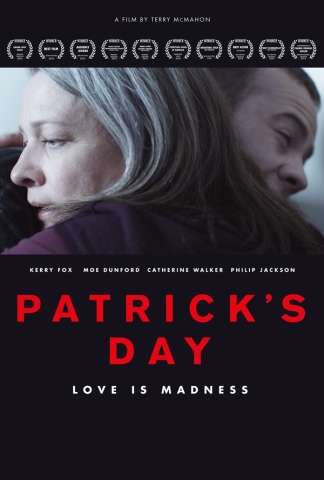
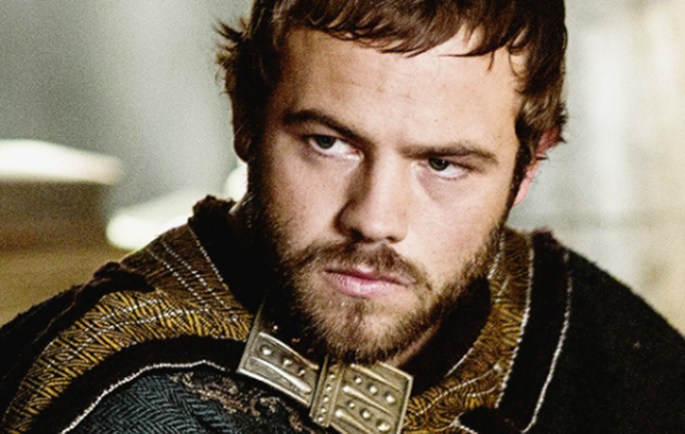
IFTA nominated actor  Moe Dunford (Supporting Actor for the TV series Vikings) is fast becoming a talent to look out for. He’s an integral part of the hit medieval series and recently set the big screen ablaze with his searing performance in Terry McMahon’s hard-hitting mental health drama Patrick’s Day, which is now available to stream via ITunes and Amazon and various Cable VOD platforms, with a DVD release set for April 5th. He’s got a slew of unique projects on the horizon, and Nick had the chance to chat with him while on break from shooting Vikings in Ireland. We hope you enjoy!
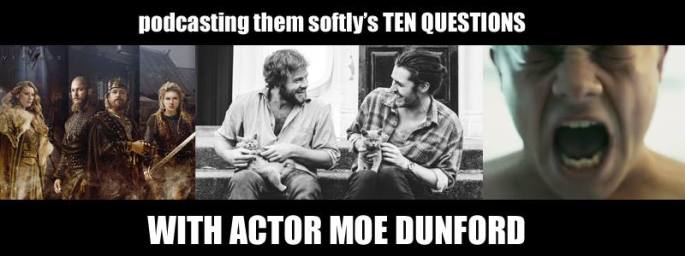
Moe Dunford Banner

How did you get your start as an actor, and what do you consider to be your first “big break” in the industry?

I got my first paid acting gig on the TV series The Tudors, running up and down trenches for a week in a field in Kilruddery, Co. Wicklow, in the summer of 2009. I’d graduated from Dublin’s Gaiety School of Acting, and I spent a few years going through the odd job, and then having no job, and then being mostly broke. Terry McMahon really gave me the first chance to play the type of role I really wanted to examine with Patrick’s Day. It’s a weird coincidence now, talking about my first job, as I’ve just come back from the same field in Kilruddery, as it’s the last day on Vikings Season 4 today. We’ve been filming a big battle scene here all week. Since it’s not summer in Ireland now, the field has turned to shite, and as the background actors will tell you, we never want to see the shaggin’ place again! It’s strange how things come full circle.

1.jpg

Who were some of your cinematic inspirations when you were younger? Did anything speak to you as a child?

I was interested in any kind of adventure movie growing up. My favourites were Ghostbusters, Spielberg’s filmography, and anything with Robin Williams. My folks ran a pub for a few years in Ladysbridge, Co. Cork and the talk at the time was that there was some Hollywood movie being made down the road in Ballycotton. My father told me that a big acting legend came into our pub for a drink one day except I didn’t know who it was. I’d never heard of him. Turned out it was Marlon Brando, and the movie was called Divine Rapture, which unfortunately never saw the light of day because it ran out of money! I was only around 8 or 9 but he would have been an inspiration to me for sure when I got into acting for sure.

2

How important is Irish cinema for you?

I believe there is something raw and very real to the stories coming out of Ireland right now, and I’m more invested in them emotionally when compared to a lot of the big budget studio movies. We’ve been kicked around and oppressed and repressed and told we can’t do things, yet out of that has come a deep rooted need to express ourselves. It’s the reason I was so hooked on the story of Patrick’s Day. Everything about it was raw, relatable and human. It had something to say and dispensed with stigmas. That’s what I find fulfilling about acting, and thankfully I get to work on stories that fight against Irish stereotypes. I feel like it’s a case of the fighting Irish in film and long may it continue.
4

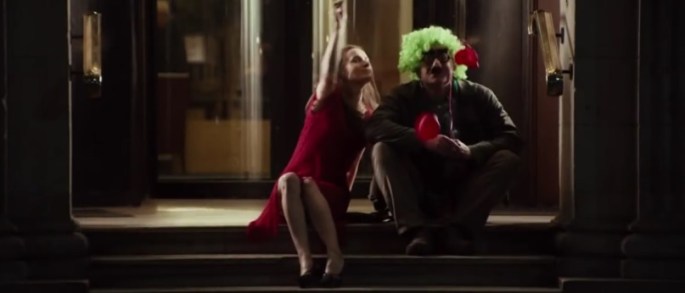
What was it like shooting Patrick’s Day?

It certainly wasn’t without its tough days. And people seemed to have the assumption that it was really hard, because of the subject matter. Or a few times I was asked how taxing it was or how much personal attachment there was, as if that’s a bad thing when taking on a role. The truth is that it was a lot of fun. Working with Kerry, Catherine, Philip & Aaron, I love all of them. And then Tim Palmer, Michael Lavelle & Terry…three cock-blockin’ motherfuckers but I love them! The whole journey of Patrick’s Day was something I’ll never forget. Scenes were often almost like little games, it was a thrill working against the clock, trying to get the scenes the best they could be and do it efficiently. I’ll never forget the faces of Terry and cinematographer Michael Lavelle after getting certain scenes, things would just happen for us, like the shot with the plane going over our heads. Everyone was jumping around like little kids. It was pure joy.
5

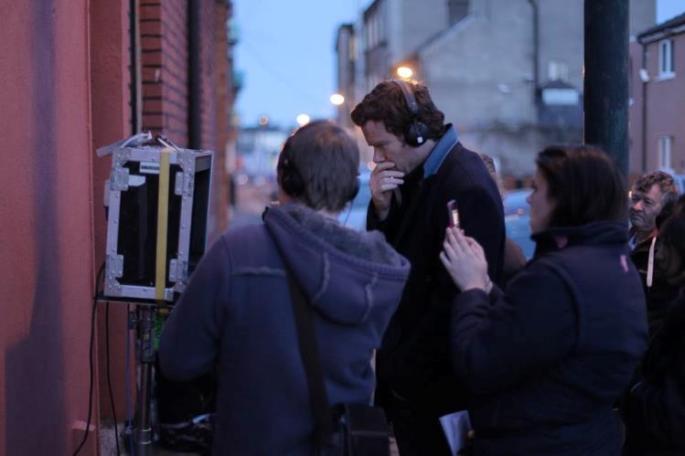
Terry McMahon. He’s a force of nature. What’s it like collaborating with him?

As a filmmaker, Terry’s an inspiration. He understands the language of film, and the relationship between the audience and the actors. He’s not afraid to be outspoken and tackle issues about Ireland’s darker side. It’s in there, written into his scripts. We need that in our country. We need people who ask “Why not?” When working with Terry, I was also working with a very close friend who I trusted completely. I love the guy. He enables you in scenes to push that it further than you thought you could go. He’s a genius of a director. Probably his biggest strength is his sense of empathy, as he treats everyone equally on set and off. Unless you’re being a bollox.
6

Are you excited by the current boom of Irish cinematic talent?

I’m excited and optimistic. Look, we’re a small country, but we’re a nation of storytellers going way, way back, no matter what our country has been through. Irish film has been finding its voice for years, and now it seems that it’s really being heard. I’m excited and hopeful for any budding Irish actors, directors, or writers putting pen to paper for the first time, because for every success story like Saoirse Ronan, Lenny Abrahamson, or Emma O’ Donoghue, it shines a light back over here and I believe will create more opportunities for Irish film. We’ll need the continued support of our government to enable us to keep making films of quality and substance. Government funding dropped from €20m in 2008 to €11m in 2015. So I’d hope to see that on the rise.

7

What’s the general vibe in Ireland about the industry?

I asked a handful of my Vikings cast members from around the world, what stands out to them the most about being here and filming in Ireland, and they’ve all said that above all else, it’s the enthusiasm, and optimism from Irish crews that they haven’t encountered before. We’re making quality movies with good people behind them, and we’re in the best place we’ve been since Jim Sheridan and Neil Jordan came on the scene.

8

What are some of your favorite films, movies that you simply can’t live without?

Butch Cassidy and The Sundance Kid, Into The Wild, On The Waterfront, It’s A Wonderful Life, One Flew Over The Cuckoo’s Nest, The Deer Hunter, The Mission, Star Wars, Il Postino, and The Wrestler – these are all films I feel are great examples of cinema, and films I could watch at any point on any given day.

9

Has there been a recent Irish film that has considerably impressed you, or an Irish director who you’d be interested in working with?

I’m really looking forward to Brendan Muldowney’s Pilgrimage, the locations in it look amazing and there are great actors in it. Mark Noonan’s You’re Ugly Too, with Aidan Gillen, that was the best Irish movie I saw in all of last year. I loved the relationship between the uncle and niece, and how it was shot. My favourite Irish movie I have seen so far this year is without a doubt Viva, written by one of Ireland’s best talents, Mark O’Halloran, who also wrote Lenny Abrahamson’s first two movies. It tells the story of a young Cuban drag artist. I loved its heart and energy. It’s a beautiful movie and universally appealing.
10

What’s coming up for you?

I’m shooting Vikings season four now. That’s 20 episodes, which began airing this past February. It’s just been renewed for season 5 in June, another 20 episodes written by Michael Hirst. The show is shot entirely in Ireland which is wonderful, and the crew and background actors are the best in the business. I have three movies to film in 2016, the first being a comedy called The Flag which I’m doing now with Pat Shortt, directed by Declan Recks. We play two friends who go over to England and break into a British Army Barracks to take back the Flag that was put on top of the GPO in 1916. Fitting for the year that it’s in. It’s produced by Treasure Films (The Stag, Viva, Handsome Devil). In the autumn, I’m working on an Irish – Polish co-production, a medieval religious epic. I’ve just finished a movie called Handsome Devil, with Andrew Scott. It’s written and directed by John Butler, and produced by Treasure Films. Handsome Devil is set in an Irish secondary school and it’s a story of individuals in an environment where students are often forced to conform.

Moe Dunford Banner

BATMAN V SUPERMAN DAWN OF JUSTICE – A Review by Frank Mengarelli

“That’s how it starts. The fever, the rage, the feeling of powerlessness that turns good men cruel.”

Zack Snyder’s BATMAN V SUPERMAN DAWN OF JUSTICE is unlike any superhero film we’ve seen before. It is brazen and it is bold, it is disjointed and over packed with setting up the new DC Universe. When I say that this film is a complete mess, I mean it in the way of how APOCALYPSE NOW is a complete mess. BvS cannot be compared to any existing, non-universe, DC film that came prior, and it certainly cannot be compared to anything that Marvel has done. Marvel likes to follow a template. They know what works and what doesn’t, and they certainly do not take many risks at all. BvS takes risk after risk after risk, and by doing so Snyder has made a remarkable film.

BvS Alfred

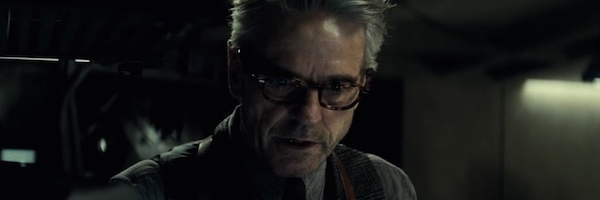
The casting of Ben Affleck as the fifty year old Bruce Wayne/Batman was a brilliant move by Snyder and Warner Brothers. We know who Batman is. We’ve seen Batman’s story countless times. There’s nothing more that can be said about him. Michael Keaton was perfect, Val Kilmer was admirable; George Clooney fully admits his turn almost killed Batman, and the Bale/Nolan trilogy was a godsend to the Batman’s onscreen presence. Now, we get to see the version of the Batman that some of us have always wanted, and a lot of people didn’t even know they wanted. We see what comes after everything we have seen prior. The Batman is older; he’s even more cynical and jaded. He’s given up on hope and resorted to his anger, his vengeance. He has become a killer.

Affleck’s take on Batman may just be the best one yet. He has resorted to his primal brutish instincts with one goal in mind. He doesn’t want to make Superman submit; he doesn’t want Superman to stand trial and have society serve justice for the atrocity he’s brought to the world. He wants to kill him, and if he can’t, he will die trying. Affleck transforms the Batman into a battle worn warrior. He is a man who doesn’t care about peace and justice, he is a man who has a blatant disregard for hope.

BvS Superman.jpg

Zack Snyder is the epitome of a polarizing filmmaker. He has a solid fanbase who are passionate about his films. Snyder has an equally loud echo chamber made up of people who strongly dislike him. Who refuse to give him credit for anything positive. There is not another filmmaker alive who could have made a Batman/Superman film that sets up not only the Justice League, but also an entire new universe to be explored. Zack Snyder, takes everything that was thrown at him: a follow up to MAN OF STEEL, introducing a new Batman without spending a film giving him an origin, introducing Wonder Woman, Cyborg, the Flash, and Aquaman. Snyder not only did all these things, but excelled in a remarkable way.

Yes, it’s another superhero film. Yes it’s another big budget blockbuster. Yes, it’s going to set up multiple franchises that we’ve already seen. But it has never been done in such a magnificent way. Affleck, along with Jeremy Irons as the new Alfred, and Jesse Eisenberg as the smoke screen for the real Lex Luthor, all bring pre-existing gravitas with them. Immediately adding validity to characters so we don’t need to spend a movie a piece building up backstory for them

BvS Knightmare.jpg
.
Film critics, whether professional or Facebookers/bloggers, who don’t like this film, who are relishing in the critical shitstorm this film received, already made their minds up that they were going to hate this film. Much like IndieWire and a few other websites tried their absolute hardest to sink TRUE DETECTIVE season 2 before it even aired, the way some critics approached the new Star Wars film in a highbrow, disregarding way – DAWN OF JUSTICE suffered much of the same fate, but none of that matters. The film is going to and already has broken box office records, and the dark and dreary foundation of the new DC Universe is set.

There is a striking moment in the film that was shown in the first trailer. The second Robins suit is displayed in the Batcave with spray paint on it: “The joke is on you, Batman!” Not only does this tell us, in part, of why the Batman is so angry and rage filled, but I can’t help but think that is also a way of Snyder saying that to his haters, those who rallied hard against this film: the joke is most certainly on you.

OCEAN’S TWELVE – A REVIEW BY J.D. LAFRANCE

Brad-Pitt-in-Ocean-s-Twelve-brad-pitt-15567639-853-480

After the commercial failures of Full Frontal and Solaris in 2002, there was pressure on Steven Soderbergh when he announced that his next film was to be the sequel to the wildly successful Ocean’s Eleven (2001), to not only come up with a box office hit but to also outperform the previous film. With big budget, star-studded casts like the one in Ocean’s Twelve (2004), there is always the danger of having them look too smug and self-indulgent instead of having fun along with the audience. Ocean’s Eleven managed to straddle this line quite well, resulting in an entertaining popcorn movie. Soderbergh kept his cast in check, never letting them go too far over-the-top and shooting it with a style that was always interesting to watch. The big question for the sequel was if he could pull off the same feat without repeating himself too much. Ocean’s Twelve ended making less than its predecessor (but still a lot of money) and cost more while also dividing critics but in some ways I find it a better film.

Danny Ocean (George Clooney) is supposed to be retired and enjoying domestic bliss with Tess (Julia Roberts). However, old habits die-hard and the lure of pulling heists is always calling. She catches him casing a jewelry story on their anniversary. To make matters worse, Terry Benedict (Andy Garcia) is still hot on their trail, tracking down all of the original eleven and letting them know, in his own casually menacing way, that he wants the $160 million, plus interest, that they stole from him in Ocean’s Eleven, and in two weeks time. The montage of him doing this mirrors the one in the first film where Danny and Rusty recruited their crew. If Benedict was an imposing figure in the first film, Andy Garcia makes him even more of a threatening presence in this montage by doing little except exude menace with his eyes and the all-business tone of his voice.

So, Danny gets everybody back together to figure out what to do. Obviously, they need to pull another job but they are too high profile in the United States, so they go to Europe and cross paths with a truly formidable opponent and rival master thief known as the Night Fox (Vincent Cassel), a bored French playboy. He’s jealous of Danny’s status as the world’s greatest thief and is out to prove that he’s the best by having the both of them go after the same thing: the Faberge Imperial Coronation egg. Vincent Cassel plays the Night Fox as an ultra-confident, cocky man in such a way that you want to see Danny and company knock him down a peg.

Ocean’s Twelve
ups the difficulty level for our heroes even more by having most of the crew neutralized leaving only Basher (Don Cheadle), Linus (Matt Damon) and Virgil (Scott Caan) left to pull off an impossible heist. So, they bring in Tess to pose as, well, Julia Roberts. Unfortunately, another major movie star is staying at the same hotel, which only adds to the meta aspect. Said movie star gamely plays a fictional version of himself. The scene where he meets Tess as Julia Roberts is very amusing as Damon and Roberts act all star-struck in front of him. It is also interesting in that the meta aspect that was present in Ocean’s Eleven is made even more explicit – something that turned off some critics and audiences but I think works extremely well because Soderbergh isn’t having a cutesy cameo of a movie star for the sake of it but actually incorporating them into the plot and making them an integral part of the scam.

If the first film was about Danny’s redemption by reconciling with Tess, then Ocean’s Twelve is about Rusty’s (Brad Pitt) redemption by reconciling with his past love, Isabel Lahiri (Catherine Zeta-Jones), a determined and quite beautiful Interpol agent. Like Danny’s feelings for Tess potentially compromising his involvement in the heist in Ocean’s Eleven, Rusty’s feelings for Isabel leaves him potentially vulnerable in Ocean’s Twelve. To her credit, Catherine Zeta-Jones fits right in with the European vibe, maintaining just the right mix of determination in nailing Danny and his crew and vulnerability when she’s with Rusty. Their relationship elevates the film ever so slightly above the standard heist story and the conclusion of her subplot is surprisingly emotional and poignant – the highpoint of the trilogy and something you don’t expect from a film like Ocean’s Twelve, which is essentially a feature-length lark.

Matt Damon demonstrates excellent comic timing in this film and is the real stand-out of this strong cast. Early on, Linus asks Rusty if he could have more to do this time out and this moment comes across as quite self-reflexive. It’s as if Damon were almost asking if he could have more screen time in the film itself. In some respects, he is the group’s stammering conscience. There is an amusing scene where Linus, Danny and Rusty meet a contact by the name of Matsui (Robbie Coltrane) for a potential job. Danny, Rusty and Matsui all speak cryptically, which leaves poor Linus totally confused. Damon plays the scene so well as he looks desperately to his cohorts for help or some sort of clue as to what he should say. Put on the spot, Linus finally responds by quoting lyrics from “Kashmir” by Led Zeppelin to hilarious effect.

While doing a press conference in Rome during the promotional tour for Ocean’s Eleven, Steven Soderbergh fell in love with the city and over dinner with producer Jerry Weintraub began thinking about the story and structure for a sequel. He got the idea to set it in Europe and was so inspired that he started writing down ideas. After returning to Los Angeles, Weintraub discovered George Nolfi’s screenplay, entitled Honor Among Thieves, about the greatest thief in America going up against his equal in Europe. It was originally developed for John Woo to direct but Weintraub sent the script to George Clooney, Brad Pitt and Soderbergh. The director came up with the basic idea for the film and thought that it “would be more fun if Twelve was the movie in which everything goes wrong from the get-go.” He ended up merging Nolfi’s script with his own ideas. Soderbergh saw this film as more emotional, character-driven and complicated on a narrative level than the first one.

Prior to the start of principal photography, which lasted 77 days, Julia Roberts found out that she was pregnant and Soderbergh incorporated it into the script. He also met with Vincent Cassel at the 2003 Cannes Film Festival and asked the actor if he would be interested in being in Ocean’s Twelve. He agreed without reading the script because he trusted someone with a reputation like Soderbergh’s. Once filming began, the production spent ten weeks globetrotting all over the world with stops in Chicago, Amsterdam, Paris, Monte Carlo, Lake Cuomo, and Rome. Principal photography concluded with four weeks on three Warner Brothers soundstages in L.A.

Once again Soderbergh keeps the pace brisk and breezy, making the two-hour running time fly by. Like its predecessor, Ocean’s Twelve is beautifully shot with atmospheric lighting and saturated color as evident in the bright yellow that permeates Isabel’s Europol lecture or the green lighting that illuminates the underwater sequence during a heist that Danny and his crew pull off, or the red lighting that dominates the nightclub where Rusty and Isabel meet. Most of the film takes place in Europe and Soderbergh adopts the look of a European film from the 1960s, which also applies to the eclectically groovy soundtrack from David Holmes that evokes a ‘60s Euro-lounge vibe. The director even described the film’s aesthetic as “the most expensive episode of a ‘60s television show ever.” He and Holmes agreed that the score would be completely different from Ocean’s Eleven in order to complement the different look and feel.

Soderbergh is an excellent visual storyteller and this is evident in several scenes that he depicts without any dialogue, instead resorting to music married to visuals that conveys exactly what’s going on. He understands the kind of movie he’s making and doesn’t try to be too cute or wink knowingly at the audience, instead focusing at the task at hand: making a confident, entertaining movie. Granted, Ocean’s Twelve is no Traffic (2000), and it’s not meant to be, but you could do a lot worse with two hours of your time.

STEVEN HILLIARD STERN’S THE PARK IS MINE — A REVIEW BY NICK CLEMENT

2

Don’t let this rather amazing one sheet fool you — this movie isn’t very good. In fact, it’s downright amateurish at times, crass all throughout, and totally not up to the psychological implications that the screenplay seems interested in exploring in the most juvenile of ways. But, due to the presence of a young Tommy Lee Jones and the central conceit of the narrative, there’s definitely enough to turn this into a bombastic and entertaining curiosity piece for some. This Canadian production was released as an HBO TV movie in 1985, and was directed by Steven Hilliard Stern, a guy with a laundry list of small screen credits, and basically plays like a riff on the First Blood scenario, but nowhere near as strong. Jones is a disillusioned Vietnam veteran who follows the meticulously laid out plans that have been left for him by his buddy who has recently committed suicide. It seems that his friend has rigged all of Central Park with explosives and booby-traps and has stashed heavy artillery all throughout, in an effort to take the park itself hostage, in order to raise awareness about the plight of the veteran and the horrors of war.

The over the top scenario is played straight, so as a result, the inherent ridiculousness shines through in nearly every scene. The action sequences do have a certain blunt effectiveness, but it’s just that the story is so absurd that none of it is ever remotely believable. And yet, it entertains in that “so-bad-it’s-good-when-it’s-late-at-night” fashion. Jones is commanding but the character is a total loose cannon and his decision to carry through with this daredevil plan happens so quickly as if to inspire chuckles. Throw in a macho mercenary subplot and evil city officials and you have all the ingredients for something that the Cannon Group mysteriously didn’t have their name attached to. Yaphet Kotto(!) is hilarious in a supporting role. Helen Shaver has a couple of ridiculous scenes as an aggressive reporter trying to score the story of a lifetime. Buried within the shoddy filmmaking lies a potentially potent allegory about battle stress and the challenging process of societal reintegration, but this was not a project to do any major emotional or thematic digging. Bizarrely enough, the film features the amazing sonic talents of Tangerine Dream. Based on a Stephen Peters novel. As I said upfront, the promotional artwork is better than the actual finished product.

1

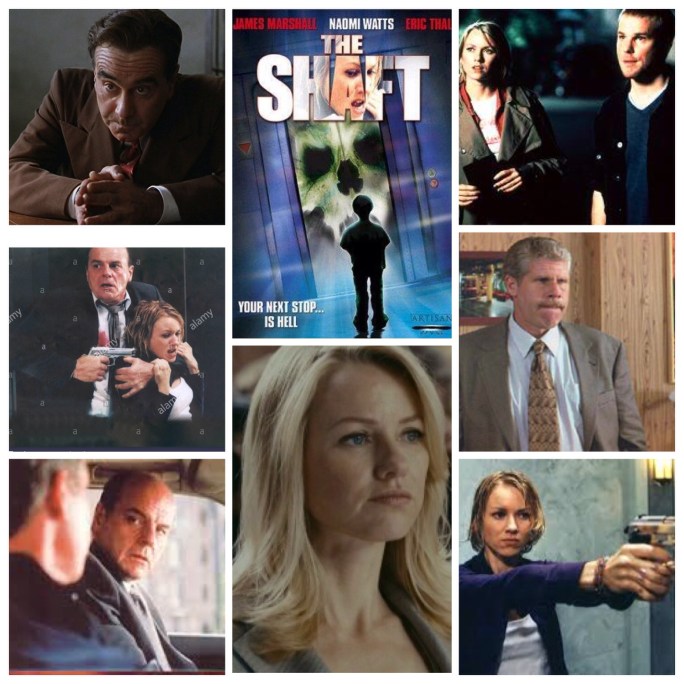
B Movie Glory with Nate: Down, aka The Shaft

  
Ever briefly get stuck in an elevator thats messing with you, malfunctioning and seems to almost have a mischievous mind of its own? That’s the premise of Down, also known as The Shaft. It concerns an elevator in a huge residential/office building that has gone homicidally haywire. It traps, drops and tricks people no end, raising and lowering the interior temperature to dangerous effect and generally just being a great big meanie. No one seems so know what’s going on with it though, especially the mechanic who installed it (Twin Peak’s James Marshall). The incidents accumulate, attracting a perky tabloid reporter (Naomi Watts having a ball) who makes up all kinds of tall tales to explain the situation in sensationalistic terms. This infuriates the CEO of the elevator company (now there’s a job title) played by a snarky Ron Perlman who gets a rant towards Marshall that walked in from a way better script (which leads me to believe it was the spawn of Perlman’s legendary improv skills). There’s also a cop played by Dan Hedeya who can’t seem to figure it out wither. The truth is a lot more interesting than you might expect and has nothing to do with ghosts or spirits at all, but centers around a deranged research scientist (Michael Ironside, whacked out to kingdom come). It’s not the least bit scary, but it’s worth a watch simply for the fact that it’s a movie about a fucking elevator that kills people lol. Cujo and Christine ain’t got nothing on this bitch. The scene where a gaggle of pregnant ladies enter the thing is just priceless in its blatantly gross out manner. Fun, fun stuff and great research to embarrass Watts with sometime down the road if you ever find yourself interviewing her on the red carpet hehe.

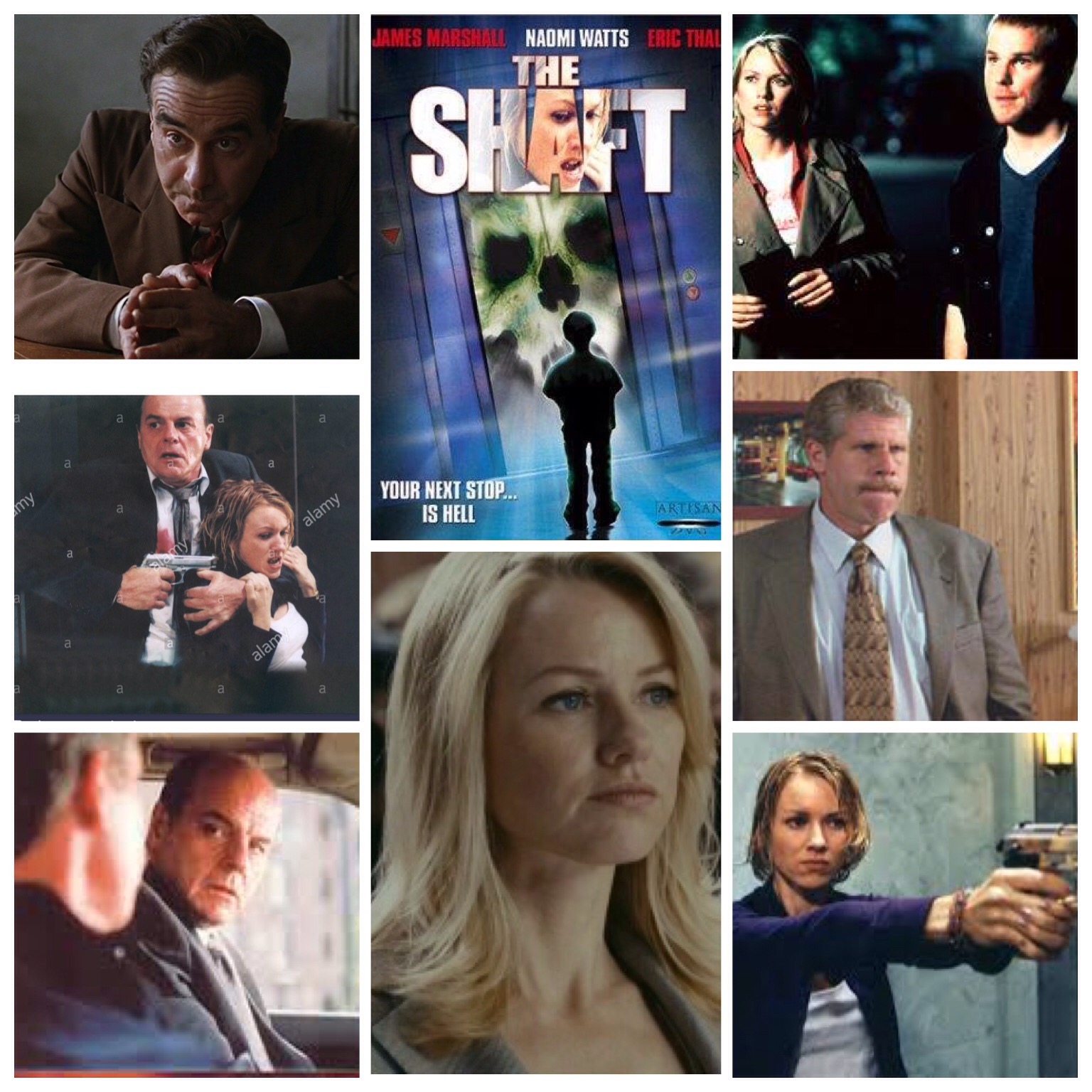
Swordfish: A Review by Nate Hill


Swordfish tries so hard to be cool, and save for a few moments of smirking silliness, it is pretty goddamned cool. The early 2000’s still carried lingering, reminiscent elements of the 90’s, the super cyber hacker archetype included. The cyber hacker is played by two types of people: basement dwelling, Mountain Dew drinking chatter boxes and virile, sexy supermodels. The latter is employed here, personified by Hugh Jackman as Stanley, a sly devil who can hack into almost anything effortlessly, but has been caught and never allowed to touch a computer again. Enter Gabriel (John Travolta), a silver tongued arch villain out to steal all the money and priceless artifacts he can hope to ever own. Although Travolta isn’t as truly off the rails as in some of his villain roles, the amiable charm he puts forth here is but a ruse to cloud the monster beneath. He’s a very bad man, putting Stanley’s loved ones in jeopardy and forcing him to work computer wizardry for ill gotten riches. Gabriel has a girlfriend named Ginger (Halle Berry, never sexier) who walks a moral tightrope between the two alpha males, torn between roguish indifference and and her conscience. Stanley is also hounded by an FBI Agent (Don Cheadle), with whom he has a tumultuous past. The film resists goin completely by the motions, lulling you just to the border of entropy and then throwing something surprising from a direction you didn’t look in. My favourite scene of the film shows Travolta giving a monologue on bank robbery etiquette, complete with a reference to Sydney Lumet’s Dog Day Afternoon, confirming the fact that this flick has a strong script to go with its pyrotechnics. He flexes his sonic directorial muscles in an especially extraordinary action sequence involving a bus and a helicopter that will seriously make your finger hover over the replay button. Vinnie Jones is an ambassador of cool, in a lively turn as Gabriel’s head thug. Sam Shepherd has fun as a corrupt Senator. There’s also fine work from Zachary Grenier, Tim Dekay, William Mapother, Rudolph Martin and Drea De Matteo. Director Dominic Sena comes from music video land, having also helmed the priceless Nic Cage Bruckheimer-fest Gone in 60 Seconds, as well as the fallout brilliant psycho road thriller Kalifornia. Here he doses the flash and sizzle of 60 seconds with the hard hitting violence of Kalifornia, presented in a story guaranteed to raise a pulse. It’s also got pretty much the coolest poster of 2001. I dare you to find a cooler one, go ahead. Oh, and Travolta’s manscaping here deserves its own spinoff film. 

OCEAN’S ELEVEN – A REVIEW BY J.D. LAFRANCE

o11DVD33

“Ocean’s Eleven was my opportunity to make a movie that has no desire except to give you pleasure, where you surrender without embarrassment or regret.” – Steven Soderbergh

Fresh from the one-two success of Erin Brockovich (2000) and Traffic (2000), Steven Soderbergh made a conscious decision to shift gears and make a purely entertaining film for a major studio. He managed to convince movie stars George Clooney (whom he had already worked with on Out of Sight) and Brad Pitt to take major cuts in their multi-million dollar salaries and headline a remake of the Rat Pack heist film Ocean’s Eleven (1960). With Clooney and Pitt on board, Soderbergh was then able to get an impressive cast including the likes of Matt Damon and Julia Roberts (both of whom also agreed to take pay cuts) and avoid having his film come across as nothing more than a vanity project for a bunch of smug movie stars. On the contrary, Ocean’s Eleven (2001) is a slick heist film in the tradition of The Sting (1973) in the sense that you know the outcome (the good guys win) but the fun is in how they get there as Soderbergh utilizes every stylish technique that he has available at his disposal.

Daniel Ocean (Clooney) has just been released from prison and is eager to return to his high-end criminal enterprises. He sets his sights on Las Vegas with plans to rob three prestigious casinos: the MGM Grand, the Mirage, and the Bellagio, all of which keep their considerable sums of money in an ultra-secure hi-tech vault controlled by Terry Benedict (Andy Garcia) who, incidentally, is currently dating Danny’s ex-wife Tess (Roberts). It’s not going to be easy and so, with the help of his good friend and ace fixer Rusty Ryan (Pitt), they recruit nine experts to help them pull off a near-impossible heist. In addition to the heist, which serves as the main plot, Ted Griffin’s screenplay expertly weaves in a subplot involving Danny attempt to reconnect with Tess.

This film oozes cool right from the opening credits that play over a fantastic shot of the Atlantic City skyline at night accompanied by funky trip-hop type music by Northern Irish disc jockey David Holmes. We meet Rusty wasting his time teaching young movie stars (Holly Marie Combs and Topher Grace among others making fun of themselves) to play cards. We meet him in Hollywood with a cool groove playing over his establishing shot. This sequence is a bit of meta fun as we see Pitt, one of the biggest movie stars on the planet, teaching other movie stars playing a parody of themselves being totally clueless at playing poker only to eventually be hustled by a bemused Danny. Soderbergh even slides in a few sly inside jokes, like Danny asking Topher Grace if it’s hard to make the transition from television to film, which, of course, is exactly what Clooney did. Or, how Grace gets mobbed by autograph hounds while Clooney and Pitt are completely ignored.

One of the best sequences in the film is when Danny and Rusty recruit their crew. The scene where they convince Reuben Tishkoff (Elliott Gould) to bankroll their operation is a wonderful example of how expositional dialogue being delivered in the right way by the right actor can be entertaining and informative as Elliott Gould does a fantastic job of warning Danny and Rusty of just how dangerous Benedict is. From there, each character that Danny and Rusty approach is given their own introduction that briefly and succinctly highlights their unique skill and distinctive personality traits. Linus Caldwell (Damon) is an up-and-coming pickpocket with uncanny dexterity. There’s the Malloy brothers, Virgil (Casey Affleck) and Turk (Scott Caan), two drivers by trade with one of them having an affinity for remote controlled devices and a perchance for bickering and irritating each other, which provides a good source of humor. Livingston Dell (Eddie Jemison) is an electronics expert in the area of surveillance. Basher Tarr (Don Cheadle) is a demolitions expert with Don Cheadle sporting an obviously exaggerated Cockney accent. Yen (Shaobo Qin) is a diminutive top-of-the-line acrobat that can get in and out of any tight space. Finally, there is Saul Bloom (Carl Reiner), a retired flimflam man coaxed back into action by Rusty. Each actor is given at least one scene, often more, to come front and center and do their thing and this is done in a way that doesn’t distract you from the story at hand, which is quite an accomplishment with such a large cast.

David Holmes expertly mixes jazz, funk, soul and hip hop in a way that evokes groovy trip hop or acid jazz but in a retro way that evokes Quincy Jones circa the 1970s. The often-fat bass lines give certain musical cues a confident swagger. There is also plenty of Hammond organ and vibraphone looped to give a lounge-y kind of vibe at times. Later on in the film, Holmes brings in strings and brass to accentuate the romantic subplot between Danny and Tess. Holmes also incorporates songs, like Elvis Presley’s “A Little Less Conversation” to fantastic effect. This came out of watching the original Ocean’s Eleven as Holmes explained in an interview, “Then I tried to think of ways to identify with what was going on – with it being a contemporary film, how to be original, but set within the heart of Las Vegas. Which is where the Elvis song ‘A Little Less Conversation’ came about, because obviously Elvis had a really strong affiliation with Las Vegas, and that track has a very contemporary feel.”

Steven Soderbergh read Ted Griffin’s screenplay in an afternoon in January 2000. The next day he called producer Jerry Weintraub and told him he wanted to direct the film. What he liked about the script was that it didn’t evoke the original 1960 version but “had this one foot back in the heyday of the studio star-driven movie, like Howard Hawks or George Cukor.” Soderbergh had always been drawn to heist films because, “the conflicts are so clear and dramatic. This seemed to be everything that you want a big Hollywood film to be, on the script level.” He had just made two dramas – Erin Brockovich and Traffic – and wanted to make a fun movie. To prepare for shooting Ocean’s Eleven, he watched Ghostbusters (1984) because he was impressed at “that sort of physical scale [that] feels so tossed-off, with such understated performances and obvious generosity among all the performers.” He also studied films by David Fincher, Steven Spielberg and John McTiernan because they knew how to “orchestrate physical action the way I like to see it.” He looked at how these filmmakers used lens length and height, camera movement and editing, as well as, “how they used their extras, how they structured movements within shots that carried you to the next movement and the next.”

Soderbergh got George Clooney involved and half-jokingly told him, “let’s make it an Irwin Allen movie, where they used to have 10 stars.” Originally, the director considered casting Luke and Owen Wilson, Bruce Willis, and Ralph Fiennes as the villain. Once Clooney was on board, they got the rest of the cast to commit at radically reduced rates, starting with Brad Pitt. However, during filming, the cast stayed in their own 7,000-square-foot villas at the Bellagio. Before shooting, Soderbergh told his cast, “Show up ready to work. If you think you’re just going to walk through this, you’re mistaken. If anybody gets smug, we’re dead.” Soderbergh wanted to shoot in the Bellagio, the MGM Grand and the Mirage – an impossible feat for more mere mortals; however, Weintraub had the connections and the clout to make it happen. The production was allowed to shoot on the floor of the casinos during the day, which nobody is given access to and the casino bosses even shut down entire pits for Soderbergh to shoot in. This allowed the director to design shots that were complicated and large in scale.

Soderbergh wanted the lighting for Ocean’s Eleven to be based in reality and to look like it wasn’t lit at all – not a problem in Las Vegas, a place overloaded with every kind of light imaginable. At times, Soderbergh would add some color to enhance the mood for dramatic purposes in order to put the audience inside the world of the film. He also realized that the locations played a large part in the plot and was interested in showing as much of the environment as possible. One challenge Soderbergh faced was the logistics of filming big dialogue scenes with Danny and his crew in a visually interested way. He had a lot of people in confined spaces and didn’t want these scenes to be boring. So, he attempted to frame shots that clearly established where everyone was while also giving them enough depth and geometry to make the characters interesting to look at.

In a nice touch, Ocean’s Eleven never waxes nostalgic about the original film but instead is wistful about Las Vegas as it was in the 1960s when the casinos were still run by the Mob and had yet to be corporatized and Disney-fied. This is reinforced in one of the motivations Danny has of robbing Benedict. It’s not just that he’s dating his ex-wife but Benedict also recently demolished one of the last old school casinos left in Vegas. Unlike Benedict, Danny respects the past and recruits Reuben and Saul, veteran con artists whose heyday was the ‘60s. It’s great to see Soderbergh giving actors like Gould and Reiner screen-time in a major studio film. These guys don’t work nearly enough and their performances in Ocean’s Eleven are a potent reminder of how good they can be if given the right material and the opportunity. Entrusted with only his second major studio film with an A-list budget, Soderbergh effortlessly orchestrates a fun, engaging popcorn movie like an old pro that has been doing this for their entire career.

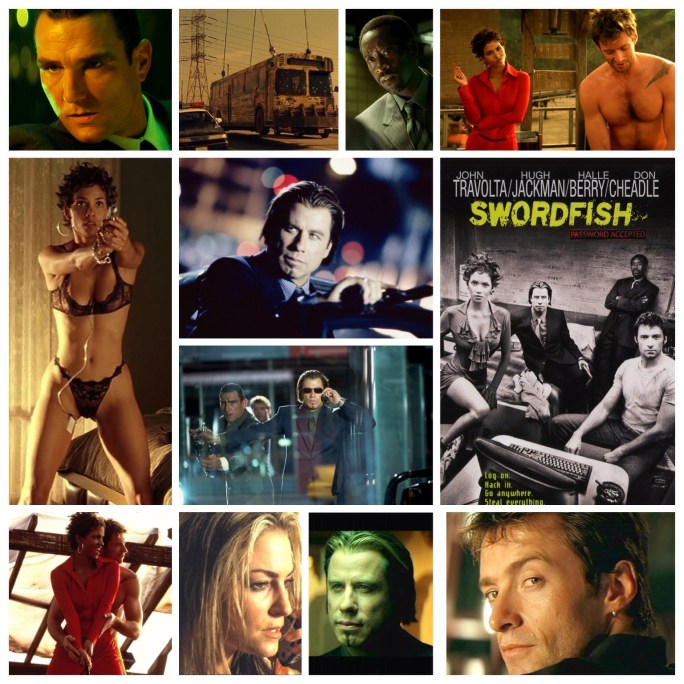
PETER BERG’S FRIDAY NIGHT LIGHTS — A REVIEW BY NICK CLEMENT

Friday Night Lights

Peter Berg’s Friday Night Lights is the football picture as if it were a combat film. These high school gridiron warriors are like battle-ready troops, ready to sacrifice it all in the name of glory. This is one of the best sports movies ever made, totally riveting, just as well done in the small details as it is in the grand scope of the sport and the society that it’s reflecting. Billy Bob Thornton beautifully underplayed the role of Head Coach, letting the colorful characters that make up the Permian Panthers do the heavy lifting in terms of dramatic consequence, though he’s not without his moments of explosive fury or deep introspection. Berg’s semi-regular cinematographer Tobias Schliessler shot the hell out of this movie, opting for a washed out color palette to match his gritty yet slick aesthetic; the film also has some of the best choreographed football action ever put on film. And true to the real-life story that this film covers, in the end, it’s not about winning and losing, but about putting it all out there in everything that you do, and picking up the pieces if it doesn’t land your way, always ready for the next challenge. The musical score by Explosions in the Sky is transcendent, all of the young actors and actresses nail their roles on and off the field, and the dialogue by co-scripters Berg and David Aaron Cohen has a believable quality that rings true at every moment. Fantastic production design and engrossing editing round out the tech package. When it comes to sports films, I hold this one in extra-high regard. Berg’s cousin H.G. Bissinger wrote the best selling book that the film is based on. Friday Night Lights would become a respectable box office grosser, and would be followed by one of the most critically acclaimed and dramatically involving TV shows of all time.


The Red Riding Trilogy: A Review by Nate Hill

image

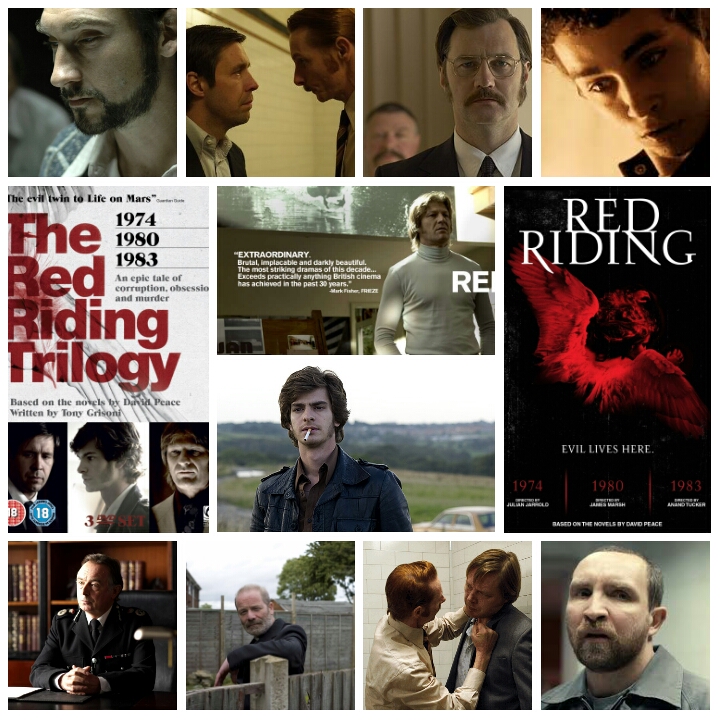
The Red Riding Trilogy is one of the most dense, absolutely impenetrable pieces of work I’ve ever seen, let alone attempted to dissect with my clunky writing skills. It’s also fairly horrifying, as it chronicles the tale of the Yorkshire Ripper, an elusive and mysterious serial child killer who terrorized this area of Britain through the late 70’s and early 80’s. Viler still are the strong implications that very powerful people, including the brass of the West Yorkshire police, made every disgusting attempt to cover up the crimes and protect the killer, who’s murders included that of children. It’s a brave move by UK’s Channel 4 to openly make such notions obvious within their story, and commendable the level of patience, skill and strong ambition in the undertaking is quite the payoff, whilst simultaneously taking a toll on you for sitting through it. The sheer scope of it must be noted; it’s separated into three feature length films, each vastly different in setting, character and tone, and each blessed with a different director. The filmmakers even went as far as to film the first, which is set in 1974, in 16mm, the second in 35mm being set in 1980 and the third makes a leap to high definition video and takes place in 1983. Such a progression of time is a dismal reflection of the sticky corruption which clings to societies, decaying them stealthily over years, and the few keen individuals who will not let the truth die as long as there is a glimmer of uncertainty. Now, if you asked me exactly what happens over the course of this trilogy, who is who, what has happened to which characters and who is guilty, I simply wouldn’t be able to tell you. It’s a deliberatly fractured narrative told through the prism of dishonest, corrupt psyches and has no use for chronology either. Characters who you saw die in the first film show up in the subsequent ones, actors replace each other in certain roles, and there’s just such a thick atmosphere of confusion and despair that in the 302 minute running time I was not able to make complete sense. I think this is a great tactic to help you realize that the film means to show the futile, cyclical nature of reality, as opposed to a traditionally structured story with a clear cut conclusion. Events spiral into each other with little rhyme or reason, until we feel somewhat lost, knowing full well that terrible events are unfolding in front of our eyes, events that are clouded and just out of our comprehensive grasp in a way that unsettles you and makes you feel as helpless as the few decent people trying to solve the case. One such person is an investigative reporter searching for the truth in the first film, played by Andrew Garfield. He stumbles dangerously close to answers which are promptly yanked away by the sinister forces of the Yorkshire police, brutalized and intimidated into submission. He comes close though, finding a lead in suspiciously sleazy real estate tycoon Sean Bean, who’s clearly got ties to whatever is really going on. The level of willful corruption demonstrated by the police is sickening. “To the North, where we do what we want” bellows a chief, toasting dark secrets to a roomful of cop comrades who are no doubt just as involved as him. The kind of blunt, uncaring dedication to evil is the only way to explain such behaviour, because in the end it’s their choice and they know what they’re doing. Were these officers as vile as the film depicts in the real life incidents? Someone seems to think so. Who’s to know? Probably no one ever at this point, a dreadful feeling which perpetuates the themes of hopelessness. The second film follows a nasty Police Chief (David Morrissey) who is bothered by old facts re emerging and seems to have a crisis of conscience. Or does he? The clichéd cinematic logline “no one is what they seem” has never been more pertinent than in these three films. It’s gets to a point where you actually are anticipating every single person onscreen to have some buried evil that will get upturned. A priest (Peter Mullan is superb) shows up in the second film only to be involved in dark turns of the third. Sean Bean’s character and his legacy hover over everything like a black cloud. A mentally challenged young man is held for years under suspicion of being the Ripper. A disturbed abuse survivor (wild eyed Robert Sheehan) seeks retribution. A Scotland Yard Detective (Paddy Considine) nobly reaches for truth. Many other characters have conundrums of roles to play in a titanic cast that includes Cara Seymour, Mark Addy, Sean Harris, James Fox, Eddie Marsan, Shaun Dooley, Joseph Mawle and more. The process in which the story unfolds is almost Fincher – esque in its meticulous assembly, each character and plot turn a cog in a vast machine whose purpouse and ultimate function are indeed hard to grasp. I need to sit down and watch it at least two more times through before the cogs turn in a way that begins to make sense to me, and a measurable story unfolds. It’s dark, dark stuff though, presenting humanity at its absolute worst, and in huge quantities too, nightmarish acts that go to huge levels of effort just to produce evil for.. well, it seems just for evil’s sake, really. The cast and filmmakers craft wonderful work though, and despite the blackness there is a macabre, almost poetic allure to it, beauty in terror so to speak. It’s rough, it’s long, it’s dense and it thoroughly bucks many a cinematic trend that let’s you reside in your perceptive comfort zone, beckoning you forth with extreme narrative challenge, an unflinching gaze into the abyss no promise of catharsis at the end of the tunnel. There’s nothing quite like it, I promise you.

PTS PRESENTS: 10 QUESTIONS WITH FILMMAKER JOHN CARNEY

Carney Banner

Podcasting Them Softly is excited to present our latest 10 QUESTIONS INTERVIEW with the fantastic filmmaker John Carney (Once, Begin Again, the upcoming Sing Street). He chatted with Nick about the importance of independent cinema, the current state of affairs in Ireland within their blossoming film community, and what inspires his creative process. Look for his new film, Sing Street, in theaters this spring! We hope you enjoy!

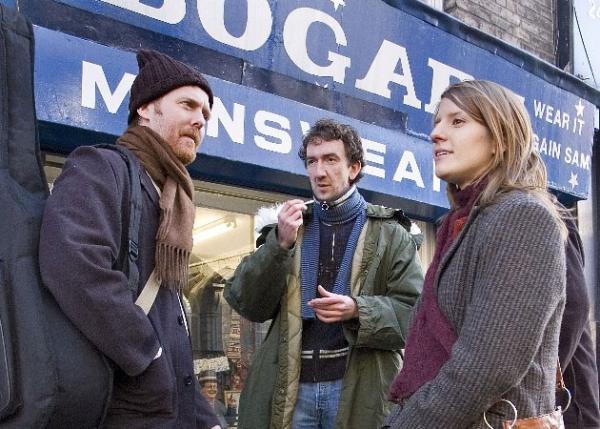
once bts

HOW DID THE SUCCESS OF ONCE CHANGE YOUR CAREER?

It had a huge impact. I didn’t have a career before Sundance accepted Once. I had a camcorder, some filmmaking and actor friends, and a hunk of debt! I don’t see how an Irish filmmaker can have a “career” without endorsement from elsewhere, Europe or America.

ruff

HOW DID ONCE PREPARE YOU FOR BEGIN AGAIN?

It didn’t at all! I just made Begin Again with the same attitude as I did Once. I just show up to set as late as I possibly can and hope the day offers up some surprises. This, I think, shocked some American crew members, not to mention some British actresses!

carney in action

CAN YOU DESCRIBE YOUR CREATIVE PROCESS?

I write the scripts and score, and develop the songs in all my films, so the preparation is in that. This happens months, sometimes years before. After that I just show up as late as I can to set and do as little as I can get away with. Preparation is in what you have for dinner the night before shooting, what you read, and what you watch.

zonad

WHAT’S YOUR FAVORITE PART OF PUTTING A FILM TOGETHER?

The laughs you have while casting the actors. Any work comes ages before shooting. Shooting is fun. If it isn’t, I think the audience knows.

sing

HOW DID SING STREET COME ABOUT?

It happened on an underground train in London. I was looking at a schoolboy carrying a guitar and remembering that feeling of breaking out of school and heading to your friend’s house for band practice. The bully is after you, the teacher is on your case, your parents are being assholes, you’ve got no money, no girlfriend, and you’re never more alive. I thought, that would make a nice scene, and took it from there.

begin

WHAT ARE YOUR THOUGHTS ON THE CURRENT IRISH INDEPENDENT CINEMA SCENE?

I’m excited if it gives people jobs. Ireland is really more like a city. It’s tiny. And it’s hard to sustain an industry. Thankfully we have state subsidy, which hopefully this interest in Irish filmmakers will help to sustain. But we need to cast Irish actors! Actors are still really struggling in Ireland.

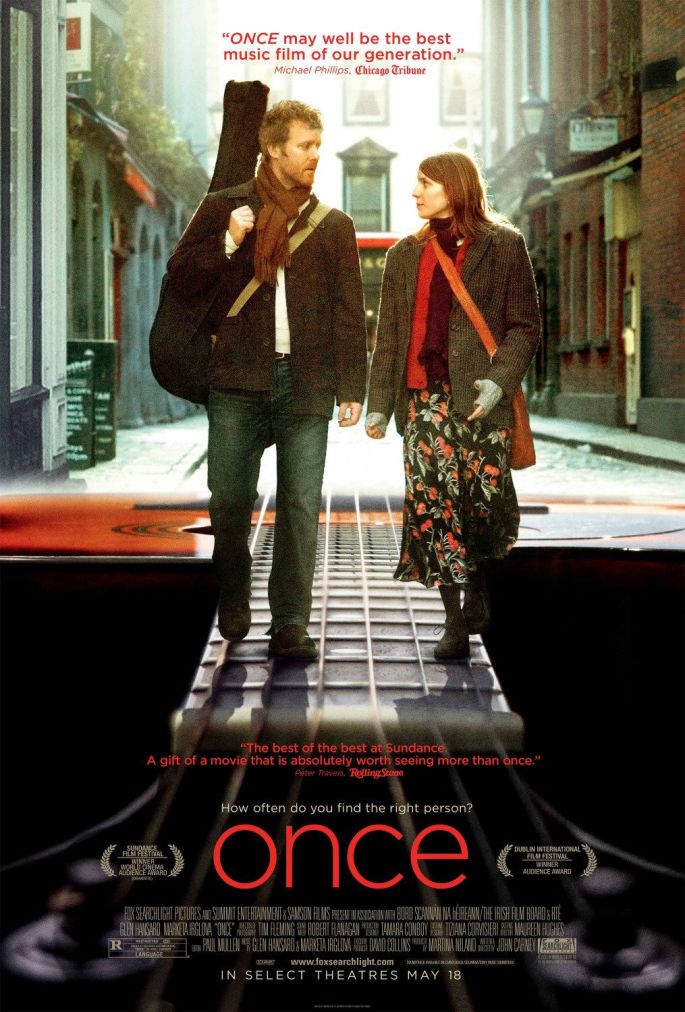
once-poster

WHICH FILMMAKERS HAVE YOU LOOKED TO FOR INSPIRATION?

John Ford was good.

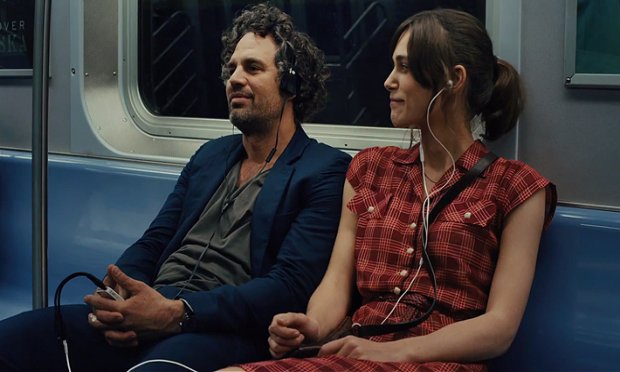
begin-again-poster01

HOW EXCITED ARE YOU ABOUT ALL OF THE RECENT IRISH TALENT TO FIND TRACTION IN HOLLYWOOD?

I don’t see it any different as before. Some Irish directors are certainly doing very well. But I’m glad I got in there before this new “wave.”

1

WHAT’S THE HARDEST PART OF THE CREATIVE PROCESS

Writing stories is the hardest part about making films. I mean creating new stories. Finding something new to tell, that’s what drives me.

2

CREATIVELY, DO YOU FIND YOURSELF ATTRACTED TO “IRISH STORIES?”

Are there actually any “new” stories? I think bad filmmakers are always looking for new stories. But the fact might be that the world has been spinning for so long that everything has pretty much been written. I mean, how original was Once? Boy meets girl. Ships in the night. The end. The original part was the tone, the songs, the casting. And that can all have an “Irish” feel, but Irish stories? I’m not so sure. Good films, I think, stem from the minutiae of your detailing and the universality of your story.

Carney Banner