Fede Alvarez’s Evil Dead

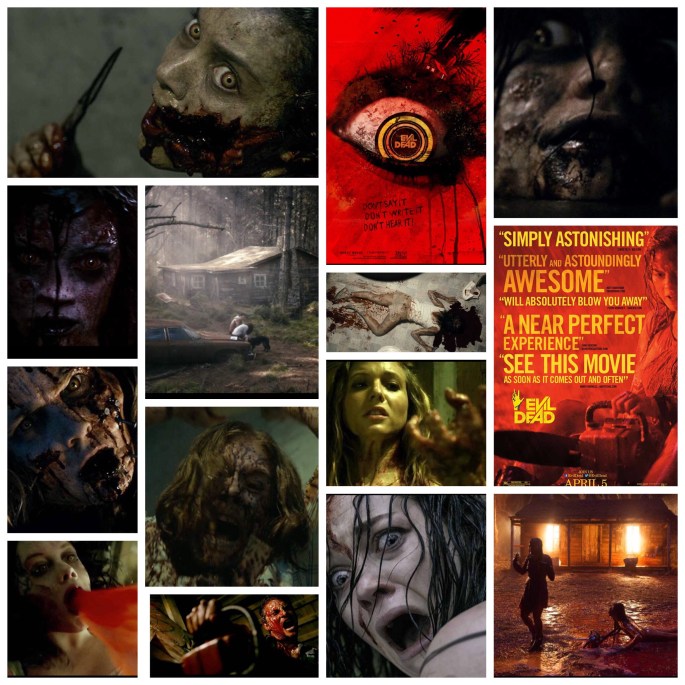
As far as horror remakes go, you can do a lot, lot worse than Fede Alvarez’s 2013 version of Sam Raimi’s The Evil Dead. If this version and Raimi’s are to be viewed as different sides of the Evil Dead aesthetic, this would be the sober version, and Raimi’s the wasted one. The original trilogy of films were most decidedly horror, but they were raucous, silly, playful as all hell and had the kind of cheerfully sloppy, Schlock in the Box vibe of a horror comedy. Alvarez’s version sobers right up and has almost no instances of humour, save for a few quick moments. What it doesn’t lose an iota of, however, is the gut churning bodily harm inflicted on humans and deadites, this is one film that takes its violence seriously and thinks up some really interesting ways to fuck people up using hardware tools, kitchen appliances and that good ol’ rip snortin chainsaw. As long as you’re cool with that fact that the comedy elements have been ditched and the proceedings here, although no less grisly, are pretty stone-faced and grim. The troupe of ill fated folks who end up at the now iconic cabin in the woods are played by Jane Levy, Shiloh Fernandez, Lou Taylor Pucci and Jessica Lucas. Once the Necronomicon is read from, all manner of nastiness descends on them from the surrounding woods and evil starts to possess them and.. you know the drill. Although some unwelcome CGI is used when Levy’s Mia finds herself alone in the woods and molested by a tree, once we get back to the interior of the cabin the special effects have an intimate, visceral and realistic impact. Scenes involving a SawsAll and an exacto knife are memorable for their ability to make you squirm and hide your eyes, which is when you know your scenes are effective. Atmosphere is also key, and although we don’t get the tactile, grainy VHS vision of the forest and hidden army of smoke machines to create the setting, the cabin/forest here are still eerily realized, especially when they head to the basement where the intense prologue of the film happened, which further sets up the mood. It’s not in the vein of Raimi or even close to as good as his original classics, but they’ve put on a super creepy, spectacularly gory (that chainsaw massacre in the blood rain is an impressive showpiece) show that should please casual fans and franchise die-hards alike. Watch for a VIP cameo after the credits too.

-Nate
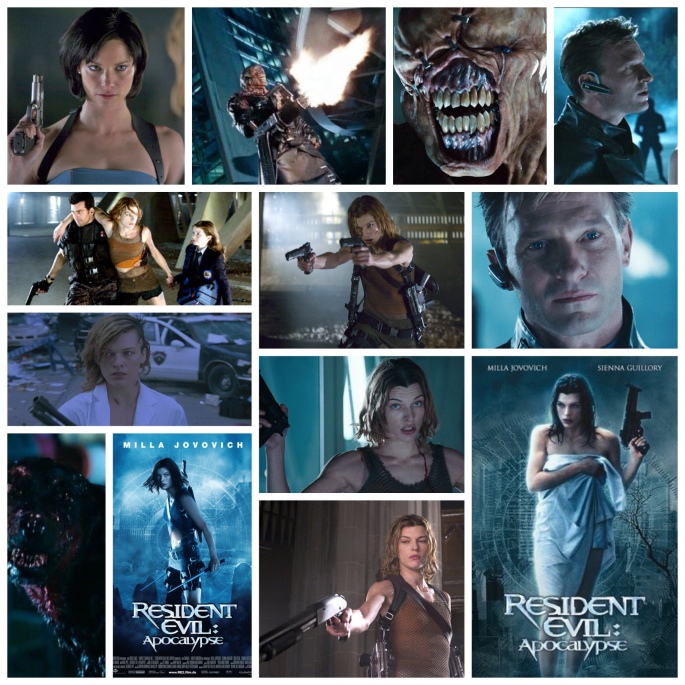
Paul WS Anderson’s Resident Evil: Apocalypse

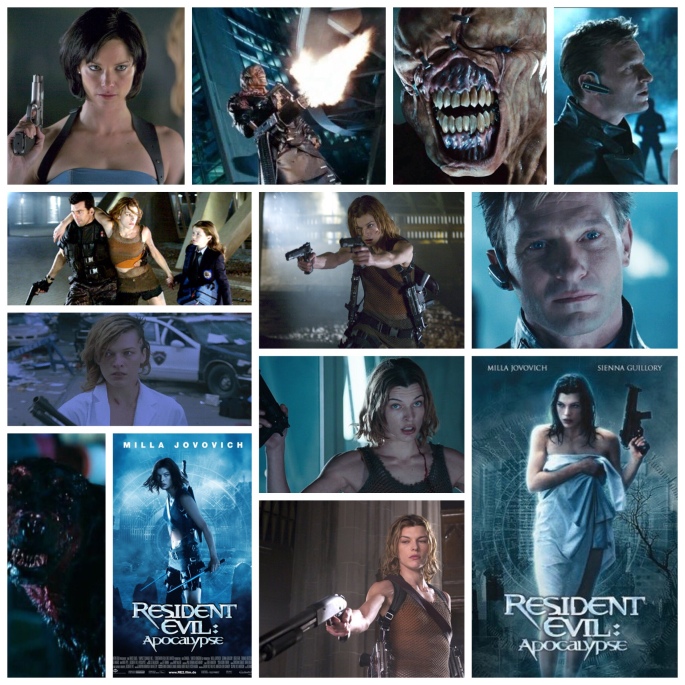
As the doors of the Hive blast open and gory mayhem eats up the streets of Raccoon City, so too does Paul W.S. Anderson plough past the restraint and pacing of his first chamber piece horror show for something that resembles all out chaos and splatters across the screen on a much larger scale. Is that a good thing? Well… the short answer is.. sort of. The first RE is the only one that is actually a great film, and everything after is commotion, a bunch of competing ideas stuck in a blender, left on tumble dry and scattered throughout a laser tag arena while music videos blare in the background on double volume. That’s not to say they aren’t any good though, there’s definitely fun to be had, but the sleek viscera and unmistakable style of the first film are out the window. Milla Jovovich’s Alice has become a walking government weapon, decked out with genetically altered killer instincts and superpowers, on a bullet ridden quest to eradicate that pesky T Virus and all the abominations it has brought with it. The super memorable team of mercs from the first are all but decimated (the film severely misses Michelle Rodriguez’s presence), the city’s population dwindling with the Zombie threat and the nefarious Umbrella Corporation preparing to seal it off for good, because apparently their power supersedes that of the actual government. Alice is joined again by Matt (Eric Mabius) or at least a version of him, and aided by a few ass kicking newcomers like super cop Jill Valentine (Sienna Guillory), hotshot mercenary Carlos (Oded Fehr, honestly one of the coolest characters in the whole franchise), wise ass street hustler LJ (Mike Epps), a TV reporter (Sandrine Holt) and more. There’s a lot of slow motion jumping, kicking, fucking shit up and busting through more plate glass windows than the grips could haul in by the hour, Anderson shows he can operate in a vast, spacious playground like Raccoon City (actually Toronto) as adeptly as a close quarters science lab full of slicing lasers and undead dobermans. German character actor Thomas Kretschmann does an icy, evil turn here as Umbrella bigwig Major Cain, a quietly deranged, power mad asshole who unleashed the freaky Nemesis monster, an ugly golem with built in weaponry and enough horsepower to bash through brick walls. It’s all a lot of wanton sound and fury, but Anderson makes it fun, fast and gory as all hell. As far as the sequels go, I consider this puppy to be the best, or at least the most entertaining. Watch out for Jared Harris as an Umbrella guru who literally and figuratively fathered the infamous ‘Alice’ computer program that begat this whole freak show, and Ian Glenn briefly as a new villain in a setup for Extinction, which is kind of like the hangover after Apocalypse’s raging block party. Good shit.

-Nate Hill

p.p1 {margin: 0.0px 0.0px 0.0px 0.0px; font: 17.0px ‘.SF UI Text’; color: #454545; min-height: 20.3px}<br />
p.p2 {margin: 0.0px 0.0px 0.0px 0.0px; font: 17.0px ‘.SF UI Text’; color: #454545}<br />
span.s1 {font-family: ‘.SFUIText’; font-weight: normal; font-style: normal; font-size: 17.00pt}<br />

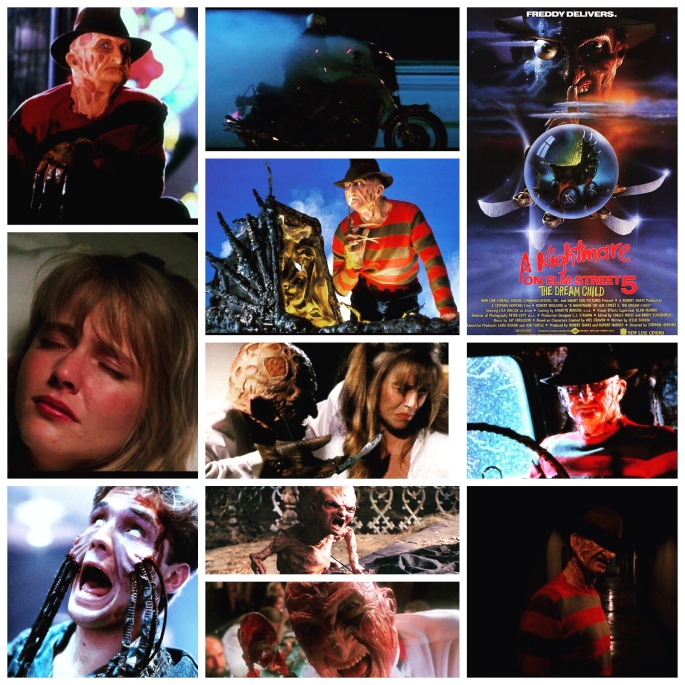
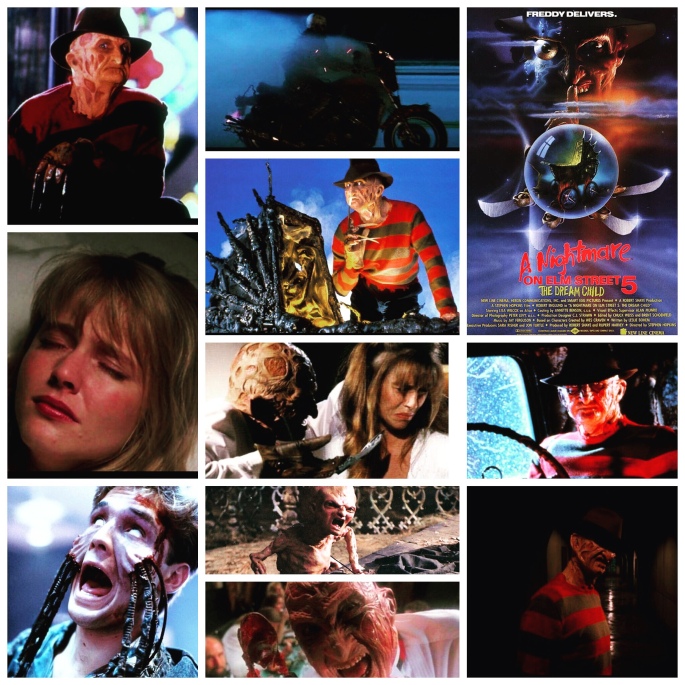
The Nightmare On Elm Street franchise went to some pretty weird and wild places as it went on, like the snowball effect except the snowball is a grotesque sphere of faux burn victim latex. By the fifth entry, titled The Dream Child, New Line studios had basically not only let the floodgates open in terms of Robert England’s Freddy Krueger and the increasingly warped special effects, but left the keys to them in the hands of any filmmaker who came along to make their stamp on the legacy. This one is silly, excessively ooey gooey and super demented. As such, it’s naturally one of my favourite Freddy flicks. Helmed by extreme stylist Stephen Hopkins (Predator 2, The Ghost & The Darkness), it has an especially disturbing opening sequence involving the origins and backstory of Freddy, one that balances schlock with outright atrocity nicely and is imaginative when you consider the tropes of these movies. Lisa Wilcox’s Alice is still alive and kicking, pregnant and finding ever present pizza faced Freddy trying to attack her through the dreams of her unborn child, as well as those of her friends. There’s not much to it except increasingly elaborate set pieces where he finds new ways to kill these teens, including literally force feeding a girl with an eating disorder until she explodes and causing the mother of all motorbike accidents, a well staged scene that’s actually up there with my favourite Freddy kills. The original theme music is back, but there’s also a super creepy new synth composition by Jay Ferguson playing over the opening credits that spices things up and makes this feel like it’s own beast. The later additions in the legacy get a bad rap for being silly and over the top, but hey these are horror flicks about dreams, which by definition are over the top and unbound by genre, and plus I like the one liners. Best quip to be found here? “Bon appetit, bitch!”, growled by Freddy as he proudly wears a ridiculous chefs hat. Savage af. I like this one a lot for its impressive practical effects, genuinely frightening prologue and fresh new score. Good times. Oh, and check out that gorgeous poster art, they really don’t make those like they used to anymore, unless you’re Panos Cosmatos.

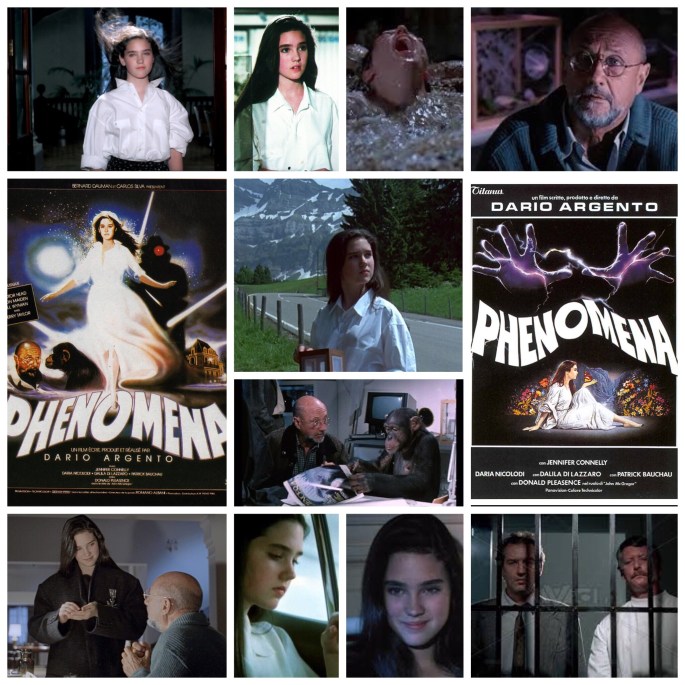
Dario Argento’s Phenomena

Dario Argento’s Phenomena isn’t one you usually see in a greatest hits list offhand from the oddball Italian horror-meister, but it ranks number two for me in his filmography. Set in the already spooky, airy Swiss Alps, this one sees a very young Jennifer Connelly and her classmates at a boarding school terrorized by an unseen killer who, like in most Argento films, just loves to stab people with super sharp objects in excessive closeup. Connelly has a special power and affinity for insects, which comes in handy when she meets entomologist McGregor (the lovely Donald Pleasance), his pet chimpanzee and they try to snare the killer using their own keen instincts and that of the vast collection of bugs in his care. It’s a unique, eclectic setup for a horror flick, but what’s interesting here is the outright horror and nastiness doesn’t even show up until the hectic, gross out final act. Most of the film is like an atmospheric, eerie fairy tale. Connelly is a darkly radiant beauty and you can practically see the effortless star-power percolating even at the age of fifteen. This film is unique in Argento’s career for several reasons; he takes full enjoyment and advantage of the setting here, the cavernous, looming alps and vast, flower speckled fields of Switzerland provide a more nature themed, organic palette here than his usually urban choice of old European cities and historic edifices, it’s a switch up that works quite well. Mostly though this one is notable for a sense of compassion that isn’t there in any of his other films, brought in by kind eyed Pleasence and his friendship with Connelly. As per usual, some of the acting, pacing and continuity is really off balance here, but that has become an Argento trademark and you kind of have to just roll with it at this point, the guy’s forte has always been atmosphere, music and the feeling behind what’s onscreen, not so much the logic of plot or realism in performance. Speaking of music, this also has to have the coolest soundtrack he’s ever amassed. Not only is there an electrifying, thunderous synth score by Goblin and Claudio Simonetti with a very lyrical, dreamlike vibe, we’re also treated to original rock compositions by the likes of Motörhead and Iron Maiden, making it one of the most collectively memorable soundtracks out there. There’s another cut of this film called ‘Creepers’, but it’s awkwardly edited down by chunks and loses all the magic, so don’t even go near it. The Anchor Bay DVD is the way to go. One of Argento’s best, and a gem amongst horror films.

-Nate Hill

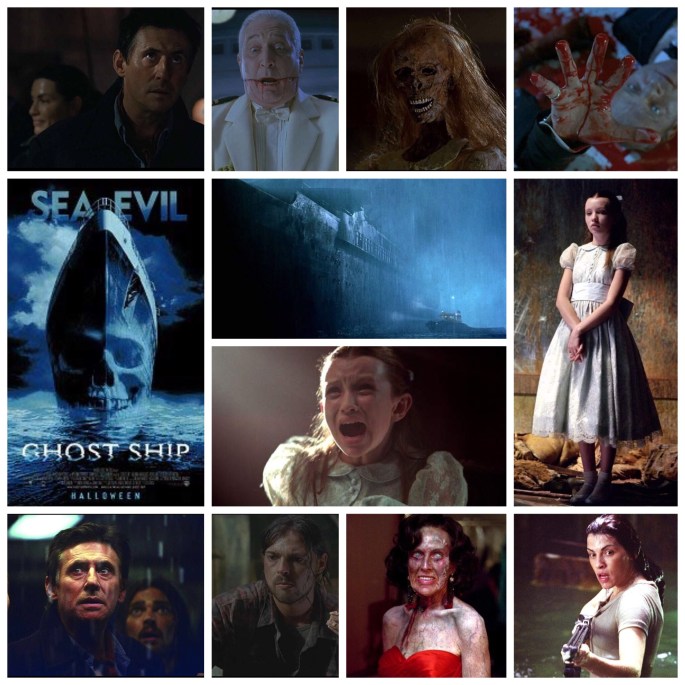
Steve Beck’s Ghost Ship

The only claim to greatness that Ghost Ship can make lies in its first five minutes, a frightening horror set piece that starts the film off with a bang, or should I say a slice. After that it’s a dank, rusty B movie with hilarious musical choices, routine scares and campy acting, but I kind of like the film in spite of all that. After the now famous Emily Browning witnesses a horrific ‘accident’ aboard a giant ocean liner back in the 60’s, we flash forward to a rowdy salvage crew and their attempts to find the lost ship somewhere in the Bering Straight. Captained by salty Gabriel Byrne, crewed by the likes of Julianna Margulies, Desmond Harrington, Ron Eldard, Isaiah Washington and Karl Urban, the thing has a capable cast that does well enough but at the end of the day they’re mired in a creaky, cheerfully silly flick that doesn’t make aspirations to take itself seriously. If you’re ok with that it makes cool background noise at a Halloween party, and even features a plot thread that is fascinating, if somewhat under-explored. That opening scene of collective, instantaneous carnage though, holy fuck man. I saw it on tv when I was younger and both the incident and young Browning’s reaction to it chilled me to the core. Too bad the rest of the film couldn’t keep up, but at least it’s better than 2001’s Lost Voyage starring Lance Henriksen, also I’m kinda just pulling one out of my hat that has no chance of comparison with anything because I enjoy Ghost Ship and want to make it seem better than it is.

-Nate Hill

Rob Zombie’s The Lords Of Salem

Rob Zombie’s output has been hallmarked by a series of grungy, profane exploitation throwbacks with in your face violence and a loud, mean grind-house aesthetic. As much as I love *that* sensibility (I’m a hardcore fan of his films), what makes The Lords Of Salem so special is that he tries something different than he’s used to, ditches the comfort blanket of Manson-esque killers and brash, lewd dialogue in favour of mood, atmosphere and the kind of pacing you’d find in early 70’s fright flicks that valued aura over gore. This shows that although pretty much married to his trademark style (the third Firefly Family film is in production as we speak), he knows how to branch out successfully and has made a fantastic piece of slow burn horror with Salem. Set both during the infamous witch trials and in the present day, it focuses on quiet, introverted radio DJ Heidi Hawthorne (Sheri Moon Zombie). Now, if you’ve seen Sheri in the Firefly films you’ll know that the words ‘quiet’ and ‘introverted’ are a far cry from what she’s used to, but she’s brilliant here as a damaged recovering addict haunted by devilish forces. Plagued by sinister neighbours (Patricia Quinn, Dee Wallace and a freaky Judy Geeson), hallucinatory visions of evil and a mysterious music album mailed right to her radio station, it soon becomes clear that the demons of the past have come back to haunt Salem and have chosen her as a dark avatar. Zombie lovingly casts his films with carefully chosen icons of 60’s and 70’s genre cinema, and as such we get the likes of Ken Foree, Richard Lynch, Richard Fancy, Udo Kier, Maria Conchita Alonso, Michael Berryman, Sid Haig and more. Stealing the show is electric blue eyed Meg Foster in a blood freezing turn as Margaret Morgan, leader of the original Salem coven generations before. Foster hails from stuff like John Carpenter’s They Live, The live action Masters Of The Universe and recently Showtime’s Twin Peaks: The Return, but she’s absolutely terrifying and almost unrecognizable here as a freaky old hell hag with a raspy voice and gruesome saggy tits, truly a memorable villain. This is a film that takes its time building up to outright horror, alternating between dimly lit, spooky scenes from the original trials and the mounting tension of present day, including a subplot where an investigative scholar (Bruce Davison) tries to unearth evil and warn Heidi before it’s too late. Jarringly surreal visuals abound here, from neon palettes to a grandiose nightmare sequence involving a demon baby and some seriously strange architecture. It all builds to a searing finale that some may find to over the top or garish, but fits the story and ends the tale on a feverish note of hellish commotion, colour saturation and horrific spectacle that plays like Ken Russell by way of Dario Argento with a dash of David Lynch at his craziest. This is my favourite film in Zombie’s career so far, for its mood, unique visual language and rhythmic pacing, but also for his willingness to blast through the cobwebs of uncharted stylistic territory and bring forth well wrought, fresh artistic style and a damn great horror film too.

-Nate Hill

David S. Goyer’s The Unborn

There’s a lot of ideas running around in David S. Goyer’s The Unborn, ideas that a terrific cast do their best with but ultimately this was one big WTF of a letdown, a boring waste of time that deserved better execution than it got. It’s essentially another Exorcist retread, given a twist, with Odette Yustman (whatever happened to her? She was sort of like Megan Fox Lite) playing a girl who is tormented by something called a Dybbuk, some sort of mythological Jewish entity but also just a fancy way of saying demon. It has something to do with her unborn twin who never made it past utero, her institutionalized mother (Carla Cugino, wasted in a heavily cut role) as well as history dating back to Joseph ‘Angel of Death’ Mengele, the infamous Nazi surgeon who had an obsession with twins, a theme that also plays on here. This thing haunts and eventually possesses her, until she finds help from two priests played by Gary Oldman and Idris Elba, in roles beneath their talent. There’s one nicely written scene where she and her boyfriend (Cam Gigandet, who can’t act to save his life) ponder the universe and all its terrors while in bed that would have been better brought to life by different actors. Various scenes show her interaction with her loving father (James Remar), but they’re underdeveloped and feel edited. Mostly it’s just her running from freaky scuttling apparitions, loose plot threads hanging about like wires in an abandoned warehouse and just.. bleh. There’s definitely something there in terms of brainstorming script ideas, but they screwed it up big time by making a haphazard, boring, generically glossy PG-13 dud instead of putting some actual style, personality and genuinely frightening elements in. Big ol’ missed opportunity. It’s a shame, because there’s some neat, spooky special effects thrown at the wall here that deserve a better film, and I’d expect better from Goyer too. Oh well.

-Nate Hill

Paul W.S. Anderson’s AVP: Alien Vs. Predator

Here’s the thing: much of what is needed was in place to make an epic, badass Alien/Predator crossover flick. They had a solid premise, a director with a sure footing and visible background in horror, an able cast with a genre/franchise titan as a callback to earlier entries, and all the special effects they could want at their disposal. So how did AVP: Alien Vs. Predator end up being an oven roasted, inexcusable slice of shit? Well, script and execution I suppose, the whole thing just has a murky, suspiciously rushed feel to it and no trace of memorable pedigree at all. However, to me their first mistake and cardinal sin was to rate the thing PG-13. These are two intense, extremely graphic and gruesomely violent horror franchises, and as such any amalgamation should, of anything, step up the carnage, so whoever had final say as far as that goes should have a face-hugger attached to every orifice of their body. So what does work? Well, Lance Henriksen for one, but he has a history of being the best thing about many films he’s been in and it’s hard for him not to shine through any amount of muck. He plays the dying CEO of infamous Weyland Yutani corporation and gives all the grit and gravity he can amongst a flurry of inconsequential CGI. Recruiting a team of scientists and mercenaries, he plans to descend into an Antarctic pyramid where centuries ago, the mythic Yautjas and the primal Xenomorphs had a Royal Rumble. Star Sanaa Lathan is actually great as the ‘final girl’ of sorts in this slasher game, other team members include Ewan Bremmer, Raoul Bova and Tommy Flanagan, but most are lost in the confusion, poorly written or forgotten entirely. The battle scenes are haphazard and sloppy, the dialogue barely there and the colour scheme is this kind of shitty, subdued blue-hue nonsense with no personality it’s own, like an icy deodorant commercial that just happens to have monsters in it. Many people blame director Anderson, but who really knows. People forget that he’s responsible for the first Resident Evil film which is solid, gutsy horror and has the type of energy meant to be found here, as well as Event Horizon, one of the scariest, well wrought sci-fi/horror flicks of the century, so he was a reasonable candidate to helm this. In any case, it’s a big ol’ mess, a titanic wasted opportunity and a dark stain on both respective legacies. There’s a sequel which I haven’t seen, but it’s probably just as wretched.

-Nate Hill

Platinum Dunes’ The Hitcher

I won’t pretend to be a fan of horror remakes other than Rob Zombie’s Halloween, but when they cast Sean Bean as iconic highway madman John Ryder in the inevitable second lap of Robert Harmon’s horror classic The Hitcher, I perked up. Bean, like Rutger Hauer in the original, is one of my favourite actors of all time and I had to to see what he did with the character (he pulled out of another contract and jumped a plane just to accept this gig). The good news is.. he lives up to Hauer’s original asphalt angel of death, and I’ll fight anyone who argues. The bad news? The film doesn’t. It’s one of those dodgy, hit or miss Platinum Dunes horror updates (avoid Jason and Freddy like the plague, but their first Leatherface incarnation is quite good) and really misses out on the atmospheric, haunting pace of the first, where nightmares and reality blend into the mirages appearing on the desert horizon for lone motorist Jim Halsey… the thing is, here Jim isn’t alone at all but travelling with his girlfriend and that takes some of the primal fear out of it. Zachary Knighton fills C. Thomas Howell’s shoes and a surprisingly adept Sofia Bush plays the gal, on a road trip for spring break when they’re suddenly tormented by Bean’s Ryder, an intense creation by the actor that carefully avoids any callbacks or mimicry of Hauer. How could he though? Rutger made that role his own and Bean wisely does the same with a sardonic, smouldering aura all his own, and wins a spot in horror pantheon as a worthy update on this boogeyman of the backroads (he’s also better than Gary Busey’s kid was in that god awful sequel that no one wants to admit was even made). Everything here gets a torqued update, from the infamous body tied between two trucks scene (yuck) to the car chases (that Trans Am tho) to the violence itself, to legendary highway super-cop Lt. Esteridge, trading in cucumber cool Jeffrey DeMunn for hilariously hammy Neal McDonough, who kills it as the only officer who isn’t a bumbling moron. But who needs all that sound and fury when you’re trying to throwback to an atmosphere classic? I guess go your own way, but it really doesn’t do the Hitcher legacy any justice. Aside from Bean who elevates his scenes to horror greatness, it’s a slapdash, needlessly gruesome slice of knockoff cash grab slasher fare that takes everything that was spooky, shadowy and mysterious about the first one, shines a big broad daylight aesthetic on it that shakes off the cobwebs we never wanted gone in the first place, like Bon Jovi trying to cover a song by The Cure. There is, however, one moment that gets it right and rises to a level of quality deserving of the Hitcher brand. It’s right at the end, everything has gone haywire, all the cops are dead, all the cars have been thoroughly blown up, and Ryder makes one last dash to escape. Sofia Bush takes up a dead cop’s shotgun and musters one final confrontation with him, as the score by Steve Jablonsky swells to adrenaline heights and we get an exchange of dialogue between the two, both beautifully delivered, that is the first shred of originality the film displays and almost, *almost* redeems itself. Where was that for the previous eighty five minutes? In any case, this holds a spot in my heart simply because I’ve watched it enough times and has crystallized into something nostalgic, which as we all know sometimes supersedes what we know is quality from that which we know is not. Worth it for Bean, the score and that supersonic final scene.

-Nate Hill

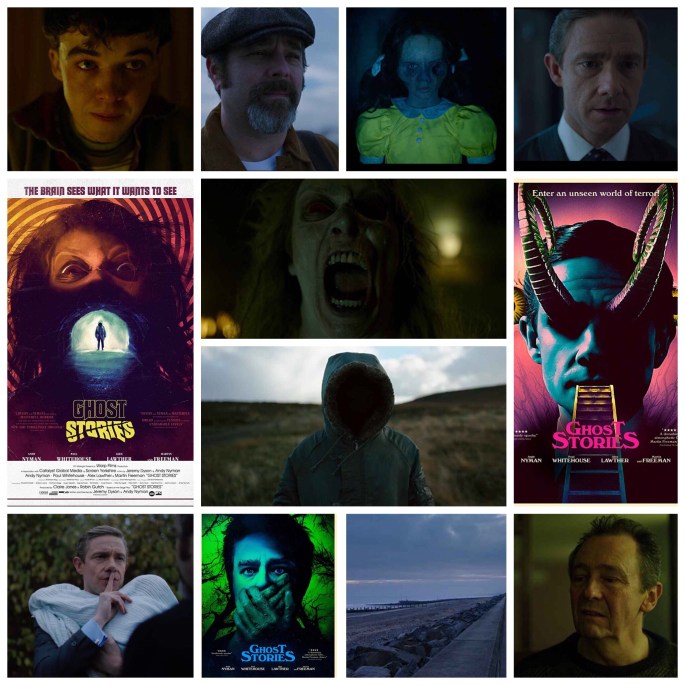
Ghost Stories

It’s always hard to find a horror flick these days that’s actually genuinely scary, not to mention fun as well. You have your endless found footage stuff, a consistent parade of ghost/exorcism fare, various creature features, and in the columns of hit or miss, unfortunately the latter weighs heavier. But once in a while there’s that terrifying ruckus of a haunted house flick that comes along and knows how to assault you on all sides with the creep factor, the laugh cannon and be a smart, well told and unexpected tale too. Ghost Stories is just that, a gleeful throwback to the BBC anthology horror of the 80’s that pulls the rug right out from you and frightens in a big way.

Set up in three distinct segments plus a kicker of a final fourth act, it follows a paranormal debunker (Andy Nyman) as he revisits three decades old spooky cases that have never been solved and haunt the afflicted to this day. The first and scariest sees a night watchman (Paul Whitehouse) on shift at an abandoned asylum who’s plagued by a restless spirit. In the second, a young boy (Alex Lawther) is harassed by a devilish creature as he drives through a forest in a stolen car. Lastly, father to be Martin Freeman is terrorized by a poltergeist in his home. These stories work great on their own but they really serve as a tapestry of clues to what’s really going on, and later down the line there’s some chilling revelations that are far more disturbing than any ghost going bump in the night. This is like the best, strongest points of Twilight Zone, Tales From The Crypt and Goosebumps done right with just a flourish of Black Mirror on the side. Freeman gives the best work, becoming cheerfully psychotic later and injecting delirious amounts of extremely dark humour into every mirthful grimace and off the wall mannerism. This is what horror should be.

-Nate Hill