Hellraiser: Inferno 


Hellraiser: Inferno marks the first juncture in the franchise where ideas deviated beyond the formula set in place by the first borderline surreal, masochist piece.

Gone is the dreamy, sordid aesthetic used back then, the Cenobites who were front and centre are reduced to limited appearances and the story is less otherworldly and something decidedly more noirish and down to earth. Whether that’s accepted by franchise die-hards and horror hounds alike is subjective, but I didn’t mind it’s slow burn approach or sidewinding tone. Craig Sheffer, the closest thing you’ll get to Josh Brolin without breaking the bank, plays a crooked Detective who finds himself dragged down a rabbit hole of creepy, murderous goings-on when he’s assigned to hunt a serial killer known as ‘The Engineer’. Of course the murders always seem one step ahead of his grasp, and naturally dark secrets from his sketchy past are brought to light as he gradually begins to lose his mind. Doug Bradley does eventually return as the iconic Pinhead, with a few members of the Cenobite posse, but their presence is kept mostly on the back burner for quite a while. Taking antagonist duties for a while instead is Sheffer’s eerie psychiatrist, played with sinister charm and knowing charisma by James Remar, a dubious fellow with a few tricks up his own sleeve. This is the one entry that sticks out from the franchise in it’s diversion from the usual path of distinct, abstract psychosexual horror and mutes the whole icy nightmare down to rebuild a story in it’s own image. You’ll either appreciate the initiative, or you’ll miss the good ol’ freakshow of the original film. Up to you. 

-Nate Hill
Freddy’s Dead: The ‘Final’ Nightmare 


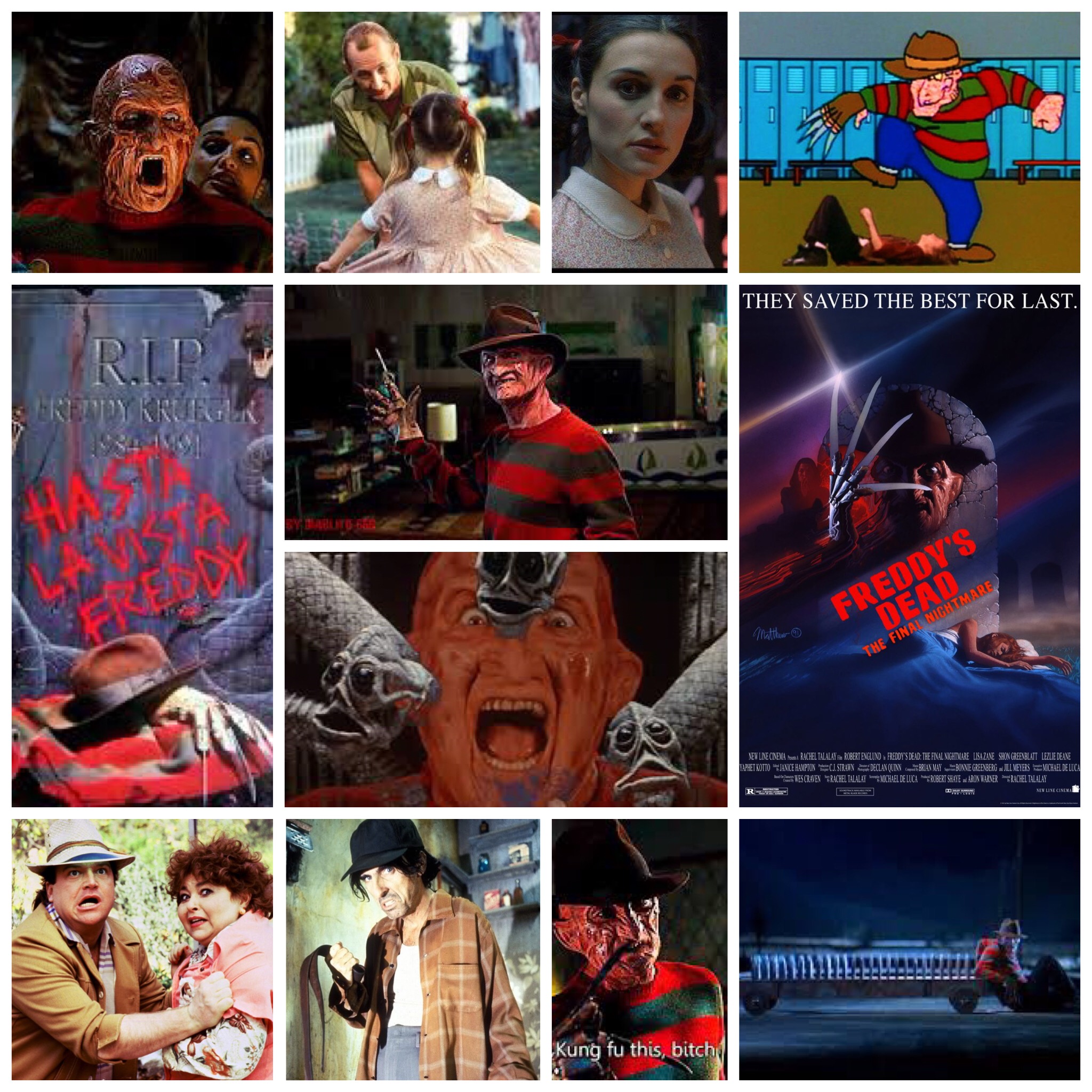
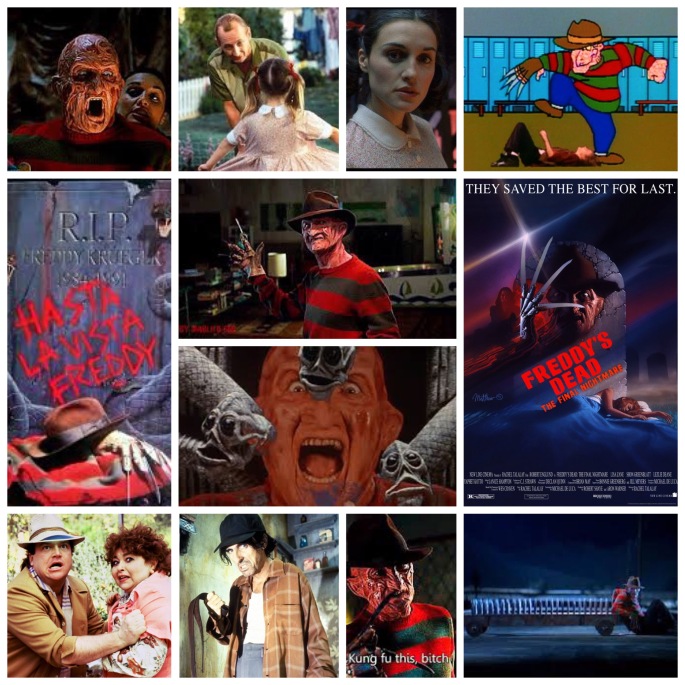
I’m not sure what they were going for with Freddy’s Dead: The Final Nightmare, but the summation of what they produced is simply… bizarre. Of course it’s not the final round, they never can resist churning out meta reworking, crossovers and remakes, rendering the ‘final’ titles hilariously redundant (the ‘final’ Friday The 13th chapter is only the fourth entry in a franchise that soared into double digits). It’s silly more than anything else, like the New Line Cinema boardroom passed around the laughing gas and spit-balled out this cartoonish, random, cameo stuffed looney bin of a flick. Actually, writing credit goes to director Rachel Talalay, who also helped the equally silly rumpus cult classic Tank Girl, which is lovable in it’s own right. Speaking of silly, Robert Englund’s Freddy Krueger has never been more buffoonish than here, the culmination of every one line and quip throughout the franchise. He’s back, hunting down the last remaining Springwood teenager, as well as a woman (Lisa Zane) whose connection to his past could be dicy for him. There’s also a weird backstory angle involving dream demons that look like sentient tadpoles who apparently are responsible for Freddy’s initial resurrection and powers. Hmm. The cameos seem like they just made a celebrity collage on a dartboard, blindfolded each other and flung them all over. Alice Cooper shows up in flashbacks as Freddy’s sadistic stepfather, Roseanne Barr and Tom Arnold are around, plus Breckin Meyer and Yaphet Kotto. The rule of randoms is excepting Johnny Depp of course, an Elm Street veteran who has a quick bit as a TV advertisement dude. The dream sequences are wild and wacky, but never really frightening or as atmospheric as they used to be, the one springing to mind being a video game themed thing where pixelated Freddy chases a victim Super Mario style, not exactly the most bone chilling setting, but oh well. This does mark the last of the initial franchise before they moved on to deluxe entries like the super meta New Nightmare and the gong show that was Freddy Vs. Jason. If you’re looking for the weirdest Elm Street flick, you’ve found it, and if you’re looking for a scary, coherent one then you’ll have to backtrack earlier in the franchise, or skip ahead to Wes Craven’s excellent next one. 

-Nate Hill

Mike Nichol’s Wolf


Mike Nichol’s Wolf cleverly combines comedic character study, spoofs the high profile business scene and whips it together with a far more literal lycanthropic horror story than I’d ever imagined before I watched it. It’s neat that dry metaphor went full on genuinely real monster flick, while losing none of it’s smarts along the way. Jack Nicholson, that old devil, plays an aging publisher whose livelihood is threatened by the arrival of a roguish young upstart (James Spader laying down that smarm) with designs on his job. It doesn’t help that he’s worn out, weary and not as sharp as he once was. Cue a werewolf mauling, which fixes those things right quick and turns him into a new man, in more ways than one. He’s fiercely competitive, virile and on the ball, but he also has to keep his hairy secret, well, a secret. Christopher Plummer is great as his fiery tempered boss, whose daughter (slinky Michelle Pfeiffer) begins to have eyes for the old dog, and the supporting cast has well coloured turns from Kate Nelligan, Ron Rifkin, Om Puri, David Hyde Pierce, Eileen Atkins, David Schwimmer and Richard Jenkins as a wily detective who begins to sniff the rat. The Wolf effects by Rick Baker and team are refreshingly old school, practical prosthetics and nice and gooey too. It’s also a tongue in cheek examination of male potency and territorial behaviour, so what better avenues of exploration than instinctual canine interaction and the politics of the workplace? Cool stuff, neat genre blending, a wicked cast and cool horror elements. 

-Nate Hill

Marcus Nispel’s Texas Chainsaw Massacre 


In most cases, Michael Bay’s Platinum Dunes label has made dismal attempts at horror remakes (see their Elm Street and Friday The 13th for cringe cases in point). However, the version of Texas Chainsaw Massacre they did was pretty damn good on my barometer, a brooding, darkly humorous and fiercely frightening piece that reworks the barebones, grainy vibe of Tobe Hooper’s original classic into something more dingy and atmospheric. It’s the 70’s, and rural Texas is as humid and inhospitable as ever, particularly so in Travis County, right in time for a Volkswagen bus full of nimrod partygoers to trundle through and get caught in the snare of the severely disturbed Hewitt clan, spearheaded by big ol’ Leatherface (Andrew Bryniarski), a mute, disfigured monster with a penchant for taking a chainsaw to people’s vitals and wearing their skin over his own, inspired by the less imposing real life killer Ed Gein. Sexy Jessica Biel, Jonathan Tucker, Eric Balfour and Mike Vogel plays these ill fated kids, serving mainly as power tool sharpening blocks. I love the slow, eerie buildup of this one, as they begin to realize that the town isn’t just sleepy or hidden, it’s pretty much dead save for these last straggling residents who are clearly off their head. A huge asset for the film is R. Lee Ermey as the creepy, hostile county Sheriff, who let’s just say… isn’t really the Sheriff at all. He gets many chances to mean mug, terrorize and intimidate these kids and the old gunnery sergeant has a ball. The rest of the townsfolk are a creepy bunch of hayseed yokels without a brain or conscience between them, and serve as a luring posse to Leatherface. The killings are appropriately gory, and hats off to director Marcus Nispel for a striking opening shot that sees his camera pan through the still smoking head-wound of a poor girl who’s just blown her dome off with a giant revolver. Ew. The high praise I’m giving this one does not apply to the follow up prequel called The Beginning, which ditches all mood and pacing for an exercise in abrasive, unforgivable sadism and lazy plotting. Ermey goes full nutso in that one and still is having fun, but not even he can pull it out of the shit. I’d imagine same goes for the host of others that came after, including a new entry that’s slated for this year, if memory serves. This one got lucky because it played it’s cards right, and earned the position of a remake that does indeed hold a candle. 

-Nate Hill

Rob Zombie’s House Of 1000 Corpses

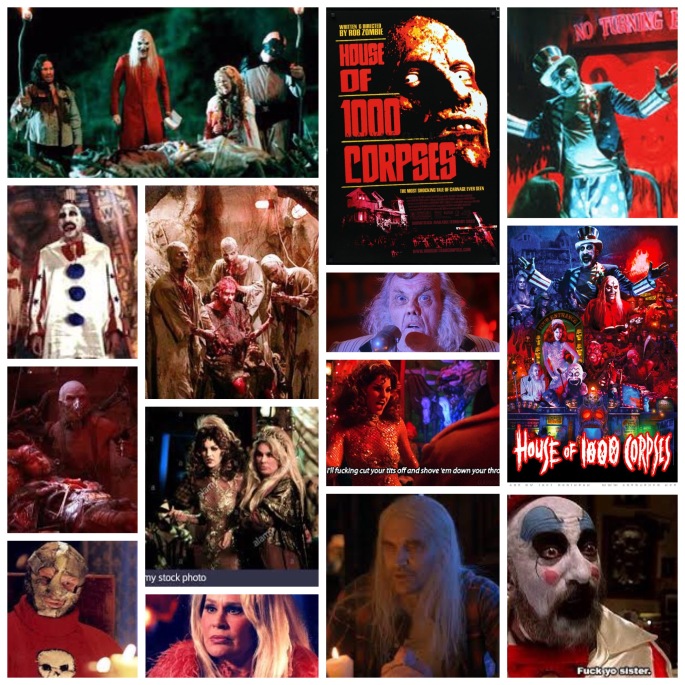
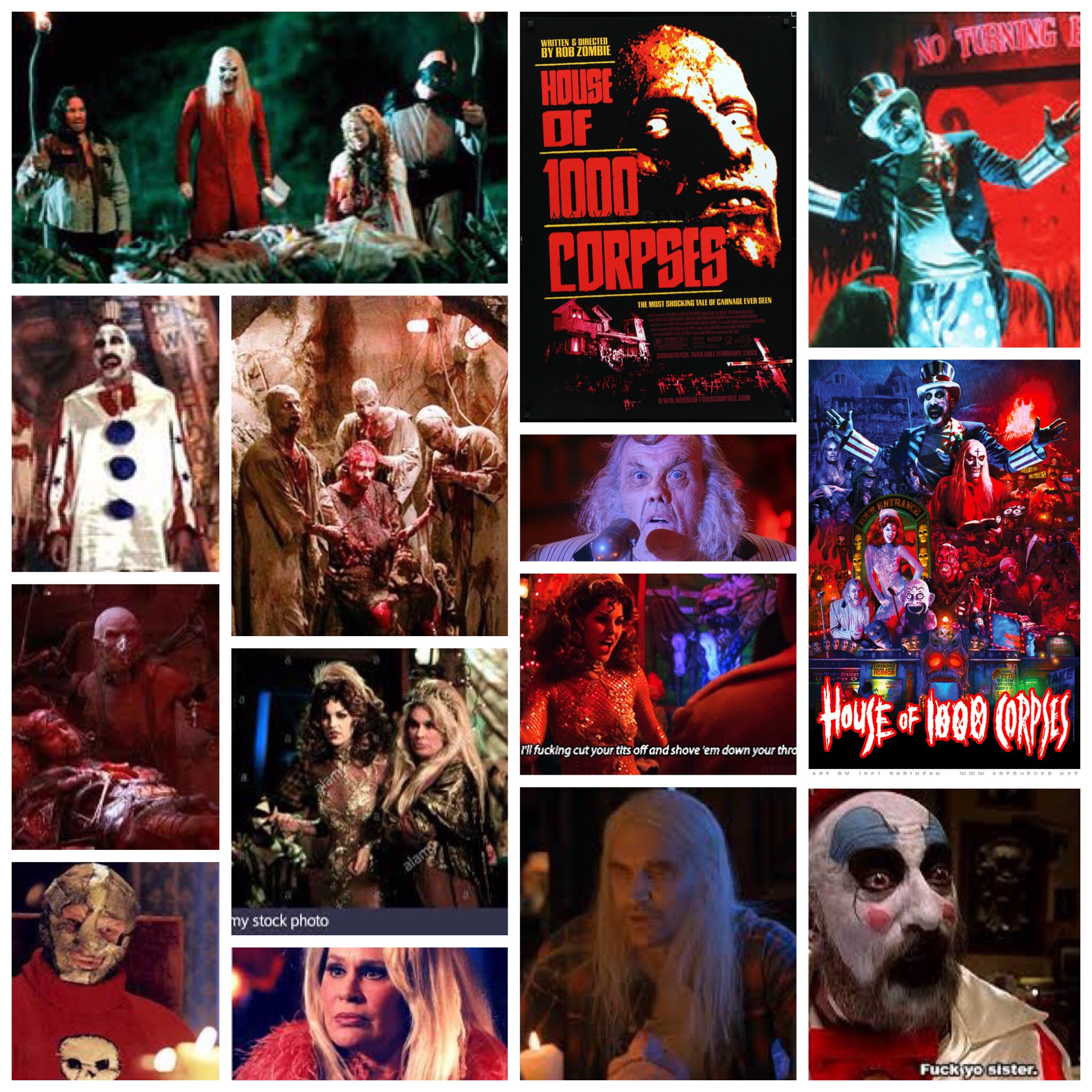
Rob Zombie’s House Of 1000 Corpses is a lot to sit through, and at times is a victim of its own overly zany ambition. Nevertheless, it’s the first stepping stone in the path of one of the most fascinating and talented directorial careers in the industry, and is a completely batshit mental curiosity in its own right. Zombie sprung onto the scene with this one and has since been a controversial, much talked about and frequently hated voice of horror. Let’s get one thing transparently clear: No one can be blamed for not enjoying his films, they’re incredibly niche and not everyone’s thing, but you are simply lying to yourself if you won’t concede what a hugely talented writer, director and all round filmmaker he is. I’ve had to get quite stern in conversations with people whose tunnel vision stubbornness supersedes their ability to logically analyze his work, and I simply won’t put up with it. Alright, scolding done, over to the film. I’ll be the first to admit that House is a splattered mess at times and goes about six light years over the top, but the sheer grungy scope of production design is really something to see. In deepest backwoods Americana, the murderous Firefly clan preys on, terrorizes and murders pretty much anyone who gets in their path. Bill Moseley is a Manson-esque dark angel as Otis Driftwood, renegade bad boy brother, Sheri Moon Zombie is like Harley Quinn on bath salts as Baby, who is definitely the scariest, while gargantuan Matthew McGrory, walking decrepitude grandpa (Dennis Fimple) and giggling slutwhore Mama (Karen Black doing her very best freaky Betty Boop rendition) round out the rest of the brood. They live in some cluttered rural dump right out of Hoarders™, luring unsuspecting travellers off the road and murdering them in really over elaborate, exhaustive looking ways. Oh and we see the birth of one of cinema’s most jovial and sleazy killer clowns, Sid Haig’s motor mouth Captain Spaulding, who bookends the film in uproariously raunchy comic relief. It’s a neon fever nightmare of relentless commotion, visual excess, metal music, retro Americana pop culture bliss and sadistic gore, Zombie going all out to solidify his storytelling aesthetic that would continue, in augmented, evolved ways, over the course of his brilliant career. This is certainly as obnoxious a film as you’ll find in his stable, and while it ranks in the southern end of my Zombie favourites list, there’s just no ignoring the raucous, depraved celebration of all things gross, gooey and grotesque that parades by. Not to mention the whip-smart, trashy and endlessly funny dialogue, writing being skill that the man excels in on another level. 

-Nate Hill

George P. Cosmatos’s Of Unknown Origin 


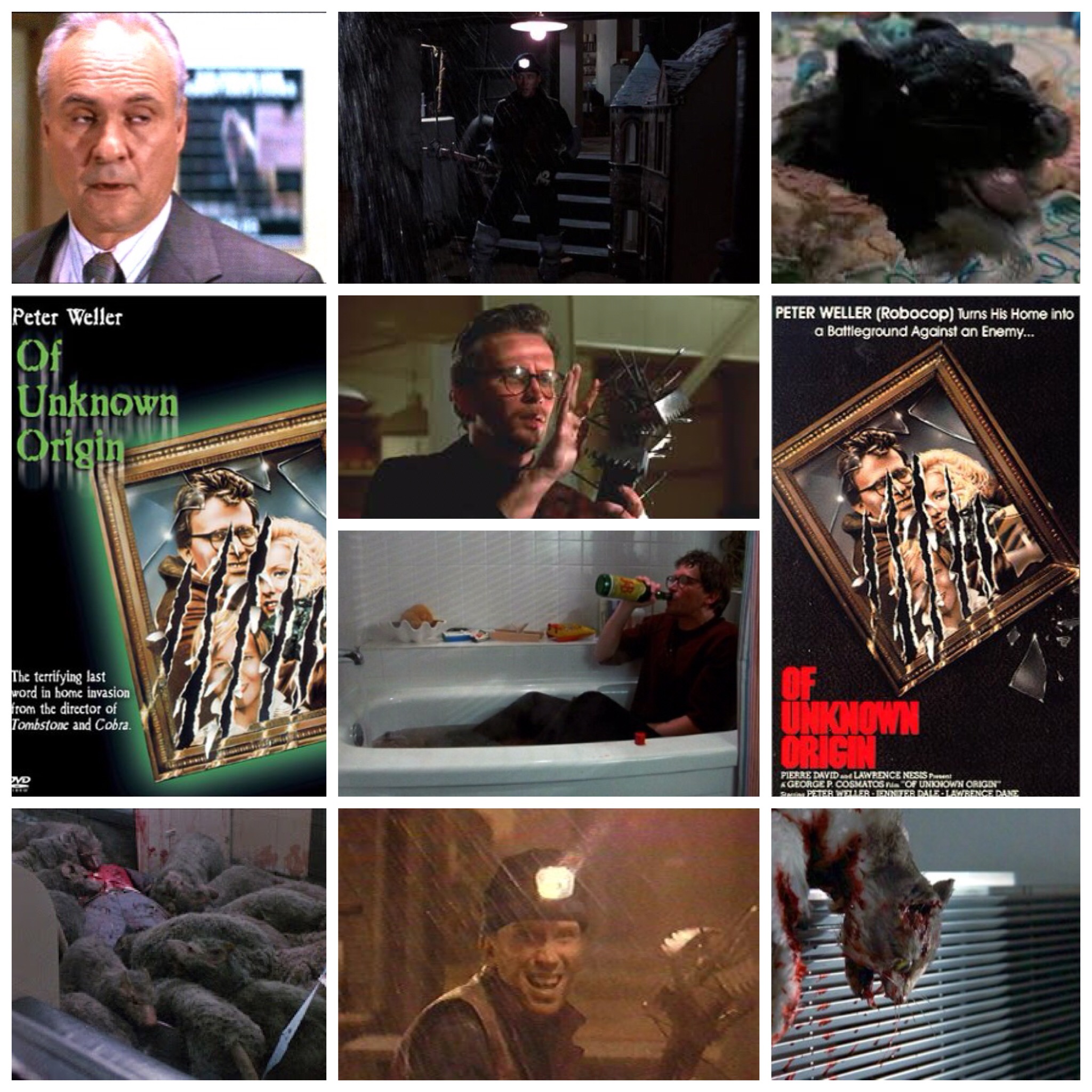
Peter ‘Robocop’ Weller vs. home invading rodents. That’s pretty much the premise behind George P. Cosmatos’s Of Unknown Origin, a warped little TV movie that takes on battling rats as a central plot-line, with a straight face no less. Usually this type of thing would be a campy SyFy original with screensaver special effects and the tonal towel already half thrown in. This one goes for full realism though, or at least tries, and it’s an odd mixture. Weller plays a mild mannered businessman who just gets so irked by those pesky vermin, enough so that he saddles up in all kinds of elaborate gear that would make Christopher Walken in MouseHunt jealous, and trawls the hallways and ducts of his townhome like a looney head, trying to kill the little bastards. There’s a vague satire angle in terms of his job, office politics and whatnot, which is one more thing you wouldn’t really find in this type of flick, if it were garden variety, but this one avidly shirks the standards. The rats are treated not as spooky monsters or a shadowy hidden legion, but the outright heinous plague they are on society. I got a try-hard metaphor vibe out of this one, something like these things representing the decaying monotony of the proverbial ‘rat race’, and one lone suit and tie renegade who aims to blast the gnawing pet peeve out of the water, like Michael Douglas in Falling Down. Or maybe it’s just a flick about one lone crazy dude who just really doesn’t like rats. Either way, it’s a bizarrely constructed little thing that ducks the limbo bar of genre and darts off in it’s own slightly dysfunctional direction. 

-Nate Hill

Mike Flanagan’s Oculus


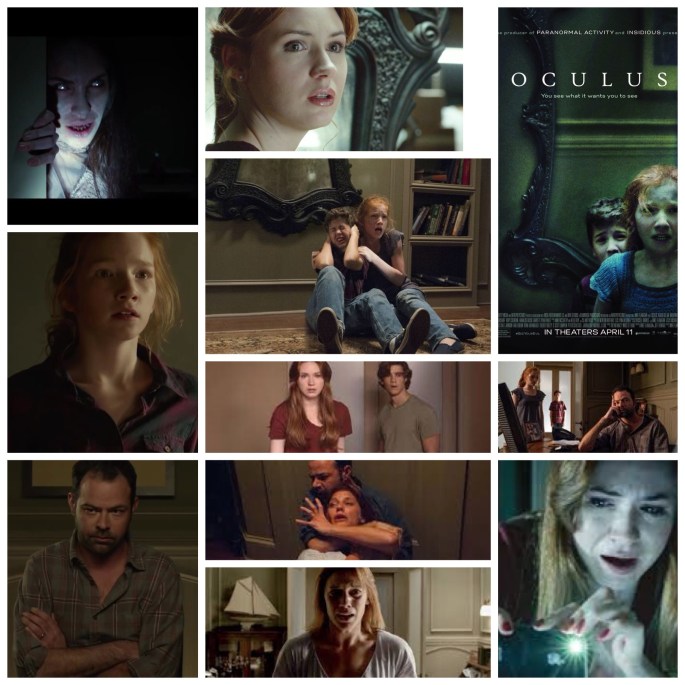
What scares you most in the horror genre? Masked killers in isolated settings? Booby trapped razor wire rooms? Demon possession? Werewolves? Ghosts? Those are all well and good, but nothing messes my shit up more than psychological uncertainty, the feeling that anything you see might not be real, and the layers of your perception are gradually being fucked with in a subtle way. Such are the terrors that Mike Flanagan’s Oculus traffics in, a film that takes postmodern horror expectations and strangles the life out of them in favour of something far more effective. You’ll read surface level summaries claiming this to be about a haunted mirror. It…is. Sort of. And it isn’t. Then it is again, and before you know it you have no idea what’s real and feel like leaving the television and hiding in a back room for fear of an incoming dissociative episode (true story). See, the haunted mirror is just the suggestive tip of a very dense psychological iceberg, a starting point to a narrative that’s disturbing in ways that few big budget horror films understand. When an idyllic American family moves into a perfect new house, life seems peachy. Following the arrival of an ornate antique mirror, things take a darker turn. The loving patriarch (Rory Cochrane, exuding natural charisma) turns fiercely psychotic, preying on his doting wife (Katee Sackoff) and terrorizing his son (Garrett Ryan) and daughter (Annalise Basso, terrific in a performance of true hurt and horror). The mirror seems to indeed be the source, but no clear correlation is ever established by the film, only heavy suggestion gnawed at by the notion that the parents may just be irreparably sick in the head, an idea just as, if not more scary than a sentient looking glass. After brutal tragedy, we flash forward a decade or so, the parents are gone and once again the daughter, now played by a dynamite Karen Gillan, tries to get to the source of what happened by locking herself, her brother (Brenton Thwaites, the only weak leak in an otherwise excellent acting ensemble) and that dang pesky mirror in their old house to destroy it. Bring on a panic inducing haunted house of the unconventional variety, one where something, either the mirror or inherited mental illness, plays endless nasty tricks of the mind on both of them until the viewer feels uncomfortable in their own thoughts, the fabric of internal reality ready to disintegrate into shards. Their plight is carefully interspersed (big kudos to Flanagan, serving as his own editor) with flashbacks to the harrowing ordeal they went through as children, as the loving parental unit collapses into madness before their eyes. Listen for a hair raising, subversive score by The Newton Brothers that just adds to the queasy cauldron of unease that this film is. It’s more brilliant than any widely released horror film has any right to be these days, a huge step in the right direction for the genre and a waking nightmare for anyone whose worst fear is losing their mind. 
-Nate Hill

B Movie Glory: The Insatiable

The Insatiable, like droves of other vampire flicks, attempts to cover new ground and build on established formulas to create something memorable, and despite having the direct to video stigma working against it’s notoriety, works pretty well for the most part. Sean Patrick Flanery plays a timid fellow who, after being targeted by a sexy, devilish bloodsucker (Charlotte Ayana), seeks help anywhere he can, broadcasting his predicament via HAM radio (maybe not the most effective outlet) to anyone who will listen. It just so happens that there is a grizzled old vamp hunter out there played by Michael Biehn, a jaded hardass who’s just waiting for signs of these creatures. Ayana likes to play with her prey, and taunts both of them throughout the film in some amusing cat and mouse games, forcing Flanery to great lengths of survival including building one hell of a cage in his basement to trap the bitch. The material is treated mostly head on with just a smidge of smirking deadpan, especially in the sly ending. Biehn is awesome as the cranky, high strung vamp slayer, really having fun in the role. A fun, if slight little flick. 

-Nate Hill

Dario Argento’s Inferno 


Dario Argento’s Inferno is the most abstract, expressionistic and nearly incomprehensible entry in his Witch trilogy, like oil and blood smeared on canvas haphazardly to create something just this side of the conscious realm. The other two films, Suspiria and Mother Of Tears, each have their place in the story, with this one doing middle chapter duties, but really they all work better as standalone films more than anything cohesive. While the film clings loosely to the idea of two college students investigating separate Witch covens in both Rome and New York, that’s just the baseline for a petrifying, beautifully surreal mood piece full of thumping psychedelic music by Claudio Simonetti and Goblin, and episodic set pieces of bizarre dreamlike horror. Argento is the undeniable king of lighting and atmosphere, and although other areas of the work like story, dialogue and acting suffer, it’s easy to look past that and get swept up in his magnificent visions. Unearthly light and wind ripples over the hair of a gorgeously enchanting witch who holds a cat and and stares down one of the protagonists in a lecture hall. An eerie full moon possesses one man trying to drown a bag of cats, and a butcher knife wielding whacko. A woman descends underwater into a flooded derelict building and discovers a bloated corpse floating there in the film’s most harrowing scene. Argento’s films are less about the rhyme and reason, more about the feeling of it all than anything else, very much like dreams. Inferno is one of his very best, a feverish madhouse of light, colour, operatic violence and hypnotic music. 
-Nate Hill

Peter Hyam’s The Relic 


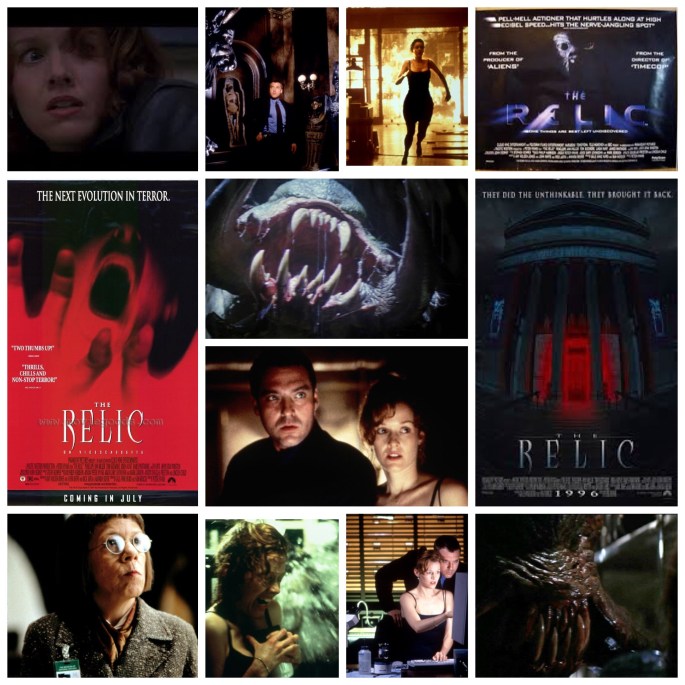
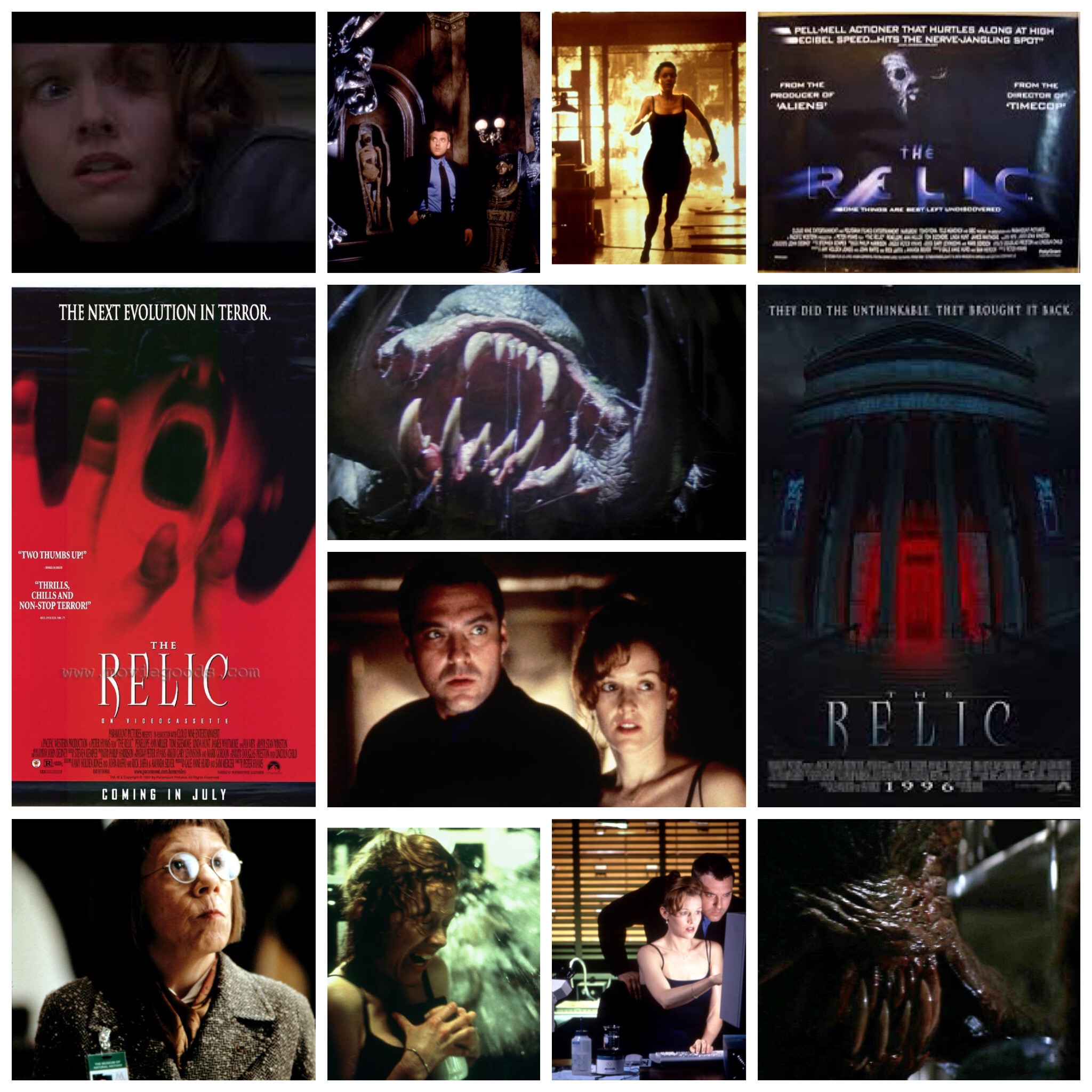
Peter Hyam’s The Relic takes a smaller horror idea that usually services a low budget production and gives it the expensive, near blockbuster treatment. The result is a pretty damn fine creature feature flick that holds up better than it has any right too. When you’ve got a director like Hyams at the wheel though (see End Of Days), who is a meticulous perfectionist and often serves as DoP in addition to directing, you’re going to get class and durability all the way. Relic takes an ages old concept and injects wild screaming life into it; When an ancient artifact is brought from the South American jungle and stored at the Chicago museum of anthropology, trouble is not far off, for as we know in movie land, any ancient relic most definitely has a supernatural curse on it. Before too long a gigantic angry lizard thing from olden times awakens, tears through the building like the stampede from Jumanji and starts eating everyone it sees. It’s up to heroic police detective Vincent D’Agosta (Tom Sizemore in a rare lead role) and professor Margo Green (Penelope Ann Miller, what ever happened to her?) to use their wits and survive long enough to defeat it. Linda Hunt, that sweet little munchkin, also has a nice role as the museum director. The film is just pure fun to watch, a solid popcorn banger that has the look and feel of an old school adventure film, or something by Stephen Sommers, albeit with a healthy helping of slimy gore. The creature is truly immense, and one feels the scope of it’s rampage as Hyam’s camera arcs through the vast hallways and mezzanines of the building, following the action in crisp, tactile strokes. Sort of a forgotten gem, but one that’s always fun to check out.
-Nate Hill