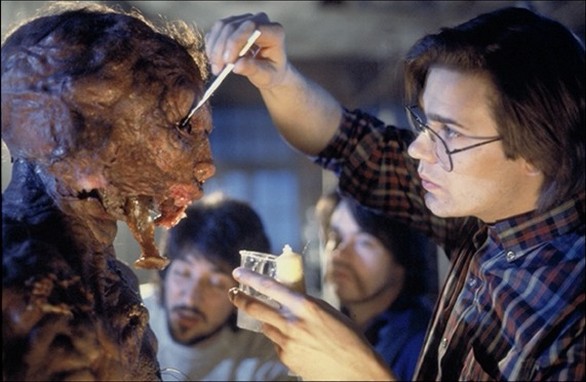
When I think of the work of Chris Walas, a few things pop into my head.
The first is how much I loved Dragonslayer when I saw it at the cinema as a kid. It like The Black Hole was a dark, different Disney movie. This was the era when Disney was trying to be more like a studio and not purely focused on the animation that had garnered it so much love. I remember waiting for the moment when the dragon would finally be revealed and I was not disappointed. I was becoming aware of how movies were made at that time, so the prospect of any giant creature on screen, knowing that it was actually there, that it had to be built was incredible.
The second is Enemy Mine. A movie for the longest time I had only seen the last twenty minutes of. During the heyday of video piracy, it was not uncommon to borrow a tape from friends or family and find the tail ends of stuff that had been taped over. Ironically I can’t remember the film that was taped over it, but those final scenes from Enemy had me intrigued. I think it was one of my cousins who I borrowed the tape from, so I asked him about the clip at the end. “Oh I taped over that ‘cause it was kinda boring. Some dude and an alien have a baby together.” Yes folks, I have some really classy relatives, and that was how he pitched Enemy Mine to me. Still, undaunted, I sought it out and it is a whole lot more than that; indeed another great film from Wolfgang Petersen who had blown my mind prior with The Neverending Story.
Finally I reflect on The Fly 2. One of two films I have literally lost my lunch watching. And, let me be clear, up to that point, I had seen gruesome stuff before so it wasn’t so much the imagery as it was the visceral qualities of the imagery. As the years go by, and because I haven’t seen it in a long time, so it’s sketchy at best, but one thing that I recall was Daphne Zuniga wiping away Eric Stoltz’s slimy coating from this one scene and giving him a kiss. I remember that or something like that, like I said, it’s been a long time between drinks, but that scene and a few others helped my lunch get its own sequel that day.
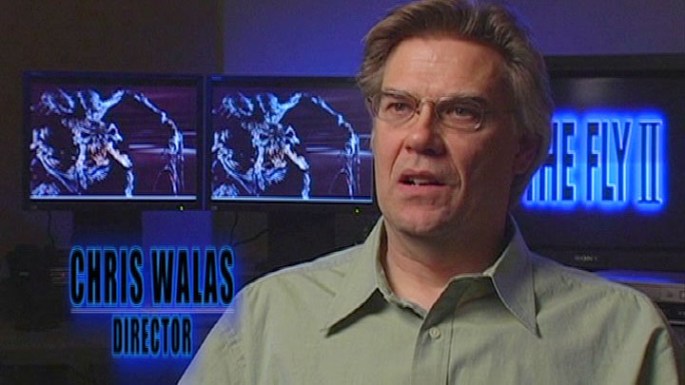
But enough about me, let’s talk about Chris.
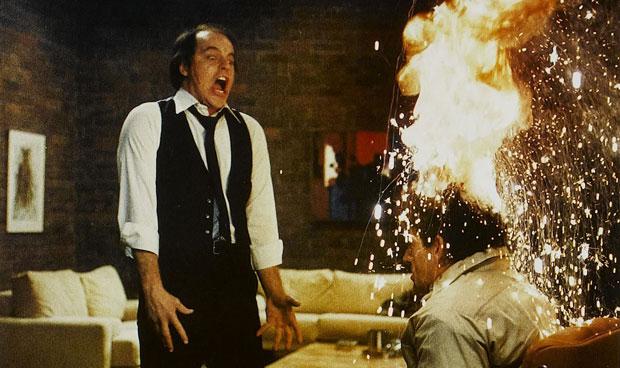
Chris Walas has worked on a handful of truly iconic films. You can see is work in Raiders of the Lost Ark, Return of the Jedi, Gremlins. He is an Academy Award winner – that Oscar being for The Fly and part of a terrific association with David Cronenberg who he would go on to work with on other films like Scanners and Naked Lunch.
He has sat in the director’s chair on (of course) The Fly 2, The Vagrant and “Til Death”, an episode of Tales from the Crypt. He was part of the Roger Corman stable; he worked on Airplane!, Galaxina, Caveman and Virtuosity – he is a very talented man who has had a hand in the truly grand cinematic experiences of my youth and it was an utter delight to interview him, and subsequently, to present said interview to you. Ladies and Gentlemen . . . I give you . . . Chris Walas
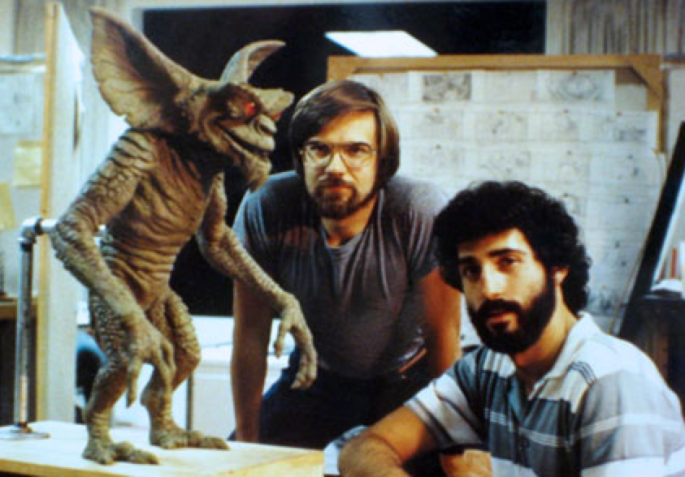
KH: Sir, it is truly an honour to make your acquaintance. You have the distinction of being the first Oscar winner I have interviewed for podcastingthemsoftly.com
CW: That’s hard to believe with all the Oscar winners out there these days, but I’m happy to be here.
KH: Before we get into the meat of things, I was wondering if working in the picture business has be a lifelong pursuit, and if so, what were the films that lit the fire, so to speak?
CW: You know, it’s interesting because so many interviewers ask “What was the film that made you want to do what you do?” I don’t think it’s a simple as that. It’s like asking painter what painting made them want to be a painter. It’s not about a single event; it’s about an artform that creates the magic in the imagination. I was a movie fan as far back as I can remember. I loved all films. I loved what the medium could do. I didn’t understand any of it, but I loved “Citizen Kane” as a little kid. It was riveting to me. I grew up on the old Universal Horror Classics and still love them. The Sci Fi films of the 50’s hold a special place in my heart for sure. But I can definitively say that the single film that made me DECIDE that movies were where I wanted to be was Ray Harryhausen’s , “Jason and the Argonauts”. It was the first film I ever saw in a theatre and I was transfixed by the experience. I knew at that moment (even though I understood nothing about it) that that was what I needed to be a part of in my life.
KH: You have worked on some truly iconic movies, many of which are my personal favourites. But, how did you get into the business after your schooling ended?
CW: I wanted to get into films somehow. At that time I was on the East Coast and the film business was pretty dead just then. So I left for Hollywood with a couple hundred bucks in my wallet and a sublime ignorance of the realities of LA. I was lucky enough to get a job shipping film for Disney, which was magical for a naive kid from New Jersey. Discount tickets to Disneyland, and I could spend all my lunch hours on the back lot talking to the original animators of Snow White or the wire rigger for the Squid tentacles from 20,000 Leagues Under the Sea. They all brought their lunches and sat out in the backlot relaxing or practicing their watercolours. And they loved to talk. It was my introduction to the world of movies. Wonderful. I then took filmmaking classes for a year until my money ran out and I took a job at Don Post Studios, a company that made high quality Halloween masks and occasionally did some film and TV work. I was there a year and started out painting a gross of masks a day on the cheap line to being a member of the lab crew, developing new product and working on the occasional outside project. It was an education I would have paid for. I learned more in that year than in four years of college. But I was antsy and impatient, and one of the other Lab guys (Bob Short) and I left and started a little partnership doing odd projects. We both started to get good reputations, but each doing different things, so we split up and went our separate ways. And it just grew from there.
KH: Tell us, if you will, about working on some of your early credits like Island of the Fishmen (Screamers), Humanoids from the Deep and Piranha?
CW: Piranha was my first on set film experience. Jon Berg, who was in charge of the effects on the film, had been to Don Post to see about them running some of the rubber piranhas. That didn’t work out, but the connection had been made and when the FX shoot needed more people, Bob Short got pulled on board and then through Bob, I got pulled in. That was my entry into the crazy world of Roger Corman films. It was wild and desperate filmmaking in those days; no money, no time. The only good part was that IF you could actually make something to get in front of the camera within the meagre time and budget, you were a hero. It was a process that very quickly filtered out those who could from those who couldn’t. But it was exhilarating and magic at the same time. Isle of the Fishmen was a bit of a mess. The original Italian production had been purchased by some fly by night LA outfit and they wanted to “beef it up” for the American audience. We had almost nothing as far as a budget, but it was with some people that I felt comfortable with. Miller Drake and (unofficially) Joe Dante. It was a small and relatively close group in those days at New World Pictures. We shot out at the beach in the middle of the night in January and nearly froze to death soaking wet in the Fishman costume. Other inserts were shot in Joe’s garage; it was that kind of filmmaking. But Humanoids was a different story. New World had asked me to do it, but I was busy on GALAXINA and a couple of other films at the time, so I suggested Rob Bottin. But the schedule was a tough one on that show and Rob asked me to come in and do a bunch of the sculpting and running on the Humanoid costumes. As well as those absurdly huge arm extensions! It was an extremely intense time for me as there was way too much work and not enough people in town to do it all.
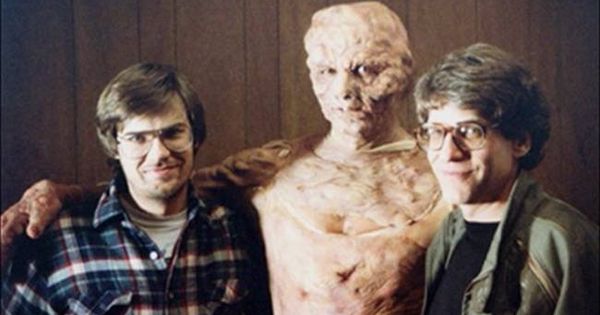
KH: I know you probably get a lot of “Fly” questions and I think that if people really want a good insight into the making of that film they should watch the comprehensive Fear the Flesh. But, you worked on a few movies with Cronenberg (The Fly, Scanners and Naked Lunch). What was making pictures with David like?
CW: This is a great question, if for no other reason than it lets me applaud one of my very favourite directors I’ve had the honour to work with. David Cronenberg is an amazing filmmaker. He’s not just a director. His films truly belong to him. They are his vision. He’s an astonishing writer. When I was first approached for The FLY, I turned it down. I didn’t want to do a remake, etc. Stuart Cornfeld, the producer, said, ” I know, I agree. Just read the script”. I read the script and it was superb. David had redone the original script and made it his own. I couldn’t say no to that script. And David is an astonishing director because he really understands the process that everyone is going through. A lot of directors are absolutists; it has to be a certain way. David understands that production is about compromises and that a good director only makes compromises that don’t hurt the film. He was demanding and understanding at the same time. Very unique qualities in a film director and I feel very fortunate to have worked with him.
KH: I have vivid memories of The Fly 2. I remember watching it on video with some cousins and felt my lunch coming back on me a couple of times during that flick. How was it to finally sit in the director’s chair on Fly 2 and the other films you directed?
CW: Somehow, we hold the director’s chair as some ethereal pinnacle in filmmaking. And in some ways it is. It is the ultimate decisive position, historically. But I had already been directing teams of dozens of artists at my company, coordinating large operations and such, so I don’t think I was as intimidated as a lot of first time directors. I was quite comfortable directing, especially as I had such a wonderful crew of true talents on the FLY II. I never actually wanted to be an effects person. It was just the easiest way for me to get into the business. Besides, it’s ALL filmmaking. All of it. From craft service to timing final prints. Directing is just the most focused, exhausting position. But I loved it.

KH: I interviewed William Sachs recently, director of Galaxina. Can you tell us about your work on that film?
CW: I’ve only lost money on two films. GALAXINA was the first one. At that time there were a lot of productions trying to cash in on the STAR WARS phenomenon. So there were a lot of over-ambitious, under-funded films being made. GALAXINA was right smack in the middle of those. Bill (Sachs) had his hands full on that film. He really did. And for me, it was a really, really tough show as there was a lot of stuff and very little money. We had to make a couple of the alien costumes overnight; the schedule kept changing wildly. I don’t know how Bill dealt with it all, honestly. It was furious alien making, to be sure. We had Angelo Rossito as the little alien creature. Little Angie, as he had been known, was a dwarf who had worked on countless films. The schedule changed dramatically and the three weeks we had scheduled to make his suit turned into 18 hours. But he was a total pro. He showed up with some of his old clothes for us to use as the base for the suit! We built the suit right on him and he never had a word of complaint at all. Total pro. Everything we did for Galaxina was done scraping the bottom of the barrel because there was so much work.
KH: I have a great fondness for both Dragonslayer and Enemy Mine, they speak to my youth. Tell us about working on those pictures; especially Enemy Mine, it’s one of my all-time favourites?
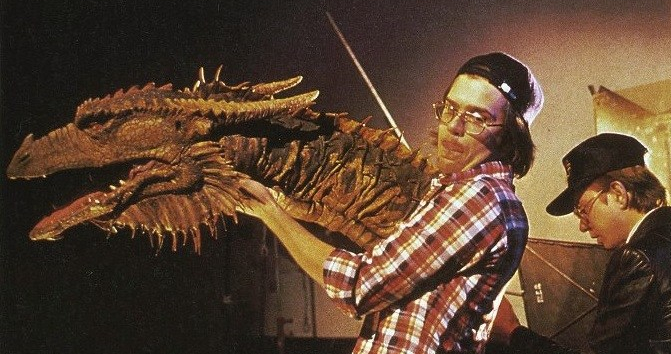
CW: Phil Tippet brought me up to ILM to work on the team for Dragonslayer. And that was a wonderful experience working with some of the absolute top talent in the field. Every day was an education for me. I was strictly on the in-house FX team and didn’t go over to England for the shoot. I made most of the molds for the dragons and baby dragons as well as running most of the rubber pieces. I rigged the puppets for the baby dragons and built a few odds and ends pieces for individual shots; smaller scale grabbing legs, a bit of wing, etc. The biggest thing I was involved with was the close up Vermithrax puppet. It wasn’t part of the original plan, but they just couldn’t get the footage they wanted out of the full size head and neck that Disney had done, so I designed and built, and operated an animatronic puppet head. That was exhausting because the puppet had to be dripping water all the time, so the puppet became supersaturated and just kept getting heavier and heavier. But I think it worked in the end and helped the picture.
Enemy Mine was basically problem after problem. I started out working with the first director, Richard Loncraine, who I really liked and admired. We shot for six weeks on lava fields in Iceland before 20th Century Fox closed the picture down and hired Wolfgang Peterson to direct. We were supposed to be closed down for two weeks for the restart, but it was a full six months before we got going again. I think, for us, the production got bogged down in a lot of committee decision making, which slowed everything down. But in the end I was happy with the designs. We had an opportunity to do quite a lot of different effects for the film between the Dracs and all the odd creatures. The newborn Zammis puppet was one of my favourite rigs on that show.
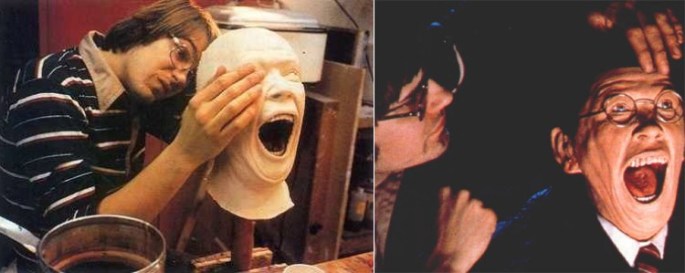
KH: You worked with Joe Dante on Gremlins which was produced by Steve Spielberg whom you worked with on Raiders which was produced by George who brought us Return of the Jedi which you are also credited as having worked on. In retrospect, what was it like working on these milestones of cinema?
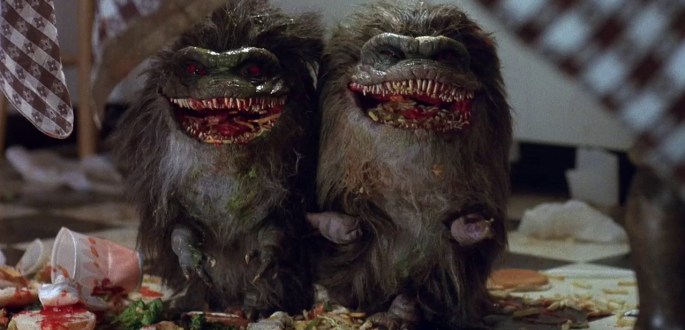
CW: Every once in a while you get lucky. Gremlins was a true milestone for me in both my life and my career. It was the first time I was in charge of running such a big crew on a studio picture. It was truly an insane experience for me as the picture just kept changing and growing, with new gags being developed for the Gremlins almost daily. I don’t think I’ve ever been worn out so completely on any other film. But at the same time it was great fun, like a bunch of grown up kids playing. We had no idea we were working on a film that would be so successful and impacting.
Working on Raiders of the Lost Ark was great. Challenging. But it was at ILM, which was then the absolute pinnacle of FX houses in the entire world. I really wasn’t used to being able to say, “I sure could use one of these…” and then having someone order it right up or just get it from another department. So I had options available to me that I hadn’t really had up to that time. Richard Edlund was in charge of the FX on the show and he was great about making sure that I had what I needed for the melting head and the other shots. I didn’t get to see the film until just before it opened and I was blown away. It’s such an amazing film. I feel so lucky to have been a small part of it.
For Jedi, I really only did design maquettes for some of the alien races in the film. I set up the creature shop for ILM, but then I left to pursue other projects. It was very nice to be included in the credits on that one!
KH: You have a number of diverse entries among your credits like Deep Star Six, Arachnophobia, Hot Shots and Virtuosity. Were these genres you sought after or were the film’s concepts interesting or was it simply the want to be constantly working that brought you to these projects?
CW: After Gremlins, I had set up a genuine facility with a great crew who knew what they were doing and so I had to take what projects I could to keep the shop going. But some of the projects were favours; Deep Star Six was for Jim Isaac, who was striking out on his own after being on my crew for a number of years. House II was for Ethan Wiley, who had also been a member of my crew on Gremlins and others. Some films were projects I really wanted to do; ANYTHING David Cronenberg was doing. Anything for Amblin, Spielberg’s company. But in between those projects it was a matter of trying to choose what projects seemed like they might be good films as well as keeping the shop going as long as possible.
KH: You’ve been a writer, director and producer having a film you co-wrote come out in 2016. Did you ever want to make more of your own pictures and do you, like so many people in the industry, have dream projects that might have come close but never saw the flickering light of the silver screen?
CW: I would have loved to have done more directing. But it just wasn’t in the cards. I have a number of projects I would love to see resurrected someday. One of my favourites is a project called “Dathulgon”, which is a steampunk combination of characters and plot lines from Jules Verne and other early steampunk writers mixed with the cosmic horror of H.P. Lovecraft. That project was humming along nicely when the big market crash ruined a lot of financing for films. I have a whole list of projects I would still like to see happen!
KH: Well sir, as a long-time fan this has been a very large pleasure, and though we were not able to conduct this interview via recording I care not, for as I said I am honoured to have met you and am humbled that you have taken this time to be interviewed for podcastingthemsoftly?
CW: It’s been a pleasure. It’s fun to reminisce and I really appreciate knowing that there are people out there who look back fondly and remember the work kindly. Thanks!

So there you have it. Chris Walas folks. Applause is totally necessary for this talented man and his amazing career.
I’ll just take a moment to let you know some other interviews I have coming up. I’ll be bring you chats with Mike Marvin (director of The Wraith), Chris Olen Ray (Two & Three-Headed Shark Attack), The Outlaw film critic VERN, Scott Rosenberg (creator of Cowboys and Aliens). Prior to the release of SHARKNADO 5 (because that’s the kind of nerd I am) I’ll be presenting a double feature that week prior to August 6th of my interviews with Steve Alten (we discuss the long cinematic gestation of Meg) and the man himself Anthony C. Ferrante (director of the SHARKNADO series). So as ever, thank you for checking out podcastingthemsoftly.com, and watch this space…
Cheers
Kent




 We are very excited to announce and introduce artist and actor STEPHEN LACK to join our actor’s spotlight series. All of our listeners will instantly recognize Stephen as Cameron Vale in David Cronenberg’s 1981 classic SCANNERS. He then re-teamed with Cronenberg in the role as Andres Wollek in DEAD RINGERS. He was also featured in Larry Cohen’s PERFECT STRANGERS, Michael Grant’s HEAD ON, and Allan Moyle’s RUBBER GUN which Stephen also co-wrote. Please check out Stephen’s website
 Podcasting Them Softly is extremely excited to present a discussion with special guest
  Podcasting Them Softly