Ghost Stories

It’s always hard to find a horror flick these days that’s actually genuinely scary, not to mention fun as well. You have your endless found footage stuff, a consistent parade of ghost/exorcism fare, various creature features, and in the columns of hit or miss, unfortunately the latter weighs heavier. But once in a while there’s that terrifying ruckus of a haunted house flick that comes along and knows how to assault you on all sides with the creep factor, the laugh cannon and be a smart, well told and unexpected tale too. Ghost Stories is just that, a gleeful throwback to the BBC anthology horror of the 80’s that pulls the rug right out from you and frightens in a big way.

Set up in three distinct segments plus a kicker of a final fourth act, it follows a paranormal debunker (Andy Nyman) as he revisits three decades old spooky cases that have never been solved and haunt the afflicted to this day. The first and scariest sees a night watchman (Paul Whitehouse) on shift at an abandoned asylum who’s plagued by a restless spirit. In the second, a young boy (Alex Lawther) is harassed by a devilish creature as he drives through a forest in a stolen car. Lastly, father to be Martin Freeman is terrorized by a poltergeist in his home. These stories work great on their own but they really serve as a tapestry of clues to what’s really going on, and later down the line there’s some chilling revelations that are far more disturbing than any ghost going bump in the night. This is like the best, strongest points of Twilight Zone, Tales From The Crypt and Goosebumps done right with just a flourish of Black Mirror on the side. Freeman gives the best work, becoming cheerfully psychotic later and injecting delirious amounts of extremely dark humour into every mirthful grimace and off the wall mannerism. This is what horror should be.

-Nate Hill
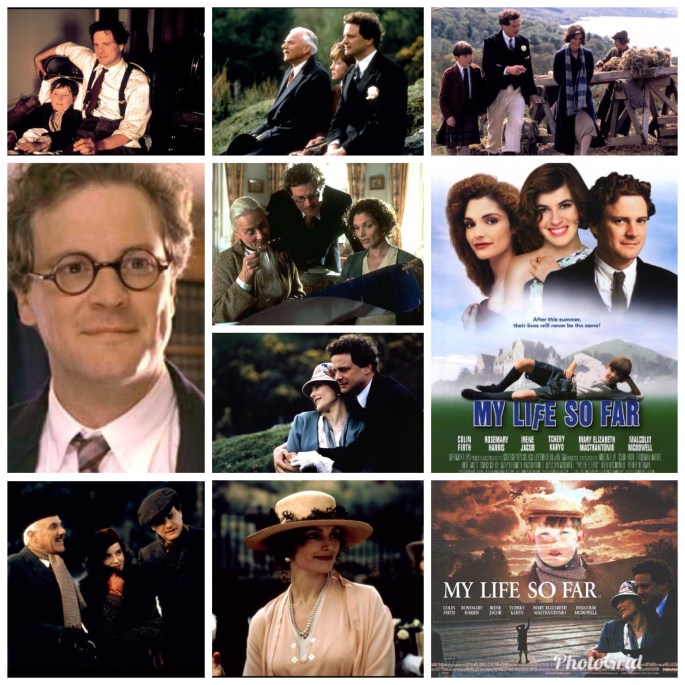
Hugh Hudson’s My Life So Far

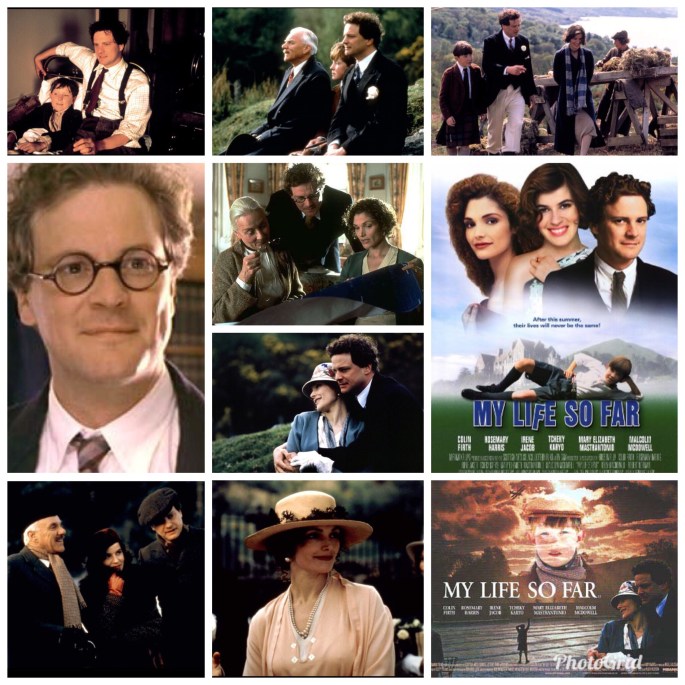
I love Colin Firth very much as an actor, I think there’s a wealth of intensity and charisma behind that befuddled, cute British persona, and I love how in recent years he’s branched off and started trying out all sorts of roles and genres he hasn’t done yet, he’s really underrated in terms of versatility. I also love delving back into the last few decades with actors and perhaps finding hidden gems I never thought of or didn’t notice before. (Every time someone calls me out on being lost in my phone or texting some girl it’s usually because I’m just intently perusing an actor’s IMDb for titles I’ve missed). Hugh Hudson’s My Life So Far is one such gem, a lovely, charming piece based on the memoir of Dennis Forman, a man who grew up in a great manor in the Scottish highlands, surrounded by friends, family and nestled in that calm period between World War One and two, where life seemed idyllic. Young Fraser (Robert Norman) lives an eclectic life out there that’s the perfect setting for a poignant memoir. His loving father (Firth) strives to be a strong disciplinarian but has a tender heart and a playful disposition, his mother (Mary Elizabeth Mastrantonio, gorgeous as ever) is the same. The conflict arises with the arrival of a beautiful distant relative (Kelly MacDonald) who gets everyone a little hot and bothered and awakens the first hints of sexual desire in Fraser. The grandparents hover in and out of their lives too, played by Rosemary Harris and a gruff, hilarious and compassionate Malcolm McDowell. Life gets topsy turvy in all sorts of ways, especially when an aviator from royal descent (Tchecky Karyo) crash lands his plane directly on their property and immediately tries to woo MacDonald. It’s one of those slice of life comedy dramas that doesn’t strive to say something lofty about the big picture of humanity or plumb for subtext beneath, but simply exists to enjoy as the recalling of one person’s life, or rather a piece of it. A lovely one.

-Nate Hill

Garth Davis’s Lion

True stories like the one Garth Davis’s Lion is based on always make affecting films, but with this one they’ve done something really special. Using narrative pacing to make the passage of years feel tangibly real, being as minimal with emotional swells to let the actors tell the story in long, careful takes and evoking meticulous mood of time and place for both India in the early 80’s and present day Australia, both vividly captured. The story this is based on is something of a miracle: One day a young boy called Saroo from a poor farming village in rural India gets separated from his brother while buying supplies, ends up on the wrong train and is carried half across the giant country to a region he doesn’t know. Lost, scared and alone, he sets out as best he can to get by, but it’s a big scary overpopulated country and fairly soon he slips through the cracks into the social services system and ends up orphaned. The beauty of the film is in its structure and pacing; for almost half of the film we see this playing out as he’s a young boy, one long hypnotic passage of time that puts you in a trance until you feel like you’re right there beside him through all of it. Flash forward twenty years or so, he has grown up into a young man played by Dev Patel, and has been adopted into a new home half across the world in Australia by a kindly couple (Nicole Kidman and David Wenham). Given a fresh start and a new life, he has become a successful, smart young scholar with big dreams and a bright future. Except he never, ever forgot his tiny village somewhere out there in India, and the mother, brother and sister he left behind. “I’m not from “, I’m lost” he hauntingly tells his girlfriend (Rooney Mara, excellent) who does her best to help him. So begins a complicated, frustrating and determined search to find the tiny village he once lived in, and his family. Using google earth and a host of other resources he’s able to trace his roots and the dangerous journey he took as a child, memories of which have come flooding back to him as he grows older. It’s an extraordinary story, beautifully acted and told with grace and spirit, anchored by Patel’s earnest portrayal of real life protagonist Saroo Brierley.

-Nate Hill

Disney’s Incredibles 2

Incredible really is the word for Brad Bird’s Incredibles 2, a thoughtful, intelligent, hilarious and visually stupendous sequel to Disney Pixar’s first superhero adventure. It was always a curiosity how this was going to do; so many sequels that arrive a decade after their beloved predecessor can feel vague or disjointed by the gulf of time. This one jumps right back into the hot seat like it never left, feeling both new and organic as a continuing story and reminiscent of the first outing’s magic. Literally dropping us right back near the ending we remember where a little mole dude called the Underminer creates new trouble for our heroes, a gigantic bank robbery sequence sets the stage for the film to come as well as the ongoing and and now more complex issues that superheroes face in the eyes of the public and in the favour of the government. The real joy of the film comes from the family dynamic though, particularly between Bob ‘Mr. Incredible’ Parr and the kids. When an influential tycoon (a peppy Bob Odenkirk) and his techie sister (silk voiced Catherine Keener) develop a new promotional program to put supers in the positive spotlight, they recruit Susan ‘Elastagirl’ Parr (Holly Hunter) as their front runner. This pus Bob in the stay at home Dad seat, and in those sequences the film really finds a fresh voice, showcasing some hilarious and poignant sequences. The visual fireworks come full blast as Elastagirl battles a mysterious enemy called the Screenslaver and runs about the city with all kinds of gadgets including a souped up new motorbike. Samuel L. Jackson’s Frozone is back too, and there’s a whole new gallery of interesting supers all brought into the fold by Odenkirk’s character. Edna Mode returns too, still hysterically voiced by director Bird himself. The magic of these films is that they’re not just flashy gloss or simply Disney fireworks, there’s actually themes to work through and things to ponder on their journey. I admire the addressing of media manipulation and collusion in how the supers are represented in the news, something that’s commonplace in the states today, as well as the raw angst of being a parent and trying to protect your young while simultaneously saving the world and rocketing around between very dangerous situations. This one is a winner, a little more dense and story heavy than the first was, but still knows how to have a great time in the action department, from chases aboard both a runaway subway train and a massive luxury ocean liner in the fast paced third act. Still feels as classy, cool and entertaining as the first, with a retro futurist vibe, striking tactile animation and a script packed with wit and innovation.

-Nate Hill

Robert Rodriguez’s Machete

Danny Trejo has been acting for so many years that he’s now a totem of the collective action crime genre, and it was only a matter of time before he got a lead role. Thanks to pulp wizard Robert Rodriguez, that lead role came along in the form of Machete, a fake trailer preceding Rodriguez’s contribution to his Grindhouse mashup with pal Quentin Tarantino that was so popular it was only a matter of time before the feature length outing arrived. Well it arrived, and despite being a bit over saturated and too homogenized for its genre inspiration (where was the nudity??), it’s actually a barrel of fun. Rodriguez seems to have attracted Hollywood stars like a magnet since day one, and this one is positively peppered with high profile talent in the kind of roles you’d think they’d never be caught dead in. Trejo is all scowls and moody machismo as Machete, an ex Federalè turned brutal mercenary who seeks vengeance against the ruthless cartel boss responsible for the murder of his family, played of all people by Steven Seagal in the funniest work he’s ever done. There’s also a rigged election subplot stateside in which corrupt, evil senator Robert Deniro schemes all kinds of nasty shit. His lieutenant is played by Jeff Fahey, who was the villain in the fake trailer and expands his sinister presence here. He’s a natural born scene stealer and his businessman/hitman Booth is an especially violent creation, but I suppose if I had Lindsay Lohan for a daughter (she makes a cameo, parodying her own hard partying image) I’d be a tad grumpy too. There’s also Jessica Alba’s Sartana, a sexy female agent who plays both sides and lets the romantic sparks simmer between her and Trejo, until the film pussies out before we get a deserved sex scene. Michelle Rodriguez is a lot of fun as Luz, a revolutionary badass who disguises her operation in a taco truck. The cast is unreal and includes Shea Wigham as Fahey’s exasperated lead assassin, Tom Savini as the world’s most elaborate contract killer, Don Johnson as a racist scumbag southern fried Sheriff and Cheech Marin as Machete’s brother, a catholic priest who isn’t afraid to use a couple holy shotguns to do do the lord’s dirty work. Robert Rodriguez really jumped onboard the grindhouse train after his joint venture with Tarantino, while QT abandoned ship. This flicks is a lot of fun and allows esteemed actors to play in the sandbox with reckless abandon, and most importantly, Danny Trejo to bask in the spotlight after toiling so hard in the supporting ranks for decades. My only complaint is that it’s a bit too tame in the sex department to count as grindhouse fare (all these hot actresses and not a single nipple flourish or bush brandish), but I suppose when Big Hollywood green-lights a gritty fake trailer, you have to somewhat tow the line, even if you are one of Hollywood’s greatest genre magicians. The sight of Trejo ripping out a dude’s intestines and using them to repel down the face of a building is definitely in the spirit of the sort of films that inspired this though. Great stuff.

-Nate Hill

Debra Granik’s Leave No Trace

Debra Granik‘s Leave No Trace is the most important film about post traumatic stress disorder I’ve ever seen, and a potent, timely and very frank father daughter story that will leave you reeling in the final frames. Not that it’s cloying or melodramatic either. On the contrary, Granik, who made waves with Winter’s Bone some years back, chooses to tell her story in a spare, hushed, realistic manner that at first seems to keep you at a bit of a distance, but before you realize it you’re drawn right in. This immersive story sees Ben Foster as a haunted veteran suffering from PTSD who has chosen to raise his daughter (Thomasin Mackenzie) in the wilderness of Oregon, just outside Portland, living off of the land and keeping mostly to themselves. This is a haven until social services gets wind of their situation and makes every effort to relocate and integrate them back into society, something which Foster’s character just can’t seem to do anymore. Moving from county to county, always on the run from something he can’t even put into words, holding onto his daughter because she’s the only one he has left, this is the life of someone who has been broken and forgotten by most, and it’s tough to see. I read that in pre-production Foster and Granik workshopped the script to remove almost forty percent of the dialogue, to let the silences in between words do the talking. A wise move. Him and Mackenzie are so good you believe them as family for real, seemingly tuned into each other on an elemental level, these are the two best performances I’ve seen from anyone so far this year. They meet many folks on their journey along the Pacific Northwest belt of Oregon and Washington (cue lush,

gorgeous cinematography captured by Michael McDonough), and the one running theme that comes across is compassion. Everyone they meet, from the Oregon social services bureau to an RV park full of quiet, peaceful folk, everyone shows them kindness and tries to understand their plight as best as they can. I’d like to believe that human beings are inherently good, and clearly Granik shares this hope here, with an intimate realism in every character interaction and the direction to anchor every actor, from the two leads right down to the bit players, in something believable and very much human the way we’re used to outside the cinema. PTSD is not in the forefront here either, not used as an emotional device or explored in an analytical manner, it’s subtly hinted at and the most we ever see is the mannerisms playing at the corners of Foster’s eyes, and his blunt inability to exist in a societal way anymore, which eventually drives a heartbreaking wedge between him and his daughter, laid bare in an ending scene that affects to the core and is the gold standard of what acting could, and should be. Other fine work can be found all over in the people they meet along their way, including a kindly farmer (Jeff Kober) who runs a homestay program, a sympathetic ex army medic () and the owner of a Washington RV Park (the great Dale Dickey, who also stole scenes in Winter’s Bone). This film starts out slow, comes on strong and the end will leave you tearful, ponderous about the situation of so many in their country afflicted by this condition, hopeful that family bonds can provide a modicum of healing, and altogether fulfilled in terms of story and atmosphere. One of the year’s best so far.

-Nate Hill

B Movie Glory: Arena

Arena is a rip snorting, bloody balls out sleaze-fest of a flick, admittedly a straight up terrible piece, but too off the wall and fucking out of its head to not deserve a look. It’s one of those high concept, low ethics extreme action things that you’d see Stallone or Schwarzenegger headlining in the 80’s (perhaps Ray Liotta or Chris Lambert on a lower budget) except here we get the ever wooden Kellan Lutz, a dude with adequate physical presence but the acting skills of a nail gun, which coincidentally is legit a thing used in a fight scene here. Lutz plays an ex-military tough guy who is kidnaped by raving lunatic computer tycoon Samuel L. Jackson into an elite, extremely illegal underground fighting syndicate, where players literally brawl to the death using anything they can get their hands on. If one guy wins ten fights (I think it’s ten), they win their freedom, or so Jackson eerily assures them with that evil, unnerving smirk. I admire the film for going all out with the fight sequences, this is truly a gruesome, fucked up piece of ultraviolet postmodern grindhouse garbage with the kind of carnage that would make Hobo With A Shotgun raise its whiskey glass and give the slow clap, especially in a montage sequence that showcases different themed fights in Virtual Reality space, the construction site one garnering the most cringes with maximum bodily harm. Jackson is truly in his final form here, he’s so far into the stratosphere of scenery chewing that you feel like running and hiding in another room to take a break from his bellowing intensity, all that’s missing is a literal moustache to twirl. Lutz forms a bond with a vixen (Katia Winter) who’s placed in his way by Sam to do just that, but her allegiance remains a mystery til later on, as does the involvement of a mysterious dude (James Remar) from his past. He also clashes with Jackson’s prized gladiator, played with sneering, rock voiced evil by Johnny Messner, who needs better roles. This flick screams by at a bulldozer’s pace and leaves you feeling like you got hit by one, it’s a thorough piece of shit if I’m being honest, but it sure kills ninety restless minutes if you’re looking for something silly to raise hell, never mind pulses.

-Nate Hill

B Movie Glory: Guardian

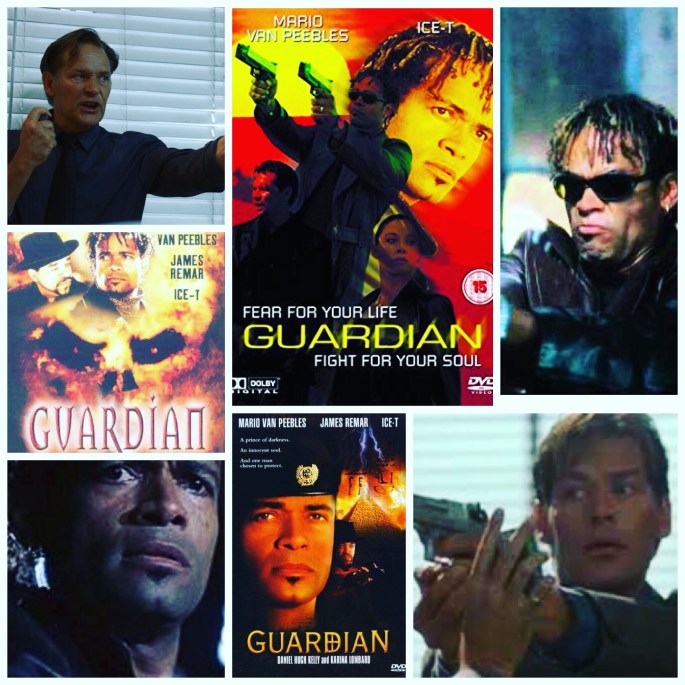
Guardian falls squarely into the ‘ancient relic B flick’, a well worn path in which some obscure archaeological dig unearths a crazy evil that plagues everyone and causes a monumental ruckus, or in this one’s case, a laid back low budget ruckus. The incident here happened during the Gulf war, in which special forces badass Mario Van Peebles witnessed something escape a tomb, something that’s now reared it’s head years later in inner city LA, and he’s now a detective who has to deal with it, assisted by his partner (James Remar). The beauty of making your antagonist a shapeless, invisible identity that takes over human hosts and jumps from person to person is that special effects aren’t even required and you can stay within budget restrictions (I imagine that was on Gregory Hoblit’s mind for Fallen, and he was able to save a few bucks for the wicked cast he scored) which in this film’s case is a concern that was probably paramount, this is about as scantly funded as they get. It’s scrappy, atmospheric and works well enough for something like this. Remar is underused for the first half as the classic wise-ass sidekick, until the demon jumps into him and we get to see some of that classic Remar menace take the controls from Peebles’s moody cop, he’s a guy I never saw the point in having as your leading man, the necessary amount of charisma just isn’t there. This actually makes a great Remar/Peebles double feature with another obscure horror called Blowback, in which cop Mario is hunting down crazed serial killer James. I’ll get to that one eventually. Oh yeah, Ice T has a small role as a gangbanger here too, almost forgot about him.

-Nate Hill

B Movie Glory: Intermedio

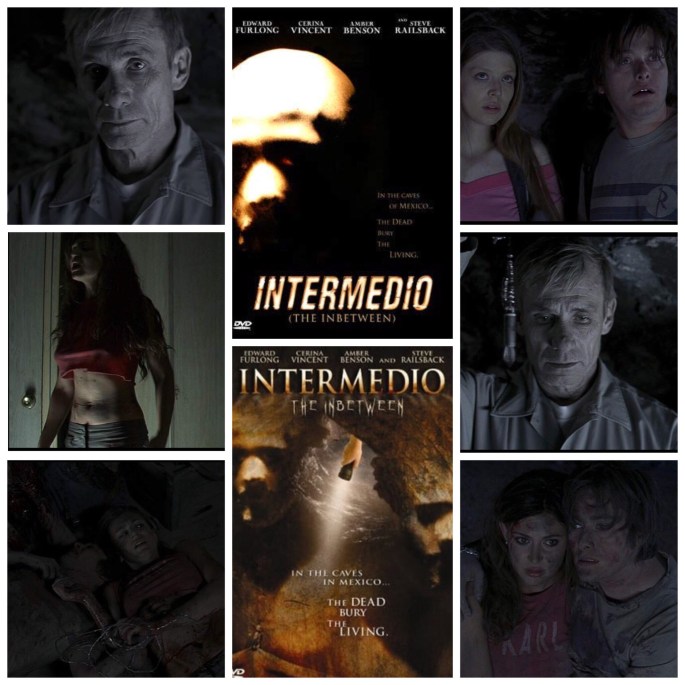
Everyone has their career peak, and unfortunately for Edward Furlong it was right out of the gate with James Cameron’s Terminator 2. After that it was a long slow slump of B movies leading up until the present, one of which is the dingy cave set horror flick Intermedio, which is mostly trash save for a few artistic flourishes in ghost design, and a spooky villain performance from genre icon Steve Railsback. Furlong leads a hopeless troupe of American tourists who attempt to smuggle drugs back to the states through a complex underground catacomb, and fall prey to many tortured souls who have become vengeful phantasms down there. It’s dark, noisy, dimly lit and cluttered, with Railsback providing class and creep factor, but beyond that it’s not much. The obligatory scream queens are played by Cerina Vincent and Amber Benson, who have enough presence to get by alright. I did enjoy some of the ghostly special effects though, trippy apparitions that almost look like cave paintings come to life. This is nothing more than an extended X Files style gig, with a few notes that land, but mostly gets swept away in the dust. That title is neat though hey, representing an ancient word for the space between the world of the living and that of the dead. If only the film could have been that effectively mystic.

-Nate Hill

B Movie Glory: Soulkeeper

Soulkeeper is a diamond in the rough, in the sense that it has all the trappings of a forgettable trashy B grade flick, and ends up being something way more fun and adventurous than it has any right to be. Dressed up like your average schlocky horror fling, it also carries a cheeky Indiana Jones vibe with it’s two treasure seeking bro-tagonists and all the right character actors showing up in all the right places. The two renegade brothers are after an ancient relic from the age of Simon Magus (he shows up briefly too) and all that hocus pocus, an artifact that is valuable beyond anything but also has the power to bring evil souls and demon spirits back from the underworld, which naturally causes all kinds of gory chaos for everyone later. It’s super duper fun, with evil curses bringing forth all kinds of gooey special effects, in the tradition of everyone from Joe Dante to Sam Raimi. Then there’s the eclectic genre cast: Brad Dourif does a hysterical Vincent Price pastiche as an eccentric archeologist, Robert Davi charms as the ghost of some Italian nobleman who guides our heroes here and there, Michael Ironside literally phones in a cameo a lá Charlie’s Angels as the mysterious employee of their mission, and watch for Tiny Lister as well as the late great Karen Black too. This won’t go down in history as one of the greats, but you can certainly do a lot worse in terms of this genre and budget range, it’s pure horror/fantasy/adventure escapism. Oh and if you can score a DVD somewhere it comes with a wicked cool retro cover slip with an awesome hologram 3D poster where one of the many gruesome monsters leers out at you. Cool stuff.

-Nate Hill