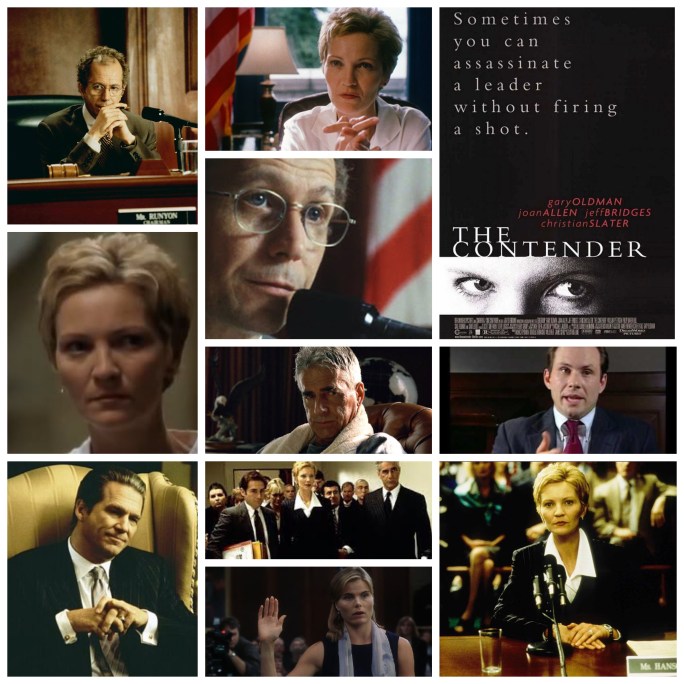
I like examining films about political corruption from decades ago that, if anything, were somewhat ahead of their time and are more potent these days in the age of the internet and social media. Rod Lurie’s The Contender is no exception, and looks at abuse of power by those with a lot of it to wield, and the frequently used and very bratty tactic of bringing up events from people’s past to run smear campaigns on the eve of elections, a dirty trick used heavily by both sides of any power struggle. Joan Allen is fantastic as a US Senator who is a strong candidate for Vice President until a fiery, amoral asshole of a rival played by Gary Oldman digs up dirt from her college days and threatens to derail the whole thing. This is a political drama and as such the script (courtesy of Lurie himself) has a whole truck of bells, whistles and supporting characters to give the film flourish, but at heart it’s a fascinating moral dilemma revolving around Allen and Oldman. The attack on her is vicious, below the belt slander and although not unfounded, it’s unwarranted by someone who is supposed to represent and uphold integrity with their position. The plot thickens when she discovers secrets of her own regarding his character and past, and struggles in herself whether to use this information to bring him down like he did to her, or rise above it and use other less sensationalist strategies to beat him. Her quandary culminates in a decision that many, including myself, would find fairly frustrating given the gauntlet of degradation she’s forced to walk through as a result of Oldman’s actions. That decision may not be what we want to happen emotionally as an audience based on what we’ve seen and felt, but it’s easy to remove ourselves and see why she does this, and view the example she has set for peers by making the hardest of calls. It’s mature, difficult storytelling and I’d forgotten what a thoughtful, prescient film this is. Many people from both sides of America’s divided masses and political parties could learn a thing or two from this story. Allen never overplays the role and uses that quiet observance she’s so good with to bring us closer to her character. Oldman is decked out in a strange curly wig and looks nothing like the sneering shark he becomes when he opens his mouth, it’s an interesting visual character choice. Jeff Bridges plays the President (I’d vote for him IRL) and the cast is stocked with excellent talent including Sam Elliott, Christian Slater, Saul Rubinek, Philip Baker Hall, Mariel Hemingway, Kathryn Morris and William L. Petersen. Great film, and gets more important as each year passes.
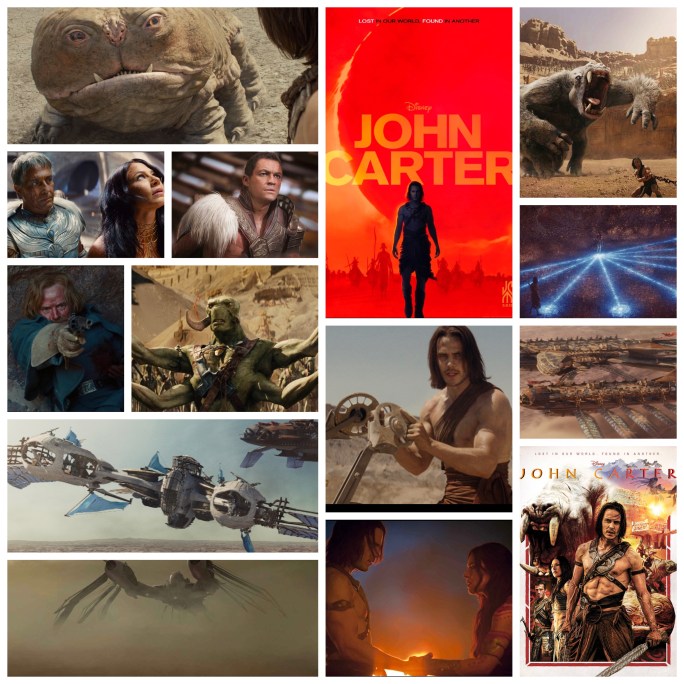
If Disney had kept the much more alluring title ‘John Carter Of Mars’ instead of hacking off the last bit and just keeping the dude’s name, I feel like Andrew Stanton’s John Carter would have had a better chance in marketing and taken flight, because it’s not even near as bad a film as people would have you believe. In fact, it’s a gorgeous, beautifully told, elaborate retro science fiction dream and a flat out great film. I suppose it’s kind of like Waterworld, where a film tanks so badly that people start to confuse bad numbers with bad quality and a whole negative stigma is whipped up around it. Speaking of Waterworld, another great film, John Carter bears similarities in production design and visual atmosphere, albeit set on Mars for most of the duration. Based on a series of books by Edgar Rice Burroughs believed to be some of the earliest works of literary SciFi, Taylor Kitsch plays John Carter, an ex Civil War badass who finds himself whisked away to Mars through a dimensional cave portal out in the desert, propelled on an adventure with warring clans, giant alien yeti beasts, a princess (Lynn Collins), humanoid extraterrestrials led by a green Willem Dafoe, an adorable little dog/toad/road-runner animal and more. This is one of those old school epics that doesn’t just hire a few leads and a gaggle of supporting players but turns a whole casting agency upside down, shakes it and signs any actors that fall out, and as a result we get a jaw dropping lineup that includes Samantha Morton, Polly Walker, Thomas Haden Church, Ciaran Hinds, Jon Favreau, James Purefoy, Daryl Sabara, Mark Strong, Don Stark, Bryan Cranston as a crusty cavalry general and Dominic West in full Shakespeare mode as an evil Martian prince. Oh, Ross from Friends is apparently in there somewhere too but I’ve never been able to spot him, keep your eyes peeled though. The plot at base level is a fish out of water story as John adjusts to the planet (seeing him mess around with the gravitational field is so much fun), bonds with Dafoe and his tribe of Tharks, takes on giant furry Pokémon things in an intergalactic gladiator arena and casts his gaze starward, wondering if he’ll ever see his blue planet again. A few convoluted subplots get in the way including Mark Strong’s weird metaphysical warlock priest dude, but for the most part this a propulsive, rollicking, operatic space adventure with special effects that won’t quit and a real sense of wonder. Why this flopped so bad is anyone’s guess and it’s a shame because when this happens people tend to focus more on the event of its release and that perceived failure more than the film itself, and the legacy gets clouded. Forget the losses a studio with billions in couch change ‘suffered,’ forget any bad press or skewed marketing and just enjoy the film on its own, because it’s one for the ages.
The Assassination Of Richard Nixon is loosely based on a true story and does indeed have an attempt on the former president’s life woven into its narrative, but in no way is it a sensationalistic thriller and the main focus lies on Sean Penn’s journey as Samuel Bicke, the ultimate disgruntled American citizen. Sam is a hard working average joe who finds himself dealt a near constant shitty hand in life, and blames it on the one personification of the country’s entire problems: the president. He works under a two faced tyrant of a boss (Jack Thompson), is served divorce papers by his wife (Naomi Watts) who wants nothing to do with him anymore, and all attempts to get his own business underway with a partner (Don Cheadle) seems to fail when presented with the tumultuous economic and political climate of the times. The thing is, much of what makes you successful or not successful in any given time period is attitude and frame of mind. Not solely of course, some eras are just tougher to grind through and come out on top of then others, but internal perspective and outlook always play a big part, and Sam’s is one of self predicted defeat and jaded forlornness almost from the get go. He is a man who wants to do good and wishes prosperity for himself and others, but feels helpless against the obstacles in his way, begins to mentally deteriorate and lashes out. One scene in particular between him and his well spoken businessman brother Julius (Michael Wincott in a stern, savage, brutally honest and scene stealing cameo) lays it all out: Julius berates and shames him for breaking the law and stealing goods from his business for plans of his own, no matter how honourable or constructive his intentions were. Samuel responds not with an apology, but with a long winded, bitter rant about how everything and everyone in the country has it in for him, how hard it is as the little man to make your daily bread or come out a winner. His mental climate is fascinating as it ultimately leads to a reckless, dangerous act, but we can trace every moment along the way where his stability falters and see why he is the way he is. The actual attempt itself involves hijacking a plane and bombing tricky Dick himself in the White House, but once we see him try and go through with it it’s just sad, anticlimactic and almost irrelevant. The real power lies in what led him there, how he felt betrayed by his own country and how, in the end, he blamed one man who probably didn’t even have that much power over everything to begin with. Penn is raw and ragged in a performance that almost hurts to watch, in a story that isn’t cinematic, cathartic or pleasant in any way. But it is important, and makes for a great film.
The Forgotten is a well wrought twilight zone type thriller that does indeed seem to be forgotten these days, or at least not held in high regard when I go back and look at reviews upon release. Julianne Moore stars as a mother who is suddenly told one day that her young son never existed, and all traces of him seem to have vanished. Then her husband (Anthony Edwards) seems to forget they were ever married. She searches desperately for any clues that would help prove that the life she had was once real, and she’s lead to the father of her son’s former friend (Dominic West), who can’t remember his daughter and seems to never have had one. It’s a terrifying premise when you consider both the helplessness she feels in the situation and implications of some supreme higher power that is playing sick games with people’s lives for… whatever reason. This is apparent when a mysterious man (Linus Roache) begins following her and her psychiatrist (Gary Sinise) seems to subtly know more than he lets on. Moore and West are terrific as two desperate parents whose love for their children proves a force to be reckoned with against whatever is out there manipulating their realities. Whatever it is, the film wisely remains very vague about exactly what’s going on and who is behind the curtain, relegating any explanation to a few very well placed jump scares that will rattle your shit up and some half whispered dialogue that’s cut short by aforementioned scares in order to keep the mystery intact. There’s a chilly, subdued vibe to both the performances and atmosphere, always as if someone or something out there is watching the whole thing. Nothing benchmark or crazy in terms of thrillers but a solid entry into the supernatural mystery box. Recommended.
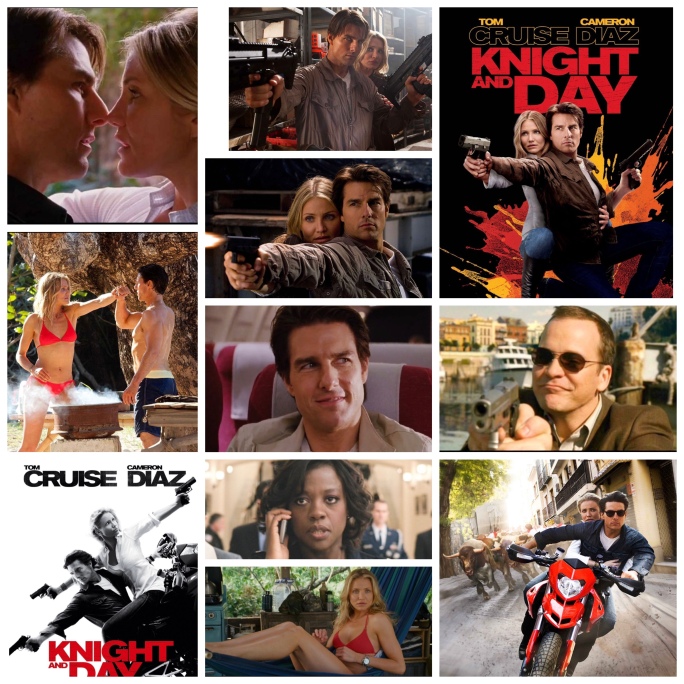
Both Tom Cruise and Cameron Diaz can carry a film nicely on their own, but both of them front and centre in the same project makes for a great time, even if it is a piece of inconsequential fluff like James Mangold’s Knight & Day, a riff on the romantic action spy comedy that sees the two of them shooting their way across the globe before inevitably ending up in each other’s arms. This film looks, feels and sounds like a million others out there, it’s brightly lit, generically shot and doesn’t have much in the way of its own brand of style or atmosphere. What sets it apart are Tom and Cameron, who breathe life into the two roles and provide their own lighting with those famous smiles. He’s Roy Miller, a slightly aloof super spy on the run from both his former bosses (Viola Davis and Peter Sarsgaard, both meaning business) and a nasty Latin arms dealer (Jordi Molla). She’s June Havens, a bubbly rare auto restorer who bumps into him in the airport and gets swept up in a frenzied world of intrigue, murder, car chases, dodgy feds, international escapism and all the Miller Lite PG-13 gunplay the MPAA can shake a stick at. There’s a freeway pileup in Boston, a rowdy hand to hand beatdown aboard a plane that Cruise is forced to land in a cornfield, a motorbike chase in Madrid, and (my favourite) a close quarters knife fight on a train through the Austrian Alps. It’s all fun and games without much of a brain in its head, but the idea is to have a good time anyways. Cruise plays it slightly loopy here, as if decades of stressful spy work has left him… not quite all there. Best line of the film? “Nobody move or I’ll kill myself and then her!” He barks to a diner full of people as he drags her off to another action sequence. Diaz is game for it and keeps up with him, especially once she starts to get a feel for the fast and loose lifestyle. The film doesn’t make too much of an impression and I wish it had more of an organic vibe all its own to match what the two stars bring to the table, because as is the overall visual aesthetic is a bit bland, and over-lit. Cruise and Diaz make it worthwhile though, and are clearly having a blast. It just occurred to me, but where did that title even come from?
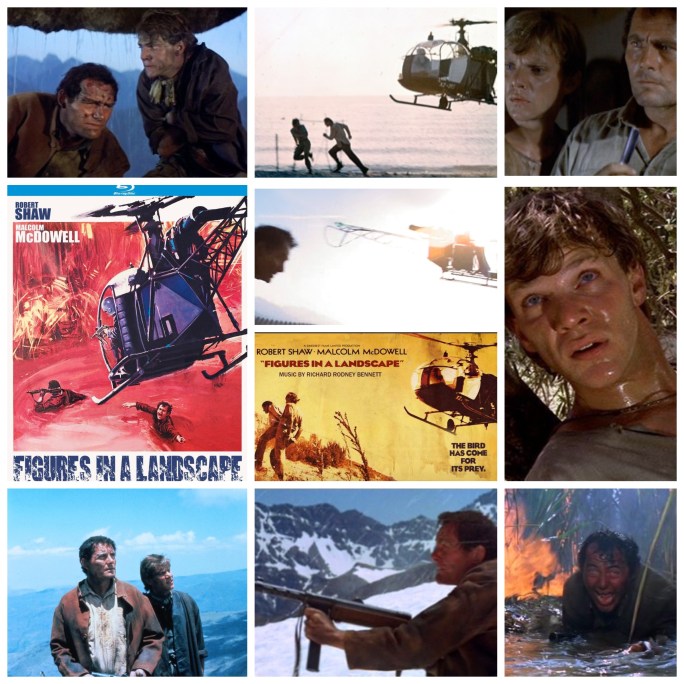
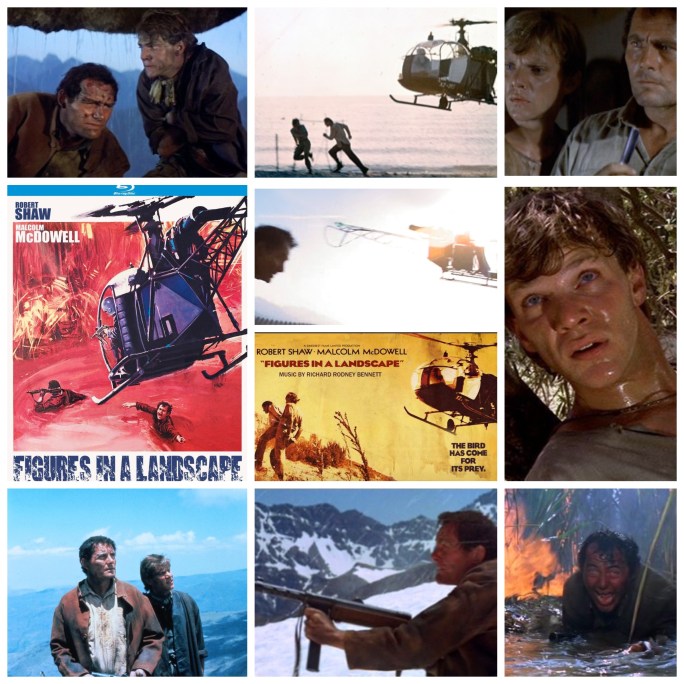
A menacing black helicopter relentlessly pursued two mysterious escapees through the harsh landscape of an unnamed foreign land. Such is the slightly surreal setup for Joseph Losey’s Figures In A Landscape, a strange, forgotten allegorical adventure film starring Robert Shaw and Malcolm McDowell. Less is more storytelling takes charge with a screenplay by Shaw himself, as very little is told to us about who these men are, what the setting and political climate is or why that big black bird won’t stop gunning for them, at one point staging a maneuver so hair raising the propellers almost take someone’s head clean off. The unspecified region here is actually Spain, and the photography is flat out gorgeous, stunning wide shots and sweeping vistas seemingly shot from the chopper itself, sprawling vineyards, dry acrid valleys and snowy mountain peaks are all captured in a film that would work as a travelogue ad for Spain if the story wasn’t so grim. Shaw is the salty, old fashioned badass who can’t keep his mouth shut and gets his hands dirty when needed, McDowell the sensitive youngster in over his head and struggling with both the chase and the elements. As the film progresses their dynamics shift though, which is fascinating to see through their two excellent performances. The climax set high atop a mountain somewhere is bloody poetic bliss and serves as both a fitting end to a well mounted thriller and an ambiguous enough wrap up for a story that’s just ‘out there’ enough to defy genre expectations. This one really has been lost to the sands of time, but luckily Kino Lorber recently remastered it for Blu Ray and it’s really something to see if you’re a fan of Shaw, McDowell, oddball films that slipped through the cracks or high adventure. Definitely recommended.
Michael Bay’s Bad Boys is his Bad Boys II before college or like a drug problem, still a raging good time and a great action film but not quite the certifiably deranged mega production that he whipped out of his pants with that sequel. Nevertheless, it’s the warm up round, the pre-drink session and I love it to bits as well. I’ve read reviews comparing it to or accusing it of directly aping Beverly Hills Cop, and while it’s easy to see the thematic connection, I disagree and feel like it’s a separate aesthetic entirely. 90’s Miami, the simultaneous fast talking tornados that are Will Smith and Martin Lawrence, large scale action mayhem, constant improvised bickering, Joe Pantoliano perpetually on the verge of several strokes, it’s a vibe all its own and although this one is considerably more dialled back than II, it’s no less of a blast. Smith’s hotshot rich boy Mike LOWRY and Lawrence’s persnickety family man Marcus Burnett are live wire vice cops investigating a violent, elaborate drug smuggling ring lead by Tchecky Karyo’s Fouchet, a psychopath written as one note but the Turkish badass breathes life into him anyways. Tea Leoni is Julie, material witness to one of his murders and therefore tagging along with Marcus and Mike throughout the films chases, shootouts, verbal confrontations and what have you. Bottom line: In these roles, Smith and Lawrence are either your thing or they’re not, no middle ground. They’re loud, crass, politically incorrect goofballs who can’t sit still to save their lives and I love spending every minute with them. Also an acquired taste (and quite a cause of controversy in film discussions across the land) is Bay’s slick, noisy aesthetic, which may sometimes land with a hollow thud, but there is just no denying in one’s rational mind that the guy can’t stage absolute motherfuckers in the way of action set pieces, his films have a diamond crisp quality to the visuals, and his explosions are always shock and awe glory. The final car chase here across a giant airport tarmac is something else, feels real and dangerous, the eventual crash n’ burn a terrific payoff. The supporting ranks here are populated by the likes of Theresa Randle, Marc Macauley, Michael Imperioli, Marg Helgenberger, Kevin Corrigan, Anna Levine, Nestor Serrano, Julio Oscar Mechoso, Karen Alexander, Shaun Toub and briefly Kim Coates, hilariously credited as ‘White Carjacker.’ If you like your action movies funny, and your comedies full of action, this is the ticket. But you also have to be tuned in to Smith and Lawrence’s particular brand of lunacy, which understandably isn’t for everyone. Bring on the third film as soon as possible.
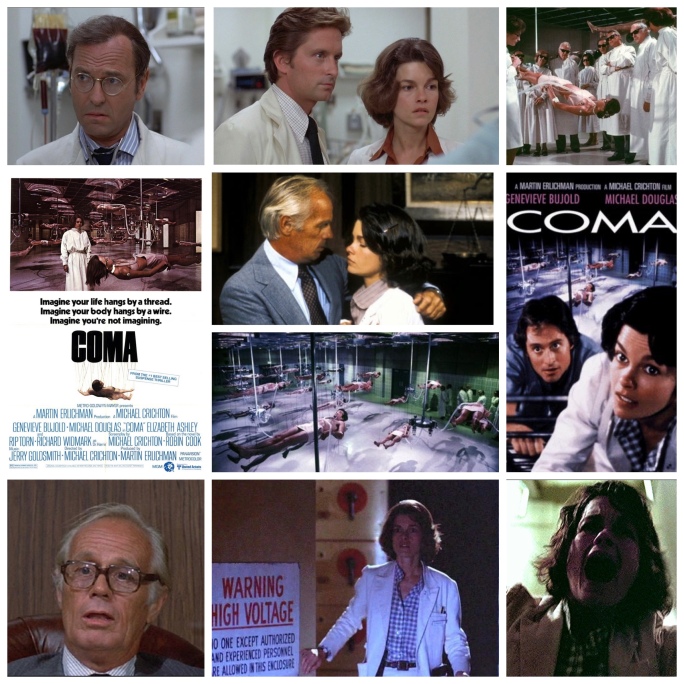
There’s nothing freakier than hospitals in Hollywood, or at least in the horror/thriller genre. Those long, deathly silent hallways that lead nowhere in particular, the cold, venereal steel tables, sheet white walls and lab coats and a general air of unrest. It doesn’t help the discomfort levels when there’s a diabolical conspiracy afoot and one can’t trust the doctors, those very harbingers of healing that are supposed to be ultimately trustworthy. Michael Crichton’s Coma takes full advantage of a nightmarish premise like this, perhaps too much in its final act, but the first two thirds are a clammy bad dream of worst case scenarios and extreme medical malpractice. Genevieve Bujold plays a junior doctor at Boston Memorial who slowly begins to notice a pattern of surgeries leading to suspicious comas, and the subsequent disappearance of the resulting vegetables. Her boyfriend and fellow doctor (Michael Douglas) brushes off her concerns as stress induced paranoia, the head of anesthesia (Rip Torn, so stoically intense he looks like one of those trolls in the hobbit that got turned to stone) casts threatening glances her way when she goes nosing around, and the hospital’s executive physician (Richard Widmark) seems amused when she brings the matter to him. These days it’s just a tad obvious that with those reactions that pretty much everyone except for her is in on the whole deal, but this was back in the late 70’s when certain narratives were still fresh. Besides, the fun isn’t in eventually getting to the bottom of things but in the chases, near misses and cat and mouse stuff along the way, and in terms of suspense this has some doozy moments. Bujold scours the bowels and ducts of the hospital and another nefarious rural institute like a spy in a complex labyrinth of boiler rooms, air intakes and empty rooms, while a heinous assassin chases her down and gets totally fucked up by this resilient gal. Douglas is billed alongside her but is only around in a glorified supporting turn, while Bujold, who is a gorgeous and incredibly dynamic leading lady, gets to do all the stunts, hurdles, combat scenes and handle the big revelations in panicked closeups. An interesting choice is to have no music at all for the first half of the film, and then when the first clue in the breadcrumb trail is discovered, the score kicks in. It’s a solid thriller that gets a bit overcooked when Widmark goes all Satan near the end and starts monologuing, but until then the pace is restrained, the mood vague and chilly. Watch for a shockingly young Ed Harris in his very first film role, and Magnum PI as an unfortunate victim of the evil plot. Good stuff.
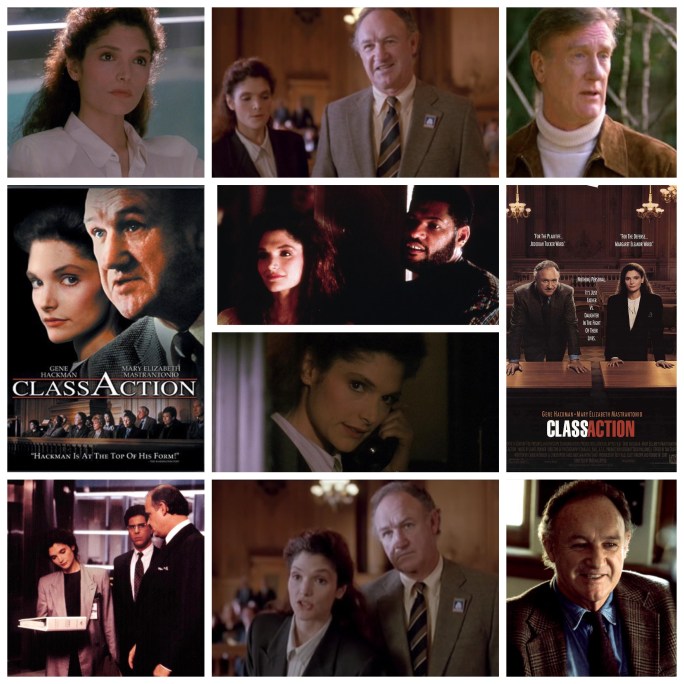
A father/daughter courtroom drama starring Gene Hackman sounds like a recipe for something glossy, showboating and melodramatic, but Michael Apted’s Class Action gives us a mature, emotionally potent and very character driven film that one wouldn’t expect from the slightly sensationalistic trailers. Hackman is a San Francisco attorney who takes on the prosecution of an auto manufacturing giant with a line of suspicious exploding cars. Opposite him as defence for the corporation? His own daughter (Mary Elizabeth Mastrantonio), with whom he has a rocky history with. He’s a philandering hard ass who was never pleased with her and she blames him for the dissent in her family from his womanizing ways years before. The case itself serves as framework for for the very real, raw interpersonal drama that unfolds between them, and their relationship feels grounded and truthful. The key scene is them together in the kitchen cooking; idle small talk leads to harshly flung accusations, emotions are laid bare and by the time the argument reaches a screaming fever pitch, both are quaking with rage, self reflection and sad regret. It’s a powerful scene of performance from both actors, and you’ll scarce breathe for the duration. Hackman is fire and brimstone as per usual, but there’s also a wounded aspect I’ve never seen in him before, something brought out by Mastrantonio who is spectacular in her calmly devastating turn. The late Donald Moffat is great as her steely firm boss, a man governed by fierce logic who has no qualms in casually covering up key evidence. Fred Dalton Thompson is nicely slimy as the reprehensible auto CEO whose soulless disregard for human life is unsettling, Jan Rubes steals his scenes as a loopy ex engineer with ties to the auto giant and Laurence Fishburne (during his ‘Larry’ days) quietly plays Hackman’s firm partner and family friend. I wouldn’t have probably ever known about this film if I hadn’t have come across it in a thrift store, and I’m glad I did. Forgotten these days it seems, it’s now one of my favourite courtroom pieces out there, for letting the characters tell this story, for making it personal and for flowing through the beats organically. The stately San Francisco architecture and melodic score by James Horner give it a personality as well, but Hackman and Mastrantonio rule the roost and probably give their career bests. Highly recommended.
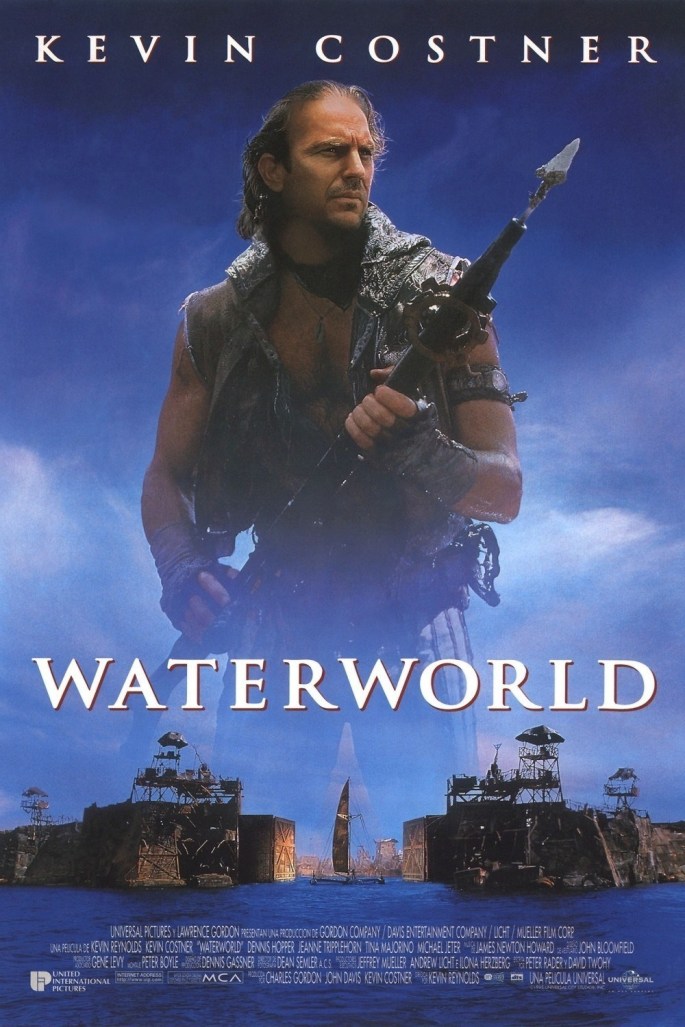
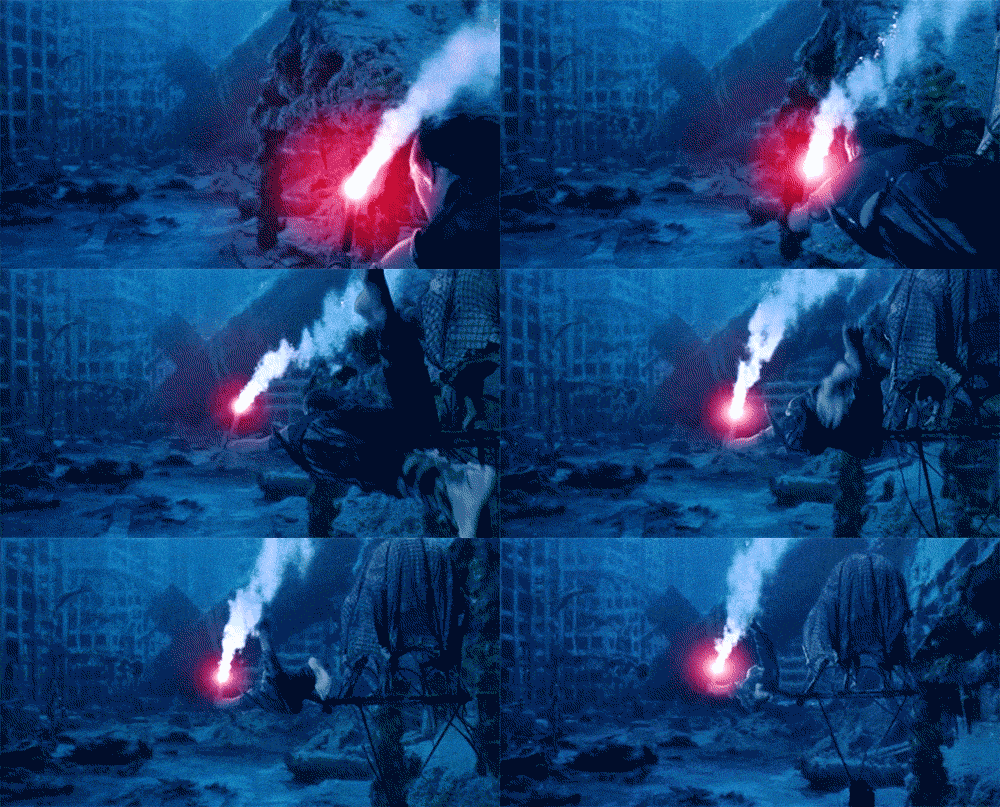
The future. The polar ice caps have melted covering the earth with water. The Universal logo spins as we watch the world change as the camera descends, through the atmosphere, and eventually we find the ‘new world’ where those who have survived have adapted. We are now in Waterworld.
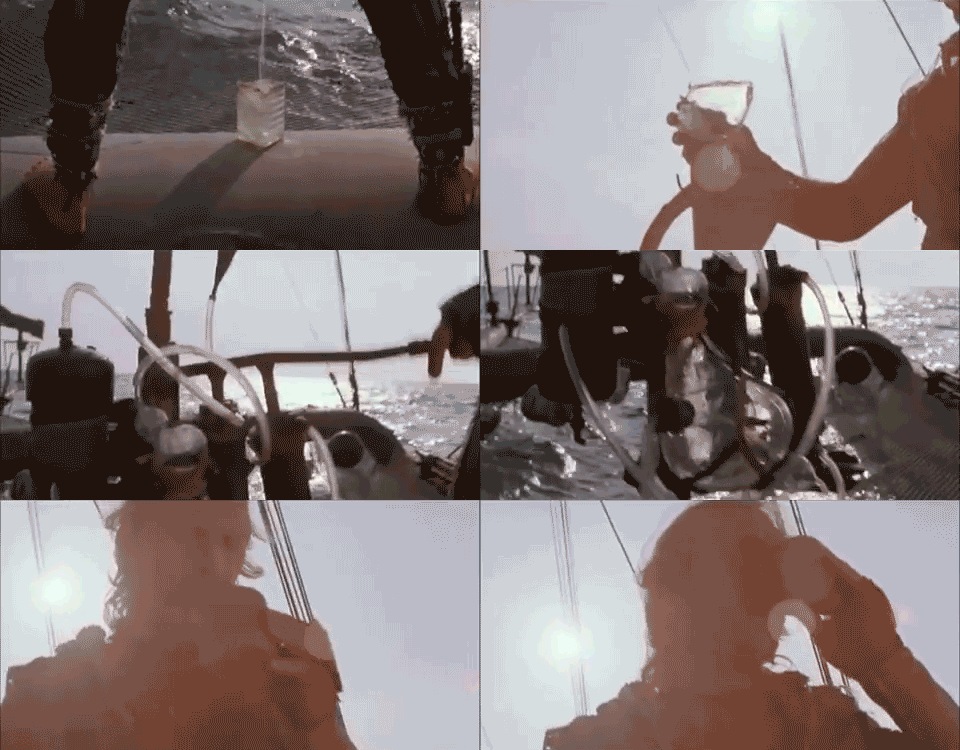
Then Costner takes a whiz and, after a pass through his handy filtration system, drinks it. Regardless, it was at this point of the movie my Mother checked out. See, in Australia, the term getting on the piss is connected with getting together with mates and drinking an inordinate amounts of cold beers. But it is Waterworld that took the phrase to a whole new level.
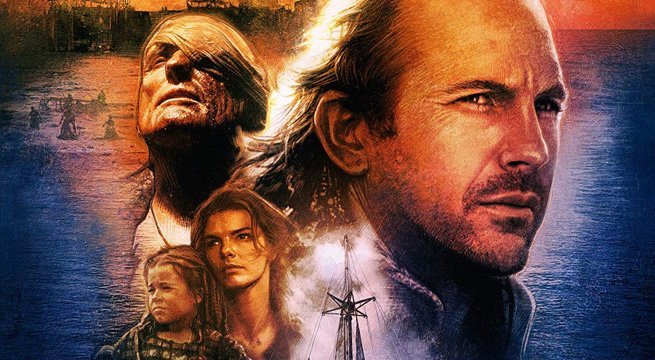
I was just about done with my high school years – and whilst on a family vacation – when I first saw Waterworld. And I came to it, as I often did in those days, as an innocent, in a time before the ice caps melted and a media torrent covered the globe. I had no concept of the vortex of negative press that Waterworld carried with it like a cargo hold full of dirt ready for the traders. It was, at that time, the largest theatre I’d been to. This rendered Kevin Reynolds’ epic feat of film-making monolithic in scale. Of course Waterworld really doesn’t need the big screen for you to witness just how incredible the production is. It’s, aside from a few computerized flourishes, real for real. The action, the set pieces – CGI wasn’t quite there yet – so this monumentally impressive picture carries the imposing span of the ocean, which is its stage, and the blinding brilliance of sun, pouring its radiance over this bold new vision of the post-apocalyptic future.
I’m sure by this point dear reader, that there are few that are not acquainted with this out and out classic. But for those for whom the picture is a stranger like Costner’s Mariner, sailing out of the horizon, then you have picked the right time to stop and check it out – the common courtesy extended when two drifters meet. From Arrow, the home of splendid re-release packages of some of the more famous/infamous cult classics of the age, comes the definitive, limited edition Blu-ray extravaganza that is the tale of the search for Dryland. Here at Water’s End you’ll find the three restored versions of the film, a loaded treasure trove of extras; the crown jewel being Maelstrom: The Odyssey of Waterworld, an enthralling documentary feature chronicling the birth, rise, fall and ultimately redemption of one of the truly awesome adventure movies in cinema history. It may be fortuitous that this release surfaces in the wake of another sea-going fantasy – the billion dollar triumph that is Aquaman. And while the DCEU’s latest opus is no Mad Max on water, they share the same enduring quality films of this type have in common. The world building is awe-inspiring, the joy experienced while watching them infectious and they both leave the stage set for voyages of astonishing proportions to be explored.
I love this movie. Think of me how you will. But Waterworld is outstanding in my book and I am thrilled, not only that this release exists, but that its supplementary material finally sets the record straight – as well as allowing fans and first-timers alike to really marvel at what it took to cover the earth with water and allow we, the movie-loving audience, to take a ride that you’ll never see made this way again. Such a magnificent event as this calls for an equally impressive effort on my behalf.
That being the case I have a trio of insightful interviews with my guests David J. Moore (co-author of the supplementary booklet), Daniel Griffith(the filmmaker behind the documentary I’ve waited for, Maelstrom: The Odyssey of Waterworld) and, get ready for it, the man without whom the film would not exist, the film’s creator and initial screenwriter, Peter Rader. So stretch out in your deck hammock with an extra-large cup of hydro and stare at the majesty of the horizon, where the land meets the sea and watch in wonder as Waterworld engulfs you in a wave of splendor; this Everest’s peak of action/adventure cinema you can’t help but sink into.
DAVID J. MOORE
David J. Moore has written articles for Fangoria, Filmfax, Ultra Violent, VideoScope, Lunchmeat, Flickering Myth, and L’Ecran Fantastique. Interviews he’s conducted can be found on OutlawVern.com. He has worked as a freelance film journalist, visiting movie sets around the world. His next book is called The Good, the Tough, and the Deadly: Action Stars and Their Movies, and it will be published in 2015. He lives in Rancho Cucamonga, California.
DANIEL GRIFFITH
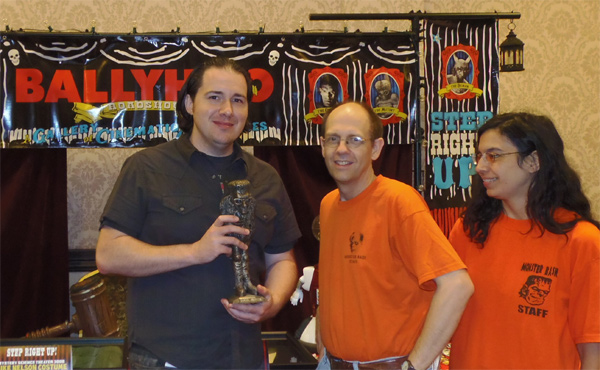
Daniel Griffith has produced and directed more than 35 bonus feature productions, as well as five feature-length documentaries, including “LET THERE BE LIGHT: THE ODYSSEY OF DARK STAR” and “THE FLESH AND THE FURY: X-POSING TWINS OF EVIL”. He is also the documentarian for Shout! Factory’s “MYSTERY SCIENCE THEATER 3000” DVD boxed sets. Recently, he produced and directed the one hour documentary on the legacy of Rod Serling’s celebrated TV series, “THE TWILIGHT ZONE”, for CBS Films. Griffith won the 2012 Rondo Award for best DVD Bonus Feature for his biography on Universal B-movie actor, Rondo Hatton. He is the owner/founder of Ballyhoo Motion Pictures.
PETER RADER
Peter Rader is a director and writer, known for Waterworld (1995), The Last Legion (2007) and Grandmother’s House (1988).








 It was, at that time, the largest theatre I’d been to. This rendered


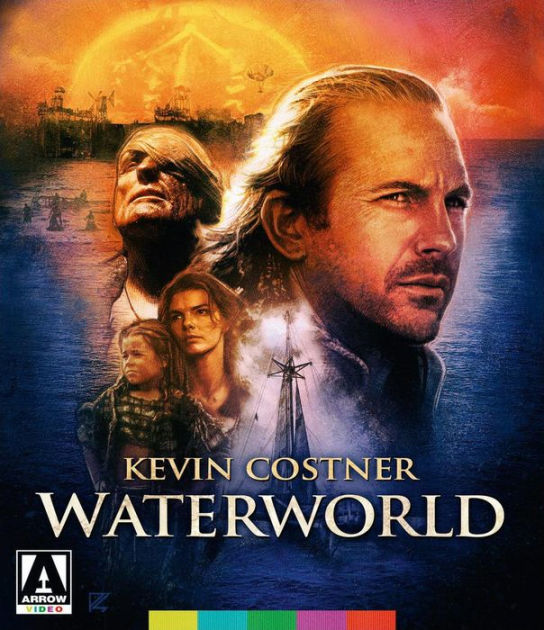 From Arrow, the home of splendid re-release packages of some of the more famous/infamous cult classics of the age, comes the definitive, limited edition Blu-ray extravaganza that is the tale of the search for Dryland. Here at Water’s End you’ll find the three restored versions of the film, a loaded treasure trove of extras; the crown jewel being Maelstrom: The Odyssey of Waterworld, an enthralling documentary feature chronicling the birth, rise, fall and ultimately redemption of one of the truly awesome adventure movies in cinema history. It may be fortuitous that this release surfaces in the wake of another sea-going fantasy – the billion dollar triumph that is



 Podcasting Them Softly