Martin Campbell’s Casino Royale

So what did Martin Campbell’s Casino Royale do for the Bond franchise? Well, I’m not a huge aficionado or scholar of these films like some so I tend to look at each one on its own as an action adventure piece rather than observe how it fits into the jigsaw legacy of this mammoth series, but there’s no denying that this one kind of broke several moulds before it. After the garish 90’s heyday of Pierce Brosnan (I *love* all four of those films to bits) I feel like they just wanted to bring Bond down to earth a bit, distill the aesthetic into something that cleanses too many gadgets and what have you, cast someone darker and more dangerous and blast out a new trajectory for the character. Good plan.

Casino Royale is not only a splendidly exciting film on its own but the best, most impactful and unique 007 film since 1989’s ruthless and underrated License To Kill. Daniel Craig’s James Bond is an angry warrior who fucks up just like the rest of us and is fallible, not some invincible deity in a tux that can’t get hurt, deceived, betrayed or killed without tangible consequences. An early mission sees him tasked by Judi Dench’s then immortal M to infiltrate a high stakes poker game in some swanky French locale and gain information on dangerous arms dealer and terrorist Le Chiffre, played by vicious, predatory Mads Mikkelsen in one of my favourite Bond baddie portrayals. As if he isn’t in enough over his head, he meets the beautiful but equally dangerous Vesper Lynd (Eva Green), the most unique Bond girl since… who knows when. I love that she’s a self aware human being who has her reasons for falling into bed with him instead of just being a pair of tits with a voice as seen in countless entries before. Green has sex appeal for days but what makes her special is that way her eyes smoulder with a fierce independence and unpredictability, making her one of the most fascinating characters the whole franchise has to offer. Also supporting them is the great Giancarlo Giannini as a mentor of sorts for Bond, Jeffrey Wright as CIA operative Felix, Catarina Murino, Isaach De Bankolé, Jesper Christensen, Sebastian Foucan, Tobias Menzies, Richard Sammel, Tyrone the silly fat bastard from Snatch, Russian character actress Ivana Milicevic and Virgin Atlantic CEO Richard Branson of all people, if you look real close.

In terms of scope and staging, this is a kind of unique 007 film because it shirks the standards and ducks expectations. It opens with a spectacular chase like any other in the franchise, which is a monumental sequence in terms of stunt work. But much of the film is spent in the ornate casinos of France and a lot of the action is the casual intimidation and cerebral mind games that go alongside the poker match. There’s nothing quite like Craig and Mikkelsen sat opposite one another in tuxes, Mads bleeding out of his sinister looking dead eye and Daniel smirking at him like he wants to rip his head off, while Green looks on and let’s her ulterior motives simmer on the back burner for later. Cinematographer Phil Meheux takes full advantage of these rich, lushly production designed interior shots as well as the gorgeous outdoor rim of the Mediterranean that we get to see quite a bit of. My only real complaint is a third act that feels like it barrels in from another film; that’s not to say it’s bad or doesn’t work, it’s just a tad unwieldy with the landing and threw me off in terms of tone or climax but I suppose that could have been the intention. I’ll just say that this thing ends in the last possible way you’d expect from a 007, feeling fresh, raw and off the rails in a beautiful fashion that doesn’t tread the beaten path of so many before, but blazes out its own tragic, violent conclusion that will claim a piece of Bond’s soul but add much needed spirit to this series as a whole. Great film, and my second favourite Bond of all time after Skyfall.

-Nate Hill
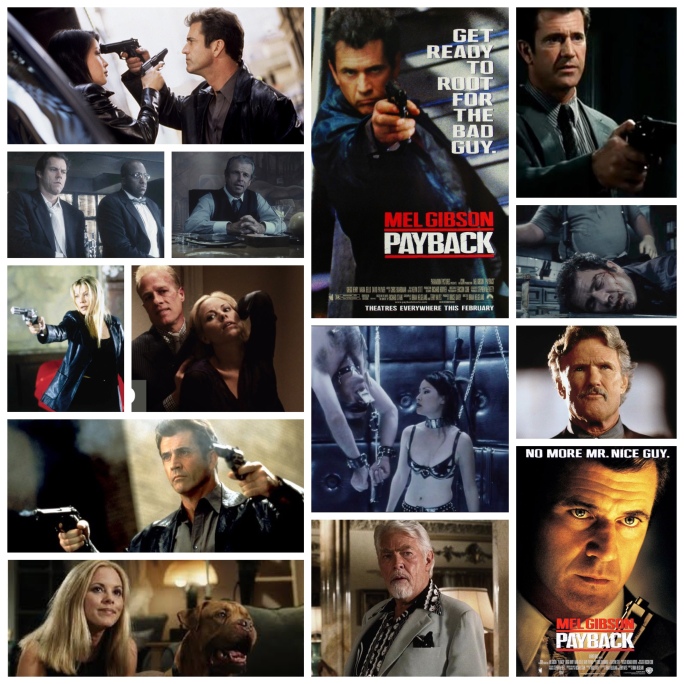
Brian Helgeland’s Payback

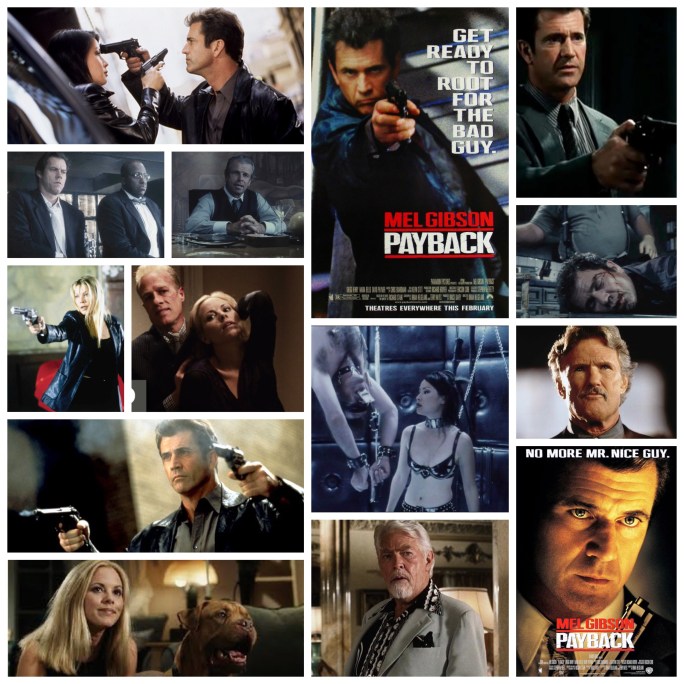
Isn’t it always kind of more fun when the protagonist of a film is an utter scumbag? I think so, and Brian Helgeland did too when writing Payback, my favourite Mel Gibson film (outside Mad Max of course, but that’s a high pedestal to breach). There’s something so engaging about Mel’s Porter, a street rat career criminal who’s betrayed by his treacherous partner (Gregg Henry) and junkie wife (Deborah Kara Unger), left for dead in an alley. After a rocky recovery he comes back with vengeance on the mind, hunting down those who fucked him over and anyone who profited from it. The first thing he does to set tone for his character is steal cash from a panhandling hobo, which is just about the starkest way to inform your audience of what’s to come. What does Porter want? He wants his 24k from the job he got shafted on, not a penny less and, hysterically, not a penny more either, which becomes the beloved running joke of the film as he prowls streets, poker rooms, titty bars and all kinds of lowlife establishments to get what’s his. Henry is off the rails as his former partner in crime, taking his usual brand of scenery chewing to new heights and picking fights with anyone who makes eye contact with him. He isn’t even the main villain either, that honour goes to a stone-faced Kris Kristofferson as the sadistic head of a shadowy mega crime syndicate who are soon alerted of Porter’s ongoing rampage. There’s uber corrupt cops (Bill Duke, Jack Conley), a weaselly bookie (David Paymer), a bureaucrat desk jockey villain (William Devane), a high class escort with a heart of gold (Maria Bello) who brings out the faintest of softer sides in Porter, a sneering assassin (the great John Glover) and others who all get caught up in the commotion this guy causes just to get his modest 24 grand. A young Lucy Liu also shows up as a sexy S&M hooker with ties to the Triads and enough scary attitude to either turn me on or freak me out, I’m still not sure. My favourite has to be James Coburn as another organized crime hotshot who seems more interested in his elaborate accessories than putting a step to Porter’s nonsense. “That’s just mean, man” he bawls after Mel puts a bullet in one of his designer alligator skin suitcases. So damn funny. This is the epitome of jet black humour, one of the meanest, gnarliest, bloodiest and most entertaining neo-noirs that Hollywood has ever produced. Mel has played so many heroes and upstanding family men that it’s refreshing to see him go for the contemptible asshole shtick, and I’ll be honest I’ve never rooted for one of his characters harder than I do for Porter and his deranged urban crusade every time I rewatch this, which is a lot. Fucking brilliant film.

-Nate Hill

John Carpenter’s Assault On Precinct 13

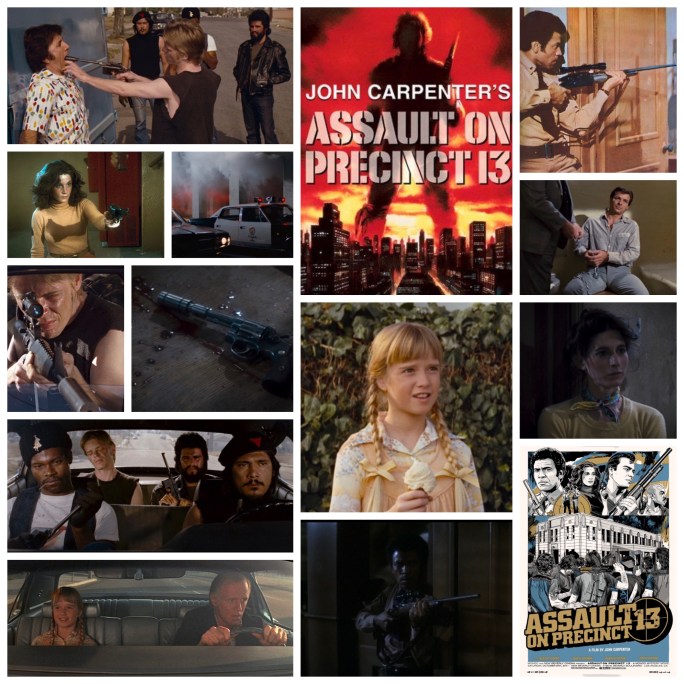
What makes John Carpenter such an incredible filmmaker? Many things, but one skill he has is being able to make a terrific story come alive whether he has a huge budget or not, whether it’s a giant high concept story, or a lean, mean, minimalist chamber piece. With Assault On Precinct 13 he’s got a few guns, a few cars, a few actors and one derelict police station, and the result, although not among his best work, is one nasty little urban exploitation feature that entertains and packs a bloody, visceral punch. The premise is gloriously simple: Several spectral, inhuman gang members chase a witness into an almost shut down precinct with intentions on killing everyone inside. One intrepid Deputy (Austin Stoker), a mysterious career criminal (Darwin Joston), a plucky secretary (Laurie Zimmer) and others are all that stands between these marauders and all out warfare. It’s a siege flick, a cop flick and an action picture all in one and works because of how low key it all is. The assault on the building itself is showcase low budget cinema and really well done as multiple silenced weapons shred through the doors and windows, but my favourite sequence is an earlier one in the film. As the gang prowls the desolated, decayed LA streets looking for suitable vehicles to hijack, a lone ice cream truck driver (Peter Bruni) finds himself right in the crosshairs of these heavily armed psychos. Then as if that isn’t bad enough, a little girl wanders up to purchase a frozen treat and, non discriminately, is gunned down in cold blood. It’s a shocking scene on its own just for the fact that Carpenter had the balls to do it and in fact on Robert Rodriguez’s Director’s Chair interview he said that he probably wouldn’t have gone that far had he made the film these days. What’s worse for me is that the girl is played by Kim Richards who starred as Tia Malone in Disney’s Escape To Witch Mountain, a film I grew up with and saw hundreds of times as a kid, so thanks John for ruining my childhood with that. Jokes aside it’s a galvanizing scene from beginning to end and even if there are way better Carpenter flicks out there overall, it’s probably one of the best sequences he’s directed in an otherwise solid pulpy action flick. Gotta mention Carpenter’s original score too which, as per usual, is brilliant.

-Nate Hill

Ari Aster’s Hereditary

Hereditary more like Herediterrifying. I know I’m late to the party but Ari Aster’s supremely disturbing chiller deserves all the hype and more, it’s a beautifully designed, aggressively scary bag of fun that walks a line between being deeply, psychologically upsetting as well as otherworldly, supernaturally haunting. It’s striking to find a debut this good from a first time director, but the guy handles all elements seemingly effortlessly and the result is an immersive, atmospheric, competently staged, elemental fright flick that will literally have you sleeping with the lights on after.

Toni Colette gives the performance of a lifetime as a wife and mother somewhat grieving the loss of her own mom, who was a secretive, difficult old goat in life. Her husband (Gabriel Byrne) is somewhat detached, her two kids (Milly Shapiro, Alex Wolff) have their own issues. It isn’t until further tragedy strikes this family that we begin to see fissures crack in both their individual psyches and relationships as a group. Grief is a hell of a thing and it can turn a family dynamic ugly and venomous pretty quick, but there’s something else circling this clan, an intangible malevolence that I’ll shut up about right now because it’s a diabolical thrill piecing it together along the way. I will say pay attention to *every* frame though, as there are clues aplenty embedded in the visual scape. Colette displays several remarkably realistic meltdowns and I shudder to think of the personal process that led her to that level of mania because she’s downright unnerving. Byrne doesn’t do too many high profile films anymore but it’s always great to see him, he underplays it here but is no less unsettling as a guy who seems uncomfortable around his own family, one of the several taboos the film plays with. Shapiro doesn’t do much as the daughter but her unearthly presence alone is enough to get us squirming, she is one weird looking kid. Wolff, on the other hand, is quite excellent and has a couple scenes of heightened distress that are pretty staggering. A shout-out to character actress Ann Dowd too who, I’m happy to say, is getting more work than ever before these days and finally has a sizeable outlet for her talent.

One aspect that makes this such a freaky thing to sit through is that none of the family members, and no other characters in the film in fact, are really likeable characters. They’re somber, sullen, withdrawn weirdos who make heinous mistakes and harbour unthinkable secrets and when the horrors start coming for them it kind of feels warranted. There’s this blanket of mental unrest and familial turmoil that hangs over everything and provides the film with a canvas of unrest for the paranormal horror to gradually encroach on like fog on the horizon, and the mixture makes for an almost unbearable ride through hell that was the scariest viewing experience for me since 2014’s It Follows. It’s also darkly beautifully though, Aster mounts some detailed, artistic and pagan inspired production design that’s like eye candy, he lights the sets starkly and specifically and plays around with miniatures in transitions and shot compositions for a visual experience like no other. Don’t even get me started on the score by Colin Stetson that plays like a nightmare brought to life, as does this masterpiece of a horror classic.

-Nate Hill

B Movie Glory: Brian Smrz’s Hero Wanted

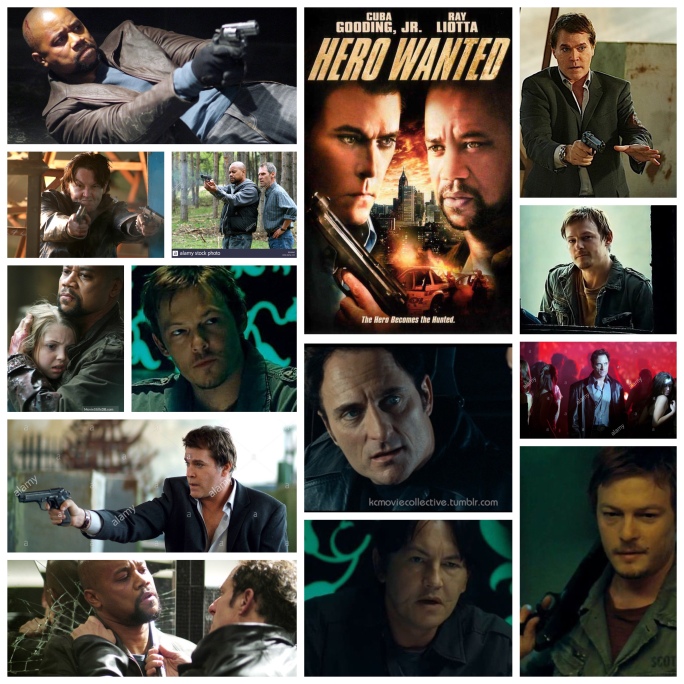
In the realm of Cuba Gooding Jr straight to DVD stuff, Brian Smrz’s Hero Wanted is probably my favourite. Many of them are absolute paycheque collecting trash, some are half assed efforts but a couple are scrappy, unique little gems worth seeking out. Gooding explores the dark side of human nature here as Liam Case, a simple inner city garbageman who uses the underworld ties of his colleague Swain (Norman Reedus) to stage a bank robbery for… unorthodox purposes, to say the least. Only problem is that the gang they hire is led by unstable maniac Skinner McGraw (Kim Coates) and his cop hating second in command Derek (Tommy Flanagan). The robbery ends up in disastrous bloodshed thanks to Liam’s plans and he then launches a personal crusade of vigilante justice against Skinner’s gang. All this commotion also attracts the attention of a tough homicide detective (Ray Liotta) who comes gunning for him as well. That’s only the main story arc, there’s all kinds of swervy subplots including a young girl (Sammi Hanratty) who Liam saved from a burning car years ago, the mother (Jean Smart) of one of the bank tellers injured in the botched robbery and the great Ben Cross as Liam’s ex special forces adoptive father.

It’s a lot to take in and it doesn’t all work together in the pot it’s thrown into, but it’s never not interesting, has a gritty 70’s crime aesthetic to it, plus both the writing and performances are organic and inspired. Gooding is terrific, his character essentially a perpetual fuckup whose schemes have lead him down a dark path, one he’s fighting brutally to find his way off of. Liotta brings heart and humour, not just another thankless cop role but someone who seems like an individual. Reedus gives my favourite performance as a dude who walks the line between good and bad finely, and pays dearly for it in an intense, poetic cap to his arc. Coates and Flanagan chew the scenery like there’s no fucking tomorrow, relishing the villain roles and creating two reprehensible street scumbags for the ages. The film skips all over the place and jumps around in time on a whim, so characters who died a few scenes ago are back again, a plot thread resolves itself before its even begun and it takes some getting used to. It’s a low budget effort at heart, but a huge and very creative one at that. A lot of the dialogue seems improvised and very candid, my two favourite exchanges being: Liotta and enters a crime scene, sees his partner visibly shook up and dryly intones: “What’s the matter? You look like Oedipus after they told him he just fucked his mother.” Elsewhere, Gooding and Reedus have a beer on their lunch break and shoot the shit: “You know America was founded on labour?” Reedus absentmindedly observes. “My uncle used to work in that factory over there,” replies Cuba, “Now that niggas on crack.” It’s that kind of deliberately offbeat energy that makes this one for the books and not just another B grade write off. Fun stuff.

-Nate Hill

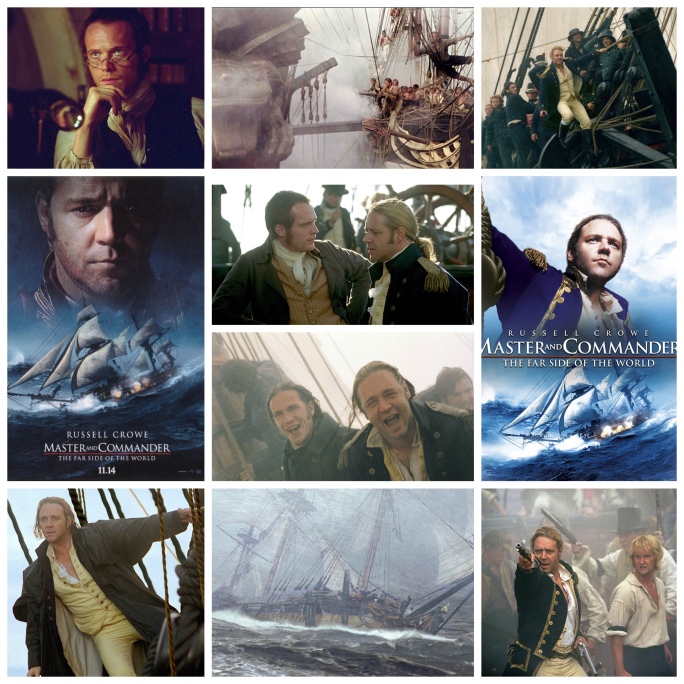
Peter Weir’s Master & Commander: The Far Side Of The World

Many war films set in a different time period like to flaunt special effects, production design, pyrotechnics and swing their big budgets around like dicks, while somewhere in the commotion, things like character and story get lost. Peter Weir is one to intuitively avoid showboating and I was pleased to see that his Master & Commander: The Far Side Of The World is a beautiful piece that integrates technical wizardry with good writing and performance for something that feels rich, balanced and realistic.

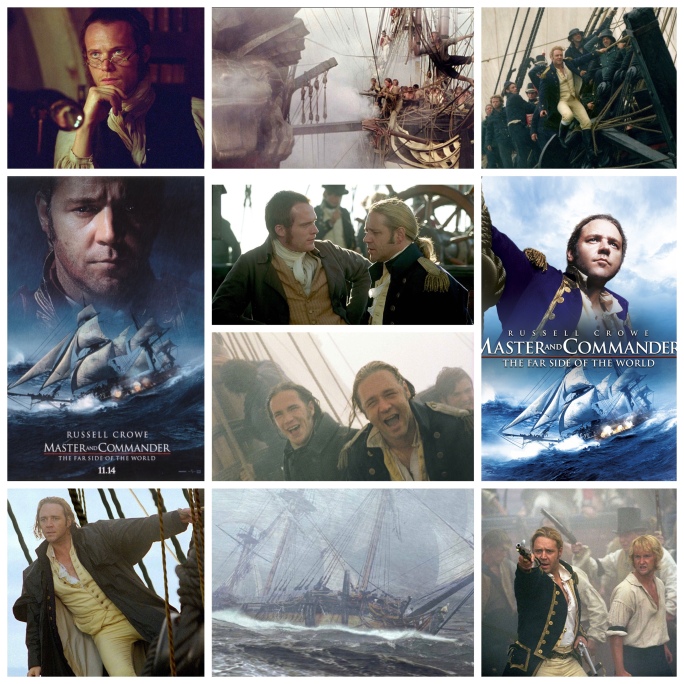
Set during the Napoleonic wars surrounding South America, Russell Crowe is Captain Jack Aubrey, a Naval Commander tasked with taking his vessel and crew in hot pursuit of the French ship Acheron on a search and destroy mission that could turn the tide of the whole war. Acheron is a much quicker and stronger warship with more guns, but Jack is a cunning, headstrong and impossibly stubborn leader who won’t back down in the face of defeat, even though his crew sometimes shows signs of doubt. The central relationship of the film is between him and the ship’s surgeon Maturin, played by Paul Bettany. He’s a significantly less hard edged man and being Jack’s best friend might as well be first mate as well, but it’s interesting to see that despite a great love for one another, their natures clash. Jack is a pragmatic, no nonsense soldier when it comes to game time, yet has the soul for music duets and great dinner table stories when the guns are put away. Maturin is a would-be naturalist with no mind for the strategies of war who would rather spend his days exploring new species on the exotic Galápagos Islands. Their dynamic is ultimately what drives the film and they’re both fantastic but also supported by the likes of Billy Boyd, Robert Pugh, James D’Arcy and many others.

The film exceeds two hours in length but doesn’t feel like it because of how engaging Weir makes everything. There’s only two ship battles, a opening banger and a climactic peak and they’re brilliantly done but for me the real magic is watching Crowe, Bettany and the others interact and live life day by day on the vessel. The food is prepared in detail, the logistics of navy protocol are studiously shown and the dialogue paints a dense, rich history for all the men aboard, each having his own special part of the story to impart. Another thing Weir specializes in is not making his tales feel overly doom laden, angsty or depressing. Many of his films deal with dark, challenging settings and themes but there’s always this matter of fact, optimistic lens he looks through that is a signature for him and a winning attribute. Not to say that this is necessarily a rollicking swashbuckler, but there’s an affinity for compassion and the lighter side of human nature, despite it being a war film by definition. Huge shoutout to Weir’s go to cinematographer Russell Boyd too, who shoots the imagery so vividly and magically it almost looks like paintings from that era itself. Loved it.

-Nate Hill

Barry Levinson’s Rain Man

What I enjoyed most in Barry Levinson’s excellent Rain Man is that it didn’t cheap out with a faux sweet final cherry on top with the ending. What I mean by that is that in some stories about mentally challenged people, they will spend much of the film dealing with their conditions, the relatives, friends and doctors around them will help and periodically become frustrated by them and right near the end there will be this miraculous, parting of the clouds moment where a coherence comes through and the filmmakers attempt to manipulate the events by showing something unrealistic in order to make the story more palatable. Not this one. Dustin Hoffman is a method actor’s method actor and while I don’t always see the value in such focused, orchestrated and inorganic prep work, for this type of role it’s not only necessary, it’s crucial.

He plays Raymond here, a high functioning autistic man living in a care facility who is scooped up by his estranged younger brother Charlie (Tom Cruise). Charlie didn’t know he existed so it’s a bit of a shock and adjustment period for both, but really all he’s after is the three million inheritance money that’s gone into a trust in Raymond’s name, and all else he has to deal with results in frustration and lashing out. Charlie is a materialistic, caustic, self centred asshole when we meet him and one could argue who is in fact the more mentally challenged one given his immature behaviour. But that’s what character arcs are for, and Cruise’s here is something really special. At first he’s distant and short tempered with Raymon who, naturally, is tough to properly communicate with. But after spending time on the road together for weeks a bond forms and Charlie realizes that this man is the only real family he has left, and in a poignant series of interactions highlighted by one key conversation, the two become brothers again, or perhaps even for the first time, properly anyways. It’s a fantastic piece because the script treats these two with respect and let’s them be real human beings and not cloying plot devices. Cruise plays it hotheaded and then down to earth when the shift in his tone comes, I loved the scene best where he confronts Raymond’s doctor (Gerald R. Molen) about keeping his existence a secret this whole time. “It would’ve been nice to know I had a brother, and it would have been nice to be able to know him this whole time.” Cruise delivers the line offhandedly but the intention beneath cuts real deep. Hoffman is a series of mannerisms, behaviours and reactions that are clearly researched well, but he still lets the humanity and personality in Raymond shine through in every scene, he’s essentially multitasking with both sides of his brain and he fucking nails it. They’re supported by others including Valeria Golino as Charlie’s compassionate wife, Levinson himself as an irritating doctor prick, Lucinda Jenny, Beth Grant, Chris Mulkey and Bonnie Hunt who I’ve always had a huge crush on.

I like the choices made in this film. Many dramas like this get sort of way too down to earth and exist primarily in houses, hospitals, courtrooms and such. This one is essentially a buddy movie and much of it is spent on the road, which gives it a carefree, laidback feeling that lets the drama emanate through naturally of its own accord as opposed to setting up specific, intimate scenes and blocking the actors in such a way that you know it’s just meant to elicit heavy lifting in terms of performance. This film is different. They cruise down the highway, go for pancakes, gamble in Vegas and you truly get the sense that these are two real individuals living life and not existing inside the preordained vacuum of a heavily tailored script. I also loved Hans Zimmer’s light, ethereal score. There’s certain films where his composition is sort of non orchestral and counterintuitive, not what he’s used to. True Romance, Pacific Heights, Interstellar and this all feel like that, and the style suits the material here. What a great film.

-Nate Hill

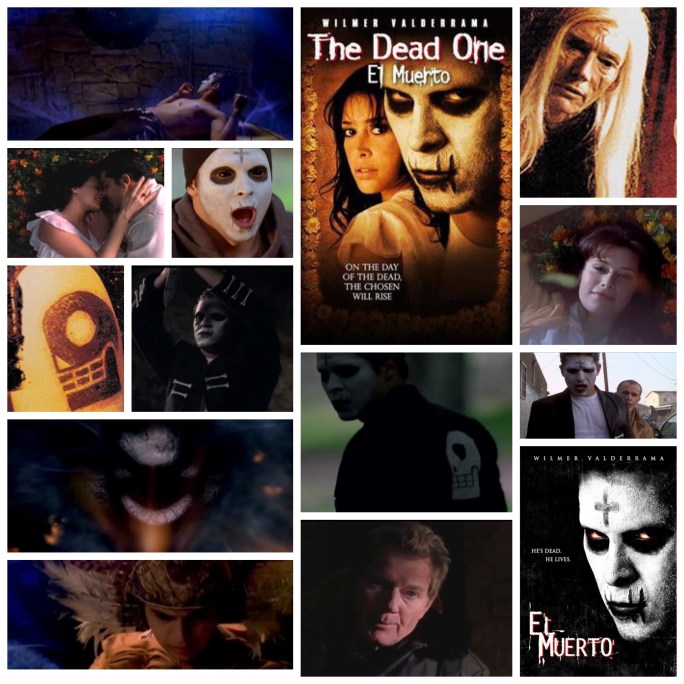
B Movie Glory: El Muerto aka The Dead One

So imagine The Crow but like… based around Aztec/Day of the dead style mythology and starring Fez from That 70’s Show as a young man brought back from the dead as a supernatural zombie. Sounds to random to actually exist, right? Well it’s out there, it’s called The Dead One in some regions and El Muerto in others and… it’s something. I can’t quite say that as a compliment because it’s so goddamn low budget and cheesy, but I will say that a valiant effort is made, there’s a lot of heart behind it, plus some terrific actors having fun too.

Unfortunately Wilmer Valderrama will forever and always be known as Fez no matter what else he does and will never live that character down, but he does his best to be dark, smouldering and edgy here as Diego De La Muerte, who is killed in a car crash one night and resurrected as a badass monster with face paint and superpowers by the Mayan god of death. He’s marked as a boy in an opening flashback by a spooky Old Indian shaman (the great Billy Drago, who passed a few days ago) but what he doesn’t read in the fine print is that the God basically owns his soul and commands his every move once he’s undead. This leads to a fight for freedom and the love of his life (Angie Cepeda) who he left behind.

Soon the God manifests in reality as a creepy old witch type thing (again played by Drago, really outdoing himself with the scenery chewing here, as he was always famous for) and he has to fight the thing as well as evade a suspicious county Sheriff played by the legendary Michael Parks, who is also no longer with us. Other appearances are noted from Tony Plana as a priest, Joel David Moore’s as his best friend and the iconic Maria Conchita Alonso.

Man I really want to recommend this because I’m a lot more generous than most with this type of fare but I can’t because it’s essentially a pretty fucking awful film, not gonna lie. Shoddy special effects, cheesy dialogue, cheap looking cinematography, this one has it all. But hey, if you give it a go you’ll always be able to say that you saw a movie where Fez from That 70’s Show plays an Aztec zombie, so there’s that. Plus the thing is kinda fun in its own lovable horror flick way. It’s based on some cult comic series which I’ve never read but if anyone has, let me know how this holds up against the source material.

-Nate Hill

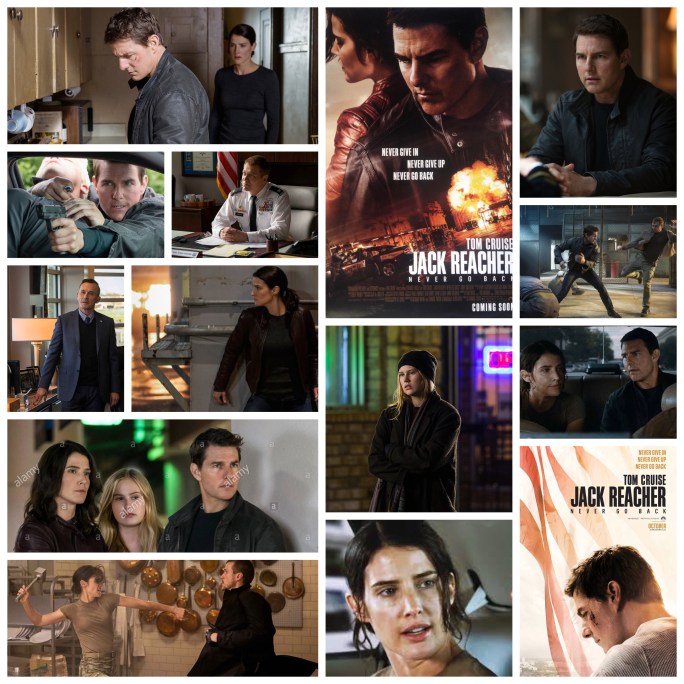
Edward Zwick’s Jack Reacher: Never Go Back

Jack Reacher: Never Go Back isn’t the thunderclap thriller the first one was and considerably diminishes from a large scale epic feel to something more small, comforting and TV movie style, which is not say that’s a bad thing as I quite enjoyed it, I just wasn’t riveted and amped up like I was the first round. It’s interesting that director Edward Zwick stepped in as he’s usually accustomed to large scale, sweeping epics (Legends Of The Fall, Courage Under Fire, Blood Diamond, The Last Samurai, Glory) and instead went for something smaller here, but it works.

Tom Cruise’s nomadic badass Jack Reacher is still out there looking for people who cause trouble so he can cause it tenfold back upon them and as the film opens we see him take down nasty small town sheriff (Jason Douglas) turned human trafficker using only a payphone. That sets the tone for another raucous adventure that is decidedly not as ruthless or brutal as the first, but takes a more compassionate tone which is an interesting decision that I really liked as it allows us to see the softer side of this character. Jack has a liaison in the military called Major Susan Turner (Cobie Smulders) who feeds him intel and he’s taken a liking to her enough to ask her out, but when he arrives in Washington to do that he instead finds her smug superior officer (Holt McCallany) sat at her desk informing him that she’s been arrested under charges of espionage. This doesn’t quite sit well with Jack and after beating the shit out of him for answers, he launches a violent inquiry, tracks Major Turner down and helps her clear her name and vet out a conspiracy within the military.

This film works well because of that relationship between the two, and the terrific chemistry that Cruise and Cobie have. They serve as both romantic leads and partners in action and provide the story with a warmth that wasn’t there in the first, as the relationships there felt a bit cold and detached. There’s also a mysterious girl (Danika Yarosh) who may in fact be Jack’s daughter from a wife years back, and that adds a human side as well which was welcome. On the weaker side, the action set pieces aren’t as ingenious or as memorable as before, and the villains not as charismatic or well painted. It is hard to top Werner goddamn Herzog though so I feel their pain. McCallany is nasty enough as a classic bully and Robert Knepper sneers and snarls as an evil private security Colonel but he shows up so late in the game it’s hard for him to make a real impact. What does work works really well though, and Smulders is the best thing the film has going for it. She’s a true star that never mugs the camera but always feels sympathetic and engaging, not to mention gorgeous. Not the film the first was, but a fun time all the same.

-Nate Hill

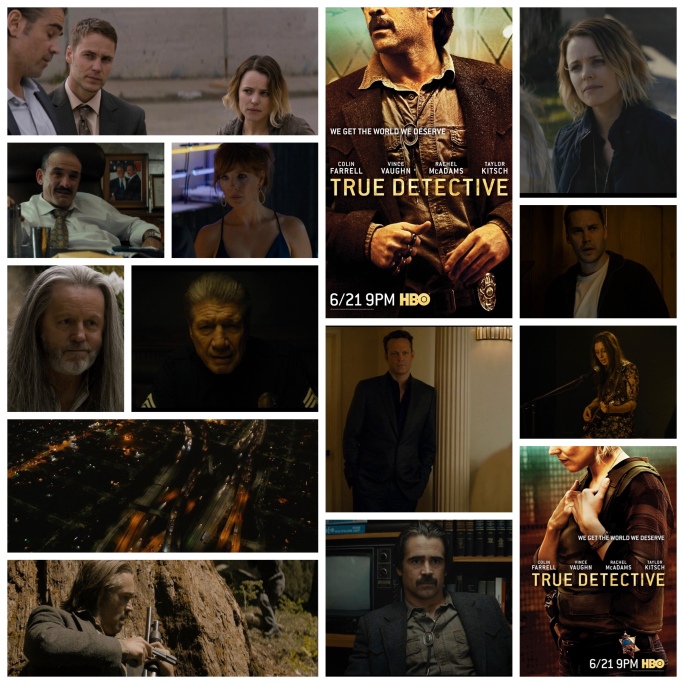
HBO’s True Detective: Season 2

So just what was it about season two of HBO’s True Detective that caused such a monumental ruckus of ruthless criticism? Well, who can say. I imagine it had something to do with the dark, difficult and byzantine way that creator Nic Pizzolatto presents the material. Maybe it’s the fact that it had to follow the lightning in a bottle, southern gothic, out of left field mastery of season one. Simply just the shift in tone and setting? I’m reaching for straws here because the hate and rejection that this brilliant piece of television has amassed always flew over my head. This is deep, dark LA noir at its finest, most gorgeously dangerous and I love every challenging, impenetrable episode to bits.

The setting shifts from bayous of Louisiana, the amount of lead characters multiplies significantly and where there was once eerie folk horror and occult conspiracy we now find decadence, corruption most high and a focused, implosive inwardness in exploring each individual the narrative focuses on. Colin Farrell is unbearably intense as LA cop Ray Velcoro, a haunted addict who has fallen from the grace of both the department and his family, but isn’t down for the count quite yet. Vince Vaughn is emblematic of every career criminal trying to go straight as Frank Semyon, a stubborn small time kingpin with dreams of scoring big in California real estate. Rachel McAdams is haunted as Ani Bezzerides, a cop with a tragic past and the deep set trauma to prove it. Taylor Kitsch is Paul Woodrough, a pent up special ops veteran turned state trooper who rounds out this quartet as they’re faced with the kind of miserable, insurmountable odds one always finds in the best kind of film noirs. There’s an unsettling, decades old conspiracy afoot in the fictional yet uneasily realistic county of Vinci, CA, a brooding, festering menace that seems rooted in the now booming transportation system that has taken the economy by storm. Our heroes struggle to fight treachery, debauchery and excess run mad everywhere they turn, for their souls and California’s itself alike as the slogan for promotional material “We get the world we deserve” seems stingingly apparent throughout.

Farrell is my favourite as Velcoro, the anxiety ridden badass who displays the horrors of his past in the manic whites of his eyes and drowns them out with enough booze and blow to feed a city’s collective habit. He’s an antihero type, moonlighting as an enforcer for Vaughn but maintaining a fierce moral compass when all else is naught. Vaughn feasts on the stylized dialogue here and produces verbal poetry so good it hurts and you hit the rewind button just to hear his delivery again. His Frank is a hard, jaded piece of work with a soul hiding beneath the layers of anger and distrust for the world around him. McAdams’s Ani comes from a place of childhood trauma so unthinkable that they barely show it in hushed flashback, and it’s apparent in her caged animal body language, by far the actress’s most affecting work. Kitsch makes the slightest impression of the four and his arc didn’t seem as immediate as the others but he still did a bang up job in intense physicality. After the success of season one a host of excellent actors were drawn to this project, standouts here include David Morse as Ani’s commune leader dad, Kelly Reilly as Frank’s intuitive wife and second in command, Rick Springfield (!) as a shady plastic surgeon, Ritchie Coster as Vinci’s terminally alcoholic mayor, W. Earl Brown, James Frain, Ronny Cox, C.S. Lee, Lolita Davidovitch and the legendary Fred Ward as Ray’s bitterly prophetic ex-cop father.

Pizzolatto spins a very different kind of story here, one composed of long glances, deep shadows, arresting establishing shots of Vinci’s sprawling highway system, as dense and tough to navigate as the season’s central mystery, which isn’t one you get a sense of in just one, two or even three viewings. Impatience and frustration are easy to understand with this narrative, but one shouldn’t write off this piece so easily and I’m sure that’s what happened. A few people don’t have the time to invest in it, get hostile and throw some negative reviews out there and before you know it it becomes cool to hate and there’s folks throwing around words like ‘flawed’ before they’ve attempted a single episode, but that’s the way the internet works I suppose. Balls to them though, this is a deliciously dark, highly stylized, very emotional ride through a world whose themes, intentions and true colours aren’t readily visible until you descend several layers deep alongside these compelling characters. It’s thoughtful, pessimistic yet just hopeful enough to keep a candle lit in all that darkness and has some of the most beautiful acting, camera, dialogue and music work I’ve seen from anything. Masterpiece.

-Nate Hill