Marvel’s Ant Man

In a world of gargantuan Marvel Movie phenomena, it’s nice to see the little guy get some love amidst titans, superheroes and demigods, and by little guy I mean Ant Man, who I recently heard referred to as the underdog of Marvel movie protagonists, and that he is, given adorable slacker charm by Paul Rudd, who couldn’t have been cast better. From InnerSpace to Antibody (first rounds on me if anyone’s heard of that one), the concept of people shrinking down to minuscule size has been a staple of cinema since before The Borrowers said they were doing it before it was cool, and this one, although stubbornly an MCU entry, functions better as a loving throwback to the kind of old school Sci-Fi bliss you’d find someone like Dennis Quaid, Jeff Bridges or Michael Douglas headlining in the late 80’s, early 90’s. Speaking of Douglas, he’s in this, as Dr. Hank Pym, a fancy scientist who should star in his own spinoff/crossover called Honey I Shrunk Paul Rudd, because that’s more or less what happens. Rudd is petty thief Scott Lang, a middle aged dude who acts like he’s twelve until a little fatherly guidance from Pym and a *lot* of snazzy metaphysical science turns him into a microscopic hero. Of course the technology is coveted by a sinister rival scientist, played by Corey Stoll and set set up for this summers sequel as the super villain The Wasp. What I loved so much about this is it knows how to have fun and utilize the potential of it’s premise so effectively. All the scenes involving shrinking have a thoughtful innovation, absurd sense of humour (the toy train crash jump cut killed me) and warped, trippy style. The third act sees a scary malfunction in which he literally can’t stop shrinking and starts to lose himself in molecular infinity, which is probably the coolest or at least most original Sci-fi set piece of any Marvel flick. Joining Rudd and Douglas is whip smart scientist Evangeline Lily (Kate from LOST), and the cast is thick with excellent talent including the lovely Judy Greer as Rudd’s exasperated wife, Bobby Cannavle as her new cop boyfriend, Michael Pena, TI and David Dastmalchian as Rudd’s merry band of thieves, with work from John Slattery and Hayley Atwell to remind us we’re in the Marvel Universe, and a cameo from oddball entertainer Greg Turkington (Baskin Robbins always knows) to remind us this is also a departure for the MCU into something a little more delightfully bizarre. A rockin good time.

-Nate Hill

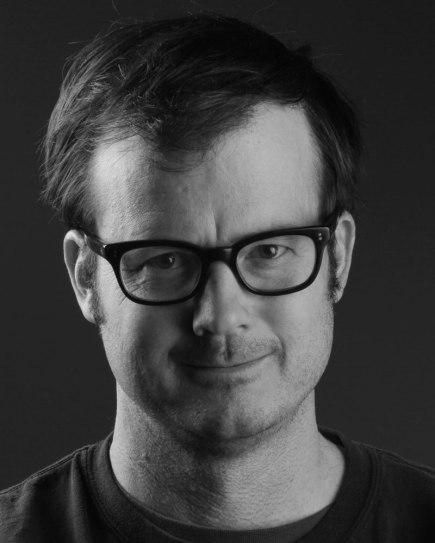
The Puppet Master: An Interview with Kevin McTurk by Kent Hill

Error
This video doesn’t exist

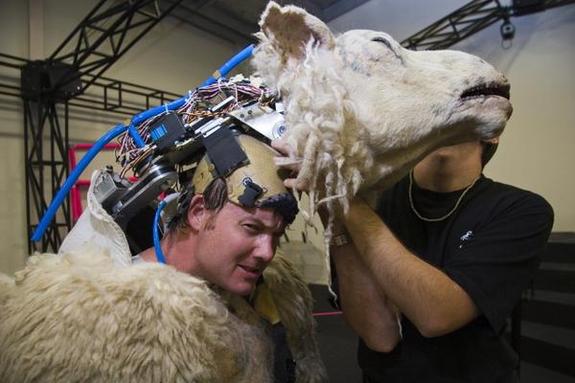
They say in the film business, never work with children or animals. Of course you may find yourself working with dinosaurs, aliens, lions, beast-people, scrunts, kothogas, ghosts, morlocks, Batman, Spiderman, Hellboy, kaijus, wolfmen, clones, cliffhangers, vampires, giant crocodiles, homicidal maniacs, killer sheep, Predators, cowboys and mysterious brides out to Kill Bill.

Sounds ominous, doesn’t it? But that’s just some of the astounding creations and magnificent beasts that Kevin McTurk has encountered in his eclectic career in the realms of special effects.

Kevin_McTurk_2014_800px

Working under the banners of legends like Stan Winston, Jim Henson and the new titans like Weta Workshop, Kevin has had his hand in erecting and simulating everything from the real world as he has from empires extraordinary. And, while I could have spent the entirety of our chat talking about his adventures working on the countless films, which are favourites of mine, he has in his CV, his impressive effects background is only part of the story.

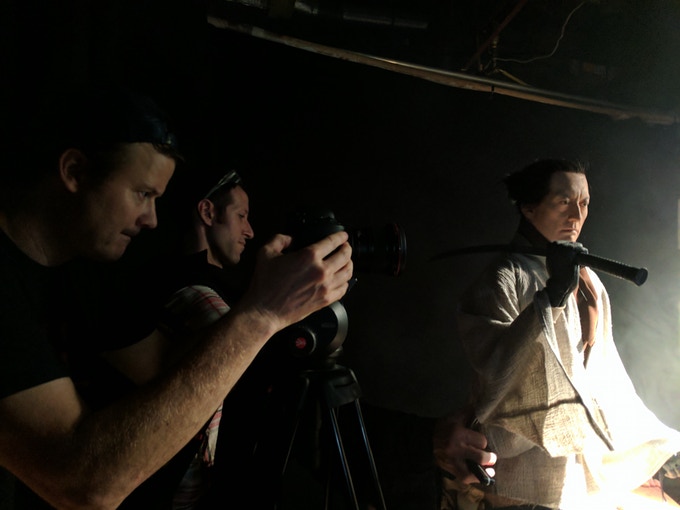
For Kevin McTurk is a bold and visionary filmmaker in his own right. His puppet films, The Narrative of Victor Karloch, The Mill at Calder’s End and now The (forthcoming) Haunted Swordsman are exercises in capturing a style from a bygone era with modern filmmaking techniques. The results are beautiful, not only in their aesthetic quality, but in the level of excellence from the many different disciplines on display.

There is still time for you to join Kevin in his latest cinematic offering (https://www.kickstarter.com/projects/935772123/the-haunted-swordsman-a-ghost-story-puppet-film), and to listen in now to the man himself talk about his movies, influences and career.

I give you the talented Mr. McTurk.

Visit Kevin’s website for more: http://www.thespiritcabinet.com/

content_l

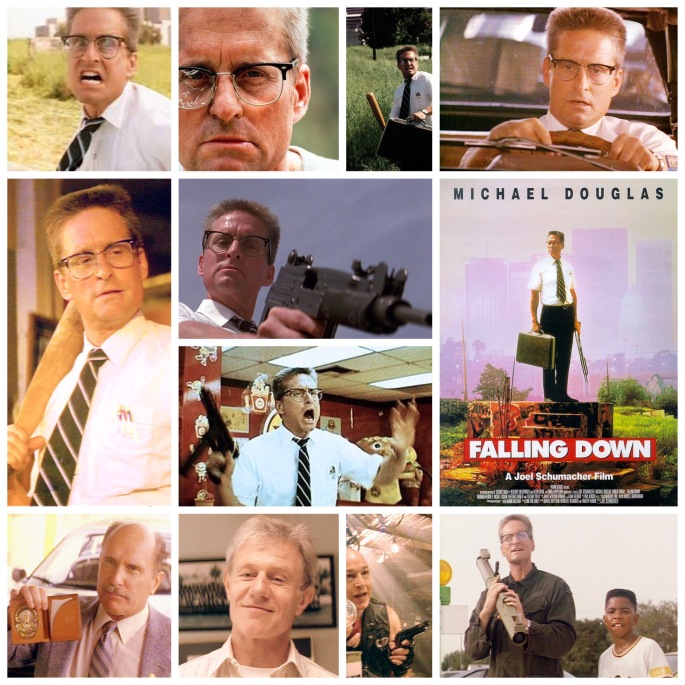
Joel Schumacher’s Falling Down


Everyone’s had the moment where they’re at the absolute end of their rope and feel like taking drastic or violent action against whatever is grinding your gears. Whether it’s a hot day in horrendous rush hour traffic, a particularly irritating lineup at Starbucks or an especially dense customer service worker, you just feel like saying ‘fuck it’, and decimating the place with anything you can lay your hands on. In Joel Schumacher’s Falling Down, Michael Douglas does just that on a sweltering LA summer day. His character, who remains nameless save for the moniker ‘D-Fens’, is a business man on his way home who just… snaps. Throwing a tantrum on the LA overpass, he quickly loses it, arms himself with a high velocity shotgun and proceeds to vet out every mundane annoyance, pet peeve and irksome scenario he can find. Whether it’s brutal catharsis he’s looking for, a cure for the doldrums of daily life or simply raging against that emptiness we all feel deep down, he keeps his reasons to himself, and let’s every other aspect of his character run wild. Holding up a fast food joint because they stopped serving breakfast five minutes too early, massacring homeless punks who foolishly harass him, his crusade sprawls across the valley and beyond, a righteous purge of monotonous, infuriating trivial concerns that soon has the attention of LA’s finest in the form of veteran Detective Robert Duvall and his crass, obnoxious lieutenant (Raymond J. Barry). It’s also revealed that Douglas’s personal life leading up to his break was rocky at best, with a job going downhill and hints of violence towards his wife and daughter. Quite drastic is the meltdown though, but it’s not quite a character study, he’s almost used more to pick away at the decays in society, a tool for exposing tears in the cloth we take for granted every day. His story is kind of like when you load up Grand Theft Auto on your console and completely ignore the missions in favour of a personalized war on anything that moves. His war happens to be against those little nagging inconveniences that seem like no biggie until they add up and you just go postal. It’s darkly funny stuff, but quite harrowing when you look at the big picture and the actual damage he’s doing to the city. Douglas is courageous here, it takes reckless abandon to go for a role like this, and he owns it in crew cut, well dressed fashion, a costume choice that absurdly clashes with the big metal cannon he totes. The film never takes sides either, recognizing both the bizarre consumerist nightmare we wade through everyday and it’s ability to dampen your spirit as well as the sickening extremes he goes to, challenging you to walk a line and look at both sides. Hard hitting stuff. 

-Nate Hill

SEAN STONE: An Interview with Kent Hill

Many of us can only imagine what it must be like to grow up in a household where one or both of our parents are people of extraordinary ability. We can only muse further what it must be like if that said parent were internationally recognized in their chosen field of expertise.

On the other hand, when we are young, we don’t really question such things. They are the ‘norm’, the everyday, and our parents are simply Mum and Dad. They do what they do and we are none the wiser. Then of course we reach an age when that changes. We realize that there are differences, and our worlds shrink or growth according to the depth of that perception.

61TzhdXDn1L__SY300_QL70_

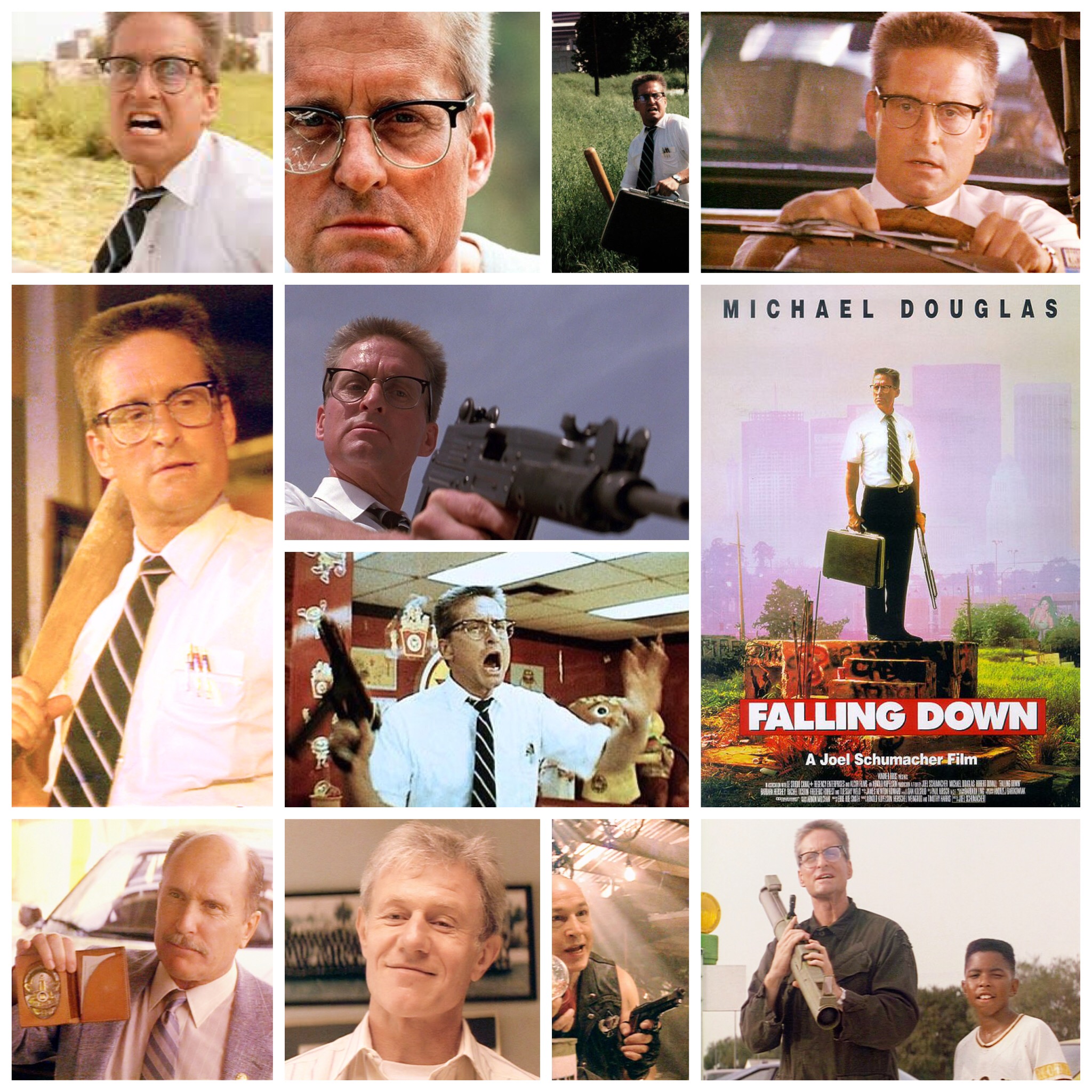
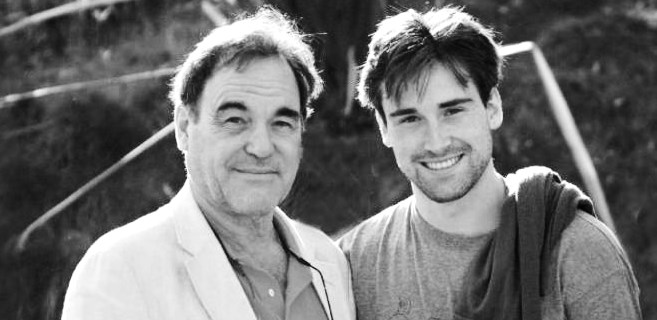
So imagine growing up and one day the realization hits that your Dad is the acclaimed filmmaker Oliver Stone; on top of that you have essentially grown up in the movies your father has been making. Now you were unaware to the extent of just how different things at home where compared to other people. But, it’s just how things were, and it’s just how things were for Sean Stone.

1002004006473548

Being on the set was normal because making movies is what Dad did for a living. These famous actors were simply people that were helping Dad out. It all seems fine that is till, as Sean told me, the world opens up and your understanding of that which you have been exposed to becomes evident.

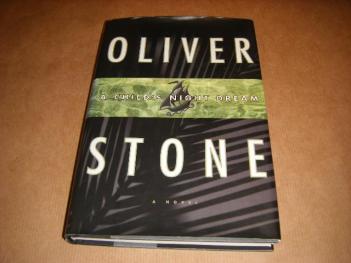
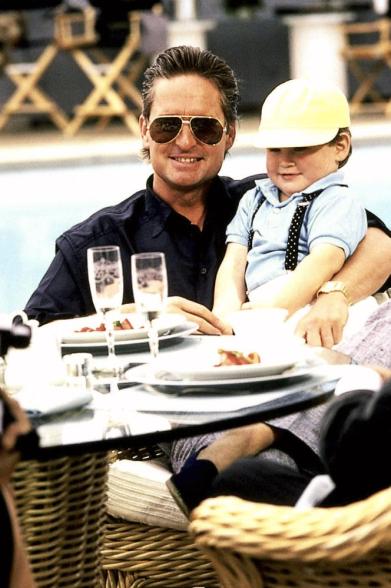
Being a lover of the work of Sean’s dad, I, like the rest of you, have seen him as a baby on the lap of Gordon Gekko, as a young Jim Morrison, as the brother of an eventual mass murderer and more. He is now, however, a storyteller in his own right. Beginning with the chronicling of the making of Alexander, Sean has emerged as a naturally talented filmmaker. He has continued exploring the documentary as well as genre filmmaking, and I eagerly anticipate his intended adaptation of his father’s book A Child’s Night Dream.

35445

It was a real treat to chat with him at the dawn of 2017 . . . ladies and gentlemen, I give you . . . Sean Stone.

MCDWAST FE007

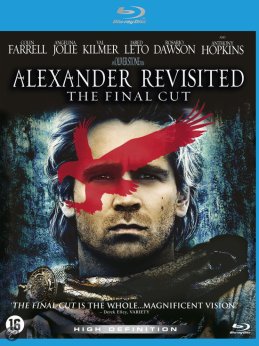
https://www.amazon.com/Alexander-Revisited-Blu-ray-Colin-Farrell/dp/B00CSKQ5TK/ref=sr_1_9?ie=UTF8&qid=1491450945&sr=8-9&keywords=alexander+blu+ray

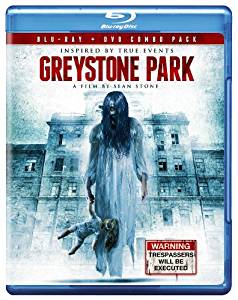
https://www.amazon.com/Greystone-Park-Blu-ray-Combo-Pack/dp/B008NNY93K/ref=sr_1_2?s=movies-tv&ie=UTF8&qid=1491451403&sr=1-2&keywords=greystone+park

https://www.amazon.com/Childs-Night-Dream-Oliver-Stone/dp/0312167989/ref=sr_1_1?ie=UTF8&qid=1491451496&sr=8-1&keywords=a+childs+night+dream+oliver+stone

Stephen Hopkin’s The Ghost & The Darkness


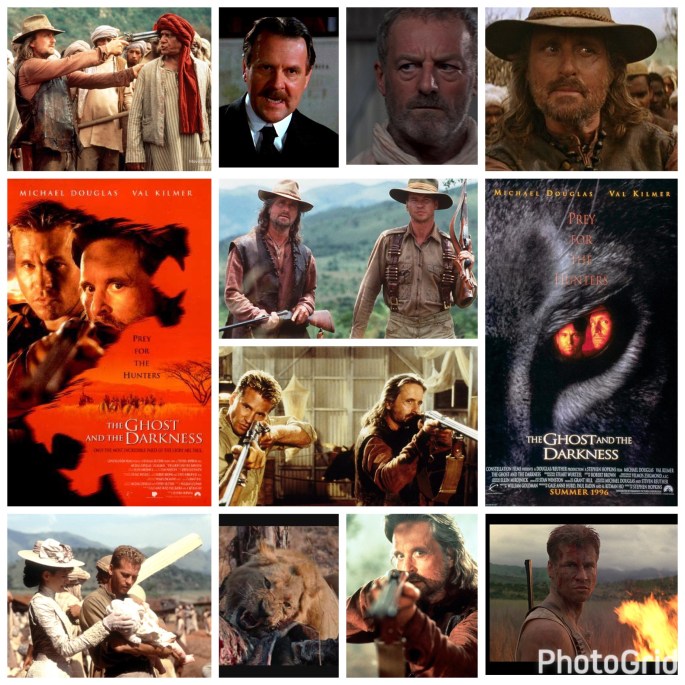
Nothing beats the sheer adventurous spirit and eerie primal mythos that fuels Stephen Hopkin’s The Ghost And The Darkness. It’s a go-to comfort movie for me whenever I’m feeling down or stuck inside on a rainy night. It’s like a campfire tale told on a quite windless night on the Serengeti, and like all the best scary stories, this one has roots in fact. In 1898, production of the East Africa Railroad along the Tsavo River was stalled for weeks, the workers suffering repeated attacks from two savage, mysterious lions. Acting against instinct, killing for sport rather than food and disappearing back into the night as quickly as they came, they were so ferocious and relentless that locals gave the eerie nicknames “the ghost and the darkness.” The story has film written all over it, and Hopkins chooses the swashbuckling, Universal style horror route, and an irresistible tone. Val Kilmer, in his heyday, plays Patterson, an engineer sent by the boorish railroad tycoon Beaumont (Tom Wilkinson, chewing scenery like steak) to speed up production and pick up the slack in order to finish ahead of schedule. Not on the lions watch. He’s scarcely arrived when they begins their endless tirade of horrific attacks, forcing him to trust in the skills of leathery game hunter Remington (Michael Douglas), sort of like Van Helsing crossed with Indiana Jones. The film clocks in under two hours but it seems longer somehow, like we’re stuck with them in real time as the hopelessness of the situation sets into our bones, raising the stakes for our hunters and hammering home how terrifying an ordeal like this must be. Casting is on point here, watch for Bernard Hill as the sympathetic camp doctor, the late Om Puri and a brief early career cameo from Emily Mortimer as Patterson’s wife. Occasionally straying into the realm of melodrama is this one’s only fault, for the most part it’s a hair raising, nightmarish account of adventure and terror told with style, packed with atmospheres and primed to get pulses racing. 

-Nate Hill

WONDER BOYS – A REVIEW BY J.D. LAFRANCE

Wonder-Boys-robert-downey-jr-13124127-1280-544

Wonder Boys (2000) is a redemptive tale of a college professor in the midst of a mid-life crisis. It is a film about faded glory and people past their prime. Curtis Hanson’s film is the kind of small, oddball little tale with a decidedly off-kilter, dark sense of humor and a cast of eccentric characters. It was a bit hit with critics but never quite connected with a mainstream audience due in part to a bungled initial promotional campaign that clearly did not know how to convey the quirky tone of the film into an easily digestible soundbite.

Grady Tripp (Michael Douglas) is a burnt out English professor that wrote a much celebrated novel entitled, The Arsonist’s Daughter, but has since been having a hard time with his follow-up. He keeps writing and writing with no end in sight (current page count sits at around 2,100+ pages). His young wife has left him and he’s sleeping with his boss’ wife, Sara Gaskill (Frances McDormand), who is also the Chancellor of the university where he works. His long-suffering editor Terry Crabtree (Robert Downey Jr.) is in town to take a look at the book. He maintains a “what me, worry?” façade but is in danger of losing his job unless he can find a potential best seller and applies subtle but definite pressure on Grady. The professor has also taken under his wing a brilliant but troubled student, James Leer (Tobey Maguire), from his creative writing class. He’s a tortured artist wannabe as evident from his habit of sitting in an empty, dark classroom. He is also ostracized by his classmates who resent his ability to write.

Producer Scott Rudin gave Michael Chabon’s book to screenwriter Steve Kloves. At first, he wasn’t interested – he hadn’t written a word in four years and had never adapted a novel before – but while reading the novel he connected with the material, “and a sort of kinship with Michael Chabon’s tone and the way he looked at his characters, with all their flaws, with a real generous spirit,” he said. Initially, Kloves agreed to adapt the book and talk about directing it but two and half years into working on the screenplay, he decided not to direct. After the success of L.A. Confidential (1997), Hanson was working on a script of his own and reading other scripts with a keen interest for his next film to be a comedy. Actress Elizabeth McGovern once advised him to work with Kloves and was given his screenplay. He was told that Michael Douglas was interested in playing Grady and was impressed by the way in which the characters were presented and “the lack of judgment on their actions and eccentricities.” In addition, Hanson “fell in love with these characters – and they made me laugh.”

Hanson told Rudin, “it’s too bad you can’t have Jean Renoir or Hal Ashby direct this.” Once Hanson was attached to direct, Kloves met with him and was relieved that they were both on the same page in terms of their approach to the material. Chabon encouraged Kloves to make the material his own and this included changing Grady’s Jewish in-laws to gentiles. Additional changes were made once Hanson came on board. For example, he felt that James Leer would be a fan of Douglas Sirk’s films as opposed to Frank Capra as he is in the novel. The studio wasn’t interested in making a quirky, character-driven comedy/drama until Michael Douglas agreed to work well below his usual large fee. One of the challenges for Hanson was to take a plot that he called “meandering and, apparently, sort of aimless,” and a character that “does things that even he doesn’t really know why he’s doing them,” and try to create a “feeling of focus” to keep the audience interested. Another challenge was working on actual locations in very cold weather and constantly changing conditions.

Hanson’s other concern was if Douglas would be willing to take on the role without a hint of vanity but also do it in a truthful way and not in a way that would draw attention to the fact that he was playing an unattractive character. To his credit, the actor disappears completely into this role. He’s not the first person you’d think of to play Grady. When he tries too hard to be funny it can come across as pompous, but he tones it down here and looks completely at ease, comfortable as the frumpy Grady. Douglas hits just the right notes of world-weary cynicism but with a romantic streak buried underneath. For the veteran actor it’s an unglamorous role – he gained 25 pounds for the role, eating pizza, subs and drank a lot of beer. He always looks rumpled, unshaven with unkempt hair and often wearing a ratty old housecoat when he writes. Grady has the capacity to do something about his miserable lot in life and during the course of the film his character undergoes a fascinating arc. In some ways, Grady is a pot-smoking burn-out like the Dude from The Big Lebowski (1998) only with slightly more ambition. He lives outside of normal society in the rarified atmosphere of academia — puttering around, writing his novel and teaching his writing class, but when he crosses paths with James Leer, Grady realizes that he’s got to change.

Wonder Boys
also marked a break-out role for Tobey Maguire. Before he garnered massive mainstream exposure with Spider-Man (2002), he was known mostly for roles in small, independent films. Like everyone else in the cast, he has his memorable moments, like when his character laughs at Q’s (Rip Torn) pretentious speech at Wordfest with a high-pitched giggle that reverberates through the large auditorium. The blissfully stoned expression he gives afterwards is priceless. Everyone in the film keeps harping on what a genius writer Grady is, but it gradually becomes apparent that James is the true genius. He writes pages and pages of beautiful prose in minutes. And like any true talent, it just comes pouring effortlessly out of him. What makes James such a good writer is that his whole life is essentially a lie – he lies about his parents’ past, how they met and where they came from. He even maintains this air of a tortured artist but as we find out that too is a lie. James has it pretty easy, living in a large house in an affluent neighborhood. Good fiction writers have to be masters at making things up.

As always, Robert Downey Jr. knows how to make an entrance, meeting Grady at the airport with a transvestite as his date. The exchange between Terry and Grady quickly establishes their long-time friendship by the familiarity between them. Downey is able to take the most mundane, ordinary line and give it his own unique spin and make it funny or give a look that is memorable. His rapport with Douglas is excellent and they play well off each other as both sides of the comedic equation. Downey was on probation during the winter of 1999 when Hanson considered him for a role in Wonder Boys. The director was cautious because of the actor’s drug history and was concerned because it would be a tough film shot in sequence in Pittsburgh in the winter. Downey flew to Pittsburgh and had a long dinner conversation with Hanson where they addressed his problems. The actor demonstrated a commitment to the film and the director hired him. According to Hanson, Downey acted in a professional manner for the entire four-and-a-half month shoot but after it ended and he returned to Los Angeles, the actor violated his parole.

Frances McDormand knows how to react to those around her, like when she meets Grady, Terry and his date at a party. Watching her react to the charming transvestite is priceless. She and Douglas also have excellent chemistry together as evident in the short hand, the give-and-take between their characters. This is nicely established in their first scene together where Sara tells Grady that she’s pregnant. The music sets a slightly melancholic even whimsical tone as the two characters reveal that they are trapped in relationships that they don’t want to be in. They want to be together but Grady won’t show her how serious he is about them. Ultimately, Grady has to save himself and to in order to do this he must convince Sara that he does love and he want to be with her.

Steve Kloves’ script is a solid piece of writing as he does a great job of adapting Chabon’s book, trimming it of its excess narrative fat (as he also did so well with the Harry Potter books). It has clever, memorable dialogue that speaks volumes about these characters. There is a pleasant mix of off-kilter humor and poignant drama as we are presented with all sorts of colorful characters, like Grady’s bisexual editor and the famous and pompous writer known as Q (played to haughty perfection by Rip Torn) and then have them played by equally eccentric characters actors. The dialogue is humorous and offbeat in one scene, touching and thoughtful in the next. For example, in one scene, James rattles off a list of celebrity suicides in alphabetical order, the dates and how they did it in a mechanical monotone as if he’s reading off a grocery list that adds to humor of the scene because it is such an unusual moment.

Kloves also wisely avoids the usual clichés. like Katie Holmes’ character, the young, nubile co-ed who, in a lesser film would have had a fling with Grady. This would have broken the magical spell that this movie casts and so the filmmakers wisely avoid it. Instead, she helps Grady realize that his book is going nowhere and that he needs to make some choices about it and his life. One of the film’s major themes is about making choices. Grady’s problem is that he is indecisive. He can’t make up his mind about how he feels about Sara and he can’t figure out how to end his wildly out of control novel that is ultimately a metaphor for his life. Grady’s life is in a holding pattern, like his book and both get more complicated as life goes on. As the days go on so does the page count increase on his book. However, the key to his salvation lies in his mission to reach James and nurture his talents. Grady sees some of himself in James – a wonder boy in the making while he is a wonder boy who has lost his way. Terry is the third wonder boy in the film and his luster has been fading over years, unable to find another breakthrough novel like The Arsonist’s Daughter and is generally regarded as a joke at work.

Hanson strips color from the palette, presenting Pittsburgh in blues and grays, a romantic, post-industrial setting that we see through Grady’s car window. It’s subtly presented as Hanson doesn’t hit us over the head with obvious landmarks. He excels at creating just the right mood and atmosphere. For the director, the city mirrors the characters in the film as he commented in an interview, “it’s a city with this glorious past that went into decline…That’s why I wanted to shoot here. I think the city’s so emblematic of the characters’ problems.” The city was experiencing a mild winter during their shoot and they had to use a lot of artificial snow.

The best films are the ones that you lose yourself in completely. There is a scene where Grady sneaks a smoke outside of the Gaskill house at night and a light snow falls. He spies a greenhouse in the distance and it is illuminated in the night looking like “heaven” as James puts it. This is in contrast to the warm, gold interior of the nearby Gaskill house. This is a wonderful little moment frozen in time and the beginning of the friendship between Grady and James.

The attention to detail — a snowy winter in Pittsburgh — is beautifully realized. Hanson does a great job of conveying a sense of place, utilizing locations well. There is the warm, red and gold of a blues bar that Grady meets Terry and James at. It’s a small place packed with people and they sit in a booth that create an intimate feel. There’s a great moment where Grady and Terry spot an odd looking guy across the bar and create an elaborate and colorful backstory for him, including a name – Vernon Hardapple – and who is, among other things, “president of the James Brown Hair Club for Men.” Grady later encounters the man on a couple of very memorable occasions including a funny scene where Grady, Q and Terry try to evade Vernon outside of the bar that ends with the man jumping on the hood of their car with his butt. We see Q and Terry laughing and having fun as Grady tries to escape and in turn it is fun for us to watch.

Hanson had been a fan of Bob Dylan’s music since childhood and a great admirer of his soundtrack for Pat Garrett and Billy the Kid (1973). As it turned out, Dylan was a fan of Hanson’s previous film, L.A. Confidential and after a lot of convincing screened 90 minutes of rough footage from Wonder Boys. Hanson wanted Dylan because “who knows more about being a wonder boy and the trap it can be, about the expectations and the fear of repeating yourself?” In addition to Dylan, Hanson built the score around nine singer-songwriters including Leonard Cohen and Neil Young. The entire soundtrack is integrated into the film and Hanson even played some of the songs for the actors on the Pittsburgh set to convey a scene’s “aural texture,” as the director put it in an interview.

The studio decided to release Wonder Boys in February, notoriously the month where films no one cares about are unceremoniously dumped, and while it connected with critics, flopped at the box office. It came out a week after the Academy Award nominations were announced. The studio spent a lot more money promoting the films of theirs that were nominated and not enough on Wonder Boys. The Wall Street Journal‘s Joe Morgenstern praised Douglas’ work in the movie, but criticized the movie poster, which featured a headshot of Douglas: “a raffishly eccentric role, and he’s never been so appealing. (Don’t be put off by the movie’s cryptic poster, which makes him look like Michael J. Pollard.)” The Los Angeles Times‘ Kenneth Turan also slammed the poster: “The film’s ad poster brings Elmer Fudd to mind.”

Hanson was not happy with how the film was marketed, in particular the poster, which he said in an interview, made Douglas look “like he was trying to be Robin Williams.” Furthermore, he said, “The very things that made Michael and I want to do the movie so badly were the reasons it was so tricky to market. Since films go out on so many screens at once, there’s a need for instant appeal. But Wonder Boys isn’t easily reducible to a single image or a catchy ad line.” The director disagreed with the studio over the film’s original release date and advertising campaign. To make matters worse, the marketing was criticized in the press and in an unprecedented move, the studio canceled the lucrative video contract and pulled the film out of theaters. Hanson and Rudin lobbied to have the film re-released. A new campaign was designed that emphasized the ensemble cast and the film was released in theaters where it promptly flopped at the box office again.

Every scene in Wonder Boys feels warm and inviting and filled with interesting characters that inhabit this world and that allows you to be in it for the duration of the film. By hanging out with James, Grady regains that wonder boy spark while also guiding his young protégé to becoming one himself. What better teacher than someone who was once one? At one point, Grady says that most people don’t think and that books aren’t important anymore. He’s jaded and cynical about the world but over the course of the film James reaches him and changes his outlook on life.

WALL STREET – A REVIEW BY J.D. LAFRANCE

00ef81a325de4cc6a07dcab0cbd38c42

When Oliver Stone made Wall Street (1987), he was riding high from the commercial and critical success of Platoon (1986). His father, Lou Stone, had been a stockbroker on Wall Street in New York City and this film was a son’s way of paying tribute to his father. Almost twenty years later, it has become one of the quintessential snapshots of the financial scene in the United States and epitomizes the essence of capitalism, greed, and materialism that was so prevalent in the 1980s.

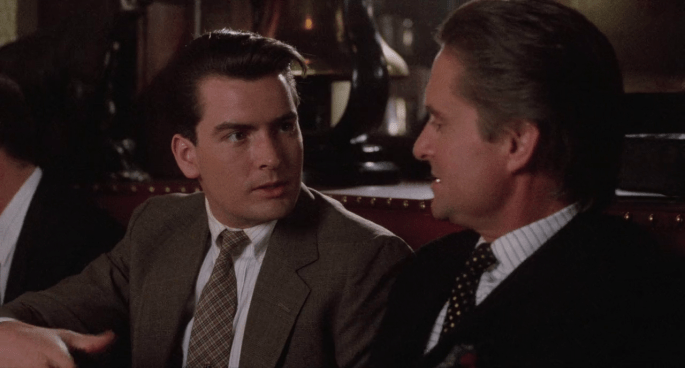
Right from the opening frame, Stone establishes the dominant presence of greed and money by using a gold filter over shots of the New York City skyline with Frank Sinatra (known by his cronies as Chairman of the Board, no less) singing “Fly Me to the Moon,” foreshadowing the dizzying heights that the film’s protagonist, Bud Fox (Charlie Sheen), will briefly ascend. He is an up-and-coming stockbroker in the cutthroat financial world. He is hungry and willing to do anything to get rich. He idolizes Gordon Gekko (Michael Douglas), one of the most ruthless Wall Street tycoons who buys and then takes apart companies for profit. Bud aggressively pursues Gekko in the hopes that he can work for the businessman and follow in his footsteps. Bud soon finds himself in a moral dilemma: does he sell his soul for the gold key to Gekko’s world, or remain true to the blue collar roots of his labor union father (Martin Sheen)?

After the success of Platoon, Stone started researching a film about quiz show scandals in the 1950s. However, at lunch with a film school friend and Los Angeles screenwriter Stanley Weiser, Stone heard an idea for a film that could be “Crime and Punishment on Wall Street. Two guys abusing each other on Wall Street,” as he remarked in an interview. The director had been thinking about this kind of a film as early as 1981. He knew a New York businessman who was making millions and working long days, putting together deals all over the world. This man started making mistakes that cost him everything. Stone remembers that the “story frames what happens in my movie, which is basically a Pilgrim’s Progress of a boy who is seduced and corrupted by the allure of easy money. And in the third act, he sets out to redeem himself.” Stone and Weiser began researching the world of stock trading, junk bonds and corporate takeovers. They met a lot of powerful Wall Street movers and shakers. Reportedly, Bud Fox is said to be a composite of Owen Morrisey, who was involved in a $20 million insider trading scandal in 1985, Dennis Levine, Ivan Boesky, and others.

Stone met with Tom Cruise, who expressed an interest in playing Bud Fox, but the director had already committed to Charlie Sheen for the role. To research his role, the actor spent two days talking with David Brown, a Goldman Sachs trader who pleaded guilty to insider trading charges in 1986. Stone and Weiser began researching the world of stock trading, junk bonds, and corporate takeovers. They met a lot of powerful Wall Street movers and shakers. Weiser wrote the first draft, initially called Greed, with Stone writing another draft. Originally, the lead character was a young Jewish broker named Freddie Goldsmith, but Stone changed it to Bud Fox to avoid the misconception that Wall Street was controlled by Jews. According to Weiser, Gekko’s style of speaking was inspired by Stone. “When I was writing some of the dialogue I would listen to Oliver on the phone and sometimes he talks very rapid-fire, the way Gordon Gekko does.”

Stone wanted to shoot the film in New York City and that required a budget of at least $15 million. The studio that backed Platoon felt that it was too risky a project to bankroll and passed. Stone and producer Edward Pressman took it to 20th Century Fox, who loved it, and filming began in May 1987. Stone switched from 12 to 14-hour days in the last few weeks of principal photography before an impending directors’ strike and finished five days ahead of schedule.

Stone brilliantly sets everything up in the opening minutes of the film. Bud is first shown as an insignificant cog in the city. He’s mixed in with all the other 9-to-5ers — packed in a subway and then in the elevator up to the company where he works. Bud looks uncomfortable and unhappy. He does not want to be in there with all of these other people. He wants to be on the other side with all the money and with Gekko, who rides alone in his spacious limousine. As soon as Bud gets into work, Stone shows a montage of a typical business day — the hectic, rapid-fire pace as people buy, sell, and trade shares.

Taking his cue from another Faustian New York City tale, Sweet Smell of Success (1957), Stone prolongs the first appearance of the film’s most charismatic character. When Bud goes to visit Gekko, we do not see him; we only hear his voice from within his office. It is an enticing teaser that makes Bud and the audience curious to see this man that everyone regards with such awe and reverence. When we finally do meet Gekko, it is a whirlwind first appearance. The camera roves around him aggressively as he never stops talking, making deals, and truly embodying the phrase, “time is money.” According to Stone, he was “making a movie about sharks, about feeding frenzies. Bob [director of photography Robert Richardson] and I wanted the camera to become a predator. There is no letup until you get to the fixed world of Charlie’s father, where the stationary camera gives you a sense of immutable values.” This is such a fantastic way to introduce Gekko as it perfectly conveys what makes him so alluring to someone like Bud: he is always in control, he is smart, and he knows exactly how to get what he wants.

Michael Douglas owns the role of Gekko, and by extension, dominates the film with his larger than life character. He gets most of the film’s best dialogue and delivers it with such conviction. Douglas remembers when he first read the screenplay. “I thought it was a great part. It was a long script, and there were some incredibly long and intense monologues to open with. I’d never seen a screenplay where there were two or three pages of single-spaced type for a monologue. I thought, whoa! I mean, it was unbelievable.” There is a scene between Bud and Gekko in a limousine where he tells the younger man how the financial world works, how it operates and lays it all out, pushing Bud hard to go into business with him. It is one of the strongest scenes in the film because you really believe what Gekko is saying and how Bud could be seduced by his words.

Douglas had just come off heroic roles, like the one in Romancing the Stone (1984), and was looking for something darker and edgier. The studio wanted Warren Beatty to play Gekko, but he was not interested. Stone initially wanted Richard Gere, but the actor passed and the director went with Douglas despite having been advised by others in Hollywood not to cast him. Stone remembers, “I was warned by everyone in Hollywood that Michael couldn’t act, that he was a producer more than an actor and would spend all his time in his trailer on the phone.” But the director found out that “when he’s acting he gives it his all.” The culmination of Douglas’ performance is his much lauded, often quoted, “Greed is good” speech that his character gives to a shareholders’ meeting of Teldar Paper, a company he is planning to take over. He concludes by saying, “Greed is right; greed works. Greed clarifies, cuts through, and captures the essence of the evolutionary spirit. Greed, in all of its forms, greed for life, for money, for love, knowledge, has marked the upward surge of mankind, and greed – you mark my words – will save not only Teldar Paper, but that other malfunctioning corporation called the U.S.A.” This is one of the best delivered monologues ever put to film, as Douglas goes from charming to downright threatening and back again, succinctly summing up the essence of ’80s capitalism and greed.

Stone was smart to cast Martin Sheen as Bud’s dad. He gets a lot of mileage out of the real father-son relationship between them. It makes their chemistry that much more genuine. It also lends itself to their heated conversations — especially the one in an elevator where Bud accuses his father of being jealous and ashamed that his son is more prosperous and successful. The shocked, wounded expression on the elder Sheen’s face says it all, and makes this scene that much more painful to watch. This scene also makes their tearful reconciliation at the hospital after the father suffers a heart attack all the more poignant. It is an intense, emotional moment as the tears start flowing and Bud begins along the gradual road to redemption.

However, Stone made the mistake of casting Daryl Hannah as Bud Fox’s materialistic girlfriend. She was having problems relating to her character and struggled with the role and personal problems. The director was aware early on that she was not right for the role, but arrogantly refused to admit the mistake. He remarked, “Daryl Hannah was not happy doing the role and I should have let her go. All my crew wanted to get rid of her after one day of shooting. My pride was such that I kept saying I was going to make it work.” Stone also had difficulties with Sean Young, who made her opinions known that Hannah should be fired and she should play her role instead. Young would show up to the set late and unprepared. She also did not get along with Charlie Sheen, which caused unnecessary friction on the set. In retrospect, Stone felt that Young was right and he should have swapped roles between her and Hannah.

Visually, Stone ends the film much as he began it, with Bud reduced to an insignificant cog in the city yet again, his future uncertain. Wall Street is a morality play about the seductive nature of greed, examining how far someone is willing to go and what they are prepared to do to become rich. The irony is that many people admired Gekko, and Stone has said on the supplementary material to the film’s DVD that people have approached him saying that they were inspired to get into the financial world because of this character. The 2000 film Boiler Room even features a group of young stockbrokers watching Wall Street on video and quoting along to some of Gekko’s more memorable dialogue. People who admire Douglas’ character don’t seem to realize that Stone is not idealizing him, but merely showing the seductive lure of someone like Gekko. He is not someone to admire, and the film leaves his fate somewhat ambiguous, while it is Bud who goes to jail. It is this stinging indictment that lingers long after the credits end — that rich, powerful men like Gekko never seem to get punished for their transgressions, while the common man, like Bud, suffer instead.

PTS PRESENTS: 15 QUESTIONS WITH COSTUME DESIGNER ELLEN MIROJNICK

ELLEN

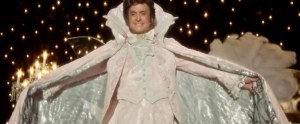
Award winning costume designer Ellen Mirojnick has been a part of some of the biggest, most exciting films and TV programs over the last 30 years. With work stretching various genres and styles, she’s collaborated with some of the industry’s true heavyweights, including Steven Soderbergh, Ridley Scott, Adrian Lyne, Paul Verhoeven, John Woo, Richard Attenborough, Renny Harlin, Mark Rydell, Angelina Jolie, and the late Tony Scott, to name only a bunch. An Emmy and Costume Designer Guild Award winner for her spectacular work on the HBO film Behind the Candelabra, Ellen continually applies her love and passion for the arts to each project she takes on, with results that are always eye-catching and wholly appropriate to the material. Podcasting Them Softly is proud to present an interview with Ellen, as she discusses her inspirations, some of the key films on her resume, her dynamic work on The Knick, and what she has in store for the future. We hope you enjoy!

knick mixer

  1. How did you get your start with costume design and what are some memories from your first job?

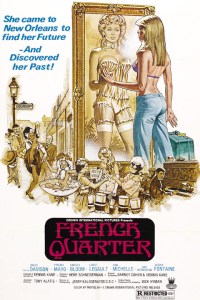
FQ

I was designing junior sportswear in NY. My husband was working on a film in New Orleans called French Quarter. The film didn’t have a costume designer. I was visiting, they offered me the job, and I was hooked! I did everything from designing the costumes through full wardrobe on set, including sewing. And I can’t sew! So I had holes in my fingers and had to continually wipe blood off the clothes!

  1. Who were some of your inspirations when you were starting out, and growing up, what were some of your favorite films, or the films that spoke to you the most?

Auntie_Mame_Poster

Well of course Edith Head. But my favorite film was Auntie Mame, so I couldn’t get enough of Orry-Kelly’s work. I’ve always loved movies! As a kid and while growing up, I went all the time to the cinema. The only films I didn’t see were scary ones. I loved all of Audrey Hepburn’s films, Auntie Mame as I said, and Some Like It Hot was a favorite. I really responded to film noir, the French New Wave, and I just really loved sitting in the movie theater dreaming in the dark.

  1. What was your first “big break” in the industry?

fatal_attraction_xlg

I had a few big breaks. I was given a film to design and was immediately a Costume Designer. I would say my career as we know it began with Fatal Attraction.

  1. You have worked with some absolutely legendary filmmakers – Ridley Scott, Adrian Lyne (multiple times), Oliver Stone (multiple times), John Woo, Kathryn Bigelow, Steven Soderbergh (multiple times), Paul Verhoeven, and Tony Scott, just to name a few. Has there been one filmmaker, on this list or not, who you feel you’ve been especially “in tune” with?

NEW YORK, NY - DECEMBER 05: American film director Steven Soderbergh attends

I was in tune with all of the above when we worked together, all were momentous experiences! But the legendary filmmaker who I love working with and would say I’ve been “in tune with” the most is Steven Soderbergh. I call him The Grand Master.

  1. Which currently working filmmakers would you love to collaborate with?

nolan

I would love to collaborate with Steve McQueen, or somebody brand new, who is passionate about telling stories. Christopher Nolan, I love how he is fascinated by alternate or parallel universes. Marty Scorsese would be the ultimate New York State of Mind, and I’d still love to work again with everyone I’ve previously collaborated with.

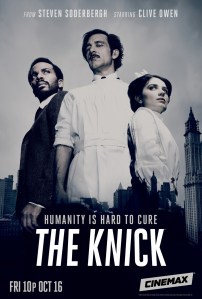
  1. After working with Soderbergh on the fantastic Behind the Candelabra which won you an Emmy, he brought you on to his revolutionary new TV show The Knick. What’s it been like working on that show?

knick_ver20_xlg

There aren’t enough words to describe working with Steven. I feel blessed to be a member of this amazing team. We were all tremendously excited to do something as adventurous as The Knick. 10 hours of storytelling, the complexity of the characters, a true time in history with the early 1900’s, and yet strangely, it still feels very much like today. It was absolutely ELECTRIC putting the pieces together. We built a hospital and a city through a lens we hadn’t seen before. It doesn’t get much better, needless to say, when watching great actors exploring the unknown! Steven has an idea and we get to explore it. He is very trusting with his crew, and he allows us great freedom interpreting the material. He doesn’t micro manage! The goal, as it’s been said by others, is that the actors come onto the set and you know everything works when he picks up the camera and begins to shoot, it’s time for action! The show has been a magnificent challenge, and my joy comes from meeting the various challenges every day, and working with my team, especially with Production Designer extraordinaire Howard Cummings.

  1. The Knick feels like cinema turned into TV. How has this show differed from other TV programs you’ve worked on?2The Knick doesn’t compare with anything. When you are involved with a project that breaks the rules, the rebel in me, as with all the members of the team, rises far and beyond anyone’s wildest dreams! I have only done the occasional TV pilot, all of which have sold and went on to become successful series. And one other TV film, Cinderella, which was lots of fun. But the Knick is great storytelling, chapter by chapter, with great actors loving their characters and their challenges. We shoot it like you shoot a film and I don’t know anyone else that can shoot 560 pages in 73 days! Steven can and does!


  1. This fall sees the release of Angelina Jolie’s By the Sea, which looks emotionally draining and very much a throwback to 70’s filmmaking. What was it like working with her and Brad Pitt on this seemingly quite personal looking film?

by_the_sea_xlg

Working with Angelina and Brad was great! I didn’t know what to expect but they were great collaborators. It’s a difficult film that was very demanding and an intense assignment, but rewarding none the less.

  1. John Woo’s Face/Off is one of the greatest American action pictures ever made, and the stylish costumes, especially the suits, were a big component of that film’s overall sense of visual flair. What can you remember about working on that bullet fest?

CAGE

I was thrilled to work with John Woo. I was a great fan of all his Hong Kong films. I loved that I always liked his bad guy! Face/Off was originally going to take place in the near future. I came along and suggested that at the core of the film lived the same man, both sides of him, good and bad, just like the work John does best. They changed the film’s time frame to present day and the characters just spoke to me. John had an idea that when Nic Cage   walked across the tarmac, his coat would fly open as in Lawrence of Arabia. We were able to achieve it with the aid of wind machines! Everyone thought it was a spectacular leather coat and it went on to inspire many future iconic film characters. It wasn’t leather, but rather, it was a polyester priest robe!

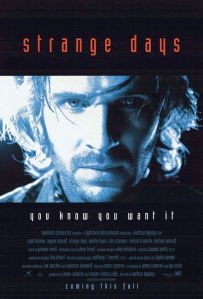
  1. Strange Days is one of the most ambitious science fiction films ever made, and everything about the look and feel of that film is tremendous, especially the distinct wardrobe worn by every scuzzy character. What can you remember about working with Kathryn Bigelow on this masterpiece of cinema?

strange_days_ver2

Working with Kathryn was quite fulfilling. The film took place at the turn of the decade, the year 2000. It was 1994 if I remember correctly when we were shooting, and 2000 wasn’t that far into the future. I helped to create a world that was a hyper mix, with various ethnicities, different time periods, rock ‘n roll, etc. It was divine ecology with nothing being wasted; the rich were rich, the poor were desperate. I remember wanting it to be decadent and sexy. I think it was ahead of its time for sure…

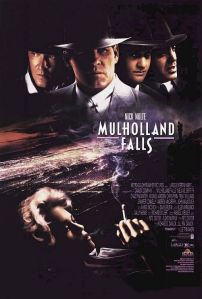
  1. One of the most underrated films on your resume is Lee Tamahori’s Mulholland Falls, aka, “The Hat Movie.” That film has an extraordinary sense of style, and the costume work was nothing short of brilliant. What was it like doing a full blown period noir and getting a chance to work with that incredible male ensemble, all of whom looked beyond snazzy in their outfits?

mulholland_falls

I’m so happy you feel that way about this film as I loved working on it! I love designing for men, it’s pretty clear. I had trouble being thought of as one to design period films, so when I was asked to do this film I felt like I had finally gotten a chance. It was my first period film since Chaplin, and I went into it full on. Nick Nolte, Chazz Palminteri, Michael Madsen, the late Chris Penn, John Malkovich, Melanie Griffith, Jennifer Connelly, and all the supporting players, including Rob Lowe – what a fabulous cast to work with! I loved working on the colors of the suits, and we found original fabrics for all the guys, and all the hats were handmade for the picture. I had a great time, but the story no one knows is that the real life detectives all wore white suits and cruised the strip in a white convertible! The producers thought the studio would be expecting “Men in White”, but after meeting with Frank Mancuso, the head of the studio at that time, he told us we had made the right choice.

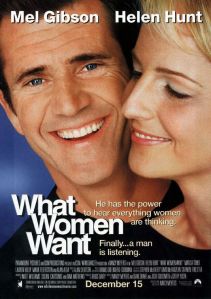
  1. Nancy Meyers is a filmmaker who has a very specific style of storytelling and set decoration. What was it like working with her on What Women Want, which is one of the more thoughtful entries on her resume of entertaining comedies?

what_women_want

Nancy and I have very similar tastes in most areas, which made for a really good collaboration. It’s always a pleasurable working experience when your taste aligns with that of the filmmaker.

  1. Is there a genre you’d like to work in that you previously haven’t?

DOUGLAS

I’d love to do a musical or a fantasy, maybe a nitty-gritty thriller or something definitely not pretty. Actually, anything with a great story and an inspired storyteller – that’s what I’m looking for in new projects.

  1. Who are some of the other current costume designers who inspire you to continuously do great work?

knick_ver11

There are so many great designers working today and I don’t want to leave anyone out!

  1. If you’re able to divulge any information, what projects do you have coming out in the near future, and what are you currently working on?

father

I’m currently in Cambodia, about to shoot Angelina Jolie’s next directorial project. It’s adapted from the book by Loung Ung called “First They Killed My Father: A Daughter Remembers.”

Mirojnick Banner

(This interview was conducted via email in November 2015, and was edited by Nick Clement.)

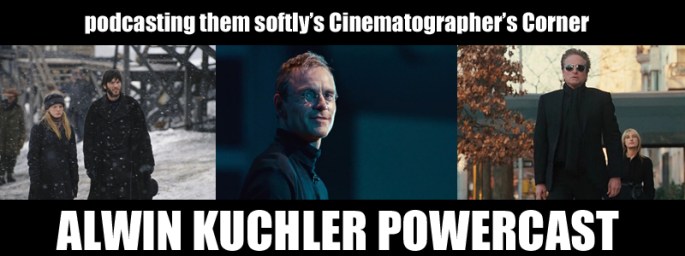
PTS Presents Cinematographer’s Corner with ALWIN KUCHLER

KUCHLER POWEEERRR

Barclays' Commercial: Behind the ScenesShot on Pearl Street and Hanover
Barclays’ Commercial: Behind the ScenesShot on Pearl Street and Hanover

Podcasting Them Softly is excited to present a chat with cinematographer Alwin Kuchler, who has the highly anticipated new film Steve Jobs, from director Danny Boyle, hitting screens this weekend! Kuchler also worked with Boyle on their underrated science fiction thriller Sunshine, as well as having multiple collaborations under his belt with filmmakers as diverse as Michael Winterbottom (Code 46, The Claim), Lynne Ramsay (Morvern Callar, Ratcatcher), and Kevin Macdonald (the documentaries Marley and One Day in September). He also shot the incredible action thriller Hanna for director Joe Wright, and worked on PTS favorite Solitary Man, from filmmakers Brian Koppleman and David Levien, which stars Michael Douglas in one of his career defining roles. Kuchler‘s work has spanned various genres and he always brings an extremely stylish eye to all of his efforts. We hope you enjoy our latest addition to the PTS Cinematographer’s Corner!

PTS Present’s Commentary for David Fincher’s THE GAME

We did something new this time, the first installment of a new series where we sit down and do feature length commentary for a film.  For our first one we did our favorite David Fincher film, THE GAME.  So cue up your copy of the film and sit down and watch it with us!

Enjoy!